The Rising Squall, Hot Wells, from St Vincent's Rock, Bristol
Joseph Mallord William Turner · c. 1792
Last verified 14 September 2026 · 17 sources cited · Change log
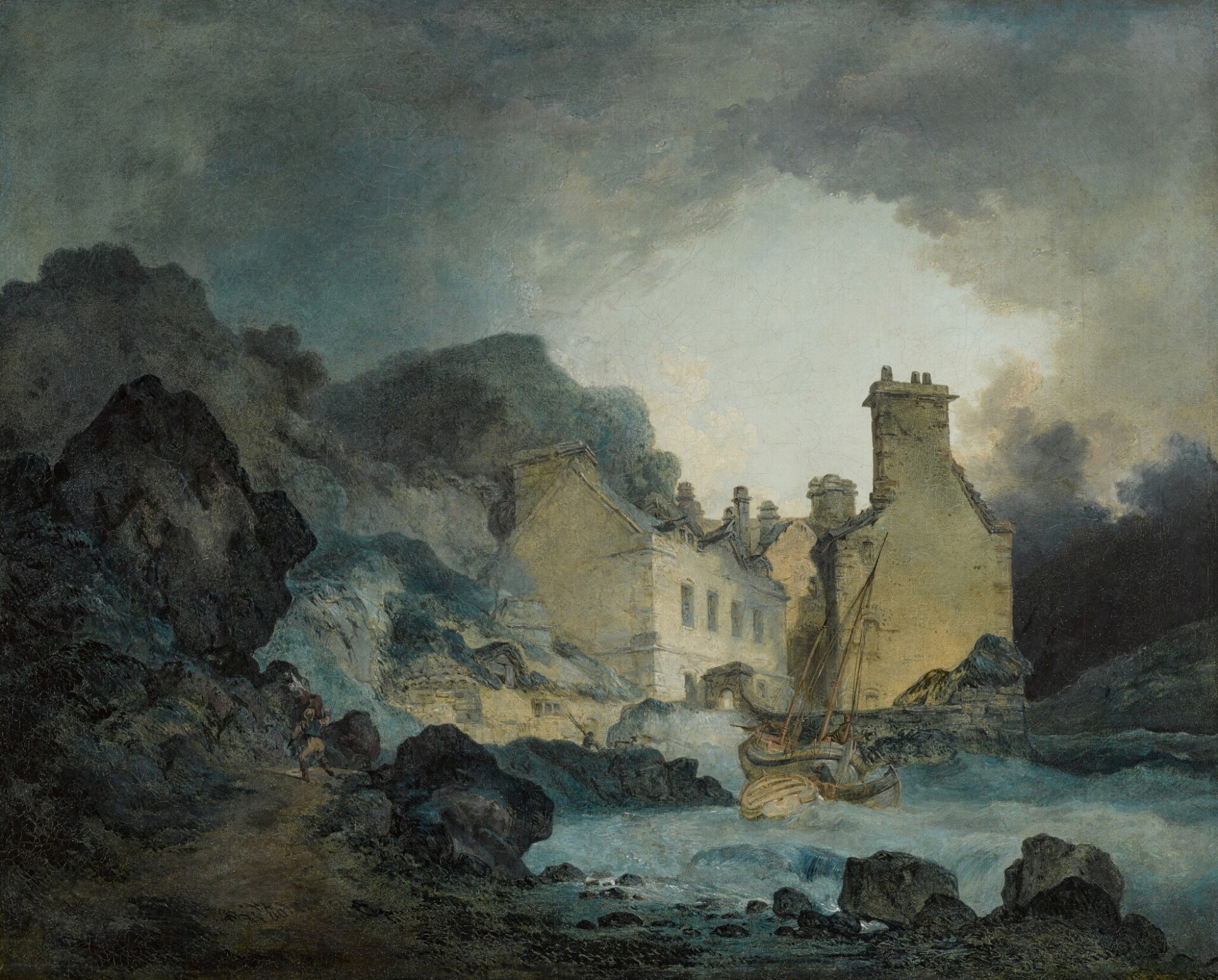
The record subject. Oil on canvas, 59.8 x 74 cm, signed W Turner at the lower left, painted when Turner was seventeen and exhibited at the Royal Academy in 1793 as number 323. The Commons file is sourced directly from the Sotheby's sale of 2 July 2025, L25033, lot 28.
| Artist | Joseph Mallord William Turner |
|---|---|
| Date | c. 1792 |
| Medium | Oil on canvas |
| Where it is now | Private collection, United Kingdomlast confirmed 2 August 2026 |
| Attribution | acceptedReattributed to Turner after cleaning revealed the signature. Full note |
| Object type | Painting |
| Period | Romanticism, 1780-1850 |
| Cases | Has a provenance gap · Rediscovered |
| Culture | British |
| Genre | landscape |
- Where it is now
- Private collection, United Kingdomlast confirmed 2 August 2026
- Attribution
- accepted
- Provenance
- 7 links6 documented, 1 unknown
- At auction
- Hammer Unsold, 9 July 1864
- Sources
- 17 cited
- Last verified
- 14 September 2026Change log
On this page 11 sections
Turner's first oil painting to be publicly exhibited, shown at the Royal Academy in 1793 as number 323 when he was seventeen, and then lost for a hundred and sixty years because the standard reference work filed it in the wrong medium. It is the only oil painting Turner is believed to have made of a Bristol subject.
On 4 April 2024 it sold at Dreweatts in Newbury as lot 23, catalogued as a follower of Julius Caesar Ibbetson and titled House by the Water in a Stormy Sky, for a total of GBP 524.80 including fees. The buyer suspected Philip James de Loutherbourg. Cleaning uncovered the signature W Turner at the lower left. On 2 July 2025 the same canvas was lot 28 at Sotheby's in London: GBP 1.5 m under the hammer, about GBP 1.9 m with premium, against an estimate of GBP 200,000 to 300,000.
Bristol tried to buy it back. More than 1,700 people gave GBP 109,120 in a week, past a GBP 100,000 target. It was not close to enough. The picture went to a private United Kingdom collector, the donations were refunded, and the work was seen again at Tate Britain that November.
Provenance
Each link is graded. Documented: a cited source supports it. Disputed: the identification is argued but not established. Unknown: no owner for that span, and the gap is not smoothed into a narrative. The grades in the glossary.
- 1793 - 1837The Rev. Robert Nixon (1759-1837), of Foots Cray, Kentdocumented
Acquired directly from the artist in 1793, the year of the Royal Academy exhibition. Nixon was an early patron and friend of Turner.19
- 1837 - c. 1862-64The Rev. Dr Francis Russell Nixon (1803-1879), Lord Bishop of Tasmaniadocumented
By descent from his father. He took the picture to Tasmania on his appointment as the first Lord Bishop, and it was exhibited in Hobart in 1845 and again in 1858.19
- c. 1862-64 - after 1864Joseph Hogarth (1801-1879)documented
Acquired around 1862 to 1864. Offered by him at Christie's, London, 9 July 1864, lot 152, where it failed to sell. This is the last recorded public appearance before 2024.1
- after 1864 - 2024Private collection, Northamptonshire, thence by descentunknown
Sotheby's records the family only as a private collection in Northamptonshire, with no name, no acquisition date and no route from Hogarth. Roughly 160 years are undocumented. The picture was consigned anonymously out of this collection in 2024.1
- 2024 - 2025Private buyer, unnameddocumented
Bought at Dreweatts, Donnington Priory, Newbury, 4 April 2024, lot 23, catalogued as follower of Julius Caesar Ibbetson and titled House by the Water in a Stormy Sky. The buyer suspected Philip James de Loutherbourg and had the picture cleaned, uncovering the signature W Turner at the lower left.13911
- 2025 - presentPrivate collection, United Kingdomdocumented
Bought at Sotheby's, London, 2 July 2025, sale L25033, lot 28. The buyer is described only as a private United Kingdom collector and has not been named. Because the sale was domestic, no export licence application arose and no national treasure deferral was triggered. The sale and lot are independently corroborated by the Wikimedia Commons file record for the reproduction.13612
- 2025 - 2026On loan, lender unnameddocumented
Named by Tate in its press material for Turner and Constable: Rivals and Originals, Tate Britain, 27 November 2025 to 12 April 2026. Sotheby's recorded at the time of the sale that the picture had been requested for the exhibition. The lender is not identified publicly.11013
Prices realised
| Date | Sale | Estimate | Result | Note |
|---|---|---|---|---|
| 9 July 1864 | Christie's London, property of Joseph Hogarth, lot 152 | Hammer Unsold GBP | Bought in. The last public appearance of the picture for 160 years. Recorded in the Sotheby's 2025 provenance. | |
| 4 April 2024 | Dreweatts Donnington Priory, Newbury, lot 23 | Hammer GBP 400 as reported by one source; not verified against the house's own result With premium GBP 524.80 including fees and VAT GBP | Catalogued as follower of Julius Caesar Ibbetson, titled House by the Water in a Stormy Sky. Rounded to GBP 500 in almost all coverage and converted to about USD 506. The GBP 400 hammer and the GBP 524.80 total come from different outlets and have not been reconciled against Dreweatts' published result. | |
| 2 July 2025 | Sotheby's Old Master and 19th Century Paintings Evening Auction, London, sale L25033, lot 28 | GBP 200,000 - 300,000 | Hammer GBP 1.5 m With premium c. GBP 1.9 m with buyer's premium GBP | Roughly six times the high estimate. GBP 1.87 m also circulated as the premium-inclusive figure, and dollar conversions of about USD 2.6 m depend on the day. Bidder count reported as four by Artnet and as five by The Art Newspaper, which then itemises four: two in the room, one telephone, one absentee. Bought by a private United Kingdom collector, against the underbidding Bristol Museums Development Trust, which had launched its public appeal on 23 June 2025 intending to bid at or near the high estimate. |
Hammer is the price at which the bidding stopped; with premium adds the fee the house charges the buyer on top. Hammer price and buyer's premium in the glossary.
Technical evidence
| Attribution note | Reattributed to Turner after cleaning revealed the signature. Previously sold under a mistaken attribution; the buyer had suspected Philip James de Loutherbourg. |
|---|---|
| Support and medium | Oil on canvas.1 |
| Dimensions | Unframed 59.8 x 74 cm (23 1/2 x 29 1/8 in.). Framed 77 x 91.3 cm (30 1/4 x 36 in.).1 |
| Signature | Signed at the lower left: W Turner. Turner used the W Turner form in his early years, before the initials J M W. The signature was not visible when the picture was sold in 2024 and was uncovered by cleaning.1911 |
| Date | Sotheby's catalogues the picture as 1793, the exhibition year. Wikipedia and most press coverage give 1792, the year of painting, since it was on the Academy walls in April 1793. The two dates describe different events and are not in conflict; this record uses c. 1792 for execution and 1793 for exhibition.1313 |
| Preparatory material | The Bristol and Malmesbury sketchbook of 1791, Turner Bequest VI, Tate D00072-D00107 and D40733-D40736, 25 leaves of J WHATMAN laid and wove paper, page size 185 x 263 mm.8 |
| Related study | Back View of the Hot Wells, Bristol, c. 1792-3, pencil and watercolour on white wove paper, 184 x 256 mm, Tate D00389, Turner Bequest XXIII O. Tate catalogues this study and a related sketch as very probably the bases for the work exhibited at the Royal Academy in 1793.7 |
| Catalogue classification | Listed by C. F. Bell in 1901 as number 8 of Section I, Paintings in Water Colours, with the entry The rising squall - hot wells from St. Vincent's rock, Bristol. R.A. 1793, No. 323. No dimensions and no medium are given. Bell's Section II, Oil Paintings, does not contain it.2 |
| Technical examination | None beyond cleaning is described in any source consulted. No published X-radiograph, infrared reflectogram or pigment analysis was found. The attribution as reported rests on the uncovered signature, the Royal Academy record, the Nixon provenance and the Turner Bequest preparatory material.19 |
| Condition | Sotheby's condition report is behind a login and was not read. The only condition event recorded in public sources is the cleaning carried out by the 2024 buyer.111 |
Images
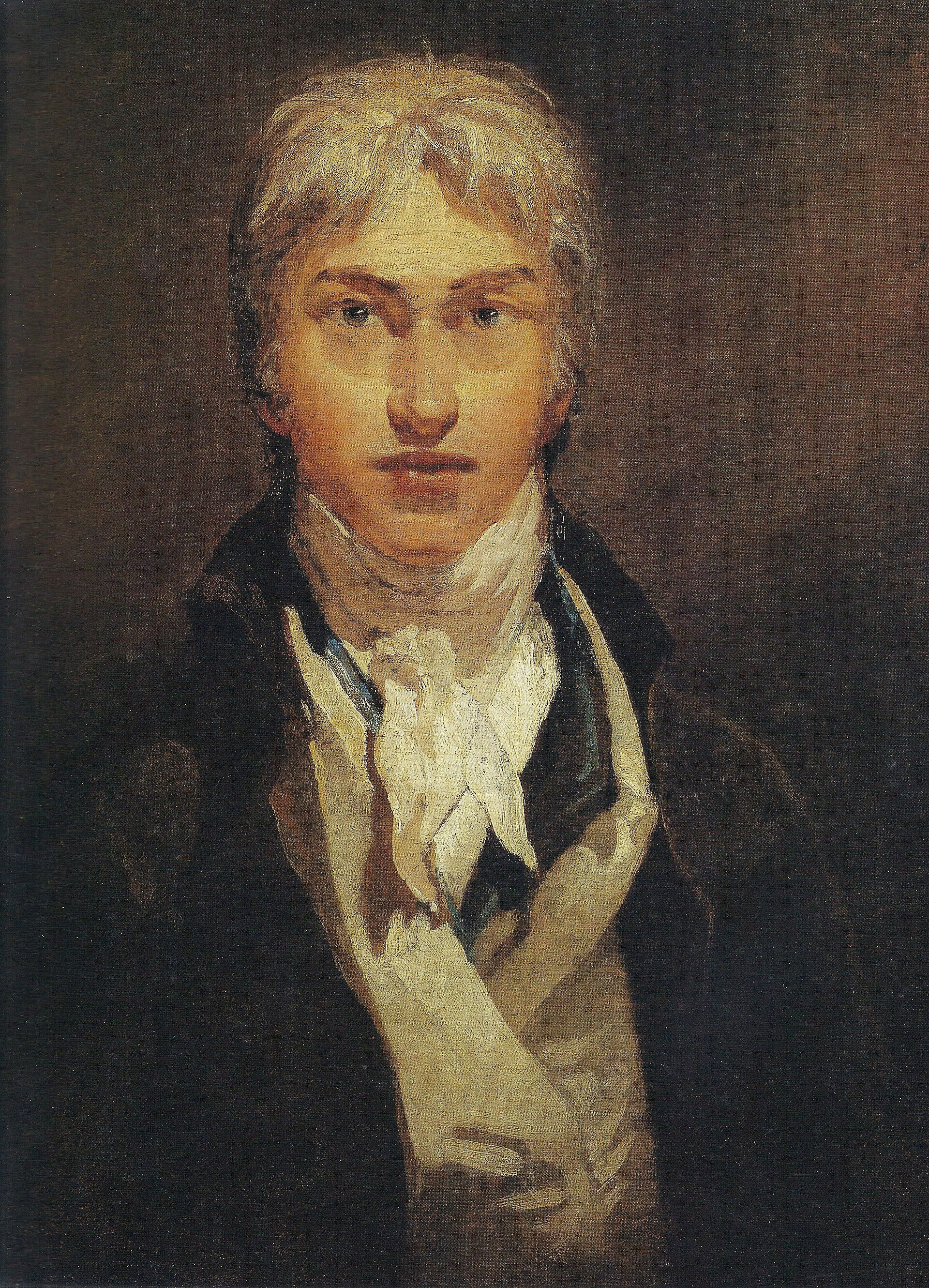
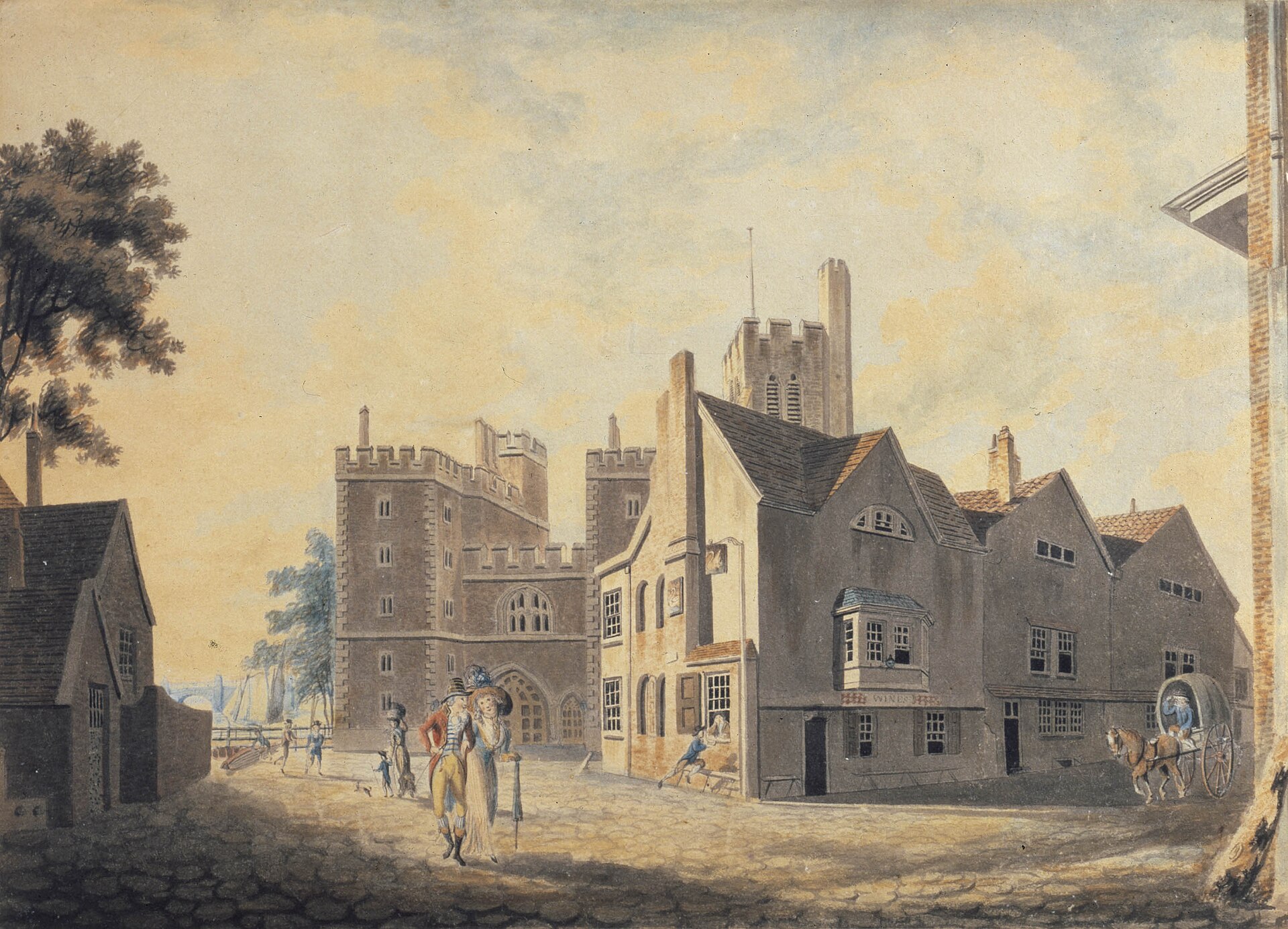
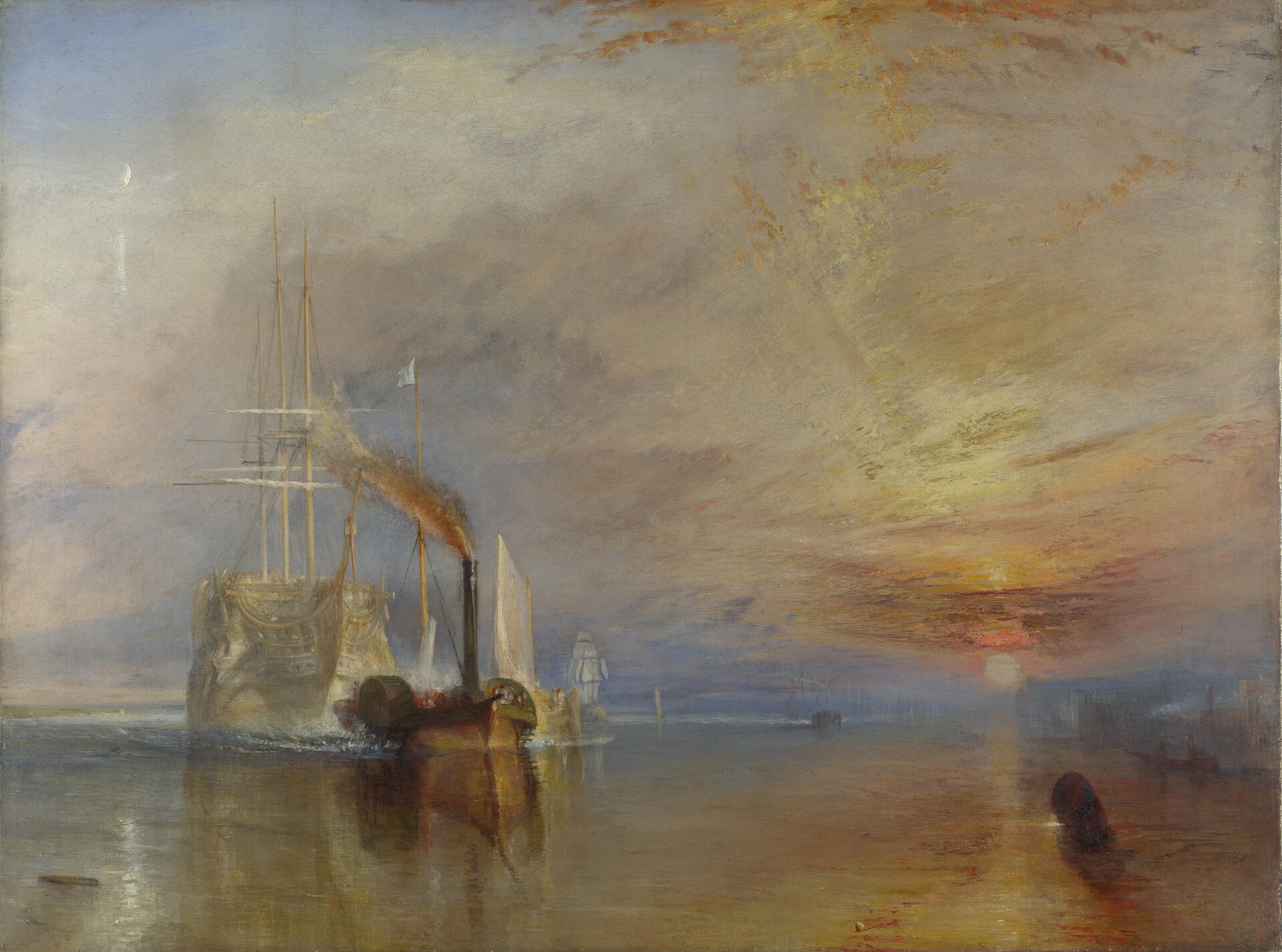
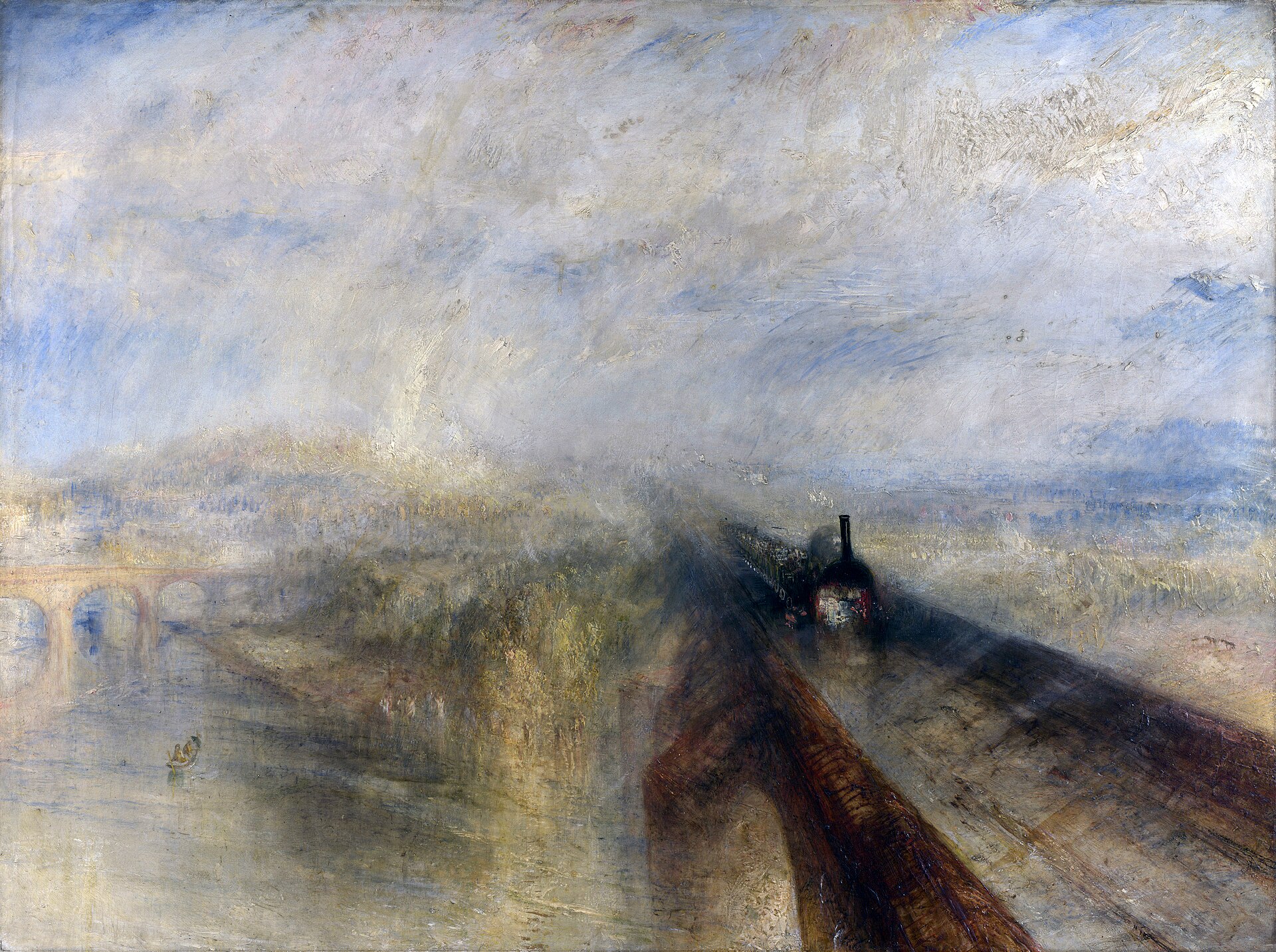
The record in full
The loss was a filing error
An oil on canvas, 59.8 by 74 centimetres, signed at the lower left W Turner. It shows the Hot Wells spa and St Vincent's Rock on the River Avon at Bristol under a squall coming up the gorge, painted decades before the Clifton Suspension Bridge crossed the view. Turner was seventeen. It hung at the Royal Academy at Somerset House from 29 April to 8 June 1793 as catalogue number 323, weeks after his eighteenth birthday.
Nothing about that record was ever lost. The catalogue number survived, the title survived, the Royal Academy year survived. What was lost was the medium. For most of the twentieth century the standard register of Turner's exhibited works listed this picture among his paintings in water colours, and so nobody hunting for an early Turner oil ever went looking for it. The object was not hidden. It was indexed under the wrong heading, which for a work of art is a more durable form of disappearance than being hidden.
Bristol, 1791, and the Prince of the Rocks
Turner was sixteen in 1791 when he went to stay in Bristol with the family of John Narraway, a glue maker and dealer in animal skins who was an old friend of his father. He took a sketchbook, now the Bristol and Malmesbury sketchbook in the Turner Bequest, and filled it with carefully worked views in pencil and watercolour intended as models for finished compositions. He gave a sequence of them titles, planning twelve views on the River Avon.
He spent so much time working along the cliffs of the Avon Gorge that the Narraways nicknamed him the Prince of the Rocks. That is the whole answer to why a London barber's son was painting Bristol: a family friend, a spare room, and a gorge that gave a boy trained on topography the most theatrical piece of scenery within reach of his father's house.
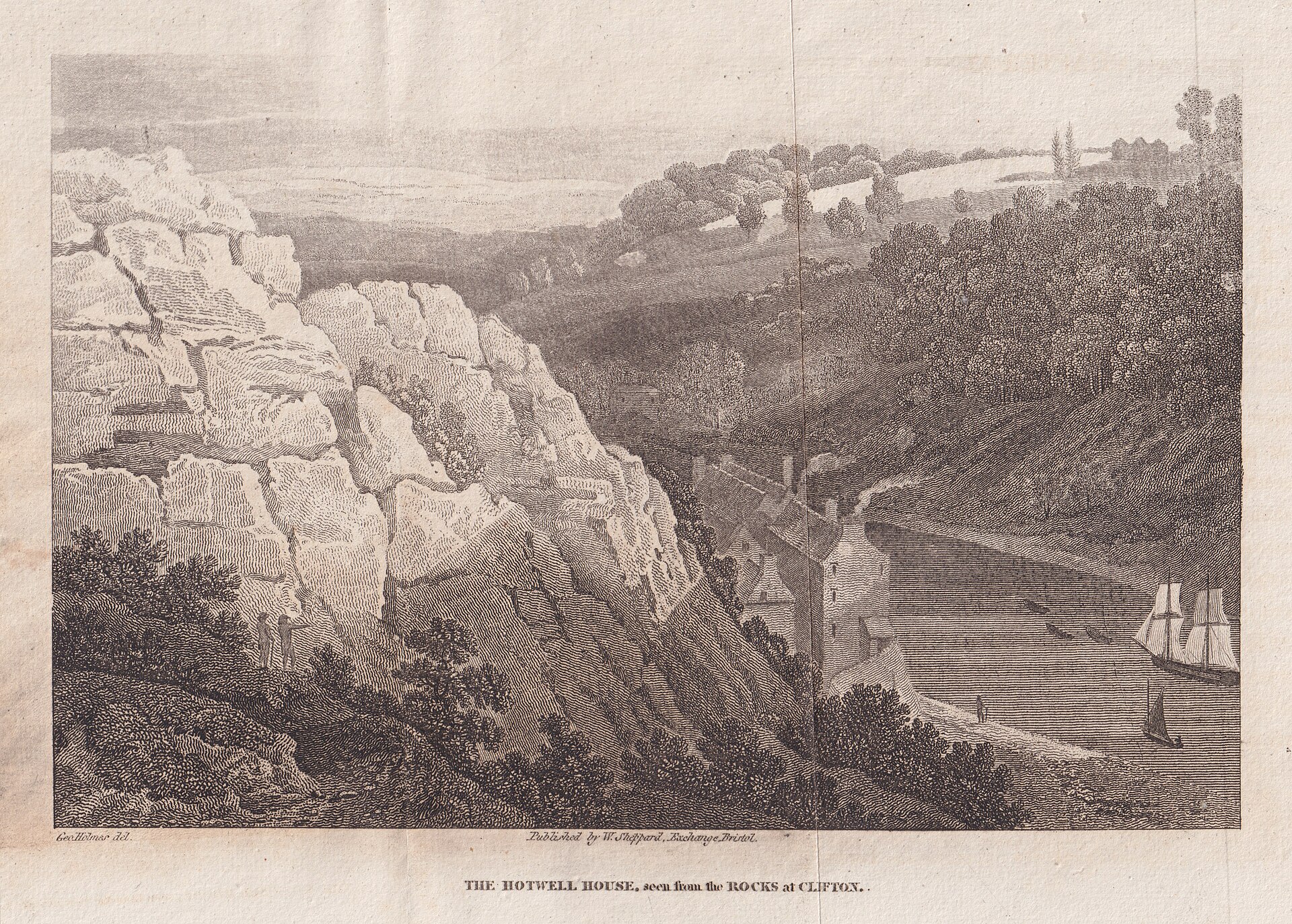
Hot Wells was a spa built where a warm spring rose at the foot of St Vincent's Rock, at the bottom of the gorge on the Avon. It was a resort. Turner painted it in weather, which is not what a resort view is for, and that is the first sign in his exhibited work of the thing he was later celebrated for.
Everything hangs on the word oil
Richard and Samuel Redgrave, in their Dictionary of Artists of the English School, described this picture as an oil. In their later Century of Painters of the English School they withdrew it, and named a different work, Moonlight, a study at Millbank of 1797, as Turner's first exhibited oil instead. In 1901 C. F. Bell, compiling the fullest list then made of everything Turner had ever put into a public exhibition, followed the second opinion. He noted the Redgraves' reversal in his entry, wrote that there was good reason to suppose the Millbank picture was the first exhibited oil, and placed The rising squall as number 8 of Section I of his catalogue: Paintings in Water Colours.
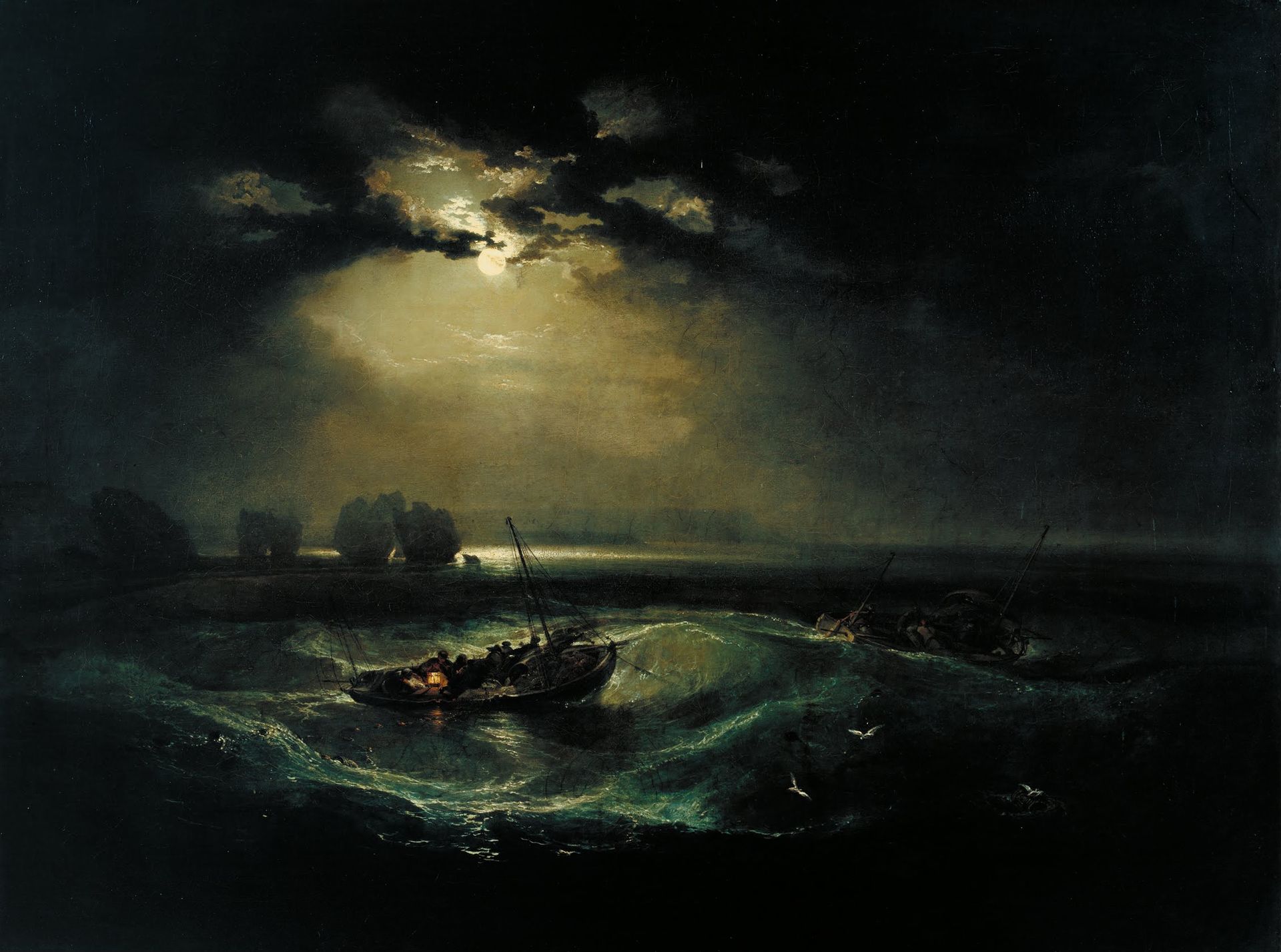
That is the sentence that cost the picture a century. Bell's list was the reference. A scholar checking what Turner exhibited in 1793 found the entry exactly where it should be, correctly numbered, and correctly attached to Royal Academy 323, sitting in the watercolour section without dimensions and without a medium. Later scholarship moved the honour again, from the 1797 Millbank study to Fishermen at Sea of 1796, which is still what most published biographies of Turner say. Three different pictures have held the title of Turner's first exhibited oil since the 1860s. This is the fourth answer, and it is the original one.
The earliest critical notice of the work is friendly to it. Peter Cunningham, in his memoir of Turner, wrote of the 1793 exhibit that it evinced for the first time that mastery of effect for which the painter was by then so justly celebrated. He was writing about a picture he believed was a watercolour.
Lot 23 at Newbury
On 4 April 2024 the canvas was lot 23 at Dreweatts at Donnington Priory, Newbury. The catalogue gave it as a follower of Julius Caesar Ibbetson and titled it House by the Water in a Stormy Sky. It made GBP 524.80 including fees; the hammer figure has been reported as GBP 400, and the sale is almost universally rounded in the press to GBP 500.
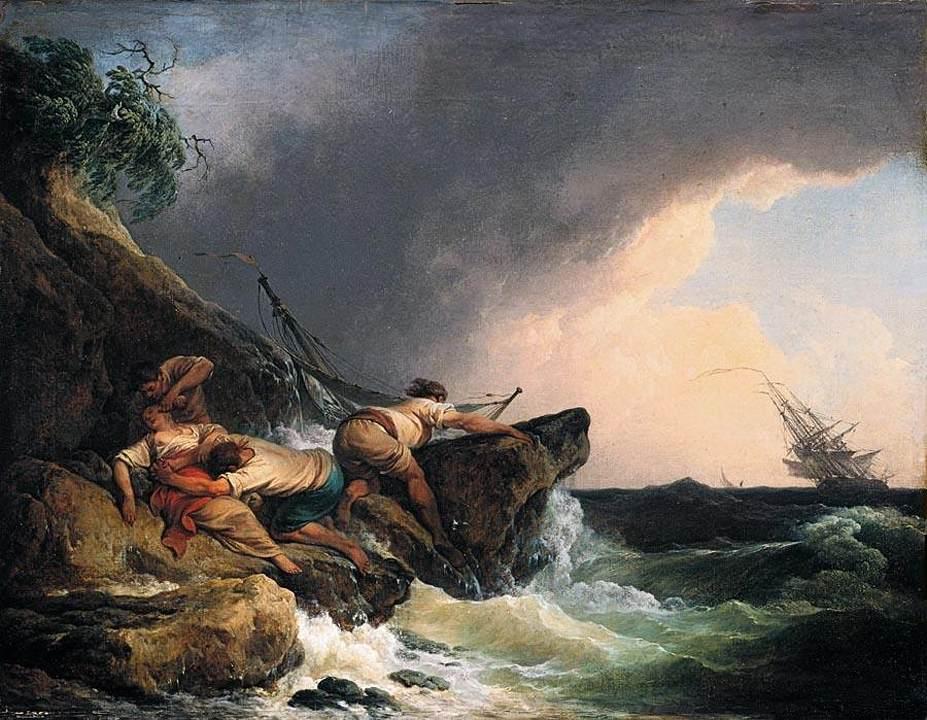
The buyer did not think it was an Ibbetson. He thought it might be Philip James de Loutherbourg, and that guess is better than it looks. Bell devotes a passage of his introduction to the oil paintings to exactly this question, noting that De Loutherbourg's influence was sometimes supposed to have been powerfully felt by Turner in his youth. A buyer looking at a stormy English river landscape of about 1790 and reaching for De Loutherbourg was reaching for the name that Turner scholarship itself reaches for.
Cleaning settled it. The signature W Turner is at the lower left. Andrew Wilton published the identification in Turner Society News in spring 2025 under the title Turner's First Exhibited Oil. Julian Gascoigne, the Sotheby's senior specialist, said the picture changes a good deal of what is known about Turner's early work.
Two pieces of Turner Bequest material support the reading independently of the signature. The 1791 Bristol and Malmesbury sketchbook holds the source drawings, and a pencil and watercolour study, Back View of the Hot Wells, Bristol, catalogued by Tate as very probably one of the bases for the 1793 exhibit, sits in the collection with the same weather in it.
Tasmania and back
The chain from 1793 is unusually good at the top and unusually blank at the bottom. The Reverend Robert Nixon of Foots Cray in Kent, a friend and early patron, bought it from Turner directly in 1793. It passed to his son, the Reverend Dr Francis Russell Nixon, who became the first Lord Bishop of Tasmania, and it went to the other side of the world with him. It was shown in Hobart twice: at the Legislative Council Chambers in January and February 1845, and at Runnymede House in 1858.
Then it came back. Joseph Hogarth acquired it around 1862 to 1864 and offered it at Christie's in London on 9 July 1864 as lot 152, where it did not sell. That is the last time the picture is recorded in public before 2024. From there Sotheby's traces it only to a private collection in Northamptonshire and thence by descent, with no names and no dates, until it was consigned anonymously to Newbury.
The commonly quoted gap of about 150 years is measured from the 1858 Hobart exhibition. Measured from the last saleroom appearance it is 160 years, and the Northamptonshire century inside it is a genuine blank, not a summary.
Lot 28 at Sotheby's
Sotheby's offered it in the Old Master and 19th Century Paintings evening sale in London on 2 July 2025, sale L25033, lot 28, estimated at GBP 200,000 to 300,000. It was on public view from 28 June to 1 July.
The hammer fell at GBP 1.5 m. With buyer's premium the total was about GBP 1.9 m, which is the figure nearly all the coverage prints without saying which of the two it is; GBP 1.87 m also circulated, and dollar conversions of about USD 2.6 m depend on the day. The buyer was a private collector in the United Kingdom. The number of competing bidders is reported as four in one account and five in another that then itemises four, two in the room, one on the telephone and one absentee.
Against the GBP 524.80 paid in Newbury fifteen months earlier, the premium-inclusive result is a multiple of roughly 3,600. That multiple is not a judgement about the picture. Both salerooms were looking at the same object in the same condition apart from a cleaning. The multiple measures the value of a correctly spelled name.
Bristol raised the money and lost anyway
This is the part that most accounts get backwards, including summaries that say the appeal failed.
Bristol City Council resolved to bid, and the Bristol Museums Development Trust, an independent charity, launched a public appeal on about 23 June 2025 with a target of GBP 100,000 and a deadline of 23:59 on 1 July, the night before the sale. Phillip Walker, the council's head of culture, put the case plainly: it is the first and probably the only oil painting Turner ever made of a Bristol scene. The crowdfund was to be topped up from trusts, foundations and private donors to get the trust somewhere near the GBP 300,000 high estimate.
The target was hit in five days by more than 1,400 donors giving between GBP 2 and GBP 15,000. By the close the Bring Turner Home appeal stood at GBP 109,120 from more than 1,700 people. Kate Newnham, senior curator of visual arts at Bristol Museum and Art Gallery, called the response overwhelming and said it showed what access to art and culture means to people.
Bristol was the only public institution bidding. The picture then sold for more than six times its high estimate, and no amount of crowdfunding at that scale was ever going to reach GBP 1.5 m. Every donation was refunded, though the trust reported that many donors asked for their money to be kept as a general gift instead. The appeal did not fail. It succeeded and was outbid, which is a different fact about the British museum funding system and a more useful one.
Where it is now
The work is in a private collection in the United Kingdom. Because the buyer is British, no export licence application arose and no deferral or national treasure procedure was triggered; none of the sources consulted records any export question at all. That is worth stating explicitly, because it is the mechanism that saved the Cimabue panel and it simply did not engage here. A domestic private sale is invisible to the export control system.
The picture was requested for Tate Britain's Turner and Constable: Rivals and Originals, 27 November 2025 to 12 April 2026, at the time of the sale, and Tate's own press material named it as a recently discovered work in the show. The lender has not been identified publicly. So within five months of the hammer the painting was on a public wall in London, which is more than the Bristol coverage implied when the appeal closed.
The trust has said it is exploring whether the painting could come to Bristol on loan. Nothing in the sources consulted records that it has.
The exhibition ran its full course and closed on schedule, 12 April 2026, with no further reporting on the loan, the lender or a Bristol showing. One dated detail from inside the run: King Charles III toured the exhibition after hours on Tuesday 10 March 2026 and stopped at this painting specifically, saying "wow" and "That really is marvellous" before asking the curator how many more such rediscoveries might be "lurking in Australia or something" - a reference to the picture's documented time in Tasmania. The anecdote confirms the loan went ahead as planned; it says nothing about who lent it.
The artist
Joseph Mallord William Turner, R.A.
Turner is the rare case of an artist whose documentation is abundant rather than scarce, and who is still capable of surprising the record. He exhibited publicly for sixty-one years, left the contents of his studio to the nation, and has been catalogued continuously since the year of his death. A picture of his going missing for a century and a half is therefore not a story about lost archives. It is a story about what happens when a correct entry is placed under an incorrect heading in a reference book that everyone trusts.
Exhibited
- 1793First public exhibition of a Turner oilnot specified in reporting
Related works
| Work | Relation | Where it is |
|---|---|---|
| View on the river Avon, near St Vincent's rock, Bristol J. M. W. Turner | The other Bristol subject Turner exhibited at the same 1793 Royal Academy exhibition Royal Academy 1793, number 263, listed by Bell as his number 6. Turner showed two St Vincent's Rock subjects on the same walls in the same year. Any image, price or fact concerning a Turner Avon Gorge subject of 1793 must be checked against both numbers before it is attached to this record. | Untraced; recorded in the Huskisson collection, sale 1864 |
| Back View of the Hot Wells, Bristol J. M. W. Turner | Preparatory study, very probably a basis for this picture Pencil and watercolour, 184 x 256 mm, c. 1792-3. Tate's catalogue links it and a related sketch to the 1793 Royal Academy exhibit, which it describes as a watercolour. | Tate, D00389, Turner Bequest XXIII O |
| Bristol and Malmesbury sketchbook J. M. W. Turner | Source material from the 1791 visit Used while staying with the Narraway family in Bristol in 1791. Turner planned a set of twelve views on the River Avon from it. | Tate, Turner Bequest VI, D00072-D00107 |
| Fishermen at Sea J. M. W. Turner | The picture this one displaces Royal Academy 1796. Held the title of Turner's first exhibited oil in the modern literature until 2025 and is still described that way in standard biographies. | Tate, T01585 |
| Moonlight, a study at Millbank J. M. W. Turner | The nineteenth-century candidate for first exhibited oil Royal Academy 1797, number 136. The Redgraves in their Century of Painters and Bell in 1901 both named this the first exhibited oil, in the act of demoting The Rising Squall. | Tate, formerly National Gallery no. 459 |
| Rocky Coastal Landscape in a Storm Philip James de Loutherbourg | The hand the 2024 buyer suspected 1771. Not by Turner and no part of this work's history. Included because De Loutherbourg's supposed influence on the young Turner is discussed in the Turner literature itself, which is why the guess was reasonable. | Private collection |
Open questions
- Who owned the picture between 1864 and 2024? Sotheby's gives only 'private collection, Northamptonshire; thence by descent', with no name and no dates. That is the real gap, and it is about 160 years long.
- How did the painting travel to Tasmania and back? It was exhibited in Hobart in 1845 and 1858 and offered at Christie's in London in 1864. Neither shipping is documented in any source consulted.
- What did the 2024 hammer price actually come to? Reported as GBP 400 by one source and as GBP 524.80 including fees by another, and rounded to GBP 500 almost everywhere. Dreweatts' own result for lot 23 of 4 April 2024 has not been read directly.
- How many bidders competed at Sotheby's? Artnet says four; The Art Newspaper says five active bidders and then itemises four.
- Has any technical examination beyond cleaning been carried out and published? No X-radiograph, infrared reflectogram or pigment analysis was found in any source consulted.
- Who owns it now, and who lent it to Tate Britain? The buyer is described only as a private United Kingdom collector, and Tate has not named the lender.
- Did the picture reach Bristol on loan? The Bristol Museums Development Trust said in July 2025 that it was exploring the possibility. Nothing in the sources consulted records an outcome.
Questions about this object
What is The Rising Squall, Hot Wells, from St Vincent's Rock, Bristol?
The Rising Squall, Hot Wells, from St Vincent's Rock, Bristol is a painting, dated c. 1792. Medium: Oil on canvas.
Who made The Rising Squall, Hot Wells, from St Vincent's Rock, Bristol, and is the attribution settled?
The attribution to Joseph Mallord William Turner is recorded here as accepted. Reattributed to Turner after cleaning revealed the signature. Previously sold under a mistaken attribution; the buyer had suspected Philip James de Loutherbourg.
Where is The Rising Squall, Hot Wells, from St Vincent's Rock, Bristol now?
Private collection, United Kingdom. Last confirmed 2 August 2026. Bought at Sotheby's London, 2 July 2025.
What has The Rising Squall, Hot Wells, from St Vincent's Rock, Bristol sold for?
Hammer Unsold. Christie's, 1864-07-09.
What is still unknown about The Rising Squall, Hot Wells, from St Vincent's Rock, Bristol?
Who owned the picture between 1864 and 2024? Sotheby's gives only 'private collection, Northamptonshire; thence by descent', with no name and no dates. That is the real gap, and it is about 160 years long.
Sources
- 1Sotheby's, lot 28, 'Joseph Mallord William Turner, R.A., The Rising Squall, Hot Wells, from St Vincent's Rock, Bristol', Old Master and 19th Century Paintings Evening Auction, London, 2 July 2025, sale L25033. Source for the dimensions, the signature, the full provenance and the exhibition history. The catalogue essay and the 21-entry literature list were not reproduced. sothebys.com/en/...
- 2C. F. Bell, 'A List of the Works Contributed to Public Exhibitions by J. M. W. Turner, R.A., with Notes' (London: George Bell and Sons, 1901). Section I, Paintings in Water Colours, no. 8: 'The rising squall - hot wells from St. Vincent's rock, Bristol. R.A. 1793, No. 323.' Also no. 6 (the second 1793 Bristol subject, R.A. no. 263), no. 82 (Moonlight, a study at Millbank), the note on the Redgraves' reversal, the Narraway visits, and the introduction to Section II on De Loutherbourg's supposed influence. Full text read. archive.org/download/...
- 3The Art Newspaper, 4 July 2025, 'GBP 500 Turner painting sells for almost GBP 2m in Sotheby's Old Master sale'. Source for the hammer at GBP 1.5 m against about GBP 1.9 m with premium, the bidder breakdown, and the Dreweatts total of GBP 524.80. theartnewspaper.com/2025/...
- 4The Art Newspaper, 23 June 2025, 'UK city council launches GBP 100,000 appeal to buy rediscovered Turner painting'. Source for the appeal launch, the target, and the Phillip Walker quotation. theartnewspaper.com/2025/...
- 5Museums Association, Museums Journal, July 2025, 'Bristol Museum raises GBP 100,000 in five days to bid for Turner painting'. Source for the five-day total, the 1,400 donors, the GBP 2 to GBP 15,000 range, the 23:59 deadline of 1 July 2025, and the Kate Newnham quotation. museumsassociation.org/museums-journal/...
- 6Museums + Heritage Advisor, 'Bristol museums trust outbid at Turner auction despite crowdfund success'. Source for the final GBP 109,120 from more than 1,700 donors, the refunds, and the trust's statement about a possible loan. museumsandheritage.com/advisor/...
- 7Tate, 'J.M.W. Turner: Sketchbooks, Drawings and Watercolours' research publication, entry for 'Back View of the Hot Wells, Bristol' c. 1792-3, D00389, Turner Bequest XXIII O. Source for the study, its link to the 1793 Royal Academy exhibit, and the Peter Cunningham quotation. tate.org.uk/art/...
- 8Tate, 'J.M.W. Turner: Sketchbooks, Drawings and Watercolours' research publication, 'Bristol and Malmesbury sketchbook 1791', Turner Bequest VI. Source for the Narraway visit, the Prince of the Rocks nickname, the sheet count and the twelve views on the River Avon. tate.org.uk/art/...
- 9Art & Object, 'Turner's First Exhibited Painting Rediscovered after 150 Years'. Source for the Julian Gascoigne quotation, the Nixon and Tasmania account, and the statement that the picture was mistakenly listed as a watercolour in Turner's obituary. artandobject.com/news/...
- 10Tate, press release, 'Turner and Constable: Rivals and Originals', Tate Britain, 27 November 2025 to 12 April 2026. Names the picture as recently discovered and dates Turner's Royal Academy debut to 1790 at fifteen. tate.org.uk/press/...
- 11Euronews Culture, 6 June 2025, 'Turner's earliest exhibited oil painting is up for auction after disappearing for 150 years'. Source for the pre-sale view dates of 28 June to 1 July 2025 and the displacement of Fishermen at Sea. euronews.com/culture/...
- 12Wikimedia Commons file page for the lead plate, crediting the image to Sotheby's, London, 2 July 2025, L25033, lot 28, and carrying the PD-old-100-expired and PD-Art tags. Used to verify that the reproduction is this exact lot. commons.wikimedia.org/wiki/...
- 13Wikipedia, 'The Rising Squall, Hot Wells' and 'Royal Academy Exhibition of 1793'. Tertiary. Used only for the 1792 execution date, the Somerset House venue and the Tate Britain display. Flagged for replacement with Andrew Wilton, 'Turner's First Exhibited Oil', Turner Society News no. 143, Spring 2025, pp. 3-5, which was not obtainable. en.wikipedia.org/wiki/...
- 14The Independent Turner Society, 'The History of the Bequest'. Source for the 1831 will, the 1832 codicil, the 1848 provision, the ten-year forfeiture clause, the Chancery decree of 1856 and the GBP 10,000 to the Royal Academy. Flagged for replacement with the National Gallery archive record NG27, which returned HTTP 403. jmwturner.org/the-history-of-the-bequest
- 15Wikipedia, 'J. M. W. Turner'. Tertiary. Used for the birth and death dates, the 1789 admission to the Royal Academy Schools at fourteen, the 1790 debut, the elections of 1799 and 1802, the professorship of perspective and the burial at St Paul's. Flagged for replacement with the Royal Academy's own artist record, which returned HTTP 403. en.wikipedia.org/wiki/...
- 16The National Gallery, London, 'The Turner Bequest'. Source for the totals of nearly 300 oils and around 30,000 works on paper including 300 sketchbooks, the figures of 100 finished and 182 unfinished paintings and 19,049 drawings, the contest of the will and the Chancery settlement of 19 March 1856. Read via search result summary; the page itself returned HTTP 403 and should be re-read directly. nationalgallery.org.uk/about-us/...
- 17Kent Online (Kent Messenger / PA Media wire), 'King asked what British artwork might be lurking in Australia in gallery tour', on King Charles III's after-hours visit to Turner and Constable: Rivals and Originals, Tate Britain, Tuesday 10 March 2026. Source for the date of the royal visit and the exact quotation about this painting. kentonline.co.uk/news/...
.jpg)
Last verified 14 September 2026 · Published 2 August 2026
Change log
2 August 2026 - Record deepened to the house standard: narrative sections, technical evidence, artist dossier, related works and open questions added; provenance chain and auction results replaced with the researched versions; sources rebuilt.
2 August 2026 - CORRECTION. This record previously stated that the Bristol appeal failed. That was wrong. The appeal met its GBP 100,000 target on 27 June 2025 and closed at GBP 109,120 from over 1,700 donors; the trust then bid and was the underbidder. Estimate corrected to GBP 200,000-300,000 and the hammer separated from the premium-inclusive figures, which do not fully reconcile across sources.
2 August 2026 - Images added, all public domain and self-hosted. Lead plate is the work itself.
2 August 2026 - Record created. Exhibition year 1793 taken from reporting that the work is Turner's first exhibited oil; to be confirmed against the Royal Academy exhibition record.
6 August 2026 - Re-verification pass: all source URLs re-probed and resolved 200, no factual changes found to location, attribution or litigation status. Backlog re-verification result from 2026-08-06 merged into last_verified (was previously completed but not yet applied).
14 September 2026 - Re-verification pass: searched for any change to location, attribution or litigation status since 2026-08-06. None found - the buyer/lender remain unnamed and the Bristol loan question remains open. One new dated fact added: the Tate Britain exhibition ran its full course (closed 12 April 2026 as scheduled) and King Charles III visited on 10 March 2026 and singled out this painting, confirming the loan took place. All three cited Tate source URLs re-probed and resolved 200.