The Last Link Is the Strongest One
Documentation in a provenance chain rises from 63 per cent at the earliest links to 96 per cent at the most recent. Seven of 266 records here end on a link that is not documented, and only two of the seven are title disputes.
Records in this piece: Rue Saint-Honore in the Afternoon. Effect of Rain, The Rhinoceros, The Crosby Garrett Helmet, Painted Glass Goblet from the Begram Hoard, The Honjo Masamune, Salvator Mundi
On this page 8 sections
ContentsClose
In short
- Across 266 published records this archive grades 1,868 ownership links. Splitting every chain into five equal parts by position, the share graded documented rises from 63 per cent in the earliest fifth to 96 per cent in the most recent.
- The first link in a chain is documented in 187 of 266 records. The last link is documented in 259 of 266. Doubt in a provenance sits at the beginning almost by definition, and current title is the part the evidence supports best.
- Only seven records end on a link that is not documented, and they do not have a common cause. Two are contested title, three are institutions that have not published their own acquisition, one is a private owner nobody has observed since 2017, and one is an object that has been missing since 1946.
- The three institutional cases matter more than they look. The Rijksmuseum's own catalogue entry for Durer's Rhinoceros does not state when or from whom it acquired the sheet, which means the museum with the clearest title in the group has the least documented last link.
Documentation in a chain of ownership improves as it approaches the present
This archive grades every ownership link documented, disputed or unknown, and across 266 published records there are 1,868 of them. Divide each chain into five equal parts by position and the pattern is monotonic: the earliest fifth is 63 per cent documented, and the most recent fifth is 96 per cent.
That is not a surprise once it is stated, but it has a consequence that is routinely ignored. A provenance is usually read as a single object with a single reliability, and it is nothing of the kind. The line has a gradient, and the weak part of it is at the far end from the part a buyer or a claimant actually needs.
Where the doubt falls, measured across 1,868 links
Splitting the chains by position shows that unknown and disputed links are concentrated in the first two fifths, and that both fall away together rather than trading off against each other. There is no stage of a chain where dispute rises as silence falls.
| Position in the chain | Links | Documented | Unknown | Disputed |
|---|---|---|---|---|
| Earliest fifth | 465 | 63 per cent | 24 per cent | 13 per cent |
| Second fifth | 382 | 61 per cent | 25 per cent | 14 per cent |
| Third fifth | 370 | 82 per cent | 10 per cent | 8 per cent |
| Fourth fifth | 382 | 88 per cent | 7 per cent | 5 per cent |
| Most recent fifth | 269 | 96 per cent | 3 per cent | 1 per cent |
At the two ends of the chain the contrast is sharper still. The first link in a record is documented in 187 of 266 cases, unknown in 45 and disputed in 34. The last link is documented in 259, unknown in 4 and disputed in 3.
Seven objects here end on a link that is not documented
Seven of the 266 published records carry a final ownership link graded unknown or disputed, and the reasons are unrelated to one another. Two are live disputes over title. Three are institutions or holders whose own acquisition is not documented. One is a private owner who has not been observed for nearly a decade. One is an object that disappeared in 1946.
Grouping them as seven title problems, which is what a filter on the certainty field would do, would be wrong about five of them. It is worth taking them one at a time, because the remedy in each case is different and only two of the seven will be settled by anybody's lawyer.
The two that are actually contested
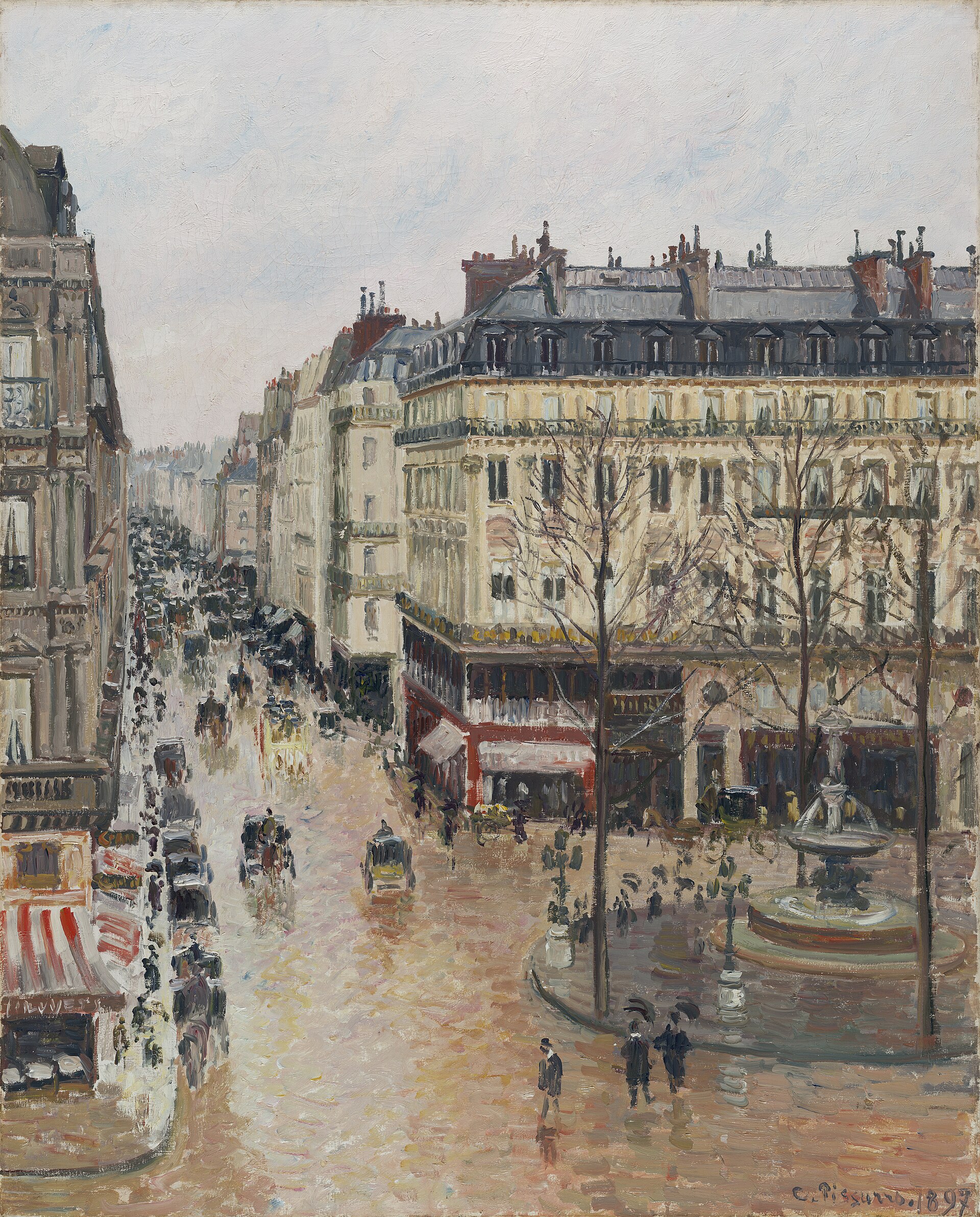
Only two records in this archive end on a link where somebody else is asserting a better right to the object. Pissarro's Rue Saint-Honore, dans l'apres-midi, effet de pluie was given up by Lilly Cassirer Neubauer in 1939 in exchange for an exit visa, and the Thyssen-Bornemisza Collection Foundation acquired it in 1993 under a contract with Favorita Trustees as part of a purchase of 775 works. The foundation holds that its title is valid and incontestable under Spanish law and the Cassirer heirs dispute that. Every United States court to reach the merits has so far upheld the foundation, and no such judgment currently stands: the Supreme Court acted on 10 March 2025, and on 30 April 2025 the Ninth Circuit granted the plaintiffs' motion and remanded the case to the district court.
The second is the Salvator Mundi attributed to Leonardo, sold at Christie's New York on 15 November 2017 for 400 million dollars at the hammer. Prince Badr bin Abdullah al-Saud was named as the buyer and the Department of Culture and Tourism of Abu Dhabi also made a statement about the purchase. The panel was in Paris in 2018 for examination, was absent from the Louvre's 2019 Leonardo retrospective and has not been publicly exhibited since. Here the dispute is not over a wartime loss but over who, precisely, owns it now.
The three where the institution has not published its own acquisition
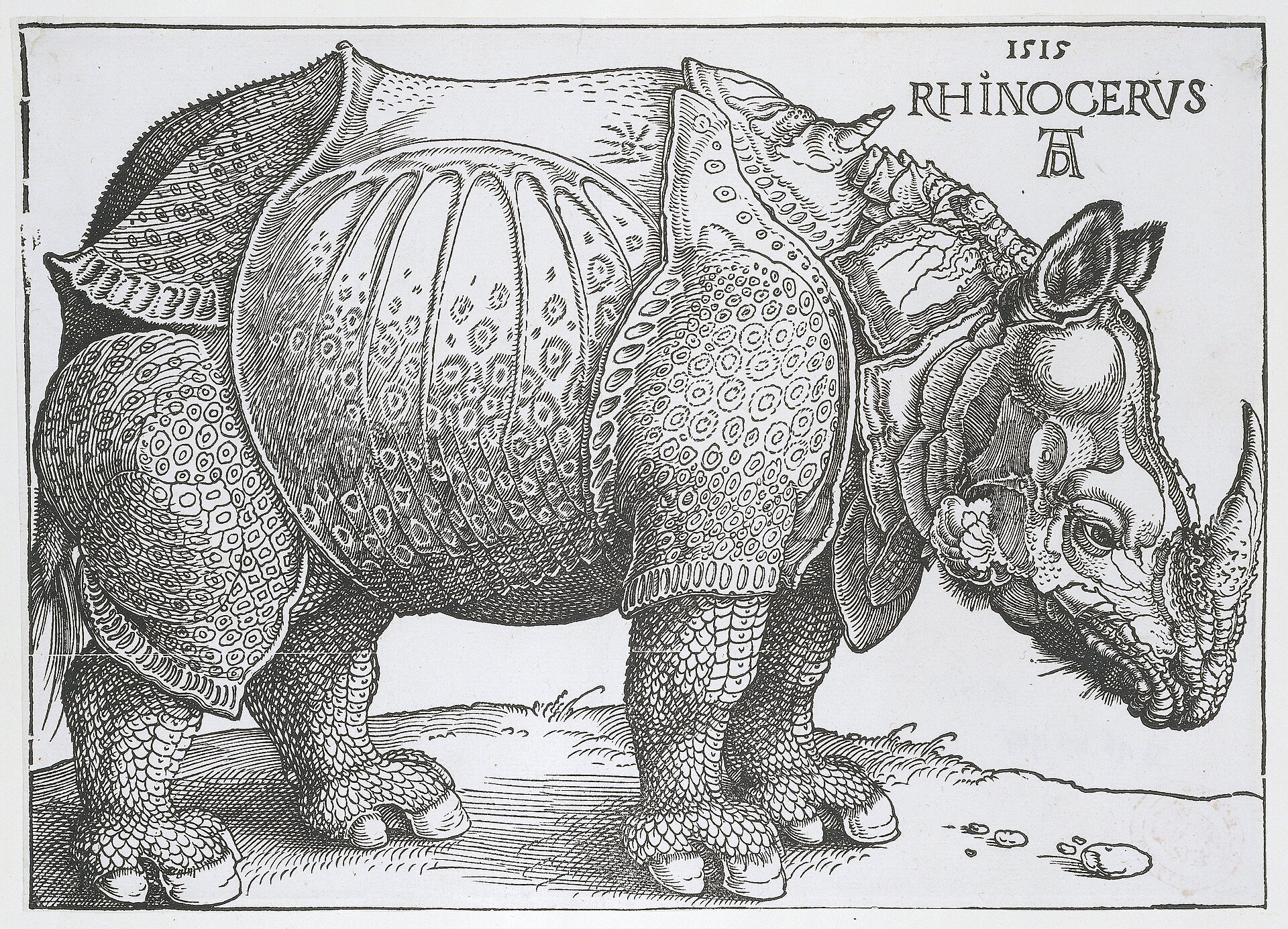
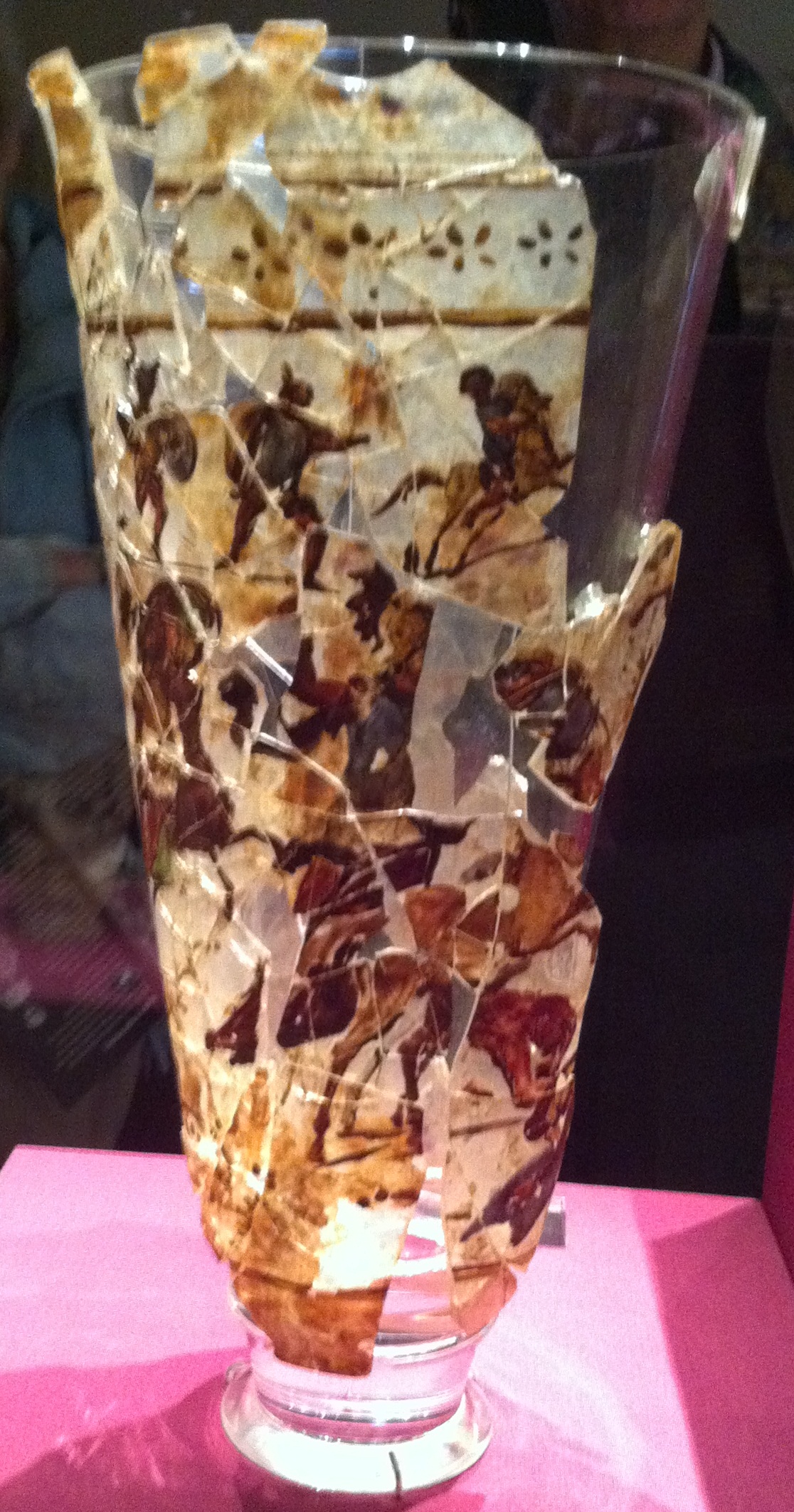
Three records end on an unknown link because the holder has not said how the object arrived. The Rijksmuseum holds Durer's Rhinoceros under object number RP-P-OB-1473 and its own online catalogue entry does not give the date or the source of acquisition, so this archive supplies neither. The National Museum of Afghanistan holds the Begram glass goblet and the sources consulted give no exact date for its return to Kabul after the travelling exhibition of the Bactrian material. The Usak hippocamp brooch was announced as returning to Turkey in November 2012, and no source consulted names who held it in Germany, on what basis it was surrendered, or by what test the returned object was identified as the original rather than a second copy.
None of these is a title dispute and all three are archival failures by an institution about its own holding. The Usak case is the most consequential, because the theft of the original brooch was detected in the first place by weighing the object on display and finding it light. An object identified by weight, stolen, replaced with a copy and then recovered needs its identification test written down, and it has not been.
The one nobody has looked at, and the one nobody can find
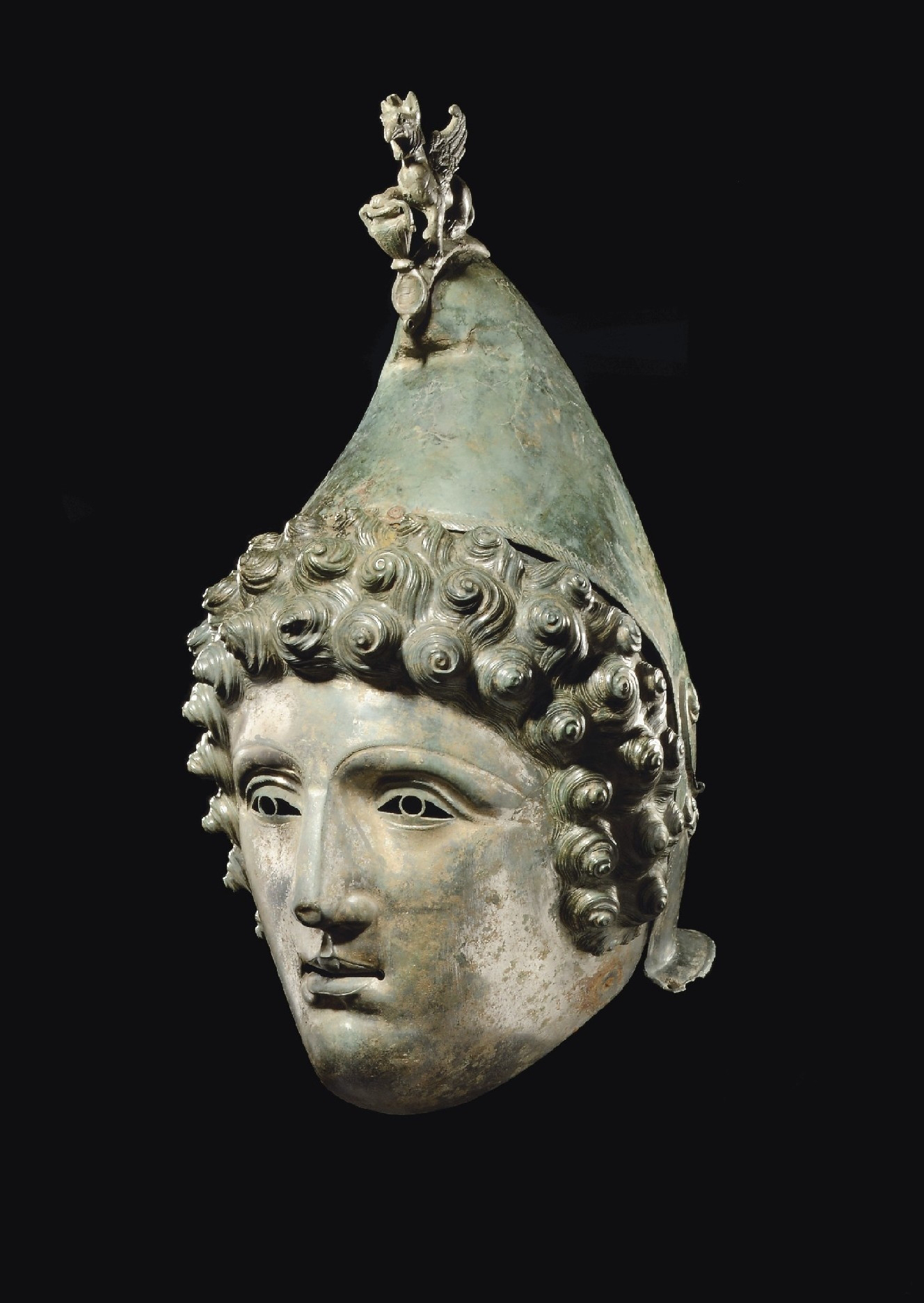
The Crosby Garrett helmet is graded unknown at the end for a reason no institution could fix. A Roman cavalry parade helmet found by a metal detectorist in Cumbria in 2010, it sold at Christie's that October to an anonymous private buyer, and it was lent to the Hadrian's Cavalry exhibition in 2017. Nothing has been documented since. Whether the 2010 buyer is still the owner is not established, and a private owner who does not lend, sell or speak generates no evidence at all.
The Honjo Masamune is the limiting case. Tokugawa Iemasa surrendered it with other swords at a Tokyo police station on 18 January 1946 and it has not been seen since. Its final link is an event rather than an owner, and its owner field reads unknown because the object left the documentary record entirely. A record that ends this way is not incomplete: it is the accurate description of an object that exists somewhere and has no traceable present.
What this means for anyone reading a provenance for a decision
A reader doing diligence on an object should expect the recent end of the chain to hold and should spend the effort at the old end. The numbers here say the last link is documented 97 times in a hundred, and that the two links most likely to fail are the first two. That is the opposite of how a provenance is usually read, which is from the top down until something looks wrong.
It also says that a weak last link is worth stopping for, because it is rare and because its cause is diagnostic. A disputed last link means an active claim. An unknown last link on an institutional holding usually means the institution has not published its own acquisition file, which is a question that can be asked and often answered. An unknown last link on a private holding may simply mean that nobody has had occasion to look, and that no amount of research will change until the object moves.
Why this archive is free to read
We do this for everyone who loves art. The people who have studied it for years, and the people who just stopped to look. Iconotheca exists so that what we learn belongs to all of them.
Nobody pays us for this. No ads, no sponsors, no commercial interest. These works belong to all of us, and we would rather share them with as many people as we can than keep them to ourselves.
If it gave you something today, tell us to keep going. Follow us, leave a like, or write a positive comment. We read every one, and they are what keeps us going.
Questions
At the beginning. Measured across 1,868 graded ownership links in this archive, the earliest fifth of a chain is 63 per cent documented and the most recent fifth is 96 per cent. The first link in a record is documented in 187 of 266 cases and the last link in 259 of 266.
Usually not by itself. In this archive the gaps cluster at the old end of the chain, where documents were never created or have not survived, while present ownership is documented in 97 per cent of records. A weak link close to the present is the one that should stop a reader, because it is rare.
The Supreme Court acted on 10 March 2025, and on 30 April 2025 the Ninth Circuit granted the plaintiffs' motion for remand and sent the case back to the district court for proceedings consistent with that opinion. Every United States court to reach the merits had previously upheld the Thyssen-Bornemisza Collection Foundation, but no such judgment currently stands.
Because the acquisition record and the public catalogue entry are different documents, and many online entries carry the object number, the date of the work and the credit line without the date or source of acquisition. The Rijksmuseum's entry for its impression of Durer's Rhinoceros is an example: the object number is given and the acquisition is not.
By recording the last documented event and stopping there. The Honjo Masamune was surrendered at a Tokyo police station on 18 January 1946 and has not been seen since, so the final link in its chain is that surrender and its owner field reads unknown. Naming a speculative present holder would be an invention.
Sources
- 1United States Court of Appeals for the Ninth Circuit, Cassirer v. Thyssen-Bornemisza Collection Foundation, No. 19-55616, Order filed 30 April 2025, on remand from the Supreme Court. Read in the court's own published PDF: 'Plaintiffs-Appellants' Motion for Remand to the District Court (Dkt. 182) is GRANTED.' cdn.ca9.uscourts.gov/datastore/...
- 2Rijksmuseum, Amsterdam, catalogue entry for Rhinocerus (Neushoorn), Albrecht Durer, object number RP-P-OB-1473. Consulted for the acquisition information the entry does and does not carry. rijksmuseum.nl/en/...
- 3Worrell, S., 'The Crosby Garrett Helmet', Papers from the Institute of Archaeology, University College London, on the 2010 find, the Treasure Act position and the sale. student-journals.ucl.ac.uk/pia/...
- 4Musee Guimet, collections page for the Begram material, 'Two female figures under a portico (Begram treasure)', for the hoard and its travelling history. guimet.fr/en/...
- 5The Art Newspaper, 'National Museum of Afghanistan reopens - but staff are unpaid and Taliban control the building', 10 December 2021, for the museum's condition and the return of travelling material. theartnewspaper.com/2021/...
More in Provenance and Restitution
The partA return is a new arrangement, not a conclusion
Four contested antiquities, four different things a return turned out to be: a renaming, a rotating loan, a forfeiture nobody enforced and a broken...
When the Only Proof of Where an Object Was Is a Photograph
The Third Imperial Easter Egg was photographed once, in March 1902, and that single plate is what identified it in 2014.
Moved for Safekeeping Is a Link in the Chain
Nine evacuations in this archive: three objects never returned to the building they left, one came back unrecognised and title changed once, by a...