The Honjo Masamune
Goro Nyudo Masamune (attributed) · Late Kamakura period, first half of the fourteenth century (attributed)
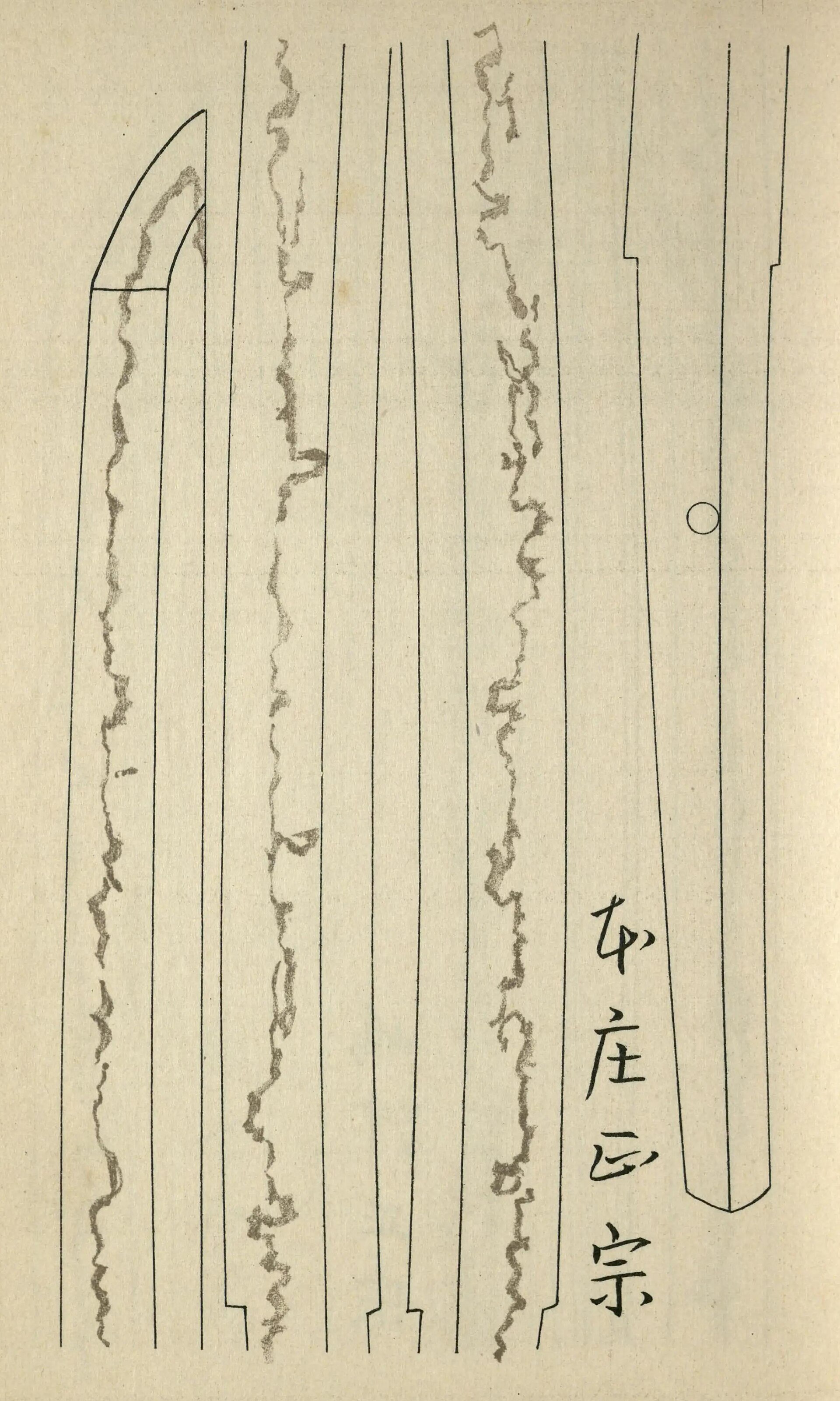
The record subject, and the only kind of image of it that exists. This is an oshigata, a traced and rubbed record of the blade made by the seventeenth-century smith Tsuguhira, printed in 1928 in a volume that also carries the collected oshigata of Honami Kotoku and Honami Koon. It is not a photograph; no photograph of the sword is known. Three oshigata of this blade survive and they do not agree with each other, and all of them conventionally omit the combat chips in the edge that the 1939 designation text records.
| Artist | Goro Nyudo Masamune (attributed) |
|---|---|
| Date | Late Kamakura period, first half of the fourteenth century (attributed) |
| Medium | Forged and folded steel; shinogi-zukuri with iori-mune |
| Dimensions | Nagasa 65.2 cm (2 shaku 1 sun 5 and a half bu), sori 1.7 cm, as recorded in the 1939 designation and in the Agency for Cultural Affairs register |
| Where it is now | Unlocated since January 1946. Listed by the Japanese Agency for Cultural Affairs on its public register of nationally designated cultural properties whose whereabouts are unknown.last confirmed 4 August 2026 |
| Inventory number | No inventory number. Matched to Agency for Cultural Affairs missing-property register entry 63 on the designation year and the length; the Agency does not use the name Honjo Masamune |
| Attribution | AttributedThe blade is mumei, unsigned, and o-suriage, shortened from the tang end, so any signature it may once have carried was cut away. Full note |
| Object type | Arms and armour |
| Period | Japanese, Kamakura period |
| Cases | Has a provenance gap |
| Inscriptions | None. The blade is mumei and o-suriage, with one mekugi-ana. No gold-inlaid attribution (kinzogan-mei) is recorded for it. |
| Owners on record | 10 links2 documented, 7 disputed, 1 unknown |
| Sources | 13 cited |
About this record Last verified 3 September 2026 · 13 sources cited · Change log
On this page 11 sections
ContentsClose
A katana of about 65 centimetres, attributed to Masamune, that stood as the object of the Tokugawa shogunate: after Tokugawa Ietsuna received it in the seventeenth century it was handed symbolically to each succeeding shogun on taking office. It was designated a National Treasure on 29 May 1939. In December 1945 Tokugawa Iemasa, seventeenth head of the house and President of the House of Peers, took it with other family swords to the Mejiro police station in Tokyo under the occupation order to surrender all blades. On 18 January 1946 the police handed them to an American sergeant whose name was written down phonetically in katakana. Nobody has seen the sword since, and nobody has ever identified the sergeant.
The record exists because of what stands behind it. Japanese swords carry the oldest continuous authentication system in world art: the Honami family, appointed by Toyotomi Hideyoshi in the 1590s as the sword-authentication office with an official seal, who issued folded certificates called origami that stated a blade's maker and its value in gold, and whose fee was a percentage of the value they themselves assigned. That is a hereditary authentication board with an interest in the number it writes down, and its documented failures are as instructive as its successes.
The Honjo Masamune is also, legally, no longer a National Treasure. All pre-war designations were reduced to Important Cultural Property in 1950 and had to be re-submitted to regain the higher rank. A sword that has been missing since 1946 cannot be re-submitted. The most important lost object in Japanese art lost its status by not being there.
Provenance
Each link is graded. Documented: a cited source supports it. Disputed: the identification is argued but not established. Unknown: no owner for that span, and the gap is not smoothed into a narrative. The grades in the glossary.
- c. 1300-1340 - before 1561Made in Sagami province, attributed to Goro Nyudo Masamunedisputed
Unsigned and later shortened. The attribution is traditional and was recorded by the Honami before it was ratified by the 1939 designation. Two named connoisseurs who examined the blade, Imamura Choga in 1880 and Honami Koson in 1943, doubted it on quality grounds. The state's own register calls it only attributed to Masamune.13
- before 1561 - c. 1561Umanosuke, a retainer in an army opposed to the Uesugidisputed
The Kyoho Meibutsucho entry says only that Umanosuke carried it. How he came by it is unrecorded, and as Schiller observes, the original owner was in no condition to be asked. English Wikipedia places the encounter at the battle of Kawanakajima in 1561; the Meibutsucho entry places it after the siege of a castle during one of the Uesugi campaigns and does not name the battle.34
- c. 1561 - 1590sHonjo Shigenaga (1540-1614), general under Uesugi Kenshin and Uesugi Kagekatsudisputed
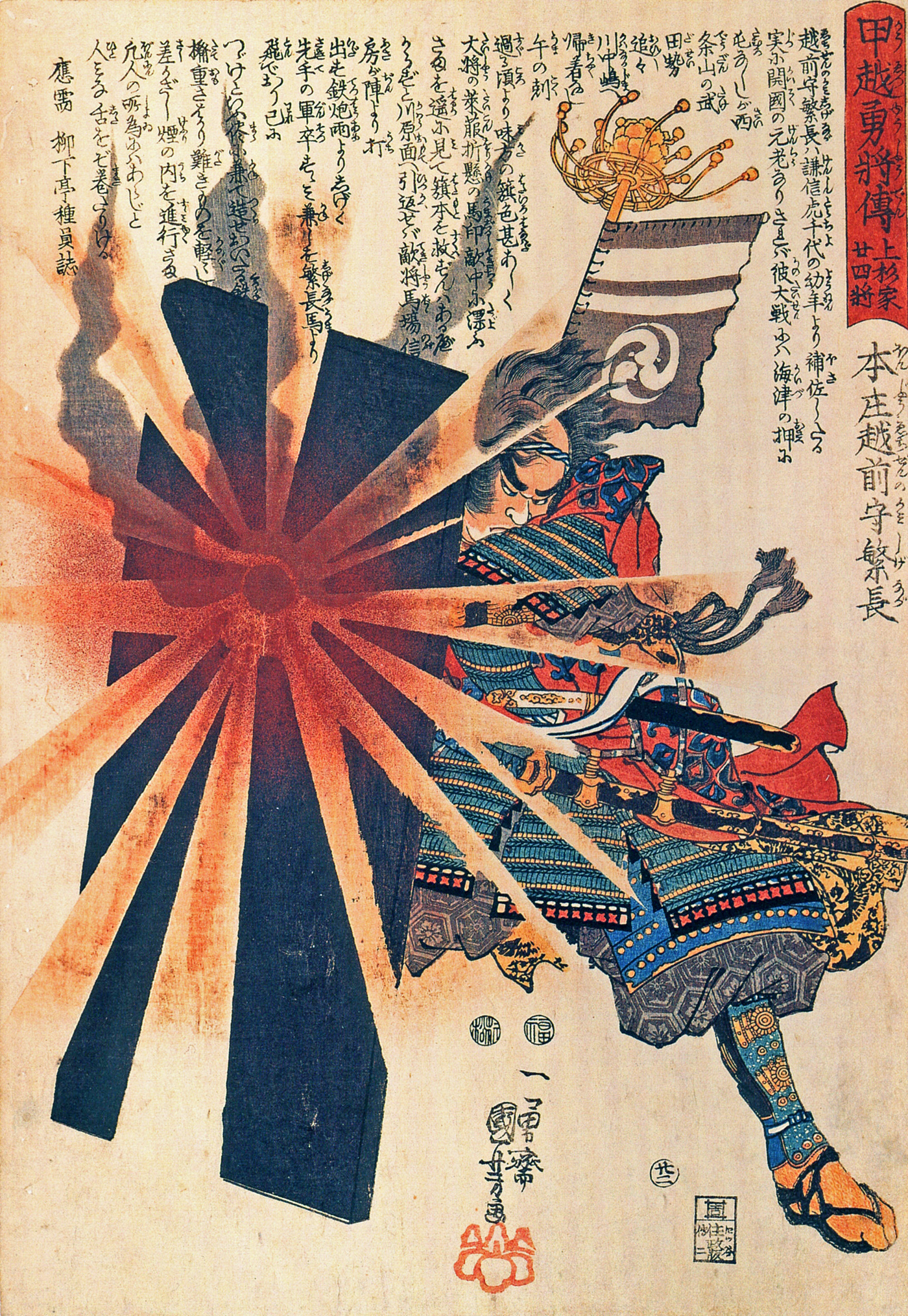
Shigenaga was seated on a folding camp stool receiving captured heads when Umanosuke attacked him and cut his helmet in half, seriously wounding him, before Shigenaga killed him. The sword took a couple of chips in the edge, hakobore, from cutting through the kabuto. Shigenaga kept it and it took his name. The chips were still there in 1939: the designation records one large hakobore near the base, several smaller ones along the edge, and kirikomi, cuts, on the back of the blade. Those marks were deliberately left in the polish and are traditionally not shown in an oshigata. Graded disputed rather than documented: the sole authority for this link is the Kyoho Meibutsucho of 1719, a register compiled by the Honami more than a century after the events it records, and known to this record through a single modern study of it.34
- 1590s - 1595Toyotomi Hidetsugudisputed
Shigenaga, stationed at Fushimi and short of funds, sold the sword to Hidetsugu, nephew of Toyotomi Hideyoshi, for 13 mai of gold. Hidetsugu was forced to commit suicide in 1595. Graded disputed rather than documented: the sole authority for this link is the Kyoho Meibutsucho of 1719, a register compiled by the Honami more than a century after the events it records, and known to this record through a single modern study of it.34
- 1595 - 1600sToyotomi Hideyoshi, then Shimazu Yoshihirodisputed
Hidetsugu presented it to Hideyoshi; it then went to Shimazu Yoshihiro, who gave it to Tokugawa Ieyasu. English Wikipedia inserts a second passage back to Hideyoshi between Shimazu and Ieyasu; the Kyoho Meibutsucho as translated by Schiller does not. The discrepancy is recorded rather than resolved.34
- 1600s - 1651Tokugawa Ieyasu, then Tokugawa Yorinobu, then Tokugawa Ietsunadisputed
Ieyasu gave it to his son Yorinobu, founder of the Kii branch, who presented it on the occasion of his retirement to the shogun Tokugawa Ietsuna. Graded disputed rather than documented: the sole authority for this link is the Kyoho Meibutsucho of 1719, a register compiled by the Honami more than a century after the events it records, and known to this record through a single modern study of it.3
- 1651 - 1868The Tokugawa shoguns, as an object of the officedisputed
Schiller states that after Ietsuna received it the sword became one of the treasure swords of the Tokugawa and was symbolically presented to each succeeding shogun on taking office, which places it with the shogunal succession rather than with a branch house. English Wikipedia says instead that it remained in the Kishu Tokugawa family. Both readings are in print; the succession account is the better argued and is the one that explains why the sword mattered.34
- 1868 - 1945Tokugawa Iesato, then Tokugawa Iemasa (1884-1963), seventeenth head of the Tokugawa housedocumented
Iesato, from the Tayasu line, became sixteenth head of the Tokugawa after the fall of the shogunate. Iemasa was his eldest son and succeeded him. Iemasa served as President of the House of Peers. His only son Iehide died in 1936, and he adopted Tokugawa Tsunenari, his daughter's son, who is the present head of the house.3
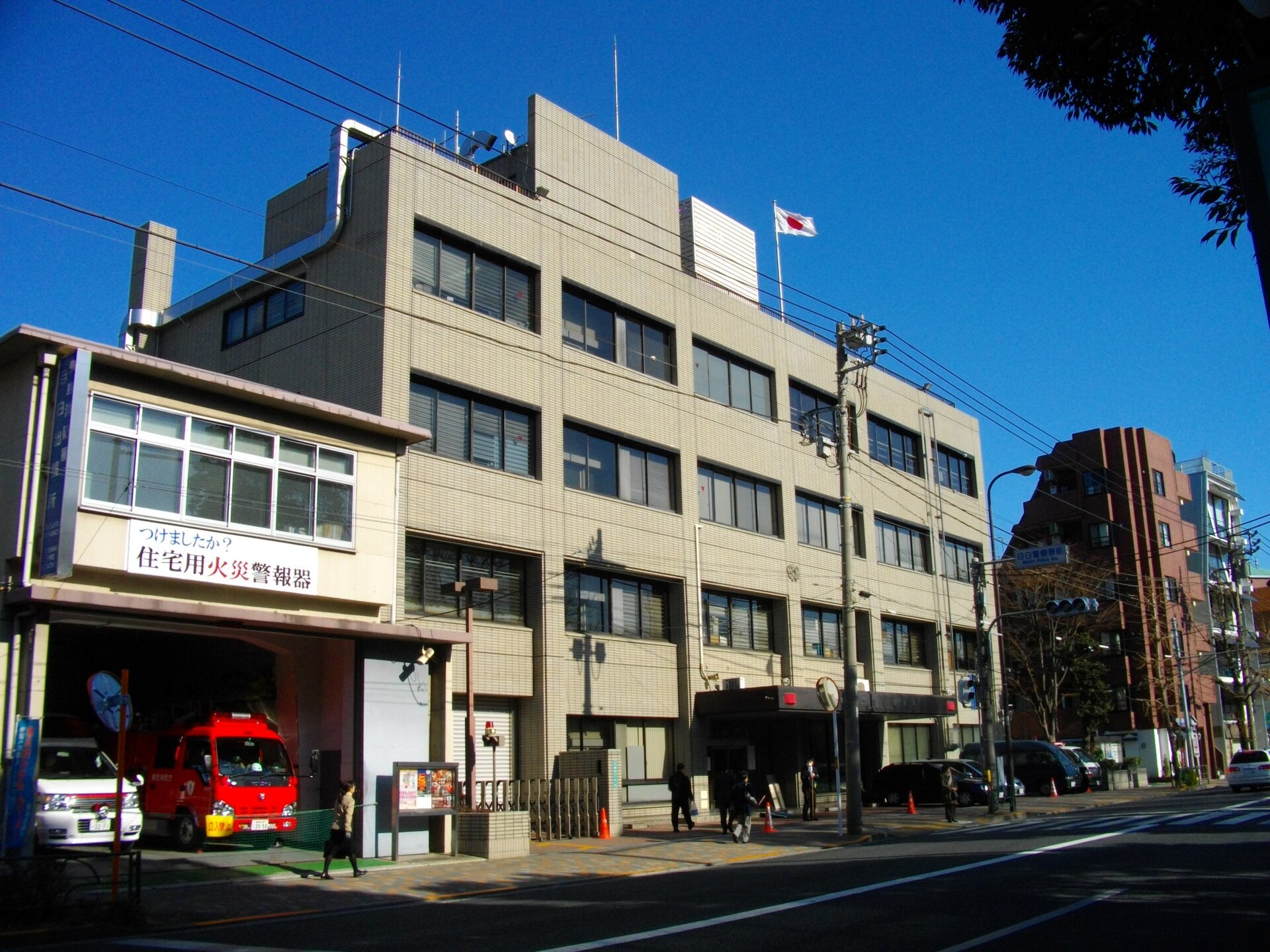
- 1945-12 - 1946-01-18Mejiro police station, Tokyodocumented
Under the occupation order to surrender all swords, Iemasa took the Honjo Masamune with other family blades to the Mejiro police station in December 1945. English Wikipedia says thirteen other prized heirloom swords went with it, fourteen in all; Schiller says only that other swords went with it and gives no number. On 18 January 1946 the police handed the swords to an American sergeant, reportedly of the 7th Cavalry Regiment per Schiller, and of the Foreign Liquidations Commission of Army Forces Western Pacific per Wikipedia. The two accounts are not reconciled anywhere consulted.34
- 1946-01-18 - presentUnknownunknown
The sword has not been seen since. Iemasa complained to the authorities, since swords of artistic and historic merit were supposed to be examined and returned; he was told it could not be found and had probably gone abroad. Schiller records that his letters, and those of other owners of important swords, were answered elaborately and politely, but that no thorough investigation appears to have been launched. No claimed rediscovery has ever been substantiated.
Prices realised
The Honjo Masamune has never been offered at auction and no valuation for it has ever been published. Its entry in the 1719 Kyoho Meibutsucho, the shogunate's own register of famous objects, is marked mudai, no value given: the only register that could have priced it declined to. No blade attributed to Masamune could be traced to any public sale in the sources consulted. The figures given in the narrative are for other swords, above all for the National Treasure tachi Yamatorige bought by the city of Setouchi, and are there only to establish what this class of object does when it is for sale at all.
Technical evidence
| Attribution note | The blade is mumei, unsigned, and o-suriage, shortened from the tang end, so any signature it may once have carried was cut away. The Japanese state's register of missing designated properties carries an entry, number 63, whose designated name is not Honjo Masamune but katana, unsigned, attributed to Masamune. The state does not make the identification; the 1939 designation year and the length of 65.2 cm do, and this record treats that as very strong but not as the state's own finding. The attribution therefore rests entirely on connoisseurship, and it was doubted by two of the best judges who ever handled it: Imamura Choga in 1880 and Honami Koson in 1943, both of whom found the blade artistically unremarkable whatever its historical weight. Against that, Homma Junji, who ran the pre-war survey for the designation of swords as national treasures, compared its shape and the fullness of its section to the meibutsu Ishida Masamune. The blade has been missing since 1946, so nobody can look again. |
|---|---|
| Length | Nagasa 65.2 cm, given in the 1939 designation as 2 shaku 1 sun 5 and a half bu. Curvature 1.7 cm. The Agency for Cultural Affairs register gives the same 65.2 cm.13 |
| Construction | Shinogi-zukuri with iori-mune; wide mihaba, thin kasane, extended kissaki, narrow shinogi-ji and a high shinogi. No horimono.3 |
| Forging and hardening | Ko-itame-hada with fine ji-nie, chikei and tobiyaki. Hamon in ko-nie forming o-midare and ko-midare with kinsuji and ashi; boshi midarekomi.3 |
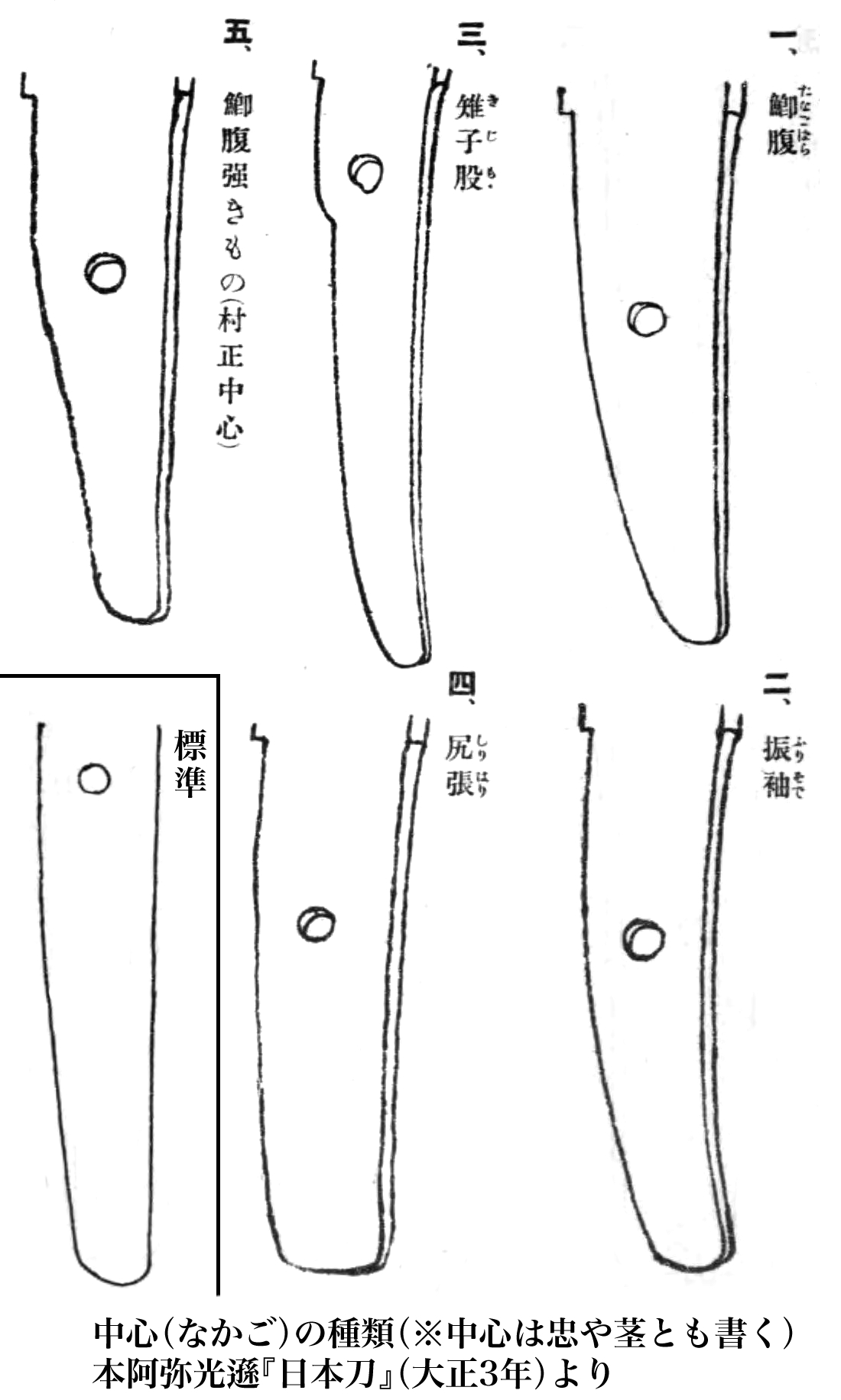
| Tang | O-suriage, greatly shortened, with one mekugi-ana. No signature and no recorded gold-inlaid attribution. The legal designation name is katana, unsigned, attributed to Masamune.13 |
| Combat damage, left in deliberately | One large chip (hakobore) near the base, several smaller chips along the edge, and kirikomi on the back of the blade, recorded in the designation text. The damage dates from Umanosuke's attack on Honjo Shigenaga and was never polished out; it is traditionally omitted from oshigata.3 |
| Original length | Said to have been 2 shaku 8 sun, about 84.9 cm, before shortening. Reported as tradition rather than as record.3 |
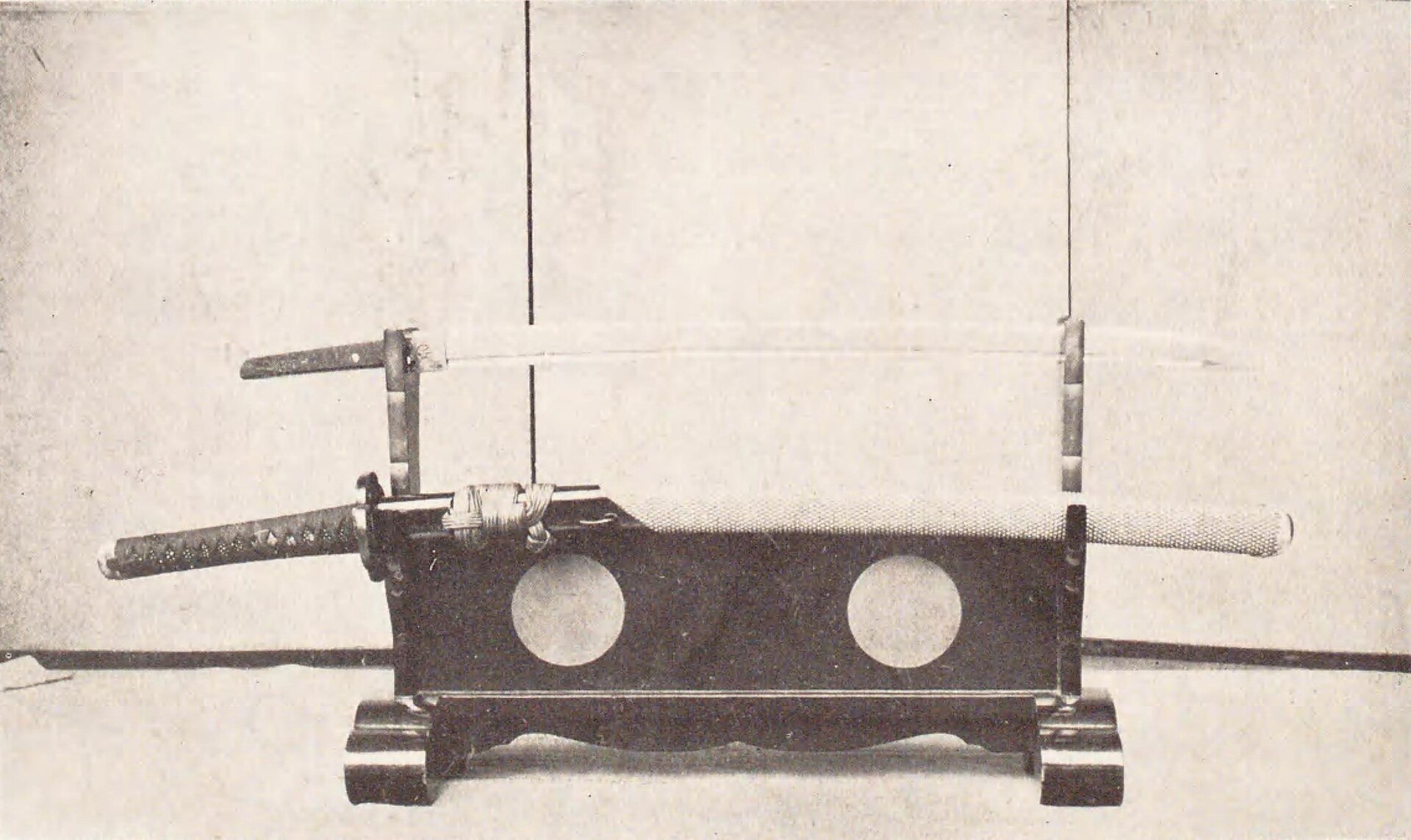
| Mounting | A Momoyama-period uchigatana koshirae: black same on the hilt, indigo deer-leather wrap, three paulownia crests on each menuki, paulownia and chrysanthemum on the guard and collar, kozuka and kogai in gold. A description published in 1912 gives the mounted length as 86.4 cm, a horn kashira, a guard 6 cm across, black lacquer scabbard without a chape and a purple cord.3 |
| Register entry | Agency for Cultural Affairs missing-property register, entry 63: Important Cultural Property, designated Showa 14 (1939), 65.2 cm, individual owner, Tokyo, no theft recorded. The register does not use the name Honjo Masamune; the identification rests on the coincidence of the designation year and the length.12 |
| Designation status | Designated National Treasure on 29 May 1939 under the National Treasures Preservation Law. Reduced with all pre-war designations to Important Cultural Property in 1950; re-designation required re-submission, which a missing object cannot undergo. Fourteen pre-war National Treasures went missing after the war and none could be re-designated.13 |
| Visual record | At least three oshigata are known, by the seventeenth-century smith Tsuguhira, by a member of the Honami family, and one of unknown origin in a private Japanese collection. The other two are described as much more detailed than the Tsuguhira tracing and probably not fully superimposable with it; lines in the Tsuguhira tracing appear to have been redrawn for the 1928 printing because the original paper had degraded. No photograph of the blade is known.312 |
Images
The record in full
Chapter 1What is missing
The blade was 65.2 centimetres long with a curvature of 1.7 centimetres, made in shinogi-zukuri with an iori-mune, a wide body and a thin section, an extended point, a narrow shinogi-ji and a high...
The blade was 65.2 centimetres long with a curvature of 1.7 centimetres, made in shinogi-zukuri with an iori-mune, a wide body and a thin section, an extended point, a narrow shinogi-ji and a high ridge. The forging was fine ko-itame with ji-nie, chikei and tobiyaki. The hardened edge ran in ko-nie forming o-midare and ko-midare with kinsuji and ashi, and the boshi turned back in midarekomi. There were no carvings. The tang was o-suriage, greatly shortened, with a single peg hole.
That description is not a modern reconstruction. It is the text of the sword's own designation as a National Treasure, written when it was last examined by the state, and it is the fullest account of the object that survives. It also records the damage: one large chip in the edge near the base, several smaller chips along the edge, and cuts across the back of the blade. Those marks were combat damage from the sixteenth century, and the polishers deliberately left them in. They are traditionally not shown in an oshigata, which means the only pictures of this sword are pictures with the evidence edited out.
Chapter 2How it was taken, and why it kept the marks
The story is in the Kyoho Meibutsucho, the shogunate's own register of famous objects.
The story is in the Kyoho Meibutsucho, the shogunate's own register of famous objects. During one of the Uesugi campaigns, after a siege, Honjo Shigenaga was sitting on a folding camp stool receiving captured heads when a man named Umanosuke attacked him and cut his helmet in half, wounding him seriously, before Shigenaga killed him. The sword that did it took a couple of chips in the edge from going through the kabuto. Shigenaga survived, kept the sword, and it has carried his name ever since.
How Umanosuke came by a Masamune in the first place is unrecorded. As Guido Schiller puts it in the fullest study of the sword, the original owner was in no condition to answer questions.
What matters for a provenance archive is the chips. Japanese sword polishing removes metal, and a polisher's decision about what to take out is a decision about what a blade is for. Leaving four hundred years of battle damage in the edge of a National Treasure is a statement that the object's history outranks its appearance. The 1939 designation text records the damage precisely because by then the damage was part of the object. And English Wikipedia places the fight at Kawanakajima in 1561, while the Meibutsucho entry names no battle at all. The most famous incident in the sword's life is not securely located.
Chapter 3The register that recorded no value
The Kyoho Meibutsucho was compiled in 1719 by Honami Mitsutada at the command of the shogun Tokugawa Yoshimune.
The Kyoho Meibutsucho was compiled in 1719 by Honami Mitsutada at the command of the shogun Tokugawa Yoshimune. It was the first time objects other than tea utensils, lacquer, painting and ceramics were formally registered as meibutsu, famous things, and it runs to three volumes and an appendix covering swords by the three great smiths, swords by other smiths, fire-damaged blades and further additions.
Its entries are short by design. Schiller describes the form: the register basically states the owner of a sword, its nickname and its length, and then gives a brief history. The Honjo entry keeps to that. It says gyobutsu, which in the Edo period meant the property of the shogun; suriage, shortened; nagasa 2 shaku 1 sun 5 and a half bu; and then mudai, no value given.
Mudai is not a blank. It is a positive entry meaning that no valuation is assigned, made in a document produced by the family whose certificates existed to assign valuations and whose fee was a percentage of them. Whether other entries in the register carry values is not established in the sources consulted, and this record does not claim it. What can be said is narrower and still worth saying: the object that stood for the shogunate was entered in the shogun's own register of famous things with an explicit refusal to price it.
Chapter 4A hereditary authentication board, and how it was paid
The Honami have no counterpart in the European art trade that this archive has found.
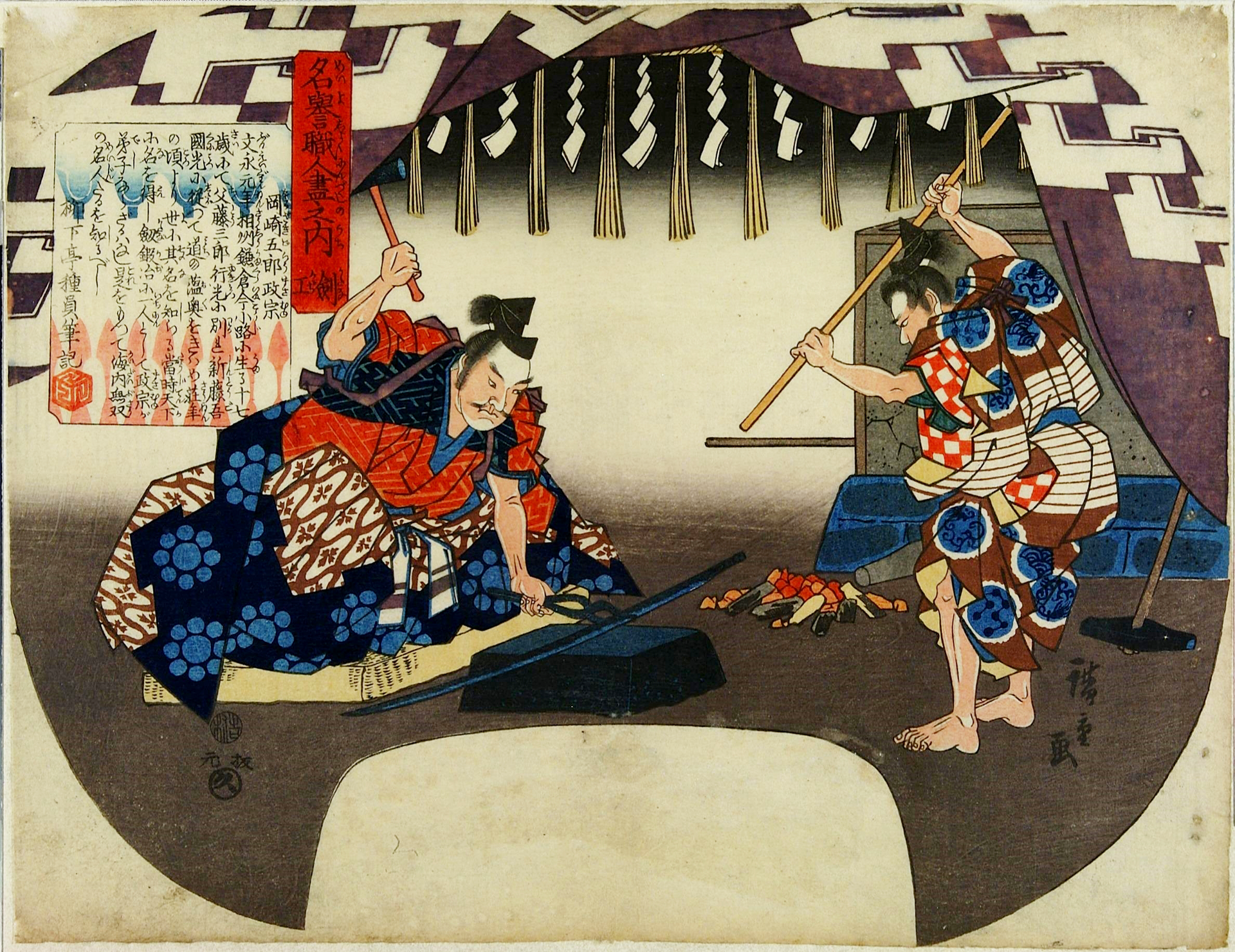
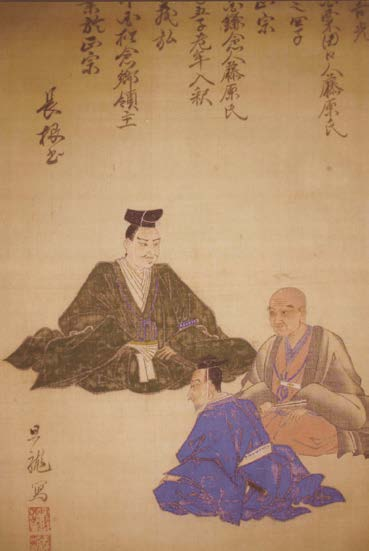
The Honami have no counterpart in the European art trade that this archive has found. The family descends from Honami Myohon, an attendant in the cultural circle of Ashikaga Takauji, first shogun of the Muromachi bakufu, in the fourteenth century. They polished swords, maintained them and judged them, generation after generation, through the Ashikaga, the Toyotomi and the Tokugawa.
The authority became formal under the ninth head, Honami Kotoku, who worked for Oda Nobunaga, Toyotomi Hideyoshi and Tokugawa Ieyasu in turn. In 1596 or 1597 Hideyoshi appointed Kotoku token kiwamedokoro, the office of sword authentication, and granted him a square seal reading hon, with authority to appraise swords and to write their value on a folded paper. That grant is the origin of the certificate and, through it, of the modern Japanese word origami.
An origami is a single sheet of high-quality paper, hoshogami or danshi, written on one side and folded in two. It gives the smith, a finding that the blade is genuine, the measurements and characteristics, the date with its zodiac year, the appraiser's name and his written cipher, the seal stamped on the reverse, and the daitsuke, the valuation. Values were written in mai of gold, in oban, or in kan. Five mai of gold. Thirty-five mai. Seven hundred kan. A Soshu Sadamune at fifty oban.
Now the part that a provenance archive cannot leave out. The Honami fee was ten mai of silver for every hundred mai of gold in the valuation. The appraiser set the number, and his income was a percentage of the number he set. Between about 1600 and 1750 the thirteen Honami branch families met once a month to issue certificates in a standardised form, which is a genuine collegiate check, and the certificates of the tenth through thirteenth generations, from Koshitsu to Kochu, are still the ones collectors trust most. But the incentive ran one way throughout, and it ran towards the higher number.
Chapter 5Where the system failed, in its own vocabulary
A tradition that has been authenticating continuously for six hundred years has had time to name its own failure modes, and the names are the evidence.Tanuma origami is the term for the certificates...
A tradition that has been authenticating continuously for six hundred years has had time to name its own failure modes, and the names are the evidence.
Tanuma origami is the term for the certificates of the Tanuma era of the 1770s and 1780s, when they were issued in such volume that they lost their meaning. The phrase is pejorative and it is still in use.
Awase origami means deliberately attaching another sword's certificate to a blade in order to raise its value. That is a named, categorised, understood species of fraud inside the system, which tells you it was common enough to need a word.
And then the number that settles the argument. Kotoku himself was known for his integrity and for refusing to judge doubtful blades submitted by powerful people. His successors issued three thousand origami and paper attributions to Masamune. Masamune could not have forged three thousand swords in his life. The board that authenticated the Honjo Masamune also certified thousands of blades as Masamune that were not, and it did so under exactly the commercial and social pressure a hereditary appraiser to the great houses would be under: it would have been extremely difficult to tell a daimyo his sword was a fake.
Modern scholarship has unpicked individual cases. The Kotegiri Masamune was attributed to Yukimitsu while Sano Nobuyoshi owned it and was known as the Sano Yukimitsu; after Maeda Toshitsune acquired it, it became a Masamune. Markus Sesko calls that attribution dubious and argues for Sadamune. The pattern is that a blade's maker improved as its owner's rank improved.
Chapter 6The man who said Masamune never existed
Because so few blades carry his signature, a theory took hold at the end of the nineteenth century that Masamune was an invention.
Because so few blades carry his signature, a theory took hold at the end of the nineteenth century that Masamune was an invention. Its author was Imamura Nagayo, whose name is also read Choga, a sword appraiser who served as keeper of swords at the Imperial Household Ministry, and he published it in 1896 as a serial commentary in the Yomiuri Shimbun, which meant the argument ran in the newspapers and the whole sword world had to answer it in public.
His case was specific. He had never seen a genuine signed Masamune. Masamune's reputation as a master appears only after Hideyoshi's era, and earlier texts do not list him among the celebrated makers. His name is absent from the list of one hundred and eighty-two master craftsmen selected in the time of Ashikaga Yoshimitsu. And the Honami family, hereditary polishers and appraisers, had created the Masamune legend under Hideyoshi's political direction. The theory was abandoned as scholarship advanced, and the consensus is that Masamune was a real smith of the late Kamakura and early Nanbokucho periods. Three signed works, the Fudo Masamune, the Kyogoku Masamune and the Daikoku Masamune, are accepted, and two further long-signature blades dated 1314 and 1328 are known from records and are lost.
The detail that ties the argument to the object is this. Imamura is the same man who examined the Honjo Masamune in 1880 and came away unimpressed. The scholar who proposed that Masamune was a fiction had handled the greatest Masamune of all, sixteen years earlier, and thought it ordinary.
Chapter 7The sword of the office
Shigenaga was stationed at Fushimi, ran out of money, and sold the blade to Toyotomi Hidetsugu, Hideyoshi's nephew, for thirteen mai of gold.
Shigenaga was stationed at Fushimi, ran out of money, and sold the blade to Toyotomi Hidetsugu, Hideyoshi's nephew, for thirteen mai of gold. Hidetsugu was forced to kill himself in 1595. He had already presented the sword to Hideyoshi. It passed to Shimazu Yoshihiro, who gave it to Tokugawa Ieyasu, who gave it to his son Tokugawa Yorinobu, founder of the Kii branch, who presented it to the shogun Tokugawa Ietsuna on his retirement.
From Ietsuna the sword stopped being a possession and became an attribute of an office. Schiller states that it became one of the treasure swords of the Tokugawa and was handed symbolically to each succeeding shogun when he took office. English Wikipedia says instead that it remained in the Kishu Tokugawa family. Both are in print. The succession reading is the better argued and it explains something the other does not: why this particular blade, out of the many fine swords the Tokugawa owned, is the one that everybody in Japan can name.
After 1868 the sword went with the head of the house rather than with the office, because the office no longer existed. Tokugawa Iesato became the sixteenth head. His eldest son Tokugawa Iemasa became the seventeenth, and was President of the House of Peers. Iemasa's only son Iehide died in 1936, so he adopted his daughter's son, Tokugawa Tsunenari, who heads the house today.
Chapter 8December 1945
Under the occupation the manufacture of edged nihonto was banned except by permit, and all swords were ordered surrendered.
Under the occupation the manufacture of edged nihonto was banned except by permit, and all swords were ordered surrendered. Enormous numbers were destroyed or dumped at sea. In December 1945 Tokugawa Iemasa took his family's swords, the Honjo Masamune among them, to the police station at Mejiro in Tokyo and handed them in. English Wikipedia says there were thirteen others, fourteen in all. Schiller says only that other swords went with it.
On 18 January 1946 the Mejiro police handed the swords over to an American sergeant. Here the two accounts part company again and neither can be reconciled from anything published. Schiller says the sergeant was reportedly of the 7th Cavalry Regiment. English Wikipedia says he represented the Foreign Liquidations Commission of Army Forces Western Pacific. A record that pretends to know which is lying to its reader.
Swords of artistic and historic merit were supposed to be examined and returned to their owners. Iemasa wrote to the authorities. He was told the sword could not be found and had probably been taken abroad. His letters, and those of other owners of important blades, were answered elaborately and politely. No thorough investigation appears to have followed.
The system that would have saved it arrived five months too late in one direction and two years too early in the other. Art swords had already been excluded from the firearms prohibition decree on 1 June 1946, and the society that exists to preserve them was founded in February 1948.
Chapter 9The name that is not a name
The receipt gave the sergeant's name. It has never led anywhere, and the reason is a transcription chain that nobody at the time thought about.The Japanese police wrote the name down phonetically, in...
The receipt gave the sergeant's name. It has never led anywhere, and the reason is a transcription chain that nobody at the time thought about.
The Japanese police wrote the name down phonetically, in katakana, as ko-r-de-i-ba-i-mo. Somebody later turned those syllables back into roman letters as Koridie Beimo. Albert Yamanaka rendered the same syllables as Coldy Bimore, and that version is the one that stuck and the one every retelling uses.
Coldy Bimore is not a name anybody has ever had. There is no interpunct in the katakana of the kind normally used between a foreigner's given name and family name, so it may be one name rather than two. The syllables that produced Coldy would also produce Corey, or Cordy, or Goldy. Extensive efforts have failed to identify or locate any serviceman answering to it, and no source consulted documents a systematic search of United States Army personnel rolls.
What the archive can say precisely is this: no American soldier named Coldy Bimore has ever been identified, and the search has been conducted for eighty years against a target that is a double transliteration of a phonetic guess written by a Japanese policeman in January 1946. The sword was not lost because a receipt was missing. It was lost because the receipt was written in a script that could not hold the name.
Chapter 10It is not a National Treasure any more
The Honjo Masamune was designated a National Treasure on 29 May 1939 under the National Treasures Preservation Law.
The Honjo Masamune was designated a National Treasure on 29 May 1939 under the National Treasures Preservation Law. Almost every account of the sword still calls it one. It is not.
When the Law for the Protection of Cultural Properties came into force in 1950, every pre-war National Treasure was reduced to Important Cultural Property, and objects had to be re-submitted to regain the higher rank. Fourteen pre-war National Treasures had gone missing after the war. None of them could be re-submitted, because re-designation requires an object to examine. Their designations are therefore void in the higher category, and they survive only at the lower one.
The Japanese state records this without comment and with complete precision. The Agency for Cultural Affairs maintains a public register of nationally designated cultural properties whose whereabouts are unknown, published under a campaign asking the public to help recover them. Entry 63 reads: katana, unsigned, attributed to Masamune. Important Cultural Property. Designated Showa 14. Length 65.2 centimetres. Owner: an individual. Prefecture: Tokyo. No theft is recorded, because it was not stolen; it was handed in.
The entry does not use the name Honjo Masamune. The state does not make the identification. It is the 1939 designation year and the 65.2 centimetres that make it, and this record says so rather than pretending the government has confirmed something it has not. Two entries away, entry 62 is another nationally designated katana attributed to Masamune, 72.1 centimetres, designated in 1955, stolen in 1982, also still missing. Japan has lost two designated Masamune, by two different mechanisms, and is still asking.
Chapter 11The board that replaced the Honami, and its own bad decade
The Honami monopoly ended with the Meiji settlement.
The Honami monopoly ended with the Meiji settlement. The collapse was not gradual and it was not dignified: the nineteenth head of the main line pawned the official copper seal, and the last head became a shoemaker. What survived was expertise in branch lines, and one of those branches produced Hon'ami Koson, born Kawaguchi Teikichi in 1879, apprenticed as a polisher at twelve, independent from 1907, the man who introduced the gokaden classification of the five traditions and who examined the Honjo Masamune in 1943.
In February 1948, with the occupation still confiscating blades, Homma Junji and Sato Kan'ichi founded the Nihon Bijutsu Token Hozon Kyokai as a government-authorised foundation, explicitly to save Japanese swords from total destruction. Koson became an adviser, trustee and judging member. Homma Junji is also the man who had run the pre-war survey for designating swords as National Treasures, and who wrote that the Honjo's shape and section resembled the Ishida Masamune. The same handful of people ran the old system and built the new one.
The NBTHK now issues four grades: Hozon, worthy of preservation; Tokubetsu Hozon, especially worthy; Juyo Token, important; and Tokubetsu Juyo Token, especially important. Judging is done at the head office. It is, in every functional sense, the Honami office reconstituted as a foundation, with one deliberate change: its certificates state authenticity and do not state a value.
It has had its own crisis, and it was the same crisis. In 1981 it emerged that large numbers of swords certified under the old system, particularly the Tokubetsu Kicho Token grade, were fakes. In September the chairman and all the directors resigned, the certification system was reviewed and the judges concerned were removed. The old grades were abolished in May 1982 and the present four-tier system began that September. Papers issued under the old system are not regarded as carrying force today, and a blade holding one has to be submitted again.
Twenty-five years later the argument came back in a different form. Between 2006 and 2007 members of the Diet raised the fairness of the examination process and the conflicts of interest inside the organisation; the ministry inspected; 344 recorded regulatory violations were documented from 2006; litigation ran through the Tokyo District Court and the Tokyo High Court; and a separate case followed over unregistered blades. The problem an authentication monopoly has is structural and it does not go away by changing the letterhead.
Chapter 12Two Honjo Masamune, and three tracings that do not match
There is a second object called the Honjo Masamune.
There is a second object called the Honjo Masamune. It is a tanto, unshortened and signed, that belonged to the Honjo family; an oshigata of it is published in Iimura Kasho's Yumei Koto Taikan. It is not a meibutsu-class Masamune and it is not this sword. Schiller identifies it as the probable source of the persistent rumour that the great Honjo Masamune is signed. It is not: it is mumei and o-suriage, and any signature went when the tang was cut.
The visual record is worse. At least three oshigata of the lost blade are known: one by the seventeenth-century smith Tsuguhira, one by a member of the Honami, and one of unknown origin in a private collection in Japan. Schiller describes the other two as much more detailed than the Tsuguhira tracing, and adds that they are probably also not fully superimposable with it; that the Tsuguhira tracing does not appear to be very accurate, oshigata of that period being less exact than modern ones; and that some lines seem to have been redrawn for the 1928 printing because the paper had degraded.
So the position is this. The most famous lost sword in Japan is known from at least three drawings of differing quality, one of which its own publisher calls inaccurate and which was partly retouched, all of which conventionally omit the battle damage that the state's own designation text records as a defining feature. If the blade surfaced tomorrow, the documents that would have to identify it are the 1939 designation description and the chips in the edge, not the pictures.
Chapter 13What this class of object does when it is for sale
No Masamune has ever been traced to a public auction in the sources consulted, and the Honjo Masamune has never carried a price.
No Masamune has ever been traced to a public auction in the sources consulted, and the Honjo Masamune has never carried a price. The nearest published figures are for other blades and they establish the range.
The best documented modern figure in Japan is not an auction at all. In 2018 the city of Setouchi in Okayama prefecture set out to buy the National Treasure tachi Yamatorige, an unsigned Ichimonji blade that had been a chief heirloom of the Uesugi house, from a private owner in the prefecture. The city's own portal states the target: 513,090,000 yen, being 500,000,000 yen for the sword and 13,090,000 yen for facilities, to be raised through the hometown-tax donation system, corporate donation and international crowdfunding. It was reached on 26 January, with more than seventeen thousand supporters in aggregate, and the campaign ran to 31 March 2020. The city's page gives the day and the month without an unambiguous year, and reporting of the achievement differs between January 2019 and January 2020; the record leaves that open rather than picking one.
Half a billion yen, raised in small donations from seventeen thousand people, to keep one thirteenth-century blade in the town where its school of smiths worked. That is the clearest measure available of what a National Treasure sword is worth in Japan, and it is a measure of public feeling rather than of a private market.
On the Western auction side the ground rule matters more than the numbers, and it is this archive's standing rule rather than a claim about any one house: Christie's, Sotheby's, Bonhams and Phillips publish premium-inclusive totals and do not publish hammer prices. Any figure quoted for a Japanese sword at any of them should be read as premium-inclusive unless the house says otherwise, and no hammer figure should be derived from it without the printed premium schedule in force on the day.
Chapter 14What would happen if it turned up
The sword is still on the Japanese government's register, which is a live document with a telephone number on it asking for information.
The sword is still on the Japanese government's register, which is a live document with a telephone number on it asking for information. It is not a cold case in the legal sense; it is an open request.
The obstacles to a return are not sentimental. An object surrendered under a military occupation order and passed to a named official is not straightforwardly stolen property, which is why the Agency's entry carries no theft note, and eighty years have run since. Whoever holds it, if anybody does, holds something that cannot be sold openly anywhere in the world and that a Japanese import would immediately re-designate. The rational move for a holder is silence, and silence is what there has been.
What the archive can state is the shape of the problem. The blade is identifiable: the 1939 description is detailed enough to make a match, and the combat damage is distinctive. The name of the man who took it is a phonetic artefact and will not produce him. And the object that stood for the government of Japan for two hundred and fifty years is catalogued today as entry 63 on a list of things the state would like back.
The artist
Goro Nyudo Masamune, and the Honami family who authenticated him
Masamune is the most famous swordsmith in the world and one of the least documented. No exact dates are known; he worked in Sagami province, probably between about 1288 and 1328; three signed blades are accepted and the rest of the corpus is attribution. In 1896 a respected appraiser published a serial argument in a national newspaper that he had never existed. What made and maintained the corpus is not documentary evidence but a family: the Honami, hereditary polishers and judges of swords from the fourteenth century, appointed by Toyotomi Hideyoshi as the sword-authentication office and paid a percentage of the values they themselves assigned. Any account of a Masamune is an account of the Honami, and this one says so.
Literature
- Kyoho Meibutsucho, compiled by Honami Mitsutada at the command of the shogun Tokugawa Yoshimune. The Honjo entry reads: gyobutsu; suriage, nagasa 2 shaku 1 sun 5 and a half bu; mudai, no value given. (1719)
- Hazawa Bunko, ed., Tsuguhira Oshigata, with the collected oshigata of Honami Kotoku and Honami Koon, Hazawa Bunko, 5 August 1928. Carries the reproduction of the Tsuguhira tracing of this blade. National Diet Library.
- C. U. Guido Schiller, 'The Honjo Masamune / Meibutsu Honjo Masamune', Nihonto Message Board, October 2014. Cites the Kyoho Meibutsucho, the 1939 designation text, Homma Junji (Kunzan), and Markus Sesko's study of the Honami family, and acknowledges declassified United States government documents from the National Archives at College Park obtained through Stephen Thorpe.
- Markus Sesko, 'The Kotegiri Masamune', for a named Honami-era Masamune attribution that modern scholarship rejects. (2013)
- Markus Sesko, 'Hon'ami Koson', for the twentieth-century Honami line, the decline of the main house and Koson's role in the founding of the NBTHK. (2018)
Related works
| Work | Relation | Where it is |
|---|---|---|
| Fudo Masamune Masamune | One of only three accepted signed works by the smith A signed tanto, Important Cultural Property. Where the Honjo rests on connoisseurship, this one rests on a signature. | Tokugawa Art Museum, Nagoya |
| Ishida Masamune, also called Kirikomi Masamune Masamune | The blade Homma Junji compared the Honjo to Named for the combat cuts in it, as the Honjo was marked by combat. Homma Junji, who ran the pre-war survey for designating swords as National Treasures, wrote that the Honjo's shape and the fullness of its section resembled it. | Tokyo National Museum |
| Kotegiri Masamune Attributed to Masamune; attribution disputed | The clearest documented case of a Honami-era attribution moving with the owner's rank Attributed to Yukimitsu while Sano Nobuyoshi owned it, and known as the Sano Yukimitsu; re-attributed to Masamune after Maeda Toshitsune acquired it. Markus Sesko calls the Masamune attribution dubious and argues for Sadamune. | Tokyo National Museum, from the imperial collection |
| Nakatsukasa Masamune Attributed to Masamune | A blade whose Honami attribution is inlaid into the object itself National Treasure. Carries gold-inlaid inscriptions recording Honda Tadakatsu's ownership and the Masamune attribution with Honami Kotoku's cipher. Where the Honjo had a paper, this has the finding cut into the tang in gold. | Tokyo National Museum, owned by the Agency for Cultural Affairs |
| Yamatorige, also called Sanchomo Ichimonji school, unsigned | The modern price benchmark for a National Treasure sword An Uesugi heirloom bought from a private owner by the city of Setouchi. The city's target was 513,090,000 yen, of which 500,000,000 yen was for the sword; it was met on 26 January with more than seventeen thousand supporters. | Setouchi City, Okayama, held at the Bizen Osafune Japanese Sword Museum |
| The other Honjo Masamune Masamune | The version-confusion trap: a different object with the same name An unshortened, signed tanto. Not a meibutsu-class blade, and the probable source of the persistent claim that the great Honjo Masamune is signed. It is not. | Formerly the Honjo family; an oshigata is published in Iimura Kasho's Yumei Koto Taikan |
| Katana attributed to Masamune, Agency for Cultural Affairs missing-property register, entry 62 Attributed to Masamune | The other missing designated Masamune Important Cultural Property, 72.1 cm, designated in 1955, individual owner in Tokyo, recorded as stolen in 1982 and still missing. Japan has lost two designated Masamune by two different mechanisms. | Unlocated |
Open questions
- Who received the swords on 18 January 1946? Schiller reports a sergeant said to be of the 7th Cavalry Regiment; Wikipedia says a representative of the Foreign Liquidations Commission of Army Forces Western Pacific. Neither account cites the other and neither is reconciled anywhere consulted.
- What was the sergeant's actual name? The katakana ko-r-de-i-ba-i-mo has been re-romanised as Koridie Beimo and as Coldy Bimore. No serviceman has been matched to any version, and no source consulted documents a systematic search of United States Army personnel records.
- How many swords did Tokugawa Iemasa surrender? Fourteen in all according to Wikipedia; Schiller gives no number; a Japanese commercial site says thirty-two.
- Did the sword pass with the shogunal office or stay in the Kishu Tokugawa branch after 1651? Two published accounts disagree.
- Where and when was Umanosuke's attack on Honjo Shigenaga? Wikipedia says Kawanakajima in 1561; the Kyoho Meibutsucho entry names no battle, only a siege during a Uesugi campaign.
- Did the sword pass back through Hideyoshi's hands between Shimazu Yoshihiro and Tokugawa Ieyasu? Wikipedia inserts that step; the Meibutsucho as translated does not.
- Is the government register entry 63 the Honjo Masamune? The Agency for Cultural Affairs does not use the name. The identification rests on the coincidence of the 1939 designation year and the 65.2 cm length with the designation text.
- What is in the declassified United States records? Schiller's acknowledgements refer to scans of declassified US government documents from the National Archives at College Park, but the article does not say what they contain about the sergeant or the swords.
- Was the blade actually by Masamune? Imamura Choga in 1880 and Honami Koson in 1943 both found it artistically unremarkable. It cannot now be re-examined.
- Which of the three surviving oshigata is closest to the blade? They are not superimposable, and the Tsuguhira tracing appears to have been redrawn in part for the 1928 printing.
- Was the Setouchi crowdfunding target reached in January 2019 or January 2020? The city's own page gives the day and month without an unambiguous year and reporting differs.
Questions about this object
What is The Honjo Masamune?
The Honjo Masamune is an arms and armour, dated late Kamakura period, first half of the fourteenth century (attributed). Medium: Forged and folded steel; shinogi-zukuri with iori-mune.
Who made The Honjo Masamune, and is the attribution settled?
The attribution to Goro Nyudo Masamune (attributed) is recorded here as attributed. The blade is mumei, unsigned, and o-suriage, shortened from the tang end, so any signature it may once have carried was cut away. The Japanese state's register of missing designated properties carries an entry, number 63, whose designated name is not Honjo Masamune but katana, unsigned, attributed to Masamune. The state does not make the identification; the 1939 designation year and the length of 65.2 cm do, and this record treats that as very strong but not as the state's own finding. The attribution therefore rests entirely on connoisseurship, and it was doubted by two of the best judges who ever handled it: Imamura Choga in 1880 and Honami Koson in 1943, both of whom found the blade artistically unremarkable whatever its historical weight. Against that, Homma Junji, who ran the pre-war survey for the designation of swords as national treasures, compared its shape and the fullness of its section to the meibutsu Ishida Masamune. The blade has been missing since 1946, so nobody can look again.
Where is The Honjo Masamune now?
Unlocated since January 1946. Listed by the Japanese Agency for Cultural Affairs on its public register of nationally designated cultural properties whose whereabouts are unknown. Inventory number No inventory number. Matched to Agency for Cultural Affairs missing-property register entry 63 on the designation year and the length; the Agency does not use the name Honjo Masamune. Last confirmed 4 August 2026. The Agency's entry gives the designated name, the 1939 designation year, the length of 65.2 cm, an individual owner and Tokyo as the prefecture, and carries no theft note.
What is still unknown about The Honjo Masamune?
Who received the swords on 18 January 1946? Schiller reports a sergeant said to be of the 7th Cavalry Regiment; Wikipedia says a representative of the Foreign Liquidations Commission of Army Forces Western Pacific. Neither account cites the other and neither is reconciled anywhere consulted.
Sources
- 1Agency for Cultural Affairs, Japan, register of nationally designated cultural properties whose whereabouts are unknown, entry 63: designated name katana, unsigned, attributed to Masamune; Important Cultural Property; designated Showa 14 (1939); length 65.2 cm; individual owner; Tokyo; no theft recorded. The register is published under the campaign title Let us recover our cultural properties and asks the public for information. bunka.go.jp/seisaku/...
- 2Agency for Cultural Affairs, Japan, index page of the same register of missing nationally designated fine art and craft properties, which places entry 63 in its context among the other missing designated objects. bunka.go.jp/seisaku/...
- 3C. U. Guido Schiller, 'The Honjo Masamune', Nihonto Message Board, October 2014, PDF. Fetched and its text extracted directly for this record. Source of the 29 May 1939 designation date, the verbatim designation description, the Kyoho Meibutsucho entry with its mudai valuation, the Umanosuke and Shigenaga account, the ownership chain, the shogunal succession reading, the December 1945 and 18 January 1946 chronology, the katakana transcription of the sergeant's name, the Imamura Choga and Honami Koson inspections of 1880 and 1943, the Homma Junji comparison to the Ishida Masamune, and the figure of 3,000 Masamune origami. A collector-community publication with full footnotes and a bibliography, not a peer-reviewed or museum source, and labelled as such. nihontomessageboard.com/articles/...
- 4Wikipedia, 'Honjo Masamune', for the 1561 date, the count of fourteen swords surrendered, the Kishu Tokugawa reading, and the identification of the recipient with the Foreign Liquidations Commission of Army Forces Western Pacific. Tertiary; used only where it differs from source 3, and the differences are recorded as differences. en.wikipedia.org/wiki/...
- 5Wikipedia, 'Masamune', for the smith's dates, the three accepted signed works, the Masamune juttetsu, the Tenka Sansaku, and the census of designated Masamune blades and their locations. Tertiary; flagged for replacement with the Tokyo National Museum and Tokugawa Art Museum catalogue entries. en.wikipedia.org/wiki/...
- 6Nagoya Touken World, 'The Honami family and the origami', for the descent from Honami Myohon under Ashikaga Takauji, Hideyoshi's appointment of Honami Kotoku as sword-authentication office with the hon seal in 1596-97, the physical form and required contents of an origami including the daitsuke valuation, the mai, oban and kan valuations, the fee of ten mai of silver per hundred mai of gold appraised, the terms Tanuma origami and awase origami, the standing of ko-origami issued before Honami Kochu, the monthly conferences of the branch families, and the end of the Honami role in the Meiji period. A well-documented commercial museum-affiliated site, not an academic one. touken-world.jp/tips/...
- 7Nihon Bijutsu Token Hozon Kyokai, English pages: founding in February 1948 as a government-authorised foundation at a moment when the Occupation Forces were attempting to confiscate all Japanese swords, the purposes of the society, the Sword Museum opened in May 1968, the four certificate grades, and the current fee scale. touken.or.jp/english/...
- 8Wikipedia, 'Nihon Bijutsu Token Hozon Kyokai', for the founding date of 24 February 1948 and the founders Homma Junji and Sato Kan'ichi, the exclusion of art swords from the firearms prohibition decree on 1 June 1946, the 1981 discovery that many old-system Tokubetsu Kicho Token certificates had been issued to fakes, the resignation of the chairman and all directors in September and the removal of the judges concerned, the replacement of the system in 1982, and the 2006 to 2012 disputes including the Diet questions, the ministry inspections, the 344 recorded regulatory violations and the unregistered-sword case. Tertiary, drawing on the Japanese article; flagged for replacement with contemporary press and the ministry's own findings. en.wikipedia.org/wiki/...
- 9Markus Sesko, 'Hon'ami Koson', for Koson's birth as Kawaguchi Teikichi on 29 April 1879 and death on 26 July 1955, his apprenticeship under Hon'ami Ringa from 1890 and adoption into a branch line rather than the main house, his independence from 1907, his introduction of the gokaden system, his post-war role as adviser, trustee and shinsa member of the newly founded NBTHK, and the collapse of the Honami main line in the Meiji period, whose nineteenth head pawned the official seal and whose last head became a shoemaker. markussesko.com/2018/...
- 10Markus Sesko, 'The Kotegiri Masamune', for a blade attributed to Yukimitsu while owned by Sano Nobuyoshi and re-attributed to Masamune after Maeda Toshitsune acquired it, and for Sesko's own view that the Masamune attribution is dubious and Sadamune more likely on stylistic grounds. markussesko.com/2013/...
- 11Setouchi City official crowdfunding portal for the purchase of the National Treasure tachi Yamatorige: a target of 513,090,000 yen, being 500,000,000 yen for the sword and 13,090,000 yen for facilities, achieved on 26 January with more than seventeen thousand supporters in aggregate, the campaign running to 31 March 2020. setouchi-cf.jp/village/...
- 12Wikimedia Commons file page for the 1928 reproduction of the Tsuguhira oshigata of this blade, giving the source as Hazawa Bunko, ed., Tsuguhira Oshigata with the collected oshigata of Honami Kotoku and Honami Koon, 5 August 1928, via the National Diet Library, and the public domain licence. Read from the Commons API on 4 August 2026. commons.wikimedia.org/wiki/...
- 13Japanese Wikipedia, 'Masamune', for the Masamune matsusatsu-ron: proposed in 1896 by Imamura Nagayo, also read Choga, a sword appraiser who served as keeper of swords at the Imperial Household Ministry, published as a serial commentary in the Yomiuri Shimbun; his arguments that no genuine signed Masamune had ever been seen, that the reputation postdates Hideyoshi, that Masamune is absent from the list of 182 master craftsmen selected in Ashikaga Yoshimitsu's time, and that the Honami family created the reputation at Hideyoshi's political direction. Also for the position that the ten disciples are a later fabrication because their working periods do not overlap, and for the two lost long-signature blades dated 1314 and 1328. Tertiary and in Japanese; flagged for replacement with the 1896 newspaper run itself. ja.wikipedia.org/wiki/...
.jpg)
Last verified 3 September 2026 · Published 4 August 2026
Change log
4 August 2026 - Record created at the house standard: researched narrative, technical evidence, maker dossier, graded provenance chain, prices with hammer and premium separated, related works, open questions and sources.
3 September 2026 - Re-verified 2026-09-03: no new development on the sword itself location. Checked a June 2026 Toukenza column and Boing Boing piece (the latter rendered no readable body via curl or the in-app browser - an ad-heavy aggregator page, treated as adding nothing rather than as a dead link) for anything beyond the already-recorded 2009 doubt over Sergeant Coldy Bimore identity; Toukenza explicitly states no conclusive new evidence exists as of 2026. All 13 sources spot-checked resolve (bunka.go.jp 200, touken-world.jp reachable). No substantive change; last_verified bumped as a finding in itself.