No Painting, Print, Map or Photograph Here Needs a Credit Line by Licence, and Twelve of Seventeen Clocks Do
Of 334 lead plates, none of 100 paintings, prints, maps and photographs needs a credit line by licence, against 12 of 17 clocks and instruments.
Records in this piece: The Lycurgus Cup, Wells Cathedral Clock, Violoncello, the 'Marylebone', The Astronomer, The Antikythera Mechanism, The Syon Cope
On this page 7 sections
ContentsClose
In short
- Of the 334 lead plates in the archive, 141 are public domain, 120 CC0 and 73 carry a Creative Commons attribution licence (CC BY or CC BY-SA) that makes a credit line a condition of use.
- None of the 100 lead plates for paintings, prints, maps and photographs is in that third group. Clocks and instruments sit at the other end: 12 of 17.
- Across the 182 records in the three-dimensional types the share needing attribution is 35 per cent (63 plates). Across the 152 flat and bound types it is 7 per cent (10 plates), and those 10 are textiles, manuscripts and printed books.
- The cause is not the age of the object. Section 68 of the German copyright act removes related rights from a faithful reproduction of a public-domain visual work, and a staged photograph of a three-dimensional object is the case that provision does not obviously reach.
None of 100 paintings, prints, maps and photographs has a lead plate that needs a credit
The lead plates for the archive's 45 paintings, 18 prints, 19 maps and 18 photographs are all either public domain or CC0, so a credit line is courtesy and never a licence condition. That is 100 records in four object types with no exception. The 334 lead plates overall split into 141 public domain, 120 CC0 and 73 under CC BY or CC BY-SA in versions from 2.0 to 4.0.
The archive credits every plate anyway, and that does not change. What changes is whether leaving the credit off would breach a licence. For a Vermeer from the Louvre it would not, and for a clock photographed by a visitor and posted under CC BY-SA 4.0 it would.
Inside the four flat types the sources differ. The 45 paintings split 39 public domain and 6 CC0, the 18 prints 5 and 13, the 19 maps 17 and 2, and the 18 photographs 16 and 2. Paintings and maps are almost all public domain, while prints skew to CC0: 8 of the 13 CC0 prints are Metropolitan Museum files, and the rest come from the Rijksmuseum, the Art Institute of Chicago and the National Gallery of Art.
Clocks and instruments are the other end, with twelve of seventeen needing a credit
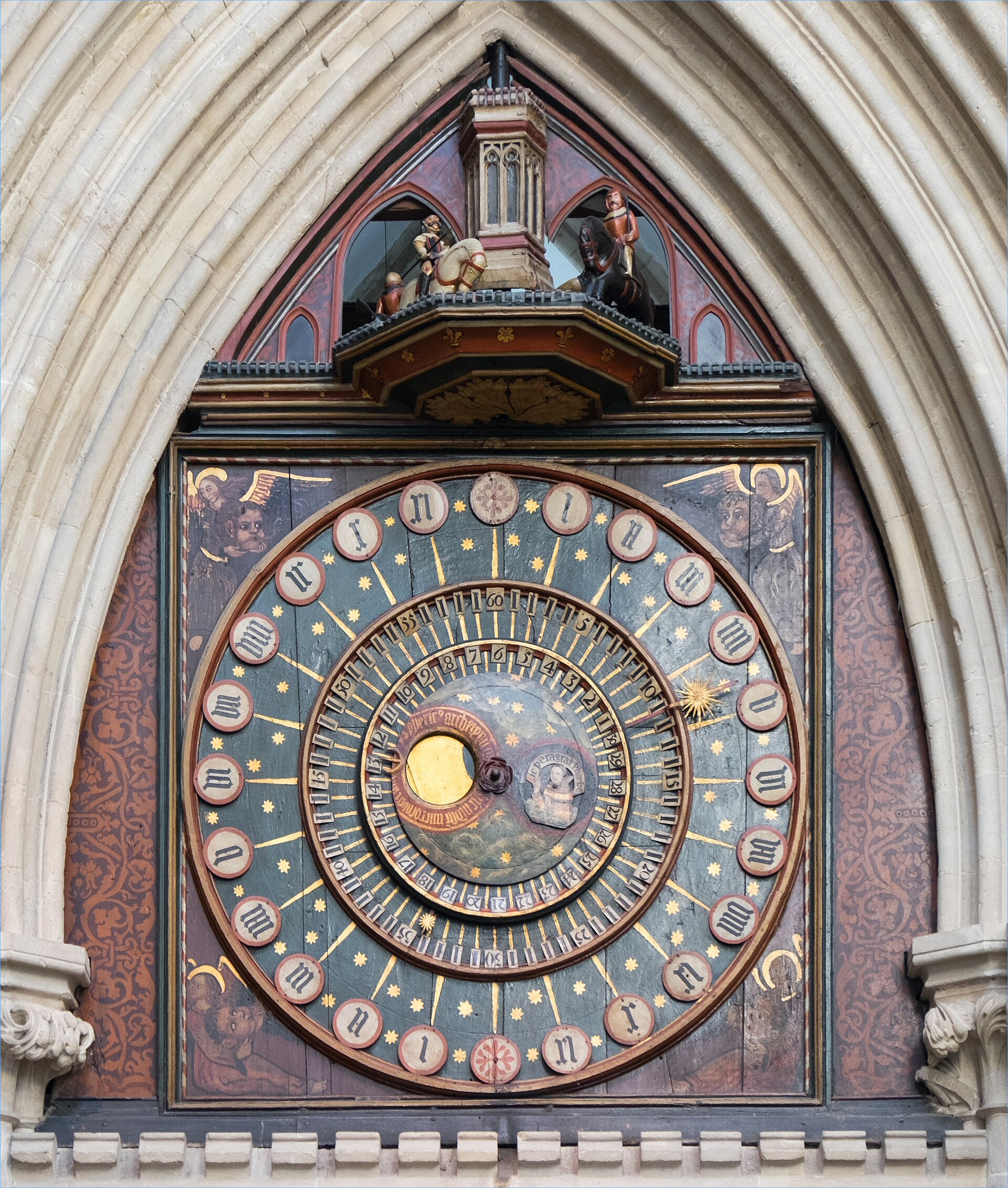
Twelve of the 17 lead plates for clocks and instruments need a credit line under their licence, the highest share of any object type in the archive at 71 per cent. They include the Wells Cathedral clock, the Antikythera mechanism, Harrison's marine timekeepers, the Jaquet-Droz automata and Rowley's orrery, mostly photographed by visitors and posted to Wikimedia Commons.
| Object type | Records | Plates needing a credit |
|---|---|---|
| Clocks and instruments | 17 | 12 |
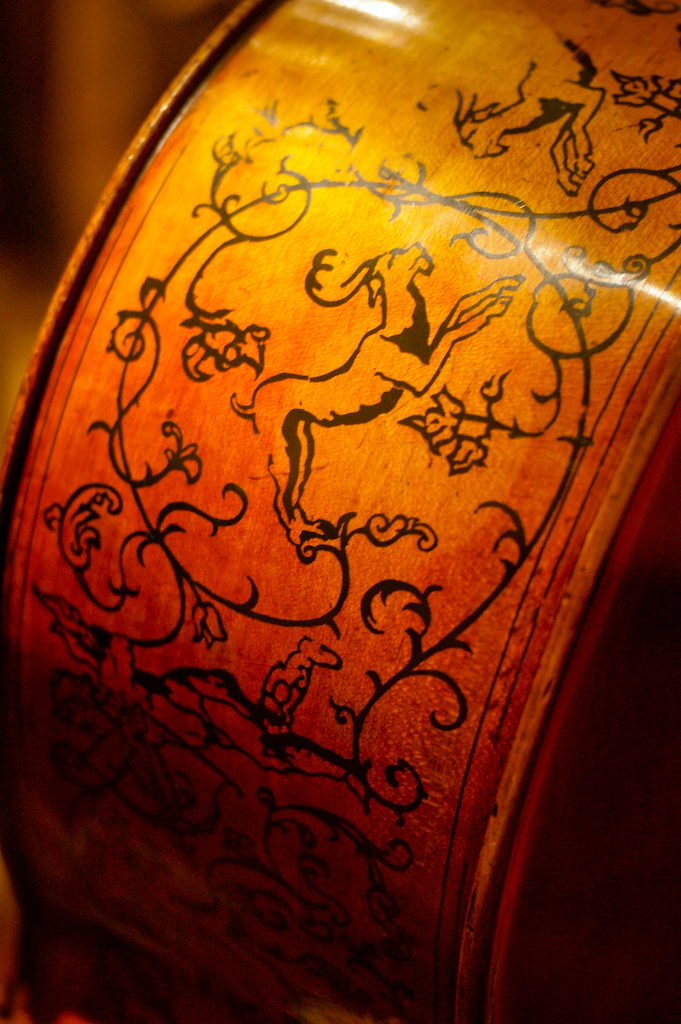
| Musical instrument | 16 | 8 |
| Antiquity | 17 | 8 |
| Silver | 17 | 8 |
| Glass | 16 | 7 |
| Goldsmith's work | 17 | 7 |
| Sculpture | 16 | 2 |
| Furniture | 17 | 2 |
| Paintings, prints, maps, photographs | 100 | 0 |
Sculpture and furniture are the surprise at the low end among solid objects, with 2 of 16 and 2 of 17. Their lead plates are mostly CC0 or public domain (9 and 10 are CC0), so the two types behave more like paintings than like instruments.
The split follows the object's shape and not its age
The three-dimensional types need attribution five times as often as the flat ones, 63 of 182 records against 10 of 152. That is 35 per cent against 7 per cent, and age is not driving it: the Antikythera mechanism is ancient and both its records carry a CC BY-SA lead plate, while Vermeer's Astronomer of 1668 needs no credit at all.
The legal reason is the one the German act draws. Section 68 of the Urheberrechtsgesetz states that reproductions of public-domain visual works are not protected by the related rights of Parts 2 and 3 of the act. A photograph of a flat painting is a reproduction in that sense. A photograph of a vase, a violin or a clock is arguably a new work of the photographer's, because angle, lighting and staging are choices, and a photographer who owns that work can license it as CC BY-SA and ask for a name in return.
Most solid objects here still need no credit, because 119 of 182 plates are CC0 or public domain
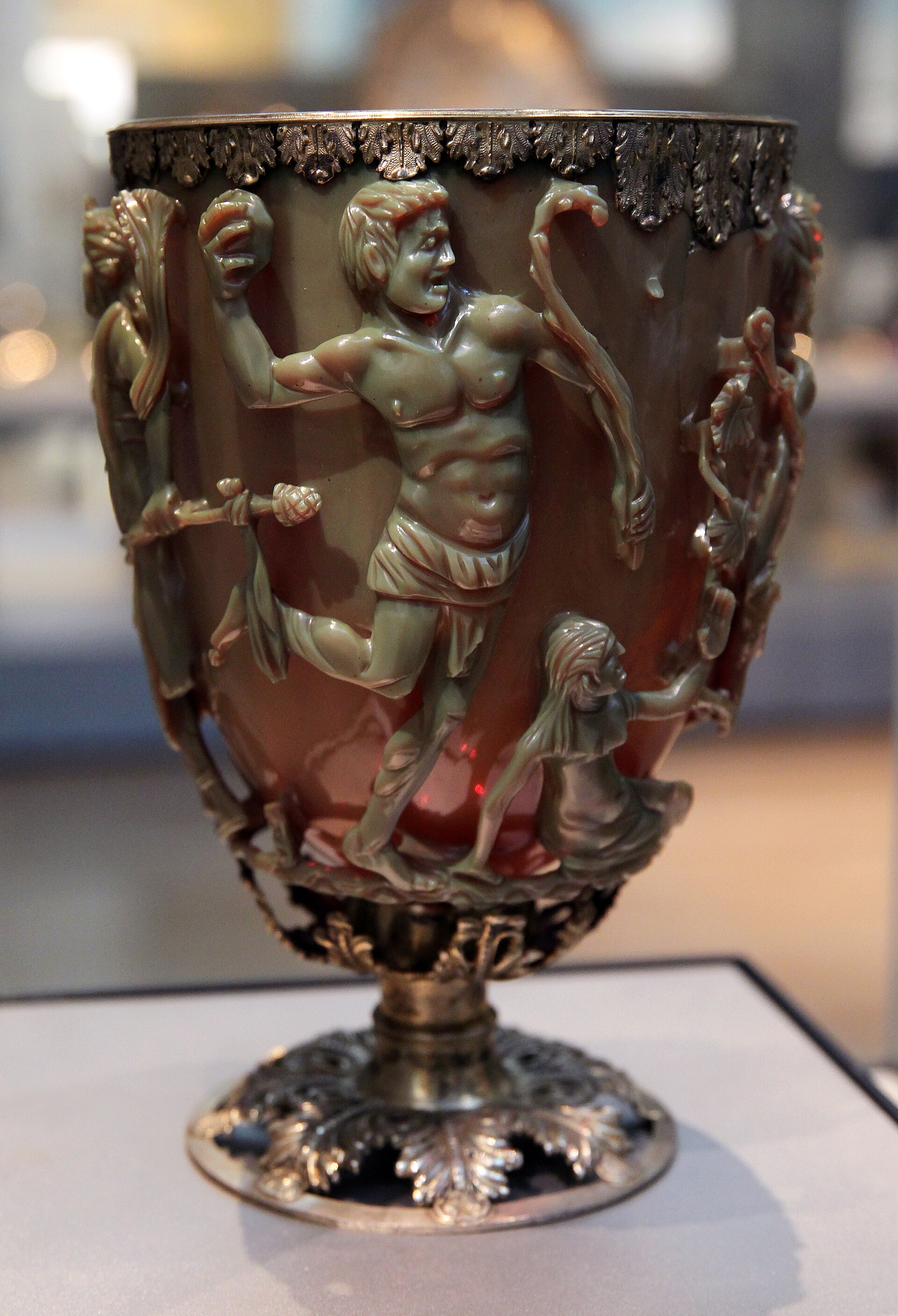
Of the 182 plates in the three-dimensional types, 83 are CC0 and 36 are public domain, which is why a majority of solid objects here still need no credit. The CC0 plates include museum releases and individual waivers, and the record page names which. The Lycurgus Cup is the second kind: its photographs of the cup are CC0 files taken in the British Museum's Room 41 by one photographer.
The practical difference for a photograph of a solid object is in what the licence asks. A CC0 file asks nothing, while a visitor's photograph under CC BY-SA asks for a credit and, for the share-alike versions, that any adaptation be released on the same terms. Both are usable on a commercial site. The difference is paperwork, and the paperwork is where publications fail.
Ten flat works still need a credit, and they are textiles, manuscripts and books
Ten lead plates in the flat and bound types need attribution, and none of them is a painting, print, map or photograph. They are four textiles (the Apocalypse Tapestry at Angers, the coronation mantle of Roger II in Vienna, the Oseberg tapestry fragment and the Syon Cope), three manuscripts (the Archimedes Palimpsest, Codex Sinaiticus and the Ashburnham Pentateuch) and three printed books (the Bodleian First Folio, the Eliot Indian Bible of 1663 and the Wicked Bible of 1631).
A tapestry hangs in folds and a codex is photographed open on a cradle, so the photographer's choices may matter more than they do for a framed canvas shot square on. The grouping used on this page is a simplification, and these ten are the records that show where it stops working.
How the licence reaches the page and what the archive does with it
Every plate on a record page carries a licence that was read from its Wikimedia Commons file page or from the holding institution's own terms at the moment the file was fetched. The archive accepts public domain, CC0, CC BY and CC BY-SA, and refuses the non-commercial and no-derivatives licences because it is a commercial publication that resizes every plate it hosts.
The consequence for a CC BY or CC BY-SA plate is that the photographer's name must be printed where the picture appears. The hero image on a record page is the one place a lead plate's credit can show, because the same picture is left out of the image gallery below it, so the page prints the author under the hero for any plate whose licence begins CC BY. A reader can see this on the Wells Cathedral clock record, where the line under the picture names the photographer and the licence.
The share-alike versions add a second condition, that any adaptation of the picture be offered on the same licence. The archive resizes every plate it hosts, so the licence and the photographer's name travel with each size.
What the share tells a researcher choosing a plate
A researcher building a page on a solid object should expect to carry a credit line and plan for it, and one building a page on a painting should not. The share says where the paperwork sits, and the lead plate is one picture among the five to seven most records hold.
The same check applies in the other direction. When a 3D record shows a lead plate under a plain public-domain label, the cause is usually that the photograph is a pre-1929 print or a museum release, and the file page should say which. The licence string is read from the file at fetch time and never typed by hand.
Questions
73 of 334, those under CC BY or CC BY-SA. None is a painting, print, map or photograph, and 12 of 17 clocks and instruments are.
No. The archive credits every plate. For public domain and CC0 the credit is courtesy, and for CC BY and CC BY-SA it is a licence condition.
Section 68 of the German copyright act strips related rights from reproductions of public-domain visual works. A staged photograph of a three-dimensional object can still be the photographer's own work, which they may license on terms.
Yes, with credit, a link to the licence and a note of any changes. The non-commercial and no-derivatives licences are the ones the archive refuses.
Sources
- 1Urheberrechtsgesetz (UrhG), section 68, Vervielfaeltigungen gemeinfreier visueller Werke: reproductions of public-domain visual works are not protected by the related rights of Parts 2 and 3. Gesetze im Internet, Federal Ministry of Justice. Read on 18 November 2026. gesetze-im-internet.de/urhg/...
- 2Wikimedia Commons, file page for 'Wells clock.jpg' by DeFacto, 7 May 2017: licence Creative Commons Attribution-Share Alike 4.0 International, with the attribution condition stated on the page. Read on 18 November 2026. commons.wikimedia.org/wiki/...
- 3Creative Commons, Attribution-ShareAlike 4.0 International deed: the conditions of attribution and share-alike. Read on 18 November 2026. creativecommons.org/licenses/...
- 4Iconotheca, record for The Lycurgus Cup, British Museum registration 1958,1202.1: nine CC0 photographs by Vassil taken in Room 41, with the Wikimedia Commons file records among its sources. iconotheca.com/artworks/...

More in Research and Method
The partA Caption Is a Claim: Three Photographs of the Dead
Three photographs of the dead, made in 1858 and 1863, each carried a caption that later evidence cut down.
The Edition Has a Census and the Copy Has a Gap
Counts of surviving Wicked Bibles and first-edition Principias keep rising. The copies in this archive still have no named owner for 239 to 354 years.
How Much of an Ownership Chain Is Documented Depends on the Object
Of 2,439 provenance links in 330 records, 75 per cent are documented. Clocks reach 83 per cent and arms and armour 65.