Tiara of Saitapharnes
Israel Rouchomovsky · 1894 to 1895, Odessa. Sold as third to second century BCE.
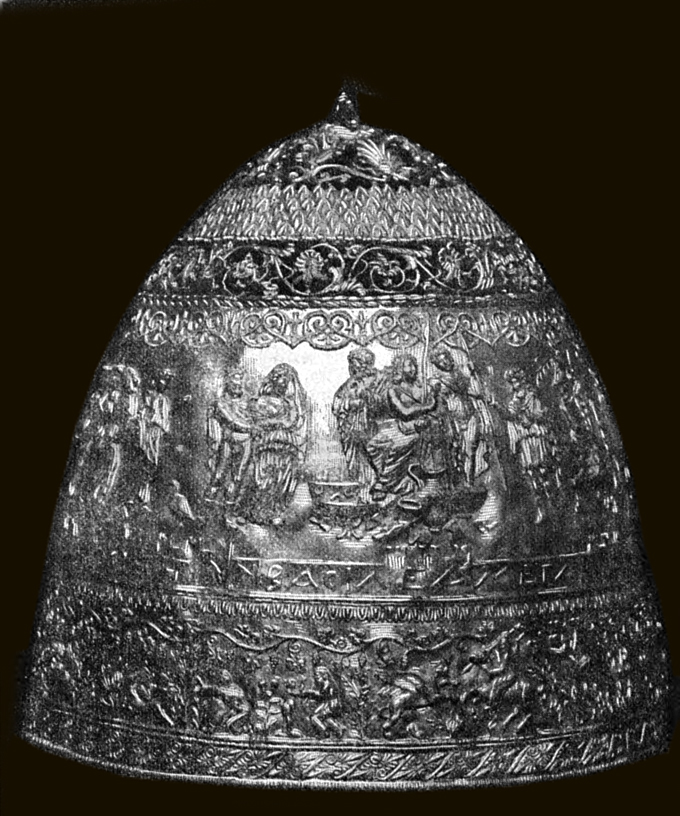
The record subject. Gold, 17 cm high and 18 cm across, Musee du Louvre, MNC 2135 and Bj 2357. Reproduced from the Sunday supplement of Le Petit Journal, 5 April 1903, published within weeks of the disclosure that the tiara was modern.
| Artist | Israel Rouchomovsky |
|---|---|
| Date | 1894 to 1895, Odessa. Sold as third to second century BCE. |
| Medium | Gold sheet, worked by hammering, repousse and chasing, and soldered |
| Dimensions | Height 17 cm; diameter 18 cm |
| Where it is now | Musee du Louvre, Paris, Departement des Antiquites grecques, etrusques et romaineslast confirmed 6 September 2026 |
| Inventory number | MNC 2135; Bj 2357 |
| Attribution | AcceptedSold to the Louvre in 1896 as a Greek gold tiara presented by the city of Olbia to a Scythian king of the third or second century BCE. Full note |
| Object type | Goldsmith's work |
| Period | Nineteenth century, in the Hellenistic Greek manner |
| Inscriptions | A Greek inscription around the base, given by the Louvre as: the council and the citizens of Olbia have offered to the great and invincible king Saitapharnes. |
| Owners on record | 3 links3 documented |
| Sources | 4 cited |
About this record Last verified 6 September 2026 · 4 sources cited · Change log
On this page 10 sections
ContentsClose
A conical gold tiara seventeen centimetres high, covered in scenes from the Trojan War and in Scythian pastoral and hunting life, with an inscription around the base recording that the council and citizens of Olbia offered it to the great and invincible king Saitapharnes. The Louvre bought it on 1 April 1896 for two hundred thousand gold francs and put it on show as one of the finest pieces of Greek goldsmiths' work in existence.
It had been made in Odessa a year or two earlier by a goldsmith named Israel Rouchomovsky, who had been commissioned by two dealers, the brothers Schapschelle and Leiba Hochman, and told the piece was a present for an archaeologist friend. Adolf Furtwaengler and Professor Vesselovsky condemned it in print in the same year the museum bought it. The Louvre defended it for seven years.
In March 1903 a Paris newspaper printed a jeweller's statement that he had watched Rouchomovsky make it. Rouchomovsky came to Paris, said so himself, and was disbelieved until he was handed a sheet of gold and asked to prove it. He reproduced a section of his own work in front of the examiners. The Louvre catalogues the tiara today under his name, which is what makes it unusual: most exposed forgeries lose an attribution and gain nothing. This one gained the right one.
Provenance
Each link is graded. Documented: a cited source supports it. Disputed: the identification is argued but not established. Unknown: no owner for that span, and the gap is not smoothed into a narrative. The grades in the glossary.
- 1894 - 1896Schapschelle and Leiba Hochman, dealersdocumented
The Hochman brothers commissioned the tiara from the Odessa goldsmith Israel Rouchomovsky in 1894, supplying him with details from recent Black Sea excavations and telling him the piece was intended as a gift for an archaeologist friend. Rouchomovsky stated in Paris in 1903 that he had not known what it was for.23
- 1896 - 1896Hochmann, exhibiting in Viennadocumented
The tiara was exhibited in Vienna in 1896 as a Greco-Scythian crown before the Paris sale.2
- 1896 - presentMusee du Louvre, Parisdocumented
Announced on 1 April 1896. The Louvre paid two hundred thousand gold French francs to the dealer Hochmann and displayed the piece as having belonged to a Scythian king. Place of discovery unknown, then and now. Condemned in print the same year by Adolf Furtwaengler and Professor Vesselovsky and defended by the museum until 1903. Withdrawn to storage after Rouchomovsky's demonstration, shown again in the Salon of Fakes in 1954, and lent to later exhibitions. Inventory MNC 2135 and Bj 2357, Departement des Antiquites grecques, etrusques et romaines. The Louvre's current catalogue names Rouchomovsky as the author and dates the object to the nineteenth century.123
Prices realised
The tiara has never been sold at public auction. It was bought by private treaty: the Louvre paid the dealer Hochmann 200,000 gold French francs, announced on 1 April 1896. That is a purchase price and not a hammer price, so there is no premium to separate from it, and no modern equivalent is offered here because conversion methods for an 1896 French franc differ by an order of magnitude and none of them answers the question a reader actually has. What the maker was paid for the work is not recorded.
Technical evidence
| Attribution note | Sold to the Louvre in 1896 as a Greek gold tiara presented by the city of Olbia to a Scythian king of the third or second century BCE. It was made in Odessa in 1894 or 1895 by the goldsmith Israel Rouchomovsky, who came forward in Paris in 1903 and proved his authorship by reproducing a section of the work in front of a commission. The Louvre's own catalogue now gives Rouchomovsky as the author and the date as nineteenth century. The attribution is not disputed by anybody and has not been for over a century, which makes this the rare case where a forgery's real maker is known, named and catalogued by the museum that was deceived. |
|---|---|
| Material and technique | Gold sheet. Techniques listed by the Louvre as sheet metalwork, hammering, soldering, repousse and chasing.1 |
| Dimensions | Height 17 cm; diameter 18 cm.1 |
| Inscription | A Greek inscription stamped around the base, given by the Louvre as: the council and the citizens of Olbia have offered to the great and invincible king Saitapharnes. This inscription, not the metalwork, is what made the object a historical document and what it was bought for.13 |
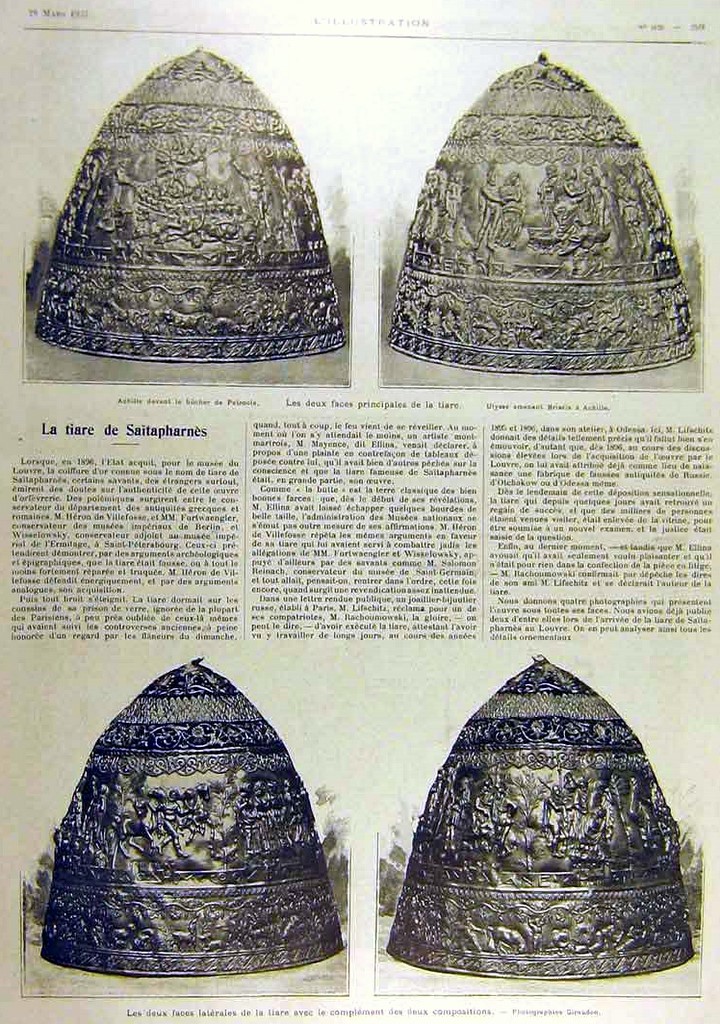
| Decorative programme | Registers of Trojan War scenes including the embassy to Achilles and the funeral of Patroclus; Scythian cavalry with pastoral and hunting scenes; ornamental friezes of palmettes and lotus flowers; an entwined serpent at the apex. The subject matter was assembled from published excavation material supplied to the maker by the dealers who commissioned it.13 |
| Construction | Made in three parts and soldered together, on the maker's own account given in Paris in 1903.2 |
| Solder and tool marks | The soldering is modern, though cleverly concealed, and the tool marks are modern.2 |
| Simulated burial damage | The bumps and indentations that read as ancient damage were produced by using alternately the two ends of a common ball-pein hammer. Adolf Furtwaengler's 1896 objection included the observation that the object did not show the ageing its supposed date required.23 |
| Why no scientific test was available | Worked gold is close to undatable. It does not corrode usefully, carries no organic material for radiocarbon, and takes no patina that cannot be simulated. Every technical objection to this object is an observation rather than a measurement, which is why the case was settled by the maker's demonstration rather than by analysis.2 |
| Current catalogue entry | Musee du Louvre: Tiare de Saitapharnes, author Rouchomowsky, Israel, goldsmith, 1860-1934; nineteenth century; gold; H. 17 cm, diam. 18 cm; inventory MNC 2135 and Bj 2357; Departement des Antiquites grecques, etrusques et romaines; purchased 1896 from Hochmann; place of discovery unknown.1 |
Images
The record in full
Chapter 1The object, exactly as the Louvre describes it
A conical tiara of gold sheet, seventeen centimetres high and eighteen across, worked by hammering, repousse and chasing and assembled by soldering.
A conical tiara of gold sheet, seventeen centimetres high and eighteen across, worked by hammering, repousse and chasing and assembled by soldering. Its surface is divided into registers. One carries scenes from the Trojan cycle, among them the embassy to Achilles and the funeral of Patroclus. Another carries Scythian cavalry with pastoral and hunting scenes. Ornamental friezes of palmettes and lotus flowers separate them. A serpent, entwined, sits at the apex.
Around the base runs a Greek inscription which the Louvre renders as a statement that the council and the citizens of Olbia have offered the object to the great and invincible king Saitapharnes.
That sentence is the entire commercial proposition. It converts a piece of goldsmiths' work into a historical document: a Greek colony on the Black Sea buying off a Scythian king with a headdress, at a datable moment, with the transaction inscribed on the object. A museum does not pay two hundred thousand francs for gold repousse. It pays for the inscription.
Chapter 2Made to order in Odessa
Israel Rouchomovsky was a goldsmith working in Odessa.
Israel Rouchomovsky was a goldsmith working in Odessa. In 1894 two dealers, the brothers Schapschelle and Leiba Hochman, commissioned a Greek gold tiara from him. They supplied him with details drawn from recent excavations in the Black Sea region, and they told him the piece was intended as a gift for an archaeologist friend.
On his own account he did not know what it was for. The Hochmans knew exactly, and the division of labour is the point: the man with the skill was kept away from the transaction, and the men who made the transaction never touched the metal. That structure recurs in every well-organised case of this kind, and it is why prosecuting one is difficult and why the maker is usually the person who eventually talks.
He worked from published excavation material. What he produced was a competent, learned pastiche assembled from the visual vocabulary of Black Sea Greek gold that was being dug up and published in his own lifetime, in a city where that material was arriving.
Chapter 3Vienna, then Paris, then two hundred thousand francs
Hochmann exhibited the tiara in Vienna in 1896 as a Greco-Scythian crown.
Hochmann exhibited the tiara in Vienna in 1896 as a Greco-Scythian crown. On 1 April 1896 the Louvre announced that it had bought the piece, for two hundred thousand gold French francs, as an object that had belonged to a Scythian king.
The Louvre's own catalogue records the acquisition plainly and records what it does not know: the place of discovery is unknown. That is a museum buying a major antiquity in 1896 with no findspot, no excavation record and no chain of custody, on the strength of an inscription and an expert opinion. The purchase document does not disguise the gap; the gap simply was not thought to matter.
The sum was large enough to become part of the story. This record does not convert it into a modern equivalent, because every method of doing so gives a different answer by an order of magnitude, and because what would actually be informative is the figure set against the museum's acquisition budget for the year, which is not established here.
Chapter 4Condemned in print in the year of purchase
The tiara was not accepted and then unmasked years later.
The tiara was not accepted and then unmasked years later. It was attacked immediately, in print, by two serious scholars, in 1896.
Adolf Furtwaengler, the German archaeologist, set out stylistic objections and pointed to the condition: the piece did not show the ageing an object of that supposed date should show. Professor Vesselovsky condemned it in the same year. The objections were public and they were specific.
The Louvre held its position for seven years. What that period demonstrates is not stupidity but institutional structure. An acquisition of that size had been signed off, published and put on display; the reputations attached to it were the reputations of the men who ran the museum; and the objections were, in the end, opinions about style, which can always be met with other opinions about style. Nothing in the situation could resolve itself, because both sides were arguing from the same kind of evidence.
Chapter 5March 1903: a jeweller in Paris says he watched it being made
The case broke through a newspaper rather than a laboratory or a lecture hall.
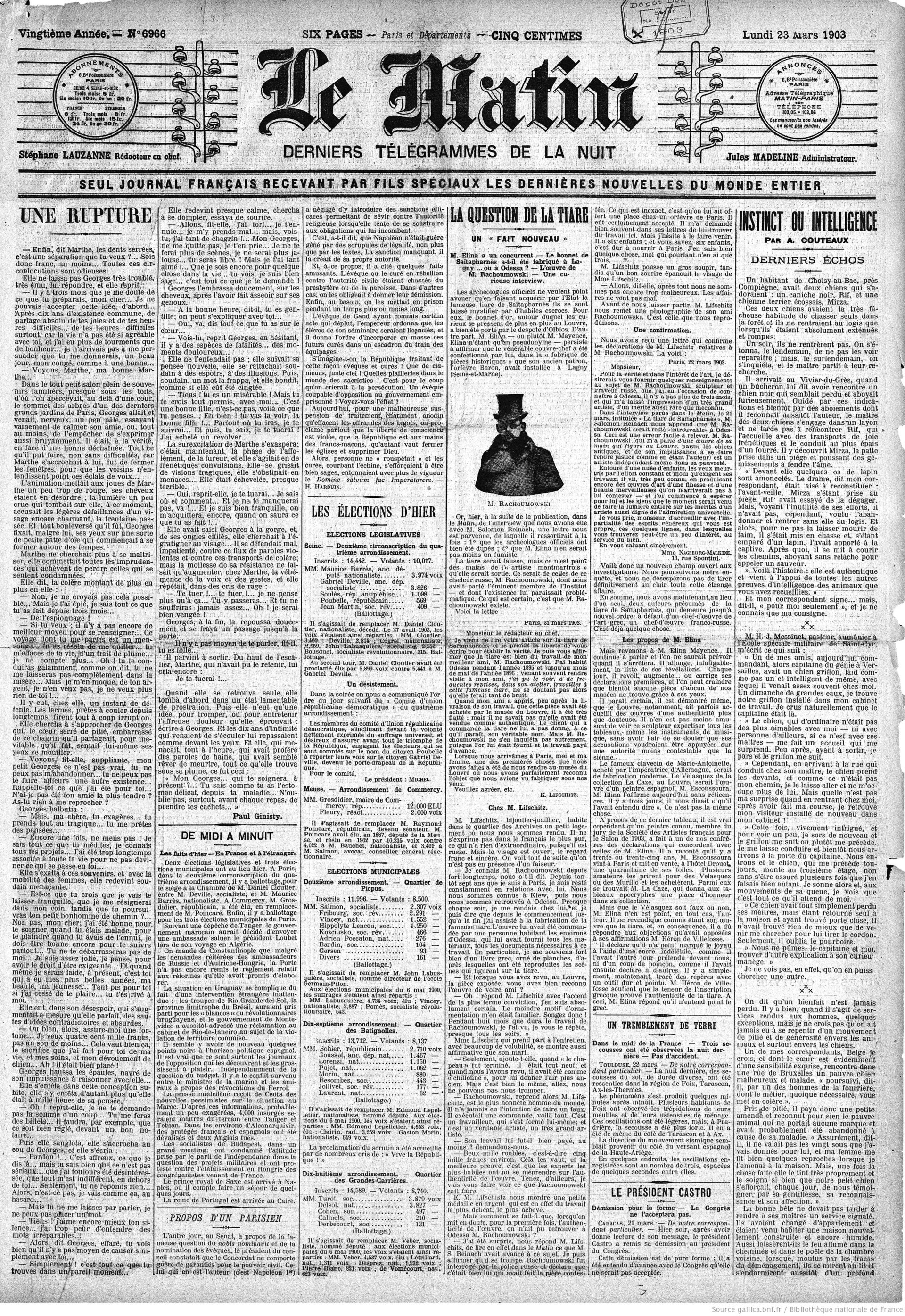
The case broke through a newspaper rather than a laboratory or a lecture hall. In 1903 the Paris daily Le Matin published a statement by a Russian jeweller named Lifschitz that he had seen Israel Rouchomovsky make the tiara.
That is a different order of evidence from a stylistic argument, and it is the only order of evidence that could have ended this dispute in 1903. There was no technique available at the time that could date worked gold. Gold does not corrode usefully, carries no organic material to date, and takes no patina that cannot be simulated. An object made entirely of gold is, for the purposes of scientific dating, close to mute. The only witnesses available were human ones.
Chapter 6The maker comes to Paris and is not believed
Rouchomovsky travelled from Odessa to Paris in 1903 and presented himself as the author of the tiara.
Rouchomovsky travelled from Odessa to Paris in 1903 and presented himself as the author of the tiara. He explained how he had come to make it, and that he had believed it was a gift. He described the construction: three parts, made separately and soldered together.
The experts did not believe him. That refusal is the most human moment in the file, and it is not simply obstinacy. A claim of authorship costs nothing to make, and a museum facing an embarrassment attracts people who want to be part of it. The examiners were right to require proof, and they asked for the only proof that would serve.
They gave him a sheet of gold and told him to demonstrate his skill. He did. He reproduced a portion of the work in front of them, and they accepted it.
Nothing about the tiara had changed. What had changed was that the question stopped being what does this object look like and became can this man do this, which is a question with a demonstrable answer. That is the mechanism this record is about: the dispute was settled by a performance, not by an analysis, because no analysis existed that could settle it.
Chapter 7What the object shows once you know what to look for
The technical objections, assembled after the fact, are worth recording precisely because they were available before it.The tiara was made in three parts and soldered.
The technical objections, assembled after the fact, are worth recording precisely because they were available before it.
The tiara was made in three parts and soldered. The solder is modern and was cleverly concealed. The tool marks are modern. And the damage is wrong: the bumps and indentations that read as centuries of burial were made by using, alternately, the two ends of an ordinary ball-pein hammer.
The last observation is the one that generalises. Artificial ageing is a positive act, and a positive act has a signature. Real burial damage is indifferent; it falls where it falls and destroys what it destroys, including the parts a maker most wants seen. A forger's damage is applied by someone who is trying to make the object look old and also trying to keep it beautiful, and those two intentions leave a pattern that a careful eye can read. Furtwaengler saw the wrongness of the condition in 1896 and said so.
Chapter 8Afterwards: the museum, and the man
The Louvre removed the tiara from display and put it into storage, which is what museums did with this class of object for most of the twentieth century.
The Louvre removed the tiara from display and put it into storage, which is what museums did with this class of object for most of the twentieth century. It re-emerged in 1954 in an exhibition of fakes, the Salon of Fakes, and has since been lent to exhibitions in its new character. It has never left the collection. Its inventory numbers, MNC 2135 and Bj 2357, are those of the Department of Greek, Etruscan and Roman Antiquities, where it was originally accessioned.
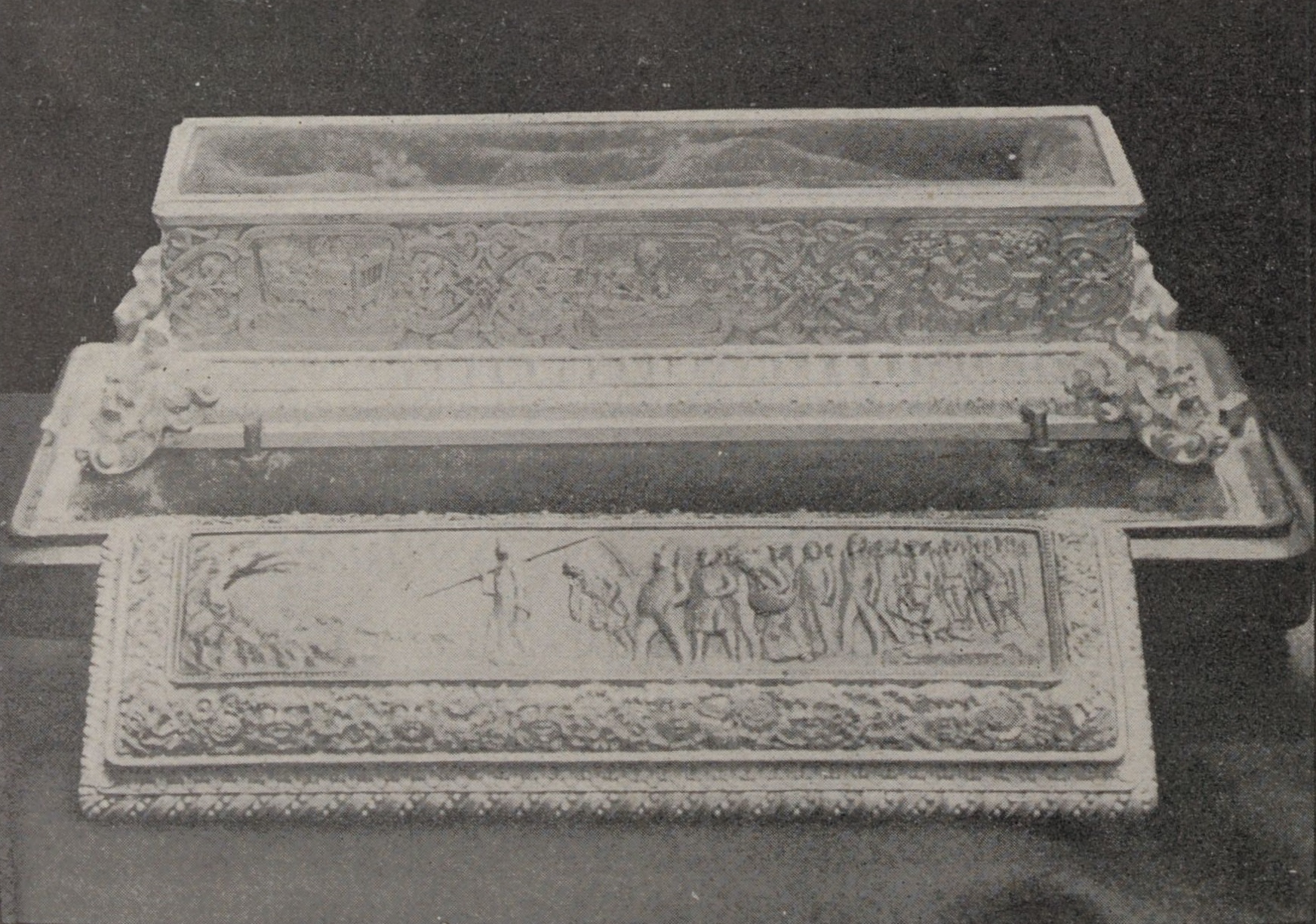
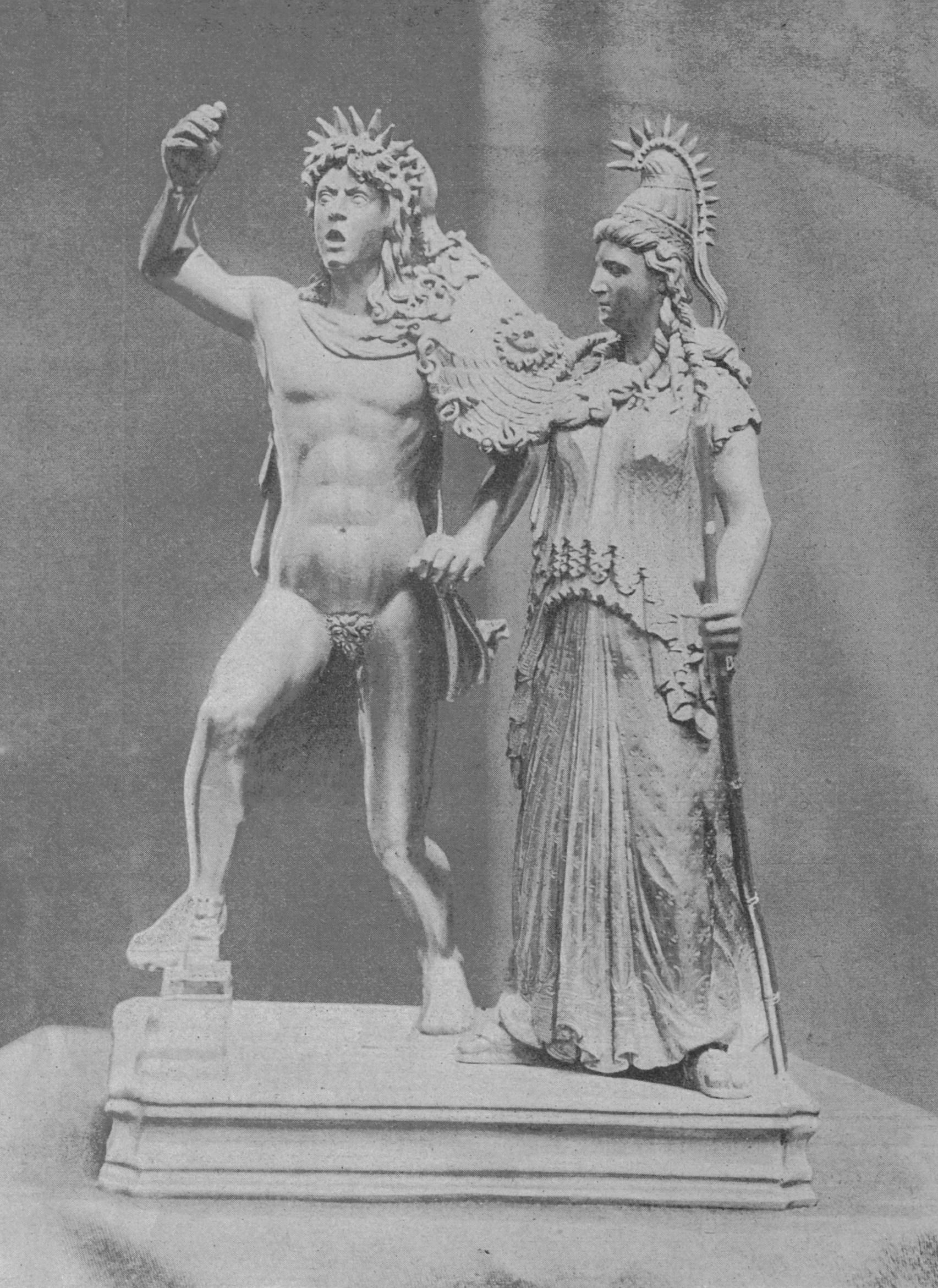
Rouchomovsky did better out of the affair than anyone else involved. He won a gold medal at the Paris Salon of Decorative Arts, stayed in France, and worked there until his death in 1934. His other pieces, among them a gold skeleton in a sarcophagus and figures of Minerva and Achilles, were illustrated in the French press in the spring of 1903 while the story ran. A man who had been an unknown provincial goldsmith in March became, by May, a name in the Paris illustrated papers.
Copies of the tiara are recorded at the British Museum and at the Tel Aviv Museum of Art, which is a small hazard in itself: a photograph captioned as the tiara is not necessarily a photograph of the Louvre's object.
Chapter 9The Louvre now catalogues it under his name
The museum's current record gives the author as Rouchomowsky, Israel, goldsmith, 1860 to 1934, and the date as the nineteenth century.
The museum's current record gives the author as Rouchomowsky, Israel, goldsmith, 1860 to 1934, and the date as the nineteenth century. The material is gold; the techniques are listed as sheet metalwork, hammering, soldering, repousse and chasing. The place of discovery is given as unknown, which is now simply an accurate statement about an object that was never discovered anywhere.
That is a more complete outcome than most forgery cases reach. The usual result is an object that loses a name and gains nothing, sitting in storage as an anonymous modern thing. Here the museum's catalogue has been corrected all the way through: right maker, right century, right technique, and an acquisition line that still records, without softening, that it bought the piece in 1896 from the dealer who commissioned it.
Chapter 10What the case is actually evidence of
Not that experts are fools. Furtwaengler was not fooled, published his objections at once, and was correct on both counts.
Not that experts are fools. Furtwaengler was not fooled, published his objections at once, and was correct on both counts. The failure was not one of individual judgement; it was that the institution which owned the object was also the institution adjudicating the dispute, and it had two hundred thousand francs and its own authority on one side of the scale.
Nor is it evidence that science solves these questions. In 1903 there was no science available. Gold cannot be dated, and every technical objection listed above is a matter of trained observation, not measurement. The case was closed by testimony and by a demonstration of craft.
What it is evidence of is the value of a findspot. Everything that went wrong here follows from a single omission that was visible on the day of purchase: nobody could say where the object came from. The Louvre recorded that gap in 1896 and recorded it again in the catalogue it publishes today. The gap was in the file the whole time, and it was worth more than the inscription.
The artist
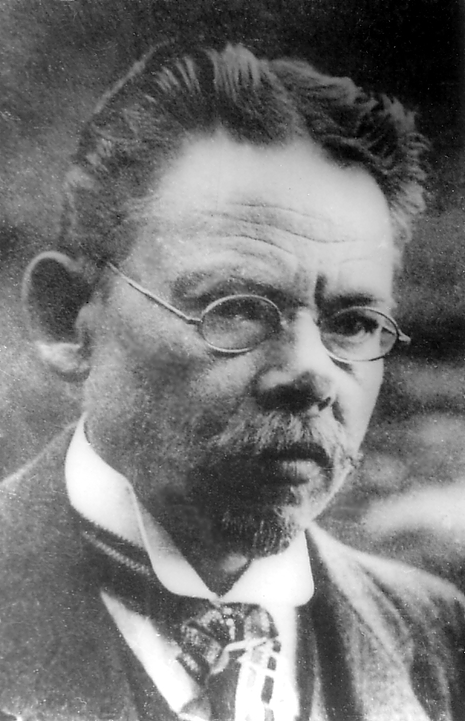
Israel Rouchomovsky, also written Rouchomowsky and Rukhomovsky
The Tiara of Saitapharnes is one of the very few celebrated forgeries whose maker is known by name, was catalogued as its author by the museum he deceived, and appears to have been the least culpable person in the transaction. He was a goldsmith in Odessa when two dealers ordered a Greek tiara from him and told him it was a present for an archaeologist. He made it, was paid, and heard nothing more until a Paris newspaper printed his name seven years later.
What is remarkable about him is not the deception, in which his part was passive, but the demonstration. Asked to prove that he could do the work, he did the work. Very few disputes about authenticity can be settled that way, and none of them can be settled that way after the maker is dead. The Louvre's catalogue today reads as it does because a man was alive, could be brought to Paris, and could be handed a sheet of gold.
Related works
| Work | Relation | Where it is |
|---|---|---|
| Sarcophagus with gold skeleton Israel Rouchomovsky | The maker's own signed work, illustrated in the Paris press while the tiara scandal ran One of the pieces that established his standing on his own account rather than under a false one. | Reproduced in Le Monde illustre, 23 May 1903 |
| Minerva and Achilles Israel Rouchomovsky | A second work by the maker reproduced in the same 1903 press coverage The illustrated papers printed his work beside the tiara, which is how a provincial goldsmith became a Paris name in two months. | Reproduced in Le Monde illustre, 23 May 1903 |
| Copies of the Tiara of Saitapharnes Unrecorded | Copies of the object described in this record Their existence is a version-safety hazard: a photograph captioned as the tiara is not necessarily a photograph of the Louvre's object. | British Museum, London; Tel Aviv Museum of Art |
| Bronze statuette of a horse Unrecorded Greek bronze caster | The opposite error at another great museum Where the Louvre defended a forgery for seven years, the Metropolitan condemned a genuine antiquity in 1967 and took thirteen years to reverse itself. Both failures came from an institution adjudicating its own object. | The Metropolitan Museum of Art, New York, 23.69 |
Open questions
- What did the Hochman brothers pay Israel Rouchomovsky for the work? No figure appears in the sources consulted, and the gap between his fee and the Louvre's two hundred thousand francs is the whole economics of the case.
- What did two hundred thousand gold francs represent in 1896 against the Louvre's annual acquisition budget? That comparison, rather than any modern currency conversion, is the informative one and it is not established here.
- Did the Hochmans sell other pieces by the same hand, and are any of them still catalogued as ancient? A workshop that produced one object of this quality on commission is unlikely to have produced only one.
- Which excavation publications did Rouchomovsky work from? He is recorded as having been supplied with details of recent Black Sea excavations, but the specific sources are not identified in the material consulted.
- Who made the copies now at the British Museum and the Tel Aviv Museum of Art, and when?
- What exactly did Professor Vesselovsky publish in 1896, and where? He is named as condemning the object in print in the same year as the purchase, without a citation in the sources consulted.
Questions about this object
What is Tiara of Saitapharnes?
Tiara of Saitapharnes is a goldsmith's work, dated 1894 to 1895, Odessa. Sold as third to second century BCE.. Medium: Gold sheet, worked by hammering, repousse and chasing, and soldered.
Who made Tiara of Saitapharnes, and is the attribution settled?
The attribution to Israel Rouchomovsky is recorded here as accepted. Sold to the Louvre in 1896 as a Greek gold tiara presented by the city of Olbia to a Scythian king of the third or second century BCE. It was made in Odessa in 1894 or 1895 by the goldsmith Israel Rouchomovsky, who came forward in Paris in 1903 and proved his authorship by reproducing a section of the work in front of a commission. The Louvre's own catalogue now gives Rouchomovsky as the author and the date as nineteenth century. The attribution is not disputed by anybody and has not been for over a century, which makes this the rare case where a forgery's real maker is known, named and catalogued by the museum that was deceived.
Where is Tiara of Saitapharnes now?
Musee du Louvre, Paris, Departement des Antiquites grecques, etrusques et romaines. Inventory number MNC 2135; Bj 2357. Last confirmed 6 September 2026. Purchased 1896 from the dealer Hochmann.
What is still unknown about Tiara of Saitapharnes?
What did the Hochman brothers pay Israel Rouchomovsky for the work? No figure appears in the sources consulted, and the gap between his fee and the Louvre's two hundred thousand francs is the whole economics of the case.
Sources
- 1Musee du Louvre, collection record for the Tiare de Saitapharnes, inventory MNC 2135 and Bj 2357, Departement des Antiquites grecques, etrusques et romaines. The museum's own catalogue: author Rouchomowsky, Israel, goldsmith, 1860-1934; nineteenth century; gold, sheet metalwork, hammering, soldering, repousse and chasing; H. 17 cm, diam. 18 cm; purchased 1896 from Hochmann; place of discovery unknown; with the inscription and the description of the decorative registers. collections.louvre.fr/en/...
- 2Archaeological Institute of America, Archaeology Magazine archive, 'Saitaphernes' Golden Tiara', in the Hoaxes, Fakes and Strange Sites series. Source for the Vienna exhibition, the 1 April 1896 purchase at 200,000 francs, the 1896 condemnations by Furtwaengler and Vesselovsky, the Le Matin disclosure by the jeweller Lifschitz, the three-part soldered construction, the demonstration with a sheet of gold, the modern solder and tool marks, the ball-pein hammer damage, the 1954 Salon of Fakes and the 1997 Israel Museum exhibition. archive.archaeology.org/online/...
- 3Wikipedia, 'Tiara of Saitaferne'. Tertiary source, used for the 1894 commission by Schapschelle and Leiba Hochman, the account that Rouchomovsky was told the piece was a gift for an archaeologist friend and was supplied with excavation details, the wording of the inscription, Furtwaengler's objections on style and ageing, Rouchomovsky's gold medal at the Paris Salon of Decorative Arts and his death in 1934, and the copies at the British Museum and the Tel Aviv Museum of Art. Flagged for replacement with the 1903 French press and the Louvre's own dossier. en.wikipedia.org/wiki/...
- 4Wikimedia Commons, the Tiara of Saitaferne and Israel Rouchomovsky file categories, including the plates from Le Monde illustre of 23 May 1903 reproducing his sarcophagus, Minerva and Achilles, rhyton and gorget, the Le Petit Journal supplement of 5 April 1903, the Le Matin front page of 23 March 1903 and the four-view plate of the tiara. File pages read as wikitext for licence and source verification. commons.wikimedia.org/wiki/...
Last verified 6 September 2026 · Published 4 August 2026
Change log
4 August 2026 - Record created at the house standard: researched narrative, technical evidence, maker dossier, graded provenance chain, prices with hammer and premium separated, related works, open questions and sources.
6 September 2026 - Re-verified 2026-09-06: no change to attribution, ownership or the core narrative facts (purchase price, 1896 condemnations, March 1903 Le Matin disclosure, Rouchomovsky's demonstration). Six source URLs spot-checked with a live fetch (Louvre collection record, Archaeology Magazine archive, Wikipedia, the Wikimedia Commons category, and two individual Commons file pages) and all six still resolve; none rotted. New finding: the Louvre's own collection page now explicitly gives the display status as "non expose" (not on display), which was previously an open question on this record and has been moved into current_location and removed from open_questions. Confirmed the October 2025 Louvre jewel theft (Galerie d'Apollon, French Crown Jewels) is unrelated to this object or its department. No 2025-2026 exhibition, publication or reattribution concerning this object or Rouchomovsky was found in fresh web research.