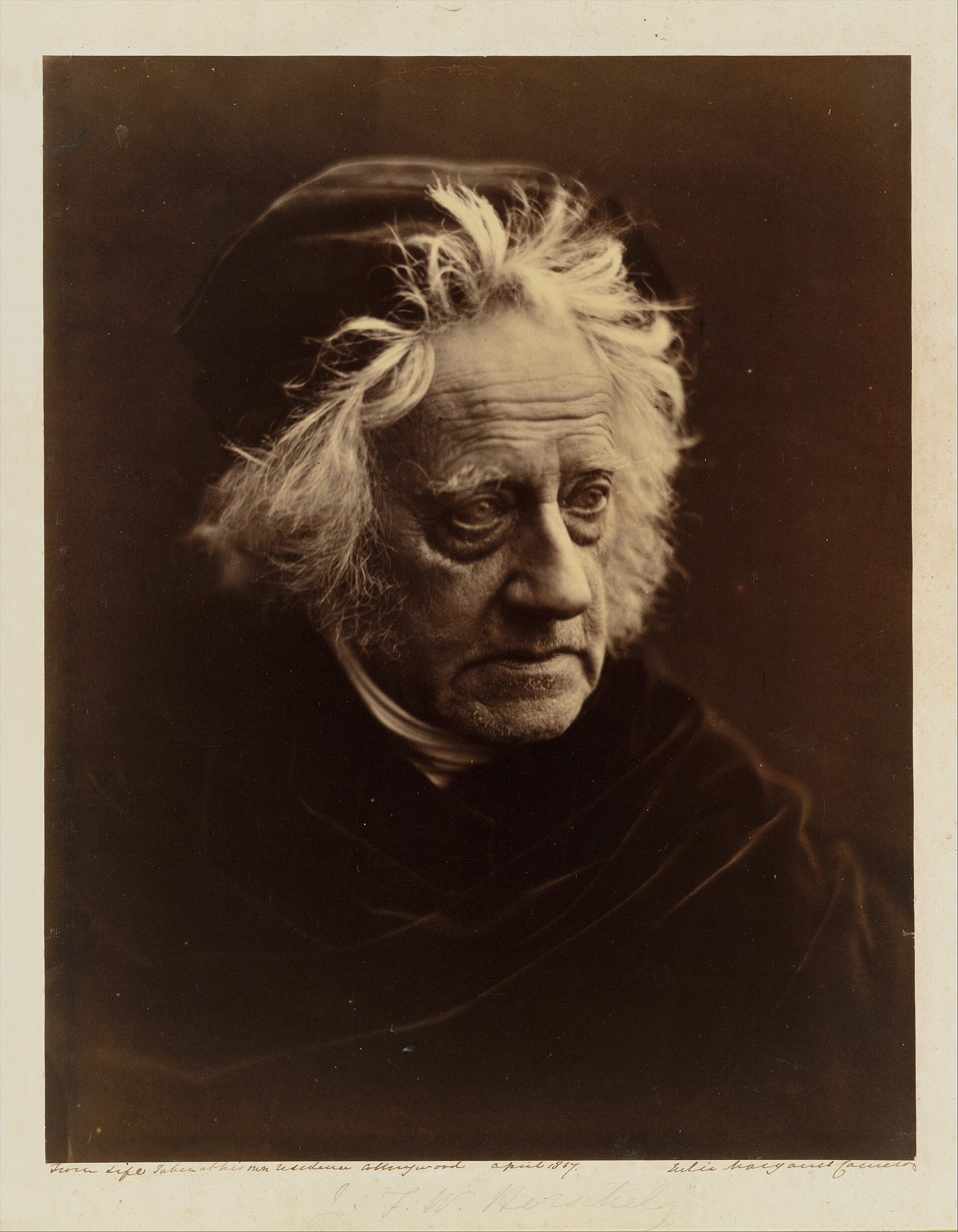
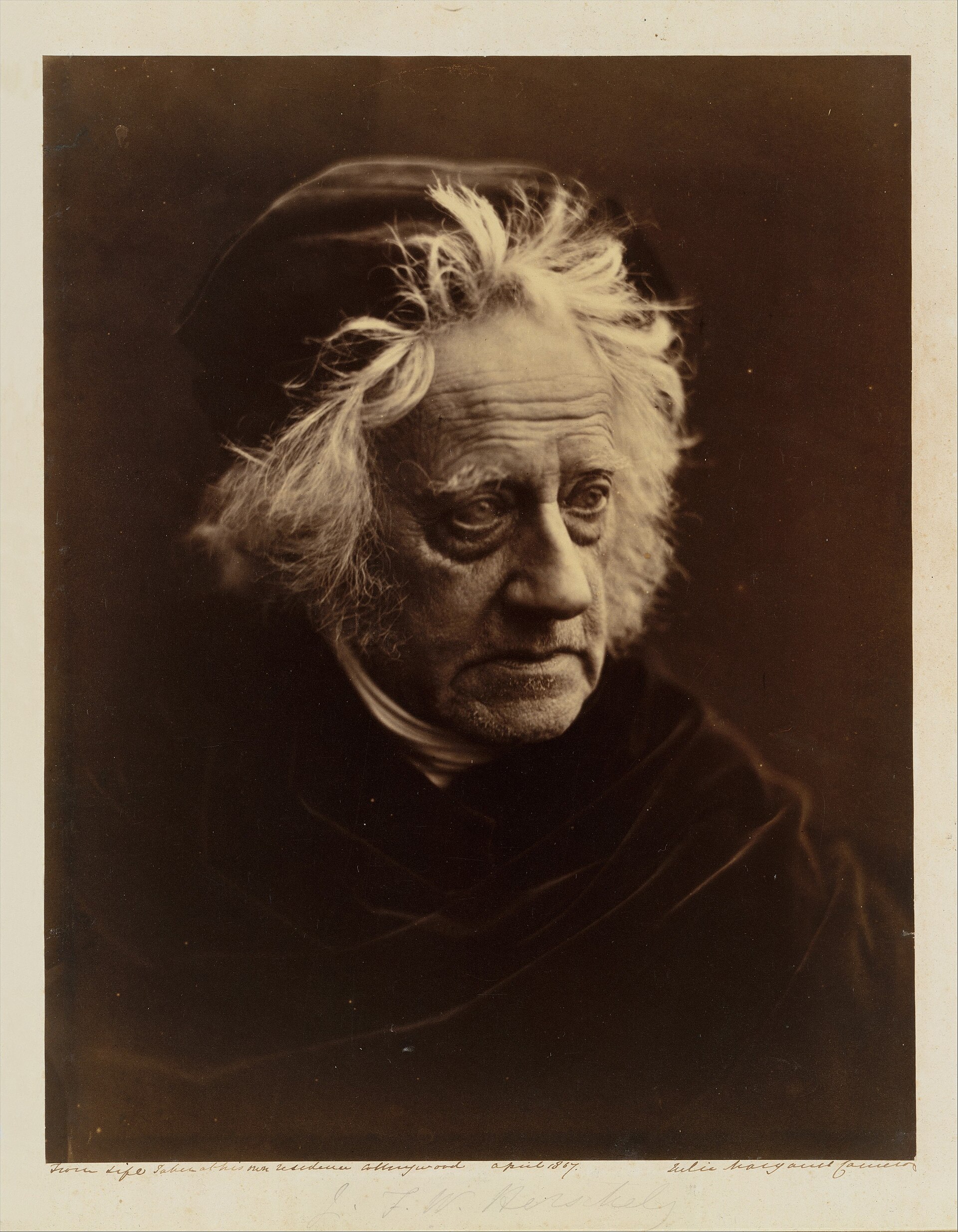
Sir John Herschel
April 1867 · Albumen silver print from a wet collodion...
Metropolitan Museum of Art, New York
 1815-1879
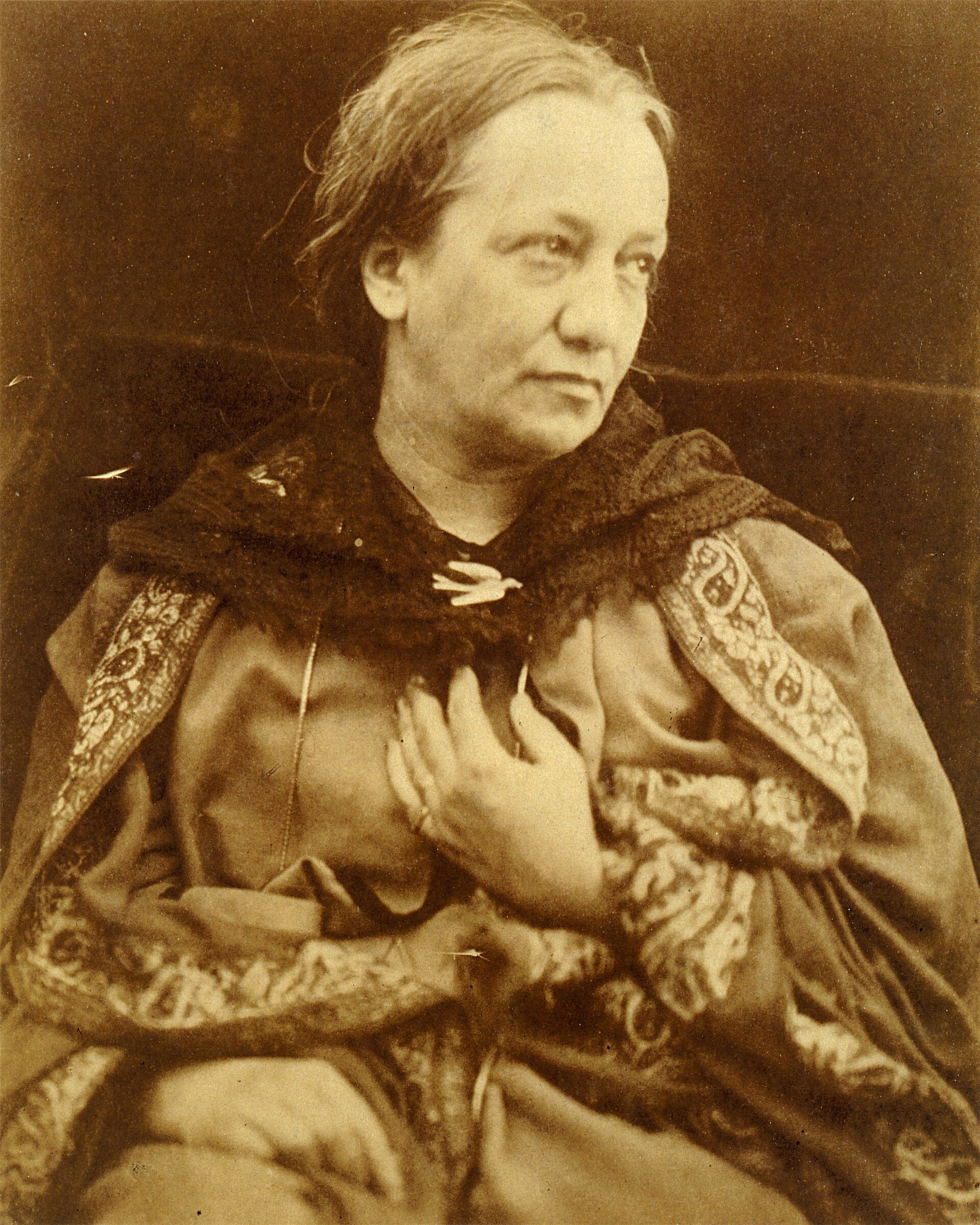
Julia Margaret Cameron, photographed by her son and fellow photographer Henry Herschel Hay Cameron, circa 1873, per the National Portrait Gallery's own catalogue record (which dates it to spring 1873, when Henry Herschel Hay Cameron signed two prints of his mother's work). She was rarely photographed herself; this is one of a small number of secure identifications, held by the National Portrait Gallery, London.
National Portrait Gallery, London, NPG P696| Full name | Julia Margaret Pattle Cameron |
|---|---|
| Worked as | Photographer |
| Born | 11 June 1815 · Calcutta, India |
| Died | 26 January 1879 · Glencairn, near Kalutara, Ceylon |
| Nationality | British (born Calcutta, India |
| Movement | Victorian portrait and allegorical photography, associated with the Little Holland House... |
| In this archive | 1 artwork |
| Sources | 20 cited |
| Last verified |
About this page 1 artwork in the archive · Last verified · 20 sources cited
Julia Margaret Cameron took up photography at forty-eight, on a camera given to her as a Christmas present by her daughter and son-in-law with the words that it might amuse her during her solitude at Freshwater. She worked at it for barely twelve years, effectively ended by her departure for Ceylon in 1875, and in that time produced something on the order of 900 photographs, registered 508 of them for copyright in her own name at Stationers' Hall, sold prints through the London dealers P. and D. Colnaghi, and made portraits of most of the eminent men of her generation she could get in front of a lens: John Herschel, Charles Darwin, Alfred Tennyson, Thomas Carlyle, G.F. Watts, Robert Browning. She was, by her own account and everyone else's, an amateur in the sense that she was never trained and never worked to commission. She was not an amateur in any other sense: she treated the photograph as a saleable, copyrightable, exhibitable object from her first year with a camera in her hands.
The single most important thing a reader coming to Cameron for the first time probably does not know is that the photographic establishment of her own lifetime considered her work close to incompetent, and said so in print, repeatedly, while she was alive to read it. The soft focus, the visible scratches, the cracked negatives she kept printing from anyway, were not read in 1865 as an aesthetic position. They were read as a woman who had not learned to use a camera properly. That judgement reversed itself over the following century, slowly and then decisively, and the reversal is as much a part of this record as the pictures themselves.
What follows treats Cameron the way this publication treats a painter: what survives and where, what is disputed, what the market has paid, and what happened to the negatives and the equipment after she died. It is not a biography in the ordinary sense. It is a record of an artist's surviving physical output and the paper trail behind it.
Born 11 June in Calcutta, the fourth of ten children of a British East India Company official; three siblings died in infancy.1819
Meets the astronomer Sir John Herschel while convalescing at the Cape of Good Hope.1
Marries Charles Hay Cameron, a jurist and reformer of Indian law twenty years her senior, on 1 February in Calcutta.1819
Leaves India for England with her husband and family.19
Buys a property next to Alfred Tennyson at Freshwater, Isle of Wight, and names it Dimbola.20
Receives her first camera in December, a gift from her daughter Julia and son-in-law Charles Norman.1
Makes her first acknowledged success, a portrait of Annie Philpot, on 29 January; begins registering photographs for copyright at Stationers' Hall; elected to the Photographic Society of London.11811
Compiles the Herschel Album, 94 prints presented to Sir John Herschel, with dedications dated 26 November 1864 and revised 8 September 1867.3
Sells eighty prints to the South Kensington Museum in August; the Photographic Journal publishes its hostile review of her work shown at the Photographic Society of Scotland.118
Wins a gold medal at an exhibition in Berlin despite mockery from professional photographers, according to Wilhelm Vogel's contemporary account.1
Photographs Sir John Herschel at his home in Kent in April; photographs Thomas Carlyle at Little Holland House, a print later bought by Queen Victoria.1716
The South Kensington Museum gives her two rooms on site as a working portrait studio.1
Compiles a presentation album of 32 portraits for her nephew Valentine Cameron Prinsep, later sold at Sotheby's in 2013.6
Her daughter Julia dies in childbirth in October.18
Leaves Freshwater for Ceylon with her husband; entrusts a body of negatives to the Autotype Company of London before departing; registers her last photograph for copyright on 20 October.71119
Dies 26 January at Glencairn, the family estate near Kalutara, Ceylon.1819
Virginia Woolf and Roger Fry publish Victorian Photographs of Famous Men and Fair Women, the first serious treatment of Cameron as an artist, in an edition of 450 copies.18
Helmut Gernsheim publishes the first full scholarly monograph, Julia Margaret Cameron: Her Life and Photographic Work, with an introduction by Clive Bell.18
The Herschel Album is sold at Sotheby's to an American buyer for GBP 52,000; the export licence is refused.4
The Art Fund contributes GBP 5,000 toward keeping the Herschel Album in Britain; it enters the Science Museum Group.43
Mike Weaver's monograph and the Getty exhibition catalogue Whisper of the Muse reassess Cameron's allegorical photographs as a deliberate artistic programme.18
Julian Cox and Colin Ford publish the catalogue raisonne Julia Margaret Cameron: The Complete Photographs, timed to a retrospective in London and Bradford.2
The Val Prinsep Album and the Kate Keown print set successive auction records for the artist at Sotheby's, the second at USD 461,000.56
Cameron's market divides cleanly into single prints, which vary by an order of magnitude on rarity and condition, and the presentation albums she compiled herself, which have set her successive auction records. No documented forgery or knowingly mis-sold later reproduction was found in the sources consulted, though the print-generation problem documented above, the same composition surviving as objects made decades apart, is exactly the condition under which such a case could arise undetected.
| Date | Sale | Work | Result | Note |
|---|---|---|---|---|
| 11 December 2014 | Sotheby's | No. 5 of series of twelve lifesized heads (Kate Keown) | With premium USD 461,000 USD | Reported by Artnet as having sold for USD 461,000, nearly double the Val Prinsep Album's result; the source does not separate a hammer price from a total including premium, and this record does not invent that separation. Part of the single-owner sale of masterworks from the Joy of Giving Something Foundation. |
| 1974 | Sotheby's (private sale to a collector, not a public auction lot in the sources consulted) | The Herschel Album (94 prints) | Hammer GBP 52,000 GBP | An unprecedented sum for a photograph album at the time. The export licence was subsequently refused; the Art Fund contributed GBP 5,000 in 1975 toward keeping it in Britain, and the album entered the Science Museum Group, now held at the National Science and Media Museum, Bradford. |
Hammer is the price at which the bidding stopped; with premium adds the fee the house charges the buyer on top. Hammer price and buyer's premium in the glossary.
| Institution | City | Holdings | Note |
|---|---|---|---|
| Victoria and Albert Museum | London | One of the largest Cameron holdings, formed from her own sales to the museum starting in 1865; the Royal Photographic Society Collection here also holds her surviving Jamin lens. | She was given two rooms on site as a working studio from 1868. |
| National Science and Media Museum (Science Museum Group) | Bradford | The Herschel Album, 94 prints presented to Sir John Herschel. | Acquired 1975 after an export licence refusal. |
| National Portrait Gallery | London | Extensive holdings of her portraits of named sitters; co-organised the 2003 Cox and Ford retrospective. | |
| Metropolitan Museum of Art | New York | Prints from the Gilman Paper Company Collection (acquired 2005) and the Rubel Collection (2013), including the Sir John Herschel print catalogued elsewhere on this site. | |
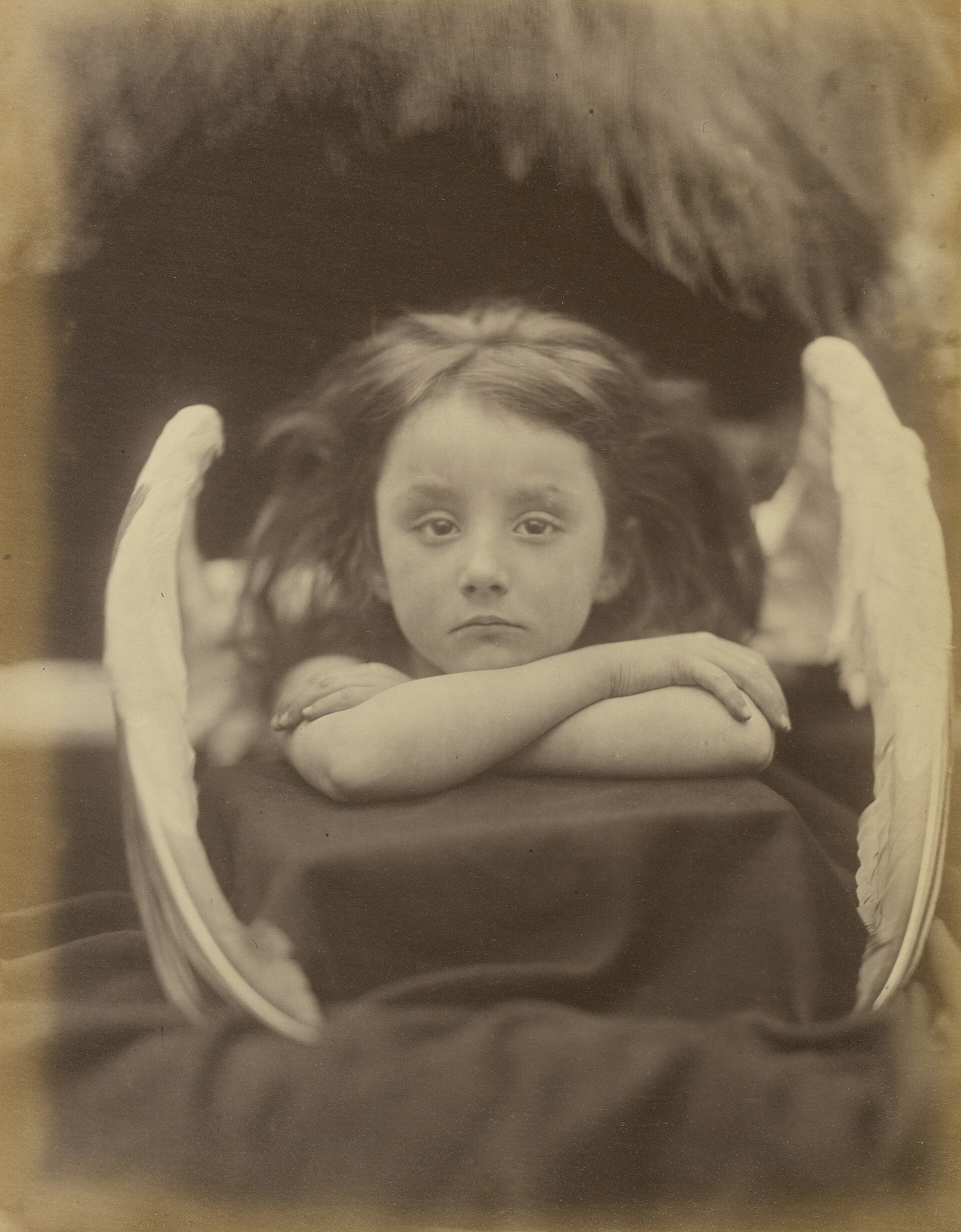
| J. Paul Getty Museum | Los Angeles | A major collection including A. Tennyson / The Dirty Monk and I Wait; publisher of the 2003 catalogue raisonne and the 1986 Whisper of the Muse exhibition. | |
| National Gallery of Victoria | Melbourne | Felton Bequest prints including a differently dated Herschel portrait. | |
| Royal Collection Trust | London (Windsor) | A print of Thomas Carlyle, purchased in Cameron's own lifetime by Queen Victoria. | RCIN 2941860. |
| Art Institute of Chicago | Chicago | Alfred Stieglitz Collection prints including Charles Darwin. | |
| Dimbola Museum and Galleries | Freshwater, Isle of Wight | Housed in Cameron's own former home; run by the Julia Margaret Cameron Trust. | Displays period photographic equipment illustrating her process; this record does not assert that any specific camera on display was Cameron's own, since only her lens is independently confirmed to survive. |
Cameron received her first camera in December 1863 from her daughter Julia and son-in-law Charles Norman, given, in the words her biographers preserve, so that it might amuse her mother during her...
Cameron received her first camera in December 1863 from her daughter Julia and son-in-law Charles Norman, given, in the words her biographers preserve, so that it might amuse her mother during her solitude at Freshwater on the Isle of Wight. She was forty-eight, the mother of six, and already at the centre of a wide circle of Victorian scientific and literary friends through her husband Charles Hay Cameron, a jurist twenty years her senior whom she had married in Calcutta in 1838, and through her own family: she was the fourth of ten children of a British East India Company official, three of whom died in infancy, and her six surviving sisters married into a network of colonial and artistic families that put her within reach of most of intellectual London.
She did not begin as a natural. "I began with no knowledge of the art," she wrote. "I did not know where to place my dark box, how to focus my sitter, and my first picture I effaced to my consternation by rubbing my hand over the filmy side of the glass." Her first acknowledged success, a portrait of the neighbour's daughter Annie Philpot made on 29 January 1864, came within weeks of that false start. She converted a coal-house into a darkroom and a glazed henhouse into what she called her glass house, in her own words: "I turned my coal-house into my dark room, and a glazed fowl-house I had given to my children became my glass house." Within eighteen months she had sold eighty prints to the South Kensington Museum, now the Victoria and Albert Museum, and arranged with the West End printsellers P. and D. Colnaghi to publish and sell her work. An amusement for a solitary woman on an island became, inside two years, a business with a dealer and a museum client.
Cameron worked in the wet collodion process on glass negatives, roughly 12 by 10 inches in her early years and later 15 by 12 inches, coated, sensitised, exposed and developed while still wet...
Cameron worked in the wet collodion process on glass negatives, roughly 12 by 10 inches in her early years and later 15 by 12 inches, coated, sensitised, exposed and developed while still wet, printed out directly onto albumen paper by contact under sunlight. Her lens, made by the Paris firm of Jamin, was a Petzval-type portrait lens with a fixed aperture of about f/3.6 and pronounced chromatic aberration; she is recorded as working close to its minimum focus distance and declining to stop it down for greater depth of field, which is the standard technical explanation for the soft, non-photographic quality of her prints. Exposures ran three to seven minutes at this period, long enough that any small movement registered as blur, and she is documented printing from negatives she knew to be cracked or scratched rather than discarding them.
None of this was read charitably by her professional contemporaries. The Photographic Journal, reviewing her submissions to the 1865 exhibition of the Photographic Society of Scotland, wrote: "Mrs. Cameron exhibits her series of out-of-focus portraits of celebrities. We must give this lady credit for daring originality, but at the expense of all other photographic qualities. A true artist would employ all the resources at his disposal, in whatever branch of art he might practise. In these pictures, all that is good in photography has been neglected and the shortcomings of the art are prominently exhibited." The Illustrated London News took the opposite position, describing her portraits as the nearest approach photography had made to fine art; the Photographic Journal rebutted that in turn, writing that "slovenly manipulation may serve to cover want of precision in intention, but such a lack and such a mode of masking it are unworthy of commendation." The following year her work travelled to an exhibition in Berlin, where it won a gold medal and provoked, by the German photographer Wilhelm Vogel's own account, laughter among photographers who saw bungling pupils' work in it and admiration among painters, who praised its artistic value as outweighing its technical shortcomings entirely. Cameron herself measured her ambitions against Titian and Raphael rather than against the commercial photographic trade, and said the professional criticism would have dispirited her had she not judged it, in her own words, at its true worth.
Cameron ran no commercial studio and took no commissions.
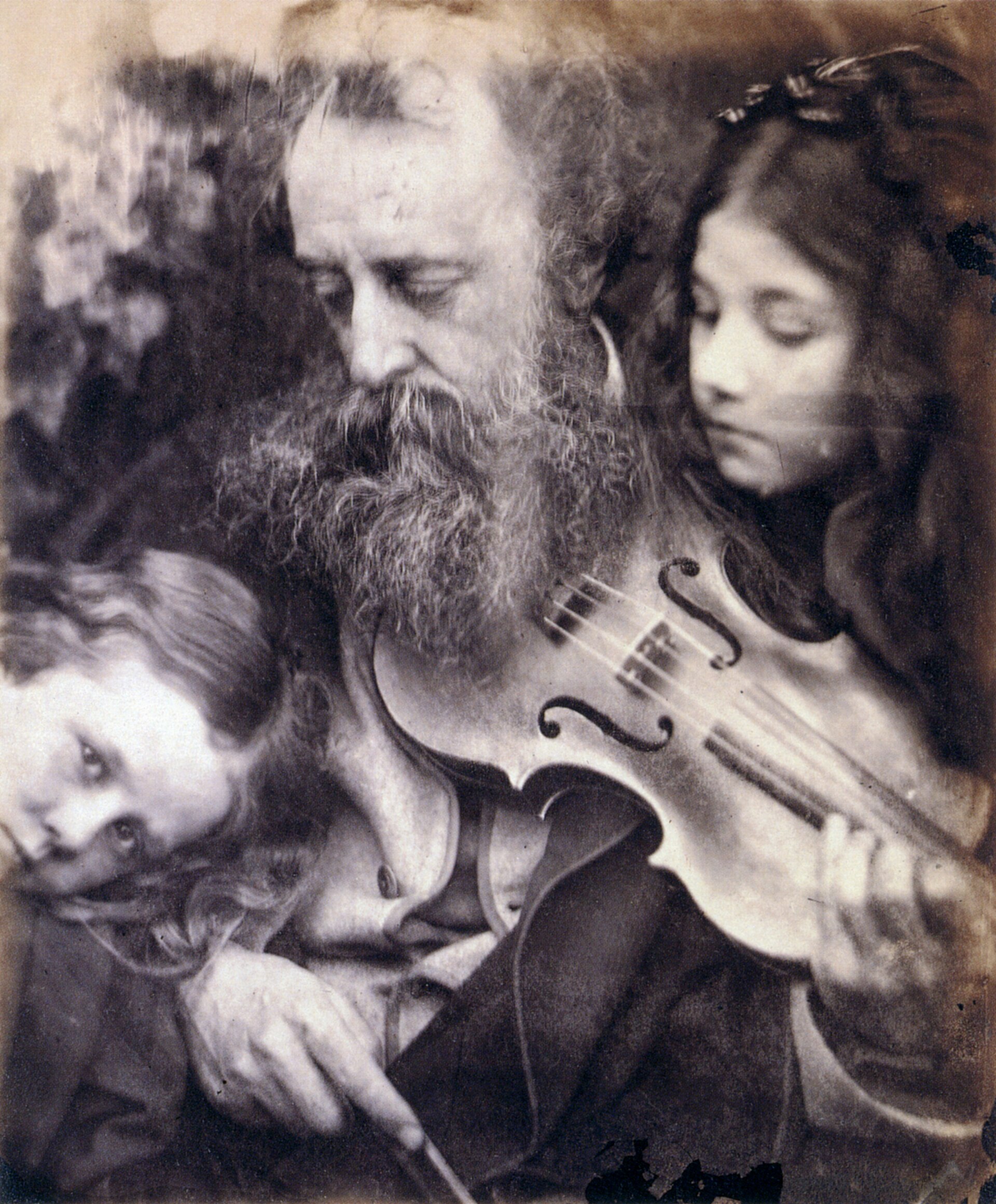
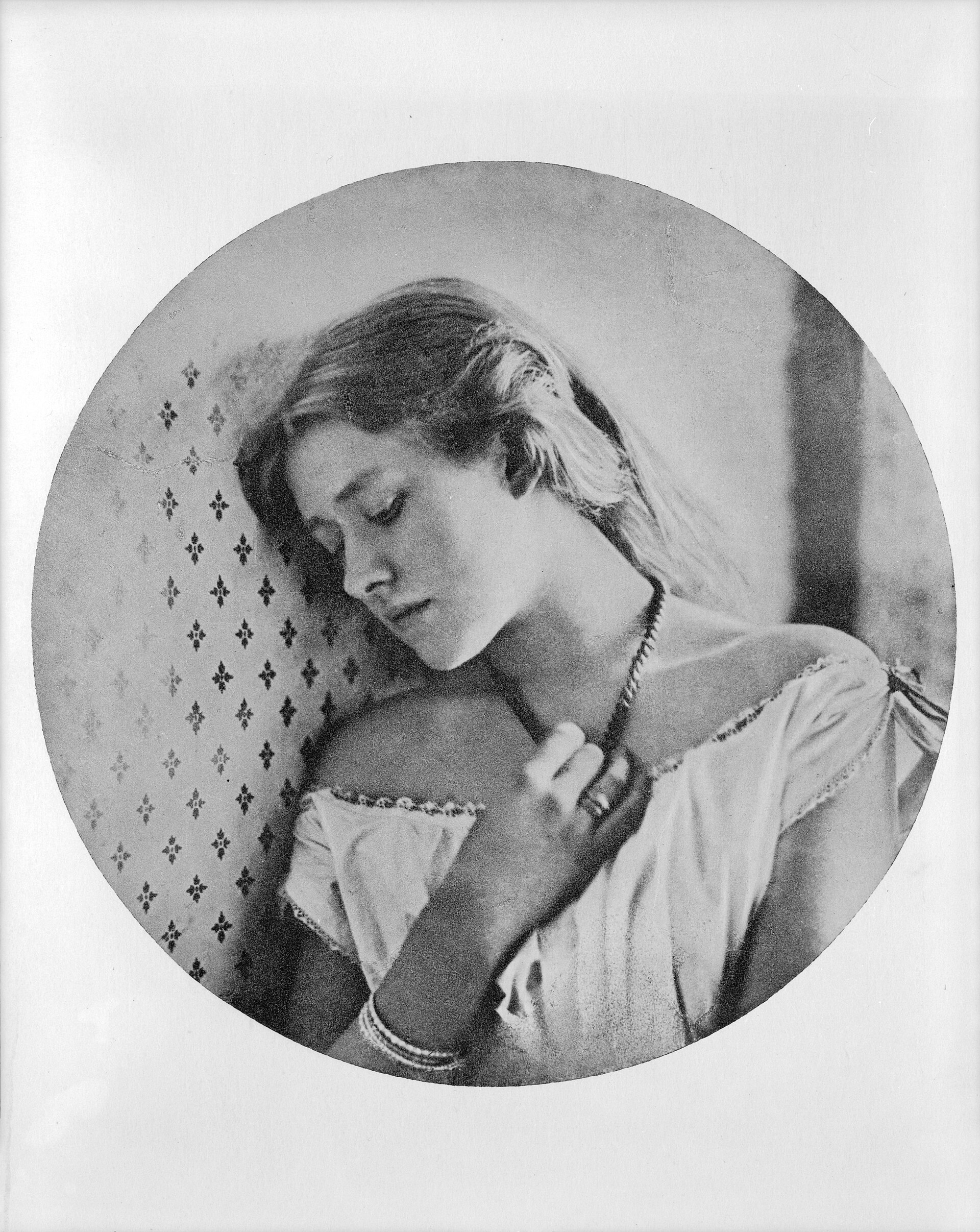
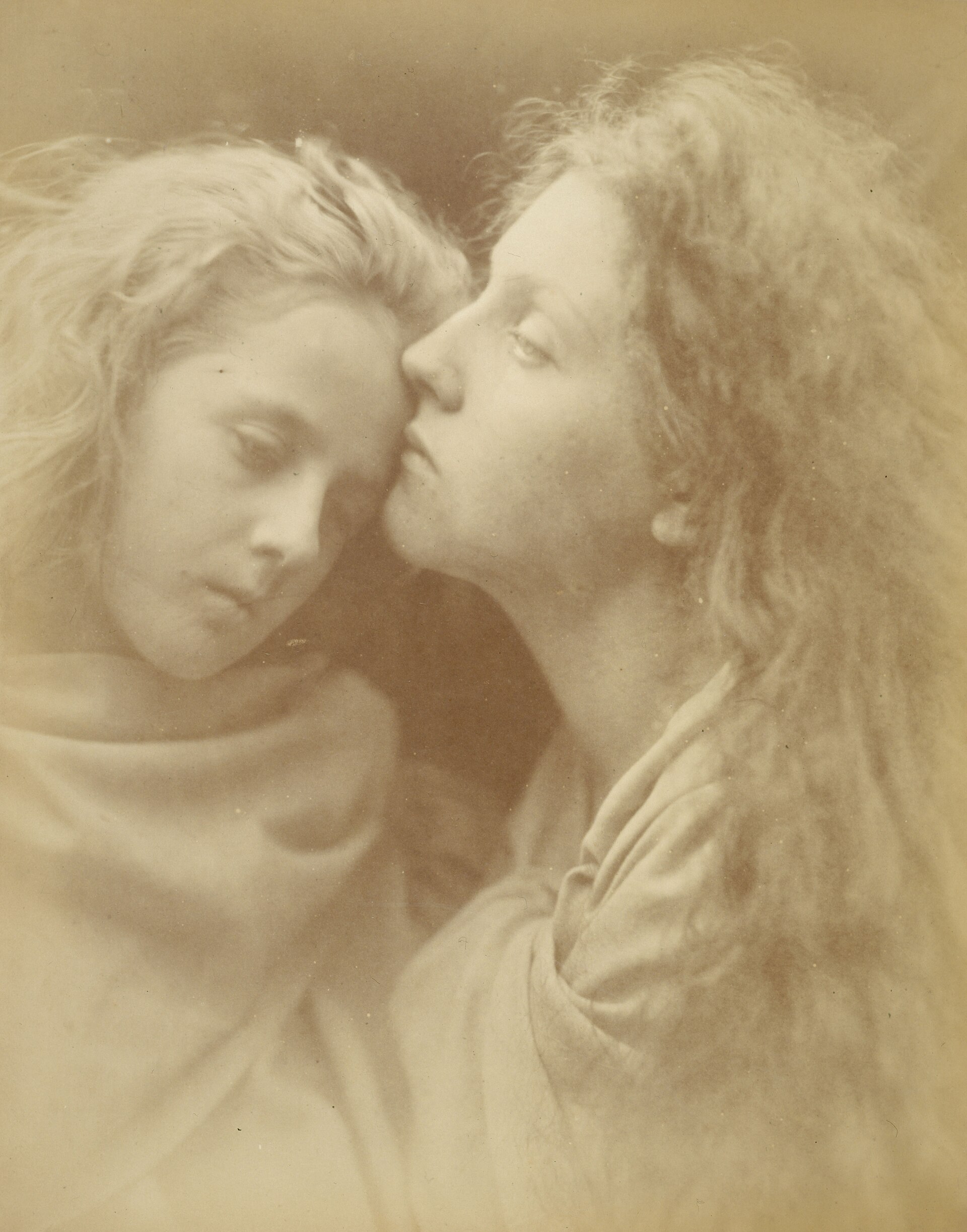
Cameron ran no commercial studio and took no commissions. She enlisted whoever was on hand, costumed them, and photographed them as embodiments of classical, religious or literary figures rather than as themselves: a parlour maid transformed into the Madonna, her own husband into Merlin, a neighbour's child fitted with swan's wings into Cupid or a Raphaelesque angel. The parlour maid was Mary Hillier, who came to Cameron's household as a housemaid at about thirteen and appears in more than fifty of her photographs between 1864 and 1874, so often cast as the Virgin that she became known locally as Mary Madonna; Cameron also photographed her own household staff Mary Ryan, a child beggar she informally adopted and later cast as the May Queen, and Mary Kellaway in a comparable range of allegorical parts. Which servant became which sacred or literary figure, and which friend or relation became which scientist or poet, was Cameron's own casting decision, made inside a household where, by her own account and her visitors', ordinary domestic duties were routinely abandoned for a day's photography.
The class line running through this practice is direct and worth stating plainly rather than passing over: the women who modelled repeatedly as the Madonna, as Sappho, as nameless allegorical virtues, were her own domestic servants, working under her direction for wages, while the men she photographed as themselves under their own names, Herschel, Darwin, Tennyson, Carlyle, Watts, were friends whose actual identity was the entire point of the portrait. Cameron's stated artistic aim, in a formula she repeated in her own writing, was "to ennoble Photography and to secure for it the character and uses of High Art by combining the real and the Ideal and sacrificing nothing of the Truth by all possible devotion to poetry and beauty" - an aim she pursued, consistently, by using paid household labour to stage the Ideal and named public men to supply the Real.
Cameron's circle of sitters was not assembled at random.
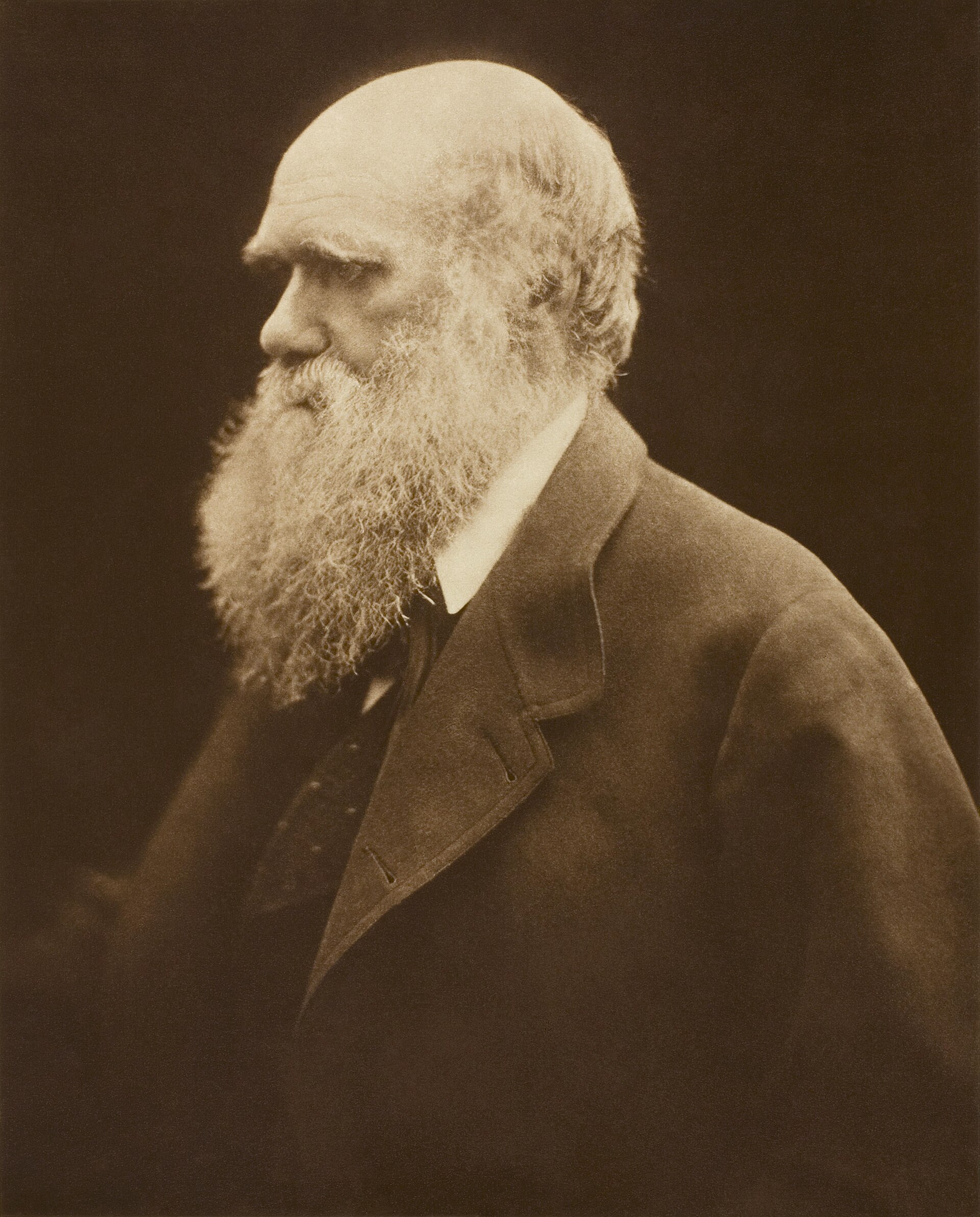
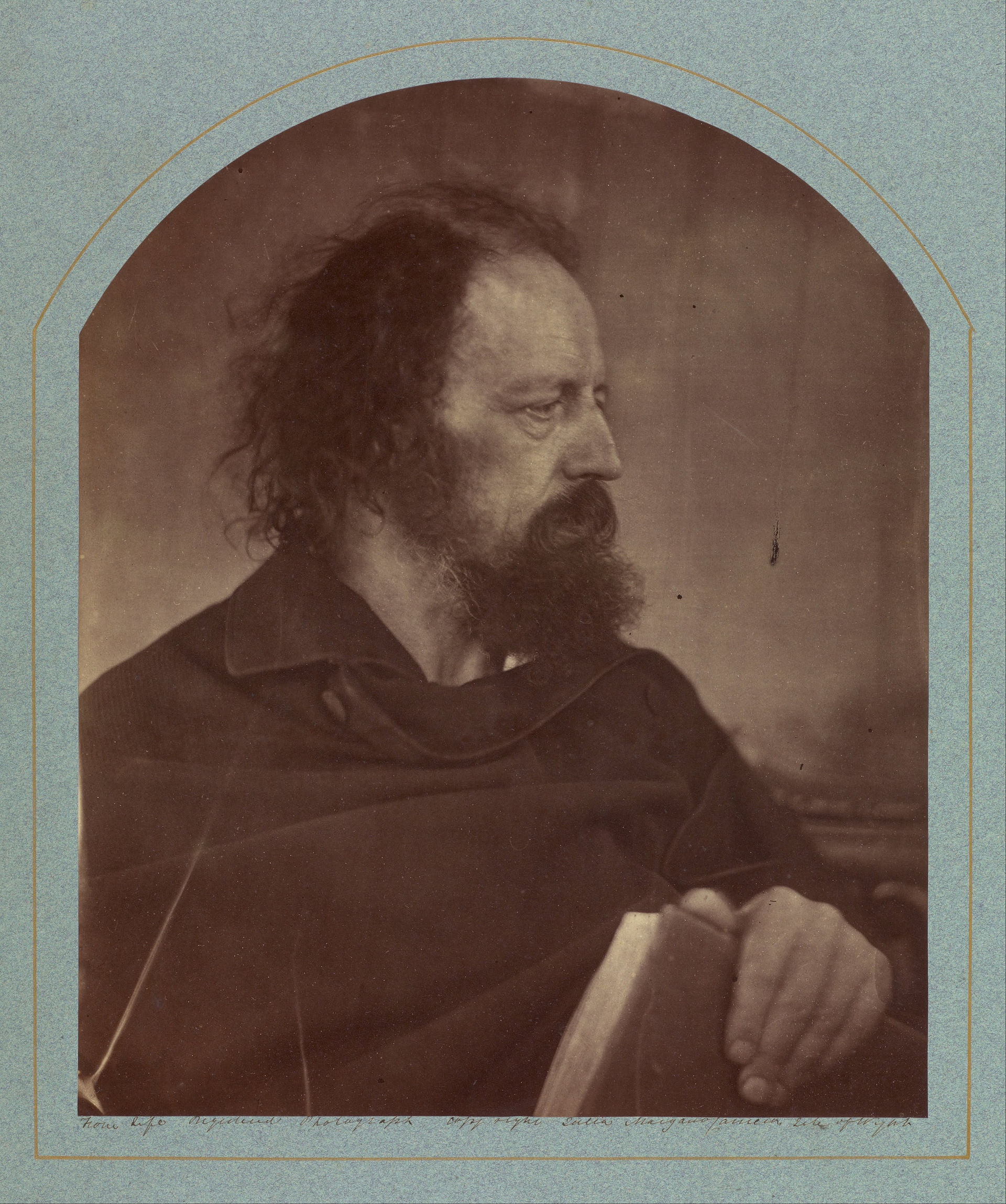
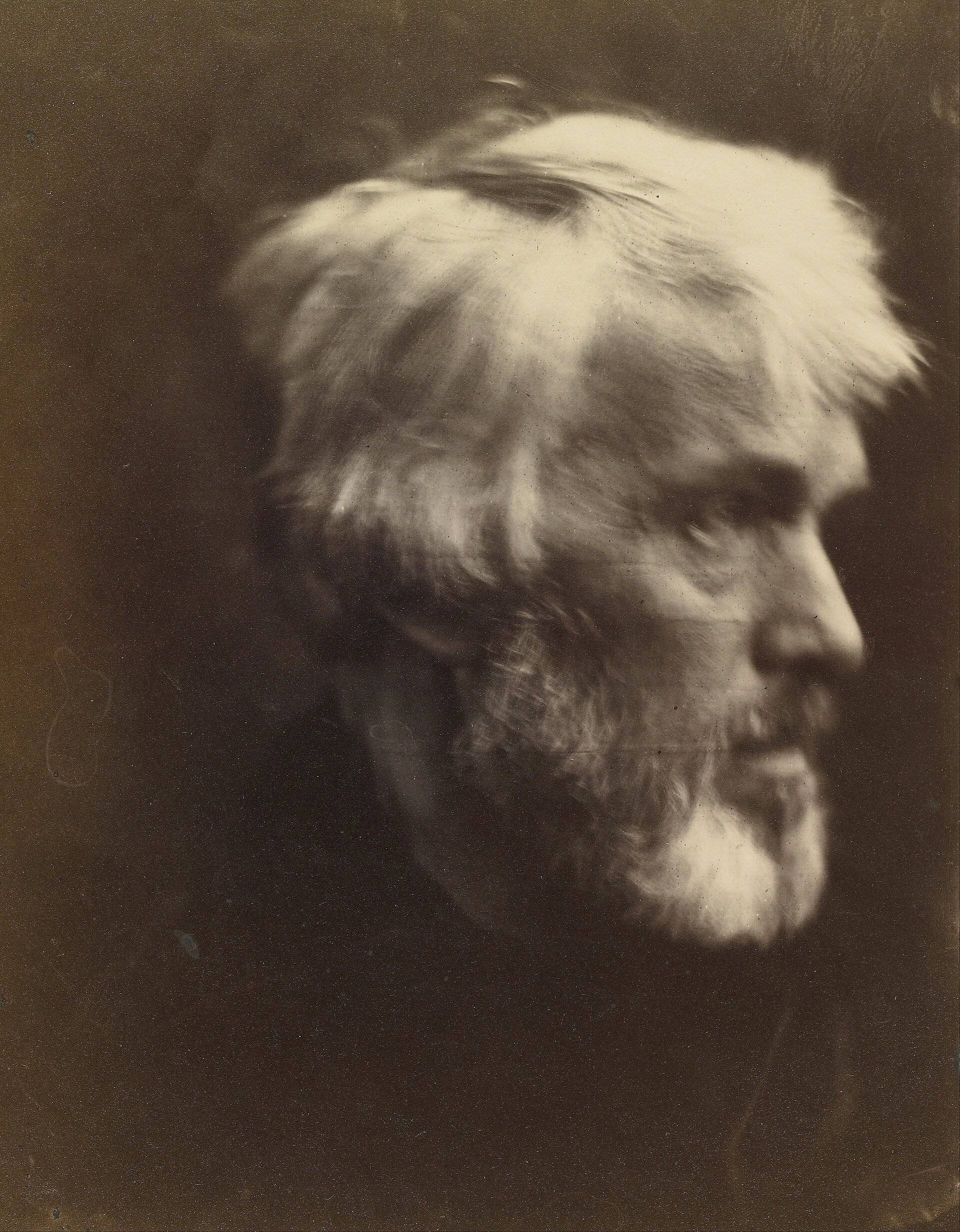
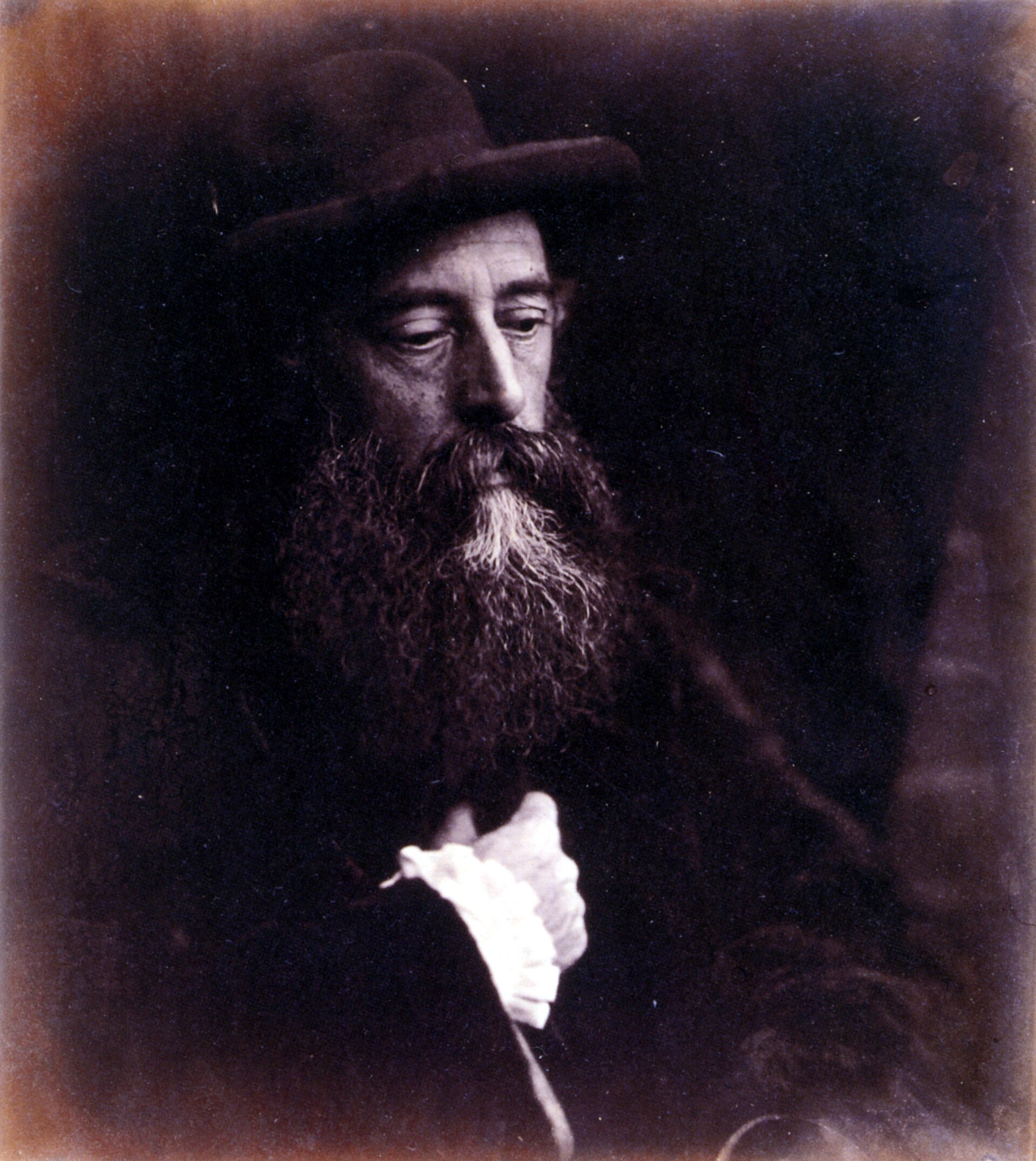
Cameron's circle of sitters was not assembled at random. From 1860 she lived next door to Alfred Tennyson at Freshwater on the Isle of Wight, in a house she bought and named Dimbola after one of her husband's Ceylon coffee estates, and she used her sister Sara Prinsep's London salon at Little Holland House, centred on the painter G.F. Watts, as a second base from 1865 onward. The resulting Freshwater Circle supplied a working list of sitters that reads like a cross-section of Victorian intellectual life: the poet Tennyson, the painter Watts, the actress Ellen Terry, the historian Thomas Carlyle, the naturalist Charles Darwin, the astronomer and chemist Sir John Herschel, and the poet Robert Browning among them.
Her relationship with Herschel predates her photography by nearly three decades: they met in 1835 at the Cape of Good Hope, he told her of photography's invention in 1839 within months of its announcement, and he sent her some of the first photographic prints she ever saw, years before she owned a camera of her own. When she finally photographed him at his home in Kent in April 1867, she described the act in terms she used for no ordinary sitting: "When I have had such men before my camera my whole soul has endeavoured to do its duty towards them in recording faithfully the greatness of the inner as well as the features of the outer man. The photograph thus taken has been almost the embodiment of a prayer... He was to me as a Teacher and High Priest." Her portrait of Tennyson himself, made in 1865 and inscribed with the poet's own choice of subtitle, is catalogued under the double title A. Tennyson / The Dirty Monk, a self-deprecating tag from Tennyson comparing his own dishevelled look in the print to an unshaven friar; her Carlyle, made in 1867 at Little Holland House, was bought by Queen Victoria herself and remains in the Royal Collection, an unusually well-placed early patron for an amateur photographer working without a dealer's showroom.
Cameron began registering individual photographs for copyright at the Copyright Office, Stationers' Hall, London, in 1864, the year she took up the camera, a formal legal step that most contemporary...
Cameron began registering individual photographs for copyright at the Copyright Office, Stationers' Hall, London, in 1864, the year she took up the camera, a formal legal step that most contemporary amateur and even most professional photographers did not bother with. Over roughly eleven and a half years, to her last registered entry on 20 October 1875, she registered 508 of her photographs this way. The surviving Copyright Entry Forms show her signing them personally only in 1864 and 1865, after which an agent signed on her behalf for more than four years, evidence of a practice run at a scale beyond one woman's own paperwork.
Alongside copyright she sold through P. and D. Colnaghi from her first year with a camera, and the Colnaghi blindstamp appears on many surviving mounts. She is separately recorded sending signed prints directly to sitters, Herschel among them, specifically to raise a print's resale desirability - a candid piece of evidence that she thought about her photographs as saleable commercial objects and not only as private tributes to friends. By 1868 the South Kensington Museum had given her two rooms on site as a working portrait studio, making her, in effect, its first artist-in-residence: an unusual arrangement for a woman with no formal training and no interest in taking commissions, secured entirely on the strength of what she had already sold the museum.
Because Cameron printed by contact from a glass negative and kept printing from negatives long after the original sitting, and because after 1875 her negatives passed out of her own hands entirely, a...
Because Cameron printed by contact from a glass negative and kept printing from negatives long after the original sitting, and because after 1875 her negatives passed out of her own hands entirely, a single Cameron composition routinely exists today as a population of physically distinct objects made years or decades apart, not as a fixed edition. This is the direct analogue, in photography, of the edition, cast or state question this publication tracks in bronze and print: which physical object was made when, by whom, and from what.
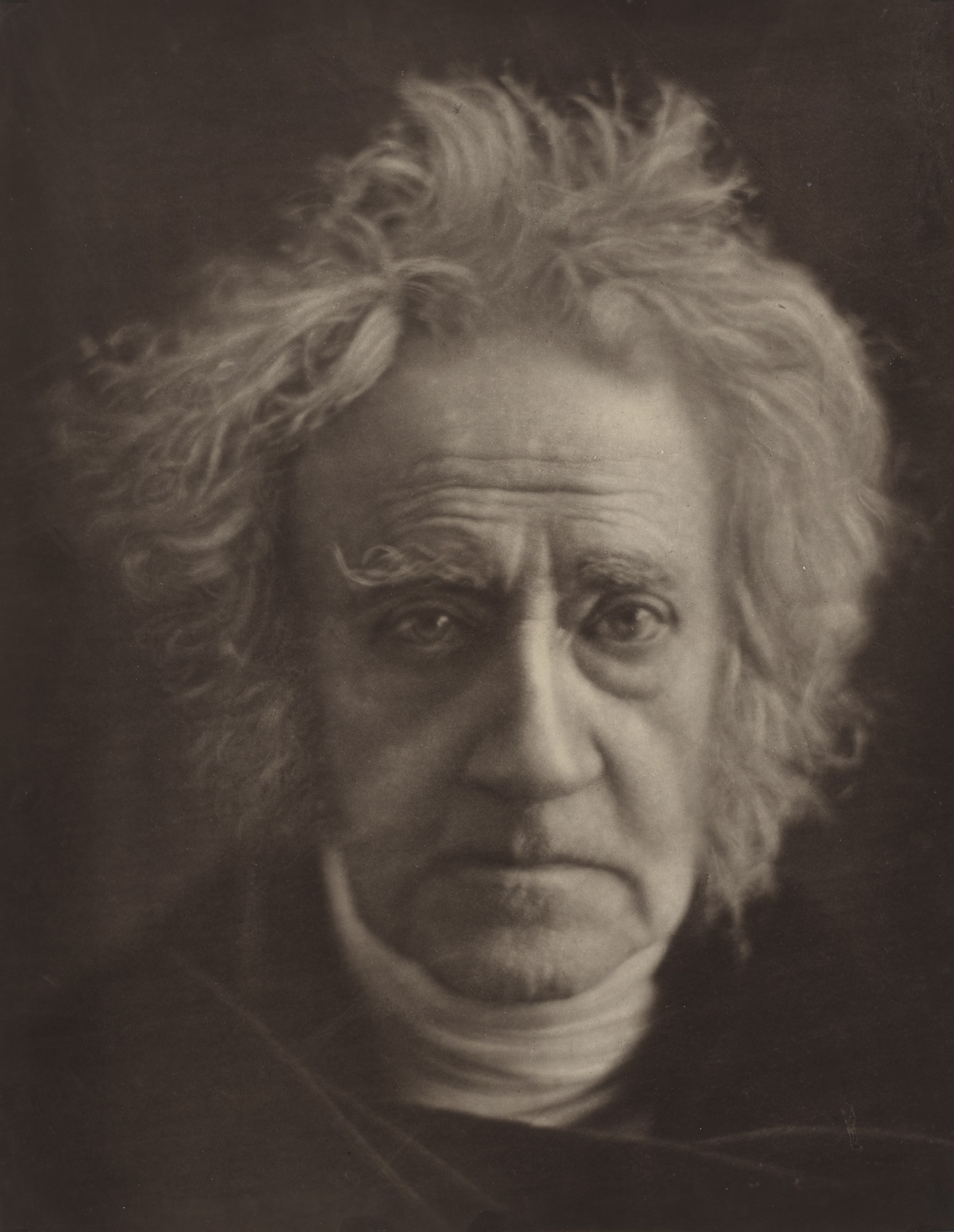
The evidence is scattered across the corpus rather than confined to one case. The Metropolitan Museum's own carbon print of Herschel is a different physical object, in a different process, from its albumen print of the same pose. The Art Institute of Chicago's Darwin, exposed around 1868, survives as a carbon print made in 1875, seven years after the sitting. The Metropolitan's own print of George Frederick Watts, negative dated 1864, carries a museum-recorded print date of about 1905, twenty-six years after Cameron's death. A photogravure of Ellen Terry at sixteen, held by the Library of Congress, is dated 1913, thirty-four years after Cameron died and forty-nine years after the sitting it reproduces. None of these later objects is a fake or a copy in any dishonest sense; all are openly catalogued by name-brand institutions as exactly what they are. But a reader assuming that a Cameron print in any museum is necessarily a vintage object from the year of the sitting is wrong more often than the wall label makes obvious at a glance, and this record's own companion piece, on the Metropolitan's Sir John Herschel print, documents the sharpest version of the problem: surviving prints of that single pose carry two different Cameron-inscribed sitting dates, April 1867 and April 1869, which the standard catalogue raisonne lists as two separate, unresolved catalogue entries rather than reconciling to one.
The standard reference for Cameron's output is Julian Cox and Colin Ford's catalogue raisonne, Julia Margaret Cameron: The Complete Photographs, published by the Getty in 2003 to accompany a...
The standard reference for Cameron's output is Julian Cox and Colin Ford's catalogue raisonne, Julia Margaret Cameron: The Complete Photographs, published by the Getty in 2003 to accompany a retrospective at the National Portrait Gallery, London, and the National Museum of Photography, Film and Television, Bradford. The Getty's own description of the volume states that it gathers, for the first time, all known images by Cameron, illustrated across more than 1,200 black-and-white plates. The Metropolitan Museum's curatorial account of her career, by contrast, states that in twelve years of work she produced perhaps 900 images.
The two figures are not a contradiction to be silently averaged; they are counting different things, and this record states plainly that it cannot resolve which count a reader should treat as definitive without the volume itself in hand. A photograph and a print are not the same unit: 900 is closer to a count of distinct compositions, while a catalogue illustrating over 1,200 plates is counting individual surviving physical objects, which, given how many compositions exist in multiple prints from different years, as the previous section documents, is exactly the kind of gap a reader should expect between a count of images and a count of objects. What is not in serious dispute, in either count, is authorship at the level of the composition: unlike a painter's contested corpus, there is no meaningful body of photographs whose attribution to Cameron herself is argued over. What is genuinely unresolved, case by case, is which physical print, of which date, a given museum holds.
In October 1873 Cameron's daughter Julia died in childbirth.
In October 1873 Cameron's daughter Julia died in childbirth. In 1875 Cameron and her husband left Freshwater for Ceylon, where her sons managed the family's coffee plantations and where Charles Hay Cameron's health was expected to fare better; she took her photographic equipment with her and, by her own account, two coffins, in case none could be had there. Before leaving England she entrusted a body of her negatives to the Autotype Company of London, which made copy negatives and issued carbon prints from them for sale, an arrangement documented on the Victoria and Albert Museum's own catalogue entry for its Carlyle print, itself a carbon print from a copy negative rather than an original albumen print. The purpose, on the evidence of which prints survive from this arrangement, was continuing income for a family whose finances in Ceylon were not secure; the Autotype Company's reproductions of her images continued to circulate for decades, the Watts print now in the Metropolitan Museum and the Ellen Terry photogravure now in the Library of Congress among the objects that resulted.
Fewer than thirty photographs survive from Cameron's final years in Ceylon, mostly of Tamil workers and household servants there, made under conditions she described as hampered by heat and a shortage of clean water for washing prints. She died at Glencairn, the family's Ceylon estate near Kalutara, on 26 January 1879. Almost none of her working equipment survives: the one confirmed exception is her Jamin portrait lens, later owned by the photographer Alvin Langdon Coburn, who gave it to the Royal Photographic Society; it is now held in the Royal Photographic Society Collection at the Victoria and Albert Museum. Her negatives fared unevenly. The most complete single surviving group, the album of 94 prints she assembled for Herschel between 1864 and 1867, stayed with the Herschel family for a century before it resurfaced at public sale.
Cameron's reputation did not travel in a straight line.
Cameron's reputation did not travel in a straight line. She was, by her own admission, dismissed by parts of the professional photographic press in her own lifetime, and after her death in 1879 her work went largely unrevived for nearly half a century. The first serious published treatment of her as an artist rather than an eccentric amateur came in 1926, when the Hogarth Press issued Victorian Photographs of Famous Men and Fair Women, with introductions by her great-niece Virginia Woolf and the critic Roger Fry, in an edition of 450 numbered copies; Woolf's essay portrays her great-aunt as a vivid and energetic character as much as a photographer.
The first full scholarly monograph followed in 1948: Helmut Gernsheim's Julia Margaret Cameron: Her Life and Photographic Work, with an introduction by the Bloomsbury critic Clive Bell, revised in a second edition in 1975. Gernsheim's own account of how he came to the subject, that he first encountered her photographs by chance at a railway station, is recorded in secondary accounts of the revival rather than independently verified here, but the book itself is not in dispute: it is the point at which Cameron entered the art-historical literature as a subject for sustained technical and biographical study rather than a footnote to Tennyson's circle. A further reassessment followed in the 1980s under the historian Mike Weaver, whose 1984 survey and 1986 Getty exhibition catalogue Whisper of the Muse argued for Cameron's allegorical and religious photographs specifically as a deliberate, coherent artistic programme rather than an amateur's indulgence, a reading the 2003 Cox and Ford catalogue raisonne effectively confirmed as the standard scholarly position by treating her full output, allegorical and portrait alike, as a unified body of serious work.
Cameron's individual prints and albums surface at auction with some regularity, and the results separate cleanly into two kinds of object: single prints of her most famous sitters, and the...
Cameron's individual prints and albums surface at auction with some regularity, and the results separate cleanly into two kinds of object: single prints of her most famous sitters, and the presentation albums she compiled herself for specific recipients, which have consistently outperformed single prints by a wide margin.
On single prints, results for her most reproduced compositions vary by a full order of magnitude depending on rarity and condition. A print of her Herschel portrait, Colnaghi-stamped and inscribed 1869, was estimated at GBP 2,000 to 3,000 at Bonhams, London, in 2004; a differently dated 1867 print of the same pose, catalogued to the same Cox and Ford entry number, was estimated at USD 30,000 to 50,000 at Sotheby's New York in 2022. Neither this record nor its companion record on the Metropolitan's own Herschel print could establish the prices actually realised for either lot, and no figure is invented here in their place.
On albums, the record is sharper. Cameron's presentation album of thirty-two large-scale portraits, compiled for her nephew and godson Valentine Cameron Prinsep on his thirty-first birthday in 1869, was offered at Sotheby's London on 10 December 2013 with an estimate of GBP 250,000 to 350,000; Sotheby's own reporting describes it as having set a new auction record for the artist, though the hammer price itself was not published in the sources consulted for this record. That record stood for less than a year: in December 2014, at a New York sale of masterworks from the Joy of Giving Something Foundation, a single print, No. 5 of a series of twelve life-sized heads, showing Cameron's recurring sitter Kate Keown, sold for USD 461,000, nearly double the Prinsep album's result and, so far as this record can establish, still her highest reported single-print price; the source does not separate a hammer figure from a total with premium, and this record does not invent that separation. The most consequential single Cameron sale by its effect, rather than its price, remains older: in 1974 the Herschel Album itself, the 94-print presentation set Cameron made for Herschel in the 1860s, sold at Sotheby's to an American buyer for GBP 52,000, an unprecedented sum for a photograph album at the time. The export licence was refused, the Art Fund contributed GBP 5,000 toward keeping it in Britain in 1975, and the resulting public campaign is credited as a turning point in Britain's willingness to treat photography as a fine art worth an export bar in the first place. The album is now held by the Science Museum Group at the National Science and Media Museum, Bradford.
Photographer. 1815-1879.
Born 11 June 1815, Calcutta, India; died 26 January 1879, Glencairn, near Kalutara, Ceylon.
Victoria and Albert Museum (London); National Science and Media Museum (Science Museum Group) (Bradford); National Portrait Gallery (London); Metropolitan Museum of Art (New York); J. Paul Getty Museum (Los Angeles); National Gallery of Victoria (Melbourne).
Cameron's market divides cleanly into single prints, which vary by an order of magnitude on rarity and condition, and the presentation albums she compiled herself, which have set her successive auction records. No documented forgery or knowingly mis-sold later reproduction was found in the sources consulted, though the print-generation problem documented above, the same composition surviving as objects made decades apart, is exactly the condition under which such a case could arise undetected.
Which figure is the right one to cite for Cameron's total output: the Metropolitan's approximately 900 images, or the more than 1,200 plates illustrated in the 2003 catalogue raisonne? This record treats the gap as images versus surviving printed objects rather than resolving it, for lack of the volume itself in hand.
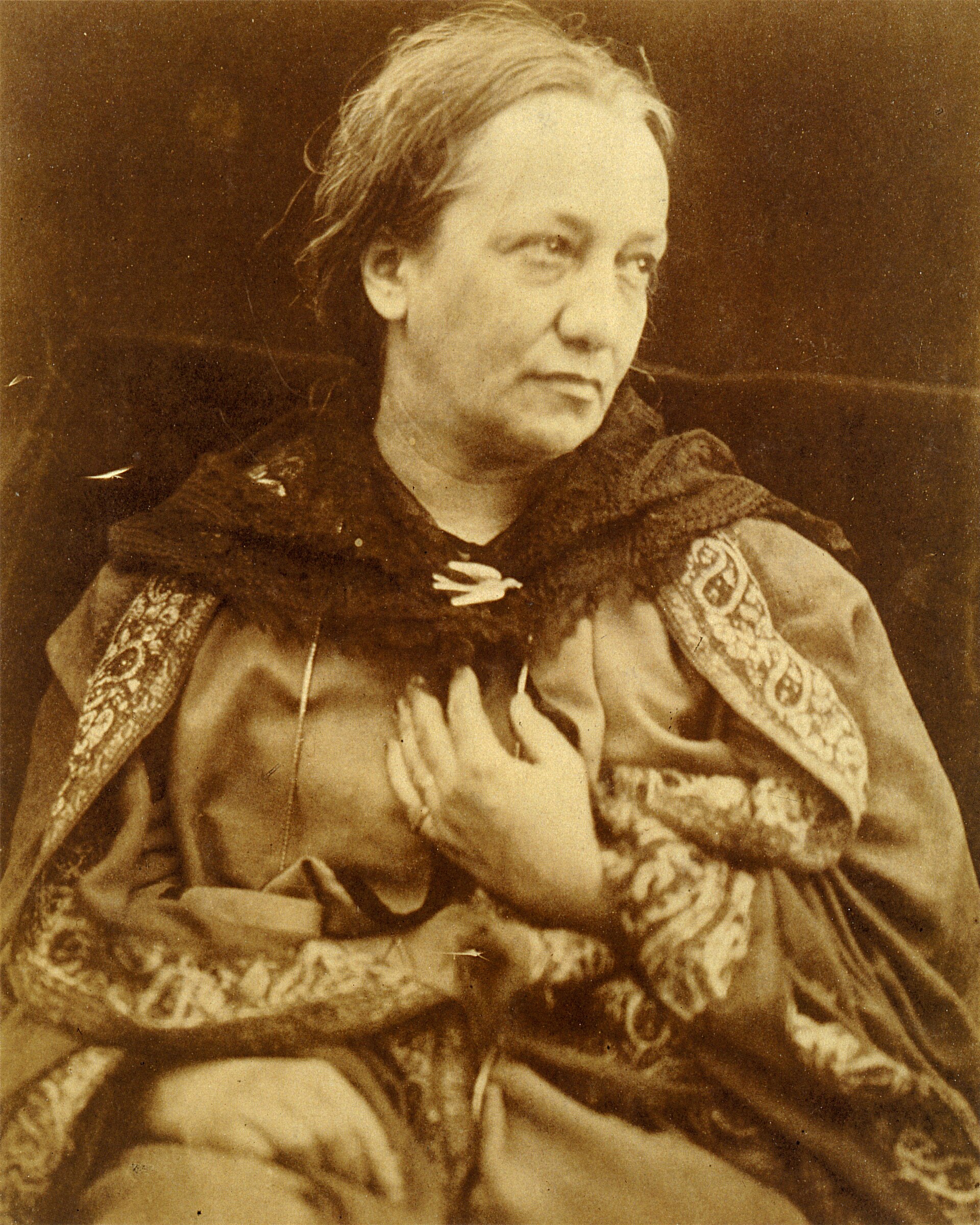
Julia Margaret Cameron registered 508 photographs and never attached a specimen to any of them.
13 min read
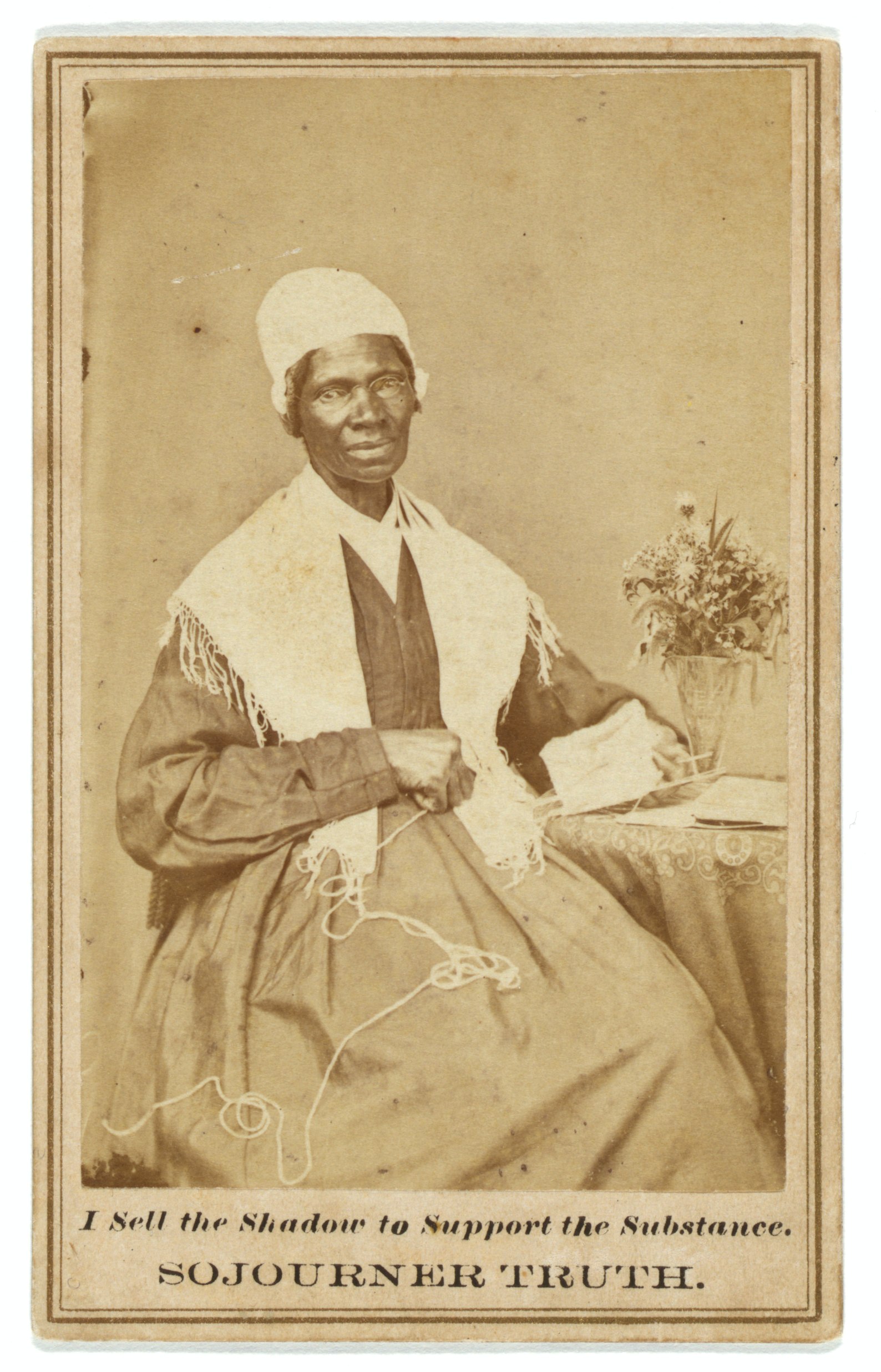
Truth sold her own cartes de visite, registered the copyright in her own name and left the photographer unnamed.
10 min read
Last verified
One artwork and its story every Tuesday, with the picture: who owned it, what it made, and what closes soon in the exhibition calendar. No promotion, and nothing we cannot cite.
We send one email to confirm the address and keep nothing else. Every letter carries a one-click unsubscribe. How we handle your data.

_-_Google_Art_Project.jpg)
_-_Mary_Ann_Hillier_(et_Florence_Anson),_2597.jpg)