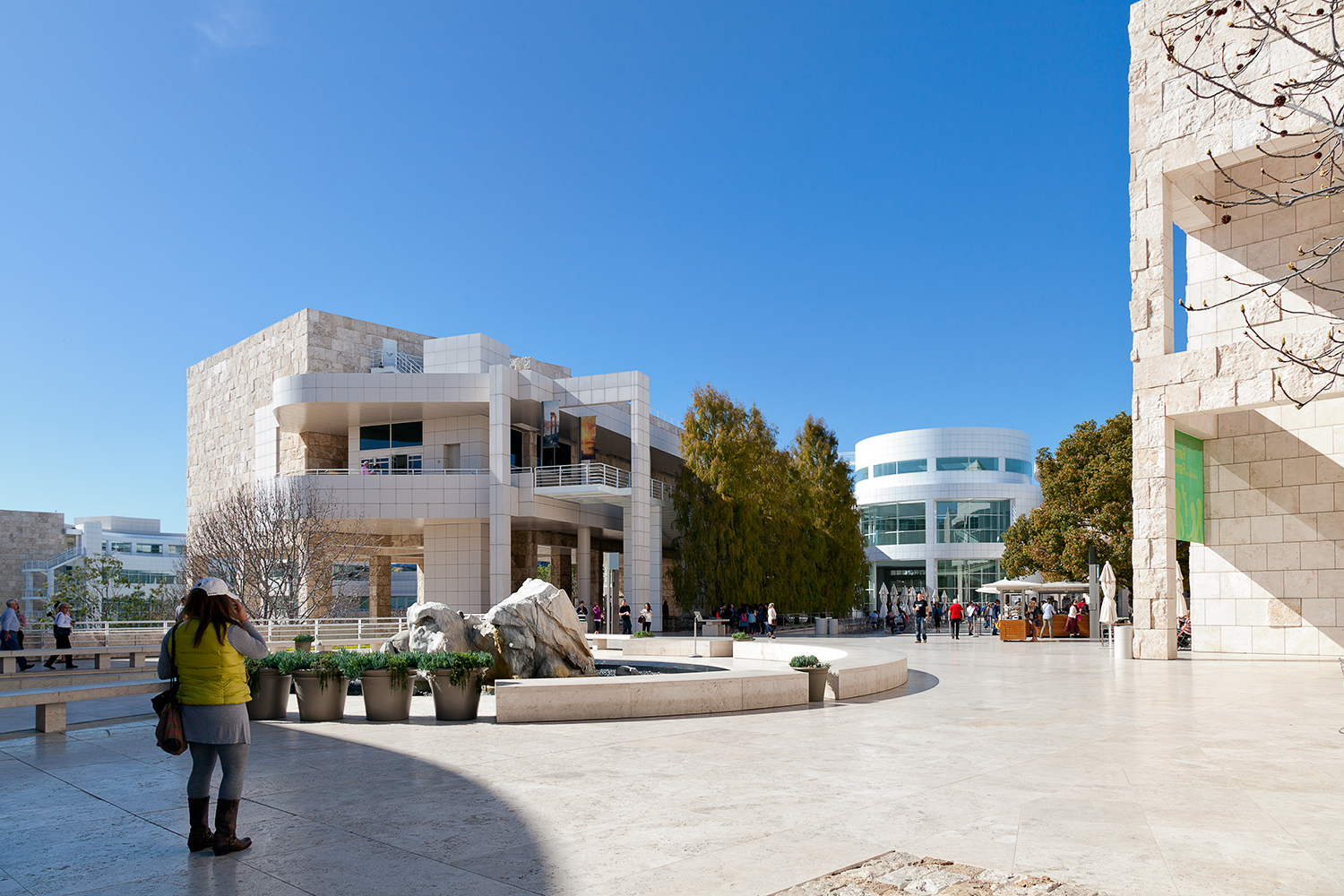
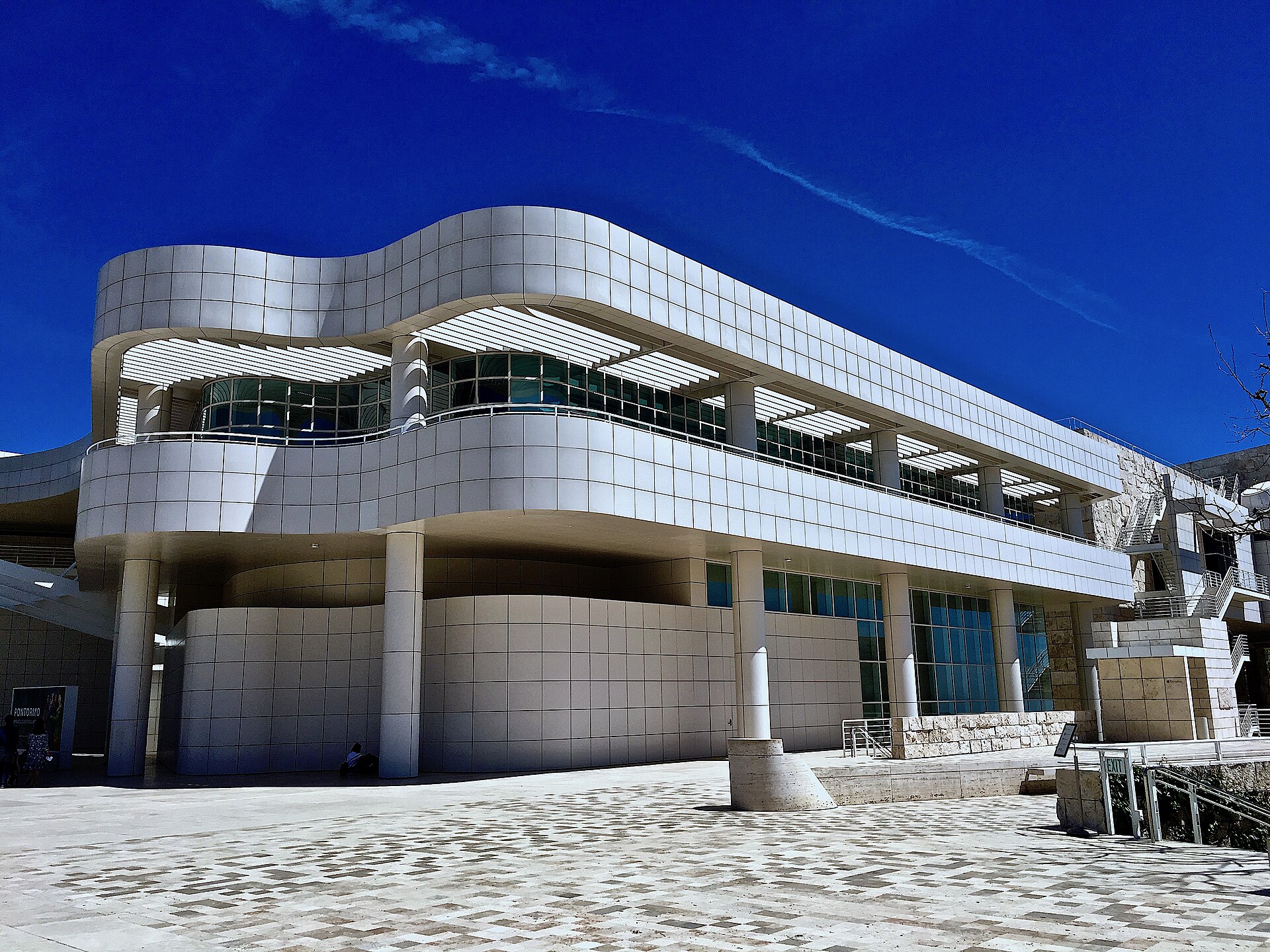
On this page 16 sectionsContentsCloseThe travertine-clad Getty Center on its hilltop campus in Brentwood, designed by Richard Meier and opened in 1997.Photograph by Codera23 · CC BY-SA 4.0
Split by design across two sites: the Getty Center holds European paintings, drawings, illuminated manuscripts, sculpture, decorative arts and the history of photography from the 1400s to today, while the Getty Villa holds the entire Greek, Roman and Etruscan antiquities collection, moved there exclusively after the Villa's 2006 renovation. The Museum sits inside a larger philanthropic trust that also runs a research institute, a conservation institute and a grantmaking foundation, and its own published figures count more than 125,000 objects across the whole collection.
J. Paul Getty Museum at a glance
Kind
Museum
Founded
1954, when J. Paul Getty opened his own ranch house in Pacific Palisades to the public; the present Getty Villa building opened in 1974 and the Getty Center in 1997
City and country
Los Angeles, United States
Address
Getty Center: 1200 Getty Center Drive, Los Angeles, CA 90049, United States. Getty Villa: 17985 Pacific Coast Highway, Pacific Palisades, CA 90272, United States. The two sites are about 13 miles apart, a 20 to 45 minute drive depending on traffic.
What it costs and when it is openConfirmed 13 August 2026
Hours
Tuesday-Friday, Sunday10:00 to 18:30Getty Center
Saturday10:00 to 21:00Getty Center
Wednesday-Monday10:00 to 17:00Getty Villa, daily except Tuesday
Closed
Getty Center: closed every Monday. Getty Villa: closed every Tuesday. Both sites are closed New Year's Day, Independence Day, Thanksgiving Day and Christmas Day, with early closing on Christmas Eve and New Year's Eve. As of this writing, the Getty Center's entire East and North Pavilions, South Pavilion galleries 101, 102 and 206, and West Pavilion galleries 102 and 103 are closed for a first phase of campus-wide modernization. The Getty Center is scheduled to close entirely to the public from 15 March 2027 for a campus-wide modernization, with reopening planned for spring 2028; the Getty Villa is expected to stay open through that closure.
Admission
General admission, Getty CenterFreeFree; a timed-entry reservation is required online or by phone
General admission, Getty VillaFreeFree; a timed-entry reservation is required online or by phone. Separately, under the Villa's conditional use permit with the City of Los Angeles, walk-in visitors (arriving without a vehicle) are only permitted to enter the site if they arrive by public bus; this governs how a visitor may physically reach the site, not whether the admission reservation itself is required.
Parking, Getty CenterUSD 25Per car or motorcycle; drops to $15 after 3pm and $10 after 6pm; free on Saturdays after 6pm. Cashless; all major cards accepted.
Parking, Getty VillaUSD 25Per car or motorcycle; drops to $15 after 3pm; $10 after 6pm for evening events. Cashless.
Same-day parking at both sitesUSD 25One parking fee covers same-day entry at both the Center and the Villa if reservations for both are made for the same date; not valid Mondays or Tuesdays.
Free entry: Admission is free every open day at both sites; the recurring cost is parking, not entry. Active and veteran United States military service members park free from Memorial Day weekend through Veterans Day each year with valid ID
Yes for entry at both sites: a free timed-entry reservation is required online or by phone. Parking is booked and paid separately and is not free except under the same-day double-site coupon or the seasonal military parking waiver.
Address
Getty Center: 1200 Getty Center Drive, Los Angeles, CA 90049, United States. Getty Villa: 17985 Pacific Coast Highway, Pacific Palisades, CA 90272, United States. The two sites are about 13 miles apart, a 20 to 45 minute drive depending on traffic. Map
Car, Getty Center Off the I-405; the only public entrance is at N Sepulveda Blvd and Getty Center Drive. Cars park at the base of the hill and ride the tram up to the Museum entrance, included in the visit with no separate tram fee listed on any of the Museum's admission or parking pages. Bus, Getty Center Metro bus line 761 stops at the Getty Center entrance, at Getty Center Drive and Sepulveda Boulevard. Car, Getty Villa Only the northbound, right-hand lane of Pacific Coast Highway reaches the entrance; turning left across PCH from the southbound lanes is illegal and entry from Coastline Drive is not allowed. Bus, Getty Villa Metro bus line 134 stops at Pacific Coast Highway and Coastline Drive, directly across from the entrance. Under the Villa's conditional use permit with the City of Los Angeles, a walk-in visitor with no vehicle and no reservation may still enter if they arrive by public bus. Between the two sites Visitors who book both sites for the same date can ask at the Information Desk of the first site for a coupon covering same-day parking at the second, so one parking fee covers both visits rather than two. Not valid Mondays or Tuesdays.
Before you go how long, access, photography, bags, eating, shop
How long to allow
Getty publishes no single recommended duration for a full visit; its Top Things to Do page estimates 60 to 90 minutes for the Medieval to Modern Art galleries at the Center alone, so a visit to the whole permanent collection runs longer, and longer again to combine both sites in one day, which requires the 20 to 45 minute drive between them
Access
Both sites are described by Getty as ADA accessible; the Getty Center's arrival tram is specifically confirmed wheelchair-accessible. Getty takes accessibility questions at [email protected].
Photography
Personal handheld photography and video are welcome in outdoor spaces and in the permanent collection galleries at both sites: natural light only, no flash, no tripods, monopods or lighting rigs, no selfie sticks indoors, and cameras must stay at least 18 inches from any artwork. Some loaned exhibition works carry their own no-photography signage, and professional or commercial shoots are not permitted.
Bags
Not published in specific size or count limits on the Museum's own visit pages as of this writing; standard entrance screening applies at both sites.
Eating
A cafe and restaurant at the Getty Center; the Getty Villa Cafe serves a Mediterranean-inspired menu
Shop
Getty Store at the Getty Center; the Villa Museum Store sells books on antiquity and gifts inspired by ancient art
Prices and hours change. We take them from the institution's own pages and print the day we read them, and you can check the current position at the source we used. Confirm before you travel.
What is inside
7 spaces, 6 photographed
Photograph by (User:Wgreaves) · CC BY-SA 4.0
The gallery pavilions, Getty Center
Four stone pavilions around the arrival plaza hold the paintings, drawings, manuscripts, sculpture, decorative arts and photographs collections, from the 1400s to the present. By the Museum's own description: the North Pavilion carries medieval and Renaissance sculpture and decorative arts with rotating illuminated manuscripts; the East Pavilion carries sculpture and Italian decorative arts of 1600 to 1800; the South Pavilion carries French decorative arts of the same period, including fully panelled rooms; the West Pavilion carries sculpture and decorative arts of the 1700s and 1800s alongside 19th-century paintings and changing drawings and photographs shows. As of this writing the entire East and North Pavilions, three South Pavilion galleries (101, 102 and 206), and two West Pavilion galleries (102 and 103) are closed for a first phase of mechanical and gallery renovation.
Photograph by brewbooks from near Seattle, USA · CC BY-SA 2.0
Central Garden, Getty Center
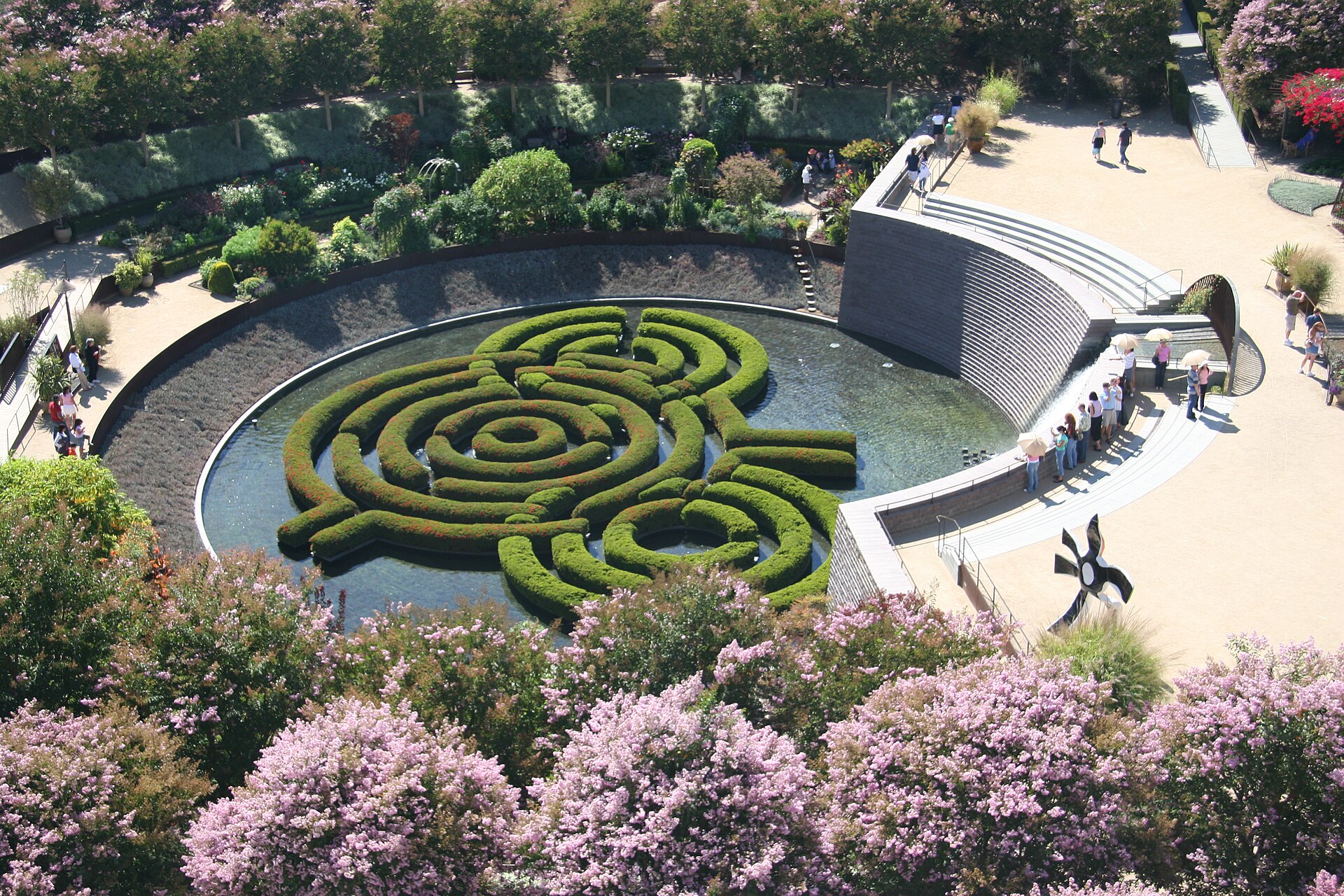
A 134,000-square-foot garden designed by the artist Robert Irwin and commissioned in 1992, built as a work of art rather than conventional planting: a stream descends the hillside into a pool holding a bougainvillea maze, surrounded by more than 500 plant varieties that the design deliberately keeps changing through the seasons.
Getty Research Institute, Getty Center
A research library and gallery space for rare books, photographs, prints and other primary material, with its own changing exhibitions. In 2026 its Gallery II hosts Lost. Found. Returned., an exhibition built around a single Otto Greiner drawing that a Dresden museum marked lost after the Second World War and that surfaced in the Research Institute's own holdings, tracing the drawing's wartime history and its return to Dresden.
Photograph by Fronl · CC BY-SA 4.0
Outdoor sculpture and grounds, Getty Center
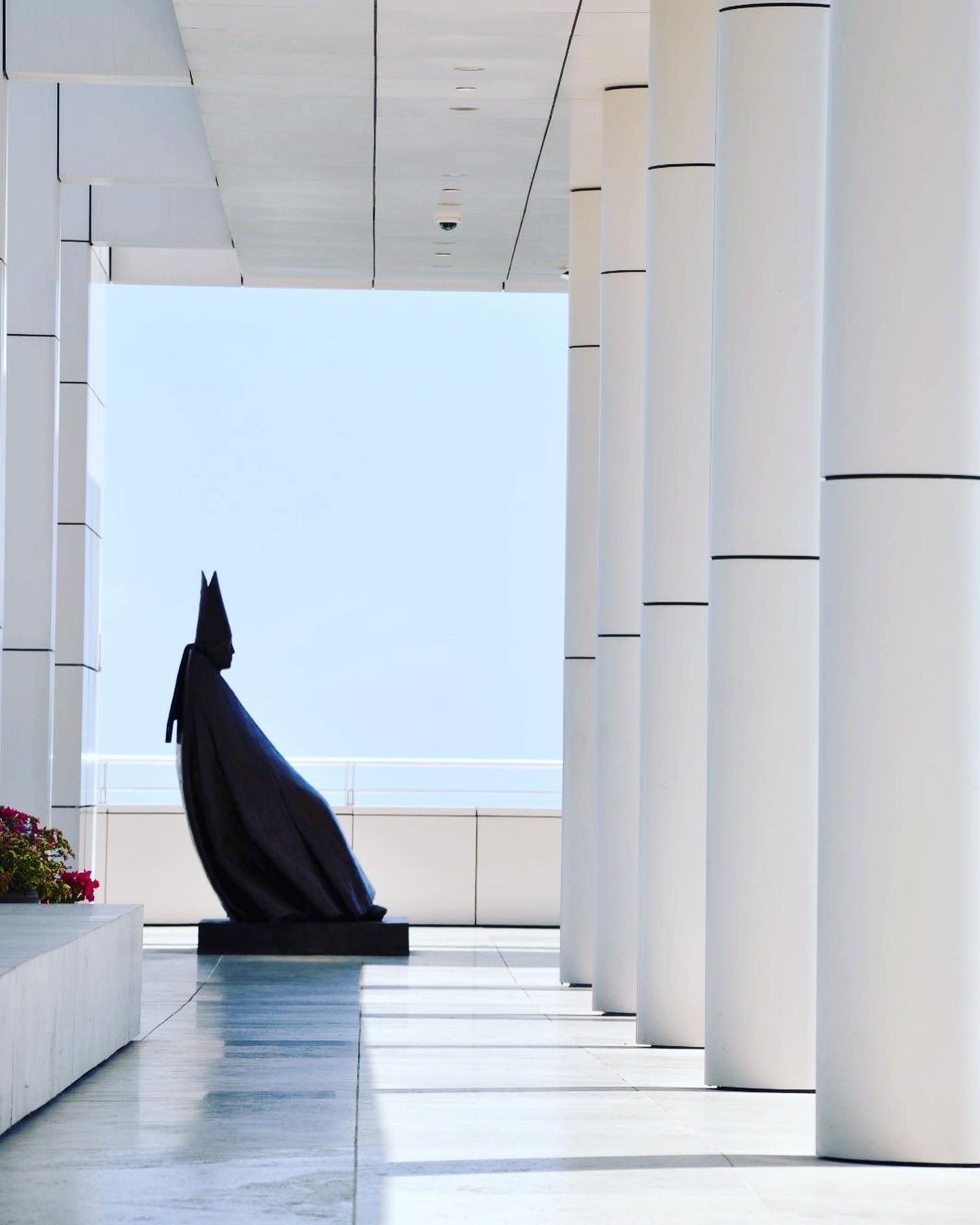
Modern and contemporary sculpture is placed through the grounds, including at the tram arrival and departure plazas and beside the Central Garden; a travertine-walled colonnade along the Museum courtyard is itself one of the most photographed pieces of the architecture.
Photograph by Dale Cruse - 11M SF views from San Francisco, CA, USA · CC BY 4.0
The antiquities galleries, Getty Villa
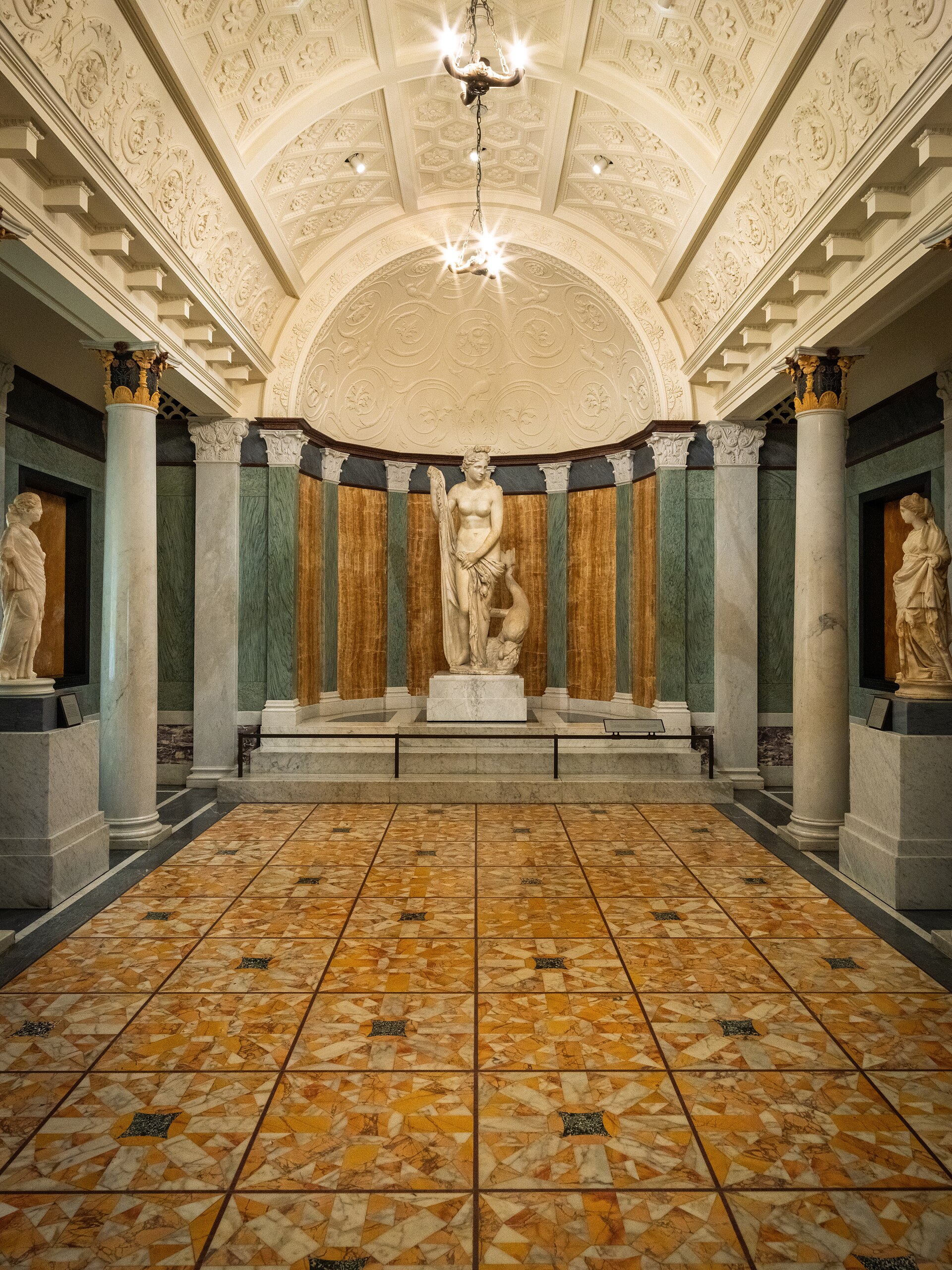
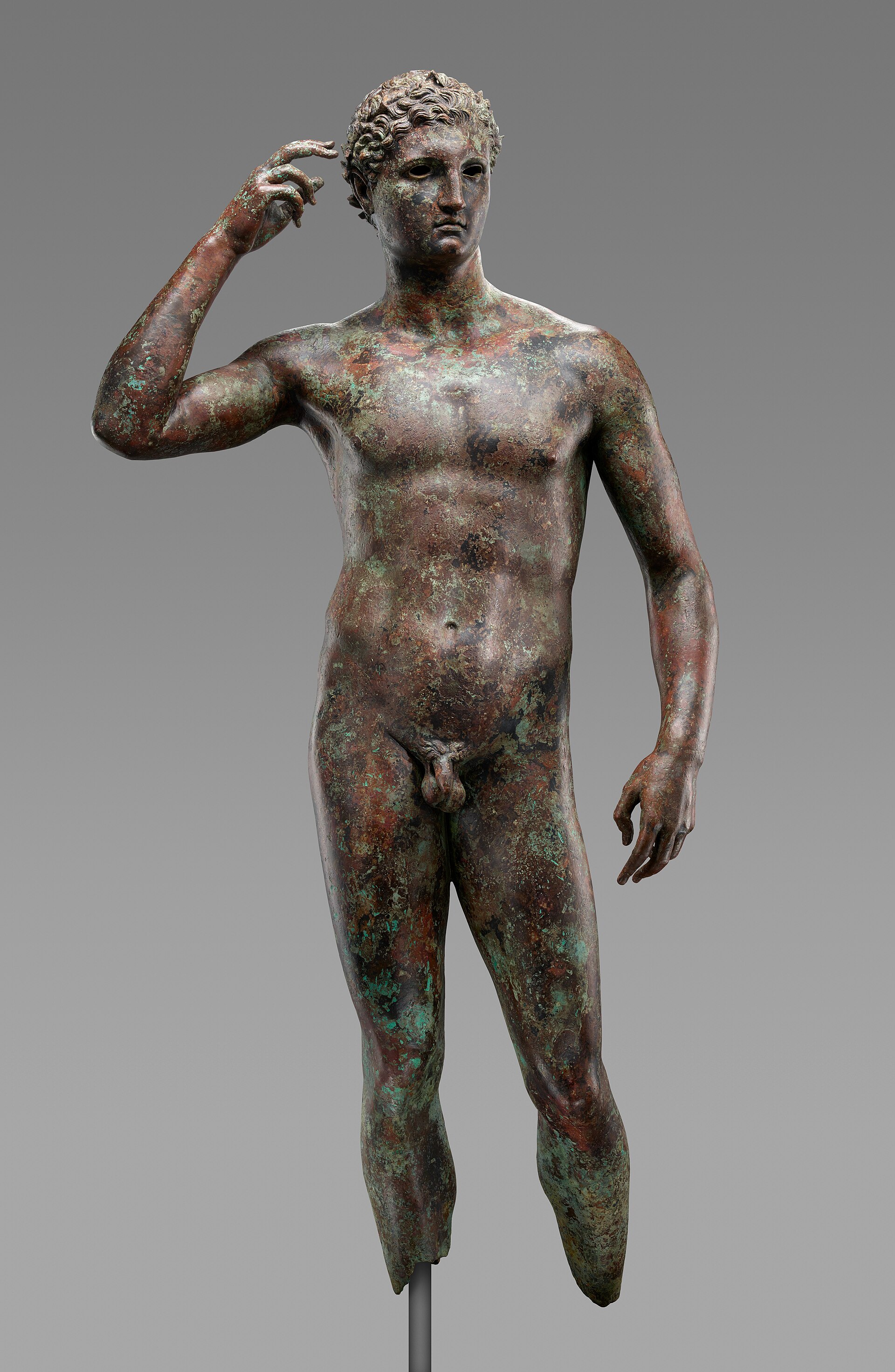
The Museum's entire Greek, Roman and Etruscan collection, arranged over two floors inside the reconstructed Roman house. The first floor moves from the Neolithic and Bronze Age Aegean, among the oldest objects in the whole Museum, through the Etruscans to the Hellenistic period; the second floor holds Roman sculpture, jewellery, glass and mummy portraits, including two tall skylit galleries built for large-scale Roman sculpture. The Victorious Youth bronze hangs in Gallery 111, in the Hellenistic World rooms on this floor.
Photograph by Jengod · CC BY-SA 4.0
The gardens, Getty Villa
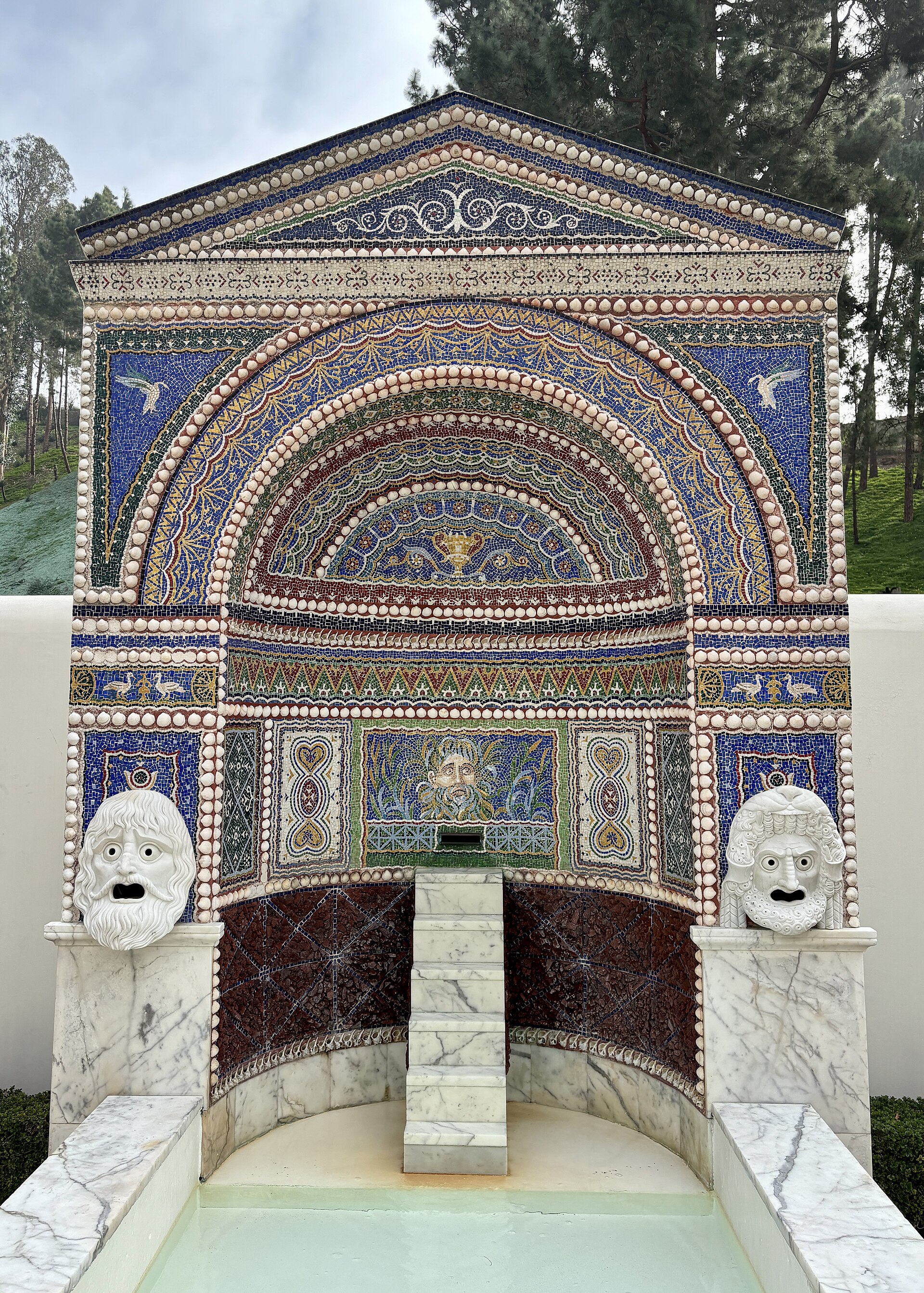
The building's design recreates the garden architecture of a first-century Roman coastal villa: an Outer Peristyle Garden with a long reflecting pool and a mosaic and shell fountain modelled on Roman originals, and an Inner Peristyle Garden at the building's centre. The grounds lost around 1,415 trees, about 44 percent of the Villa's forest, in the January 2025 Palisades Fire and have since been replanted.
Photograph by Dale Cruse - 11M SF views · CC BY 4.0
Entry Pavilion and arrival sequence, Getty Villa
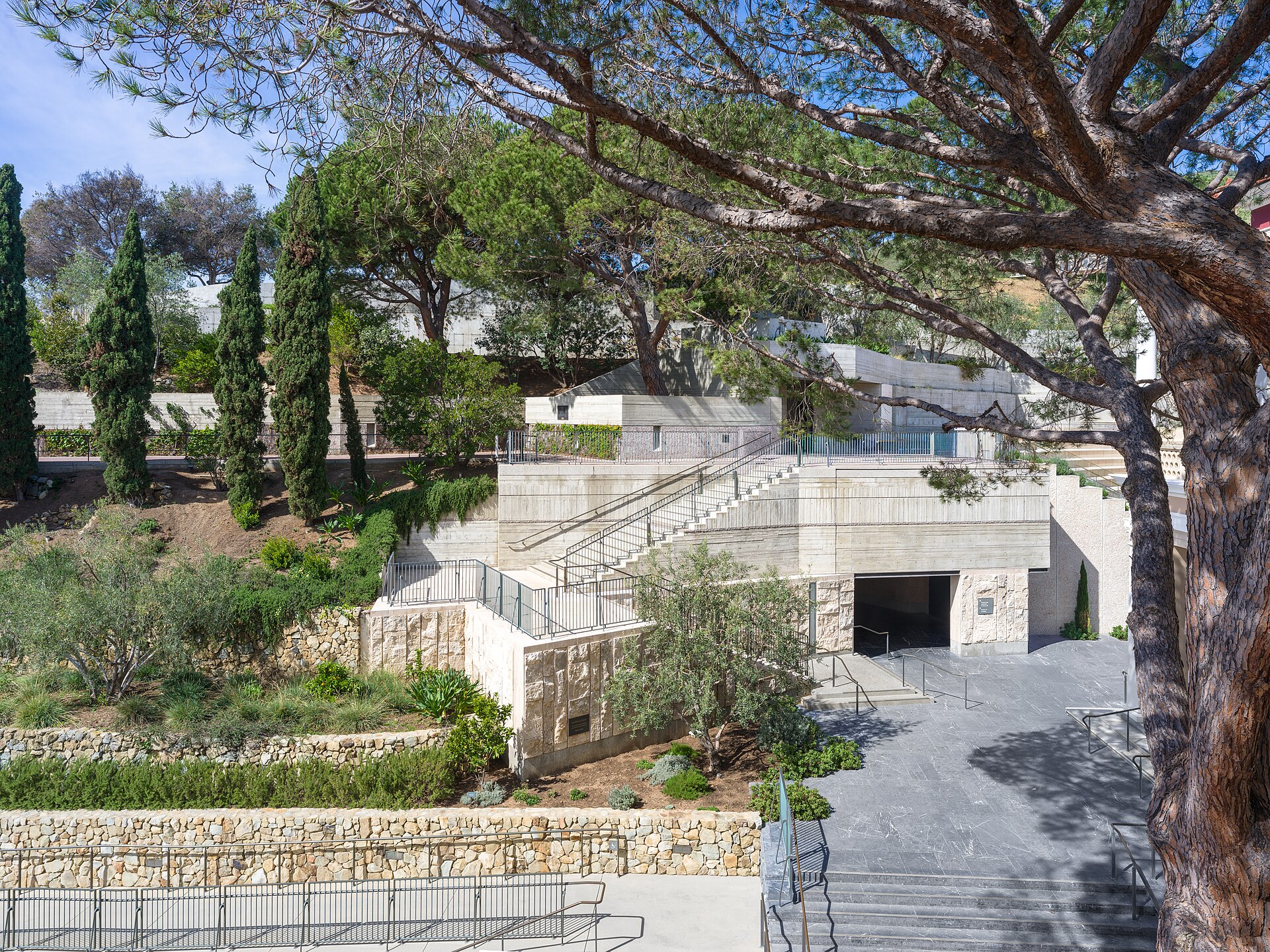
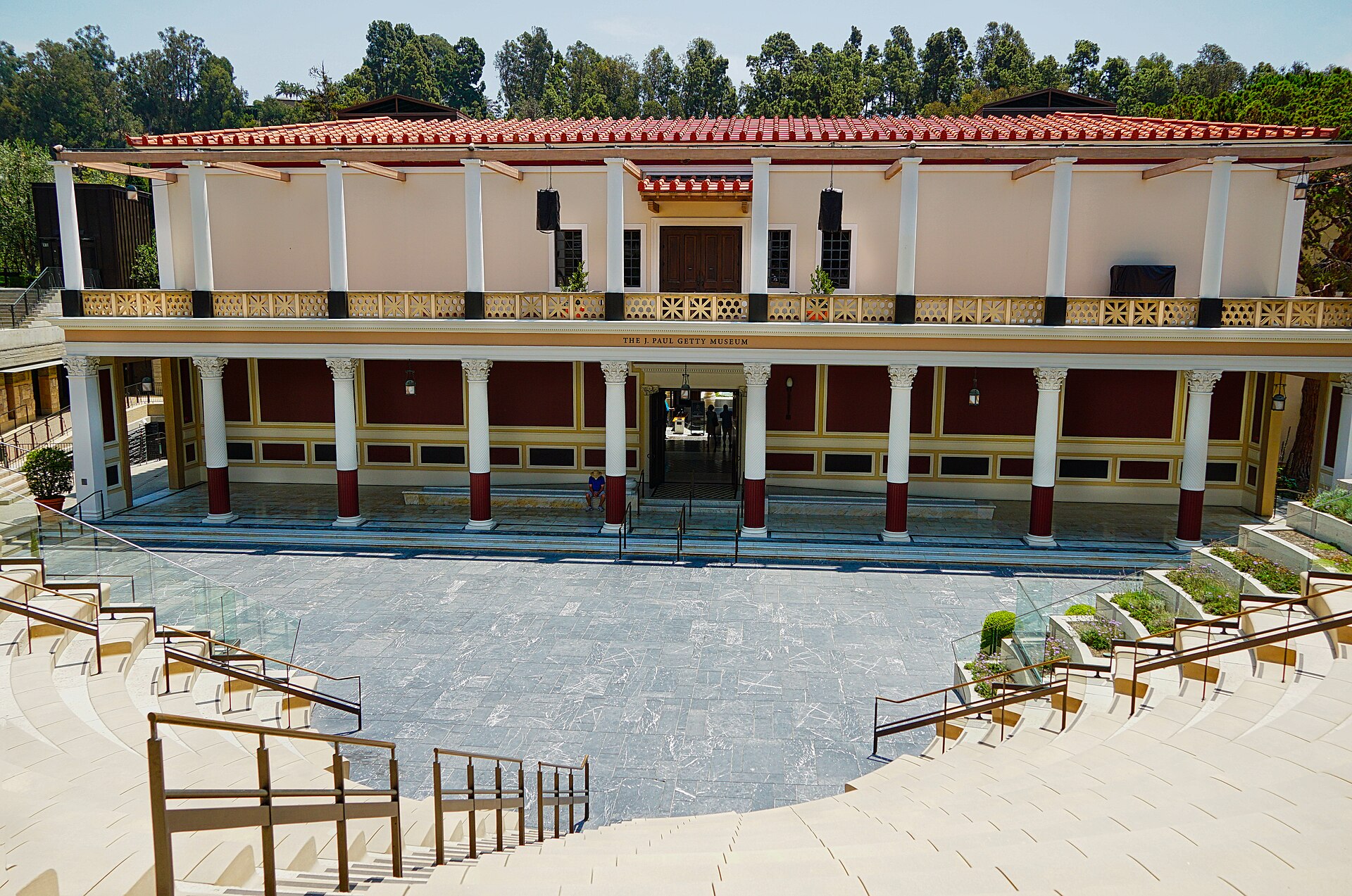
Added in the 2006 renovation: an orientation building at the top of the site, a sunken tunnel entrance that carries visitors down through terraced, dry-stack stone retaining walls evoking Roman agricultural terracing, and a 450-seat outdoor classical theatre used for the Museum's annual staged productions of ancient drama.
What to see first
Statue of a Victorious Youth (the Getty Bronze)
Greek, about 300-100 BCE, sometimes attributed to Lysippos or his circle
Hauled out of the Adriatic in an Italian trawler's nets off Fano in 1964 and bought by the Getty in 1977, it is the single most legally contested object in the building. Italy's highest court ordered its forfeiture in 2018; the European Court of Human Rights ruled in May 2024 that the order did not violate the Getty's rights, without settling the dispute, since the United States is not a party to that court. It has not moved from Gallery 111.27
Named by the Museum itself among the current rotating highlights of its collection, and the single painting most visitors ask directions to by name.10
Christ's Entry into Brussels in 1889
James Ensor, 1888
A monumental canvas, 2.5 by 4.3 metres, painted on a single sheet Ensor could not view whole while working on it. Held by the Getty since 1987, it is considered his most famous composition and a precursor to Expressionism.10
Young Man Leaning on a Stick
Rembrandt van Rijn, about 1629
A drawing the Museum names among its current collection highlights, from early in Rembrandt's career.10
Bed (Lit a la polonaise)
French, about 1775-1780
Also on the Museum's own highlights list: a grand canopied bed of the type that stood in a deep niche in the bedroom of a wealthy 18th-century household, representative of the Getty Center's French decorative arts holdings.10
Statue of Hercules
Roman, about 125 CE
Found in 1790 near the ruins of the Emperor Hadrian's villa at Tivoli outside Rome, and named by the Museum among its current highlights: one of the anchor pieces of the Villa's Roman-period galleries.10
Kouros
Greek, about 530 BCE, or a modern forgery
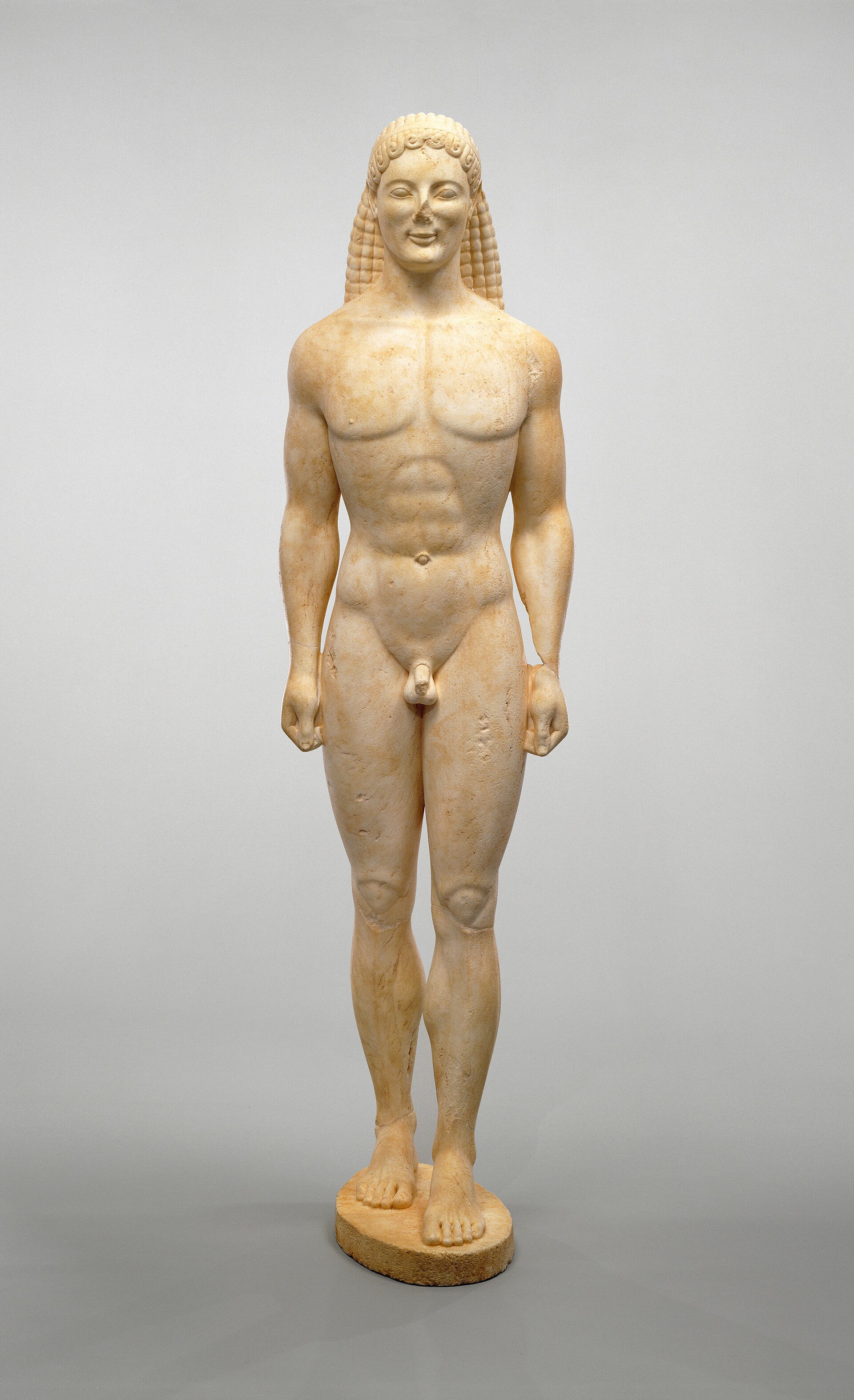
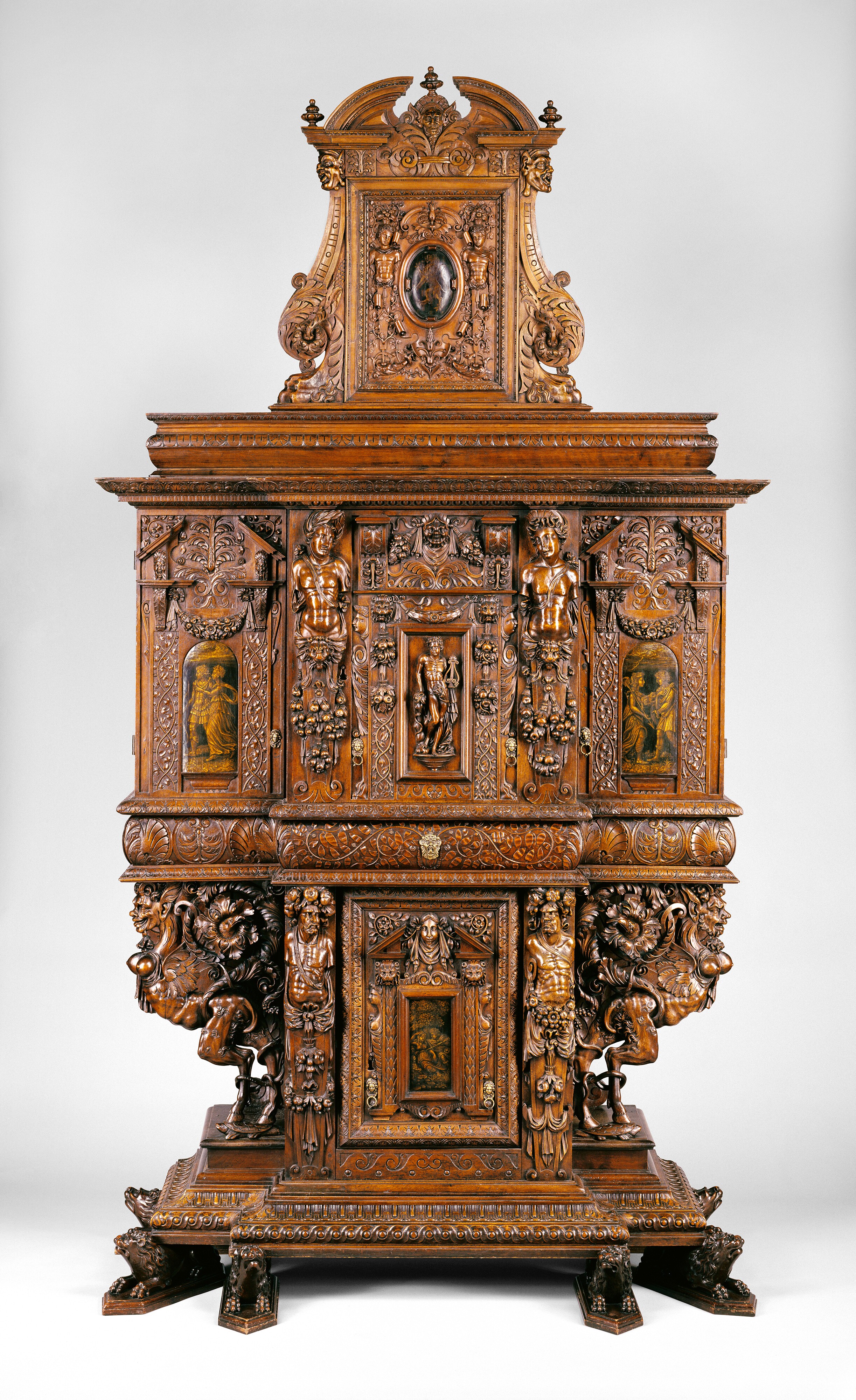
Bought in 1985 for roughly 9 million dollars, it carried a museum label reading 'Greek, about 530 B.C., or modern forgery' for years while scholars argued. It was pulled from permanent display in 2018 after further research found that the curator who presented it to the Getty for purchase had forged its supporting provenance papers. It is now kept in storage and shown only by appointment.18
4 Aug 2026 to 14 Mar 2027Confirmed 31 Aug 2026, 3 weeks ago
Two campuses, one museum
The J. Paul Getty Museum is a single institution split across two sites thirteen miles apart in Los Angeles: the Getty Center in Brentwood, a 110-acre hilltop campus designed by the architect Richard Meier that opened in 1997, and the Getty Villa in Pacific Palisades, a reconstruction of a first-century Roman country house that opened in 1974 and has held the Museum's antiquities collection exclusively since a 2006 renovation. Wikidata's entry for the Museum, Q731126, places its coordinates at the Getty Center and names the Getty Center's own address as its headquarters location; a separate Wikidata item, Q180401, exists for the Getty Villa on its own. Both campuses answer to the same J. Paul Getty Trust, share one reservation system and one visitor-services phone number, and print the same line, admission is free, on their respective visit pages. That line needs a second sentence. Parking at either site costs 25 US dollars per car, dropping to 15 dollars after 3pm and 10 dollars after 6pm, and becomes genuinely free only on Saturday evenings after 6pm at the Center, or for verified United States military service members and veterans between Memorial Day weekend and Veterans Day. A visitor who books both sites for the same date and asks at the first site's Information Desk can get a coupon for same-day parking at the second site, so one fee covers both visits rather than two, except on the Mondays and Tuesdays when one site or the other is closed.
From a ranch house to two campuses
J. Paul Getty, an oil executive and collector who lived from 1892 to 1976, established the J. Paul Getty Museum Trust, later renamed the J. Paul Getty Trust, in 1953. He opened his first museum the following year by converting part of his own Pacific Palisades ranch house so the public could see his paintings and antiquities. By 1968 the collection had outgrown the ranch house, and construction began on a larger museum on the same property, built to resemble an ancient Roman villa; that building, the Getty Villa, opened to the public in 1974. Getty himself never saw the finished museum in person. He died in England in 1976, and his will left nearly 700 million dollars, about three-quarters of a billion dollars by the Trust's own current reckoning, for what the will itself called the diffusion of artistic and general knowledge, the phrase the Trust still cites as its founding purpose.
That bequest funded far more than a single museum. Harold Williams was hired as the Trust's first president in 1981; the Getty Research Institute followed in 1982, the Getty Foundation in 1984 and the Getty Conservation Institute in 1985. Construction on a second, much larger site began in 1987: a 110-acre hilltop campus in the Santa Monica Mountains designed by Richard Meier and faced, by the Trust's own count, in 1.2 million square feet of split-faced Italian travertine. The artist Robert Irwin was commissioned in 1992 to design the Central Garden as a work of art rather than conventional planting, and the Getty Center opened to the public in 1997, absorbing the Museum's paintings, drawings, manuscripts, decorative arts and photographs. The Getty Villa closed the same year for what became a nine-year renovation.
The Villa: a rebuilt mission, and a fire
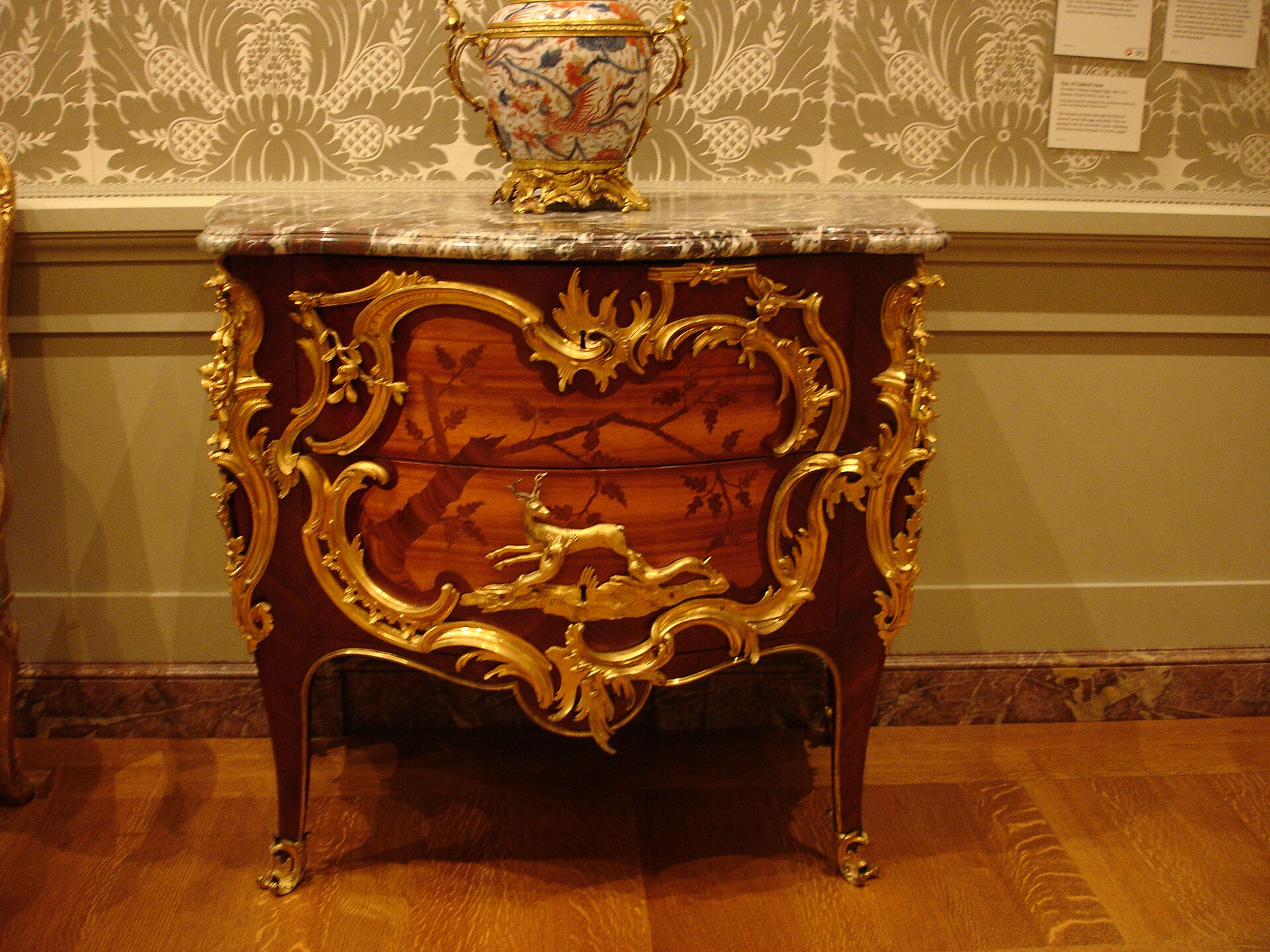
When the Getty Villa reopened in 2006, its mission had changed. It is no longer a general museum: it is, and has remained since, the Museum's antiquities galleries alone, holding the entire Greek, Roman and Etruscan collection across two floors built to trace the ancient Mediterranean in order, from the Neolithic and Bronze Age Aegean through the Etruscans and the Hellenistic period on the first floor to the Roman Empire on the second. The building's gardens were designed to recreate those of a first-century Roman coastal house, with an Outer Peristyle Garden built around a long reflecting pool and a mosaic and shell niche fountain, and an Inner Peristyle at the building's centre.
On 7 January 2025 the Palisades Fire broke out and burned around the Getty Villa directly. By the Trust's own account, flames erupted in the trees and plants surrounding the building while a small team of Getty staff stayed on site and fought them alongside first responders. The Villa's buildings themselves came through without major damage, but the grounds did not: around 1,415 trees were lost, about 44 percent of the Villa's forest, the irrigation system melted in the heat, and security cameras burned. The site closed to the public and did not reopen until 27 June 2025, almost six months later, at first on a reduced Friday-through-Monday schedule before returning to its regular days. By the time of this writing the Villa has returned to its regular schedule, open daily except Tuesday, and its gardens have been replanted; a mosaic fountain photographed there in December 2025 shows the garden restored and back in use.
The Getty Center now, and its coming closure
The Getty Center is, at the time of writing, in the first phase of what the Trust calls its most significant modernization since the 1997 opening. The entire East Pavilion and North Pavilion, three galleries of the South Pavilion numbered 101, 102 and 206, and two galleries of the West Pavilion numbered 102 and 103, are closed while the Museum replaces 80 air-handling units across all four pavilions, carries out gallery maintenance, and builds new restrooms and wayfinding. That is a first phase only. The Trust's own published plan states that the Getty Center will close entirely to the public beginning 15 March 2027, with reopening planned for spring 2028, to complete a campus-wide modernization covering the tram system, the arrival and departure sequence, a renovated Welcome Hall, and building-wide utility upgrades including wi-fi and cell service. The Trust states it expects to keep collaborating with partner institutions during that closure and to offer more programming at the Getty Villa, which is expected to remain open throughout. A visitor planning a trip to Los Angeles for early 2027 onward should check the Center's status directly before travelling; a full year or more of the Museum's paintings, drawings, manuscripts, decorative arts and photography collection will simply not be on view at its usual site.
What the Getty has had to give back
The Getty's antiquities collecting in the 1980s and 1990s produced the institution's deepest and most sustained controversy, and it is not settled history. Marion True served as the Museum's chief antiquities curator until 2005, when she was charged by an Italian prosecutor with conspiring to traffic in looted art, the first time an American museum official had been criminally charged by a foreign government. Her trial in Rome ran for five years and ended on 13 October 2010 without a verdict, dismissed when the statute of limitations on the charges expired; True has always maintained her innocence. Separately, in August 2007 the Getty agreed to return 40 disputed objects to Italy, a list that included some of the Museum's most prominent antiquities, while being permitted to keep one of them, a limestone and marble cult statue of a goddess, sometimes identified as Aphrodite, until 2010.
The Victorious Youth bronze was not part of that 2007 agreement and remains in the Museum's possession under active dispute. Italy first formally requested its return in 1989; Italy's highest court ordered its forfeiture in 2018; and the European Court of Human Rights ruled in May 2024 that Italy's confiscation order did not violate the Getty Trust's rights under the European Convention, without providing any mechanism to enforce the return, since the United States is not a party to that court. The Getty's own public position, stated after the 2024 ruling, is that its nearly 50 years of open possession of a work neither made by an Italian artist nor found within Italian territory is lawful and appropriate.
A second and different controversy concerns not theft but forgery. The Getty Kouros, a marble youth bought in 1985 for roughly 9 million dollars after a battery of scientific tests, was shown for years with a label that hedged the Museum's own uncertainty: Greek, about 530 B.C., or modern forgery. Scholarly opinion shifted further against it over time, reinforced by the discovery of a related, indisputably modern fake carved in a similar style, and by later research establishing that the curator who had presented the Kouros to the Getty for purchase had forged the documents describing its ownership history. It was withdrawn from permanent display in 2018 and is now shown only by appointment.
Collecting and giving back today
The Getty's response to its own history has been to publish it rather than bury it. The Museum maintains a public page describing its provenance research process and a separate page listing objects it has formally deaccessioned, an unusual level of institutional transparency for an American museum of its size. In 2026 the Getty Research Institute is showing that practice at work in miniature: the exhibition Lost. Found. Returned., running from June to October 2026 in the Research Institute's Gallery II at the Getty Center, follows a single drawing by the German Symbolist Otto Greiner that a Dresden museum recorded as lost after the Second World War and that had ended up, unrecognized, inside the Getty Research Institute's own holdings. The show narrates how researchers traced the drawing's wartime path and documents its return to Dresden, the same kind of restitution the Museum's antiquities department has spent two decades resisting in the Victorious Youth case and eventually accepted in the 2007 Italian settlement. Read together, the acquisitions history, the returns already made, the Victorious Youth still disputed, and the Kouros no longer shown at all describe an institution whose relationship to its own collection is still being actively argued over, inside the Museum as much as outside it.
What visitors say
We publish no visitor review prose and cite platform scores only as a dated tertiary figure. Both sites read as very highly and consistently rated on the major review aggregators, with the architecture, gardens and free entry drawing the most consistent praise and the mandatory reservation system and the cost of parking the most consistent friction. The Getty Center remained one of the most visited art museums in the United States through 2025 despite the wildfires that closed its sister site for half the year; the Villa's own attendance fell sharply while it was shut and has not yet recovered to its pre-fire level.
What is praised, what is criticised
Praised: the architecture and grounds at both sites: Richard Meier's travertine hilltop campus at the Center and the reconstructed Roman villa and gardens at the Villa are treated by visitors as attractions in their own right, not just a container for the art
Praised: free admission to the permanent collection at both sites, with no age exception needed
Praised: the antiquities collection's setting at the Villa, where Greek, Roman and Etruscan objects are shown inside a building built to evoke the kind of house many of them once stood in
Praised: the tram ride up the Getty Center hill, which visitors treat as part of the visit rather than mere transport
Criticised: admission is free but not guaranteed: both sites require a timed-entry reservation, and the museums' own FAQs warn that a booking, not just a discount card, is what gets a visitor through the door
Criticised: parking is $25 per car at either site and is the real cost of a visit for most drivers, since the museums are hilltop or highway-side sites with limited nearby alternatives
Criticised: an active modernization project has closed the entire East and North Pavilions, three South Pavilion galleries and two West Pavilion galleries at the Getty Center since before this was written, reducing what is on view during the visit
Criticised: the Getty Center is scheduled to close completely to the public for over a year, from March 2027 to spring 2028, for the same modernization project
Reported the European Court of Human Rights chamber ruling that Italy could continue pursuing the Victorious Youth, laid out the decades of Italian claims back to 1989, and carried the Getty's own statement that it was weighing an appeal to the court's Grand Chamber while defending its nearly 50 years of open possession of the bronze as lawful.The Art Newspaper, Benjamin Sutton, 3 May 2024 [16]
Reported the Getty's decision to pull the Kouros from permanent display after director Timothy Potts concluded it no longer made sense to show a work established as fake beside authentic material, and traced how the scientific case for authenticity that the Museum relied on before its 1985 purchase had eroded over three decades.Artsy, Isaac Kaplan, 16 April 2018 [18]
Ratings on other platforms
Tripadvisor (Getty Center): 4.8 from 14,879 ratings, read 6 August 2026 Tripadvisor (Getty Villa): 4.7 from 2,611 ratings, read 6 August 2026 A platform average is a tertiary source: it moves, it is not audited, and we quote no visitor's words.
Questions about J. Paul Getty Museum
Where is J. Paul Getty Museum?
Getty Center: 1200 Getty Center Drive, Los Angeles, CA 90049, United States. Getty Villa: 17985 Pacific Coast Highway, Pacific Palisades, CA 90272, United States. The two sites are about 13 miles apart, a 20 to 45 minute drive depending on traffic.
How much does it cost to visit?
General admission, Getty Center: free; General admission, Getty Villa: free; Parking, Getty Center: USD 25; Parking, Getty Villa: USD 25; Same-day parking at both sites: USD 25. As confirmed 13 August 2026.
When is it open?
Tuesday-Friday, Sunday 10:00-18:30; Saturday 10:00-21:00; Wednesday-Monday 10:00-17:00. Closed: Getty Center: closed every Monday. Getty Villa: closed every Tuesday. As confirmed 13 August 2026.
How do you get there?
Car, Getty Center: Off the I-405; the only public entrance is at N Sepulveda Blvd and Getty Center Drive. Cars park at the base of the hill and ride the tram up to the Museum entrance, included in the visit with no separate tram fee listed on any of the Museum's admission or parking pages; Bus, Getty Center: Metro bus line 761 stops at the Getty Center entrance, at Getty Center Drive and Sepulveda Boulevard; Car, Getty Villa: Only the northbound, right-hand lane of Pacific Coast Highway reaches the entrance; turning left across PCH from the southbound lanes is illegal and entry from Coastline Drive is not allowed; Bus, Getty Villa: Metro bus line 134 stops at Pacific Coast Highway and Coastline Drive, directly across from the entrance. Under the Villa's conditional use permit with the City of Los Angeles, a walk-in visitor with no vehicle and no reservation may still enter if they arrive by public bus.
What should you see first?
Statue of a Victorious Youth (the Getty Bronze) (Greek, about 300-100 BCE, sometimes attributed to Lysippos or his circle); Irises (Vincent van Gogh, 1889); Christ's Entry into Brussels in 1889 (James Ensor, 1888); Young Man Leaning on a Stick (Rembrandt van Rijn, about 1629); Bed (Lit a la polonaise) (French, about 1775-1780); Statue of Hercules (Roman, about 125 CE).
What we could not confirm
Whether the Getty will appeal the May 2024 European Court of Human Rights chamber ruling on the Victorious Youth to the court's Grand Chamber, and what happens next given that the United States is not a party to that court and no enforcement mechanism compels the statue's return.
Whether the Getty Center's announced closure, planned for 15 March 2027 to spring 2028, holds to that schedule, and what access if any to the permanent collection will exist during it beyond the Getty Villa.
Whether and when the East Pavilion, North Pavilion, the closed South Pavilion galleries (101, 102, 206) and the closed West Pavilion galleries (102, 103) reopen ahead of the larger 2027 closure.
What became of the rest of the Brazilian and wartime-displaced material the Getty Research Institute continues to research through cases like the Otto Greiner drawing; Lost. Found. Returned. covers one documented case, not a stated total.
The current, precise size of the Getty Villa's antiquities holdings; the Museum's own published figures give a total across all its collections (125,000 or more objects) but no antiquities-only count was found on the Museum's own site.
Images
2 plates
The Getty VillaThe Getty Villa in Pacific Palisades, the Museum's second site, built to recreate a first-century Roman country house and holding the Museum's antiquities collection since 2006. This is where the Victorious Youth bronze is displayed.Photograph by Scotwriter21 · CC BY-SA 4.0
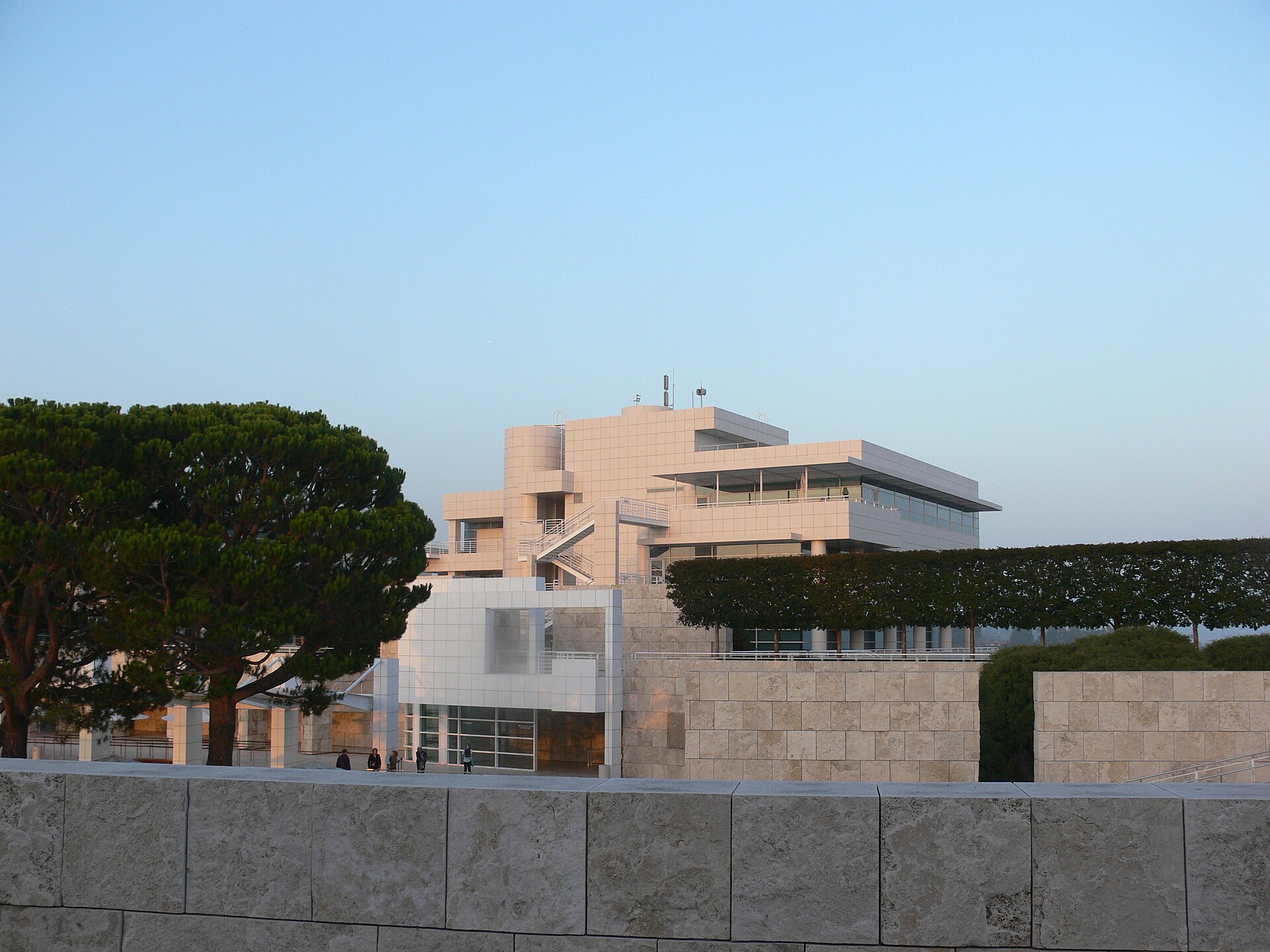
The Getty Center from the main terraceA second view of the Getty Center's travertine-clad buildings, seen from the main terrace past a stone retaining wall and pine trees at dusk.Photograph by Remi Mathis · CC BY-SA 3.0
Sources
27
1Getty, Visit the Getty Center: admission, hours, address, and current gallery closures. Fetched directly, 6 August 2026. Re-fetched 13 August 2026 via the in-app browser (WebFetch returned a truncated bot-mitigation response for this URL on the first attempt): hours, admission wording and current gallery closures list unchanged. getty.edu/visit/center/
2Getty, Visit the Getty Villa: admission, hours, address, reservation phone number, and FAQ on parking cost. Fetched directly, 6 August 2026. Re-fetched 13 August 2026 via the in-app browser: hours and admission wording unchanged. getty.edu/visit/villa/
3Getty, History of Getty: the official 1953-2024 institutional timeline, founding bequest, and construction dates for both campuses. getty.edu/about/history/
4Getty, Getty by the Numbers: collection size, admission cost, travertine area, garden plant counts. getty.edu/about/facts/
5Getty, Contact & Connect: visitor services phone and email for both the Getty Center and the Getty Villa. Re-fetched 13 August 2026 via the in-app browser: phone and email unchanged. getty.edu/about/contact/
6Getty, Parking and Transportation (Getty Center): entrance address, Metro bus line 761, parking fee schedule. Re-fetched 13 August 2026 via the in-app browser: all parking fee tiers, the same-day double-site coupon and the military parking waiver dates (Memorial Day weekend, 25 May 2026, through Veterans Day, 11 November 2026) unchanged and still current. getty.edu/visit/center/plan/parking.html
7Getty, Parking and Transportation (Getty Villa): Pacific Coast Highway entrance rules, Metro bus line 134, the conditional use permit walk-in provision, and the same-day double-site parking coupon. getty.edu/visit/villa/parking-and-transportation/
10Getty, Explore Art homepage: Highlights from Getty's Collection, naming Van Gogh's Irises, Rembrandt's Young Man Leaning on a Stick, the French Bed (Lit a la polonaise), and the Roman Statue of Hercules. getty.edu/art/
11Getty, Building Getty's Future: the campus-wide modernization plan, the announced 15 March 2027 to spring 2028 full closure of the Getty Center, and the current gallery closures. Its own 'Current Closures' line reads: 'South Pavilion galleries 101, 102, 206, West Pavilion galleries 102 and 103, and all East and North Pavilion galleries are closed for renovations.' Re-fetched 7 August 2026 with a cache-busting query string after an initial plain fetch returned a stale CloudFront cache that omitted the West Pavilion galleries (x-cache: RefreshHit) - see notes_for_editor. Re-fetched 13 August 2026 via the in-app browser: the verbatim 'Current Closures' line (South Pavilion galleries 101, 102, 206; West Pavilion galleries 102 and 103; all East and North Pavilion galleries) and the 15 March 2027 to spring 2028 full-closure dates are unchanged. getty.edu/about/building-gettys-future/
15Getty, Lost. Found. Returned. exhibition page: the Otto Greiner drawing lost by the Kupferstich-Kabinett Dresden after World War II, its presence in the Getty Research Institute's holdings, and its scheduled return to Dresden. Re-fetched 13 August 2026: the exhibition is confirmed still running, now dated precisely Jun 23, 2026-Oct 18, 2026 in Getty Research Institute, Gallery II, Getty Center (previously recorded only as 'June to October 2026'). getty.edu/exhibitions/lost-found-returned
16The Art Newspaper, Benjamin Sutton, 'European court rules Italy can pursue restitution of Getty Museum's prized Greek bronze', 3 May 2024: the ECHR chamber ruling, the 1964 discovery off Fano, the 1977 purchase, the 2018 Italian confiscation order, and the Getty's own statement. theartnewspaper.com/2024/05/03/european-human-rights-court-italy-getty-museum-victorious-youth
18Artsy, Isaac Kaplan, 'The Getty Kouros Was Officially Deemed a Forgery', 16 April 2018 (updated 20 April 2018): the 1985 purchase price of about 9 million dollars, the 'Greek, about 530 B.C. or modern forgery' label, director Timothy Potts's decision to remove it, and the forged provenance documents. artsy.net/article/artsy-editorial-getty-kouros-removed-view-museum-officially-deemed-forgery
20Center for Art Law, 'Statute of Limitations are a Girl's Best Friend: Five-year Trial of Marion True Ends', 18 October 2010: the 13 October 2010 dismissal of the criminal case against Marion True on statute-of-limitations grounds, and her 2005 indictment as the first American museum official criminally charged by a foreign government. itsartlaw.org/2010/10/18/statute-of-limitations-are-a-girls-best-friend-five-year-trial-of-marion-true-ends/
21Wikidata, J. Paul Getty Museum (Q731126): label, instance-of, country, coordinates and official website, used as the machine identity and cross-checked against the Museum's own address and site. Tertiary. wikidata.org/wiki/Q731126
22Wikimedia Commons, Category:Getty Center: source category for the Getty Center plates on this page, each licence verified per file at fetch time from extmetadata. commons.wikimedia.org/wiki/Category:Getty_Center
23Wikimedia Commons, Category:Getty Villa: source category for the Getty Villa plates on this page, each licence verified per file at fetch time from extmetadata. commons.wikimedia.org/wiki/Category:Getty_Villa
26Getty, Top Things to Do (Getty Center): lists the Tram to the Top among the visit's highlights, from the main parking structure to the arrival plaza; no separate tram fee is listed on this or any other fetched Getty admission or parking page. Fetched directly, 7 August 2026. getty.edu/visit/center/top-things-to-do/
27Getty, Statue of a Victorious Youth (Museum Collection object page, 77.AB.30): confirms the work is on view at the Getty Villa, Gallery 111, The Hellenistic World ('On view at Getty Villa, Gallery 111, The Hellenistic World'). The page is a JavaScript single-page app; the static HTML source carries only the JSON-LD object record, so the rendered page was read through a text-rendering fetch of the same URL, 7 August 2026. Re-verified 13 August 2026 by a direct call to the Museum Collection's own JSON API (getty.edu/art/collection/api/get?id=object/f0bbcd41-03d2-434a-988c-fa0675ce8d91), which returned 'on_view': true and 'current_location_id' resolving (via the matching place/ API call) to primary_name 'Getty Villa, Gallery 111, The Hellenistic World' - a more direct confirmation than the earlier rendered-DOM read, and the same location. getty.edu/art/collection/object/103QSX
Last verified 13 August 2026Open, confirmed 13 August 2026Wikidata Q731126
One artwork and its story every Tuesday, with the picture: who owned it, what it made, and what closes soon in the exhibition calendar. No promotion, and nothing we cannot cite.
We send one email to confirm the address and keep nothing else. Every letter carries a one-click unsubscribe. How we handle your data.
 Los Angeles, United States