Frans Post
Dutch · 1612-1680
Last verified 15 September 2026 · 32 sources cited
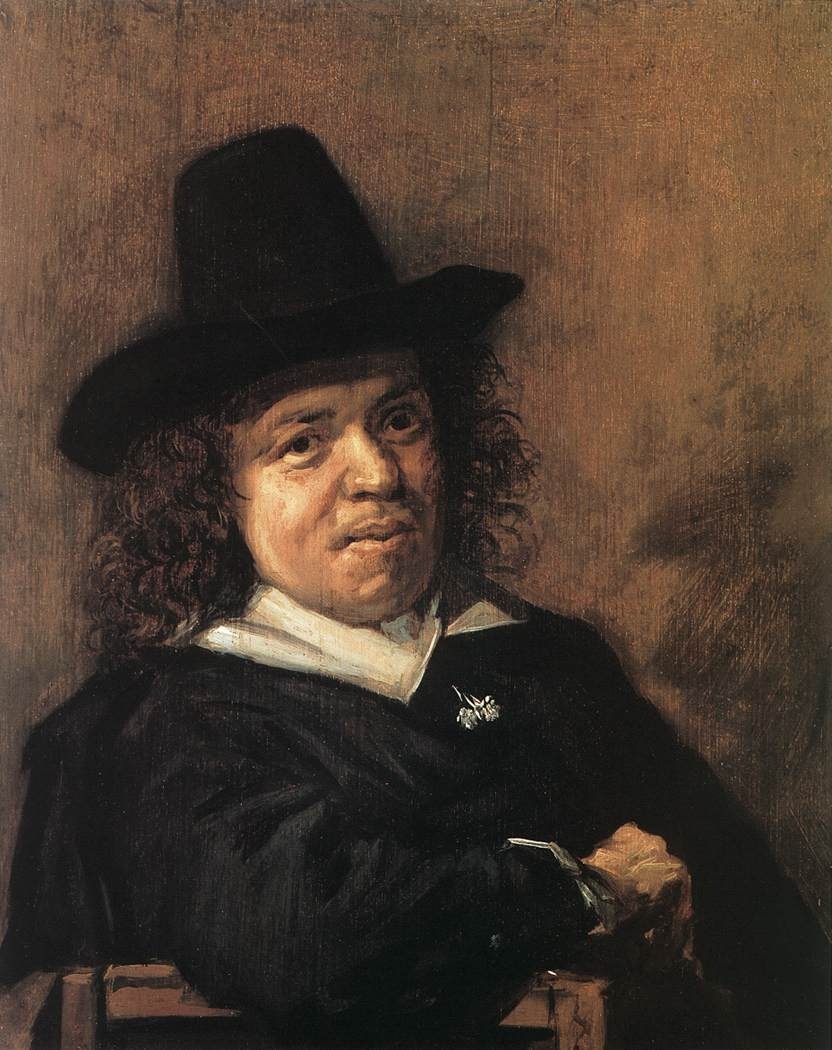
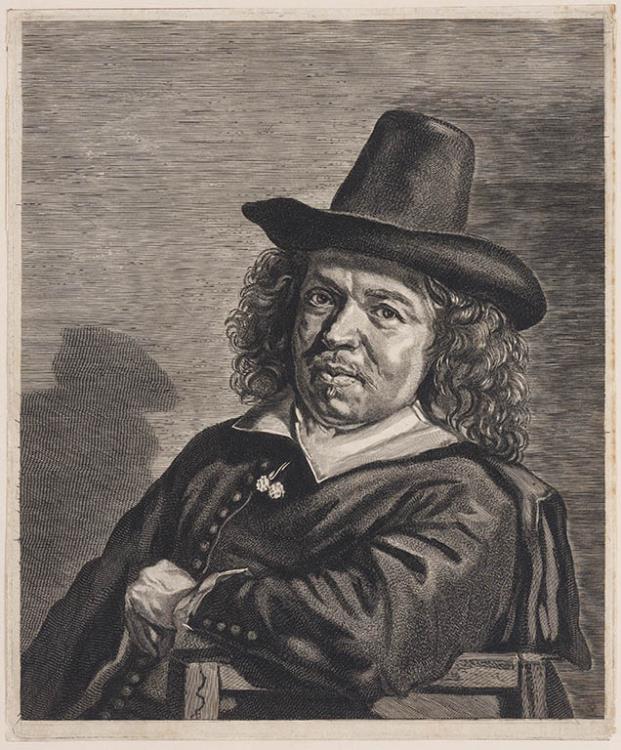
Frans Hals, Frans Post, about 1655, oil on panel, 27.5 by 23 cm. The Worcester Art Museum catalogues the picture under the sitter's name and it is carried as Post in the Hals literature from the nineteenth century onwards. The identification is corroborated rather than circular: Jonas Suyderhoef engraved the same head as a portrait of Frans Post, and impressions are held as such by the Teylers Museum, the Albertina and the Statens Museum for Kunst, while Cornelis van den Berg drew a copy after the Hals in 1654 that the Noord-Hollands Archief also names as Post. This record has not seen the engraving's lettering transcribed, which would be the primary evidence; short of that the identification is as secure as a seventeenth-century sitter's name usually gets.
Worcester Art Museum, Worcester, Massachusetts, Stoddard Acquisition Fund, 1994.273| Full name | Frans Janszoon Post, catalogued as Frans Jansz. Post |
|---|---|
| Worked as | Painter, Draughtsman, Designer of book illustrations |
| Born | 1612 · Haarlem, according to the Mauritshuis and the Metropolitan Museum; the Noord-Hollands Archief in Haarlem records him as born in Leiden c. 1612, and older dealer usage gives Leiden. Tertiary sources give 17 November 1612; museum records give only c. 1612. |
| Died | 1680; buried in Haarlem's Grote Kerk on 17 February 1680, the date usually printed as the date of death · Haarlem |
| Nationality | Dutch |
| Movement | Dutch Golden Age landscape painting |
| Last verified | 15 September 2026 |
On this page 13 sections
Frans Post is the first professionally trained European painter who went to the Americas and painted them from life. He sailed for Dutch Brazil in the entourage of Johan Maurits van Nassau-Siegen in October 1636, landed at Recife in January 1637, stayed seven years, and came home to Haarlem in 1644. He painted Brazil, and only Brazil, for the rest of his working life.
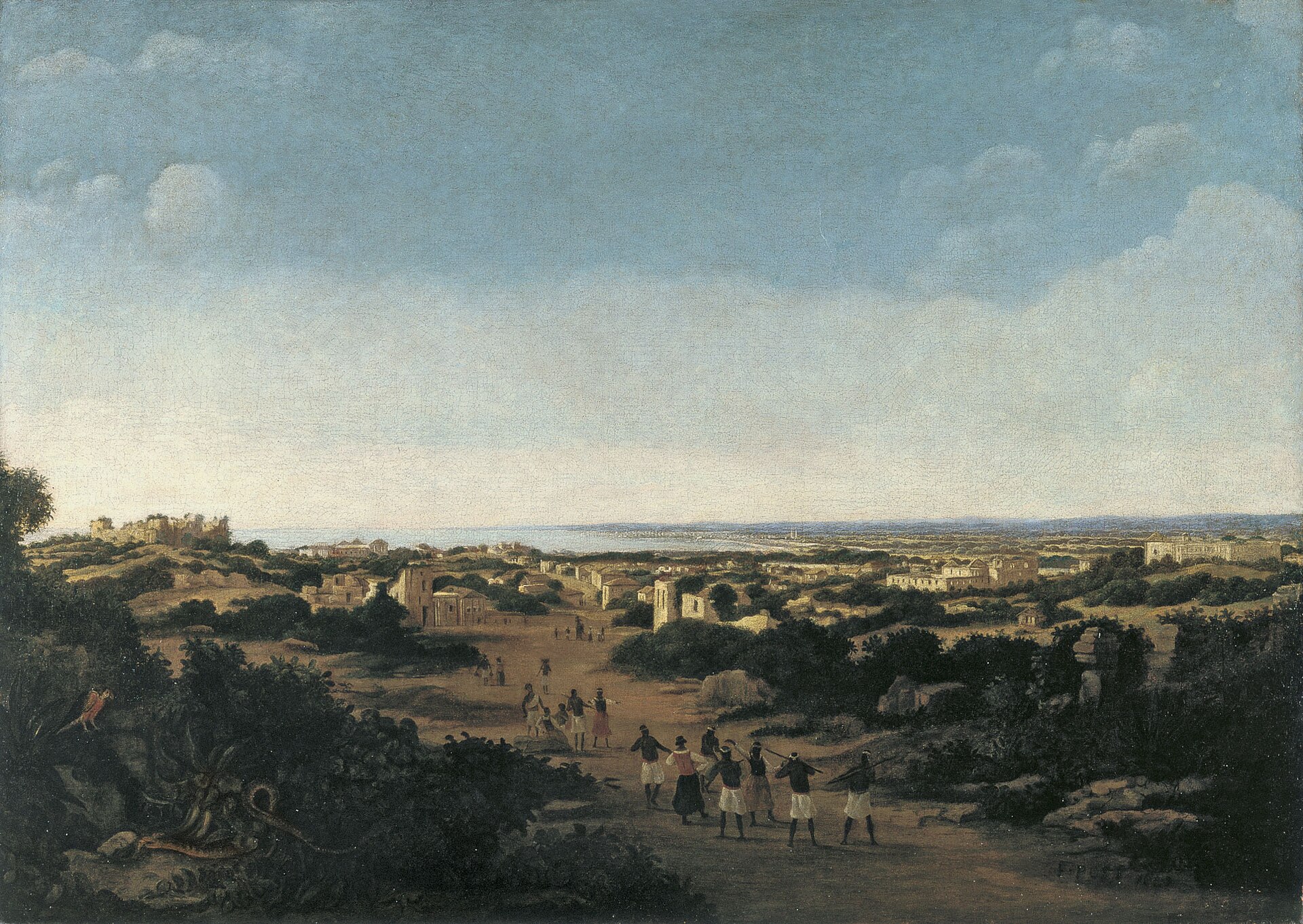
The thing a reader should know, and almost never finds stated plainly, is that hardly any of his surviving work was painted there. Seven pictures made in Brazil are located today. The catalogue raisonne accepts one hundred and fifty-five paintings. The other one hundred and forty-eight were painted in Haarlem, thousands of miles and in some cases twenty-five years from the places they show, out of drawings, memory and a stock of reusable motifs. Every question of dating, attribution and price on this artist turns on which side of 1644 a picture falls, and the two groups do not look alike.
He is also, unavoidably, the painter of a slave colony. The sugar mills in his middle distances were worked by enslaved Africans whom Johan Maurits's own fleets helped to supply, and the pictures show them as small, brightly dressed figures in an orderly landscape. The Mauritshuis, the Rijksmuseum and the Frans Hals Museum now say so on their own labels. That is not a modern imposition on the pictures. It is a description of what is in them and of what is left out.
Images
Chronology
- 1612
Born, probably in Haarlem; the Noord-Hollands Archief records Leiden. Son of the glass painter Jan Jansz. Post and younger brother of the painter and architect Pieter Post.11229
- 1630
The Dutch West India Company takes the Portuguese sugar province in north-eastern Brazil.122
- 1631
Dutch forces burn Olinda, the Portuguese seat of Pernambuco. Its cathedral and Jesuit church stand ruined for the rest of the century and become Post's most repeated subject.1213
- 1636
Johan Maurits van Nassau-Siegen is appointed governor-general of Dutch Brazil and sails on 25 October with a staff including Post, the painter Albert Eckhout, the physician Willem Piso and the naturalist Georg Marcgraf.122
- 1637
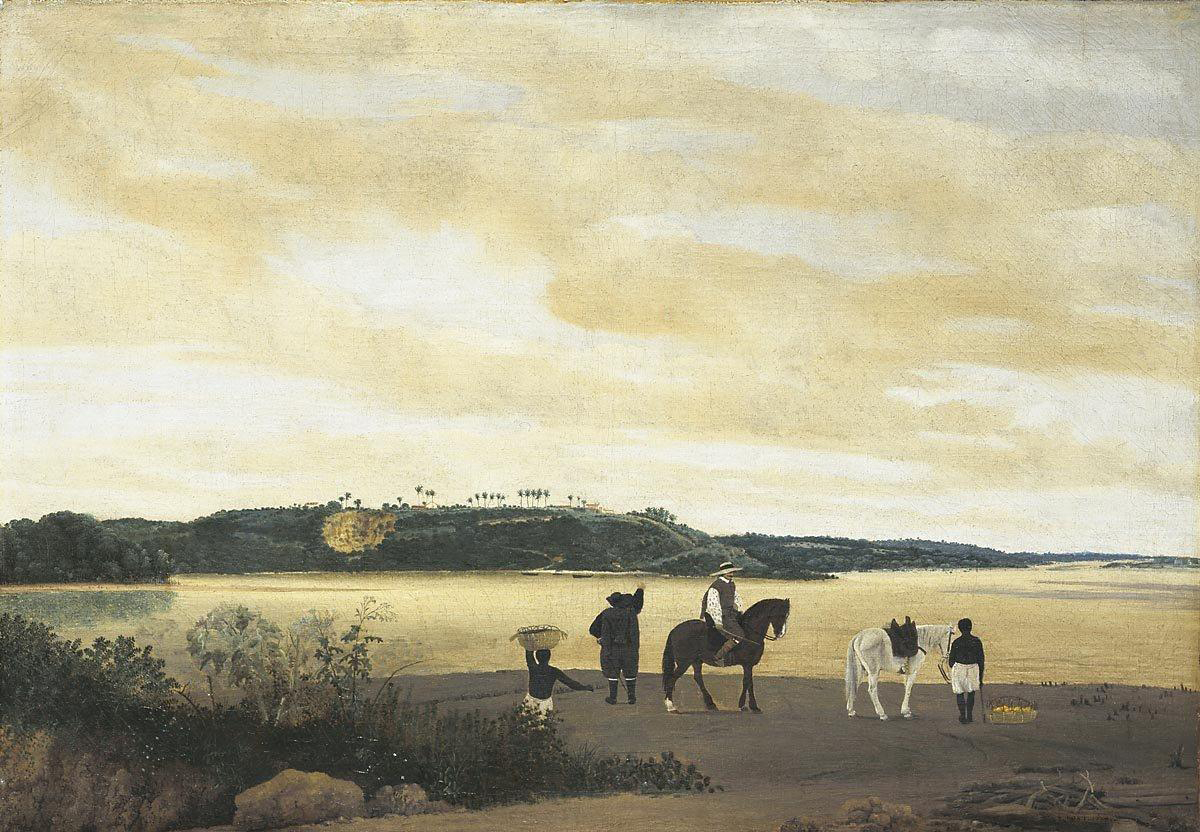
The expedition reaches Recife in January. Post paints the view of the island of Itamaraca, signed and dated that year: the earliest known painting by him and the first painting of Brazil by a European.112
- 1637
Johan Maurits sends a fleet that captures the Portuguese slaving fort of Elmina on the Gold Coast, a step that takes the Dutch into the Atlantic slave trade.2
- 1638
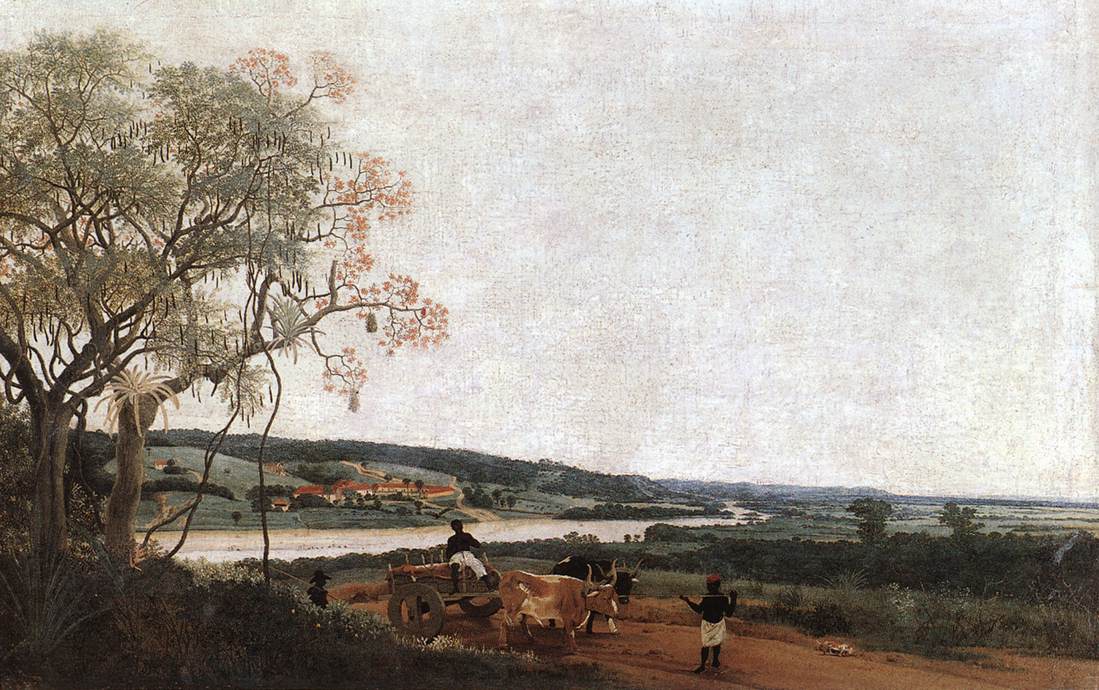
Paints Fort Ceulen at the mouth of the Rio Grande and the ox cart landscape, both now in the Louvre, INV 1726 and INV 1727.4
- 1639
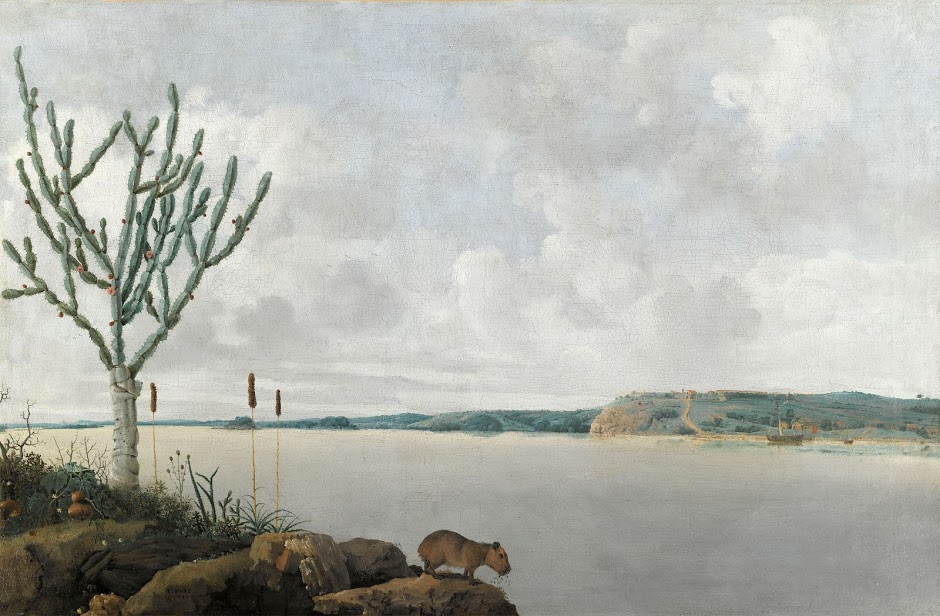
Paints the Rio Sao Francisco with a capybara in the foreground and the landscape near Porto Calvo with a fig tree, both now in the Louvre. A surviving drawing shows the same capybara wearing a rope collar.518
- 1640
Paints the view of Recife with Fort Frederik Hendrik, 66 by 88 cm, signed and dated; now in the Instituto Ricardo Brennand, Recife. Johan Maurits sends a second fleet, which takes Luanda in Angola.25229
- 1643
The WIC directors, the Heeren XIX, recall Johan Maurits.2
- 1644
Post returns to the Netherlands and settles permanently in Haarlem. Stadholder Frederik Hendrik buys his work; a commissioned landscape brings 800 guilders.1229
- 1646
Joins the Haarlem Guild of St Luke.12
- 1647
Caspar Barlaeus publishes Rerum per octennium in Brasilia in Amsterdam, the official account of the governorship, with maps and plates; Post designed illustrations for it.122
- 1648
Marcgraf and Piso's Historia Naturalis Brasiliae is published, after Marcgraf's death on the voyage home.27
- 1650
Marries Jannetje Bogaert at Zandvoort on 27 March. Frederik Hendrik again pays well for his work.12
- 1652
Paints the upright Landscape in Brazil, 282.5 by 210.5 cm, signed F. Post 1652 12/22, now Rijksmuseum SK-A-3224. Johan Maurits gives Brazilian pictures to Frederick Wilhelm, Elector of Brandenburg.143
- 1654
Dutch Brazil falls to the Portuguese. Johan Maurits gives Brazilian pictures to King Frederik III of Denmark. Post joins the Reformed Church on 9 October.3122
- 1656
Serves as vinder of the Haarlem guild in 1656 and 1657, and as treasurer in 1658.12
- 1662
Paints View of Olinda, Brazil, canvas, 107.5 by 172.5 cm, signed on a gourd, now Rijksmuseum SK-A-742. Its carved frame of Brazilian and European plants and creatures may be his own design.1331
- 1666
Paints View of Olinda, Brazil, with the Ruins of the Jesuit Church, oil on western European oak panel, 58.4 by 88.9 cm, signed on rocks lower right.7
- 1669
Last dated painting.12
- 1678
Jacob Cohen, Johan Maurits's financial agent, buys nine large Post paintings in Holland to augment the intended gift to Louis XIV, listed A.A. to I.I. in the Nassau archive. On 9 January he reports that Post has become a trembling drunk and cannot travel. Johan Maurits writes to the Marquis de Pomponne on 21 December offering the gift.63
- 1679
The gift reaches Louis XIV: forty-two paintings, twenty-seven by Post and fifteen by Eckhout, plus Brazilian objects and a copy of Piso's 1658 Historiae Naturalis Brasiliae as a key to the imagery. Thirty-four Brazilian landscapes arrive at Versailles.36
- 1680
Buried in Haarlem's Grote Kerk, the St Bavo, on 17 February.12
- 1681
The Brazilian landscapes are entered by Du Mets in the Paris Garde-Meuble inventory under the single global number 443. The Mauritshuis Itamaraca still bears No 443 on the back of its original canvas.61
- 1879
Eugene Odinot sells the 1637 Itamaraca in Paris; the Rijksmuseum buys it the same year as SK-A-4271.1
- 1933
The Louvre deposits the Porto Calvo landscape of 1639 at the Musee des Colonies until 1950, and transfers it to the Naval Museum in 1937; it returns to the Louvre only in 1952.5
- 1973
Joaquim de Sousa-Leao publishes Frans Post 1612-1680 in Amsterdam, the standard reference for the next three decades.1211
- 2005
The Louvre shows Frans Post: Brazil at the court of Louis XIV, 29 September 2005 to 2 January 2006, reuniting the rediscovered Brazilian-period pictures for the first time.24
- 2007
Pedro and Bia Correa do Lago publish the catalogue raisonne in Milan: 155 paintings, 57 drawings, 35 prints.11
- 2010
Alexander de Bruin of the Noord-Hollands Archief recognises thirty-four unknown Post animal drawings in an album held there since 1888.1918
- 2016
The drawings are published in Master Drawings in September and shown at the Rijksmuseum in Frans Post. Animals in Brazil, 7 October 2016 to 8 January 2017.1918
- 2018
The Mauritshuis's removal of the Johan Maurits bust becomes public in January and provokes a national debate. Curious Creatures: Frans Post and Brazil opens at the National Gallery of Ireland, 8 September to 9 December.226
- 2019
The Mauritshuis shows Shifting Image: In Search of Johan Maurits, 4 April to 7 July, curated by Lea van der Vinde.2
- 2025
The 1666 Olinda panel, found in a Connecticut barn attic and bought privately for USD 2.2 m in 1998, sells at Sotheby's New York on 21 May for USD 6 m hammer, about USD 7.3 m with premium: a record for the artist.78910
The market
Post is a thin market with a very high ceiling. Few pictures come up, and the price is set almost entirely by whether the picture is fresh, well preserved and from the strong years, which the catalogue raisonne places between 1661 and 1669.
The artist's record stood at USD 4.5 m from 1997 until May 2025, when a picture of 1666 that had been found in a Connecticut barn attic sold at Sotheby's New York for USD 6 m hammer, about USD 7.3 m with premium. The same picture had been bought privately through Sotheby's in 1998 for USD 2.2 m. That is the clearest single measure of what the reassessment of the artist has been worth: a little over three times the money in twenty-seven years, on the same object.
The record picture is also a caution. It is on oak panel, and was described in the trade press on the day as a canvas.
| Date | Sale | Work | Result | Note |
|---|---|---|---|---|
| 21 May 2025 | Sotheby's, New York | View of Olinda, Brazil, with the Ruins of the Jesuit Church, signed and dated lower right on rocks F. POST 1666, oil on western European oak panel, 58.4 by 88.9 cm. Lot 42, sale Elegance and Wonder: Masterpieces from the Collection of Jordan and Thomas A. Saunders III. | Hammer 6,000,000 With premium c. 7,300,000 USD | Estimate USD 6,000,000 to 8,000,000. A record for the artist. The Art Newspaper and My Modern Met give the premium price as USD 7.3 m; artnet gives USD 7.4 m; a further report gives USD 7.37 m. Sotheby's does not publish the result without a login. The hammer figure of USD 6 m is consistent across reports. Provenance runs from Louis Routy de Charodon in the eighteenth century through the Guillaume Sabatier estate sale of 21 March 1809, lot 43, bought by Charles Simon for 160 francs probably for Cardinal Fesch, to a Connecticut private collection and the Leicester Gallery. Corea do Lago catalogue raisonne 2007, cat. no. 93, reproduced in reverse. |
| 1998 | Sotheby's, New York, private sale | The same 1666 Olinda panel, acquired by Jordan and Thomas A. Saunders III. | Hammer not applicable, private treaty With premium 2,200,000 USD | George Wachter of Sotheby's found the picture in a barn attic on a Connecticut farm and persuaded the Saunderses to buy it. He described it as filthy, black and dirty, and barely visible; it was restored by the conservator Nancy Krieg. A private sale, so there is no hammer to separate. |
| 1997 | Sotheby's | Not identified in the sources consulted. | Hammer not published With premium 4,500,000 USD | The previous artist record, cited repeatedly in the 2025 coverage as USD 4.5 m set at Sotheby's in 1997. Neither the work, the exact date, the lot nor the split between hammer and premium is given in any source reached for this record. Treat the figure as a press-reported total and replace it with the catalogue entry. |
| 4 July 2007 | Sotheby's, London | A Landscape in Brazil, signed and dated lower left F. POST. 1663, oil on panel, 22.9 by 28.6 cm. Lot 32. | Hammer not published in the source consulted With premium not published in the source consulted GBP | Recorded here because it documents a picture that came to light after the English edition of the 2007 catalogue raisonne had gone to press. From a private collection held by descent since the eighteenth century; bought by Johnny Van Haeften and sold to a New York private collector in 2007. The dealer note is the source and does not give a price. |
Hammer is the price at which the bidding stopped; with premium adds the fee the house charges the buyer on top. Hammer price and buyer's premium in the glossary.
Where to see the work
| Institution | City | Holdings | Note |
|---|---|---|---|
| Musee du Louvre | Paris | Eight paintings, the largest group anywhere. Four painted in Brazil: Fort Ceulen 1638 (INV 1726), the ox cart 1638, the Rio Sao Francisco with a capybara 1639, and the landscape near Porto Calvo with a fig tree 1639 (INV 1729). Four large Haarlem pictures of about 1650-1655 bought by Jacob Cohen in 1678, including the planter's house (INV 1722) and the water-driven sugar mill. | All entered the French royal collection through Johan Maurits's gift to Louis XIV in 1679. Displayed in the Richelieu wing, level 2, room 838. The Louvre also holds tapestries of the Indes series woven after Eckhout's cartoons from the same gift. |
| Mauritshuis | The Hague | View of Itamaraca Island in Brazil, 1637, oil on canvas, 63.5 by 88.5 cm, inv. 915, on long-term loan from the Rijksmuseum since 1953; and a Brazilian landscape with a house under construction, c. 1655-1660. | The Itamaraca is the earliest known Post, the first painting of Brazil by a European, and the first painting in which enslaved people are recorded in Dutch Brazil. Room 8. The building itself was commissioned by Johan Maurits and built 1633-1644. |
| Rijksmuseum | Amsterdam | View of Olinda, Brazil, 1662, canvas, 107.5 by 172.5 cm, SK-A-742, with its probably original carved frame; Landscape in Brazil, 1652, canvas, 282.5 by 210.5 cm, SK-A-3224; Sugar Factory with Tower House, panel, 22.5 by 28 cm, SK-A-2334, with its pendant SK-A-2333; and the 1637 Itamaraca, SK-A-4271, on loan to the Mauritshuis. | Bought the Itamaraca in 1879, unusually early recognition. Mounted Frans Post. Animals in Brazil in 2016-2017. |
| Instituto Ricardo Brennand | Recife | The largest private collection of Post in the world, including the view of Recife with Fort Frederik Hendrik, 66 by 88 cm, signed and dated 1640, one of the seven surviving Brazilian-period pictures. An exhibition account gives eighteen oils. | In Pernambuco, the province Post painted. Founded 2001 and opened 2002 with an Albert Eckhout exhibition. |
| Museu de Arte de Sao Paulo | Sao Paulo | Brazilian landscapes by Post within the Dutch-period holdings. | The museum's own count of its Post paintings was not verified from its collection database for this record and should be checked before citing a number. |
| Frans Hals Museum | Haarlem | Brazilian Landscape, 1656, oil on panel, 54.2 by 71.5 cm, Os 62-80. | On display. The museum in the city where Post lived, joined the guild and was buried, and the one whose label states most directly what the pictures leave out. |
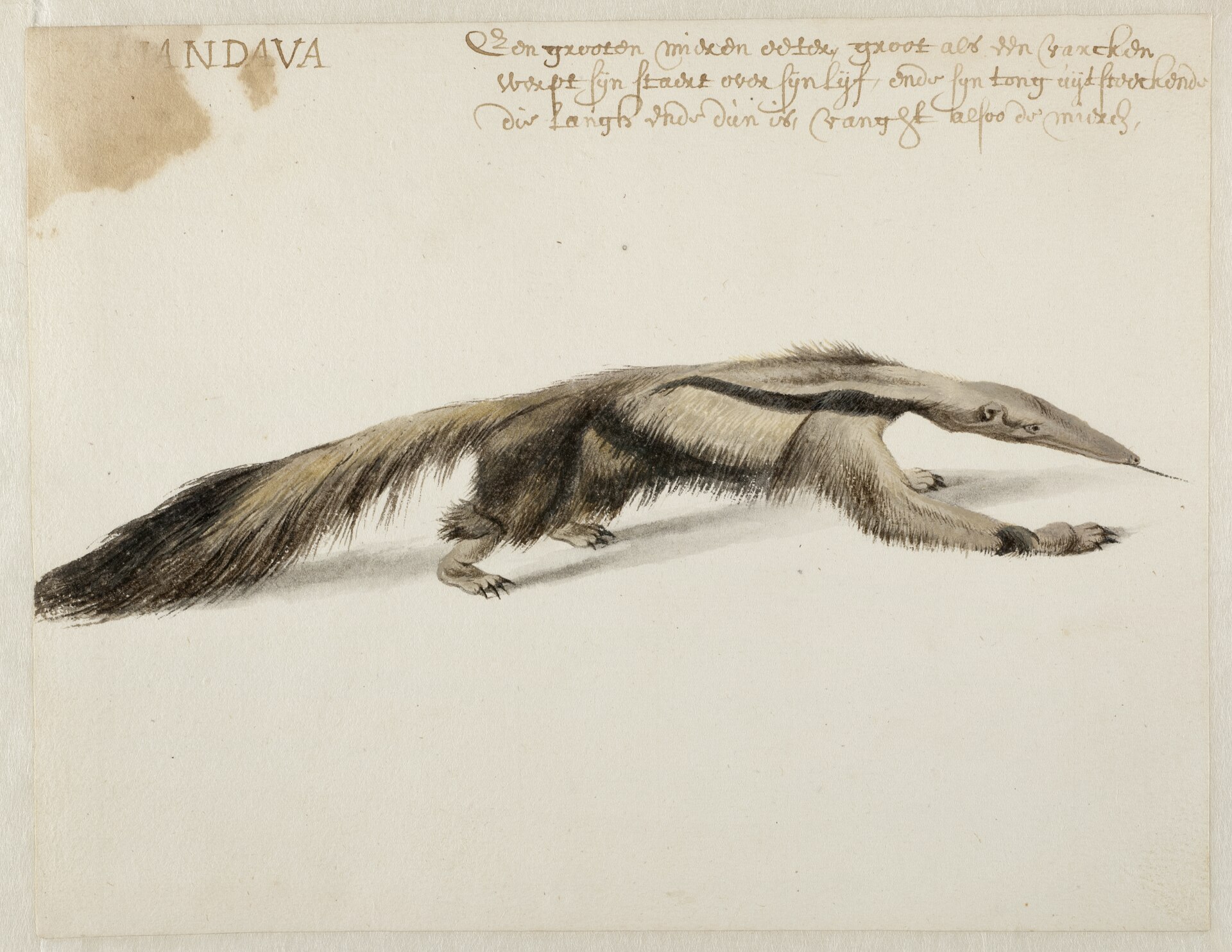
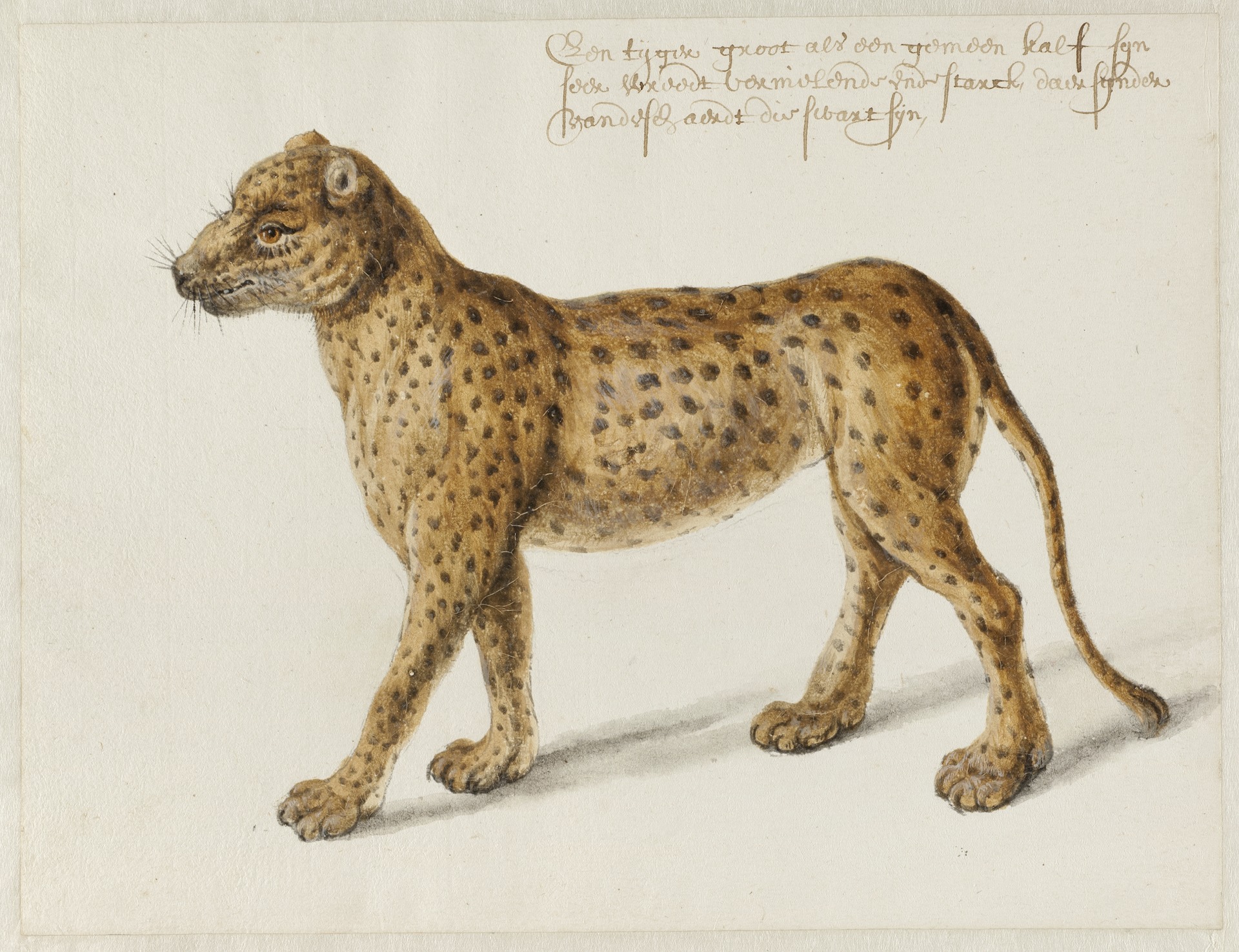
| Noord-Hollands Archief | Haarlem | The thirty-four Brazilian animal drawings recognised in 2010, including the jaguar and the giant anteater. | The single most important body of Post material to surface in modern times, and it is in an archive rather than a museum. |
| Metropolitan Museum of Art | New York | A Brazilian Landscape, 1650, oil on wood, 61 by 91.4 cm, acc. 1981.318. | Gallery 638. A large panel, useful for correcting the assumption that his panels are all small. |
| Museo Nacional Thyssen-Bornemisza | Madrid | View of the Ruins of Olinda, Brazil, 1665, oil on canvas, 79.8 by 111.4 cm, inv. 326 (1977.66); and, in the Carmen Thyssen collection on deposit, Plantation Settlement in Brazil, 1656, oil on panel, 36.9 by 54 cm, CTB.1958.6. | The museum records three further versions of the 1665 Olinda composition, which makes this the best place to think about how Post repeated himself. |
| Museum of Fine Arts | Boston | Landscape with Ruins in Olinda, 1663, oil on panel, 22.9 by 29.2 cm. | Almost the same size and date as a panel of 1663 sold at Sotheby's London in 2007; the relationship between the two, if any, was not established for this record. |
| National Gallery of Ireland | Dublin | Brazilian landscapes including a sugar mill. | Showed Curious Creatures: Frans Post and Brazil in 2018 with the thirty-four rediscovered drawings. |
| Guildhall Art Gallery | London | Brazilian Landscape with Native Figures, 1666, and Brazilian Village with Buildings and Native Figures. | Among the small group of Posts in United Kingdom public collections, all of them post-1644 work. |
| Het Scheepvaartmuseum | Amsterdam | A sketchbook from the Brazilian years. | Cited in the dealer literature as the only surviving sketchbook from the expedition; not verified against the museum's own catalogue for this record. |
Forgeries and misattributions
- No forgery case is documented in the sources reached for this record
- Post is an awkward artist to forge and an easy one to misidentify. The subject is unique to him, roughly half the corpus is signed and dated, and the market was small until very recently. No fake, no faker and no exposed group is named in any museum, auction or scholarly source consulted here. The absence is itself the finding, and it is stated rather than filled. Not applicable. The real hazards on this artist are the three below.1112
- Versions and repetitions of the same composition
- Post reused compositions. The Museo Thyssen-Bornemisza records three further versions of its View of the Ruins of Olinda of 1665. Peter C. Sutton, writing on the Carmen Thyssen plantation scene of 1656, notes a closely related painting reportedly dated 1649. Two pictures dated 1663 are of nearly identical small dimensions, one in Boston at 22.9 by 29.2 cm and one sold in London at 22.9 by 28.6 cm. By support, by the exact signature form and by dimensions to the millimetre, not by composition. A description that gives only subject and date cannot distinguish one version of a Post from another.20213212
- The support misdescribed
- When the 1666 Olinda set the artist's record in May 2025, a leading art trade publication described it in print as a Frans Post canvas. Sotheby's catalogue entry on the same lot reads oil on western European oak panel. The received idea that Post painted on panel early and canvas later is also the wrong way round: his Brazilian pictures are canvases and his oak panels are Haarlem work. By reading the auction house's own medium line and the museum record rather than the report. Where a Post is described as a canvas, check it.79451
- Plates printed in mirror image
- The Sotheby's entry for the record picture notes that it is reproduced in reverse both in Pedro Correa do Lago's Sao Paulo catalogue of 2000 and in the Correa do Lago catalogue raisonne of 2007, cat. no. 93, p. 262. By reading the literature line in the catalogue entry. Anyone matching a photograph against the standard reference plate will be comparing a picture with its mirror image, and could conclude that they are looking at two different works.7
The essay
The first, and what the claim actually means
The Dutch West India Company took the Portuguese sugar province in north-eastern Brazil in 1630. In 1636 the Company appointed Johan Maurits van Nassau-Siegen governor-general of the colony it called Dutch Brazil, and on 25 October that year he sailed from the Netherlands with a staff of artists and scientists aboard. The party reached Recife in January 1637. Post was about twenty-four.
What makes him first is narrow and precise, and worth keeping narrow. Europeans had drawn and mapped the Americas for a century and a half. Post was the first painter with a European studio training to stand in the American landscape and make oil paintings of it. His earliest surviving picture, the view of the island of Itamaraca in the Mauritshuis, is signed and dated 1637 and was painted within months of his arrival. The Instituto Ricardo Brennand in Recife calls it the first oil painting of a secular subject made by a professional artist in the Americas.
The dealer literature puts the claim in the form that has stuck: he was the first professionally trained European artist to paint the landscape of the New World, and so far as is known he devoted his entire production to views of Brazil. Both halves of that sentence are true, and the second half is the stranger one. There is no known Dutch landscape by Frans Post. He came back from Brazil at thirty-two and painted nothing else for a quarter of a century.
Seven pictures against one hundred and forty-eight
The corpus divides cleanly and the division is the single most useful fact about him. Post is generally said to have painted eighteen landscapes during the seven years in Brazil. Seven of those eighteen are located today. Everything else is Haarlem work.
The catalogue raisonne of Pedro and Bia Correa do Lago, published in Milan in 2007, catalogues one hundred and fifty-five paintings, fifty-seven drawings and thirty-five prints, and its publisher describes the balance exactly: seven canvases from the Brazilian years and a further one hundred and forty-eight painted after the return to Holland. It was the first catalogue raisonne of Post in more than thirty years, the predecessor being Joaquim de Sousa-Leao's monograph of 1973.
The count of surviving Brazilian-period pictures is not unanimous and the disagreement is worth recording rather than smoothing. The Louvre exhibition of 2005 was built on seven rediscovered Brazilian canvases and the Instituto Ricardo Brennand also says seven. The Museo Thyssen-Bornemisza states that only six survive. The English Wikipedia article gives six completed in Brazil, dated 1637 to 1640, while the companion list article gives seven. The difference turns on whether a particular picture is accepted as painted in situ or as an early Haarlem repetition; nobody in the sources consulted here sets out which picture is at issue.
The seven, as the standard list gives them, are the Itamaraca of 1637 in the Mauritshuis, four in the Louvre dated 1638 and 1639, a view of Frederiksstad in Paraiba of 1638 in the Fundacion Cisneros, and the view of Recife with Fort Frederik Hendrik of 1640 in the Instituto Ricardo Brennand.
What Johan Maurits was actually doing
Post did not go to Brazil as an independent artist. He went as part of a programme, and the programme had a shape. Johan Maurits took with him the physician Willem Piso and the naturalist and astronomer Georg Marcgraf as well as the painters Post and Albert Eckhout. The Mauritshuis states the purpose without ornament: commissioned by Johan Maurits, they made the first oil paintings and the first scientific descriptions of Brazilian flora and fauna. Marcgraf and Piso's work became the Historia Naturalis Brasiliae, published in 1648 after Marcgraf died on the voyage home. Caspar Barlaeus wrote the official account of the governorship, Rerum per octennium in Brasilia, Amsterdam 1647, with maps and plates; Post designed illustrations for it.
The governor was a Calvinist and the colony he ran was a Calvinist possession, but the Mauritshuis is careful about what that meant in practice. Catholic worship was open in Dutch Brazil and the first synagogue in that part of the world was built there. The museum's own assessment is that this tolerance was pragmatic rather than ethical: Johan Maurits needed the Portuguese Catholic mill owners and the Jewish merchants to keep sugar production running, and driving them out would have been foolish.
What the pictures share with the maps and the natural histories is a habit of mind rather than a doctrine. The land is shown from above and from a distance, laid out, named, forted, measured and worked. Barlaeus's plates, Marcgraf's map of Pernambuco and Post's paintings are three registers of the same survey. That is a claim about the documented function of the whole enterprise, not a symbolic reading of any single picture, and it is as far as the evidence goes.
The animals in the foreground are not decoration
Post's later pictures open with a shelf of foreground close at hand: cactus and pineapple and papaya, and among them an armadillo, an anteater, a sloth, a monkey, a snake, a lizard, a capybara. For a long time this was read as exotic garnish, a way of selling a distant country to a Dutch buyer. Two developments have made that reading untenable.
The first is a discovery. In 2010, while working on a digitisation project, Alexander de Bruin of the Noord-Hollands Archief in Haarlem noticed thirty-four unrecognised drawings of Brazilian animals bound into a seventeenth-century album that had otherwise held bird studies by the Holsteijns and had been in the archive since 1888. Twenty-four are in gouache and watercolour and ten are graphite. They carry seventeenth-century annotations: the jaguar is very ferocious, destructive and strong; the armadillo tastes like chicken. They were published in Master Drawings in September 2016 and shown at the Rijksmuseum that autumn. The proof that they are Post's own working studies and not later copies is a capybara that appears in both a drawing and the Louvre picture of the Rio Sao Francisco of 1639, identical except that the drawing shows a rope collar. The animal was drawn from a captive specimen, and the painting drops the collar.
The second is documentary. When Johan Maurits shipped his Brazilian pictures to Louis XIV he included in the consignment a copy of Willem Piso's 1658 edition of the Historiae Naturalis Brasiliae, so that the French court could decipher imagery it would not recognise. The natural history was sent as the key to the paintings, by the man who had commissioned both. That is documented, not inferred, and it settles the status of the foreground creatures: they are specimens.
Liza Oliver has made the fuller argument, in Dutch Crossing in 2013, that the foreground of flora and fauna and the middle distance of mapped terrain, sugar mills and enslaved labour are a single system rather than two unrelated registers, and that Post was negotiating between the appetite for the exotic and the instability of the colonial claim. That is a scholar's reading of the pictures, offered as such.
The gift of 1679
In July 1679, a few months before his death, Johan Maurits sent Louis XIV a gift of Brazilian paintings. Carrie Anderson's account gives forty-two paintings in total: twenty-seven landscapes by Post and fifteen pictures of the people, flora and fauna of Brazil by Albert Eckhout, eight of the Eckhouts being cartoons that the Gobelins turned into the tapestry series known as the Old Indies. The Louvre's own records give the same shape of the transaction and add the mechanics.
Johan Maurits did not have twenty-seven Posts to hand. In 1678 his financial agent Jacob Cohen bought nine large Post paintings in Holland to augment the gift; the Nassau archive lists them under the letters A.A. to I.I. Four other Posts came from the prince's own collection, the pictures he had brought back from Brazil, and are the Louvre's INV 1726 to 1729. Thirty-four Brazilian landscapes reached Versailles in 1679 and were entered by Du Mets in the Paris Garde-Meuble inventory of 1681 under the single global number 443.
That number is worth holding on to. The Mauritshuis Itamaraca carries, on the back of its original canvas, a seventeenth-century Dutch inscription describing the island and ending No 443. The picture in The Hague is physically marked with the French crown's inventory number for the gift. It is the sort of evidence that settles a provenance without an argument.
What survives in Paris is eight paintings by Post in the Louvre. Four are the Brazilian-period canvases of 1638 and 1639: Fort Ceulen at the mouth of the Rio Grande, the ox cart, the Rio Sao Francisco with a capybara in the foreground, and the landscape near Porto Calvo with a fig tree. The other four are the large Haarlem pictures of about 1650 to 1655 that Cohen bought, among them the sugar mill turned by water and the planter's house formerly called the village of Serinhaem.
Why the gift was made is contested and the positions have names. Rebecca Brienen has suggested it was meant to ease relations after the Franco-Dutch war, which ended with the Treaty of Nijmegen in August 1678. Anderson argues instead that Johan Maurits was acting on behalf of Frederick Wilhelm, Elector of Brandenburg, whom he had served as stadholder of Cleves since 1647 and whom the Dutch Republic had abandoned at Nijmegen; she notes that the States-General sent no gift of its own at that moment, which is what one would expect if Johan Maurits had been acting for it. The 1679 gift was also not the first. He had given Brazilian pictures to Frederick Wilhelm in 1652 and to King Frederik III of Denmark in 1654.
What a gift of Brazil was for
Johan Maurits told the French Secretary of State the Marquis de Pomponne, in a letter of 21 December 1678, what he was offering: these rarities represent the whole of Brazil in painting, all in realistic scale, as well as the places in that country, the cities and forts in perspective, and from them one could design a tapestry for a large room or gallery. He promised that the gift would let the king see Brazil without crossing the ocean.
That was not a figure of speech. Nearly forty years earlier Constantijn Huygens and Professor Adolph Vorstius had been received at Johan Maurits's house in The Hague to see the Brazilian collection, and Vorstius wrote afterwards of skilfully painted fish, four-footed creatures, birds, insects and plants, of buildings and fortresses and the Brazilian landscape spread out in all its charm, and of ivory and rare hides and a sofa covered in the feathers of coloured Indian birds, and of a peppered Brazilian drink that neither of them liked. The collection was an immersive room, and the gift was an attempt to reproduce that room at a foreign court.
The rest of the story belongs to Eckhout rather than Post, but it shows what these objects became. The Gobelins wove the Old Indies at least eight times between 1687 and 1730; sets went to the French crown, to the Grandmaster of the Knights of Malta in Valletta, to Peter the Great and to the French Academy in Rome. The French coat of arms was added to the borders. Anderson's reading is that the addition transferred authority over the imagery from the Dutch to the French, and that when the tapestries were hung for the Corpus Christi processions at Versailles the Brazilian figures woven into them became participants in a ritual performance of their own supposed heresy. That is her argument about the tapestries' later use, not a statement about what Post or Eckhout intended.
Ruins
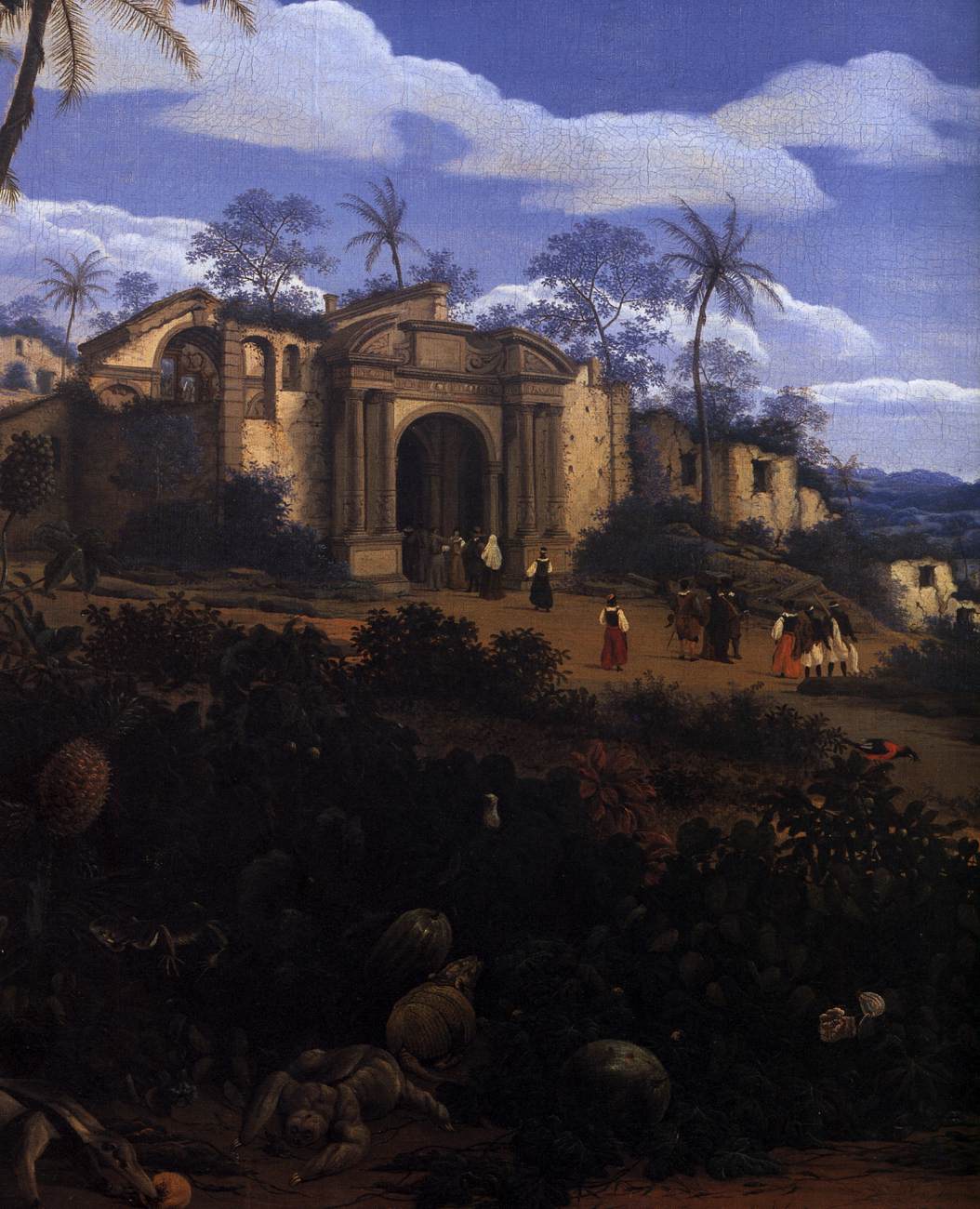
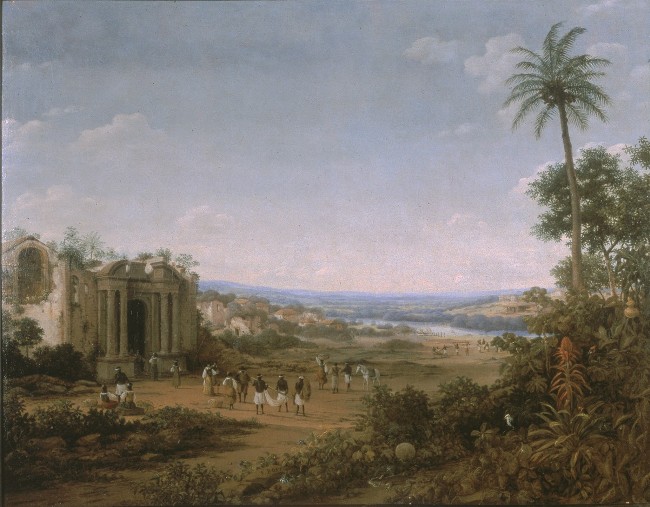
Post returned again and again to the ruins of Olinda. Olinda was the Portuguese seat of Pernambuco, and the Dutch burnt it in 1631, the year after they took the province. Its cathedral and its Jesuit church stood roofless for the rest of the century, and Post painted them from the 1650s to the end of his working life. The picture that set his auction record in 2025 is called View of Olinda, Brazil, with the Ruins of the Jesuit Church and is dated 1666.
What the pictures show is documented and unambiguous. The Rijksmuseum says of its Olinda of 1662 that the cathedral on the hill at the left was badly damaged when the Dutch conquered the region. Post shows the broken pillars, the vines climbing the walls, and inside the shell an altarpiece still visible, with Portuguese colonists and enslaved Africans on the road in front of it.
What the pictures mean is another matter, and this record will not invent an answer. A Protestant painter working for a Protestant market, painting Catholic churches wrecked by his own side, invites a reading; the literature consulted here does not supply one. The Museo Thyssen-Bornemisza describes the ruins compositionally, as a destroyed settlement seen from a high viewpoint with a dusty road leading the eye to the sea, and says nothing about confession. Wikipedia notes the paradox that pictures usually described as expressions of Dutch pride are largely filled with Portuguese-built architecture, without naming who makes that observation. The honest position is that the ruined Jesuit church is a documented subject with an obvious political charge and no argued iconographic programme behind it in the sources reached for this record. Anyone asserting more should be asked for a citation.
The sugar mills, and the people in them
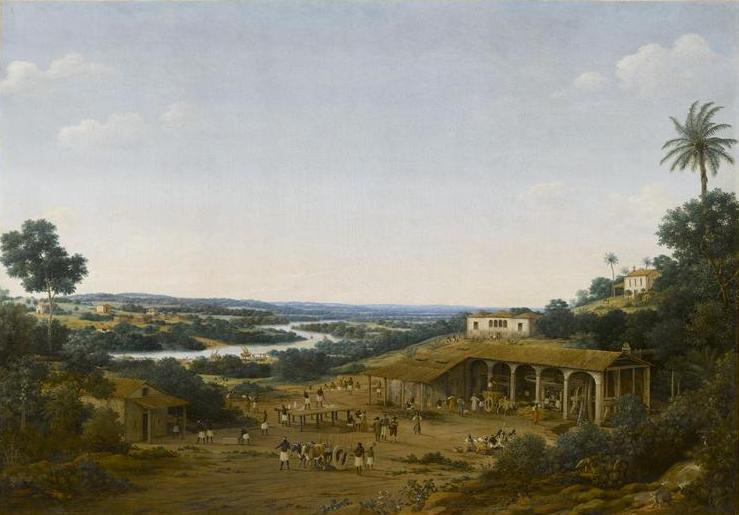
The engenho, the sugar mill with its water wheel and its boiling house, is the recurring building of Post's Haarlem work; the Louvre owns one titled, in the seventeenth-century French of the royal inventory, a sugar mill turned by water with the ovens where the liquid of the cane is cooked to make sugar. The Mauritshuis sets out the labour that ran it: the hard and dangerous work on the cane plantations and in the mills was done by men, women and children transported from Africa and put to work as enslaved people.
Johan Maurits was not a bystander to that. The Mauritshuis states that in 1637 he equipped a fleet that took the Portuguese slaving fort of Elmina on the Gold Coast, that three years later another of his fleets took Luanda in Angola, that these were among the most important slave depots of the period, and that in doing so he brought the Dutch into the slave trade on WIC orders. It adds that many enslaved Africans worked at his court, that he profited from the sale of Africans given to him by the king of Congo, and that he smuggled enslaved people into Brazil in collaboration with Portuguese at his court. For scale: he later said his two houses in Brazil cost at least 150,000 guilders and that he had lent 75,000 more to Portuguese in the colony, against an annual salary of 21,600 guilders.
Post's pictures record this and conceal it in the same gesture. The Mauritshuis, on the Itamaraca of 1637, notes the four figures by the water, two Portuguese and two enslaved Africans, and says the painting inadvertently shows that inequality between black and white was tied to skin colour; it is the first painting in which enslaved people are recorded in Dutch Brazil. On the same picture the museum adds that we see almost nothing of the harsh side of their lives, and that Post presents above all an idyllic image of the colony. The Frans Hals Museum, on its Brazilian landscape of 1656, is blunter: these idyllic views never showed the oppression of the indigenous people, or the way the Dutch forced enslaved men, women and children to work on the plantations, condemning many to an early death.
Seventeenth-century viewers were told something similar by the pictures themselves. Peter C. Sutton, writing on the Carmen Thyssen plantation scene of 1656, observes that the picture seems less an account of industry and cultivation in the New World than a vision of a leisured existence in exotic foreign lands. The dealer description of a panel of 1663 says, without embarrassment, that the foreground and middle distance are enlivened by brightly attired African slaves. The staffage was a selling point.
Where this record has gone beyond description it has named the scholar. Liza Oliver's 2013 article is the argued case that the pictures naturalise slavery while acknowledging the instability of the colony. The Mauritshuis position dates from its own reassessment of Johan Maurits after 2014. Both are modern readings of a seventeenth-century object and are marked as such. What is not a modern reading is the labour itself, or the fact that the pictures leave it out.
Panel or canvas, and why it decides cases
The received summary, that Post used panel early and canvas later, is the wrong way round, and getting it wrong is expensive.
Every one of the located Brazilian-period pictures that this record could verify from a museum is on canvas. The Mauritshuis Itamaraca of 1637 is oil on canvas, 63.5 by 88.5 centimetres. The Louvre's Fort Ceulen of 1638 is oil on canvas, 62 by 95. The Louvre's Porto Calvo of 1639 is oil on canvas, 63 by 89, notwithstanding a widely copied online list that calls it panel. These are field pictures of a standard size on a support that can be rolled.
The Haarlem work runs both ways and the panels are the ones that catch people out. The Metropolitan's A Brazilian Landscape of 1650 is oil on wood, 61 by 91.4 centimetres, which is a large panel by any standard. The Frans Hals Museum's Brazilian landscape of 1656 is oil on panel, 54.2 by 71.5. The Carmen Thyssen plantation of 1656 is oil on panel. The Museum of Fine Arts in Boston's Landscape with Ruins in Olinda of 1663 is oil on panel, 22.9 by 29.2. The picture that made the artist's auction record, the Olinda of 1666, is catalogued by Sotheby's as oil on western European oak panel, 58.4 by 88.9 centimetres. Meanwhile the Rijksmuseum's enormous upright Landscape in Brazil of 1652 is canvas at 282.5 by 210.5, and the Olinda of 1662 is canvas at 107.5 by 172.5.
So the working rule is the reverse of the received one, and it is about function rather than chronology: the pictures painted in Brazil are canvases, the small and middling cabinet pictures of the Haarlem years are very often oak panels, and the big showpieces are canvases again. Any statement of the form early panel, later canvas should be treated as a warning that the writer has not checked.
The consequences are not hypothetical. When the record picture sold in May 2025, a leading trade publication described it in print as a Frans Post canvas. It is a panel, and the auction house's own catalogue entry said so on the same page as the estimate.
How a Post is built
The Brazilian pictures and the Haarlem pictures are built differently, and the difference is diagnostic.
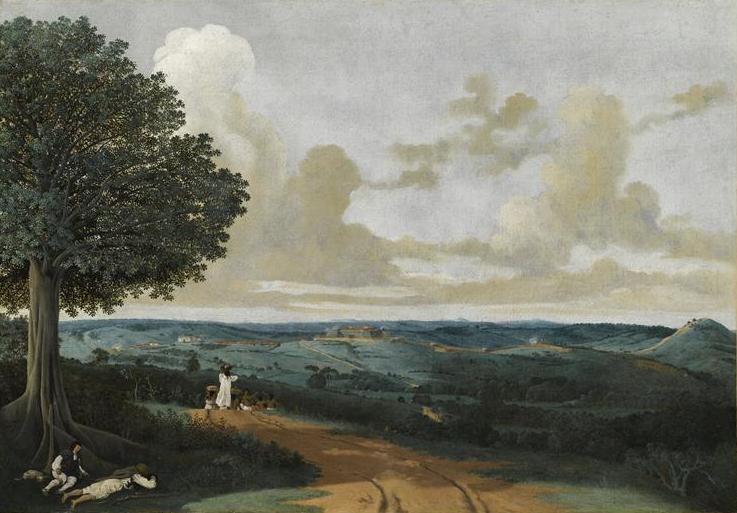
The seven made in Brazil are distinguished, in the dealer literature, by topographical fidelity and a somewhat primitive character: a low horizon, a wide flat prospect, few incidents, the fort or the river as the actual subject, the paint thin and the colour cool. They are documents of places that existed and can be checked against the maps.
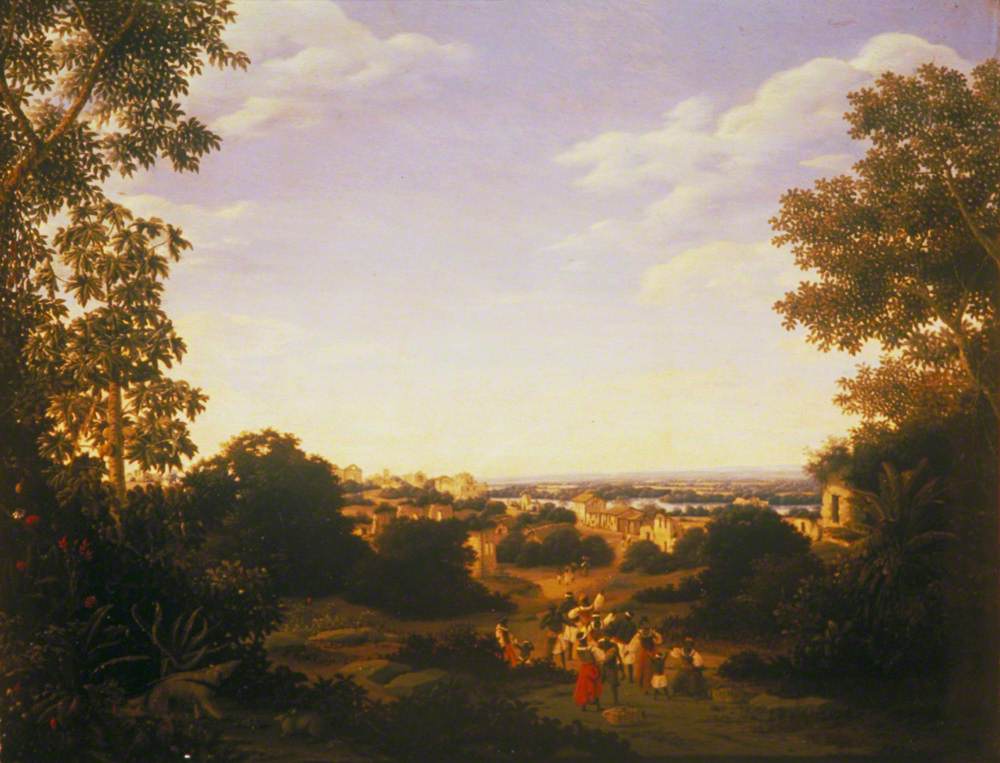
The Haarlem pictures replace that with a formula, and it barely changes for twenty-five years. The viewer stands on rising ground. The scene is framed left and right by dark tropical vegetation, ruined masonry or rock, silhouetted against the light; the papaya with its distinctive leaves and fruit is a favourite. Beyond and below lies a panorama over a village or a mill towards a marshy plain, the varzea, closing in a bluish purple haze. Small brightly dressed figures move through the middle ground, one of them very often a woman carrying a basket on her head. In the immediate foreground sits the natural-history shelf of plants and animals. Post took liberties with topography, reusing and adapting motifs from stock; most of the later locations cannot be identified and are probably invented, though they are assembled from real parts, and buildings recur from one picture to the next.
The signature is normally in capitals with the year, lower left or lower right, and he liked to put it on something: on rocks in the Olinda of 1666, and on a large gourd in the Rijksmuseum Olinda of 1662. Recorded forms include F. POST 1637, F. Post 1652 12/22, F. Post 1662, F. POST. 1663 and F. POST 1666. Roughly half of the corpus is dated, which is why his development can be tracked year by year from 1637 to 1669 in a way that is unusual for a Dutch landscapist.
He was slow. The Correa do Lago catalogue calculates that even during his most productive years, the period 1661 to 1669 that it treats as his best, he averaged about eight paintings a year.
The money in his own lifetime
Post was not a neglected man. He was paid well and by the top of the market.
Stadholder Frederik Hendrik bought his work in 1644 and again in 1650 and paid handsomely; a landscape commissioned by the stadholder brought 800 guilders, a substantial sum for a Dutch landscape at that date. The dealer literature notes an enthusiastic market and relatively high prices. He joined the Haarlem Guild of St Luke in 1646 and held office in it, as vinder in 1656 and 1657 and as penningmeester, treasurer, in 1658. He joined the Reformed Church on 9 October 1654.
His subject explains the demand. Views of a distant possession, full of unfamiliar animals and plants, appealed to buyers who had never left a flat grey country, and may also have flattered a national pride in overseas conquest. That the colony itself had fallen to the Portuguese in 1654 does not appear to have hurt sales; Post went on painting it for another fifteen years.
The last decade, and the letter that records it
His last dated painting is of 1669. He appears not to have worked in the eleven years that followed, and the reason is on paper.
Preparing the gift for Louis XIV, Johan Maurits wanted to send someone who had been to Brazil and could explain the pictures to the French court. His agent Jacob Cohen wrote back that he had not found anyone, most of the Brazil hands being dead more than twenty-five years after the fact, and that old Post, who was still alive and would have been excellent for the purpose, had become a trembling drunk whose friends did not think him fit to present himself before a king or to make so long a journey.
Cohen's letter is dated 9 January 1678 by Anderson and 9 January 1679 by Sousa-Leao, whom the dealer literature follows. Either way it is the only close description of Post as a person that survives, and it is why the pictures went to Versailles with nobody to explain them. He was buried in Haarlem's Grote Kerk, the St Bavo, on 17 February 1680.
Forgotten, and where the forgetting shows
Post's twentieth-century recovery is usually asserted and rarely evidenced. The evidence is in the institutional record, and it is unflattering.
In 1879 a Paris owner named Eugene Odinot sold the 1637 Itamaraca and the Rijksmuseum bought it in the same year; it has been on long loan to the Mauritshuis since 1953. That is early recognition, but it is the exception. The Louvre's own Brazilian Posts spent the middle of the century out of the picture gallery altogether: the Porto Calvo landscape of 1639 was deposited at the Musee des Colonies from 1933 to 1950 and transferred to the Naval Museum in 1937, and did not come back to the Louvre until 1952. A national museum that thought these were major paintings would not have lent them to a colonial exhibition building and a maritime museum for twenty years.
The reassessment is datable. Sousa-Leao's monograph appeared in Amsterdam in 1973 and remained the standard reference for more than thirty years. Pedro Correa do Lago's exhibition O Olhar distante in Sao Paulo in 2000 and the Correa do Lago catalogue raisonne of 2007 rebuilt the corpus. The Louvre gave him a monographic exhibition in 2005 and 2006, Frans Post: Brazil at the court of Louis XIV, which reunited the surviving Brazilian-period pictures for the first time. The Rijksmuseum showed Frans Post. Animals in Brazil from 7 October 2016 to 8 January 2017, with the thirty-four rediscovered drawings, animal specimens lent by Naturalis in Leiden and the collaboration of the Noord-Hollands Archief. The National Gallery of Ireland followed with Curious Creatures: Frans Post and Brazil from 8 September to 9 December 2018, curated by Niamh MacNally. The market caught up last, in 2025.
How the museums read him now
The reassessment of Post is inseparable from the reassessment of his patron, and that has been public and contentious.
The Mauritshuis reinstalled its Room 13 in 2017 with a section on Johan Maurits and Brazil, and decided later that year to put into store the imitation-marble copy of his bust that had stood in the foyer since 2015, on the ground that the foyer made it impossible to give the man any context. The decision became public in January 2018 and produced a large and hostile debate. The museum's response was the exhibition Shifting Image: In Search of Johan Maurits, from 4 April to 7 July 2019, curated by Lea van der Vinde, built around the bust and eleven works in the collection connected to Dutch Brazil, with the Itamaraca as its central object. The museum also began a long-term research project into the financing of the building, known in the seventeenth century as the Sugar Palace, and into Johan Maurits's role in the trade in enslaved Africans.
The curatorial question the Mauritshuis puts to Post's picture is the right one and it is a question, not a verdict: how far did he give a true-to-life representation of the colony, and is this an idealised image. The Rijksmuseum, on its 1652 canvas, says plainly that what looked idyllic to a Dutch viewer was a brutal reality for the people forced to work there. These are institutional positions taken in the last decade. They are reception, they are honest, and they do not require the pictures to be anything other than what they are.
What is documented
Technique
The surviving work
- What is accepted
- 155 paintings, 57 drawings and 35 prints, as catalogued by Pedro and Bia Correa do Lago in Frans Post 1612-1680: Catalogue Raisonne, Milan 2007. Of the paintings, 7 were made in Brazil between 1637 and 1640 and 148 in Haarlem after 1644. The thirty-four animal drawings recognised in the Noord-Hollands Archief in 2010 and published in 2016 are additions made after that catalogue closed, as is at least one painting: the panel of 1663 sold at Sotheby's in July 2007 came to light after the English edition had gone to press.
- What is contested
- The number painted in Brazil is not agreed. Seven is the figure used by the Louvre's 2005 exhibition, by the Instituto Ricardo Brennand and by the catalogue raisonne's publisher; the Museo Thyssen-Bornemisza says six, and the English Wikipedia article says six while its own companion list gives seven. The commonly repeated framing is that eighteen were painted in Brazil and seven are located. None of the sources consulted identifies which picture is the disputed one. Older counts of the whole corpus vary from about 140 to about 166 depending on what is admitted; the 155 of the 2007 catalogue is the figure to cite, with its date.
- Who rules on attribution
- No authentication board and none recorded as having existed. Attribution rests on the Correa do Lago catalogue raisonne of 2007 and on the curators of the holding institutions, principally the Louvre, the Rijksmuseum, the Mauritshuis and the Instituto Ricardo Brennand, together with the Old Master departments of the two main auction houses. Since roughly half the corpus is signed and dated, and since the subject is unique to him, the attribution problem is unusually mild for a seventeenth-century Dutch painter; the practical difficulties are versions, repetitions and mistaken supports rather than disputed authorship.
Catalogue raisonne
- Pedro Correa do Lago and Bia Correa do Lago, Frans Post 1612-1680: Catalogue Raisonne, 5 Continents Editions, Milan, March 2007, 432 pp. The standard reference. Catalogues 155 paintings, 57 drawings and 35 prints, and periodises the career, treating 1661-1669 as the third and strongest phase. Described by its publisher as the first catalogue raisonne of Post in over thirty years. It reproduces at least one picture in mirror image, which is a hazard for anyone matching a photograph to a plate.11712
- Joaquim de Sousa-Leao, Frans Post 1612-1680, Amsterdam 1973. The previous standard work and still the source cited for the documentary record, including the Jacob Cohen report on Post's drinking, quoted at p. 32.12
- Pedro Correa do Lago, O Olhar distante / The Distant View, exhibition catalogue, Sao Paulo 2000. The Sao Paulo exhibition catalogue that preceded and fed the 2007 catalogue raisonne. Also reproduces at least one picture in reverse.7
Questions about Frans Post
Who was Frans Post?
Painter; Draughtsman; Designer of book illustrations. 1612-1680.
When did Frans Post live?
Born 1612, Haarlem, according to the Mauritshuis and the Metropolitan Museum; the Noord-Hollands Archief in Haarlem records him as born in Leiden c. 1612, and older dealer usage gives Leiden. Tertiary sources give 17 November 1612; museum records give only c. 1612; died 1680; buried in Haarlem's Grote Kerk on 17 February 1680, the date usually printed as the date of death, Haarlem.
How are fakes and misattributions of Frans Post detected?
No forgery case is documented in the sources reached for this record. Post is an awkward artist to forge and an easy one to misidentify. The subject is unique to him, roughly half the corpus is signed and dated, and the market was small until very recently.
Where can you see work by Frans Post?
Musee du Louvre (Paris); Mauritshuis (The Hague); Rijksmuseum (Amsterdam); Instituto Ricardo Brennand (Recife); Museu de Arte de Sao Paulo (Sao Paulo); Frans Hals Museum (Haarlem).
What does the market for Frans Post look like?
Post is a thin market with a very high ceiling. Few pictures come up, and the price is set almost entirely by whether the picture is fresh, well preserved and from the strong years, which the catalogue raisonne places between 1661 and 1669.The artist's record stood at USD 4.5 m from 1997 until May 2025, when a picture of 1666 that had been found in a Connecticut barn attic sold at Sotheby's New York for USD 6 m hammer, about USD 7.3 m with premium.
What is still unresolved about Frans Post?
Which picture is the disputed one in the count of the Brazilian-period group? Sources give six or seven without ever naming the work at issue.
Open questions
- Which picture is the disputed one in the count of the Brazilian-period group? Sources give six or seven without ever naming the work at issue.
- Where was he born? Museums give Haarlem, the Noord-Hollands Archief and older dealer usage give Leiden, and the birth date of 17 November 1612 appears only in tertiary sources.
- Is Jacob Cohen's letter about Post's drinking dated 9 January 1678 or 9 January 1679? Carrie Anderson gives 1678; Sousa-Leao, followed by the dealer literature, gives 1679.
- Twenty-seven Posts went to Louis XIV in 1679 and eight are in the Louvre. What became of the other nineteen? No source consulted here tracks them.
- The Rijksmuseum dates Sugar Factory with Tower House, SK-A-2334, to 1670-1680, after his last dated picture of 1669 and into the years when he is documented as no longer working. Is the dating right, or is the documentary record of his retirement wrong?
- Is the panel of 1663 sold at Sotheby's London on 4 July 2007, 22.9 by 28.6 cm, the same picture as the Museum of Fine Arts Boston Landscape with Ruins in Olinda of 1663 at 22.9 by 29.2 cm, or two closely similar works? The dealer note asserts that only one other picture is dated 1663, which cannot be reconciled with both existing separately.
- Is there an argued reading in the literature of Post's ruined Catholic churches as a Protestant subject? The pictures invite it; no source reached here makes the case, and this record declines to make it for them.
- Did Post design the carved frame on the Rijksmuseum Olinda of 1662? The museum says he may have; the attribution rests on the frame's date and the continuation of the picture's motifs, not on a document.
- What did the Saunders picture make at hammer in 1997, if the USD 4.5 m artist record of that year was itself a premium figure? No source consulted separates the two.
Sources
- 1Mauritshuis, collection entry, Frans Post, View of Itamaraca Island in Brazil, 1637, inv. 915, with signature, verso inscription and provenance. mauritshuis.nl/en/...
- 2Mauritshuis, 'Johan Maurits', and Lea van der Vinde, 'About Shifting Image: In search of Johan Maurits', Mauritshuis in Focus, spring 2019. mauritshuis.nl/en/...
- 3Carrie Anderson, 'The Old Indies at the French Court: Johan Maurits's Gift to Louis XIV', Early Modern Low Countries 3 (2019), no. 1, pp. 32-59, doi 10.18352/emlc.89. emlc-journal.org/article/...
- 4Musee du Louvre, collection record, Frans Post, L'Ancien Fort portugais des Trois-Rois-Mages ou Fort Ceulen, 1638, INV 1726. collections.louvre.fr/en/...
- 5Musee du Louvre, collection record, Frans Post, Paysage aux alentours de Porto Calvo au Bresil, avec un figuier au premier plan, 1639, INV 1729, with the Musee des Colonies and Naval Museum deposits. collections.louvre.fr/en/...
- 6Musee du Louvre, collection record, Frans Post, La demeure d'un labrador, INV 1722, with the Jacob Cohen purchases, the Nassau archive letters A.A. to I.I. and the Garde-Meuble number 443. collections.louvre.fr/en/...
- 7Sotheby's, New York, lot 42, Frans Post, View of Olinda, Brazil, with the Ruins of the Jesuit Church, sale Elegance and Wonder: Masterpieces from the Collection of Jordan and Thomas A. Saunders III, 21 May 2025, with provenance, exhibition history and literature. sothebys.com/en/...
- 8The Art Newspaper, 'Sotheby's $51.8m Saunders collection falls short, but still breaks Old Masters record', 21 May 2025. theartnewspaper.com/2025/...
- 9Min Chen, 'Masterpieces From Saunders Collection Rake in More Than $65 Million at Auction', Artnet News, 22 May 2025, with the 1998 purchase price and the George Wachter account. news.artnet.com/market/...
- 10My Modern Met, '17th-Century Painting by Old Master Found in Barn Attic Sells at Auction for $7.3 Million'. mymodernmet.com/frans-post-view-of-olinda-brazil-auction-...
- 115 Continents Editions, publisher's description of Pedro and Bia Correa do Lago, Frans Post 1612-1680: Catalogue Raisonne, Milan, March 2007, 432 pp. fivecontinentseditions.com/en/...
- 12Johnny Van Haeften Ltd, stock note CS0233, Frans Post, A Landscape in Brazil, signed and dated F. POST. 1663, oil on panel, with biography and citations to Correa do Lago 2007 and Sousa-Leao 1973 (pdf). johnnyvanhaeften.com/media/...
- 13Rijksmuseum, collection entry, Frans Jansz Post, View of Olinda, Brazil, 1662, SK-A-742. rijksmuseum.nl/en/...
- 14Rijksmuseum, collection entry, Frans Jansz Post, Landscape in Brazil, 1652, SK-A-3224. rijksmuseum.nl/en/...
- 15Rijksmuseum, collection entry, Frans Jansz Post, Sugar Factory with Tower House, SK-A-2334. rijksmuseum.nl/en/...
- 16Frans Hals Museum, Haarlem, collection entry, Frans Jansz Post, Brazilian Landscape, 1656, oil on panel, Os 62-80. franshalsmuseum.nl/en/...
- 17Worcester Art Museum, collection entry, Frans Hals, Frans Post, about 1655, oil on panel, 1994.273. worcester.emuseum.com/objects/...
- 18The Art Newspaper, 'Rijksmuseum to reveal truly sensational discovery of Brazilian animal drawings by Frans Post', 8 September 2016. theartnewspaper.com/2016/...
- 19Master Drawings, 'Spectacular discovery of drawings by Frans Post: For centuries unrecognized', on the publication in Master Drawings 54, no. 3, September 2016. masterdrawings.org/spectacular-discovery-of-drawings-by-f...
- 20Museo Nacional Thyssen-Bornemisza, collection entry, Frans Jansz Post, View of the Ruins of Olinda, Brazil, 1665, inv. 326 (1977.66). museothyssen.org/en/...
- 21Peter C. Sutton, entry on Frans Jansz Post, Plantation Settlement in Brazil, 1656, oil on panel, Carmen Thyssen-Bornemisza Collection, CTB.1958.6. museothyssen.org/en/...
- 22Liza Oliver, 'Frans Post's Brazil: Fractures in Seventeenth-Century Dutch Colonial Landscape Paintings', Dutch Crossing 37 (2013), no. 3, pp. 198-219. Abstract consulted; full text not obtained. tandfonline.com/doi/...
- 23Metropolitan Museum of Art, collection record, Frans Post, A Brazilian Landscape, 1650, oil on wood, 1981.318 (museum collection API). metmuseum.org/art/...
- 24CODART, exhibition record, 'Frans Post (1612-1680): le Bresil a la cour de Louis XIV', Musee du Louvre, 29 September 2005 to 2 January 2006. codart.nl/guide/...
- 25Instituto Ricardo Brennand, Recife, artist page for Frans Post. institutoricardobrennand.org.br/index.php/...
- 26Historians of Netherlandish Art, exhibition notice, 'Curious Creatures: Frans Post and Brazil', National Gallery of Ireland, Dublin, 8 September to 9 December 2018, curated by Niamh MacNally. hnanews.org/curious-creatures-frans-post-and-brazil
- 27Linda Hall Library, 'Scientist of the Day: Frans Post', on the expedition, Marcgraf, Piso and the Historia Naturalis Brasiliae. lindahall.org/about/...
- 28DailyArt Magazine, 'Frans Post: First Landscape Painter of the Americas'. Tertiary; used only for the eighteen-painted, seven-surviving formulation and the repoussoir and staffage description, both corroborated elsewhere. Replace with the catalogue raisonne. dailyartmagazine.com/frans-post
- 29Wikipedia, 'Frans Post' and 'List of paintings by Frans Post'. Tertiary; used for the family, the guild offices, the birth date of 17 November 1612 and the list of the seven Brazilian-period pictures. Flagged for replacement with the Correa do Lago catalogue raisonne and the Haarlem guild records. Its support data is unreliable: it calls the Louvre Porto Calvo picture a panel, and the Louvre says canvas. en.wikipedia.org/wiki/...
- 30Wikimedia Commons file records for the Noord-Hollands Archief drawings NL-HlmNHA 53004667 (jaguar) and 53004670 (giant anteater), with medium, watermark and verso numbering. commons.wikimedia.org/wiki/...
- 31Wikipedia, 'View of Olinda (Post)', on the 1662 canvas, its carved frame and its fauna. Tertiary; flagged for replacement with the Rijksmuseum catalogue entry. en.wikipedia.org/wiki/...
- 32Anna C. Knaap and Lauren Kilroy-Ewbank, 'Painting Brazil for the Dutch art market: Frans Post, Landscape with Ruins in Olinda', Smarthistory, for the Museum of Fine Arts Boston panel of 1663, oil on panel, 22.9 by 29.2 cm. smarthistory.org/frans-post-landscape-with-ruins-in-olinda
Last verified 15 September 2026