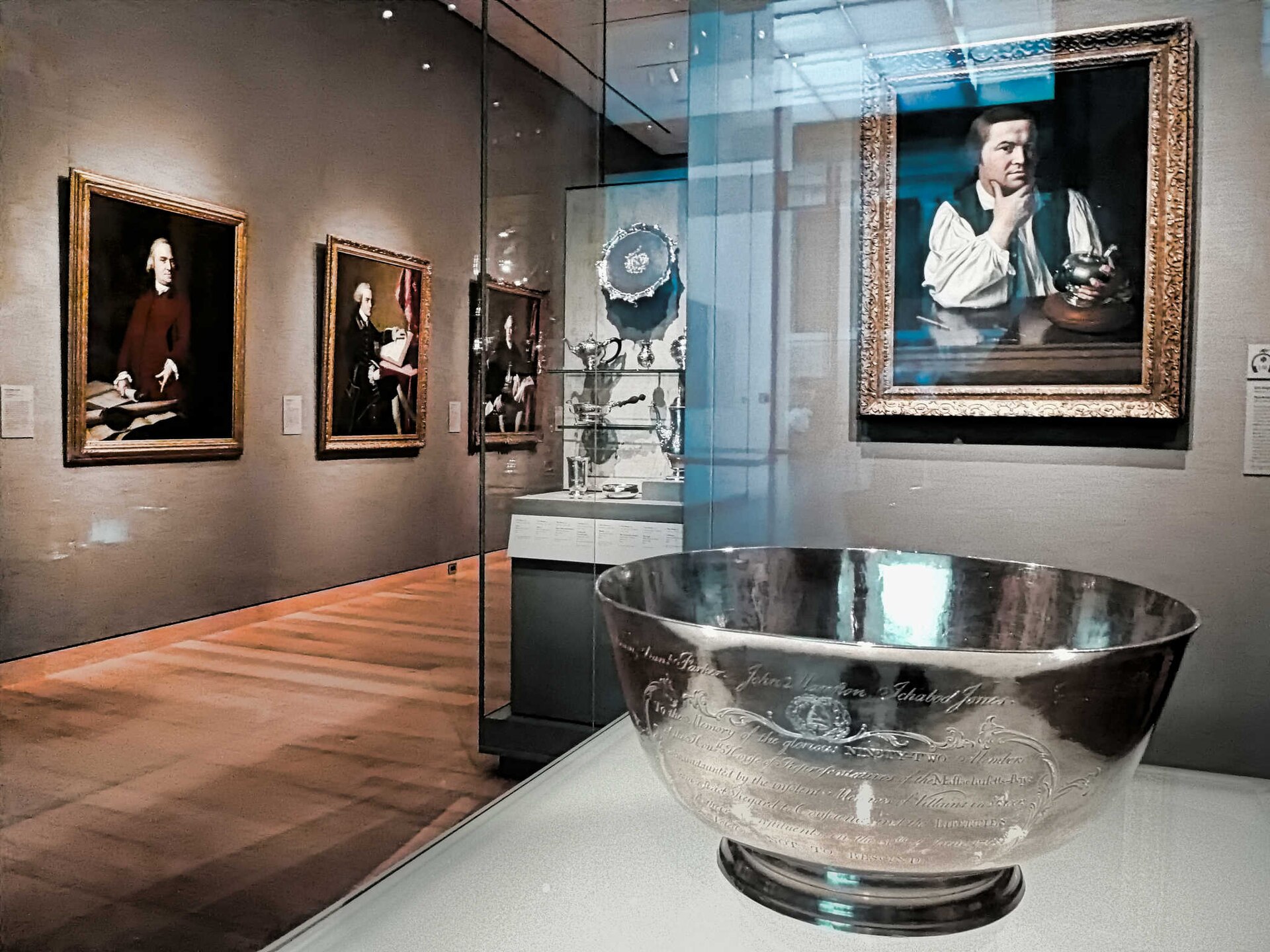
The Sons of Liberty Bowl
1768 · Silver
Museum of Fine Arts, Boston, accession 49.45
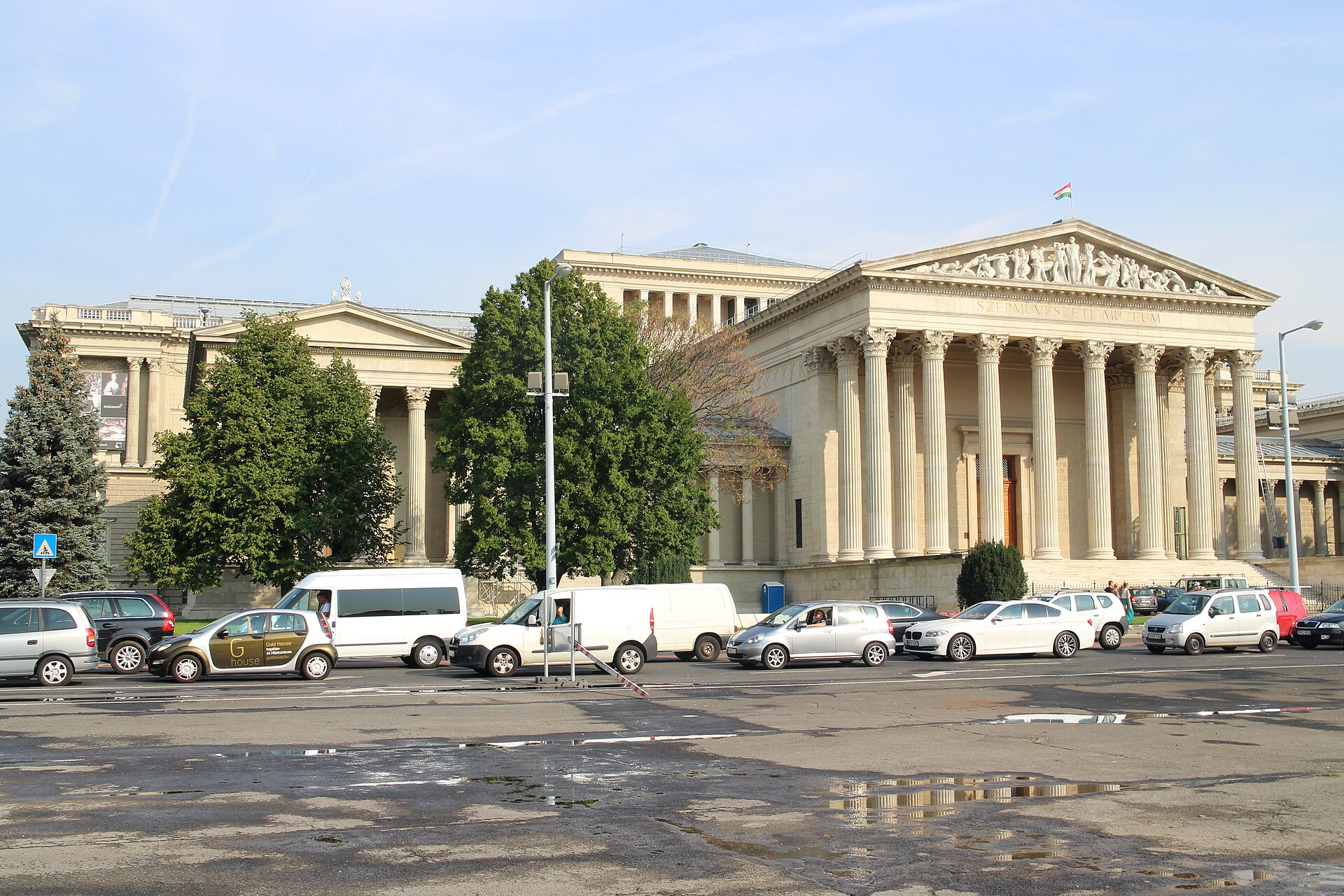
The museum's Corinthian-columned entrance facade on Heroes Square, with the words Szepmuveszeti Muzeum visible on the entablature.
Suicasmo, CC BY-SA 4.0, via Wikimedia CommonsMuseum · Szépművészeti Múzeum · Founded 1906
Open, admission and hours confirmed 17 September 2026 · 22 sources
The museum's real strength is breadth rather than any one masterpiece: a comprehensive Egyptian collection, Hungary's only comprehensive collection of classical antiquity, close to 3,000 Old Master paintings anchored by one of the largest El Greco holdings outside Spain, a sculpture collection built around a disputed but seriously argued Leonardo attribution, and a Prints and Drawings department deep enough that only a fraction of it can ever be on view at once. Few single-city museums outside the largest national collections in London, Paris, Madrid or Vienna cover this much ground under one roof.
| Local name | Szépművészeti Múzeum |
|---|---|
| Kind | Museum |
| Founded | 1906 |
| City and country |  Budapest, Hungary Budapest, Hungary |
| Address | Dozsa Gyorgy ut 41, 1146 Budapest, Hungary |
| Website | mfab.hu |
| Status | Open, confirmed |
| Record last verified |
Prices and hours change. We take them from the institution's own pages and print the day we read them, and you can check the current position at the source we used. Confirm before you travel.
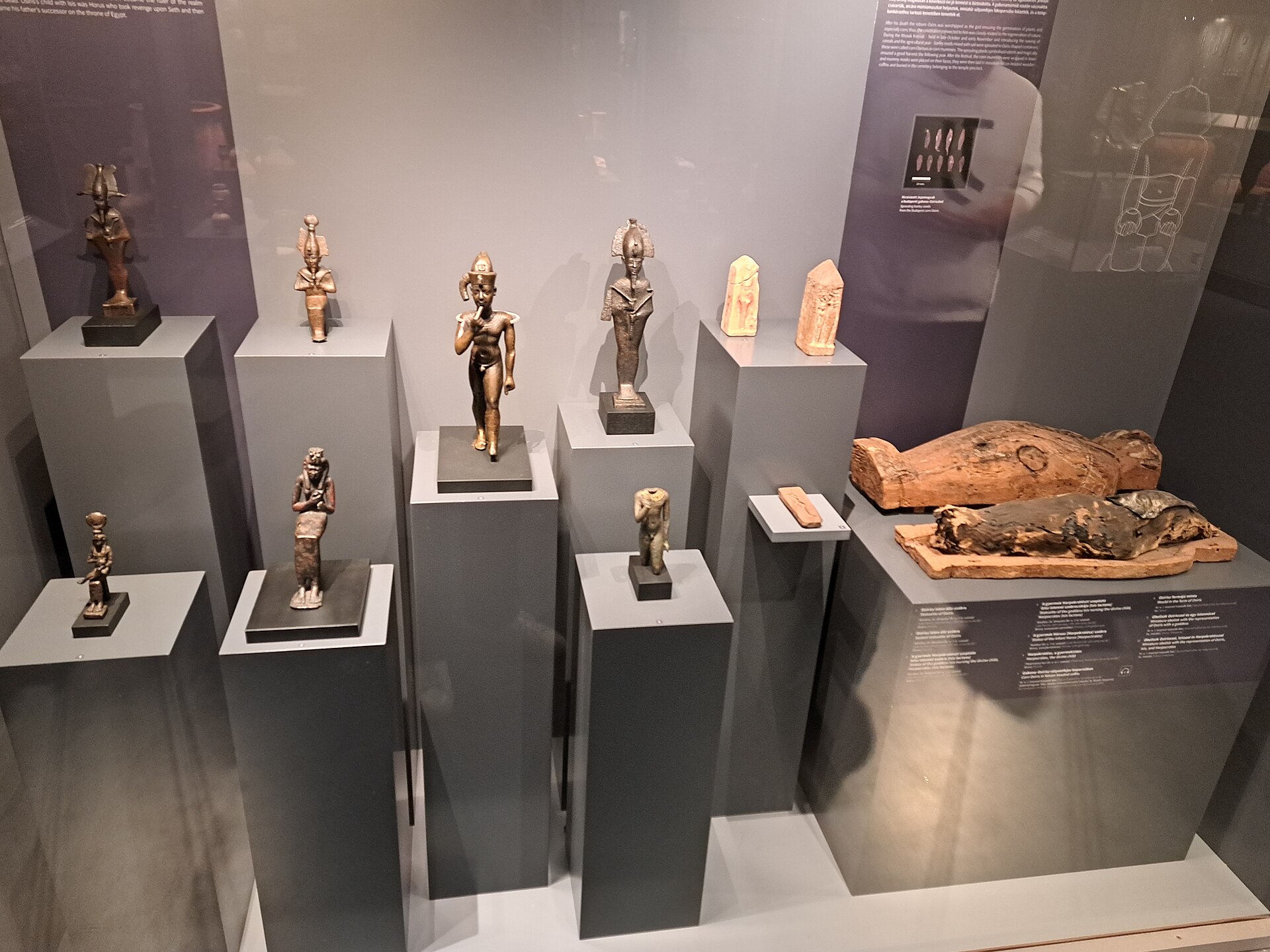
Around 1,200 objects transferred from the Hungarian National Museum in 1934 formed the founding collection, since grown through excavation finds such as the 1907 Sharuna and Gamhud digs; mummies, coffins, bronze statuettes and amulets from a collection the museum's own department calls one of only a handful in Hungary and the only comprehensive one of its kind in the country.
Hungary's only comprehensive collection of ancient art, roughly 6,000 objects excavated outside Hungary and spanning the third millennium BC to the seventh century AD, strongest in Greek and Etruscan material with significant Roman-imperial and Graeco-Roman Egyptian pieces; the department is also a working research centre with a 35,000-volume classical-archaeology library and a 50,000-item photo archive.
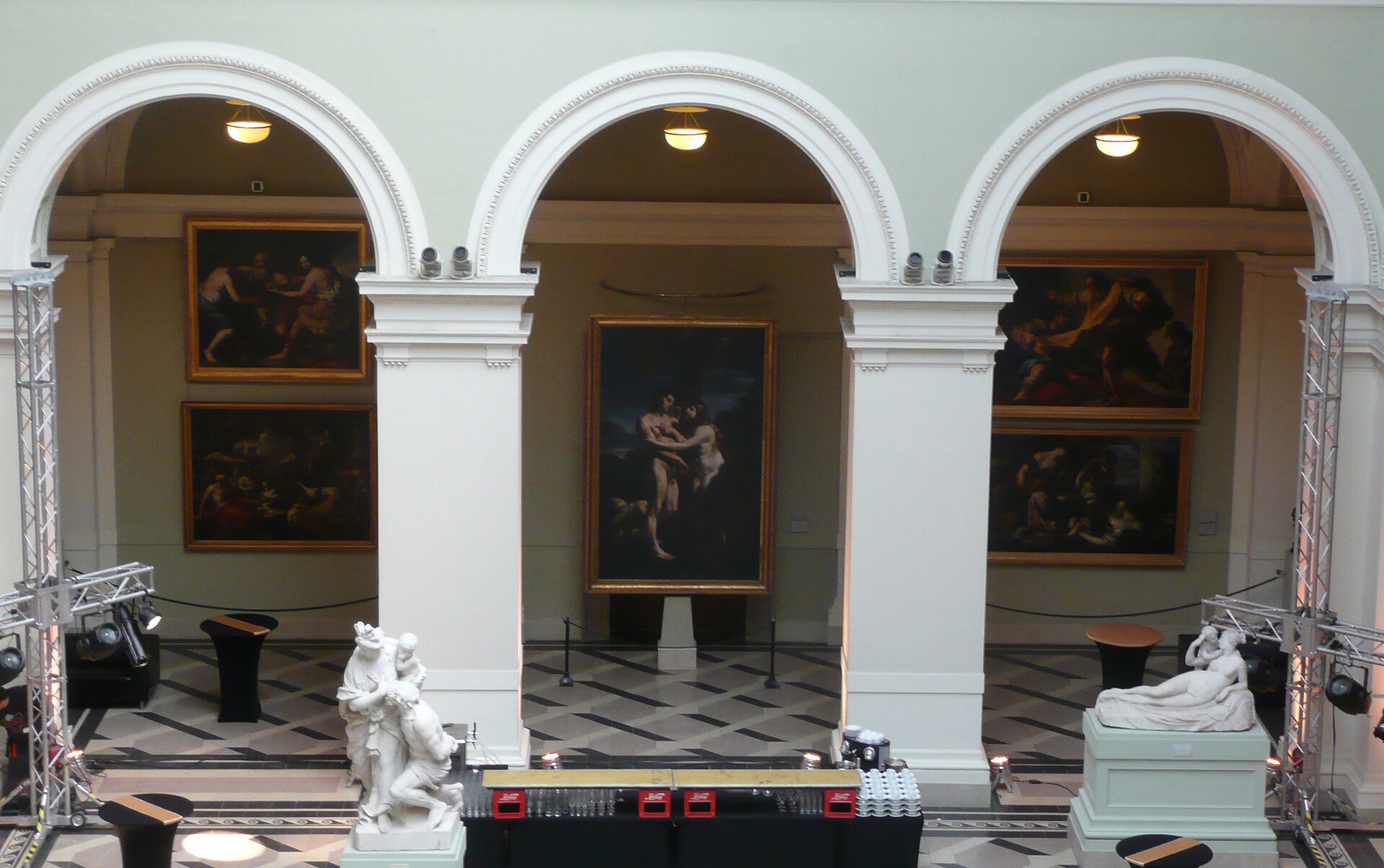
Close to 3,000 paintings, richest in Italian work (Raphael, Giorgione, Titian, Tintoretto, Tiepolo), with a Netherlandish golden-age group led by van Dyck, Ruisdael and Jordaens, a German and Central European holding built around Durer, Holbein the Elder and Cranach, and one of Europe's most prominent collections of Spanish painting, including Velazquez, Goya, Murillo and the museum's deep holding of El Greco.
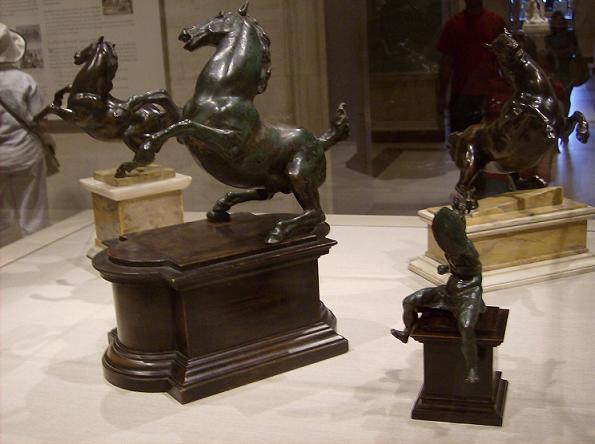
More than 600 works, anchored by a small bronze Horse and Rider attributed to Leonardo da Vinci and Andrea del Verrocchio's Man of Sorrows, alongside medieval German, Netherlandish and French sculpture including International Gothic 'Beautiful Madonnas' and wooden figures from Tilman Riemenschneider's workshop, and Austrian baroque bronzes by Georg Raphael Donner and Franz Xaver Messerschmidt.
About 9,000 drawings and close to 100,000 prints from the 1300s to today, including Durer, Altdorfer, Leonardo, Raphael, Rembrandt, Goya, Toulouse-Lautrec and Picasso; the largest single unit, some 3,500 drawings and 50,000 prints, came from the Esterhazy collection bought by the state in 1871. Light-sensitive paper cannot hang permanently, so the department shows rotating selections in its own purpose-built hall rather than a fixed display.
Paintings, sculpture, architectural carvings and tombstones made in historical Hungary from the eleventh century to 1800, including what the museum describes as the largest collection of winged altarpieces in Central Europe, plus later Baroque altarpieces, portraits, still lifes and early landscape and genre painting; reorganised as its own department only after the Second World War.
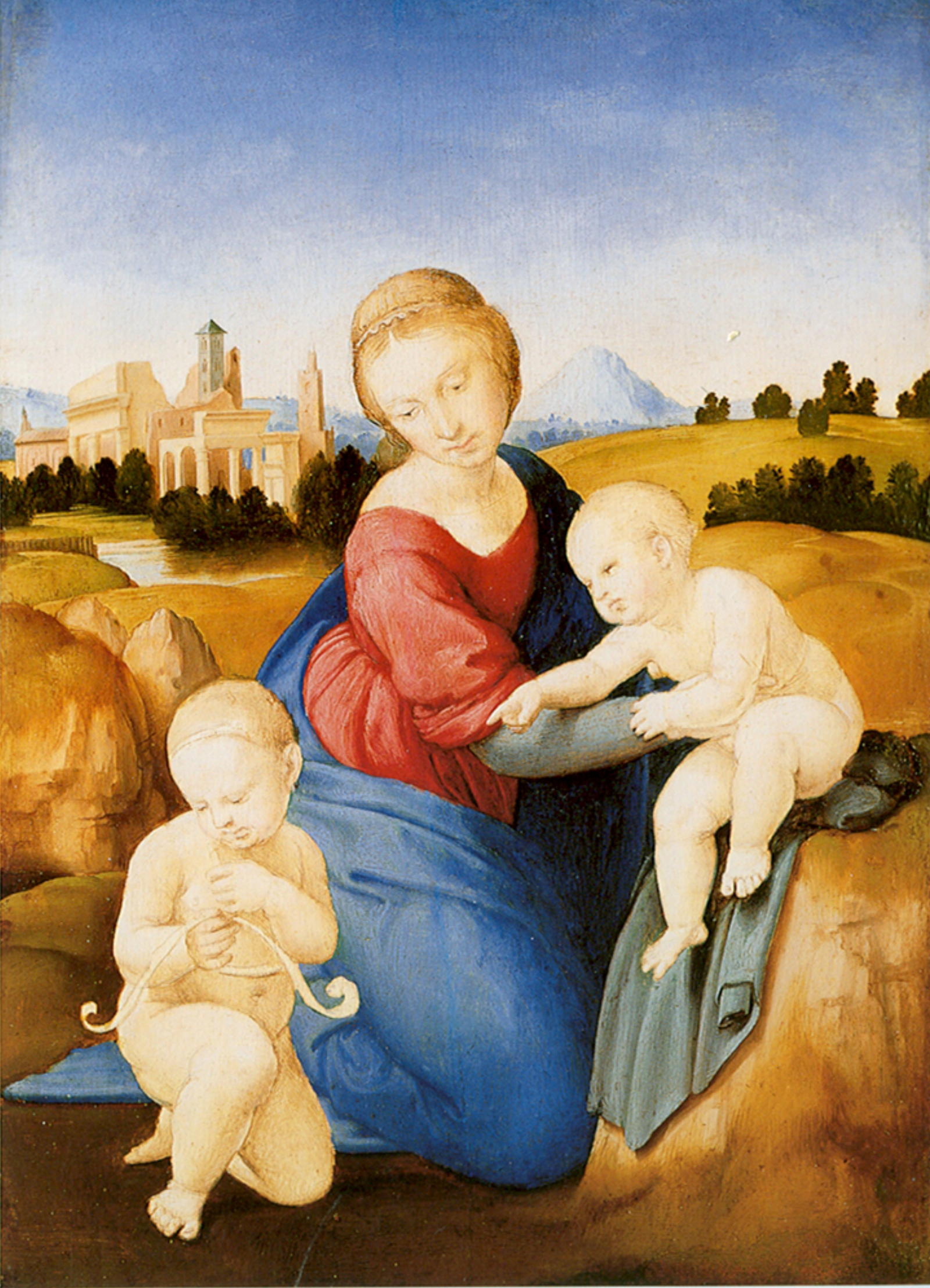
Entered the national collection with the 637-painting Esterhazy purchase of 1870-71, the acquisition that founded the National Picture Gallery and later the museum itself.11
One of the few pictures to survive from the Viennese imperial and royal collections transferred to the Hungarian state in 1848, nearly fifty years before the museum existed to hold it.2
Bought in 1914 from sculptor Istvan Ferenczy's estate and first taken for an antique Greek piece before scholars raised the Leonardo attribution, a question still argued over today.12
Among roughly 120 sculptures Karoly Pulszky bought in Italy in 1894-95 to found the sculpture collection, a rare Verrocchio outside Florence.12
Named in a Budapest Business Journal review as holding the highest number of autograph El Greco paintings outside Spain, a fact the museum's first dedicated El Greco exhibition only got around to testing in 2023.21
One of the works named in the Herzog family's United States restitution lawsuit, still held by the museum after a federal appeals court ended the 15-year case on jurisdictional grounds in 2026 without ruling on who owns it.20
A second painting from the disputed Herzog collection that the museum continues to display, the exact point where this page's own criticism and its galleries meet the same object.20
Bombed in the last winter of the Second World War and left dark for over seventy years, then restored by a team of nearly 70 conservators using techniques normally reserved for church interiors.17
1768 · Silver
Museum of Fine Arts, Boston, accession 49.45
12th century · Set of four handscrolls
Museum of Fine Arts, Boston
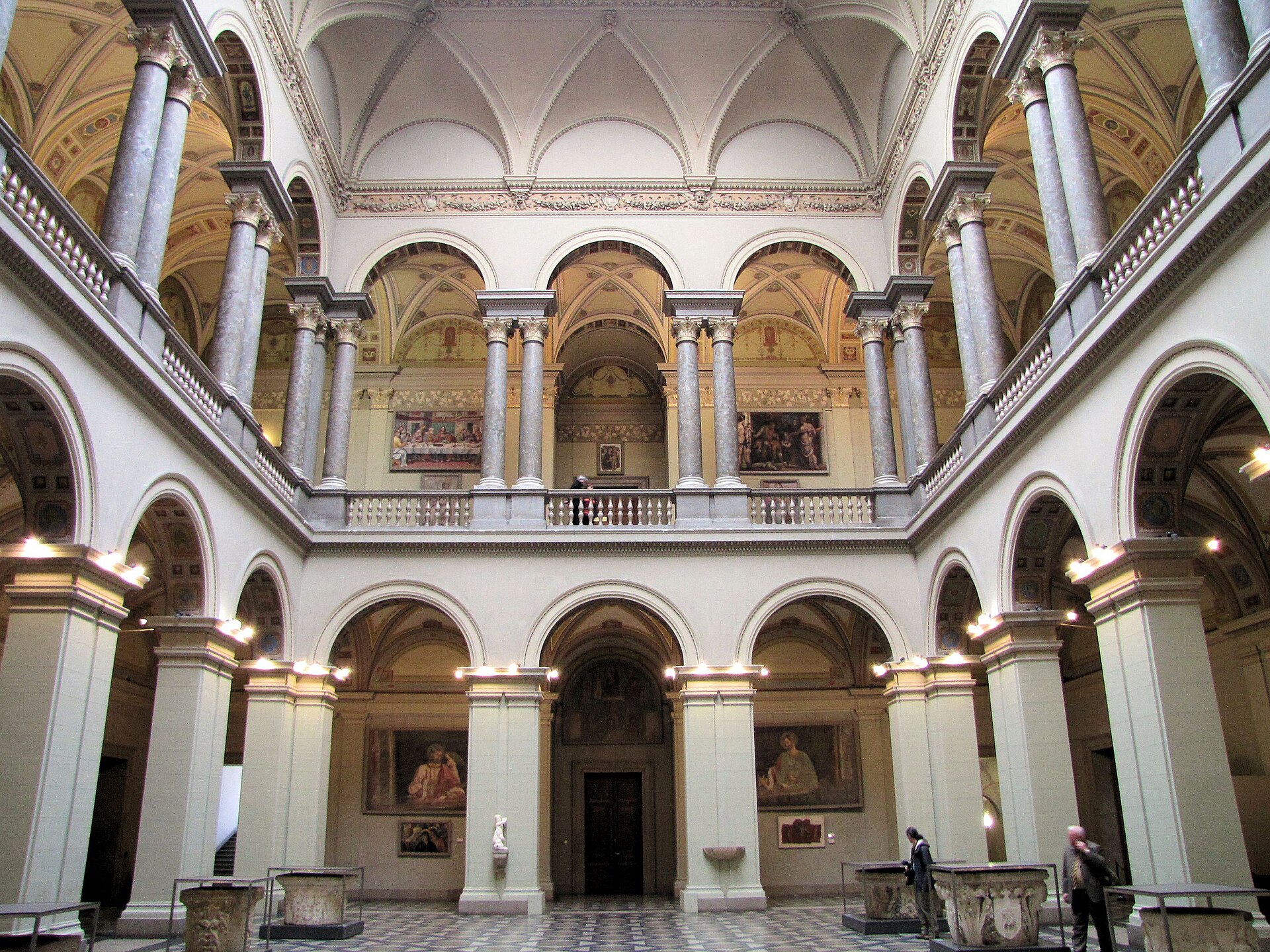
The Museum of Fine Arts exists because of a law. The Millennium Act of 1896, passed to mark a thousand years since the Magyar tribes settled the Carpathian basin, stipulated a new national art museum, and the site chosen sat directly across from the Mucsarnok exhibition hall on what would become Heroes Square. Albert Schickedanz and Fulop Herzog, the architects who had already designed both the Mucsarnok and the Millennium Monument at the centre of the square, were commissioned to design the museum as well, giving the square a matched set of buildings rather than three unrelated ones. The result borrows the front of a Corinthian-columned antique temple and grafts a Renaissance palace onto the plan behind it, a combination the building's own architects intended as a statement about where European art history was thought to run. It was inaugurated on 1 December 1906 with Emperor Franz Joseph present, and opened to the public four days later. Its founding holdings were not a single royal cabinet inherited whole, unlike many of the great museums it is compared to; they were assembled from the National Museum, the National Picture Gallery, and a run of aristocratic and ecclesiastical collections bought or donated in the decades before, chiefly the Esterhazy, Jankovich, Pyrker and Ipolyi collections, which is part of why the museum's own account of itself calls it the richest collection between Vienna and Saint Petersburg despite never having had an emperor's collection to start from.
The museum's current shape is the result of an institutional division that took most of a century to undo. After 1957, in two separate stages, the Hungarian art in the collection was pulled out and transferred to a newly created Hungarian National Gallery, leaving the Museum of Fine Arts to hold the international collections alone. The two institutions were administratively reunited only in 2012, and it took a further six years, and a full renovation of the 1906 building, before the Hungarian material from before 1800 actually moved back in 2018. The result is a division of labour a visitor needs to understand before planning a trip: this museum shows international art from antiquity to 1800 together with Hungarian art of the same span, while Hungarian art after 1800, including the Impressionist and modern holdings, is shown at the Hungarian National Gallery in Buda Castle, with a further move already under construction in City Park under the wider Liget Budapest redevelopment plan. A reader who arrives expecting the nineteenth and twentieth century Hungarian painters here will not find them; that gap is deliberate policy, not a hole in the collection.
The museum's first major setback came earlier, in the First World War and the economic hardship that followed it, which slowed acquisitions without stopping them outright; important works still entered the collection through the interwar years. The Second World War did far more damage. A bomb hit the museum's upper staircase directly, and the great glass roof over the building was destroyed entirely. In the final months of the war, staff hurriedly loaded the museum's most valuable holdings, including its most important masterpieces, onto rail cars bound west, ahead of the front rather than in any organised evacuation plan. The collection came back to Hungary from Germany over 1946 and 1947, but not intact: some paintings had already gone missing or been destroyed during the rescue effort and the fighting around it, and a number of them remain listed among the museum's acknowledged war losses to this day, unresolved rather than quietly dropped from the record. That history sits underneath the building's current polish, and it is also the origin of the ownership disputes the museum still has not settled, which this page returns to below.
What makes the museum worth the two or three hours it asks for is less any single painting than the range of material under one roof. The Egyptian collection, formed in 1934 out of roughly 1,200 objects consolidated from the National Museum and other Hungarian holdings, is one of only a handful of comprehensive Egyptian collections anywhere in the country. The Classical Antiquities department, built up from a 1908 purchase of 135 marble sculptures from the German archaeologist Paul Arndt and grown steadily since, is Hungary's only comprehensive collection of ancient art and doubles as a working research centre with its own specialist library. The paintings galleries are where the museum's international reputation mostly rests: nearly 3,000 works, strongest in Italian and Spanish material, including a El Greco holding a 2022 review in the Budapest Business Journal described as the largest group of autograph El Greco paintings outside Spain itself, a claim the museum's first exhibition built specifically around El Greco only tested in public in 2023. The sculpture collection's small bronze Horse and Rider, debated as a possible Leonardo da Vinci attribution since shortly after its 1914 purchase, and the Prints and Drawings department's roughly 9,000 drawings, too light-sensitive to hang permanently and shown instead in rotating selections, round out a museum built to be walked through rather than seen from one room.
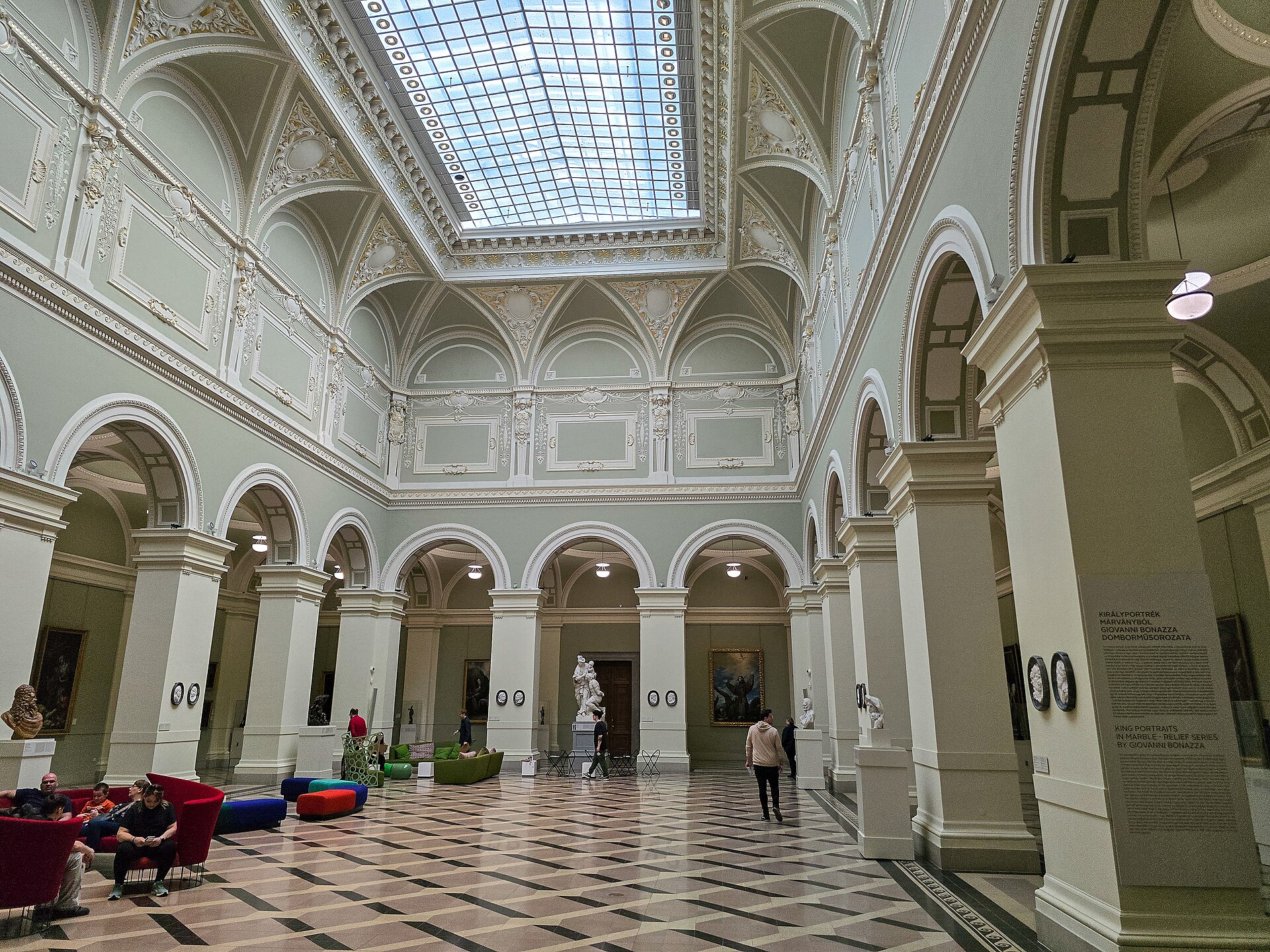
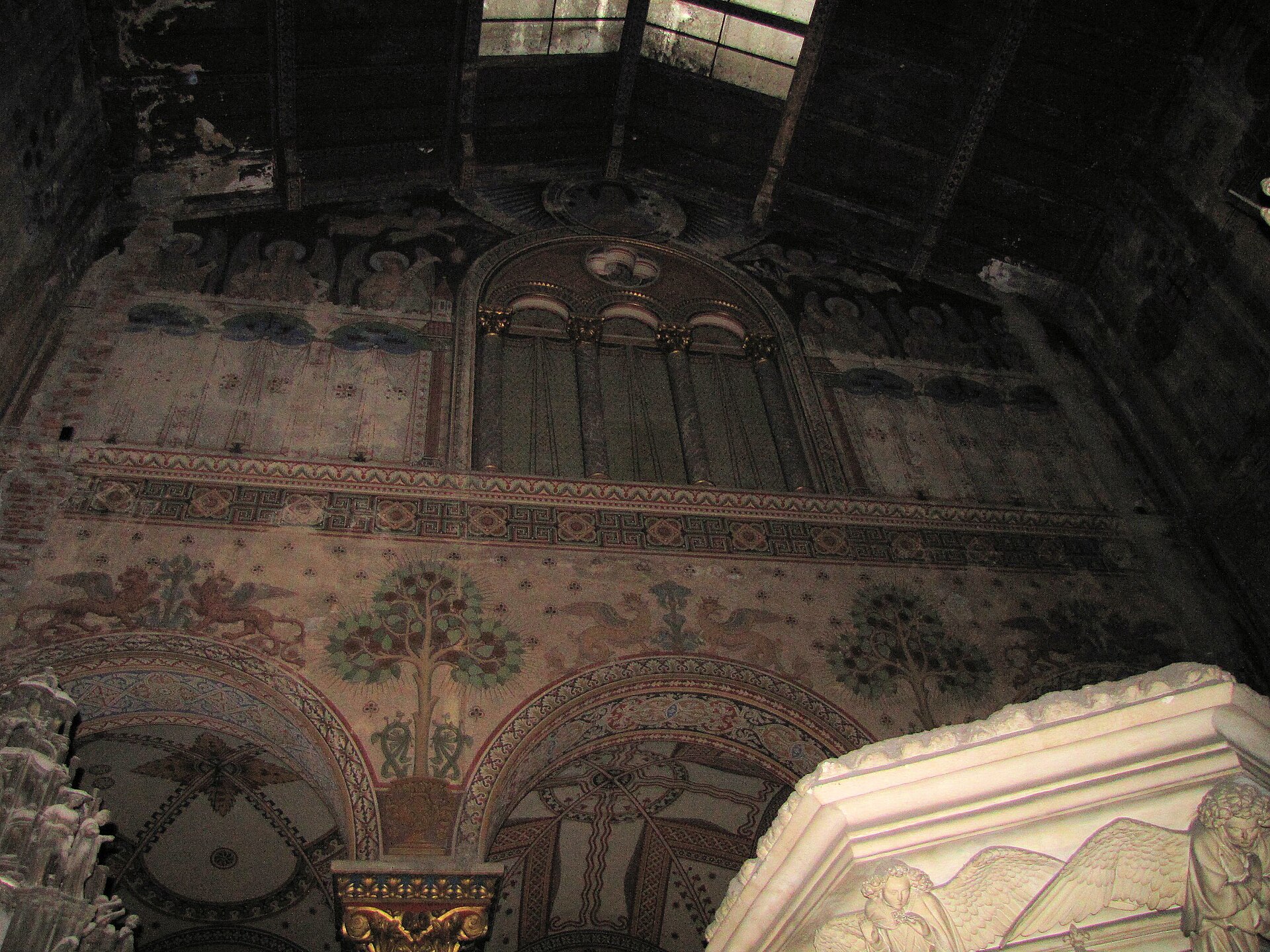
Of the building's grand architectural halls, the Romanesque Hall carries the clearest scar from the war. Designed as part of the original 1906 building to evoke a medieval basilica, it was among the spaces damaged when the museum was bombed, and it stayed effectively closed to the public for decades afterward; the museum's own account says the last time all of its grand halls were open together was the second half of the 1920s. A three-year restoration, reported by the Art Newspaper as costing tens of millions of euros and employing close to 70 conservators using techniques more commonly applied to restoring churches than museums, brought the hall back into use, with visitors able to enter the restored Romanesque Hall from April 2018 and the full set of grand halls, Romanesque, Renaissance and Baroque together, open to the public again from 1 June 2022. The wider building renovation that made this possible ran to a reported HUF 15 billion in total and was substantially complete by the museum's full public reopening on 31 October 2018, the same reopening that brought the Hungarian pre-1800 collection back into the building after sixty years away.
This is not only a page about restoration. Some of what the Museum of Fine Arts displays arrived by a route it does not control and has not resolved. Baron Mor Lipot Herzog, a Jewish Hungarian collector who died in 1934, assembled one of Europe's major private art collections; after Germany occupied Hungary in 1944, his family's holdings were seized, and part of what survived was handed to the Museum of Fine Arts, officially for safekeeping. Heirs of the Herzog family sued Hungary and named the Museum of Fine Arts directly as a defendant in United States federal court in 2010, seeking the return of more than 40 works including paintings by El Greco, Zurbaran and Courbet, several of them still held by this museum today. The case reached the DC Circuit Court of Appeals in 2013, which allowed parts of it to proceed, and ran for a further thirteen years before a federal appeals court ended it in early 2026, ruling that American courts lacked jurisdiction to hear the claims at all under the Foreign Sovereign Immunities Act. The presiding judge was explicit that the ruling turned on jurisdiction, not on whether the family deserved the paintings back. The museum continues to display at least two of the disputed works, and its own public materials do not address the litigation. A museum is a party to the history of what it holds, not simply a neutral place to view it, and that history belongs on this page alongside the halls and the ticket prices.
Visitors consistently rate the Museum of Fine Arts well above what they expected walking in, repeatedly singling out the depth of the Old Master and Egyptian collections and the fact that a major European gallery this rich draws far thinner crowds than the Louvre or the Prado, letting people stand close to paintings without a scrum. The building itself, the antique-temple facade on Heroes Square and the restored Renaissance and Romanesque Halls inside, gets praised almost as often as anything on the walls. Complaints cluster around cost for visitors who do not qualify for the EEA/Ukraine concession rate, a layout that several reviewers found genuinely confusing to navigate with lifts that each cover only part of the building, and temporary loan shows that can be smaller or more narrowly focused than their marketing implies.
TripAdvisor: 4.2 from 572 ratings, read 13 August 2026
A platform average is a tertiary source: it moves, it is not audited, and we quote no visitor's words.
Dozsa Gyorgy ut 41, 1146 Budapest, Hungary.
Permanent exhibitions, full price: HUF 5800; Permanent exhibitions, concession (50%): HUF 2900; Permanent exhibitions, group (15+ tickets, same entry time): HUF 5200; Permanent exhibitions, group concession (15+ tickets): HUF 2600; MFAB Annual Ticket, regular: HUF 9800. As confirmed 17 September 2026.
Tuesday-Sunday 10:00-18:00; Monday closed; Selected Fridays (Museum and Slow, monthly evening opening) 12:00-20:00. Closed: Monday. As confirmed 17 September 2026.
Metro: M1 (yellow, Millennium) line to Hosok tere, 1-2 minute walk; Bus: Buses 105, 210, 20E, 30, 30A and 230 to the Hosok tere stop; Trolleybus: Trolleybuses 72, 75 and 79 to the Hosok tere stop; Bicycle: Bike racks at the main entrance staircase; a MOL Bubi bike-share station is near the M1 Hosok tere stop on the Andrassy Road side.
The Esterhazy Madonna (Raphael, early 16th century); Portrait of a Man (Albrecht Durer); Horse and Rider (Small bronze, attributed to Leonardo da Vinci); Man of Sorrows (Andrea del Verrocchio); The El Greco and Spanish painting collection (El Greco and others, 16th-18th century); Saint Andrew (Francisco de Zurbaran).
One artwork and its story every Tuesday, with the picture: who owned it, what it made, and what closes soon in the exhibition calendar. No promotion, and nothing we cannot cite.
We send one email to confirm the address and keep nothing else. Every letter carries a one-click unsubscribe. How we handle your data.