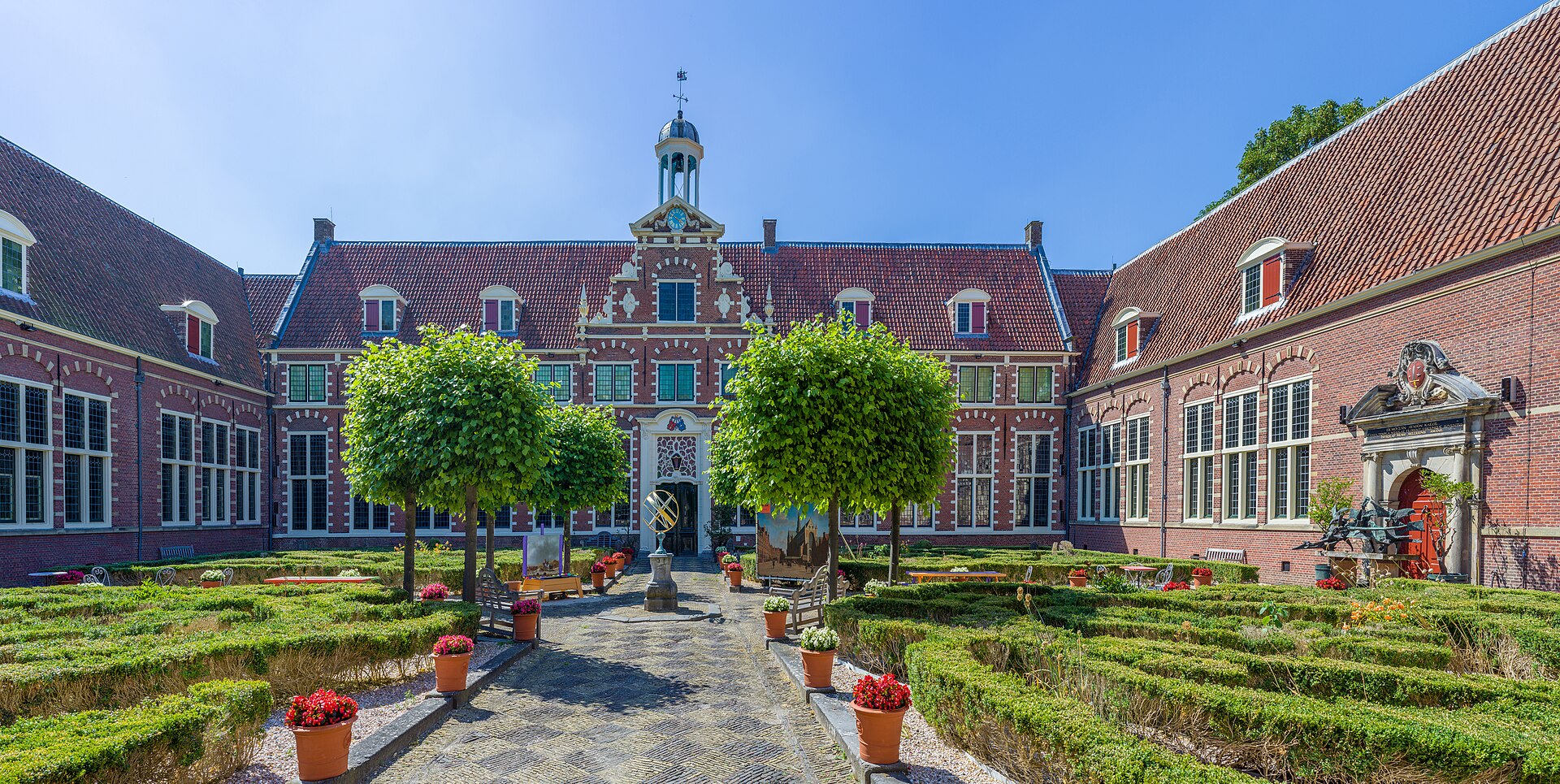
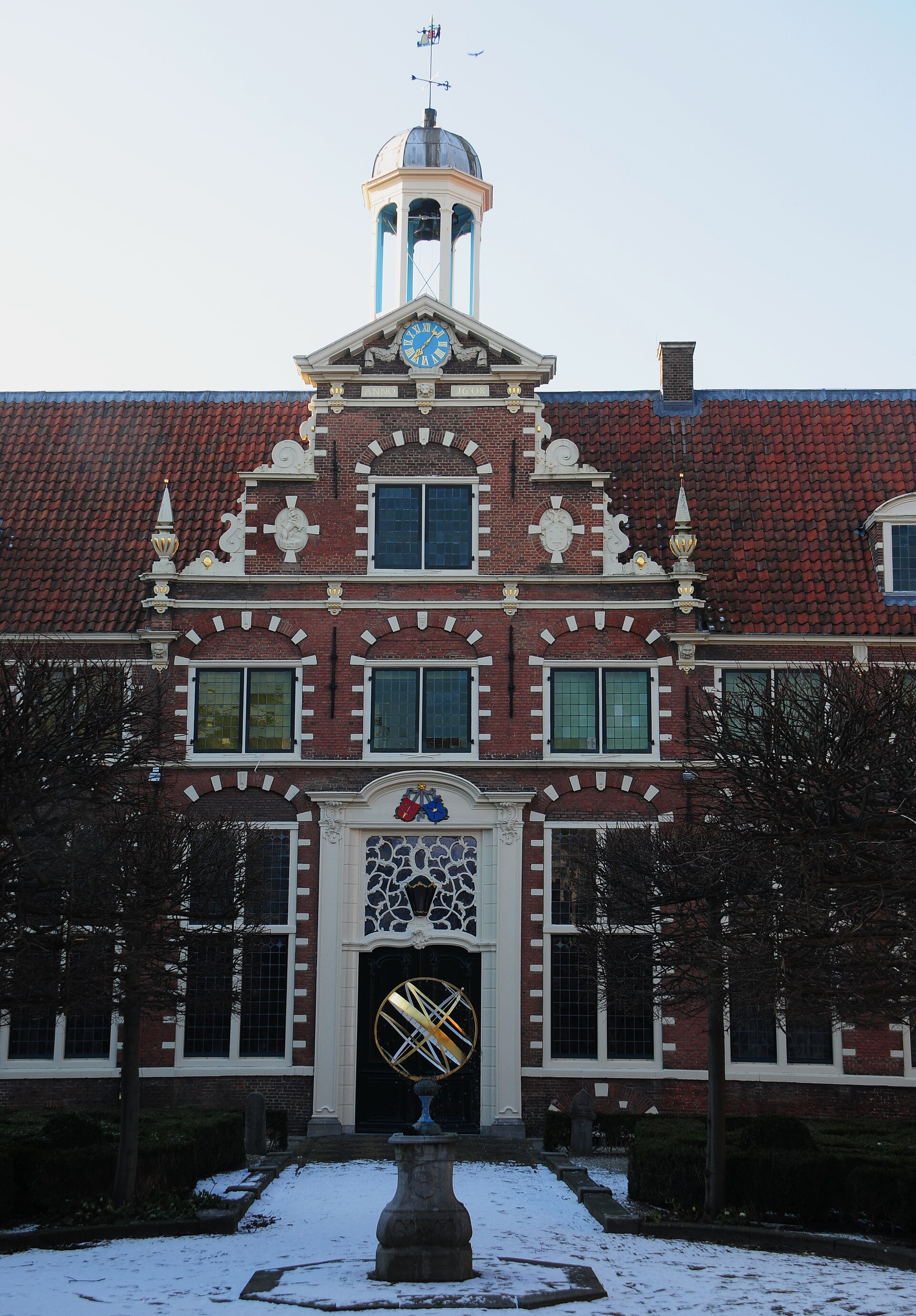
The former almshouse courtyard at Groot Heiligland, seen from the garden, with the building's cupola above the main range. The museum has occupied this seventeenth-century hofje since 1913.
Wolfgang Moroder · CC BY-SA 4.0Frans Hals Museum
Museum · Founded 1862
Open, admission and hours confirmed 8 September 2026 · 18 sources
On this page 16 sections
ContentsClose
The draw is depth in one artist rather than breadth across many: by its own account the largest holding of Frans Hals paintings anywhere, spanning his early group portraits through the late almshouse regent portraits painted in his eighties, now shown inside the almshouse itself. Around that core sit roughly 800 further Dutch paintings of the sixteenth and seventeenth centuries, applied arts including a fully furnished 1743 dollhouse, and, unusually for an old-master house of this size, a modern and contemporary collection running from 1880 to living photographers that occupies roughly half the museum's more than 17,000 recorded objects.
| Kind | Museum |
|---|---|
| Founded | 1862 as the Stedelijk Museum Haarlem; renamed Frans Hals Museum in 1913 when it moved into the former Oudemannenhuis (built 1608) |
| City and country |  Haarlem, Netherlands Haarlem, Netherlands |
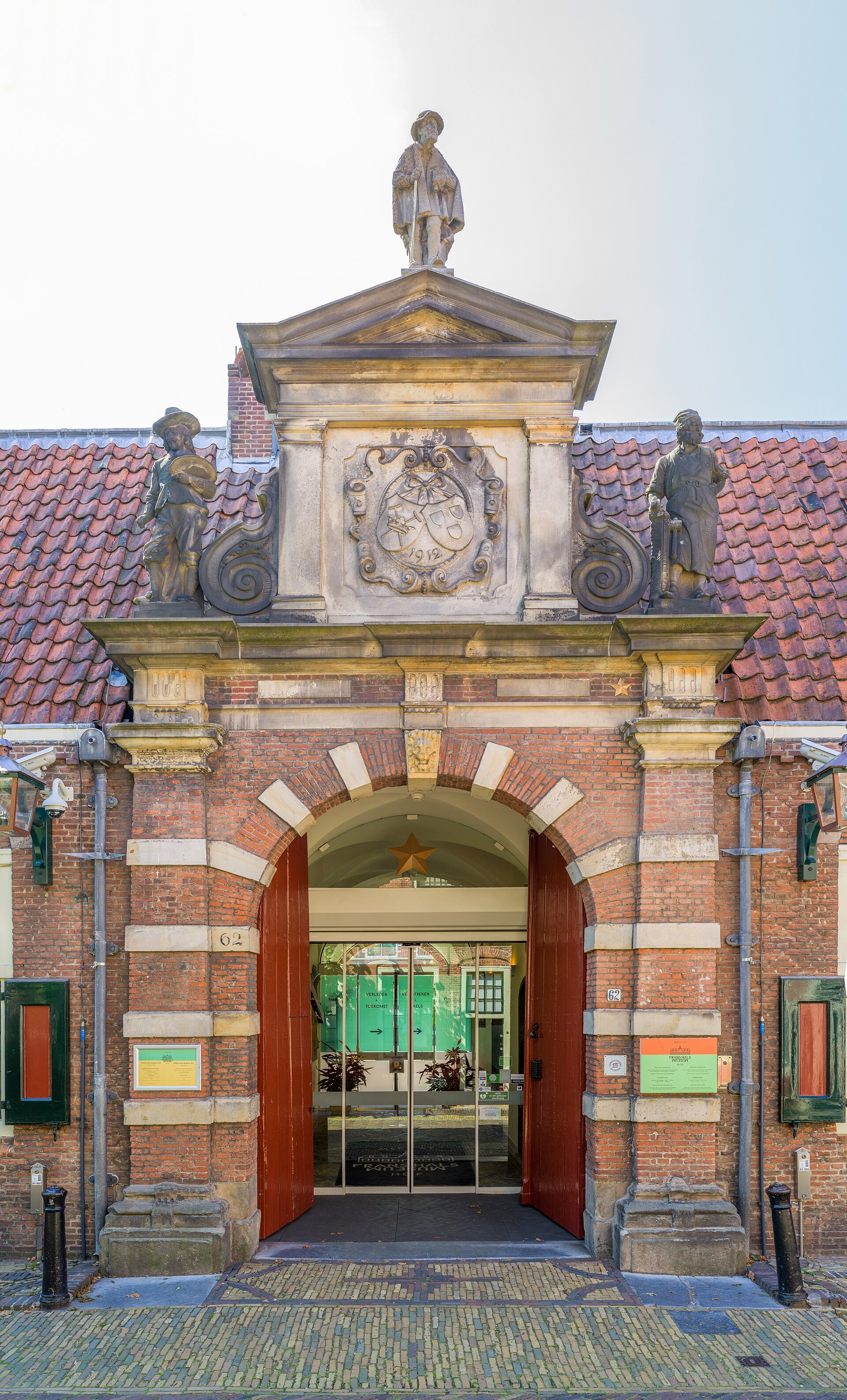
| Address | Groot Heiligland 62, 2011 ES Haarlem, Netherlands |
| Website | franshalsmuseum.nl/en |
| Status | Open, confirmed |
| Record last verified |
Visiting
- Hours
- Tue-Sun11:00 to 17:00
- Easter Monday, Whit Monday, 28 December11:00 to 17:00the museum opens on these three Mondays only
- 24 and 31 December11:00 to 16:00early closing
- Closed
- Monday (except Easter Monday, Whit Monday and 28 December). New Year's Day (1 January). King's Day (27 April). Christmas Day (25 December).
- Admission
- AdultEUR 18.50
- Ages 0-18Freefree of charge
- Ages 19-24EUR 9
- CJP (Netherlands youth pass)EUR 9
- Group, 15+ peopleEUR 15.50per person
Free entry: Netherlands Museum Pass (Museumkaart) holders, every day. Museum Friends (Vrienden), Roemers and Beminnaers members, and VriendenLoterij VIP cardholders. A personal care assistant accompanying a visitor with a disability- Tickets
- franshalsmuseum.nl/en/tickets-and-opening-hours The museum's own ticket page.
- Do I need to book?
- No; tickets can be bought online in advance or at the register
- Address
- Groot Heiligland 62, 2011 ES Haarlem, Netherlands MapOn foot A 20-minute walk from Haarlem railway station: from the Grote Markt, follow Grote Houtstraat to Gedempte Oude Gracht, turn left, then take the second right onto Groot Heiligland
Bicycle Cycle parking at Houtstraat, a few minutes' walk from the entrance
Car Houtplein and De Kamp car parks, about five minutes' walk away; free spaces in designated bays for holders of a disability parking permit
Bus Reachable by local bus from Haarlem station; the museum directs visitors to the national 9292 journey planner rather than naming a single line - Website
- franshalsmuseum.nl/en
- Telephone
- +31 23 511 5775
- [email protected]
Before you go how long, access, photography, bags, eating, shop
- How long to allow
- TripAdvisor's own listing estimates 2-3 hours; a visitor writing on the platform in April 2026 who used a wheelchair-accessible route through the ground floor put the whole collection at roughly 1.5-2 hours
- Access
- All galleries at Groot Heiligland are on one level, with two exceptions the museum names on its own accessibility page: the regents' rooms are reached by two steps with a handrail, and the room holding the eighteenth-century dollhouse by five steps with a banister. There is a wheelchair-friendly toilet, lightweight portable stools are available for visitors who need to sit, and staff can be reached in advance or during a visit by phone or email for accessibility questions.
- Bags
- Cloakroom and lockers on site
- Eating
- Museum cafe Cleeff, on the premises
- Shop
- Museum shop, on the premises
Prices and hours change. We take them from the institution's own pages and print the day we read them, and you can check the current position at the source we used. Confirm before you travel.
What is inside
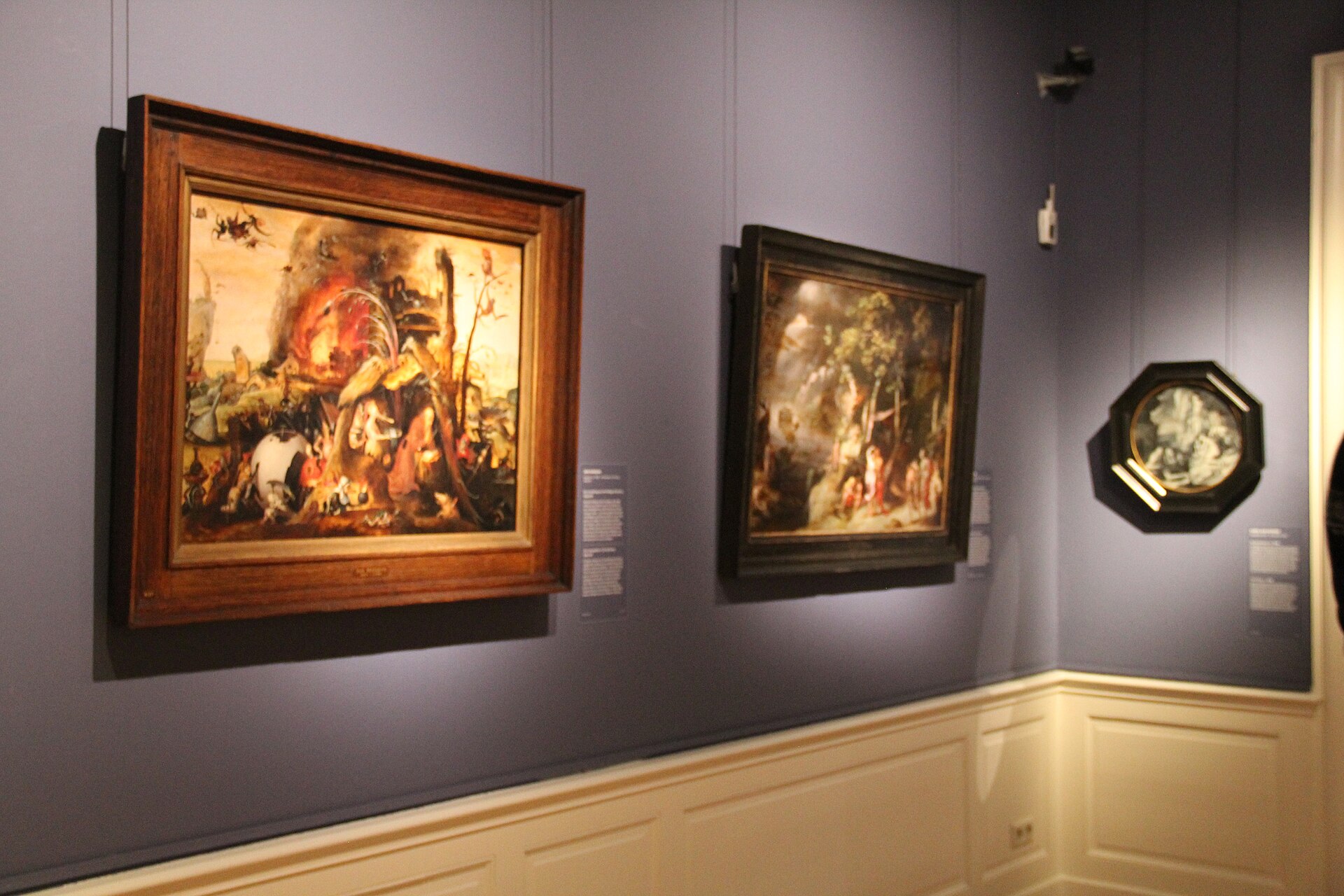
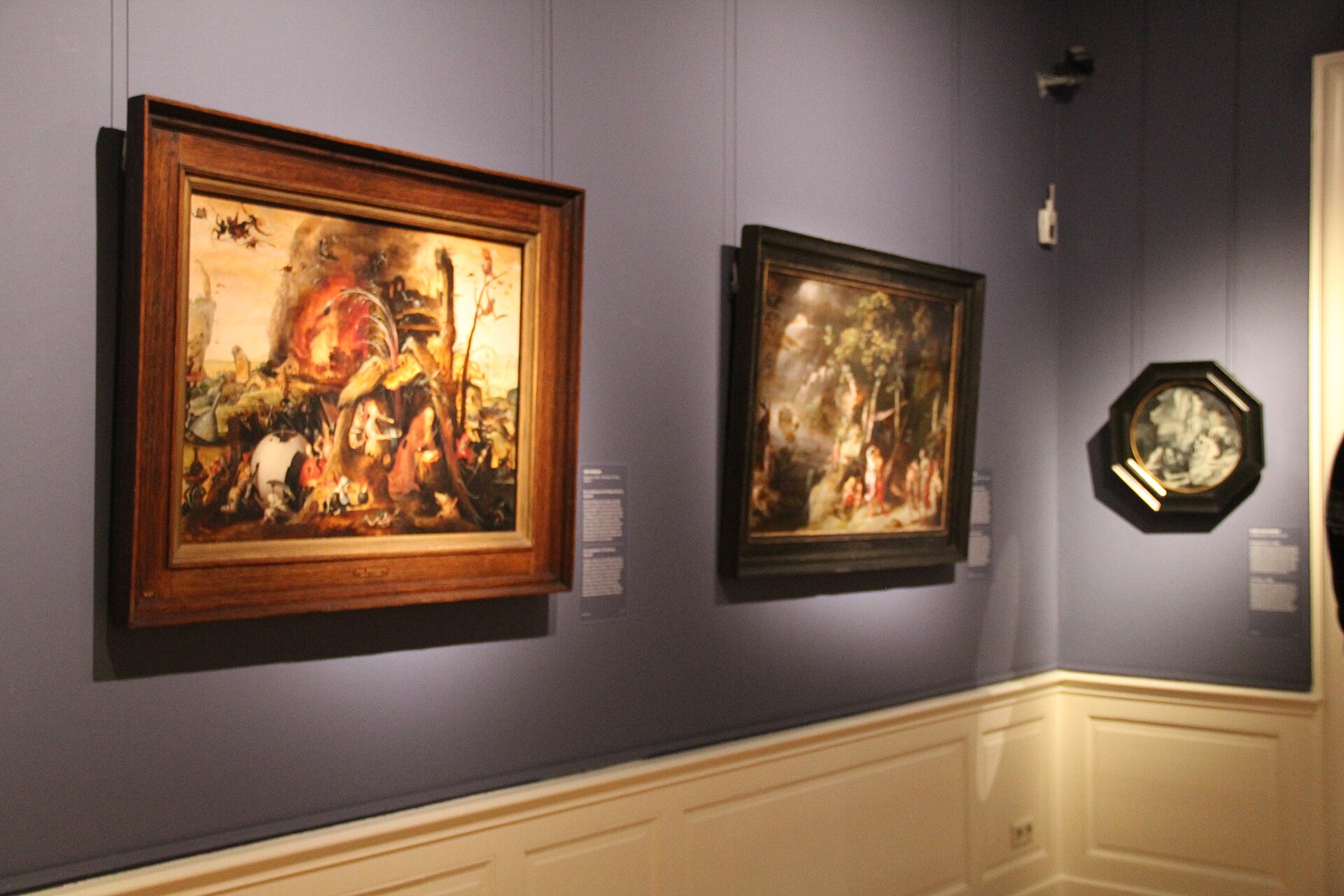
CC0 Room 3: paintings that survived the iconoclasm
A gallery of sixteenth-century Haarlem history and religious painting, including work by Karel van Mander and Jan Mandijn on subjects such as the Flood and the Temptation of Saint Anthony. The core of this material entered the city's keeping because the Haarlem council secured paintings from religious houses during the iconoclastic unrest of 1566, before Catholic worship was suppressed, and later added property that came to the city when Napoleon dissolved the guilds in 1794.
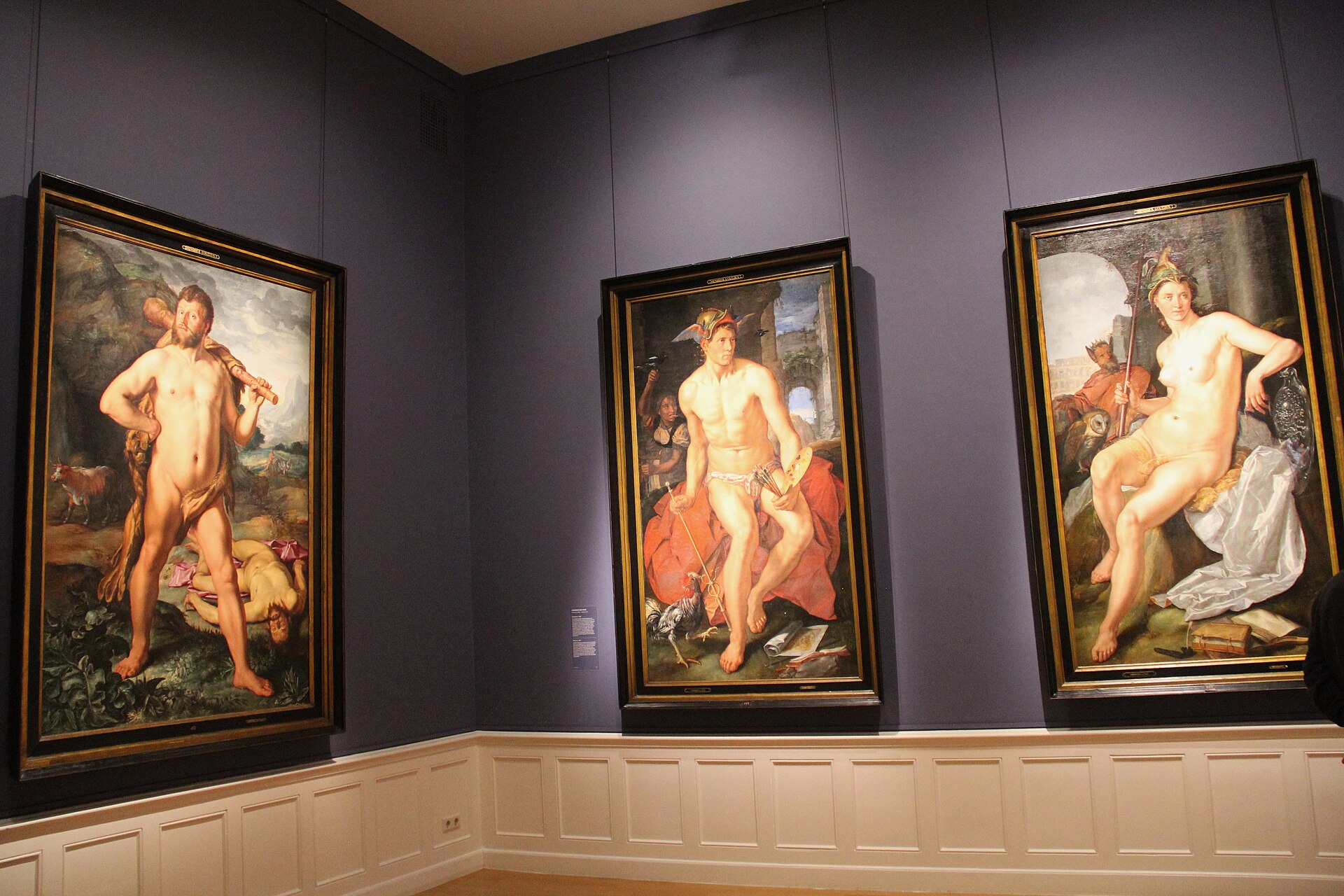
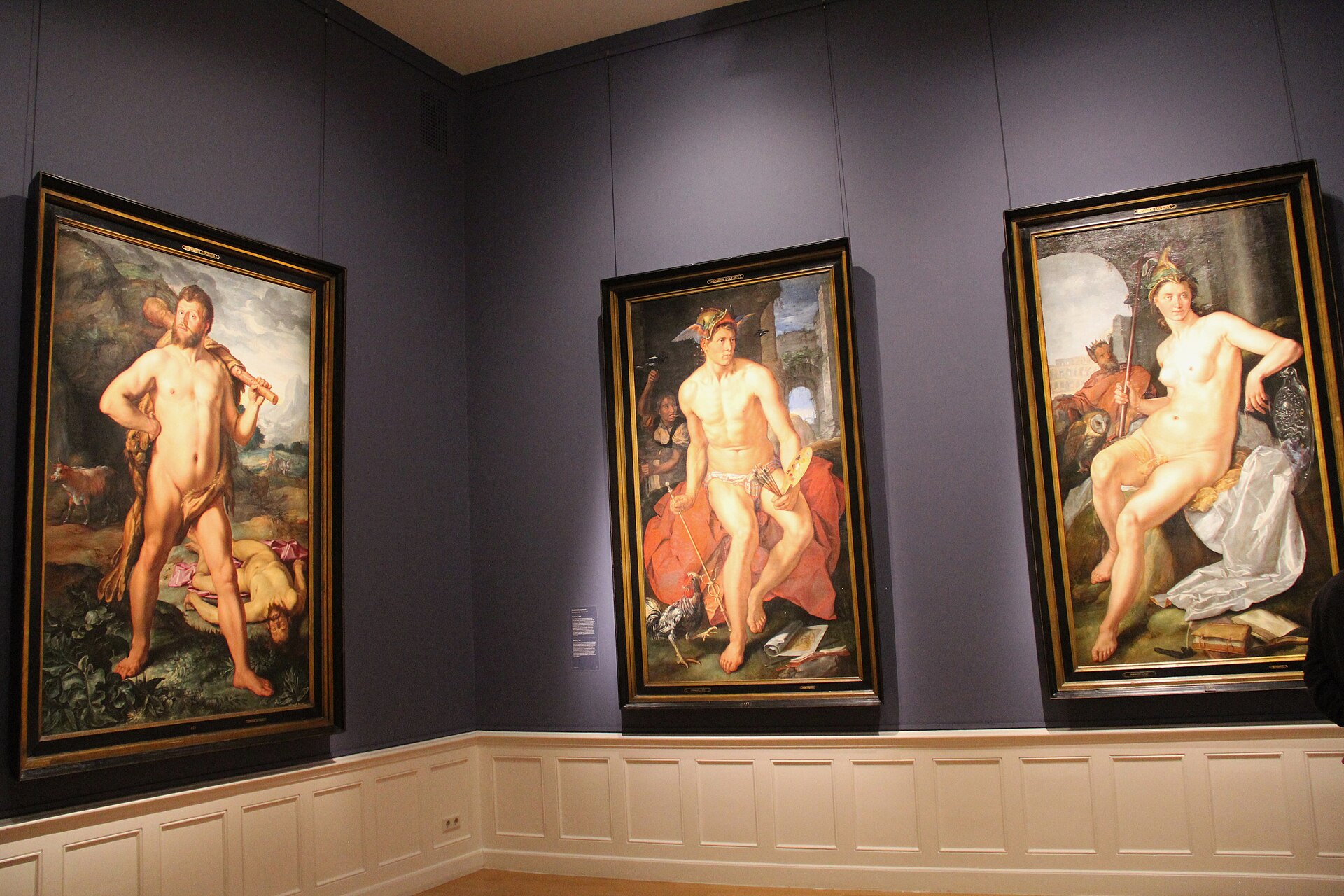
CC0 The gods: Haarlem Mannerism at full scale
Monumental nude figures of classical deities, in the elongated, muscular style associated with Hendrick Goltzius and the Haarlem Mannerists of the 1590s, hung close together on a single wall.
The civic guard gallery
The large-scale group portraits Frans Hals painted of Haarlem's militia companies: two versions of the Banquet of the Officers of the St George Civic Guard (1616 and 1627), the Banquet of the Officers of the St Adrian Civic Guard (1627), and the Meeting of the Officers and Sergeants of the St Adrian Civic Guard (1633), in which Hals gave non-commissioned officers a group portrait for the first time. These schutterstukken are the paintings that drew Manet, Van Gogh and John Singer Sargent to Haarlem to study Hals's brushwork.
The regents' rooms
Hals's late portraits of the Regents and Regentesses of the Old Men's Almshouse (1664), painted in his eighties for the governing boards of the very almshouse whose building the museum now occupies. The rooms holding them are reached by two steps with a handrail rather than the level route used elsewhere in the museum.
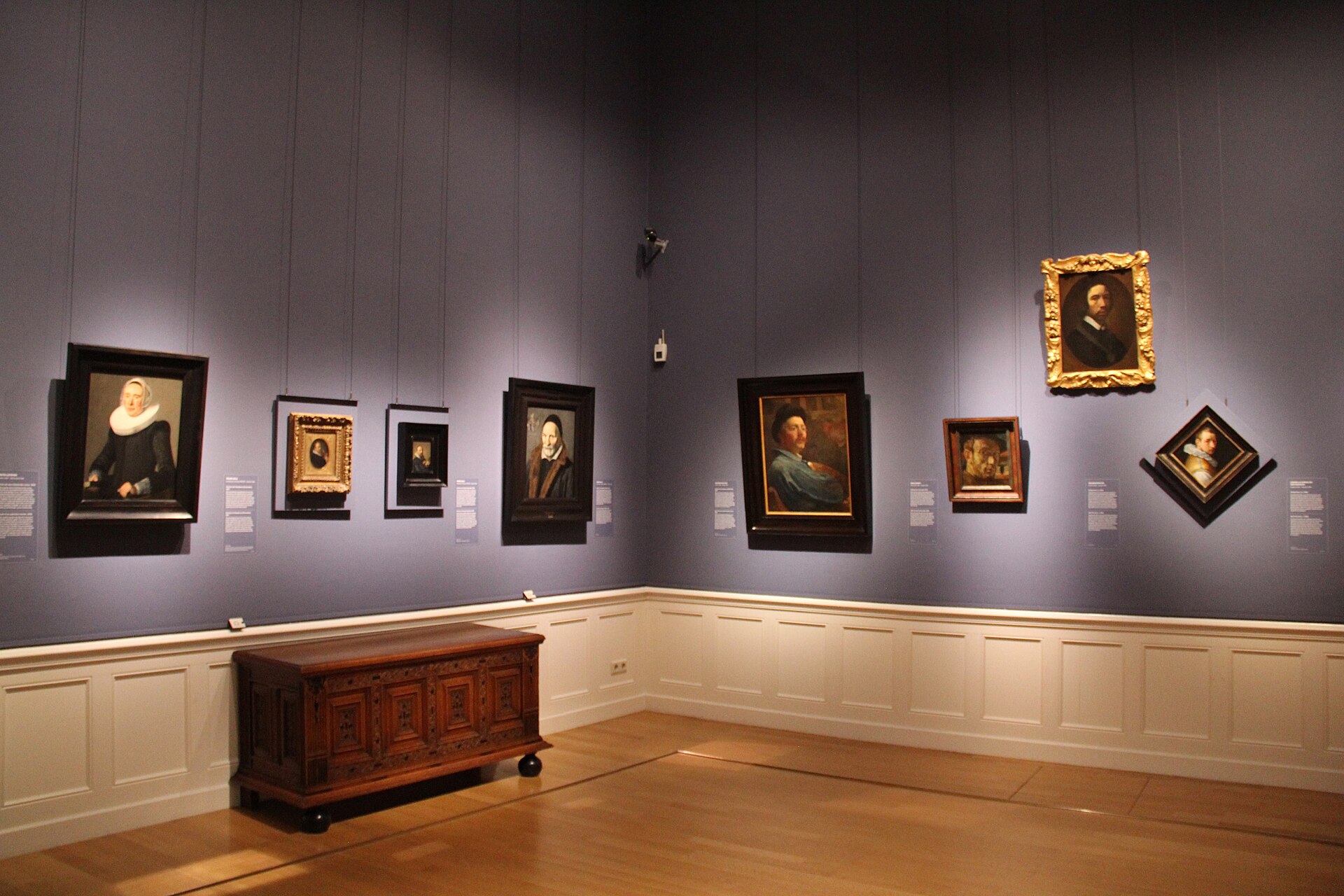
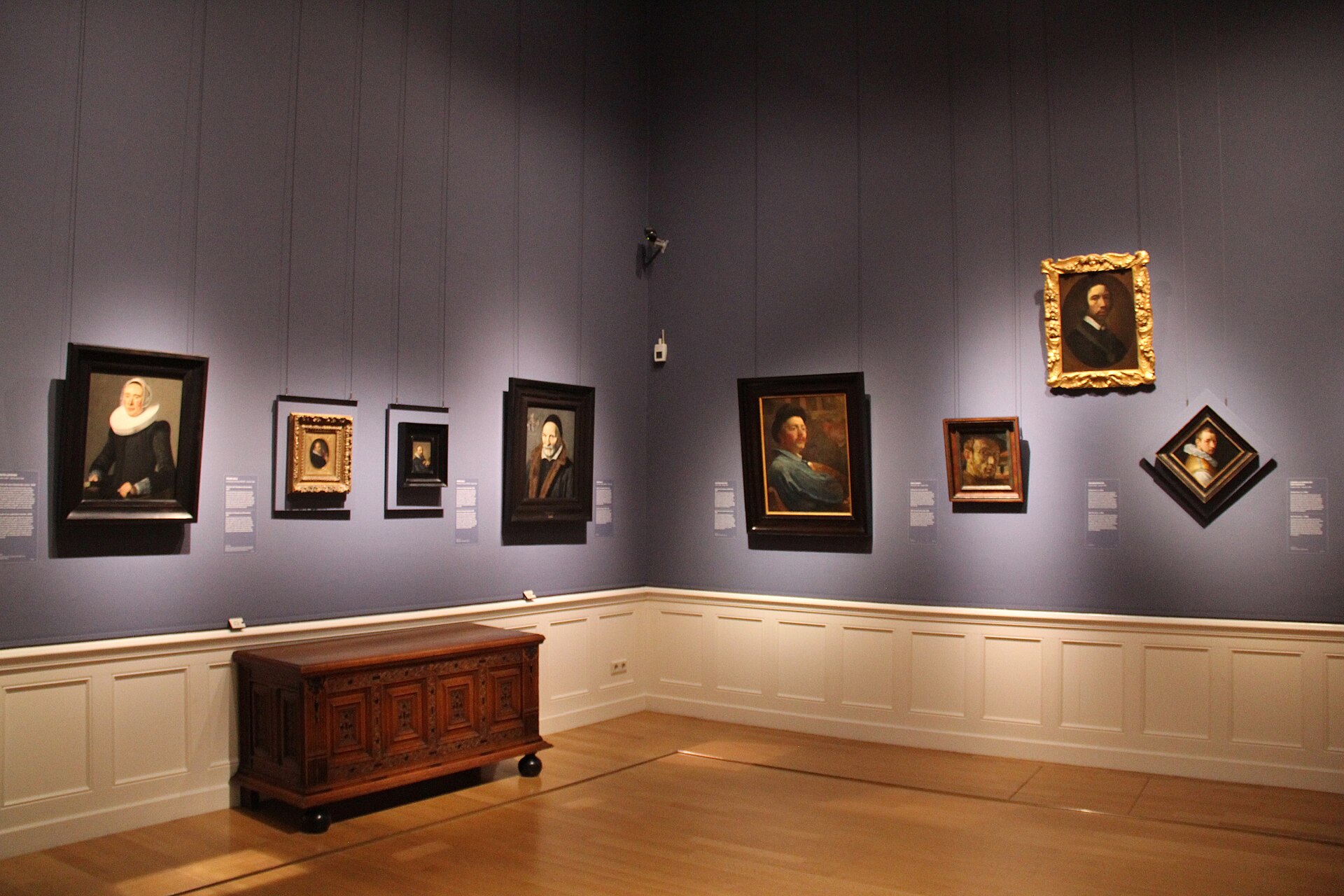
CC0 The portrait cabinet
A smaller-scale gallery of individual seventeenth-century portrait paintings, hung close together in gilt and ebonised frames rather than as the large civic guard canvases seen elsewhere in the museum.
Applied arts and the dollhouse
Silver and glassware, ceramics and furniture from the sixteenth and seventeenth centuries, and the museum's dollhouse of Sara Ploos van Amstel-Rothe (1743), a cabinet furnished in miniature with textiles, paintings, silver kept behind sliding doors, and porcelain.
Modern and contemporary galleries
Roughly half the museum's 17,000-plus objects date from 1880 to the present, including Isaac Israels, Charley Toorop, Piet Mondriaan, and photographers Rineke Dijkstra and Dana Lixenberg, shown in rotation alongside the Golden Age collection under the same roof.
What to see first
Banquet of the Officers of the St George Civic Guard
Frans Hals, 1616 and 1627 (two versions)Hals's first civic-guard commission (1616) and the more assured return to the subject eleven years later; between them they trace how his group portraiture matured from careful record to individualised, animated character study.6
Meeting of the Officers and Sergeants of the St Adrian Civic Guard (the Calivermen)
Frans Hals, 1633The first time Hals gave non-commissioned officers, not just the company's gentlemen-officers, a place in a group portrait.9
Regentesses of the Old Men's Almshouse
Frans Hals, 1664Painted in Hals's eighties, on commission from the governing board of the almshouse the museum now occupies; its loose, late brushwork is the specific quality that drew nineteenth-century painters, including Manet and Van Gogh, to Haarlem to study him.6
Boy Playing the Violin and Girl Singing
Frans Hals, c. 1628The shared-title case this archive exists to record: bought jointly by the Frans Hals Museum and the Mauritshuis at a Sotheby's New York sale in May 2025, the two panels remain a single acquisition shown alternately in Haarlem and The Hague rather than divided between the museums. They gave the Frans Hals Museum its first Hals genre scene, and the Mauritshuis, which is otherwise thin in Hals, its first Hals of any kind in years; both museums' own pages describe the children as possibly the artist's own son and daughter.14
Festive Company in a Renaissance Room
Dirck Hals and Dirck van Delen, 1628One of only five known collaborations between Frans Hals's younger brother and the architectural painter Dirck van Delen, and the largest and most elaborate of the five; bought by the museum in July 2021, it is the first such collaboration to enter a Dutch public collection, and its acquisition followed directly from a 2019 restitution case involving a different painting from the same partnership on loan to the same museum (see the narrative below).13
Dollhouse of Sara Ploos van Amstel-Rothe
Netherlands, 1743A cabinet house furnished in miniature down to its textiles and its silver, kept behind sliding doors in its own niche; one of the museum's few three-dimensional showpieces and reached by five steps rather than the level route used in most of the building.11
The gods of Haarlem Mannerism
Circle of Hendrick Goltzius, c. 1590sLarge-format nude figures of classical deities in the elongated, theatrical Mannerist style Goltzius helped define in Haarlem in the 1590s, still hung as a group.16
The Flood and other sixteenth-century history paintings
Karel van Mander and Jan Mandijn, before 1600Part of the material the city secured during the 1566 iconoclasm and later supplemented from dissolved guild property; the reason the museum's Golden Age holdings begin a generation before Hals himself.9
Exhibitions on now
Past exhibitions here
An almshouse that kept its own portraits
The Frans Hals Museum did not start life as a museum building and was not built to hold paintings. Haarlem founded a municipal art collection in 1862, the Stedelijk Museum, and housed it for half a century in the Prinsenhof, a room at the city hall it shared with the Cabinet of Curiosities of the Dutch Society of Sciences, which had occupied the space since 1754. The collection moved to its present address, Groot Heiligland 62, only in 1913, into a hofje built in 1608 as an almshouse for elderly men, arranged as thirty individual dwellings around a courtyard and a garden. The name changed at the same time, from the Stedelijk Museum to the Frans Hals Museum.
The coincidence that follows from that move is the one thing a listings page cannot give a reader: several of the paintings the museum is best known for were commissioned for this exact building, by the people who ran it. Frans Hals painted the Regents and Regentesses of the Old Men's Almshouse in 1664, in his eighties, for the governing boards of the almshouse itself. Three and a half centuries later those portraits hang inside the institution they governed, a few rooms from where their sitters would have met. The regents' rooms are still reached by two steps with a handrail rather than the level route used through the rest of the building, which is as close as a modern museum plan comes to preserving the original room-to-room logic of a seventeenth-century almshouse.
What survived the iconoclasts and the guilds
The collection's oldest material predates Hals by a generation and owes its survival to two moments of upheaval rather than to steady acquisition. In 1566, during the wave of iconoclastic unrest that swept the Low Countries before Haarlem's Catholic churches and religious houses were formally suppressed, the city council moved to secure paintings and other property from those institutions rather than let them be destroyed or dispersed. A second wave of material entered civic hands in 1794, when Napoleon's administration dissolved the craft and militia guilds and their collectively owned property, including painted portraits and devotional works, passed to the city. Between the two events, Haarlem accumulated the sixteenth-century core now shown in Room 3 and nearby galleries: history and religious paintings by Karel van Mander and Jan Mandijn, and the large Mannerist figures of classical gods associated with Hendrick Goltzius and the Haarlem school of the 1590s, painted a full generation before Hals began working in the city.
On top of that base the museum built what it calls the largest collection of paintings by Frans Hals anywhere, alongside roughly 800 other paintings from the Dutch sixteenth and seventeenth centuries and, more unusually for an old-master collection, holdings of silver, glass, ceramics and furniture, including a fully furnished 1743 dollhouse kept in a niche of its own behind sliding doors. More than 17,000 objects are recorded across the collection in total; the seventeenth-century material shares the building, gallery for gallery, with roughly an equal weight of work from 1880 to the present, by artists including Isaac Israels, Charley Toorop, Piet Mondriaan and, most recently, the photographers Rineke Dijkstra and Dana Lixenberg.
Painted in his eighties, hung in the building he painted
Hals is represented here mainly by the two subjects Haarlem commissioned him to paint again and again across his career: the civic guard banquet piece and the almshouse regent portrait. The museum holds two versions of the Banquet of the Officers of the St George Civic Guard, from 1616 and 1627, which between them show his group portraiture moving from a careful, evenly lit record of a company at table toward the animated, individualised character studies of his later work. The 1633 Meeting of the Officers and Sergeants of the St Adrian Civic Guard went a step further, giving non-commissioned officers a place in a militia group portrait for the first time. It is specifically the very late work, the 1664 almshouse regent portraits painted when Hals was in his eighties and, by most accounts, in financial difficulty, that pulled painters across a national border to see it. Manet, Van Gogh and John Singer Sargent are all recorded as having travelled to Haarlem to study Hals's loose, economical late brushwork at first hand, and the museum's own 2018-2019 exhibition, 'Frans Hals and the Moderns: Hals Meets Manet, Singer Sargent, Van Gogh', set roughly eighty paintings out to trace that influence. Reviewing the show for the academic journal Nineteenth-Century Art Worldwide, Esmee Quodbach called it significant and thought-provoking and praised its reach to a broad public, while criticising the museum's decision not to publish a scholarly catalogue to go with it as a disservice to the exhibition and to the institution itself.
A shared title: two children who might be his own
In May 2025 the Frans Hals Museum and the Mauritshuis in The Hague jointly bought two small panels at a Sotheby's sale in New York: Boy Playing the Violin and Girl Singing, both painted by Hals around 1628 and previously in a private American collection. The purchase was funded jointly by the Rembrandt Association, the Mondrian Fund, the Ministry of Education, Culture and Science's National Acquisition Fund, the VriendenLoterij lottery and Haarlem municipal council, and the two museums announced from the outset that the panels would not be divided or duplicated: they remain together as a single pair and are shown alternately in Haarlem and The Hague rather than each museum keeping one. The Frans Hals Museum put them on display from mid-July 2025 and will feature them in a Hals-Rembrandt exhibition opening in November 2026; the Mauritshuis showed them from mid-October 2025 in a presentation on the development of early seventeenth-century genre painting, alongside work by Willem Buytewech and the Flemish painter Adriaen Brouwer.
The acquisition filled a specific gap for each institution in different ways. The Frans Hals Museum has, by its own account, the world's largest holding of paintings by Hals, but had none of his genre scenes, the informal studies of ordinary people at everyday activity that Hals helped pioneer as a category distinct from formal portraiture, before this purchase. The Mauritshuis, whose seventeenth-century holdings are exceptionally deep, has comparatively little Hals of any kind. Both museums' own published accounts of the sale note that the sitters, a boy and a girl at their music, may be the artist's own son and daughter, though neither museum states this as established fact rather than a documented possibility. None of the sources fetched for this page specify how ownership of the pair is formally split between the two institutions, only that the panels are to remain together and rotate; that division is recorded here as unresolved rather than assumed.
A loan that outlived the war by seventy years
Not every object with a Frans Hals Museum label in its history has stayed there without complication. From 1948 until 2019 the museum held on loan from the Dutch state's Cultural Heritage Agency a painting catalogued as NK 2584, Banquet Scene with Musicians and Shuffleboard Players in an Interior, a collaboration between Dirck Hals, Frans Hals's younger brother, and the architectural painter Dirck van Delen. The painting had been sold, along with a still life now catalogued as NK 2711, at the Frederik Muller auction house in Amsterdam on 14 October 1941, by Jacob Lierens, an Amsterdam paper and metal dealer. In April 2019 the Dutch Restitutions Committee found that the 1941 sale had been involuntary, made under the pressure of Nazi occupation measures against Jewish citizens that included the confiscation of Lierens's business and the threat of internment, and recommended that both paintings be returned to his heirs. The government accepted the recommendation, and the painting the Frans Hals Museum had displayed on loan for seventy-one years left the collection.
The museum's own response was not to let the connection to Dirck Hals and Van Delen end there. In July 2021 it bought, with support from the Rembrandt Association, the Mondrian Fund and other foundations, since the museum has no municipal acquisition budget of its own, a different collaborative work by the same two painters: Festive Company in a Renaissance Room, dated to the same year, 1628, as the restituted panel. It is one of only five known collaborations between Dirck Hals and Van Delen, the largest and most elaborate of the five, and the first to enter a Dutch public collection. The sequence is worth setting out plainly rather than smoothing over: a painting connected to a forced Nazi-era sale hung in this museum, unrestituted, for seven decades before the claim was resolved, and the museum's next acquisition from the same pair of artists came two years after that restitution, not before it. Whether the case prompted any wider review of the museum's other long-term loans from the state collection is not addressed in any source consulted for this page, and is recorded here as an open question rather than answered.
One museum, and for now one open building
Since 1961 the Frans Hals Museum has operated a second site on the Grote Markt, known as Hal, made up of three linked historic buildings: the Vleeshal, a former meat market built in 1602-1605 to a design by Lieven de Key, still decorated with carved bulls' and rams' heads from its original trade; the Verweyhal, a nineteenth-century society hall converted into a modern-art exhibition space in 1992 after the Kees Verwey Foundation donated the painter's collection to the museum; and a small entrance building between them. Hal showed the museum's modern and contemporary exhibitions in rotation for over sixty years, but its entrance building closed in August 2025, and multiple sources describe the location as no longer operating. In October 2025 Haarlem's municipal council approved a longer-term plan to consolidate the museum's two sites into a single building, the former Egelantier, with renovation work targeted for 2030 to 2032; the museum has said it intends to keep temporary exhibitions running elsewhere in the meantime rather than pause its programme for five years. For a visitor today, in practice, this means one address: Groot Heiligland 62 is where the collection, including the civic guard portraits, the almshouse regents, the two Hals children on loan from the Mauritshuis arrangement, and the modern and contemporary galleries, is currently shown. This page describes that single operating site; the Hal buildings are recorded here as part of the institution's history and its stated future rather than as a second venue currently open to visit.
What visitors say
Visitors consistently describe the Groot Heiligland building as small enough to see in one sitting and unusually manageable for older visitors or anyone who has trouble walking, since almost the entire permanent collection sits on one level. The building itself, an almshouse rather than a purpose-built gallery, is repeatedly named as part of the appeal, alongside the on-site cafe. The most consistent complaint is value for the price relative to the size of the collection, and a number of visitors say they wanted more explanatory text specifically about the Hals paintings themselves; opinion is split on the museum's practice of hanging modern and contemporary work through the same visit, which some enjoy and others feel dilutes the Golden Age focus they came for.
What is praised, what is criticised
- Praised: the compact, almost entirely single-level layout, repeatedly singled out as well suited to older visitors and to anyone with limited mobility
- Praised: the historic almshouse building itself, and the coincidence that Hals's own late portraits of the almshouse's regents and regentesses now hang inside the institution they governed
- Praised: the on-site cafe
- Praised: the depth of the Hals holdings specifically: the museum's own claim to the largest collection of his paintings anywhere is not disputed in the visitor commentary reviewed
- Criticised: a recurring sense among reviewers that the ticket price is high for how much is on view, sharpened by comparisons with larger Dutch museums
- Criticised: requests, repeated across independent reviews, for more explanatory text specifically about the Frans Hals paintings rather than the collection generally
- Criticised: a divide over the modern and contemporary galleries: some visitors welcome them, others feel they interrupt or dilute a visit made for the seventeenth-century material
Ratings on other platforms
TripAdvisor: 4.5 from 1,192 ratings, read 11 August 2026
A platform average is a tertiary source: it moves, it is not audited, and we quote no visitor's words.
Questions about Frans Hals Museum
Where is Frans Hals Museum?
Groot Heiligland 62, 2011 ES Haarlem, Netherlands.
How much does it cost to visit?
Adult: EUR 18.5; Ages 0-18: free; Ages 19-24: EUR 9; CJP (Netherlands youth pass): EUR 9; Group, 15+ people: EUR 15.5. As confirmed 8 September 2026.
When is it open?
Tue-Sun 11:00-17:00; Easter Monday, Whit Monday, 28 December 11:00-17:00; 24 and 31 December 11:00-16:00. Closed: Monday (except Easter Monday, Whit Monday and 28 December). New Year's Day (1 January). As confirmed 8 September 2026.
How do you get there?
On foot: A 20-minute walk from Haarlem railway station: from the Grote Markt, follow Grote Houtstraat to Gedempte Oude Gracht, turn left, then take the second right onto Groot Heiligland; Bicycle: Cycle parking at Houtstraat, a few minutes' walk from the entrance; Car: Houtplein and De Kamp car parks, about five minutes' walk away; free spaces in designated bays for holders of a disability parking permit; Bus: Reachable by local bus from Haarlem station; the museum directs visitors to the national 9292 journey planner rather than naming a single line.
What should you see first?
Banquet of the Officers of the St George Civic Guard (Frans Hals, 1616 and 1627 (two versions)); Meeting of the Officers and Sergeants of the St Adrian Civic Guard (the Calivermen) (Frans Hals, 1633); Regentesses of the Old Men's Almshouse (Frans Hals, 1664); Boy Playing the Violin and Girl Singing (Frans Hals, c. 1628); Festive Company in a Renaissance Room (Dirck Hals and Dirck van Delen, 1628); Dollhouse of Sara Ploos van Amstel-Rothe (Netherlands, 1743).
What we could not confirm
- No source consulted for this page states how ownership of the two 2025 Hals panels, Boy Playing the Violin and Girl Singing, is formally divided between the Frans Hals Museum and the Mauritshuis; both museums' own accounts describe the pair as staying together and rotating between the cities without specifying a legal ownership split.
- The museum's Hal site, closed to visitors since August 2025, is not due for a rebuilt, consolidated replacement (the former Egelantier building) until 2030-2032; nothing found for this page confirms what, if anything, of the modern and contemporary exhibition programme Hal used to carry will be shown anywhere in the intervening five years.
- Whether the 2019 restitution of NK 2584 prompted the museum, or the Dutch Cultural Heritage Agency, to review any of the museum's other long-term loans from the national collection for similar Nazi-era sale histories is not addressed in any source fetched for this page.
Images
Sources
- 1Frans Hals Museum, homepage: mission statement and collection summary. franshalsmuseum.nl/en
- 2Frans Hals Museum, FAQ page: cafe, shop, cloakroom and lockers, contact email, guided tours, question list confirming the topics the museum itself addresses for visitors. franshalsmuseum.nl/en/visit-us/faq
- 3Frans Hals Museum, Getting here: walking time and route from Haarlem station, bus, car parking, bicycle parking. franshalsmuseum.nl/en/visit-us/getting-here
- 4Frans Hals Museum, About us / Our locations: the Groot Heiligland and Hal sites, one institution with two addresses. franshalsmuseum.nl/en/about-us/our-locations
- 5Frans Hals Museum, About us: institutional mission statement. franshalsmuseum.nl/en/about-us
- 6Frans Hals Museum, Masterpieces / highlights page: the civic guard banquet pieces and the almshouse regentesses portrait. franshalsmuseum.nl/en/see-and-do/highlights
- 7Frans Hals Museum, Tickets and opening hours: admission prices, free categories, opening hours, closed days, the August-October 2026 renovation notice. franshalsmuseum.nl/en/tickets-and-opening-hours
- 8Frans Hals Museum, Accessibility: step-by-step mobility access by room, wheelchair-friendly toilet, portable stools, phone and email contact for accessibility questions. franshalsmuseum.nl/en/visit-us/accessibility
- 9Wikipedia, 'Frans Hals Museum': institutional history, the 1862 founding as the Stedelijk Museum, the 1913 move and renaming, the 1566 iconoclasm and 1794 guild-dissolution acquisitions, collection size, Hal's history and August 2025 closure. en.wikipedia.org/wiki/Frans_Hals_Museum
- 10Wikipedia, 'Frans Hals Museum - Hal': the Vleeshal, Verweyhal and entrance-building history and the August 2025 closure of the entrance building. en.wikipedia.org/wiki/Frans_Hals_Museum_-_Hal
- 11CODART, museum guide entry for the Frans Hals Museum: collection size and scope, applied arts holdings including the dollhouse, building history. codart.nl/guide/museums/frans-hals-museum/
- 12Wikidata, Q574961 (Frans Hals Museum): identity, inception date, coordinates, and constituent-part relationship to the Hal location. wikidata.org/wiki/Q574961
- 13CODART, acquisition notice: Frans Hals Museum acquires Festive Company in a Renaissance Room by Dirck Hals and Dirck van Delen, July 2021, and its connection to the 2019 Lierens restitution of a related painting on loan to the same museum. codart.nl/acquisitions/frans-hals-museum-acquires-painting-by-dirck-hals-and-dirck-van-delen/
- 14Mauritshuis, press release, 'Two children's portraits by Frans Hals to return to the Netherlands', 27 May 2025: joint purchase with the Frans Hals Museum at Sotheby's New York, funders, the two panels' titles and date, and the alternating Haarlem/The Hague display arrangement. mauritshuis.nl/en/press-releases/press-release-two-children-s-portraits-by-frans-hals-to-return-to-the-netherlands
- 15Dutch Restitutions Committee (Restitutiecommissie), recommendation in the Lierens case, 16 April 2019: NK 2584 and NK 2711, the 14 October 1941 forced sale at Frederik Muller, Jacob Lierens's biography, and the recommendation to restitute both paintings to his heirs. restitutiecommissie.nl/en/recommendation/lierens/
- 16Wikimedia Commons, Category:Frans Hals Museum and Category:Frans Hals Museum-interior, and individual file pages used for licence verification (.LicenseShortName) and visual identification of the exterior and interior plates used on this page. commons.wikimedia.org/wiki/Category:Frans_Hals_Museum
- 17TripAdvisor, Frans Hals Museum attraction page: overall rating (4.5 of 5, 1,192 reviews), rating breakdown, official visit-duration estimate, and visitor review text read in the raw page (used only to characterise recurring themes, not quoted). tripadvisor.com/Attraction_Review-g188593-d195068-Reviews-Frans_Hals_Museum-Haarlem_North_Holland_Province.html
- 18Esmee Quodbach, review of 'Frans Hals and the Moderns: Hals Meets Manet, Singer Sargent, Van Gogh', Nineteenth-Century Art Worldwide, vol. 18, no. 1 (Spring 2019). 19thc-artworldwide.org/spring19/quodbach-reviews-frans-hals-and-the-moderns-hals-meets-manet-singer-sargent-van-gogh