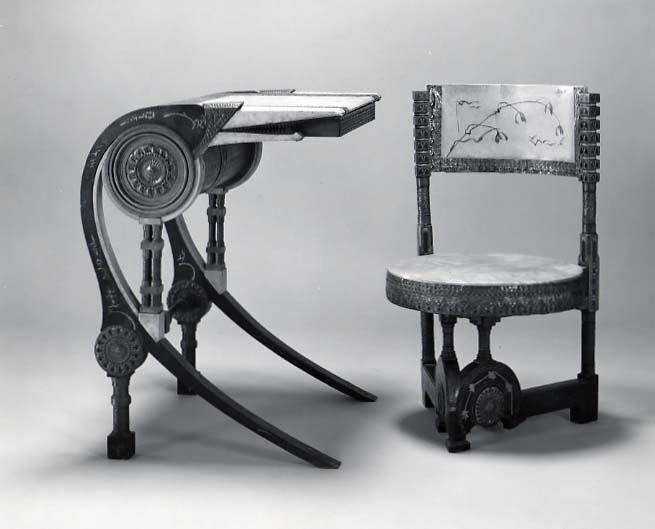
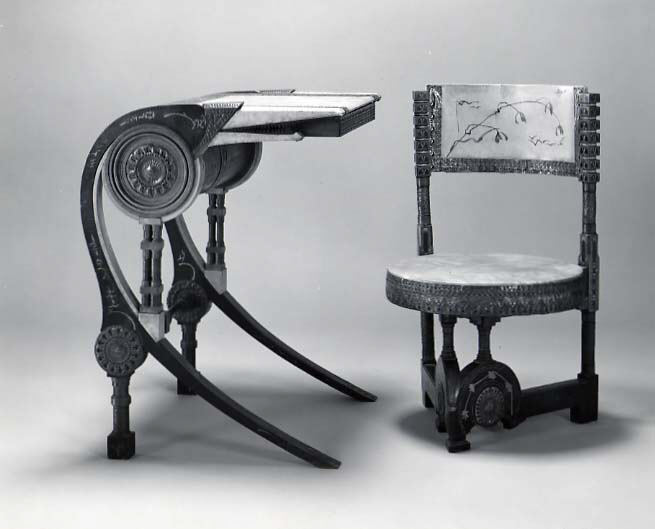
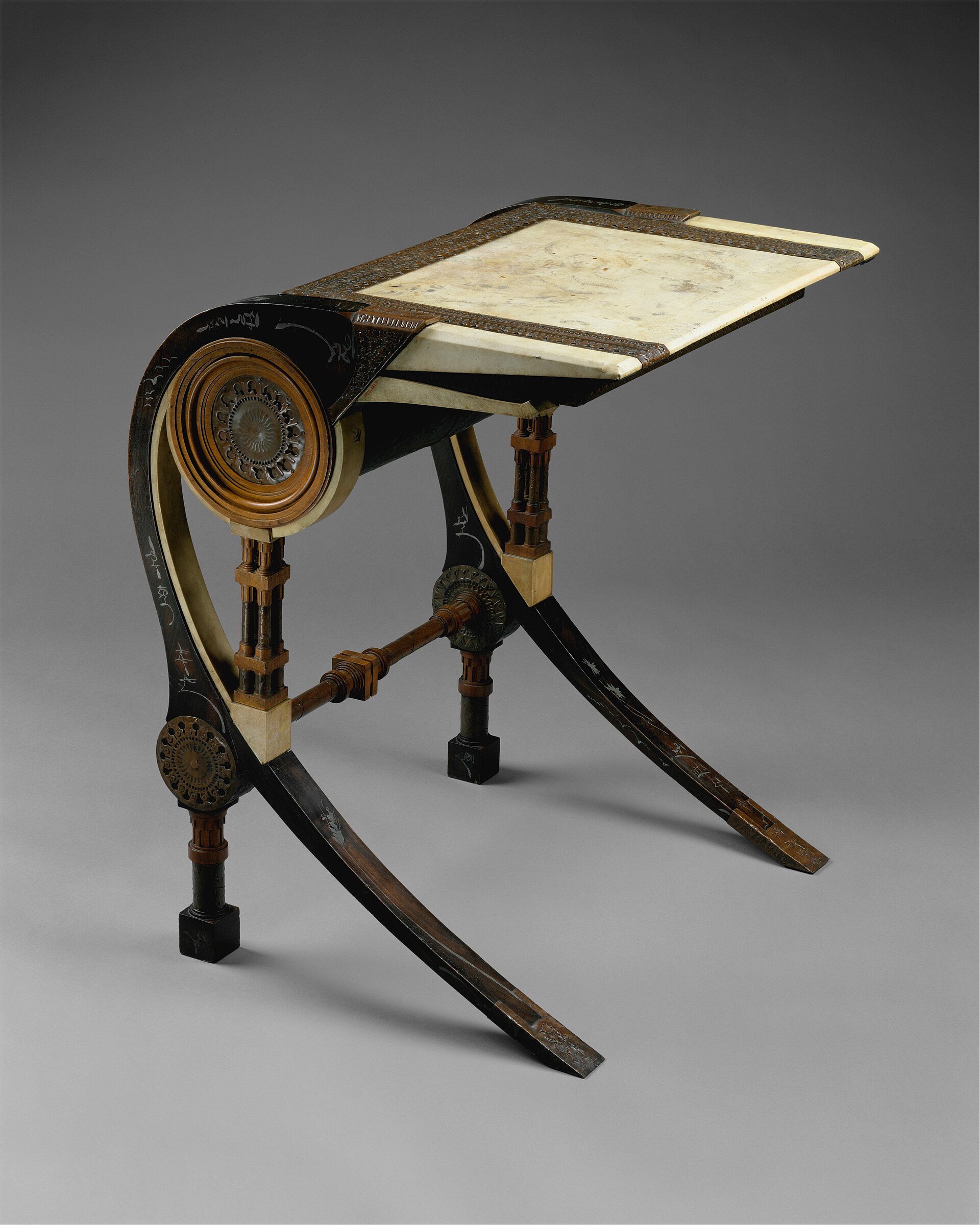
Desk Chair
ca. 1902 · Walnut
 Italian · 1856-1940
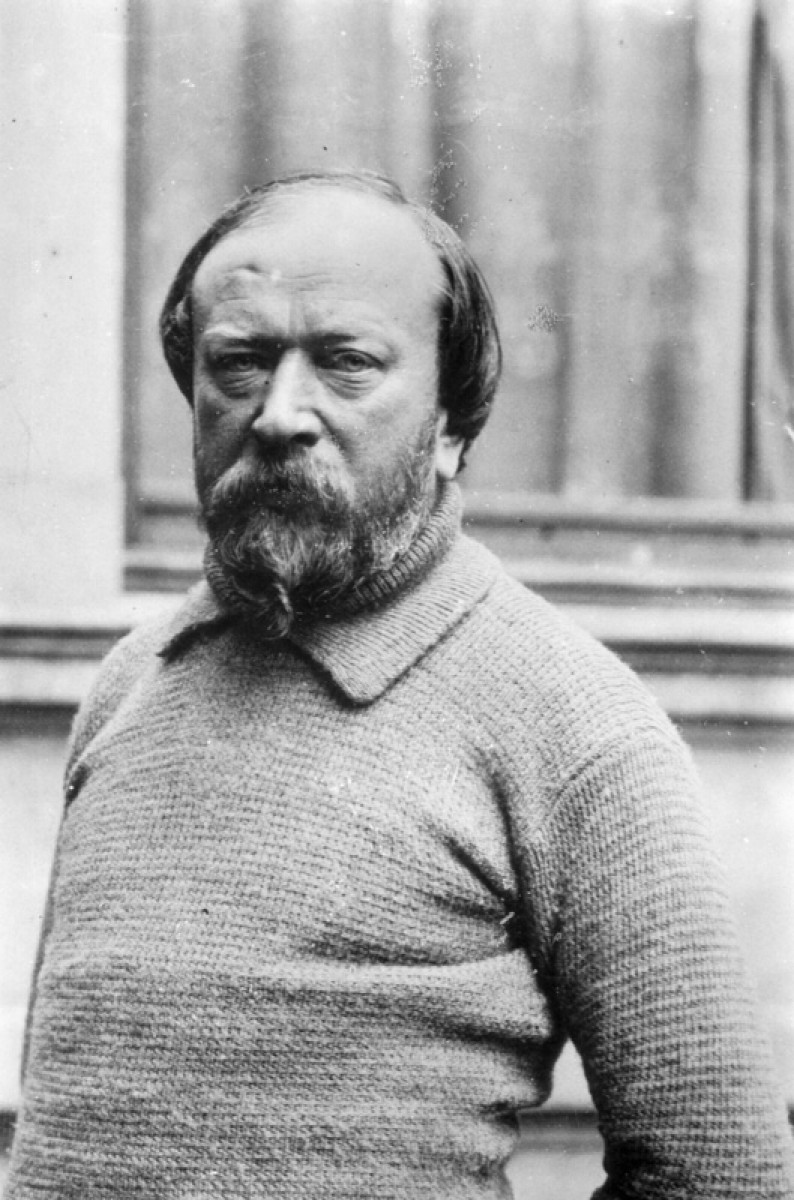
Carlo Bugatti photographed in 1920, aged about sixty-four. The Commons upload cites a Bugatti-family enthusiast club site as its source; that site could not be reached to independently re-verify the attribution in this research pass, but the identification is corroborated by the file's use as the infobox portrait on the English Wikipedia article for Carlo Bugatti.
Uploaded to Wikimedia Commons in 2016; photographer not individually named| Worked as | Furniture designer, Decorator, Silversmith, Painter |
|---|---|
| Born | 2 February 1856 (also given as 16 February 1856 by other... · Milan, then part of the Kingdom of Lombardy-Venetia... |
| Died | April 1940 · Molsheim, Alsace, France |
| Nationality | Italian |
| Movement | Art Nouveau, Orientalist and Moorish-influenced idiom |
| In this archive | 1 artwork |
| Sources | 19 cited |
| Last verified | 17 September 2026 |
About this page 1 artwork in the archive · Last verified 17 September 2026 · 19 sources cited
Carlo Bugatti (1856-1940) was a Milanese furniture designer whose work belongs to no school and resembles almost nothing else made in Europe in his lifetime: wood armatures wrapped entirely in vellum, hammered copper and inlaid pewter driven into the joints rather than applied on top of them, and forms drawn from Moorish, Islamic and Japanese sources he never traveled to see firsthand. He is now most often introduced as the father of the automobile maker Ettore Bugatti and the animal sculptor Rembrandt Bugatti, and that overshadowing is itself a documented fact about how his reputation is handled today, not a reason to treat his own furniture as a footnote to theirs.
The thing a reader is least likely to find elsewhere is how little of Bugatti's own life is actually settled. Even his birth date is disputed between reputable sources: 2 February 1856 by one account, 16 February 1856 by another, and 1855 in the Metropolitan Museum of Art's own object record. No publisher has produced a numbered catalogue raisonne of his furniture of the kind that exists for painters of his period, and auction houses routinely note that not all of his work is signed. What survives instead is documented exhibition history, museum accession records and a small number of named quotations, out of which this record builds as precise an account as the evidence allows, without smoothing over what is still genuinely unresolved.
His working life divides into two idioms separated by a few years around 1898-1900: a heavily ornamented, historicist manner built on ebonized wood, applied metal and inlay that occupied him from about 1880, and the curvilinear, vellum-sheathed idiom that produced the Snail Room shown at the 1902 Turin exhibition and made his later reputation. Both idioms are documented in museum collections illustrated on this page; almost nothing about the seventy years between his Milan workshop and today's museum labels is documented at all.
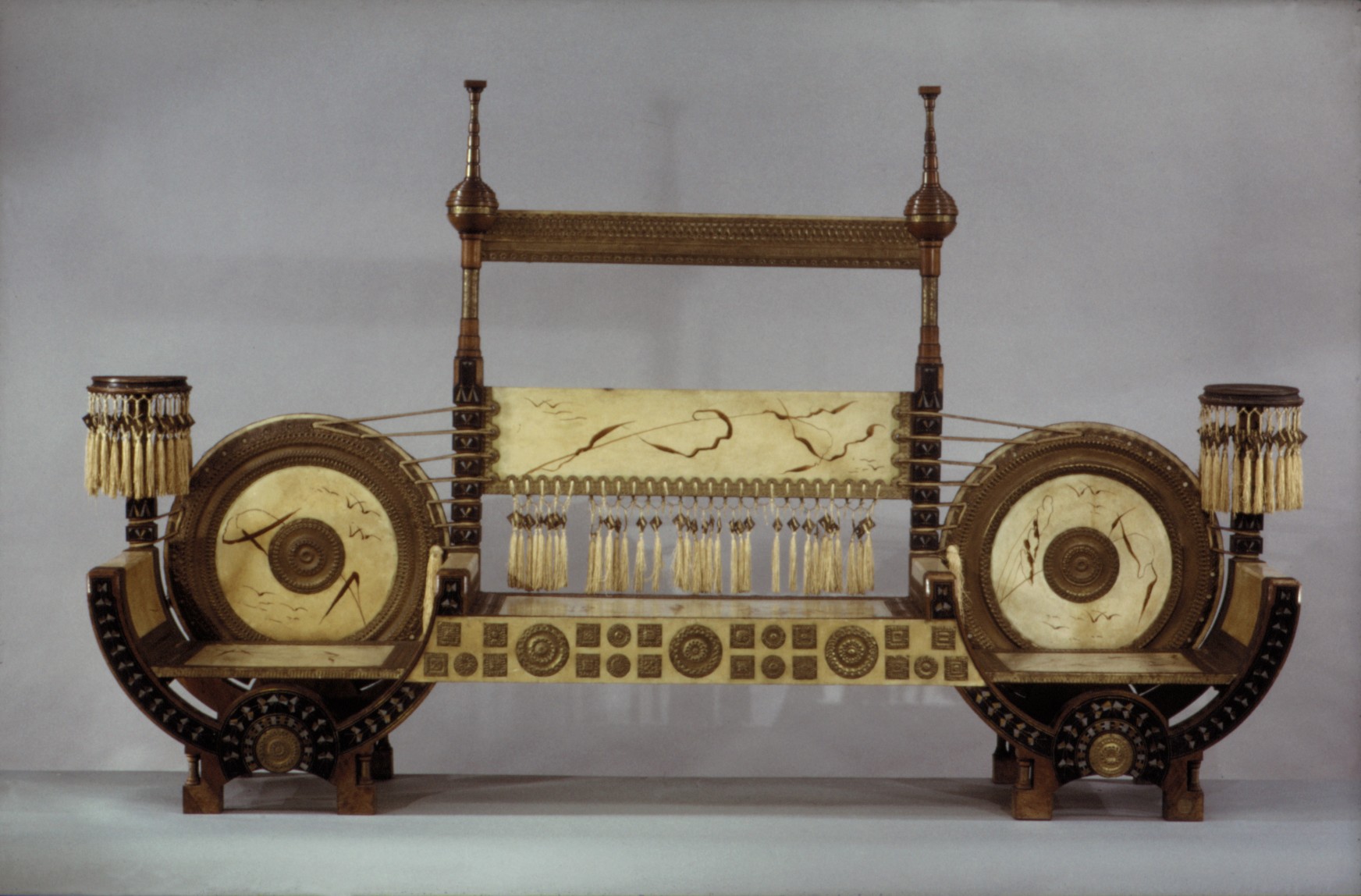
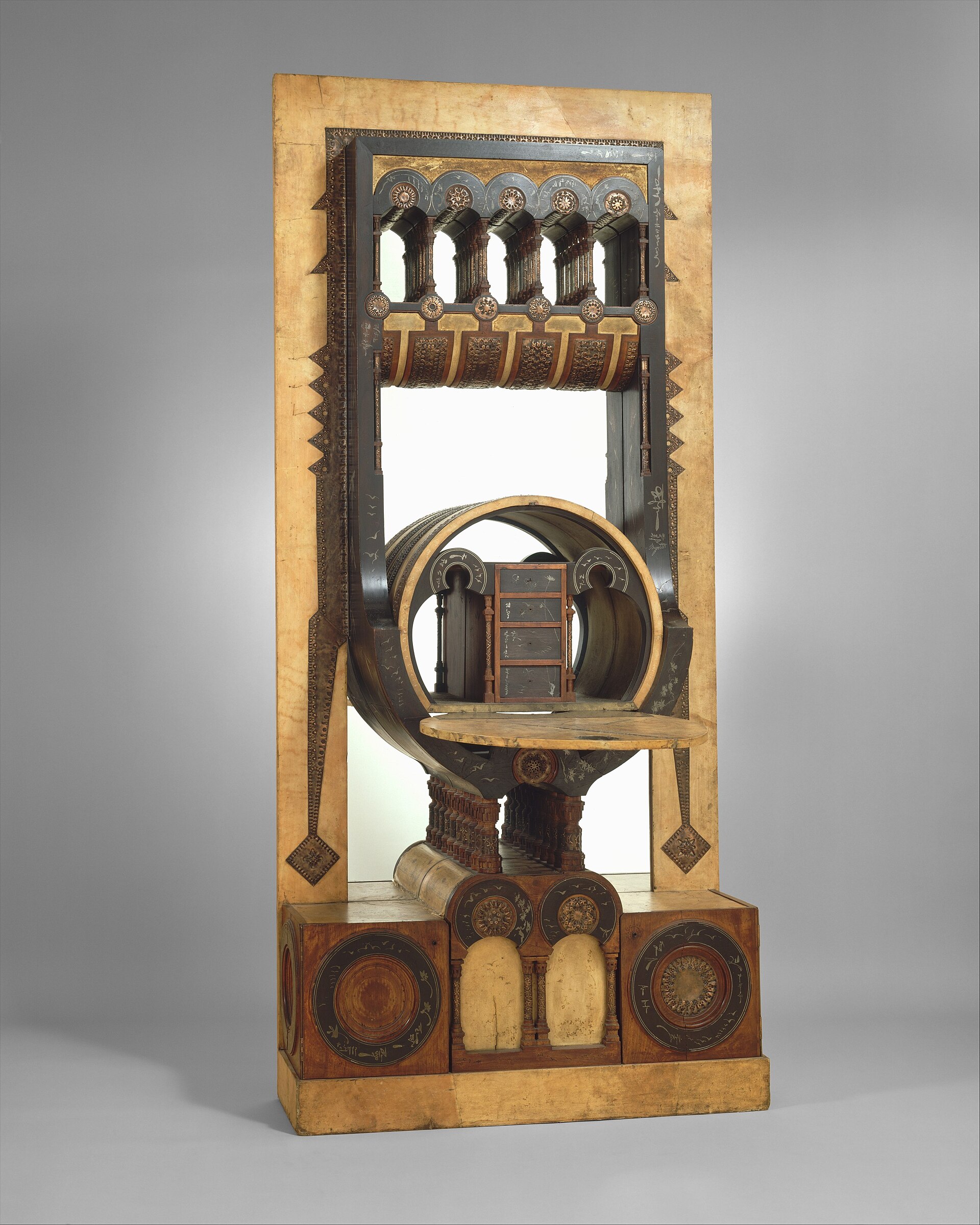
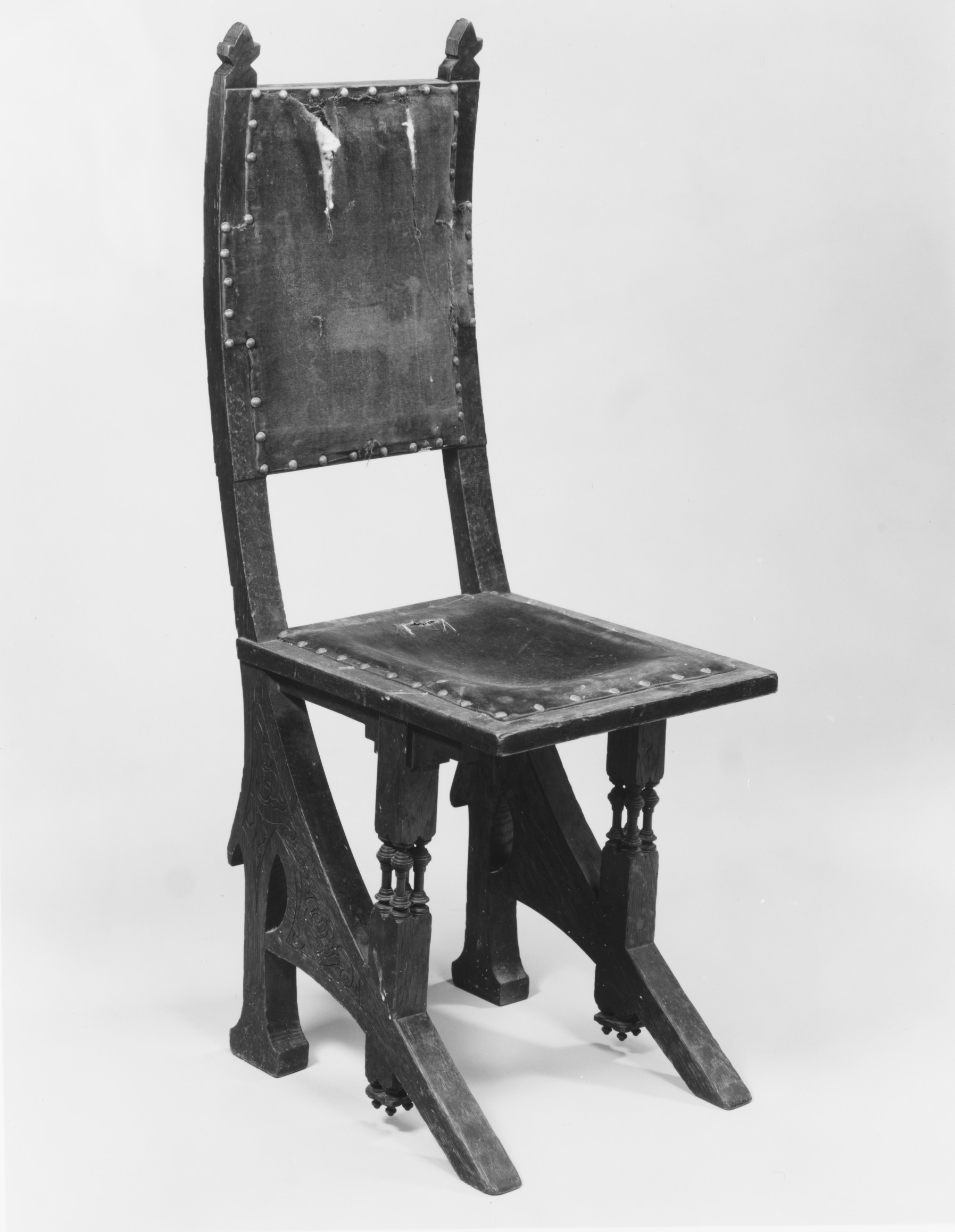
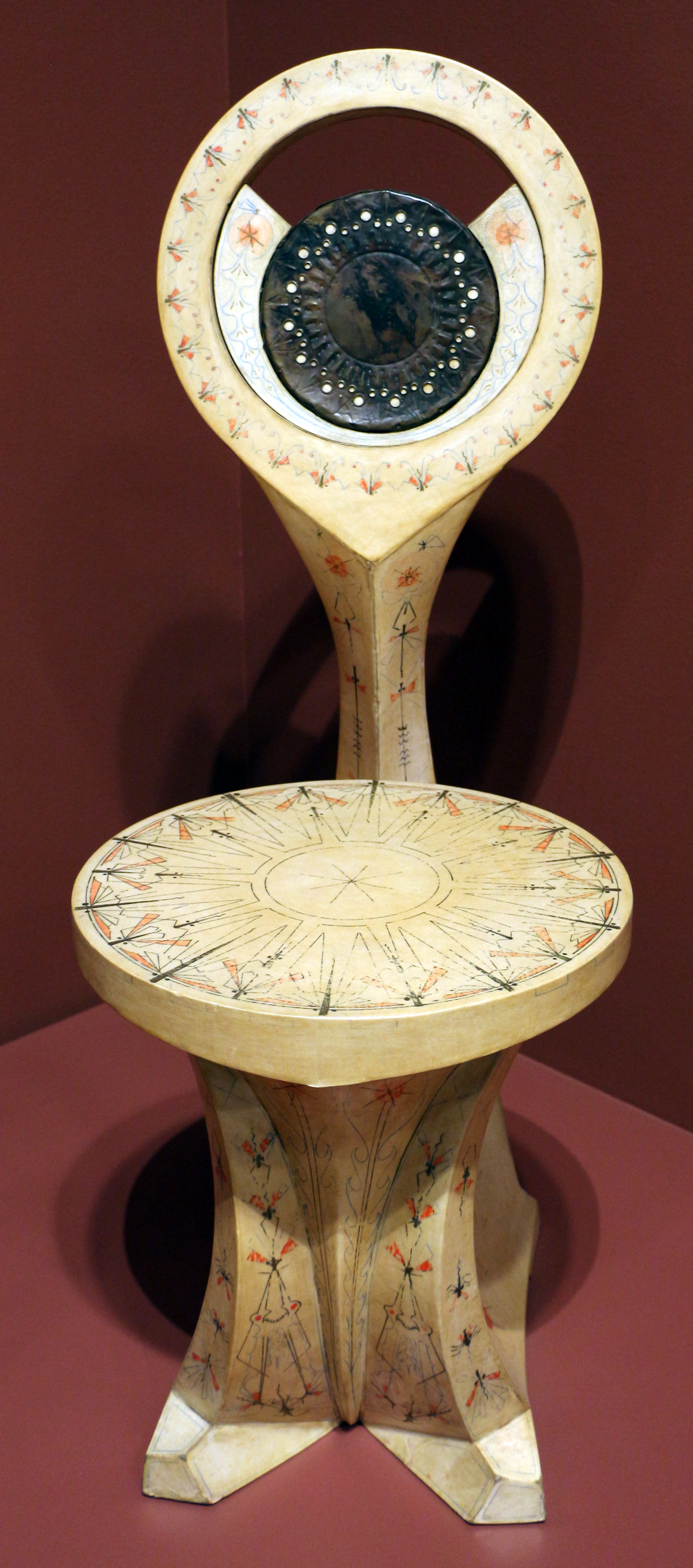
Born in Milan, son of Giovanni Luigi Bugatti and Amelia Salvoni; the exact day is disputed between sources (2 or 16 February), and the Metropolitan Museum of Art's own record gives the year as 1855.123
Enrolls at the Brera Academy in Milan, aged fifteen, to study architecture.6
Opens his own furniture workshop in Milan, after training with the cabinetmaker Mentasti; Sworder's alone gives 1898 for this event.148
Exhibits at the Industrial Arts Exhibition, Milan, and the Italian Exhibition, Earl's Court, London; The Queen: The Lady's Newspaper describes the pieces as 'quaint furniture.'26
Exhibits in Paris; through the French architect Antoine Losciac, an Ottoman noblewoman commissions furniture for her Istanbul residence.6
Shows the Snail Room and the Cobra chairs at the Prima Esposizione Internazionale d'Arte Decorativa Moderna, Turin, and wins the exhibition's top decorative-arts award.245
Closes the Milan workshop, reportedly close to bankruptcy, and moves to Paris with his wife Teresa and three children.2
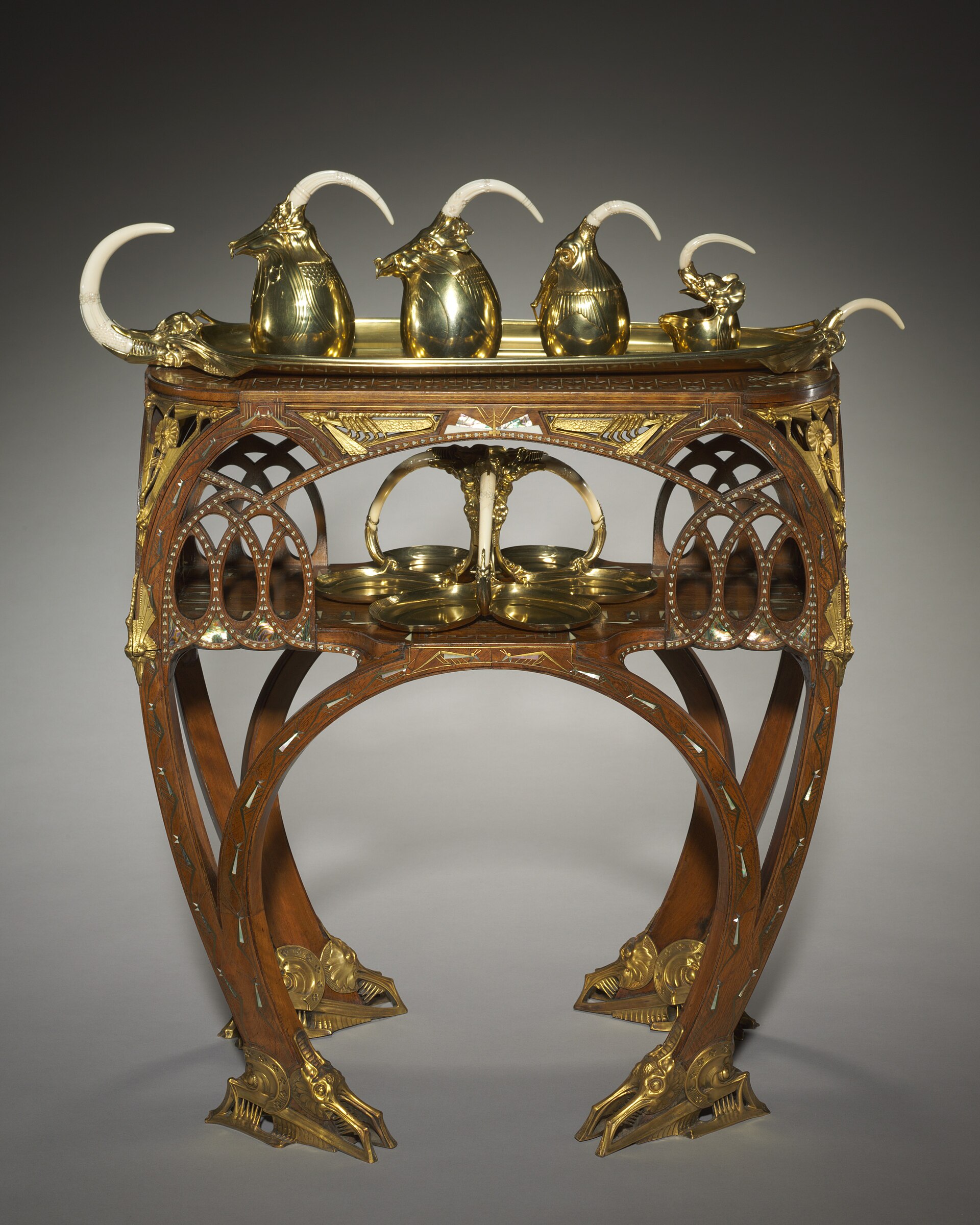
Exhibits silverware, including boar's-head, elephant-trunk and dragonfly-themed tea and coffee services, at the Galerie Hebrard, Paris.26
His son Ettore Bugatti founds the automobile manufacturer Automobiles E. Bugatti in Molsheim, Alsace.17
Moves to Pierrefonds, France, for his wife's health, and establishes an atelier there.21
Serves as mayor of Pierrefonds during the German occupation.12
His son Rembrandt Bugatti dies by suicide in Paris, aged thirty-one.216
His daughter Deanice dies; his wife Teresa dies soon afterward.2
Retires, aged seventy-nine, to Alsace to live near his son Ettore's automobile works at Molsheim.1
Dies in April at Molsheim; buried in the Bugatti family plot at Dorlisheim.12
Confirmed hammer-and-premium results for Bugatti's furniture sit in the low tens of thousands of pounds or dollars for standard chairs and desks; the rare, fully documented showpieces, particularly the legless Cobra chairs from the 1902 Snail Room, are estimated at figures an order of magnitude higher. Because so much of the material is unsigned or only stamped, condition, documented provenance and expert appraisal move a price far more than they would for a signed and catalogued painter, and this record separates a small number of directly sourced auction results from press-reported and tertiary figures that could not be independently confirmed in this pass.
| Date | Sale | Work | Result | Note |
|---|---|---|---|---|
| 5 July 2012 | Bonhams, London (New Bond Street) | Throne chair, circa 1910, copper, brass and pewter inlaid stained wood, walnut and vellum | With premium GBP 21,250 (sale total including buyer's premium; the hammer price was not separately published) GBP | Carried an old paper removal-firm label, 'LE GARDE MEUBLE / 18 Rue St Augustin / BEDEL & Cie,' numbered 31691, evidence of a documented Paris storage stage in its ownership history. |
| 5 July 2012 | Bonhams, London (New Bond Street) | Small writing desk and chair, circa 1910, repousse copper, bone and pewter inlaid stained wood, walnut and vellum | With premium GBP 12,500 (sale total including buyer's premium; the hammer price was not separately published) GBP | Bonhams' own lot note cites a comparable desk and chair sold at Sotheby's London on 19 May 2010 for GBP 46,850, also inclusive of premium. |
| 7 June 2019 | Bonhams, New York | Desk and chair, circa 1900, walnut, ebonized walnut, parchment, silk, copper, pewter inlay | With premium USD 18,825 (sale total including buyer's premium; the hammer price was not separately published) USD | Provenance given as a private collection, California. |
| 24 July 2024 | Bonhams, Los Angeles | Throne, circa 1900, walnut, ebonized walnut, hammered copper, painted parchment, inlaid pewter and brass, silk tassels | With premium USD 70,350, reported as five times the pre-sale estimate USD | Sold as part of a single-owner dispersal of over sixty pieces of Bugatti family material from the collection of the late American collector Peter Mullin; press coverage states roughly 80 percent of the sale's lots doubled their estimate or more, but does not itself separate hammer from premium for this figure. |
| 2016 (exact date not identified) | Not named in the source consulted | Pair of Cobra chairs | With premium EUR 310,000, against a stated estimate of EUR 100,000-150,000 EUR | Reported only by Aucties.com, a French auction-appraisal consolidator, without naming the auction house, the exact date or the lot number. Treated here as tertiary and unverified in its specifics; flagged for replacement with the primary sale record if it can be located. |
Hammer is the price at which the bidding stopped; with premium adds the fee the house charges the buyer on top. Hammer price and buyer's premium in the glossary.
| Institution | City | Holdings | Note |
|---|---|---|---|
| Metropolitan Museum of Art | New York | Five pieces, including the desk chair, matching desk and settee bought together in 1970, a secretary bought in 1969, and a chair bought in 1986 and catalogued within The American Wing. | Photographs of all five are CC0 under the Museum's Open Access Initiative. |
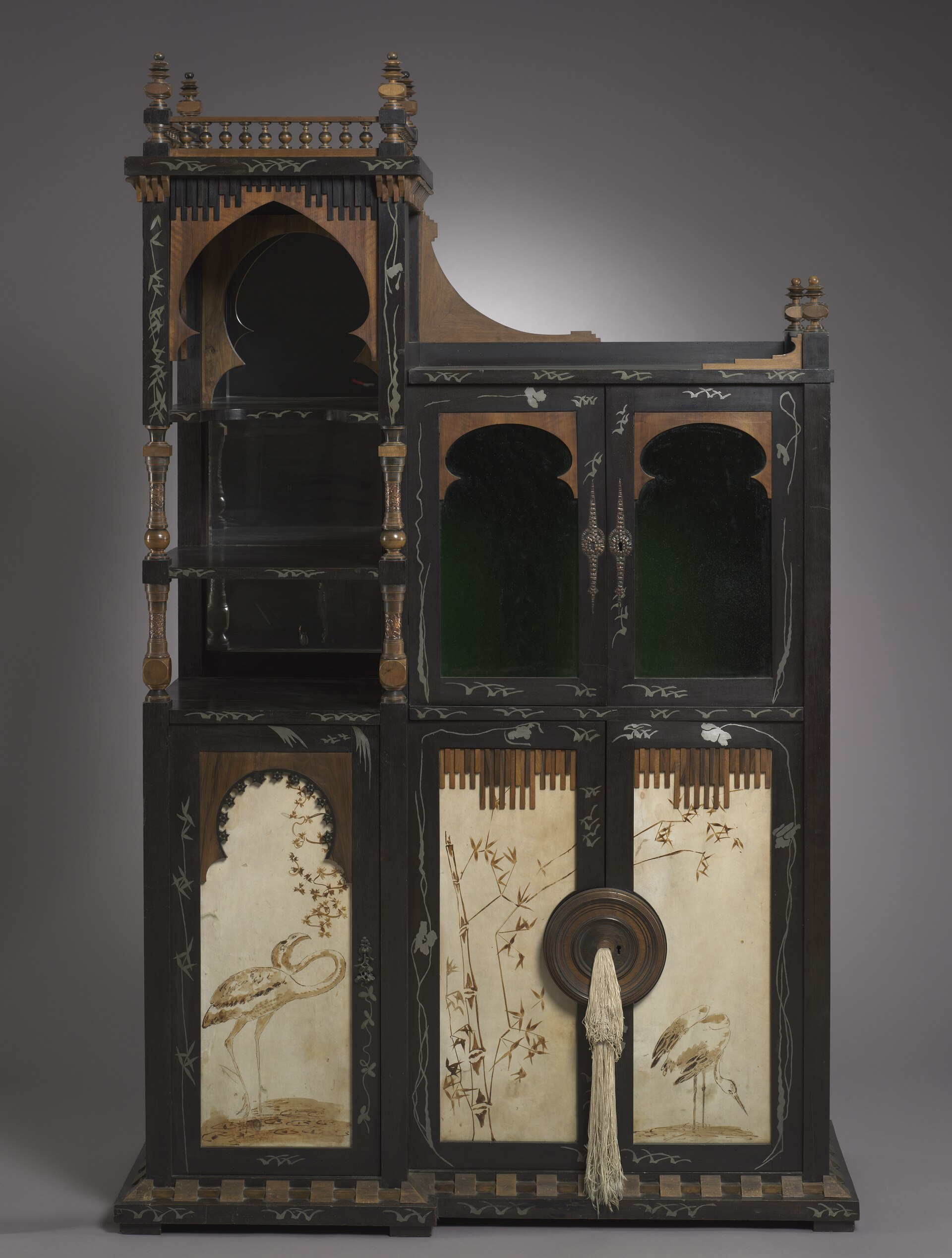
| Cleveland Museum of Art | Cleveland | A tea table of about 1907 (1991.45) and a cabinet of about 1895 (1984.177). | Both released as public domain under the Museum's Open Access policy; the cabinet is catalogued under the culture heading 'France' despite dating from Bugatti's Milan period. |
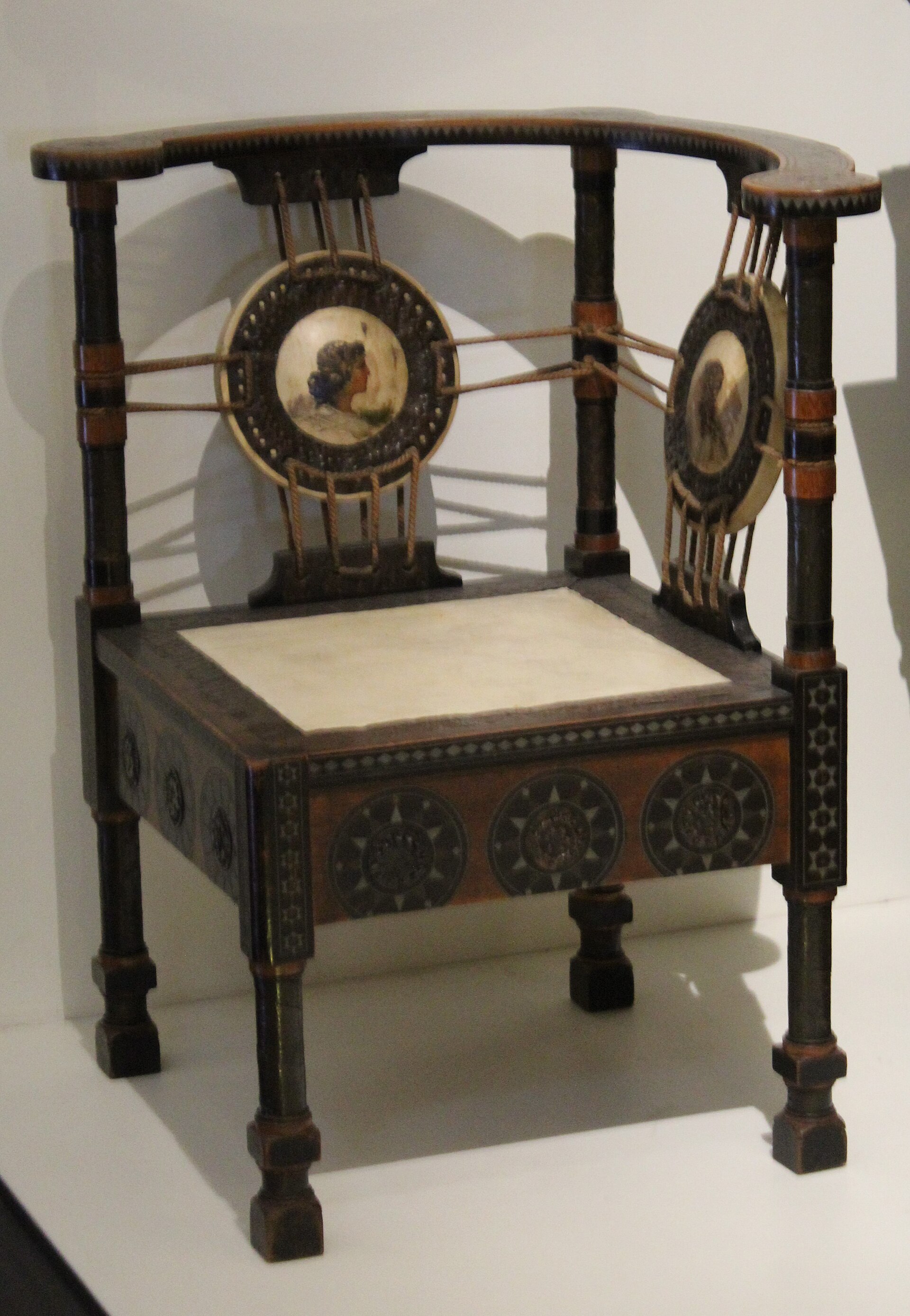
| Victoria and Albert Museum | London | A square corner chair of about 1895. | |
| Kunstgewerbemuseum | Berlin | Salon furniture of about 1885-1890, inventory W-1973,28. | |
| National Gallery of Victoria | Melbourne | A Snail Room chair of 1902 (2008.96), believed to be the last of the four Snail Room chairs to have reached the market. | Bought in 2008 with the assistance of Paula Fox, the NGV Women's Association and the NGV Supporters of Decorative Arts. |
| Art Institute of Chicago | Chicago | A Cobra chair of 1902. | |
| Musee d'Orsay | Paris | Bugatti furniture and archival material, the subject of the museum's own 2001 catalogue of its holdings. | Not independently inspected for this record; cited via a Bonhams lot's literature note. |
| Musee de la Chartreuse (Fondation Bugatti) | Molsheim | Works and memorial material relating to Carlo, Rembrandt, Ettore and Jean Bugatti. | Molsheim's municipal museum, in the town where Carlo Bugatti spent his final months and is commemorated alongside his son's automobile works. |
Bugatti was the son of Giovanni Luigi Bugatti, described in the sources consulted variously as an architect, a sculptor, a woodcarver and an amateur scientist who spent time trying to build a...
Bugatti was the son of Giovanni Luigi Bugatti, described in the sources consulted variously as an architect, a sculptor, a woodcarver and an amateur scientist who spent time trying to build a perpetual-motion machine, and of Amelia Salvoni. He enrolled at the Brera Academy in Milan in 1871, aged fifteen, to study architecture; a few of his student architectural models survive, though none was ever built. The most consequential relationship he formed there was not with a teacher but with a fellow student, the painter Giovanni Segantini, who married Bugatti's sister Luigia in the late 1870s and later encouraged the sculptural ambitions of Bugatti's own son Rembrandt.
Sotheby's states that Bugatti learned cabinetmaking directly from a named tradesman, a cabinetmaker called Mentasti, training with him until he opened his own workshop. Whether Bugatti also studied formally at the Academie des Beaux-Arts in Paris, as Wikipedia's infobox and several secondary accounts state, is less secure: Art & Antiques Magazine, after the most detailed biographical account located in this research pass, calls this only a probability, not a documented fact, and adds plainly that basic details of Bugatti's life and career, including dates, 'can be maddeningly uncertain.' This record follows that caution rather than repeating the Paris claim as settled.
Most sources consulted, including Wikipedia, Sotheby's and the Bugatti Trust, date the opening of Bugatti's own independent Milan workshop to about 1880.
Most sources consulted, including Wikipedia, Sotheby's and the Bugatti Trust, date the opening of Bugatti's own independent Milan workshop to about 1880. Sworder's auction house gives 1898 instead, immediately after describing furniture he had already exhibited a decade earlier in 1888; read against every other source in this file, that looks like an error in Sworder's own account rather than a genuine alternative chronology, but it is recorded here rather than silently corrected. By 1888 Bugatti had a furniture studio running in Milan and showed a range of pieces at the Italian Exhibition at Earl's Court, London; an illustration in The Queen: The Lady's Newspaper of 7 July 1888 described them simply as 'quaint furniture,' a contemporary press reaction rather than a considered review.
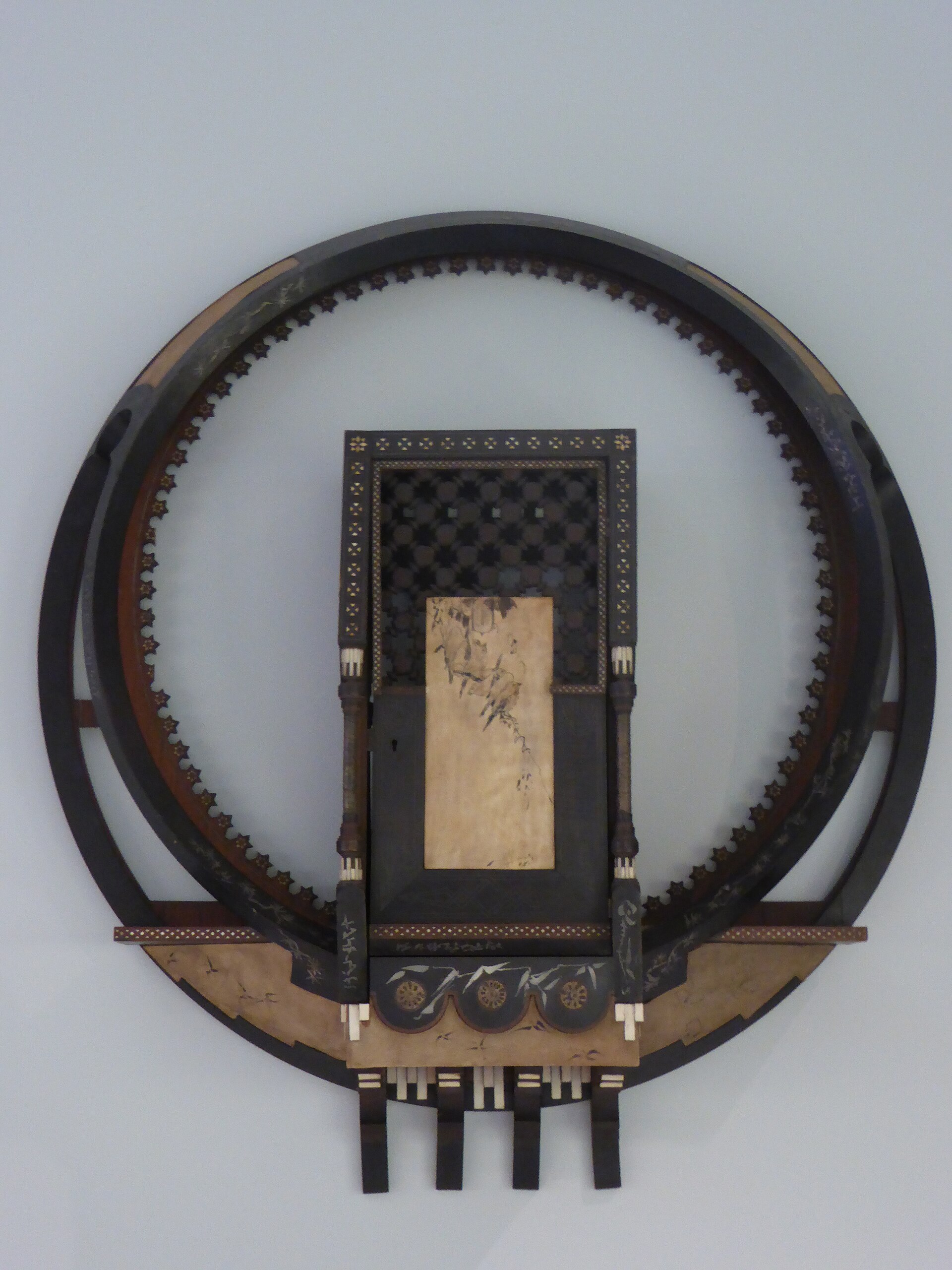
The furniture of this first phase was heavy and historicist: ebonized wood inlaid with copper, brass, ivory, mother-of-pearl or camel and deer hide, hung with fringes or metal discs and worked with exotic geometric marquetry, stencilled pseudo-calligraphy, or flower, animal and insect motifs. Clients included the English aesthete and collector Cyril Flowers, Lord Battersea, who commissioned a complete interior representing what Art & Antiques Magazine calls the culmination of Bugatti's 'oriental' style. Around 1900, through the French architect Antoine Losciac, an Ottoman noblewoman commissioned Bugatti to furnish her residence in Istanbul: a documented instance of a patron from the region itself buying directly into an idiom built from borrowed Near Eastern and North African motifs, which complicates any simple one-way account of Bugatti's Orientalism.
Around the turn of the century Bugatti's style changed sharply.
Around the turn of the century Bugatti's style changed sharply. The National Gallery of Victoria's curator Amanda Dunsmore describes the shift in her 2008 essay on the museum's own Bugatti chair: 'Gone was his heavily ornamented, oriental-inspired furniture that typified his work of the 1880s and 1890s,' replaced within a few years by 'curvilinear, solid forms, completely covered in vellum,' with inlaid metal ornament replaced by painted geometric design and rounded arches hardening into complete circles. Vellum, the scraped and stretched calfskin traditionally used for manuscript pages and bindings, had always featured in Bugatti's furniture; in this last phase it enveloped entire pieces, smoothing over every joint.
Sotheby's records the clearest surviving statement of how Bugatti wanted this new work read. When Queen Elena of Savoy praised his furniture as 'Moorish' in style, he is quoted as replying: 'You are wrong, Majesty, this style is mine.' No primary transcript of the exchange was located in this research pass, only the auction house's own account, but the line is repeated consistently enough across the secondary literature, and is specific enough in its wording, that it is recorded here as the clearest statement attributed to Bugatti of his own artistic self-understanding, with that sourcing made explicit.
The Prima Esposizione Internazionale d'Arte Decorativa Moderna opened in Turin's Parco del Valentino on 10 May 1902, the only world's fair ever organized around a single decorative style, drawing...
The Prima Esposizione Internazionale d'Arte Decorativa Moderna opened in Turin's Parco del Valentino on 10 May 1902, the only world's fair ever organized around a single decorative style, drawing participants including Victor Horta, Charles Rennie Mackintosh, Peter Behrens and Louis Comfort Tiffany. Bugatti showed four interior schemes there. The best documented, the so-called Snail Room, was built around a semicircular banquette and drinks cabinet shaped like a snail's shell, its walls covered with vellum-wrapped wooden discs topped by hammered brass plaques, and furnished with four fully legless chairs, now generally called Cobra chairs, in which seat and back form one continuous sinuous curve sealed entirely in painted vellum.
Sources disagree on the precise name of the prize Bugatti won there: Sworder's calls it the 'Diploma of Honour,' Sotheby's calls it a 'Grand Prix d'Honneur,' and both describe it as the exhibition's top decorative-arts award. Sotheby's quotes the jury's citation as praising Bugatti for being 'the first in Italy to create, and not just to dream, a modern style of furniture,' and quotes the contemporary critic Alfredo Melani's verdict on the Cobra chairs' lines: 'The lines here have a rotational movement.' The National Gallery of Victoria's own Snail Room chair, bought in 2008, is believed to be the last surviving example from that room to have reached the market, and the museum notes that its continuous-curve, legless construction anticipated Marcel Breuer's cantilevered chair by sixteen years and the injection-moulded plastic chair by half a century.
Across both idioms, four techniques recur and are documented consistently across the museum records consulted: a carved and turned wood armature, usually walnut or ebonized wood; vellum, either as...
Across both idioms, four techniques recur and are documented consistently across the museum records consulted: a carved and turned wood armature, usually walnut or ebonized wood; vellum, either as painted panels over metal-inlaid wood in the earlier furniture or wrapped whole over the final curvilinear forms; hammered, repousse copper and inlaid pewter and brass, driven into the wood along legs, stretchers and panel edges rather than applied as separate cast mounts; and ivory, bone or mother-of-pearl inlay on the silver and mixed-material pieces of his Paris years. The dragonfly, in the National Gallery of Victoria's account, became a signature motif from about 1895 onward, recurring on furniture and, in 1907, on a silver tea and coffee service alongside boar's-head and elephant-trunk forms.
One claim sometimes attached to Bugatti in casual writing is not supported by any source consulted for this record: a targeted search found no documented instance of beetle-wing, or elytra, decoration in his furniture, silver or any other medium. His insects are painted or inlaid representations, chiefly the dragonfly, not applied insect material. This record does not repeat the elytra claim, and flags its absence as checked rather than simply omitted.
Bugatti never traveled in Asia, North Africa or the Ottoman world, and made no formal study of non-Western design; Art & Antiques Magazine's account, citing the New York dealer James Infante, states...
Bugatti never traveled in Asia, North Africa or the Ottoman world, and made no formal study of non-Western design; Art & Antiques Magazine's account, citing the New York dealer James Infante, states that he 'absorbed them by osmosis' from the general European fashion for Orientalism during the closing decades of the nineteenth century, transforming borrowed motifs 'with a personal alchemy that yielded something entirely new.' The Bugatti Trust adds a specific documented intellectual reference point: it states that Bugatti was influenced by the French Gothic Revival architect and theorist Eugene Viollet-le-Duc, alongside the Moorish and Oriental sources, though the Trust does not cite a letter, an owned book or another primary document establishing the connection, so this record treats it as an argued reading rather than a documented fact.
No source consulted documents a hidden iconographic or symbolic programme behind Bugatti's furniture. The insect and floral motifs that recur across his work are treated in every account read for this record as decorative rather than symbolic, drawn from the same Japoniste and Orientalist visual repertoire that shaped European decorative arts generally in this period. The clearest documented complication of the colonial framing is the 1900 Istanbul commission described above: a patron from the source region itself buying into the idiom, which is worth recording plainly rather than smoothing into either a simple appropriation story or a simple absolution.
Art & Antiques Magazine states that during the 1890s Bugatti was 'assisted in his workshop by his sons Ettore and Rembrandt,' and Sotheby's specifically records that vellum panels were 'painted by...
Art & Antiques Magazine states that during the 1890s Bugatti was 'assisted in his workshop by his sons Ettore and Rembrandt,' and Sotheby's specifically records that vellum panels were 'painted by Bugatti and his early apprentices: his two sons.' Ettore Bugatti, born in Milan in 1881, would found the automobile manufacturer Automobiles E. Bugatti in Molsheim in 1909; Rembrandt Bugatti, born in Milan in 1884, became a sculptor of wild animals working with the Paris foundry and gallery owner Adrien Hebrard. Neither Wikipedia's article on Carlo Bugatti nor any other source consulted names any workshop assistant outside the family; whether unnamed hired craftsmen also worked there is not documented in the sources available for this record and is recorded as an open question rather than assumed either way.
The Bugatti Trust describes the household itself as 'an interesting and artistically stimulating environment,' with musicians, painters and sculptors as regular visitors and 'freedom of individual expression' actively encouraged. Bugatti married Teresa Lorioli; the couple had three children, Ettore, a daughter named Deanice, and Rembrandt.
Sworder's states plainly that Bugatti's late-period experimentation with vellum 'failed to attract clients' commercially, and that he was 'on the brink of bankruptcy' when he closed his Milan...
Sworder's states plainly that Bugatti's late-period experimentation with vellum 'failed to attract clients' commercially, and that he was 'on the brink of bankruptcy' when he closed his Milan workshop and moved to Paris in 1904 with his wife and three children. In Paris he opened a new workshop producing luxury goods, including pieces for the department store Bon Marche, and met the art dealer and foundry owner Adrien Hebrard, who encouraged him toward silverwork and sculpture. Hebrard held an exhibition of Bugatti's silverware, mostly animal-themed, at the Galerie Hebrard in 1907; Bugatti also showed regularly at the Salon des Artistes Decorateurs.
Bugatti's furniture output fell sharply after 1902 and never recovered its earlier scale; his later working years in France were given over increasingly to silver, jewelry and, eventually, painting rather than furniture.
Wikipedia's account, citing a German-language history of the Bugatti family and firm, states that Bugatti maintained his Milan workshop at Via Castelfiardo 6 until 1904.
Wikipedia's account, citing a German-language history of the Bugatti family and firm, states that Bugatti maintained his Milan workshop at Via Castelfiardo 6 until 1904. Sotheby's, cataloguing a pair of Cobra chairs, records that the Cobra chair model is numbered 764 in the sales catalogue of 'Della Fabbrica Italiana Mobili Artistici A. De Vecchi & C., formerly C. Bugatti & C.,' at a different address, Via Marcona 13, Milan. Read together, this is documentary evidence that the firm Bugatti had built continued in Milan under a new name after his own departure for Paris, manufacturing and cataloguing his designs, including the Cobra chair, to a numbered pattern book rather than as unique improvisations.
No source consulted in this pass establishes how many surviving 'Bugatti' pieces on the market today were made in his own Milan workshop before 1904 against how many were produced afterward by the successor firm to his own designs. Aucties.com, a French auction-appraisal consolidator, states plainly that not all Bugatti pieces are signed and that expert appraisal is 'essential for authentication' before a valuation can be given; that caution, from a source whose business is appraising exactly this material, is treated here as a documented finding about the state of attribution rather than as marketing language. Separately, the Cleveland Museum of Art catalogues its own Bugatti cabinet, dated to about 1895 when Bugatti was still working in Milan, under the culture heading 'France,' while its 1907 Bugatti tea table, made after his move to Paris, is correctly catalogued as French; this record notes the inconsistency rather than resolving it.
In 1910 Bugatti moved to Pierrefonds, north-east of Paris, for his wife's health, and established an atelier there; he served as the village's mayor from 1914 to 1918, a period in which, according to...
In 1910 Bugatti moved to Pierrefonds, north-east of Paris, for his wife's health, and established an atelier there; he served as the village's mayor from 1914 to 1918, a period in which, according to Sworder's, he was later honored with full military honors for his stand against the German occupation of the village. His younger son Rembrandt, described by Sworder's as 'brilliant but fragile,' died by suicide in Paris on 8 January 1916, aged thirty-one. His daughter Deanice died in 1932, and his wife Teresa died soon after. Now alone, Bugatti in 1935, aged seventy-nine, moved to Alsace to live near his surviving son Ettore's automobile works in Molsheim, settling near the Chateau Saint-Jean in Dorlisheim. He spent his final months in an apartment at the Bugatti factory itself. He died in April 1940 in Molsheim and is buried in the Bugatti family plot at Dorlisheim.
His granddaughter L'Ebe, writing in the late 1960s, summed up his range in a passage this record quotes directly rather than paraphrases: he 'should have lived a century earlier for his powers to have been appreciated to the full, for he was a painter, sculptor, woodcarver, and architect, and also made stringed instruments of his own invention, and developed a new style of furniture. Everyone called him "the young Leonardo" because of his energy and new ideas.'
Confirmed auction results located in this research pass are modest set against the headline figures sometimes quoted for Bugatti's rarest pieces: Bonhams London sold a circa 1910 throne chair for GBP...
Confirmed auction results located in this research pass are modest set against the headline figures sometimes quoted for Bugatti's rarest pieces: Bonhams London sold a circa 1910 throne chair for GBP 21,250 including premium in July 2012 and a circa 1910 writing desk and chair for GBP 12,500 including premium in the same sale, and Bonhams New York sold a circa 1900 desk and chair, from a private California collection, for USD 18,825 including premium in June 2019. None of these listings separately publishes the hammer price; this record states the conflation rather than guessing at a split. At the top of the market, Bonhams Los Angeles's July 2024 dispersal of over sixty Bugatti family pieces from the collection of the American collector Peter Mullin, better known for his collection of Bugatti automobiles, saw a circa 1900 throne sell for USD 70,350, five times its estimate, with roughly 80 percent of the sale's lots reported to have doubled their estimate or more. A pair of Cobra chairs was estimated at GBP 150,000-250,000 at Sotheby's Paris in November 2019, and the French auction consolidator Aucties.com states, without naming the auction house, exact date or lot number, that a pair of Cobra chairs sold for EUR 310,000 in 2016 against an estimate of EUR 100,000-150,000; that claim is recorded here as tertiary and unverified in its specifics, flagged for replacement with the primary sale record if it can be located.
Both the Aucties.com guide and the Bonhams and Sotheby's lot notes read for this record stress the same practical point: because so much of Bugatti's furniture is unsigned, or bears only a stamped mark rather than the inscribed 'Bugatti' seen on some pieces, the price a given object commands depends heavily on documented provenance and expert appraisal rather than on the object alone.
Furniture designer; Decorator; Silversmith; Painter. 1856-1940.
Born 2 February 1856 (also given as 16 February 1856 by other sources; the Metropolitan Museum of Art's own object record gives the year as 1855), Milan, then part of the Kingdom of Lombardy-Venetia, Austrian Empire; died April 1940, Molsheim, Alsace, France.
Metropolitan Museum of Art (New York); Cleveland Museum of Art (Cleveland); Victoria and Albert Museum (London); Kunstgewerbemuseum (Berlin); National Gallery of Victoria (Melbourne); Art Institute of Chicago (Chicago).
Confirmed hammer-and-premium results for Bugatti's furniture sit in the low tens of thousands of pounds or dollars for standard chairs and desks; the rare, fully documented showpieces, particularly the legless Cobra chairs from the 1902 Snail Room, are estimated at figures an order of magnitude higher. Because so much of the material is unsigned or only stamped, condition, documented provenance and expert appraisal move a price far more than they would for a signed and catalogued painter, and this record separates a small number of directly sourced auction results from press-reported and tertiary figures that could not be independently confirmed in this pass.
Which birth date is correct: 2 February 1856 (Wikipedia, citing Wood 1992), 16 February 1856 (Sworder's and Bonhams), or a birth year of 1855 (the Metropolitan Museum of Art's own object record)?
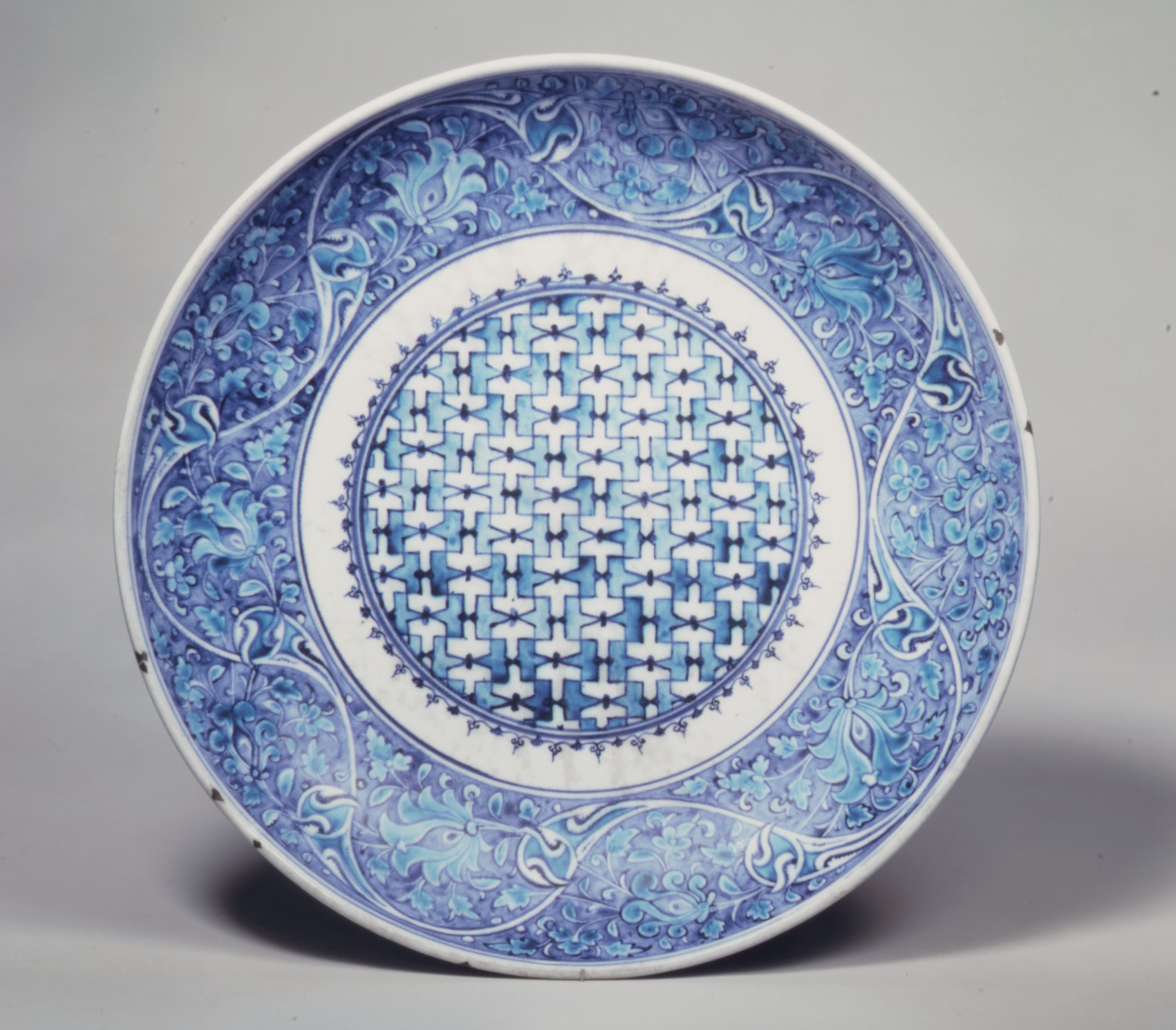
Three glazed ceramics in this archive sit in three different Metropolitan Museum departments.
8 min read
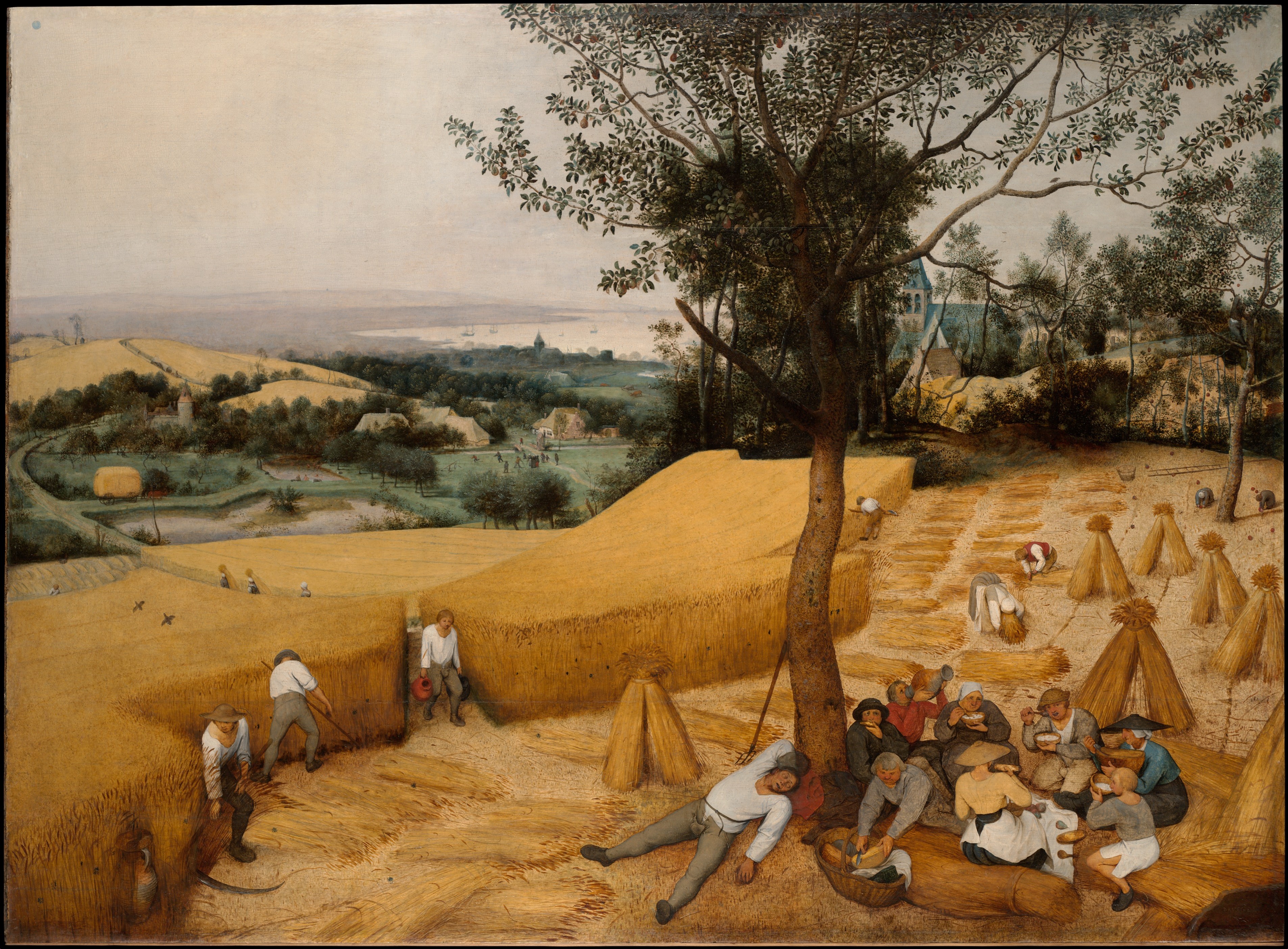
Thirty-two objects in this archive were bought on the income of six named endowment funds, and in every case the person named had...
10 min read
Last verified 17 September 2026
One artwork and its story every Tuesday, with the picture: who owned it, what it made, and what closes soon in the exhibition calendar. No promotion, and nothing we cannot cite.
We send one email to confirm the address and keep nothing else. Every letter carries a one-click unsubscribe. How we handle your data.
.jpg)