What the Finder Was Paid for a Roman Silver Dish
A sixpence fine in 1735, 1,000 pounds in 1946 and 1.6 million pounds in 2009. Four finds in this archive show how English law priced a buried hoard, and who got the money.
Records in this piece: The Corbridge Lanx, The Great Dish from the Mildenhall Treasure, The Staffordshire Hoard, The Water Newton Treasure, The Sutton Hoo Lyre
On this page 6 sections
ContentsClose
In short
- The same Roman silver dish was worth about 33 pounds as scrap in 1735 and cost the British Museum 1,858,000 pounds in 1993. The finder's family kept the first sum, and the court fined the father sixpence.
- Before the Treasure Act 1996 an English finder's reward was set by the Crown after a coroner's inquest, and it was ex gratia. The Mildenhall finders were each given 1,000 pounds in 1946.
- The Treasure Act 1996 turned the reward into a market valuation shared between finder and landowner. The Staffordshire Hoard was valued at 3.285 million pounds in 2009 and each received half.
- Sutton Hoo in 1939 went the other way. The inquest found no intent to recover the burial goods, so they belonged to the landowner, who gave them away.
Four finds in this archive were priced under three different legal regimes
The money a finder of buried English silver received depended on the legal regime of the year, far more than on what the silver was worth. Four finds in this archive span almost three centuries and each was priced differently.
| Find | Year | Regime | What the finder received |
|---|---|---|---|
| Corbridge Lanx | 1735 | Treasure trove claimed by the lord of the manor | Nothing from the lord; the family sold the silver for about 33 pounds 6 shillings |
| Sutton Hoo | 1939 | Inquest found no intent to recover | Landowner kept title and gave it to the nation |
| Mildenhall Treasure | 1946 | Treasure trove, Crown reward | 1,000 pounds to each of two finders |
| Staffordshire Hoard | 2009 | Treasure Act 1996 valuation | Half of 3.285 million pounds each, finder and landowner |
The Corbridge Lanx was sold for scrap value and then claimed by the lord of the manor
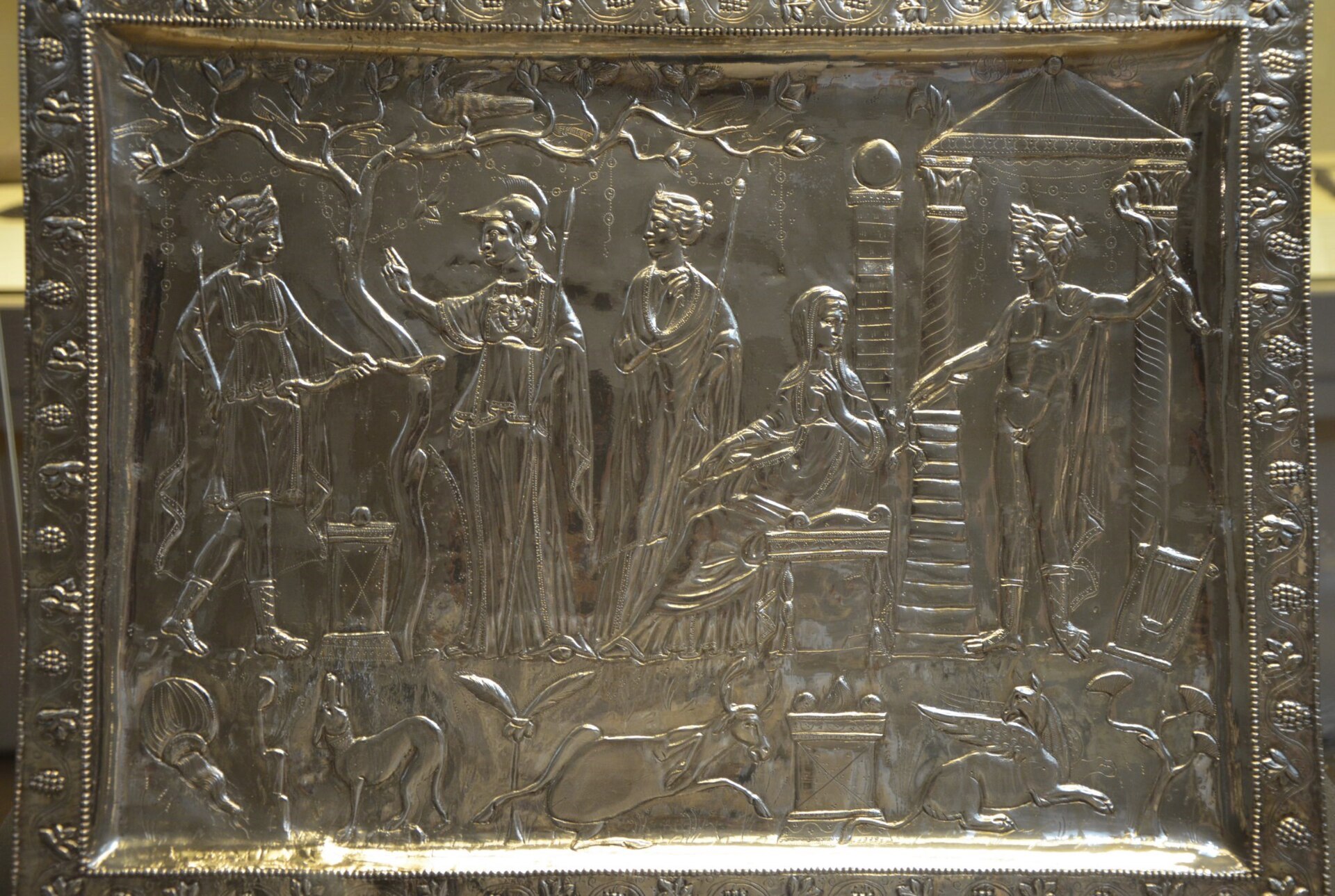
The Corbridge Lanx was found in February 1735 by a nine-year-old girl, Isabel Cutter, in the north bank of the Tyne, and her family received only the scrap price. Haverfield's 1914 account, drawing on the manor court record, says her father broke off an eight-ounce rim and sold it to the Newcastle goldsmith Isaac Cookson for 36 shillings, then sold the rest on 1 March. The whole plate weighed 148 troy ounces at 4s. 6d. an ounce, which comes to 33 pounds 6 shillings.
On 1 May the manor court's jury found the plate to be treasure trove belonging to the lord of the manor, the Duke of Somerset, and fined Cutter sixpence for concealing it from the lord's bailiff. Cookson fought the claim in Chancery and on 12 November 1735 Lord Chancellor Talbot rejected his demurrer. Haverfield reports that the Duke later repaid Cookson what he had paid the Cutters, and more. Nothing in the sources consulted shows the finder receiving any reward.
The dish passed by inheritance to the Dukes of Northumberland and was sold to the British Museum in 1993. The Art Fund gives the total acquisition cost as 1,858,000 pounds, of which it contributed 150,000.
At Sutton Hoo the inquest decided the landowner owned the burial
The Sutton Hoo ship burial belonged to the landowner, Edith Pretty, because the 1939 inquest found no evidence that the goods had been buried with intent to recover them. This archive's record dates the inquest to 14 August 1939 and records that Pretty's gift of the whole find to the nation, through the British Museum, was announced on 23 August 1939.
The legal test is the point. Treasure trove in this period asked whether the owner hid the goods meaning to come back for them. A burial for the dead did not meet that test, so no Crown claim and no finder's reward arose.
The Mildenhall finders were rewarded and the man who hid the hoard was caught by a spoon
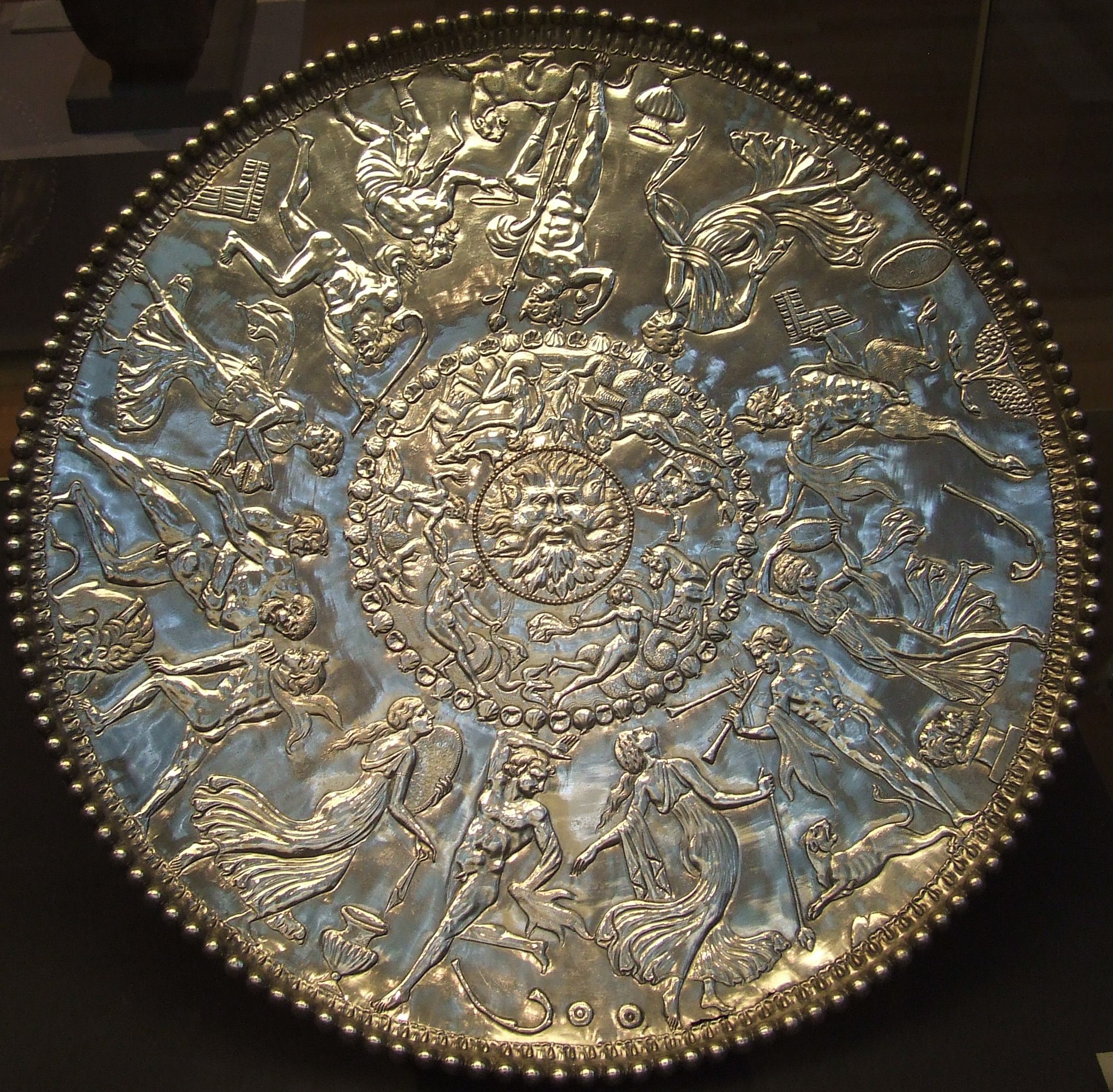
The Mildenhall Treasure was declared treasure trove by a coroner's jury on 1 July 1946, and the two men credited with the find received 1,000 pounds each. The Great Dish and thirty-three other pieces had been turned up by Gordon Butcher's plough in January 1942 for his employer Sydney Ford, who kept them at home undeclared for over four years until the antiquarian Hugh Fawcett persuaded him to report them.
The reward of 2,000 pounds in total was paid through the finders' solicitor on 16 August 1946. Wikipedia notes that this may not have been the full ex gratia sum, because the find was not properly reported and most of those involved doubted the finders' account. That doubt is the reason the sum is a floor and not a measure of value.
The Staffordshire Hoard was priced by a committee and paid in two halves
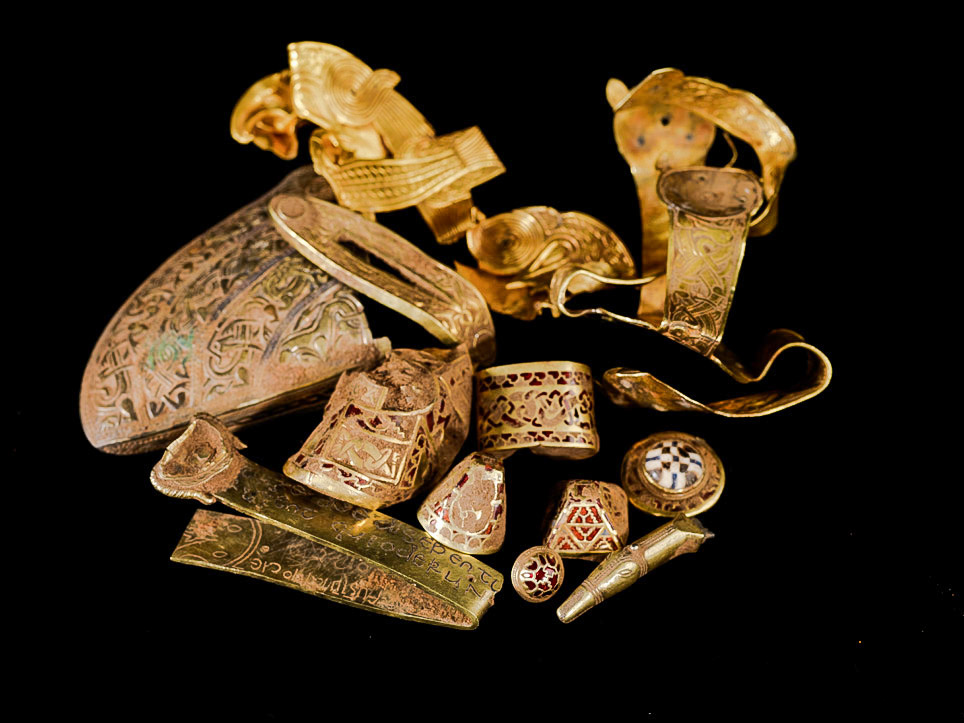
The Staffordshire Hoard was valued at 3.285 million pounds by the Treasure Valuation Committee on 25 November 2009, and under the Treasure Act 1996 that sum had to be paid by any museum wishing to acquire it, in equal shares to the finder and the landowner. Terry Herbert, the metal detectorist, and Fred Johnson, the farmer, each received half, and Herbert had a written agreement with Johnson to split any reward equally.
The Art Fund coordinated an appeal that reached the sum on 23 March 2010, with a 1.285 million pound grant from the National Heritage Memorial Fund. Birmingham and Stoke-on-Trent jointly acquired the hoard.
The change from 1946 is the principle. A reward that had been a gift from the Crown became a debt owed by the buyer at an independent valuation.
Water Newton shows the old system working on a find that had no argument
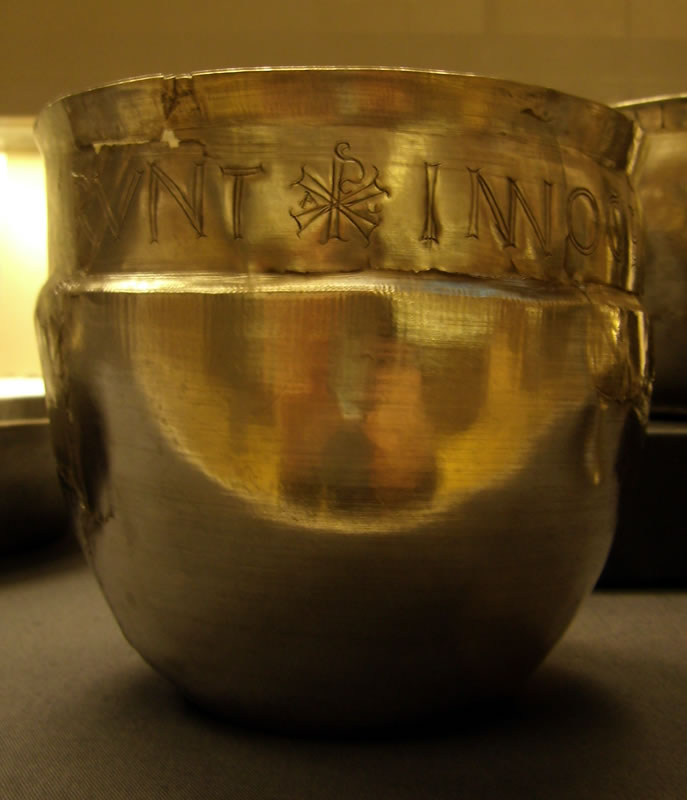
The Water Newton Treasure was found by a metal detector user, Alan Holmes, while ploughing in February 1975, and a coroner's inquest declared it Treasure Trove under the common law that held before 1996. Ownership vested in the Crown and the British Museum acquired it that year as 1975,1002.1-27. This archive's sources do not give the reward paid, so no figure is stated here, and the gap itself is worth recording.
The find is the nearest the archive has to a clean case under the old law: a careful finder who kept the group together and called in an archaeologist. Mildenhall and Corbridge are the cases where concealment shaped what happened next.
Questions
Its scrap value was about 33 pounds 6 shillings in 1735, at 4s. 6d. an ounce for 148 ounces. The British Museum paid 1,858,000 pounds for it in 1993.
A reward of 2,000 pounds was set after the coroner's inquest of 1 July 1946 and split equally, 1,000 pounds to Sydney Ford and 1,000 pounds to Gordon Butcher. It was paid through their solicitor on 16 August 1946.
The Treasure Valuation Committee valued the hoard at 3.285 million pounds on 25 November 2009. The finder Terry Herbert and the landowner Fred Johnson each received half under the Treasure Act 1996.
The inquest of 14 August 1939 found no evidence that the goods had been buried with intent to recover them. They belonged to the landowner, Edith Pretty, who gave them to the nation.
Sources
- 1H. Haverfield, 'Roman Silver in Northumberland', Journal of Roman Studies 4 (1914): the Cutter sales, the Court Leet fine and the Chancery proceedings of 1735 penelope.uchicago.edu/Thayer/...
- 2Art Fund, 'The Corbridge Lanx': Art Fund grant of 150,000 toward a total acquisition cost of 1,858,000 artfund.org/our-purpose/...
- 3Wikipedia, 'Mildenhall Treasure': 1946 inquest and the 1,000 pounds awarded to each of the two finders en.wikipedia.org/wiki/...
- 4Wikipedia, 'Staffordshire Hoard': 25 November 2009 valuation of 3.285 million pounds, equal shares under the Treasure Act 1996, appeal reached 23 March 2010 en.wikipedia.org/wiki/...
More in The Market
The partThe hammer is the one number most auction houses do not print
Of 232 auction results in this archive, 53 carry no hammer price published by the house that sold the object.
The Objects Whose Price Was Set by a Tax Bill and Not a Buyer
The Louvre did not buy the most famous Vermeer in France. It accepted it against a death duty, and the acquisition price is not withheld, it does not...
The House That Cannot Be Asked: Who Keeps the Price After the Sale
Half this archive's sale record sits with two firms you can still write to. The other half sits with houses that shut, and with bodies that were...