What Happens After the Object Goes Home
A restitution settles title. It does not settle custody. The masterpiece of the Lydian Hoard went home in 1993 and left again in 2005, and the theft was detected by weighing it.
Records in this piece: The Lydian Hoard (Karun Treasure), The Weary Herakles, Gilded Coffin of Nedjemankh, Cult Statue of a Goddess, The Morgantina Treasure, Painted Glass Goblet from the Begram Hoard, The Euphronios Krater, The Gilgamesh Dream Tablet
On this page 10 sections
ContentsClose
In short
- The Lydian Hoard was returned to Turkey in October 1993 and its masterpiece, a gold hippocamp brooch, was removed from its case at the Usak Museum and replaced with a counterfeit around 2005. The substitution was detected by weight: the original is 14.3 grams and the replica 23.5 grams.
- The man convicted of it was the museum's own director, who had gathered the evidence for Turkey's claim and travelled to New York to examine the objects. A court in Usak sentenced him to nearly thirteen years in February 2009.
- Restitution research almost always stops at the moment of return, because that is where the legal record ends. In this archive the custody chain after a return is repeatedly thinner than the one before it, and one seven-year gap in the recovered brooch's whereabouts is undocumented in every source consulted.
- A return can also make an object less reachable without anyone doing anything wrong. The Weary Herakles was reunited and sent to the Antalya Museum, which is now closed for reconstruction with its holdings inaccessible.
A restitution settles title and starts a new custody chain
A restitution answers one question only, which is who owns the object. It does not answer where the object will be kept, who will guard it, whether anyone will see it, or whether it will still be there in ten years. Those are custody questions, and the legal instrument that resolves the ownership dispute is usually silent on all of them.
The literature follows the law. Case notes, judgments and settlement announcements are abundant up to the date of transfer and then stop, because that is where the dispute ends and the reporting ends with it. This archive holds a number of objects on both sides of that line, and reading the records forward past the handover produces an uncomfortable finding: for several of them, the documentation after the return is thinner than the documentation before it.
That is not an argument against restitution. It is an argument that the chain of custody is a separate thing from the chain of title, and that a field which has spent forty years getting very good at the second one has barely started on the first.
The hoard went home in 1993 and its masterpiece left again in 2005
The Lydian Hoard is the clearest case in this archive because both halves of its history are documented. Material looted from tumuli near Gure, in Usak province, between about 1965 and 1967 was sold through an Izmir dealer to two dealers in New York and Switzerland, and bought by the Metropolitan Museum of Art in three batches between 1966 and 1970 on its curator's recommendation. Turkey demanded the objects formally in July 1986, was refused, and sued in the Southern District of New York on 29 May 1987.
On 16 July 1990 Judge Vincent L. Broderick denied the museum's motion for summary judgment. He held that the museum's argument about Turkey's delay in bringing the claim went to the equitable defence of laches rather than to the statute of limitations, and that there were genuine issues of material fact both as to whether the museum had been prejudiced by the delay and as to whether it had bought the objects in good faith. The denial was without prejudice, so nothing was settled about ownership. The case simply continued, into a discovery process that produced the museum's internal correspondence.
In September 1993 the Metropolitan agreed to settle out of court rather than go on, and the material reached Turkey the following month. That matters for what came next: no court ever ruled on ownership, so what governed the objects afterwards was an agreement between two parties, and an agreement has no supervising judge.
The objects were shown in Ankara, then moved to the Usak Museum of Archaeology in 1995, joining pieces the Turkish police had recovered from the same tombs in 1966. The journalist who had spent twenty years pursuing the case asked the ministry to install a security system on the transfer. There was none, or none that worked.
The theft was detected by weighing the object
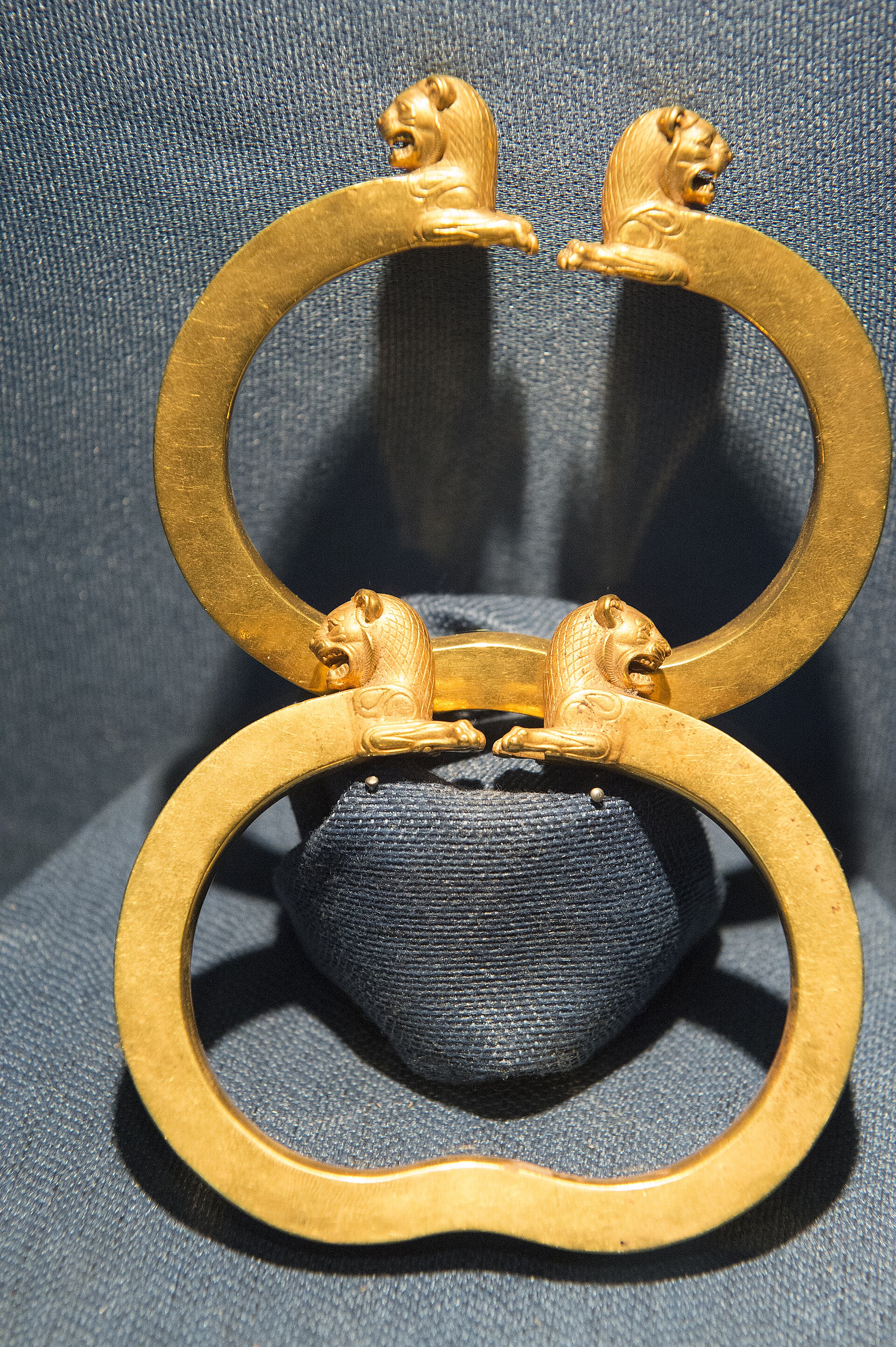
In April 2006 the newspaper Milliyet reported on its front page that the golden hippocamp, the emblem of the hoard and of the town, was a fake. The police examined the piece in the case. It weighed 23.5 grams. The original weighs 14.3 grams. A winged sea horse barely an inch and a half high, with three sets of hanging golden braids ending in pomegranate-shaped balls, had been taken out of the display and a heavier copy put in its place, probably between March and August 2005.
| Date | Event | Recorded figure |
|---|---|---|
| September 1993 | Metropolitan agrees to settle out of court; no ruling on ownership | Purchase price reported as 1.7 million dollars |
| October 1993 | Material arrives in Turkey | 363 pieces |
| 1995 | Transferred to the Usak Museum of Archaeology | Security system absent or non-functioning |
| 2001 to 2006 | Visitors to the museum over five years | 769 people |
| c. March to August 2005 | Brooch removed and a counterfeit substituted | Original 14.3 g, replica 23.5 g |
| April 2006 | Substitution reported by Milliyet | Front page |
| February 2009 | Museum director sentenced at Usak | Nearly 13 years; nine others convicted |
| November 2012 | Original brooch recovered in Germany | Seven-year custody gap undocumented |
Note what did the detecting. Not an inventory, not a curator's eye, not a routine condition check. A pair of scales, applied after a newspaper had already printed the accusation. The object had been on public display for a decade under the label of the country's most celebrated repatriation, and the difference between the real thing and the copy was sixty-four per cent of its own weight.
The man who won it back was the man who took it
Kazim Akbiyikoglu was the archaeologist and museum official who had built Turkey's case. He gathered the evidence, travelled to the United States and examined the hoard, and argued for years that the objects belonged near the tombs they came out of. He had fought local smugglers for two decades and the local mafia had tried to get rid of him. The journalist who worked alongside him counted him among the three most honest men he knew, went on television to defend him when the accusation came, and could not sleep for a fortnight.
In February 2009 a court in Usak sentenced Akbiyikoglu to nearly thirteen years for theft and embezzlement. Nine others received lesser terms. He had by then been the museum's director, that is, the custodian of the objects whose return he had personally secured.
The lesson people usually take from this is about one man, and I think that is the wrong reading. The point is structural. Turkey won on title and inherited a custody problem it had no resources for, in a provincial museum that 769 people visited in five years, and the safeguard that eventually caught the loss was a journalist. Nothing in the 1993 settlement obliged anybody to check.
A return can make an object less reachable with nobody at fault
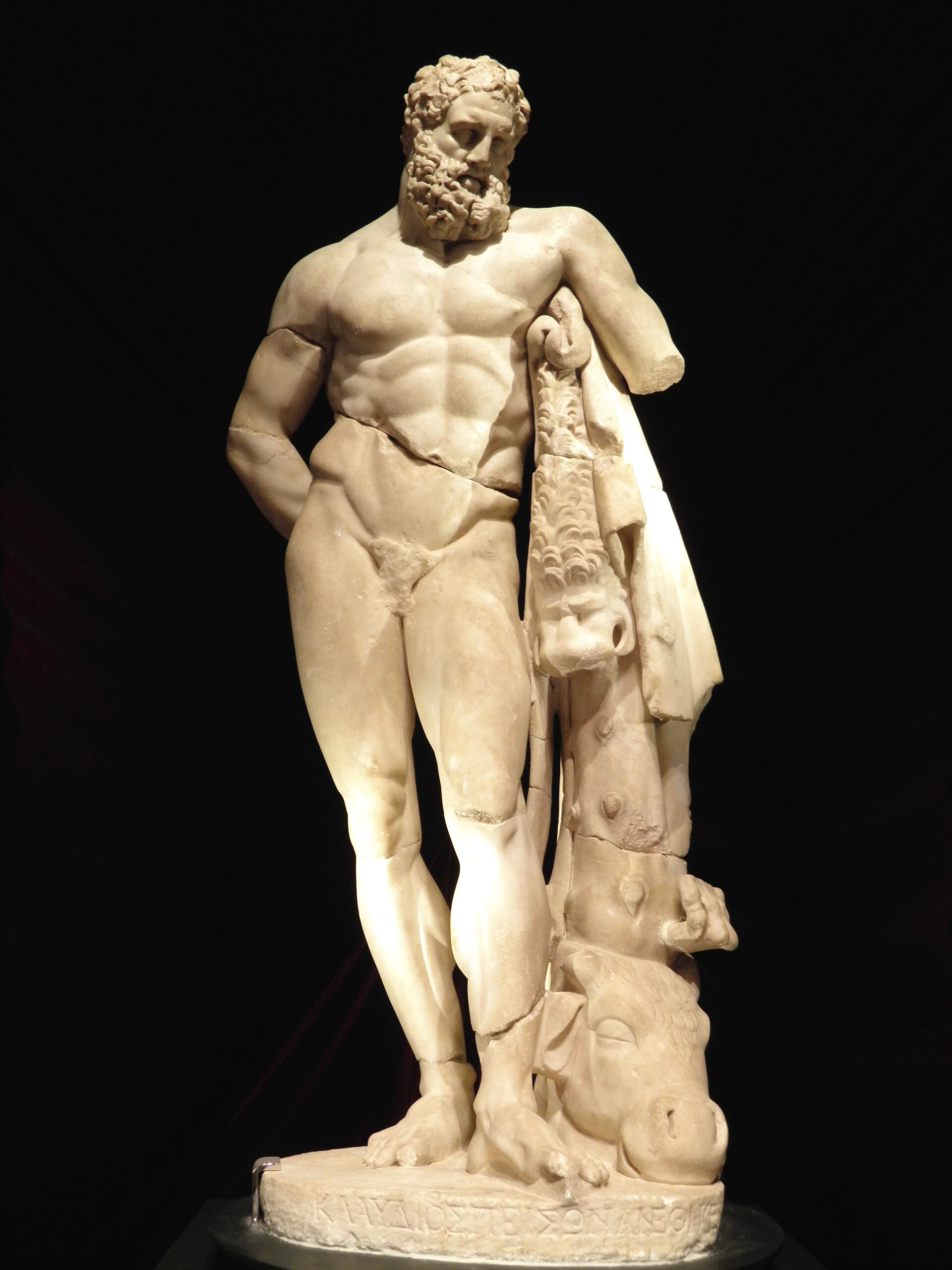
The Weary Herakles shows the same problem without any wrongdoing at all. The upper half of the statue, which had been in the United States, was reunited in 2011 with the lower half excavated at Perge, and the whole figure went to the Antalya Museum. That is exactly what restitution is supposed to produce: an object made whole and returned to the archaeological context that explains it.
The Antalya Museum is now closed and under reconstruction, and its holdings are not accessible. There is nothing improper in that, museums close, and a reconstruction is usually good news for the objects inside. But an object that was reunited and returned is now, for the time being, less available to a researcher than it was while it was disputed, and no register anywhere records that as a state worth tracking.
This is the ordinary version of the problem, and it is far commoner than theft. Access, not title, is what most people actually need from an object, and access is precisely what a restitution agreement does not govern.
Where the return did hold
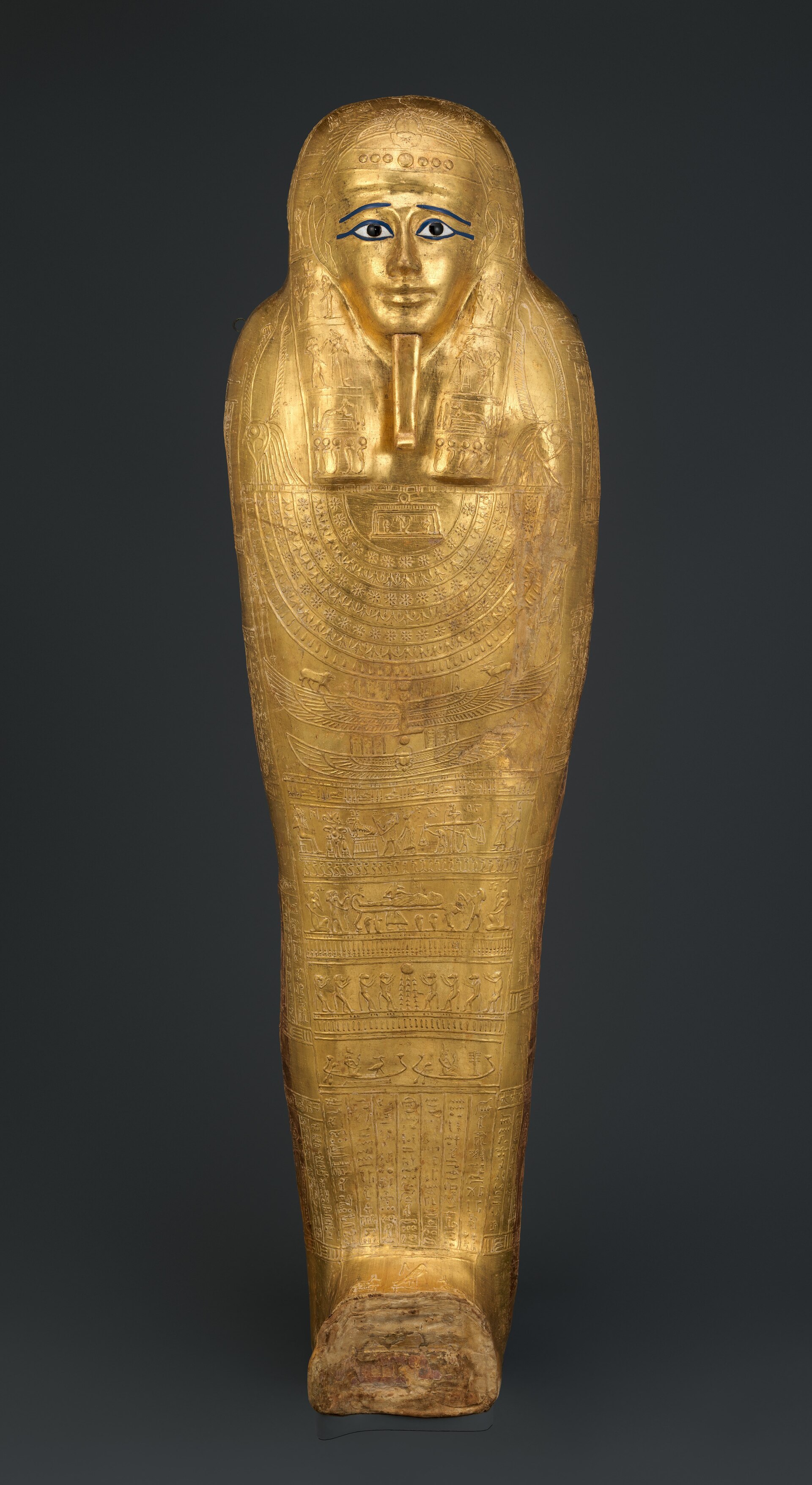
The gilded coffin of the priest Nedjemankh went back to Egypt in 2019 and was received into a national museum system with a conservation department, a security regime and a public programme. It had come to the Metropolitan in 2017 with a fabricated provenance supplied through a Paris broker, and when the fabrication was established the museum returned it. That is a restitution whose custody chain after the transfer is at least as well documented as the one before it, because the receiving institution keeps records of the same kind.
The difference between that case and Usak is not the law and not the merits of the claim. It is capacity. A national museum in a capital city has an inventory system, insured cases and staff whose job is to check; a provincial museum with 769 visitors in five years has whatever the ministry sent it. The claim to an object and the ability to keep it are decided by different things, and only the first is argued in public.
One object moved to the town that explains it
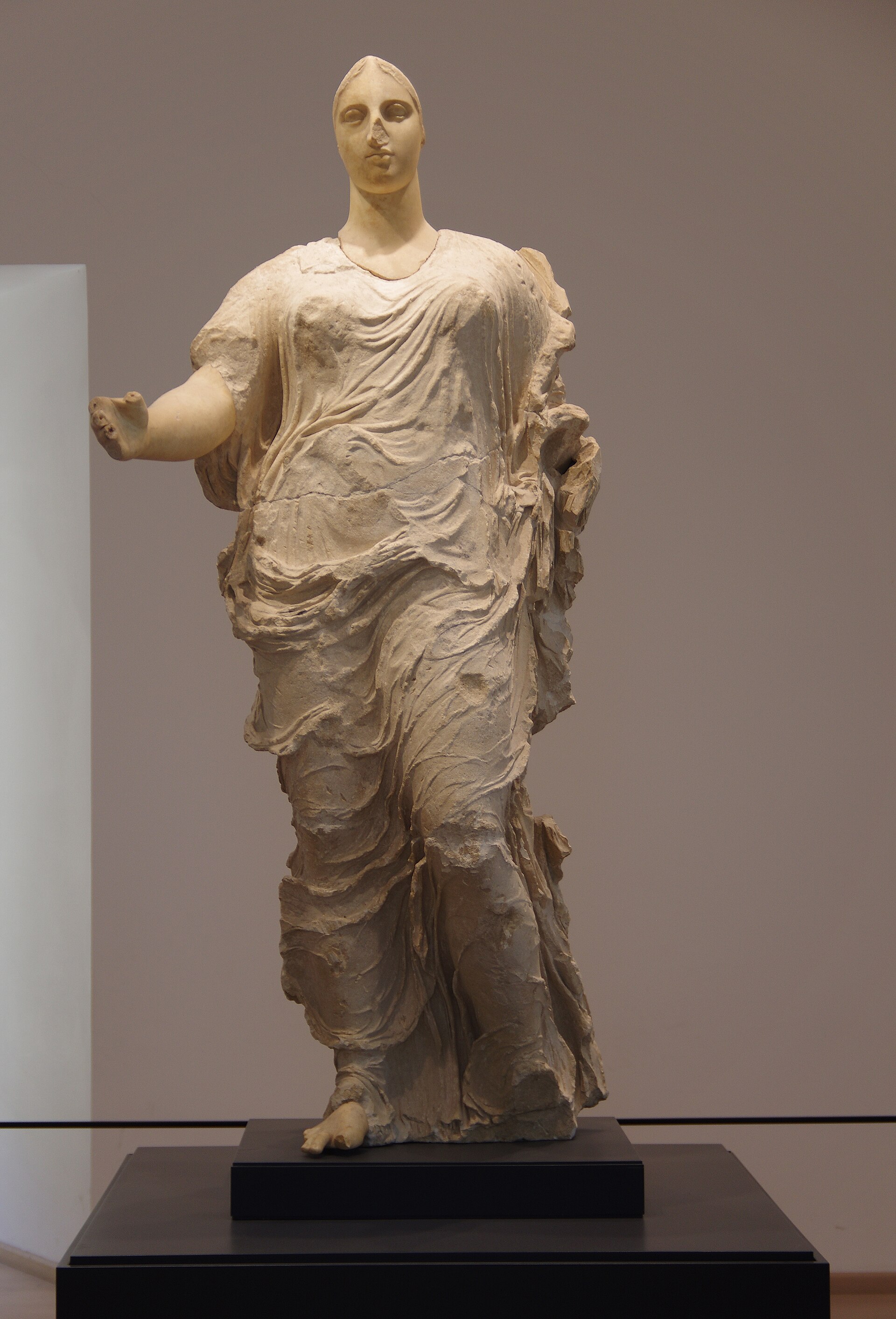
The Morgantina cult statue was sent from Malibu to Aidone, a hill town in central Sicily with a population in the low thousands, and it is now the reason people travel there. The figure is over two metres of limestone and marble, and it stands in a converted convent a short drive from the excavated site it was looted from in the late 1970s. Read as archaeology, that is the best possible outcome: the object is within sight of its own context, and the community that lost it has it back.
Read as custody, it is a swap. The statue left one of the best-resourced conservation departments in the world for a small municipal museum, and its safety now depends on a regional budget rather than an endowment. Both of those statements are true at once, and the second is not an argument against the first. It is simply the part that no case note records, because by the time it becomes relevant the dispute is over and everyone has stopped writing.
The gap nobody has filled
The original hippocamp brooch was recovered in Germany and reported publicly in late November 2012, and where it had been for the preceding seven years is not stated in any source this archive has consulted. Nobody has published who held it, how it reached Germany, on what basis it was surrendered, or by what test the recovered object was identified as the original rather than a second copy.
That last question is not pedantic. This is an object whose theft was detected only because someone weighed it. The identification of the returned piece rests on the same kind of evidence that failed to notice the substitution for a year, and the archive grades that link as disputed rather than documented for exactly that reason. A researcher visiting Usak in December 2013 still found only the confiscated fake on public display, with the genuine brooch held in Ankara pending transfer. It is confirmed on display at Usak in a report of September 2018, among 432 pieces.
One of the sources this archive had cited for the 2012 recovery, a Guardian report of 25 November 2012, now returns a 404 and no longer resolves. That is its own small illustration of the problem: the documentation of what happened after the return is not only thinner, it is decaying faster.
How to read a record that ends in a return
Treat the date of return as the start of a provenance line, not the end of one. Ask which institution received the object, whether it publishes an accession number for it, whether the object has been seen in public since, and by whom. Those four questions are answerable for most returns and they are asked for almost none, because the case note that documents the dispute closes on the handover.
Then check whether the transfer was a judgment or a settlement. A settlement is a private agreement between two parties, and it typically contains no continuing obligation on the receiving side and no mechanism by which anyone finds out if something goes wrong. The Lydian Hoard came home under a settlement, and the first person to establish that its masterpiece was missing was a newspaper reporter, eleven years later.
And record what you cannot establish. A seven-year gap in the custody of a recovered object is a finding, not an embarrassment, and writing it down is how the next person knows there is something to look for.
Why this archive is free to read
We do this for everyone who loves art. The people who have studied it for years, and the people who just stopped to look. Iconotheca exists so that what we learn belongs to all of them.
Nobody pays us for this. No ads, no sponsors, no commercial interest. These works belong to all of us, and we would rather share them with as many people as we can than keep them to ourselves.
If it gave you something today, tell us to keep going. Follow us, leave a like, or write a positive comment. We read every one, and they are what keeps us going.
Questions
It arrived in October 1993, was displayed in Ankara, and moved to the Usak Museum of Archaeology in 1995. Around 2005 its best known object, a gold hippocamp brooch, was removed and replaced with a counterfeit, which was reported by Milliyet in April 2006 and confirmed by weight: the original is 14.3 grams and the substitute 23.5 grams.
The museum's own director, Kazim Akbiyikoglu, who had gathered evidence for Turkey's claim and examined the objects in the United States. A court in Usak sentenced him to nearly thirteen years for theft and embezzlement in February 2009, and nine others received lesser terms.
It was recovered in Germany and reported in late November 2012. Where it had been in the intervening seven years, how it reached Germany, and by what test it was identified as the original rather than another copy are not stated in the sources this archive has consulted.
Usually not. A settlement resolves ownership between the two parties and typically imposes no continuing custody obligation and no monitoring mechanism. The Metropolitan settled the Lydian Hoard case out of court in September 1993, so no court ever ruled on ownership or supervised what followed.
Because access depends on the receiving institution's capacity rather than on the merits of the claim. The Weary Herakles was reunited and sent to the Antalya Museum, which is now closed for reconstruction with its holdings inaccessible, and the Usak Museum recorded 769 visitors in the five years to 2006.
Sources
- 1Sharon Waxman, 'Chasing the Lydian Hoard', Smithsonian Magazine, 14 November 2008, an excerpt from LOOT: The Battle over the Stolen Treasures of the Ancient World, for the 769 visitors in five years, the 14.3 g and 23.5 g weights, the April 2006 Milliyet report, and the absent security system. Read in full, 5 September 2026. smithsonianmag.com/history/...
- 2David Gill, 'Lydian Hoard Conviction', Looting Matters, 13 February 2009, reporting the Usak court's sentence of nearly thirteen years on the museum director for theft and embezzlement, with nine others receiving lesser terms. lootingmatters.blogspot.com/2009/...
- 3Alessandro Chechi, Anne Laure Bandle and Marc-Andre Renold, 'Case Lydian Hoard, Turkey and Metropolitan Museum of Art', ArThemis, Art-Law Centre, University of Geneva, for the out-of-court settlement, the 1.7 million dollar purchase figure, and the 2006 substitution of the brooch. plone.unige.ch/art-adr/...
- 4Republic of Turkey v. Metropolitan Museum of Art, No. 87 Civ. 3750 (VLB), 762 F. Supp. 44 (S.D.N.Y., 16 July 1990), order of Broderick J. denying the museum's motion for summary judgment without prejudice. Full text read at CourtListener, 5 September 2026. courtlistener.com/opinion/...
- 5Ilknur Ozgen, 'The Lydian Treasure', Sardis Expedition, Harvard-Cornell Archaeological Exploration of Sardis, on the material, the tumuli near Gure and the recovery. sardisexpedition.org/en/...
- 6Anadolu Agency, 'Priceless Karun Treasures exhibited in Turkey's Usak', 14 September 2018, reporting 432 pieces on view in the museum's current building. aa.com.tr/en/...
- 7ARCAblog, 'Postcard from Turkey: The Archaeological Museum at Usak, The Lydian Hoard and Two Hippocampi', December 2013, a visitor's report finding the confiscated fake still on display with the original held in Ankara. art-crime.blogspot.com/2013/...
More in Provenance and Restitution
The partA return is a new arrangement, not a conclusion
Four contested antiquities, four different things a return turned out to be: a renaming, a rotating loan, a forfeiture nobody enforced and a broken...
When the Only Proof of Where an Object Was Is a Photograph
The Third Imperial Easter Egg was photographed once, in March 1902, and that single plate is what identified it in 2014.
Moved for Safekeeping Is a Link in the Chain
Nine evacuations in this archive: three objects never returned to the building they left, one came back unrecognised and title changed once, by a...