The record price is usually the last price
Four auction records in this archive were set by a buyer who took the object into a museum within seven years. A record price is a price the same object can never test again, and the one category where records keep changing hands is the one where the objects stay private.
Records in this piece: The Massacre of the Innocents, The Rothschild Faberge Egg, Self Portrait as Saint Catherine of Alexandria, Juan de Pareja (ca. 1608-1670), The Thinker, Salvator Mundi
On this page 8 sections
ContentsClose
In short
- Four auction records in this archive, set in 1970, 2002, 2007 and 2017, each ended with the object in a public museum within seven years, and in one case the museum was the bidder. None of the four objects can ever be re-offered to test the price it set.
- A category record survives until a different object beats it. The Old Master record of 2002 fell to a different panel in 2017; the Faberge record of 2007 fell on 2 December 2025 to the Winter Egg, an object that has set the same record three times because it has stayed in private hands.
- The dealer's margin between a saleroom record and a museum's price is visible only when the museum buys second. The Gentileschi made 1.85 million euros at the hammer in December 2017 and cost the National Gallery 3.6 million pounds by private treaty seven months later.
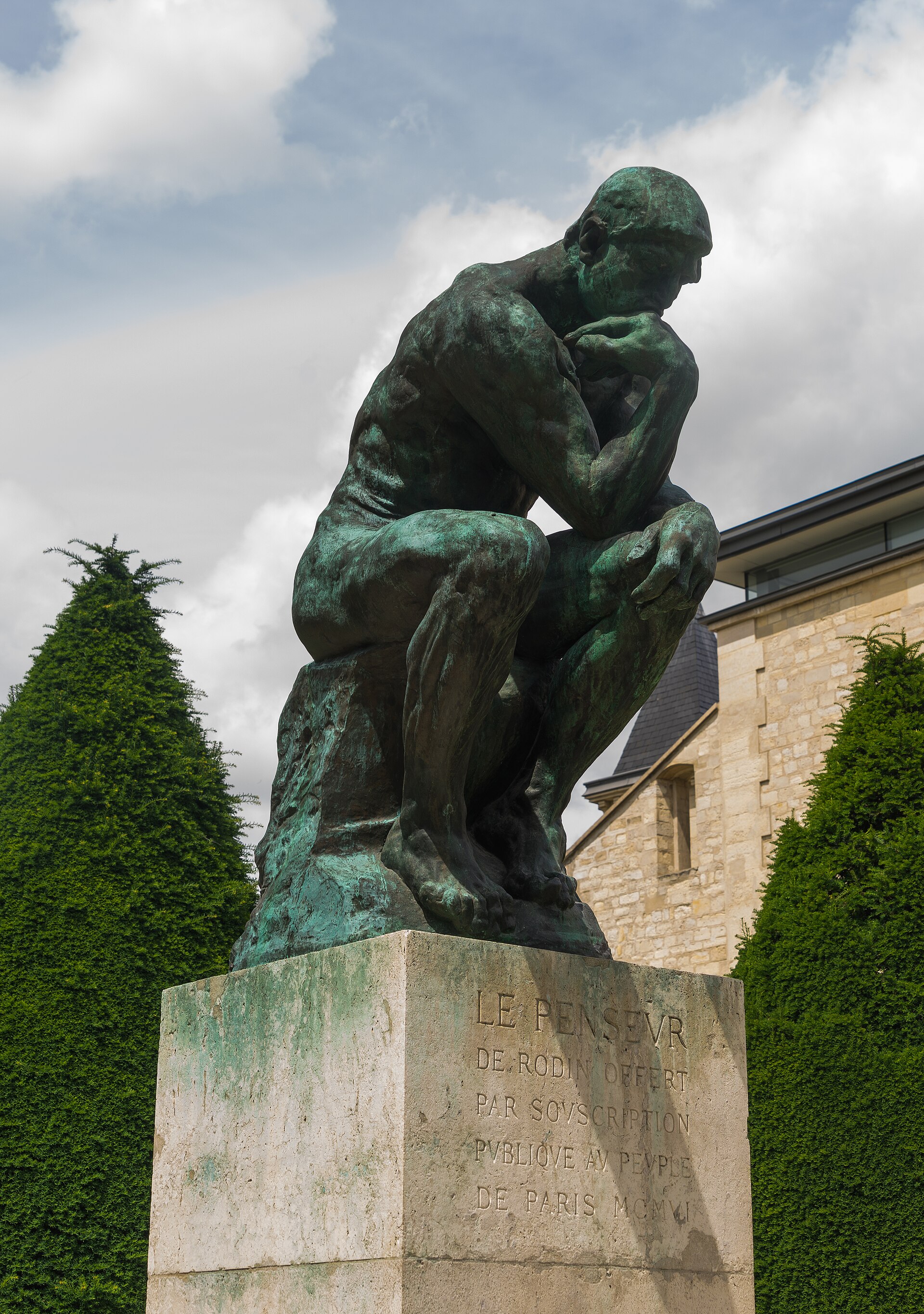
- A multiple is the exception that explains the rule. The Thinker in the Musee Rodin garden has no price and never will, while lifetime and posthumous casts of the same figure set and reset records because there are dozens of them and they keep coming back.
Four category records in this archive ended in a museum within seven years
Four auction records in this archive were set by a buyer who took the object into a public museum within seven years, which means the record price was also the last price the object will ever have. We are stating that as a pattern in the archive, not as a law of the market, and we counted it on the records that carry a category record: highest price for a work of art at auction in Britain, for an Old Master, for a Faberge piece, for a Russian work of art, for a timepiece, for a painting anywhere, and for a named artist. The four cases are in the table, and the fifth row is the case where the object is still in private hands and its price was tested three times inside five years: 80 million dollars and 127.5 million on consecutive days in 2013, then the 2017 record.
The reason to care is what the word record does to a reader. A record sounds like the top of something, a mark that later sales will approach. In these four cases it is the opposite: it is the moment the object left the price system altogether. The figure is not a high point on a curve; it is the last point, and there is no curve after it.
| Object | Record and date | Buyer | Where it is now, and when it got there |
|---|---|---|---|
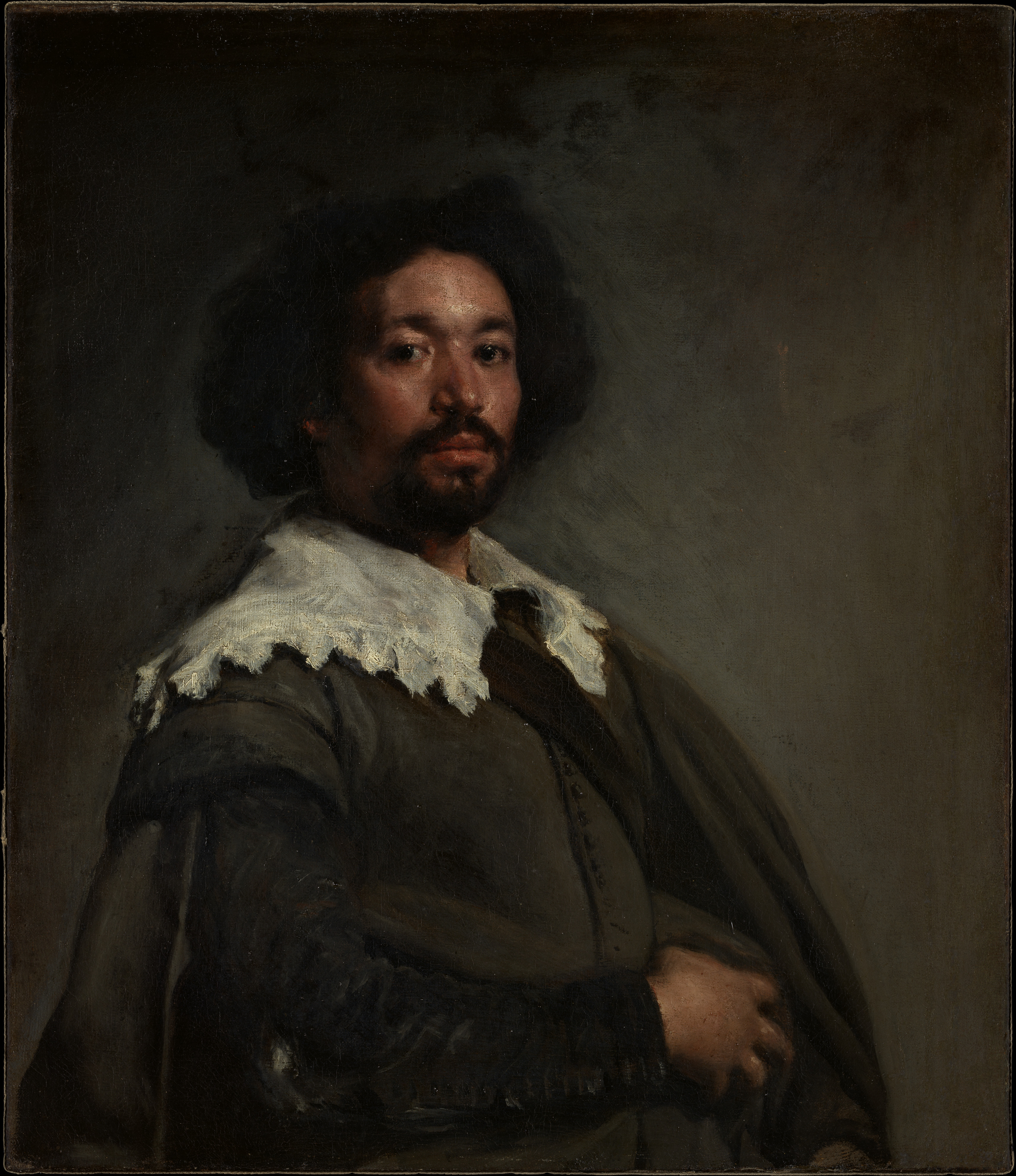
| Velazquez, Juan de Pareja | 2,310,000 pounds, 27 November 1970, world record for a picture, no premium | Wildenstein for the Metropolitan Museum | The Met, accession 1971.86, one year |
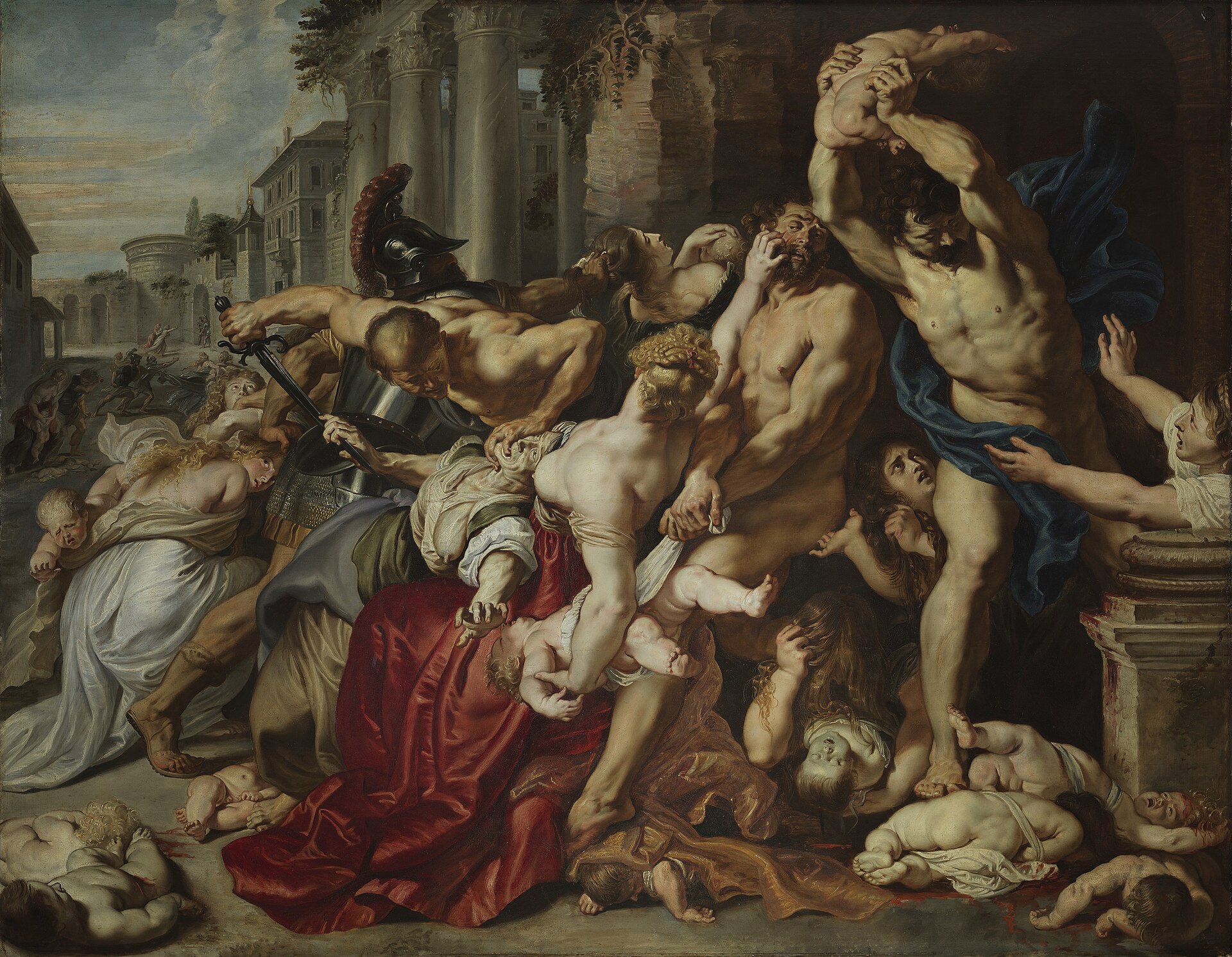
| Rubens, Massacre of the Innocents | 45 million pounds hammer, 49.5 million with fees, 10 July 2002 | Sam Fogg for Kenneth Thomson | Art Gallery of Ontario, 2008, six years |
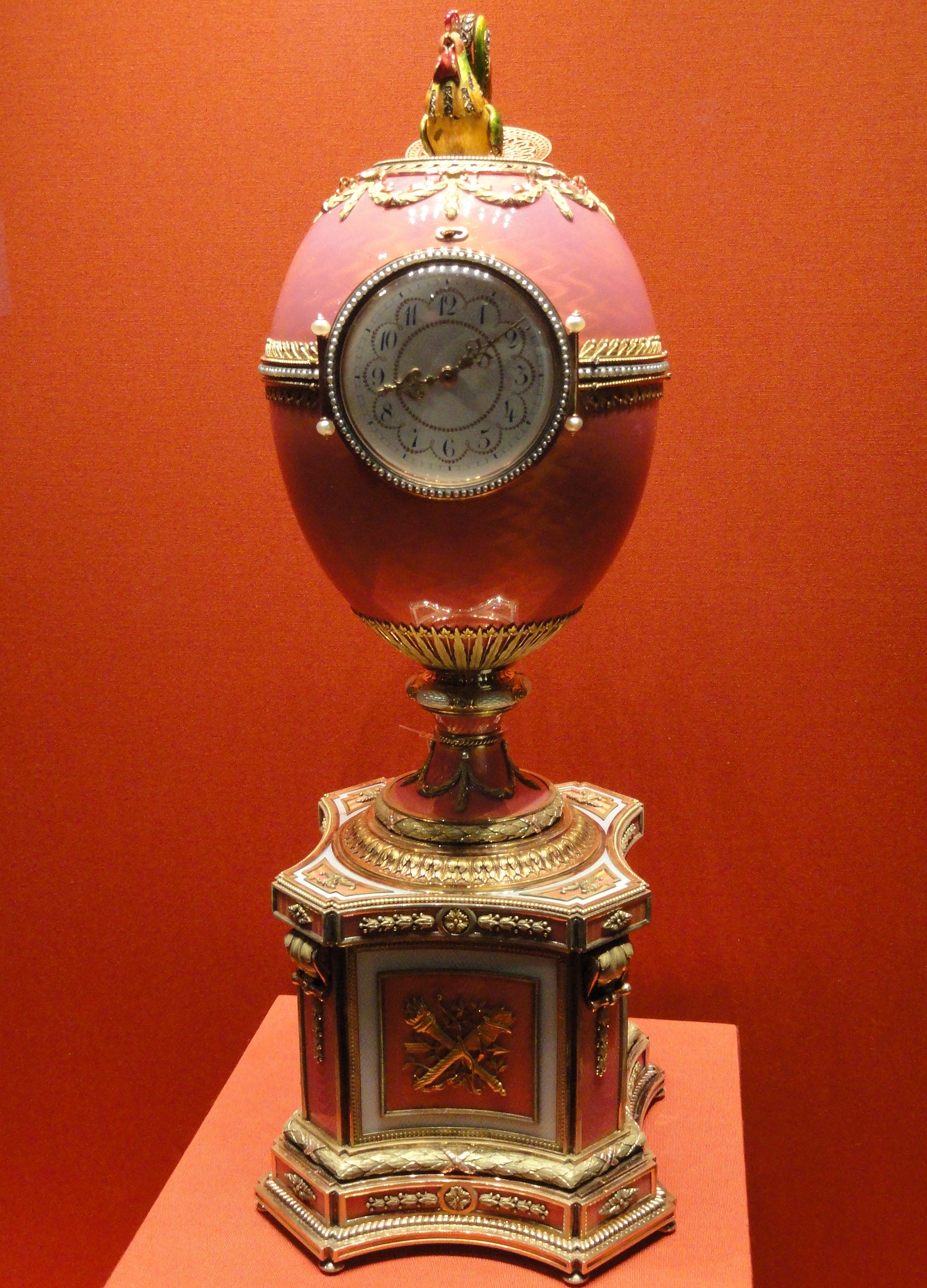
| Rothschild Faberge egg | 8,980,500 pounds with premium, 28 November 2007 | Alexander Ivanov | State Hermitage, gift of 8 December 2014, seven years |
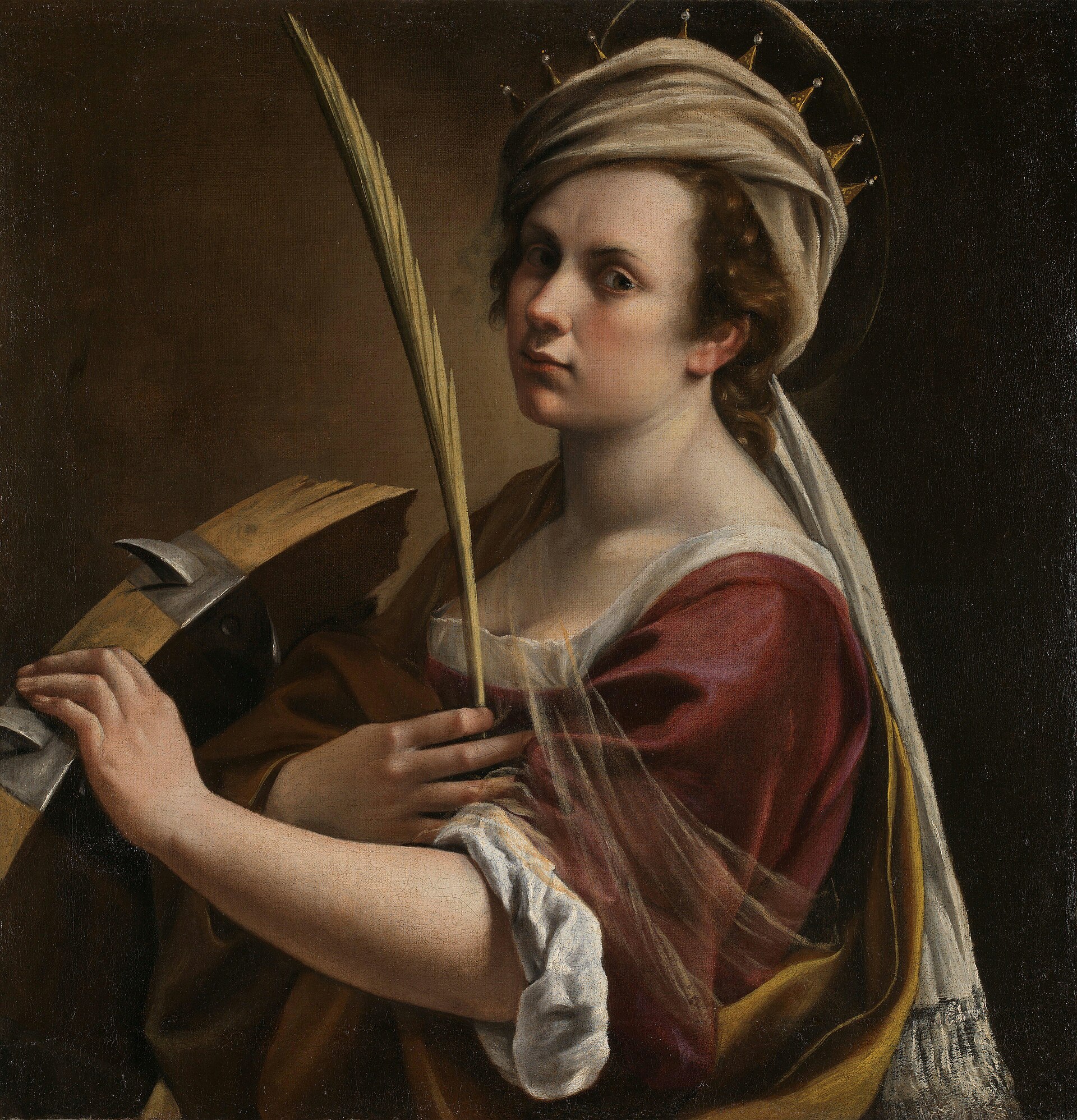
| Gentileschi, Self Portrait as Saint Catherine | 1,850,000 euros hammer, 2,360,600 with premium, 19 December 2017, artist record | Voena and Moretti, dealers | National Gallery, London, 2018, under one year |
| Salvator Mundi, attributed to Leonardo | 400 million dollars hammer, 450,312,500 with premium, 15 November 2017 | Prince Badr bin Abdullah al-Saud, principal disputed | Unlocated; no museum has shown it |
Rubens: the record buyer had already promised the picture to a museum
The Massacre of the Innocents made 45 million pounds at the hammer at Sotheby's in London on 10 July 2002, and the man whose money bought it had already committed his collection to the Art Gallery of Ontario. The Antiques Trade Gazette reported the sale under a headline giving the hammer figure and named the bidder in the room, the Mayfair dealer Sam Fogg, who was acting for Kenneth Thomson, second Baron Thomson of Fleet. The total with fees was 49.5 million, and that is the figure most later accounts repeat without saying which number they are quoting. Our record keeps the two apart.
The picture had been catalogued from 1780 as the work of a Rubens assistant, Jan van den Hoecke, sold out of the Liechtenstein collection in 1920, and lent from 1923 to a monastery in upper Austria by an owner who disliked it. George Gordon of Sotheby's saw it in 2001 and gave it back to Rubens, so the reattribution was made by the house that would earn the commission, before the sale, and the gain went to the eighty-nine-year-old consignor. After the sale Thomson lent the panel to the National Gallery in London, where it hung near the Samson and Delilah that had authenticated it. Thomson died in 2006. The panel went to Toronto in 2008 as the rebuilt gallery reopened, and it carries the accession number 2014/1581 in the Thomson Collection.
So the 2002 price is the last price. The Old Master record it set was beaten, in the sense that a different object made more: the Salvator Mundi attributed to Leonardo, at 400 million dollars hammer on 15 November 2017. The Rubens itself has been to Antwerp on loan and back to Toronto, and has not been to a saleroom, and there is no mechanism by which it will. What the market knows about this panel it learned in one afternoon and will never update.
The Rothschild egg: a record that a different egg took back
The Rothschild egg set three auction records at Christie's in London on 28 November 2007, at 8,980,500 pounds with premium, and lost the Faberge record on 2 December 2025 to an object that has stayed in private hands and kept coming back. The 2007 result was the highest price for any Russian work of art, any Faberge object and any timepiece; one source separates a hammer of 8 million pounds from the total, and the others report only the total. The buyer was the Russian collector Alexander Ivanov. On 8 December 2014, at the Hermitage's 250th-anniversary reception, President Putin presented the egg to the museum, and the reported credit line names Ivanov as the donor acting through that presentation. The Moscow Times account of the evening quotes Putin saying that he and his colleagues had not arrived empty-handed.
Eighteen years later the Winter Egg, an Imperial egg of 1913, sold at Christie's London for 22.8 million pounds, about 30.2 million dollars, and Christie's head of department called it a new world auction record for a work by Faberge. The Winter Egg had already set the same record twice, at Christie's Geneva in 1994 and at Christie's New York in 2002, before the Rothschild egg passed it. It has done so because its owners have been private collectors who sold. The Rothschild egg, in a state museum by presidential gift, cannot answer.
This is the cleanest demonstration in the archive of what a record actually measures. It is not the value of the best egg; it is the value of the best egg that was for sale that year. The record has changed hands three times among objects, and every time the winning object was one that was still in a market. The Rothschild egg's 2007 figure is now a historical price, a decade and a half old, attached to an object whose next price does not exist.
Gentileschi: one year from a regional saleroom to Trafalgar Square
Artemisia Gentileschi's Self Portrait as Saint Catherine of Alexandria made 1,850,000 euros at the hammer at the Hotel Drouot in Paris on 19 December 2017, an auction record for the artist, and was bought by the National Gallery in London by private treaty in 2018 for 3.6 million pounds. The Drouot sale, conducted by Christophe Joron-Derem, had estimated it at 300,000 to 400,000 euros. With premium the total was 2,360,600 euros. The buyers were the dealers Marco Voena and Fabrizio Moretti, and the picture entered the stock of Robilant + Voena in London.
The National Gallery's press release of July 2018 gives the price and itemises who paid it: the American Friends of the National Gallery, the National Gallery Trust, the Art Fund through the legacy of Sir Denis Mahon, Lord and Lady Sassoon, Lady Getty, Hannah Rothschild and other donors. Our record breaks the total down as 2.7 million from the American Friends, 380,000 from the Trust, 250,000 from the Art Fund and 280,000 from gifts and legacies. The gallery bought it as only the second painting by a woman it had acquired since 1991 and the first Gentileschi in the collection.
The gap between the two prices is the only place in this piece where a dealer's margin is visible, and it is visible only because the museum bought second. Roughly 1.5 times the auction total, seven months later, for a picture that had been researched, its provenance checked against the 1933-45 gap and its conservation planned, is the ordinary economics of a rediscovery. What matters for the argument is that the record set in Paris was the picture's last auction price, and the private-treaty figure in London was its last price of any kind. The artist's record is now held by a picture that will not be sold, and the next Gentileschi to come up will be measured against a figure its own object cannot revisit.
Juan de Pareja: the record buyer was the museum itself
Velazquez's portrait of Juan de Pareja was sold at Christie's in London on 27 November 1970 for 2,200,000 guineas, which is 2,310,000 pounds, the first painting to pass a million pounds at auction and the world record for any picture, and the winning bid was placed by Alec Wildenstein for the Metropolitan Museum of Art. There was no buyer's premium: the London houses introduced it in September 1975. The number the auctioneer called and the number on the invoice were the same, which is why the record carries one figure and not two.
The underbidder tells you how deep the price was. The National Gallery in London holds, under reference NGA27/24/17/15, Geoffrey Agnew's account of his firm's attempt to buy the picture for the National Gallery of Art in Washington, catalogued under the title The One That Got Away. Two American museums bidding through two dealers set the record between them. It was not a single collector's outlier; it was a floor agreed by two institutions, one of which then owned the picture and the other of which wrote up the loss.
The picture entered the Met as accession 1971.86 and is on view in Gallery 625. It had sat with the Earls of Radnor at Longford Castle for about 140 years before the sale, and it has now sat in New York for fifty-five. The 1970 record has since been passed many times over by other pictures, the Salvator Mundi among them. This one has had no price since, and the market's only observation of it is a number in guineas from a sale with no premium, converted by anyone who needs a dollar figure at a rate that no longer exists.
A multiple keeps its record contestable, which is the exception that explains the rule
The monumental Thinker in the garden of the Musee Rodin has no price and never will, and the records for The Thinker are set by other casts of the same figure, which is why that record keeps moving while the four above stand still. The garden bronze, inventory S.01295, was poured by Alexis Rudier in 1904, paid for by public subscription, stood in front of the Pantheon from 1906 and was moved to the Hotel Biron in 1922. It is French state property. The Musee Rodin has cast from Rodin's plasters since he gave them to France in 1916, and French law treats an edition as original only within twelve.
The prices belong to the others. Sotheby's in New York sold a lifetime cast of the original size, made in 1906 for Ralph Pulitzer, on 7 May 2013 for 15,285,000 dollars with premium. Christie's in Paris sold a posthumous cast of about 1928 in 2022 for a reported 10.7 million euros. A small posthumous cast made 1,568,750 pounds at Sotheby's in London in February 2016, which fixes the bottom of the range. Every one of those objects is in private hands and can come back, and when one does, the record for a Thinker will be tested again by a Thinker.
That is the contrast the four museum cases need. A record is a fact about a category only while the category still contains objects that can be sold. For a unique object that a museum has absorbed, the record is a fact about one afternoon. For a multiple, it is a live number, because the population of sellable objects has not gone to zero. The reason the Thinker's record can be beaten by a Thinker, and the Massacre's cannot be beaten by the Massacre, is not the art; it is the count.
What that does to the figure in the record
A record price attached to an object now in a museum is the last observation the market will make of that object, and the record should say so beside the figure. We already separate hammer from premium and record the currency on every result, and the reason is the same: a number without its conditions misleads. A record without the note that the object has since left the market misleads in a specific way, by implying that the figure is a benchmark the object could confirm or fail. It cannot. The Massacre has been off the market for twenty-four years, the Pareja for fifty-five, and neither figure has been tested since.
The Salvator Mundi is the row in the table that shows the alternative. It set the largest record of all on 15 November 2017 and went to a buyer whose principal is disputed, and no museum has shown it; our record places it, on a named source's account, in storage in Geneva. It could come back. That possibility, and not the size of the figure, is what makes its record a live number and the other four dead ones. When we read a record in a catalogue note, the question we now ask first is not how much but whether the same object could ever be sold again, and in the cases we hold the answer is mostly no.
Does that make the four figures useless? No. They are the best evidence there is of what two institutions, or one dealer with a museum behind him, would pay on a given day for a given object. It makes them historical, in the same way the 39 guineas the Pareja made in 1801 is historical: a true price, at a date, in a currency, for an object that then went somewhere the market could not follow. The record line in our entries now carries that fact, and we would rather a reader saw the word last beside the word record than took the one for the other.
Why this archive is free to read
We do this for everyone who loves art. The people who have studied it for years, and the people who just stopped to look. Iconotheca exists so that what we learn belongs to all of them.
Nobody pays us for this. No ads, no sponsors, no commercial interest. These works belong to all of us, and we would rather share them with as many people as we can than keep them to ourselves.
If it gave you something today, tell us to keep going. Follow us, leave a like, or write a positive comment. We read every one, and they are what keeps us going.
Questions
45 million pounds at the hammer at Sotheby's in London on 10 July 2002, 49.5 million pounds with fees. It was then the highest auction price for any work of art in the United Kingdom and for any Old Master. Sam Fogg bid for Kenneth Thomson, and the panel has been in the Art Gallery of Ontario since 2008.
No. It held the record from 28 November 2007, when it made 8,980,500 pounds with premium at Christie's London, until 2 December 2025, when the Winter Egg sold at Christie's London for 22.8 million pounds. The Rothschild egg has been in the State Hermitage Museum since December 2014 and cannot be re-offered.
Because the same object can never be sold again to confirm or revise it. The figure becomes a historical price at a date in a currency rather than a benchmark the object could test, and later records in the same category are set by different objects, which measure the market that year rather than the object.
No. Christie's and Sotheby's introduced the buyer's premium in London in September 1975. The 1970 sale of Juan de Pareja was bid in guineas, stopping at 2,200,000 guineas, which is 2,310,000 pounds, and that was both the hammer and the total.
Sources
- 1Antiques Trade Gazette, 'Rubens masterpiece joins the world record holders at 45m', report of the Sotheby's sale of 10 July 2002, naming Sam Fogg as the bidder in the room. Headline and opening paragraphs read in the in-app browser; the rest is behind a subscription wall. antiquestradegazette.com/news/...
- 2Art Gallery of Ontario, 'The Massacre's triumphant return', 30 November 2018, for the transfer to Toronto in 2008, the accession number and the Antwerp loan. ago.ca/agoinsider/...
- 3The Moscow Times, 'Putin Gives Faberge Egg to Hermitage for 250th Anniversary', 9 December 2014. Read in full. Source for the presentation of 8 December 2014 and the quoted remark. themoscowtimes.com/2014/...
- 4Artnet News, 'Faberge Egg Cracks Record With $30.2 Million Haul at Auction', updated 2 December 2025. Read in full. Source for the Winter Egg's 22.8 million pound result at Christie's London, the 1994 and 2002 records it had set earlier, and the Christie's statement of a new world auction record. news.artnet.com/art-world/...
- 5Mieks Faberge Eggs, '2007 Sale of the Rothschild Faberge Clock Egg', the one source consulted that separates an 8 million pound hammer from the 8,980,500 pound total. wintraecken.nl/mieks/...
- 6National Gallery, London, press release, 'The National Gallery acquires Artemisia Gentileschi Self Portrait', July 2018. Read in full. Source for the 3.6 million pound price and the funders. nationalgallery.org.uk/about-us/...
- 7The Art Newspaper, 'Newly discovered Artemisia Gentileschi painting sells for EUR 2.4m at auction in Paris', 19 December 2017, for the Drouot hammer, total, estimate and buyers. theartnewspaper.com/2017/...
- 8The Metropolitan Museum of Art, Open Access API, object 437869, Velazquez, Juan de Pareja, accession 1971.86. Consulted 11 September 2026 for the credit line, dimensions and Gallery 625. collectionapi.metmuseum.org/public/...
- 9National Gallery, London, Archive, NGA27/24/17/15, 'Velasquez's Juan de Pareja: The One That Got Away', Geoffrey Agnew's account of bidding for the National Gallery of Art, Washington, at the 1970 sale. nationalgallery.org.uk/research/...
- 10Sotheby's, Impressionist and Modern Art Evening Sale, New York, 7 May 2013, sale N08987, lot 45, Le Penseur, lifetime cast of 1906 for Ralph Pulitzer, 15,285,000 dollars with premium. sothebys.com/en/...
- 11Musee Rodin, collection entry for The Thinker, inventory S.01295, and 'Original bronze casts', for the twelve-cast limit and the 1916 donation. musee-rodin.fr/en/...
- 12Iconotheca, record for the Salvator Mundi attributed to Leonardo, with the Christie's result of 15 November 2017 and the current-location note. iconotheca.com/artworks/...
More in The Market
The partThe hammer is the one number most auction houses do not print
Of 232 auction results in this archive, 53 carry no hammer price published by the house that sold the object.
The Objects Whose Price Was Set by a Tax Bill and Not a Buyer
The Louvre did not buy the most famous Vermeer in France. It accepted it against a death duty, and the acquisition price is not withheld, it does not...
The House That Cannot Be Asked: Who Keeps the Price After the Sale
Half this archive's sale record sits with two firms you can still write to. The other half sits with houses that shut, and with bodies that were...