The Price That No One Bid
A committee valued the Staffordshire Hoard at 3,285,000 pounds and nobody bid. A helmet out of the same kind of field made 2,000,000 at hammer because it was the wrong metal. In this archive a statute decides which machine sets the price.
Records in this piece: The Staffordshire Hoard, The Crosby Garrett Helmet, The Great Dish from the Mildenhall Treasure, John Harrison's Marine Timekeepers, H1 to H4, The Wine of Saint Martin's Day
On this page 9 sections
ContentsClose
In short
- Some of the largest figures in this archive were produced by people who were not buying anything. A committee, a Treasury official, a coroner's jury and two Acts of Parliament each set a price that no bidder ever tested.
- Which machine applies is settled by statute and, in England and Wales, largely by metal. Section 1 of the Treasure Act 1996 defines treasure as an object at least 300 years old with a metallic content of which at least 10 per cent by weight is precious metal. A Roman helmet of copper alloy falls outside it and can be sold.
- The Crosby Garrett Helmet is the control case. Because it was copper alloy it went to Christie's on 7 October 2010, made 2,000,000 pounds at hammer and 2,281,250 with premium, and defeated the museum campaign that had reached 1.7 million. Nothing about its importance changed the outcome; its alloy did.
- A state-set price can be a disciplinary instrument. After the 1946 Mildenhall inquest the British Museum's Secretary told the Treasury that full market value, probably about 20,000 pounds, was not payable because the finders had concealed the discovery. A 90 per cent reduction was applied and 2,000 pounds was paid.
Some of the largest numbers in this archive were set by people who were not buying
A price normally records what one person was willing to pay and another to accept, which is why the auction result is the unit that market reporting is built from. A substantial group of objects in this archive carries a figure that was produced without any of that. A committee assessed it, a Treasury official reduced it, a coroner's jury made it possible, or Parliament voted it. Nobody competed, nothing was on offer, and the number is nevertheless real, binding and in several cases larger than anything the object would have fetched in a room.
These figures behave differently from hammer prices and they should be read differently. There's no underbidder, so the number carries no information about depth of demand. There's no premium, so the figure is the figure. And the valuation is usually made by people who are obliged to arrive at market value while knowing that no market will be allowed to operate. Understand that combination before quoting any of these sums as evidence of what an object is worth.
In England and Wales a statute decides which machine applies, and it decides mostly on metal
The dividing line is section 1 of the Treasure Act 1996, which defines treasure as, among other things, any object at least 300 years old when found which is not a coin but has metallic content of which at least 10 per cent by weight is precious metal. An object that meets the test cannot be sold by its finder. It vests in the Crown, a coroner determines whether it is treasure, the Treasure Valuation Committee sets a figure, and a museum wishing to keep it must raise that figure, which is then paid as a reward to the finder and landowner.
An object that fails the test is ordinary property and can go to auction the following month. The consequence is that the two most expensive routes an English field find can take are separated by a laboratory measurement of alloy, and not by any judgement about the object's importance, rarity or research value. Two records in this archive sit on opposite sides of that line and make the point better than the statute does.
A committee valued a hoard at 3,285,000 pounds and the museums had to find it
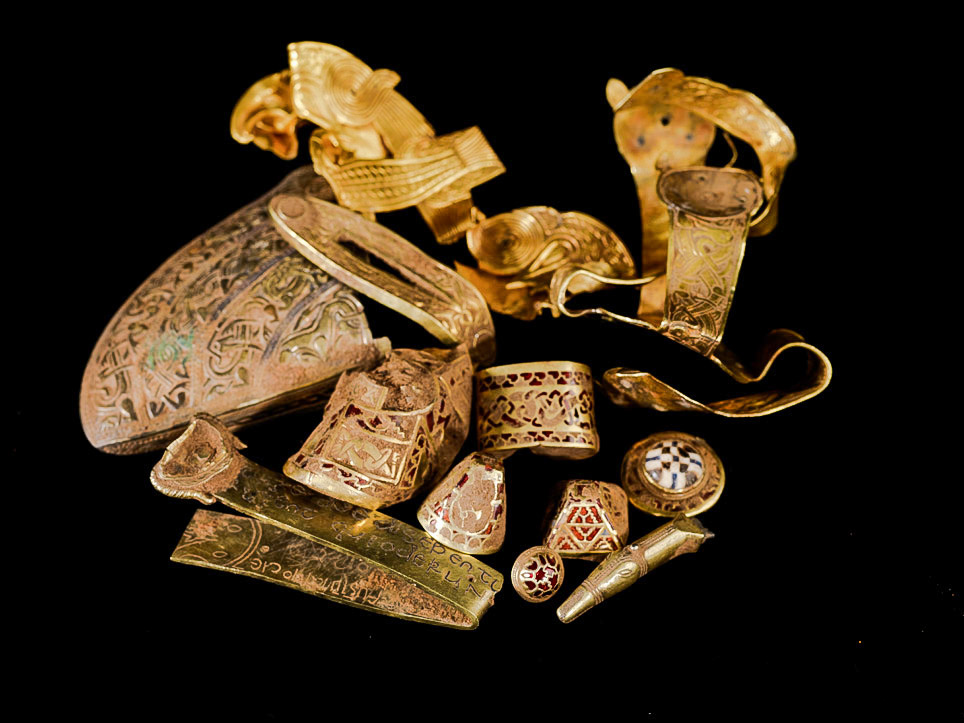
In July 2009 the metal detectorist Terry Herbert found the largest hoard of Anglo-Saxon gold and silver metalwork ever recovered, in a field near Hammerwich in Staffordshire, on land farmed by Fred Johnson. There was no body, no ship and, so far as excavation could establish, no burial pit: around 4,600 pieces, some 5.1 kilogrammes of gold and 1.4 of silver, dismantled from swords, at least one helmet and a handful of Christian objects.
The hoard was declared treasure and valued at 3,285,000 pounds. That figure isn't a price anyone offered. It's an assessment of what the material would have made had it been allowed to reach a market it was never going to reach, and it then became a fundraising target. The Art Fund records the acquisition in 2010 at a total cost of 3,285,000 pounds, met by a National Heritage Memorial Fund grant, an Art Fund grant assisted by the Wolfson Foundation, 900,000 pounds from a public appeal and 600,000 from trusts and foundations, with the purchase price raised three weeks ahead of schedule. The hoard is now held jointly by Birmingham Museums Trust and the Potteries Museum and Art Gallery in Stoke-on-Trent.
Read the sequence carefully and the direction of the money is unusual. The valuation obliged two regional museums to raise a sum set by a national committee, in order to keep an object that the law had already vested in the Crown and that no private buyer was permitted to purchase.
The same statute sent a helmet to Christie's, because it was copper
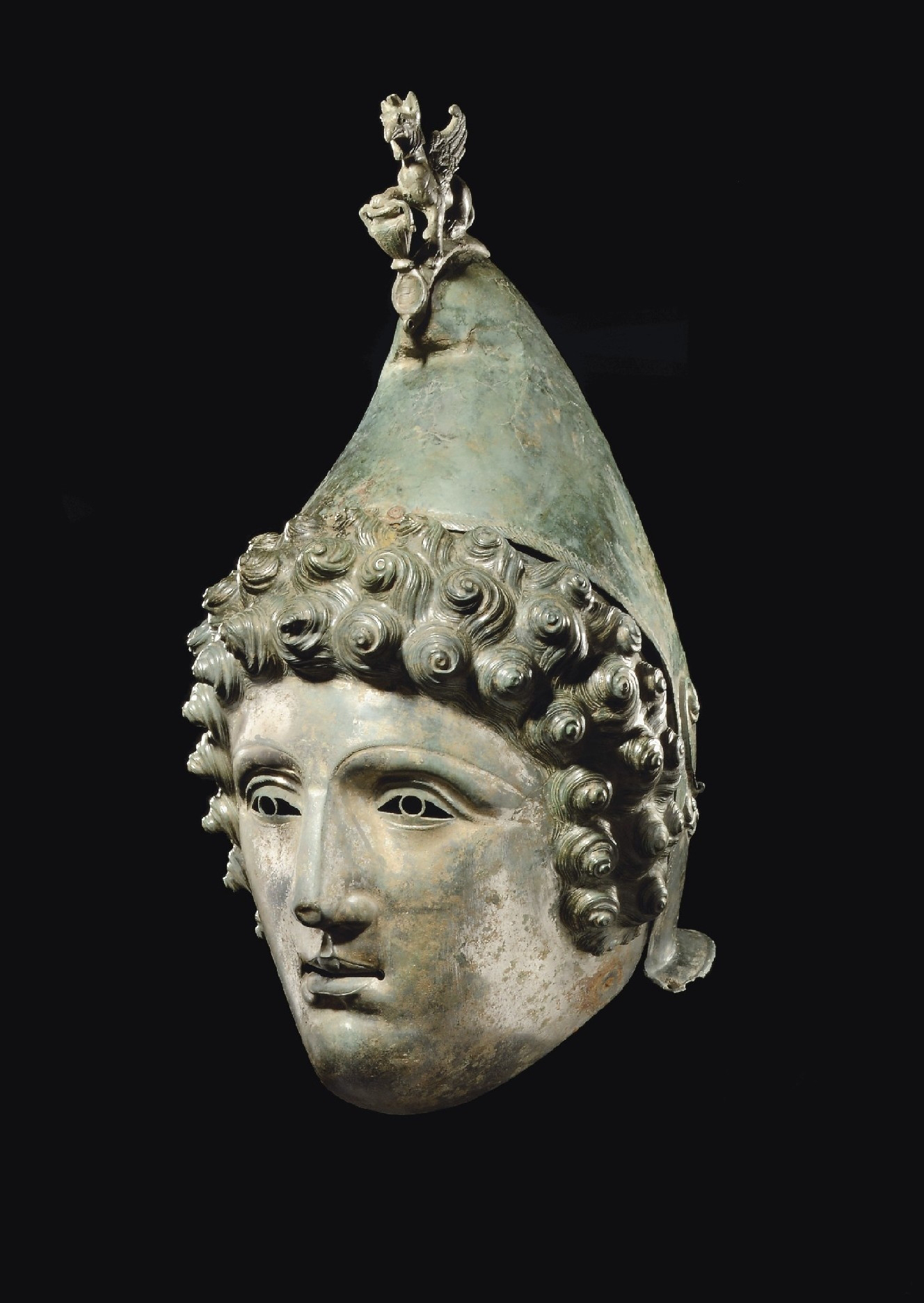
In May 2010 a detectorist working with his father in a Cumbrian field found a Roman cavalry parade helmet broken into more than sixty fragments, its face-mask visor cast as the calm face of a young man beneath a griffin-crested cap. Portable x-ray fluorescence established that it was made of a copper alloy common in the Roman period. It therefore contained no precious metal to speak of, fell outside the Treasure Act, and belonged to the finder and the landowner.
Christie's restored it, in about 240 hours, and sold it on 7 October 2010 as lot 176. Six bidders competed. Tullie House Museum in Carlisle, backed by the British Museum, withdrew at 1.7 million pounds with two bidders still active. The hammer was 2,000,000 pounds; the buyer's premium of approximately 281,250 brought the pre-VAT total to about 2,281,250, and with VAT chargeable on the premium the buyer is reported to have paid approximately 2,330,468.75. Most contemporary coverage quoted a single rounded figure of 2.3 million, which is why the hammer and the premium are separated here.
The helmet is one of only a handful of Roman face-mask cavalry helmets ever found in Britain. It was judged internationally important by the British Museum. It was restored for sale rather than for study, sold to an anonymous telephone bidder, and remains outside public collections, shown occasionally on loan. Every step was lawful, and the reason the machinery of valuation and public acquisition never engaged is that the alloy was wrong.
In 1946 the state assessed 20,000 pounds and paid 2,000
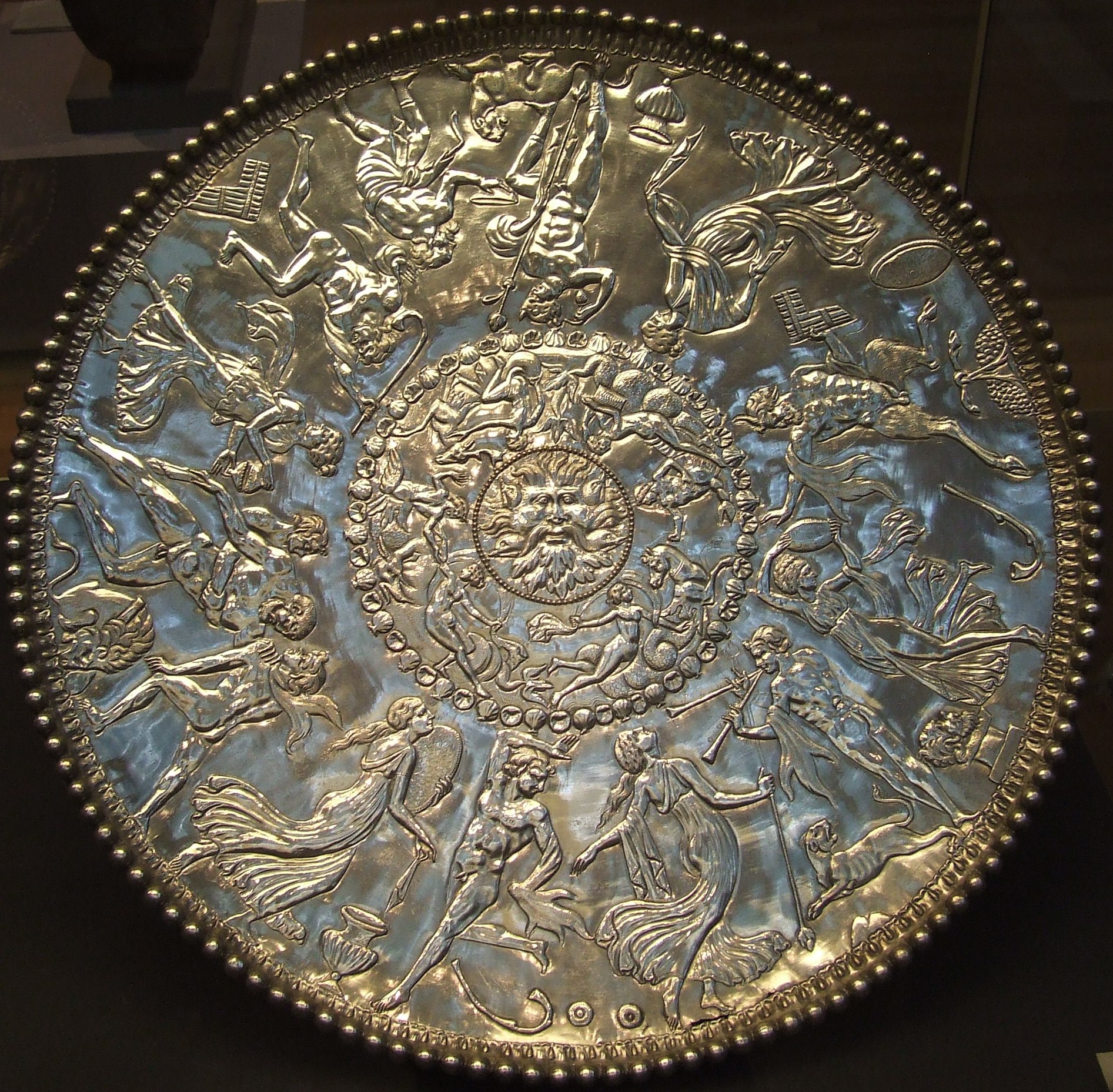
Where the state does set the figure, the figure can carry a judgement about the finder's conduct. Thirty-four Roman silver vessels were struck by a ploughman's blade in a Suffolk field in January 1942 and kept as undeclared household silver for over four years, the Great Dish among them at times doing duty as a fruit bowl.
The treasure trove inquest was held at Mildenhall police station on Monday 1 July 1946 at three in the afternoon, before a jury of twelve local men chaired by the local bank manager, Robert Pizzey. The jury adjudged the hoard to be treasure trove. What followed is set out in Richard Hobbs's study of the British Museum's own correspondence. The Secretary of the British Museum wrote to the Treasury to suggest that the ex gratia payment of full market value, which would probably be assessed at about 20,000 pounds, was not payable in this case. Forsdyke proposed a reduction of 90 per cent on the reward because the finders had concealed the fact of the discovery. The sum of 2,000 pounds, shared between the finder Gordon Butcher and his employer Sydney Ford, was the reward paid in the end.
The popular account of this find has the reward split unevenly between the two men. The documented record corrects that: it was equal, 1,000 pounds each. What was not equal was the relationship between the assessed value of the silver and the sum that changed hands, and the difference was a penalty applied by officials, recorded in correspondence rather than in any published price.
Parliament took four machines and set their value by Act
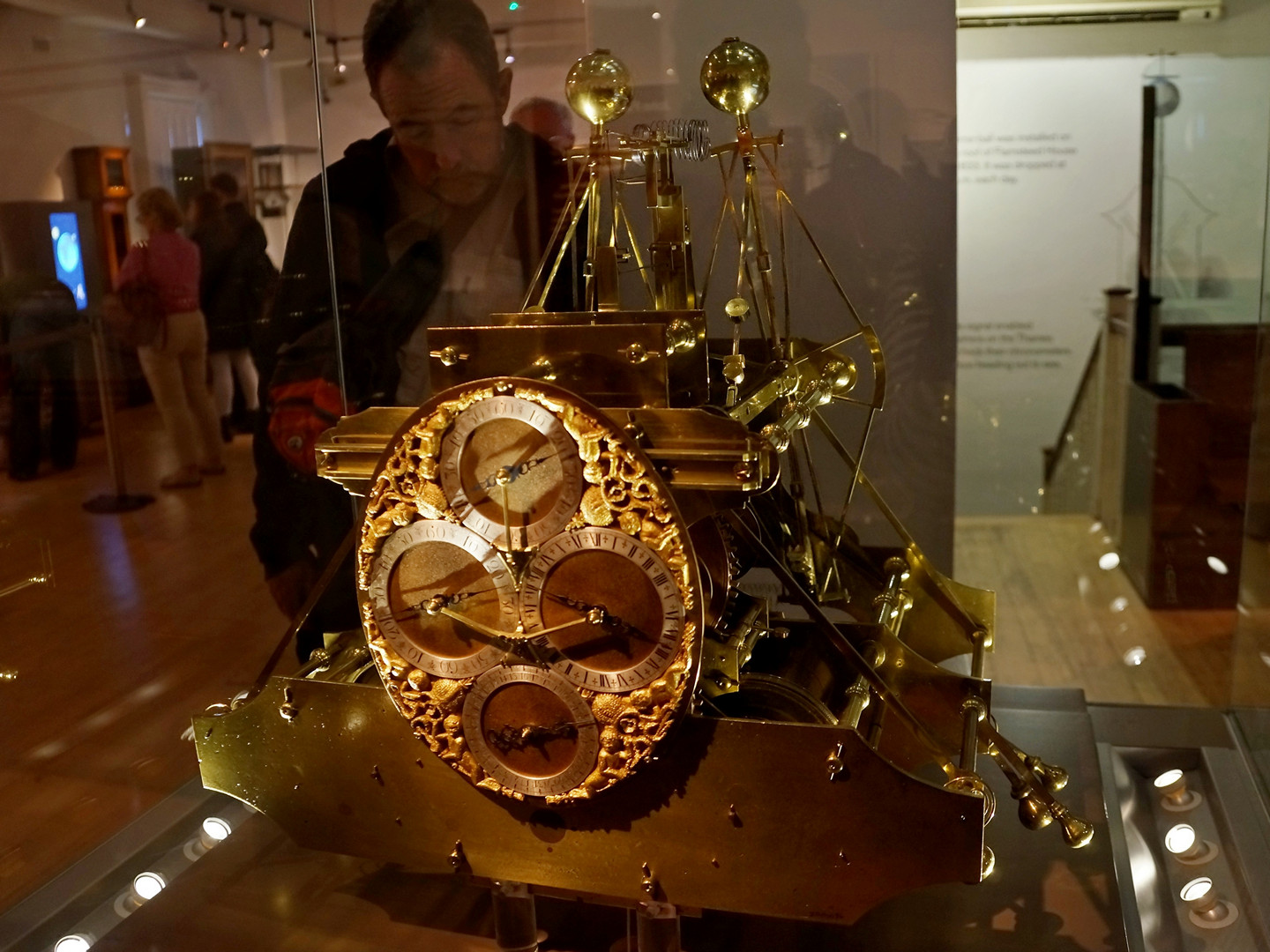
The oldest mechanism in this group is also the bluntest. John Harrison built four marine timekeepers over twenty-nine years to answer a question the Royal Navy could not: where, east or west, a ship actually is. None of the four has ever been sold. They passed from their maker directly into state ownership by statute in 1765 and 1766 and have been public property continuously since, so there is no hammer, no premium, no estimate and no probate figure for any of them anywhere in the public record.
What exists instead is a sequence of votes. The Longitude Act of 1714 offered up to 20,000 pounds. The Commissioners of Longitude voted 500 pounds in 1737 after the Lisbon trial of H1, of which 250 was paid up front against Harrison's undertaking to build a better machine. When H4 met the Act's most stringent terms the Board's recommendation was that Parliament award 10,000 pounds on disclosure of the mechanism, with the remaining 10,000 contingent on other makers producing watches of comparable performance, a condition Harrison could not satisfy by his own effort. The 1765 Act also required him to hand the timekeepers over. Late in his life a further 8,750 pounds was voted directly, in the settlement of 1773 to 1774 that also re-constituted the criteria for winning the rewards. His lifetime receipts came to 23,065 pounds across roughly forty years, and the 20,000 pound prize of the 1714 Act was never awarded to anybody in the form the Act described.
A pre-emption is a price with exactly one bidder
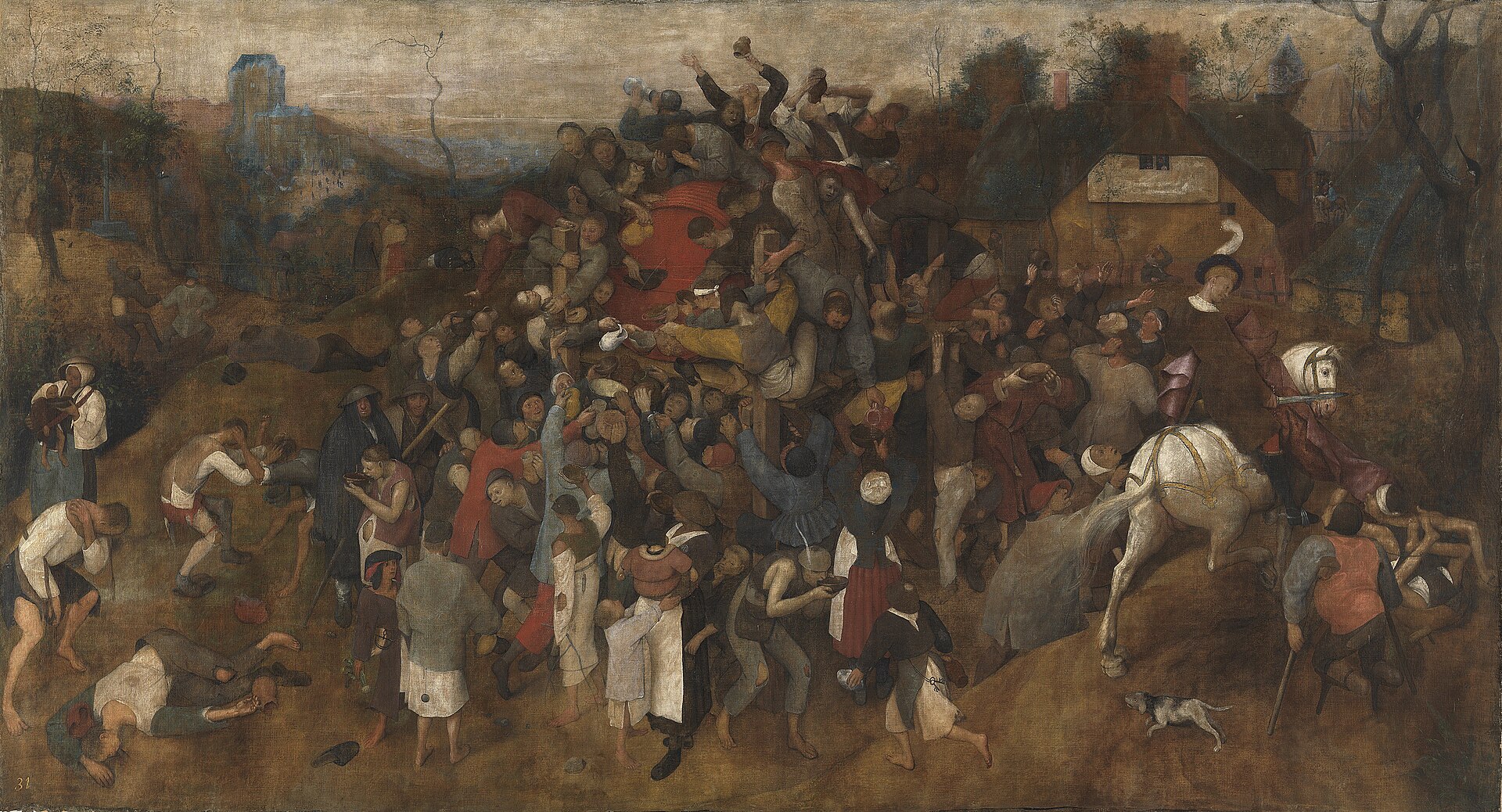
Between the committee and the saleroom sits the state pre-emption, which produces a real transaction at a figure nobody competed for. In 2010 the Museo Nacional del Prado established that a large distemper-on-cloth painting long taken for a copy was an autograph and previously unrecorded work by Pieter Bruegel the Elder, and the largest picture he is known to have made. The attribution rested on a worn signature uncovered in restoration, an X-radiograph the museum's curators judged unmistakable, and a decade of advocacy that began when one scholar saw it in a private house.
The Spanish Ministry of Culture then confirmed, on 20 October 2010, that it had approved unanimously the exercise of a right of purchase over the painting at an appraised price of seven million euros. The Spanish word in the announcement is tasado, appraised, and it's the whole of the difference between this figure and an auction result. There was a willing seller and a determined buyer, and there was no second bidder, because the mechanism exists precisely to prevent one from being needed.
| Object | Figure | Set by | Was there a bidder | Who paid |
|---|---|---|---|---|
| The Staffordshire Hoard | GBP 3,285,000 | Treasure Valuation Committee, 2010 | No | Museums, through a public campaign |
| The Mildenhall Treasure | GBP 2,000 paid on an assessment of about GBP 20,000 | Treasury, after a 1946 inquest | No | The state, to the finders |
| Harrison timekeepers H1 to H4 | GBP 8,750 in the final award | Act of Parliament | No | Parliament, to the maker |
| The Wine of Saint Martin s Day | EUR 7,000,000 | Appraisal under a right of pre-emption, 2010 | One, and it was the state | The Spanish state, for the Prado |
| The Crosby Garrett Helmet | GBP 2,000,000 at hammer, GBP 2,281,250 with premium | Six bidders at Christie s, 7 October 2010 | Yes | An anonymous private buyer |
How to read a price that nobody bid
Start by asking who produced the number and what they were obliged to produce. A Treasure Valuation Committee figure is an attempt at market value made in the knowledge that the market is closed, and it functions as a fundraising target for a museum rather than as evidence of demand. A pre-emption price is an appraisal accepted by a seller with limited alternatives. A parliamentary award is a political settlement and may be smaller than the promise it settles, as Harrison's was. A treasure trove reward can be reduced for conduct, as Mildenhall's was, in which case it is not a valuation at all.
Then be careful about comparison. It's tempting to set the Staffordshire figure of 3,285,000 pounds beside the Crosby Garrett hammer of 2,000,000 and conclude something about the relative value of Anglo-Saxon gold and Roman bronze. The comparison doesn't hold, because only one of those numbers was tested by anybody. The honest use of a committee valuation is as a record of what a public body was prepared to certify and a public was prepared to fund, which is a real and interesting fact about an object, and a different fact from a price.
Why this archive is free to read
We do this for everyone who loves art. The people who have studied it for years, and the people who just stopped to look. Iconotheca exists so that what we learn belongs to all of them.
Nobody pays us for this. No ads, no sponsors, no commercial interest. These works belong to all of us, and we would rather share them with as many people as we can than keep them to ourselves.
If it gave you something today, tell us to keep going. Follow us, leave a like, or write a positive comment. We read every one, and they are what keeps us going.
Questions
Section 1 of the Treasure Act 1996 covers, among other categories, any object at least 300 years old when found which is not a coin and whose metallic content is at least 10 per cent precious metal by weight. Objects meeting the test vest in the Crown and cannot be sold by the finder.
Analysis showed it was made of a copper alloy common in the Roman period, so it contained no significant precious metal and fell outside the Treasure Act. The finder and landowner were free to sell it, and it made 2,000,000 pounds at hammer at Christie's on 7 October 2010.
It means a public body assessed that sum as market value for an object that the law prevents from reaching a market. No bidder tests it. It works in practice as the amount a museum must raise to keep the find, and as the reward paid to the finder and landowner.
Yes. After the 1946 Mildenhall inquest the British Museum's Secretary advised the Treasury that full market value, probably about 20,000 pounds, was not payable because the finders had concealed the discovery. A 90 per cent reduction was applied and 2,000 pounds was paid, shared equally between the two men.
No. They passed from Harrison to the state by statute in 1765 and 1766 and have been public property since. Every sum attached to them was voted by the Commissioners of Longitude or by Parliament, and the 20,000 pound prize offered by the 1714 Act was never awarded in the form that Act described.
Sources
- 1Treasure Act 1996, section 1, definition of treasure, including the 300 year and 10 per cent precious metal by weight tests. legislation.gov.uk/ukpga/...
- 2Art Fund, 'Staffordshire hoard', recording the 2010 acquisition at a total cost of GBP 3,285,000, the 900,000 public appeal and the 600,000 from trusts and foundations. artfund.org/our-purpose/...
- 3Richard Hobbs, 'The Secret History of the Mildenhall Treasure', The Antiquaries Journal 88 (2008), pages 376-420. Page 383 for the inquest of 1 July 1946 and the jury; page 391 for the Treasury correspondence, the assessment of about GBP 20,000, the 90 per cent reduction and the GBP 2,000 paid. suffolkher.esdm.co.uk/media/...
- 4Sally Worrell and others, 'The Crosby Garrett Helmet', Papers from the Institute of Archaeology, volume 20 (2010), for the find circumstances, the fragment count and the portable x-ray fluorescence identification of the copper alloy. student-journals.ucl.ac.uk/pia/...
- 5Archaeology (Archaeological Institute of America), 'Heads Won, Tales Lost', for the Christie's sale of 7 October 2010, lot 176, and the sum raised by Tullie House Museum. archaeology.org/issues/...
- 6hoyesarte.com, 'Cultura confirma la adquisicion de la obra de Bruegel el Viejo para el Prado', 20 October 2010, for the unanimous approval of the purchase option at an appraised price (precio tasado) of seven million euros. hoyesarte.com/mercado/...
- 7Royal Museums Greenwich, 'Longitude found: the story of Harrison's timekeepers', for the 1737 award of GBP 500 with GBP 250 paid up front and the Board's 1765 recommendation of GBP 10,000 with a further GBP 10,000 made conditional. rmg.co.uk/stories/...
- 8Cambridge Digital Library, Papers of the Board of Longitude, RGO 14/1, 'Acts of Parliament and awards', for the 1714 Act, the 1765 Act and the 1773 to 1774 re-constitution of the reward criteria following Harrison's application. cudl.lib.cam.ac.uk/view/...
More in The Market
The partThe hammer is the one number most auction houses do not print
Of 232 auction results in this archive, 53 carry no hammer price published by the house that sold the object.
The Objects Whose Price Was Set by a Tax Bill and Not a Buyer
The Louvre did not buy the most famous Vermeer in France. It accepted it against a death duty, and the acquisition price is not withheld, it does not...
The House That Cannot Be Asked: Who Keeps the Price After the Sale
Half this archive's sale record sits with two firms you can still write to. The other half sits with houses that shut, and with bodies that were...