The Price That Belongs to Another Object
Degas made one Little Dancer and never sold it. The 41.6 million dollars paid in 2022 was for a bronze cast a decade after his death, and it is filed under his name as a record.
Records in this piece: Little Dancer Aged Fourteen, La Main aux algues et aux coquillages, John Harrison's Marine Timekeepers, H1 to H4, The Cleveland Apollo: Apollo Sauroktonos (Lizard-Slayer) or Apollo the Python-Slayer, The Unicorn Tapestries
On this page 7 sections
ContentsClose
In short
- Degas made one Little Dancer, exhibited it once in 1881, and never sold it. The National Gallery of Art, which has held the wax since 1999, puts it plainly: bronze replicas fill museums around the world, but the artist himself only created one.
- The figure quoted as the Degas sculpture record belongs to a different object. The bronze sold at Christie's in May 2022 for 36 million dollars hammer, 41.6 million with fees, was cast in 1927, ten years after Degas died, from a wax he never put on the market.
- The substitution is systematic, not occasional. Across this archive the priced object is regularly a posthumous cast, another example of the same model, a comparable work by the same maker, or a whole collection of which the object was one part.
- Some objects generate no price at all because they never entered the market. John Harrison's four marine timekeepers passed from their maker directly into state ownership by statute and have never been sold, so no hammer, premium, estimate or valuation exists for any of them.
- A private purchase produces an invoice rather than a price. The Cleveland Museum bought its life-size bronze Apollo from a dealer in 2004; the figures repeated in print are journalistic, and the museum has not published what it paid.
- The consequence for anyone measuring the market is that price data is a survivorship sample. The objects that define quality are disproportionately the ones that never sold, and their names carry figures earned by something else.
A price attaches to a name, and the name is not the object
A sale price is generated by a lot, but it is remembered under an artist's name. That substitution is harmless when the lot is the artist's own unique work and ruinous when it is not, and the reporting almost never marks the difference, because the difference is not visible in the headline that carries the number.
This archive runs into the problem constantly, because a record has a field for auction results and many of the objects in it have never been at auction. The choice each time is between leaving the field empty, which tells a reader nothing about what the object's class is worth, and filling it with results for other objects, which invites exactly the confusion this study is about. We fill it, and we label every entry that is not the object in capital letters, and this piece exists because that labelling turns out to be necessary far more often than we expected.
Four substitutions recur. The priced object is a posthumous cast of the same composition. It is another example of the same model. It is a different work by the same maker, offered as a comparandum. Or it is a collection, of which the object was one item among hundreds. Each produces a real, correctly reported figure that means something other than what a reader will take it to mean.
The version-safety rule this publication applies to photographs is the same rule, applied to money. We will not put a picture of a different object at the top of a record. Putting a different object's price there is the identical error, and it is much easier to commit.
Degas made one Little Dancer and it has never been for sale
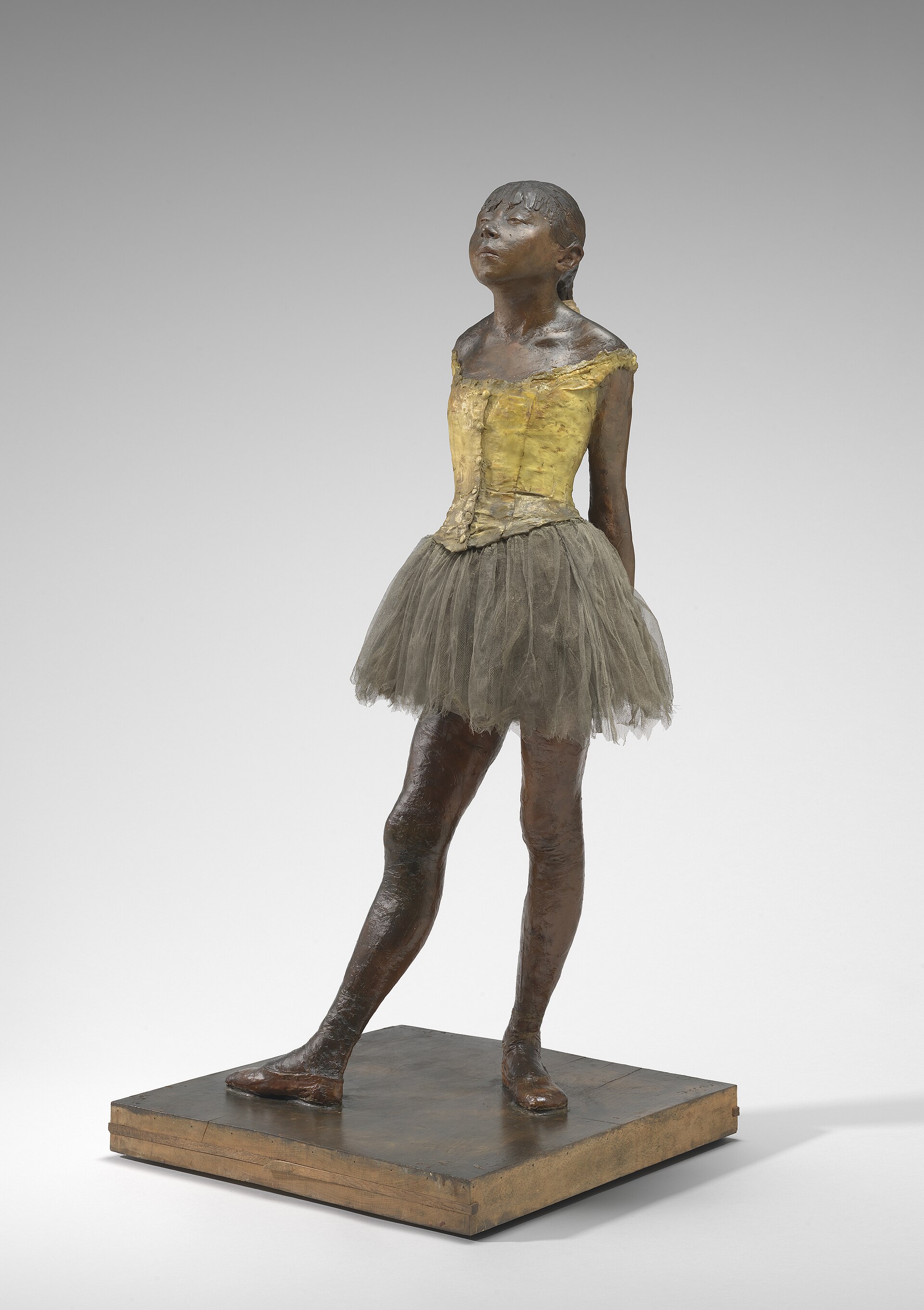
The wax Little Dancer Aged Fourteen is a unique object that its maker showed once and then kept. Degas exhibited it in 1881, where critics called it ugly and repulsive; he had never publicly exhibited a sculpture before, and he never would again. The National Gallery of Art in Washington, which has held it since 1999 under accession 1999.80.28, states the position in the title of its own article about it: Degas only made one Little Dancer.
It is not a bronze. It is pigmented beeswax and clay built over a skeleton of intersecting hollow lead pipes, with plates screwed into the base for feet and paintbrushes serving as the bones of the arms, padded out with wood wrapped in rope. Degas tinted the wax to flesh colour and painted the lips directly. The bodice is manufactured cotton, tailored to the figure, cut at the shoulder straps to slip over the torso and then coated in beeswax to blend it into the surface. The slippers are real linen. The hair is a braided wig of dark blonde human hair, also waxed, finished with a silk ribbon.
The bronzes came after he died. The National Gallery's account is that Degas's heirs found the Little Dancer in his studio after his death in 1917 and commissioned the casts that most people now recognise. Everything that has ever been bid on is downstream of that decision, which Degas did not make.
The record price is for a cast made ten years after the artist died
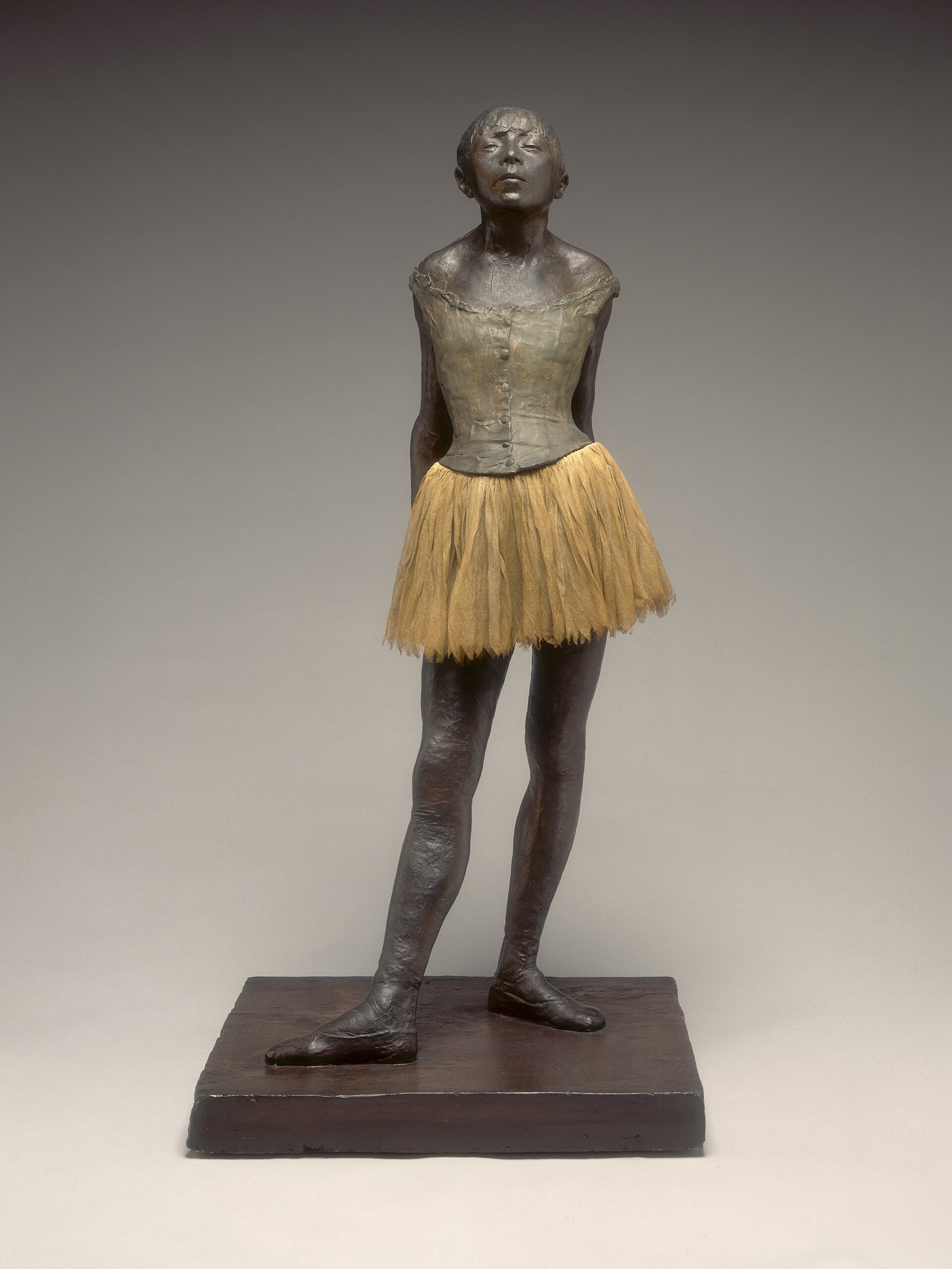
The auction record for Degas in sculpture was set by a bronze commissioned from the Hebrard foundry in August 1927. It sold at Christie's in New York on 12 May 2022, from the collection of Anne H. Bass, against an estimate of 20 to 30 million dollars. The Art Newspaper's report of the sale separates the two figures properly: it hammered at 36 million dollars and made 41.6 million with fees, and it ranks as a record for the artist in that medium.
Set the results beside each other and the pattern is unmistakable. Every figure ever generated by this composition belongs to a bronze, and the object in this archive appears in the table only as the thing none of them is.
| Date | House | What was sold | Hammer | With fees |
|---|---|---|---|---|
| 3 February 2009 | Sotheby's, London | Posthumous bronze, Hebrard cire perdue, 105 cm with base | GBP 11,800,000 | GBP 13,257,250 |
| 24 June 2015 | Sotheby's, London | Posthumous bronze numbered HER, 101.3 cm | Not separated in reporting | GBP 15.8 million reported |
| 12 May 2022 | Christie's, New York | Posthumous bronze, cast 1927, Anne H. Bass collection | USD 36,000,000 | USD 41,610,000 |
| 24 June 2026 | Sotheby's, London | Posthumous bronze numbered HER, cast from 1922 | Not separated in reporting | GBP 25 million reported |
| Never offered | None | The wax Degas made and exhibited in 1881 | None exists | None exists |
The 2015 Sotheby's catalogue put a number on the population: twenty-nine identified casts, of which twenty-seven are bronze and two plaster, plus the modele bronze and the original wax. So the composition exists in about thirty physical objects, one of which Degas made. The market has priced the other twenty-nine, repeatedly, and the price is filed under his name.
Note also what the table cannot do. Two of the four sales are reported without separating hammer from premium, so the series is not internally comparable even among the bronzes, and a chart drawn through those four points would be measuring reporting practice as much as value.
The Galle hand has no price, and the figures quoted for it are other glass
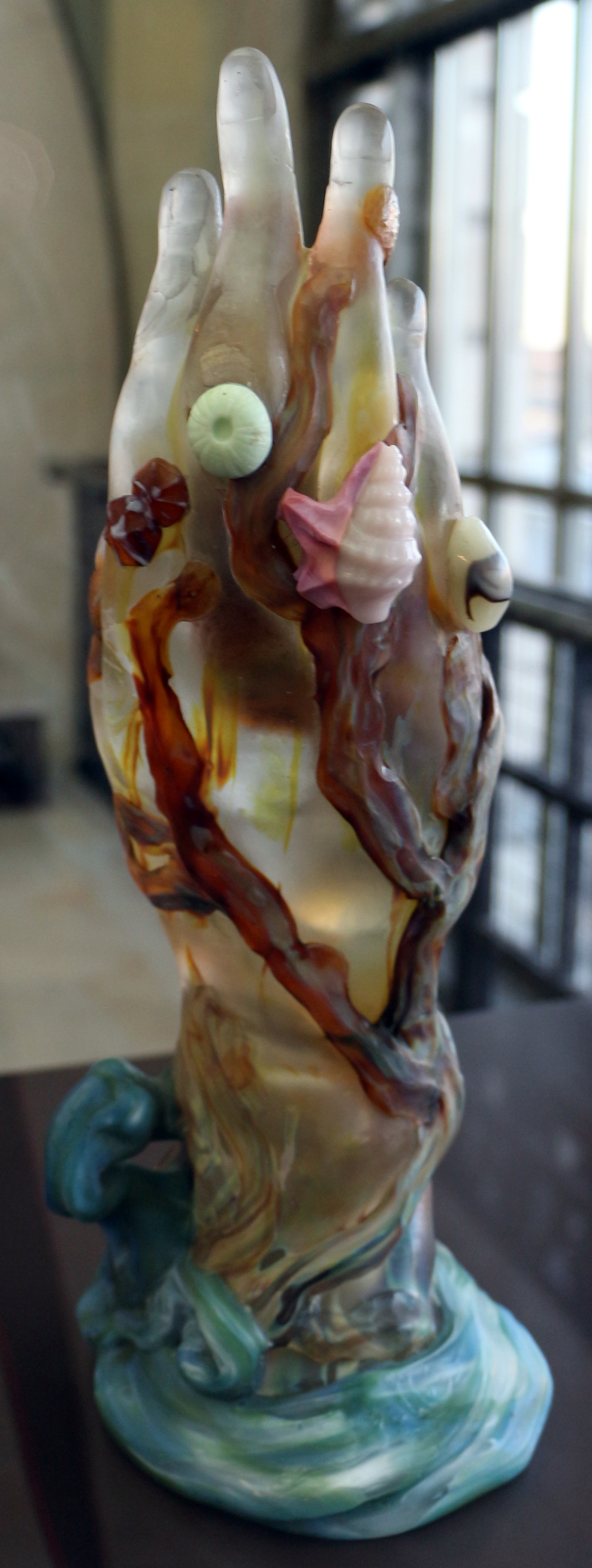
La Main aux algues et aux coquillages passed from Emile Galle to his family and from his family to the Musee d'Orsay as a gift, so no price has ever attached to it. It is a hand of worked glass rising out of a base modelled as water and seaweed, with a shell and a sea urchin applied to it, and it is one of four known examples of the model.
Three different substitutes circulate in its place. The first is a genuine near-miss: a fourth example of the same model, sold at Versailles on 13 December 1970, hammered at 20,000 francs, reproduced in colour on the cover of that sale catalogue. It is the only one of the four hands ever offered at public auction, and it has not been located since.
The second is a comparandum at the top of the maker's range: a different Galle, 32 cm on a gilt bronze base, sold at Sotheby's Paris on 21 May 2015 for 435,000 euros as reported, a figure that includes fees, against an estimate of 200,000 to 300,000. The third is the standing auction record for the maker, about 1.1 million dollars at Sotheby's in 1989, for a group of glass mushrooms on a wrought-iron base, 80 cm high, one of six made in 1902.
All three numbers are real and none of them is the price of the object. A reader who wants to know what the Orsay hand is worth is entitled to know the range the maker trades in, and is entitled to be told, in the same breath, that the hand itself has never had a price and that the one comparable example that did sell has been missing for over fifty years.
Some objects were never on the market at all
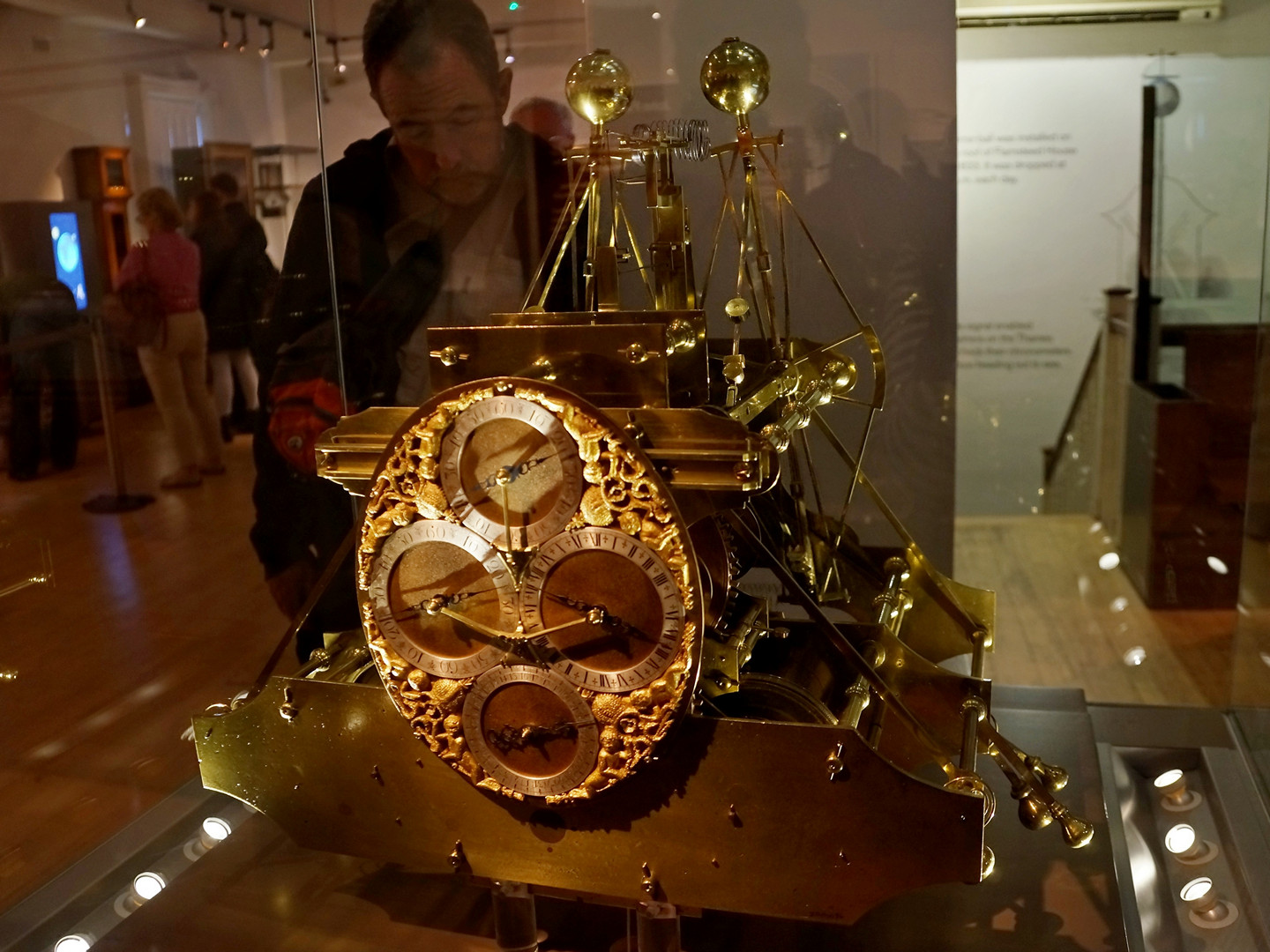
John Harrison's four marine timekeepers have never been sold, and the reason is statutory rather than accidental. They passed from their maker directly into state ownership under the Acts of 1765 and 1766, and they have been public property continuously ever since. There is no hammer price, no premium, no estimate, and no insurance or probate valuation for any of the four in the public record.
That absence is a fact about the objects, and it is more informative than a number would be. H1, H2, H3 and H4 were made under a public prize scheme, tested at public expense, and taken into public hands by legislation at the moment their maker was paid. They never had an owner who could sell them.
The archive holds several objects in this category. The Unicorn Tapestries have never been sold at public auction; the set passed by private sale to John D. Rockefeller Jr and by gift to the Metropolitan Museum. No object from the Cheapside Hoard has been offered at public auction, and the hoard has been in institutional hands since 1914. Neither Ardabil carpet has been sold at public auction as a single lot; the two figures that circulate are private-treaty prices from the 1890s.
Any figure attached to an object in this class has been manufactured somewhere between the object and the page. We do not carry one, and where a record says a price would have to be invented in order to exist, that is the finding.
A private purchase produces an invoice, not a price
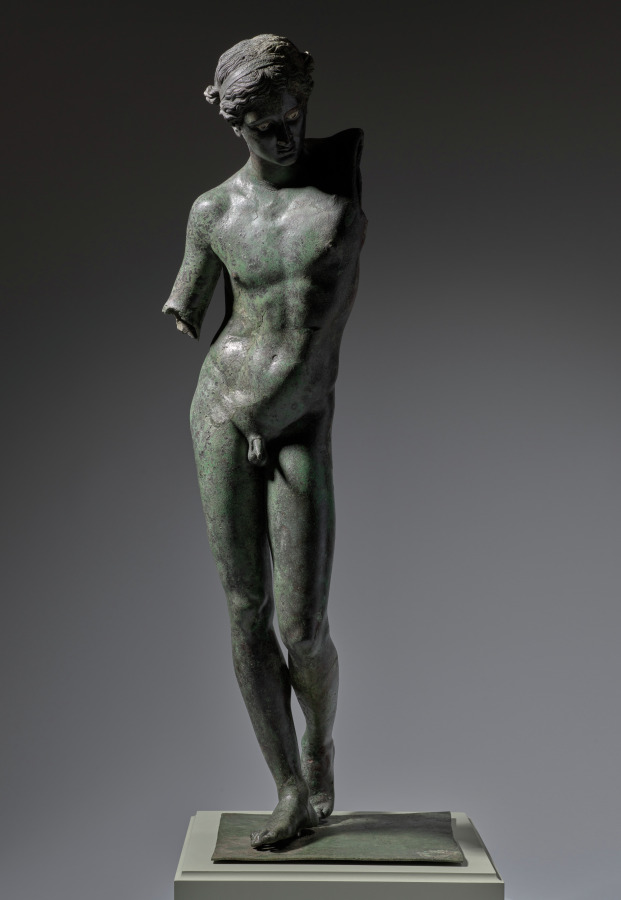
The Cleveland Apollo was bought privately from a dealer in 2004 and the museum has not published what it paid. It is a life-size bronze youth, 150 cm tall, accessioned as 2004.30 with the credit line Severance and Greta Millikin Purchase Fund, and it is the only life-size bronze version of a sculptural type otherwise known from about twenty marbles.
Two figures circulate in print, five million United States dollars and 5.2 million. Both are journalistic. Because the transaction was a private sale there is no hammer and no buyer's premium to separate, and the only document that could settle it is an invoice held by the museum and its vendor.
This is not a small category. A private treaty sale publishes no hammer, no premium and no buyer, which is why the highest reported figure for any Benin object, the Ohly memorial head placed with a private collector in 2016, is not an auction result and names no purchaser. The Krishna in Cleveland has been sold twice and neither sale was at auction: the 1920 transaction between Leonce Rosenberg and Adolphe Stoclet was a private dealer sale with no published price, and the museum's 1973 purchase from the Stoclet estate was likewise private.
A private figure is not worthless, and it is not comparable to an auction figure either. It contains no premium, it was not competitively bid, and it is reported by whichever party wanted it reported. Recording it as a price without those three qualifications puts it in a series it does not belong to.
What this does to anyone measuring the market
Price data describes the objects that sold, and the objects that sold are not a random sample of the objects that exist. The best things in many categories went into public collections early, by gift, bequest, statute or excavation, and left the market permanently before the modern price record began. What remains in circulation is what was still available, and an index built on it is measuring availability as much as quality.
Layer the substitutions on top and the distortion compounds. A maker's record can be set by a posthumous edition, as with Degas, or by an unrepresentative object at the top of the range, as with the Galle mushrooms. Both figures then anchor every subsequent estimate for that maker, including estimates for objects of a completely different kind.
The practical test is short and it can be applied to any figure in print. Ask what physically changed hands. Ask whether the number is hammer, hammer plus premium, or a private figure with neither. Ask whether the thing that sold is the thing the sentence is about. Most reported prices survive the first two questions and a surprising number fail the third.
Our habit in these records is to state the object of the sale before the sum, every time, even when it makes the sentence clumsy. It is clumsy for the same reason it is necessary.
Questions
The wax that Degas made has not. It is National Gallery of Art 1999.80.28 and has been in institutional or single private hands since 1956, passing to the museum by bequest. The objects that appear at auction are posthumous bronzes cast after Degas died in 1917.
A posthumous bronze commissioned from the Hebrard foundry in 1927 sold at Christie's New York on 12 May 2022 from the Anne H. Bass collection. It hammered at 36 million dollars against a 20 to 30 million estimate and made 41.6 million with fees, which The Art Newspaper reported as a record for the artist in that medium.
The Sotheby's catalogue for the June 2015 sale recorded twenty-nine identified casts, twenty-seven of them bronze and two plaster, in addition to the modele bronze and the original wax.
Because the object itself has never been sold and a reader still needs to know what its class trades for. Every such entry is labelled as not being the object of the record, and the alternative, an empty field, would tell a reader nothing at all.
No. A private treaty sale publishes no hammer and no buyer's premium, is not competitively bid, and is reported by whichever party chooses to report it. Placing such a figure in a series of auction results compares numbers that were produced by different mechanisms.
Because they never entered the market. John Harrison's four marine timekeepers passed to the state by statute in 1765 and 1766, the Unicorn Tapestries went by private sale and then gift to the Metropolitan Museum, and no object from the Cheapside Hoard has ever been offered at public auction.
Sources
- 1National Gallery of Art, Washington, 'Edgar Degas Only Made One Little Dancer. And It's Ours.', 18 August 2023. The museum's account of the wax, accession 1999.80.28: its construction over a lead pipe armature with paintbrushes in the arms, the cotton bodice, tutu, linen slippers and human hair wig; the single public exhibition in 1881; and the heirs' commissioning of the bronze casts after Degas's death in 1917. nga.gov/stories/...
- 2Judd Tully, 'Christie's 20th century evening sales in New York bring $831.3m and set new record for Ernie Barnes', The Art Newspaper, 13 May 2022. Reports the Petite danseuse de quatorze ans bronze, cast in 1927 from the wax model of about 1879 to 1881, sold from the Anne H. Bass collection for 36 million dollars hammer against an estimate of 20 to 30 million, or 41.6 million with fees, a record for the artist in that medium. theartnewspaper.com/2022/...
- 3National Gallery of Art, Washington, collection record for Little Dancer Aged Fourteen, Edgar Degas, 1878 to 1881, accession 1999.80.28, Collection of Mr. and Mrs. Paul Mellon. nga.gov/artworks/...
- 4Cleveland Museum of Art, open access collection record for 'The Cleveland Apollo: Apollo Sauroktonos (Lizard-Slayer) or Apollo the Python-Slayer', accession 2004.30, credit line Severance and Greta Millikin Purchase Fund. Confirms the object entered the collection as a purchase in 2004; no price is published by the museum. clevelandart.org/art/...
More in The Market
The partThe hammer is the one number most auction houses do not print
Of 232 auction results in this archive, 53 carry no hammer price published by the house that sold the object.
The Objects Whose Price Was Set by a Tax Bill and Not a Buyer
The Louvre did not buy the most famous Vermeer in France. It accepted it against a death duty, and the acquisition price is not withheld, it does not...
The House That Cannot Be Asked: Who Keeps the Price After the Sale
Half this archive's sale record sits with two firms you can still write to. The other half sits with houses that shut, and with bodies that were...