Little Dancer Aged Fourteen
Edgar Degas · 1878-1881
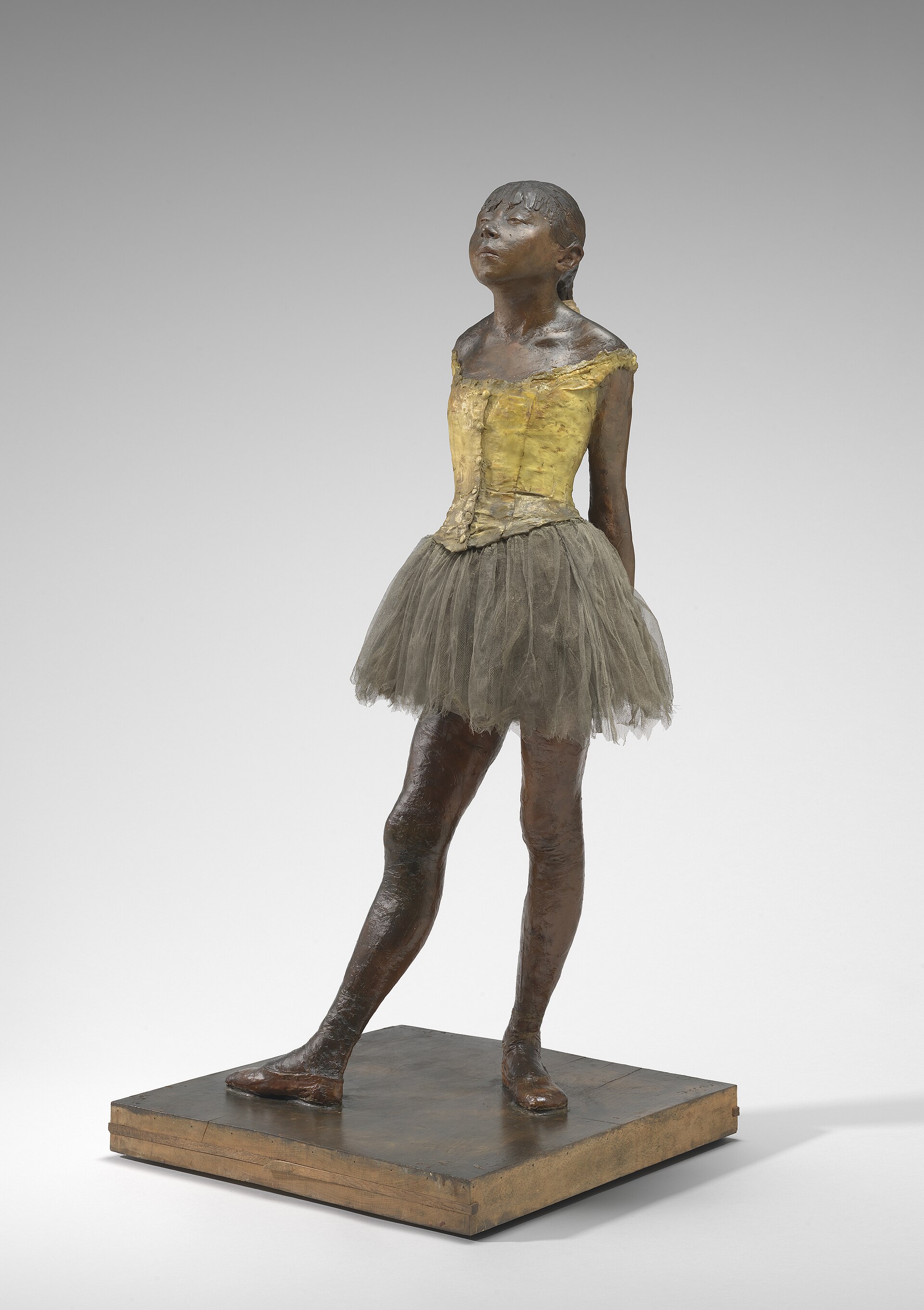
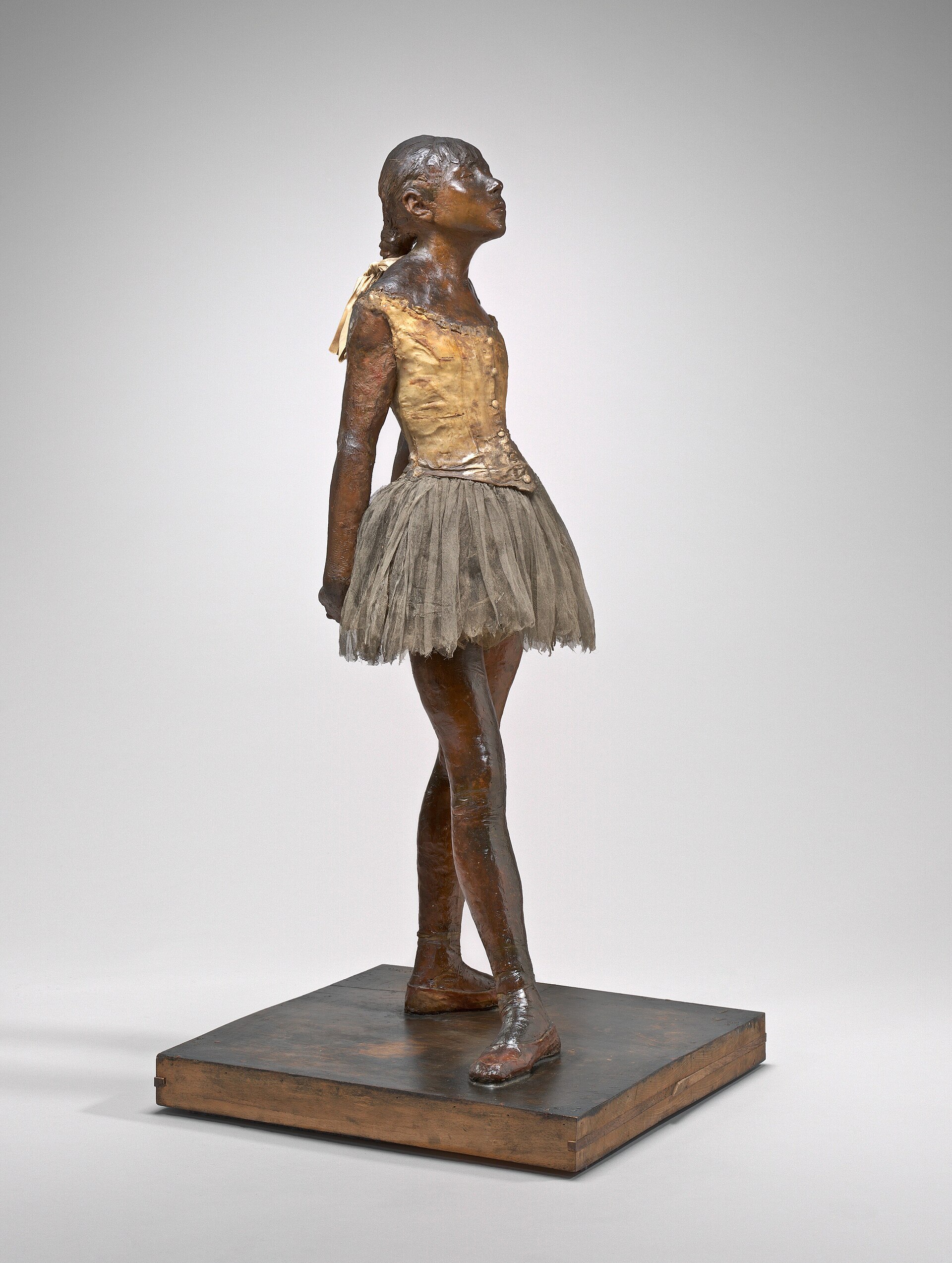
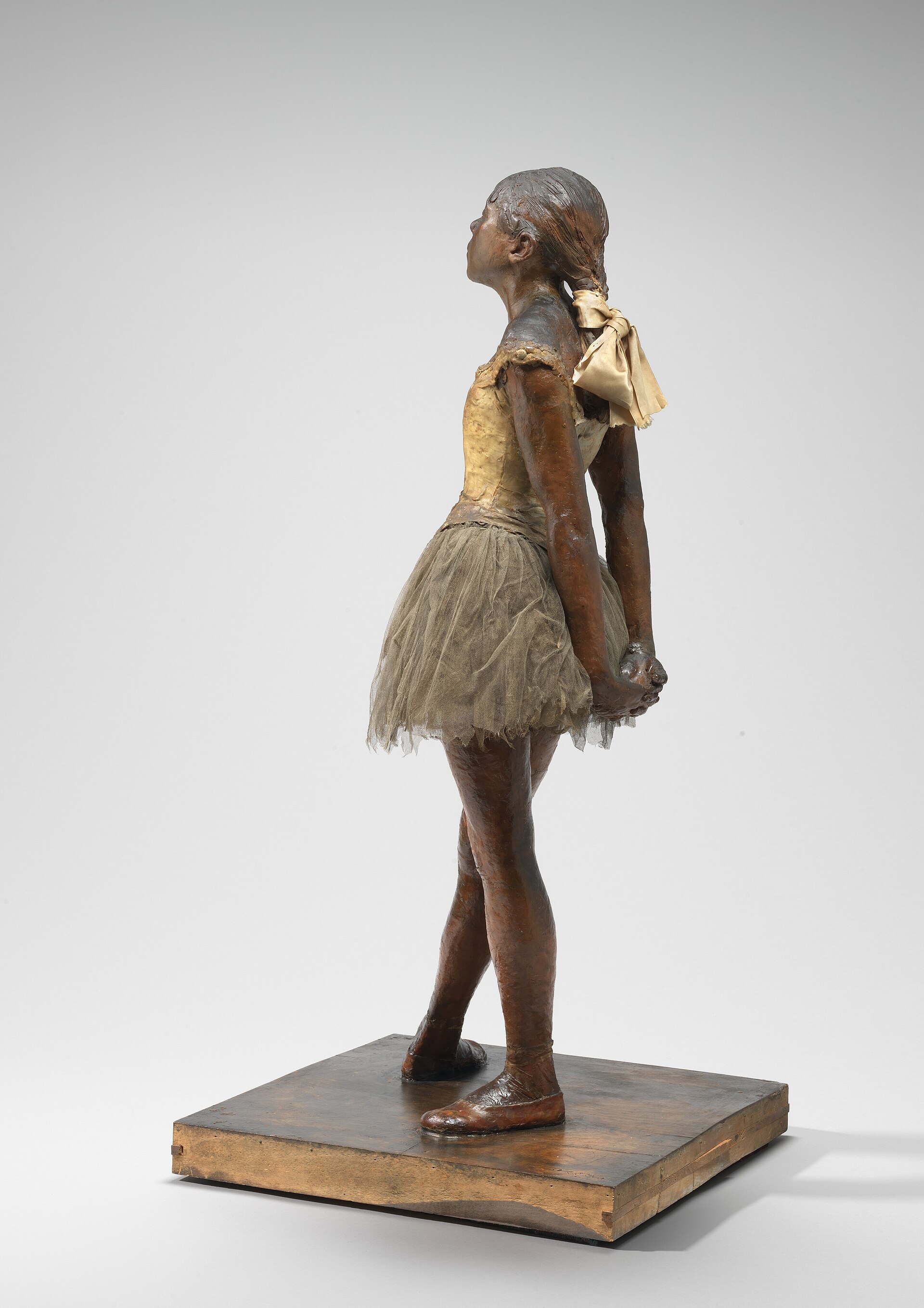
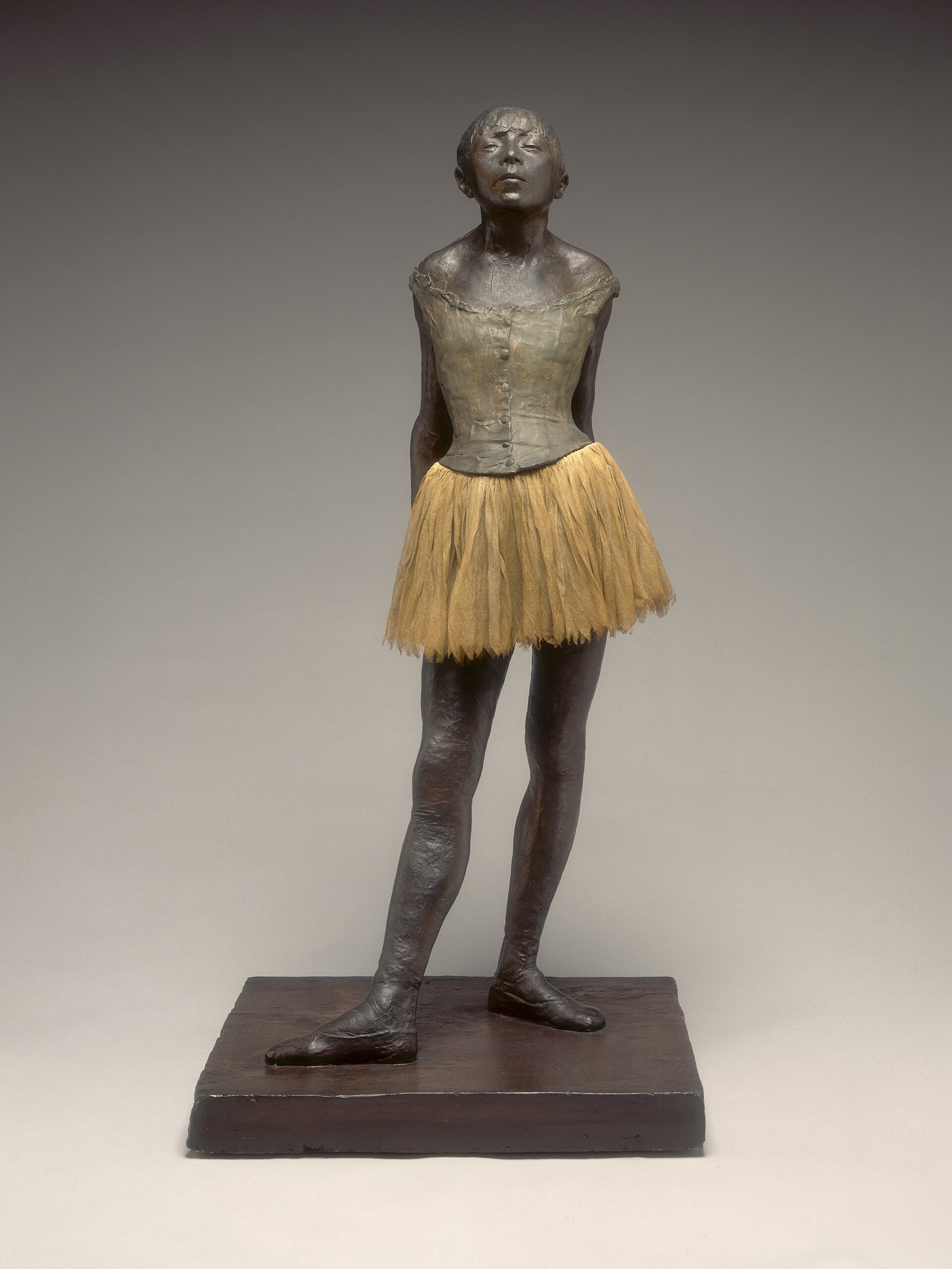
The object in this record. The wax Degas made and exhibited in 1881, National Gallery of Art 1999.80.28. Pigmented beeswax over a lead armature, with a real cotton faille bodice, a five-layer tutu, real linen slippers and a wig of human hair. This is not a bronze.
| Artist | Edgar Degas |
|---|---|
| Date | 1878-1881 |
| Medium | Pigmented beeswax, clay, metal armature, rope, paintbrushes, human hair, silk and linen ribbon, cotton faille bodice, cotton and silk tutu, linen slippers, on wooden base |
| Dimensions | Overall without base: 98.9 x 34.7 x 35.2 cm (38 15/16 x 13 11/16 x 13 7/8 in.). Weight 49 lb. (22.226 kg) |
| Where it is now | National Gallery of Art, Washington, West Building Ground Floor, Gallery G3 |
| Inventory number | 1999.80.28 |
| Attribution | AcceptedAutograph and undisputed. Full note |
| Object type | Sculpture |
| Period | Impressionism, 1874-1886 |
| Culture | French |
| Genre | modern-life subject |
| Inscriptions | On the proper left back corner of the base: Degas |
| Owners on record | 7 links5 documented, 2 disputed |
| Sources | 18 cited |
About this record Last verified 7 August 2026 · 18 sources cited · Change log
On this page 10 sections
ContentsClose
A two-thirds life-size figure of a fourteen-year-old ballet student, modelled in pigmented beeswax over a lead armature packed with rope, wood and old paintbrushes, and dressed in a real cotton bodice, a real tulle tutu, real linen slippers and a wig of human hair. Degas showed it in a glass case at the sixth impressionist exhibition in 1881. It was the only sculpture he exhibited in his lifetime, and the critics called it ugly.
It is now in the National Gallery of Art in Washington, acquired by Paul Mellon in 1956 and bequeathed in 1999. It has never been sold at auction. Everything sold at auction under this title is a posthumous bronze, cast from plaster after Degas died in 1917 by the Hebrard foundry in Paris, in an edition lettered A to T with two further casts marked HER and HER.D. Those bronzes have made 13.3 million pounds, 15.8 million pounds, 41.6 million dollars and 25 million pounds.
A second family of Little Dancer bronzes exists, cast from the 1990s onward at the Valsuani foundry from a plaster whose history before 1955 nobody can document, and which differs from the Washington wax in body, pose, face and hair. Most Degas specialists reject them. Seventy-four of them were given to Purdue University in 2023. This record is built around that distinction, because at this level of the market a cast letter and a foundry stamp are the difference between eight figures and five.
Provenance
Each link is graded. Documented: a cited source supports it. Disputed: the identification is argued but not established. Unknown: no owner for that span, and the gap is not smoothed into a narrative. The grades in the glossary.
- 1878 - 1917The artist, Parisdocumented
Modelled 1878-1881 from the Paris Opera ballet student Marie Genevieve van Goethem, born 7 June 1865, and exhibited by Degas at the sixth impressionist exhibition, 35 boulevard des Capucines, Paris, 1881, catalogue number 12, as Petite Danseuse de quatorze ans (statuette en cire). It remained in his studio for the following thirty-six years and was never shown again in his lifetime. Louisine Havemeyer saw it in his studio in 1903 and remembered how woolly the dark hair appeared, indicating the wax had already darkened.12317
- 1917 - 1929 or laterThe artist's five heirsdocumented
Rene De Gas, the artist's last surviving brother, and four surviving children of his sister Marguerite: Jeanne Fevre, acting also for her sister Madeleine, a Carmelite nun; Henri Fevre; and Gabriel Fevre. On 13 May 1918 they contracted with the Hebrard foundry for reproduction in bronze; the contract provided that the original figures became the property of the foundry.12
- before 1929 or after 1931 - 1937A. A. Hebrard, Parisdisputed
The National Gallery's systematic catalogue records that the wax was possibly sold separately from the other lifetime works before 1929 or after 1931 to A. A. Hebrard. The Gallery's public object record simply gives Hebrard as the next owner after the heirs. The transaction, its date and its price are not documented in the sources consulted. Hebrard died in 1937.12
- 1937 - 1955Mme A. A. Hebrard and/or Nelly Hebrard, Parisdisputed
The Gallery's object record names the daughter, Nelly Hebrard. The systematic catalogue is careful to write the widow and/or the daughter, which is an unresolved point rather than a formula. Through this period the surviving waxes lay in the foundry cellar and, after the foundry closed in 1937, in Hebrard's house. Scholars generally assumed they had been destroyed in the moulding until Nelly Hebrard announced in 1955 that most had survived.127
- 1955 - 1956M. Knoedler and Company, Inc., New Yorkdocumented
Consigned in 1955 with most of the other lifetime works and exhibited that year at Knoedler as Edgar Degas 1834-1917: Original Wax Sculptures, catalogue number 20, under the posthumous title Ballet Dancer, Dressed. Albino Palazzolo is reported to have reworked and strengthened the waxes before shipment to the United States.127
- 1956 - 1999Paul Mellon, Upperville, Virginiadocumented
Purchased 25 May 1956. The price is not published in the sources consulted. Mellon's conservator Joseph Ternbach and the sculptor John McCarty carried out further restoration on the Mellon waxes. Mr. and Mrs. Mellon began giving Degas sculpture to the National Gallery of Art in 1985.125
- 1999 - presentNational Gallery of Art, Washingtondocumented
Bequest of Paul Mellon, 1999. Accession number 1999.80.28, credit line Collection of Mr. and Mrs. Paul Mellon. On view in the West Building, Ground Floor, Gallery G3 as of August 2026. The object has never been offered at public auction.1
Prices realised
THE OBJECT IN THIS RECORD HAS NEVER BEEN AT AUCTION. The wax original, National Gallery of Art 1999.80.28, has been in institutional or single-private hands since 1956 and passed to the museum by bequest. Every result listed below is a POSTHUMOUS BRONZE CAST of the same composition, made after Degas's death, and is included only because the market treats these prices as prices for the Little Dancer. They are not.
| Date | Sale | Estimate | Result | Note |
|---|---|---|---|---|
| 2000 | Sotheby's | not established | Hammer not established With premium reported c. GBP 7.7 m GBP | Bronze, the cast marked HER. The existence of a Sotheby's London sale of this cast in 2000 is recorded in the provenance of the 2026 Sotheby's lot, which is a fetched primary source. The price of about 7.7 million pounds comes from secondary reporting of the 2026 sale and has not been verified against the 2000 catalogue. Treat the figure as indicative. |
| 3 February 2004 | Sotheby's | not established | Hammer not established With premium reported c. GBP 5 m GBP | Bronze, the Harriman cast, London, lot 37. The sale and lot number are recorded in the provenance of the 2009 Sotheby's lot, a fetched primary source. The buyer was Sir John Madejski and the price of about 5 million pounds comes from secondary reporting; it has not been verified against the 2004 catalogue. |
| 3 February 2009 | Sotheby's | GBP 9,000,000 - 12,000,000 | Hammer GBP 11,800,000 With premium GBP 13,257,250 GBP | Bronze with muslin skirt and satin hair ribbon on a wooden base, 105 cm including base, inscribed Degas and stamped A.A. Hebrard cire perdue on the base. No cast letter is given in the catalogue entry consulted. London, Impressionist and Modern Art Evening Sale, lot 8. Provenance: Marie Harriman Gallery in the 1930s; Mr and Mrs William Averell Harriman; Pamela Churchill Harriman to at least 1988; Wildenstein and Co.; Sotheby's London 3 February 2004, lot 37. Dollar equivalents of about 19.1 million circulated. This is a different cast from the one sold in 2015 and 2026. |
| 24 June 2015 | Sotheby's | GBP 10,000,000 - 15,000,000 | Hammer not separated in sources With premium GBP 15.8 m reported; c. USD 24.8 m GBP | Bronze, numbered HER, stamped A.A. HEBRARD CIRE PERDUE, 101.3 cm including base. London, Impressionist and Modern Art Evening Sale, lot 14. The catalogue records the count of twenty-nine identified casts: twenty-seven bronze and two plaster, plus the modele bronze and the original wax. Reporting does not separate hammer from premium. This result stood as the Degas auction record until 2022. The same cast returned in 2026. Note that every eight-figure result for this composition is a Hebrard cast: Richard Kendall observed in 2012 that the contested Valsuani bronzes had failed to persuade either the Degas specialists or the major auction houses, and no Valsuani cast appears anywhere in this table. |
| 12 May 2022 | Christie's | USD 20,000,000 - 30,000,000 | Hammer USD 36,000,000 With premium USD 41,610,000 USD | Bronze, commissioned from the Hebrard foundry in August 1927. New York, The Collection of Anne H. Bass. An auction record for Degas in any medium. The hammer and premium figures come from different accounts and at least one report gives 41.6 million as the price without distinguishing the two; the arithmetic is consistent with a 36 million hammer under Christie's premium schedule. The sale totalled 363.1 million dollars. No cast letter appears in the reporting consulted. Sources also conflict on how long the previous record had stood, one saying close to fifteen years, another correctly identifying the 2015 sale. |
| 24 June 2026 | Sotheby's | GBP 18,000,000 - 25,000,000 | Hammer not separated in sources With premium GBP 25,000,000 - 25,100,000 reported; c. USD 33.1 - 33.3 m GBP | Bronze, numbered HER, stamped A.A. HEBRARD CIRE PERDUE, conceived circa 1879-81 and cast from 1922, 101.3 cm. London, Masterpieces from the Lewis Collection, lot 5, from the collection of Joe Lewis. Sold on the high estimate. Reporting gives both 25 and 25.1 million pounds and does not separate hammer from premium. The sale realised 296.3 million pounds, a record for a single-owner collection in Europe. This is the same cast sold in 2015 and in 2000. |
Hammer is the price at which the bidding stopped; with premium adds the fee the house charges the buyer on top. Hammer price and buyer's premium in the glossary.
Technical evidence
| Attribution note | Autograph and undisputed. This is the wax exhibited by Degas himself at the sixth impressionist exhibition in 1881 under the catalogue entry Petite Danseuse de quatorze ans (statuette en cire), and it is the only sculpture he is known to have shown publicly in his lifetime. The National Gallery of Art describes its wax as the only version of the figure formed by the artist's own hands. Attribution disputes attach not to this object but to the objects that look like it: every bronze Little Dancer in the world was cast after Degas died, and one family of casts, made at the Valsuani foundry from plasters of unknown origin, is contested by most Degas specialists. |
|---|---|
| Medium | Pigmented beeswax, clay, metal armature, rope, paintbrushes, human hair, silk and linen ribbon, cotton faille bodice, cotton and silk tutu, linen slippers, on a wooden base.1 |
| Dimensions | Overall without base 98.9 x 34.7 x 35.2 cm (38 15/16 x 13 11/16 x 13 7/8 in.); weight 49 lb. (22.226 kg). Approximately two-thirds life size.1 |
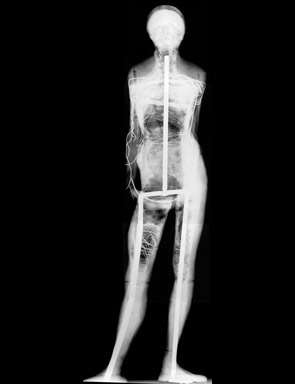
| Armature | Hollow lead pipes approximately 0.5 in. in diameter, identified by X-ray fluorescence. One vertical central pipe meets an inverted U-shaped pipe at the groin, each side running down into a leg; the left leg pipe is secured by screws into an oblong metal plate on the base. Comparable to standard studio armature stock of the period.2 |
| Internal core | Pieces of wood held to the central armature with tightly twisted wire, over which a second layer of organic matter similar in density to cotton batting is bound with rope from groin to waist. A water-based air-dried clay (ferruginous aluminosilicate), identified by PLM, SEM and SEM-EDS, was built up over the armature before the wax.2 |
| Arms and paintbrushes | The arms hang on a pair of double strands of loosely twisted iron wire that stop abruptly at the left bicep and are not tied to the central pipe, so they define placement but give no true support. Degas reinforced each arm internally with a paintbrush running its length, identifiable in the radiograph by the tapered handle and metal ferrule. C-shaped wires secure both arms below the shoulders.2 |
| Wax layer | Molten beeswax applied in successive campaigns, varying from under 0.5 cm at the ankles to about 4 cm at the shoulders. Samples from head, hair, bodice, hands, right thigh and slippers contain beeswax without added fats, extended with potato starch and pigmented with red and yellow iron oxides, charcoal black, brown earth, calcium carbonate, quartz, lead white, chrome yellows and chrome oranges. Pink paint was applied directly to the lips.2 |
| Head | Radiography reveals a smaller, preliminary head inside the present one. Degas remodelled the head to change its angle and increase the dancer's height.12 |
| Bodice | A manufactured cotton faille garment, tailored in situ. Its shoulder straps were cut to pass it over the arms and rejoined with wax; the buttons are zinc casings covered in fabric, identified by XRF. The whole bodice was coated in unpigmented beeswax to integrate it with the figure.2 |
| Slippers | Real ballet slippers of finely woven undyed linen, 15.5 cm long, probably a child's or practice pair, altered at the heel to fit. The toes were cut and squared; long cotton ribbons were added at the back and wrapped around the ankles. Coated with wax pigmented red lake, pink lake, chrome orange, chrome yellow, lead white and charcoal black.2 |
| Tutu | Five layers of alternating silk and cotton, net and plain weave, of differing coarseness and colour, all now desiccated and brittle. The outermost is a pale silk tulle with hexagonal cells, hand-cut into V-shaped points; the innermost wraps between the legs as culottes. Neither the bronzes nor the plasters were given so elaborate an assemblage.2 |
| Hair | A braided wig of dark blond human Caucasian hair, identified by analysis in 2002, contradicting Huysmans's 1881 description of horse hair. The braid was wrapped in silk ribbon, inserted into a hollow at the back of the head and fixed with wax squeezed around the bundle at the nape; an impression of a grosgrain ribbon survives in the soft wax.23 |
| Condition | A prominent crack in the upper left arm is visible in the 1917-1918 Durand-Ruel inventory photographs and in photographs of late 1955 or early 1956, and has since been repaired. Recent radiographs show deep cracks at the ankles and knees of the inner clay core. The surface is now a dark honey with areas of dark overpaint. Paul Lafond recorded that at Degas's death the arms were broken off and lying at the figure's feet; the conservators cannot corroborate this literally but note the surface and armature are consistent with the arms having been broken or detached.2 |
| Inscription | On the proper left back corner of the base: Degas. The wax carries no foundry mark, no cast letter and no edition number, because it is not a cast.1 |
Images
The record in full
Chapter 1Almost every picture you have seen of this object is of something else
There is one Little Dancer Aged Fourteen made by Edgar Degas.
There is one Little Dancer Aged Fourteen made by Edgar Degas. It is in wax, it is in Washington, and it has never been for sale. There are roughly two dozen bronzes that look like it, cast after his death, and they are the ones that travel, that appear in museums from New York to Paris to Copenhagen, and that come up at auction. They are not the same object, and this record will keep saying so.
The wax stands 98.9 centimetres without its base and weighs 49 pounds. It is two-thirds life size. The National Gallery of Art lists its medium as pigmented beeswax, clay, metal armature, rope, paintbrushes, human hair, silk and linen ribbon, cotton faille bodice, cotton and silk tutu, and linen slippers, on a wooden base. That list is not a curator being exhaustive for its own sake. Every item on it was an argument in 1881, and several of them are still arguments now.
The distinction matters commercially as well as intellectually. The bronzes are the market. The wax is the source. A collector holding a bronze holds a posthumous object made by a foundry from a plaster, authorised by a contract signed seven months after the artist was dead. That is not a criticism of the bronzes, which are accepted by every major museum and every major auction house. It is a description of what they are.
Chapter 2The girl was real and the record of her runs out
The model was Marie Genevieve van Goethem, born 7 June 1865 in the ninth arrondissement of Paris to a laundress and a tailor who had come from Belgium in the early 1860s.
The model was Marie Genevieve van Goethem, born 7 June 1865 in the ninth arrondissement of Paris to a laundress and a tailor who had come from Belgium in the early 1860s. She entered the dance school of the Paris Opera in 1878 with her younger sister, and passed into the corps de ballet in 1880, debuting in La Korrigane. In 1882, the year after the sculpture was shown, she was dismissed for missing too many classes.
Her elder sister Antoinette was jailed for theft. Her younger sister, who took the name Charlotte, stayed at the Opera into the twentieth century and became a teacher there. Marie herself leaves the documentary record at that point. A death date of 7 December 1935 now circulates, but it sits in the same reference work that states no trace of her later life or death has been found, and this record treats it as unverified rather than established.
She was fourteen when Degas began, and about fifteen or sixteen by the time the wax was shown. The title fixes her at fourteen. It is the only title Degas gave the piece, and the posthumous names by which it was known for decades, Dressed Dancer and Big Dressed Dancer, were invented after his death and first appear handwritten in the 1921 Hebrard exhibition catalogue.
Chapter 3Built from the inside out
Radiography and materials analysis at the National Gallery have turned this figure into one of the best documented objects of nineteenth-century sculpture, and what they found is strange.
Radiography and materials analysis at the National Gallery have turned this figure into one of the best documented objects of nineteenth-century sculpture, and what they found is strange. The central armature is lead, confirmed by X-ray fluorescence: hollow pipes about half an inch across, one vertical, meeting an inverted U at the groin whose two legs run down into the dancer's legs and are screwed into a metal plate in the base. Around that, Degas built a core of wood pieces bound with twisted wire, a second layer of organic bulk bound with rope, and then a water-based air-dried clay, and only then the wax.
The arms are the weak point and always have been. Instead of tying pipes to the central framework, Degas ran a pair of loosely twisted iron wires that stop short at the left bicep and are not connected to the central pipe. He then reinforced each arm internally with a paintbrush running its length, visible in the radiograph by its tapered handle and metal ferrule. The conservators note plainly that these wires define a placement but do not provide true support.
The wax itself is molten beeswax laid on in campaigns, from less than half a centimetre at the ankles to about four centimetres at the shoulders, extended with potato starch and pigmented with iron oxides, charcoal black, brown earth, calcium carbonate, quartz, lead white and chrome yellows and oranges. He tooled creases into the stockings, outlined fingernails on the fourth and fifth digits of both hands where nobody would look, and painted the lips pink. Inside her head, the radiograph shows a smaller earlier head: he remodelled it to change the angle and raise her height.
The clothes are real and were altered to fit. The bodice is a manufactured cotton faille garment whose shoulder straps he cut so it would go over the arms, then rebuttoned and coated in unpigmented wax; its buttons are zinc casings covered in fabric. The slippers are real linen ballet slippers, 15.5 centimetres long, probably a child's, with the toes cut and squared and long cotton ribbons added at the back. The tutu is five layers of alternating silk and cotton, net and plain weave. The wig is dark blond human hair, its braid inserted into a hollow at the back of the head and held by wax squeezed around it at the nape.
Chapter 4Paris did not like her
Degas provided a vitrine. He had done so once before, in 1880, when the case was set up at the impressionist exhibition and the sculpture never arrived.
Degas provided a vitrine. He had done so once before, in 1880, when the case was set up at the impressionist exhibition and the sculpture never arrived. In 1881 the case was installed at the opening and the figure appeared two weeks later. Critics made a great deal of this. Some treated the empty case as the work's stand-in; once she was inside it, opponents called it a glass cage that safely quarantined a dangerous child-beast or a medical specimen.
The reviews were, with a few exceptions, hostile, and the hostility was aimed at the girl rather than the modelling. Paul Mantz in Le Temps called her a flower of precocious depravity and read in her face the hateful promise of every vice. Others compared her to a monkey. Charles Ephrussi complained that the work was unfinished, that the colour of the wax was badly blended and spoiled by dirty blotches. The choice of wax was itself an offence: wax was for anatomical museums, waxworks and fairground entertainment, not for art.
Joris-Karl Huysmans went the other way and got it right. He called it the first truly modern attempt at sculpture he knew, and observed that the terrible realism of the statuette made the public distinctly uneasy. He was wrong about one detail, describing the hair as horse hair; analysis has since identified it as human Caucasian hair. He was correct about everything that mattered.
Degas never exhibited a sculpture again. He kept working in wax and clay for the rest of his life, in private, for about another thirty years.
Chapter 5What he left, and what the foundry made of it
Degas died on 27 September 1917. The dealers Joseph Durand-Ruel and Ambroise Vollard inventoried his possessions and found approximately 150 sculptures scattered through the apartment and studio...
Degas died on 27 September 1917. The dealers Joseph Durand-Ruel and Ambroise Vollard inventoried his possessions and found approximately 150 sculptures scattered through the apartment and studio, most of them fragmentary. An inventory was made of eighty. Ultimately seventy-four figures were translated into bronze, although sources differ and some accounts say seventy-three.
The condition was bad. The art historian Paul Lafond recorded that at the time of Degas's death the Little Dancer's arms were broken off from the body and lying at its feet. The Gallery's conservators cannot corroborate that literally, but they confirm a prominent crack in the upper left arm visible in the 1917-1918 inventory photographs and still visible in photographs taken in 1955 or early 1956, since repaired, and recent radiographs show deep cracks at the ankles and knees of the inner clay core.
On 13 May 1918 the heirs signed a contract with the Hebrard foundry authorising reproduction in bronze. The heirs were Degas's brother Rene and four surviving children of his sister Marguerite. The contract stipulated two complete sets, one for the heirs and one for the foundry, and authorised a limit of twenty casts of each figure for sale. It also provided that the original figures became the property of the foundry, which is why the wax that is the subject of this record spent the next thirty-seven years in the hands of the Hebrard family rather than a museum. Casting began in late 1919 and ran, on the National Gallery's account, to 1932.
Everyone assumed the waxes had been destroyed in the moulding. In 1955 Nelly Hebrard, the founder's daughter, announced that most of them had survived. They were consigned to M. Knoedler and Company in New York, and on 25 May 1956 Paul Mellon bought them. He gave and bequeathed them to the National Gallery of Art. That is how the only sculpture Degas ever exhibited came to Washington.
Chapter 6The edition question is the whole question
For a Degas sculpture, the object in front of you tells you almost nothing.
For a Degas sculpture, the object in front of you tells you almost nothing. Two bronzes of this figure can be visually indistinguishable and separated in value by a factor of a hundred. What separates them is a letter, a stamp, and a chain of paper.
The Hebrard editions ran to twenty-two casts of each figure: twenty lettered A through T, plus one marked HER for the heirs and one marked HER.D for the foundry. The letters and the sculpture numbers were stamped or incised into each bronze after casting. The A.A. Hebrard stamp sits in a rectangular box below the words cire perdue, and Degas's signature was not signed but applied by the foundry with a stamp impressed into the wax. Edition A, the first and finest set, went to the American collector Louisine Havemeyer, who bequeathed it to the Metropolitan Museum of Art in 1929; the Met's Little Dancer, object number 29.100.370, is dated by the museum modelled 1881, cast 1922, with a modern tutu.
For every figure except this one, the bronzes were cast not from Degas's wax but from a bronze master marked MODELE, made by the foundryman Albino Palazzolo directly from the original. That makes the serial bronzes surmoulages, casts taken from casts, which the art trade normally refuses. The Degas bronzes are among the few accepted exceptions. Because bronze shrinks about two per cent on cooling, each generation is smaller: a serial cast is roughly four per cent smaller than the wax.
The Little Dancer was the exception to the exception. Its size and mixed media made it awkward, and Palazzolo and Hebrard held it back, then took a flexible gelatin mould from the wax with the skirt and hair ribbon removed and made plasters instead of a bronze master, because plaster does not shrink. Palazzolo said in 1960 that he made two plasters himself because the wax was too fragile to stand repeated moulding. One is now in the National Gallery, the other in the Joslyn Art Museum in Omaha.
The consequences of this are still being worked out. In 1976 a complete set of bronze MODELES was found in Hebrard's basement storeroom and bought in 1977 by Norton Simon from the Lefevre Gallery. It included a Little Dancer marked MODELE. Arthur Beale measured it and found it about two per cent smaller than the serial casts rather than larger, which is to say roughly four per cent smaller than a true master should be. It is not the model for the edition. It is a surmoulage carrying a master's inscription. Beale's conclusion, on mould lines, armature radiography and about ten averaged measurements, is that the Joslyn plaster is the lost modele, the mother of every Hebrard bronze Little Dancer in the world.
So: a bronze Little Dancer with a Hebrard stamp and a letter is a third-generation object descended from a plaster, made between 1922 and the 1930s, and it is the thing the market buys. A bronze marked MODELE may be a generation further away than its inscription implies. And a plaster in Omaha, given to a regional museum by a dealer in 1971, may be the most important surviving intermediary of them all.
Chapter 7The contested casts
In 1981 Leonardo Benatov bought the Valsuani foundry and found a cache of about seventy-five plaster replicas of Degas sculptures with no documented history before 1955.
In 1981 Leonardo Benatov bought the Valsuani foundry and found a cache of about seventy-five plaster replicas of Degas sculptures with no documented history before 1955. In 1997 and 1998 he began casting bronzes from his plaster Little Dancer and selling them as high-quality copies at about sixty thousand dollars each. In 2004 the dealer Walter Maibaum bought the rest of the plasters and the exclusive right to cast and sell complete sets; the art historian Gregory Hedberg bought the Little Dancer plaster for Hirschl and Adler and sold it to a Los Angeles collector for four hundred thousand dollars.
The claim made for these casts is that the plasters were taken from Degas's waxes during his lifetime, probably by his friend the sculptor Albert Bartholome, and therefore stand closer to the artist than the Hebrard bronzes do. Maibaum's technical argument is coherent on its own terms: the plasters are larger than the Hebrard bronzes and larger than the MODELES, which is what you would expect if they came from the waxes rather than from a bronze, since plaster does not shrink. Carbon dating of plant fibres in the plaster mix placed them before the atomic era, and a petrographic laboratory matched their composition to a pre-1920 Rodin plaster. The Succession Degas approved the casting in 2007 and, on Maibaum's account, the Comite Degas has authenticated both plasters and bronzes.
The counter-case is that none of this establishes what it needs to establish. The plasters have no provenance at all before 1955. Therese Burollet, who has studied Bartholome for more than fifty years, told ARTnews that nothing in the letters, archives, press or family tradition suggests Bartholome ever cast a single Degas work in plaster during the artist's life. The Valsuani Little Dancer differs from the Washington wax in body type, pose, face and hair; Hedberg's explanation is that Degas radically revised his own sculpture after 1903 into what Hedberg calls the inferior version now in Washington, and the National Gallery's scientific examination of the wax does not support that conversion. When the Hermitage convened a colloquium on posthumous bronzes in 2012, the leading Degas scholars declined to attend, some citing fear of legal action; Richard Kendall observed that the new bronzes had failed to persuade either the specialists or the major auction houses.
In early 2023 the Chicago businessman Avrum Gray gave seventy-four Valsuani bronzes, including a Little Dancer, to Purdue University. The appraisal was made by the late Alex Rosenberg, who had organised exhibitions of Valsuani bronzes in Tel Aviv and Havana, and valued the gift at just over twenty-one million dollars with a market value of as much as fifty-three million. Patricia Failing, who has reported on Degas sculpture since 1979, pointed out that the market value figure was derived from what Hebrard casts fetch on the open market, not from private sales of Valsuani casts. That is the entire dispute in one sentence: the Valsuani bronzes are priced against a market they have not been admitted to.
Chapter 8What the casts are worth, and what the wax is worth
The bronzes have been among the most expensive sculptures of the nineteenth century for twenty-five years, and one cast in particular has been sold three times in public and can be tracked as an...
The bronzes have been among the most expensive sculptures of the nineteenth century for twenty-five years, and one cast in particular has been sold three times in public and can be tracked as an index.
The cast marked HER, 101.3 centimetres high with a Hebrard stamp, sold at Sotheby's in London in 2000, again on 24 June 2015 for about 15.8 million pounds, and again on 24 June 2026 as lot 5 of Masterpieces from the Lewis Collection, the collection of the late Joe Lewis, where it made 25 million pounds against an estimate of 18 to 25 million. Reporting of that sale does not separate hammer from premium and quotes both 25 and 25.1 million pounds. A different cast, 105 centimetres including base and traced back to the Marie Harriman Gallery, the Harrimans and Pamela Churchill Harriman, sold at Sotheby's on 3 February 2004 and again on 3 February 2009, where it hammered at 11.8 million pounds and made 13,257,250 pounds with fees against an estimate of 9 to 12 million.
The record belongs to a third cast, commissioned from Hebrard in August 1927, sold from the collection of Anne H. Bass at Christie's in New York on 12 May 2022. It hammered at 36 million dollars and made 41,610,000 with premium against an estimate of 20 to 30 million, an auction record for Degas in any medium. Press accounts of this sale routinely give one figure without saying which it is, and at least one account reports 41.6 million as the hammer.
None of these figures belong to the object in this record. The wax has never been offered at auction. Its only private transaction was its sale by the Hebrard family through Knoedler to Paul Mellon on 25 May 1956, as one of a group of about sixty-eight surviving originals, at a price that has not been published in the sources consulted. It went to the National Gallery of Art as a bequest, without money changing hands.
That is the shape of the thing. The object Degas made and showed once, and which the critics of 1881 called ugly, is a gift on a public floor in Washington. The objects made from it by other hands after he was dead trade for tens of millions. And the objects made from plasters that nobody can trace before 1955 are being valued against those prices while the scholars who would have to endorse them will not attend the conference.
The artist
Hilaire-Germain-Edgar Degas
Degas the sculptor is a posthumous invention, and he would probably have hated it. He modelled in wax and clay for more than forty years and exhibited exactly one piece, the object on this page, once, in 1881. Everything else stayed in the studio. The materials he chose, soft wax and plasticine over improvised armatures, are materials you use when you intend to keep changing your mind, not when you intend to finish. When he died in 1917 his executors found roughly 150 of them, most fragmentary, some collapsed. The entire Degas sculpture market, and the entire Degas sculpture literature, descends from a commercial decision taken by his heirs seven months later.
Related works
| Work | Relation | Where it is |
|---|---|---|
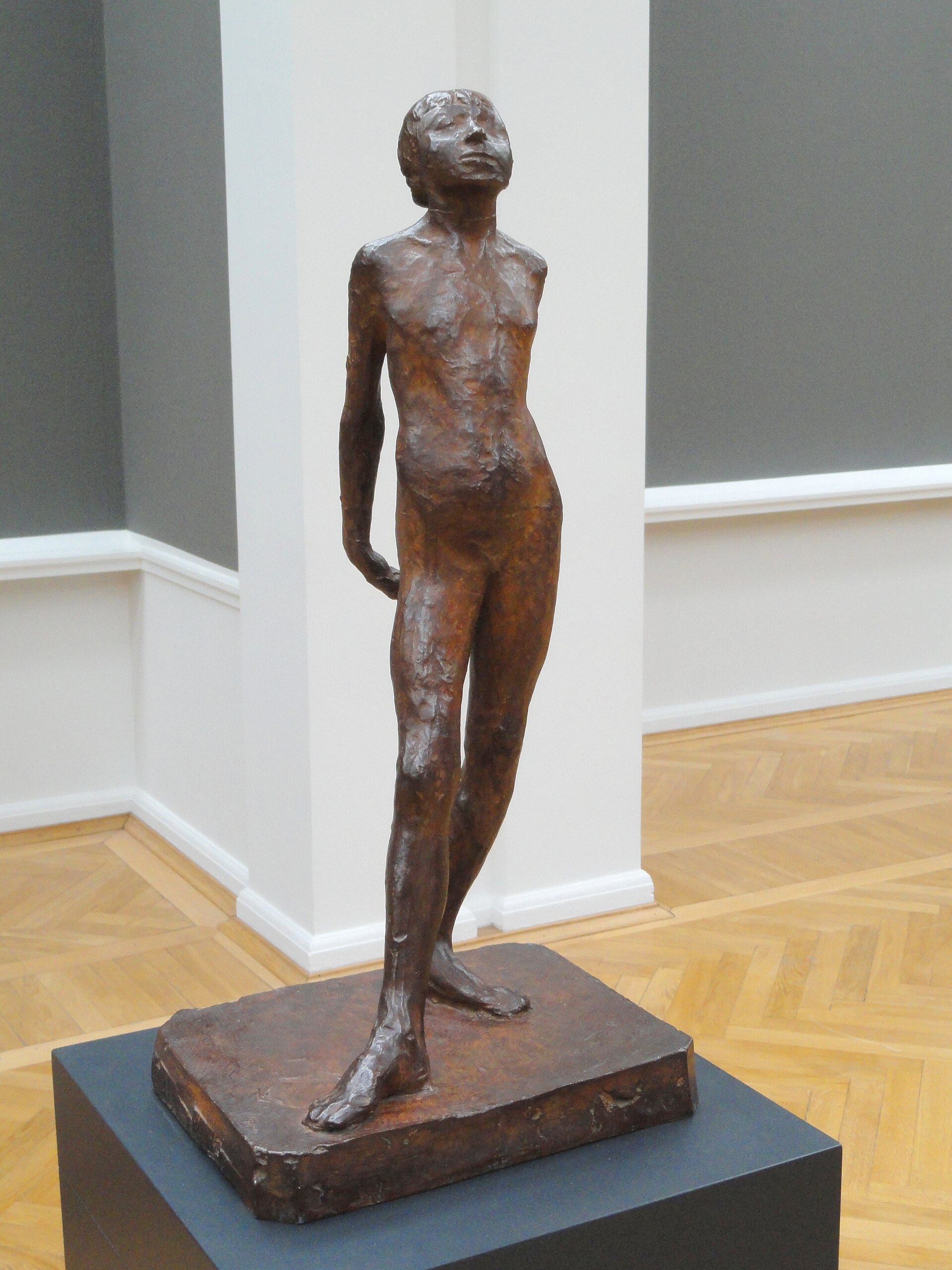
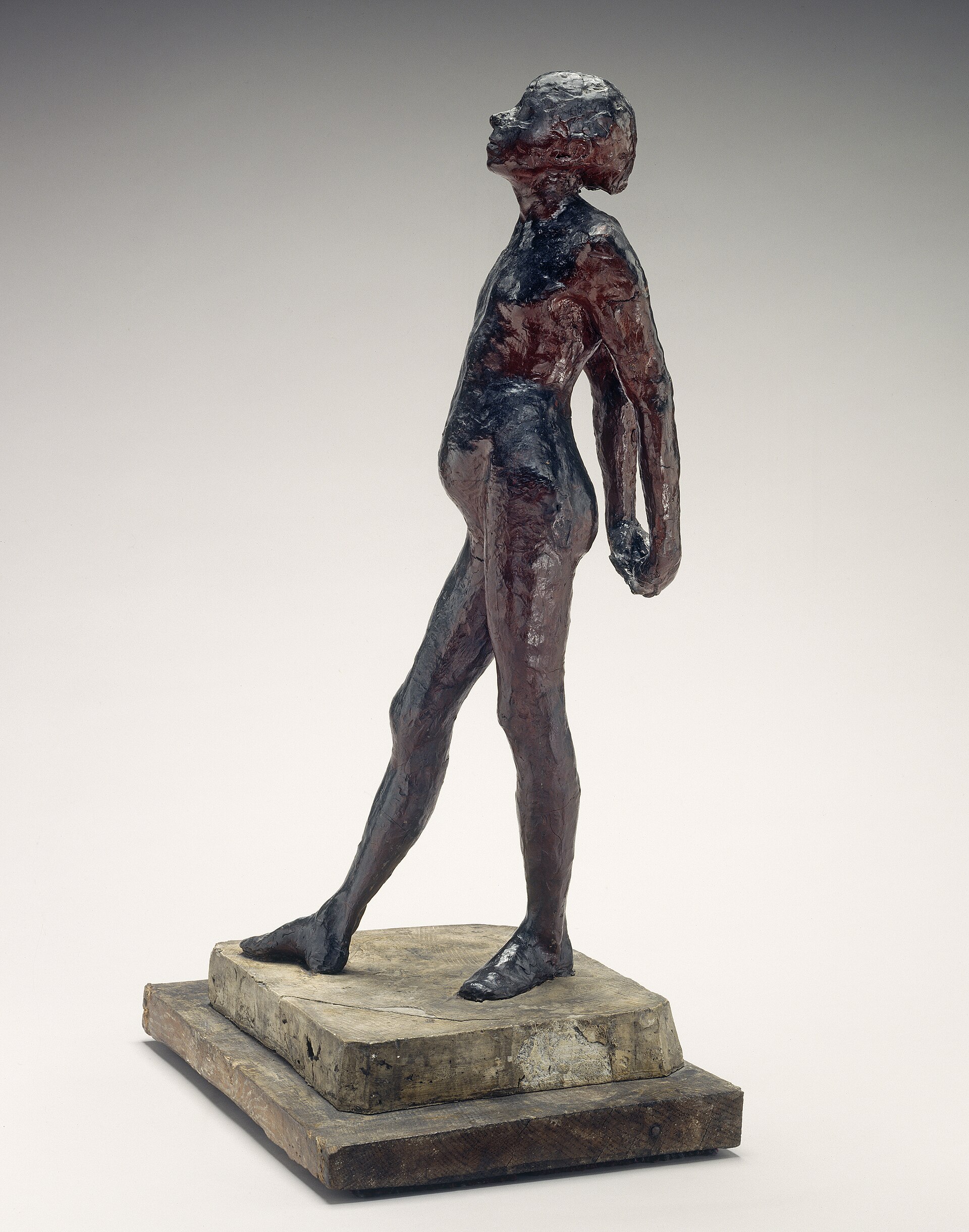
| Study in the Nude of Little Dancer Aged Fourteen (Nude Little Dancer) Edgar Degas | Related wax by the same hand. NOT the object in this record. The undressed variant, long treated as a preliminary study. Technical examination by Daphne Barbour concluded the surviving wax was itself cast rather than modelled, with a poured plaster core, a raised exterior mould line and two different beeswax mixtures, which means the object we have is a reworked cast of a lost earlier version. A base was made for it in 1880, possibly for that year's impressionist exhibition. | National Gallery of Art, Washington, 1985.64.46 |
| Little Dancer Aged Fourteen, plaster Cast at the Hebrard foundry after Degas | Posthumous plaster taken from the wax. NOT the object in this record. Painted plaster, fabric and metal armature on a plaster base, 99.4 x 35 x 35.8 cm, dated by the Gallery possibly 1920/1921. One of two plasters Albino Palazzolo said he made himself from the wax. Pronounced gelatin mould lines indicate it was cast in a deteriorating mould; Beale suggests it may have served as the colour model for the bronze series rather than as the casting master. | National Gallery of Art, Washington, 1985.64.62 |
| Little Dancer Aged Fourteen, plaster Cast at the Hebrard foundry after Degas | Posthumous plaster, argued to be the lost MODELE. NOT the object in this record. Gift of M. Knoedler and Co. in 1971, on loan there since February 1964; Knoedler had bought it in Paris in February 1956. Arthur Beale argues from mould lines, armature radiography and averaged measurements that this is the master from which the entire Hebrard bronze edition of the Little Dancer descends. Its base carries five tapered recessed keys for registering a now missing retainer mould. | Joslyn Art Museum, Omaha, 1971.271 |
| The Little Fourteen-Year-Old Dancer, bronze Edgar Degas, cast by A. A. Hebrard | Posthumous bronze from the Hebrard edition. NOT the object in this record. Partially tinted bronze with cotton tarlatan, silk satin and wood, 97.8 x 43.8 x 36.5 cm. Dated by the museum modelled 1881, cast 1922, with a modern tutu. H. O. Havemeyer Collection, bequest of Mrs. H. O. Havemeyer, 1929. Louisine Havemeyer held Edition A, the first and finest set of the Hebrard editions. | Metropolitan Museum of Art, New York, 29.100.370 |
| Little Dancer Aged Fourteen, bronze marked MODELE Cast at the Hebrard foundry after Degas | Bronze bearing a master's inscription that its measurements contradict. NOT the object in this record. Bought by Norton Simon from the Lefevre Gallery in 1977 as part of the complete MODELE set found in Hebrard's basement in 1976. Arthur Beale measured it as about two per cent smaller than the serial casts rather than larger, roughly four per cent smaller than a genuine master should be, and concluded it is a surmoulage. He suggests it may nevertheless have served as a colour guide. | Norton Simon Museum, Pasadena |
| Valsuani plaster Little Dancer and the bronzes cast from it Disputed; cast at the Valsuani foundry | Contested family of casts. NOT the object in this record, and not from the Hebrard edition. From plasters found by Leonardo Benatov after he bought the Valsuani foundry in 1981, with no documented history before 1955. Bronzes were cast from 1997. The plaster differs from the Washington wax in body type, pose, face and hair. Most Degas specialists reject the attribution; Gregory Hedberg and Walter Maibaum defend it. Seventy-four bronzes were donated to Purdue by Avrum Gray in 2023. | Purdue University, Indiana; M.T. Abraham Center for the Visual Arts, Paris; private collections |
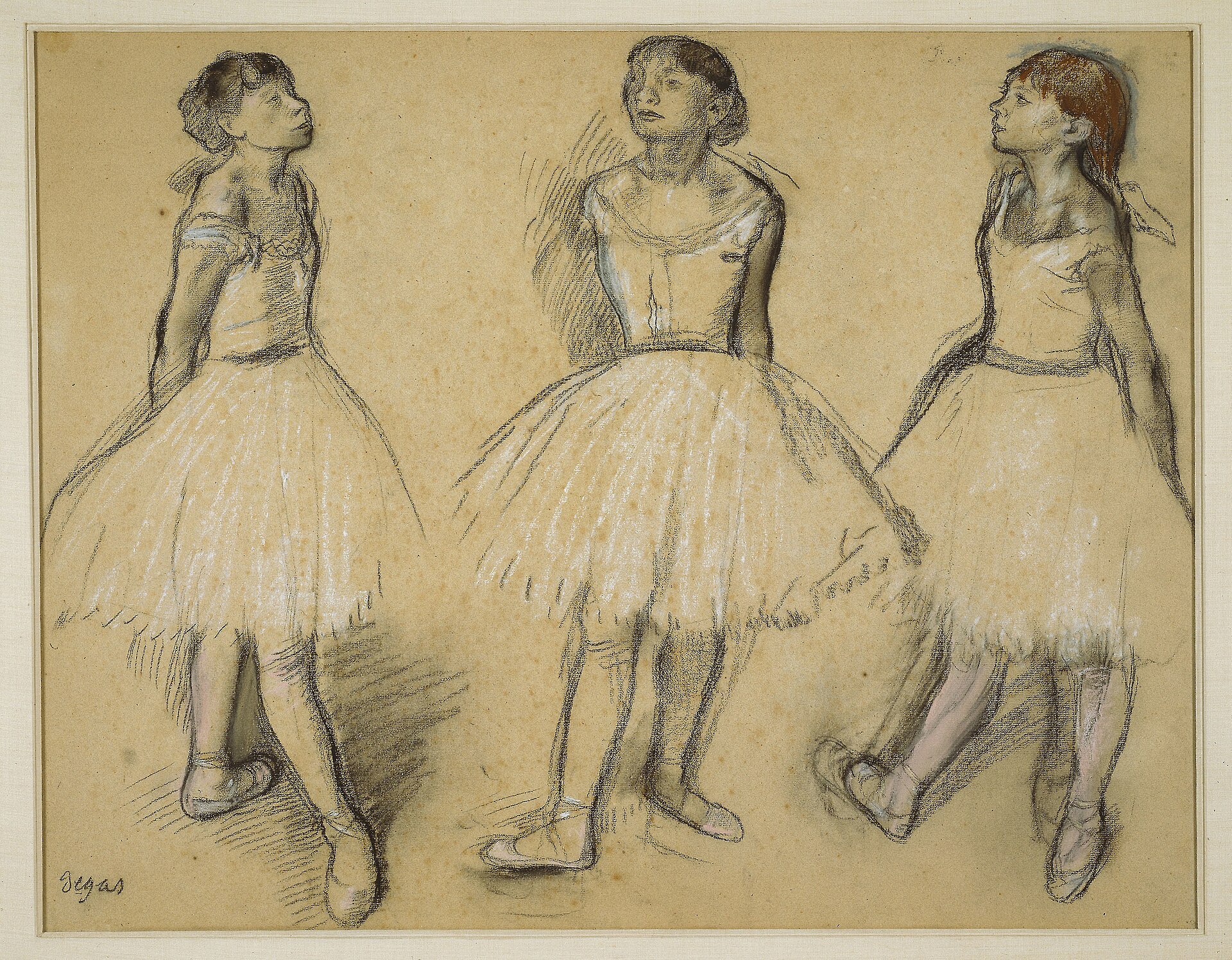
| Three Studies of a Dancer in Fourth Position Edgar Degas | Related drawing on paper, cited by the Gallery's conservators in connection with the sculpture's construction. Charcoal and pastel with stumping, 1879/1880, bequest of Adele R. Levy. Degas working out multiple viewpoints in two dimensions. A companion sheet, Three Studies of a Nude Dancer, carries in its upper right corner a small outline that appears to be a sketch for an armature. | Art Institute of Chicago, 1962.703 |
| Petite danseuse de quatorze ans, bronze Edgar Degas, cast by A. A. Hebrard | Posthumous bronze from the Hebrard edition. NOT the object in this record. Included here because the Orsay bronze and the Metropolitan bronze were both re-skirted shortly before the Joslyn plaster received a new tutu designed by Richard Kendall, producing the public disagreement of the late 1990s known as the Tutu Wars over what the 1881 skirt actually looked like. | Musee d'Orsay, Paris, RF 2137 |
Open questions
- When and how did the wax pass from Degas's heirs to A. A. Hebrard personally? The National Gallery's systematic catalogue records only that it was possibly sold separately from the other lifetime works before 1929 or after 1931. The 1918 contract made the originals the property of the foundry, but the individual transfer of this piece is not documented.
- Is the present tutu the one exhibited in 1881? The Gallery's conservators note that the creases and wax drips on the tulle appear to match both the 1917-1918 inventory photographs and the 1955-1956 photographs, and raise the possibility that the extant assemblage is original. Richard Kendall reads an undated clipping about the 1924 exhibition as evidence the costume was renovated twice. No conclusive documentation has been found.
- Which plaster served as the casting master for the Hebrard bronze edition? Arthur Beale argues for the Joslyn cast on mould lines, armature construction and measurement, and John Rewald's 1971 letter suggests the National Gallery cast was chosen for its colour. The question has not been settled by an independent study in the sources consulted.
- Why is the Norton Simon bronze inscribed MODELE about four per cent smaller than a true master should be? Beale identifies it as a surmoulage carrying a master's inscription. How and when that inscription came to be applied to a second-generation cast is unexplained.
- Where were the seventy-five Valsuani plasters before 1955? No documentation of any kind predates their reported arrival at the foundry that year. Benatov's own account began in 1955 and he initially thought they might be copies.
- Did Albert Bartholome ever cast a Degas wax in plaster during the artist's lifetime? Gregory Hedberg asserts he did and builds the Valsuani case on it. Therese Burollet, the leading Bartholome authority, told ARTnews that nothing in the letters, archives, press or family tradition supports it. Hedberg calls her statement categorically false.
- How many bronze casts of the Little Dancer exist? Beale writes of some twenty-three or more and mentions an extra cast marked with Palazzolo's monogram sold in December 1970; auction catalogues cite Czestochowski and Pingeot's count of twenty-nine casts, of which twenty-seven bronze and two plaster, plus the MODELE bronze and the wax; the Hebrard scheme provides for twenty-two. The figures have not been reconciled here.
- Were seventy-three or seventy-four figures cast by Hebrard? The National Gallery and Beale give seventy-four; Patricia Failing writes seventy-three. The discrepancy runs through the literature.
- Which cast letters were the bronzes sold in 2009 and in 2022? The Sotheby's 2009 catalogue entry consulted records only that the base is inscribed Degas and stamped A.A. Hebrard cire perdue, without a letter. No cast letter for the Anne Bass cast appears in the reporting consulted.
- When did Paul Mellon acquire the National Gallery plaster from John Rewald? The Gallery's provenance says April 1968; Arthur Beale writes that Mellon purchased it from Rewald in 1961. One of the two is wrong.
- When did Marie van Goethem die? A death date of 7 December 1935 is now given in reference sources that simultaneously state no trace of her later life or death has been found. The identification has not been verified here.
Questions about this object
What is Little Dancer Aged Fourteen?
Little Dancer Aged Fourteen is a sculpture, dated 1878-1881. Medium: Pigmented beeswax, clay, metal armature, rope, paintbrushes, human hair, silk and linen ribbon, cotton faille bodice, cotton and silk tutu, linen slippers, on wooden base.
Who made Little Dancer Aged Fourteen, and is the attribution settled?
The attribution to Edgar Degas is recorded here as accepted. Autograph and undisputed. This is the wax exhibited by Degas himself at the sixth impressionist exhibition in 1881 under the catalogue entry Petite Danseuse de quatorze ans (statuette en cire), and it is the only sculpture he is known to have shown publicly in his lifetime. The National Gallery of Art describes its wax as the only version of the figure formed by the artist's own hands. Attribution disputes attach not to this object but to the objects that look like it: every bronze Little Dancer in the world was cast after Degas died, and one family of casts, made at the Valsuani foundry from plasters of unknown origin, is contested by most Degas specialists.
Where is Little Dancer Aged Fourteen now?
National Gallery of Art, Washington, West Building Ground Floor, Gallery G3. Inventory number 1999.80.28.
What is still unknown about Little Dancer Aged Fourteen?
When and how did the wax pass from Degas's heirs to A. A. Hebrard personally? The National Gallery's systematic catalogue records only that it was possibly sold separately from the other lifetime works before 1929 or after 1931. The 1918 contract made the originals the property of the foundry, but the individual transfer of this piece is not documented.
Sources
- 1National Gallery of Art, object record for Edgar Degas, Little Dancer Aged Fourteen, 1878-1881, accession 1999.80.28, including the full medium line, dimensions, inscription, provenance with footnotes citing Pingeot and Sara Campbell, and the 1881 exhibition entry. nga.gov/artworks/...
- 2Shelley Sturman and Daphne Barbour, 'Technical Notes: Little Dancer Aged Fourteen', in Modeling Movement: Degas's Dancers, National Gallery of Art online editions, published 24 December 2024. Armature, core, wax analysis, bodice, slippers, tutu, hair, condition, and the systematic-catalogue provenance. nga.gov/research/...
- 3Suzanne Glover Lindsay, 'Original State: Little Dancer Aged Fourteen', in Modeling Movement: Degas's Dancers, National Gallery of Art online editions. The 1881 critical reception, the vitrine and the 1880 empty case, the titles, and the Tutu Wars. nga.gov/research/...
- 4National Gallery of Art, object record for Edgar Degas, Little Dancer Aged Fourteen, plaster cast possibly 1920/1921, accession 1985.64.62, with provenance from Hebrard through Knoedler and John Rewald to Paul Mellon. nga.gov/artworks/...
- 5Arthur Beale, 'Little Dancer, Aged Fourteen: The Search for the Lost Modele', in Richard Kendall, Degas and the Little Dancer, exhibition catalogue, Joslyn Art Museum, Omaha (New Haven and London, 1998). The MODELE set, the casting method, the Norton Simon surmoulage, the Joslyn plaster and the Palazzolo interviews. interarts.org/projects/...
- 6Patricia Failing, 'We Need to Talk About Purdue's Newly Donated Degas Sculptures', ARTnews, 22 May 2023. The case against the Valsuani casts, the Purdue gift and its appraisal, and Therese Burollet on Bartholome. artnews.com/art-news/...
- 7Walter F. Maibaum, 'Questions and Answers: The Sculptures of Edgar Degas', The Degas Sculpture Project Ltd, 10 April 2019. PARTISAN SOURCE, cited only for the case made by the promoters of the Valsuani casts and for uncontested chronology. Maibaum is the dealer selling these bronzes. degassculptureproject.org/Degas-Questions-and-Answers-Apr...
- 8The Art Newspaper, 'Scholars absent from State Hermitage Museum conference with controversial Degas bronzes on the agenda', 1 June 2012. The boycott by Campbell, Chevillot, Czestochowski, Kendall and Pingeot, and Kendall on the market's response. theartnewspaper.com/2012/...
- 9Metropolitan Museum of Art, object record for The Little Fourteen-Year-Old Dancer, cast by A. A. Hebrard, modelled 1881, cast 1922, accession 29.100.370, H. O. Havemeyer Collection, bequest of Mrs. H. O. Havemeyer, 1929, with the Huysmans quotation. metmuseum.org/art/...
- 10Sotheby's, lot 8, Impressionist and Modern Art Evening Sale, London, 3 February 2009. Catalogue entry for the Harriman cast: inscription, foundry mark, height, estimate and provenance. sothebys.com/en/...
- 11Sotheby's, lot 14, Impressionist and Modern Art Evening Sale, London, 24 June 2015. Catalogue entry for the cast numbered HER, with the count of twenty-nine identified casts. sothebys.com/en/...
- 12Sotheby's, lot 5, Masterpieces from the Lewis Collection, London, 24 June 2026. Catalogue entry for the cast numbered HER: foundry mark, conception circa 1879-81, cast from 1922, height 101.3 cm, estimate 18 to 25 million pounds, and provenance recording prior Sotheby's London sales in 2000 and 2015. sothebys.com/en/...
- 13George Nelson, '$63.5 M. Modigliani Nude from Joe Lewis Collection Leads Sotheby's London Double-Header Auction Totaling $520.7 M.', ARTnews, 24 June 2026. The Degas result on the high estimate and the sale totals. artnews.com/art-news/...
- 14Carlie Porterfield, 'Degas' Little Dancer Fetches Record-Breaking $41.6 Million In Auction Of Late Ballet Patron's Art Collection', Forbes, 12 May 2022. The record, the previous 2015 record at 24.8 million dollars, and the August 1927 commission. forbes.com/sites/...
- 15Galerie Magazine, 'Sale of the Collection of Anne H. Bass Brings in $363 Million'. The 41,610,000 dollar result and the 363.1 million dollar sale total. galeriemagazine.com/christies-anne-h-bass-results
- 16Wikipedia, 'Little Dancer of Fourteen Years'. TERTIARY SOURCE, used only for the 2009 sale total and the Madejski purchase price and flagged for replacement with the Sotheby's 2004 and 2009 result records and with Czestochowski and Pingeot, Degas Sculptures: Catalogue Raisonne of the Bronzes (Memphis, 2002). en.wikipedia.org/wiki/...
- 17Wikipedia, 'Marie van Goethem'. TERTIARY SOURCE, used for the model's birth, family, entry to the Opera school and dismissal, and flagged for replacement with the Paris Opera archives and with Martine Kahane et al., 'Enquete sur la Petite Danseuse de quatorze ans de Degas', 48/14: La Revue du Musee d'Orsay 7 (Autumn 1998). en.wikipedia.org/wiki/...
- 18National Gallery of Art, exhibition page 'Degas's Little Dancer' (accessed 2026-08-07). Confirms the sculpture remains on view at the National Gallery of Art, presented in a dedicated in-house exhibition with 14 related Degas works from the Gallery's own collection. nga.gov/exhibitions/...
Last verified 7 August 2026 · Published 2 August 2026
Change log
2 August 2026 - Record created at the house standard: researched narrative, technical evidence, maker dossier, graded provenance chain, prices with hammer and premium separated, related works, open questions and sources.
7 August 2026 - Re-verified. No change to ownership, attribution or location: the sculpture remains at the National Gallery of Art, Washington, accession 1999.80.28. The Gallery is currently presenting it in a dedicated in-house exhibition, 'Degas's Little Dancer', pairing it with 14 related works from its own collection (source 18); this is a reinstallation within the same institution, not a loan or move. No new litigation, attribution study or condition issue found since the 27 April 2023 paint-protest incident already on record.