The Object With No Maker
Eighty-nine of the 266 objects published here name nobody as their maker. The rate runs from 71 per cent in glass and goldsmiths' work to 3 per cent in painting and zero in prints, photographs and printed books.
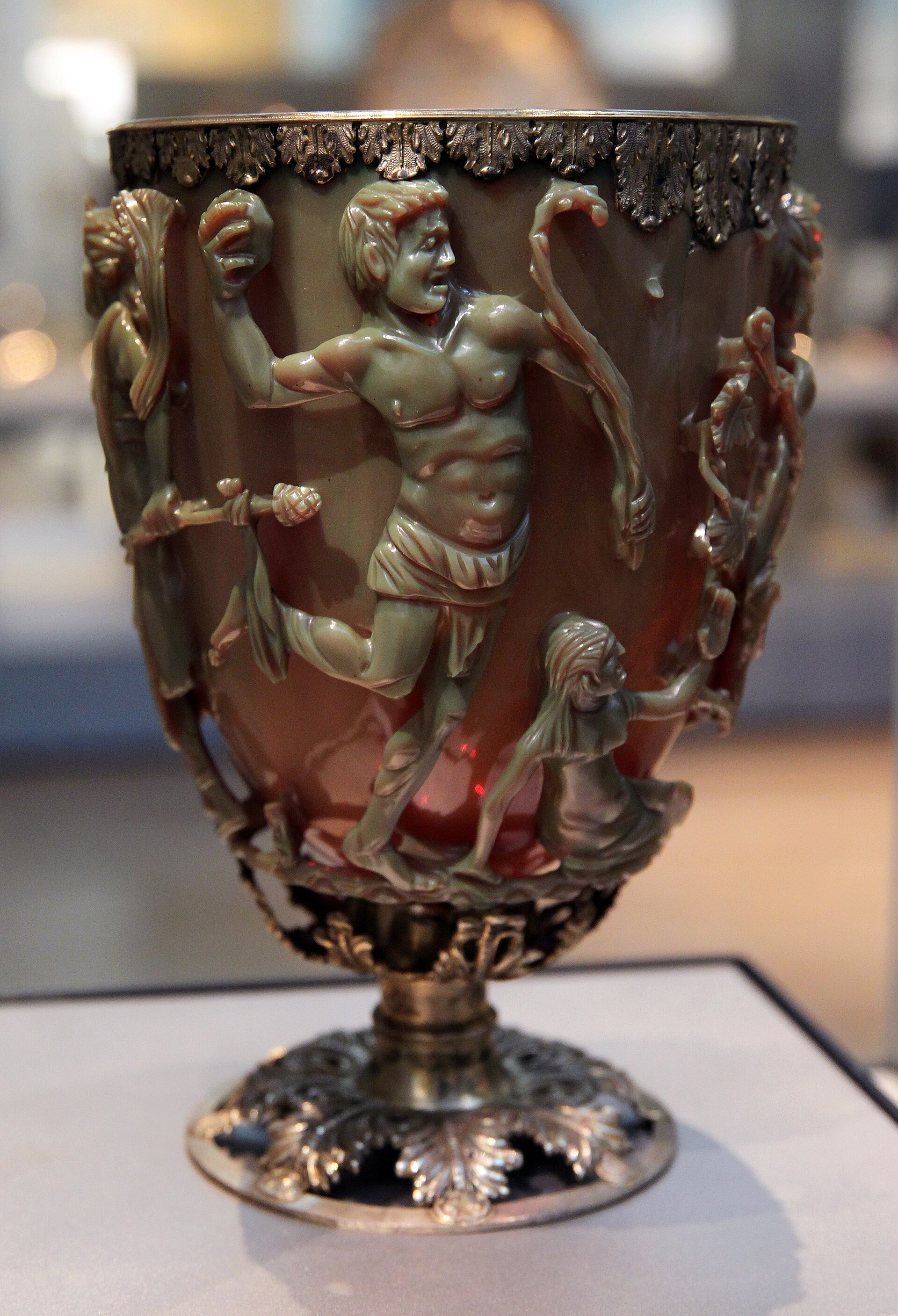
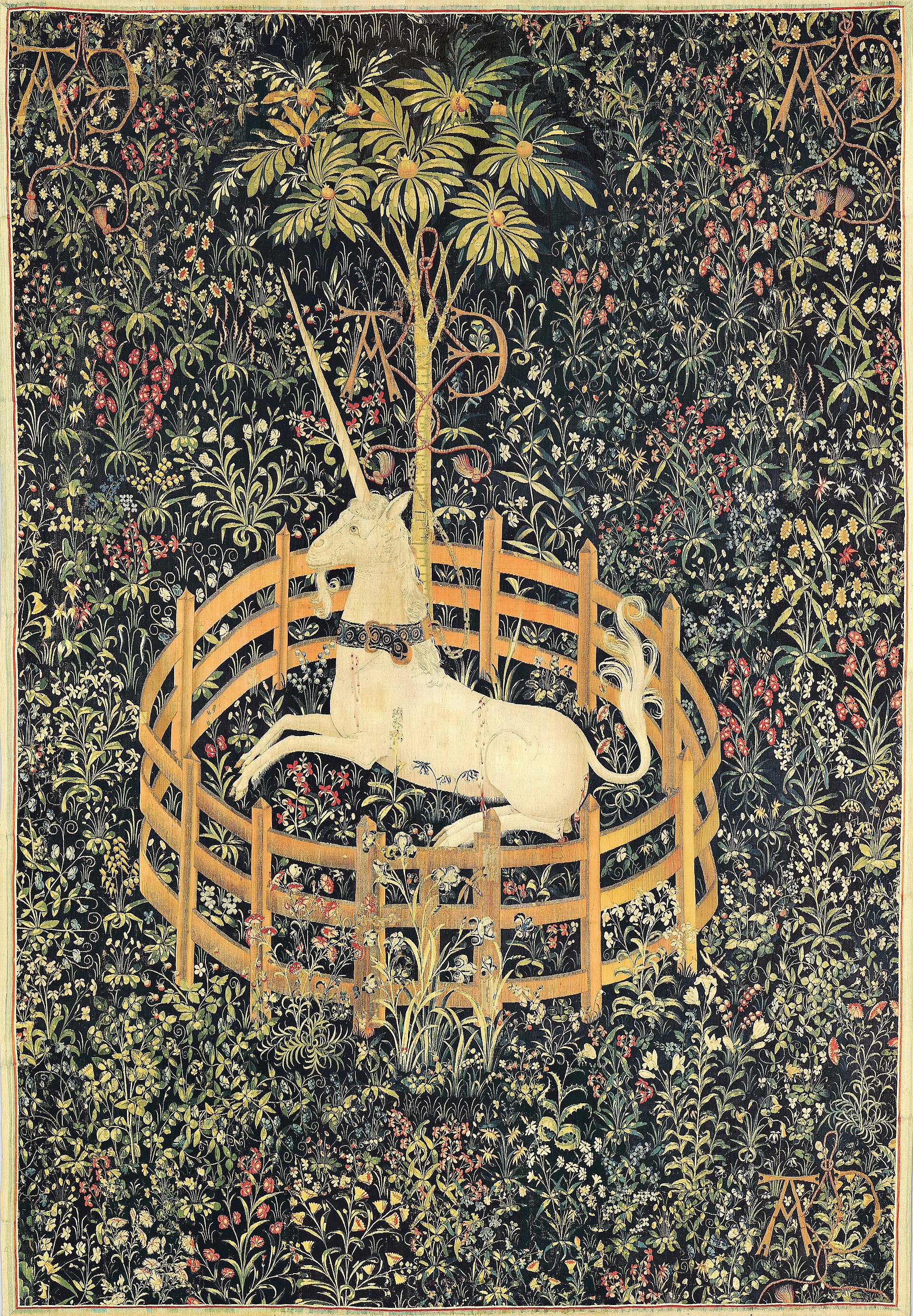
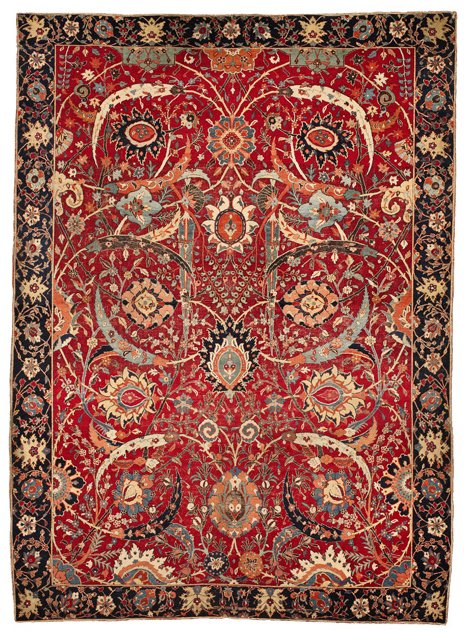
Records in this piece: The Lycurgus Cup, The Antikythera Mechanism, The Unicorn Tapestries, The Cheapside Hoard, The Clark Sickle-Leaf Carpet
On this page 9 sections
ContentsClose
In short
- Eighty-nine of the 266 objects published in this archive, a third of them, have a maker field that names no person and no firm. This is the ordinary condition of surviving material culture, not a shortfall in the research.
- The rate is a property of the medium rather than of the age or the quality of the object. Glass, goldsmiths' work and Islamic metalwork each run at 71 per cent unnamed. Painting runs at 3 per cent, and prints, photographs and printed books at zero across 40 records.
- The archive uses four different words for the absence and they are not synonyms. Unknown is used 48 times, unidentified 20, unrecorded 14, anonymous or unnamed 4. Unidentified says the evidence exists and has not been resolved; unrecorded says nobody wrote it down.
- A sample of 79 objects drawn at random from the 7,129 in the Metropolitan Museum's Medieval Art department returned 78 with no artist name at all, which is 99 per cent. The pattern in this archive is a small reflection of the pattern in a large collection.
A third of the objects here were made by nobody the record can name
Eighty-nine of the 266 objects published in this archive carry a maker field that names no person and no firm. They are not marginal objects. The list includes the Portland Vase, the Lycurgus Cup, the Antikythera mechanism, the Unicorn Tapestries, the Cheapside Hoard and the Riace Bronzes, which is to say several of the most studied objects that survive from their periods at all.
The habit of organising art history around named makers is so settled that an unnamed object reads as a research failure. It is not one. For most of the history of made things, the name was never recorded, and the discipline that assumes otherwise is describing a narrow and recent slice of production.
The rate of anonymity tracks the medium, not the century
Sort the 266 records by object type and the share with no named maker separates cleanly by material, with the flat and reproducible media at one end and the three-dimensional luxury crafts at the other. Age does not explain it: the archive holds eighteenth-century silver with no maker and second-century sculpture with one.
| Object type | Records | No named maker | Share |
|---|---|---|---|
| Glass | 14 | 10 | 71 per cent |
| Goldsmith's work | 14 | 10 | 71 per cent |
| Islamic metalwork | 14 | 10 | 71 per cent |
| Antiquity | 14 | 9 | 64 per cent |
| Textile | 14 | 9 | 64 per cent |
| Manuscript | 14 | 8 | 57 per cent |
| Silver | 14 | 7 | 50 per cent |
| Sculpture | 16 | 5 | 31 per cent |
| Arms and armour | 14 | 4 | 29 per cent |
| Ceramic | 15 | 3 | 20 per cent |
| Furniture | 14 | 2 | 14 per cent |
| Painting | 29 | 1 | 3 per cent |
| 13 | 0 | 0 per cent | |
| Photograph | 14 | 0 | 0 per cent |
| Printed book | 13 | 0 | 0 per cent |
The bottom three rows share a mechanism. A print, a photograph and a printed book are published objects, issued into a market under a name because the name is part of what is being sold, and the name is often on the sheet. The top rows share a different one. A cage cup, a gold cup or an inlaid brass ewer was commissioned, and what the commission recorded was the patron.

Painting is the exception that built the model
One of the 29 paintings in this archive has no named maker, and the discipline's whole apparatus of attribution is built on that ratio. Connoisseurship, the catalogue raisonne, the authentication board and the qualifiers attributed to, studio of and circle of are all instruments for arguing about which name goes on an object, and they presuppose that a name is the thing in dispute.
Applied to the top of the table they have almost nothing to work on. There is no signature on a Roman cage cup and no corpus of comparable autograph works, because the comparable works are also anonymous. Technical study of such an object answers a different question: where it was made, when, by what process and in what tradition. That is an attribution of place and workshop practice, and the vocabulary borrowed from painting fits it badly.
Unknown, unrecorded and unidentified are three different findings
The four words this archive uses for an absent maker describe three different states of the evidence. Unknown appears 48 times, unidentified 20, unrecorded 14, and anonymous or unnamed 4 more. Read as synonyms they are noise. Read strictly they carry information a researcher can act on.
Unrecorded means the name was never written down and no document survives that could have carried it, which is a statement about the archive and is usually final. Unidentified means there is evidence, often a hand, a workshop signature, a mark or a technical fingerprint, which has not yet been matched to a person, and that is an open problem. Unknown, used loosely, says only that the field is not filled in. The distinction is the difference between a question worth a research grant and a question that has already been answered in the negative.
An attribution can be accepted and still name nobody
Sixteen of the 89 objects here with no named maker carry an attribution this archive grades as accepted, which is the same grade given to a signed Vermeer. The grade is not a claim about a person. It records that the place, the date range, the material and the tradition are settled and uncontested, and for a great many objects that is the whole of what can be settled.
The rest of the 89 divide differently: 39 are graded unknown, 26 disputed, four workshop, three attributed and one documented. Twenty-six disputed attributions on objects with no named maker is the interesting figure, because it shows what people actually argue about when there is no name to argue over. They argue about place and date. The Cleveland Apollo is disputed as Praxiteles or a follower, the Getty kouros as Greek Archaic or modern, the Riace Bronzes as the work of two sculptors a generation apart. None of those disputes would be resolved by a name, and none of them could be started without the object.
Among the 177 records that do name a maker the shape inverts: 146 accepted, 17 disputed and only three unknown. A named maker is normally a settled maker. The argument over a name is the exception, and the discipline's most visible machinery exists to service that exception.
What the record kept instead of the maker's name
Where a name is missing, something else was usually written down in its place, and it is generally the patron. The David Vases in the British Museum carry a dated dedication of 1351 running down the neck of one of the pair, which is the anchor for the dating of the whole class of early Chinese blue-and-white porcelain. The inscription names the donor and the temple. It does not name the potter, and the literature notes that the hand is unevenly spaced with miswritten characters, which is itself evidence about who was doing the writing in the workshop.
That is the ordinary arrangement. The document that survives is the one the commissioning party had a reason to keep, and the commissioning party had no reason to record the workman. A researcher approaching an anonymous object should therefore look for the patron's archive rather than the maker's, and should expect the object's own surface, its marks, its assay stamps and its inscriptions, to carry more evidence than anything filed elsewhere.
A large collection shows the same shape
The pattern here is not an artefact of which objects this archive has chosen to publish. Sampling the Metropolitan Museum's public collection API on 12 September 2026, a random draw of 120 object numbers from the 7,129 in the Medieval Art department returned 79 records, and 78 of those carried no artist display name at all. That is 99 per cent of a department of a great encyclopaedic museum with the maker field empty.
A museum database records the absence silently. The field is blank, the object page shows a culture and a date where another page would show a name, and nothing on the screen tells a visitor whether the name is lost, disputed or simply not applicable to that kind of object. The blank looks like an oversight and is in fact the normal case.
What a record should carry when there is no name
An honest record replaces the missing name with the evidence that would have produced it. For the objects in this archive that means the place and tradition, argued rather than asserted; the technique and what it implies about workshop organisation; the patron or commissioning body where one is documented; the marks, assay stamps or inscriptions that survive; and an explicit statement of whether the name is lost or merely unresolved.
Doing that turns an empty field into a finding. It also stops the record making a promise it cannot keep. A carpet catalogued as probably Kirman, with no workshop, weaver or patron documented and none likely to be, has told the reader exactly where the ceiling of the evidence is, and that is worth more than a name arrived at by elimination.
Why this archive is free to read
We do this for everyone who loves art. The people who have studied it for years, and the people who just stopped to look. Iconotheca exists so that what we learn belongs to all of them.
Nobody pays us for this. No ads, no sponsors, no commercial interest. These works belong to all of us, and we would rather share them with as many people as we can than keep them to ourselves.
If it gave you something today, tell us to keep going. Follow us, leave a like, or write a positive comment. We read every one, and they are what keeps us going.
Questions
In this archive, 89 of 266 published objects, a third of the total, name nobody as maker. In a large encyclopaedic collection the share can be far higher for pre-modern material: a random sample of 120 objects from the Metropolitan Museum's Medieval Art department, taken on 12 September 2026, returned 79 records of which 78 had no artist name.
Because the document that would have carried the name was usually a commission record kept by the patron, not a signature on the object. Signing was not the norm outside a few media, and workshops produced collectively. The media where names do survive, such as prints, photographs and printed books, are the ones published into a market under a name.
Unrecorded means the name was never written down and no surviving document could carry it, so the question is closed. Unidentified means evidence exists, such as a hand, a mark or a technical fingerprint, that has not yet been matched to a person, so the question is open. Unknown used loosely says only that the field is empty and tells a researcher nothing.
Not reliably. The Clark sickle-leaf carpet has no documented weaver and sold for 33.7 million dollars in 2013, a record for a carpet at auction. Value in these categories tracks rarity, condition and the strength of the object itself rather than the presence of a name.
It can usually identify a place, a date range, a material source and a workshop practice, and it can group objects that share a hand. Turning a group into a personal name needs a document that ties the group to a person, and for most anonymous object classes no such document survives.
Sources
- 1Metropolitan Museum of Art, public collection API. Department list endpoint and objects endpoint for departmentId 17, Medieval Art, queried 12 September 2026: 7,129 object numbers, a random draw of 120 of which 79 returned records, 78 of them with an empty artistDisplayName field. collectionapi.metmuseum.org/public/...
- 2British Museum, collection record for the Lycurgus Cup, drinking-cup, registration 1958,1202.1. britishmuseum.org/collection/...
- 3The Metropolitan Museum of Art, collection record for The Unicorn Rests in a Garden, from the Unicorn Tapestries, accession 37.80.6. metmuseum.org/art/...
- 4Sotheby's, ecatalogue entry for lot 12, A Sickle-Leaf, vine scroll and palmette vase-technique carpet, New York, 5 June 2013, for the cataloguing of the maker and the result. sothebys.com/en/...
- 5London Museum (formerly Museum of London), 'The Cheapside Hoard', collection account of the 1912 discovery and the stock it represents. londonmuseum.org.uk/collections/...
- 6National Archaeological Museum, Athens, gallery label 'The Antikythera Mechanism', photographed in the gallery and read from the image file page on Wikimedia Commons. commons.wikimedia.org/wiki/...
.jpg)
More in Attribution and Authenticity
The partA Hallmark Can Be Genuine, Legal and About a Different Object
The V and A catalogues a Paul de Lamerie ewer of 1736 as a duty dodger, hallmarked 1944.
Composite Names Three Different Objects, and Only One of Them Is a Fake
Fifty-seven records here use composite, pastiche or assembled, and the words are doing three incompatible jobs.
The Frame Has Its Own Provenance
Ten records carry evidence on a frame. Van Eyck's integral frames date the panels to 1410-1440; a 1970 loan label on a frame in Maine proves nothing...