The Longitude Clocks Are Held on Four Different Terms
Harrison's four timekeepers, H5, Kendall's K1, Le Roy's chronometer and Earnshaw 509 sit in four institutions on four terms: state property, a loan, a French conservatoire, a purchase.
Records in this piece: John Harrison's Marine Timekeepers, H1 to H4, Marine Timekeeper known as H5, K1 Marine Chronometer, Marine Chronometer, Marine Chronometer by Thomas Earnshaw
On this page 7 sections
ContentsClose
In short
- Harrison's H1 to H4 and Kendall's K1 are state property in the National Maritime Museum, while H5 is owned by the Worshipful Company of Clockmakers and lent to the Science Museum Group, so most accounts of Harrison's life fold two different owners into one museum.
- H5 was returned to Harrison after King George III tested it in 1772 and never became government property, and no source the archive consulted says how it reached the Clockmakers' Company after Harrison's death in 1776.
- Pierre Le Roy's chronometer of 1766 at the Conservatoire national des arts et metiers holds the detent escapement, the temperature-compensated balance and the isochronous spring that later chronometers used, and it is a French state holding with no Harrison connection.
- Earnshaw's chronometer 509, which went to sea on HMS Beagle in 1831, reached the British Museum in 1958 because a planned auction of the Ilbert collection was cancelled and a gift from Gilbert Edgar paid for the whole collection.
Six timekeepers sit in four institutions on four kinds of terms
The marine timekeepers that solved, or helped to solve, the longitude problem are not in one museum, and the terms on which each is held differ more than the displays suggest. Harrison's H1 to H4 and Larcum Kendall's K1 belong to the state and sit in the National Maritime Museum. Harrison's H5 belongs to a livery company and is lent. Pierre Le Roy's chronometer is in a French conservatoire. Thomas Earnshaw's chronometer 509 is in the British Museum because of a collector's death and a cancelled auction.
The terms matter for visitors and for researchers, because a loan can end, a state collection can be rearranged, and an object that is not on display cannot be seen at all.
| Timekeeper | Made | Holder | Terms of holding | How it got there |
|---|---|---|---|---|
| Harrison H1 to H4 | 1730 to 1759 | National Maritime Museum, Greenwich (ZAA0034 to ZAA0037) | State property | Surrendered under the Act of 1765; taken by Maskelyne in 1766 |
| Harrison H5 | 1770 | Science Museum, Clockmakers' Museum gallery (L2015-3480) | Owned by the Worshipful Company of Clockmakers, on loan | Returned to Harrison in 1772; route to the Company undocumented |
| Kendall K1 | 1766 to 1769 | National Maritime Museum (ZAA0038) | State property | Board of Longitude, then the Royal Observatory; museum from 1937 |
| Le Roy marine chronometer | 1766 | Musee des Arts et Metiers, Paris (CnAM 1395) | French state conservatoire collection | Described there by Rupert Gould in 1923 |
| Earnshaw chronometer 509 | About 1800 | British Museum (1958,1006.1957) | Purchased with the Ilbert collection | Auction cancelled 1958; gift by Gilbert Edgar funded the purchase |
Harrison's four machines became state property under the Act of 1765
H1 to H4 are state property because the Act of 1765 required Harrison to dismantle H4, explain it to nominated experts and surrender all four timekeepers before he could be paid half of the money. The Longitude Act of 1714 had offered up to 20,000 pounds, and the body set up to administer it did not meet for twenty-three years. Nevil Maskelyne, the Astronomer Royal, received H4 on 5 May 1766 and tested it for ten months.
Rupert Gould restored all four after the First World War at his own cost, and the machines are now Royal Museums Greenwich objects ZAA0034 to ZAA0037, with H2, H3 and H4 shown at the Royal Observatory. Harrison received 8,750 pounds by a separate Act in 1773, at the age of eighty.
H5 belongs to the Clockmakers' Company and is on loan to the Science Museum
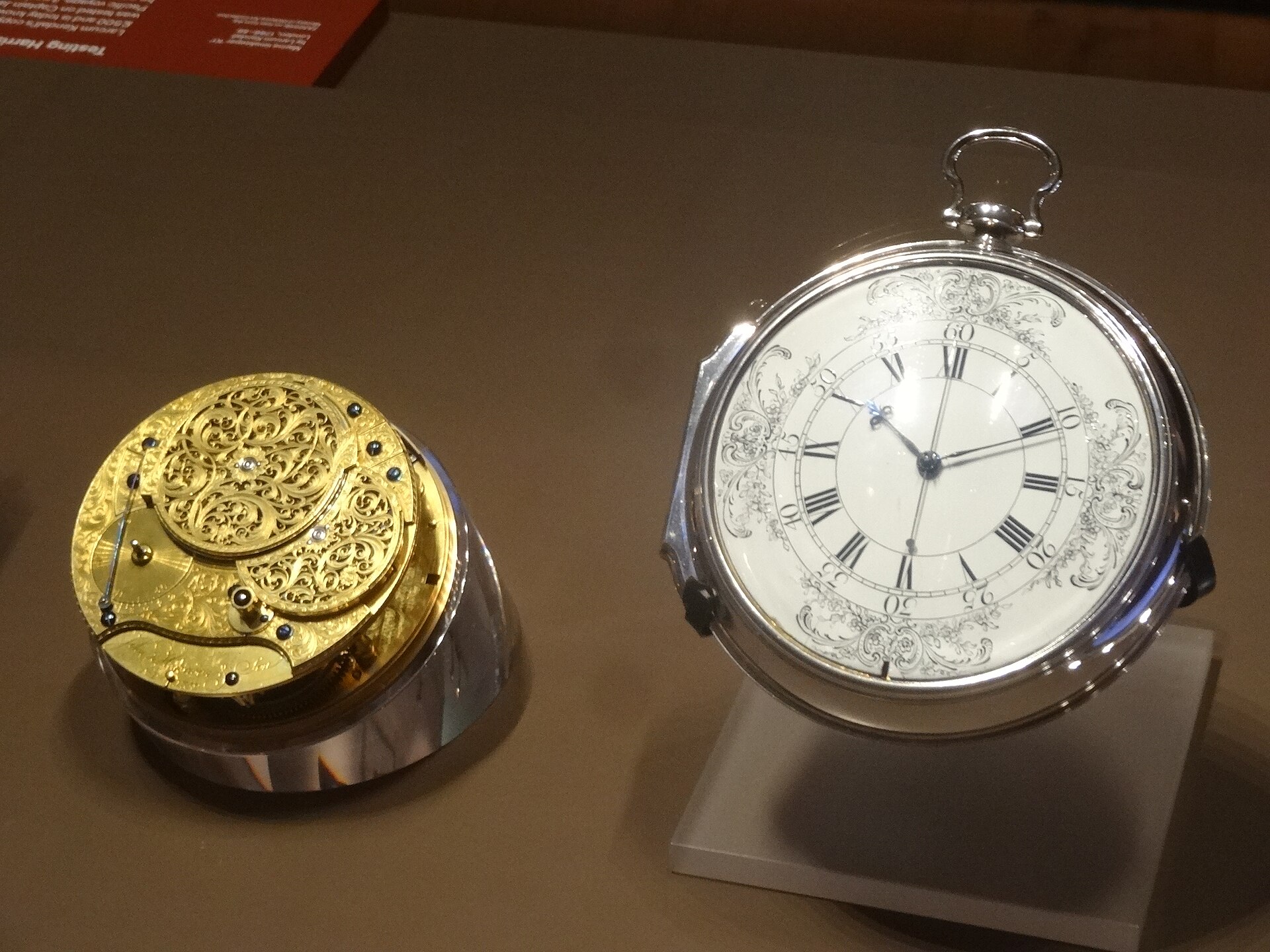
H5 is owned by the Worshipful Company of Clockmakers and is shown at the Science Museum's Clockmakers' Museum gallery on loan, which makes it a different object in a different institution from the four machines at Greenwich. King George III tested it for ten weeks at his private observatory in 1772 and found it accurate to within a third of a second a day. Harrison then petitioned Parliament, and the special Act of 1773 paid 8,750 pounds, about 44 per cent of the prize the 1714 Act had promised.
H5 was returned to Harrison and never surrendered to the Board of Longitude. The Company's collection was founded in 1813 and 1814 and was housed at the Guildhall from 1874 to 2014. The gallery at the Science Museum opened on 22 October 2015, and the catalogue number there is L2015-3480. No source the archive consulted says when or how H5 reached the Company after Harrison died on 24 March 1776.
Kendall's K1 is a paid copy of H4 that stayed state property
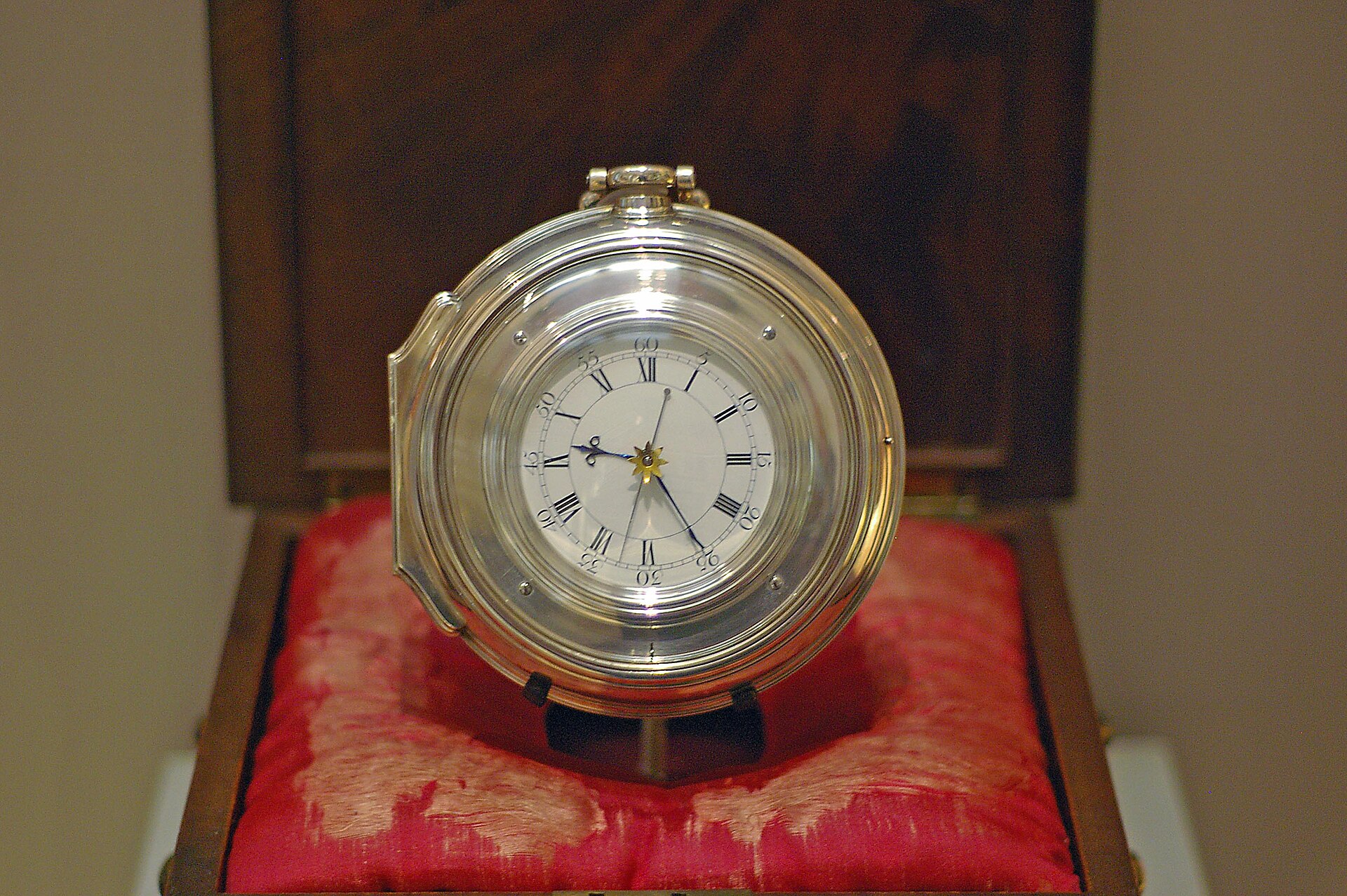
K1 is Larcum Kendall's exact copy of H4, commissioned by the Board of Longitude in 1766 to settle whether anyone but Harrison could build a timekeeper that accurate. It went to sea with Captain Cook on two Pacific voyages, sailed with the First Fleet, survived the wreck of its ship on a reef at Norfolk Island and later served at the Battle of Cape St Vincent. It stayed in state hands, first with the Board of Longitude and then the Royal Observatory, and it entered the National Maritime Museum in 1937 as ZAA0038. The catalogue records it as not currently on display.
K1 is routinely confused with H4 and with Kendall's second chronometer K2, the one carried on HMS Bounty, so any citation should name the number.
Le Roy's chronometer in Paris is the machine later makers copied
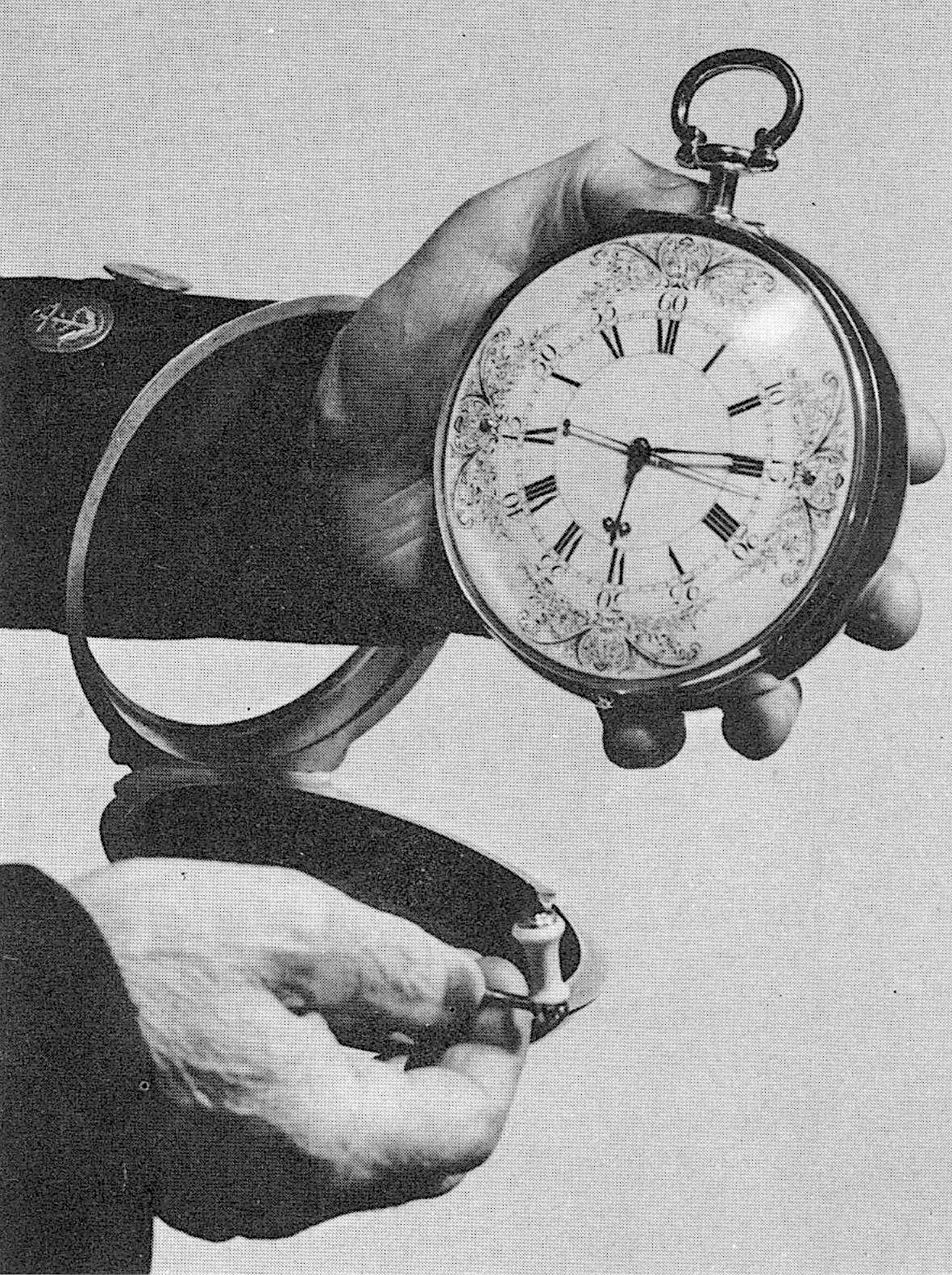
Pierre Le Roy's marine timekeeper of 1766, held by the Conservatoire national des arts et metiers as CnAM 1395, combines a detent escapement, a temperature-compensated balance and an isochronous balance spring in one object. It was tested at sea on the corvette Aurore in 1767, and Le Roy won the Academie des Sciences' double prize in 1769. The archive's record reads Rupert Gould's history as showing that the trade that followed copied this layout and not Harrison's H4.
It is a French state collection object with no tie to the British holdings, and Gould described it at the Conservatoire in his 1923 monograph.
Earnshaw's chronometer 509 reached the British Museum through a collector's estate
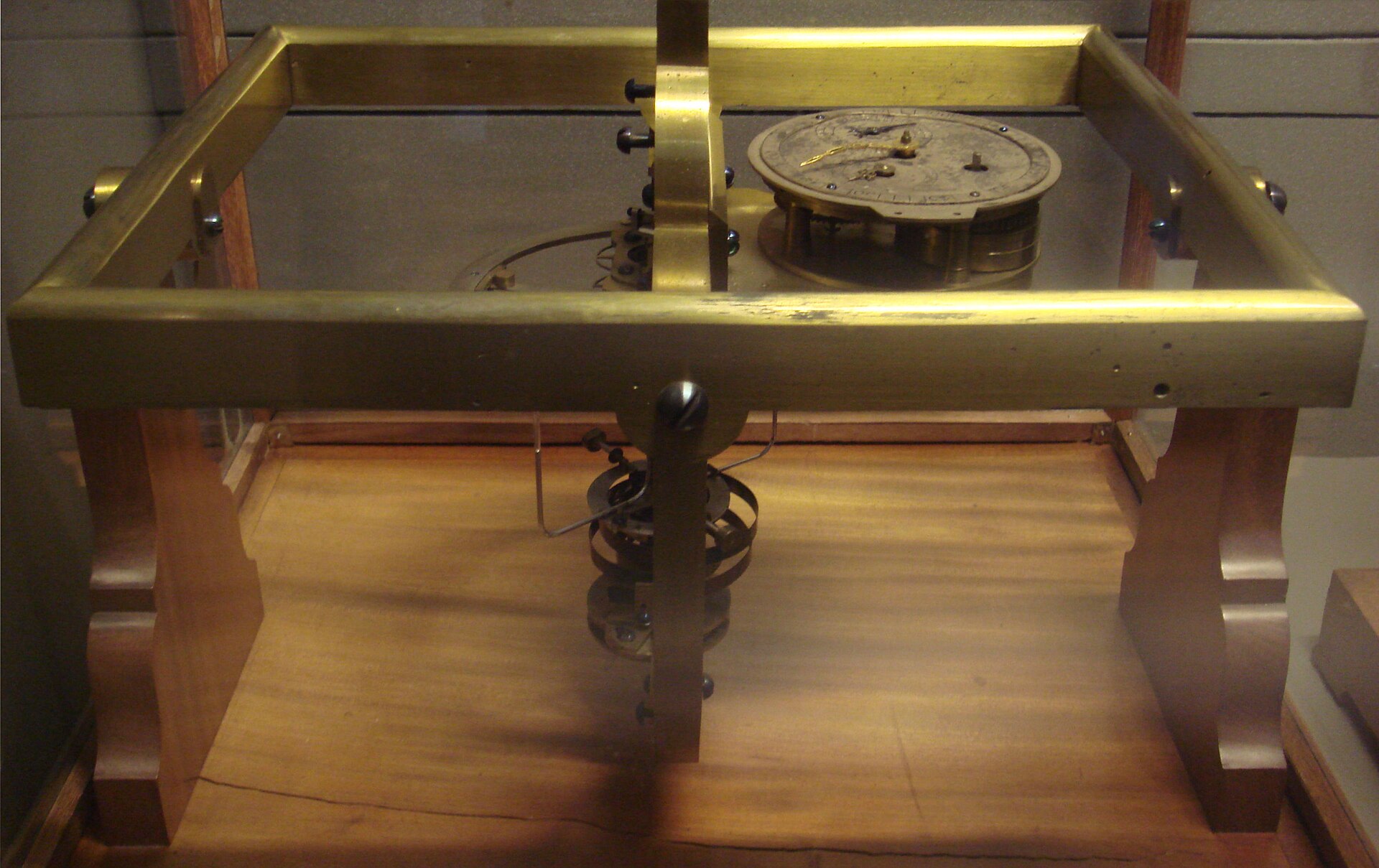
Earnshaw's chronometer serial 509 is in the British Museum because the Ilbert collection was bought whole in 1958 after a planned auction was cancelled. The Greenwich ledger tracks it by number through HMS Hecla in 1828, HMS Beagle from 6 December 1831, HMS Formidable in 1842 and HMS Pembroke in 1858, then to the Royal Society's Falmouth Observatory in 1867. Captain Robert FitzRoy sailed on the Beagle with twenty-two chronometers, and the ledger names the officer to whom this one was issued as Captain Stokes.
Greenwich gave it to E. Dent and Co. in part exchange on 16 July 1888, and no source says how it reached Courtenay Adrian Ilbert. Ilbert died in 1956, his collection was catalogued for auction, and a gift from Gilbert Edgar let the museum buy it intact. It was registered on 6 October 1958 as 1958,1006.1957.
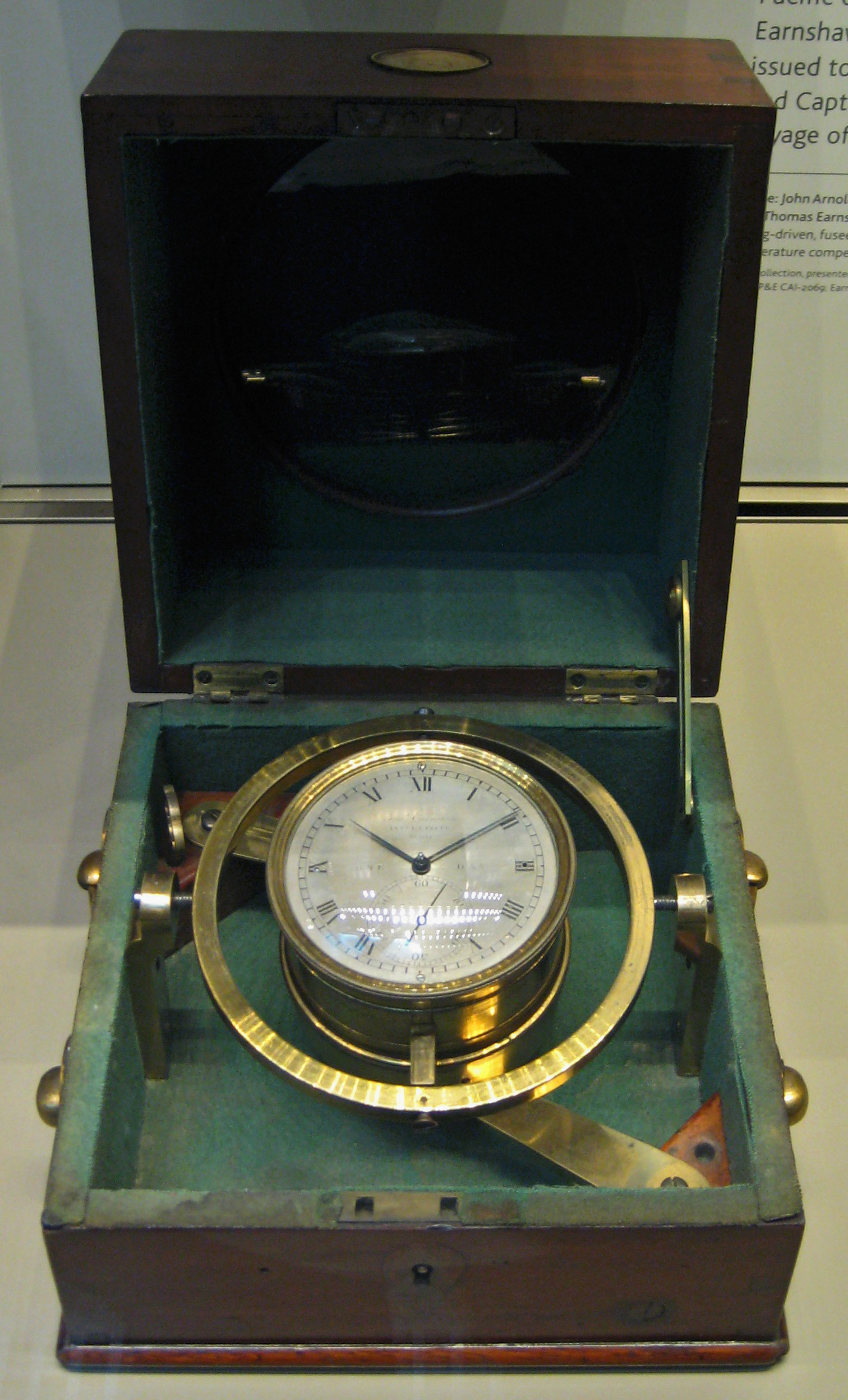
The terms of holding decide what a researcher can see and cite
The terms of holding decide what a visitor can see and what a researcher can rely on. A state-owned machine such as K1 can sit out of view for years, a loaned machine such as H5 depends on an agreement that can end, and a purchased collection such as Ilbert's carries the history of its auction. A citation to the longitude clocks should name the object, the institution and the terms, and it should not stand in one museum for all of them.
Questions
H5 is owned by the Worshipful Company of Clockmakers and is on loan to the Science Museum Group, where it is shown in the Clockmakers' Museum gallery as object L2015-3480.
No. H1 to H4 are in the National Maritime Museum at Greenwich, and H5 is owned by the Clockmakers' Company and lent to the Science Museum.
Earnshaw's chronometer 509 was part of the Ilbert collection, which the museum bought whole in 1958 after a planned auction was cancelled and Gilbert Edgar gave funds.
Sources
- 1Royal Museums Greenwich, collections catalogue, Marine timekeepers H1 to H4, object numbers ZAA0034 to ZAA0037. rmg.co.uk/collections/...
- 2Royal Museums Greenwich, 'Harrison's clocks and the longitude problem'. rmg.co.uk/stories/...
- 3Science Museum Group Collection, 'Marine Timekeeper known as H5 by John Harrison and Son 1770'. collection.sciencemuseumgroup.org.uk/objects/...
- 4Worshipful Company of Clockmakers, Museum Collection page. clockmakers.org/museum-archive/...
- 5Royal Museums Greenwich, collections object record, K1. rmg.co.uk/collections/...
- 6Rupert T. Gould, The Marine Chronometer: Its History and Development (London, 1923). archive.org/details/...
- 7British Museum, Collection Online, marine chronometer, museum number 1958,1006.1957. britishmuseum.org/collection/...
More in Museums and Exhibitions
The partHow Often a Famous Scroll Is Allowed to Travel
Qingming left the mainland twice and was then listed as banned from exhibition abroad. Fuchun's two halves met once in 360 years.
Most of the Exhibition Record in This Archive Was Written After 1975
Of 233 dated exhibition entries across 69 records, 166 fall in 1975 or later and only 4 before 1850. What that says about an exhibition history.
The complete object is a temporary arrangement
For a dispersed set, being complete is an event with a date and a duration. Twelve Renaissance tazze were whole and correct for two days in 2014, and...