Most of the Exhibition Record in This Archive Was Written After 1975
Of 233 dated exhibition entries across 69 records, 166 fall in 1975 or later and only 4 before 1850. What that says about an exhibition history.
Records in this piece: The Astronomer, The Rising Squall, Hot Wells, from St Vincent's Rock, Bristol, The Lycurgus Cup, Lady with an Ermine (Portrait of Cecilia Gallerani), The Blue Boy
On this page 8 sections
ContentsClose
In short
- Of 237 exhibition entries across 69 published records, 233 carry a year. 166 of them (71 per cent) fall in 1975 or later, 119 in 2000 or later, and only 4 before 1850.
- 39 of the 69 records that list any exhibition have none earlier than 1975, and 54 have an entry from 2000 on. 265 of the 334 published records list no exhibition at all.
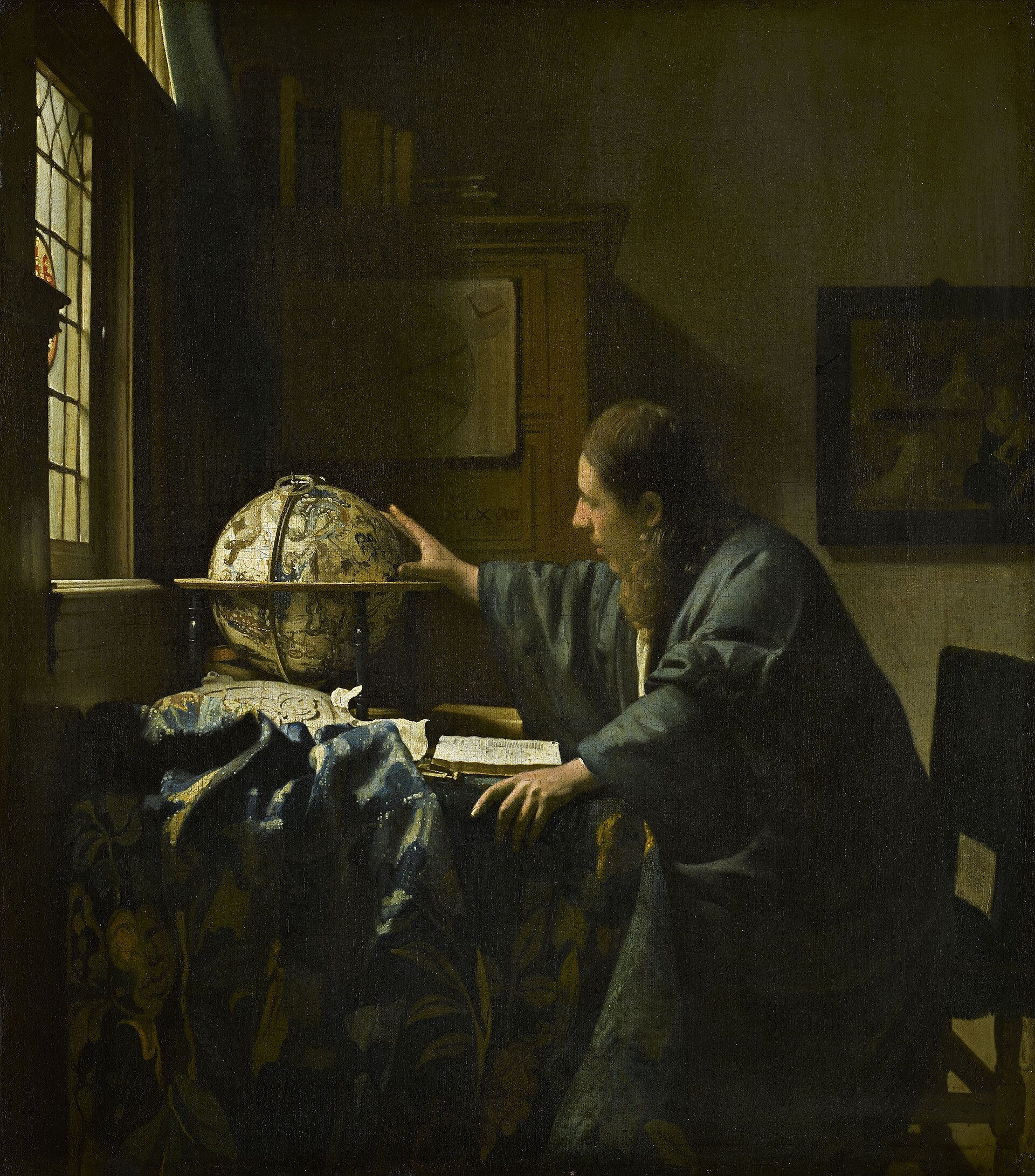
- The thin early record is a record of documentation, not of display. The Louvre's own page for Vermeer's Astronomer puts the 1828 Birmingham loan in its provenance text and lists its dated shows from 1985.
- An exhibition entry can be a loan, a permanent hang or a conservation phase on public view, so the count measures what catalogues and museum pages name, and says nothing about how often an object was seen.
166 of 233 dated exhibition entries fall in 1975 or later
The 334 published records in this archive carry 237 exhibition entries between them, and 233 of those name a year, which puts 71 per cent of the dated record in or after 1975. For a range such as 1987-1989 the count uses the first year. The spread by period is below.
| Period | Entries | Share of 233 |
|---|---|---|
| Before 1850 | 4 | 2 per cent |
| 1850 to 1899 | 10 | 4 per cent |
| 1900 to 1949 | 32 | 14 per cent |
| 1950 to 1974 | 21 | 9 per cent |
| 1975 to 1999 | 47 | 20 per cent |
| 2000 to 2026 | 119 | 51 per cent |
The rise is steady rather than sudden: 21 entries in the 25 years from 1950, 47 in the next 25, and 119 in the 27 years since 2000, which is more than half of everything.
Most records have no exhibition entry earlier than 1975
Of the 69 records that list at least one exhibition, 39 have no entry earlier than 1975, and 54 have at least one from 2000 on. The other 265 records list none. That is 79 per cent of the archive with an empty exhibition field, and the field being empty is a statement about sources, not about the object: the research behind each record names an exhibition only where a museum page, a catalogue or a dated press notice says so.
Painting leads the field with 16 of its 45 records listing a show, 77 entries in all. Sculpture has 6 of 16, and photographs have none of 18. Nobody would conclude from that last figure that no photograph here was ever hung, and the same caution applies to every other count on this page.
Vermeer's Astronomer has one early show and then a 157-year silence
Vermeer's The Astronomer is the cleanest example of the shape in the archive, because the Louvre's own record separates the old show from the modern ones. The museum's provenance text says the picture was lent by J. Gibbons to an exhibition at Birmingham in 1828, where it was catalogued as an Astrologue. The dated exhibition list on the same page then begins with a Paris show of 1985 and 1986, runs through the 1997 pairing with The Geographer, and continues to Boston in 2015, the Louvre's own Vermeer show of 2017 and Marseille in 2025.
Nothing in either place says the picture stayed in a cupboard between 1828 and 1985. It passed through the Rothschild collection in the nineteenth and twentieth centuries and entered the Louvre by dation in 1982, so the likelier explanation is that private owners lent rarely or not at all and nobody printed a list when they did.
Early shows survive where a printed catalogue made them findable
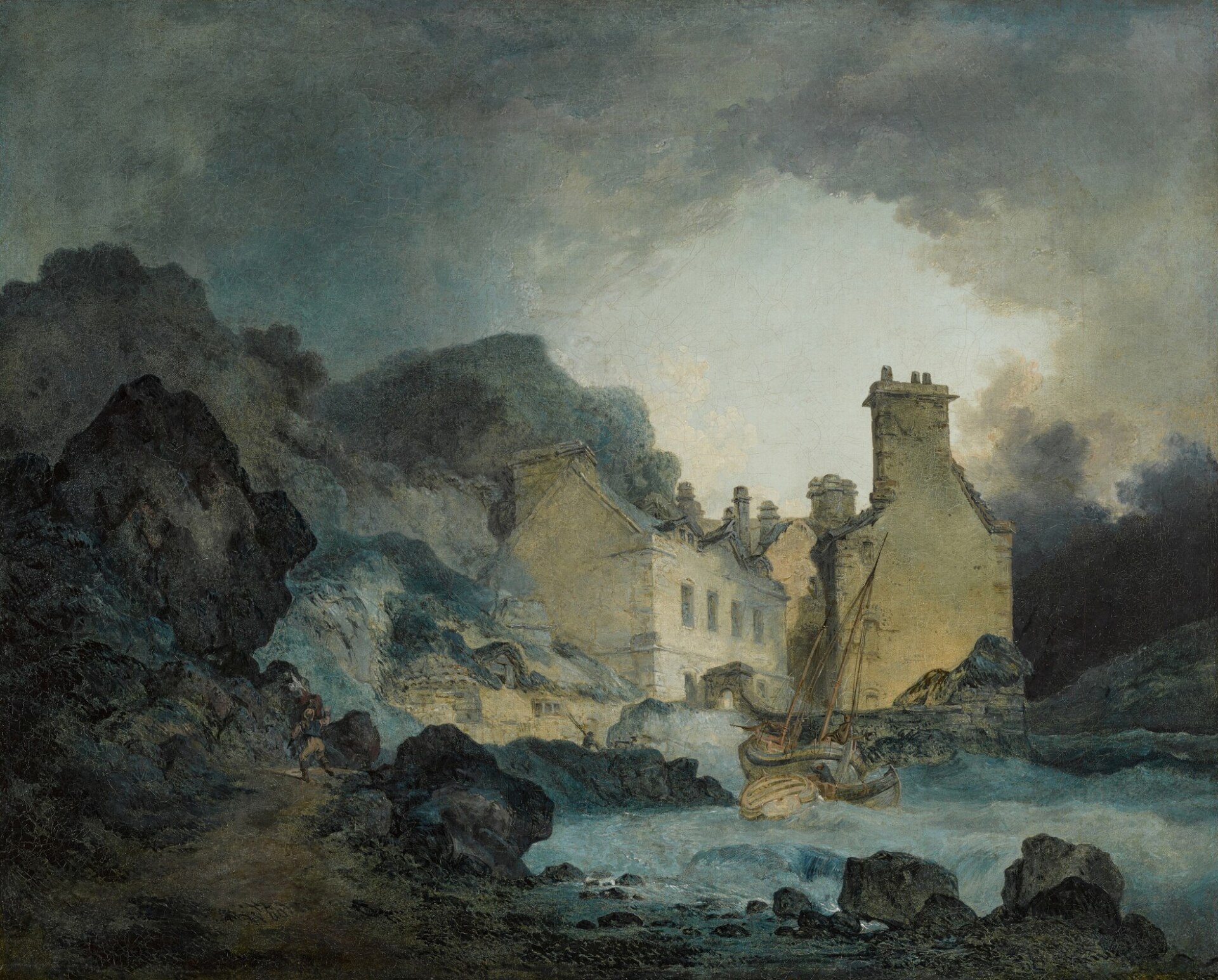
An early exhibition enters a modern record when someone compiled the old catalogues into a list. The Royal Academy shows of Turner are the example here, because C. F. Bell's 1901 list of the works Turner contributed to public exhibitions gives the year and catalogue number of every entry. It lists The Rising Squall, Hot Wells, from St Vincent's Rock, Bristol at the Royal Academy in 1793 as number 323.
Bell does not settle what the entry was. He notes that Redgrave described it as an oil painting, and he corrects that statement, treating Turner's 1794 view of the river Monach as the first exhibited oil. This archive's own record of the canvas shown below, sold at Sotheby's in 2025, reads the 1793 entry the other way, as the first public showing of a Turner oil, and cites its sources on that page. For this count the point is narrower: a 1793 entry exists in the dataset because a published checklist put a number against it.
The Lycurgus Cup has shows in 1850 and 1862, then 125 years with none listed
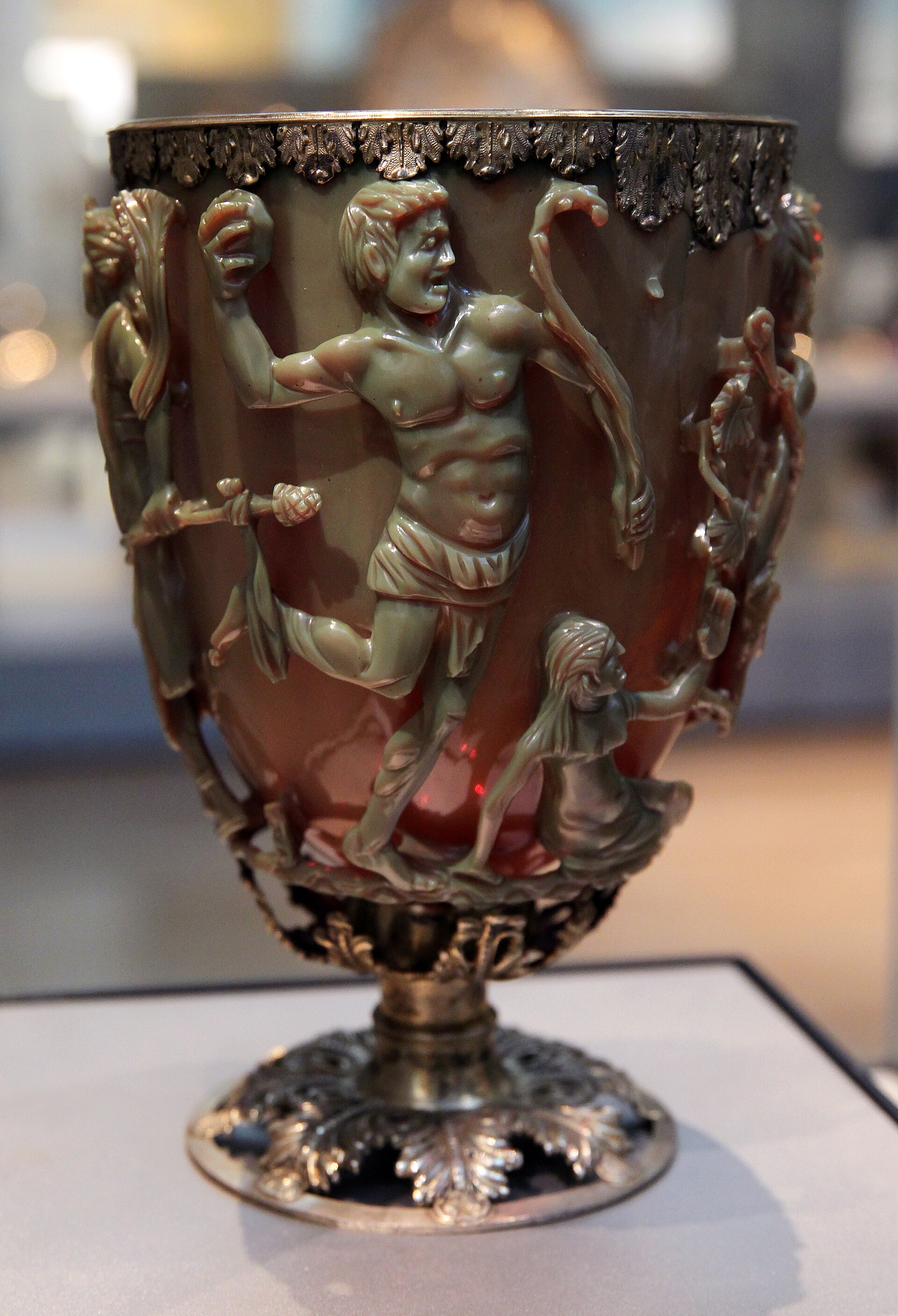
The Lycurgus Cup lists two Victorian exhibitions and then none until 1987. The Society of Arts in London showed it in 1850 as number 626 in Works of Ancient and Mediaeval Art, and the South Kensington Museum showed it again in 1862. The next entry in the record is Glass of the Caesars, which opened in 1987 and travelled between Corning, London, Cologne and Rome.
The cup itself did not change hands in that window in any way the record captures. It was in the British Museum from 1958 and in the Rothschild collection before that, and the 125 years between the second and third entries simply fall between the Victorian loan exhibitions and the modern loan-catalogue habit. The later list is then dense: 2003, 2007, 2012 and the present display in Room 41.
Lady with an Ermine has fifteen entries and the first is 1952
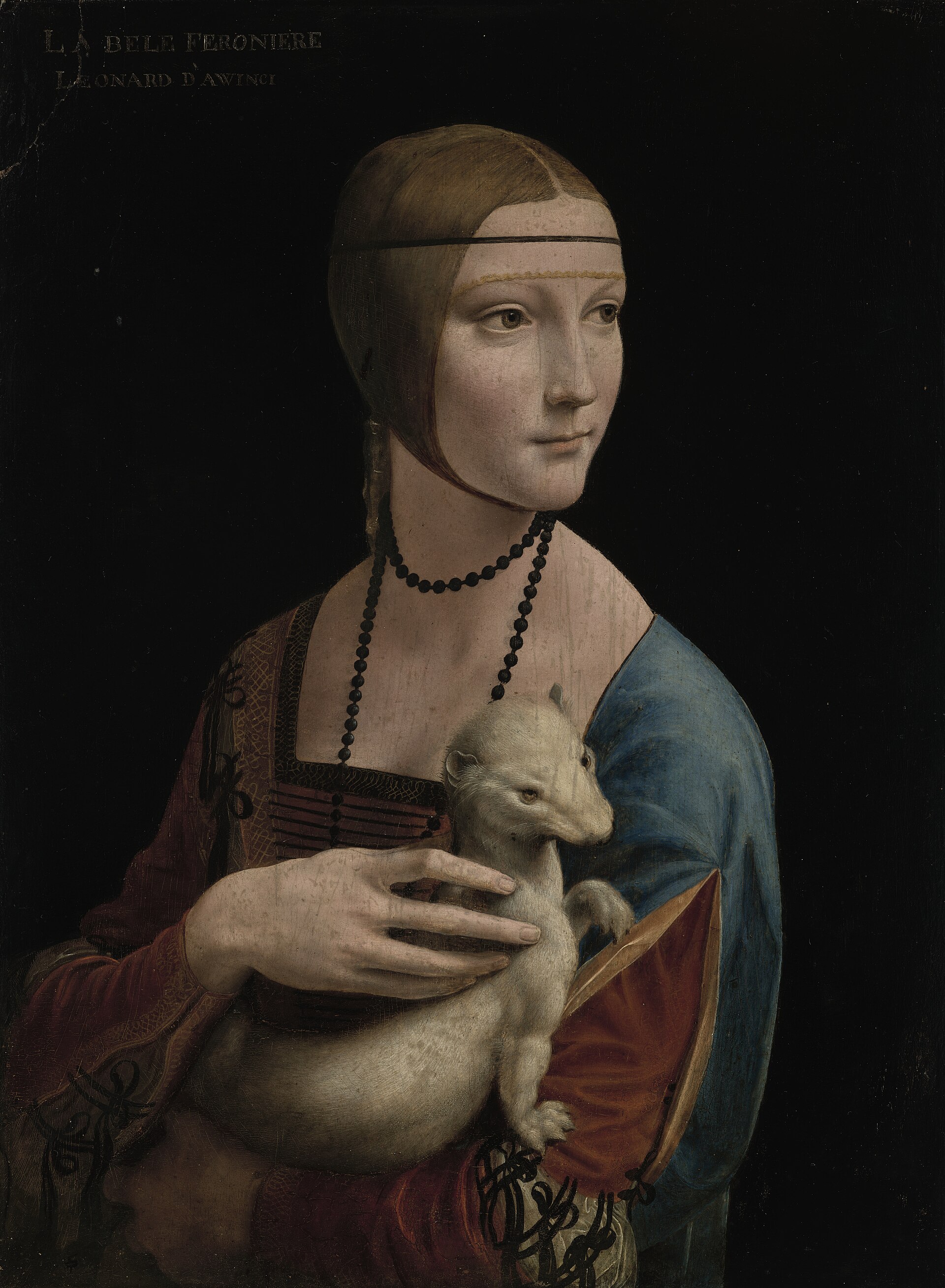
Leonardo's Lady with an Ermine has the longest exhibition list of any record in the archive, 15 entries, and its first is the Warsaw show of 1952 to 1955 built around the physico-chemical studies of Kazimierz Kwiatkowski. Thirteen of the fifteen fall in 1991 or later. The picture was lent to Moscow in 1972 and then to Washington, Malmo and Stockholm, Rome, Kyoto, Milwaukee, Budapest, Madrid, Berlin and London over the following decades.
Several of those entries are not loans at all. The record lists the 2012 to 2015 display at Wawel Royal Castle while the Czartoryski Museum was rebuilt, the 2017 to 2019 hang in the National Museum in Krakow and the present permanent gallery as three further entries. The count of fifteen is therefore the count of occasions on which a source named a place where the picture could be seen, and three of the fifteen are the picture staying in Poland.
Where the missing early record sits, and who could fill it
The early gaps in this archive are gaps in compilation, and they close slowly, one catalogue at a time. A show of 1850 is findable because the Society of Arts printed a numbered catalogue and the British Museum cites it. A private loan of the same decade to a provincial town may have left a handwritten label on the stretcher and nothing else.
Three sources fill the early record when they exist. Printed exhibition catalogues of the Royal Academy, the British Institution and the great international exhibitions give a year and a number. Checklists such as Bell's for Turner gather an artist's shows in one place. Museum labels and old inventories record loans that were never catalogued. A researcher who finds an early entry in any of them can send it to the corrections page with the catalogue and its number, and the record is reviewed against it.
The same list also shows where not to read too much into a late start. For 39 of the 69 records the first listed show is 1975 or later, and for most of them the object was in a collection or on a church wall for centuries before that date. The silence is long, and nobody has measured what it contains.
An entry counts a named occasion, and the count cannot say how often an object was seen
An exhibition entry in this archive records an occasion that a source named, and the number of entries is therefore a measure of documentation and not of exposure. The field mixes loans, permanent hangs, touring shows, conservation phases open to visitors and, for some early entries, shows where the venue is known and the title is not. It also counts a touring show once or several times depending on how the museum lists its stages.
The practical reading is plain. A record with a long modern list tells you the object travelled in the era of loan agreements and catalogues, and a record with a short or empty list tells you to ask where the early shows were and who held the catalogues. The record pages say which entries are loans and which are displays, and the sources behind each can be read from the page.
Questions
The 334 published records hold 237 exhibition entries between them, 233 of which name a year. They sit in 69 records, and the other 265 records list no exhibition.
Early shows are findable only where a printed catalogue or a later checklist recorded them. Before 1950 the archive holds 46 entries, 20 per cent of the dated total.
No. It means the research behind the record found no source naming a show. The field is a statement about documentation and the record page lists what was and was not found.
Leonardo's Lady with an Ermine, with 15, the first dated 1952. Several are displays in Krakow rather than loans abroad.
Sources
- 1Musee du Louvre, collections database, entry for L'Astronome, RF 1983 28 (Vermeer, The Astronomer). Source for the 1828 Birmingham loan by J. Gibbons in the provenance text, the dated exhibition list beginning with the Paris show of 5 November 1985 to 3 February 1986, the 1997 Astronome et Geographe pairing, the 2014 to 2017 shows and the 2025 Marseille show, and the acquisition by dation in 1982. Read on 18 November 2026. collections.louvre.fr/en/...
- 2C. F. Bell, A List of the Works Contributed to Public Exhibitions by J. M. W. Turner, R.A. (London: George Bell and Sons, 1901), full text at the Internet Archive. Source for the entry The rising squall, Hot Wells from St Vincent's Rock, Bristol at the Royal Academy in 1793, number 323, and for Bell's note correcting Redgrave on whether it was an oil. Read on 18 November 2026. archive.org/download/...
- 3Iconotheca, record for Leonardo da Vinci, Lady with an Ermine, Princes Czartoryski Museum: the 15-entry exhibition field, with the National Museum in Krakow collection entry 157417 and Czop and Sobczyk, 'The Travels of the Lady' (Rozprawy Muzeum Narodowego w Krakowie, 2015) among its sources. iconotheca.com/artworks/...
- 4Iconotheca, record for The Lycurgus Cup, British Museum registration 1958,1202.1: the six-entry exhibition field covering 1850, 1862, 1987-1989, 2003-2004, 2007-2008 and 2012-2013, with the British Museum collection record among its sources. iconotheca.com/artworks/...
More in Museums and Exhibitions
The partHow Often a Famous Scroll Is Allowed to Travel
Qingming left the mainland twice and was then listed as banned from exhibition abroad. Fuchun's two halves met once in 360 years.
The Longitude Clocks Are Held on Four Different Terms
Harrison's four timekeepers, H5, Kendall's K1, Le Roy's chronometer and Earnshaw 509 sit in four institutions on four terms: state property, a loan...
The complete object is a temporary arrangement
For a dispersed set, being complete is an event with a date and a duration. Twelve Renaissance tazze were whole and correct for two days in 2014, and...