The Last Price Is the Oldest Thing in the Record
Objects here that sit in museums carry a last recorded sale a median 26 years old and a mean of 57. Objects in private hands carry one 8 years old. A price stops the day an object stops being for sale, and the best objects stopped earliest.
Records in this piece: Girl with a Pearl Earring, The Harvesters, The Concert, The Messiah, Napoleon as Mars the Peacemaker
On this page 8 sections
ContentsClose
In short
- Across the 88 records in this archive that carry a dated sale, the ones now held by an institution have a last recorded price a median 26 years old and a mean of 57 years. The ones in private hands have a last price a median 8 years old and a mean of 14. It is the same market and the same research standard; the difference is what happened to the object afterwards.
- Twenty-six of the 64 institutionally held records here have not had a price tested in fifty years. Among the 24 privately held ones, one has, and it is an object that no longer exists as a single thing.
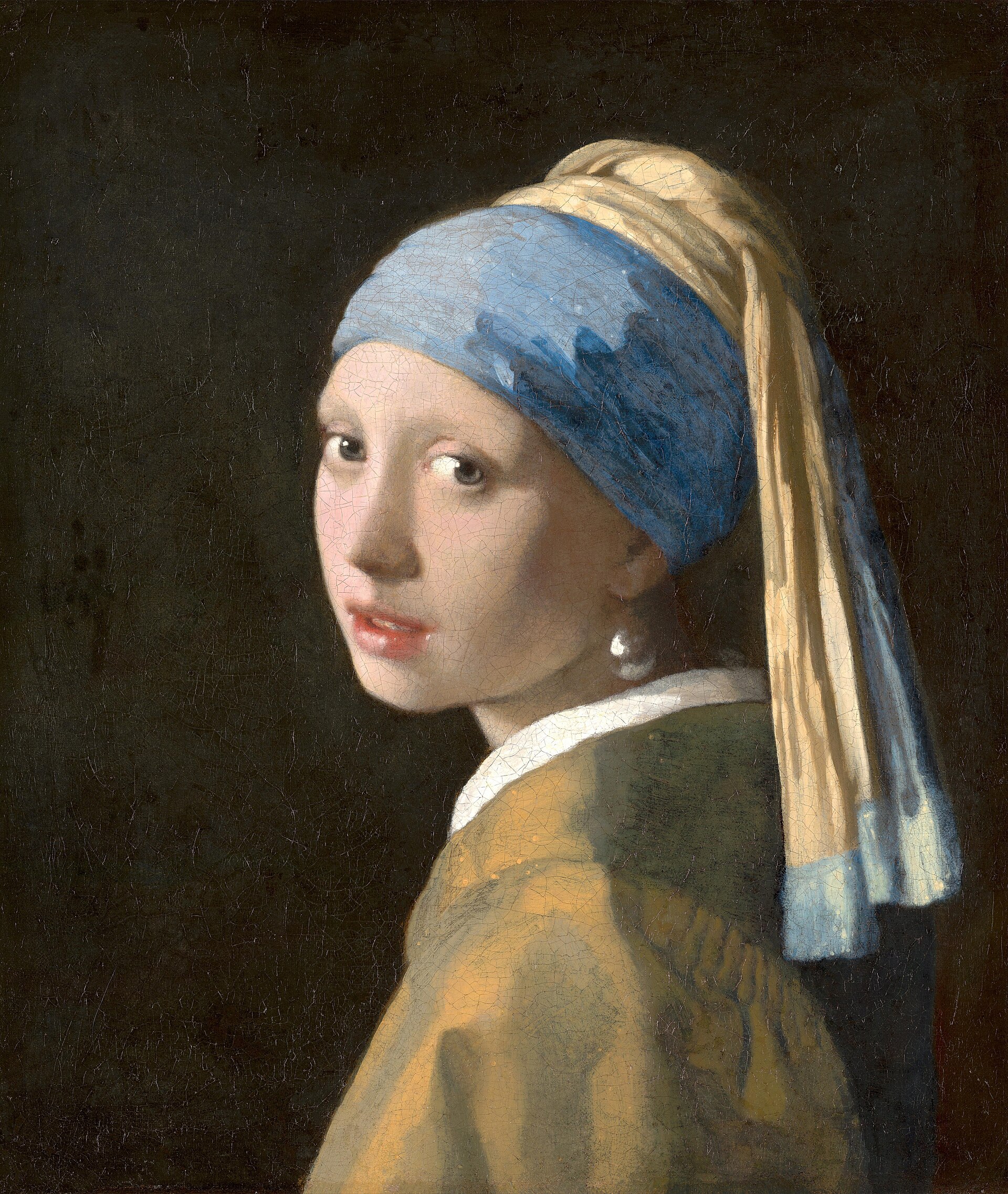
- Girl with a Pearl Earring last changed hands in 1881 at the Braams sale in The Hague, bought by Arnoldus Andries des Tombe for two guilders plus a thirty cent commission after Victor de Stuers agreed not to bid against him. The Mauritshuis prints the figure as f2,30. Accounts that quote a single number for that sale are running the hammer and the commission together.
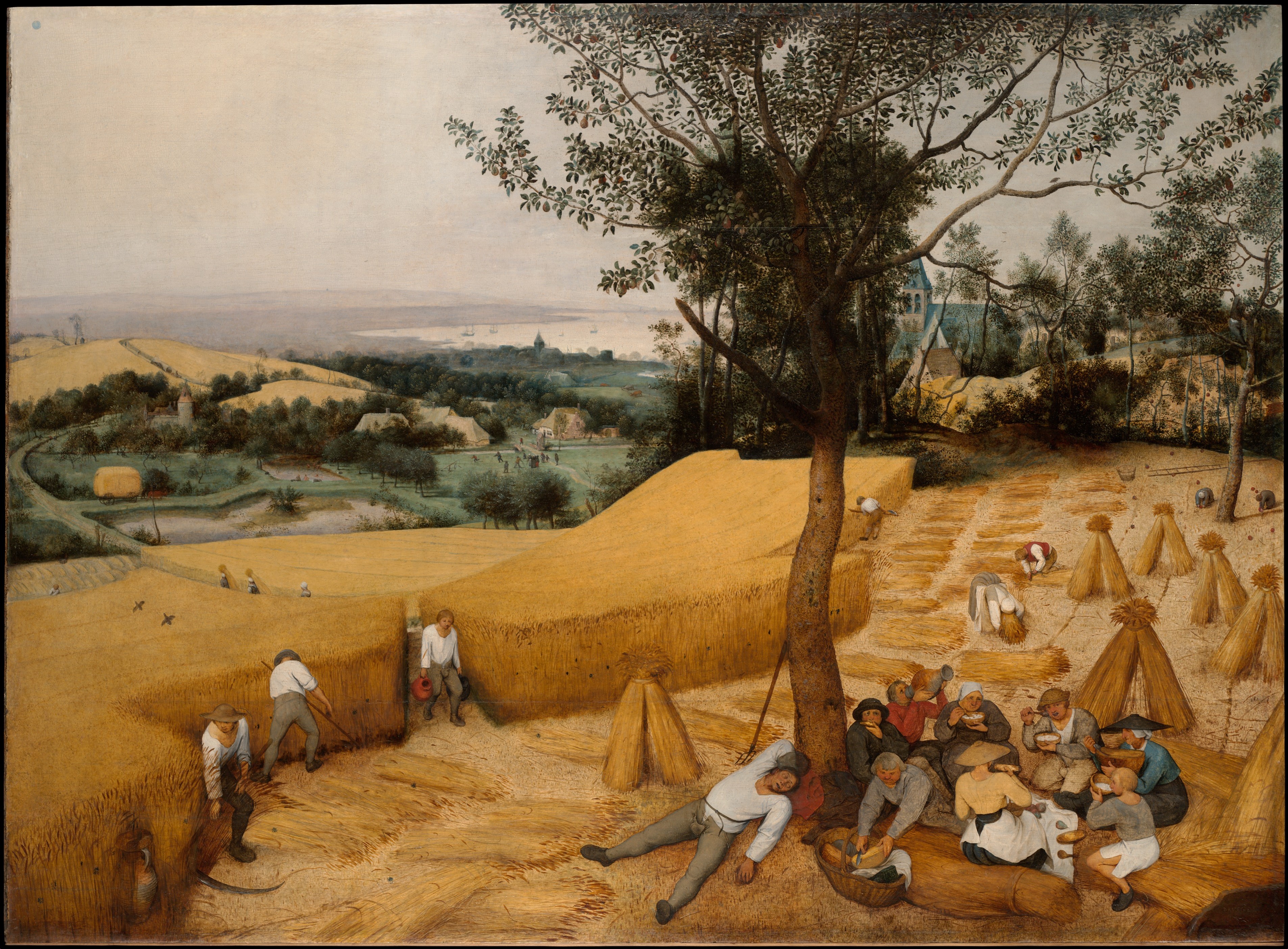
- Bruegel's The Harvesters was sold in Paris on 11 March 1816 for ninety francs and eleven centimes, catalogued as a landscape by a master of the old German school and dated 1546. The painter was Netherlandish, the picture is signed and dated 1565, and it is now one of the best-known paintings in the Metropolitan Museum of Art.
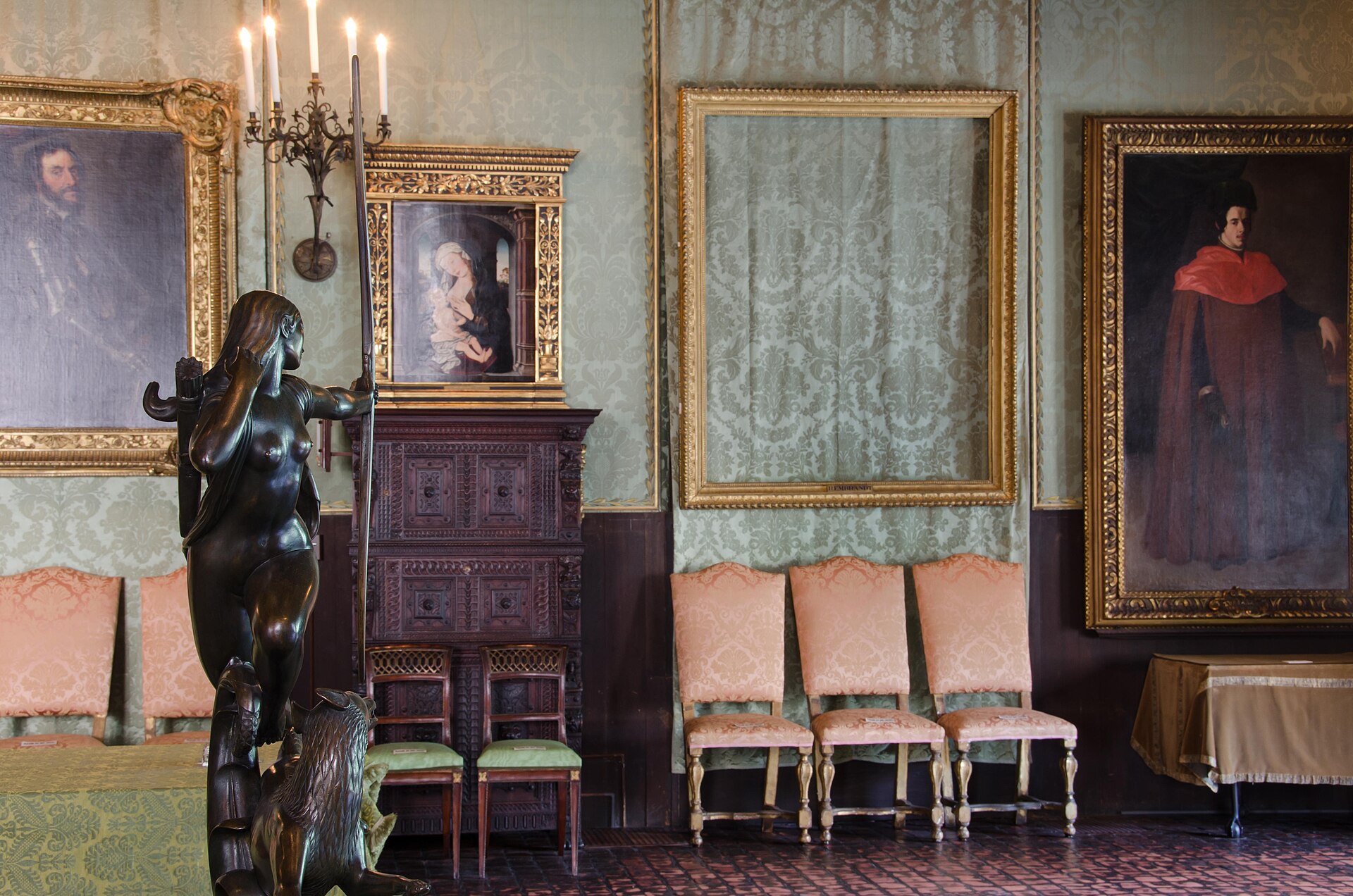
- A theft freezes a price rather than raising it. The Concert last sold at the Hotel Drouot on 5 December 1892 for 29,000 francs, to an agent bidding for Isabella Stewart Gardner. It was stolen on 18 March 1990 and has not been recovered, so the only price it has ever carried is 134 years old and attaches to an object nobody can produce.
A price records the last time somebody had to decide what an object was worth
A price is not a property of an object, it is the residue of a transaction. It records a moment when two parties had to convert an opinion into a number, and it stays valid as evidence of that moment and of nothing else. This is why the auction record is the part of a provenance that ages fastest and gets quoted longest.
What we did not expect, until we measured it across the whole archive, is how cleanly the age of that number sorts the collection in two. The dividing line is not medium, period, quality or fame. It is whether the object ended up in a museum.
Once it did, the price history stopped, usually permanently. Deaccessioning is rare and constrained, most of these objects arrived by gift or bequest with conditions attached, and nothing in the ordinary life of a public collection requires anybody to price a work again. The result is that the objects a reader is most likely to have heard of are the objects whose last recorded price is least informative.
The two halves of the archive are six decades apart
Eighty-eight of the 285 published records here carry a sale with a date attached, and splitting them by where the object is now produces two populations that barely overlap. The 64 records now in an institution have a last recorded price a median 26 years old, with a mean of 57. The 24 in private hands have a last price a median 8 years old, with a mean of 14.
The mean and the median diverge sharply on the institutional side and hardly at all on the private side, which tells you the shape of the distribution. Private objects cluster in the recent past because they keep trading. Institutional objects have a long tail running back into the eighteenth century, and that tail is made of exactly the works a museum would never sell.
| Where the object is | Records with a dated sale | Median age of last price | Mean age | Last priced 50 or more years ago |
|---|---|---|---|---|
| In an institution | 64 | 26 years | 57 years | 26 of 64 |
| In private hands | 24 | 8 years | 14 years | 1 of 24 |
Only one privately held object here has gone fifty years without a price, and it is the Beauvais Missal, which was broken up and dispersed as individual leaves: 122 of its 309 leaves have been located across more than a hundred collections, and there is no longer a single thing to sell. Our first pass produced a second apparent exception, and it was our own error. The Kandinsky in this archive shows a 1940 sale in Amsterdam and a 2023 sale to a private collector, and the 2023 entry carries no date in the field our count reads, so the object was binned as though it had not been priced in eighty-six years. We have corrected the figures above and are recording the mistake here rather than quietly fixing it, because it is the kind of error that makes a dataset look tidier than it is.
Two guilders and thirty cents, in 1881
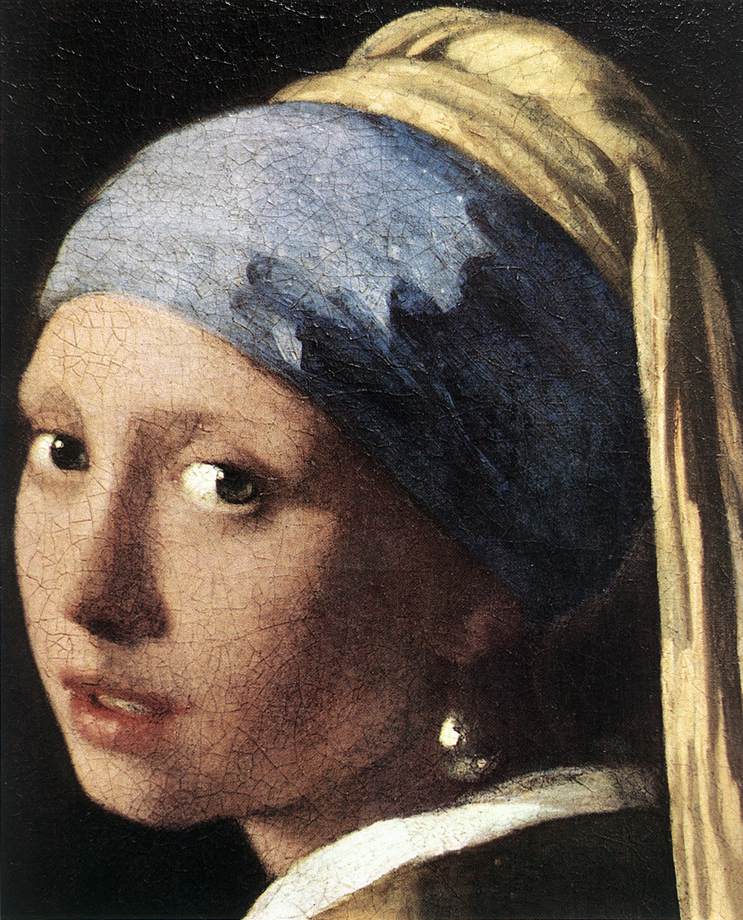
The last price ever attached to Girl with a Pearl Earring was set in 1881 at the Braams sale at the Venduhuis der Notarissen on the Nobelstraat in The Hague. The buyer was Arnoldus Andries des Tombe, who got it for two guilders plus a thirty cent commission after Victor de Stuers, who had spotted it too, agreed not to bid against him. The Mauritshuis prints the total as f2,30.
Two things about that number are worth separating. The first is that it is not a single figure, and most accounts that quote one are conflating the hammer with the mark-up; both components are documented and this archive records them apart, as it does for every sale. The second is that we offer no modern equivalent, and we would ask any reader tempted to compute one to notice what the exercise assumes. The guilder amount is the fact. Any conversion is a derived estimate that depends on the date you choose and the index you pick, and the number people actually want, what the painting is worth today, is not a conversion of anything.
Des Tombe bequeathed the picture to the Mauritshuis in 1903. There has been no price since, and there will not be one.
Ninety francs and eleven centimes, for a Bruegel catalogued as German
The Harvesters was sold in Paris on 11 March 1816 for ninety francs and eleven centimes. The catalogue described it as the work of a master of the old German school, a landscape of the greatest detail showing the labours of the harvest, measuring 58 by 44 pouces and dated 1546.
Almost every element of that description is wrong. The painter was Netherlandish and was one of the most famous names of the preceding century. The panel is signed and dated 1565, not 1546. What survives of the description as accurate is the subject, which the cataloguer could see, and the size, which he could measure.
The two transactions that followed were private and carry no hammer price at all: Jacques Doucet sold it to Paul Jean Cels shortly before 1912, and Cels sold it to the Metropolitan Museum in 1919. The museum describes what it paid in 1919 as extraordinarily low and does not publish the figure. So the only public number this painting has ever carried is a sum in francs, set by somebody who had misidentified the school, the painter and the date.
A theft freezes the price instead of raising it
The Concert passed through at least six auctions between 1696 and 1892, and a price survives for only the last of them. On 5 December 1892 at the Hotel Drouot in Paris it went for 29,000 francs to the agent Fernand Robert, bidding for Isabella Stewart Gardner, who signalled from the room with a handkerchief. Agents for the Louvre and the National Gallery in London were underbidders and withdrew on realising they were bidding against each other.
It was stolen from the Isabella Stewart Gardner Museum on 18 March 1990 and has not been recovered. Legal title remains with the museum, and its location line in this archive reads unlocated.
The painting is routinely described as the most valuable stolen work in the world, with figures in the hundreds of millions attached. Those numbers are not prices. Nobody has been asked to pay one, no transaction has tested one, and the object cannot be delivered. The last real number attached to The Concert is 29,000 francs from 1892, and a theft did not make it larger, it made it permanent.
One price in three hundred years, and objects that can never have another
The Messiah Stradivari carries exactly one documented market transaction in its entire history. In 1890 the heirs of Delphin Alard sold it through W. E. Hill and Sons to Robert Crawford of Edinburgh for 2,600 pounds, reported at the time as the largest sum ever paid for a single violin. It has not been sold since 1904 and has not been a market object at all since it reached the Ashmolean.
Canova's Napoleon as Mars the Peacemaker sits at the far end of the same logic: it has never been at auction and now cannot be. It passed from the sculptor to the French imperial state, to the restored French regime, to the British government by purchase in 1816, to the Duke of Wellington as a gift from the Prince Regent, and to the nation by statute in 1947. The one recorded number in that sequence is a government purchase, not a hammer, and even the sterling figure usually quoted is a period conversion that should be read as an order of magnitude rather than a price.
Between them these two mark the boundary of what the market can see. An object that trades produces evidence. An object that moves by gift, bequest, statute and state transfer produces paperwork, and the paperwork does not contain a number.
How to read a price with a date on it
Read the date before the number, every time. A hammer price is evidence about the day it was struck, and on this archive's own figures the median institutional price is 26 years old and the mean is 57. Quoting a figure from 1881 or 1816 without its date is not shorthand, it is a different claim from the one the record supports.
Ask what the sale actually tested. The Harvesters at ninety francs tested a misattributed old German landscape, not a Bruegel. Girl with a Pearl Earring at f2,30 tested an unattributed picture in poor condition at a notary's sale. In both cases the number is real and the thing it measured is not the thing we now think we are pricing.
Then treat the absence of a recent price as information rather than a hole. When an object stops being priced it is usually because it has entered a collection that will not sell it, and that is a substantive fact about its status. The valuations that circulate for famous museum pieces and famous stolen ones are estimates produced for insurance, for journalism or for nothing in particular, and they are not what this archive means by a price.
Why this archive is free to read
We do this for everyone who loves art. The people who have studied it for years, and the people who just stopped to look. Iconotheca exists so that what we learn belongs to all of them.
Nobody pays us for this. No ads, no sponsors, no commercial interest. These works belong to all of us, and we would rather share them with as many people as we can than keep them to ourselves.
If it gave you something today, tell us to keep going. Follow us, leave a like, or write a positive comment. We read every one, and they are what keeps us going.
Questions
Two guilders plus a thirty cent commission, at the Braams sale in The Hague in 1881, printed by the Mauritshuis as f2,30. The buyer was Arnoldus Andries des Tombe, who bequeathed it to the Mauritshuis in 1903. There has been no sale since, so that remains the only figure the painting has ever carried.
Because a price is produced by a sale and public collections rarely sell. Of the 88 records here with a dated sale, the 64 in institutions carry a last price a median 26 years old against 8 years for the 24 in private hands, and 26 of those 64 have not been priced in fifty years.
No. The Concert is frequently described as the most valuable stolen painting in the world, but no transaction has tested any of the figures attached to it and the object cannot be delivered. Its only recorded price is 29,000 francs at the Hotel Drouot on 5 December 1892.
It can be indexed, but the result answers a different question from the one most readers are asking. This archive records the sum in the currency of the sale and declines to publish a conversion, because the conversion depends on the date and index chosen, and because what a work would fetch today is not a function of what it fetched in 1881.
Sources
- 1Mauritshuis, The Hague, collection entry for Johannes Vermeer, Girl with a Pearl Earring, inv. 670. Source for the 1881 Braams sale, the total printed as f2,30, the purchase by Arnoldus Andries des Tombe and the 1903 bequest to the museum. mauritshuis.nl/en/...
- 2Abbie Vandivere, 'The technical (re-)examination of Vermeer's Girl with a Pearl Earring', Heritage Science 8, art. 26 (2020). Independent second source for the 1881 sale figure, given by the head researcher of the 2018 technical project as two guilders plus a thirty cent commission. nature.com/articles/...
- 3The Metropolitan Museum of Art, collection entry for Pieter Bruegel the Elder, The Harvesters, accession 19.164. Source for the 1565 signature and date, the 1919 acquisition from Paul Jean Cels through the Rogers Fund, and the museum's description of the 1919 price as extraordinarily low without publishing it. metmuseum.org/art/...
- 4Essential Vermeer 5.0, interactive catalogue entry for The Concert. Source for the sale at the Hotel Drouot on 5 December 1892 at 29,000 francs to the agent Fernand Robert bidding for Isabella Stewart Gardner, for the Louvre and National Gallery agents as underbidders, and for the earlier auctions between 1696 and 1892 that carry no recorded price. essentialvermeer.com/catalogue/...
- 5Ashmolean Museum, University of Oxford, Messiah Violin, by Stradivari, WA1940.112. Source for the 1890 sale by Delphin Alard's heirs through W. E. Hill and Sons to Robert Crawford for 2,600 pounds, and for the violin's status as a collector's instrument rather than a market object. ashmolean.org/messiah-violin-stradivari
- 6The Wellington Collection, object entry for Napoleon as Mars the Peacekeeper, Apsley House. Source for the sequence from the French imperial state through the British government purchase of 1816 and the Prince Regent's gift to the Duke of Wellington, to the transfer of the Wellington Collection to the nation by statute in 1947. wellingtoncollection.co.uk/collection/...
More in The Market
The partThe hammer is the one number most auction houses do not print
Of 232 auction results in this archive, 53 carry no hammer price published by the house that sold the object.
The Objects Whose Price Was Set by a Tax Bill and Not a Buyer
The Louvre did not buy the most famous Vermeer in France. It accepted it against a death duty, and the acquisition price is not withheld, it does not...
The House That Cannot Be Asked: Who Keeps the Price After the Sale
Half this archive's sale record sits with two firms you can still write to. The other half sits with houses that shut, and with bodies that were...