An Exhibition History Holds Four Different Events
One hundred and eighty-six exhibition entries across 60 records, and they are not one kind of thing. A loan, a show the owner mounted itself, a permanent installation and a viewing before a sale all sit in the same field.
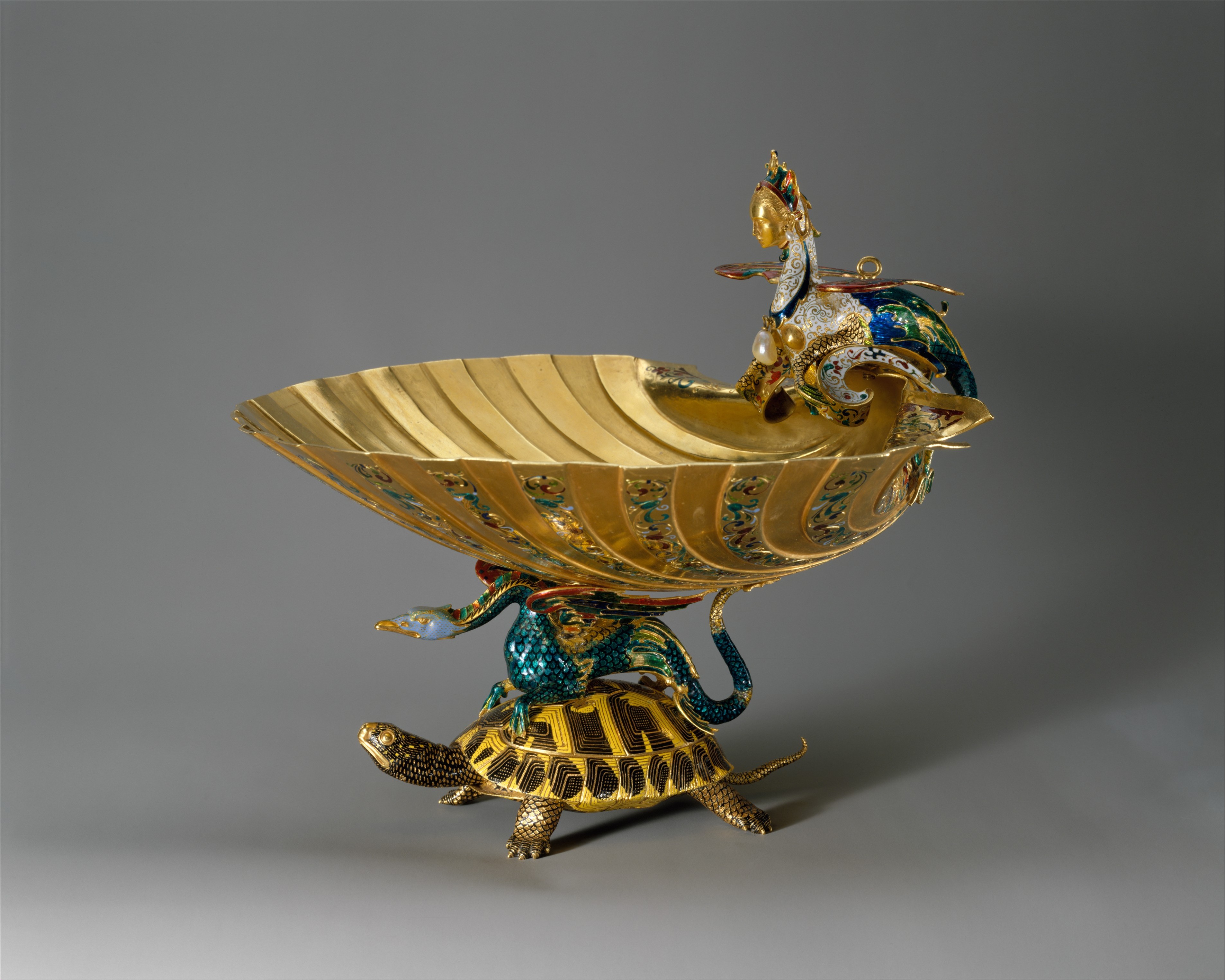
Records in this piece: The Antioch 'Chalice', Cup, known as the Rospigliosi Cup, The Clark Sickle-Leaf Carpet, The Astronomer, The Sevso Treasure, The Unicorn Tapestries
On this page 9 sections
ContentsClose
In short
- Sixty of the 266 records published here carry an exhibition history, and between them they hold 186 entries. One hundred of those entries place the object somewhere other than where it now lives; the other 86 are at the venue that holds it.
- At least 22 of the 186 are not exhibitions in the ordinary sense at all. Eleven are open-ended installations such as 1938 to present, five are viewings staged before a sale, and six give only a city with no venue named.
- The Antioch Chalice carries ten entries, more than any other object here, and six of them fall before the Metropolitan bought it in 1950. Those six were staged by the dealer who was trying to sell it.
- The Clark sickle-leaf carpet carries nine entries and every one of them predates its purchase by the Museum of Islamic Art in 2013. The exhibition history belongs to the Corcoran Gallery, which held it from 1926, and not to its present owner.
- The Rospigliosi Cup is the inverse: five entries, all of them at the Metropolitan, which has owned it since 1913. The object in this archive with the most argued-over attribution has never once been asked for by another institution.
One field, four kinds of event
An exhibition line in a museum record looks like a single class of fact and is not. Across the 186 exhibition entries carried by 60 published records in this archive, the same field holds a loan to somebody else's show, a show the owner mounted in its own building, a permanent or long-running installation, and a viewing staged by an auction house before a sale.
Those four events say different things. A loan means another institution asked for the object by name, obtained it, insured it and put a date on it. A permanent installation means nobody asked for anything. A pre-sale view means the object was for sale. Only the first is evidence of external demand, and only the first places the object somewhere it does not normally sit.
What the 186 entries in this archive actually are
Classifying each entry by comparing its venue with the object's present holder, 100 of the 186 put the object somewhere else and 86 put it where it already is. Within that second group the distinctions matter more than the total.
| What the entry records | Entries | Share |
|---|---|---|
| A loan to a venue other than the present holder | 100 | 54 per cent |
| A show at the venue that holds the object | 64 | 34 per cent |
| An open-ended installation where it lives | 11 | 6 per cent |
| A place name with no venue given | 6 | 3 per cent |
| A viewing staged before a sale | 5 | 3 per cent |
The eleven open-ended entries are the clearest case of a category error. The Unicorn Tapestries are entered as 1938 to present at The Met Cloisters, the Ardabil Carpet as 2006 to present at the Victoria and Albert Museum, the Beethoven Broadwood piano as 1887 to present at the Hungarian National Museum. These are display arrangements, not exhibitions, and counting them alongside a loan inflates an exhibition history with the fact that the object is on the wall.
The most exhibited object here was being sold, not borrowed
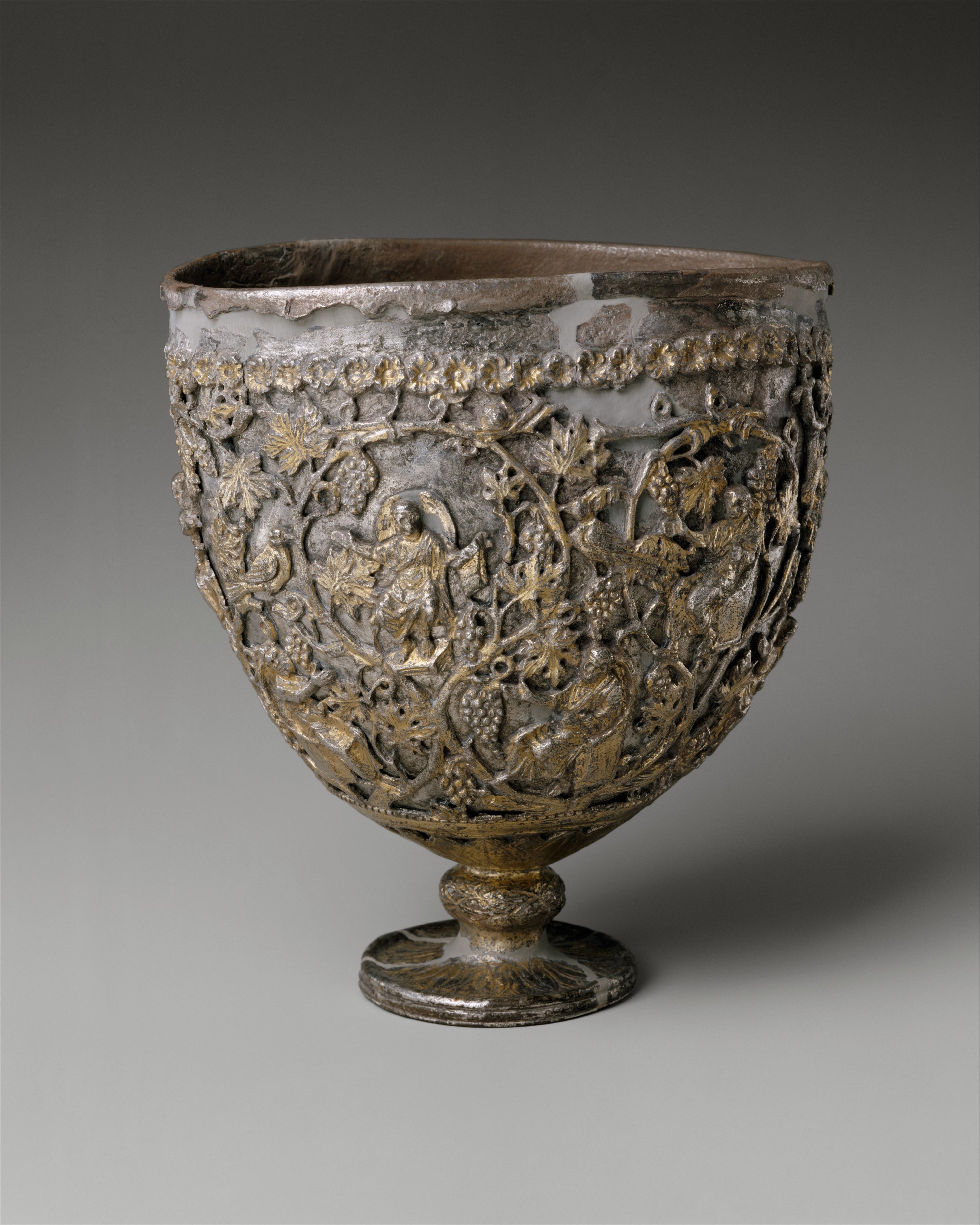
The Antioch Chalice has ten exhibition entries, more than any other object in this archive, and six of them happened before the Metropolitan Museum owned it. The chalice was acquired from the finders by Kouchakji Freres about 1910 and remained with Fahim Joseph Kouchakji until the Museum bought it for The Cloisters Collection in 1950. The entries for 1931 in Paris, 1933 at the Chicago World's Fair, 1935 at the Brooklyn Museum, 1937 and 2000 at Worcester, 1941 at Springfield and 1947 at Baltimore include six that fall inside the dealer's ownership.
That run is a sales campaign. An object promoted as the Great Chalice of Antioch and argued in print to be the cup of the Last Supper was being moved around American museums by the man who owned it, and each stop generated a line that now reads, to anyone scanning the record, as institutional endorsement. The four later entries, at Los Angeles in 1970, the Walters in 1986, Worcester in 2000 and the Royal Academy in 2008, are loans by the Metropolitan and are a different kind of fact entirely.
An exhibition history can belong entirely to a previous owner
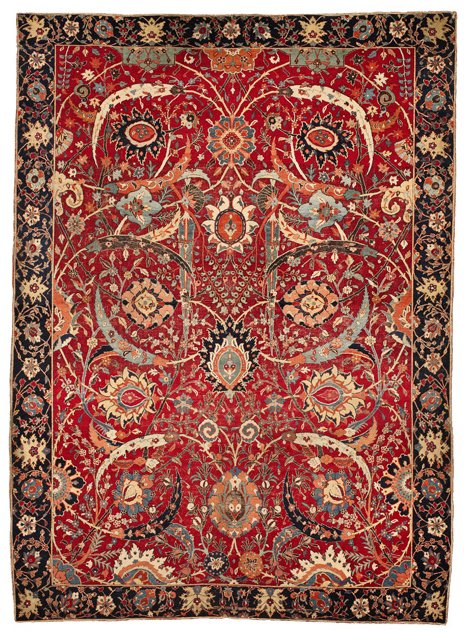
The Clark sickle-leaf carpet has nine exhibition entries and its current owner appears in none of them. William Andrews Clark held it before 1925, the Corcoran Gallery of Art in Washington received it in 1926 and held it until 2013, and the Museum of Islamic Art in Doha bought it at Sotheby's in that year. Every one of the nine shows, from the Corcoran in 1948 through the Textile Museum, Asia House, the Fogg, Sheffield and Birmingham, the Hayward, the Sackler and back to the Corcoran in 2007, happened under the Corcoran's ownership.
A reader who takes that history as a measure of how freely the present owner lends has read it backwards. The nine entries record the lending policy of an institution that no longer exists in that form and no longer has the object. Lending is an institutional habit, not a property of the thing, and an exhibition history does not travel with the object in any meaningful sense even though it stays attached to the record.
The same pattern twice more, and a world's fair
The Greenwich armour of Henry VIII shows the whole problem inside a single record. Its six entries run from the Exposition Universelle in Paris in 1889, through the Exposition Universelle of 1900, the Exhibition of Armour Made in the Royal Workshops at the Tower of London in 1951, Masterpieces of Fifty Centuries at the Metropolitan in 1970, Tudors to Windsors in Houston in 2018 and The Tudors: Art and Majesty at the Metropolitan in 2022.
The Metropolitan acquired the garniture in 1919 through the William H. Riggs gift, which places the two Paris entries inside Riggs's own ownership. A collector living in Paris showing his armour at a universal exposition is doing what the dealer with the Antioch Chalice was doing, in a more respectable venue and without an immediate sale in view. The 1889 and 1900 lines record the collector's standing, not the object's. A universal exposition is also not a museum at all, which is a fifth kind of entry the field quietly absorbs.
Six entries in this archive name a place and no venue
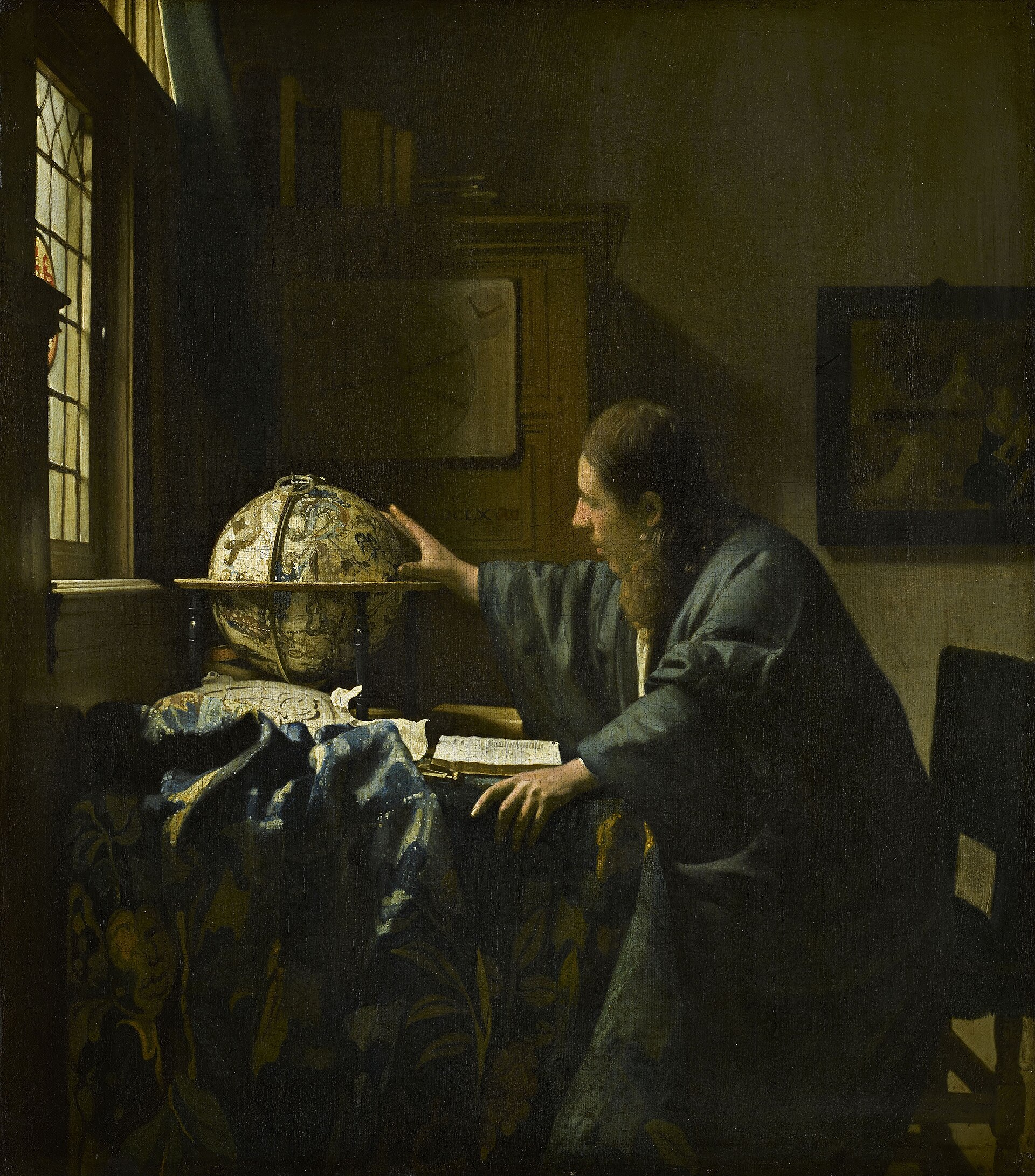
Six of the 186 entries give a city or a list of cities and no building. Vermeer's Astronomer carries Birmingham for 1828, the Riace Bronzes carry Rome for 1981, the Cleveland Buyid tomb cover carries Houston, Pittsburgh, San Francisco and Washington for 1982 to 1983, and the Beethoven Broadwood piano carries Vienna, Bonn, Bath, London and Budapest for 1991 to 1992. Turner's Rising Squall carries the words not specified in reporting for its showing in 1793.
These are honest entries and they are close to unusable. An exhibition line earns its keep by fixing an object in one building on dated days, which is what makes it evidence of location, of condition at that date and of who had custody. A city name does none of that. It is worth keeping, because the object did travel and somebody did see it, but it should be visibly weaker in the record than a line that names a venue, and in most published catalogues it is not.
The auction house entry is the one most likely to mislead
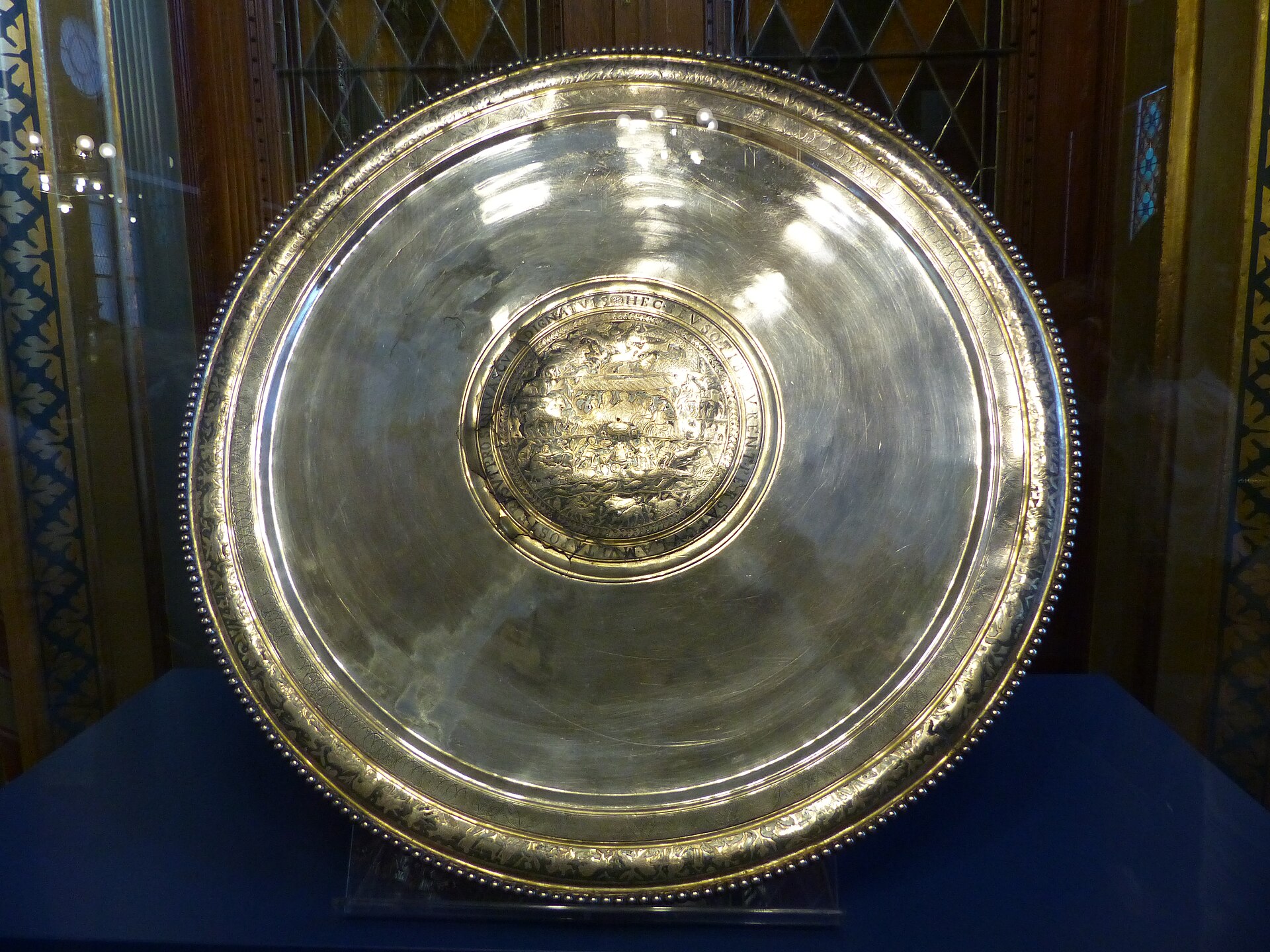
Five entries in this archive record a viewing staged before a sale, and two of them belong to the Sevso Treasure. The hoard was shown at Sotheby's in New York in 1990 and at Bonhams in London in 2006, and both occasions were attempts to sell a group of late Roman silver whose findspot and export history have been contested since it surfaced. A line reading Sotheby's, New York, 1990 in an exhibition field is not an exhibition record. It is a sale that did not complete.
The Cimabue panel discovered in a kitchen at Compiegne in 2019 produced the same shape. It was shown in Paris and at the Hotel de Ville in Compiegne in the weeks before the Senlis sale, which is why the record carries two 2019 entries against an object that is now in the Louvre. A researcher building a chronology of where an object has physically been should keep these; a researcher measuring institutional standing should not count them at all.
What a record should say, and what a reader should ask
The fix on the record side is to keep the four events apart rather than to merge them into a count. An entry is more useful with the lender named than with the venue alone, because the lender is what turns a line into evidence of who owned the object on that date and who was prepared to let it travel. An open-ended installation belongs in a display field, not an exhibition field. A pre-sale viewing belongs with the sale.
The question a reader should ask of any exhibition line is simply who asked for this object and who lent it. Where the answer is another institution, the line is doing the work an exhibition history is supposed to do: it fixes the object in a place on a date, it implies a condition report and an insurance valuation, and it records that somebody outside the owning institution wanted it. Where the answer is nobody, or the owner itself, or a saleroom, the line is still a fact about the object and it is not that fact.
Why this archive is free to read
We do this for everyone who loves art. The people who have studied it for years, and the people who just stopped to look. Iconotheca exists so that what we learn belongs to all of them.
Nobody pays us for this. No ads, no sponsors, no commercial interest. These works belong to all of us, and we would rather share them with as many people as we can than keep them to ourselves.
If it gave you something today, tell us to keep going. Follow us, leave a like, or write a positive comment. We read every one, and they are what keeps us going.
Questions
It proves less than it appears to, because the field mixes several kinds of event. Of the 186 entries in this archive, 100 record a loan to a different venue, 64 a show at the venue that already holds the object, 11 an open-ended installation, six a place name with no venue and five a viewing before a sale. Only the loans are evidence that another institution asked for the object.
Because lending is an institutional habit rather than a property of the object. The Clark sickle-leaf carpet has nine recorded exhibitions between 1948 and 2007, all of them while it belonged to the Corcoran Gallery of Art, and none since the Museum of Islamic Art bought it in 2013.
They appear in exhibition fields and they are a different event. The Sevso Treasure carries entries for Sotheby's, New York in 1990 and Bonhams, London in 2006, and both were attempts to sell the hoard. A pre-sale view fixes the object in a place on a date and says nothing about institutional standing.
Yes, and the Antioch Chalice is the clearest case here. Six of its ten exhibition entries, from Paris in 1931 to Baltimore in 1947, fall while the object was still the stock of Fahim Joseph Kouchakji, who was promoting it for sale. The Metropolitan did not buy it until 1950.
Not on its own. The Rospigliosi Cup has been at the Metropolitan since 1913 and all five of its exhibition entries are at the Metropolitan, while its attribution has moved four times in that period. An object can be central to a scholarly argument and never be borrowed by anyone.
Sources
- 1Metropolitan Museum of Art, collection record for The Antioch 'Chalice', accession 50.4, for the 1950 acquisition through The Cloisters Collection and the Museum's current dating and description. metmuseum.org/art/...
- 2Frederick M. Winship, 'Met Museum's holy grail challenged', United Press International, 5 April 1985, on the promotion of the chalice and the dispute over Eisen's claim. upi.com/Archives/...
- 3Metropolitan Museum of Art, collection record for 'Cup', known as the Rospigliosi Cup, accession 14.40.667, Bequest of Benjamin Altman, 1913, and the Museum's present attribution. metmuseum.org/art/...
- 4Sotheby's, ecatalogue entry for lot 12, the Clark sickle-leaf carpet, New York, 5 June 2013, for the Corcoran's ownership from 1926 and the 2013 sale. sothebys.com/en/...
- 5HALI, 'Classical Carpets from the William A. Clark Collection at Sotheby's, New York, 5 June 2013', archived copy, for the provenance of the group and the Corcoran's deaccession. web.archive.org/web/...
- 6The Metropolitan Museum of Art, collection record for The Unicorn Rests in a Garden, accession 37.80.6, for the tapestries' arrival at The Cloisters in 1937 and their continuous display. metmuseum.org/art/...
More in Museums and Exhibitions
The partThe complete object is a temporary arrangement
For a dispersed set, being complete is an event with a date and a duration. Twelve Renaissance tazze were whole and correct for two days in 2014, and...
When the Holder Is Not a Museum, the Accession Number Is Replaced by Law
Fourteen records here are held by a cathedral, a diocese, a cathedral works, a charitable trust or a monuments agency.
A Closing Date That Moves Both Ways, and Who Actually Moved It
Of 937 exhibitions tracked here, only 7 ever had a date move, and three of those flipped between the same two dates again and again.