Rosalba Carriera
 Venetian · 1673-1757
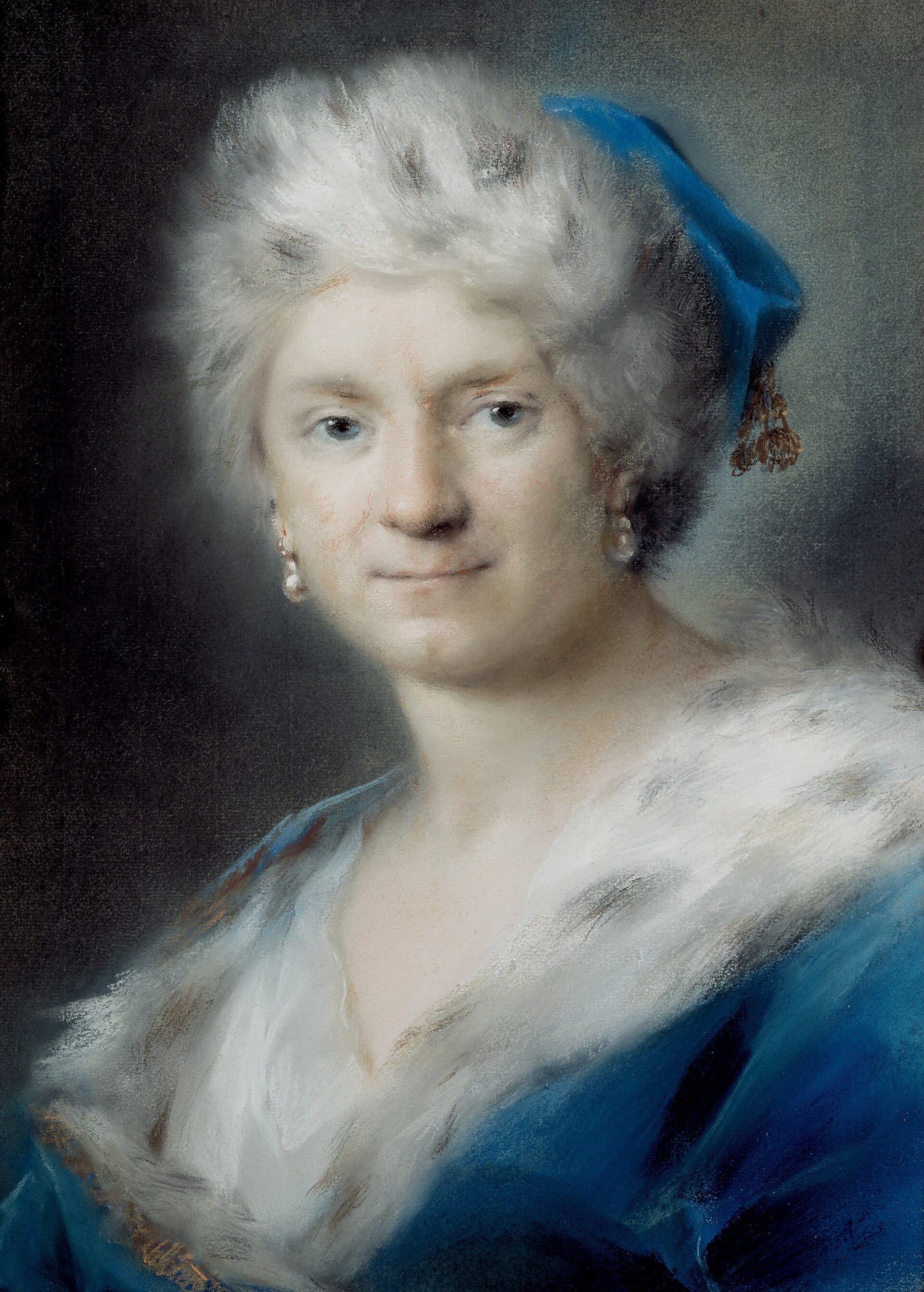
Self-portrait as Winter, 1730-31, pastel on paper, 46.5 x 34 cm, Dresden, Gemaeldegalerie Alte Meister, Gal.-Nr. P 29. The Dresden record lists Carriera as both maker and sitter and reads it as a look at her own age without idealising. It's an allegory as well as a likeness. The Royal Collection also holds a Winter, a different picture that is not a self-portrait. A Three Kings santino is on the back of the cassette.
Gemaeldegalerie Alte Meister, Staatliche Kunstsammlungen Dresden (photograph Hans Peter Klut and Elke Estel, via Google Art Project; public domain)| Full name | Rosalba Giovanna Carriera (baptised Rosalba Zuanna) |
|---|---|
| Worked as | Painter, Pastellist, Miniaturist |
| Born | 12 January 1673 (baptised ten days later) · Venice, parish of San Pietro di Castello |
| Died | 15 April 1757 · Venice |
| Nationality | Venetian |
| Movement | Venetian Rococo portraiture |
| Sources | 14 cited |
| Last verified |
About this page Last verified · 14 sources cited
On this page 13 sections
ContentsClose
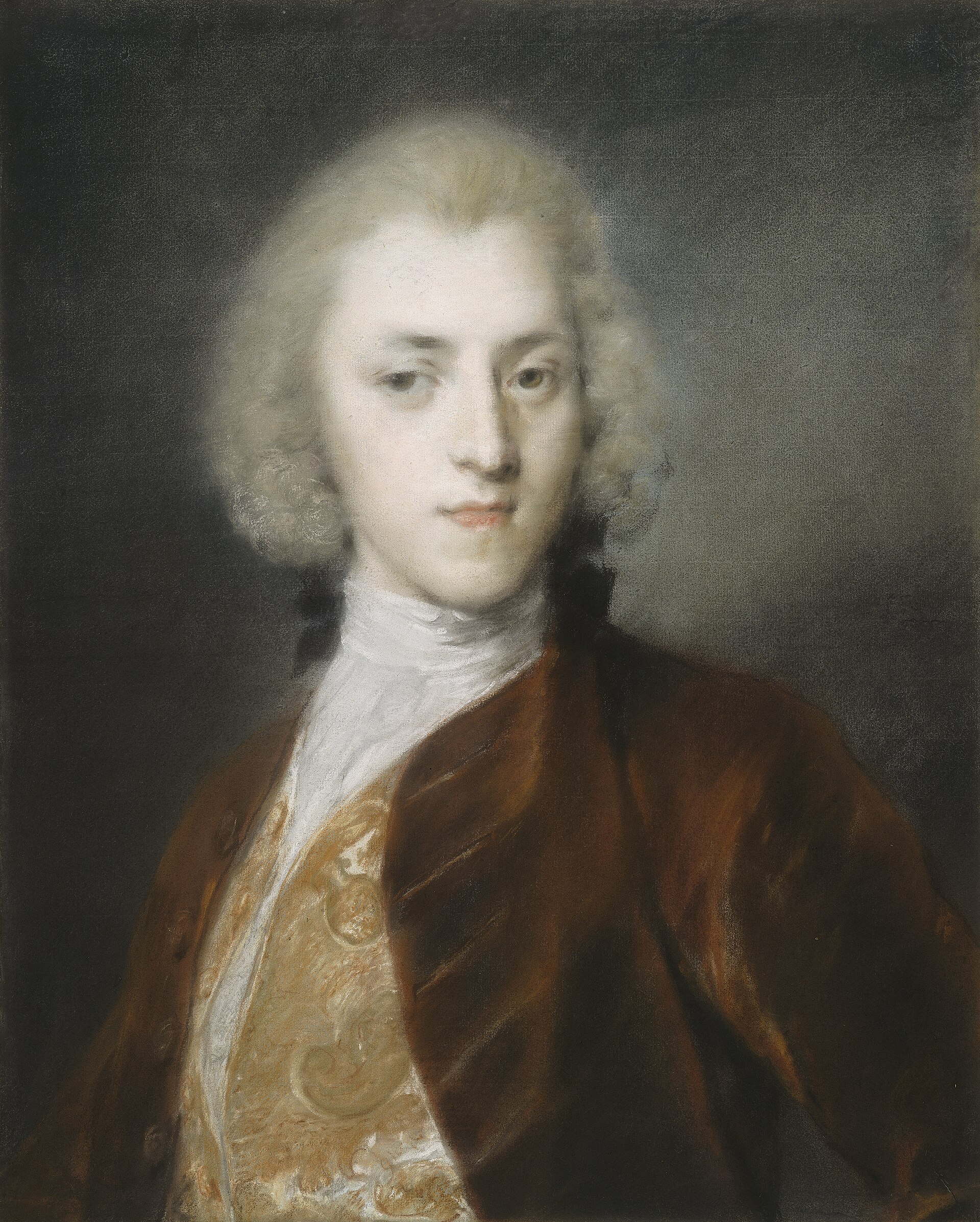
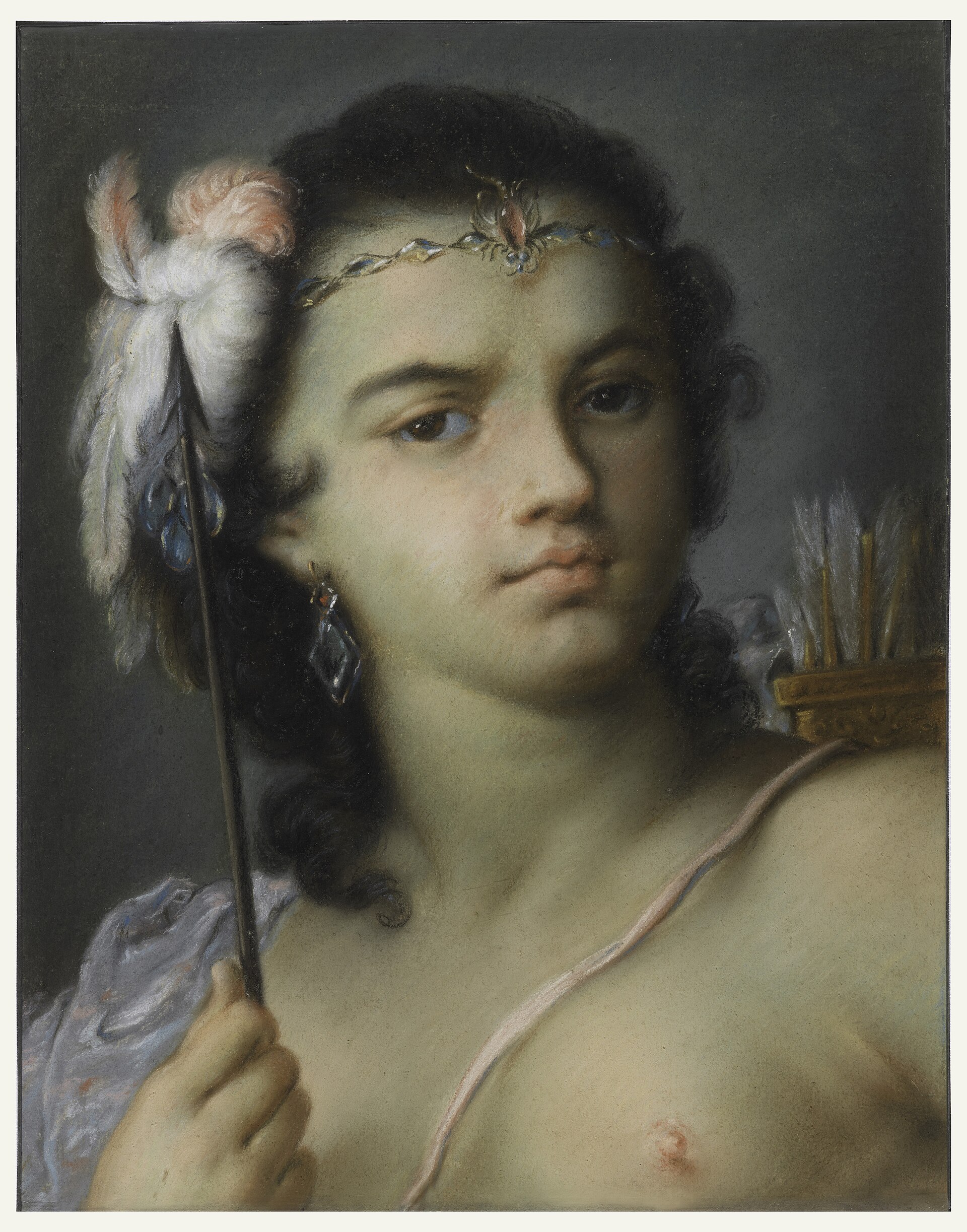
Rosalba Carriera is the pastellist whose name stood for the whole medium in the eighteenth century, and the numbers behind it are less settled than the fame. Bernardina Sani's 2007 monograph, the standard printed catalogue, lists 443 works, 348 of them in pastel. Neil Jeffares's online dictionary has given catalogue numbers to about 1,900 pastels, 455 of them known at least from a photograph, and says the majority of those 455 aren't autograph. Xavier Salomon of the Frick Collection has seen more than 200 and says a full catalogue raisonne will take many years. No authentication board turned up in any source read. Her work is never signed and seldom dated.
She started as a painter of ivory miniatures for snuffbox lids, was admitted to the Accademia di San Luca in Rome in 1705 on merit, took pastel up around 1708 and became a regular stop on the Grand Tour. In 1720 and 1721 she worked in Paris, where the Academie royale received her at once. Dresden, which bought her most heavily, once held 157 of her pastels and today counts 73. The sisters who worked beside her left no identifiable hand.
The thing most readers don't expect is how recently some of the standard story was made up. She wasn't called the queen of pastel in her lifetime; Jeffares says Leon Lagrange first used the phrase in 1860. Her birth year is given as 1673 by Jeffares, the Royal Collection and Dresden, while the 1975 Karlsruhe tercentenary show used 1675 and Gabburri and the 1755 memoir say 1678. And the learned Rosalba some modern writers describe rests on thin evidence: Jeffares notes her 1757 inventory lists no books.
Images
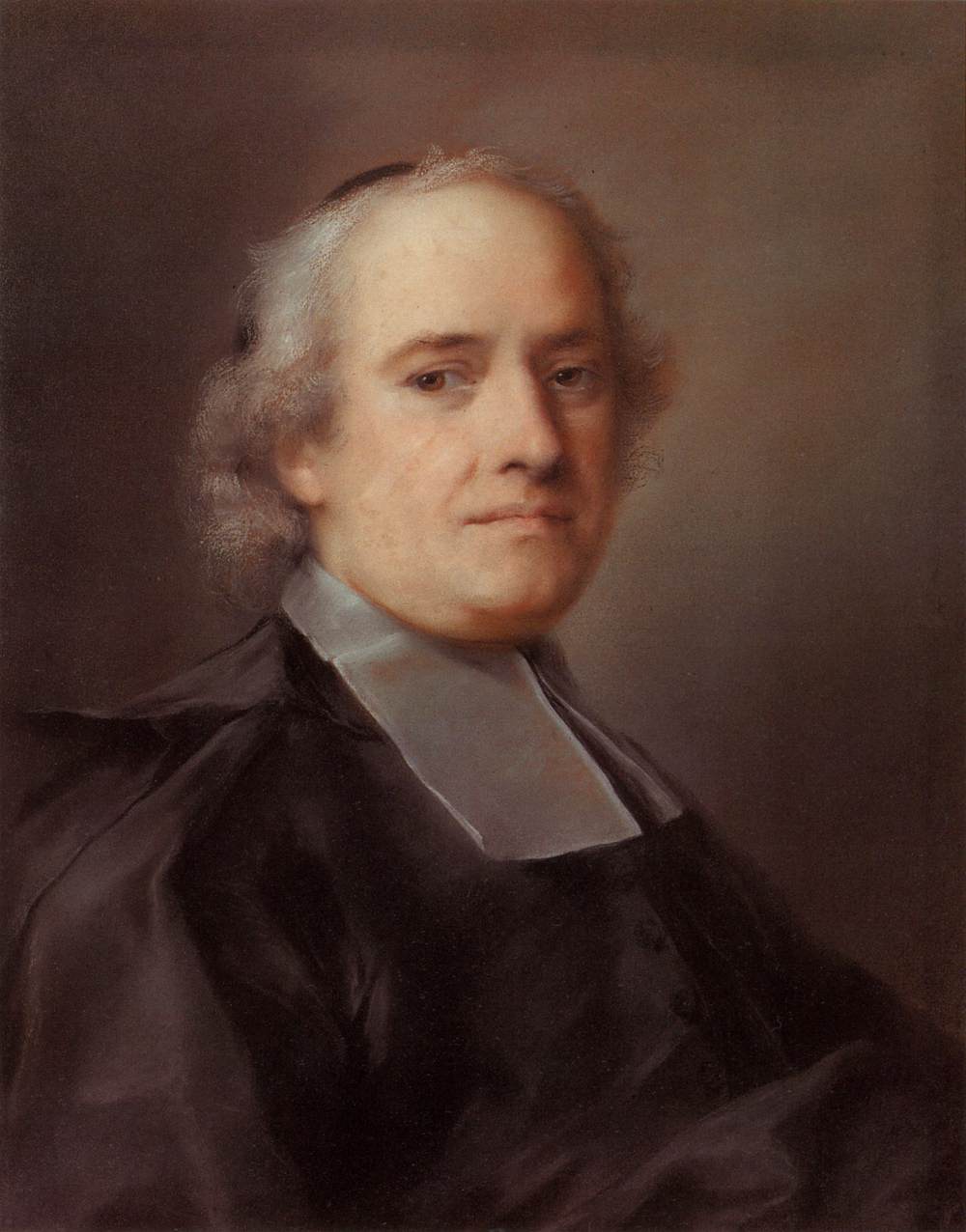
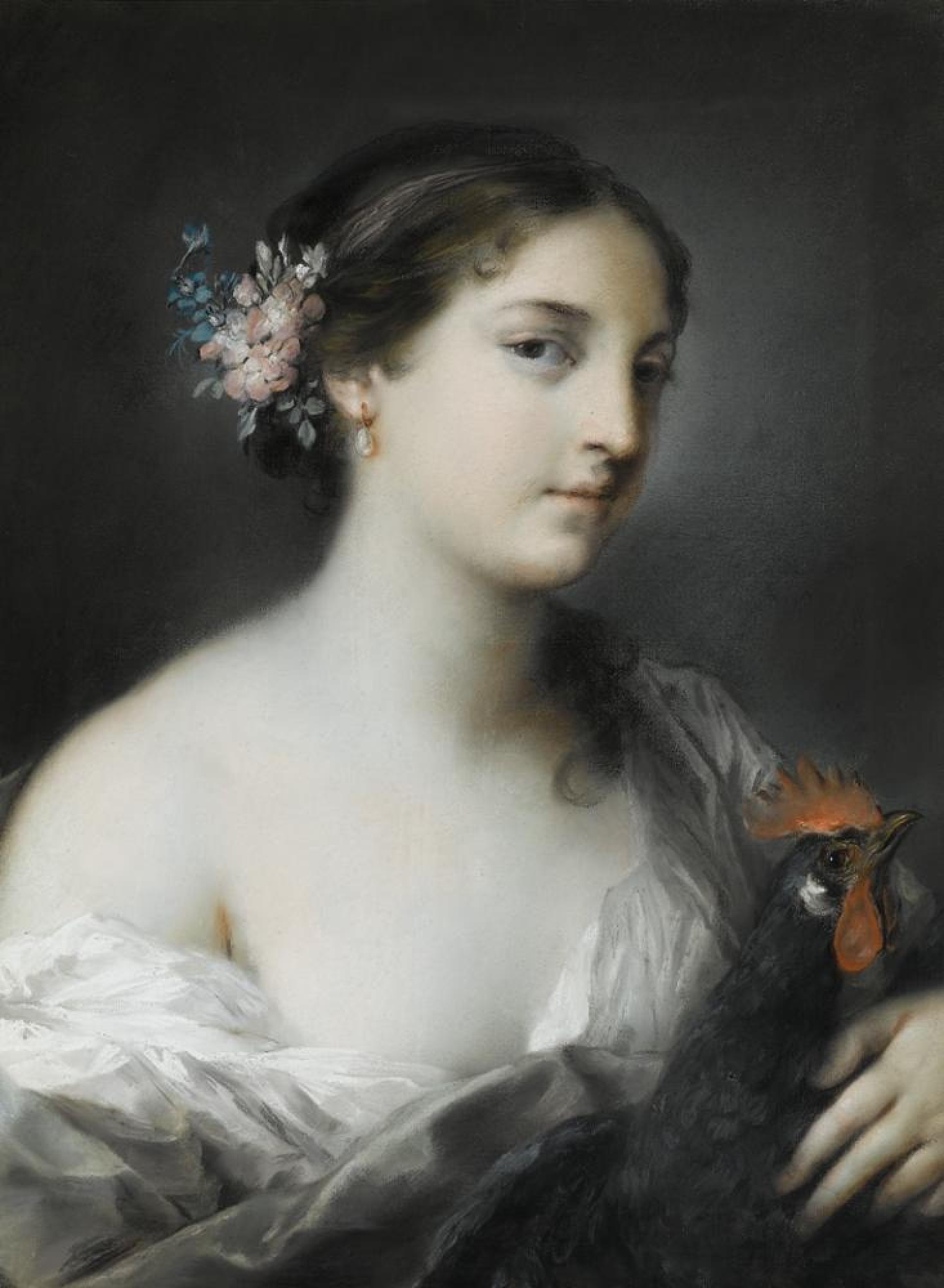
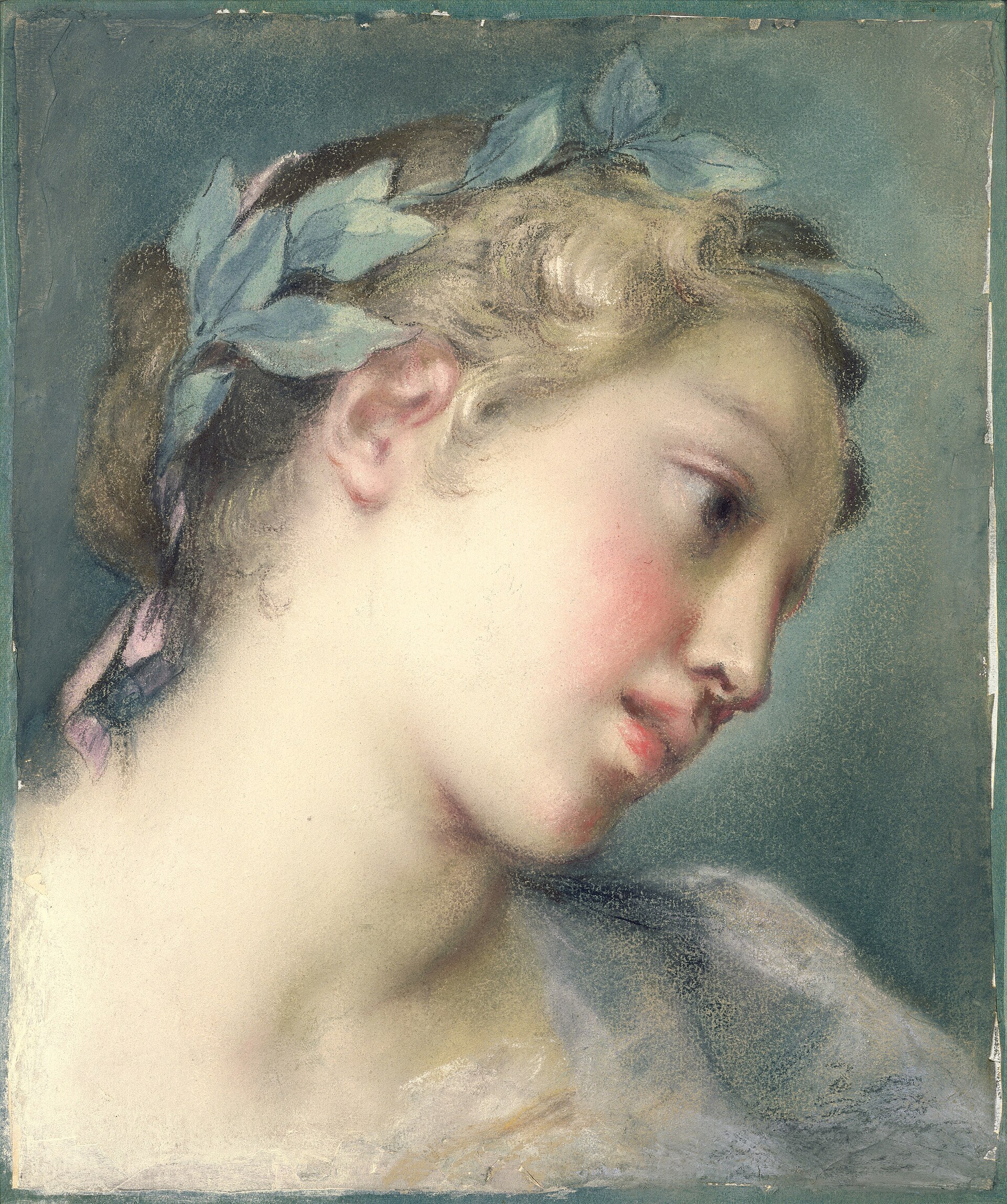
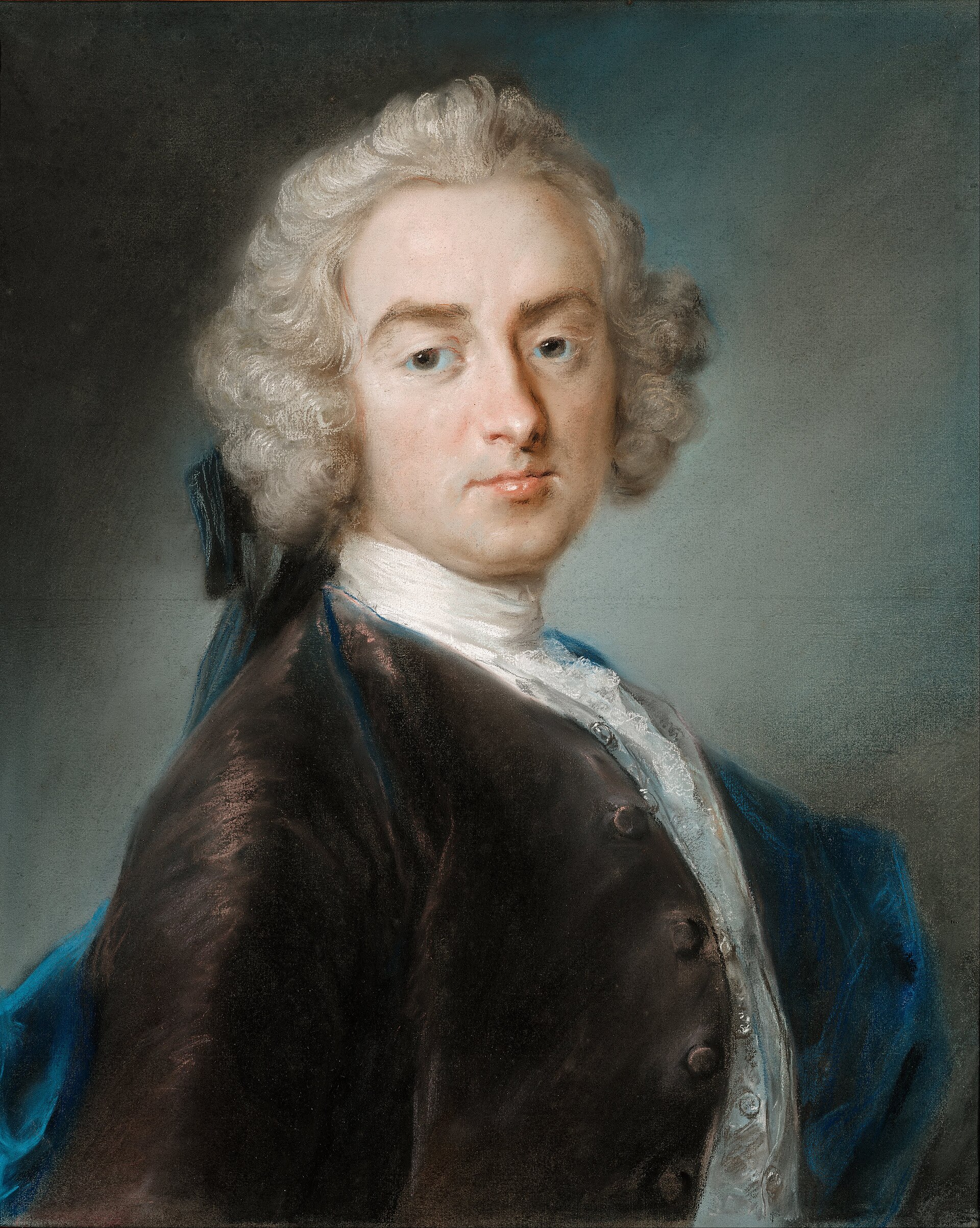
Chronology
- 1673
Born in Venice on 12 January and baptised ten days later as Rosalba Zuanna, according to Zava Boccazzi (1996) as cited by Jeffares. Gatto's 1977 entry gives 7 October 1675.12
- c. 1699
Earliest recorded pastel, a portrait of Anton Maria Zanetti, dated just before 1700 by Jeffares; Gatto puts the first sure notice of a pastel portrait at 1703.12
- 1700
The Paris dealer Jean-Louis Vatin addresses her as Mlle Rosalba, very virtuous painter.1
- 1705
Admitted to the Accademia di San Luca in Rome on 27 September, on merit, with a miniature on ivory as her reception piece.12
- 1709
Paints the king of Denmark during his stay in Venice, according to Seguier's 1752 account.1
- c. 1712
Prefers French pastels to Roman ones; letters show she'd first got her chalks from Rome.1
- 1718
On 28 October Crozat writes that the four pastel heads he has received are at risk and asks for more lightfast colours.1
- 1720
Accepted by the Accademia Clementina in Bologna on 14 January; arrives in Paris in March; received by the Academie royale on 26 October with a pastel of the king (Jeffares; Dresden's text says 1721).12
- 1721
Leaves Paris; her diary of the stay ends on 11 March. On 10 October she writes to Antoine Coypel about the nymph she is sending as her reception piece.12
- 1723
About five months at the Este court in Modena, painting the princesses.12
- 1726
Her diary records on 26 May a set of the Four Seasons dispatched to London care of Sig. Smith, presumably Joseph Smith's brother John.5
- 1727
Five sittings for Willem Bentinck, the last on 21 March, and the portrait of the French consul Jean Le Blond.12
- 1728
Travels to Gorizia hoping to paint Charles VI; her diary stops this year.1
- 1730
Briefly at the Vienna court; a German traveller reports on 6 September that she is painting the imperial family in pastel.12
- 1737
Her sister Giovanna dies on 9 May; her output declines from this point, says Jeffares.12
- 1740
Friedrich Christian of Saxony sits between 5 April and 8 June and pays 100 zecchini.1
- 1746
Dresden's pastel cabinet opens, named for her. Mariette dates her blindness to this year.16
- 1749
Mariette records her decision in May to undergo cataract operations, which Seguier confirms; the relief was temporary, and Gatto has her blind again from 1751.1
- 1757
Dies in Venice on 15 April. Her posthumous inventory of 7 May values the estate at about 24,556 ducats gross.12
- 1762
George III acquires Consul Joseph Smith's collection, which brings five of her pastels into the Royal Collection.5
- 1793
Vianelli prints her Paris diary; Sensier's French edition follows in 1865.12
- 1852-1856
Eugene Piot buys 58 sheets said to come from her studio in Venice and sells them at Drouot four years later.1
- 1860
Leon Lagrange calls her the queen of pastel, the first recorded use of the phrase according to Jeffares.1
- 2023
Dresden mounts Rosalba Carriera: Perfection in Pastel for the 350th anniversary; in October Salomon reattributes the Tatton Park pastel.61011
- 2025
Auction record of GBP 508,000 including fees at Cheffins, Cambridge, on 17 September.78
- 2026
Scientific study of thirteen Accademia pastels reported in March.14
The market
The record is GBP 508,000 including fees, with a hammer of GBP 400,000, set on 17 September 2025 for a 1724 portrait of Coulson Fellowes that was on the market for the first time in more than three centuries. Before it the record stood at GBP 421,250 from a New York sale of 2002, a figure the desk read only second hand. Below that the market is thin: EUR 78,000 for a pastel given to Jullienne in 1721, and an estimate of USD 60,000 to 80,000 on a 2024 New York lot whose result wasn't read. No source read separates the buyer's premium on any sale other than the Cheffins one, and there's no cohort table; a collector should price the single object against the few public results.
In her lifetime a portrait cost 22 to 25 zecchini and a Four Seasons set up to 240; her estate came to about 24,556 ducats gross at death.
| Date | Sale | Work | Result | Note |
|---|---|---|---|---|
| 17 September 2025 | Cheffins, Cambridge | Portrait of Coulson Fellowes, 1724, pastel | Hammer 400,000 With premium about 108,000 (derived: 508,000 total less 400,000 hammer) GBP | Estimate GBP 15,000 to 25,000. Fresh to market; in the sitter's family about three centuries; recorded in her diary. Sold by telephone to a UK private collector. Auction record. |
| 19 February 2025 | Baratoux-Dubourg Encheres, Bordeaux | Pastel given by the artist to Jean de Jullienne in 1721 | Hammer not stated in the source read With premium price 78,000, fee treatment not stated EUR | Estimate EUR 8,000 to 12,000. |
| 2002 | New York (house not named in the source read) | Portrait of Gustavus Hamilton, pastel | Hammer not stated With premium price 421,250, fee treatment not stated GBP as reported; the original sale currency was not checked | Reported by Finestre sull'Arte in its own voice as the previous record; not checked at source. |
Hammer is the price at which the bidding stopped; with premium adds the fee the house charges the buyer on top. Hammer price and buyer's premium in the glossary.
Recorded without a public price
- 2024 (lot page gives 31 January; year taken from its URL) · A young woman wearing pearl earrings with flowers in her hair (possibly the artist's sister Giovanna), pastel · Sotheby's, A Scholar Collects, lot 20 · not stated (result behind a login) Estimate USD 60,000 to 80,000; result not read.
Where to see the work
| Institution | City | Holdings | Note |
|---|---|---|---|
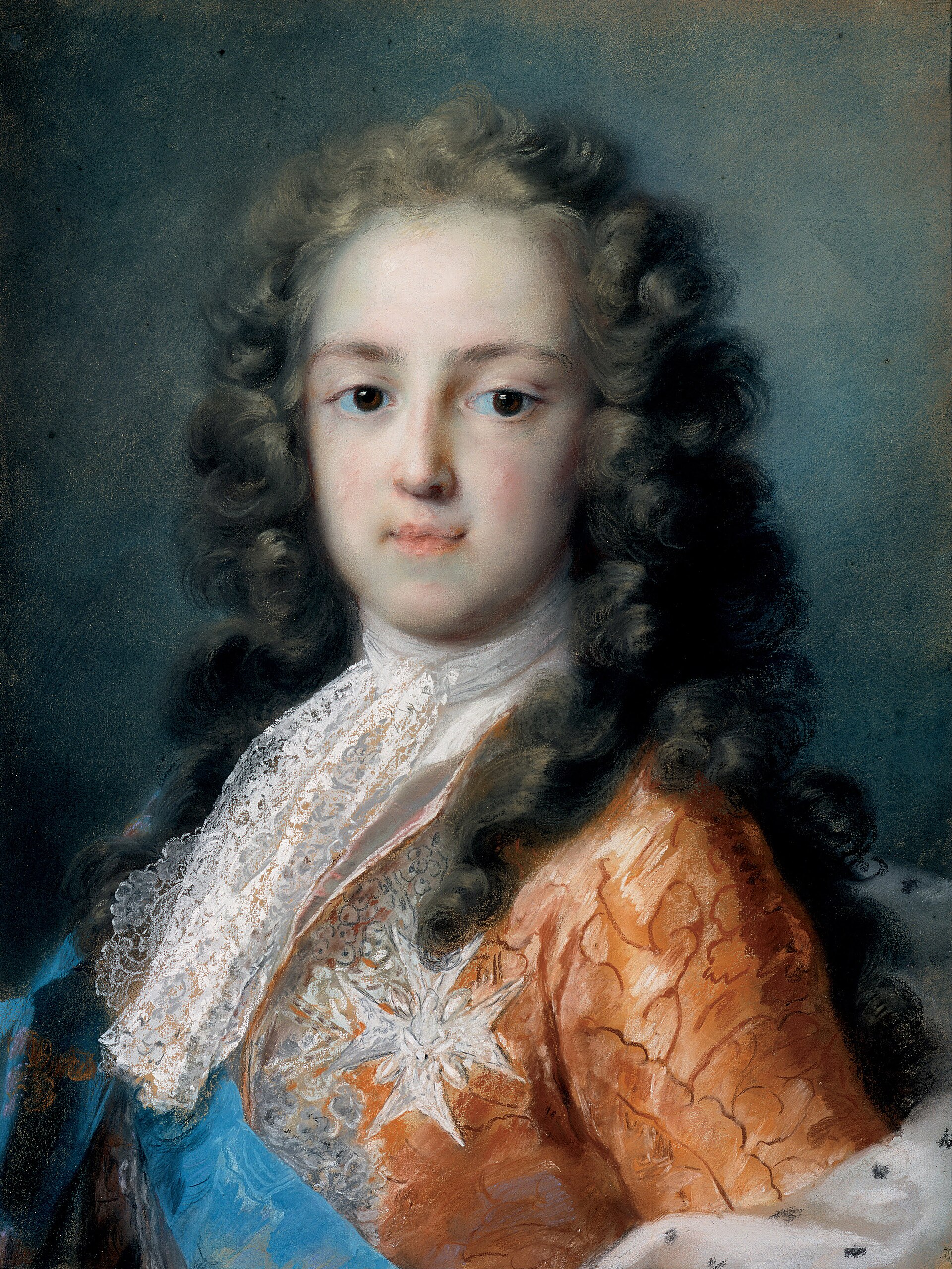
| Gemaeldegalerie Alte Meister, Staatliche Kunstsammlungen | Dresden | 73 pastels by the museum's count (about 72 per Jeffares), the largest collection anywhere; includes the 1730-31 self-portrait as Winter (P 29) and the Louis XV as Dauphin. | Staged Perfection in Pastel from 9 June to 24 September 2023; . |
| Royal Collection | Windsor and London | Four allegories of the seasons (Summer RCIN 400648, Winter RCIN 400647 and two more) and a self-portrait of about 1745 (RCIN 452375), the Summer almost certainly from Consul Smith's collection, which George III bought in 1762; only the self-portrait is stated as a gift to Smith. | The Winter carries a Three Kings print behind a strainer bar, replaced after conservation. |
| Gallerie dell'Accademia | Venice | Portraits of the Le Blond family and Cardinal Polignac (1732), per Gatto; thirteen pastels under scientific study in 2026. | Study funded by Save Venice. |
| Ca' Rezzonico, Museo del Settecento Veneziano | Venice | Pastel portraits including the Sartori pair of 1737 and the Faustina Bordoni version, per Gatto; a miniature show ran from 13 October 2023 to 9 January 2024. | Not examined in person. |
| Galleria degli Uffizi | Florence | Her self-portrait holding a portrait of her sister Giovanna, and one of two near-identical sets of the Este princesses. | Dating differs: Jeffares (J.21.0106) gives 1709, with Ferdinando de' Medici by 1712 and the Uffizi by 1714; Gatto hedges, saying it was delivered to Cosimo III in 1715 'pare'. |
| Musee du Louvre | Paris | The nymph from the retinue of Apollo, her reception piece for the Academie royale, and a girl with a monkey. | Per Jeffares and Gatto. |
| J. Paul Getty Museum | Los Angeles | A Muse (2003.17, about 1725) and Sir James Gray, Second Baronet (about 1744-45). | Photographs on this page. |
| National Gallery of Art | Washington | Sir John Reade, Bart. (1939.1.66, 1739), Kress Collection. | Photograph on this page. |
| Nationalmuseum | Stockholm | Count Nils Bielke (1729), per Gatto. | Not examined. |
| The Frick Collection | New York | Two pastels received as a donation in 2020. | Xavier Salomon, the Frick's deputy director, is preparing the catalogue raisonne. |
Forgeries and misattributions
- Copies, pastiches and forgeries in general
- Rapparini wrote to her about imitations on 23 February 1709. La Tour, Anseaume, Arthur Pond's circle in Britain and Fragonard are among those who copied her. She told Mme Suares in 1742 that she made no repetitions; letters of 1741 point to a sister making them. No signature exists to check. Jeffares reads construction and handling; Salomon examines in person.110
- Habsburg-family copies bought by Graf Janos Palffy
- A dozen fairly precise late-nineteenth-century copies, frames included, of Rosalba portraits of the Habsburg family; several have been confused with Dresden originals, many of which were dispersed around 1924. Not described in the source read.1
- Portrait of a Tyrolese Lady, Tatton Park (a copy that was original)
- Dismissed as a copy and kept in store for about 35 years; reattributed by Salomon in October 2023. Artnet says a prayer card between portrait and frame offered proof; Enfilade says it helped identify the piece. In-person examination by Salomon with the santino as supporting evidence. A santino alone can't prove authorship; nobody in the sources read says it does.1011
- Suite of five at a National Trust house
- Attributed to her; turned out to be by British artists, per Salomon. Salomon's examination; no further detail read.10
- A treatise on colours printed under her name in 2005
- Brusatin and Mandelli printed a Venice archive manuscript as hers; Jeffares says it's a later copy of Agricola's 1784 text, not in her hand. Identified by Jeffares as a copy of a printed work; a writings case, not a picture.1
- Pastel of Newton formerly in Dresden
- A pastel after Kneller's Newton once attributed to her; Jeffares thinks it unlikely she made it. Jeffares's judgment, noting she told Spence she had seen very little of Kneller's work and never mentioned his Newton.1
The essay
Chapter 1Four hundred and some works, and a count that depends on who's counting
Bernardina Sani's 2007 monograph catalogues 443 works under 425 numbers, because six of the numbers cover sets of four.
Bernardina Sani's 2007 monograph catalogues 443 works under 425 numbers, because six of the numbers cover sets of four. Of the 443, 348 are in pastel. Jeffares, who summarises the same book, puts it as some 440 works with three quarters in pastel, about 82 miniatures in tempera on ivory, about a dozen drawings and a single oil painting that he finds unconvincing. Gatto's 1977 entry in the Dizionario Biografico degli Italiani says plainly that no corpus of her works existed, and names Augustus III's portrait in Vienna as one of her very rare oils.
Jeffares's own list is a different animal. By 1 July 2023 he had assigned J.21 numbers to about 1,900 pastels, of which 455 are known at least from a photograph, and he says the majority of those 455 aren't autograph. That is the useful way to read the two figures together: Sani is a list of what she accepts as Carriera's, Jeffares is a list of everything that has claimed to be. He also faults Sani for leaving out rejected items and provenance, and for not listing works known only from the diaries, the letters and old inventories.
Nobody rules. No foundation, committee or estate body turned up in any source read. In practice a pastel gets tested against Sani and against Jeffares's online entry (updated 4 October 2026). Salomon, who is preparing a catalogue raisonne, examines pastels in person, but nothing read says his opinion rules.
Chapter 2Born in 1673, though a tercentenary was held for 1675
Jeffares gives her birth as 12 January 1673 in Venice, baptised ten days later as Rosalba Zuanna, and credits the date to Zava Boccazzi (1996) and Moretti (2011).
Jeffares gives her birth as 12 January 1673 in Venice, baptised ten days later as Rosalba Zuanna, and credits the date to Zava Boccazzi (1996) and Moretti (2011). He calls it two years earlier than widely reported. Gatto's 1977 dictionary entry has 7 October 1675. Gabburri, writing around 1740, and the anonymous 1755 memoir both say 1678. The Karlsruhe Kunsthalle's 1975 exhibition was titled for her 300th birthday, which counts from 1675, and Dresden's 2023 show counted 350 years from 1673. Both dates are still in circulation; the Royal Collection and the Dresden museum now use 1673.
Her father Andrea was a Venetian lawyer, her mother Alba Foresti. Jeffares notes that the idea of a painter grandfather looks like a confusion with another Andrea. She herself, in 1752, told the visiting Jean-Francois Seguier that her first drawing came from copying a printed vignette of the kind sold with wedding sonnets. That anecdote is her own account, taken down during his three month visit to Venice and surviving only in his rough draft, which Jeffares published in 2022.
Chapter 3A miniaturist first, and nobody can name the teacher
The early training is a set of competing stories.
The early training is a set of competing stories. Seguier's draft has her taught by an unnamed German painter, then by Giuseppe Diamantini, neither of whom he thought capable, and then by Antonio Balestra, under whom she made real progress. Later accounts add Giovanni Antonio Lazzari and Federico Bencovich; Jeffares points out that Seguier mentions neither. Gatto, writing in 1977, names Lazzari, Diamantini and Balestra in that order.
Miniature painting came first. Gatto reports, citing Jeannerat, that a French painter called Jean Steve, known in Venice as Monsieur Jean, suggested painting on ivory, for the inner lids of the snuffboxes then coming into fashion. She went on painting ivory miniatures after she took up pastel; her 1705 reception piece for the Accademia di San Luca in Rome was one, a girl holding a dove. Jeffares notes the Roman academy admitted her on merit and not with the honorary title usually given to women, and that the minutes call this contrary to its statutes.
The French artist who first handed her pastels isn't identified. Seguier never learned his name. Gatto credits the English amateur Christian Cole, secretary to the later consul Joseph Smith, and Jeffares says that from about 1708, perhaps under Cole's influence, she devoted herself particularly to pastel. The earliest recorded pastel is a portrait of Anton Maria Zanetti, made just before 1700 by Jeffares's reckoning. Gatto puts the first sure notice at 1703.
Chapter 4Three journeys and a diary that stops at 1728
Dresden's catalogue text says she travelled only three times: to Paris (1720 to 1721), Modena (1723) and Vienna (1730).
Dresden's catalogue text says she travelled only three times: to Paris (1720 to 1721), Modena (1723) and Vienna (1730). Jeffares also records a short trip to Gorizia in 1728. Everyone else came to her. She arrived in Paris in March 1720, two months after Bologna's Accademia Clementina took her in, travelling with her mother, her sisters and her brother-in-law, the painter Giovanni Antonio Pellegrini. She presented a pastel of the young Louis XV to the Academie royale on 26 October 1720 (Dresden's exhibition text, relayed by Enfilade, says the Academie took her in a year after Bologna, which would be 1721; Jeffares's date rests on the Academie's minutes and her journal) and was received, unanimously and without a vote according to her journal. From the diary Jeffares infers about fifty portraits on the trip, mostly in pastel.
The reception piece wasn't the king's portrait. She sent the Academie a half-length nymph from the retinue of Apollo after she was home, with a letter of 10 October 1721 to Antoine Coypel saying the nymph offers a laurel wreath to the Academie as the only body fit to wear it. It reached Paris in January 1722. Jeffares notes the implication that the nymph is the artist; the letter doesn't say so.
In 1723 she spent about five months at Modena painting the daughters of the Este duke for prospective husbands. In 1730 she went to Vienna and portrayed the empress. The diary she began in April 1720 ran on to 1728; it's the nearest thing to a record of her sitters. The Venetian text of the Paris years was printed by Vianelli in 1793 and in French by Sensier in 1865. Jeffares says it holds almost nothing reflective. Its entries are shorthand: names, payments marked with a symbol, sets of numbers. Gatto records that the Paris portraits listed in it are mostly impossible to trace today.
Chapter 5The studio: sisters, pupils and the question of who held the chalk
Her sisters Giovanna and Angela (also called Angioletto or Anzola Cecilia) are the first thing anyone asks about.
Her sisters Giovanna and Angela (also called Angioletto or Anzola Cecilia) are the first thing anyone asks about. Gatto says Giovanna collaborated, followed Rosalba to Paris, Modena and Vienna, and probably worked in pastel mostly as a copyist of Rosalba's portraits, which she says are hard to identify now. Giovanna was better regarded as a miniaturist and a poet. Jeffares goes further: no work is known by either sister. Mme Suares reported in 1742 that Rosalba told her copies never come off well, and correspondence of 1741 with a princess in Lyon suggests copies were made anyway and entrusted to Angioletto. So the division of hands has an honest answer: some repetitions exist, a sister probably made them, and no catalogue can sort them.
The sisters' dates disagree. Gatto says Angela was the eldest and married Pellegrini before January 1704, and that Giovanna was born about 1683 and died on 9 May 1737. Jeffares gives Giovanna as 1675 to 1737 and Angioletto as 1677 to 1757. He notes Pellegrini was born in 1675 and married the younger sister. The birth order of the three isn't settled here.
There were few pupils who carried on in pastel. Seguier lists three: Felicita Sartori, who first came as a servant, learned miniature painting from watching and married the Saxon court official Hoffmann in Dresden; Angelica Le Gru Perotti, who stayed nine years and, Seguier wrote, nearly equalled her; and the contessa Gazola, whom Seguier presents as a very recent pupil, possibly of Le Gru Perotti rather than of Rosalba. Jeffares adds Marianna Carlevarijs and Margherita Terzi, whose works he thinks survive in many collections under Carriera's name, and the writer Luisa Bergalli, who sat for her.
There were legions of copyists, among them Arthur Pond's pupils in Britain, and the Swiss enamellist Andreas Mussard who claimed in a 1751 London advertisement to have been her pupil. Jeffares counts La Tour among those who copied her and says Fragonard copied her in a chalk drawing now lost.
Chapter 6What she charged
The diary gives prices. For much of the period her portraits cost 22 zecchini, rising to 25 towards the end, and a set of the Four Seasons ran as high as 240.
The diary gives prices. For much of the period her portraits cost 22 zecchini, rising to 25 towards the end, and a set of the Four Seasons ran as high as 240. She seems to have finished and been paid for many of these in a week, a pace set by the itineraries of her foreign sitters. In 1740 the 18-year-old Friedrich Christian of Saxony paid 100 zecchini for his portrait, one of the highest single-portrait fees recorded; his travel journal gives the sittings from 5 April to 8 June.
Outside Venice the figures are in other coin. A German traveller wrote from Vienna on 6 September 1730 that she was paid five or six louis d'or for a portrait and needed seven days to finish it, with five hours of sitting in all. In 1739 Charles de Brosses decided his face wasn't worth thirty sequins, offered twenty-five louis d'or for a hand-sized Magdalen she'd copied after Correggio and was refused. In 1742 Mme Suares offered 25 zecchini for Walpole's portrait in its glass and frame; it had already been sold to Consul Smith, so that was her offer, not a price Rosalba quoted.
No source read gives a Venetian wage or house price for those years, so no modern equivalent is attempted here. The record on what she left behind is firmer: her posthumous inventory of 7 May 1757 values the estate at about 24,556 ducats gross, from which 16,435 comes off, including 15,000 due to her sister, so Jeffares judges what remained comparable with other successful painters of the period, not far higher.
Chapter 7Blue paper, thin strainers and a woodcut behind the sheet
The standard structure is the French one: blue paper pasted to canvas over a wooden strainer.
The standard structure is the French one: blue paper pasted to canvas over a wooden strainer. Jeffares notes her strainers are almost always much thinner than the French ones, which he reads as Venetian carpentry; some small sheets are loose and now mounted on board; a handful of larger works are on prepared canvas with no paper, which he suggests avoided awkward paper joins. The paper is nearly always blue and occasionally white, and he finds no parchment. Many Dresden pastels still carry the cassette, a thin black frame holding glass, spacer and backing board that may have been for travel.
The Royal Collection's conservators, working on four allegories of the seasons, record the same build and add the layering. She probably drafted details such as fingers and flowers in black chalk or charcoal, filled the large areas and worked the flesh last, with powdery pastel in the backgrounds and, the conservators think, pastel ground in water and brushed on in the flesh. In Autumn she seems to have scraped back the surface to the white beneath for the glint of pearls; in Summer she stippled thick wet pastel paste with a brush for highlights. Carmine lake was identified by analysis at the Rijksmuseum under a fillet that had kept it from the light: Winter's pink wrap and hair ribbon were bright pink originally.
The tells are small. Light comes from the left in nearly all of her pastels, evenly and without hard shadow; the exceptions in Sani appear to be printed in reverse or misattributed. She dragged the flat side of a chalk across a dark colour for lace, mixed black chalk or graphite into the jabot and linen, ended mouths with a short dark diagonal, outlined each knuckle of a hand in red and laid short bold strokes of carmine lake in hair, around eyes and by the nose. Faint pigment losses in large carmine passages may come from a coarse grind chosen to protect the colour.
Jeffares reports her telling the collector Casotti in 1719 that she bound her pigments with tailor's chalk and ground shell, not gum. Early on she got her chalks from Rome; by about 1712 she preferred French ones. Crozat wrote on 28 October 1718 that the four heads she'd sent were in good condition but at risk and asked for a more lightfast colour. The Royal Collection article says she bought ready-made sticks and prepared her own paper surfaces. The two statements are not reconciled here.
Chapter 8What was in the house, and what wasn't
The inventory taken on 7 May 1757 records about two dozen pastels and seven oils hanging in her gallery and 45 more elsewhere in the house.
The inventory taken on 7 May 1757 records about two dozen pastels and seven oils hanging in her gallery and 45 more elsewhere in the house. It lists no harpsichord, though Dezallier d'Argenville said she played one, and no books at all.
That absence matters because some modern writers have recast her as a learned woman. Jeffares calls the evidence tenuous and gives one example, a manuscript in which she practised English by translating a few pages of an essay defending women that Cole had sent her. He doesn't name the writers on the other side, and this page hasn't read them. What the documents do show of her belief is plainer: in a letter of 3 December 1729 Pier Caterino Zeno called her especially devout and given to works of piety, and added that she was melancholic by temperament but agreeable in company. Her academies, at Rome, Bologna, Florence and Paris, were institutions of the craft; no lodge, confraternity or reading society was found in the sources read.
Chapter 9Devotion, allegory and the nymph
The devotional evidence is physical. Inside or behind many pastels she placed small woodcut santini of the Three Kings.
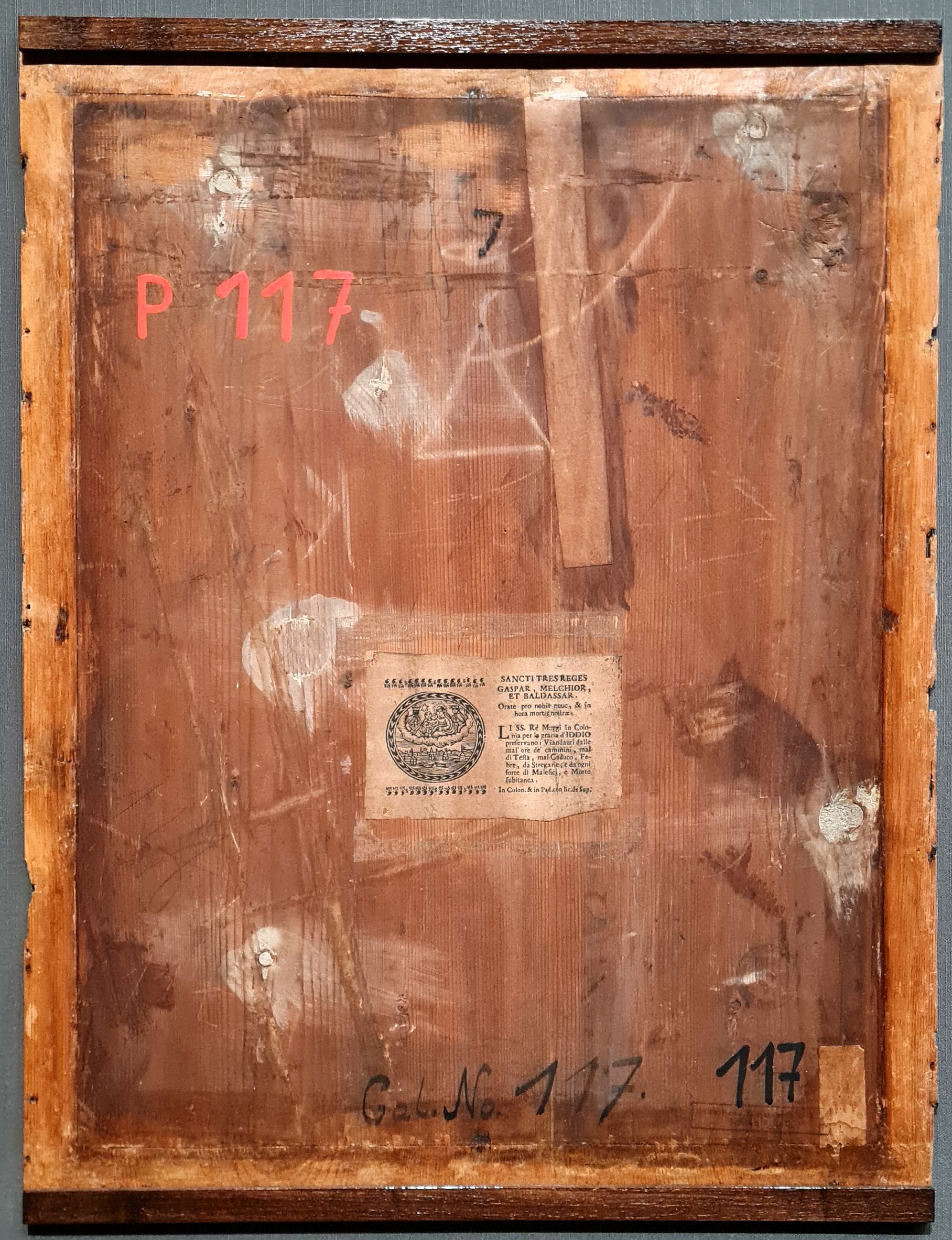
The devotional evidence is physical. Inside or behind many pastels she placed small woodcut santini of the Three Kings. Jeffares counts 29 on surviving Dresden pastels and records others in the Royal Collection, the Frick and the Metropolitan Museum in New York. The photograph on this page, from the back of Dresden pastel P 117, shows one: Latin names of Gaspar, Melchior and Baldassar with a petition, and Italian lines that promise the Kings' protection to travellers from the dangers of the road and several ailments, including witchcraft and sudden death, as far as the photograph can be read. The Royal Collection found one tucked behind a strainer bar of its Winter and put it back where it was. The Dresden record of her self-portrait as Winter notes a santino of the same kind on the back of its cassette. Jeffares calls them apotropaic; the Royal Collection calls them a lucky charm to guard the pastel in transit. Both describe a function, not a text she wrote about it.
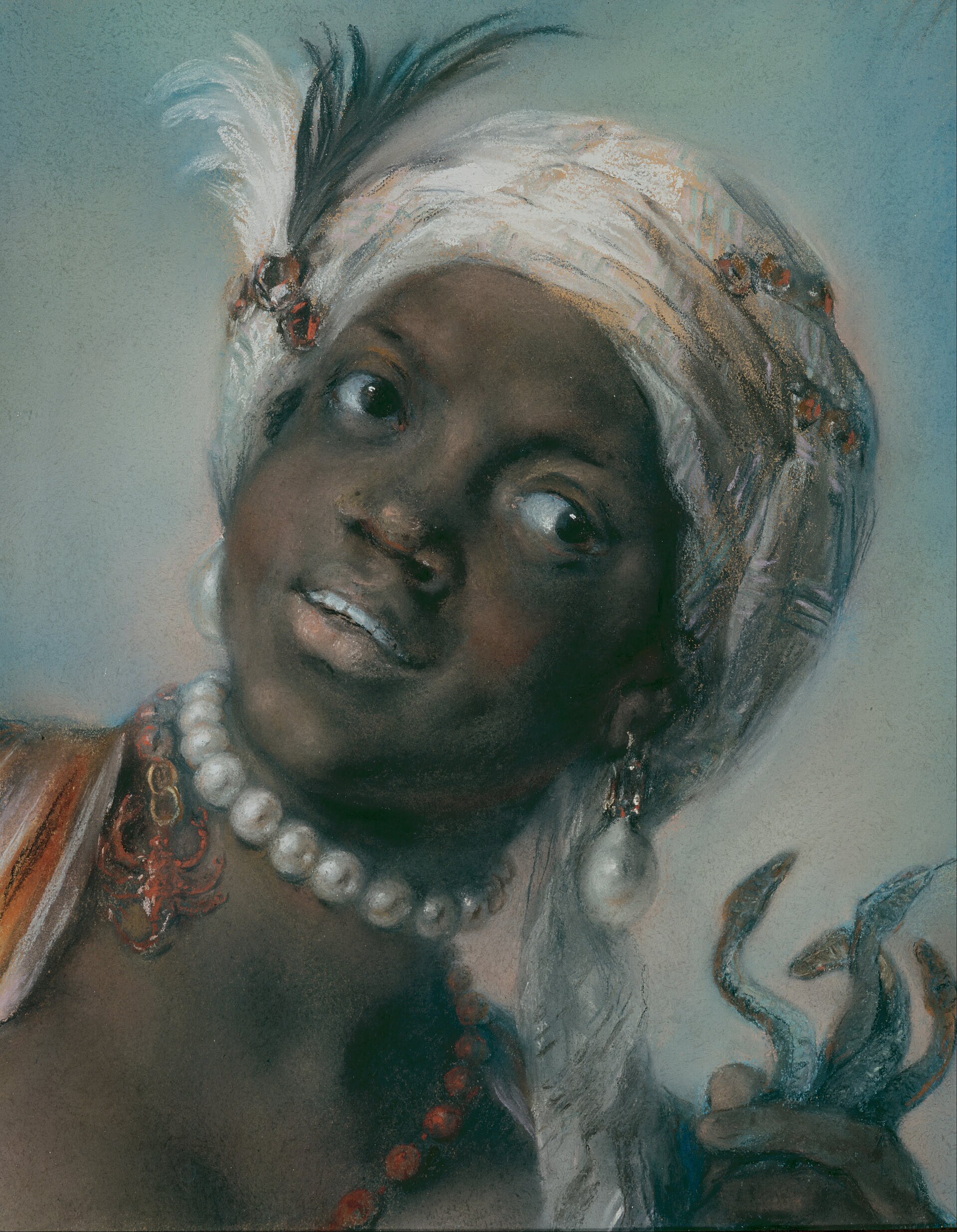
The allegories are a different matter. They are documented as commodities: Four Seasons, Four Elements and the continents were made in several versions, and sets of the Seasons sold for up to 240 zecchini. The Royal Collection notes that a set of Seasons was dispatched to London on 26 May 1726 and that she made several sets. Gatto records that the Elements were dated: Earth and Fire in 1744, Air and Water in 1746. Beyond what the diary and letters say, no programme turned up in the sources read: no commissioning text, no treatise she cited. The Dresden museum reads the self-portrait as Winter as a look at her own age and the last stage of life; that's the museum's reading, not a statement of hers.
For the nymph given to the Paris Academie there is real argument. Jeffares ties it to sculpture she saw: Fremin's marble Companion of Diana at Marly, which her diary says she visited on 19 November 1720, Girardon's Apollo Served by Nymphs at Versailles and Legros's Summer at Saint-Cloud. He says it is nothing like a copy of any of these, and that echoes of Watteau were common currency. These are his proposals, argued from visual resemblance.
In the sources read, the documented meaning is protection for a fragile object in transit and a trade in fashionable allegory; no concealed programme turned up.
Chapter 10Where the pastels went: Dresden, Windsor and the saleroom
August III of Saxony and Poland assembled the largest group.
August III of Saxony and Poland assembled the largest group. Francesco Algarotti bought pastels for the Saxon court, and Jeffares quotes his 1751 letter to Mariette on two portraits and a penitent Magdalen. A separate pastel cabinet was set up in 1746 in the Johanneum near the Frauenkirche and named after her. Dresden once held 157. The Dresden museum's 2023 text counts 73; Jeffares says some 72, and says many of the originals were dispersed around 1924.
The other great set was the British consul Joseph Smith's. George III bought Smith's collection in 1762; the Royal Collection says only five of Smith's Carriera pastels passed to it, from about twenty that Smith owned, though a different Royal Collection entry for her self-portrait gives a larger total that wasn't read in full. Crozat's heirs sold his pictures to Catherine the Great in 1772, among them her pastels and miniatures, and Gatto notes pastels in the Hermitage.
Her own studio stock dispersed in pieces. The art historian Eugene Piot bought a group of 58 pastels, miniatures and drawings in Venice in 1852 that were said to come from her studio, perhaps through the Sartori family, and sold them at Drouot four years later with a thin catalogue; few can be identified now. A smaller collection was advertised for sale in 1788 by Felicita Sartori's brother, an abbe. Vigee Le Brun was shown a dozen of her portraits in a Venetian senator's house in 1792, still in the family.
About 500 letters addressed to her survive in five volumes in the Biblioteca Laurenziana in Florence, codex Ashburnham 1781 according to Gatto.
Chapter 11Copies, pastiches and the Tatton reversal
Jeffares says copies, pastiches and outright forgeries have been made in huge numbers, and that Giorgio Maria Rapparini was already writing to her about them on 23 February 1709.
Jeffares says copies, pastiches and outright forgeries have been made in huge numbers, and that Giorgio Maria Rapparini was already writing to her about them on 23 February 1709. Because nothing is signed and little is dated, a pastel's claim rests on structure, handling and provenance, and in one 2023 case on a print found behind it.
The best-documented recent event goes the other way. In October 2023 Xavier Salomon identified a Portrait of a Tyrolese Lady at Tatton Park, a National Trust house, as hers. It had been dismissed as a copy and spent roughly 35 years in store. Artnet, quoted by Enfilade, says a Roman Catholic prayer card slipped between portrait and frame offered proof; Enfilade's own caption says it helped identify the piece. Salomon told the reporter that of the more than 200 Carriera pastels he'd looked at, plenty attributed to her were copies by others, and that a suite of five at another National Trust house turned out to be by British artists.
Late in the nineteenth century a dozen fairly precise copies, frames included, of Rosalba portraits of the Habsburg family were made and bought by Graf Janos Palffy. Jeffares says several have been mistaken for the Dresden originals, many of which were dispersed around 1924. And a manuscript treatise on colours printed in 2005 as hers turns out, he says, to be a copy of an unrelated 1784 text by Agricola.
Chapter 12Queen of pastel, but not in her lifetime
Praise was constant while she lived. Cochin, Crozat, the Encyclopedie, Johann Caspar Goethe in 1740 and the Goncourts all wrote of her colour.
Praise was constant while she lived. Cochin, Crozat, the Encyclopedie, Johann Caspar Goethe in 1740 and the Goncourts all wrote of her colour. Jeffares says the phrase la reine du pastel was first used by Leon Lagrange in 1860 and is now repeated as though it were from her lifetime. In 1745 it was La Tour, not Rosalba, who was called le roi du pastel in print.
Then the taste turned. Gatto says Neoclassicism made people forget or despise her, and that the art historian Roberto Longhi's 1946 judgment restored her. A century earlier John Murray's Handbook for travellers dismissed her as a female artist of Venice of inferior merit, while early editions listed her Metastasio in Dresden as a star, wrongly crediting it to Mengs. When Louis Aragon and Jean Cocteau discussed the Dresden museum at length in 1957, they didn't mention her.
The modern record is a run of shows: Karlsruhe 1975, Treviso 1994, Venice 2007 at Palazzo Ducale and Palazzo Cini, Dresden 2023 and, the same year, miniatures at Ca' Rezzonico. In March 2026 Save Venice reported scientific work at the Gallerie dell'Accademia on thirteen pastels on blue paper, nine by her and four attributed to her school, funding an ER-FTIR spectrometer and young researchers to inform their conservation.
Chapter 13What the market has paid, and what it hasn't shown
The record is GBP 508,000 including fees, set at Cheffins in Cambridge on 17 September 2025 for a 1724 pastel of Coulson Fellowes, a young Englishman on the Grand Tour.
The record is GBP 508,000 including fees, set at Cheffins in Cambridge on 17 September 2025 for a 1724 pastel of Coulson Fellowes, a young Englishman on the Grand Tour. Art History News gives the hammer as GBP 400,000 against an estimate of GBP 15,000 to 25,000. It had stayed in the sitter's family for about three centuries and appears in her diary. Art History News says only that the auction house claims a record, which an Artnet search confirmed. Finestre sull'Arte reports in its own voice that the previous record was GBP 421,250 for a portrait of Gustavus Hamilton sold in New York in 2002; that figure, the house and the currency weren't checked at source.
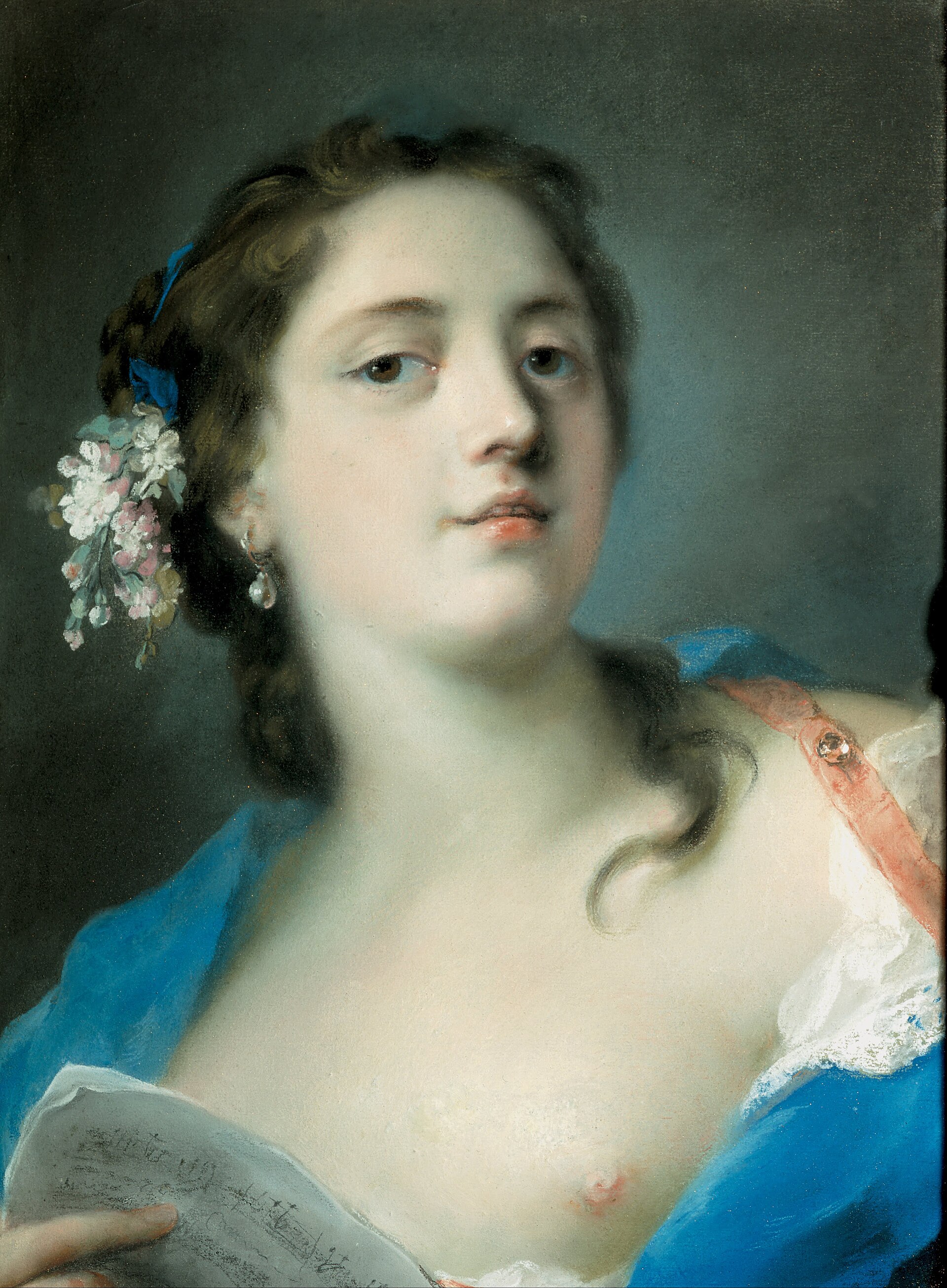
Below the record the market is thin and spiky. At Bordeaux in February 2025 a pastel she gave to the collector Jean de Jullienne in 1721 made EUR 78,000 on an estimate of EUR 8,000 to 12,000. A Sotheby's lot in the 2024 sale A Scholar Collects, a girl with flowers in her hair possibly portraying her sister Giovanna, carried an estimate of USD 60,000 to 80,000; the result was behind a login and wasn't read. The unit of account is the single portrait or allegory; no sources read give a cohort table.
What is documented
Technique
The surviving work
- What is accepted
- Sani (2007) catalogues 443 works under 425 numbers, 348 in pastel. Jeffares, summarising it, says about 440, three quarters pastel, about 82 miniatures on ivory, about a dozen drawings and one oil he finds unconvincing. Figures as read from Jeffares's entry, updated 4 October 2026.
- What is contested
- Jeffares has assigned J.21 numbers to about 1,900 pastels by 1 July 2023, of which 455 are known at least from photographs; the majority of those 455 aren't autograph. He says Sani includes some attributions he rejects and omits rejected items, provenance and works known only from diaries, letters and inventories. In 1977 Gatto wrote that no corpus existed.
- Who rules on attribution
- No active authority turned up in any source read. Attributions rest on Sani and Jeffares; Salomon is preparing a catalogue raisonne and examines pastels in person.
Catalogue raisonne
- Bernardina Sani, monograph on Rosalba Carriera, 2nd edition, 2007 (full title not read; cited as Sani 2007 by Jeffares). The standard printed catalogue: 443 works. Omits rejected items and provenance.1
- Bernardina Sani, Rosalba Carriera: letters and diaries, 1985 (cited as Sani 1985 by Jeffares). Re-transcribes the diaries; Jeffares's 2017 edition annotates and translates the Paris section.1
- Neil Jeffares, Dictionary of pastellists before 1800, online edition, entry Carriera (J.21 numbers). About 1,900 numbered pastels including copies and doubtful works; a concordance with Sani is published beside it.1
- Xavier Salomon, catalogue raisonne in preparation (Frick Collection). Unpublished; he'd seen more than 200 pastels by October 2023.1011
Questions about Rosalba Carriera
Who was Rosalba Carriera?
Painter; Pastellist; Miniaturist. 1673-1757.
When did Rosalba Carriera live?
Born 12 January 1673 (baptised ten days later); older sources give 1675 or 1678, Venice, parish of San Pietro di Castello; died 15 April 1757, Venice.
How are fakes and misattributions of Rosalba Carriera detected?
Copies, pastiches and forgeries in general. Rapparini wrote to her about imitations on 23 February 1709. La Tour, Anseaume, Arthur Pond's circle in Britain and Fragonard are among those who copied her.
Where can you see work by Rosalba Carriera?
Gemaeldegalerie Alte Meister, Staatliche Kunstsammlungen (Dresden); Royal Collection (Windsor and London); Gallerie dell'Accademia (Venice); Ca' Rezzonico, Museo del Settecento Veneziano (Venice); Galleria degli Uffizi (Florence); Musee du Louvre (Paris).
What does the market for Rosalba Carriera look like?
The record is GBP 508,000 including fees, with a hammer of GBP 400,000, set on 17 September 2025 for a 1724 portrait of Coulson Fellowes that was on the market for the first time in more than three centuries. Before it the record stood at GBP 421,250 from a New York sale of 2002, a figure the desk read only second hand.
What is still unresolved about Rosalba Carriera?
When was she admitted to the Academie royale, 1720 (Jeffares) or 1721 (Dresden's text)? And which birth year will the reference books settle on?
Open questions
- When was she admitted to the Academie royale, 1720 (Jeffares) or 1721 (Dresden's text)? And which birth year will the reference books settle on? Jeffares, the Royal Collection and Dresden use 12 January 1673; Gatto's 1977 entry has 7 October 1675, and an 18th-century memoir and Gabburri say 1678. The Karlsruhe show of 1975 celebrated 1675.
- How many of the 1,900 pastels in Jeffares's list are autograph? He says only that the majority of the 455 known from photographs aren't; the rest are known from records alone. Sani's 348 pastels include some he rejects. Salomon's catalogue raisonne is expected to take many years.
- Which sister was older, and did either make any pastel that survives? Gatto and Jeffares give different birth orders and dates for Giovanna and Angela. Jeffares says no work by either is known; Gatto thinks Giovanna made copies she can't identify.
- Did she bind her pigments with tailor's chalk and ground shell, as a 1719 letter reported by Jeffares says, or buy ready-made sticks, as the Royal Collection says? Neither source discusses the other.
- Does a Three Kings santino say anything about authorship? Artnet says one proved the Tatton pastel authentic; Enfilade says it helped. Jeffares calls the prints apotropaic and doesn't use them as proof.
- Was she a learned woman? Jeffares calls the evidence tenuous, citing an inventory with no books. The authors who hold the opposite view aren't named in the sources read here.
- Where did the Dresden pastels go? The cabinet held 157 and now holds 73; Jeffares dates a dispersal to about 1924. No source read lists what left.
- What did the Gustavus Hamilton portrait make in 2002, at which house and in which currency? Only a second-hand sterling figure of GBP 421,250 was found.
Sources
- 1Neil Jeffares, Dictionary of pastellists before 1800, online edition, entry 'Carriera, Rosalba', essay pdf (updated 4 October 2026). Secondary scholarly reference, single author; primary documents transcribed in it (Seguier 1752, Mercure de France 1722, Zeno 1729 and others) are read via his transcription. pastellists.com/Articles/...
- 2Gabriella Gatto, 'Carriera, Rosalba', Dizionario Biografico degli Italiani, vol. 20, Istituto della Enciclopedia Italiana (1977). treccani.it/enciclopedia/...
- 3Staatliche Kunstsammlungen Dresden, online collection, Rosalba Carriera, Selbstbildnis als 'Winter', 1730/31, Gemaeldegalerie Alte Meister, Gal.-Nr. P 29 (record read 18 November 2026). skd-online-collection.skd.museum/Details/...
- 4Royal Collection Trust, 'The Conservation of Rosalba Carriera's Pastels of the Four Seasons', article. rct.uk/articles/...
- 5Royal Collection Trust, collection record RCIN 400648, A Personification of Summer. rct.uk/collection/...
- 6Enfilade, 'Exhibition | Rosalba Carriera: Perfection in Pastel', 10 June 2023 (reproduces the Dresden museum's exhibition text). enfilade18thc.com/2023/...
- 7Adam Busiakiewicz, 'Carriera Pastel makes GBP 508,000 including fees', Art History News, 18 September 2025. Cheffins' own press release was bot-walled and not read. arthistorynews.com/articles/...
- 8'World record for Rosalba Carriera: newly resurfaced portrait sold for GBP 508,000', Finestre sull'Arte, 19 September 2025. finestresullarte.info/en/...
- 9Adam Busiakiewicz, 'Rosalba Carriera Pastel Soars!', Art History News, 19 February 2025. arthistorynews.com/articles/...
- 10Enfilade, 'A Portrait by Rosalba Carriera Newly Discovered', 25 October 2023, quoting Sarah Cascone, Artnet News, 16 October 2023. enfilade18thc.com/2023/...
- 11Art History News, 'Rosalba Carriera Pastel Rediscovered at Tatton Park', 17 October 2023. arthistorynews.com/articles/...
- 12Wikimedia Commons file page, 'Dreikoenigszettel 01a.jpg' (title as on Commons with an umlaut), description and licence CC BY 4.0, photographer Derbrauni, 21 September 2023. commons.wikimedia.org/wiki/...
- 13Sotheby's, 'A Scholar Collects', lot 20, Rosalba Carriera, A young woman wearing pearl earrings with flowers in her hair; estimate and provenance read, result behind a login. sothebys.com/en/...
- 14Art History News, 'Scientific Investigations of Rosalba Carriera's Pastels', 10 March 2026, quoting a Save Venice video note. arthistorynews.com/articles/...

Last verified