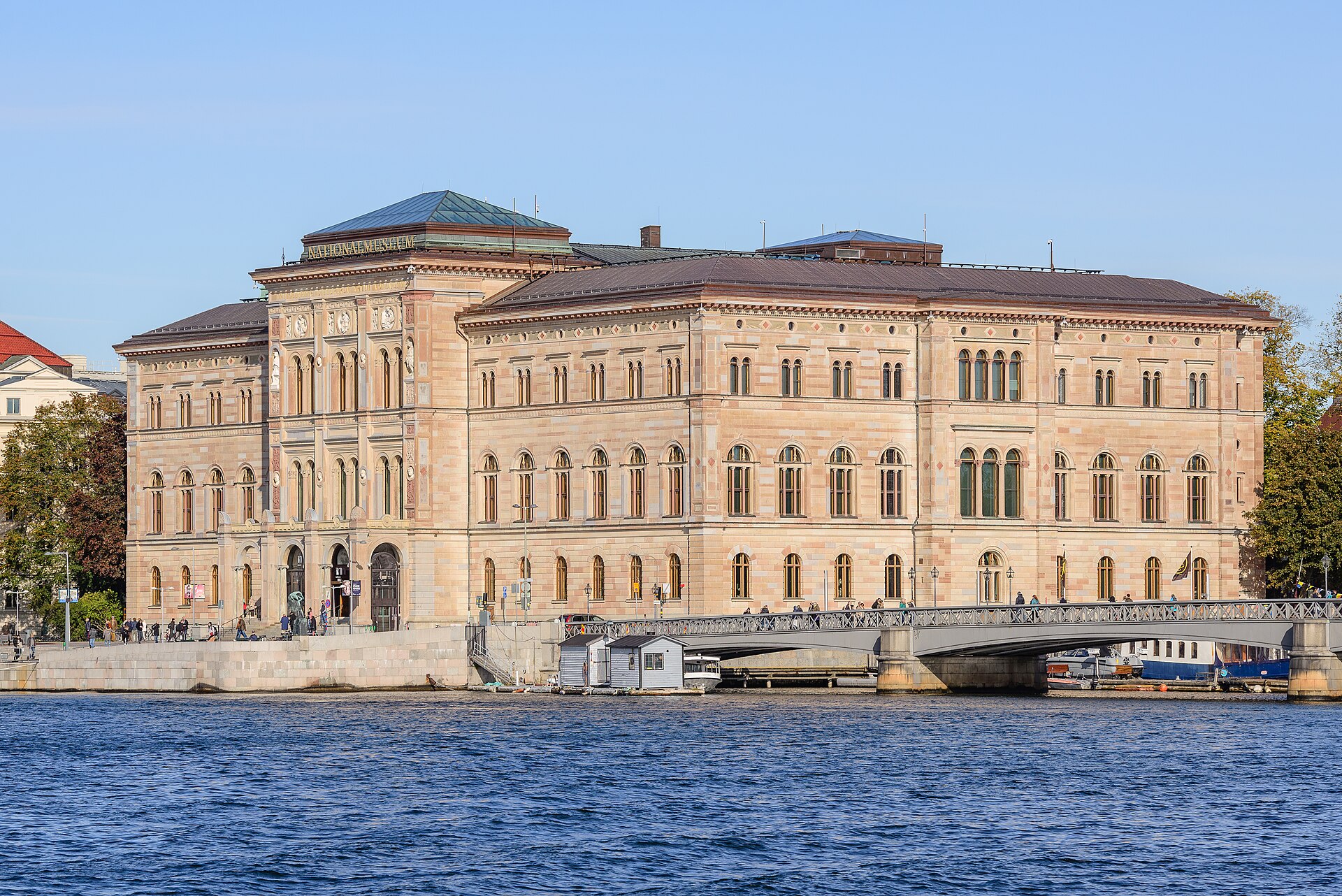
The Nationalmuseum building on Sodra Blasieholmshamnen, photographed in October 2019, a year after the museum reopened following its 2013-2018 renovation.
Arild Vagen · Photograph by ArildV · CC BY-SA 4.0On this page 15 sections
ContentsClose
The museum names two holdings first when describing its own strengths: Dutch painting of the seventeenth century, and a French eighteenth century collection built substantially through Carl Gustaf Tessin's purchases as Sweden's ambassador to Paris, including more than 2,000 master drawings. Beyond painting, the museum holds the world's largest collection of portrait miniatures by its own account (over 5,700 pieces), a separately administered national portrait collection of 5,000 works at Gripsholm Castle, and roughly 45,000 pieces of Gustavsberg porcelain, alongside about 30,000 objects of applied art and design spanning the late Middle Ages to the present.
| Kind | Museum |
|---|---|
| Founded | 1792 |
| City and country |  Stockholm, Sweden Stockholm, Sweden |
| Address | Sodra Blasieholmshamnen 2, 111 48 Stockholm, Sweden |
| Website | nationalmuseum.se/en |
| Status | Open, confirmed |
| Record last verified |
Visiting
- Hours
- Tuesday-Wednesday11:00 to 17:00
- Thursday11:00 to 20:00
- Friday-Sunday11:00 to 17:00
- Closed
- Monday. 24 December 2026. 25 December 2026. 31 December 2026. 1 January 2027.
- Admission
- AdultSEK 160
- Last 60 minutes before closingSEK 80
- Under 20Freefree
- Thursday evenings, 17:00-20:00Freefree for all visitors
- Group, 10 or more peopleSEK 110per person; same rate for pre-registered student groups
- Annual card, adultSEK 400unlimited entry to the collections and all temporary exhibitions for one year, plus a 10 percent discount at the restaurant and shop
- Annual card, student or under 26SEK 200
Free entry: Thursday evenings, 17:00-20:00, free for all visitors. Always free for visitors under 20. The entrance floor (restaurant, shop, studios and the Sculpture Courtyard) is free to enter without a ticket- Tickets
- nationalmuseum.se/en/visit/admission-fees-and... The museum's own ticket page.
- Do I need to book?
- No fixed timed-entry system is stated on the museum's own ticket page. Tickets can be bought online in advance or in person on the day, and a ticket is valid for the whole day and covers every temporary exhibition and collection display.
- Address
- Sodra Blasieholmshamnen 2, 111 48 Stockholm, Sweden MapMetro Blue line (T10/T11) to Kungstradgarden, exit toward Kungstradgarden - Skargardsbatar, about a 5 minute walk
Bus Line 65 stops directly at the museum; lines 2, 55 and 76 stop at Karl XII:s torg nearby
Ferry Djurgardsfarjan from Slussen or from Djurgarden (Allmanna grand) to Skeppsholmen, then about a 10 minute walk
Bicycle Bicycle paths run almost to the entrance, with cycle parking next to the main door - Website
- nationalmuseum.se/en
- Telephone
- +46 8 519 543 00
- [email protected]
Before you go how long, access, photography, bags, eating, shop
- How long to allow
- The permanent display, called the Timeline, runs across three floors and six centuries with more than 5,000 objects shown at once. Visitor listings commonly estimate one to two hours for a single pass, and repeat visits are common among reviewers who wanted to see the whole collection.
- Access
- A street level lift beside the entrance steps takes wheelchairs, mobility scooters and pushchairs up to the entrance, and every floor above is served by an accessible lift. Internal doors are propped open or fitted with automatic openers. Accessible toilets with changing tables are on every floor. Hearing loops are fitted in the South Courtyard and the Sculpture Courtyard, and portable loops are available for guided tours. A tactile map is in the lobby. Wheelchairs and wheeled walking frames can be borrowed at the entrance, guide and assistance dogs are welcome, and an accompanying person is admitted free.
- Photography
- Photography and filming for personal use is allowed without flash, tripod or selfie stick, provided it does not disrupt other visitors or block evacuation routes. Images may not be used commercially without written permission, and the galleries may not be used as a backdrop for portrait or wedding photography.
- Bags
- Bags larger than 40 x 20 x 25 cm are not allowed into the galleries. Smaller bags and backpacks must be carried by hand rather than worn on the back. Lockers on the lower ground floor hold larger items; most measure 40 x 38 x 36 cm, a smaller number 40 x 38 x 47 cm.
- Eating
- A restaurant, bar and cafe run Tuesday to Sunday on the entrance floor, inside the glazed Sculpture Courtyard, with a separate picnic room on the lower ground floor for food brought from outside.
- Shop
- A museum shop on the entrance floor and an online bookshop sell art and design books and related items. The shop closes 15 minutes before the museum.
Prices and hours change. We take them from the institution's own pages and print the day we read them, and you can check the current position at the source we used. Confirm before you travel.
What is inside
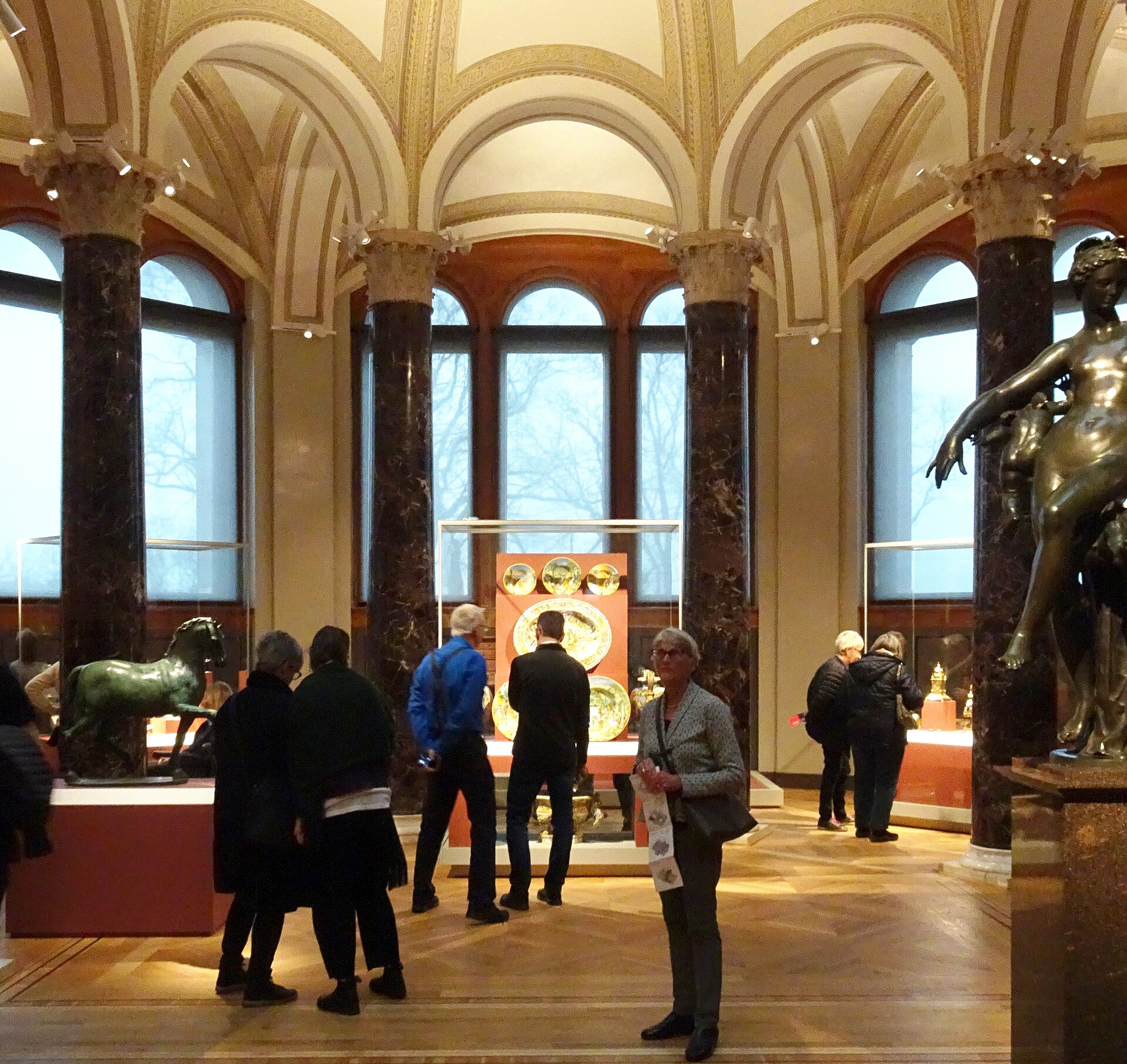
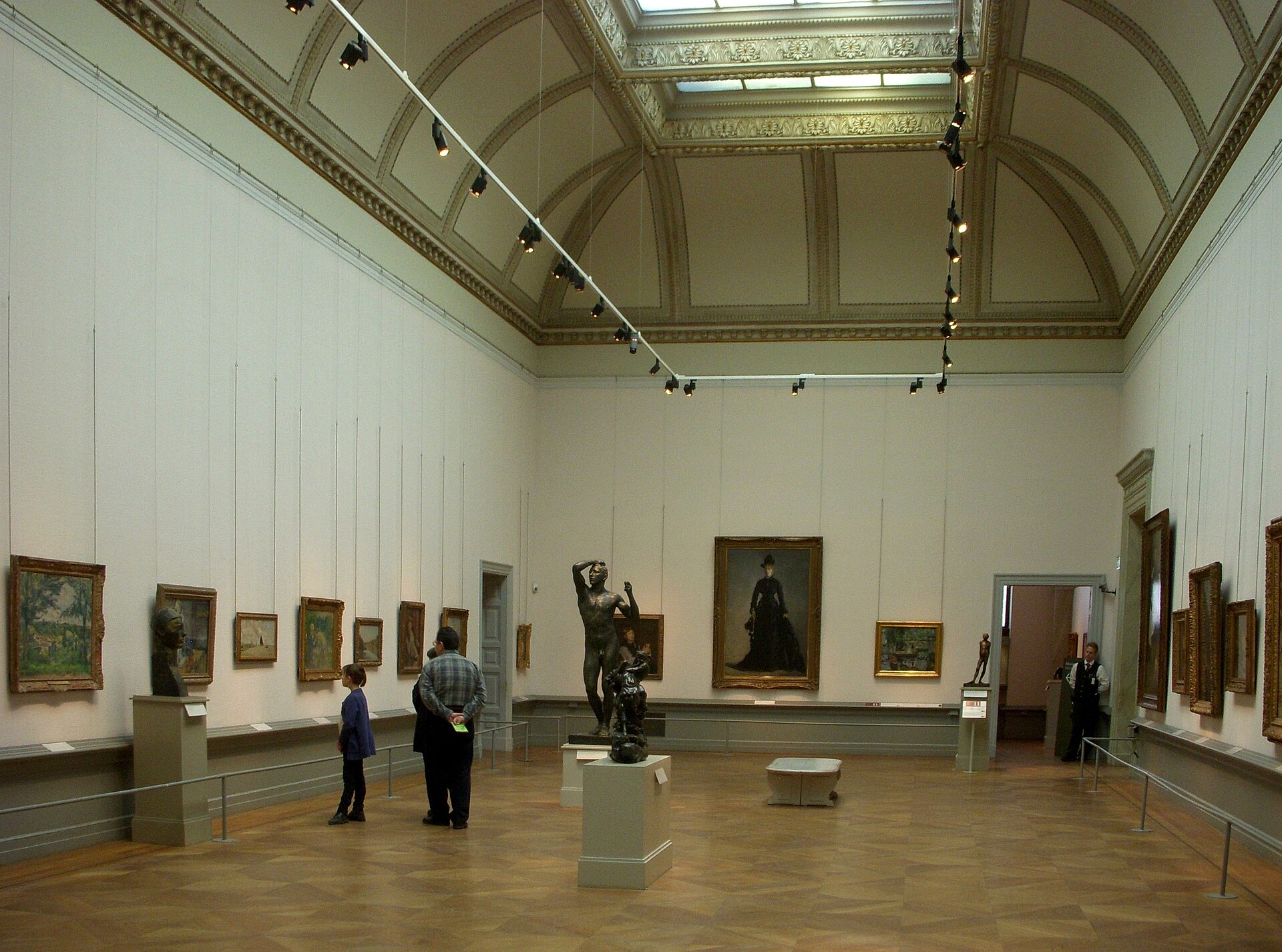
Photograph by Holger.Ellgaard · CC BY-SA 4.0 The Timeline
The museum's single permanent walk-through display: more than 5,000 paintings, drawings, sculptures, and applied arts and design objects, arranged chronologically from the 1500s to the present and laid out era by era through the building, with side rooms for deeper study of each period. Featured makers include Rembrandt, Judith Leyster, Artemisia Gentileschi, Alexander Roslin, Goya, Renoir, Carl Larsson, Anders Zorn, Paul Gauguin and Camille Claudel. The museum rotates objects regularly rather than leaving the hang static.
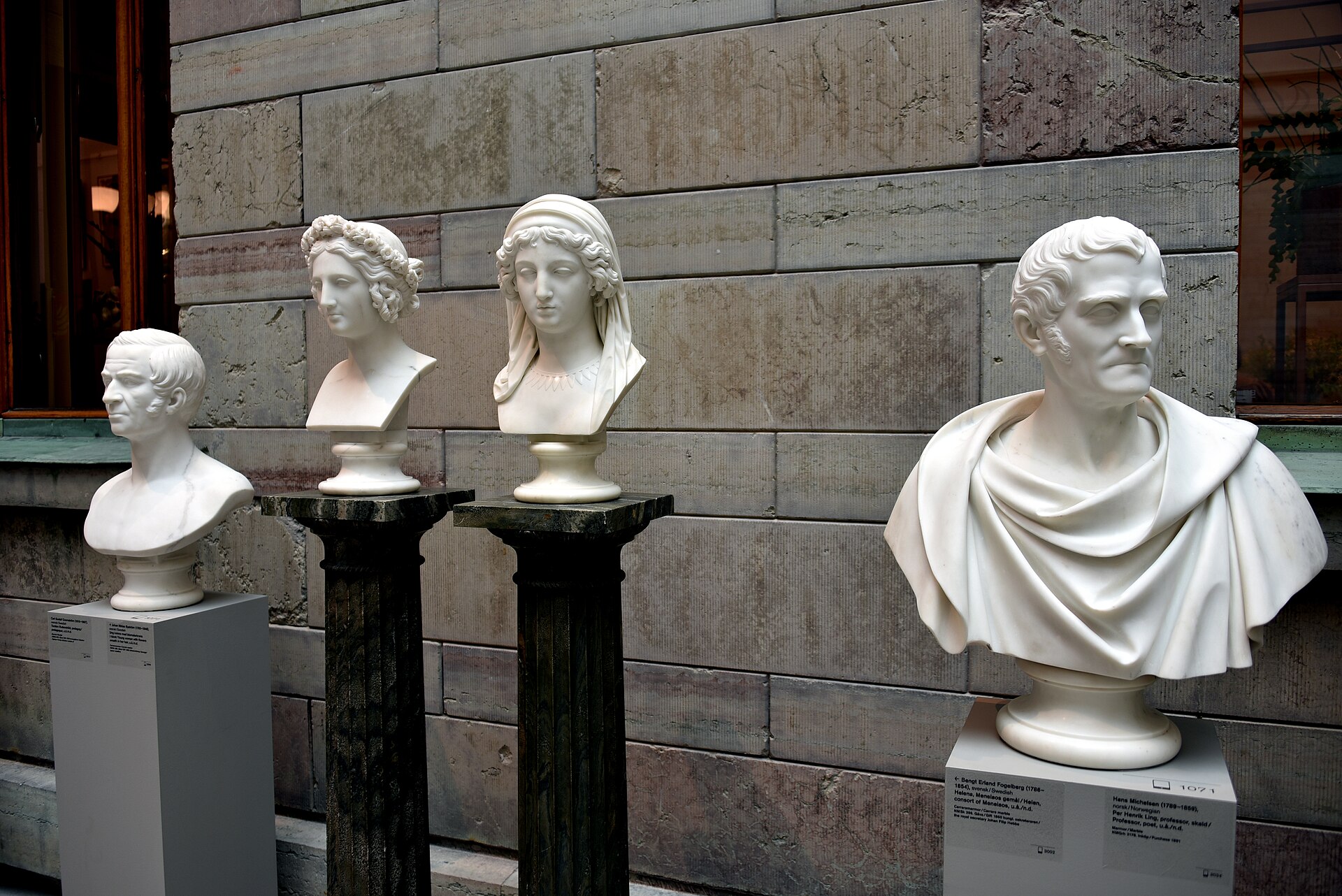
Photograph by Neuroforever · CC BY-SA 4.0 The Sculpture Courtyard
A glazed courtyard in the north of the building, enclosed in 1996, given over to nineteenth century sculpture and free to enter without a ticket. Marble and plaster works on show include the Big Trio of Norse mythological figures Thor, Odin and Balder, portraits of civic benefactors (mostly men), a portrait bust of the writer Fredrika Bremer, and cast iron decorative urns illustrating the shift from idealism to realism across the century.
The Treasury
A suite of former office rooms converted into exhibition space during the 2010s renovation, holding more than a thousand small, precious objects across six centuries. The core is the museum's collection of over 5,700 portrait miniatures, the largest such collection in the world by the museum's own account, of which more than 600 are on display, from Nicholas Hilliard's miniature of Elizabeth I to twentieth century work. Jewelry, decorative boxes, canes and pocket watches are also shown.
The Design Depot
A ground floor display, midway along the corridor between the shop and the restaurant, tracing the history of ceramics and the design process through more than 1,200 objects from the eighteenth century onward. It includes a rotating mini exhibition (currently on the ceramicist Karin Bjorquist, designer of the Nobel banquet tableware), short films on design process, seating for visitors, and ceramic animals set at child height.
What to see first
The Kitchen Maid
Rembrandt van RijnOne of a small group of half length genre portraits Rembrandt painted around 1650, this one dated 1651 in the museum's own catalogue. Acquired in the Netherlands by the Swedish count Johan Gabriel Stenbock in the 1670s, it passed with the former royal collection into the museum in 1865 and has been regarded as a masterpiece since it reached Sweden; the personal specificity of the sitter's face has led scholars to think Rembrandt painted someone he knew well.11
The Lady with the Veil (The Artist's Wife)
Alexander RoslinRoslin's 1768 portrait of his wife, the French portraitist Marie Suzanne Giroust, shown behind a black silk veil in fancy dress for a ball. Exhibited at the Paris Salon of 1769, where Diderot singled it out for comment, it is now one of the museum's best known paintings.12
Midsummer Dance
Anders ZornZorn's 1897 night scene of a midsummer dance in Dalarna, painted after he moved back to the province and worked to preserve its folk traditions. Given to the museum in 1903 by the Royal Swedish Academy of Fine Arts, it is one of the most widely reproduced Swedish paintings of the period.13
The Triumph of Venus
Francois BoucherA large 1740 mythological canvas bought directly from Boucher's studio by the diplomat and collector Carl Gustaf Tessin. When Tessin's debts forced the sale of most of his collection in 1749, the Swedish royal family bought it, and it passed into the museum with the rest of the royal collection in 1866, anchoring the museum's French eighteenth century holdings.14
Boy Playing the Flute
Judith LeysterGiven to the museum in 1871 and catalogued as the work of Frans Hals or Jan de Bray despite carrying Leyster's own monogram. It was not recognized as her work until the art historian Hofstede de Groot corrected the attribution in 1893, a documented case of a woman painter's work reassigned to a male name and only later restored.15
Portrait miniature of Elizabeth I
Nicholas HilliardA rare profile view of the queen, dated to 1586-87, by the only painter Elizabeth I authorized to depict her in miniature. Bought by the museum in 2011 with funds from a bequest in the name of former director Gunnar Hultmark, it is now shown in the Treasury among more than 600 miniatures on display.16
Exhibitions on now
- On now2 Jun 2026 to 14 Feb 2027Confirmed , 6 weeks ago
A palazzo built for a royal collection
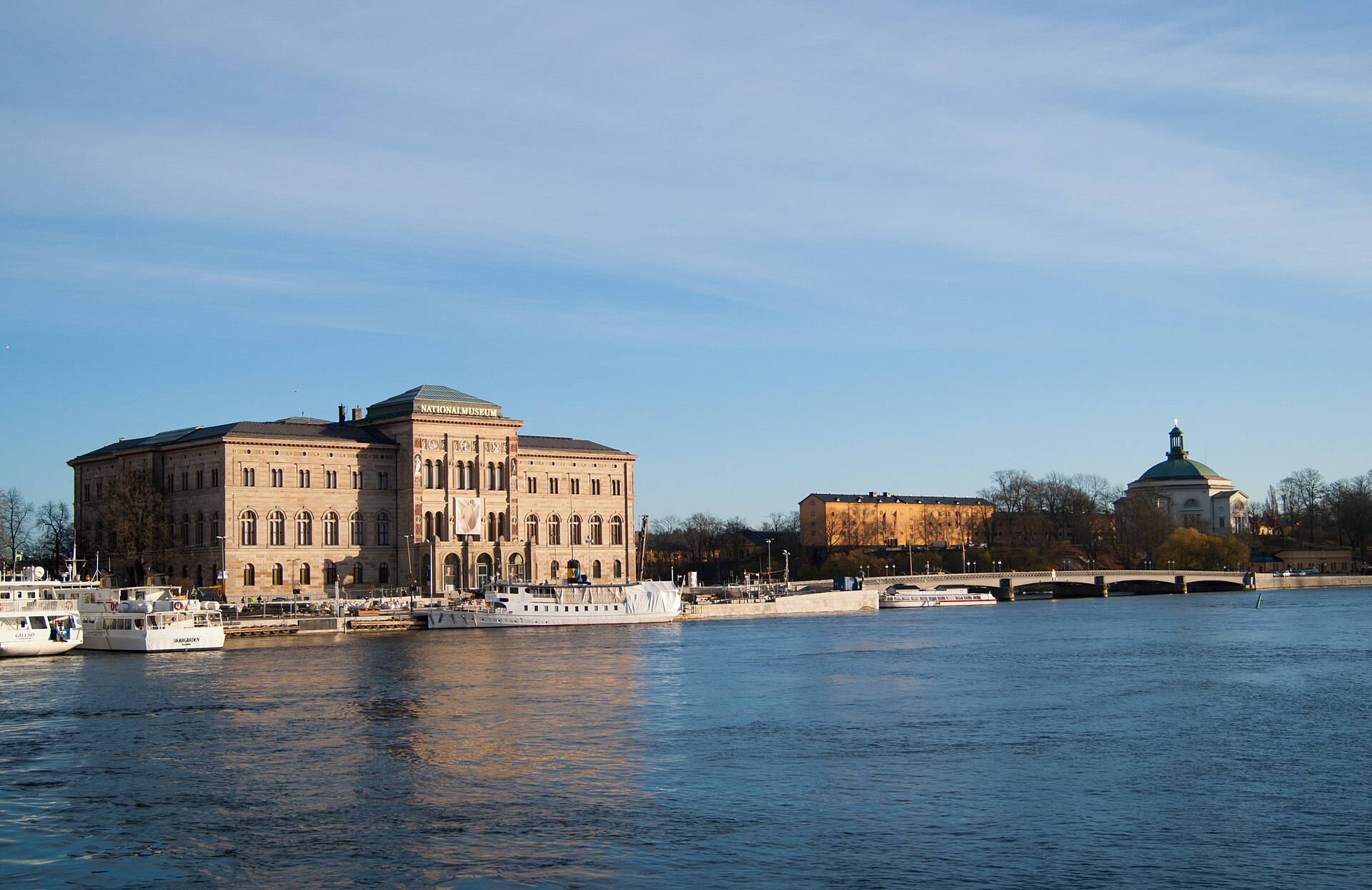
Nationalmuseum traces its founding to 1792, when the collections assembled by Queen Lovisa Ulrika and her son King Gustav III were formally established as a royal museum, one of the oldest fine art museums in Europe by the museum's own account. The building that now houses it came later. Construction on Sodra Blasieholmshamnen ran from the 1840s to 1866 under the German architect Friedrich August Stueler, who also designed the Neues Museum in Berlin, with the Swedish architect Fredrik Wilhelm Scholander responsible for the interiors. Stueler drew on the architecture of the northern Italian Renaissance for the exterior, and the building's sculpted facade names the disciplines the collection inside was built to hold: antiquities and applied arts on the entrance floor, the library and lecture rooms in the middle, sculpture and painting at the top.
The building opened to the public on 15 June 1866, timed to coincide with the General Industrial Exposition of Stockholm that year. Its early decades were austere by later standards: it had no heating system, no toilets until 1868, and no electric lighting until 1931. Construction itself was a feat for its time, using an estimated 59,000 hollow clay vault pots to keep the ceilings light while strong, and window panes of a size then unprecedented, manufactured in Aachen and shipped to Stockholm. More than a century and a half later the building remains, in the museum's own description, one of the best preserved nineteenth century museum buildings in Europe.
The Timeline: six centuries under one roof
The museum organizes almost the whole of its permanent display as a single walkable sequence it calls the Timeline: more than 5,000 paintings, sculptures, drawings, prints, and applied arts and design objects, arranged to follow an imagined line through the building from the 1500s to today. Each era gets its own principal hall with adjoining rooms for closer study, so a visitor moving through the building is also moving through time, watching painting, craft and design intersect within each period rather than being kept in separate departmental tracks. The museum states plainly that the hang is not fixed: objects rotate, so a return visit does not show the same room twice.
The names on the wall labels give a sense of the range asked to sit inside one route: Rembrandt, Judith Leyster and Artemisia Gentileschi from the Dutch and Italian seventeenth century; Alexander Roslin from the eighteenth; Goya, Renoir and Paul Gauguin representing the wider European nineteenth century; and Carl Larsson, Anders Zorn and Camille Claudel among the artists working at the turn of the twentieth. The collections office of the museum states holdings of roughly 16,000 paintings and sculptures, around 500,000 prints and drawings, and about 30,000 objects of applied art and design, alongside a separately managed portrait collection of 5,000 works at Gripsholm Castle and some 45,000 pieces of Gustavsberg porcelain. Dutch seventeenth century painting and the French eighteenth century collection are the two strengths the museum names first; both were assembled well before the building that now shows them existed.
Tessin and the French eighteenth century
The French eighteenth century holdings, among the strongest outside France by most published accounts, are largely a legacy of one man's career rather than a museum's acquisitions policy. Carl Gustaf Tessin served as Sweden's ambassador to France and used the posting to buy directly from artists' studios and dealers, assembling more than 2,000 master drawings alongside paintings, with particular depth in Watteau, Boucher and the circle around them. Francois Boucher's Triumph of Venus, painted in 1740 and bought by Tessin directly from the artist's studio, is the best known single result: a large, deliberately sensuous mythological scene painted for Louis XV's court painter's Swedish patron.
Tessin's own finances did not hold. Forced by debt to sell most of his collection in 1749, he sold it to the Swedish royal family rather than to a foreign buyer, which is the reason the pictures stayed in Sweden at all. The royal collection, Tessin's purchases included, transferred into the newly built Nationalmuseum in 1865 and 1866, which is how a Rococo commission made for a Swedish diplomat's private cabinet in Paris came to anchor a national museum's French galleries a century later.
Dutch masters and a painter written out of her own picture
The Dutch seventeenth century holdings reach the museum by a different, older route: Rembrandt's The Kitchen Maid, a half length genre portrait from around 1651, was already in Sweden by the late seventeenth century, bought in the Netherlands by the Swedish count Johan Gabriel Stenbock during his own travels there in the 1670s. It transferred into the royal museum's collection in 1865, decades before Tessin's pictures, and has been treated as a Rembrandt masterpiece continuously since. The specificity of the sitter's face, scholars have suggested, points to Rembrandt having painted someone he knew personally rather than a hired or generic model.
A second Dutch painting in the collection carries a more pointed history. Boy Playing the Flute, painted in the early 1630s, came to the museum as a gift in 1871 and was catalogued on arrival as a work by Frans Hals or Jan de Bray, despite bearing the monogram of its actual painter, Judith Leyster. The museum's own account of the picture states the misattribution plainly: it was corrected only in 1893, when the art historian Hofstede de Groot identified Leyster's hand, and the museum's own catalogue text names this as one instance of a broader pattern in which women artists' work was reassigned to male painters considered the default authorship for a given style or period. Leyster's picture is not a footnote to that history; the museum's own collection page treats it as central to it.
The Treasury and the Design Depot
Two smaller permanent displays sit outside the Timeline's chronological route. The Treasury occupies former office rooms converted into galleries during the 2010s renovation and holds the museum's collection of portrait miniatures, which the museum describes as the largest such collection in the world at more than 5,700 pieces, of which upward of 600 are on show at any time. The range runs from Nicholas Hilliard's late sixteenth century miniature of Elizabeth I, a rare profile view bought by the museum in 2011, to work made in the twentieth century, alongside jewelry, decorative boxes and pocket watches from the same six centuries the miniatures span.
The Design Depot, on the ground floor between the shop and the restaurant, is smaller in scope but different in register: more than 1,200 ceramic and design objects from the eighteenth century to the present, arranged to show manufacturing method and changing trends rather than to build a chronological narrative, with rotating focus exhibitions on individual designers. Both rooms are evidence of a choice the renovation made explicit: applied arts and design are treated as continuous with painting and sculpture rather than as a secondary department, which is also why the museum's own mandate, as a Swedish government cultural authority, names design and applied arts from the late Middle Ages to the present in the same breath as painting and sculpture from the Renaissance to 1900.
Renovation, reopening, and what this record could not confirm
The building closed for what became a five year renovation beginning in February 2013. The government-commissioned work went well beyond decoration: outdated climate control, ventilation, fire safety and energy systems were replaced, more than 300 windows that had been blocked or painted over were reopened to daylight, damaged limestone was repaired, and two additions, an elevator tower in the southern atrium and a service building, were built into the historic fabric. The museum reopened on 13 October 2018, reinaugurated by King Carl XVI Gustaf in front of the culture minister and more than a thousand visitors. By most published accounts the reopening met with a strongly positive reception: reviewers noted more daylight, a doubled visitor capacity, close to three times as many objects on display as before the closure, and a quieter restaurant relocated out of the main circulation route into the glazed Sculpture Courtyard.
Two things this record could not fully resolve are worth stating rather than smoothing over. First, on provenance: the only source found that connects Nationalmuseum by name to Nazi-era looted art is a 2018 report that a former director of both Nationalmuseum and Moderna Museet co-signed a proposal urging the Swedish government to create an independent advisory panel for restitution claims nationally; nothing found for this record states what proportion of Nationalmuseum's own seventeenth to twentieth century holdings has been checked against wartime-era gaps, and the museum's own site was not found to publish a provenance research page comparable to those maintained by some national museums elsewhere in Europe. Second, on photographic coverage: while the Timeline and the Sculpture Courtyard are documented on Wikimedia Commons by photographers who visited after the 2018 reopening, no free-licence photograph verified to show the Treasury or the Design Depot as they exist today was found, so those two wings appear on this record as text only, exactly as the working rule for this archive requires rather than substituting a photograph of a different room.
What visitors say
The Tripadvisor aggregate (4.2 of 5 from 747 ratings, read 10 August 2026) is solidly positive without being exceptional. No individual review text was read for this record - the review page yielded only the aggregate score to the fetch methods available - so what follows is grounded in the confirmed factual content of the collection and building rather than in reviews actually read; a verified read of individual reviews is owed as a follow-up.
What is praised, what is criticised
- Praised: the depth and range of the permanent collection, from Dutch seventeenth century painting through the French eighteenth century holdings to Nordic nineteenth and twentieth century painting and design
- Praised: the renovated building itself, with its restored daylight and near-tripled display capacity after the 2018 reopening
- Praised: free admission on Thursday evenings and for everyone under 20
- Criticised: no individual review evidence could be gathered beyond the aggregate score, which this record discloses rather than papering over with invented anecdote
Ratings on other platforms
Tripadvisor: 4.2 from 747 ratings, read 10 August 2026
A platform average is a tertiary source: it moves, it is not audited, and we quote no visitor's words.
Questions about Nationalmuseum
Where is Nationalmuseum?
Sodra Blasieholmshamnen 2, 111 48 Stockholm, Sweden.
How much does it cost to visit?
Adult: SEK 160; Last 60 minutes before closing: SEK 80; Under 20: free; Thursday evenings, 17:00-20:00: free; Group, 10 or more people: SEK 110. As confirmed 5 September 2026.
When is it open?
Tuesday-Wednesday 11:00-17:00; Thursday 11:00-20:00; Friday-Sunday 11:00-17:00. Closed: Monday. 24 December 2026. As confirmed 5 September 2026.
How do you get there?
Metro: Blue line (T10/T11) to Kungstradgarden, exit toward Kungstradgarden - Skargardsbatar, about a 5 minute walk; Bus: Line 65 stops directly at the museum; lines 2, 55 and 76 stop at Karl XII:s torg nearby; Ferry: Djurgardsfarjan from Slussen or from Djurgarden (Allmanna grand) to Skeppsholmen, then about a 10 minute walk; Bicycle: Bicycle paths run almost to the entrance, with cycle parking next to the main door.
What should you see first?
The Kitchen Maid (Rembrandt van Rijn); The Lady with the Veil (The Artist's Wife) (Alexander Roslin); Midsummer Dance (Anders Zorn); The Triumph of Venus (Francois Boucher); Boy Playing the Flute (Judith Leyster); Portrait miniature of Elizabeth I (Nicholas Hilliard).
What we could not confirm
- How much of Nationalmuseum's own seventeenth to twentieth century holdings has been checked against wartime and colonial-era provenance gaps. The only source found that names the museum in connection with restitution is a 2018 report of a former director co-signing a call for a national advisory panel; no museum-specific provenance accounting was found on the museum's own site during this research.
- Whether a free-licence photograph exists anywhere on Commons that documents the Treasury or the Design Depot as they are laid out today. None was found for this record; both wings are described from the museum's own text only, per the rule that a wing with the wrong plate is a worse outcome than a wing with none.
Images
Sources
- 1Wikidata, entity Q842858 (Nationalmuseum), accessed 2026-08-10 wikidata.org/wiki/Special:EntityData/Q842858.json
- 2Nationalmuseum, official homepage (English) nationalmuseum.se/en
- 3Nationalmuseum, Opening hours nationalmuseum.se/en/visit/opening-hours
- 4Nationalmuseum, Admission fees and tickets nationalmuseum.se/en/visit/admission-fees-and-tickets
- 5Nationalmuseum, The history of the building nationalmuseum.se/en/om-nationalmuseum/byggnadens-historia
- 6Nationalmuseum, The collections nationalmuseum.se/en/explore-art-and-design/the-collections
- 7Nationalmuseum, The Timeline nationalmuseum.se/en/exhibitions/the-timeline
- 8Nationalmuseum, The Sculpture Courtyard nationalmuseum.se/en/exhibitions/the-sculpture-courtyard
- 9Nationalmuseum, The Treasury nationalmuseum.se/en/exhibitions/the-treasury
- 10Nationalmuseum, The Design Depot nationalmuseum.se/en/exhibitions/the-design-depot
- 11Nationalmuseum collection database, The Kitchen Maid, Rembrandt van Rijn, NM 584 collection.nationalmuseum.se/en/collection/item/17587/
- 12Nationalmuseum collection database, The Lady with the Veil (The Artist's Wife), Alexander Roslin collection.nationalmuseum.se/en/collection/item/21152/
- 13Nationalmuseum collection database, Midsummer Dance, Anders Zorn, NM 1603 collection.nationalmuseum.se/en/collection/item/18607/
- 14Nationalmuseum collection database, The Triumph of Venus, Francois Boucher, NM 770 collection.nationalmuseum.se/en/collection/item/17773/
- 15Nationalmuseum collection database, Boy Playing the Flute, Judith Leyster, NM 1120 collection.nationalmuseum.se/en/collection/item/18123/
- 16Nationalmuseum, press release: New acquisition, Elizabeth I by Nicholas Hilliard, via Mynewsdesk mynewsdesk.com/nationalmuseum/pressreleases/new-acquisition-elizabeth-i-by-nicholas-hilliard-1049891
- 17Nationalmuseum, Getting here nationalmuseum.se/en/visit/getting-here
- 18Nationalmuseum, Accessibility nationalmuseum.se/en/visit/accessibility
- 19Nationalmuseum, Photography and filming nationalmuseum.se/en/visit/prepare-your-visit/photography-and-filming
- 20Nationalmuseum, Prepare your visit nationalmuseum.se/en/visit/prepare-your-visit
- 21Wikipedia, Nationalmuseum, accessed 2026-08-10 (, background only) en.wikipedia.org/wiki/Nationalmuseum
- 22The Art Newspaper, Swedish museums call for panel to advise on Nazi-loot claims, 25 September 2018 theartnewspaper.com/2018/09/25/swedish-museums-call-for-panel-to-advise-on-nazi-loot-claims
- 23Tripadvisor, National Museum, Stockholm, reviews and rating, read 2026-08-10 ( aggregate) tripadvisor.com/Attraction_Review-g189852-d208278-Reviews-Nationalmuseum-Stockholm.html
- 24Wikimedia Commons, File:Nationalmuseum October 2019 01.jpg, photographer Arild Vagen, CC BY-SA 4.0 commons.wikimedia.org/wiki/File:Nationalmuseum_October_2019_01.jpg
- 25Wikimedia Commons, File:National Museum of Sweden (8272657337).jpg, photographer Guillaume Speurt, CC BY-SA 2.0 commons.wikimedia.org/wiki/File:National_Museum_of_Sweden_(8272657337).jpg
- 26Wikimedia Commons, File:Nationalmuseum_sal_Frankrike.jpg, photographer Holger Ellgaard, CC BY 3.0 commons.wikimedia.org/wiki/File:Nationalmuseum_sal_Frankrike.jpg
- 27Wikimedia Commons, File:Marble busts in Room 1280, the Sculpture Courtyard, Nationalmuseum, Stockholm, Sweden.jpg, photographer Osama Shukir Muhammed Amin FRCP(Glasg), CC BY-SA 4.0 commons.wikimedia.org/wiki/File:Marble_busts_in_Room_1280,_the_Sculpture_Courtyard._Nationalmuseum,_Stockholm,_Sweden.jpg
- 28Wikimedia Commons, File:Nationalmuseum_pelarsal_2018.jpg, photographer Holger Ellgaard, CC BY-SA 4.0 commons.wikimedia.org/wiki/File:Nationalmuseum_pelarsal_2018.jpg

.jpg)


