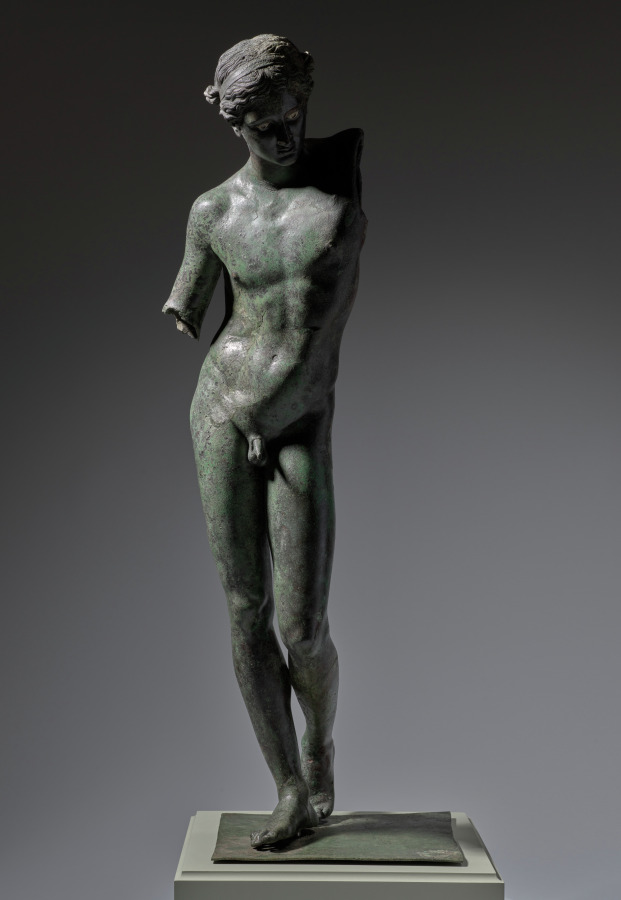
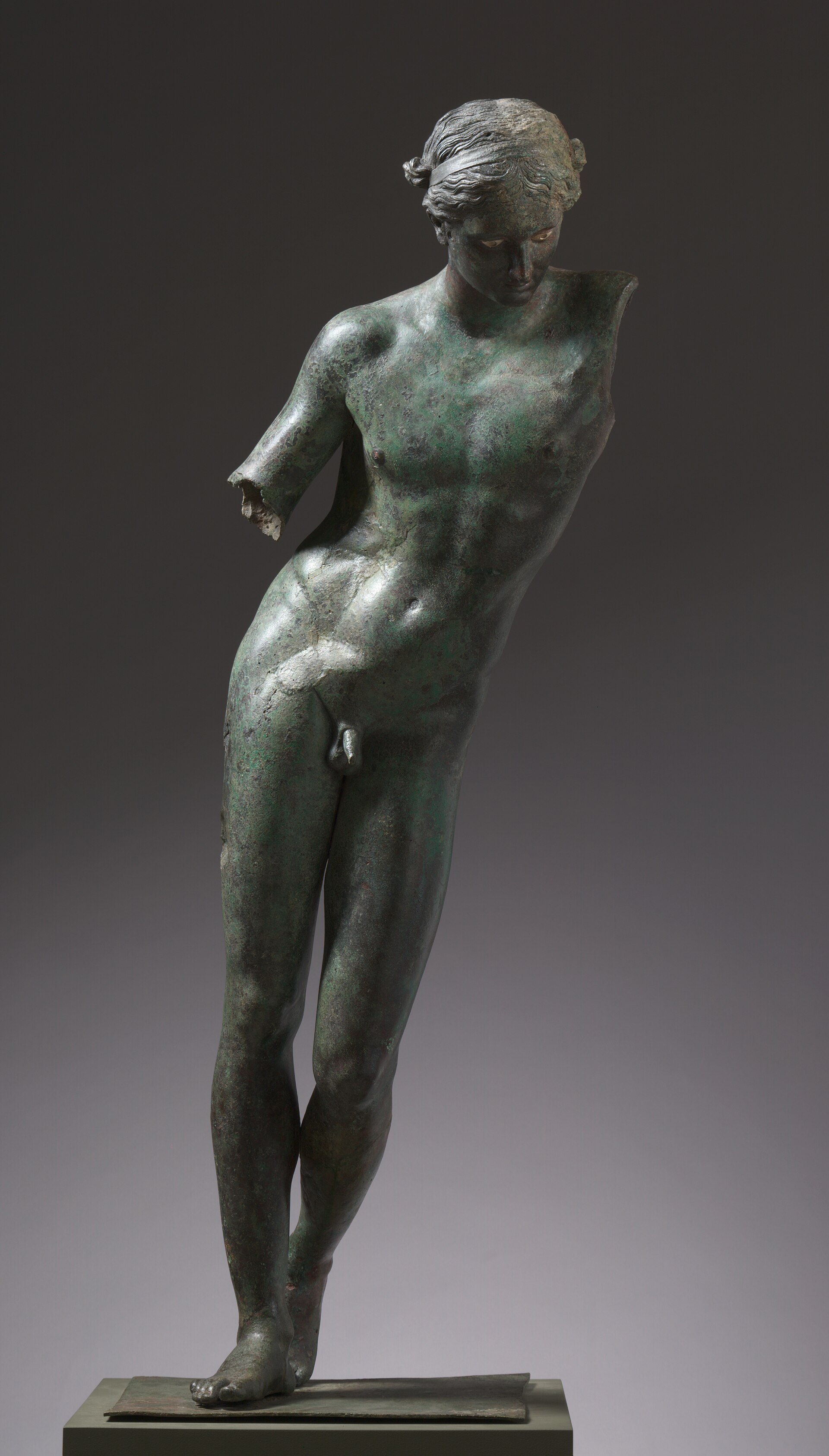
The Cleveland Apollo: Apollo Sauroktonos (Lizard-Slayer) or Apollo the Python-Slayer
c. 350 BCE · Bronze
Cleveland Museum of Art, Cleveland, Ohio
 Greek, Athenian · 400-330
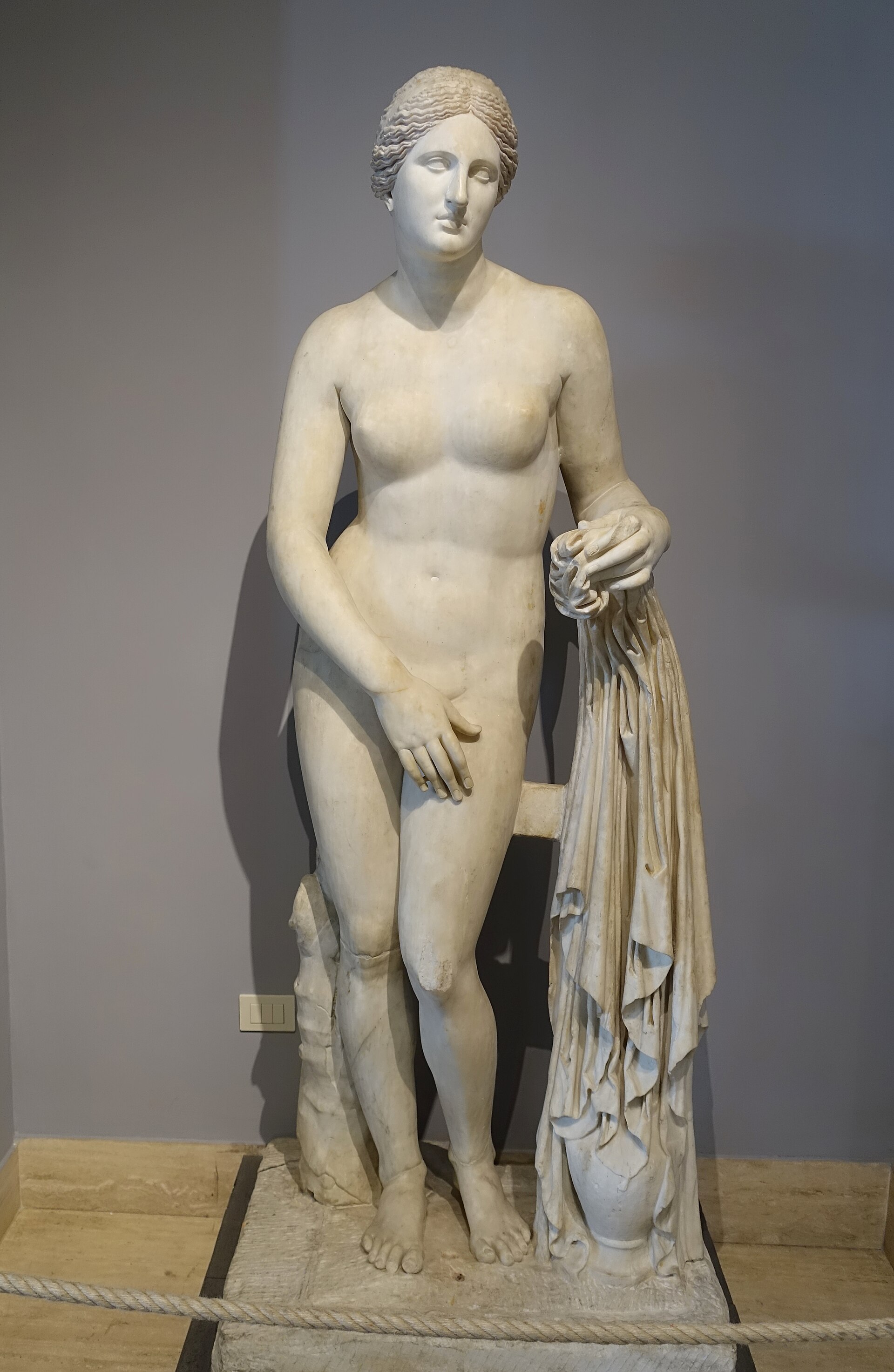
Aphrodite of Knidos, the Colonna type Roman marble copy, Vatican Museums, Museo Pio-Clementino. Generally treated as the closest surviving copy to Praxiteles' lost original, following an argument first made by Christian Blinkenberg that remains widely but not universally accepted. This is a Roman copy, not the fourth-century original, which does not survive in any form. No verified portrait. No securely identified likeness of this maker is known under a free licence. We do not publish a face we cannot verify.
Vatican Museums; photo Daderot, public domain| Full name | Praxiteles of Athens |
|---|---|
| Worked as | Sculptor |
| Born | c. 400-390 BCE · Athens (inferred from his career and citizenship, not... |
| Died | unknown · unknown, presumably Athens |
| Nationality | Greek, Athenian |
| Movement | Late Classical Greek sculpture |
| In this archive | 1 artwork |
| Sources | 23 cited |
| Last verified |
About this page 1 artwork in the archive · Last verified · 23 sources cited
Praxiteles is the most famous name in ancient sculpture and one of the least verifiable. No work in marble or bronze that survives today is universally agreed to be from his own hand. Everything carrying his name is either a Roman copy of a lost original, a modern proposal argued from style, or an object whose attribution is itself the subject of an active, citable dispute. Andrew Stewart's catalogue of the ancient testimonia runs to roughly sixty works credited to a sculptor of this name. That is not a caveat to add at the end of an entry on Praxiteles. It is the entry.
The single most important thing a reader probably does not know is how thin the undisputed physical record actually is. The Aphrodite of Knidos, his most celebrated invention and the first large-scale female nude in Greek art, does not survive at all: it is known only through as many as 192 cataloged Roman copies and variants, no two agreed by every scholar to reproduce it with equal fidelity. The Hermes and the infant Dionysos found at Olympia in 1877, marble and in remarkable condition, is the one plausible candidate for a surviving original, and it has been argued over for very nearly a century without resolution. A bronze Apollo bought by the Cleveland Museum of Art in 2004, with a modern provenance that starts in a German garden and no document earlier than 1994, is the only other serious candidate, and it is the most contested attribution in the field today.
This page leads with the Cleveland bronze because it is the liveliest and best-documented fight over this sculptor's name currently open, not because it is settled. It is not. Iconotheca holds a full separate record on that specific object, cited throughout below; this page treats Praxiteles the man, the workshop and the corpus that carries his name.
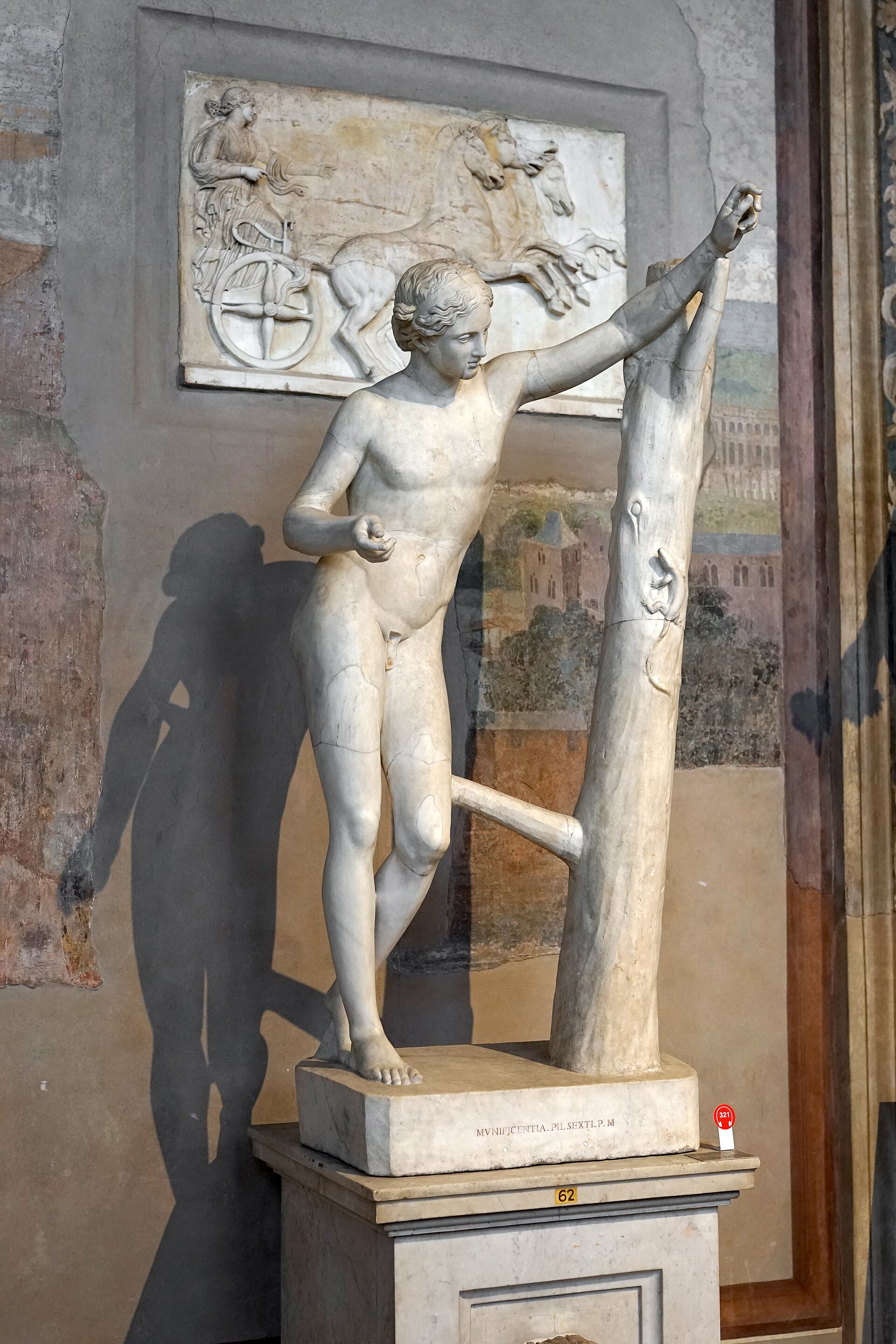
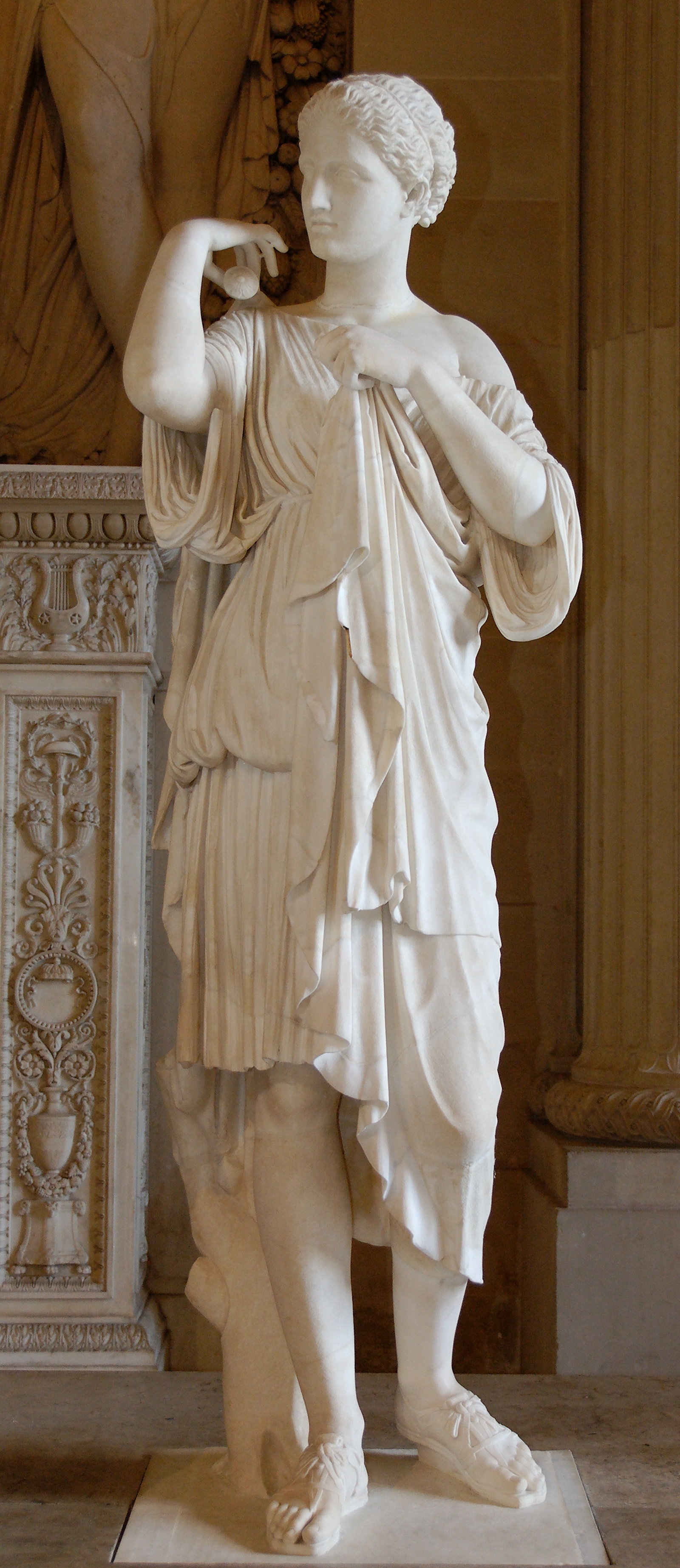
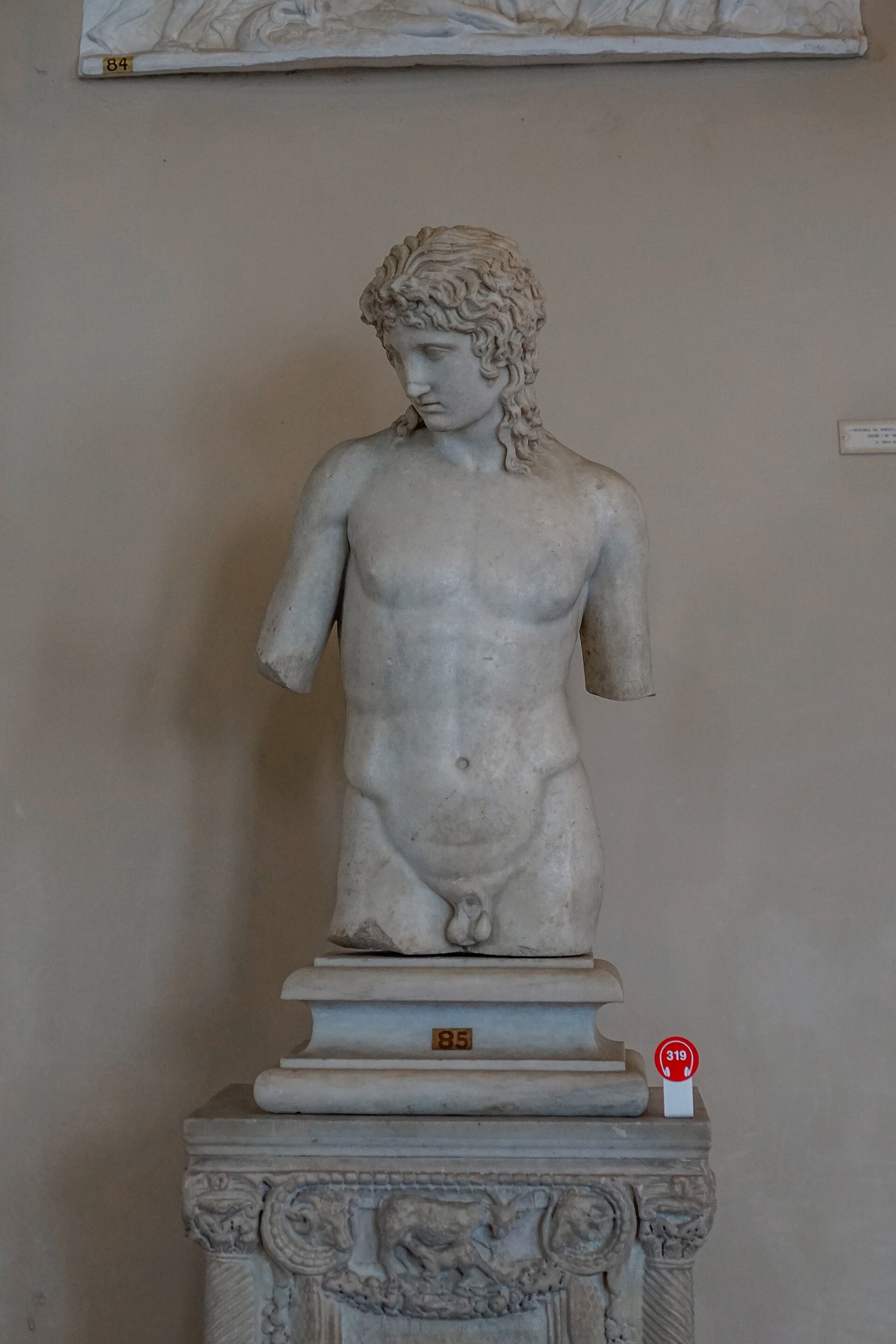
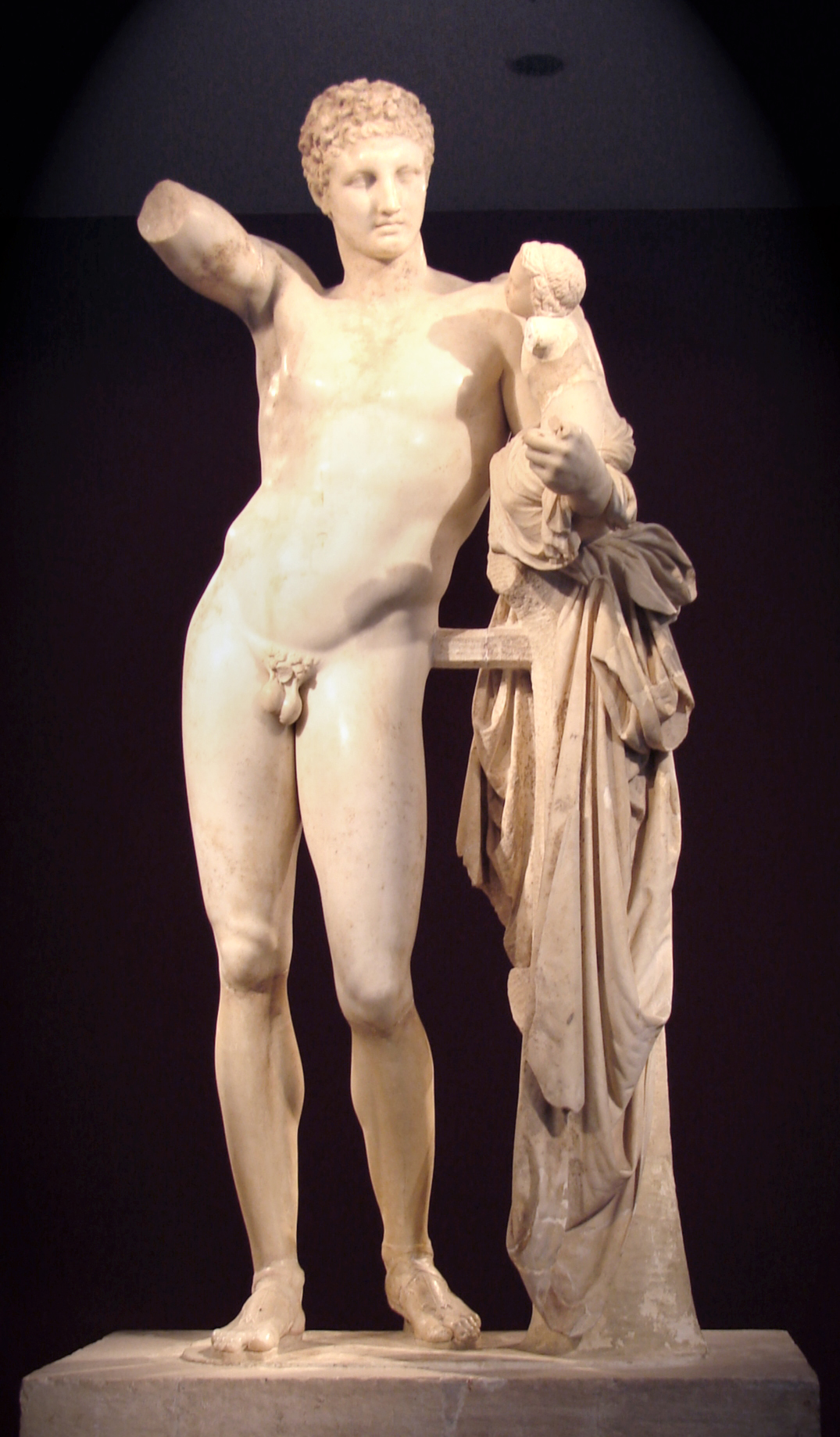
Praxiteles is born, almost certainly at Athens, the son of the sculptor Cephisodotus the Elder.46
Pliny the Elder places Praxiteles' floruit in this Olympiad year, the closest thing to a fixed date anywhere in his career.4
The Aphrodite of Knidos is carved and sold; Kos takes the draped twin, Knidos buys the nude figure Kos rejected and becomes famous for it.25
The bronze Apollo Sauroktonos type and the marble Leto group for Mantinea are made, on the evidence of Pliny and Pausanias respectively.117
Praxiteles' sons Cephisodotus the Younger and Timarchus begin independent careers of their own while their father is still working, on Andrew Stewart's chronology of the family.4
Praxiteles' conventional death date in modern scholarship: by 326 his son Cephisodotus the Younger was already paying heavy Athenian naval liturgies, apparently as heir to the family workshop and fortune; no ancient source records when or where Praxiteles actually died.4
Ernst Curtius's German excavation uncovers the marble Hermes and the infant Dionysos inside the ruined Temple of Hera at Olympia.7
The three relief panels later called the Mantinea base are found reused in the floor of a Byzantine church at ancient Mantinea.17
A bronze ephebe, later called the Marathon Boy, is recovered from the sea in the Bay of Marathon; it is linked stylistically, not securely, to the Praxitelean workshop.18
Karl Blumel publishes the technical study arguing the Olympia Hermes is a Roman-period copy rather than a Praxitelean original, opening the modern dispute.8
The Cleveland Museum of Art announces its purchase of a bronze Apollo Sauroktonos from Phoenix Ancient Art, Geneva, for an undisclosed price.1012
Cleveland renames the bronze 'Apollo the Python-Slayer' and its curator, Michael Bennett, argues in a focus exhibition that it is an original by Praxiteles made for Delphi.10
The J. Paul Getty Museum publishes the full metallurgical study of the Cleveland bronze, with sample tables, under a Creative Commons licence.13
A Roman marble copy of a Praxitelean Aphrodite type, the Hamilton Aphrodite, sells at Sotheby's London for the highest price ever paid for an ancient marble sculpture.1516
Nothing by Praxiteles' own hand has ever been offered at auction, and nothing plausibly could be under present attributions: the two accepted candidates sit in Greek national museums and the Cleveland bronze was a private treaty museum purchase, not an auction sale, so it carries no hammer price to record. What does reach the market is a Roman-period marble descended from one of his inventions. The clearest, fully documented result found in the sources consulted is the Hamilton Aphrodite, a Roman Imperial marble of the Capitoline Aphrodite type, a variant descended from the pose Praxiteles invented for the Knidia rather than a direct copy of the Knidia itself. No auction result for a marble Sauroktonos, Artemis of Gabii or Eros of Centocelle copy was found in the sources consulted for this page; that absence is recorded rather than filled.
| Date | Sale | Work | Result | Note |
|---|---|---|---|---|
| 7 December 2021 | Sotheby's, London | A Marble Figure of the Capitoline Aphrodite, Roman Imperial, 1st/2nd century CE, after a Greek original of the late 4th century BCE in the Praxitelean tradition, with 18th-century restorations (the Hamilton Aphrodite) | Hammer GBP 16,000,000 With premium GBP 18,600,000 total with buyer's premium (reported as approximately USD 24.6 million) GBP | Estimate GBP 2,000,000-3,000,000; sold nine times over its low estimate and reported by Sotheby's as a record price for an ancient marble sculpture at auction. A Capitoline-type variant of the Aphrodite pose Praxiteles invented for Knidos, not a copy of the Knidia itself; the two should not be conflated. |
Hammer is the price at which the bidding stopped; with premium adds the fee the house charges the buyer on top. Hammer price and buyer's premium in the glossary.
| Institution | City | Holdings | Note |
|---|---|---|---|
| Vatican Museums | Vatican City / Rome | The Colonna and Chiaramonti versions of the Aphrodite of Knidos type; an Apollo Sauroktonos (inv. 750, Museo Pio-Clementino); the Eros of Centocelle (inv. 769, Museo Pio-Clementino) | The single richest concentration of Praxitelean-type Roman copies open to the public. |
| Musee du Louvre | Paris | Apollo Sauroktonos, Ma 441; Artemis of Gabii, Ma 529 | Two of the best-known marble copies of Praxitelean types, both long-studied and frequently reproduced in scholarship. |
| Archaeological Museum of Olympia | Olympia, Greece | Hermes and the infant Dionysos | The one plausible candidate for a surviving Praxiteles original, contested since 1927 and never resolved. |
| National Archaeological Museum | Athens | The Mantinea base; the Marathon Boy | The Mantinea base is the second candidate for Praxiteles' own workshop hand; the Marathon Boy is a modern stylistic proposal, not a documented attribution. |
| Cleveland Museum of Art | Cleveland, Ohio, USA | The bronze Apollo catalogued as attributed to Praxiteles or a follower | The most actively disputed attribution associated with this sculptor. Iconotheca holds a full separate record on this specific object. |
| Capitoline Museums | Rome | The Capitoline Faun, the best-known copy of the Resting Satyr type | The copy Nathaniel Hawthorne saw in 1858 and used as the model for his novel The Marble Faun. |
Ancient writers ranked Praxiteles among the two or three greatest sculptors Greece produced, and Pliny the Elder singled out his marble work as surpassing even his own bronzes: 'though Praxiteles...
Ancient writers ranked Praxiteles among the two or three greatest sculptors Greece produced, and Pliny the Elder singled out his marble work as surpassing even his own bronzes: 'though Praxiteles achieved greater fame through marble work, he nonetheless created beautiful pieces in bronze as well.' The reputation was never seriously questioned in antiquity or since.
What is missing is the physical proof a reputation this size would normally rest on. No surviving sculpture bears his signature. Andrew Stewart's catalogue of the testimonia counts eight ancient inscribed statue bases carrying his signature, some of them later renewals, but in every case the statue that stood on the base is lost, so no inscription survives paired with an object anyone can look at today. The corpus now associated with him, whether the dozen or so major types accepted with reasonable confidence or the roughly sixty works Pliny, Pausanias and later testimonia between them attribute to a sculptor of this name, is a modern reconstruction built from Roman marble copies, coins, gems and two ancient authors writing well after his death. An attribution to Praxiteles is a proposition assembled from later evidence, not a record.
The primary ancient source is a small number of sentences in Pliny the Elder's Natural History, written around 77 CE, roughly four centuries after Praxiteles worked.
The primary ancient source is a small number of sentences in Pliny the Elder's Natural History, written around 77 CE, roughly four centuries after Praxiteles worked. Pliny lists his bronzes in book 34, including 'a youthful Apollo which the Greeks call Sauroctonos, because he is waiting with an arrow for a lizard creeping towards him,' and treats his marble Aphrodite at Knidos in book 36 as the finest statue in the world. Pausanias, writing in the second century CE, adds the Mantinea commission and other temple works seen on his own travels through Greece.
That is close to the entire ancient documentary record. Everything else in circulation, the workshop gossip, the anecdotes about his mistress, the precise dating of individual works, comes from later compilers, from Roman-period rhetorical set pieces such as the dialogue on love called the Erotes, or from modern inference. This page follows the house discipline throughout: a fact from Pliny or Pausanias is treated as primary and dated to them; everything else is dated to whoever actually said it, and graded accordingly.
Pliny records that Praxiteles carved two figures of Aphrodite for sale at the same price, one draped and one nude.
Pliny records that Praxiteles carved two figures of Aphrodite for sale at the same price, one draped and one nude. The people of Kos, who had first choice, took the draped version 'and for this reason was preferred by the people of Cos, who had an option on the sale, although he offered it at the same price as the other.' Knidos bought the nude figure the Koans had rejected, 'gaining immense fame' from it. It was the first time in Greek art that a full-scale female figure had been carved fully nude, standing rather than in the heroic male tradition, and it set a type that Roman sculptors reproduced for the next five centuries.
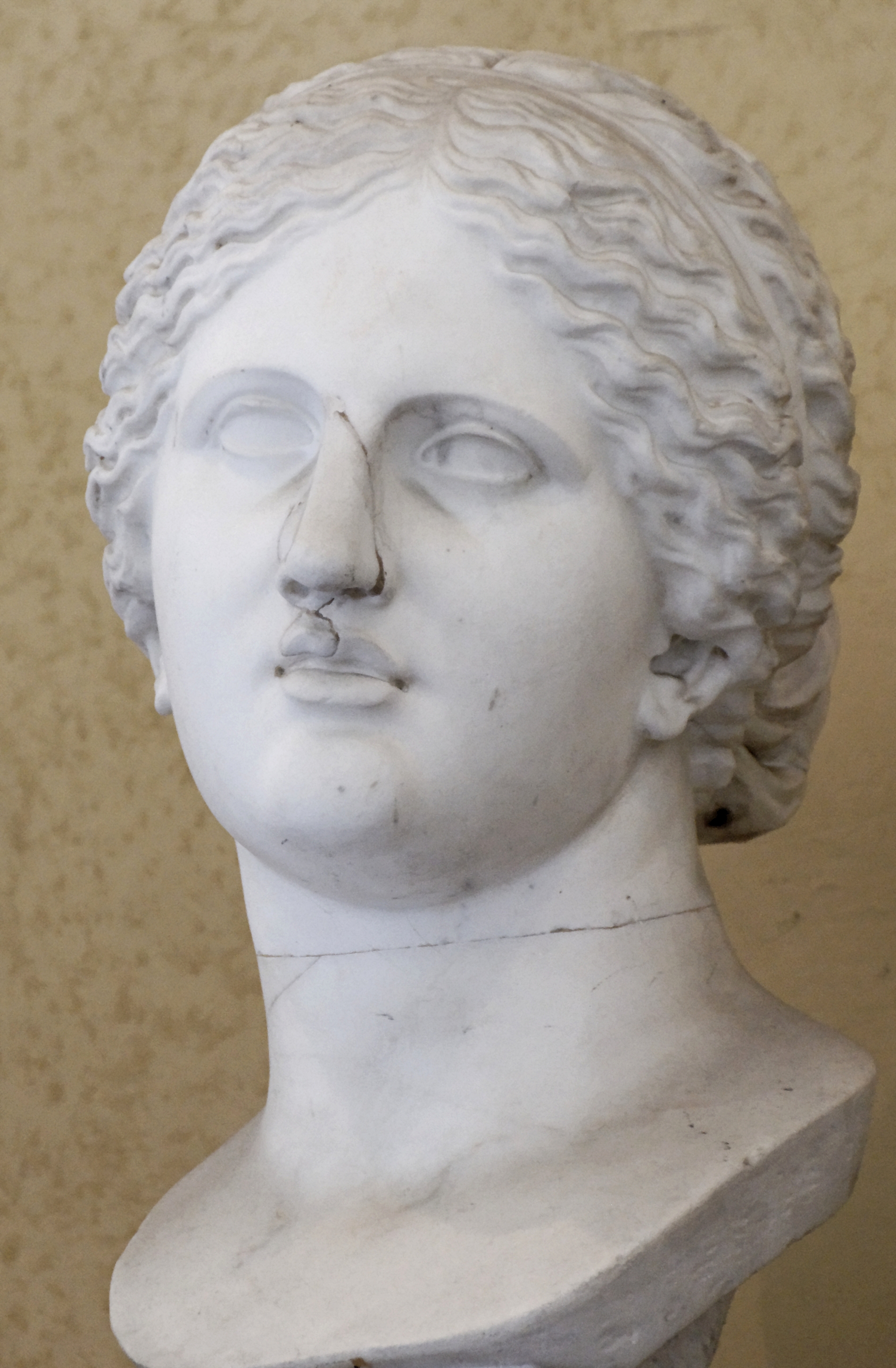
The original is lost. What survives is copies: the classicist Kristen Seaman has catalogued 192 surviving ancient versions and variants, which would make the Knidia the single most reproduced sculpture of antiquity if the count holds. The version most scholars treat as closest to the lost original is the so-called Colonna Venus, now in the Vatican's Pio-Clementino Museum, following an argument first made by the Danish archaeologist Christian Blinkenberg that remains widely, though not universally, accepted. A second well-known Vatican version, in the Museo Chiaramonti, gives a different sense of the same pose. Neither is the original. Both are Roman.
Two anecdotes attached to the Knidia are worth separating by how well they are sourced.
Two anecdotes attached to the Knidia are worth separating by how well they are sourced. The first is King Nicomedes of Bithynia's attempt to buy the statue from Knidos by offering to discharge the city's entire public debt: Pliny states plainly that 'the Cnidians, however, preferred to suffer anything but this, and rightly so; for with this statue Praxiteles made Cnidus a famous city.' That is Pliny, writing as a near-contemporary compiler of well-known Roman-period lore, and this page treats it as a reported ancient tradition rather than a verified transaction, since no independent record of Nicomedes' offer survives.
The second anecdote is more vivid and less securely Plinian: a story, told at length in the dialogue on love traditionally but not certainly attributed to Lucian of Samosata, of a young man who broke into the temple at Knidos at night, left a mark on the statue, and afterwards threw himself from a cliff in shame. The temple itself was built open on all sides specifically so the statue could be viewed from every angle, which is itself telling about how the object was designed to be encountered. This page records the stain story as what it is: a widely repeated ancient anecdote about the statue's uncanny effect, not a documented event, and older than any surviving manuscript that reports it.
Ancient sources also disagree, without possibility of adjudication from where this page stands, about who modeled for the figure. Athenaeus and the later rhetorician Choricius of Gaza name the courtesan Phryne, said elsewhere to have been Praxiteles' mistress; Clement of Alexandria instead gives the name Cratina. Both claims are centuries removed from the event they describe, and no source explains how either writer would have known.
On 8 May 1877, excavators working for Ernst Curtius's German expedition to Olympia uncovered a marble group of Hermes carrying the infant Dionysos inside the ruined Temple of Hera.
On 8 May 1877, excavators working for Ernst Curtius's German expedition to Olympia uncovered a marble group of Hermes carrying the infant Dionysos inside the ruined Temple of Hera. It had been protected by a layer of clay and survived in exceptional condition: the face and torso are highly polished, the back is left rasped and chiselled where it would not have been seen, and traces of cinnabar remained in the hair at the time of discovery, along with gilding on the sandal straps. Pausanias, describing the same temple two thousand years earlier, mentions a marble Hermes carrying Dionysos as a work of Praxiteles, and the identification of the find with that sentence was made almost immediately.
The identification has never stopped being argued. In 1927 the German archaeologist Karl Blumel published a technical study of ancient carving methods and concluded, on the evidence of the tool marks, that the Hermes was not a fourth-century original at all but a Roman-period copy. A few years later the Swedish scholar Oscar Antonsson took the opposite position, that the statue is an authentic work of Praxiteles but has been reworked, and went further, arguing the figure is not Hermes at all but Pan carrying the infant Dionysos. By 1948 Blumel had revised his own view again, proposing that the statue is an original, but by a different, later sculptor who happened to share the name Praxiteles, active in the second century BCE. Brunilde Sismondo Ridgway's survey of fourth-century sculpture treats the piece within the wider question of what an original of this date should look like at all, without resolving it. The most commonly repeated modern position, that no ancient replica of the group has been identified anywhere else in the corpus, is itself used on both sides: to argue that it must be an original, since nothing else copies it, and to argue that it cannot be one of Praxiteles' famous, endlessly reproduced works, since none of his famous works went uncopied.
No consensus exists. This page states that plainly rather than picking a side its sources do not support.
In 2004 the Cleveland Museum of Art bought a life-size bronze Apollo from Phoenix Ancient Art, the Geneva and New York gallery of the brothers Ali and Hicham Aboutaam, for a price it has never...
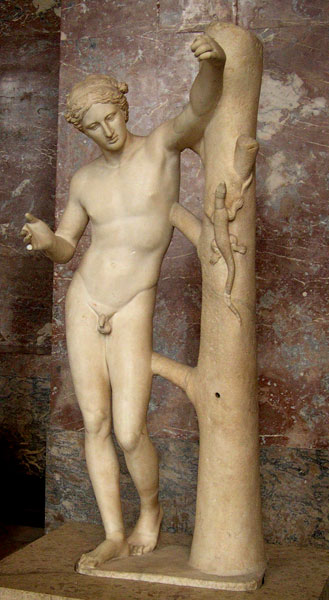
In 2004 the Cleveland Museum of Art bought a life-size bronze Apollo from Phoenix Ancient Art, the Geneva and New York gallery of the brothers Ali and Hicham Aboutaam, for a price it has never published. The type, an Apollo leaning against a tree trunk and aiming at a small creature, is the Sauroktonos Pliny describes; roughly forty marble versions of it are recorded across collections from the Louvre to the World Museum Liverpool. The Cleveland bronze is the only life-size bronze version known. Everything else that survives of this famous invention is stone.
That single fact is why the object matters far beyond its own gallery label. A marble copy preserves a silhouette. A bronze preserves an alloy, a casting method, a corrosion history and, through its lead, a possible mine of origin, none of which any marble copy can offer. In 2013 the museum's own curator of Greek and Roman art, Michael Bennett, went further than attributing the bronze to Praxiteles: he argued the small creature at the god's feet is not Pliny's lizard at all but the Python of Delphi, and renamed the object accordingly, so that its current catalogue title carries both readings joined by 'or.' On that reading the object is not a copy of anything: it is the statue Pliny described, and every marble Sauroktonos in the Louvre or the Vatican is a copy of it rather than the reverse. Other scholars, including Jennifer Neils, have disputed the Python reading directly, on the grounds that the surviving creature is too small to read as the serpent of Delphi, and Martin Robertson had floated the Apollo-Python association as a possibility rather than a finding well before Cleveland adopted it as fact. Writing in 2017 on the Sauroktonos type as a whole, not on the Cleveland bronze specifically, Neils herself concluded that 'the documentation does not permit us to recognize this work in detail and the context of its creation completely eludes us' - a judgment aimed at the type's whole documentary record, not only at Cleveland's copy of it, and worth holding against any confident attribution anywhere in this page.
A full metallurgical study by Colleen Snyder, Ernst Pernicka and Peter Northover, published by the Getty in 2017 with sample tables included, is the best evidence either side has.
A full metallurgical study by Colleen Snyder, Ernst Pernicka and Peter Northover, published by the Getty in 2017 with sample tables included, is the best evidence either side has. It found that a thin bronze display plate under the statue's feet was soldered on in the eighteenth or nineteenth century, meaning the object was already mounted for display well before any of the discovery stories that surface from the 1990s onward. It found the figure had been through a fire early in its history and had never been in salt water, directly rebutting a Greek allegation that the bronze had been fished from the sea between Italy and Greece. And it found that the lead in the bronze is not Aegean, which rules out the largest ancient Greek lead source, Laurium, without telling anyone where the statue actually stood.
None of that dates the sculpture to the fourth century BCE, and none of it proves Praxiteles' own hand rather than a later follower working in his style, a Hellenistic reduction of a lost bronze, or a Roman-period version. The museum's own catalogue range, c. 350 to 200 BCE, spans two and a half centuries and effectively concedes that the object could postdate Praxiteles' working life by more than a century. That range, printed by the institution that owns the piece and argues for the strongest version of its attribution, is the clearest single admission in this whole dispute that the case is not closed.
The museum's published provenance for the bronze has exactly three entries: a German lawyer named Ernst-Ulrich Walter, Phoenix Ancient Art in 2004 and the museum itself.
The museum's published provenance for the bronze has exactly three entries: a German lawyer named Ernst-Ulrich Walter, Phoenix Ancient Art in 2004 and the museum itself. Walter's own account, given to journalists rather than published as a sworn statement, is that he found the statue broken on his family's reclaimed estate in the Lausitz region of former East Germany after reunification in 1990, believed it to be an eighteenth or nineteenth century garden copy, and sold it for around 1,250 deutsche marks to a buyer whose name he says he cannot recall and for which no receipt survives. Lucia Marinescu, then director of Romania's National History Museum, has stated she saw the fragments on the estate in 1994 and later argued in a conference paper that the sculpture is Roman rather than fourth-century Greek, a position that directly contradicts the museum that eventually bought it. Phoenix Ancient Art has never named the person or persons from whom it acquired the object, and the gallery's own owners have separate, later legal histories: Hicham Aboutaam pleaded guilty in 2004, the same week as the Cleveland announcement, to a federal customs charge over an unrelated Iranian silver vessel, and Ali Aboutaam received an 18-month suspended sentence in Geneva in 2023 for violating Swiss law on the transfer of cultural property using forged provenance documents. Manhattan prosecutors have since seized further Phoenix Ancient Art material from other American museums, including a Roman marble bust returned to Turkiye in 2026, none of which names the Cleveland Apollo specifically but all of which documents continuing law-enforcement scrutiny of the network the bronze passed through between 2001 and 2004.
Greece's public position, first raised in December 2006, is that the statue was more likely recovered from the sea between Italy and Greece in the 1990s than found in any German garden; the Getty metallurgy directly contradicts the marine-recovery claim without confirming the garden story either. No claim has been filed by any government, and no restitution agreement exists.
Andrew Stewart's catalogue of Praxiteles' extant and recorded works, compiled from Pliny, Pausanias and later testimonia, runs to fifty-nine entries once the works Stewart himself flags as disputed...
Andrew Stewart's catalogue of Praxiteles' extant and recorded works, compiled from Pliny, Pausanias and later testimonia, runs to fifty-nine entries once the works Stewart himself flags as disputed or misattributed are set aside, and Stewart states outright that the length of the list, 'far greater than one man could produce in a lifetime,' points either to a sizable workshop and following or to the same inflationary process by which any respectable Italian church eventually claimed a Raphael. Praxiteles had two sons, Cephisodotus the Younger and Timarchus, who had already begun independent careers by around 345-340 BCE, while their father was still working, and who inherited his workshop, its clientele and its wealth on his death, which Andrew Stewart's chronology of the family places shortly before 326 BCE, since by that year Cephisodotus the Younger was already shouldering heavy Athenian naval liturgies as the apparent heir to the family fortune; the brothers specialized in marble divinities and bronze portraits and were themselves working sculptors of reputation, not merely custodians of a name.
Modern scholarship accepts only two works as plausible candidates for Praxiteles' own hand rather than a copy or a workshop product: the Hermes at Olympia, for the reasons already given, and the Mantinea base, a set of three marble relief panels of Apollo, Marsyas and the Muses found reused in the floor of a Byzantine church at ancient Mantinea in 1887, connected by the excavator Gustave Fougeres to a Pausanias passage describing a Praxiteles statue group on a base carved with exactly this scene. Even there, scholarly opinion is divided between Praxiteles' own hand and a trusted assistant working from his design. Beyond those two, a handful of further attributions circulate as informed modern proposals rather than settled fact: the Eubouleus, a head type known in several copies; the Marathon Boy, a bronze ephebe recovered from the sea off Marathon in June 1925 and linked to the Praxitelean workshop chiefly through its soft musculature and exaggerated contrapposto, with no ancient text naming it at all; the so-called Aberdeen head; and the Leconfield Aphrodite, a head at Petworth House. None of these four carries anything like the evidentiary weight of the Hermes or the Mantinea base, and this page treats them accordingly, as argued rather than accepted.
Beyond the Knidia and the Sauroktonos, several further types are attributed to Praxiteles with reasonable confidence from Pliny, Pausanias and the consistency of the copies themselves.
Beyond the Knidia and the Sauroktonos, several further types are attributed to Praxiteles with reasonable confidence from Pliny, Pausanias and the consistency of the copies themselves. The Artemis of Gabii, a draped huntress fastening her cloak, survives in a well-regarded Roman copy in the Louvre, Ma 529. The Eros of Centocelle, a winged youth found near Rome on the Via Labicana, is generally connected to the Eros Pliny says Praxiteles made for Thespiae, the statue Cicero cited against Verres as the reason travelers visited that city at all, and it is now in the Vatican's Museo Pio-Clementino. A separate, nude Eros at Parium on the Propontis is recorded by Pliny as matching the Knidia's fame and, in his words, 'the outrageous treatment which it suffered' - a second version of the same stain story, briefer and less quoted, attached to a different statue entirely. The Resting Satyr, a youth leaning against a tree trunk in a moment of repose, survives in some 115 recorded copies, the best known in the Capitoline Museums in Rome; Nathaniel Hawthorne saw that copy on a visit to Rome in 1858 and built his novel The Marble Faun around it, which makes the Capitoline Faun a rare case in this corpus of an object whose modern literary fame is more precisely documented than the ancient statue behind it.
What unites all of these is the same structural gap as the Knidia and the Sauroktonos: a named type, a Roman-period physical record, and no original.
Nothing by Praxiteles' own hand has ever been offered at auction, and nothing plausibly could be: if the Hermes or the Mantinea base are genuine, both are permanently in Greek national museums, and...
Nothing by Praxiteles' own hand has ever been offered at auction, and nothing plausibly could be: if the Hermes or the Mantinea base are genuine, both are permanently in Greek national museums, and the Cleveland bronze was a private treaty museum purchase from a dealer rather than a sale at auction, so no hammer price or premium exists to record for it. What does occasionally reach the saleroom is a Roman-period marble descended from a Praxitelean invention, and the market there is thin but not empty. See market.results below for the one substantial, fully documented result found in the sources consulted.
Sculptor. c. 400-330 BCE.
Born c. 400-390 BCE; no ancient source records a birth date, Athens (inferred from his career and citizenship, not separately documented); died unknown; Andrew Stewart's catalogue of the family places his death shortly before 326 BCE, since by that year his son Cephisodotus the Younger was already paying heavy Athenian naval liturgies, apparently as heir to the family fortune, unknown, presumably Athens.
Vatican Museums (Vatican City / Rome); Musee du Louvre (Paris); Archaeological Museum of Olympia (Olympia, Greece); National Archaeological Museum (Athens); Cleveland Museum of Art (Cleveland, Ohio, USA); Capitoline Museums (Rome).
Nothing by Praxiteles' own hand has ever been offered at auction, and nothing plausibly could be under present attributions: the two accepted candidates sit in Greek national museums and the Cleveland bronze was a private treaty museum purchase, not an auction sale, so it carries no hammer price to record. What does reach the market is a Roman-period marble descended from one of his inventions.
Is the Hermes at Olympia an original by Praxiteles, a later work by his workshop, the work of a different, Hellenistic-period sculptor who shared his name, or a Roman copy? Argued since 1927 with no resolution.
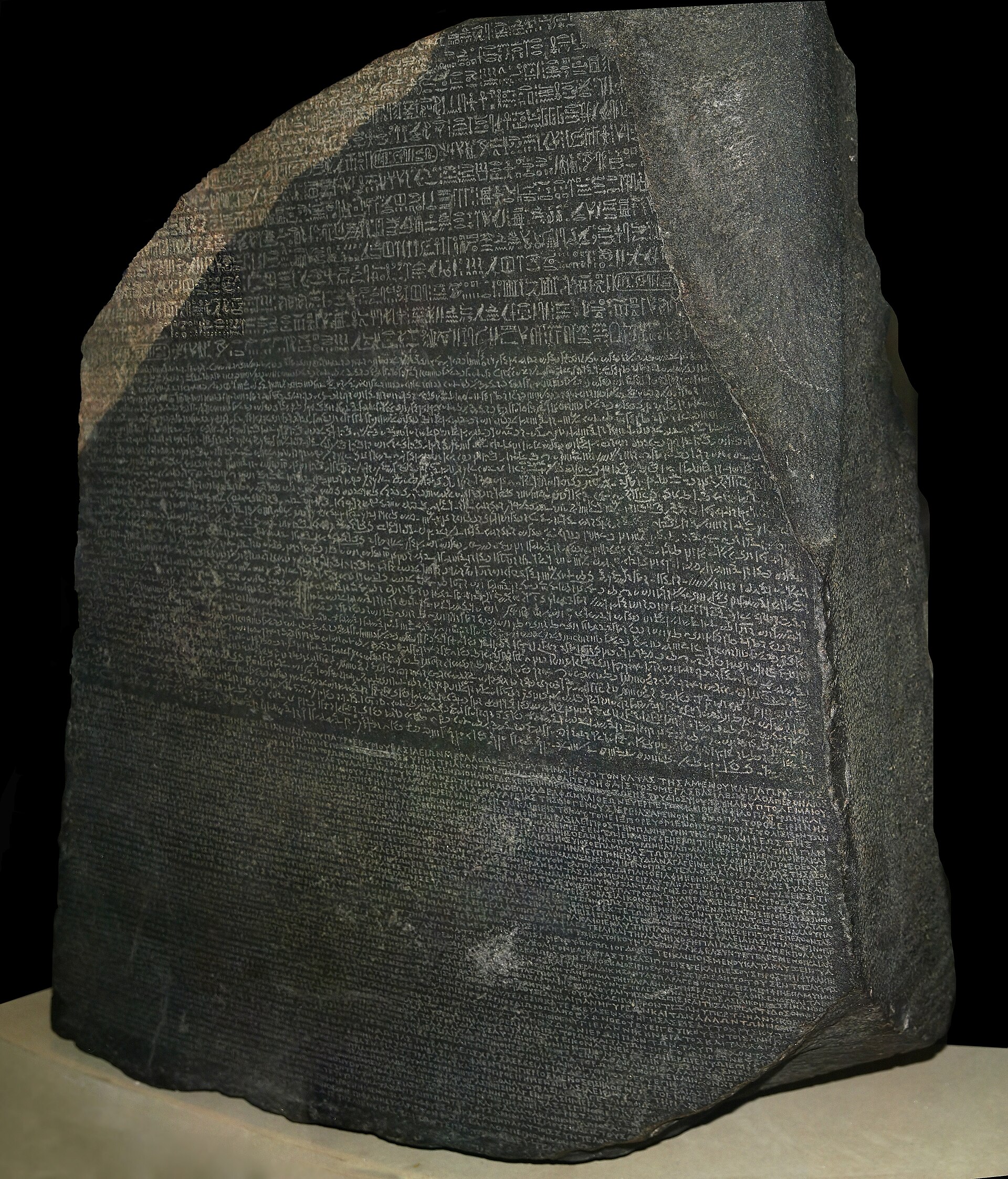
Across the disputed objects in this archive, the instrument that delivered one to its claimant was almost never a judgment.
9 min read
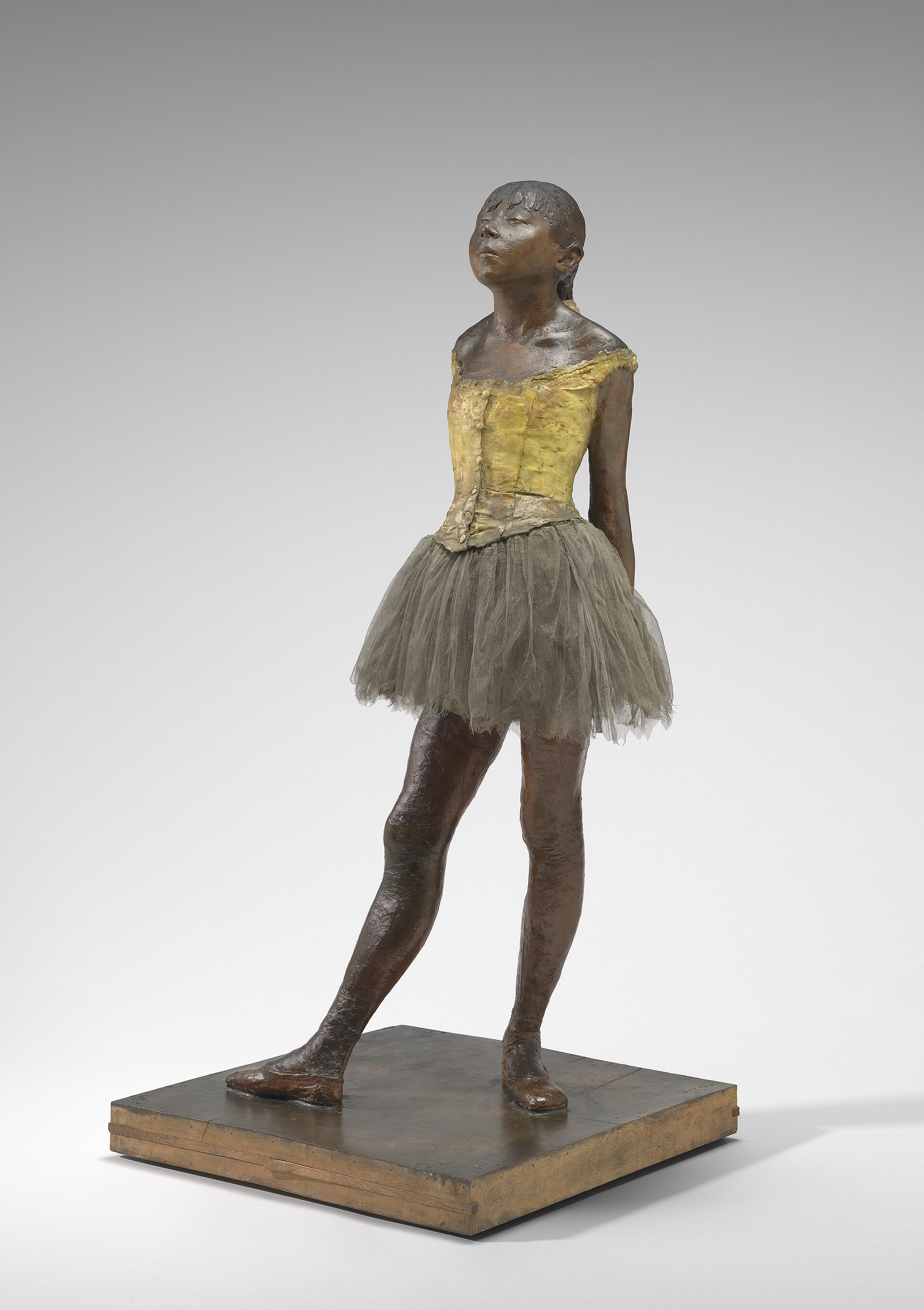
Degas made one Little Dancer and never sold it. The 41.6 million dollars paid in 2022 was for a bronze cast a decade after his...
12 min read
Last verified
One artwork and its story every Tuesday, with the picture: who owned it, what it made, and what closes soon in the exhibition calendar. No promotion, and nothing we cannot cite.
We send one email to confirm the address and keep nothing else. Every letter carries a one-click unsubscribe. How we handle your data.