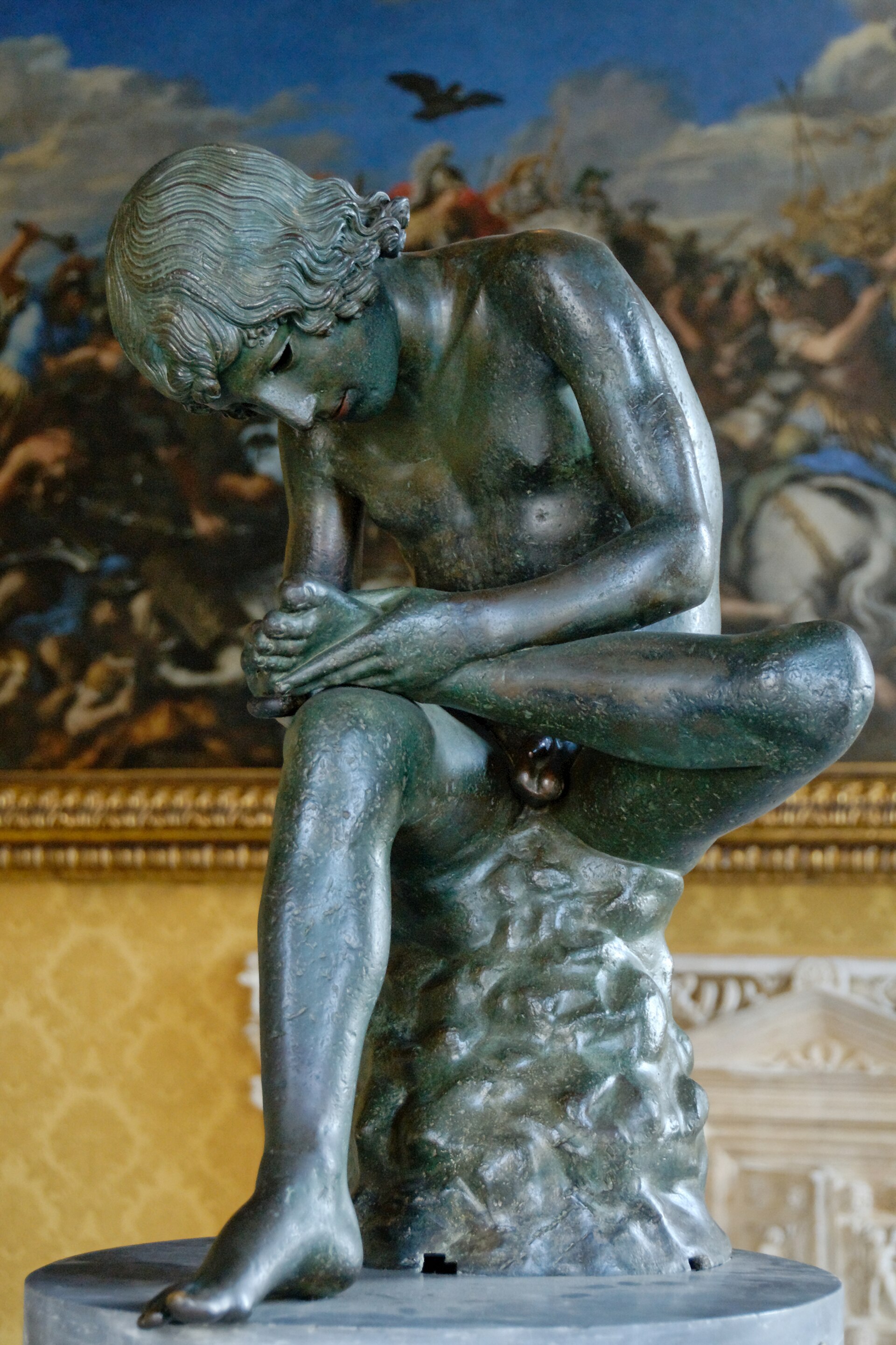
Boy with Thorn (Spinario)
1st century BC · Bronze
Musei Capitolini
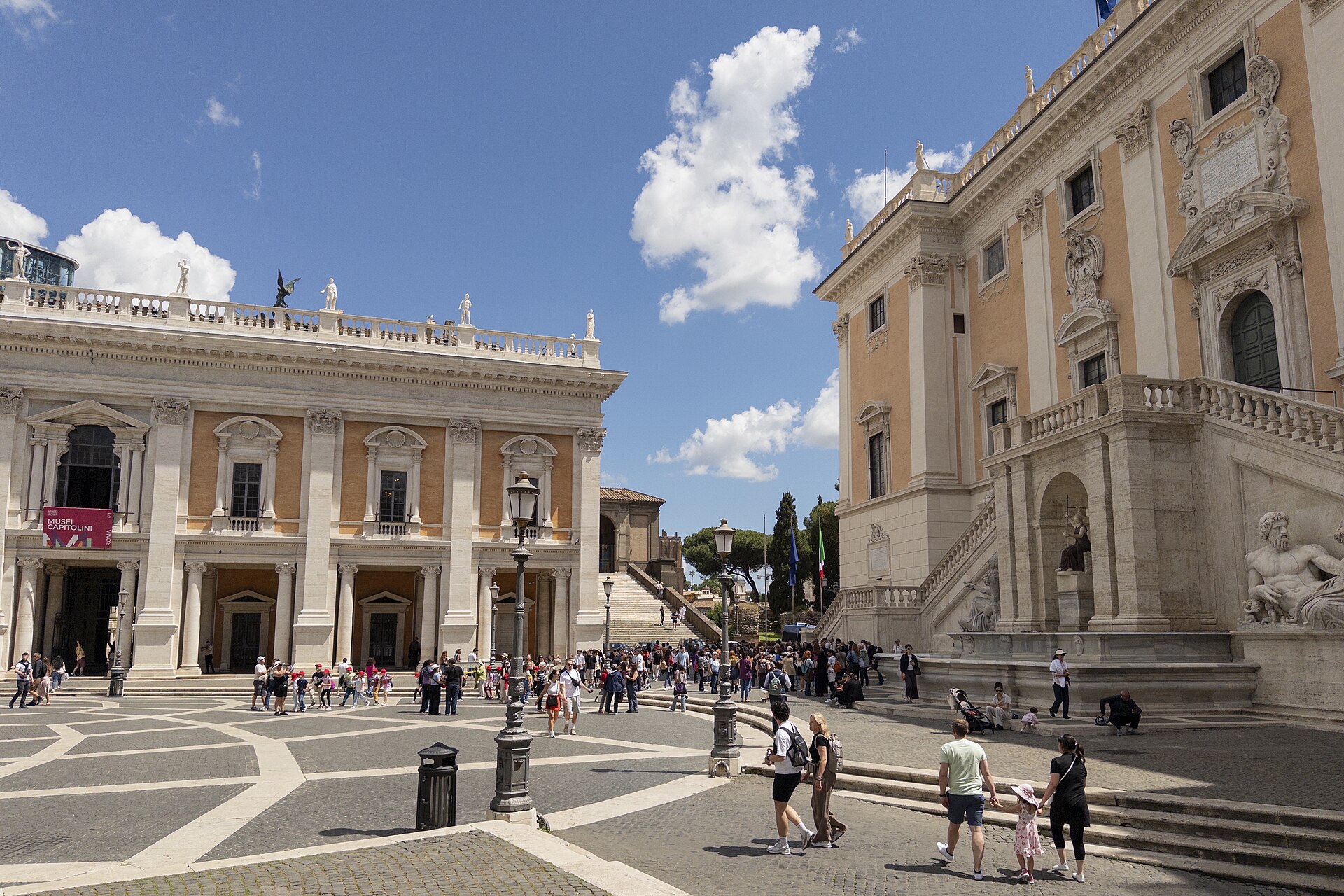
Michelangelo's Piazza del Campidoglio, with the Palazzo Nuovo on the left (its MUSEI CAPITOLINI banner visible over the entrance) and the Palazzo dei Conservatori's staircase on the right.
Photograph by Nhartmannphotos, CC BY-SA 4.0Museum · Musei Capitolini · Founded 1471
Open, admission and hours confirmed 23 August 2026 · 11 sources
The Capitoline Museums hold one of the oldest assembled collections of ancient Roman sculpture anywhere, built outward from a single act: Pope Sixtus IV's 1471 gift to the Roman people of bronzes that had been kept at the Lateran Palace since antiquity. Two and a half centuries later, Pope Clement XII's 1734 purchase of Cardinal Albani's collection of statues and portraits turned that founding nucleus into a public museum, and Benedict XIV's mid-18th-century Pinacoteca Capitolina added Old Master painting to what had until then been an almost entirely sculptural collection. The strength today is overwhelmingly in Roman portrait sculpture (the Hall of the Emperors and Hall of the Philosophers alone hold dozens of busts) and in a handful of individually famous ancient bronzes and marbles - the Wolf, the Spinario, the Dying Galatian, the Capitoline Venus - whose fame occasionally outstrips how well their own origins are actually understood, as the unresolved dating of the Wolf itself shows.
| Local name | Musei Capitolini |
|---|---|
| Kind | Museum |
| Founded | 1471 (founding donation); opened to the public in 1734 |
| City and country |  Rome, Italy Rome, Italy |
| Address | Piazza del Campidoglio 1, 00186 Roma, Italy |
| Website | museicapitolini.org |
| Status | Open, confirmed |
| Record last verified |
Prices and hours change. We take them from the institution's own pages and print the day we read them, and you can check the current position at the source we used. Confirm before you travel.
The founding collection's home: the Capitoline Wolf in the Sala della Lupa, the Spinario in the Sala dei Trionfi, the original bronze equestrian statue of Marcus Aurelius, and courtyard fragments of a colossal ancient statue (the head, hand and globe first donated in 1471). The Sala Pietro da Cortona has been temporarily closed for works since February 2026.
The Dying Galatian in the Sala del Gladiatore, the Capitoline Venus in her own cabinet (the Gabinetto della Venere), and the Hall of the Emperors and Hall of the Philosophers, two long galleries of Roman portrait busts assembled mainly in the 18th century.
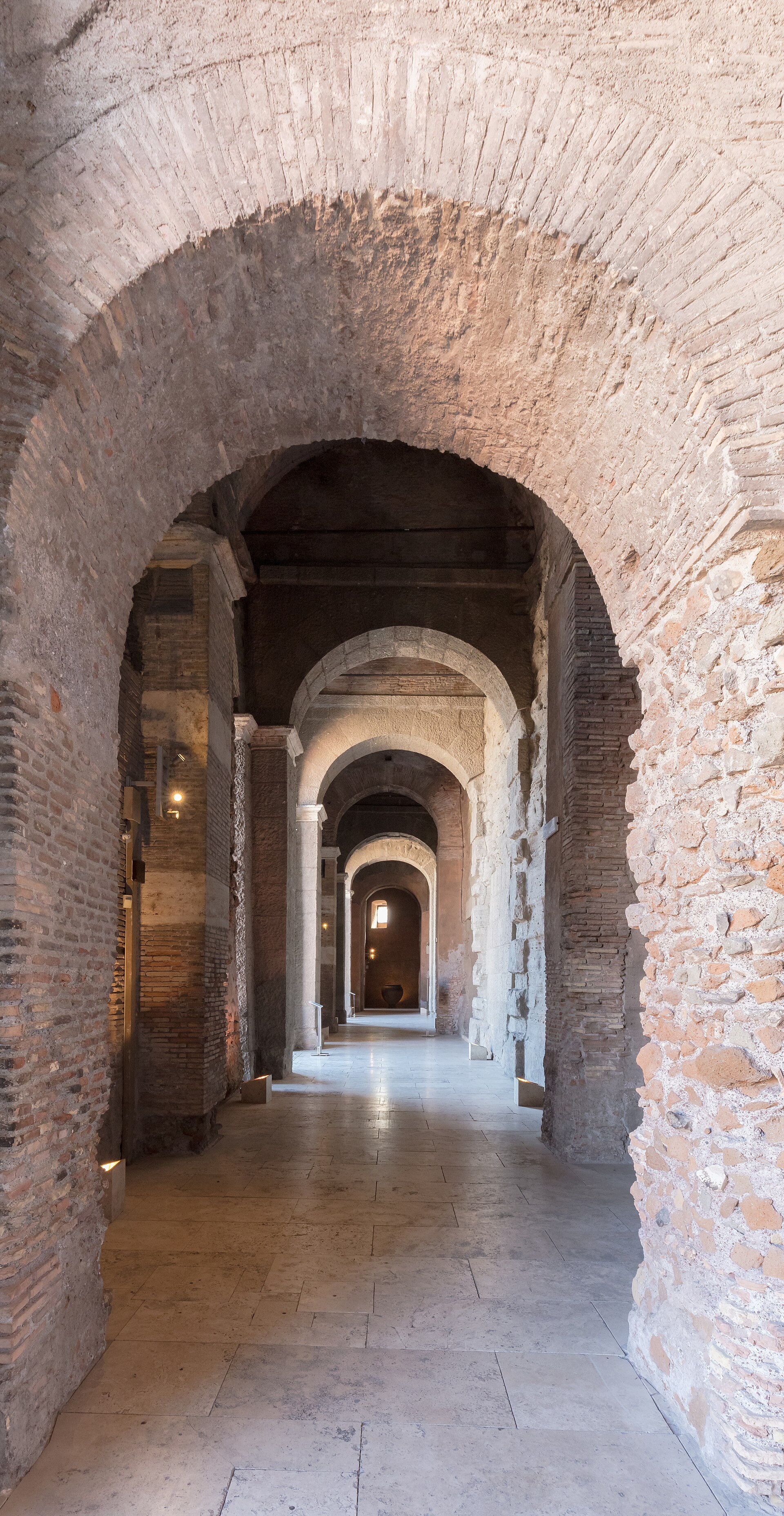
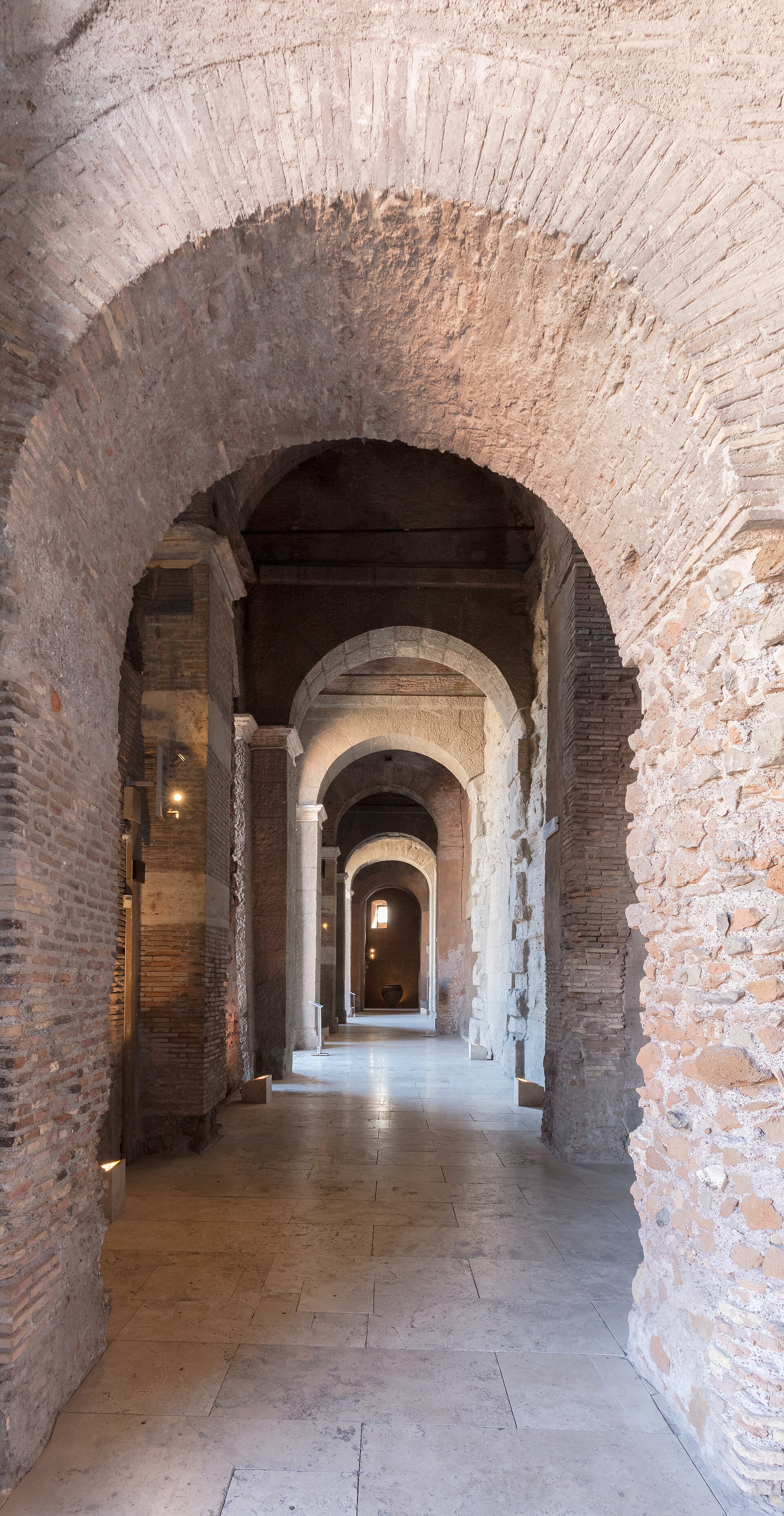
A vaulted Roman-era passage, built into the remains of the ancient Tabularium (the Roman state archive), that connects the two palaces underground and opens onto a terrace with a direct view over the Roman Forum.
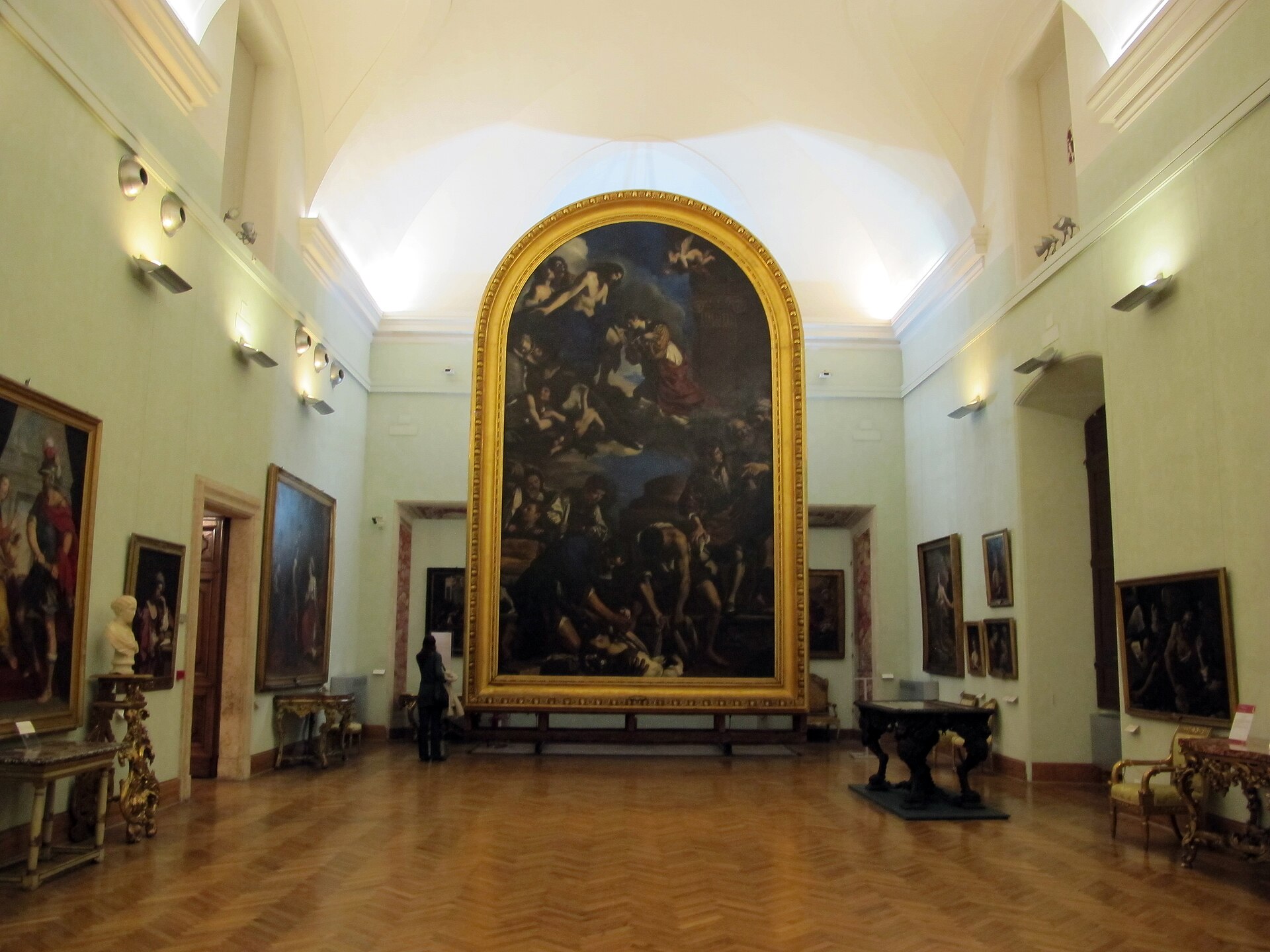
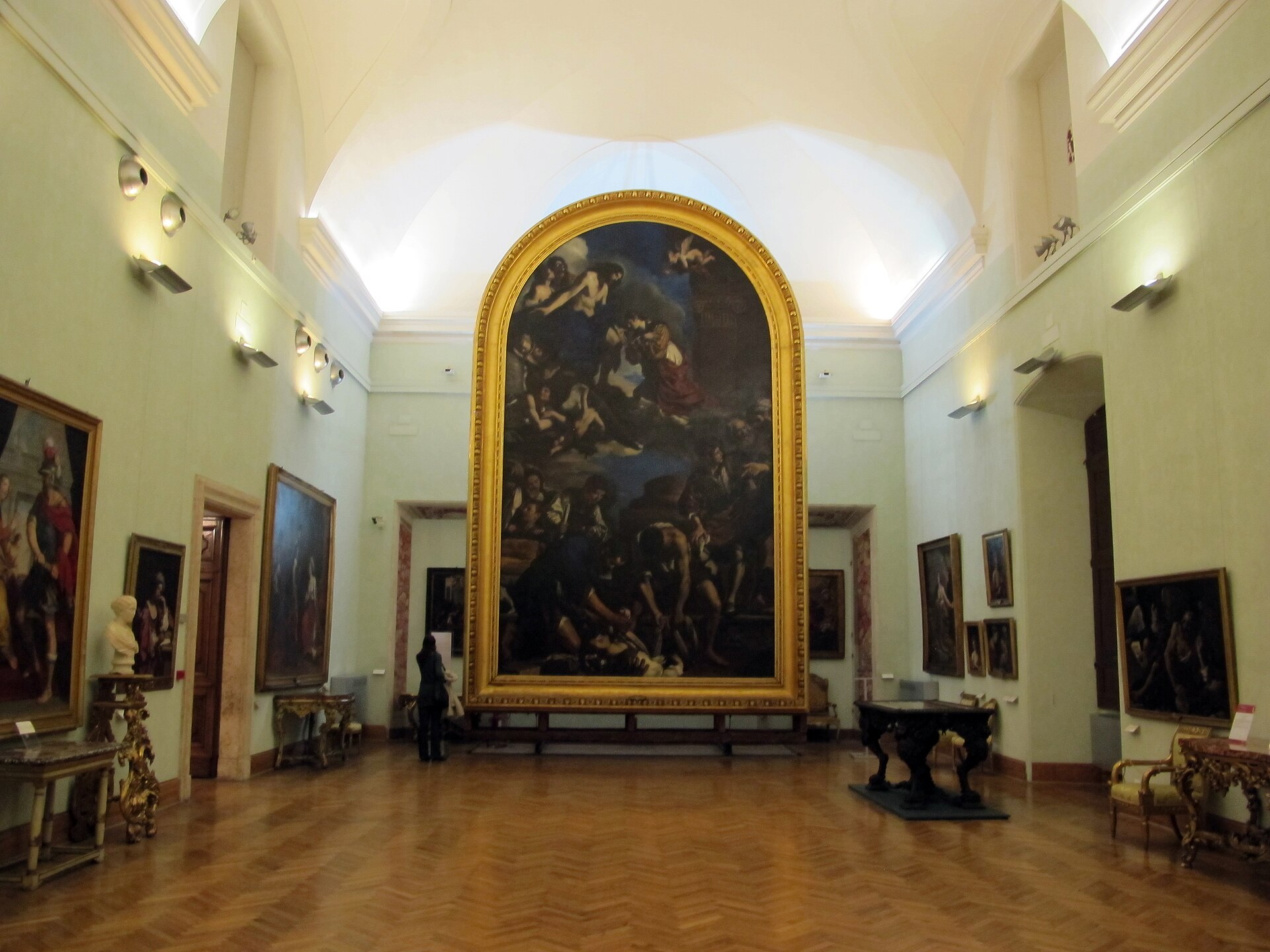
The picture gallery, formed from the Sacchetti and Pio family collections under Pope Benedict XIV in the mid-18th century: Caravaggio's Saint John the Baptist and Guercino's large Burial of Saint Petronilla hang in the same suite of rooms, alongside Titian, Rubens and Van Dyck.
Michelangelo's redesign of the hilltop square itself, an oval pavement pattern between the two museum palaces and the Palazzo Senatorio, with a modern bronze replica of the equestrian Marcus Aurelius at its centre; the original statue is kept indoors in the Palazzo dei Conservatori.
The most famous single object in the museum and long taken to be a fifth-century-BC Etruscan bronze, until 21st-century radiocarbon and thermoluminescence testing suggested the wolf itself may have been cast between 1021 and 1153 AD. A 2025 lead isotope study supported a medieval, Holy Roman Empire source for the metal, but that finding is contested and a 2008 conference of specialists mostly still backed the ancient dating; the question remains genuinely unresolved.8
One of the only ancient bronze equestrian statues to survive antiquity, almost certainly because it was mistaken for a statue of Constantine, the first Christian emperor, and so escaped the medieval melting-down of pagan imperial bronzes. Moved to the Capitoline in 1538 for Michelangelo's redesign of the square; the original is indoors, and the statue standing in the piazza today is a modern replica.9
Part of the original 1471 donation. The museum's own Italian-language history page identifies the colossal head as Constantine; the English Wikipedia article on the museum, citing separate scholarship, identifies the same fragments as Domitian. This page has not resolved which identification is correct.5
A wounded Celtic warrior shown at the moment of death, one of the most admired and most copied sculptures to survive from antiquity, in the room named for it in the Palazzo Nuovo.1
Shown alone in a purpose-built cabinet rather than in an open gallery, a display choice the museum has kept since the 18th century; one of the best-known ancient marble Venus figures anywhere.1
One of several versions of this subject Caravaggio painted; the Pinacoteca Capitolina's version hangs in the same suite of rooms as Guercino's much larger Burial of Saint Petronilla.1
The museum's own history traces its origin to 1471, when Pope Sixtus IV gave the Roman people a group of ancient bronze statues that had been kept at the Lateran Palace: the she-wolf, the Spinario (Boy with Thorn), the Camillus, and fragments of a colossal statue, a head and a hand holding a globe. The gesture was framed at the time not as a gift but as a restitution, and an inscription still preserved in the Palazzo dei Conservatori records that Sixtus judged these bronzes, witnesses to the ancient greatness of the Roman people, ought to be returned to them without reservation. The bronzes were placed on the facade and in the courtyard of the Palazzo dei Conservatori, and the Wolf itself replaced an older heraldic sculpture as the symbol displayed on the building.
What the museum's own history page does not let stand unqualified is the popular shorthand that follows from this: that 1471 makes the Capitoline the oldest public museum in the world. The same official history states plainly that the Museo Capitolino 'was however opened to the public only in the following century,' following Pope Clement XII's 1734 purchase of Cardinal Albani's collection of statues and portraits, an act the museum's own text describes as an inauguration. Between the 1471 donation and the 1734 public opening lies 263 years in which the bronzes stood on a Roman hilltop building as civic ornament and symbolic restitution, not as an institution the public was invited into as visitors. The English-language Wikipedia account of the museum's history is more careful than most tourist literature on this point too, describing the 1734 opening as making the Capitoline 'among the earliest museums in the world accessible to all citizens' rather than flatly the first or the oldest. This page follows the museum's own sourced distinction rather than the rounder popular claim.
The Capitoline Wolf was, for centuries, simply assumed to be a fifth-century-BC Etruscan bronze, with the suckling twins Romulus and Remus added around 1471, probably by the sculptor Antonio del Pollaiuolo, to complete a scene of the city's own founding myth for the newly donated bronzes. Twenty-first-century radiocarbon and thermoluminescence testing complicated that story considerably: the results suggested the wolf portion itself may have been cast between 1021 and 1153 AD, roughly a millennium and a half later than the traditional date. A 2025 lead isotope analysis went further, finding the bronze's metallic composition consistent with copper mined within the Holy Roman Empire rather than in ancient Etruria. Neither finding has settled the question. The 2025 results have themselves been contested, a separate metal analysis has found lead from a source not known to have been worked in medieval times, and a 2008 conference of specialists in Rome came out mostly in favour of the traditional ancient Etruscan dating. What is certain is only that the statue has stood on the Capitoline since 1471; how old it actually was when it arrived there is a live scientific argument, not settled art history repeated on this page as fact.
The bronze equestrian statue of Marcus Aurelius owes its survival to a case of mistaken identity. More than twenty other bronze equestrian statues of Roman emperors and generals were melted down for their metal after the fall of the Western Empire; this one was not, because it came to be believed, wrongly, to depict Constantine, the first Christian emperor, whose own equestrian statue had stood nearby before apparently being removed around 663 AD. The Marcus Aurelius statue inherited that misidentification and, with it, protection. It stood for centuries at the Lateran before Pope Paul III had it moved to the Capitoline in 1538 as the centrepiece of Michelangelo's redesign of the piazza; Michelangelo himself reportedly disagreed with placing it dead centre of the square but designed the pedestal for it regardless. The bronze standing in the piazza today, however, is a modern replica: the original was moved indoors, into the Palazzo dei Conservatori, for conservation, a distinction easy for a visitor to miss without knowing to look for it.
Since February 2026 the Capitoline Museums have admitted residents of Rome and its Metropolitan City free of charge on production of an identity document, a genuinely unusual policy: most comparable Italian state and municipal museums restrict free entry by age or nationality category rather than by simple local residency. Everyone else pays a ticket that the museum bundles automatically with whatever temporary exhibitions happen to be running in the main building at the time - in August 2026 that meant the standing collection could not be bought separately from the concurrent Vasari e Roma and Angeli shows, at a combined non-resident price of EUR 20.50 full, EUR 15.00 reduced, plus a EUR 1 surcharge on any ticket bought in advance rather than at the desk on the day. None of this covers Villa Caffarelli, a separate exhibition annex in the same museum complex with its own ticketing. A visitor pricing a trip from an old blog post, a review site, or even last year's museum page is likely to be quoting a number that no longer applies.
The museum's own avvisi (notices) page is where genuinely current information about the building actually lives, separate from the more polished visit pages. As of this page's research, the Sala Pietro da Cortona had been closed for works since 16 February 2026 with no reopening date given, and a separate notice recorded the Sale degli Horti di Mecenate as closed to the public for works as well. Neither closure is advertised on the museum's main visit or ticket pages, and a reader relying on those alone would not know to check before planning a visit around a specific room.
We publish no visitor review prose and cite no single review as representative. Google's own aggregate sits at a strong 4.7 from a very large sample. Visitors consistently describe the scale and density of the ancient sculpture collection as the standout, and specifically single out the Marcus Aurelius hall and the terrace view over the Roman Forum from the underground gallery. Multiple accounts mention that labels are only in Italian and English, and recommend an audio guide for other languages.
Google: 4.7 from 18,809 ratings, read 7 August 2026
A platform average is a tertiary source: it moves, it is not audited, and we quote no visitor's words.
Piazza del Campidoglio 1, 00186 Roma, Italy.
Standard (non-resident), currently bundled with the Vasari e Roma and Angeli special exhibitions: EUR 20.5; Reduced (non-resident): EUR 15; Rome city / Metropolitan City residents: free; Online or phone pre-purchase surcharge: EUR 1; Diego Rivera exhibition only, full (Villa Caffarelli, separate ticket): EUR 15. As confirmed 23 August 2026.
Every day 09:30-19:30; 24 and 31 December 09:30-14:00; 1 January 2026 11:00-20:00. Closed: 1 May. 25 December. As confirmed 23 August 2026.
On foot: On the Capitoline Hill above Piazza Venezia, a short walk from the Roman Forum and the Colosseum; Bus: Multiple ATAC lines serve Piazza Venezia, at the foot of the Capitoline steps.
Capitoline Wolf (Lupa Capitolina) (Bronze she-wolf, disputed date; twins probably added late 15th century, attributed to Antonio del Pollaiuolo); Equestrian statue of Marcus Aurelius (Roman, c. 175 AD); Colossus fragments (head, hand and globe) (Roman, ancient identification disputed); Dying Galatian (Dying Gaul) (Roman marble copy of a lost Hellenistic bronze original); Capitoline Venus (Roman marble, after a Greek original); Saint John the Baptist (Caravaggio (Michelangelo Merisi), c. 1602).
One artwork and its story every Tuesday, with the picture: who owned it, what it made, and what closes soon in the exhibition calendar. No promotion, and nothing we cannot cite.
We send one email to confirm the address and keep nothing else. Every letter carries a one-click unsubscribe. How we handle your data.