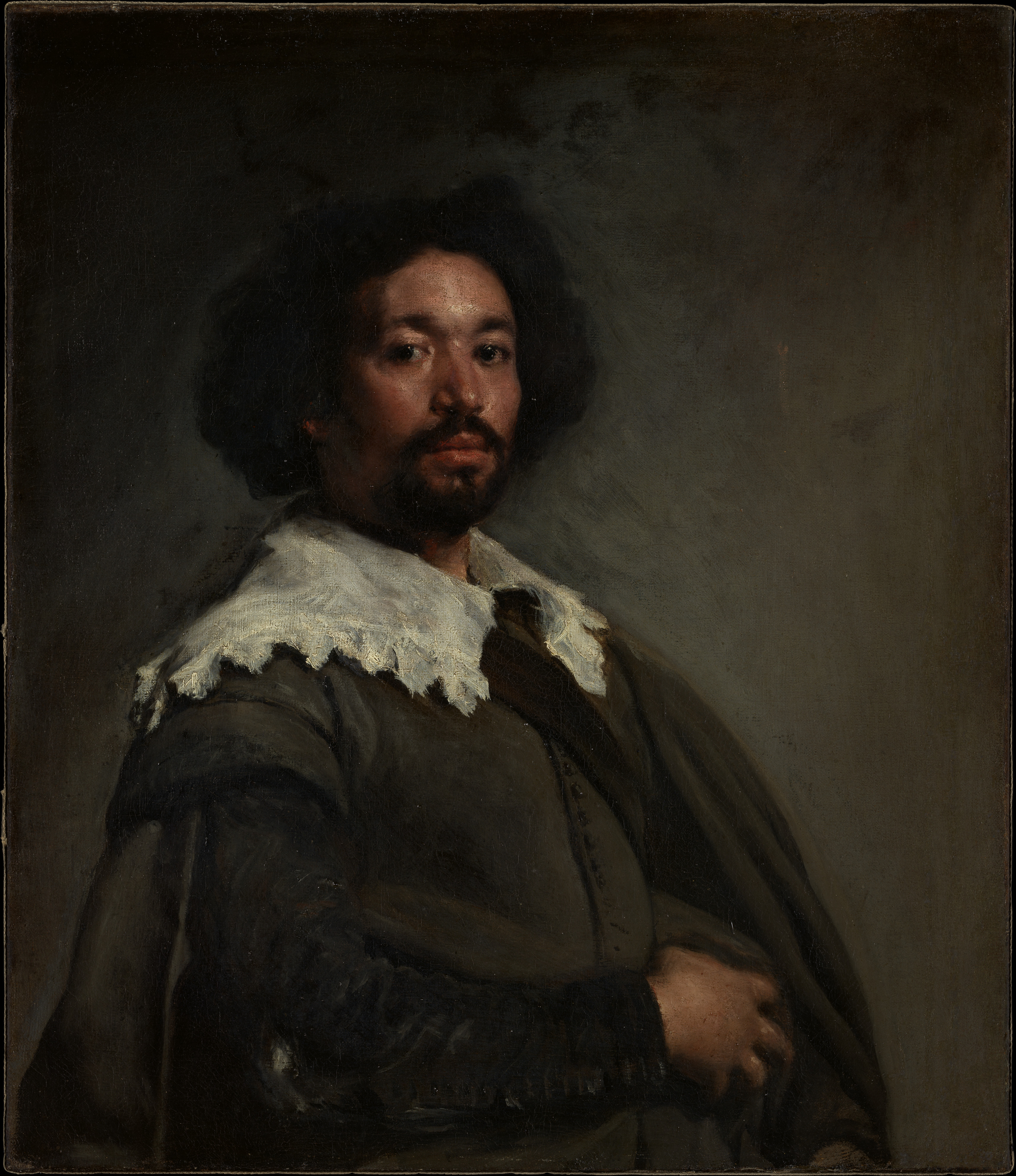
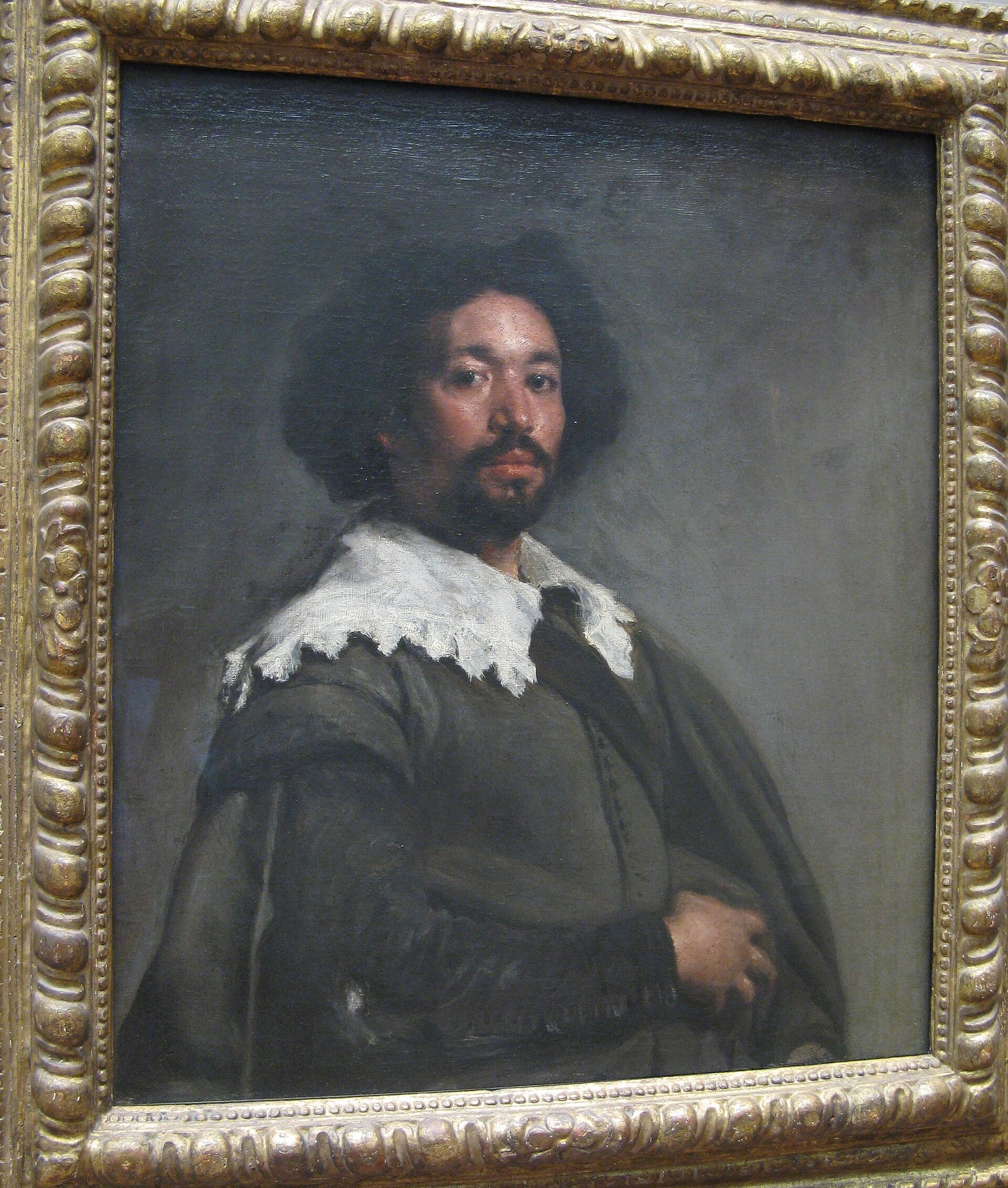
Juan de Pareja (ca. 1608-1670)
1650 · Oil on canvas
The Metropolitan Museum of Art, New York
 Spanish · 1599-1660
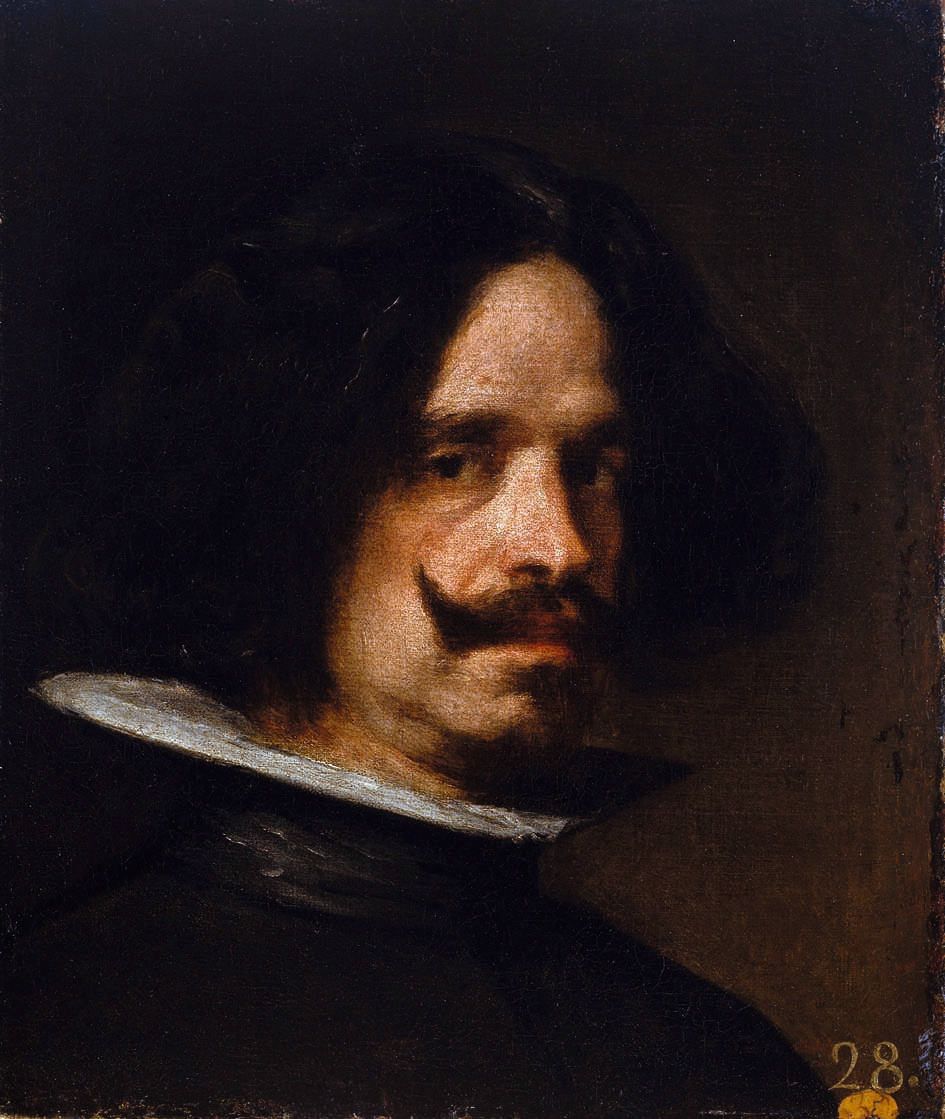
Self-portrait, oil on canvas, 45 x 38 cm, generally dated around 1650. Donated to the Real Academia de Bellas Artes de San Carlos in Valencia by Francisco Martinez Blanch in 1835 and catalogued there since. Velazquez also painted his own likeness into the far side of the canvas in Las Meninas (1656), the better-known of his two secure self-images.
Museo de Bellas Artes de Valencia (Real Academia de Bellas Artes de San Carlos)| Full name | Diego Rodriguez de Silva y Velazquez |
|---|---|
| Worked as | Painter, Court official |
| Born | baptised 6 June 1599 · Seville, Spain |
| Died | 6 August 1660 · Madrid, Spain |
| Nationality | Spanish |
| Movement | Spanish Baroque |
| In this archive | 1 artwork |
| Sources | 20 cited |
| Last verified |
About this page 1 artwork in the archive · Last verified · 20 sources cited
Velazquez painted the single most argued-over picture in Western art, held one of the most secure jobs in Europe for most of his working life, and left a corpus so small that scholars still cannot agree on its exact size. He was baptised in Seville in 1599, trained under and then married into the household of a painter who doubled as the Spanish Inquisition's official inspector of religious images, and spent thirty-seven years in the service of one king. He painted comparatively little in his final decade because the king had made him responsible for the furniture, the ceremonial arrangements and the household logistics of the Spanish court.
The thing most readers do not know: the red cross of the Order of Santiago painted on his own chest in Las Meninas, the badge that marks him as a knight in the most famous self-portrait in European painting, was not there when he finished the picture. He received the honour three years later, and, according to the earliest written account of the painting, was already dead when it was added.
This page sets out what is actually documented against what is repeated: the size of the accepted corpus and why it keeps moving, the enslaved assistant who became a free master, a papal quotation that keeps appearing without a citation, a painting that survived a palace fire by being thrown out of a window, and a portrait now sitting in a museum store room while a Spanish court decides who owns it.
Baptised 6 June in Seville.1
Apprenticeship contract with Francisco Pacheco signed, backdated to December 1610, for six years.1
Marries Juana Pacheco on 23 April; Francisco Pacheco named the Inquisition's Veedor de Pintura Sagrada in Seville the same year.18
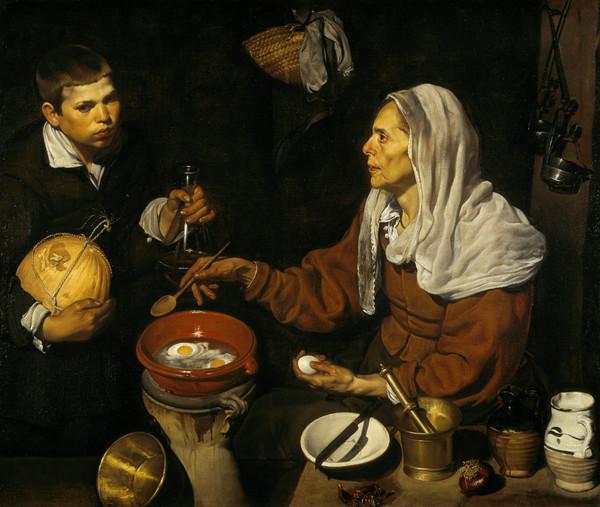
Paints An Old Woman Cooking Eggs (Old Woman Frying Eggs), an early Seville bodegon.18
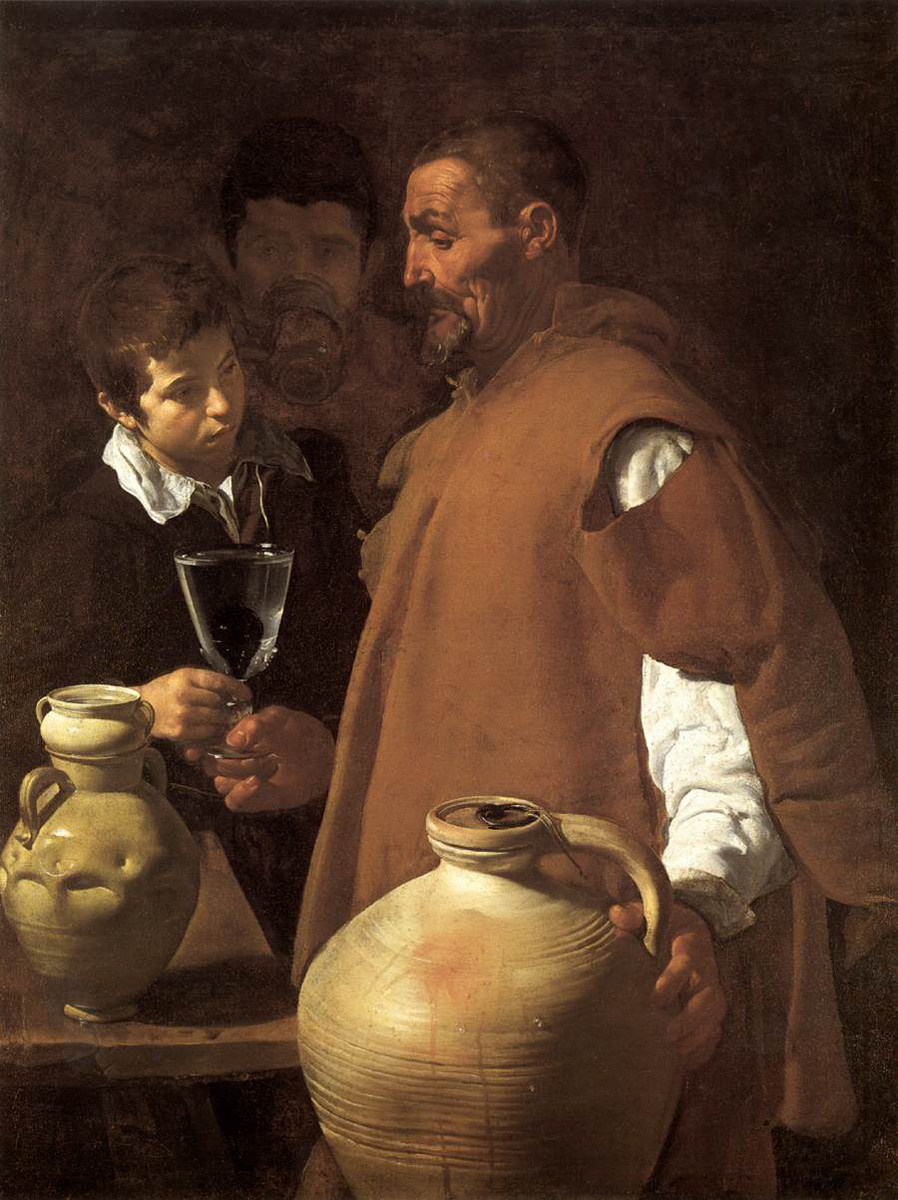
Paints The Waterseller of Seville.7
A portrait of Philip IV pleases the king; Velazquez secures a royal commission and, from 1624, a salary of 20 ducats a month in royal service.1
First journey to Italy: Venice, Ferrara, Bologna, Rome, Naples.1
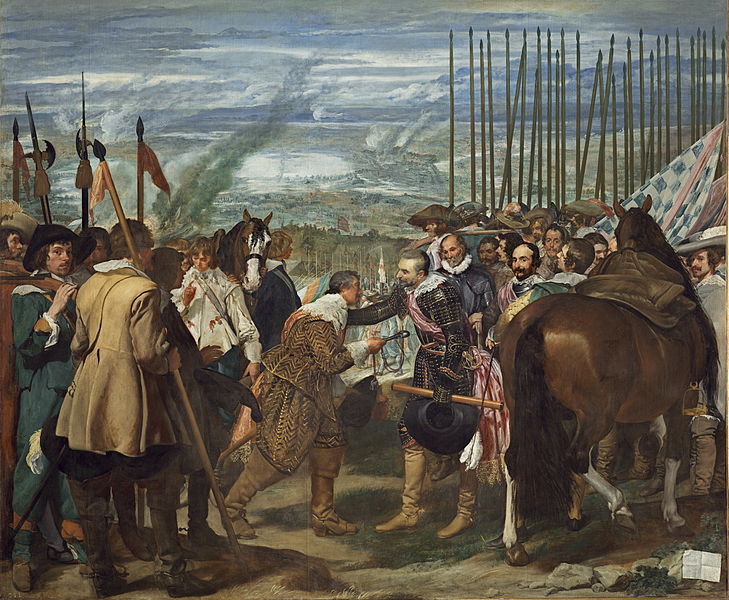
Paints The Surrender of Breda for the Hall of Realms at the Buen Retiro palace.6
Second journey to Italy, combining royal art-buying with his own work.1
Portrait of Juan de Pareja exhibited at Rome's Pantheon during a festival of the Congregazione dei Virtuosi.5
Paints Portrait of Pope Innocent X in Rome.3
Signs a conditional letter of freedom for Juan de Pareja in Rome; full freedom to follow after four years of continued lawful service.5
Appointed aposentador mayor, chamberlain of the royal household.1
Paints Las Meninas.2
Admitted, after a contested purity-of-blood inquiry, to the Order of Santiago.1
Decorates the Spanish pavilion on the Isle of Pheasants for the Franco-Spanish peace ceremony.1
Dies in Madrid; his wife Juana dies eight days later.1
Estate inventory drawn up, recording over 150 books in his library.1720
A royal inventory records the painting later called Las Meninas under the title La Familia; the name Las Meninas is in use by this date.2
Antonio Palomino publishes El Museo Pictorico y Escala Optica, the earliest substantial written account of Las Meninas, recording the tradition that the Order of Santiago cross was added after Velazquez's death.2
Fire at the Royal Alcazar in Madrid; Las Meninas is cut from its frame and thrown from a window to save it, then later restored by Juan Garcia de Miranda.2
The Waterseller of Seville, taken from the Spanish royal collection by Joseph Bonaparte, is captured by British forces after the Battle of Vitoria and passes into the Wellington Collection.7
The Prado first catalogues the painting under the title Las Meninas.2
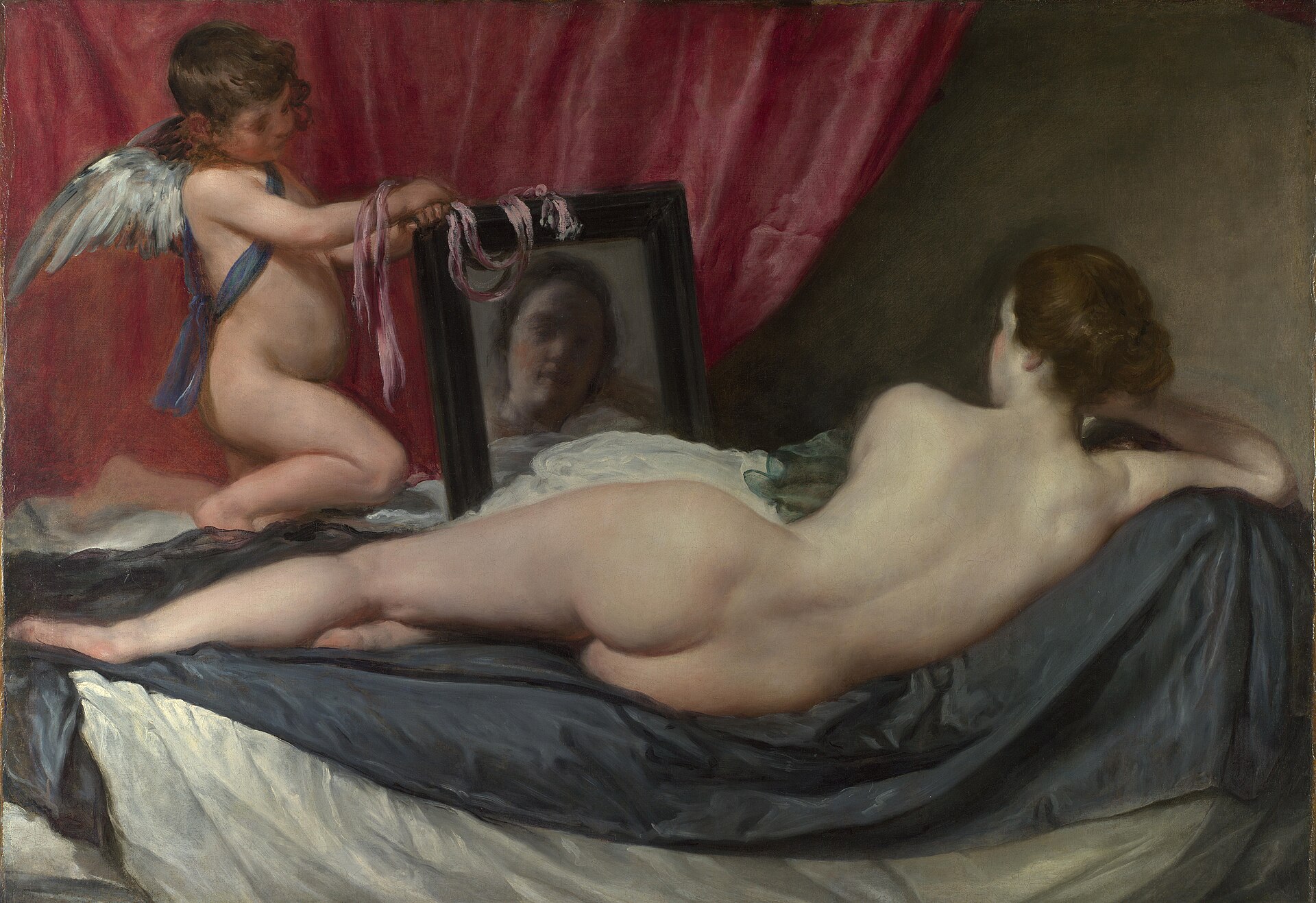
The National Gallery, London, acquires the Rokeby Venus.4
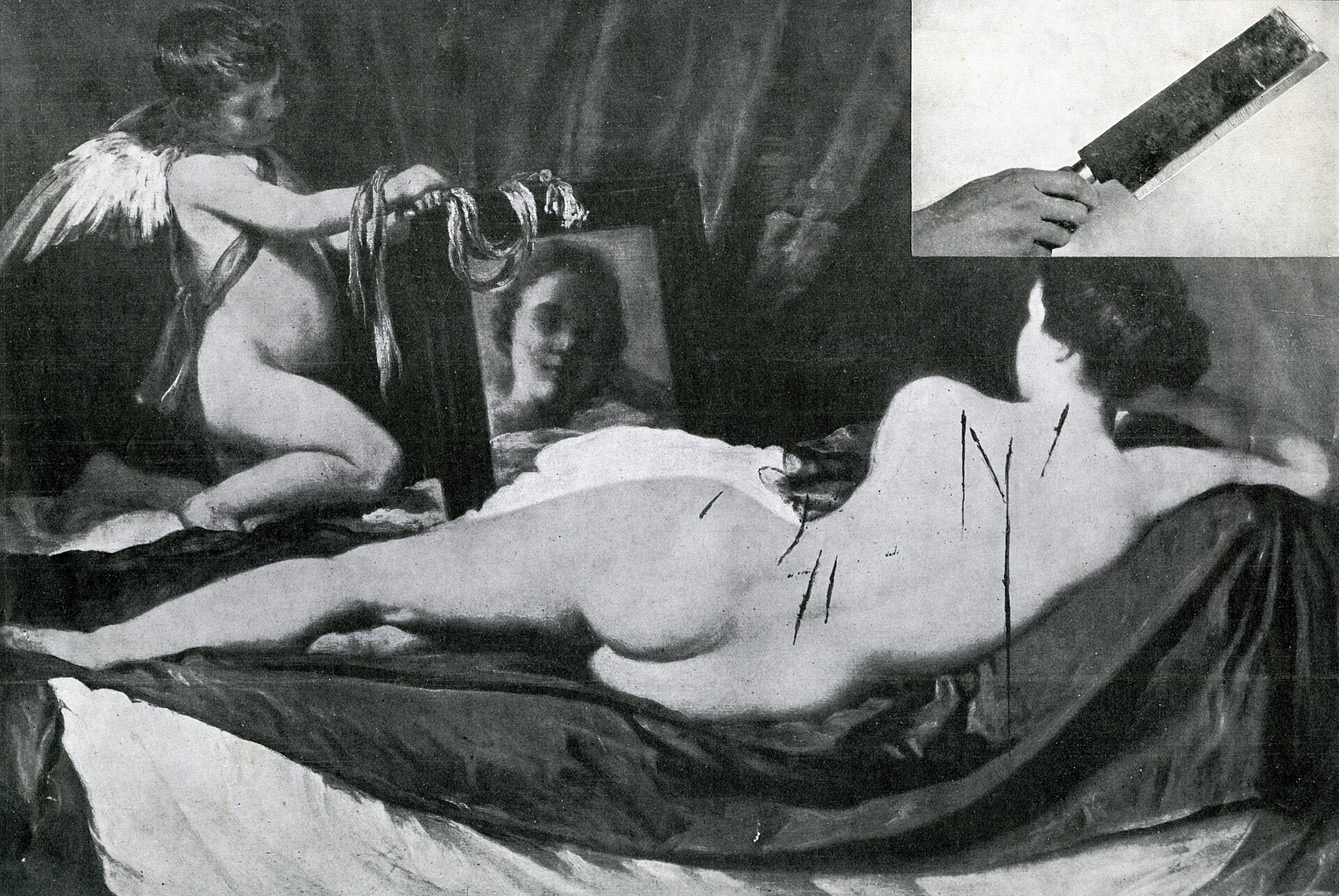
Suffragette Mary Richardson attacks the Rokeby Venus with a meat cleaver in protest at the arrest of Emmeline Pankhurst.4
Francisco Javier Sanchez Canton examines, then publishes in full, Velazquez's 1660 library inventory.17
The National Galleries of Scotland acquire An Old Woman Cooking Eggs with the aid of the Art Fund and a Treasury grant.18
Michel Foucault publishes his reading of Las Meninas in The Order of Things.2
The Metropolitan Museum of Art downgrades its Portrait of a Man to workshop of Velazquez.14
Saint Rufina sells at Sotheby's London for a total of GBP 8,420,000, the artist's auction record.10
Cleaning by conservator Michael Gallagher leads the Metropolitan Museum to reattribute Portrait of a Man to Velazquez.14
Spanish police seize a forged Portrait of Mariana of Austria attributed to Velazquez, asking price EUR 50 million, part of a EUR 76 million ring of fake Goyas and Velazquez works.15
Just Stop Oil protesters strike the protective glass of the Rokeby Venus with hammers.4
A USD 35 million portrait of Isabel de Borbon is withdrawn from Sotheby's New York before its scheduled sale.9
A disputed 1628 portrait of Philip IV is placed in the Museo del Prado's custody by court order amid a divorce dispute over its ownership.1213
Andalusia declares Saint Rufina and a companion Velazquez-attributed Immaculate Conception Assets of Cultural Interest, restricting their export or sale abroad.11
Paris prosecutors seek trial for dealer Giuliano Ruffini in the Old Masters forgery network; a Portrait of Cardinal Borgia claimed as a Velazquez is named among thirteen works the prosecution says forensic examination has established as fake.16
Velazquez's autograph works almost never come to market; nearly all of the securely accepted corpus sits in public museums. The one clear recent auction result, Saint Rufina in 2007, remains the artist's record. A far larger attempted sale, a full-length Isabel de Borbon guaranteed at 35 million dollars, was withdrawn before it reached the room in 2024 and, in the sources consulted, has not resold or been publicly resolved since. Where a Velazquez-attributed work does move outside a museum, cultural-property protection tends to follow: Spain designated Saint Rufina an Asset of Cultural Interest in 2026 specifically to stop it leaving the country.
| Date | Sale | Work | Result | Note |
|---|---|---|---|---|
| 2007 (failed sale) / 2015 | Private sale, Madrid then Seville | Portrait of Philip IV (disputed attribution, dated 1628) | Hammer Failed to sell in 2007 against a starting price of roughly EUR 2.5 million; sold privately in 2015 for EUR 750,000 With premium Not applicable - private sales, not public auctions with a published premium EUR | The same picture is now held in the Prado's storerooms under a 2026 court order pending a divorce dispute over its ownership; its attribution status has never been fully settled in the sources consulted. |
Hammer is the price at which the bidding stopped; with premium adds the fee the house charges the buyer on top. Hammer price and buyer's premium in the glossary.
| Institution | City | Holdings | Note |
|---|---|---|---|
| Museo del Prado | Madrid | The largest single collection of Velazquez's work, including Las Meninas and The Surrender of Breda (Las Lanzas). | Also currently holds, under judicial custody rather than as an acquisition, a disputed 1628 portrait of Philip IV pending a divorce case. |
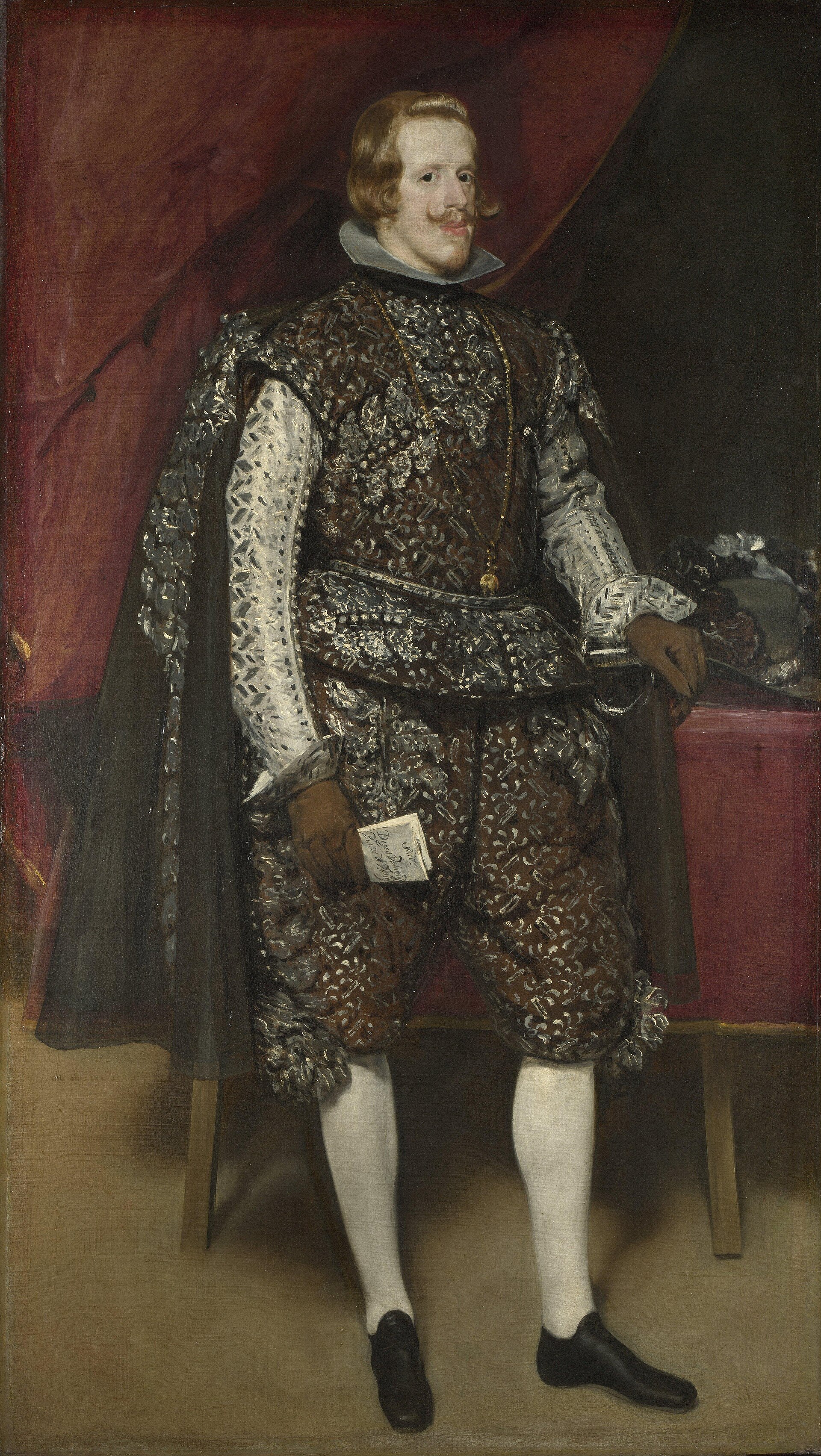
| National Gallery | London | The Rokeby Venus and Philip IV in Brown and Silver. | The Rokeby Venus has been attacked twice, in 1914 and 2023. |
| Galleria Doria Pamphilj | Rome | Portrait of Pope Innocent X. | Remains in the family collection it was painted for. |
| Metropolitan Museum of Art | New York | Portrait of Juan de Pareja and Portrait of a Man. | Portrait of a Man was downgraded to workshop status in 1979 and reattributed to Velazquez after cleaning in 2009. |
| National Galleries of Scotland | Edinburgh | An Old Woman Cooking Eggs (1618). | Acquired in 1955 with Art Fund and Treasury support. |
| Wellington Collection, Apsley House | London | The Waterseller of Seville. | Arrived in England as war booty captured from Joseph Bonaparte's baggage train after the Battle of Vitoria in 1813. |
Velazquez is not a prolific painter by the standard of his court-painter contemporaries.
Velazquez is not a prolific painter by the standard of his court-painter contemporaries. Jose Lopez-Rey's 1996 catalogue raisonne, the standard scholarly reference for the artist, catalogues 129 paintings. Other modern syntheses put the working figure lower, around 110 to 120 securely accepted canvases, reflecting continuing disagreement at the margins rather than a settled count. There is no single number that every specialist would sign.
The corpus moves in both directions. In 1979 the Metropolitan Museum of Art downgraded its Portrait of a Man to workshop status, a judgment that stood for three decades. In 2009 the museum's own conservation department, led by Michael Gallagher, cleaned the picture and removed thick, discoloured varnish and an old restoration that had made it look more finished than intended. What emerged was reattributed to Velazquez himself and shown that year in the exhibition Velazquez Rediscovered. A painting can leave the corpus and come back into it inside one museum's own storerooms.
The reverse also happens, and it is live right now. A full-length portrait of the young Philip IV, dated to 1628 and long linked to Velazquez's early years in Madrid, failed to sell in Madrid in 2007 against a starting price of roughly 2.5 million euros because of doubts about the attribution. It sold privately in Seville in 2015 for a much lower 750,000 euros. As of 2026 it sits in the Museo del Prado's storerooms under judicial order, not because the museum bought it, but because it is the subject of a divorce dispute between its two most recent private owners and a Madrid court wants it kept safe while ownership is decided.
Velazquez trained under Francisco Pacheco in Seville, apprenticed under a formal contract signed on 17 September 1611 and backdated to December 1610, for a term of six years.
Velazquez trained under Francisco Pacheco in Seville, apprenticed under a formal contract signed on 17 September 1611 and backdated to December 1610, for a term of six years. Pacheco was not, by most accounts, a distinguished painter. He was, however, a serious theorist, and in 1618, the same year Velazquez married his daughter Juana, the Inquisition's Seville tribunal named Pacheco Veedor de Pintura Sagrada, its official inspector of religious images. Pacheco held the authority to judge whether other painters' depictions of sacred subjects met the doctrinal requirements the Counter-Reformation Church set for them.
Pacheco set down his rules in Arte de la Pintura, begun in 1630, finished in 1641 and published posthumously in 1649, a treatise that combined instruction in materials and technique with a detailed iconographic rulebook for religious subjects, and which artists in Seville worked under during Pacheco's tenure as censor. Velazquez trained inside this household, under this authority, before he ever painted for the crown. Whatever independence his later style shows, his formation happened under the roof of the man Seville's church trusted to police what a picture was allowed to say.
A portrait of Philip IV in 1623 secured Velazquez a place in royal service: twenty ducats a month, plus medical attendance, lodgings and separate payment for pictures.
A portrait of Philip IV in 1623 secured Velazquez a place in royal service: twenty ducats a month, plus medical attendance, lodgings and separate payment for pictures. Later documentation records a daily allowance of twelve reales, the same figure paid to the court's barbers, and ninety ducats a year for dress. The count-duke of Olivares, the king's chief minister, promised that no other painter would portray the king and that existing portraits by others would be withdrawn from circulation, a monopoly that made Velazquez's position as much about proximity to power as about painting.
In 1652 Philip IV appointed him aposentador mayor, chamberlain responsible for the royal household's quarters, ceremonial arrangements and logistics. It was a substantial administrative office, not an honorary title, and it materially reduced the time he had to paint. His final major work, Las Meninas, was completed in 1656 while he held this post. In June 1660 he was responsible for decorating the Spanish pavilion on the Isle of Pheasants for the peace ceremony between France and Spain that sealed the marriage of the Infanta Maria Teresa to Louis XIV. He returned to Madrid, fell ill with a fever, and died on 6 August 1660. His wife Juana died eight days later.
Juan de Pareja was born around 1606 in Antequera into slavery and served in Velazquez's household and workshop; contemporary sources describe him as of mixed parentage.
Juan de Pareja was born around 1606 in Antequera into slavery and served in Velazquez's household and workshop; contemporary sources describe him as of mixed parentage. He first appears in the documentary record in 1642, witnessing legal papers for Velazquez, and he accompanied his owner to Italy on the second journey in 1649.
In Rome, on 23 November 1650, Velazquez signed a letter of freedom for Pareja. The document set a four-year conditional period before full freedom took effect, contingent on Pareja's continued lawful service; it was located by the art historian Jennifer Montagu in Rome's Archivio di Stato. Spanish law of the period barred enslaved people from practising painting, so Pareja could not have worked as an independent master until manumission changed his legal status. He went on to build his own career and remained in Madrid as a painter until his death in 1670, producing religious and portrait works including The Calling of Saint Matthew of 1661, now in the Prado, in which he painted his own likeness among the figures.
Velazquez painted Pareja's portrait shortly before the manumission, and it was shown at Rome's Pantheon in March 1650 during a festival of the Congregazione dei Virtuosi, an academy of artists Velazquez had recently joined. The picture now hangs in the Metropolitan Museum of Art. The order of events is worth holding onto without softening it: the portrait of the man Velazquez still legally owned was exhibited to acclaim in Rome months before that same man was granted his freedom.
Velazquez's second Italian journey, 1649 to 1651, combined an official mission to buy paintings and sculpture for the royal collection with his own artistic ambitions.
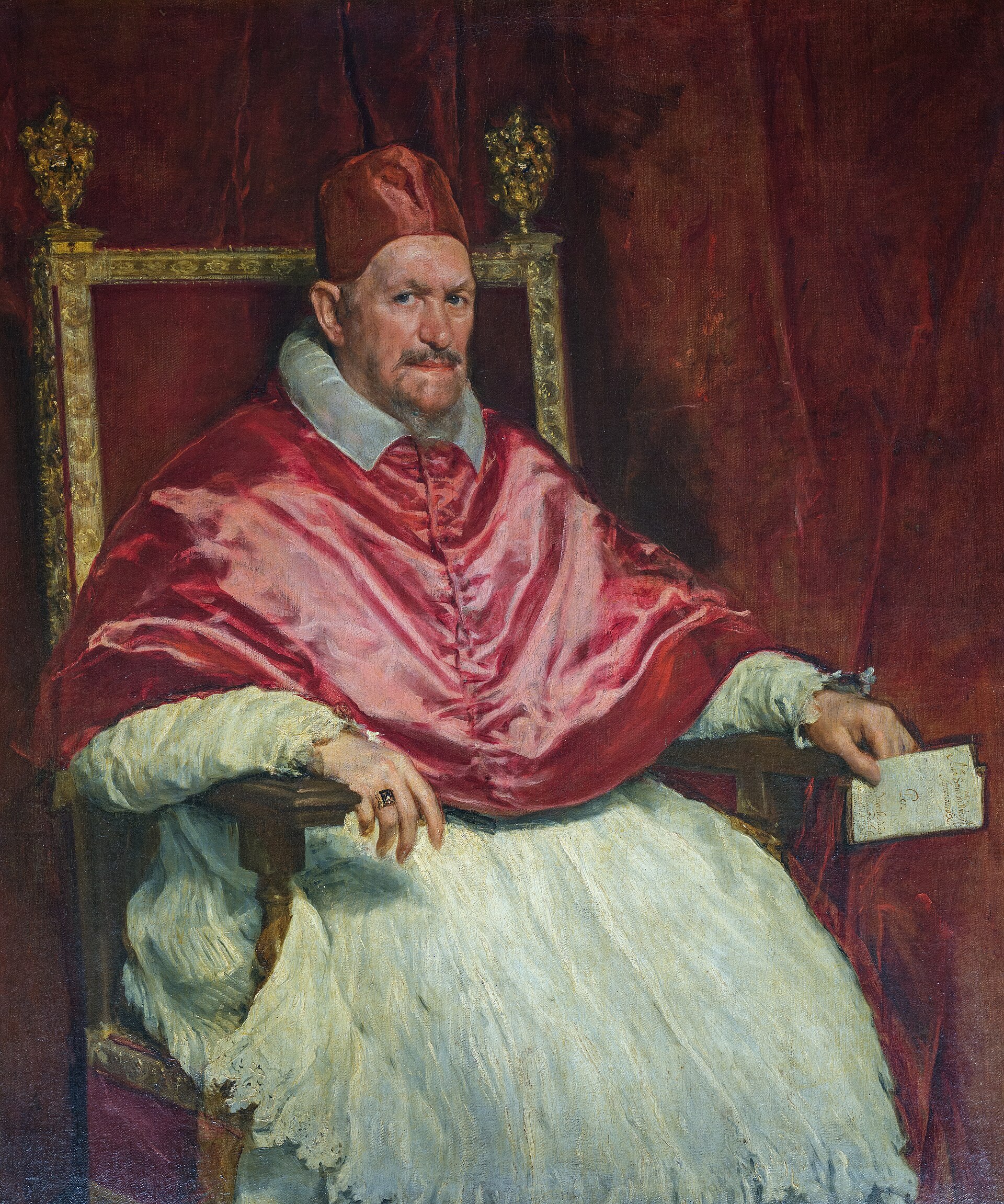
Velazquez's second Italian journey, 1649 to 1651, combined an official mission to buy paintings and sculpture for the royal collection with his own artistic ambitions. In Rome he painted Portrait of Pope Innocent X, an oil on canvas of roughly 141 by 119 centimetres, probably in the summer of 1650 based on the pope's light vestments. The picture remains in the Galleria Doria Pamphilj, the Pamphilj family's own collection, and was shown only to the pope's household for a long period after it was painted.
The pope is widely reported to have exclaimed on seeing it, e troppo vero, it is too true. The line appears constantly in the literature on the painting. It does not appear with a primary citation that this record could verify, and specialists have questioned whether the anecdote is authentic rather than a later embellishment. It is included here as reputation attached to the painting, not as a documented fact of what the pope said.
Smaller versions and copies of the composition exist, including one at the Metropolitan Museum of Art and one at Apsley House in London, and a copy attributed to Velazquez's circle hangs at the National Gallery of Art in Washington. None of these should be confused with the finished, full-size portrait in the Doria Pamphilj collection, which is the autograph work. Three centuries later Francis Bacon made more than forty-five distorted variations on the composition between the 1950s and 1960s, most famously his 1953 Study after Velazquez's Portrait of Pope Innocent X, which reworked the seated pope into a screaming figure behind falling, transparent drapery. That is Bacon's reading of the picture, not Velazquez's, and this record keeps the two apart.
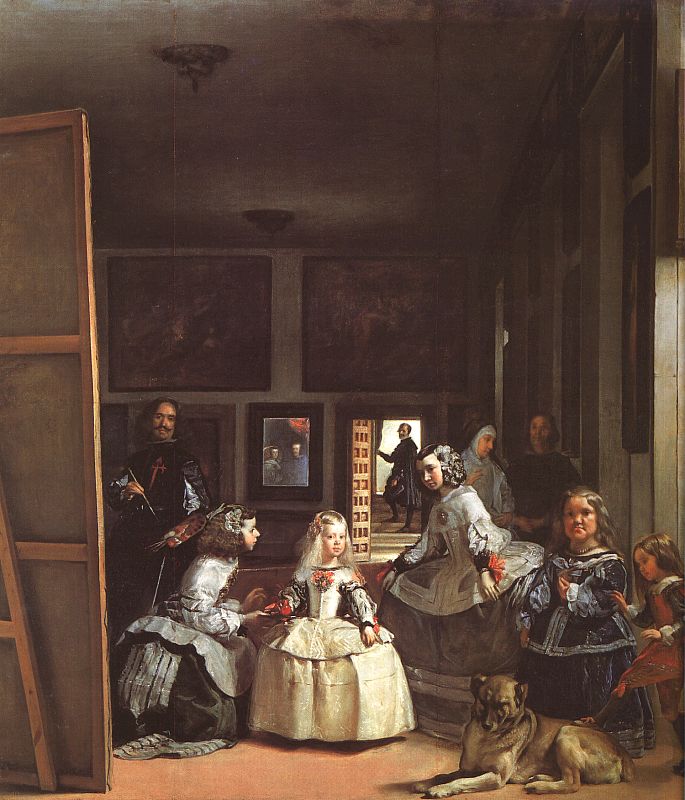
Las Meninas, oil on canvas, 318 by 276 centimetres, painted in 1656 and held by the Museo del Prado, shows the Infanta Margarita and her attendants in Velazquez's own studio in the Alcazar, with the...
Las Meninas, oil on canvas, 318 by 276 centimetres, painted in 1656 and held by the Museo del Prado, shows the Infanta Margarita and her attendants in Velazquez's own studio in the Alcazar, with the painter himself standing at a large canvas, brush in hand. On the back wall a mirror reflects the upper bodies of King Philip IV and Queen Mariana.
What the mirror actually shows, and from where, is a genuine and unresolved scholarly dispute. The dominant reading holds that the viewer occupies the position of the royal couple, who stand where we stand to be painted, and that the mirror reflects them directly. Art historians including H. W. Janson and Joel Snyder have argued instead that the reflection is not of the king and queen standing in the room at all, but of their images on the very canvas Velazquez is shown painting, which would place the viewer somewhere else entirely. Michel Foucault, in The Order of Things (1966), set biography and iconography aside and read the picture as a representation of Classical representation itself, treating it as a hinge between one European way of organising knowledge and the next. These are different questions asked of the same painting by different disciplines, and none of them has closed the argument.
The painting's own title has moved. Early royal inventories called it La Familia, The Family. By 1666 an inventory used Las Meninas. Later Spanish catalogues called it The Family of Philip IV in 1794 and 1814, and in 1747 to 1748 the sitters were misidentified as depicting a different infanta. The Prado did not settle on Las Meninas as its catalogue title until 1843. A reader tracing the painting through older sources by title alone would not always find it under the name it carries now.
In the finished picture Velazquez wears the red cross of the Order of Santiago on his chest, the mark of a knight of one of Spain's most exclusive military orders.
In the finished picture Velazquez wears the red cross of the Order of Santiago on his chest, the mark of a knight of one of Spain's most exclusive military orders. He was not admitted to the order until 1659, three years after Las Meninas was completed, and his admission required a formal investigation into his lineage under the order's purity-of-blood statutes, since any trace of Jewish, Muslim or common trade ancestry, or of manual labour in the family, could disqualify a candidate. The investigation was contested and Velazquez needed direct royal intervention to clear it.
The cross itself is later still. Antonio Palomino, whose 1724 El Museo Pictorico y Escala Optica is the earliest substantial written account of the painting and the only work to which Palomino devoted an entire separate chapter, records that Velazquez was already dead when the king ordered the cross added to the picture, and notes that some said the king painted it himself. Palomino does not claim to have witnessed this, and no contract, payment record or eyewitness account has been found to confirm who actually applied the paint. It is a documented tradition from the first serious written source on the painting, not a settled fact, and it should be reported as exactly that: a knight's badge added after the sitter's death, to a self-portrait, by a hand nobody living recorded.
On Christmas Eve 1734 a fire broke out in the Royal Alcazar in Madrid, the palace where Velazquez had lived and worked and where Las Meninas hung.
On Christmas Eve 1734 a fire broke out in the Royal Alcazar in Madrid, the palace where Velazquez had lived and worked and where Las Meninas hung. The blaze burned for days. Servants, monks and palace officials cut paintings from their frames and threw them from windows into the courtyard to save them from the flames rather than attempt to carry them out through burning corridors. Around 1,200 works are reported to have been saved this way, including Las Meninas and Titian's equestrian portrait of Charles V; more than 500 others were lost. Las Meninas itself was damaged in the fire and was restored afterward by the court painter Juan Garcia de Miranda.
The painting most written about in the history of Western art was thrown out of a burning window onto stone paving to keep it from burning. That is not incidental colour. The survival of the object a reader now studies as a settled masterpiece was, for a few hours in December 1734, a matter of which servant reached which wall first.
The Waterseller of Seville, an early bodegon of about 1618 to 1622 showing an old water seller handing a glass to a boy, belonged to the Spanish royal collection until the Napoleonic wars.
The Waterseller of Seville, an early bodegon of about 1618 to 1622 showing an old water seller handing a glass to a boy, belonged to the Spanish royal collection until the Napoleonic wars. Joseph Bonaparte, installed by his brother as king of Spain, took it and roughly 200 other paintings from the royal collection when he fled Madrid. In 1813, after the Battle of Vitoria, British forces under the Duke of Wellington captured a carriage carrying Joseph's baggage, including the paintings. Wellington took possession of the pictures, offered to return them to the restored Spanish crown, and was told to keep them as a gift when no arrangement for their return was made. The painting has remained in England ever since, now hanging in the Waterloo Gallery at Apsley House, Wellington's former London home, as part of the Wellington Collection.
The object's present location in London is therefore not a purchase, a gift from an artist, or an inheritance. It is the direct, documented result of a war and a looted royal carriage, formalised after the fact into a gift that was never reversed.
The Rokeby Venus, painted between about 1647 and 1651 and the only surviving female nude firmly attributed to Velazquez, hung at Rokeby Park in Yorkshire after John Morritt bought it in 1813 for 500...
The Rokeby Venus, painted between about 1647 and 1651 and the only surviving female nude firmly attributed to Velazquez, hung at Rokeby Park in Yorkshire after John Morritt bought it in 1813 for 500 pounds, before the National Gallery in London acquired it in 1906 with an anonymous 8,000-pound contribution from King Edward VII channelled through the newly founded National Art Collections Fund.
On 10 March 1914 the suffragette Mary Richardson attacked the canvas in the National Gallery with a meat cleaver, cutting it seven times, with the worst damage between the figure's shoulders. She stated afterward that she had tried to destroy the picture of the most beautiful woman in mythological history as a protest against the government's treatment of Emmeline Pankhurst, who had been arrested days earlier. Richardson received a six-month prison sentence, the maximum penalty then available for damaging a work of art. Helmut Ruhemann, the National Gallery's chief restorer, repaired the canvas.
The painting has been targeted again since. On 6 November 2023, Just Stop Oil protesters struck its protective glass with hammers. The painting is, by a margin of more than a century, the most politically attacked object in this record, targeted twice for reasons that have nothing to do with its subject and everything to do with where it hangs and how much attention striking it commands.
Velazquez's autograph paintings almost never reach the open market; nearly the entire securely attributed corpus sits in museums.
Velazquez's autograph paintings almost never reach the open market; nearly the entire securely attributed corpus sits in museums. The clearest recorded sale is Saint Rufina, sold at Sotheby's London on 4 July 2007 for a total of 8,420,000 pounds against an estimate of 6 to 8 million pounds, bought by the Focus-Abengoa Foundation of Seville, the painter's birthplace. Sources consulted for this record give only the combined total; hammer price and buyer's premium are not itemised separately in them. The sale set, and as of the sources checked here still holds, the world auction record for the artist.
The picture's story continued into the present. In May 2026 the regional government of Andalusia declared Saint Rufina, together with a companion Velazquez-attributed Immaculate Conception, also owned by that foundation (renamed Focus-Loyola since the 2007 sale), an Asset of Cultural Interest, adding it to the General Catalogue of Andalusian Historical Heritage. The declaration followed public concern that the foundation's parent company, Abengoa, in financial difficulty, might prompt a sale of the paintings abroad. The designation restricts export and sale without government notification regardless of what a buyer might offer.
The largest attempted Velazquez sale of recent years did not happen. A full-length portrait of Queen Isabel de Borbon, held by a private American family trust since 1978 and never previously sold at auction, was consigned to Sotheby's New York with a 35 million dollar guarantee for its Old Masters sale of 1 February 2024, alongside its pendant, Philip IV in Black, now in the Prado. Sotheby's withdrew the picture from the catalogue in early January 2024, citing ongoing discussions among the consignors; no further sale or public resolution has been found in the sources consulted. A 35 million dollar Velazquez that would have roughly doubled the artist's auction record simply did not go under the hammer, and it is not clear from the public record whether or when it will.
In February 2023 Spanish police in Valencia seized five forged Old Master paintings, four attributed to Goya and one, a fake Portrait of Mariana of Austria, attributed to Velazquez, offered for sale...
In February 2023 Spanish police in Valencia seized five forged Old Master paintings, four attributed to Goya and one, a fake Portrait of Mariana of Austria, attributed to Velazquez, offered for sale together for more than 76 million euros. The false Velazquez alone carried an asking price of 50 million euros; the genuine Portrait of Mariana of Austria hangs in the Prado. The forgeries were accompanied by fabricated supporting documentation designed to give them a false provenance. Leading Spanish art experts confirmed the paintings were fakes; the suspects were questioned but, in the sources consulted, had not been arrested.
Separately, a painting catalogued as Portrait of Cardinal Borgia and claimed to be by Velazquez has been named among works swept into the long-running international investigation into the dealer Giuliano Ruffini, which began with the 2016 seizure of a supposed Lucas Cranach the Elder from the Prince of Liechtenstein's collection and went on to implicate institutions including the Louvre, the National Gallery in London and the Metropolitan Museum. As of 2 September 2026, Paris prosecutors were seeking to send Ruffini to trial for commercial deception and money laundering, and named the Borgia portrait among thirteen works the prosecution says forensic examination, by the French national museums' own laboratory at the Louvre and outside specialists including James Martin's Orion Analytical and Gunnar Heydenreich of the Cranach Digital Archive, had already established as fakes. Unlike the Mariana of Austria case above, this one is reported in the sources consulted as resolved rather than still open.
Twelve days after Velazquez's death, on the request of his executor and friend Gaspar de Fuensalida, keeper of the royal records, and of his son-in-law Juan Bautista Martinez del Mazo, a Madrid...
Twelve days after Velazquez's death, on the request of his executor and friend Gaspar de Fuensalida, keeper of the royal records, and of his son-in-law Juan Bautista Martinez del Mazo, a Madrid notary drew up a full inventory of his and his wife's possessions. It records more than 150 books, a substantial library for a painter of the period. The subjects were not devotional or literary in the main; they were the working library of a court intellectual, including architectural treatises by Vitruvius, Alberti and Serlio, works on mathematics, geometry and perspective, military engineering, natural philosophy, anatomy, astronomy, classical authors and art theory.
The inventory was first examined by the scholar Francisco Javier Sanchez Canton in 1925 and published by him in full in 1942. It is direct, documentary evidence, not inference, of what Velazquez actually owned and, by extension, of the intellectual world he worked inside: a painter whose own shelves held the geometry and architectural theory that underpin the spatial construction his paintings are famous for, alongside the theology and iconographic material his training under Pacheco had already given him.
Painter; Court official. 1599-1660.
Born baptised 6 June 1599, Seville, Spain; died 6 August 1660, Madrid, Spain.
Fake Portrait of Mariana of Austria, seized Valencia 2023. Spanish police seized five forged Old Master paintings offered together for more than EUR 76 million, four attributed to Goya and one, asking EUR 50 million, to Velazquez, purporting to be Portrait of Mariana of Austria (the genuine painting hangs in the Prado). The fakes came with fabricated supporting documentation intended to establish a false provenance.
Museo del Prado (Madrid); National Gallery (London); Galleria Doria Pamphilj (Rome); Metropolitan Museum of Art (New York); National Galleries of Scotland (Edinburgh); Wellington Collection, Apsley House (London).
Velazquez's autograph works almost never come to market; nearly all of the securely accepted corpus sits in public museums. The one clear recent auction result, Saint Rufina in 2007, remains the artist's record.
What became of the USD 35 million Isabel de Borbon portrait after its withdrawal from Sotheby's in January 2024. No subsequent sale or public resolution was found in the sources consulted.
When the same object returns to a saleroom the price series looks like an index of the object.
8 min read
Of 187 auction results in this archive, 106 state a currency and they use sixteen different descriptions of it.
11 min read
Ninety-seven ownership links in this archive move an object because someone died.
9 min read
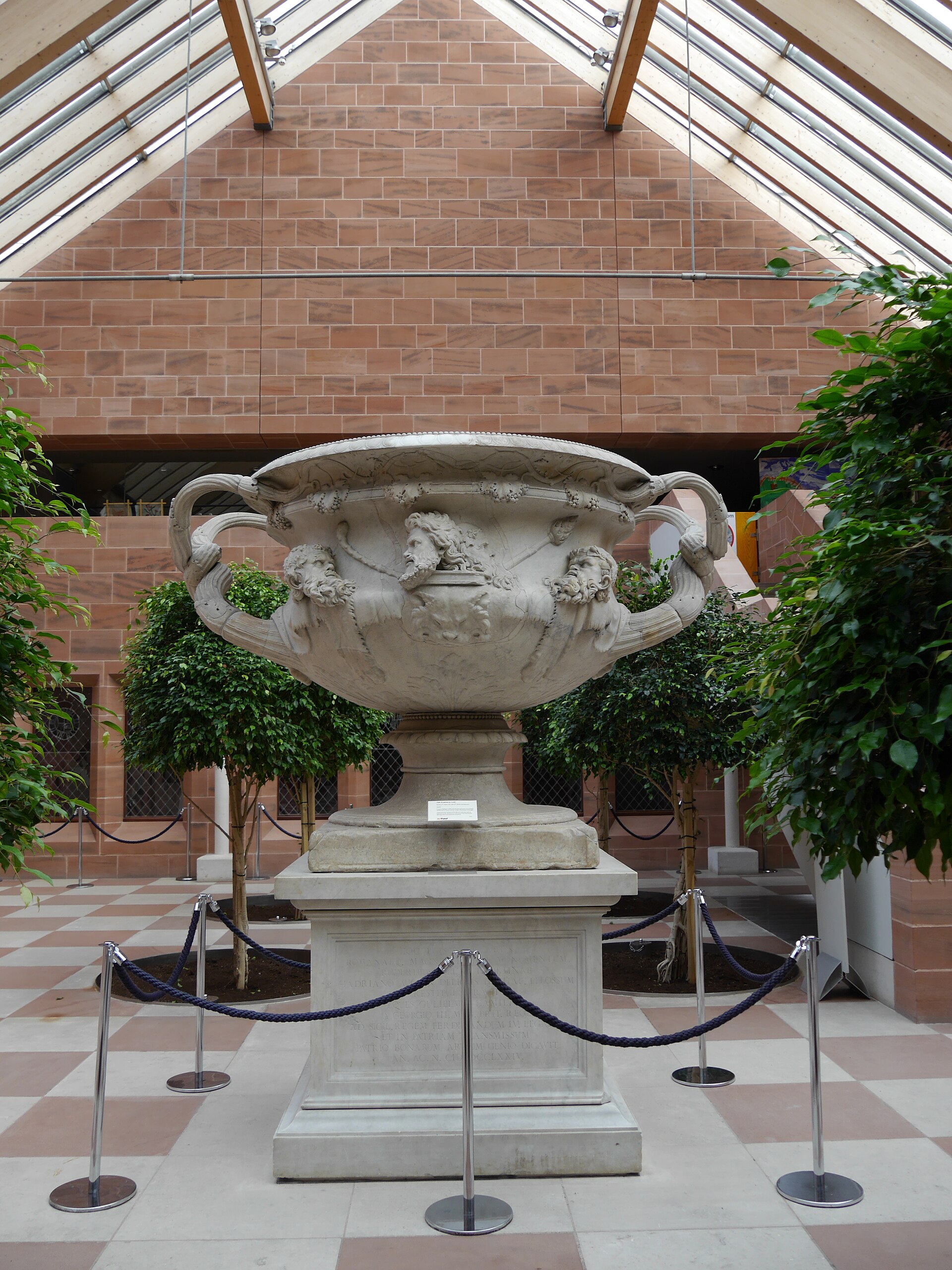
Across 291 objects the recurring names in a provenance line are dealers, not collectors.
9 min read
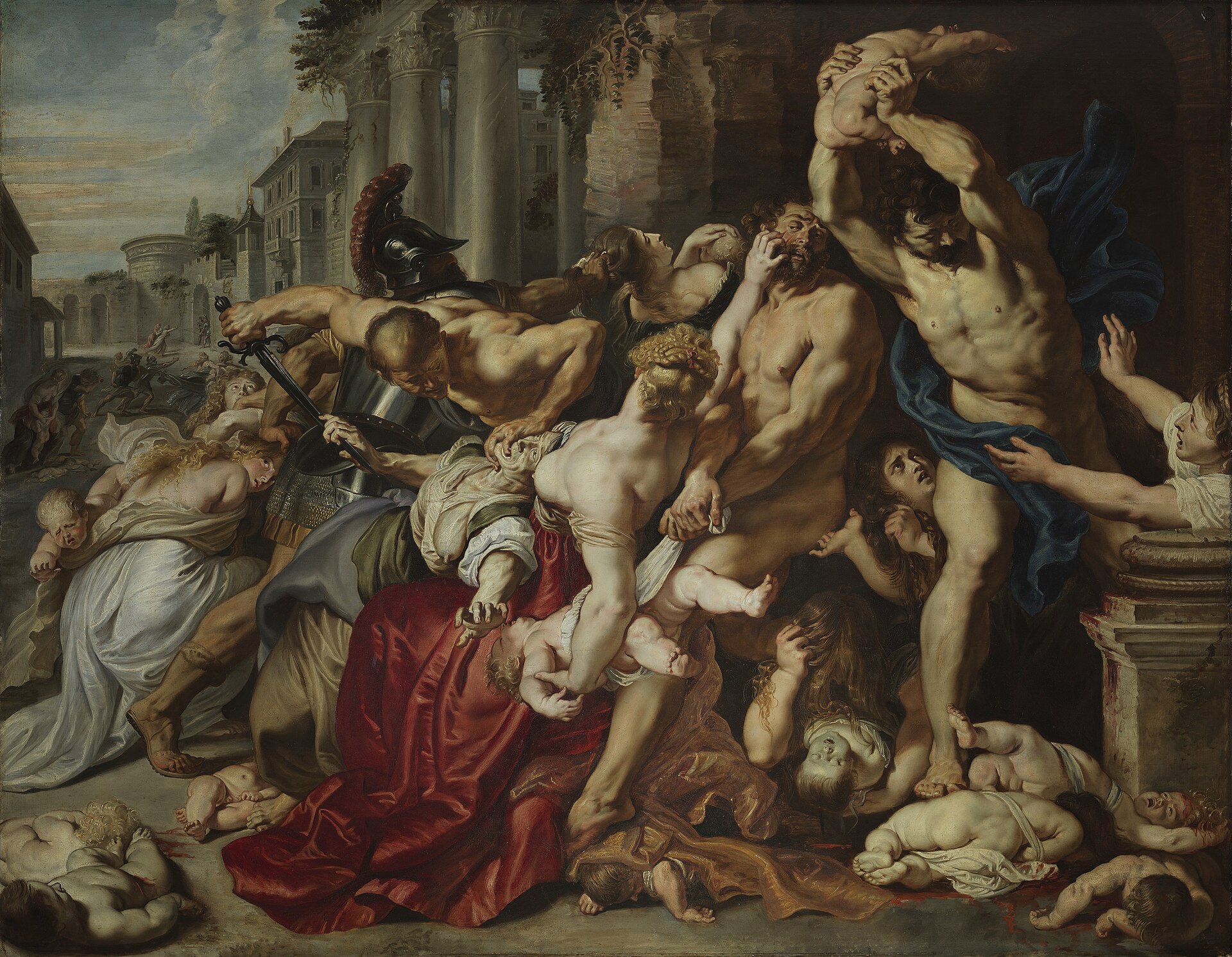
Four auction records in this archive were set by a buyer who took the object into a museum within seven years.
10 min read
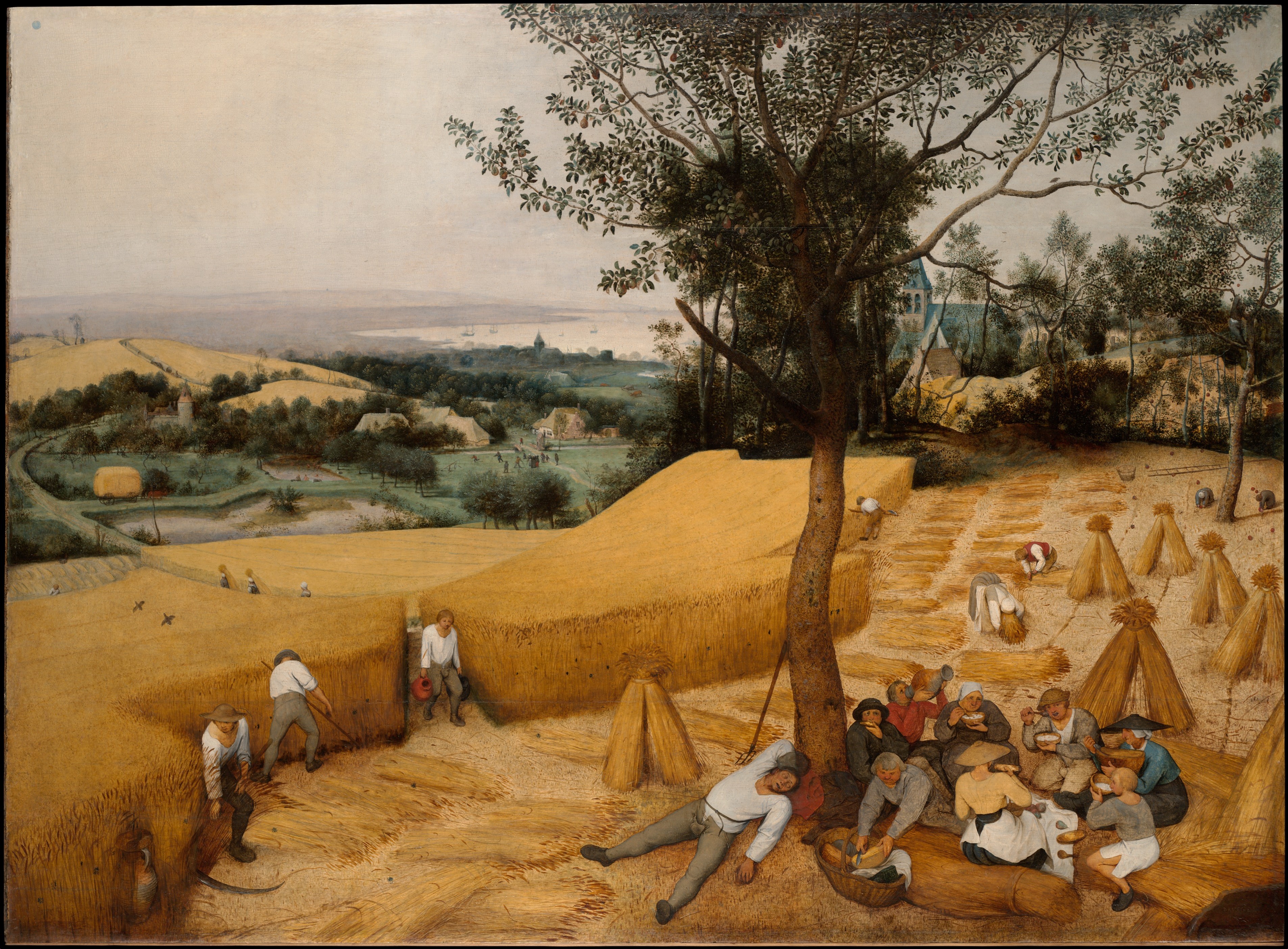
Thirty-two objects in this archive were bought on the income of six named endowment funds, and in every case the person named had...
10 min read
Fourteen records show the underbidder sets the hammer price and is almost never named.
10 min read
Across 126 years of sales in this archive the winning bidder is repeatedly not the owner.
11 min read
Last verified
One artwork and its story every Tuesday, with the picture: who owned it, what it made, and what closes soon in the exhibition calendar. No promotion, and nothing we cannot cite.
We send one email to confirm the address and keep nothing else. Every letter carries a one-click unsubscribe. How we handle your data.