The name that appears in more than one chain
Across 291 objects the recurring names in a provenance line are dealers, not collectors. And in one chain here the same surname is two different men in consecutive links.
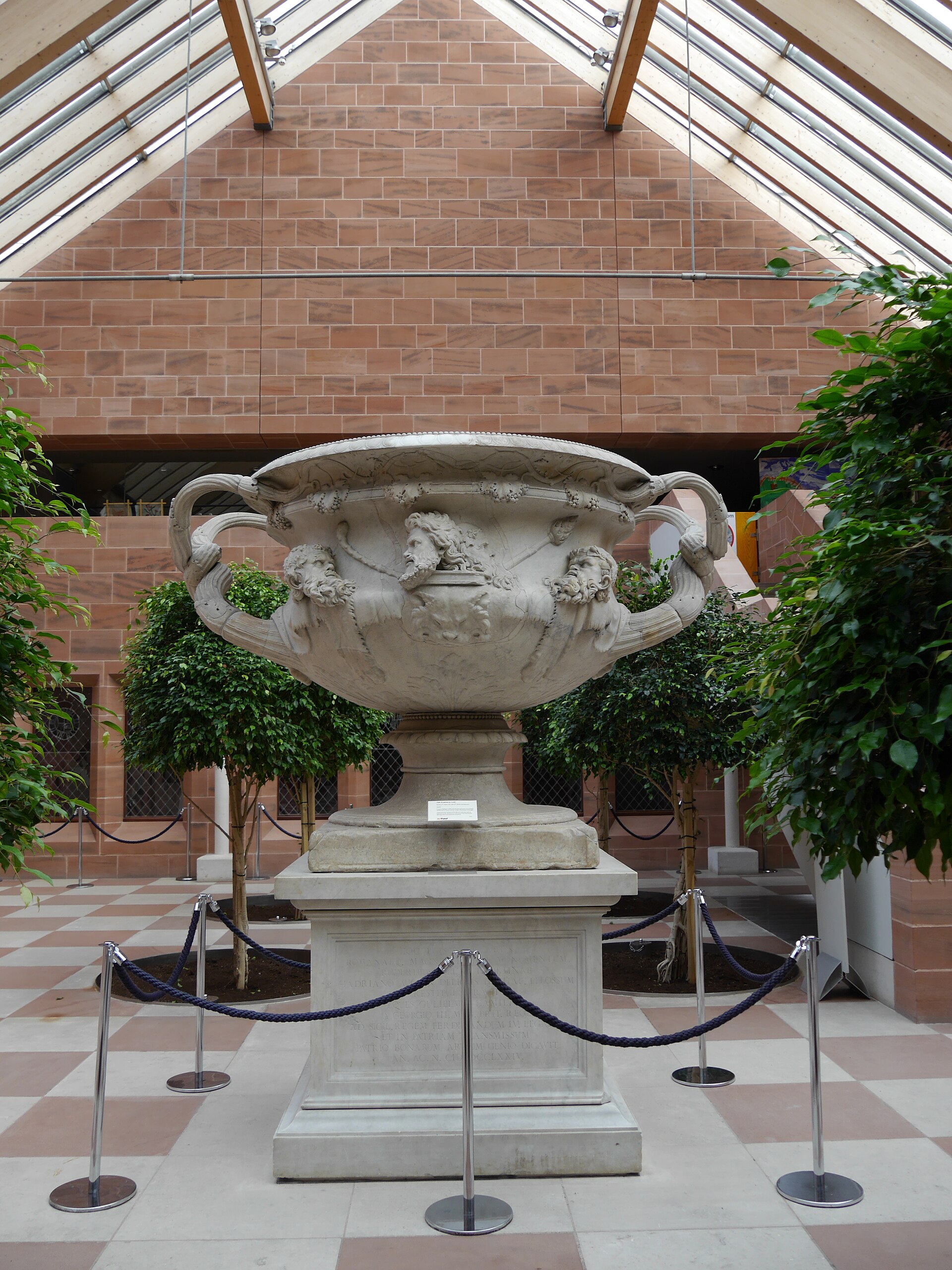
Records in this piece: The Warwick Vase, The Portland Vase, Juan de Pareja (ca. 1608-1670), Lion dit "de Monzon", Helmet all'Antica
On this page 6 sections
ContentsClose
In short
- Across 291 objects and 2,033 ownership links, only twenty-four names appear in three or more separate chains. Most of them are firms and dealers rather than private collectors, because a dealer handles many objects and a collector handles few.
- A recurring name is the only node in a provenance line you can cross-check against a different object. That makes it the most useful entry in a chain for diligence, and the most dangerous one to match carelessly.
- The Warwick Vase carries two unrelated men called Hamilton in consecutive links: Gavin Hamilton the excavator and dealer, and Sir William Hamilton the collector who bought from him.
- The dealers who recur here do not stay inside one material. Duveen appears in six of our records across five different object types. The exception is the musical instrument trade, where W. E. Hill and Wurlitzer each appear four times and never outside instruments.
Only twenty-four names appear in three or more chains in this archive
We hold 291 objects and 2,033 recorded ownership links, and when we ask which personal or firm names appear in three or more separate chains, the answer is twenty-four. That is a small number, and it is small for a reason that is structural rather than accidental. Most people who own an important object own one important object. A provenance line is mostly made of names that occur exactly once in the whole corpus and can never be checked against anything else in it.
The names that do recur are dominated by the trade. Duveen appears in six of our records, Colnaghi in six, Knoedler in four, W. E. Hill in four, Wurlitzer in four, Yamanaka in three. The private collectors who recur are the very large ones, and they recur less: Pierpont Morgan in six, Henry Walters in four, Sir William Hamilton in three, Mariano Fortuny in three. A dealer passes hundreds of objects through their hands in a career and a collector passes dozens, so the trade is over-represented in any archive of ownership by simple arithmetic.
This has an immediate consequence that we think is under-appreciated. If you are checking a provenance line and you want to test any part of it against independent evidence, the dealer is very often the only link in it that appears anywhere else. Everything either side of that name is unique to the object.
A recurring name is the only cross-checkable node in a chain
A provenance line is a chain of assertions, and most of its links cannot be tested from outside the object's own file. A named collector who owned the thing between 1840 and 1871 either appears in the literature on that object or does not appear at all. There is nothing to triangulate with.
A dealer is different. A dealer has stockbooks, day books, photographic archives, correspondence and, in several well-known cases, an institutional archive that scholars have already indexed. If the same firm appears in the chain of an object you can consult, you have a way in: you can find out what their numbering looked like in that decade, what their labels looked like, whether they were dealing in that material at all at that date. We have written elsewhere about what a stockbook can prove and where it stops, and the short version is that it proves possession and rarely proves title. Even so, it is evidence that exists in a place other than the object's own dossier, and in provenance work that is rare enough to be valuable.
So the recurring name is the load-bearing part of a chain for diligence purposes, which is exactly why it deserves more suspicion than it usually gets.
In one chain here the same surname is two different men
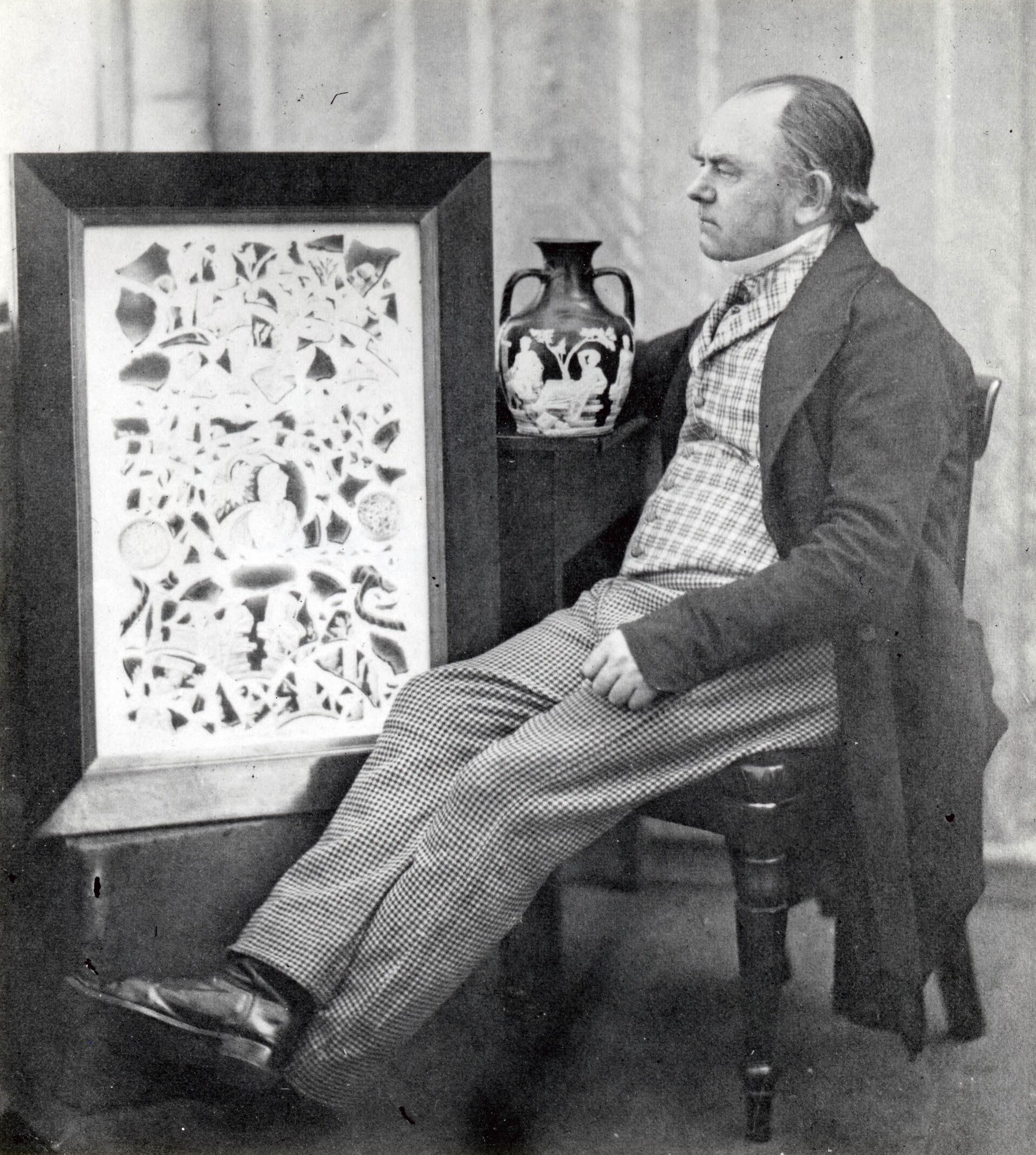
The Warwick Vase is the case that should be pinned above the desk of anyone matching provenance records. Its chain reads, in consecutive links, that Gavin Hamilton found the vase in fragments while digging the silts of the Pantanello at Hadrian's Villa near Tivoli, and that Sir William Hamilton then purchased those fragments from him and commissioned the restoration, carried out between 1772 and 1774 by Grandjacquet to designs by Piranesi, using newly cut marble for the missing parts. Glasgow Museums dates the excavation to 1769 and 1770; the Glasgow Cultural History account puts the discovery in 1771. We have not been able to reconcile those, and the distinction does not affect the point below.
These are two different men, and the dates settle it. Gavin Hamilton, 1723 to 1798, was a Lanarkshire-born painter of history subjects who worked in Rome as a dealer and archaeologist. Sir William Hamilton, 1730 to 1803, was the British ambassador to the Kingdom of Naples from 1764 to 1800, an antiquarian and a volcanologist. The relationship between them in this transaction is the ordinary one between a dealer and a customer. Sir William then gave the restored vase, rather than selling it, to his nephew George Greville, Earl of Warwick, after failing to sell it to the British Museum, and it stood at Warwick Castle for nearly two centuries until Glasgow Museums bought it in 1979.
Collapse those two links on the surname and the chain acquires a fictitious continuity: one Hamilton who found the object and kept it for five years before passing it to his nephew. The dealer disappears, the sale disappears, and with them the whole question of what was paid and what was restored on whose instruction. It is a small error that removes the most informative event in the sequence.
The recurring dealers do not stay inside one material
We expected, when we started counting, that the recurring dealers would each sit inside a single category and the recurring collectors would range across several. The data says otherwise, and it is worth publishing the correction rather than the hypothesis.
| Name | Records | Object types crossed | Kind |
|---|---|---|---|
| Duveen | 6 | 5 | Dealer |
| Colnaghi | 6 | 3 | Dealer |
| Pierpont Morgan | 6 | 5 | Collector |
| Knoedler | 4 | 3 | Dealer |
| Henry Walters | 4 | 3 | Collector |
| W. E. Hill | 4 | 1 | Dealer, instruments only |
| Wurlitzer | 4 | 1 | Dealer, instruments only |
| Yamanaka | 3 | 3 | Dealer |
| Sir William Hamilton | 3 | 3 | Collector |
| Mariano Fortuny | 3 | 3 | Collector |
Duveen crosses five object types in six records: a carpet, an Iznik dish, sculpture, two pieces of French furniture and a piece of goldsmith's work. Colnaghi crosses paintings, prints and photographs. So the great dealers were generalists, and the idea that the trade sorts itself neatly by material does not survive contact with the corpus.
The one clean exception is instruments. W. E. Hill and Wurlitzer appear four times each and never outside musical instruments, and they overlap on the same objects. That is a real feature of the violin trade rather than a coincidence: it is a small closed market with its own certification culture, in which a handful of firms have authenticated and sold the same instruments to each other for a century. If your object is a violin, the recurring name in its chain is more informative than usual, because the population of firms it could be is very small.
How to use a recurring name without being caught by it
Match on the person, not on the string. That sounds obvious and it is the failure mode we see most often, because provenance data is usually stored as free text and the obvious way to search free text is to search for a surname. Before you treat two occurrences as the same party, check the dates against that person's life, check the place, and check whether they dealt or collected in that material at all. The Warwick Vase would fail all three tests if you tried to make its two Hamiltons into one man.
Then be careful in the other direction, because a firm name is not stable over time either. A house that traded for a century under one name may have had four generations of proprietors, several changes of specialism and, in at least one famous instance in these pages, an ending that retrospectively colours everything the name touches. A provenance link reading Knoedler in 1910 and a provenance link reading Knoedler in 2005 are the same string and are not the same evidence, and treating them as equivalent in either direction is an error. The first is a serious old master dealership at its height; the second sits inside a period the firm did not survive.
What we would say to anyone building a chain is this. Note every name that appears more than once in your own holdings, because that is your only cross-checkable material, and record why you think two occurrences are the same party rather than just that they match. We do not always know. Where the sources conflict, as they do over what James Byres actually did to the Warwick Vase, the honest entry records the conflict and leaves the question open rather than picking the reading that makes the chain tidier.
Why this archive is free to read
We do this for everyone who loves art. The people who have studied it for years, and the people who just stopped to look. Iconotheca exists so that what we learn belongs to all of them.
Nobody pays us for this. No ads, no sponsors, no commercial interest. These works belong to all of us, and we would rather share them with as many people as we can than keep them to ourselves.
If it gave you something today, tell us to keep going. Follow us, leave a like, or write a positive comment. We read every one, and they are what keeps us going.
Questions
Arithmetic. A dealer handles many objects over a career and a collector handles comparatively few, so any archive of ownership over-represents the trade. In this archive of 291 objects, only twenty-four names appear in three or more separate chains, and most of them are firms.
Because it is usually the only link in a chain that can be tested against evidence held somewhere other than the object's own file. Dealers leave stockbooks, day books, photographic archives and correspondence; a private owner who appears once leaves nothing to triangulate with.
No. Gavin Hamilton was a Scottish painter who worked in Rome as an excavator and dealer, and he found the Warwick Vase in fragments at Hadrian's Villa in 1769. Sir William Hamilton was the British envoy at Naples, and he bought the fragments from Gavin and paid for the restoration. They occupy consecutive links in the same chain.
Not the large ones. Duveen appears in six records here across five object types and Colnaghi across three. The clear exception is the musical instrument trade, where W. E. Hill and Wurlitzer each appear four times and never outside instruments, which reflects how small and closed that market is.
It is useful rather than reassuring. It gives you somewhere to check, which is valuable. But a firm name spanning a century covers several generations and changes of practice, so the same name at two dates is not the same evidence and should not be read as interchangeable.
Sources
- 1Glasgow Museums Collections Online, catalogue record for the Warwick Vase, id 40016. The holding institution's own record. Source for the second-century date, the marble, the overall dimensions of 2940 x 1950 x 1950 mm, Gavin Hamilton's excavation in the silts of Lake Pantanello in 1769 to 1770, the restoration of 1772 to 1774 by Grandjacquet to designs by Piranesi for Sir William Hamilton, the gift to George Greville, Earl of Warwick, and the purchase by Glasgow Museums in 1979 through the Burrell Trustees. collections.glasgowmuseums.com/mwebcgi/...
- 2Glasgow's Cultural History, 'Gavin Hamilton (1723-98) and the Warwick Vase'. Source for Gavin Hamilton's dates and his work as a painter, art dealer and archaeologist in Rome, and for the statement that he sold the vase to Sir William Hamilton (1730-1803), British Ambassador to the Kingdom of Naples from 1764 to 1800. This source dates the discovery to 1771, against 1769 to 1770 in the Glasgow Museums record. glasgowsculturalhistory.com/the-fine-arts/...
- 3Dictionary of National Biography, 1885-1900, entry for Gavin Hamilton, via Wikisource. Period reference work on Hamilton's career in Rome as a painter and dealer in antiquities. en.wikisource.org/wiki/...
- 4The Metropolitan Museum of Art, Open Access API, object 437869, Velazquez, Juan de Pareja, accession 1971.86. Consulted for the credit line and object data; the picture's chain includes Sir William Hamilton's purchase from the Ruffo family in 1776 and the Hamilton sale at Christie's in 1801. collectionapi.metmuseum.org/public/...
- 5Musee du Louvre, collections database, Lion dit 'de Monzon', Departement des Arts de l'Islam, OA 7883. Source for the object's identification, date and department. collections.louvre.fr/en/...
- 6The Metropolitan Museum of Art, collection record for Helmet all'Antica, accession 04.3.202, Rogers Fund, 1904, Department of Arms and Armor. metmuseum.org/art/...
- 7The Metropolitan Museum of Art, Open Access API, object 21974, the helmet all'antica. Consulted for the medium, dating and public-domain status of the museum's photograph. collectionapi.metmuseum.org/public/...
More in Collectors and Collections
The partThe credit line names the collector, and the accession number tells you what happened
Morgan died in March 1913, and the Metropolitan credits him with gifts made in 1917. The credit line names the collector.
The Longest Ownership Links Here Belong to Owners That Were Not People
The 28 longest institutional ownership links in this archive run 7,434 years between them. Three end in a completed sale.
The Name in the Buyer's Column Is Often an Employee
Across 126 years of sales in this archive the winning bidder is repeatedly not the owner.