The link that a death makes
Ninety-seven ownership links in this archive move an object because someone died. They are the longest links we hold, they carry no price, and they are often the best documented.
Records in this piece: Juan de Pareja (ca. 1608-1670), The Unicorn Tapestries, The Lycurgus Cup, The Aldobrandini Tazze, Codex Leicester
On this page 7 sections
ContentsClose
In short
- Of 2,033 ownership links across the 291 records in this archive, 97 move an object because an owner died. Almost none of them carries a price, for the simple reason that no price was paid.
- A link created by a death holds the object for a median of 29 years. A link created by a purchase holds it for 8. Measured across every link here that carries both a start year and an end year.
- The documentary evidence improves at the exact moment the price record goes dark. A will and a probate inventory are drafted to survive a challenge, which is more than most bills of sale were ever asked to do.
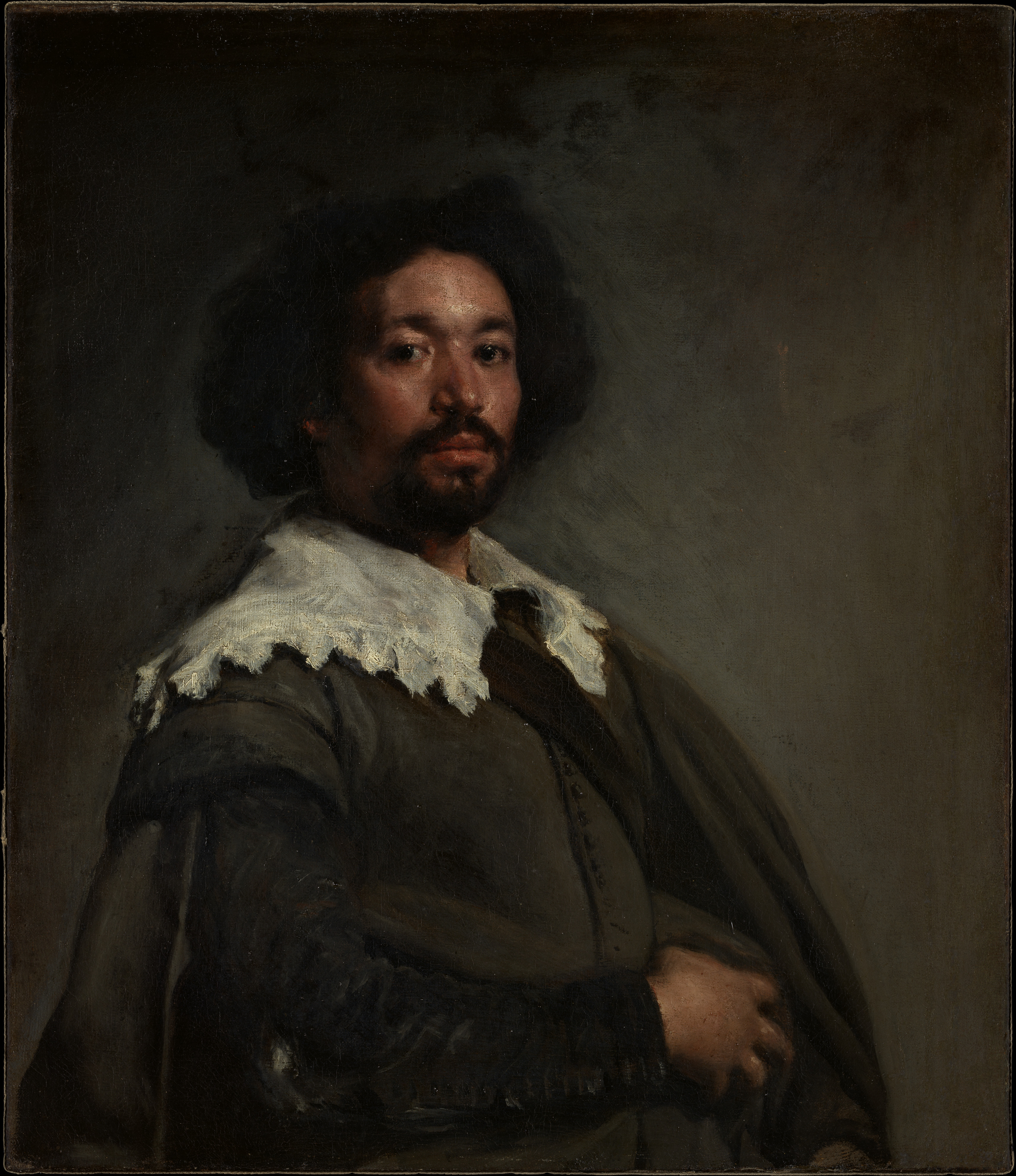
- Velazquez's portrait of Juan de Pareja sat with one family for roughly 140 years and then set a world auction record within two years of leaving it. The archive holds several chains with that shape, which is a pattern worth noticing and not yet a mechanism worth asserting.
Ninety-seven links in this archive move an object because an owner died
Ninety-seven of the 2,033 ownership links recorded across the 291 objects in this archive transfer the object because its owner died. We reached that figure by counting every link whose event is an inheritance, a bequest or a descent, and by leaving out sales made by an estate, which are ordinary purchases that happen to have a dead man's name on the receipt. The 97 links are spread across 70 separate objects, so this is not a quirk of one long aristocratic chain. It is roughly one object in four.
A word about what that number is and what it isn't. The event vocabulary is ours: we assign it when we build a record, and a chain written by a museum registrar in 1890 does not arrive labelled. Where a source says only that an object passed to a son, we grade it as a descent and note the wording. So the count is a count of how this archive reads its own evidence, and a different editor would move a handful of links across the boundary. What we are confident about is the shape, because the shape is large and it repeats.
The interesting property of these links is not that they exist. Everyone knows objects are inherited. It is that they behave differently from every other kind of link in a provenance line, in two opposite directions at once, and the difference is measurable here.
A death-transfer holds an object more than three times as long as a purchase
A link created by a death holds the object for a median of 29 years, against 8 years for a link created by a purchase. We measured this on every link in the archive that carries both a start year and an end year we could read as a number, discarding anything longer than six centuries as a sign that the two ends were not really the same custody. The gap between the two figures is the largest of any pair in the table, and it is not close.
The reason is mundane and worth stating plainly. A purchase is made by someone who has decided to own the object, and who may decide otherwise in a few years. An inheritance is received by someone who did not choose it, who often cannot sell it without breaking a settlement or a trust, and who will in the ordinary course hold it until they die in turn. The market moves objects at the speed of intention. Families move them at the speed of mortality.
| Kind of link | Links measured | Median years held | Longest |
|---|---|---|---|
| Created by a death (inheritance, bequest, descent) | 71 | 29 | 255 |
| Created by a purchase (including sale, auction, dealer stock) | 272 | 8 | 254 |
| Custody without a stated transfer | 12 | 72 | 373 |
| Gift | 17 | 3 | 41 |
| Loan | 9 | 15 | 135 |
| Recorded gap, owner unknown | 105 | 110 | 596 |
The last row is there for scale rather than for comparison. A gap is not a kind of ownership, it is the absence of a record, and its median of 110 years is a measure of our ignorance rather than of anyone's behaviour. We include it because a reader checking a chain should know what the units look like at both ends.
The price record goes dark for as long as the family holds
None of the 97 death-links in this archive records a price, because in none of them was a price paid. That is obvious when you say it and easy to forget when you are reading a chain, because a provenance line prints a purchase and an inheritance in the same typeface and at the same size. The consequence is that an object entering a family disappears from the price record for the whole length of the holding, and the median length of that holding is 29 years.
Velazquez's portrait of his assistant Juan de Pareja shows the full arc. Painted in Rome in 1650, it reached the Earls of Radnor at Longford Castle early in the nineteenth century and remained in that family for about 140 years. Then, on 27 November 1970, it was sold at Christie's for 2,310,000 pounds to the dealer Alec Wildenstein, almost tripling the previous world auction record and becoming the first painting to pass a million pounds. The Metropolitan Museum of Art acquired it the following year, and its credit line still records the funding scramble that took: purchase, Fletcher and Rogers Funds, and a bequest applied by exchange, supplemented by gifts from friends of the Museum, 1971.
Read as a price series, that object has two data points separated by fourteen decades. Anyone valuing it in 1969 had nothing recent to anchor against, and the 1970 result is usually told as a story about Velazquez or about the arrival of serious money. It is at least as much a story about a picture that had not been priced within living memory.
The proof of an inheritance is written to be proved
At the moment the price record goes dark, the documentary record usually gets better. This is the part that surprises people who assume a family holding is a documentary void. A will is drafted by a lawyer in the expectation that somebody will contest it. A probate inventory is compiled because a tax authority requires it and will audit it. A settlement or an entail names the object precisely so that a later heir cannot quietly dispose of it. These are adversarial documents, and adversarial documents are the ones that survive and the ones that hold up.
Compare that with the evidence for an ordinary purchase in the same centuries: a dealer's note, a line in a stockbook that may be a code, a receipt that names neither the object nor the buyer with any precision. We have written elsewhere in these pages about what a stockbook can and cannot prove. The asymmetry runs the other way from what most people expect, and it has a practical consequence for anyone checking a chain. If a provenance line stalls at a family holding, the right next step is usually the probate registry rather than the auction archive.
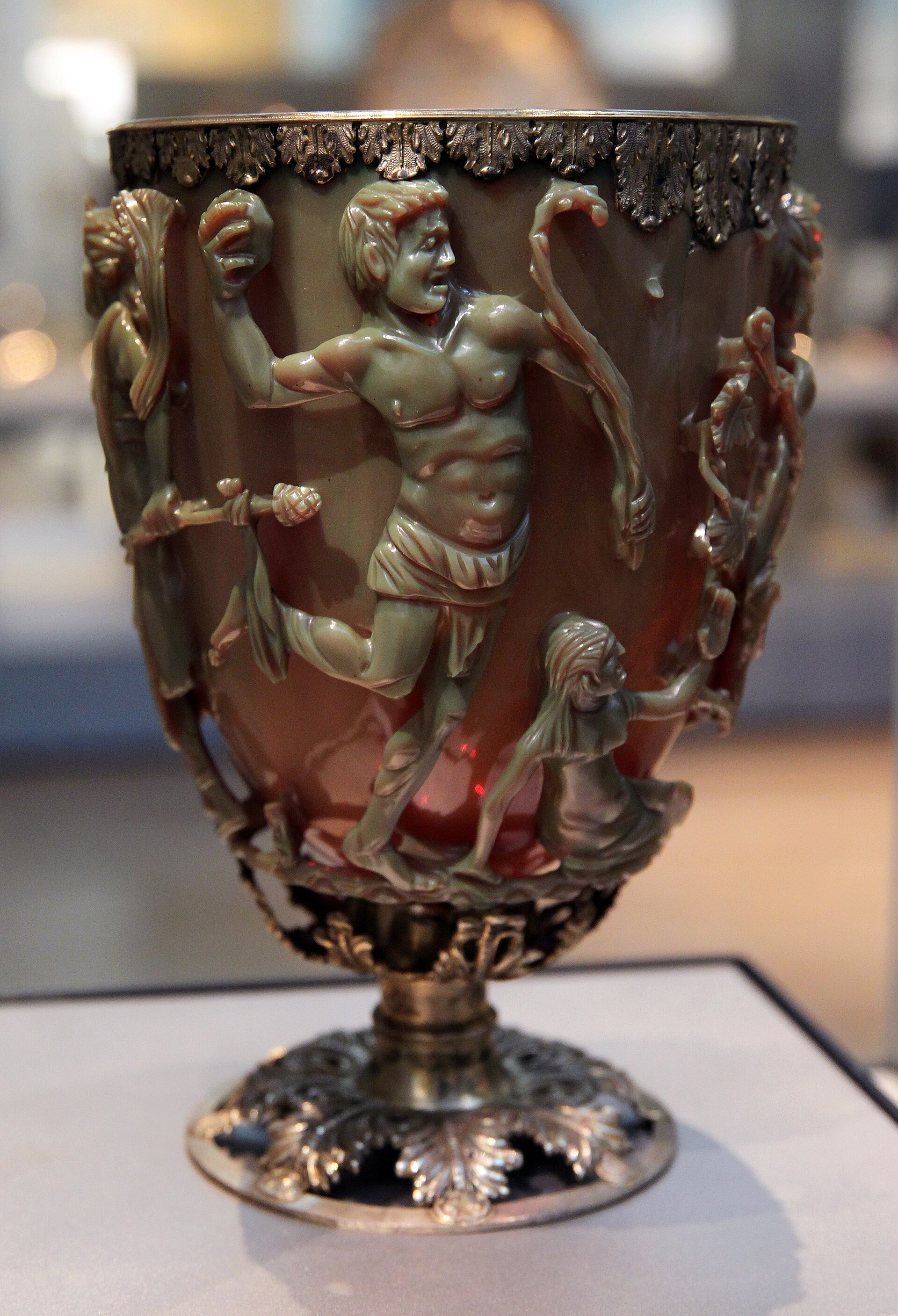
The British Museum's record for the Lycurgus Cup shows the institutional version of this. Its acquisition note names Baron Lionel Nathan de Rothschild, who died in 1879, as the man who originally acquired the cup, and Victor, 3rd Lord Rothschild, as the man it was purchased from in 1958. The museum documents the two ends of a roughly eighty-year family holding and does not attempt the middle, because the middle is three deaths and no transactions. That is honest cataloguing. It is also a map of exactly where a researcher would have to go.
The longest holdings often end in the largest prices, and that is not the same as causing them
Several of the longest family holdings in this archive end in a sale that broke a record. The Codex Leicester is the extreme case: The Art Newspaper, writing in 1994, recorded that the manuscript had been in the possession of the Earl of Leicester for 260 years before Christie's sold it in London on 12 December 1980 for 2 million pounds excluding premium. Thomas Coke had acquired it in Italy around 1717 and had it copied in Florence, and the Museo Galileo's account has it in his London residence through the middle of the century, accessible to English scientists. Two and a half centuries of continuous ownership, one price at each end.
It is tempting to run that observation into a rule, and we want to be careful here, because the archive cannot support the strong version. Objects that stay in one family for two centuries are not a random sample. They are disproportionately the objects that were worth keeping, which is to say the good ones, and a good object would command a high price whatever its recent ownership history. The absence of comparables may well add something on the day. We cannot separate those two effects with 291 records, and we are not going to pretend otherwise.
What the archive does support is narrower and still useful. When an object emerges from a long family holding, the person valuing it is working without a recent comparable for that specific thing, and has to reason from the cohort instead. That is a different and harder estimation problem than pricing an object that changed hands eight years ago, and it is worth knowing which of the two you are looking at before you read an estimate.
What the death link does not tell you
A death-link is silent about condition, location and use, and those silences can run for decades. The object was somewhere for 29 median years, in some state of repair, possibly on a wall in a damp house and possibly in a strongroom. A purchase at least fixes a date on which somebody looked at the thing and formed a view about it. An inheritance fixes nothing except that the previous owner stopped being alive.
It is also the link where a chain most often quietly goes wrong. Families divide, names change on marriage, an object moves between houses that are all called by the family name, and a later cataloguer collapses three generations into a single line reading by descent. Those two words can conceal a sale to a cousin, a division under a will that separated a set, or a decade in a dealer's hands that nobody wrote down. When we grade a link as disputed in this archive, a fair share of the time the disputed thing is a descent that somebody has smoothed.
So the practical reading is not that inheritance is good evidence and purchase is bad. It is that they fail in opposite ways, and that a chain made mostly of one kind should be checked differently from a chain made mostly of the other. A run of purchases can be checked against sale records and stockbooks. A run of descents has to be checked against wills, and if nobody has been to the probate registry, the run has not really been checked at all.
Why this archive is free to read
We do this for everyone who loves art. The people who have studied it for years, and the people who just stopped to look. Iconotheca exists so that what we learn belongs to all of them.
Nobody pays us for this. No ads, no sponsors, no commercial interest. These works belong to all of us, and we would rather share them with as many people as we can than keep them to ourselves.
If it gave you something today, tell us to keep going. Follow us, leave a like, or write a positive comment. We read every one, and they are what keeps us going.
Questions
No. An inheritance transfers ownership without a sale, so no price is created, and none of the 97 death-transfer links in this archive records one. The object's last price remains whatever it made when it was last sold, which may be many decades earlier.
In this archive the median holding created by a death lasts 29 years, against 8 years for a holding created by a purchase. The longest we record runs to about two and a half centuries.
Wills and probate inventories first, then death duty and estate tax records, then family settlements and trust deeds. These documents are drafted to withstand a legal challenge, which tends to make them more precise about the object than a dealer's receipt from the same period.
Because those two words can cover several generations and can conceal a sale, a division of a set under a will, or a period in the trade that was never recorded. It is a summary rather than a document, and it should be treated as a place to start checking rather than as a finding.
Several of the longest holdings in this archive do end in record prices, but we cannot show that the holding caused the price. Objects that survive two centuries in one family are not a random sample of objects. What can be said is that valuing such an object means working without a recent comparable for that specific thing.
Sources
- 1The Metropolitan Museum of Art, Open Access API, object 437869, Velazquez, Juan de Pareja, accession 1971.86. Consulted for the medium, dimensions, date, credit line and public-domain status. collectionapi.metmuseum.org/public/...
- 2The Metropolitan Museum of Art, Open Access API, object 467642, The Unicorn Rests in a Garden, accession 37.80.6. Consulted for the materials, dimensions, date and the Rockefeller credit line. collectionapi.metmuseum.org/public/...
- 3British Museum, collection record for the Lycurgus Cup, registration 1958,1202.1, including the acquisition name and acquisition notes naming Baron Lionel Nathan de Rothschild and Victor, 3rd Lord Rothschild. britishmuseum.org/collection/...
- 4The Metropolitan Museum of Art, Open Access API, object 199659, the Vitellius tazza, accession 45.60.58a-h. Consulted for the date, medium, dimensions and Fletcher Fund credit line. collectionapi.metmuseum.org/public/...
- 5The Art Newspaper, 'Leonardo codex on the market', 1 June 1994. Source for the 12 December 1980 Christie's sale at 2 million pounds excluding premium, and for the statement that the manuscript had been with the Earl of Leicester for 260 years. theartnewspaper.com/1994/...
- 6Museo Galileo, 'The European circulation of the Codex Leicester', online exhibition. Source for Thomas Coke's acquisition about 1717 and the manuscript's presence in his London residence between 1719 and 1759. mostre.museogalileo.it/codiceleicester/...
- 7The Spectator, 'The story of the first painting to sell for over a million pounds'. Source for the Christie's sale of 27 November 1970, the figure of 2,310,000 pounds, the buyer Alec Wildenstein and the statement that the result almost tripled the previous world auction record. spectator.com/article/...
More in Provenance and Restitution
The partA return is a new arrangement, not a conclusion
Four contested antiquities, four different things a return turned out to be: a renaming, a rotating loan, a forfeiture nobody enforced and a broken...
When the Only Proof of Where an Object Was Is a Photograph
The Third Imperial Easter Egg was photographed once, in March 1902, and that single plate is what identified it in 2014.
Moved for Safekeeping Is a Link in the Chain
Nine evacuations in this archive: three objects never returned to the building they left, one came back unrecognised and title changed once, by a...