When a Museum Tests Its Own Object
Across the five objects in this archive whose catalogue entries were rewritten by physical analysis, four of the tests were run or published by the museum that owned the object. The results went against the owner as often as for it.
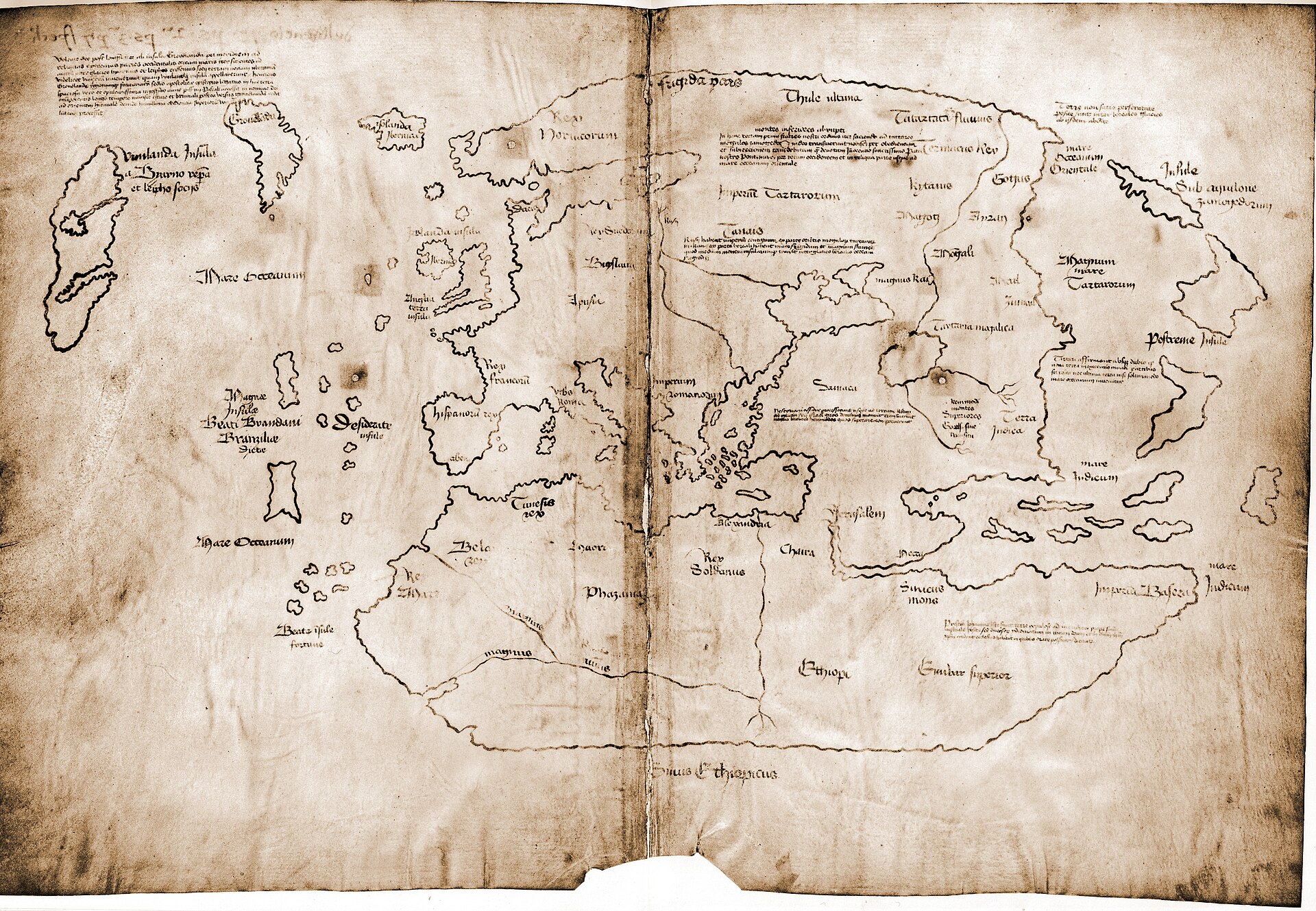
Records in this piece: Tomb Cover, Bronze statuette of a horse, Cabinet, Bust of Flora, The Vinland Map
On this page 8 sections
ContentsClose
In short
- In four of the five cases in this archive, the institution holding the object commissioned, ran or published the analysis that changed its own catalogue entry. The fifth is the only one whose attribution is still unresolved, and it is the only one tested entirely from outside.
- The direction of the result is not what the incentive would predict. Two objects here were demoted by the science and two were restored by it, and one of the restorations reversed a forgery verdict that the owning museum's own vice-director had announced in public.
- A demotion almost never removes the object from the collection. All five are still held. What changes is the catalogue line, and the catalogue line is a public document anyone can check against an accession number.
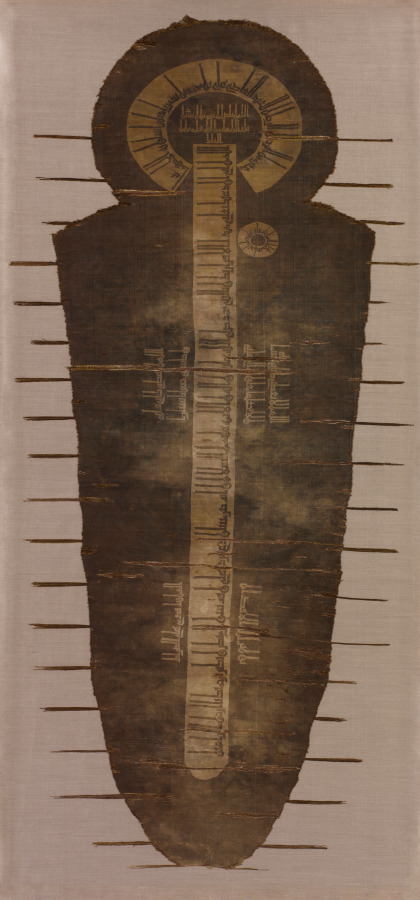
- Cleveland's record is the clearest case of an institution publishing against itself: a date field reading 1640 to 1950 sits beside a culture field reading in the style of the Buyid period, on an object the museum bought as tenth-century and toured internationally for four decades.
The instrument that settles the question usually belongs to the party that loses
When a scientific test changes what a museum object is, the laboratory that ran the test is usually inside the museum that owns it. That's the pattern across the five objects in this archive whose catalogue entries have been rewritten by physical analysis, and it isn't the pattern the popular account describes. In the familiar version an outside expert arrives with an instrument and the institution resists. What these records show is duller and more useful: the holder pays for the work, the holder publishes the result, and the result is as likely to cost it a masterpiece as to hand it one.
Five is a small number. It's also the whole group this archive holds, which is why I have counted the direction of the results instead of summarising them. Two objects were demoted. Two were rehabilitated. One is still open, and that one is the only case where nobody with a stake in the collection was holding the instrument.
Cleveland changed two fields on its own record and kept the textile
The Cleveland Museum of Art bought a silk funeral pall in 1954 as a masterpiece of tenth-century Buyid weaving, and its own catalogue record now dates the cloth to 1640 to 1950. The object is a complete loom piece, cut to the shape of a body with a circle for the head, its Kufic bands asking forgiveness for a named dead man and labelling which part of the corpse each band covers. The museum reproduced it in four handbooks and lent it to Paris in 1961, to the Hayward Gallery in 1976 and to a four-city American tour in 1982.
An epigraphic study in 1989 raised doubts about the whole group of so-called Buyid silks, and sixteen of them were radiocarbon dated by accelerator mass spectrometry. This one came back at 1640 to 1950 with 95 per cent probability, which is to say it could be Victorian and could be younger than the museum that owns it. Cleveland didn't withdraw it quietly. The date field on its public collection page carries the radiocarbon range and the words that produced it, and the culture field reads in the style of the Buyid period. Both sentences are published by the institution with the most to lose from them, and the museum applied the same correction across related pieces in its collection rather than to this one alone.
The Metropolitan's own vice-director announced that its best bronze was a fraud
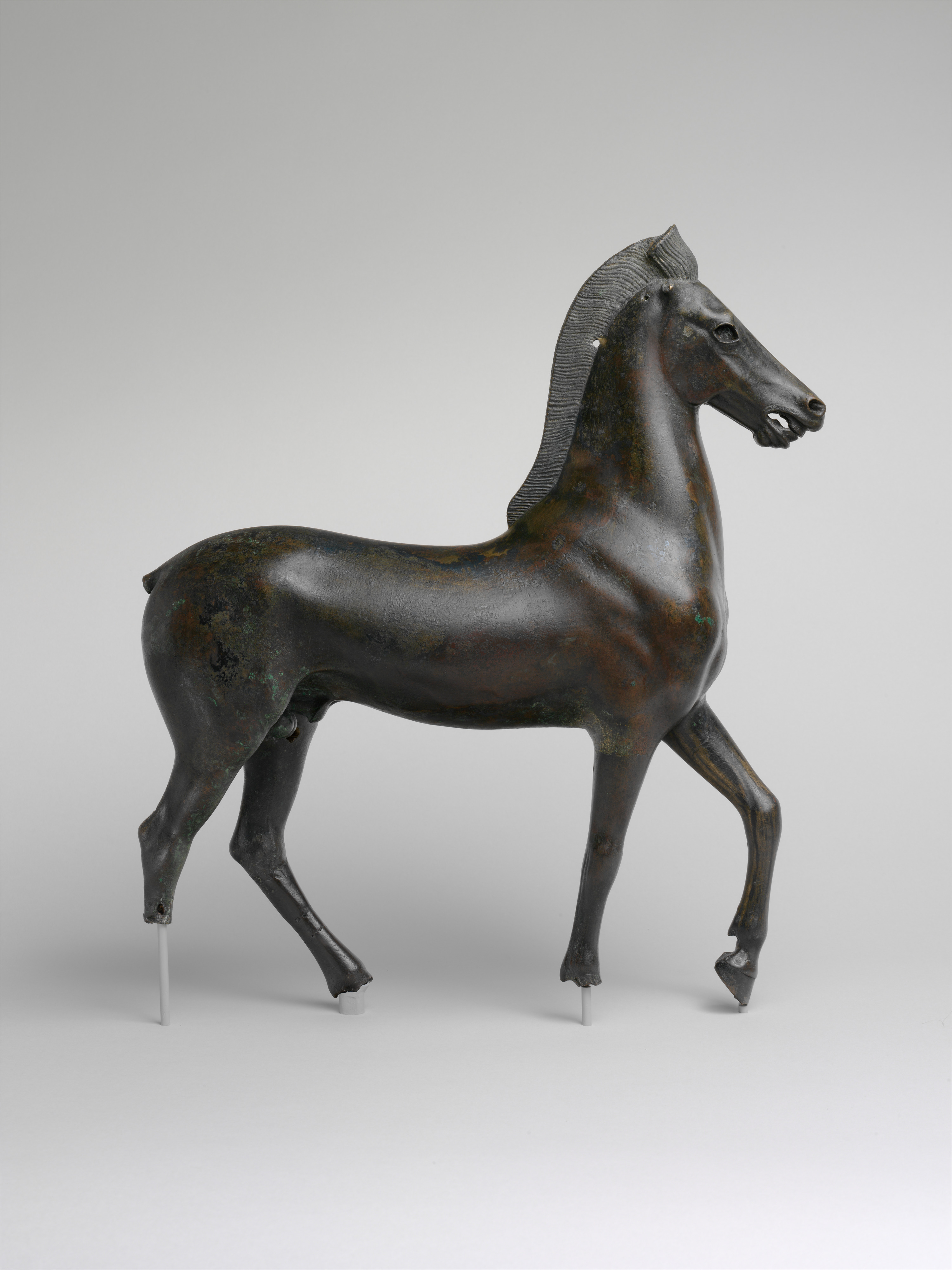
In December 1967 the Metropolitan Museum's Vice-Director for Administration stood up at the close of a public seminar on art forgery and said that the museum's Greek bronze horse was a fake. Joseph V. Noble had convened the seminar. The horse, forty centimetres high, had been bought from a Paris dealer on 16 February 1923 and described for forty years as the most important single object in the museum's classical collection. Noble published the case in the museum's own Bulletin the following February, under the title The Forgery of Our Greek Bronze Horse, and closed it with the line that it is famous, but it is a fraud.
He was wrong, and the way he was wrong is worth more than the verdict. The seam that began the investigation lay in a layer of pigmented wax applied to the bronze in the 1920s or 1930s, and it vanished when the wax was taken off with xylene. The iron wire he had read in a gamma radiograph as evidence of modern casting turned out to be an armature of a kind found in the Piraeus Kouros and the Delphi Charioteer. Neither observation was dishonest. Both were readings of a surface that later work could see through.
Thirteen years of the same museum's work put the horse back into antiquity
The re-examination that answered Noble was carried out by the museum that had been embarrassed by him, and it took thirteen years. The alloy, the corrosion products, the ceramic core with its iron armature and chaplets, and the repair patches are all consistent with casting in classical antiquity. Thermoluminescence dating of the core returned 2250 plus or minus 210 years before present. The museum's current entry for 23.69 gives the period as Late Hellenistic and the date as late second to first century BCE.
That's a third position rather than a return to the first. The horse was acquired as Early Classical work of about 480 to 470 BCE. It is now catalogued some three centuries later than that, and ancient. A reader who only knew that the forgery claim had been withdrawn would take away the wrong fact, because the object the museum bought and the object it now describes are not quite the same thing.
| Object | Acquired as | Analysis | Who ran it | Direction |
|---|---|---|---|---|
| Tomb cover, Cleveland 1954.780 | Buyid silk, about 945 to 1055 | Radiocarbon, 1640 to 1950 at 95 per cent | Group study of sixteen silks, published by the holder | Demotion |
| Bronze horse, Metropolitan 23.69 | Greek, about 480 to 470 BCE | Thermoluminescence, 2250 plus or minus 210 years before present | The museum, over thirteen years | Rehabilitation |
| Cabinet, Getty 71.DA.89 | Nineteenth-century pastiche | Dendrochronology and radiocarbon | The museum curator and its conservation science | Rehabilitation |
| Bust of Flora, Bode-Museum | Leonardo, about 1500 | Radiocarbon on spermaceti wax | Three French laboratories, outside the holder | Demotion, negative only |
| The Vinland Map, Beinecke | Norse world map, about 1440 | Ink and pigment analysis | Yale conservation science | Demotion |
The Getty tested a cabinet its own curators had written off
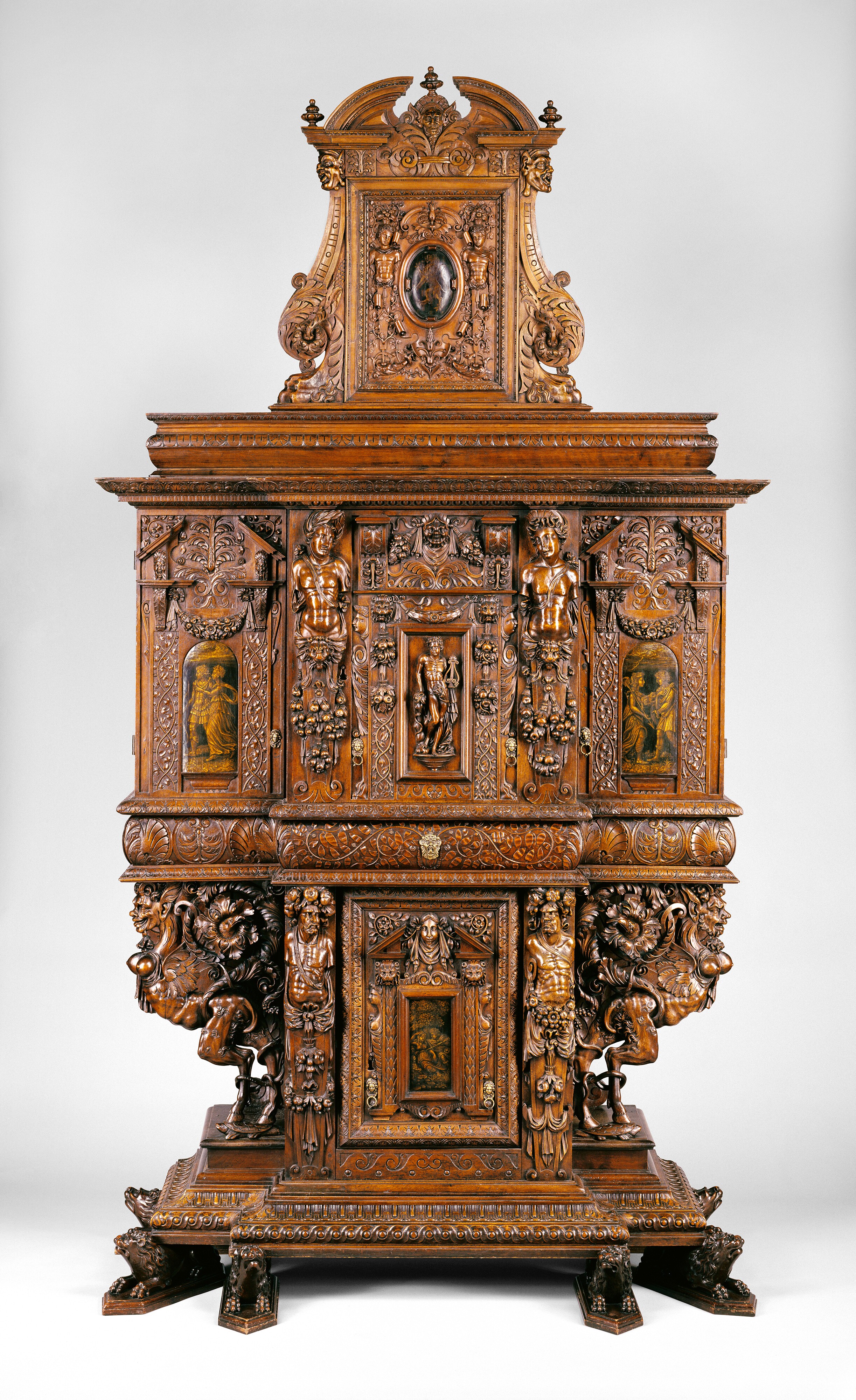
J. Paul Getty bought a large Burgundian walnut-and-oak cabinet in 1971 for 1,700 dollars against the advice of his curators, who didn't think it was genuine. They read its pristine, wax-coated surface as the mark of a Renaissance Revival pastiche of the kind sold to American collectors a century earlier, and it went into storage for roughly thirty years. A 2001 exhibition in France on the Burgundian designer Hugues Sambin sent a Getty curator to Ecouen, and the re-examination that followed used the museum's own conservation science.
Tree-ring dating placed the felling of the oak used for the structural panels in late 1574 or early 1575 in Burgundy, which sits correctly behind the 1580 painted on the cabinet once seasoning and construction time are allowed for. Radiocarbon on the walnut surface wood and on textile from a drawer lining returned 1400 to 1600. Rough marks on the back were made by a hand-held saw and a plane of a sixteenth-century type, and comparable tool marks run across both woods. The Getty then put the reversal on public display: A Renaissance Cabinet Rediscovered ran from 22 November 2005 to 5 August 2007. The maker remains unestablished, and the museum says so; the Sambin connection is a proposal, not a documented fact.
The counter-case is the bust whose test came from outside
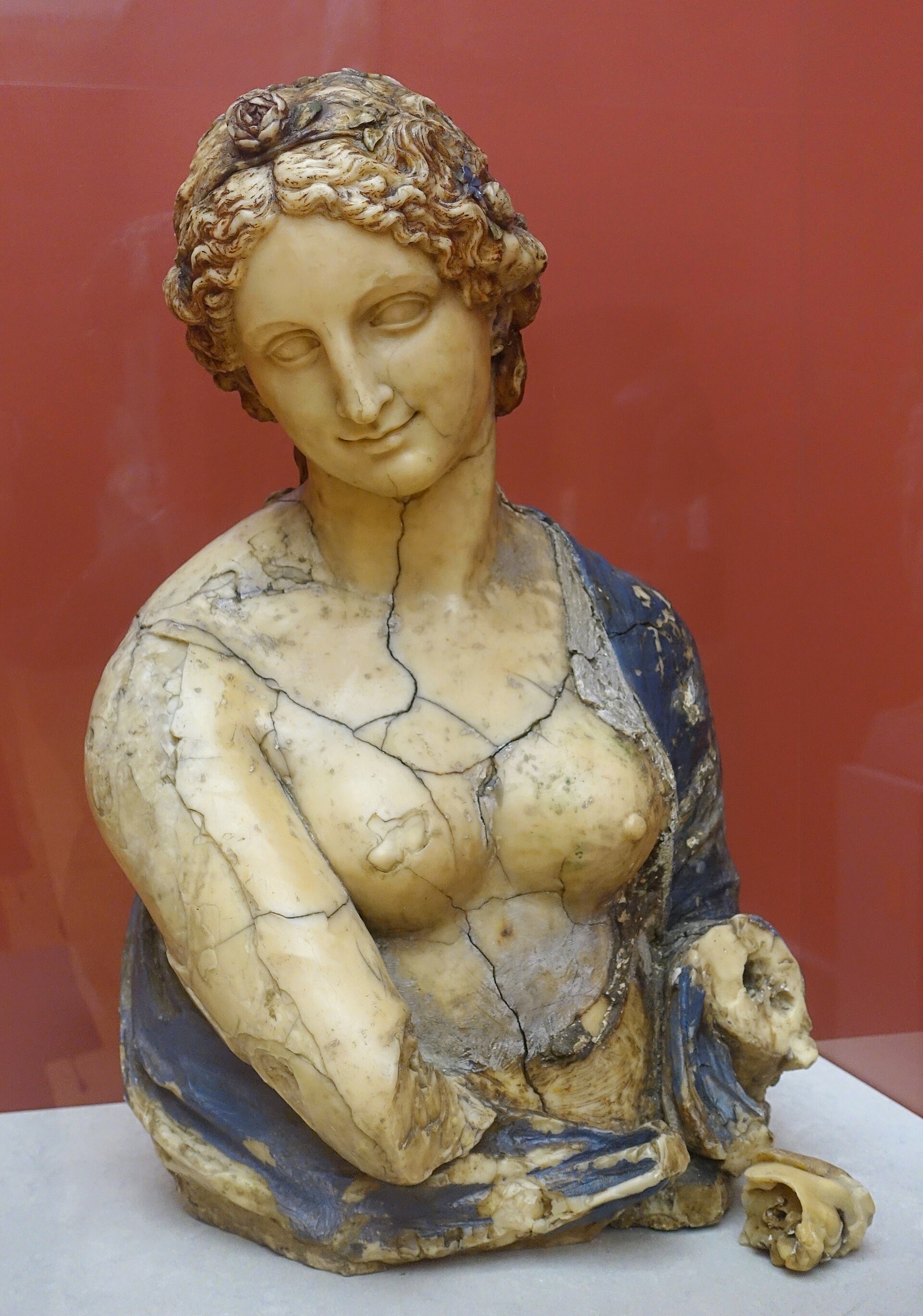
The one object here whose analysis was run by people with no stake in the collection is also the one still without an attribution. Wilhelm von Bode, director general of the Prussian collections, bought a painted wax bust of a young woman as Flora in London in 1909 as a work by Leonardo. Within a year the English press said it had been made in 1846 by a Southampton sculptor named Richard Cockle Lucas, and Lucas's son swore he had helped his father build it out of candle ends. More than seven hundred and thirty articles about it appeared in six countries inside two years.
The argument ran for a century because the material fought back. The bust is spermaceti, the wax taken from the head cavity of the sperm whale, and a whale's carbon is not in equilibrium with the atmosphere, so radiocarbon on it reads several centuries too old unless the marine reservoir effect is corrected for. No reservoir age for sperm whale material had ever been published, so the correction had to be worked out before the object could be dated at all. The results appeared in Scientific Reports on 15 April 2021: every analysed constituent postdates 1700, which excludes the Renaissance and therefore excludes Leonardo. The work was done by the Chemistry Research Institute of Paris, the Centre for Research and Restoration of the Museums of France and the Carbon-14 Measurement Laboratory. It is a negative finding, the authors say so plainly, and no museum has published a positive attribution to put in its place.
What the institution does next is the part that tells you most
Not one of these five objects left its collection. That's the most consistent fact in the group and the least discussed. Cleveland kept the pall and amended two fields. The Beinecke Library at Yale holds a map that Yale's own conservation science department declared a twentieth-century forgery in 2021, and holds it now as the physical evidence of a famous case rather than as a medieval world map. The Getty moved a cabinet out of storage and into a two-year exhibition about the error that had put it there.
For anyone checking an object this has a practical edge. The catalogue line is where an institution records the state of its own argument, and it is written in the expectation of being superseded. Cleveland's culture field doesn't say Buyid and doesn't say forgery. It says in the style of the Buyid period, which is an exact description of what is currently known and of what is not. Read the date field against the culture field, and read both against the credit line, because the credit line usually preserves the year of purchase and the fund that paid, and that is where the discarded attribution survives in the record.
Why this archive is free to read
We do this for everyone who loves art. The people who have studied it for years, and the people who just stopped to look. Iconotheca exists so that what we learn belongs to all of them.
Nobody pays us for this. No ads, no sponsors, no commercial interest. These works belong to all of us, and we would rather share them with as many people as we can than keep them to ourselves.
If it gave you something today, tell us to keep going. Follow us, leave a like, or write a positive comment. We read every one, and they are what keeps us going.
Questions
Not in the cases this archive holds. In four of five, the institution owning the object commissioned or published the analysis that changed its catalogue entry, and in every case the public record was amended rather than the object withdrawn.
Rarely. Radiocarbon and thermoluminescence date a material or a firing, not an authorship. The 2021 Flora bust study excluded the Renaissance and therefore Leonardo, and its authors state that this is a negative finding which does not place the bust in any particular sculptor's hands.
Usually not. All five objects here remain in their collections. A demoted object is still evidence of the workshop, the market or the controversy that produced it, so institutions tend to recatalogue rather than deaccession.
Look up the museum's own online collection record by accession number and compare the date and culture fields with the credit line. The credit line normally preserves the year of acquisition and the fund used, which is where the superseded attribution is still legible.
Sources
- 1The Cleveland Museum of Art, collection record for Tomb Cover, accession 1954.780, giving the date as 1640-1950 (radiocarbon date, 95% probability) and the culture as Iraq or Iran, in the style of the Buyid period (945-1055). clevelandart.org/art/...
- 2The Metropolitan Museum of Art, collection record for Bronze statuette of a horse, accession 23.69, giving the period as Late Hellenistic and the date as late 2nd-1st century BCE, credit line Fletcher Fund, 1923. Consulted through the Museum's Open Access collection API. metmuseum.org/art/...
- 3J. Paul Getty Museum, exhibition page for A Renaissance Cabinet Rediscovered, 22 November 2005 to 5 August 2007, giving the dendrochronological felling date of late 1574 or early 1575 and the radiocarbon range of 1400 to 1600. getty.edu/art/...
- 4Ina Reiche, Lucile Beck, Ingrid Caffy and others, 'New results with regard to the Flora bust controversy: radiocarbon dating suggests nineteenth century origin', Scientific Reports, 15 April 2021, doi 10.1038/s41598-021-85505-x. nature.com/articles/...
- 5CNRS press release, 'Leonardo da Vinci definitely did not sculpt the Flora bust', naming the three collaborating laboratories and the marine reservoir correction developed for spermaceti. cnrs.fr/en/...
More in Museums and Exhibitions
The partThe complete object is a temporary arrangement
For a dispersed set, being complete is an event with a date and a duration. Twelve Renaissance tazze were whole and correct for two days in 2014, and...
When the Holder Is Not a Museum, the Accession Number Is Replaced by Law
Fourteen records here are held by a cathedral, a diocese, a cathedral works, a charitable trust or a monuments agency.
A Closing Date That Moves Both Ways, and Who Actually Moved It
Of 937 exhibitions tracked here, only 7 ever had a date move, and three of those flipped between the same two dates again and again.