What a Collector's Other Objects Prove
A name in a provenance line is a claim about a set, not about one object. Eleven of the forty objects the Metropolitan links to the nineteenth-century goldsmith Reinhold Vasters carry one collector's credit line, in a nearly unbroken run of accession numbers.
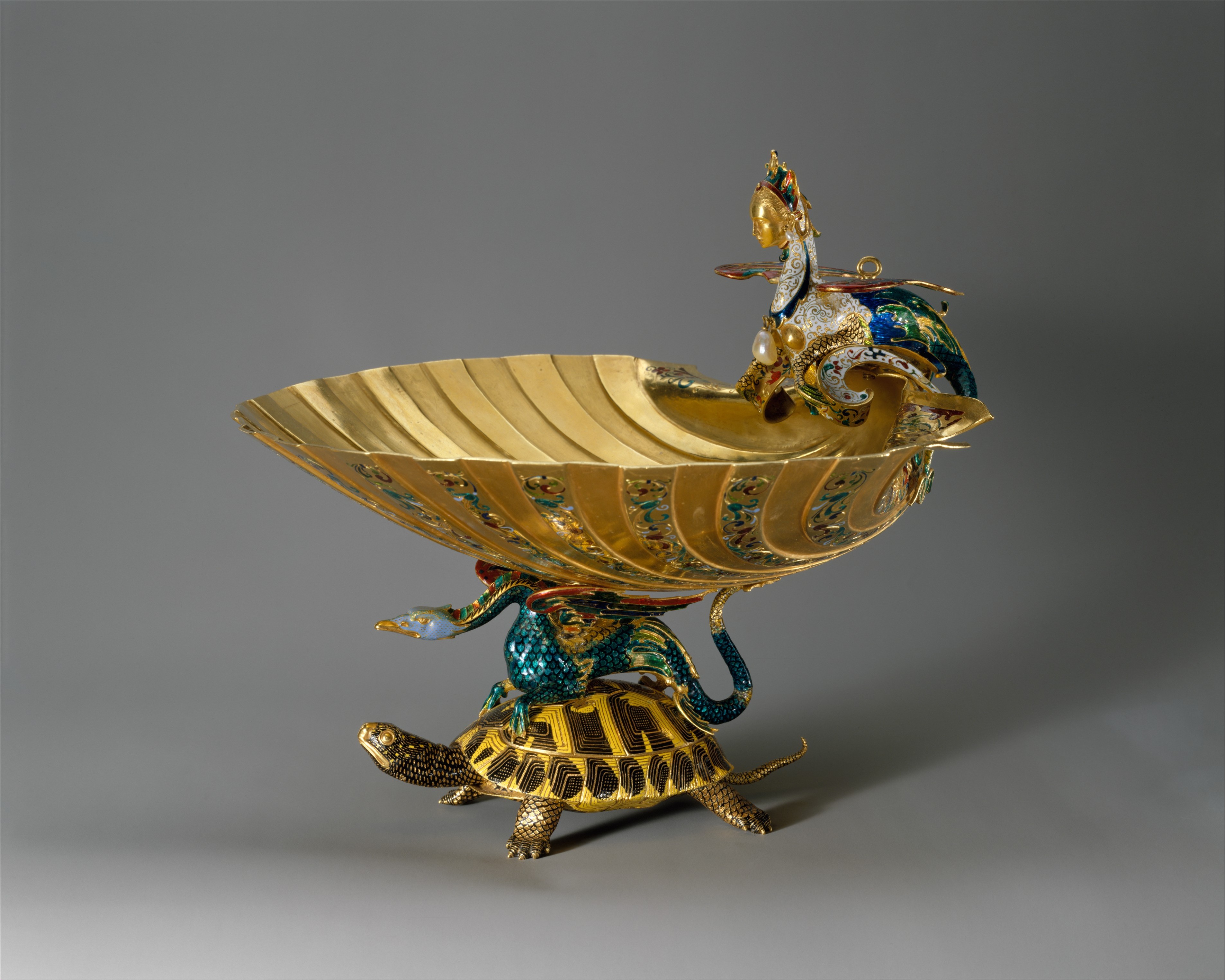
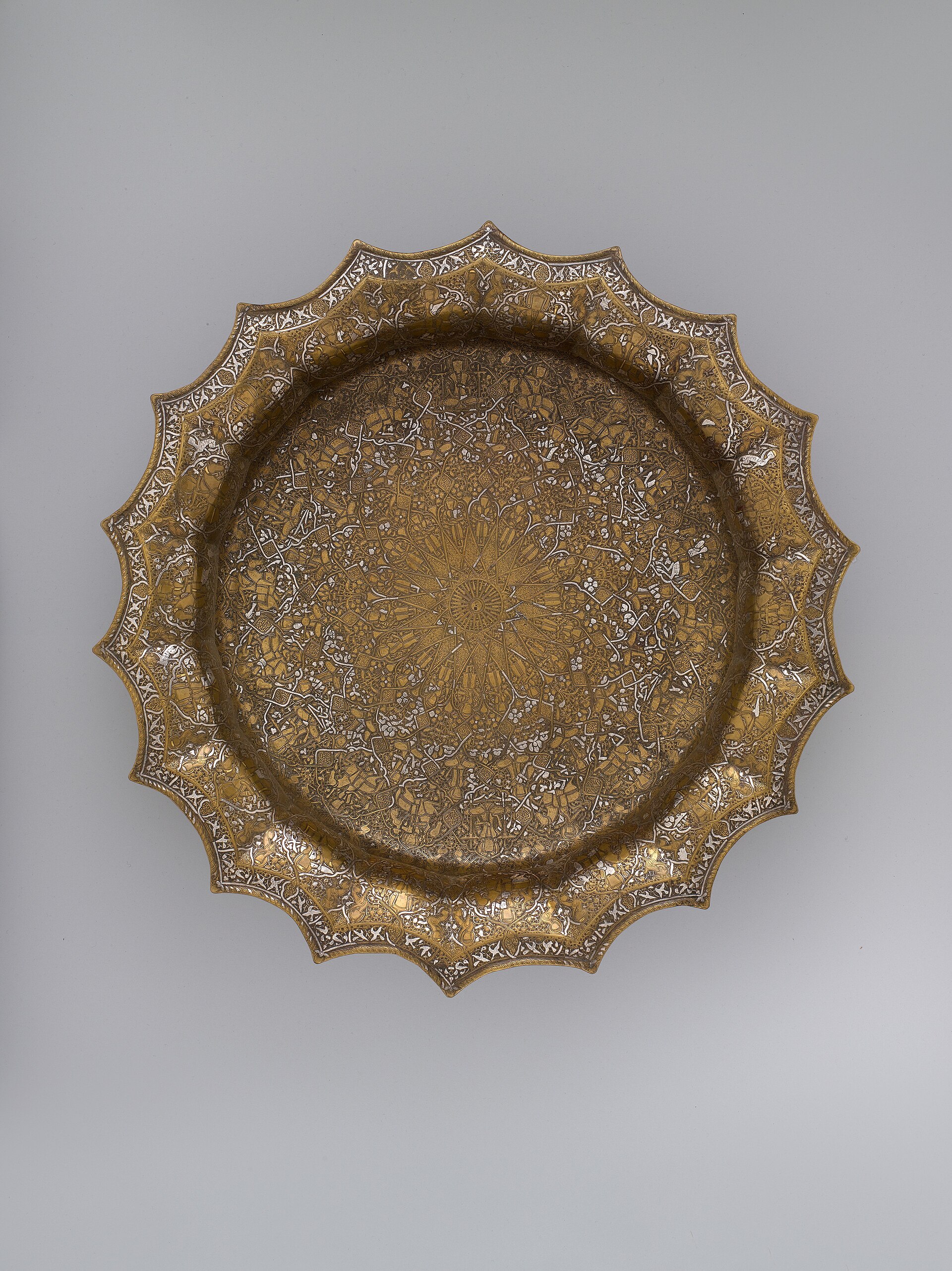
Records in this piece: Cup, known as the Rospigliosi Cup, Dish, Astrolabe of 'Umar ibn Yusuf ibn 'Umar ibn 'Ali ibn Rasul al-Muzaffari, Basin with Figural Imagery
On this page 7 sections
ContentsClose
In short
- A collector's name in a provenance line is testable, because collectors do not buy one thing. A search of the Metropolitan Museum's public collection API on 1 September 2026 returns 903 records for the phrase Bequest of Benjamin Altman and 2,065 for Edward C. Moore Collection.
- Forty records in that collection match the name Reinhold Vasters, the Aachen goldsmith whose working drawings reached the Victoria and Albert Museum in 1919 and revealed how much nineteenth-century work had been passing as Renaissance. Eleven of the forty carry the credit line Bequest of Benjamin Altman, 1913.
- Those eleven are not scattered. Their accession numbers run from 14.40.654 to 14.40.666 with almost no gaps, which is what a single collecting field looks like once it has been accessioned in a block.
- The Rospigliosi Cup is 14.40.667. It is the next number in that run, it arrived in the same bequest, and the Museum now dates it probably about 1840 to 1850, or somewhat earlier. The neighbours are part of the case.
- The same forty records also run through the Robert Lehman Collection, given in 1975, and the Jack and Belle Linsky Collection, given in 1982. Three American collections assembled decades apart were buying from the same supply of invented Renaissance goldsmiths' work.
- The test cuts both ways. Edward C. Moore's 2,065 objects are a coherent, documented body of Islamic and Near Eastern metalwork bought by a working silversmith, and the astrolabe of 1291 and the fourteenth-century inlaid basin in this archive both sit inside it under 1891 accession numbers.
A collector's name is a claim about a set, and the set is checkable
When a provenance line names a private collector, most readers treat it as a single assertion about a single object that either has documentation behind it or does not. That is the wrong shape. Collectors almost never buy one thing, so a name in a provenance line implies the existence of other objects bought by the same person, usually in the same field, often within a few years, and frequently now in the same institution under consecutive accession numbers.
That implication is a test, and it is cheap to run. Museums with open collection data let anyone search a credit line as a phrase and see how large the set is. If a name in a provenance line has no set behind it, no sale catalogue, no other objects, no collecting field, then the line is an assertion with nothing to check it against, and that is the exact shape of a fabricated provenance.
The more interesting result is what happens when the set does exist and you look at it properly. Sometimes the siblings confirm the line. Sometimes they convict the object.
The Altman goldsmiths' work is now a nineteenth-century group
Benjamin Altman died in 1913 and his bequest reached the Metropolitan Museum the following year, and it is one of the largest single gifts in the Museum's history: a search of the Museum's public collection API for the phrase Bequest of Benjamin Altman returns 903 records. Inside it is a small group of Renaissance goldsmiths' work that has since been comprehensively redated.
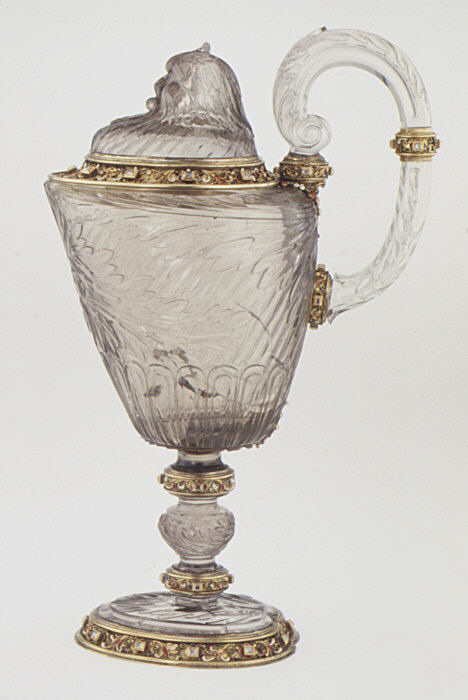
Searching the same collection for Reinhold Vasters returns forty records. Vasters was a goldsmith at Aachen, and when portfolios of his working drawings came to the Victoria and Albert Museum in 1919 they turned out to correspond to objects hanging in major collections as sixteenth-century work. Eleven of the Museum's forty Vasters-linked records carry Altman's credit line, and their accession numbers form an almost unbroken run.
| Accession | Maker as the Museum now gives it | Date as the Museum now gives it |
|---|---|---|
| 14.40.654 | Alfred Andre | second half 19th century |
| 14.40.655 | Reinhold Vasters | second half 16th century, mounts 19th century |
| 14.40.656 | no maker named | about 1870 to 1890 |
| 14.40.657 | Reinhold Vasters | cup first quarter 17th century, mounts 19th century |
| 14.40.658a, b | Reinhold Vasters | second half 19th century |
| 14.40.659a, b | Reinhold Vasters | about 1870 to 1890 |
| 14.40.660a, b | Alfred Andre | rock crystal second half 16th century, cover, foot and mounts 19th century |
| 14.40.661a, b | Reinhold Vasters | 19th century |
| 14.40.664 | Reinhold Vasters | medallions 16th century, entablature and enamel group 19th century |
| 14.40.665 | Reinhold Vasters | 19th century |
| 14.40.666 | Reinhold Vasters | second half 19th century |
| 14.40.667, the Rospigliosi Cup | no maker named | probably about 1840 to 1850, or somewhat earlier |
Read the right-hand column as a block rather than object by object. Several entries are hybrids in which a genuine old element has been given nineteenth-century mounts, which is Vasters's characteristic procedure and the reason the group resisted detection for so long. And the Rospigliosi Cup, once one of the most famous Cellini attributions in America, is the last number in the sequence.
The neighbours in an accession run are part of the evidence
An accession number is a record of the museum's custody rather than of the object, but a consecutive run of them preserves something the individual records do not: the shape of the group as it arrived. Objects bought by one collector in one field, accessioned together, get consecutive numbers, and that grouping survives even after the attributions inside it have all changed.
So a researcher looking at the Rospigliosi Cup on its own sees a superb enamelled gold cup with a long and glamorous attribution history. A researcher who looks at 14.40.654 through 14.40.666 first sees something else: a coherent purchase of supposed Renaissance goldsmiths' work, made by one man from the market of the 1890s and 1900s, of which the Museum now attributes almost every piece to two named nineteenth-century goldsmiths. The cup is the last item of that purchase. That context does not by itself settle what the cup is, and it changes where the burden of proof sits.
The Museum has been straightforward about all this in public, which is why the evidence is available to be read at all. Where it has decided a piece is by Vasters or by Alfred Andre it says so in the maker field, and where it is uncertain it dates the object without naming a maker. Both of those are more useful than a confident label would be.
The same two names run through three separate American collections
The forty Vasters-linked records at the Metropolitan are not confined to one donor. Beyond Altman's eleven, the set includes objects from the Robert Lehman Collection, given in 1975, and from the Jack and Belle Linsky Collection, given in 1982, with dates in the Museum's records clustering between about 1865 and 1895.
Three collections, assembled by different people at different times and given to the same museum across seventy years, all contain work from the same source. That is not a coincidence and it is not three separate failures of judgement. It is what a supply looks like from the buyer's side. A workshop producing convincing Renaissance goldsmiths' work over decades sells into a market, the market has a small number of very rich buyers, and the objects converge on the same handful of institutions a generation or two later.
This is the practical reason the sibling test is worth running. A single object with a doubtful attribution is a puzzle. The same doubt appearing across three collections that never dealt with each other is a pattern, and a pattern points at a source rather than at an accident.
The test also confirms, and Edward C. Moore is the case for that
Running the same test on a different collector produces the opposite result, and it is worth showing, because a method that only ever finds trouble is not a method. Edward C. Moore was the chief designer and later head of Tiffany and Company, a working silversmith who bought Islamic and Near Eastern metalwork, glass and ceramics to study them. He died in 1891 and left the collection to the Metropolitan Museum, where a search of the phrase Edward C. Moore Collection returns 2,065 records.
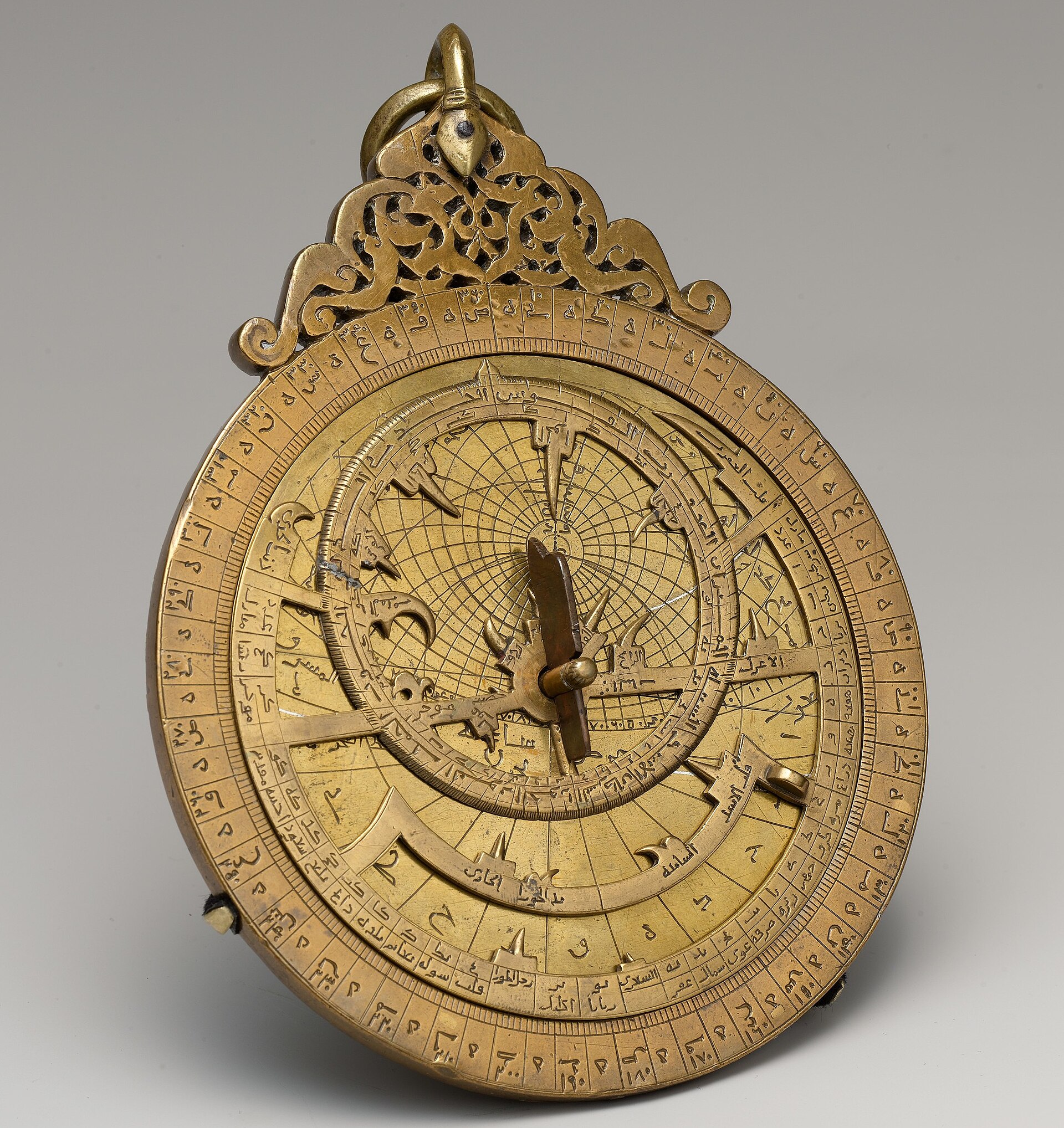
Two objects in this archive sit inside that set. The astrolabe made for and partly by Umar ibn Yusuf ibn Umar ibn Ali ibn Rasul al-Muzaffari, dated 690 AH, that is 1291 CE, is accession 91.1.535a to h. The inlaid brass basin with figural imagery of the early fourteenth century is accession 91.1.521. Both carry the credit line Edward C. Moore Collection, Bequest of Edward C. Moore, 1891, and both sit inside a numbered block of 91.1 accessions.
Here the siblings do the confirming work. A name attached to two thousand objects in one coherent field, accessioned in one block in one year on the death of a documented person whose profession explains the collecting, is about as solid as a nineteenth-century provenance link gets. Nothing about the individual objects had to be taken on trust for that to be established.
How to run the test on a name you are given
Start with the credit line rather than the provenance line, because a credit line is the institution's own permanent statement about how the object arrived and it is searchable as a phrase. Several major collections publish open data that will answer this in a minute: the Metropolitan and the Art Institute of Chicago through their public APIs, the Victoria and Albert Museum through its own. A search of the V and A for Reinhold Vasters returns 1,086 records, most of them the working drawings accessioned in 1919 under numbers of the form E.2786-1919.
Then ask four questions of the set. How large is it. Is it coherent, that is, does it hold together as a field somebody would plausibly have collected. Does it sit in a numbered block, which usually means a single arrival rather than an accumulation. And what has happened to the attributions inside it since, because a group that has been quietly redated over a century is telling you something about how it was assembled.
Finally, look at what is next to your object in the sequence. That is the step people skip, and it is the one that changed what we understood about the Rospigliosi Cup. Its own record is not what makes it doubtful. Its neighbours are.
Why this archive is free to read
We do this for everyone who loves art. The people who have studied it for years, and the people who just stopped to look. Iconotheca exists so that what we learn belongs to all of them.
Nobody pays us for this. No ads, no sponsors, no commercial interest. These works belong to all of us, and we would rather share them with as many people as we can than keep them to ourselves.
If it gave you something today, tell us to keep going. Follow us, leave a like, or write a positive comment. We read every one, and they are what keeps us going.
Questions
Because collectors buy in fields rather than one at a time, so a name in a provenance line implies a set. If the set exists, is coherent and is documented, the line gains support. If no set can be found, the line is an assertion with nothing to check it against.
A goldsmith working at Aachen in the nineteenth century whose work passed as Renaissance goldsmiths' work in major collections. Portfolios of his working drawings reached the Victoria and Albert Museum in 1919, and matching them against objects in museums is what exposed the scale of the problem.
Of the forty records in the Museum's collection that match his name, eleven carry the credit line Bequest of Benjamin Altman, 1913, with accession numbers running from 14.40.654 to 14.40.666. Two of the eleven are attributed to Alfred Andre rather than to Vasters.
No. Its public record names no maker and dates the cup probably about 1840 to 1850, or somewhat earlier, and gives its accession number as 14.40.667 in the Altman bequest.
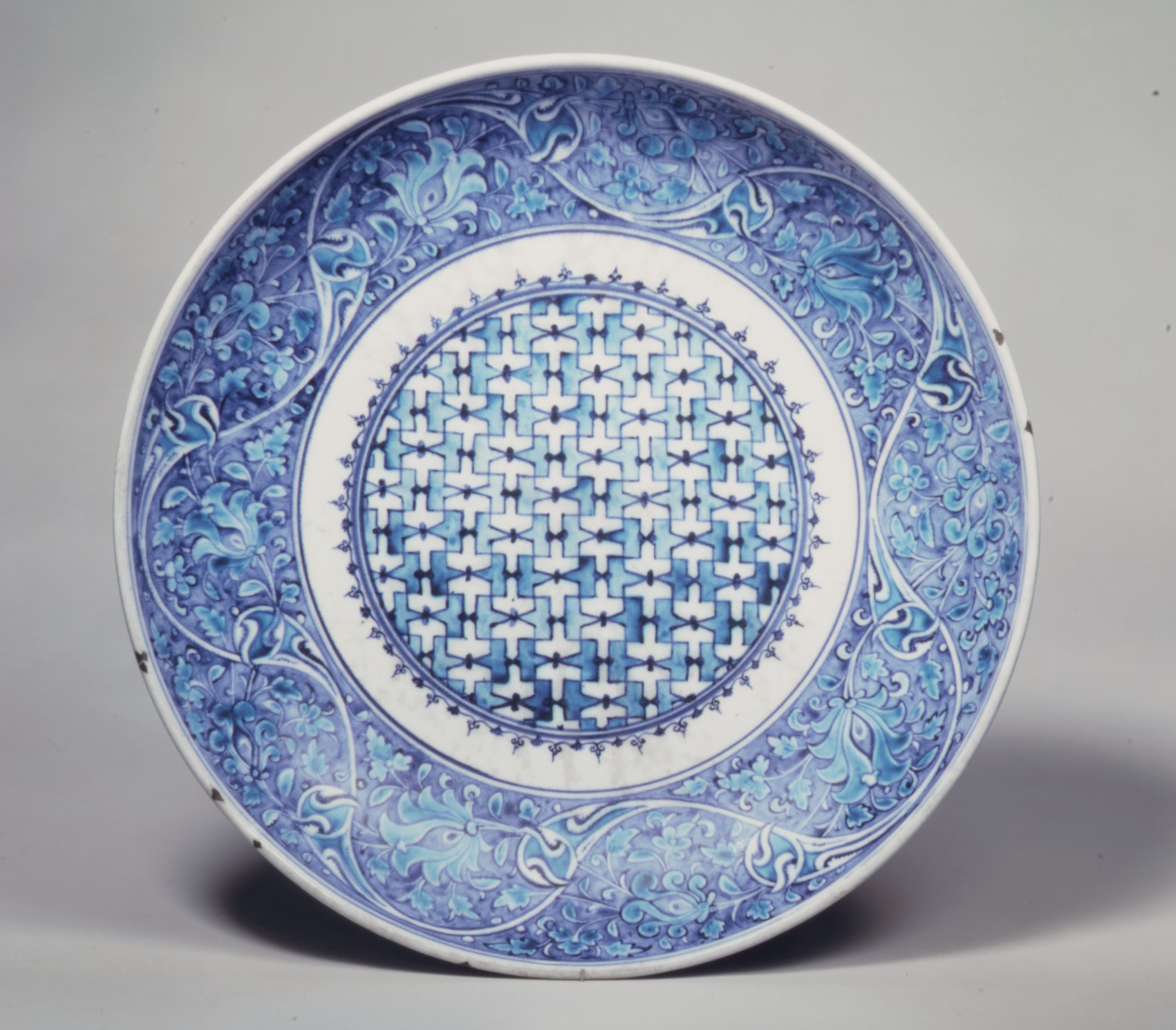
No, and the Altman bequest itself shows why. The same bequest contains a mid-sixteenth-century Iznik dish, accession 14.40.727, whose attribution has not been disturbed. The test is applied to a field within a collection, not to a collector's name as a whole.
Sources
- 1Metropolitan Museum of Art, public collection API, search endpoint. Queried 1 September 2026: the phrase Bequest of Benjamin Altman returns 903 records, Edward C. Moore Collection returns 2,065, and Reinhold Vasters returns 40. Each of the forty object records was then read individually for its accession number, maker field, date and credit line. collectionapi.metmuseum.org/public/...
- 2Metropolitan Museum of Art, collection API record for the Rospigliosi Cup, object 192708, accession 14.40.667, Bequest of Benjamin Altman, 1913. Read 1 September 2026 for the medium of gold, partly enamelled, with pearls, the dimensions of 19.7 by 21.6 by 22.9 cm, the date given as probably ca. 1840 to 1850 or somewhat earlier, and Gallery 556. collectionapi.metmuseum.org/public/...
- 3Metropolitan Museum of Art, collection API record for the ewer with cover, object 192700, accession 14.40.658a and b, maker given as Reinhold Vasters, dated second half 19th century, Bequest of Benjamin Altman, 1913. collectionapi.metmuseum.org/public/...
- 4Metropolitan Museum of Art, collection API record for the astrolabe of Umar ibn Yusuf ibn Umar ibn Ali ibn Rasul al-Muzaffari, object 444408, accession 91.1.535a to h, dated 690 AH/1291 CE, credit line Edward C. Moore Collection, Bequest of Edward C. Moore, 1891. collectionapi.metmuseum.org/public/...
- 5Metropolitan Museum of Art, collection API record for Basin with Figural Imagery, object 444523, accession 91.1.521, early 14th century, brass raised, engraved and inlaid with silver and gold, Gallery 455, credit line Edward C. Moore Collection, Bequest of Edward C. Moore, 1891. collectionapi.metmuseum.org/public/...
- 6Metropolitan Museum of Art, collection API record for the Iznik dish, object 446648, accession 14.40.727, mid-16th century, stonepaste painted in turquoise and two hues of blue, Islamic Art, Gallery 460, Bequest of Benjamin Altman, 1913. collectionapi.metmuseum.org/public/...
- 7Victoria and Albert Museum, public collections API. Queried 1 September 2026 for Reinhold Vasters, returning 1,086 records, including the working drawings accessioned in 1919 under numbers of the form E.2786-1919, E.2787-1919, E.2789-1919 and E.2791-1919. api.vam.ac.uk/v2/...
More in Collectors and Collections
The partThe credit line names the collector, and the accession number tells you what happened
Morgan died in March 1913, and the Metropolitan credits him with gifts made in 1917. The credit line names the collector.
The Longest Ownership Links Here Belong to Owners That Were Not People
The 28 longest institutional ownership links in this archive run 7,434 years between them. Three end in a completed sale.
The Name in the Buyer's Column Is Often an Employee
Across 126 years of sales in this archive the winning bidder is repeatedly not the owner.