When the Institution Dies, the Object Does Not
Five objects in this archive changed owner without leaving the room. The Board of Longitude was abolished, the India Museum closed, three libraries merged, and one transfer needed an Act of Parliament.
Records in this piece: The Hunt-Lenox Globe, K1 Marine Chronometer, The Tara Brooch, The Amaravati Collection, The Diamond Sutra
On this page 8 sections
ContentsClose
In short
- An institutional transfer is a change of legal owner, and museum records routinely present it as an administrative detail. The object does not move, the label barely changes, and the provenance line reads like a filing note.
- The Royal Irish Academy handed its entire antiquities collection to a new museum in 1890 and kept conditions attached to it. Title moved and the conditions moved with it, which is the part that gets dropped from short provenances.
- The India Office closed the India Museum in 1879 and decided in October of that year where its 19,228 objects would go. The receiving institution was chosen on the stated ground that it offered better facilities for keeping the collection together.
- Moving the British Museum's library departments to the new British Library required a statute. Section 3 of the British Library Act 1972 transfers the property outright and provides that any trust or condition on an object survives the transfer.
- The dead institution usually survives inside the accession number. India Museum objects at the V&A carried an IM prefix until 1945, sixty-six years after the museum that issued it had ceased to exist.
An institutional transfer is a change of owner dressed as paperwork
A museum can die while every object in it stays exactly where it is. The building keeps its address, the cases keep their contents, the staff often keep their jobs, and a new legal person becomes the owner of everything on the shelves. Nothing is packed and nothing is shipped, which is precisely why the event tends to be recorded badly.
Compare it with the transfers a provenance line handles well. A purchase has a price, a date and two named parties. A bequest has a will. A loan has a register and a return date. An institutional transfer has none of that shape: it is one corporate body succeeding another, usually by statute or by a deed of consolidation, covering thousands of objects at once and naming none of them.
So the link enters the record as something like transferred to the National Museum, 1890, sitting between two events that look more substantial, and a reader skims past it. That is a mistake for three reasons. The transfer changed who owns the thing. It frequently changed the object's number, which is how everything published before that date cites it. And it can carry forward conditions that still bind the present holder.
Five objects in this archive came through such a transfer. They are a globe, a marine timekeeper, a brooch, a carved slab and a printed scroll, and no two of them moved by the same mechanism.
The Board of Longitude was abolished in 1828 and its instruments stayed put
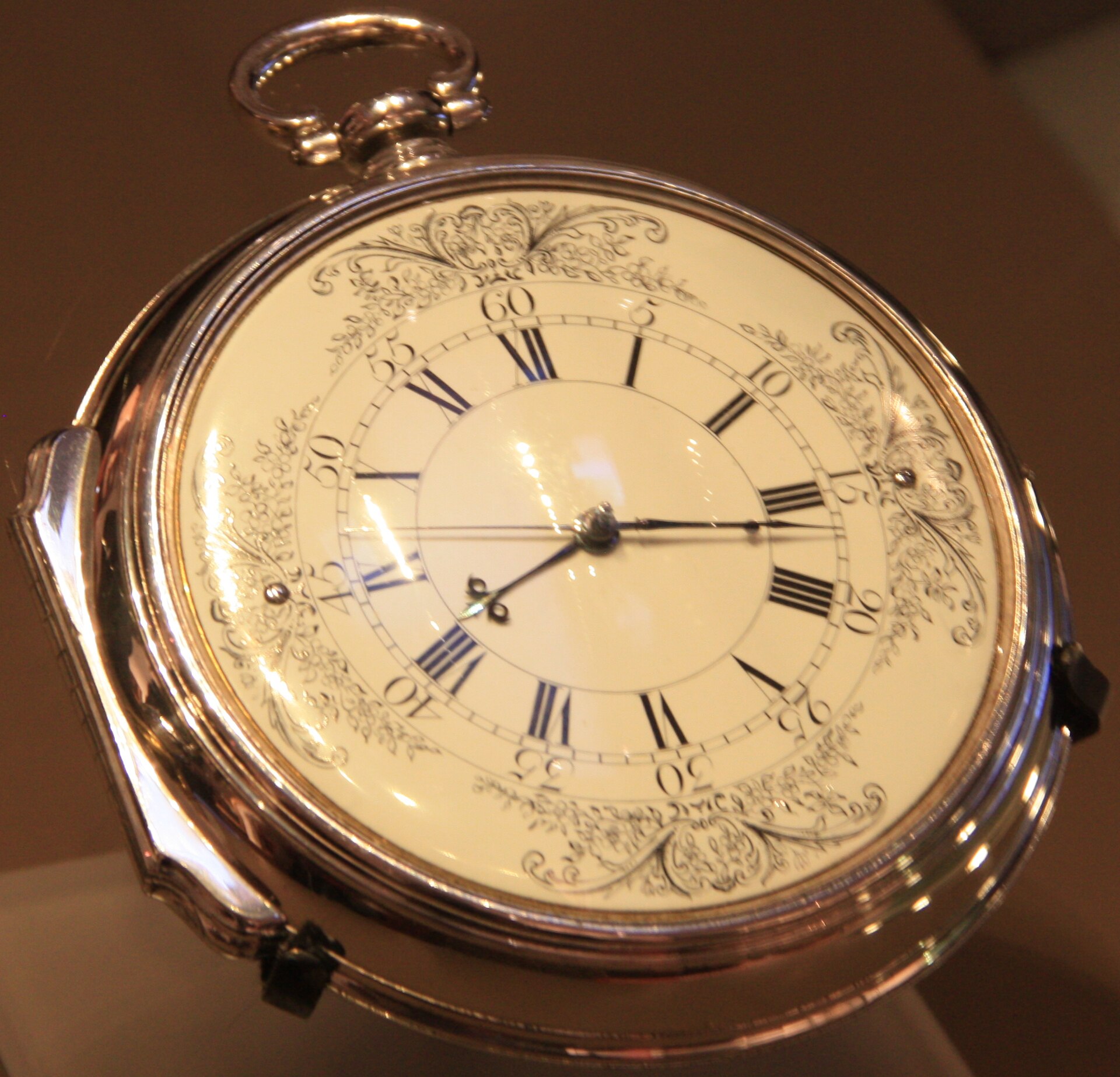
The Board of Longitude owned the marine timekeepers it had commissioned, and Parliament abolished the Board in 1828. Its papers run in an unbroken series through the eighteenth century until that date, and the surviving archive is held today in Cambridge University Library as part of the Royal Greenwich Observatory Archives.
K1, Larcum Kendall's copy of John Harrison's H4, was retired from sea service in 1802 and returned to Greenwich. It remained state property, in the custody first of the Board and then, after the abolition, of the Royal Observatory. The instrument never left Greenwich in the process, and the precise date on which it passed from one custodian to the other is not established in the sources this archive has read.
That gap is characteristic. When a body is abolished rather than wound up with an inventory, its property passes by operation of the statute, and the individual objects are not enumerated. There is no bill of sale to find because there was no sale, and there is often no schedule either. The provenance can be honest about the mechanism and still be unable to give a date, which is a different kind of uncertainty from a missing owner.
Three New York libraries became one corporation on 23 May 1895
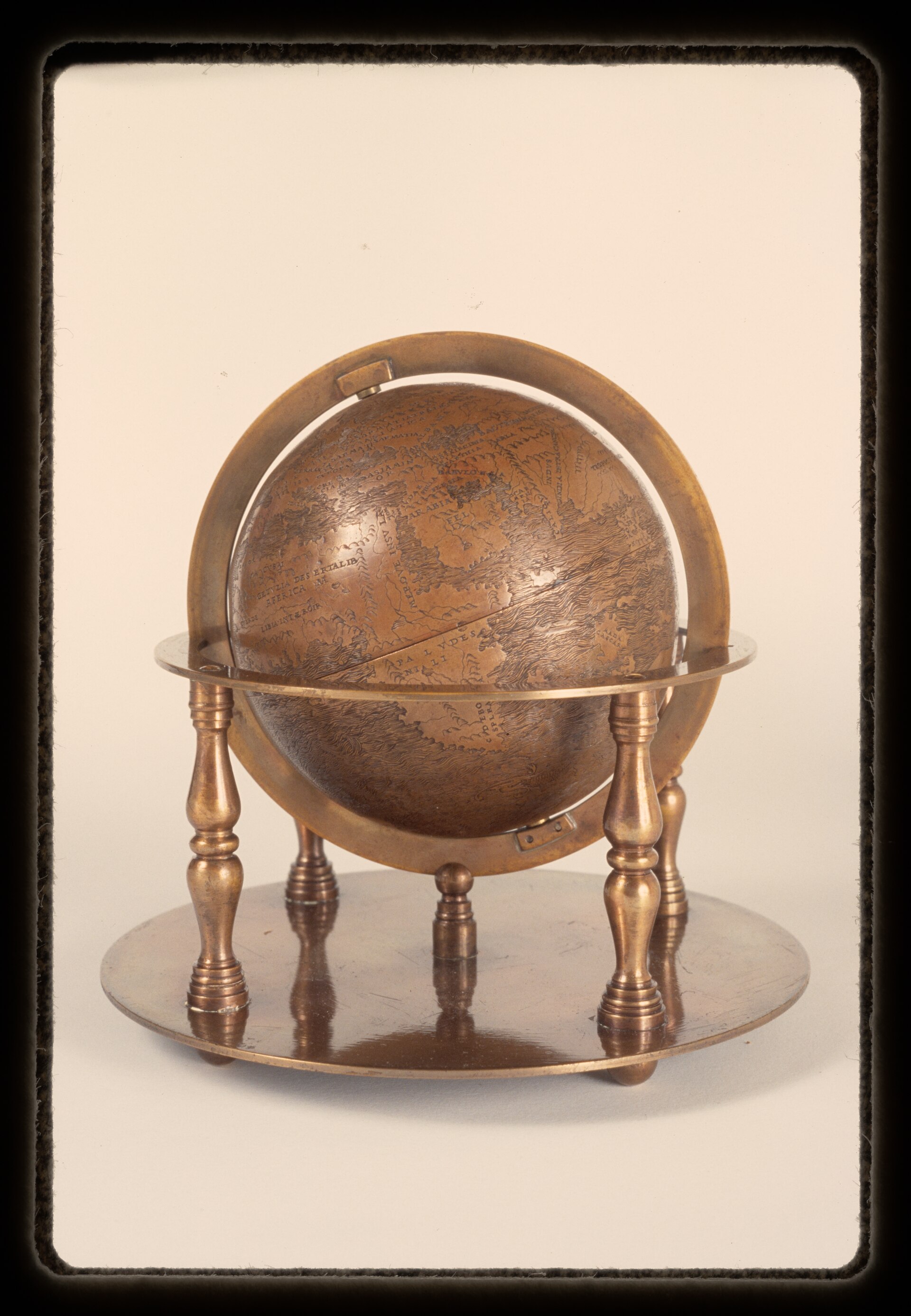
The New York Public Library was created by merging two existing libraries and a trust, and the merger is the reason it owns the Hunt-Lenox Globe. The Astor Library and the Lenox Library were both in financial difficulty by the early 1890s, and the Tilden Trust held money left to found a free library in the city but had no collection to put in one.
The library's own archives hold the records of the body that did the work. The Committee on Consolidation of the Astor, Lenox and Tilden Libraries was created in 1895 and, in the finding aid's words, reached an agreement to consolidate and establish the New York Public Library on 23 May of that year. Its nine members were drawn three from each side: three representing the Astor Library, three from the Lenox Library, and three from the Tilden Trust.
James Lenox's collection of rare books, manuscripts and Americana had been the Lenox Library. On 23 May 1895 the Lenox Library ceased to be the owner of the globe and the new corporation became the owner, by an agreement between three boards. No curator selected the globe, no committee voted on it, and no money changed hands for it. It arrived in the collection of one of the world's great libraries as a line item in a merger.
The Royal Irish Academy gave away its whole collection and kept conditions on it
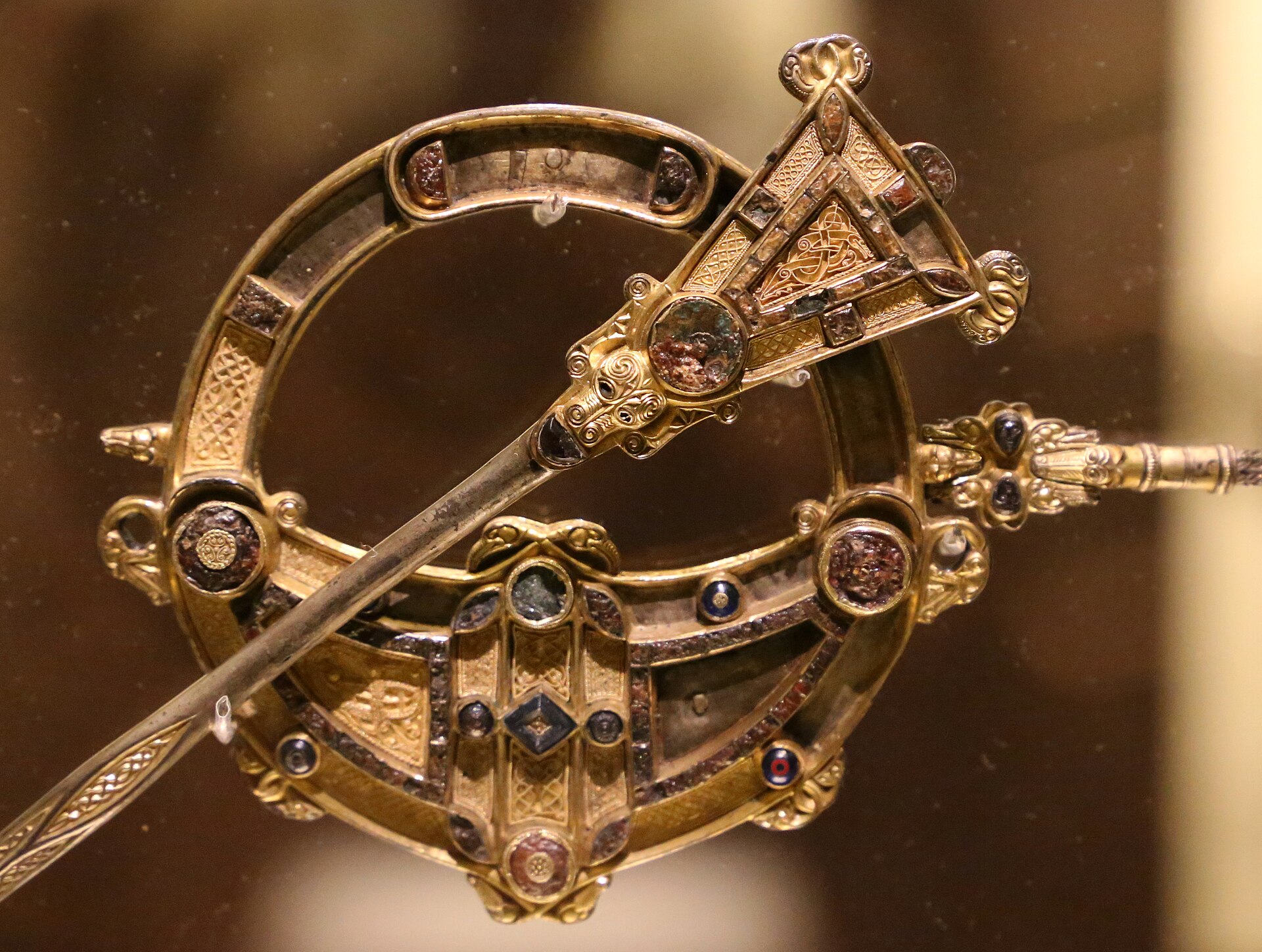
The Royal Irish Academy transferred its entire antiquities collection in 1890 to a newly created museum, and it did not transfer it unconditionally. The Academy's own history of itself records that the whole collection went to the new Dublin Science and Art Museum, now the National Museum of Ireland, with the Academy retaining custody under certain conditions.
The material included the Cross of Cong, the Ardagh Chalice and the Tara Brooch. Some of it had been given or bequeathed to the Academy; some had been bought by subscription from among its own members, which means individual fellows had paid for objects that a national museum now holds.
Two features of this transfer are easy to lose. The receiving institution was brand new and has since been renamed, so an object that has never moved has been in three differently named institutions. And the conditions the Academy retained are part of the object's legal position today, not a historical curiosity. A provenance line that says only National Museum of Ireland, 1890 has dropped both.
The India Museum closed in 1879 and a government office decided where its objects went
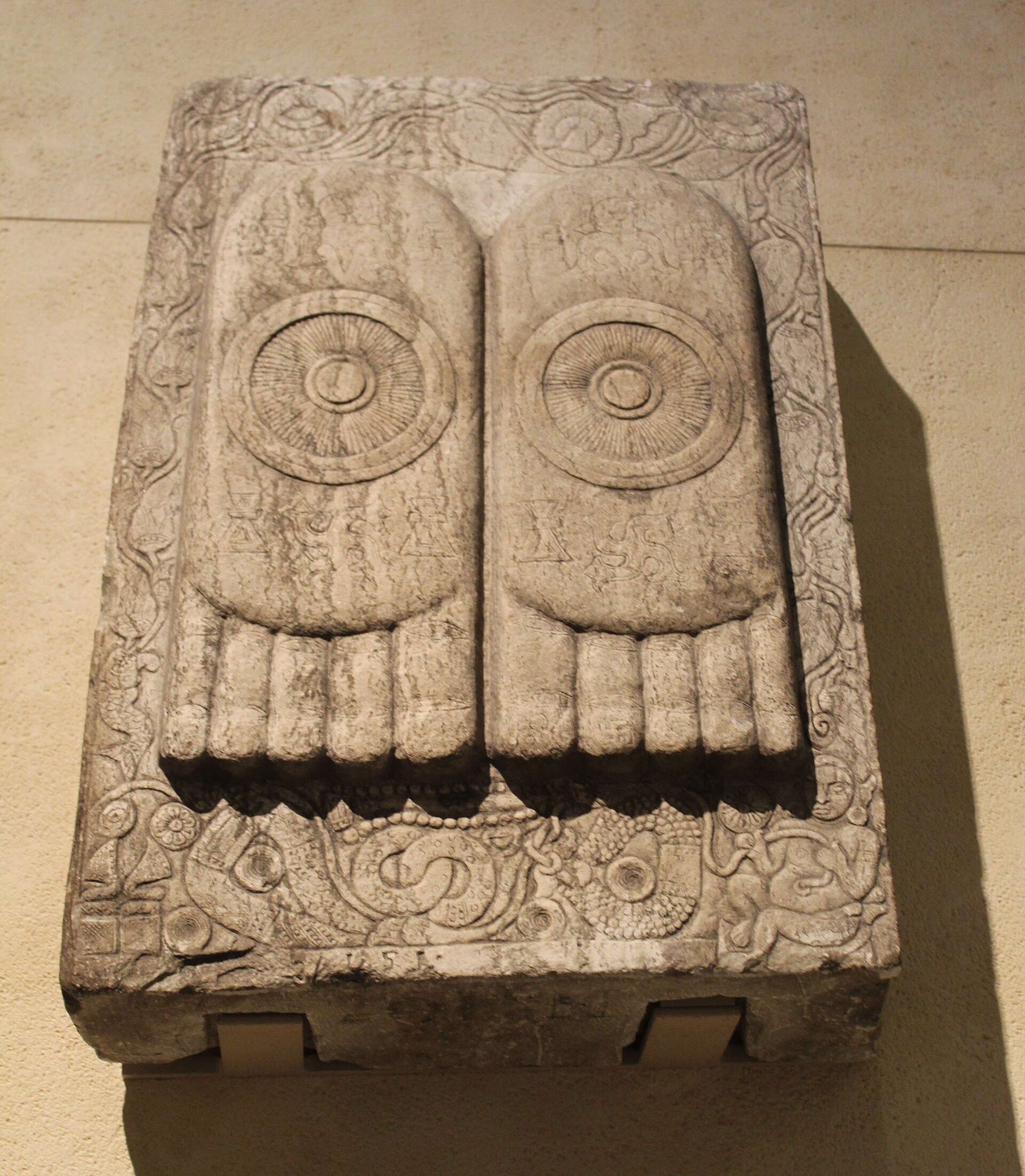
The India Museum was closed because it was underused, and its collection was redistributed by administrative decision rather than by sale. Founded in 1801 by the East India Company to hold objects brought back from India, it passed to the India Office when the Company lost its administrative powers in 1858, moved between temporary premises, and reached South Kensington in 1874.
In July 1879 the India Office wrote to the Science and Art Department about arrangements for transferring the museum's 19,228 objects to another institution. The V&A's archive research guide sets out the terms: the India Office stipulated that the collection should remain together and should be exhibited to the public. Two options were on the table, the British Museum or continued curation at South Kensington, and in October 1879 the India Office chose South Kensington on the stated ground that it offered better facilities for keeping the collection together.
Not everything went to South Kensington. The Amaravati sculptures, shipped from Madras in the 1850s and stored at Beale's Wharf and then Fife House before the Indian collections opened to the public, went to the British Museum, where they remain. One dead museum therefore seeded two living ones, and an object's institutional history depends on which side of a departmental decision it fell.
The dead institution then survived inside the numbering for two generations. Objects from the India Museum carried an IM prefix at the V&A until 1945, when they were given an Indian Section prefix instead. The building outlasted the institution too, standing in South Kensington for another forty-seven years and demolished in 1955.
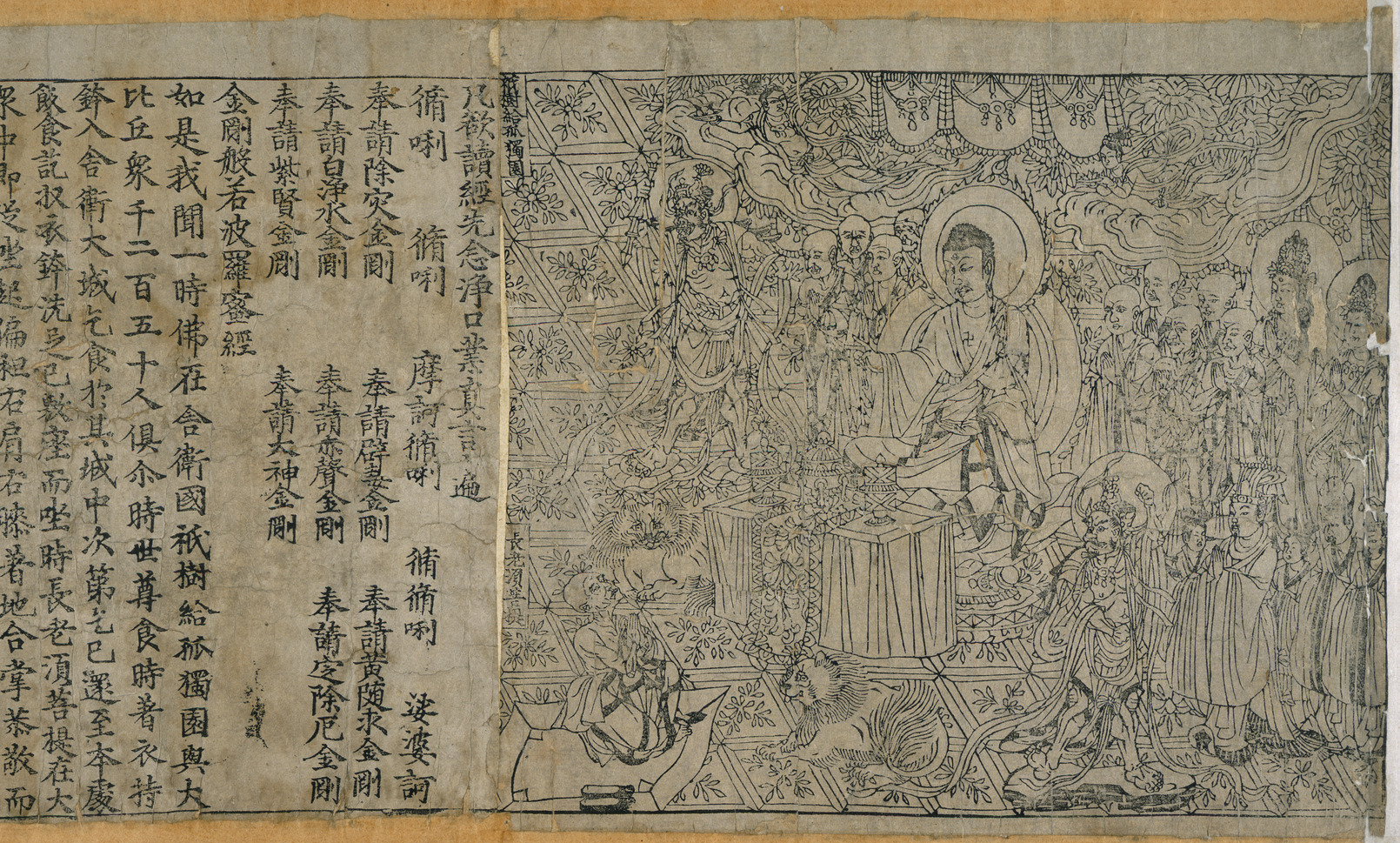
Parliament had to legislate to move the Diamond Sutra across a corridor
The Diamond Sutra changed owner in the 1970s without leaving Bloomsbury, and the change required an Act of Parliament. The British Library Act 1972 received royal assent on 27 July 1972; it is, in its own words, an Act to establish a national library for the United Kingdom under the control and management of a new Board and incorporating the Library of the British Museum.
Section 3 does the work. All articles which immediately before the appointed day were the property of the trustees of the British Museum and formed part of the collections in the Museum's Department of Printed Books, Department of Manuscripts and Department of Oriental Printed Books and Manuscripts shall on that day cease to be property of the trustees and become property of the British Library Board. The scroll Aurel Stein brought from Cave 17 at Mogao sat in the Department of Oriental Printed Books and Manuscripts, and so it changed hands by statute.
Two subsections repay attention. Section 3(4) allows the trustees to transfer further material notwithstanding any trust or condition prohibiting or restricting disposal, and notwithstanding anything in the British Museum Act 1963, which is the statute that otherwise makes the Museum's collection effectively inalienable. Section 3(5) then provides that property transferred subject to a trust or condition remains subject to the same trust or condition in the hands of the Board.
That pair is the general rule in miniature. Parliament can move title between public bodies, and it deliberately does not use the occasion to launder away the strings. Anyone reasoning about whether a British institution could transfer a contested object should read those two subsections before assuming that a reorganisation is a way out of an obligation.
Five deaths, five mechanisms, one shape
No two of these transfers used the same instrument, and all five produced the same defect in the record. Setting them out together shows how much variation hides behind the single phrase transferred to.
| Institution | Year it ended | Mechanism | Successor holder | Trace left in the record |
|---|---|---|---|---|
| Board of Longitude | 1828 | Abolished by Parliament; property passed by operation of statute | Royal Observatory, Greenwich | No enumerated schedule; the date K1 changed custodian is not established |
| Lenox Library | 1895 | Consolidation agreement of 23 May, negotiated by a committee of nine | The New York Public Library | Committee records survive in the library's own archives |
| Royal Irish Academy collection | 1890 | Transfer of the whole collection, with conditions retained | Dublin Science and Art Museum, now the National Museum of Ireland | Conditions still attach; the successor has since been renamed |
| India Museum | 1879 | Closure; destination chosen by the India Office in October 1879 | South Kensington Museum for 19,228 objects; Amaravati material to the British Museum | IM accession prefix survived until 1945 |
| British Museum library departments | 1973 | British Library Act 1972, section 3 | British Library Board | Statutory transfer; existing trusts and conditions expressly preserved |
The shape is the same in every row. A body ceases to exist, its property vests in a successor, and the individual object is never named in the instrument that moved it. What the reader can recover afterwards is the instrument, not the object's own paper trail, because the object did not have one for that event.
What to do with a transfer link in a provenance
Name the instrument, not just the successor. Passed to the British Library is a location; transferred by section 3 of the British Library Act 1972 is a fact a reader can check and a lawyer can rely on. Where the mechanism was a consolidation or an abolition, say which, because they behave differently: a consolidation usually leaves negotiated records, an abolition often leaves none.
Record the old number. Everything published about an object before the transfer cites it under the defunct institution's numbering, and a citation that cannot be resolved is a citation that will be quietly dropped by the next scholar. The India Museum's IM prefix is the model case, and it is why we treat a prefix change as an event rather than as housekeeping.
Ask what travelled with the object. Conditions, trusts and custody arrangements survive these transfers by design, and the Royal Irish Academy and the British Library Act both show it from opposite directions, one by private arrangement and one by statute.
And do not grade the link documented merely because the successor institution is obvious. That the object is now in the National Museum of Ireland is not evidence of how it got there. The Academy's own published history is.
Questions
Ownership passes to a successor body, usually by statute, by a consolidation agreement, or by a decision of the government department responsible. The objects frequently do not move at all, which is why the change of owner is often recorded as an administrative note rather than as a transfer of title.
The India Office closed it because it was underused and expensive. In July 1879 the India Office wrote to the Science and Art Department about transferring 19,228 objects, stipulating that the collection stay together and be exhibited, and in October 1879 chose the South Kensington Museum, now the V&A. Other material, including the Amaravati sculptures, went to the British Museum.
Under the British Library Act 1972, which received royal assent on 27 July 1972 and took effect on an appointed day in 1973. Section 3 transferred the property of the Departments of Printed Books, Manuscripts, and Oriental Printed Books and Manuscripts to the British Library Board, and provided that any trust or condition on an object continued to apply.
Not by default, and not under the British Library Act. Section 3(5) of that Act expressly provides that property transferred subject to a trust or condition remains subject to the same trust or condition in the hands of the new owner. The Royal Irish Academy achieved a similar result privately in 1890 by retaining conditions when it handed its collection to a new museum.
Because the scholarship published before a transfer cites the object under the defunct institution's numbering. India Museum objects at the V&A kept an IM prefix until 1945, so a citation from 1900 will not resolve against the current number unless the record carries both.
Sources
- 1New York Public Library Archives, finding aid for the 'Committee on the Consolidation of the Astor, Lenox and Tilden Libraries records, 1894-1899', call number MssArc 4902. Records the committee's creation in 1895, its nine members drawn three from each constituent body, and the agreement of 23 May 1895 establishing the New York Public Library. archives.nypl.org/nypla/...
- 2Cambridge Digital Library, 'Royal Greenwich Observatory Archives', collection description. States that the archive holds the complete run of the surviving papers of the Board of Longitude through the eighteenth century until its abolition in 1828. cudl.lib.cam.ac.uk/collections/...
- 3Royal Irish Academy, 'History of the Academy'. The Academy's own account of the 1890 transfer of its whole antiquities collection, including the Tara Brooch, the Ardagh Chalice and the Cross of Cong, to the new Dublin Science and Art Museum, with the Academy retaining custody under certain conditions. ria.ie/about/...
- 4Victoria and Albert Museum, 'V&A Archive research guide: The India Museum and Indian objects'. Sets out the museum's foundation in 1801, the July 1879 India Office letter on transferring 19,228 objects, the stipulation that the collection remain together and be exhibited, the October 1879 decision in favour of South Kensington, and the change from the IM to the IS accession prefix in 1945. vam.ac.uk/info/...
- 5British Library Act 1972 (c. 54), as enacted, sections 1 and 3, read on legislation.gov.uk. Section 3(1) transfers the property of the British Museum's Departments of Printed Books, Manuscripts and Oriental Printed Books and Manuscripts to the British Library Board; section 3(4) permits transfer notwithstanding any trust or condition and notwithstanding the British Museum Act 1963; section 3(5) preserves any such trust or condition in the hands of the Board. legislation.gov.uk/ukpga/...
More in Museums and Exhibitions
The partThe complete object is a temporary arrangement
For a dispersed set, being complete is an event with a date and a duration. Twelve Renaissance tazze were whole and correct for two days in 2014, and...
When the Holder Is Not a Museum, the Accession Number Is Replaced by Law
Fourteen records here are held by a cathedral, a diocese, a cathedral works, a charitable trust or a monuments agency.
A Closing Date That Moves Both Ways, and Who Actually Moved It
Of 937 exhibitions tracked here, only 7 ever had a date move, and three of those flipped between the same two dates again and again.