The Name in the Title Is the Part That Is Not Documented
Arms and armour carries more disputed provenance than any other class in this archive: 22 of its 95 ownership links, against one of 98 for furniture. The date is struck into the metal. The famous wearer is carried by a story.
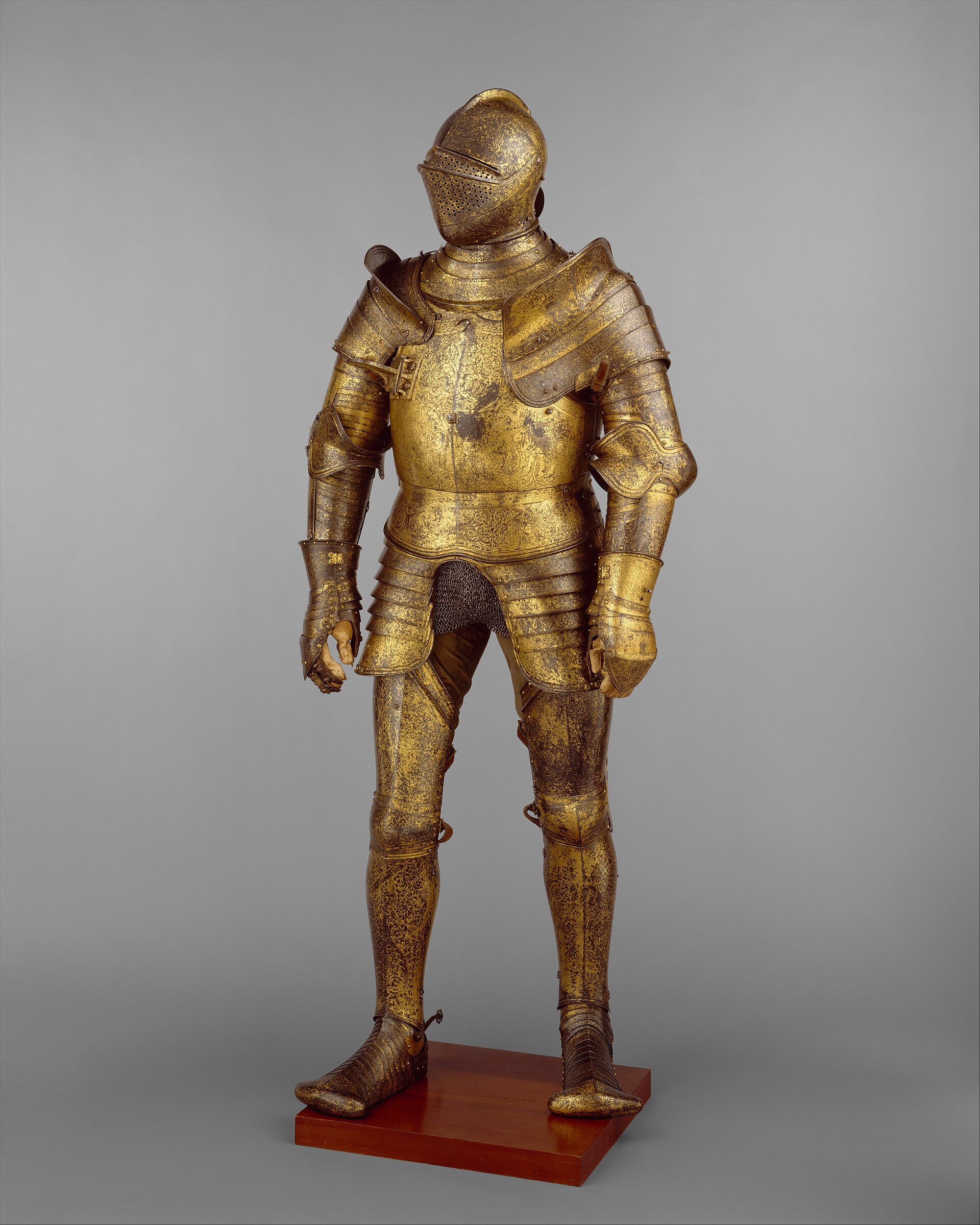
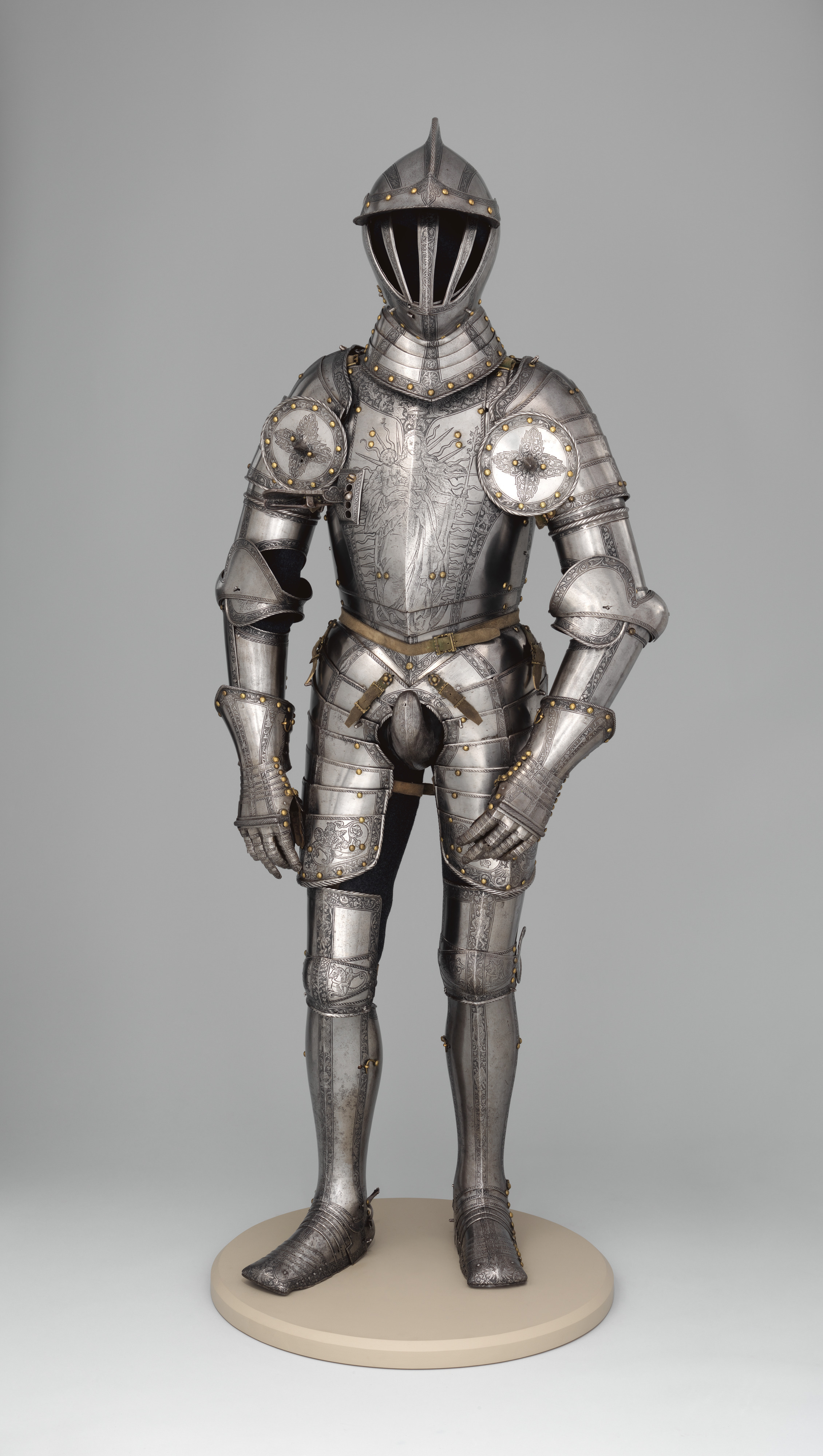
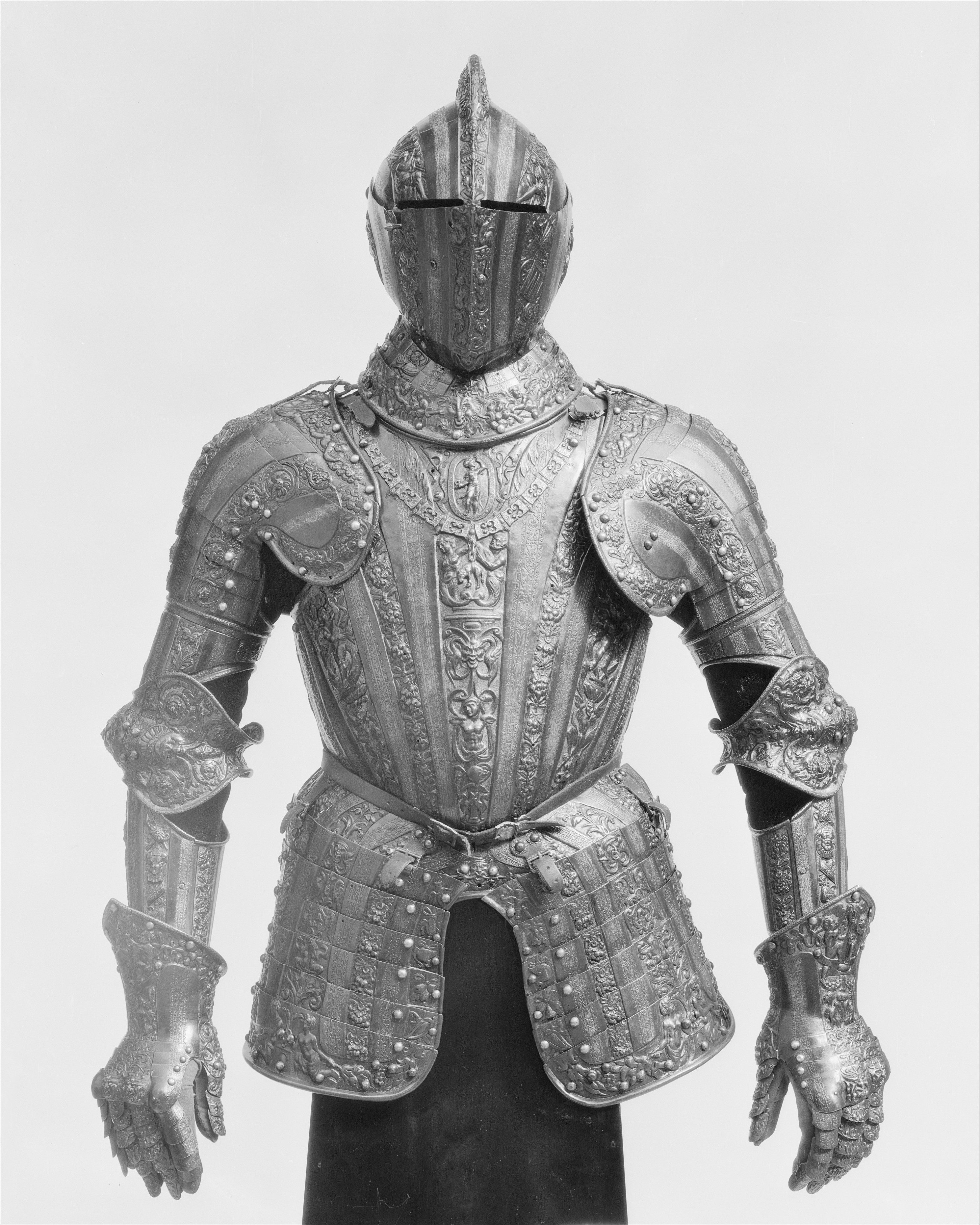
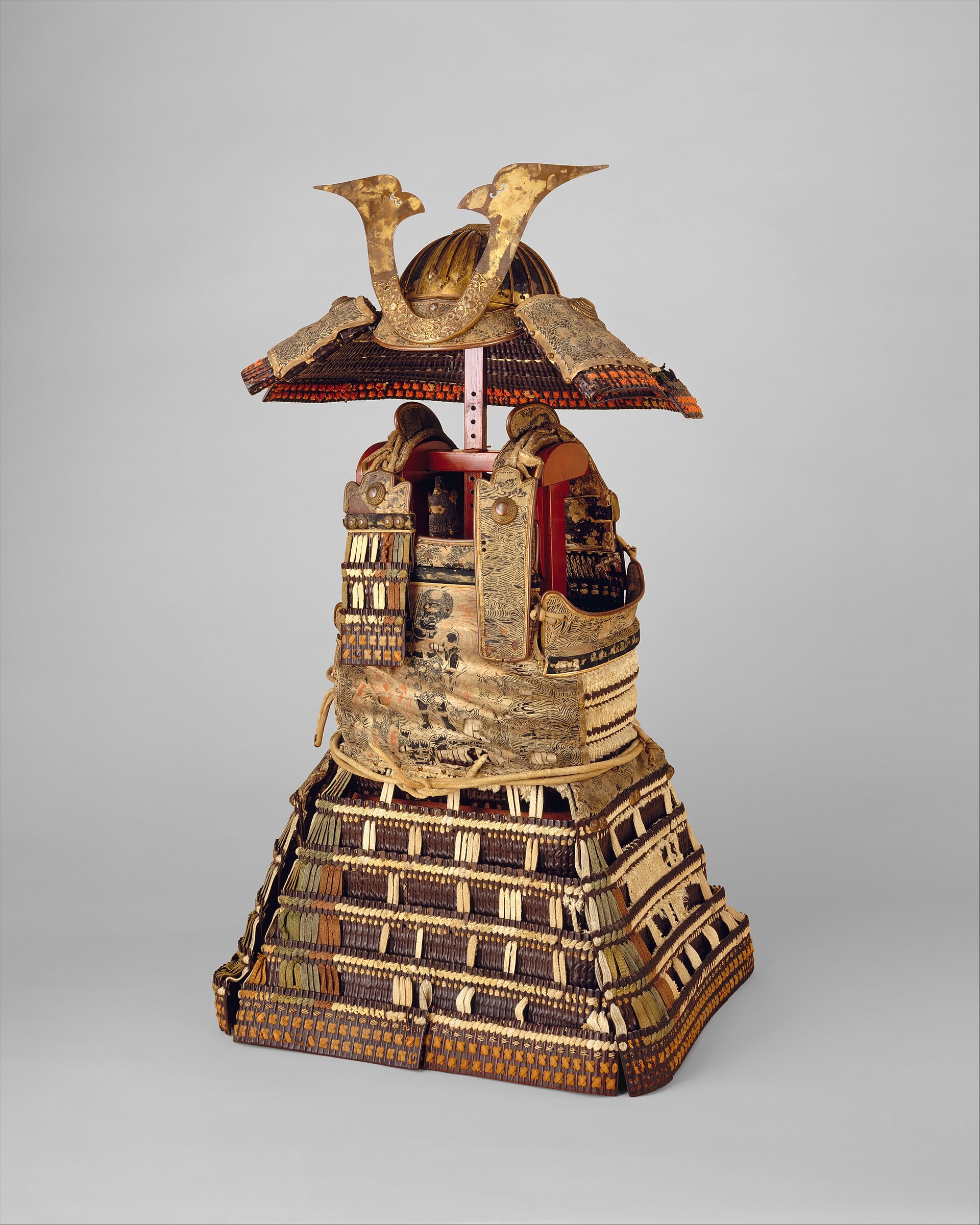
Records in this piece: Armor Garniture, Probably of King Henry VIII of England, Armor of Emperor Ferdinand I (1503-1564), Armor (Yoroi) of Ashikaga Takauji, Half Armor attributed to Don Gonzalo Fernandez de Cordoba y Fernandez de Cordoba, Duke of Sessa (1520/1524-1578)
On this page 7 sections
ContentsClose
In short
- Arms and armour is the worst-documented object class in this archive for ownership. Of its 95 graded provenance links, 22 are disputed. That is 23 per cent, against 8 per cent across all 1,994 graded links here, and against one disputed link in 98 for furniture, one in 95 for printed books and one in 69 for photographs.
- It is also the only class here where a museum's own title hedges the owner's name. Two of the fourteen arms and armour records carry a qualifier in the title itself, the Metropolitan's Armor Garniture, Probably of King Henry VIII of England and its Half Armor attributed to the Duke of Sessa. Across the other 271 records in this archive, no title hedges at all.
- Where the title does not hedge, the provenance often does. The Metropolitan's Armor (Yoroi) of Ashikaga Takauji states the name flatly, and this record grades that donation disputed: the attribution to Takauji by name was first published by Yamagami Hatiro in 1928, and no fourteenth-century document or inscription names him as donor.
- The Armor of Emperor Ferdinand I was believed through the nineteenth century to have belonged to Albert V of Bavaria. It was reassigned to Ferdinand by a Vienna armoury director reading the wearer's build and the crowned Reichsadler on the sabatons. Neither the curator's name nor the date of that reattribution is documented in any source consulted for this record.
- The evidence that survives best on an armour is the evidence that was struck into it. Greenwich put 1527 on three separate plates of the Henry VIII garniture and Kunz Lochner put 1549 on Ferdinand's harness. In both cases the date and the workshop rest on the object; the celebrated wearer rests on testimony.
An armour can date itself, and it cannot name its wearer
An armour is one of the few classes of object that carries its own date on its surface. The Greenwich garniture now in the Metropolitan Museum of Art is dated 1527 on the backplate, on the fauld reinforce and on the lower tace lame, three separate plates of the same harness. The harness Kunz Lochner made in Nuremberg is dated 1549. Those numbers were put there by the workshop that made them, and they are the one part of each object's history that rests on the object rather than on somebody's recollection of it.
The famous name is a different kind of claim, and it arrives by a different route. It comes from a family tradition, from a shrine's memory of a donation, from a seventeenth-century household inventory, or from a curator reading a wearer's build against a portrait. None of that is worthless. All of it is testimony, and testimony is what this archive grades.
The result is a pattern we did not expect to find when we started tagging certainty on every ownership link. Armour is the object class most likely to be named after a famous person and the least likely to be able to prove it.
Arms and armour carries three times the archive's rate of disputed ownership
Twenty-two of the 95 graded provenance links on the fourteen arms and armour records in this archive are graded disputed, which is 23 per cent. Across all 285 records and all 1,994 graded links, the figure is 8 per cent. The classes at the other end of the range are not close: furniture carries one disputed link in 98, printed books one in 95, photographs one in 69.
The gap is not a matter of how hard we looked. Furniture and printed books in this archive are researched to the same standard and carry chains of comparable length, five to six links per record against armour's seven. What separates them is that a book has a title page and a piece of French furniture has a guild stamp, and neither of those has ever been asked to prove that a king held it.
| Object class | Graded links | Disputed | Share disputed |
|---|---|---|---|
| Arms and armour | 95 | 22 | 23 per cent |
| Antiquity | 119 | 18 | 15 per cent |
| Sculpture | 102 | 14 | 14 per cent |
| Manuscript | 115 | 16 | 14 per cent |
| Painting | 273 | 30 | 11 per cent |
| Furniture | 98 | 1 | 1 per cent |
| Printed book | 95 | 1 | 1 per cent |
| Photograph | 69 | 1 | 1 per cent |
| All classes | 1994 | 169 | 8 per cent |
Two museum titles here carry the doubt inside the title, and both are armour
The Metropolitan calls one object Armor Garniture, Probably of King Henry VIII of England, and another Half Armor attributed to Don Gonzalo Fernandez de Cordoba y Fernandez de Cordoba, Duke of Sessa. Those are the museum's own words, not ours, and they are doing real work: the qualifier is a curator declining to assert something the file cannot support.
What makes it worth counting is that nothing else in this archive does it. Two of fourteen arms and armour titles hedge. Across the other 271 records, covering paintings, ceramics, silver, manuscripts, maps, instruments and everything else, the count is zero. No museum here writes Probably of into the title of a painting, however contested the picture.
The Sessa hedge is well earned. A 1643 inventory of the Infantado armoury at Guadalajara is reported to record a full head-to-foot harness said to have belonged to the Duke of Sessa. The object in New York is a half armour, upper body only, which is why this record grades that identification disputed rather than documented. The museum's own 2012 scholarship goes further: forensic comparison against a Madrid photograph of about 1865 to 1870 shows that the finished object combines elements of two different fire-damaged armours, assembled and altered inside the collection of the dealer Frederic Spitzer before it was sold in 1895.
Where the title states the name flatly, the provenance often disputes it
The Metropolitan's Armor (Yoroi) of Ashikaga Takauji carries no qualifier in its title, and the link that puts Takauji in the chain is graded disputed in this record. Shrine and family tradition holds that Takauji gave the armour to the Shinomura Hachimangu near Kameoka during a ten-day stay before his campaign of March 1333. The attribution to Takauji by name was first published by the scholar Yamagami Hatiro in 1928, roughly six hundred years after the event it describes, and no contemporary fourteenth-century document or inscription names him as the donor.
The dating of the armour itself is on firmer ground and rests on the thing in the case: lamellar kozane construction, the closure type and the surviving original silk lacing identify it as a shiroito tsumadori odoshi yoroi of the early fourteenth century. Nothing about that evidence requires Takauji, and nothing about it excludes him.
Ferdinand I is the same shape of problem with the dates reversed. Through the nineteenth century the Erbach-Erbach collection believed the harness had belonged to Ferdinand's son-in-law Albert V of Bavaria, a fellow knight of the Golden Fleece, on the reasoning that it must have been made for Albert as a young man because he grew heavy later. In the early twentieth century the director of the armoury at the Kunsthistorisches Museum in Vienna reassigned it to Ferdinand, reading the wearer's build and the crowned Reichsadler etched on the sabatons against Ferdinand's documented physique and his title of King of the Romans. The reasoning is good. It is also the whole of the evidence, and the sources consulted for this record name neither the curator who made the call nor the year he made it.
Presumably is the museum's own word, and it holds up a whole chain
The Henry VIII garniture shows what happens when a hedged title is followed down into the provenance. The Metropolitan's reading is that Henry presented the armour to the vicomte de Turenne, who led a French embassy to London in 1527. The museum states this as belief rather than record, and no contemporary document naming this armour and this recipient is cited in its entry.
The next link is weaker still. After Turenne's death in 1532 the armour passed, the museum says, presumably to his friend Galiot de Genouilhac. Presumably is the museum's word. That link matters more than any other in the chain, because the older name for the object depended on it, and because the reason anyone connected the armour to Genouilhac in the first place is a nineteenth-century tradition in the Crussol family, who descend from him. The tradition supports the link and the link supports the tradition. This record declines to close that circle.
Behind both sits a gap of about 330 years. The museum's published chain resumes only in the nineteenth century, with a bequest recorded in terms that cannot be right as printed, since the text gives the legatee the same name as the testator. We have flagged that rather than quietly correcting it, because a silently repaired record is worse than a visibly broken one.
How to read an armour label
Separate what the metal says from what the file says, and do it before anything else. A date struck into a plate, a workshop mark, a guild stamp and a construction technique are properties of the object. A king, a general, a shogun or a duke is a claim about a transaction, and on this evidence it is the claim most likely to fail.
Then read the qualifier as information rather than as throat-clearing. Probably and attributed to in a museum title are a curator telling you exactly where the file runs out, and they are rarer than they should be. Their absence proves nothing: two of the strongest cases here, Takauji and Ferdinand, carry unqualified titles over disputed links.
Ask what the name is doing. If removing the famous person leaves an early fourteenth-century yoroi with original lacing, or a Nuremberg harness dated 1549 by a known master, the object survives the loss intact and remains worth exactly what it was worth as a thing. If removing the name leaves very little, the name was carrying the object, and that is worth knowing before anyone pays for it.
Why this archive is free to read
We do this for everyone who loves art. The people who have studied it for years, and the people who just stopped to look. Iconotheca exists so that what we learn belongs to all of them.
Nobody pays us for this. No ads, no sponsors, no commercial interest. These works belong to all of us, and we would rather share them with as many people as we can than keep them to ourselves.
If it gave you something today, tell us to keep going. Follow us, leave a like, or write a positive comment. We read every one, and they are what keeps us going.
Questions
Because armour was made for identifiable individuals and then survived in family armouries, shrines and castles where memory outlasted paperwork. A tradition that a suit belonged to a king is often the only ownership record there is, and it becomes the object's name long before anyone tests it. In this archive 22 of the 95 graded ownership links on arms and armour are disputed, against 8 per cent across all classes.
It means the museum accepts the association but cannot cite a document for it. In this case the Metropolitan states its belief that Henry VIII presented the garniture to the vicomte de Turenne in 1527, and describes the next transfer, to Galiot de Genouilhac, with the word presumably. No contemporary document naming this armour and either recipient is cited in the entry.
No, and treating it that way will mislead you. Two of the clearest cases of a disputed owner in this archive, the yoroi of Ashikaga Takauji and the armour of Ferdinand I, carry titles that state the name without any qualifier, while the provenance record grades the connection disputed in both. Read the provenance, not the label.
Date, workshop and construction, when the object carries them. Greenwich struck 1527 into three separate plates of the Henry VIII garniture, Kunz Lochner dated Ferdinand's harness 1549, and the Takauji yoroi is placed in the early fourteenth century by its kozane construction, its closure type and its surviving original silk lacing. None of that evidence depends on anyone's memory.
Sources
- 1The Metropolitan Museum of Art, catalogue entry for Armor Garniture, Probably of King Henry VIII of England, accession 19.131.1a-r, t-w, .2a-f, l. Read 6 September 2026. Source for the 1527 dating on backplate, fauld reinforce and lower tace lame, for the Turenne presentation given as belief, for the word presumably on the Genouilhac transfer, and for the nineteenth-century Crussol d'Uzes bequest. metmuseum.org/art/...
- 2The Metropolitan Museum of Art, public collection API, object 23944, Kunz Lochner, Armor of Emperor Ferdinand I (1503-1564), accession 33.164a-x. Queried 6 September 2026. Source for the 1549 date, the maker, the 1933 purchase through the Rogers Fund and the George D. Pratt gift, and the object title as the museum states it. collectionapi.metmuseum.org/public/...
- 3Morihiro Ogawa, 'A Famous Fourteenth-Century Japanese Armor', The Metropolitan Museum Journal, vol. 24 (1989). Source for the Shinomura Hachimangu donation tradition, for the March 1333 dating the museum's own research specifies, for Yamagami Hatiro's 1928 publication of the attribution to Takauji by name, and for the Matsui family custody and the eventual sale. resources.metmuseum.org/resources/...
- 4The Metropolitan Museum of Art, collection record for object 21996, Half Armor attributed to Don Gonzalo Fernandez de Cordoba y Fernandez de Cordoba, Duke of Sessa (1520/1524-1578), accession 04.3.270a-o. Read 6 September 2026. Source for the museum's hedged title, the reported 1643 Infantado inventory, the Laurent photograph of about 1865-70, and the Spitzer assembly from two fire-damaged armours. metmuseum.org/art/...
- 5The Metropolitan Museum of Art, collection entry for Armor (Yoroi) of Ashikaga Takauji (1305-1358), accession 14.100.121a-e. Read 6 September 2026. Source for the museum's unqualified title and for the construction evidence dating the cuirass, skirt and waidate to the early fourteenth century. metmuseum.org/art/...
- 6Leslie Southwick, 'Henry VIII's Almain Armoury at Greenwich and the Master Workmen to the Crown', Arms and Armour (Taylor and Francis). Source for the operation of the Royal Almain Armoury at Greenwich and its restriction to royal and diplomatic work rather than open commission. tandfonline.com/doi/...
More in Attribution and Authenticity
The partA Hallmark Can Be Genuine, Legal and About a Different Object
The V and A catalogues a Paul de Lamerie ewer of 1736 as a duty dodger, hallmarked 1944.
Composite Names Three Different Objects, and Only One of Them Is a Fake
Fifty-seven records here use composite, pastiche or assembled, and the words are doing three incompatible jobs.
The Frame Has Its Own Provenance
Ten records carry evidence on a frame. Van Eyck's integral frames date the panels to 1410-1440; a 1970 loan label on a frame in Maine proves nothing...