The Longest Link in a Provenance Is the One Nobody Wrote Down
Measured across 223 records, an inheritance link spans a median of 27 years against 14 for a purchase and 7 for a purchase at auction. Descent generates no document unless something outside the family compels an inventory.
Records in this piece: Codex Leicester, The Rothschild Prayerbook, Little Dancer Aged Fourteen, The Rising Squall, Hot Wells, from St Vincent's Rock, Bristol
On this page 8 sections
ContentsClose
In short
- Measured across the 223 records published here, an inheritance link spans a median of 27 years against 14 for a purchase and 7 for a purchase at auction. Descent is the longest documented link a provenance carries, and the market's links are the shortest.
- The reason is structural rather than archival. A sale needs a document because two parties with opposed interests require one, and a death inside a family produces nothing unless something outside the family compels a list.
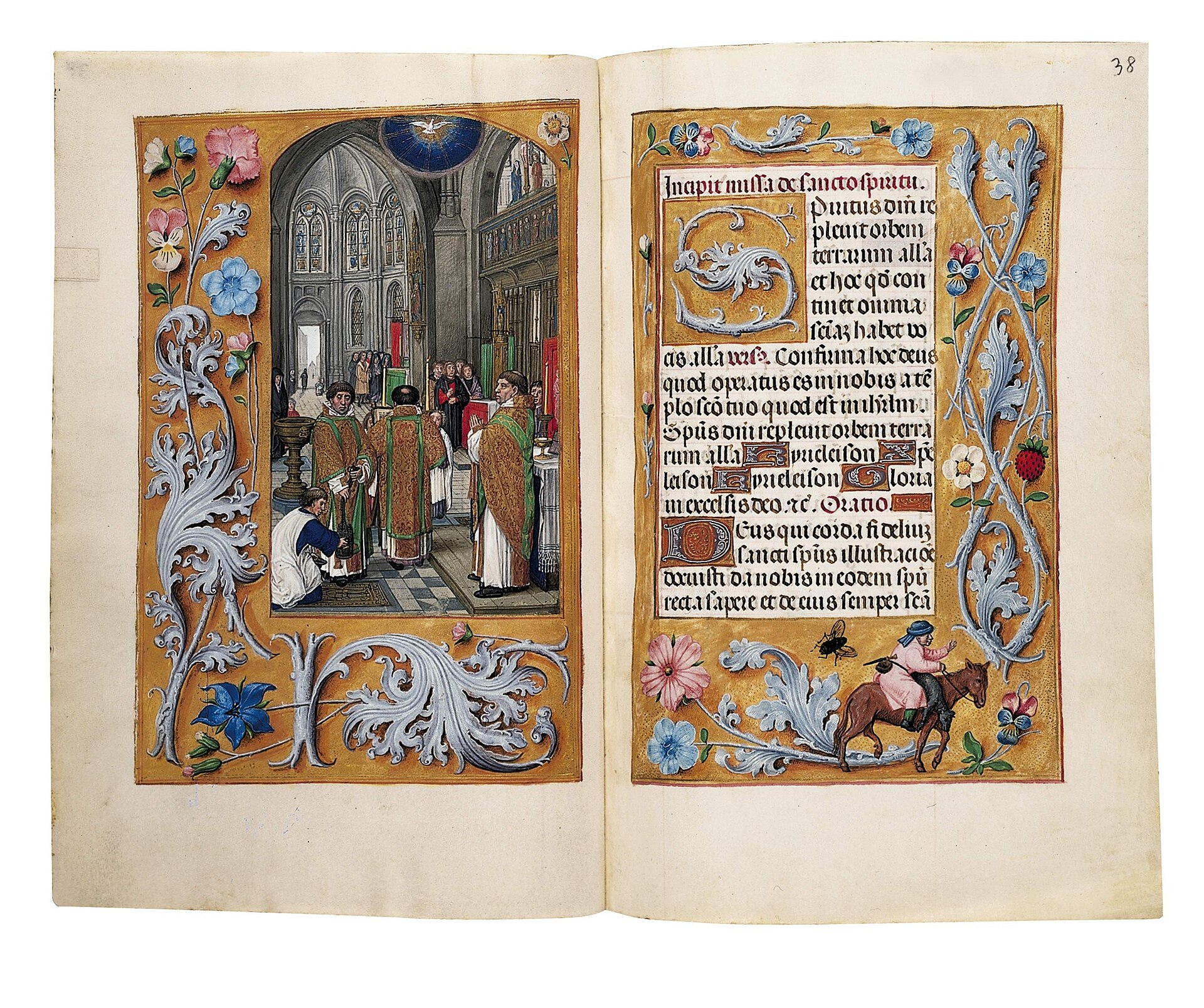
- The Rothschild Prayerbook is documented at four moments and every one of them is a compelled inventory: a collection catalogue in 1872, a probate valuation in February 1906, two later palace inventories, and a confiscation in 1938.
- Christie's own lot record uses the word presumably for a father-to-son inheritance in one of the best-recorded private collections in Europe, which is the correct grade for a transfer nobody minuted.
- The numbers assigned by those compelled inventories are physically on the object: 927 on a label at the corner of the lower cover and AR3390 in pencil on the front flyleaf.
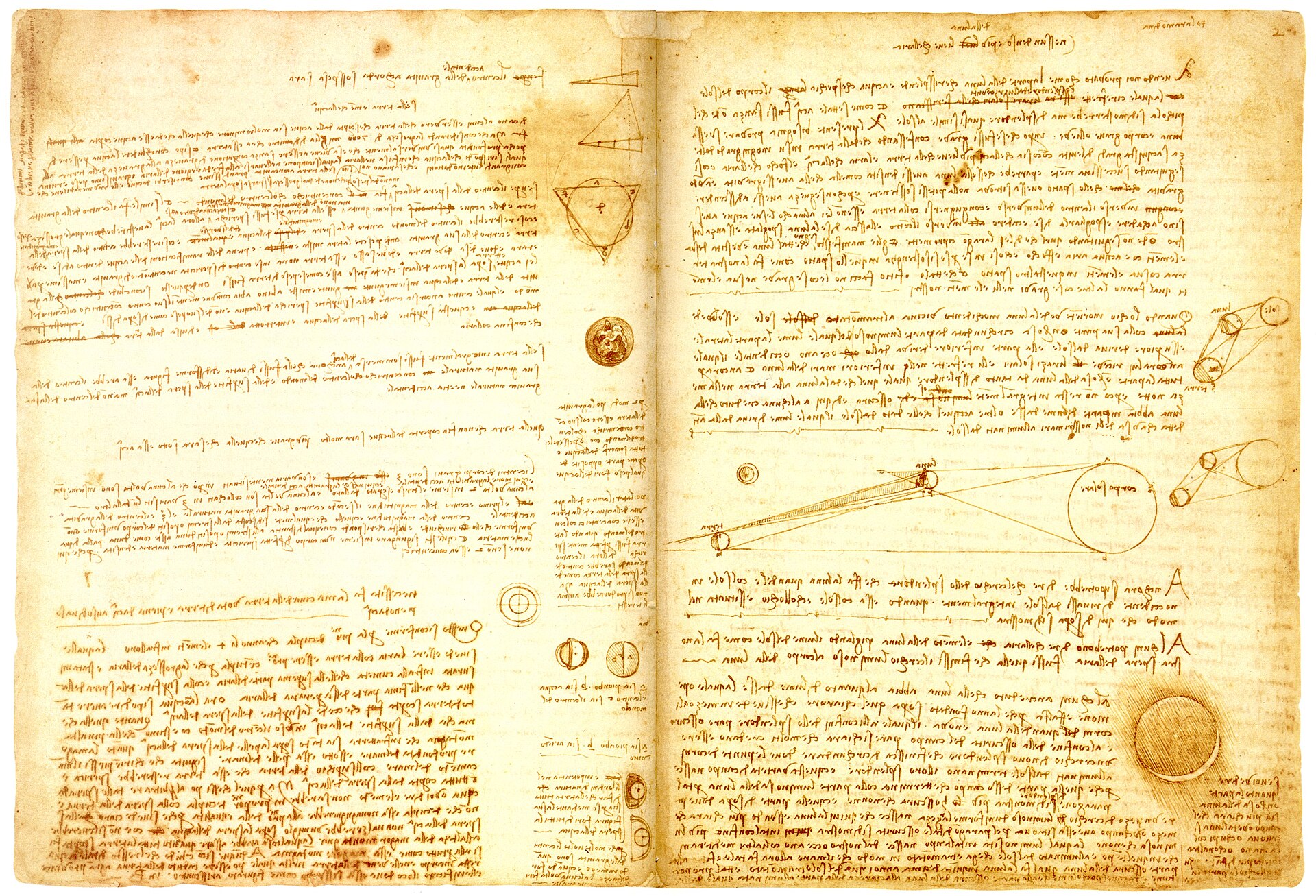
- The Codex Leicester spent roughly 112 years in one family with nothing recorded, and more than two and a half centuries in another, at Holkham, where it acquired both its name and its scholarly reputation.
A sale writes itself down and a death does not
Provenance research is usually described as a hunt for missing documents, and it is better understood as a study of which transfers generate documents in the first place. A sale involves two parties with opposed interests, a price to be agreed and a title to be passed, so it produces a receipt, a ledger entry, a catalogue, an invoice or all four. Somebody has a reason to write it down and somebody else has a reason to keep it.
An inheritance has none of that. A father dies and his son has the object; no negotiation happened, no price was set, and the only parties involved already trust each other or are obliged to each other. The paperwork that does exist is generated by outsiders, usually the state, and only when the state has a reason to ask.
That asymmetry is measurable, and this archive is large enough to measure it. The result is not subtle.
What the corpus measures
Across the 223 published records here, provenance links whose start and end years are both readable can be timed, and they sort by transfer type in a consistent order. The table gives every event type with at least eight datable links.
| Type of link | Links measured | Median | Mean | Longest |
|---|---|---|---|---|
| Recorded gap | 78 | 102 | 182 | 722 |
| Inheritance | 43 | 27 | 40 | 221 |
| Purchase | 88 | 14 | 21 | 220 |
| Purchase at auction | 25 | 7 | 15 | 96 |
| Bequest | 8 | 6 | 25 | 87 |
| Sale | 20 | 1 | 8 | 35 |
An inherited object stays put for about twice as long as a bought one and nearly four times as long as one bought at auction. The recorded gap sits above everything at a median of 102 years, and that is the honest neighbour of the inheritance line rather than a separate phenomenon: a gap is frequently a family tenure that nobody minuted, recorded as silence because the archive cannot prove it was a family.
The Rothschild Prayerbook is documented four times, and always by compulsion
The Rothschild Prayerbook is the best possible test of the argument, because if any private descent should be fully papered it is this one. The manuscript, a Flemish book of hours of about 1505 with miniatures given to Gerard Horenbout, Simon Bening and their circle, passed through one of the wealthiest and most meticulously catalogued collecting families in Europe. Christie's published its provenance in detail when it sold the book in 2014.
Every fixed point in that chain is an inventory somebody was made to compile. Anselm von Rothschild's collection was catalogued by Schestag in 1872, where the prayerbook is number 597, the London Hours number 599 and the Brandenburg prayerbook now in the Getty number 595. On Nathaniel von Rothschild's death the estate was inventoried in February 1906, and the prayerbook is number 452, listed as hanging in the Galerie of the palace in the Theresianumgasse and valued at 150,000 Kronen against 80,000 for the Brandenburg book beside it. Two further palace inventories followed. In 1938 the manuscript was appropriated by the Nazis, an act which generated its own meticulous records, and it was restituted to the family in 1999.
A collection catalogue, a probate valuation, two household inventories and a confiscation. Not one of those documents was made because an object changed hands within the family; each was made because a death, a catalogue project or a state demanded a list.
Christie's says presumably, and it is right to
The most instructive words in that lot record are not the valuations. Describing how the book passed from Nathaniel to his heir, Christie's writes that Baron Alphonse von Rothschild inherited Nathaniel's palace and, presumably, the manuscript along with it.
That hedge is doing real work. Everyone involved knows Alphonse inherited the palace, the manuscript was in the palace, and Alphonse had it in 1938. What nobody has is a document recording the transfer of this object to this person, because the object moved with the building and nobody minuted the contents. An auction house with every commercial reason to present an unbroken chain wrote presumably instead, in the provenance of a manuscript that sold for many millions.
This archive grades that kind of link disputed or unknown rather than documented, and the Rothschild case shows why the grade is not pedantry. If the best-recorded private collection in Europe yields a presumably on a father-to-son transfer, an unqualified inheritance line in a thinner provenance is almost certainly an inference nobody has labelled.
The inventory numbers are on the object
The compelled inventories left physical marks, and those marks are now the evidence. Christie's records that the numbers from two successive palace inventories survive on the book itself: 927 on a label at the upper corner of the lower cover, and AR3390 in pencil on the front flyleaf.
This is worth dwelling on, because it inverts the usual relationship between an object and its paperwork. The documents that recorded those numbers are scattered or lost; the numbers are still on the binding. An administrative act performed on a family's possessions, for reasons that had nothing to do with scholarship, is now the strongest surviving proof of where the manuscript sat and when.
The same pattern runs through the corpus. Numbers written on objects by people counting them for probate, for insurance, for a household, or for a confiscation outlive the ledgers they belonged to, and provenance research spends a good deal of its time reading marks left by administrators who were not interested in the object at all.
A century in one family, and two and a half in another
The Codex Leicester has two long family tenures and they behave exactly as the measurements predict. The Museo Galileo's account of the manuscript's European circulation records it as owned by the sculptor Guglielmo della Porta in 1537 and as the property of the painter Giuseppe Ghezzi by 1689. Della Porta died in 1577. Between his death and Ghezzi, roughly 112 years, the manuscript was with his heirs and nothing about it was recorded.
Then it was bought by the future Earl of Leicester, who took it to Florence to have a copy made about 1717, and kept in the family's London house from 1719 and afterwards at Holkham until 1980. That is a single family tenure of more than two and a half centuries, and unlike the della Porta years it is thickly documented, because the manuscript was famous, copied, cited by Lalande in 1769 and acquired in copy by the Weimar library on Goethe's advice around 1818.
The difference between the two tenures is not the family and not the object. It is that the second one was public. A privately held object generates records in proportion to how much attention outsiders pay it, and a manuscript sitting in a chest of family papers, which is how the della Porta years ended, generates none.
How to read an inheritance link
Treat an undated or unsourced inheritance link as the weakest thing on the page, not the safest. Its ordinariness is what makes it dangerous: descent sounds like the least suspicious way for an object to move, so a line reading by descent to his son passes an eye that would stop at an unnamed dealer.
Ask what compelled the record. If an inheritance link is documented, there is almost always an outside cause behind it, and naming that cause is the fastest way to test the link. A probate valuation, a collection catalogue, an insurance schedule, a tax assessment, a confiscation inventory or a restitution file are all documents made by someone with a reason of their own, and each can be looked for independently of the family's own account.
Then ask how long the link runs. A descent line covering eighty or a hundred years is not one transfer; it is several, compressed into a single row because only the endpoints are known. J. M. W. Turner's Bristol oil passed to the Reverend Francis Russell Nixon by descent from his father and travelled with him to Tasmania, and that line is worth more than most because the object surfaces publicly inside it, exhibited in Hobart in 1845 and again in 1858. A descent that never surfaces is a hypothesis about a family, and should be graded as one.
Why this archive is free to read
We do this for everyone who loves art. The people who have studied it for years, and the people who just stopped to look. Iconotheca exists so that what we learn belongs to all of them.
Nobody pays us for this. No ads, no sponsors, no commercial interest. These works belong to all of us, and we would rather share them with as many people as we can than keep them to ourselves.
If it gave you something today, tell us to keep going. Follow us, leave a like, or write a positive comment. We read every one, and they are what keeps us going.
Questions
Because a sale has two parties with opposed interests who both need a document, and a death inside a family has neither. Across 223 records in this archive an inheritance link spans a median of 27 years against 14 for a purchase and 7 for a purchase at auction.
Almost always one compelled by someone outside the family: a probate or estate inventory, a collection catalogue, an insurance schedule, a confiscation inventory or a restitution file. The Rothschild Prayerbook is fixed in place by a catalogue of 1872, an estate inventory of February 1906, two palace inventories and the 1938 appropriation.
As disputed or unknown unless a document names the object and the recipient. Christie's own lot record for the Rothschild Prayerbook says Alphonse von Rothschild inherited the palace and, presumably, the manuscript with it, which is the correct grade for a transfer nobody minuted.
Yes, and it frequently outlives the ledger it came from. The Rothschild Prayerbook carries 927 on a label at the upper corner of the lower cover and AR3390 in pencil on the front flyleaf, both from palace inventories.
No. It depends on whether the object was public. The Codex Leicester passed roughly 112 years with the della Porta heirs unrecorded, then more than two and a half centuries with the Coke family at Holkham while being copied, cited and studied throughout.
Sources
- 1Christie's, lot record and catalogue note for lot 157, 'THE ROTHSCHILD PRAYERBOOK, a Book of Hours, use of Rome, in Latin, illuminated manuscript on vellum', London, 2014. Read 2 September 2026 for the provenance: Schestag's 1872 catalogue of Anselm von Rothschild's collection (no 597); the February 1906 inventory of Nathaniel von Rothschild's estate (no 452, in the Galerie of the palace at Theresianumgasse, valued at 150,000 Kronen against 80,000 for the Brandenburg prayerbook, no 453); the statement that Alphonse von Rothschild 'inherited Nathaniel's palace and, presumably, the manuscript along with it'; the inventory numbers 927 on a label at the upper corner of the lower cover and AR3390 in pencil on the front flyleaf; the 1938 appropriation; and restitution to the family in 1999. christies.com/en/...
- 2Museo Galileo, 'The European circulation of the Codex Leicester', in the online exhibition 'Water as Microscope of Nature. Leonardo da Vinci's Codex Leicester'. Read 2 September 2026 for della Porta's ownership in 1537, Ghezzi's by 1689, the acquisition by the future Earl of Leicester and the copy made at Florence about 1717, the manuscript's keeping in the Earl's London house from 1719 to 1759, Lalande's 1769 reference to the earthshine studies, and the copy acquired by the Grand-Ducal Library at Weimar on Goethe's advice about 1818. mostre.museogalileo.it/codiceleicester/...
- 3Museo Galileo, 'Water as Microscope of Nature. Leonardo da Vinci's Codex Leicester', introduction to the online exhibition. Read 2 September 2026 as the framing account of the manuscript and its study. mostre.museogalileo.it/codiceleicester/...
More in Collectors and Collections
The partThe credit line names the collector, and the accession number tells you what happened
Morgan died in March 1913, and the Metropolitan credits him with gifts made in 1917. The credit line names the collector.
The Longest Ownership Links Here Belong to Owners That Were Not People
The 28 longest institutional ownership links in this archive run 7,434 years between them. Three end in a completed sale.
The Name in the Buyer's Column Is Often an Employee
Across 126 years of sales in this archive the winning bidder is repeatedly not the owner.