Armchair (fauteuil) from Louis XVI's Salon des Jeux at Saint Cloud
Georges Jacob · 1788
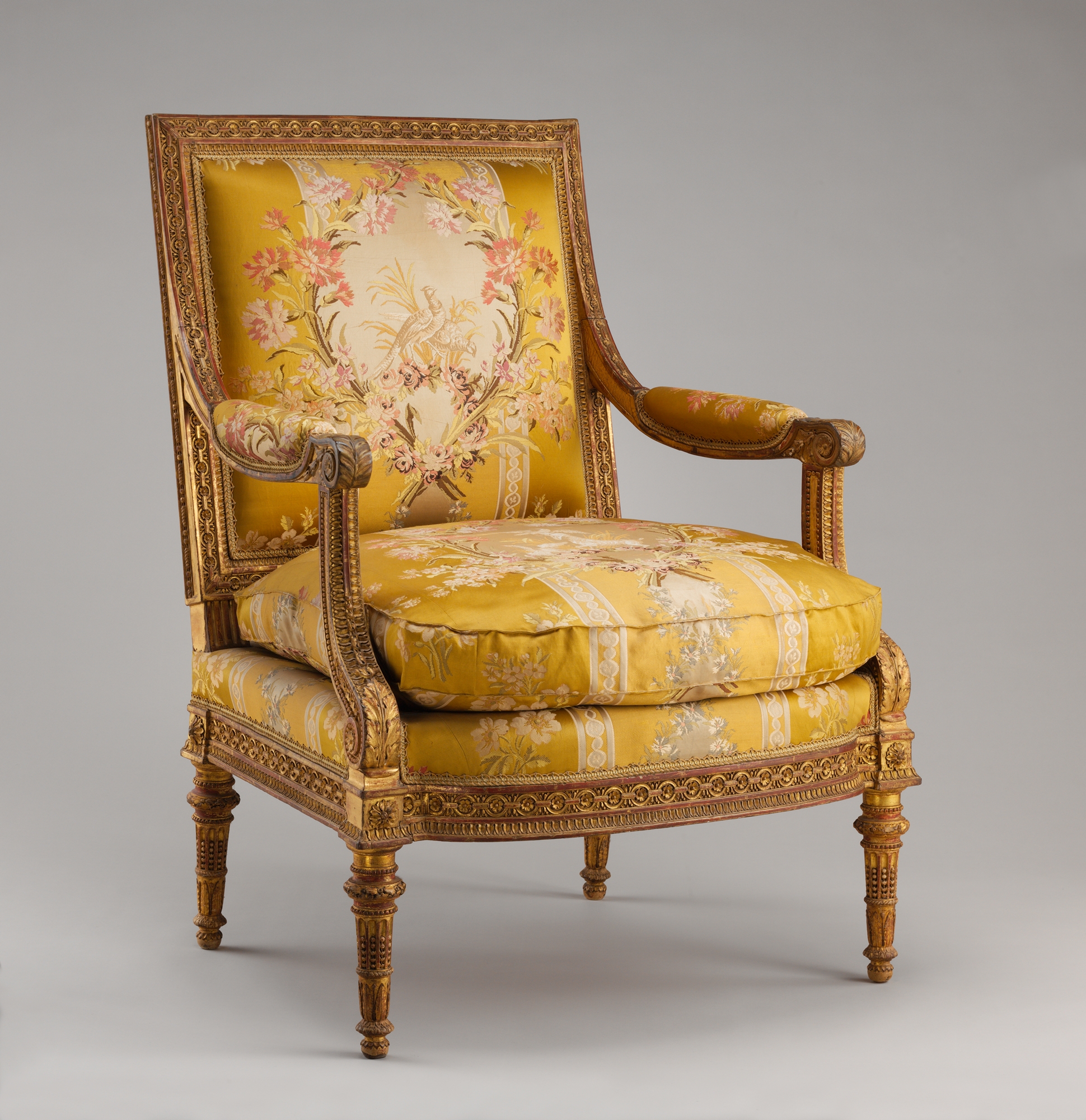
The record subject: carved and gilded walnut, 100 x 74.9 x 65.1 cm, stamped G. JACOB, with the paper label recording the 25 February 1788 Saint-Cloud gaming-room order. Published by the Metropolitan Museum as open access.
| Artist | Georges Jacob |
|---|---|
| Date | 1788 |
| Medium | Carved and gilded walnut; modern gold brocaded silk upholstery, not original |
| Dimensions | 100 x 74.9 x 65.1 cm (39 3/8 x 29 1/2 x 25 5/8 in.) |
| Where it is now | The Metropolitan Museum of Art, New York, Gallery 527last confirmed |
| Inventory number | Accession 07.225.107 (Met object ID 189387) |
| Attribution | AcceptedThe frame is stamped G. Full note |
| Object type | Furniture |
| Period | French, Louis XVI, 18th century |
| Cases | Seized, looted or confiscated · Has a provenance gap |
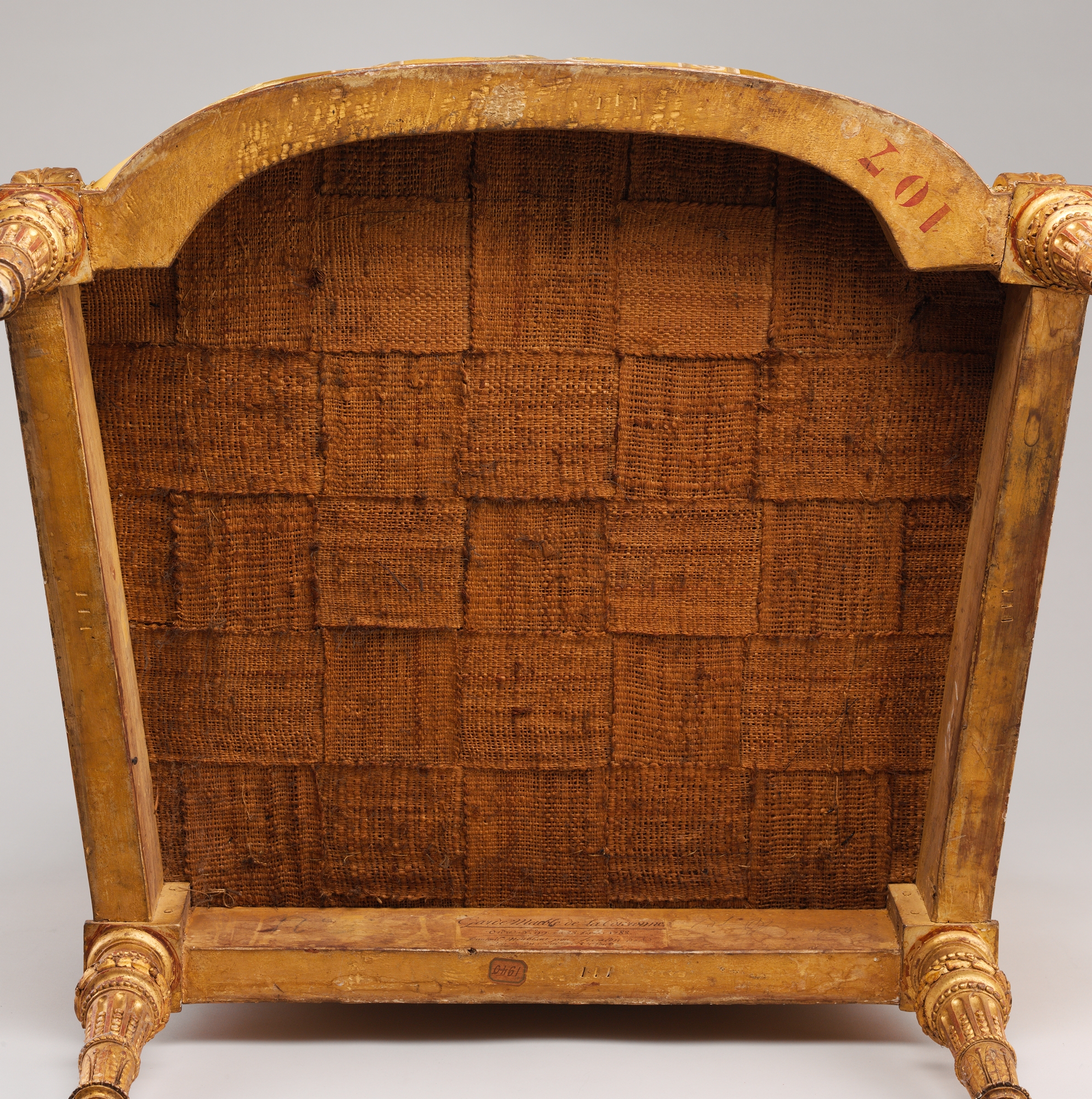
| Inscriptions | Stamped G. JACOB on the frame. A paper label, pasted underneath the seat rail, records the order for the King's gaming room at Saint-Cloud dated 25 February 1788. Notches cut into the wood beside the stamp mark this chair's position (the third of four) within that supplementary order. |
| Owners on record | 6 links5 documented, 1 unknown |
| Sources | 20 cited |
About this record Last verified · 20 sources cited · Change log
On this page 10 sections
ContentsClose
A gilded walnut armchair made in 1788 for the King's gaming room at the chateau de Saint-Cloud, one of sixteen identical chairs Georges Jacob supplied to the royal Garde-Meuble under a Louis XVI commission that survives in the Metropolitan Museum's own accounts down to the livre: 24 for Jacob's joinery, 180 for the unnamed carver, 240 for Louis-Francois Chatard's gilding. The chateau it was made for no longer exists; it burned in 1870 and was demolished, so this chair and its siblings are now among the more informative physical witnesses to a vanished royal interior.
Seized as crown property in the Revolution, it passed through an undocumented stretch of the nineteenth century before surfacing in the Paris collection of the decorator Georges Hoentschel, whose entire holding of French decorative art J. Pierpont Morgan bought in 1906 for four million francs and gave to the Metropolitan Museum, an acquisition that created the museum's first department of decorative arts.
Provenance
Each link is graded. Documented: a cited source supports it. Disputed: the identification is argued but not established. Unknown: no owner for that span, and the gap is not smoothed into a narrative. The grades in the glossary.
- 1788 - 1789The French Crown (Louis XVI), Garde-Meuble de la Couronnedocumented
Ordered 25 February 1788 as one of a supplementary batch of four armchairs completing a set Georges Jacob had begun supplying the previous year for the Salon des Jeux du Roi at Saint-Cloud, the gaming room Louis XVI and his court used for cards, billiards and trictrac. Jacob's own charge for cutting and joining the walnut frame was 24 livres; the carving, by a carver not named in the surviving accounts, cost 180 livres; the gilding, billed separately to Louis-Francois Chatard, came to 240 livres - 444 livres for the frame alone. The original upholstery, applied by Claude-Francois Capin (d. 1789), upholsterer to the Garde-Meuble, is recorded in the 1789 Saint-Cloud inventory as a grey-blue brocaded gros de Tours, a ribbed silk; none of that fabric survives on the chair today. In total Jacob supplied 62 pieces of seat furniture, including sixteen identical armchairs of this pattern, for the room.12312
- 1789 - 1798The French Crown, then the French statedocumented
Louis XVI and the royal family were confined to the Tuileries from October 1789 and never occupied Saint-Cloud as a residence again after a brief stay in the summer of 1790. Following the abolition of the monarchy the chateau and its contents became state property. The National Convention decreed in June 1793 that the royal furniture collections were to be sold, and auctions of crown furniture ran from August 1793 (Versailles) and October 1793 (Marly) into 1794, reaching Saint-Cloud's furnishings from the spring of 1794 under the same programme, administered through the Garde-Meuble's own commissioners and public auctioneers rather than by any single named sale. The chateau's fabric, unlike some royal domains, was explicitly spared demolition: the Convention separately ruled that the park and building be preserved at the Republic's expense for public enjoyment. Despite the general 1793-94 furniture-sale programme, the Metropolitan Museum's own curatorial notes record that twelve of the gaming-room armchairs were still inventoried at the palace as late as the spring of 1798 (Year VI) - meaning this specific set of chairs was not necessarily swept up in the first wave of sales, and its exact removal date and mechanism are not established in the sources available to this record.45613
- 1798 - c. 1900Unknownunknown
No owner, sale, dealer or inventory placing this chair anywhere is documented for more than a century between its last recorded presence at Saint-Cloud (spring 1798) and its appearance in the Paris collection of Georges Hoentschel by 1908 at the latest. Saint-Cloud itself remained in government hands throughout this period - site of the 18 Brumaire coup in 1799, an imperial and then royal residence under Napoleon and the Restoration, and destroyed by fire during the Prussian shelling of 1870 - so the chair's departure from state hands could in principle have happened at any point across the Empire, the Restoration, the July Monarchy, the Second Empire or after the 1870 fire, including via disposal of superseded furniture when Napoleon refurnished the palace after 1802. None of these possibilities is documented for this specific chair. This is the weakest link in the chain and this record states that plainly rather than bridging it.7
- c. 1900 - 1906Georges Hoentschel (1855-1915), Parisdocumented
Georges Hoentschel, a Paris decorator who ran the firm Maison Leys and furnished interiors in historic styles for wealthy clients, assembled a collection of more than 4,000 pieces of French decorative art - woodwork, furniture, metalwork, sculpture and textiles - which he used both as stock-in-trade and as study material, installed from 1903 in a museum-like display at 58 boulevard Flandrin, Paris. The 1908 published catalogue of the Hoentschel collection lists this chair's Saint-Cloud origin but, notably, neither its maker nor its date - the Jacob attribution and the 1788 date rest on the physical evidence on the chair itself (the stamp, the label and the notches), not on Hoentschel's own cataloguing.789
- 1906 - 1906J. Pierpont Morgan (1837-1913)documented
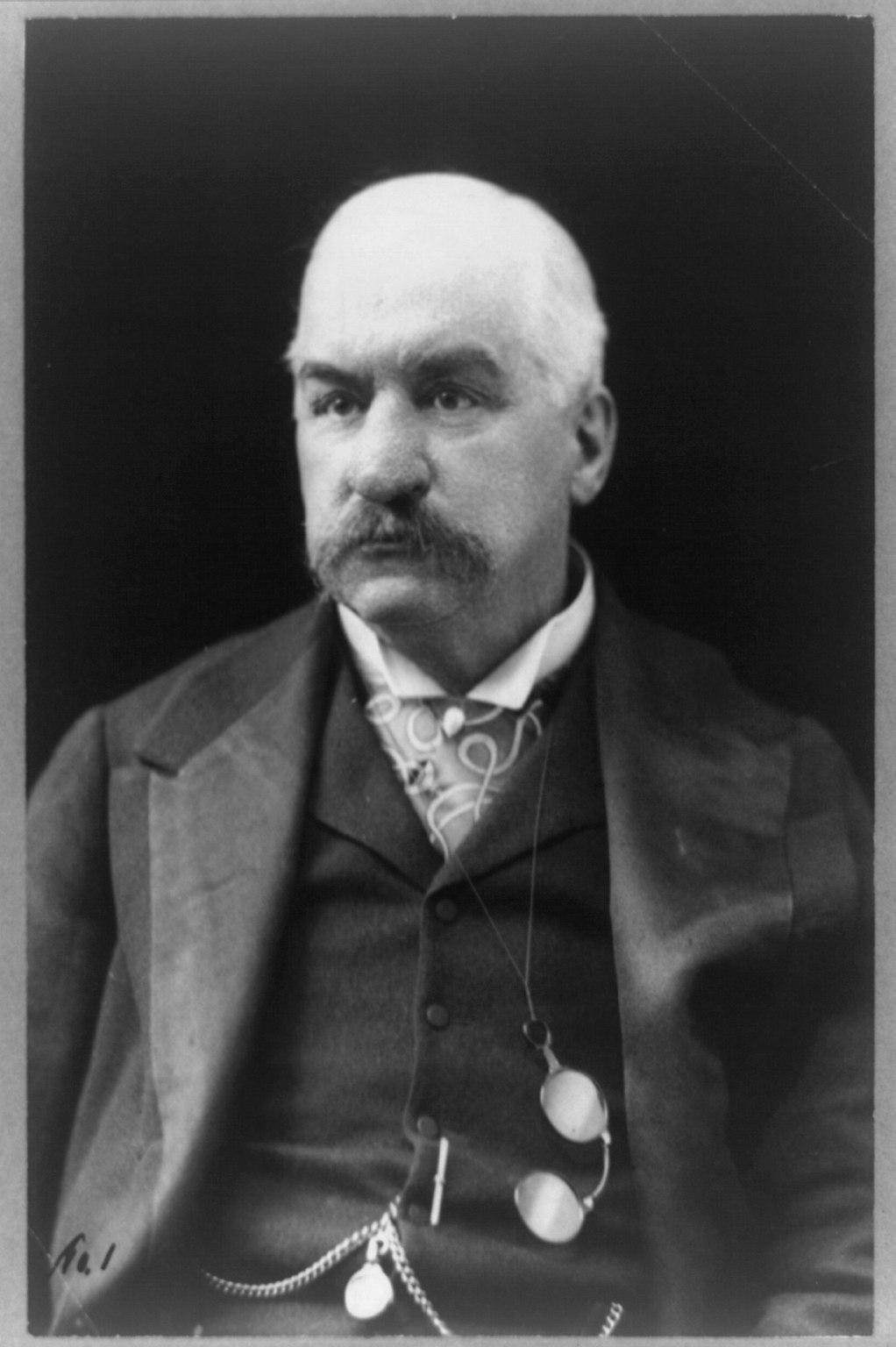
Morgan bought the entire Hoentschel collection under a contract dated 27 April 1906, arranged through the London dealer George Durlacher, for four million French francs (contemporary newspapers reported the figure as roughly one million dollars). The collection was shipped from Le Havre in twelve consignments comprising 364 packing cases; the first left port on 12 January 1907, so delivery to New York continued into 1907 even though the purchase and gift are dated 1906.8910
- 1906 - presentThe Metropolitan Museum of Art, New Yorkdocumented
Credited by the Museum as the Gift of J. Pierpont Morgan, 1906 (accession 07.225.107). The gift of the Hoentschel woodwork and furniture, together with his medieval collection given in stages by Morgan and, after his death, by his son in 1916-17, created the Museum's first curatorial department of decorative arts, with Wilhelm R. Valentiner as its inaugural curator, and required a new wing designed by McKim, Mead and White that opened in 1910.91011
Technical evidence
| Attribution note | The frame is stamped G. JACOB, the mark of the menuisier Georges Jacob, and carries a paper label pasted underneath it recording an order dated 25 February 1788 for the King's gaming room (Salon des Jeux du Roi) at the chateau de Saint-Cloud. Notches cut into the frame beside the stamp indicate this chair was the third of four ordered at that date to supplement a larger set Jacob had already supplied the previous year. The gilding is attributed to Louis-Francois Chatard on the strength of the same royal Garde-Meuble accounts, which record his charge for the work separately from Jacob's own. |
|---|---|
| Support and structure | Carved walnut frame, mortise-and-tenon joined in the standard menuisier's technique, gilded overall. Walnut, rather than the cheaper beech typically hidden under gilding, was itself a deliberate specification for a royal commission of this rank.12 |
| Gilding | Gilded by Louis-Francois Chatard, billed separately from Jacob's joinery at 240 livres, more than half the total frame cost of 444 livres and the single largest line item - gilding, not carving, was the most expensive stage of producing this chair.312 |
| Carving | The carved ornament cost 180 livres, work by a carver not identified by name in the surviving Garde-Meuble accounts consulted for this record - carving in this trade was routinely subcontracted by menuisiers to specialist sculptors on wood, whose names are frequently lost even on royal commissions.312 |
| Original upholstery (lost) | The 1789 Saint-Cloud inventory records the set's show cover as a grey-blue brocaded gros de Tours, a ribbed silk, applied by the upholsterer Claude-Francois Capin (d. 1789). None of this fabric survives on the chair.3 |
| Current upholstery | Gold brocaded silk, explicitly recorded by the Museum as not original - a twentieth-century (or later) reupholstering unrelated to the 1789 scheme.12 |
| Marks and inscriptions | Stamped G. JACOB. A paper label pasted underneath the seat rail records the February 1788 Saint-Cloud gaming-room order. Notches cut into the frame beside the stamp identify this chair's position (third of four) within that specific supplementary order of four chairs completing the previous year's set.13 |
| Dimensions | 100 x 74.9 x 65.1 cm (39 3/8 x 29 1/2 x 25 5/8 in.) overall.12 |
| Total documented frame cost | 444 livres (24 joinery + 180 carving + 240 gilding) for this chair's frame alone, excluding upholstery, which was costed and paid separately to Capin.312 |
Images
The record in full
Chapter 1A chair that survives its own room
This armchair was made for a specific room in a specific palace: the Salon des Jeux du Roi, the King's gaming room, at the chateau de Saint-Cloud outside Paris.
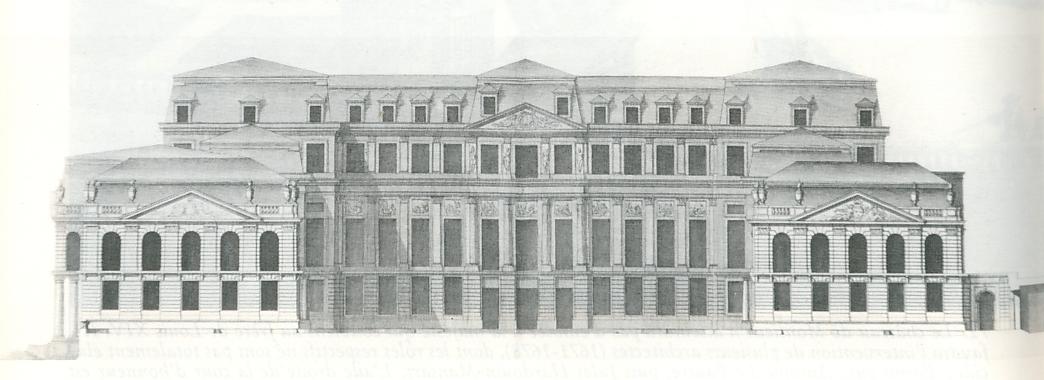
This armchair was made for a specific room in a specific palace: the Salon des Jeux du Roi, the King's gaming room, at the chateau de Saint-Cloud outside Paris. The room does not exist. The palace does not exist. Saint-Cloud burned during the Prussian shelling of the Franco-Prussian War in 1870 and was never rebuilt; the site today is a public park of gardens, fountains and terraces with nothing standing of the building Louis XVI and Marie-Antoinette knew. What remains of that interior survives, if it survives at all, in objects that were carried out of the building before 1870 - and in the documentary record that a handful of those objects still carry on their own frames.
This chair is one of them. It is a witness to a room that no drawing, no photograph and no floor plan can fully replace, because the room is gone and the chair is not.
Chapter 2What the frame itself records
The chair is stamped G. JACOB, the maker's mark of the Parisian menuisier Georges Jacob, and it carries something rarer: a paper label pasted underneath the seat rail that records an order placed on...
The chair is stamped G. JACOB, the maker's mark of the Parisian menuisier Georges Jacob, and it carries something rarer: a paper label pasted underneath the seat rail that records an order placed on 25 February 1788 for the King's gaming room at Saint-Cloud. Notches cut into the frame beside the stamp go further still, identifying this specific chair as the third of a supplementary batch of four armchairs ordered at that date to round out a larger set Jacob had already begun supplying the previous year, 1787.
Physical evidence of this precision is unusual. Most eighteenth-century seat furniture, even royal seat furniture, survives with a maker's stamp at best; a label naming the specific commission and a set of notches recording the chair's place within a specific delivery batch is the kind of evidence that lets a curator move from stylistic attribution to documentary certainty. It is also why this record can state flatly that this chair, and not merely 'a chair like it', was ordered on that date for that room.
Chapter 3The accounts, to the livre
The Garde-Meuble de la Couronne, the royal office responsible for furnishing the crown's residences, paid for this chair's frame in three separate charges to three separate tradesmen, and the figures...
The Garde-Meuble de la Couronne, the royal office responsible for furnishing the crown's residences, paid for this chair's frame in three separate charges to three separate tradesmen, and the figures survive. Georges Jacob himself charged 24 livres for cutting the walnut to shape and joining the parts together - the menuisier's basic joinery fee, and the smallest of the three charges by a wide margin. The carving of the ornament, by a specialist carver whose name is not recorded in the accounts as consulted for this record, cost 180 livres. The gilding, billed to Louis-Francois Chatard, came to 240 livres - more than half the total, and more than ten times what Jacob charged for building the frame that Chatard's gold leaf would cover.
Add the three figures and the frame alone cost 444 livres, before a single stitch of upholstery. That the joiner who built the chair was paid the least of the three tradesmen who touched it is not an accident of this account; it reflects where value actually sat in a royal seat-furniture commission of this period. The wood was a substrate. The gold was the point.
Chapter 4Three trades, one chair, and why the names are separate
A single royal armchair commission routinely carries the names of two, three or four different tradesmen because French guild structure kept the trades legally separate.
A single royal armchair commission routinely carries the names of two, three or four different tradesmen because French guild structure kept the trades legally separate. A menuisier like Jacob was received into his guild by presenting a masterwork - in Jacob's case, on 4 September 1765, a carved and gilded chair of reduced scale - and his guild covered structural joinery in wood. Carving in wood, though physically inseparable from the joiner's frame, belonged to a distinct trade of sculptors working in wood, frequently subcontracted piece by piece and often left unnamed in the accounts, as happened here. Gilding belonged to yet another guild again, that of the peintres-doreurs, painter-gilders such as Chatard, who under Louis XVI became the Garde-Meuble's principal supplier of gilding for court seat furniture.
This is not a curiosity of bureaucratic bookkeeping. It is the actual organisation of decorative-arts labour in ancien-regime Paris: no single craftsman was legally permitted to both build and finish a piece of gilded court furniture, and the multiple names that appear on this one chair's file are the direct, documented consequence of that division, not an unusual case of extra collaborators being credited.
Chapter 5The upholsterer, and the fabric that is gone
A fourth tradesman completed the chair: Claude-Francois Capin, upholsterer to the Garde-Meuble de la Couronne, who died the year after this commission, in 1789.
A fourth tradesman completed the chair: Claude-Francois Capin, upholsterer to the Garde-Meuble de la Couronne, who died the year after this commission, in 1789. The 1789 Saint-Cloud inventory describes the set's show cover as a grey-blue brocaded gros de Tours, a ribbed silk associated with Lyon's silk weavers, the standard high-end furnishing silk of the French court. None of that fabric is on the chair today. The Museum's own record is explicit that the current gold brocaded silk is not original, and no attempt is made in this record to treat the present covering as evidence of anything the eighteenth century intended - only the vanished grey-blue silk, documented in a contemporary inventory, can be attributed to the room as Louis XVI's court actually used it.
Chapter 6A queen's chateau, and a room for cards
Saint-Cloud did not come to Louis XVI's family as crown property in the ordinary way.
Saint-Cloud did not come to Louis XVI's family as crown property in the ordinary way. In 1785 Louis XVI bought it for 6,000,000 livres from Louis-Philippe, Duke of Orleans, and gave it to Marie-Antoinette to hold in her own name, believing the air there would suit their children's health. The purchase was controversial at the time specifically because of that detail: a queen holding a substantial private residence in her own name, independent of the ordinary structure of crown property, at a moment when the crown's finances were already under public scrutiny, drew criticism from the nobility and a wider public that did not want a queen with that kind of independent wealth.
The architect Richard Mique began enlarging the chateau and remodelling its garden front from 1787-88, the same period as this chair's commission, and fine furnishings in the neoclassical Louis XVI style were ordered for the building until the Revolution stopped the programme. The gaming room this chair was made for served the court's routine evening entertainment - cards, billiards, the dice-and-counters game trictrac - the ordinary, expensive, image-conscious leisure of a royal household maintaining appearances at exactly the moment those appearances were becoming politically costly.
Chapter 7Seized, and then oddly still there
The royal family's confinement to the Tuileries from October 1789 ended any real use of Saint-Cloud as a residence; a brief stay in the summer of 1790 was, in effect, their last taste of private life...
The royal family's confinement to the Tuileries from October 1789 ended any real use of Saint-Cloud as a residence; a brief stay in the summer of 1790 was, in effect, their last taste of private life before the Revolution closed in further. With the monarchy abolished, the chateau and its contents passed to the state. The National Convention decreed in June 1793 that the royal furniture collections were to be sold, and the resulting sales ran through 1793 and 1794 - Versailles from August 1793, Marly from October 1793, and Saint-Cloud's furnishings drawn into the same programme from the spring of 1794, administered by the Garde-Meuble's own commissioners and the public auctioneers of the day rather than through any single, named sale event.
What complicates a tidy account is that the Museum's own curatorial notes record twelve of the gaming-room armchairs as still inventoried at the palace as late as the spring of 1798 - four years after the documented Saint-Cloud sale wave is supposed to have run its course. Either this set of chairs was held back from the general 1793-94 sale for some reason not documented in the sources available here, or these particular chairs left the palace by some other, later route. This record states that tension rather than resolving it with an invented sale date. What is separately documented is that the chateau's fabric itself, unlike some other former royal properties, was explicitly spared: the Convention ruled that the park and building be preserved and maintained at the Republic's expense for public use, which is part of why Saint-Cloud stood, functioning, for another seventy-odd years until the fire of 1870 - long enough to host the coup of 18 Brumaire in 1799 and to serve as an imperial and then a royal residence, before its final destruction.
Chapter 8The undocumented century
Between that 1798 inventory record and the chair's documented appearance in Georges Hoentschel's Paris collection by 1908, this record has found no owner, dealer, sale or reference of any kind.
Between that 1798 inventory record and the chair's documented appearance in Georges Hoentschel's Paris collection by 1908, this record has found no owner, dealer, sale or reference of any kind. Saint-Cloud itself remained in official hands throughout the interval - Napoleon's Consulate, the Empire, the Bourbon Restoration, the July Monarchy and the Second Empire - and the chateau was refurnished more than once as fashions and regimes changed, most plausibly including a stripping-out of surviving Louis XVI-period pieces when Napoleon set about refitting Saint-Cloud as a working residence after 1802. That is a plausible route out of state hands. It is not a documented one. No source consulted for this record places this specific chair, or any of its Saint-Cloud gaming-room siblings, in any identifiable hand between 1798 and Hoentschel. A gap of this length, on an object this well-documented at both ends, is worth stating exactly as it is: unknown.
Chapter 9Georges Hoentschel's showroom-museum
By the time this chair resurfaces in the documentary record, it is in the possession of Georges Hoentschel (1855-1915), the head of the Paris decorating firm Maison Leys, which he took over from a...
By the time this chair resurfaces in the documentary record, it is in the possession of Georges Hoentschel (1855-1915), the head of the Paris decorating firm Maison Leys, which he took over from a cousin's heirs in 1892. Hoentschel was not a passive collector; he was a working decorator who furnished interiors in historic styles for clients including the British Embassy in Paris and Julius Wernher's estate at Luton Hoo, and he assembled a collection of more than four thousand pieces of French woodwork, furniture, sculpture and applied art specifically to use as design models for that business. From 1903 he installed the collection in a museum-like arrangement at 58 boulevard Flandrin in Paris, medieval material on the ground floor, later French decorative art above.
The published 1908 catalogue of the Hoentschel collection lists this chair's Saint-Cloud origin - but, tellingly, gives neither Jacob's name nor the 1788 date. Those two facts, now central to how the chair is catalogued, rest entirely on the stamp, the label and the notches on the object itself, not on Hoentschel's own scholarship. Hoentschel knew where the chair had come from. He did not know, or did not record, who had made it.
Chapter 10One purchase, one gift, one new department
On 27 April 1906, J. Pierpont Morgan - by then president of the Metropolitan Museum of Art - signed a contract, arranged through the London dealer George Durlacher, to buy Hoentschel's entire...
On 27 April 1906, J. Pierpont Morgan - by then president of the Metropolitan Museum of Art - signed a contract, arranged through the London dealer George Durlacher, to buy Hoentschel's entire collection for four million French francs, a sum contemporary American newspapers reported loosely as about a million dollars. The scale of the transaction shows in its logistics alone: the collection filled 364 packing cases, shipped from Le Havre to New York in twelve separate consignments, the first leaving port on 12 January 1907. The Museum's credit line dates the gift to 1906, the year of the purchase agreement, even though the physical objects continued arriving into the following year.
The consequence for the Metropolitan Museum was structural, not incidental. The Hoentschel gift, combined with Morgan's medieval collection (given in parallel and completed by his son in 1916-17), created the Museum's first curatorial department of decorative arts, with the German-trained scholar Wilhelm R. Valentiner as its inaugural curator, and required the construction of a new wing by McKim, Mead and White that opened in 1910. An American museum's entire capacity to display and study European decorative arts as a discipline in its own right can be dated to this single purchase. This one gilded chair is a small, specific, and unusually well-labelled piece of that founding gift.
Chapter 11The maker who worked for every regime, and paid for it
Georges Jacob's own career runs alongside the chair's history as an almost inverse story: continuity of employment across four regimes purchased at the price of two bankruptcies.
Georges Jacob's own career runs alongside the chair's history as an almost inverse story: continuity of employment across four regimes purchased at the price of two bankruptcies. Born in Cheny in Burgundy in 1739, apprenticed in Paris from 1756, Jacob was received a master menuisier on 4 September 1765. He worked for the crown at Saint-Cloud and elsewhere without ever becoming the King's own principal supplier, but built strong patronage from Marie-Antoinette, from the King's brothers - the future Louis XVIII appointed him in 1781 - and from foreign princes. His workshop employed a substantial roster of specialist carvers and gilders working alongside him, exactly the kind of subcontracted labour this chair's own accounts record.
Jacob's business did not simply glide from the ancien regime into the Revolution. He went bankrupt in 1796 and handed the workshop to his sons, Georges II Jacob and Francois-Honore-Georges Jacob-Desmalter, who ran it from 1796 to 1803 as Jacob Freres. After Georges II's death in 1803, the firm continued as Jacob-Desmalter et Cie and went on to become the principal furniture supplier to Napoleon's imperial residences - the same trade, the same family workshop, now serving an emperor rather than a king. That firm also failed, in 1813. Jacob himself, in old age, came out of retirement to help supply Napoleonic commissions after his son's death, and he died in 1814 at his rue Meslee address, by most accounts financially ruined. The throughline from Louis XVI's gaming room to Napoleon's palaces runs through one family workshop without a single day of the workshop closing its doors for political reasons - but it was not, on the evidence, a story of prosperity. It was a story of the furniture trade surviving regime change better than the individual tradesmen who carried it through.
Chapter 12Jacob's other 1788: the ancient world in the same year
In the same year Jacob's workshop delivered this conventional, gilded, thoroughly court-idiom armchair to Saint-Cloud, it also built a very different kind of seat furniture for an entirely different...
In the same year Jacob's workshop delivered this conventional, gilded, thoroughly court-idiom armchair to Saint-Cloud, it also built a very different kind of seat furniture for an entirely different client: mahogany klismos-form chairs and a matching table for the painter Jacques-Louis David, copied directly from the seat forms visible on so-called Etruscan (in fact largely Greek) painted vases, for use as studio props. That furniture appears in David's The Lictors Bring to Brutus the Bodies of His Sons, shown at the Paris Salons of 1789 and 1791 - the chair on which Brutus's grief-stricken wife is shown leaping up is one Jacob actually built.
This is offered here strictly as a fact about the workshop's range, not about this chair: the two commissions are unrelated in client, form, material and finish, and nothing links this gilded Saint-Cloud armchair to David's Roman revival furniture beyond the coincidence of the same year and the same hands. But it is a genuine, documented illustration of how wide a single Parisian menuisier's workshop output could run in the last years before the Revolution - producing, in one year, both the court's traditional gilded idiom and the antiquarian, proto-Republican aesthetic that would shortly displace it.
Chapter 13What 444 livres actually bought
A bare figure in livres means little without a period anchor.
A bare figure in livres means little without a period anchor. In later eighteenth-century Paris, an unskilled male labourer earned roughly twenty to thirty sous a day (twenty sous to the livre); a skilled tradesman such as a mason could earn about fifty sous a day. On the higher of those two benchmarks, the 444 livres charged for this chair's frame alone - joinery, carving and gilding, before any upholstery - comes to roughly 177 days of a skilled artisan's wages: the better part of a working year, for one chair's frame, within a set of sixteen ordered for a single room. On the unskilled labourer's wage it is closer to a full year's income. Whichever benchmark is used, this was not furniture built to a budget. It was furniture built to project the wealth of the household that could order sixteen of them at once, in gold.
Chapter 14Its siblings, mostly unaccounted for
Jacob's Saint-Cloud gaming-room order comprised sixty-two pieces of seat furniture in total, sixteen of them identical armchairs of this pattern.
Jacob's Saint-Cloud gaming-room order comprised sixty-two pieces of seat furniture in total, sixteen of them identical armchairs of this pattern. This record has found no comprehensive scholarly reconstruction locating all sixteen today. Georges Jacob's documented body of work as a whole is spread across major collections - the Wallace Collection and the Victoria and Albert Museum in London, Windsor Castle, the Louvre and the Musee des Arts Decoratifs in Paris, the palaces of Versailles and Fontainebleau, and the Musee Conde at Chantilly, among others - but none of the sources consulted here ties a specific holding elsewhere to this particular sixteen-chair Saint-Cloud commission. An armchair sometimes discussed informally alongside this one, the Metropolitan's own accession 07.225.114, does not in fact carry a Jacob attribution, an 1788 date or a Saint-Cloud note in the Museum's own online record, and is treated here as unconfirmed rather than folded in as a sibling. Where the other fifteen chairs from this specific order actually are is an open question, not a settled fact this record can supply.
The artist
Georges Jacob
Georges Jacob was, by the closing years of Louis XVI's reign, one of the two or three most successful menuisiers-en-sieges working in Paris, a craftsman whose seat furniture defined the mature neoclassical Louis XVI style for the court and its imitators. His career is unusually well documented for a furniture maker of this period - guild reception date, specific royal patrons, a bankruptcy, a dynastic succession through two sons, and a second, imperial career for the family firm are all independently attested. What makes his case genuinely striking is not that his workshop survived the transition from Bourbon monarchy to Republic to Empire - plenty of trades did - but that the same family business is documented supplying gilded court seating to Louis XVI and, a generation later, richly worked furniture to Napoleon's palaces, with Jacob's own hand present at both ends of that span.
Literature
- Catalogue of the Hoentschel collection, Paris, 1908 (lists the chair's Saint-Cloud provenance without maker or date attribution).
Related works
| Work | Relation | Where it is |
|---|---|---|
| Fifteen other armchairs from the same 1787-88 Saint-Cloud gaming-room order Georges Jacob | Part of the same set of sixteen identical armchairs (of 62 pieces of seat furniture total) Jacob supplied for the Salon des Jeux du Roi No scholarly reconstruction locating all sixteen chairs today was found in the sources consulted for this record. Jacob's documented output overall is dispersed across the Wallace Collection and the V&A in London, Windsor Castle, the Louvre, the Musee des Arts Decoratifs, Versailles, Fontainebleau and the Musee Conde at Chantilly, among others, but none of the sources found ties a specific institution's holding to this particular sixteen-chair Saint-Cloud order beyond the Metropolitan's own example. This is recorded as an open question rather than an assumption. | Not comprehensively traced |
| Armchair, accession 07.225.114 (object 189394) Unattributed in the Museum's own record | Sometimes discussed informally alongside this chair; NOT confirmed as part of the same 1788 order This is NOT confirmed to belong to the same commission. The Museum's own online catalogue record for 07.225.114 gives no maker, dates it only generally to the 18th century, describes it as carved walnut with brocatelle upholstery (no mention of gilding), and does not mention Saint-Cloud, Jacob or the 1788 order. Kept explicitly distinct here rather than presented as a sibling. | The Metropolitan Museum of Art, New York |
| Bergere, 'Silk and Swan Feathers' Georges Jacob | A different, independently documented Jacob royal commission of about 1770-82, unrelated to the Saint-Cloud gaming room Cited only as a comparandum for Jacob's output and for how a single surviving example of ancien-regime seat furniture can carry a wholly separate, independently reconstructed history. Not the same commission, room or date as this chair. | The J. Paul Getty Museum, Los Angeles |
| Canape reconfigured for Marie-Antoinette's private apartments, Versailles Georges Jacob | A separate royal commission by the same menuisier, with a different, cotton-embroidery upholstery scheme reflecting the Queen's personal taste Distinguished here specifically because its upholstery (silk-embroidered cotton, restored 2024 by Maison Lesage) is sometimes confused in casual accounts with the grey-blue silk recorded for the Saint-Cloud gaming-room set; the two schemes and the two rooms are unrelated. | The Metropolitan Museum of Art, New York |
Open questions
- Where was this chair between the spring-1798 inventory that still places it at Saint-Cloud and its documented appearance in Georges Hoentschel's Paris collection by 1908? More than a century is undocumented in the sources available to this record.
- By what mechanism and in what year did this chair specifically leave state ownership - the general 1793-94 Convention furniture sales, a later disposal during Napoleon's post-1802 refurnishing of Saint-Cloud, or something else entirely? The Museum's own 1798 inventory note sits in tension with the generic Revolutionary-sale narrative and has not been reconciled here.
- Where are the other fifteen armchairs from the same sixteen-chair Saint-Cloud order today? No comprehensive scholarly reconstruction of the set's dispersal was located.
- Is accession 07.225.114 (object 189394) genuinely part of the same 1788 commission, as sometimes assumed in casual discussion? The Museum's own online record does not support this and this record treats the connection as unconfirmed.
- Who carved the frame? The 180-livre carving charge is recorded without the carver's name in the sources consulted.
- What price, if any, was allocated specifically to this one chair within Morgan's four-million-franc, multi-thousand-object purchase of the entire Hoentschel collection? No itemised valuation was found.
Questions about this object
What is Armchair (fauteuil) from Louis XVI's Salon des Jeux at Saint Cloud?
Armchair (fauteuil) from Louis XVI's Salon des Jeux at Saint Cloud is a furniture, dated 1788. Medium: Carved and gilded walnut; modern gold brocaded silk upholstery, not original.
Who made Armchair (fauteuil) from Louis XVI's Salon des Jeux at Saint Cloud, and is the attribution settled?
The attribution to Georges Jacob is recorded here as accepted. The frame is stamped G. JACOB, the mark of the menuisier Georges Jacob, and carries a paper label pasted underneath it recording an order dated 25 February 1788 for the King's gaming room (Salon des Jeux du Roi) at the chateau de Saint-Cloud. Notches cut into the frame beside the stamp indicate this chair was the third of four ordered at that date to supplement a larger set Jacob had already supplied the previous year. The gilding is attributed to Louis-Francois Chatard on the strength of the same royal Garde-Meuble accounts, which record his charge for the work separately from Jacob's own.
Where is Armchair (fauteuil) from Louis XVI's Salon des Jeux at Saint Cloud now?
The Metropolitan Museum of Art, New York, Gallery 527. Inventory number Accession 07.225.107 (Met object ID 189387). Last confirmed 3 September 2026. Gift of J. Pierpont Morgan, 1906, from the Georges Hoentschel collection.
What is still unknown about Armchair (fauteuil) from Louis XVI's Salon des Jeux at Saint Cloud?
Where was this chair between the spring-1798 inventory that still places it at Saint-Cloud and its documented appearance in Georges Hoentschel's Paris collection by 1908? More than a century is undocumented in the sources available to this record.
Sources
- 1The Metropolitan Museum of Art, Collection object record, accession 07.225.107, object ID 189387 (title, medium, dimensions, credit line, gallery number, isPublicDomain). metmuseum.org/art/...
- 2The Metropolitan Museum of Art Collection API, object 189387, primary and additional images. collectionapi.metmuseum.org/public/...
- 3Wikimedia Commons, File:Armchair (fauteuil) from Louis XVI's Salon des Jeux at Saint Cloud MET DP113960.jpg and MET DP113961.jpg, CC0, donated by the Metropolitan Museum of Art, carrying the Museum's own catalogue description including the cost breakdown in livres and the upholsterer Claude-Francois Capin. commons.wikimedia.org/wiki/...
- 4Sylvain Gaillard, doctoral thesis on the revolutionary sales of furniture from Versailles, Marly, Saint-Cloud and Bellevue, 1793-1795, Ecole nationale des chartes. theses.enc.sorbonne.fr/2011/...
- 5Persee, 'Les commissaires-priseurs et les ventes revolutionnaires du mobilier royal', Bibliotheque de l'Ecole des chartes, 2012. persee.fr/doc/...
- 6Shannon Selin, 'What happened to the Palace of Saint-Cloud?', citing the 1793 Convention decree preserving the park and chateau at public expense, the royal family's 1790 stay, and the 1870 destruction. shannonselin.com/2022/...
- 7Wikipedia, 'Georges Hoentschel', for dates and the Metropolitan gift. en.wikipedia.org/wiki/...
- 8The Magazine Antiques, 'Georges Hoentschel and his world', on Hoentschel's career at Maison Leys, the scope of his collection, and the 1906 Morgan purchase. themagazineantiques.com/article/...
- 9Bard Graduate Center, 'The Hoentschel Collection Comes to New York', giving the 27 April 1906 purchase contract, the four-million-franc price, the dealer George Durlacher, and the 364 packing cases shipped from Le Havre from January 1907. bgc.bard.edu/research/...
- 10Enfilade (18th-century-focused decorative arts blog), 'Exhibition: Salvaging the Past: Georges Hoentschel', on the scale of the collection and its role founding the Met's decorative arts department. enfilade18thc.com/2013/...
- 11The Metropolitan Museum of Art, departmental history noting Wilhelm R. Valentiner as inaugural curator of decorative arts and the 1910 McKim, Mead and White wing. metmuseum.org/about-the-met/...
- 12Le Magazine de Proantic, 'Louis-Francois Chatard, les peintres doreurs du Garde-Meuble de la Couronne sous Louis XVI', on the guild division between menuisier, carver and peintre-doreur and Chatard's role as principal gilding supplier to the Crown under Louis XVI. proantic.com/magazine/...
- 13Napoleon.org, 'Domaine national de Saint-Cloud - Park and Historical Museum', on the 18 Brumaire coup at Saint-Cloud in 1799, the 1870 shelling and fire, and the site's current state as a national park. napoleon.org/en/...
- 14Wikipedia, 'Chateau de Saint-Cloud', for Marie-Antoinette's 1785 purchase of the chateau for 6,000,000 livres from Louis-Philippe, Duke of Orleans, and the criticism it drew. Flagged as an encyclopaedic source; a scholarly biography of Marie-Antoinette or a Chateau de Versailles/Saint-Cloud institutional history should replace it. en.wikipedia.org/wiki/...
- 15Wikipedia, 'Georges Jacob', for the biography, guild reception in 1765, the 1796 bankruptcy, the firm's continuation under his sons as Jacob Freres and then Jacob-Desmalter et Cie, and his death in 1814. Flagged as an encyclopaedic source; Hector Lefuel's 1923 monograph on Jacob is the primary scholarly reference and should replace it. en.wikipedia.org/wiki/...
- 16French Wikipedia, 'Georges Jacob (menuisier)', for the apprenticeship under Jean-Baptiste Lerouge, the 1765 maitrise, patronage from the comte de Provence, the collaboration with Jacques-Louis David, and the 1796 banqueroute. Flagged as an encyclopaedic source for the same reason as source 15. fr.wikipedia.org/wiki/...
- 17The Frame Blog / Klismos entry, on Georges Jacob's 1788 fabrication of Etruscan-style klismos furniture as studio props for Jacques-Louis David's 'The Lictors Bring to Brutus the Bodies of His Sons' (Paris Salons of 1789 and 1791). en.wikipedia.org/wiki/...
- 18Wikipedia, 'Paris in the 18th century', for period wage figures (an unskilled male worker earning 20-30 sous a day, a skilled mason 50 sous, 20 sous to the livre). Flagged as an encyclopaedic source; a specialised study of ancien-regime Parisian wages (e.g. the Cambridge Journal of Economic History literature on six centuries of French real wages) should replace it. en.wikipedia.org/wiki/...
- 19The J. Paul Getty Museum, 'Silk and Swan Feathers: A Luxurious 18th-Century Armchair', on a separate Georges Jacob bergere of about 1770-82, cited here only as a distinct comparandum, not as evidence about this chair. getty.edu/art/...
- 20The Metropolitan Museum of Art, Collection object record, accession 07.225.114, object ID 189394, checked and found NOT to carry a Jacob attribution, an 1788 date, or a Saint-Cloud provenance note in the Museum's own online record. metmuseum.org/art/...
_from_Louis_XVI%27s_Salon_des_Jeux_at_Saint_Cloud_MET_DP113960.jpg)
Last verified · Published
Change log
3 September 2026 - Record created at the house standard: researched narrative, technical evidence, maker dossier, graded provenance chain, prices with hammer and premium separated, related works, open questions and sources.