The Contested Origin Is Usually a Place, Not a Name
Sixteen records here open with a provenance link graded disputed. In ten of them no maker is named at all and the argument is about where the object was made. Why a disputed place needs different evidence from a disputed hand.
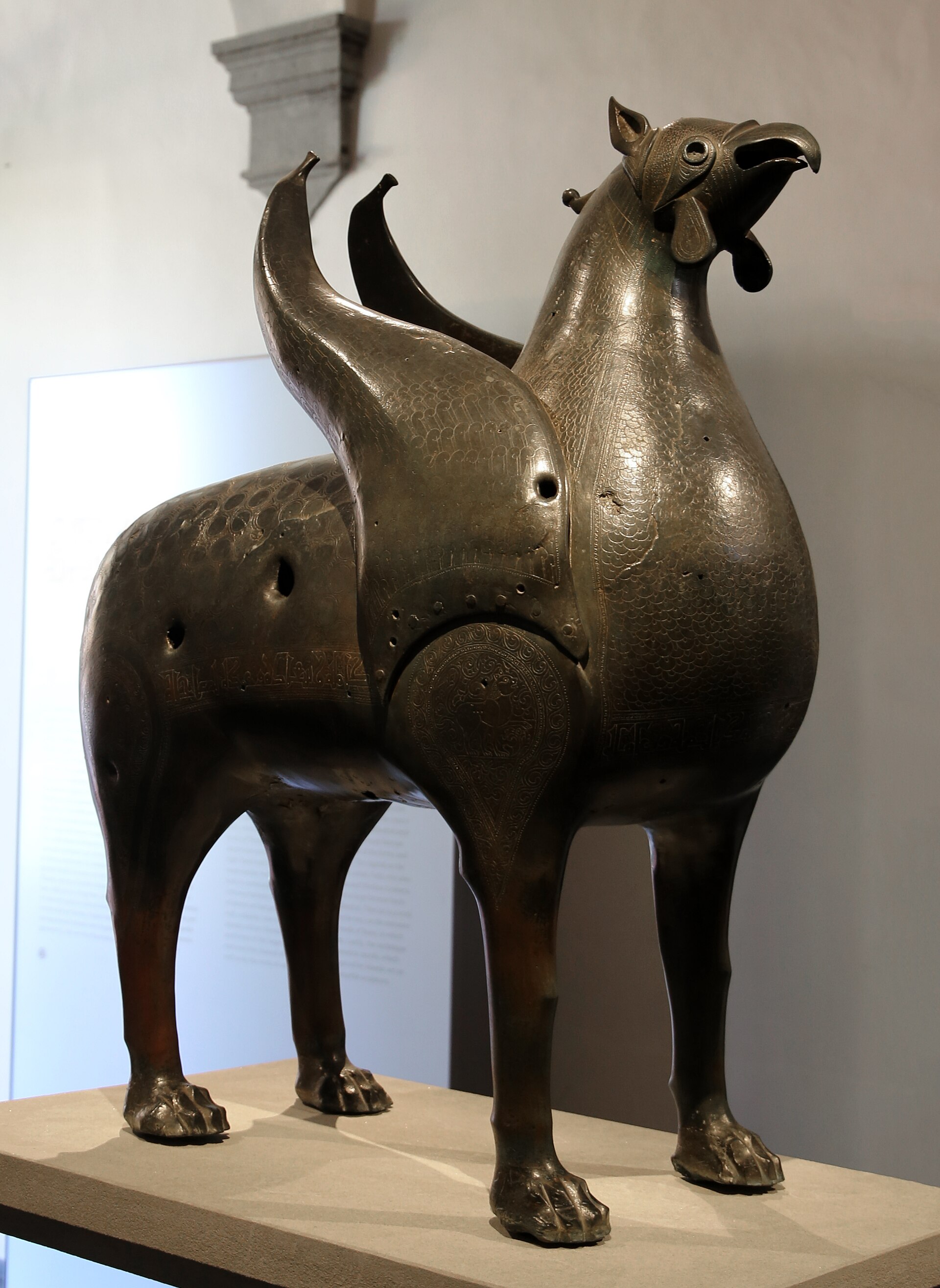
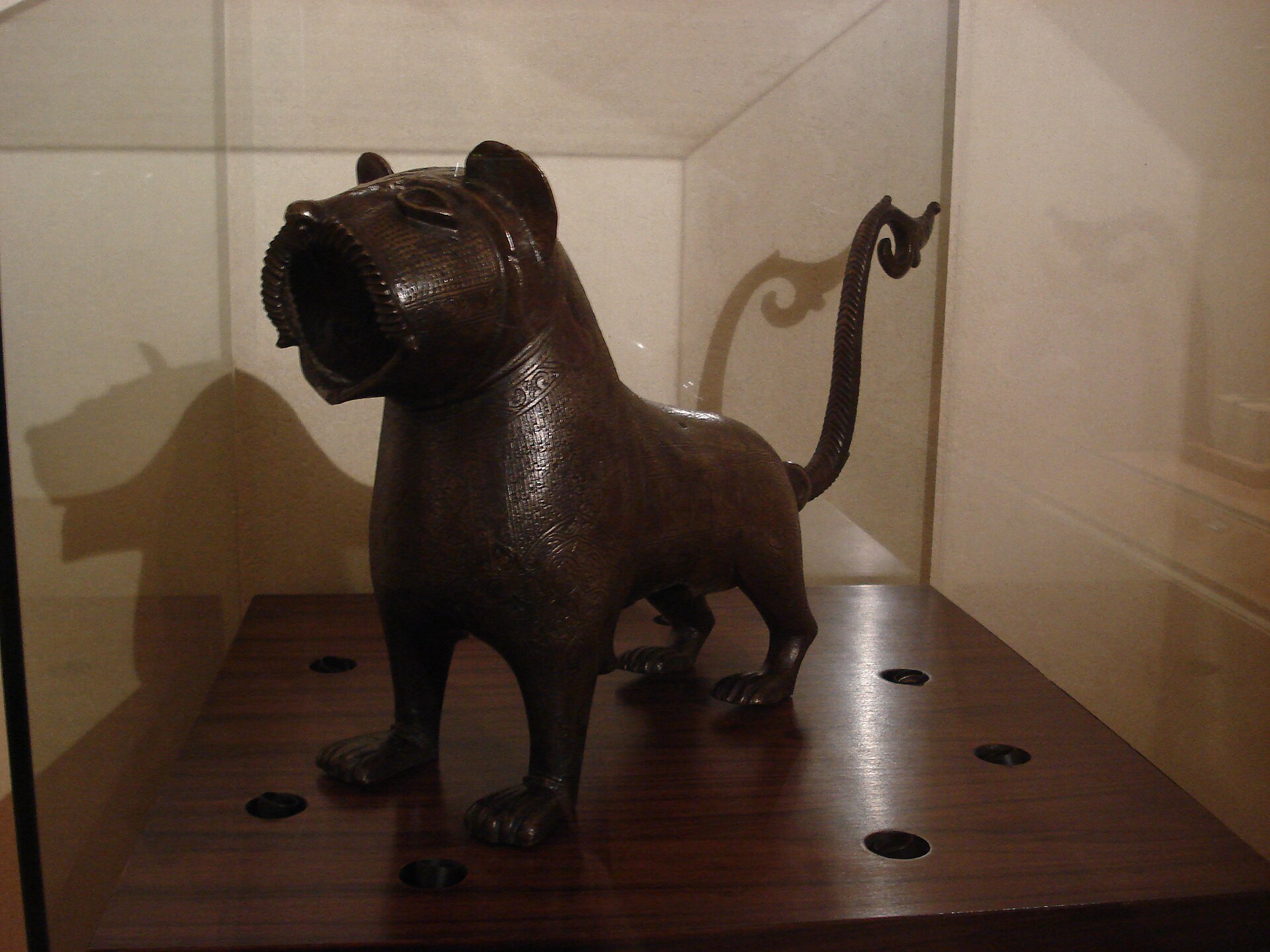
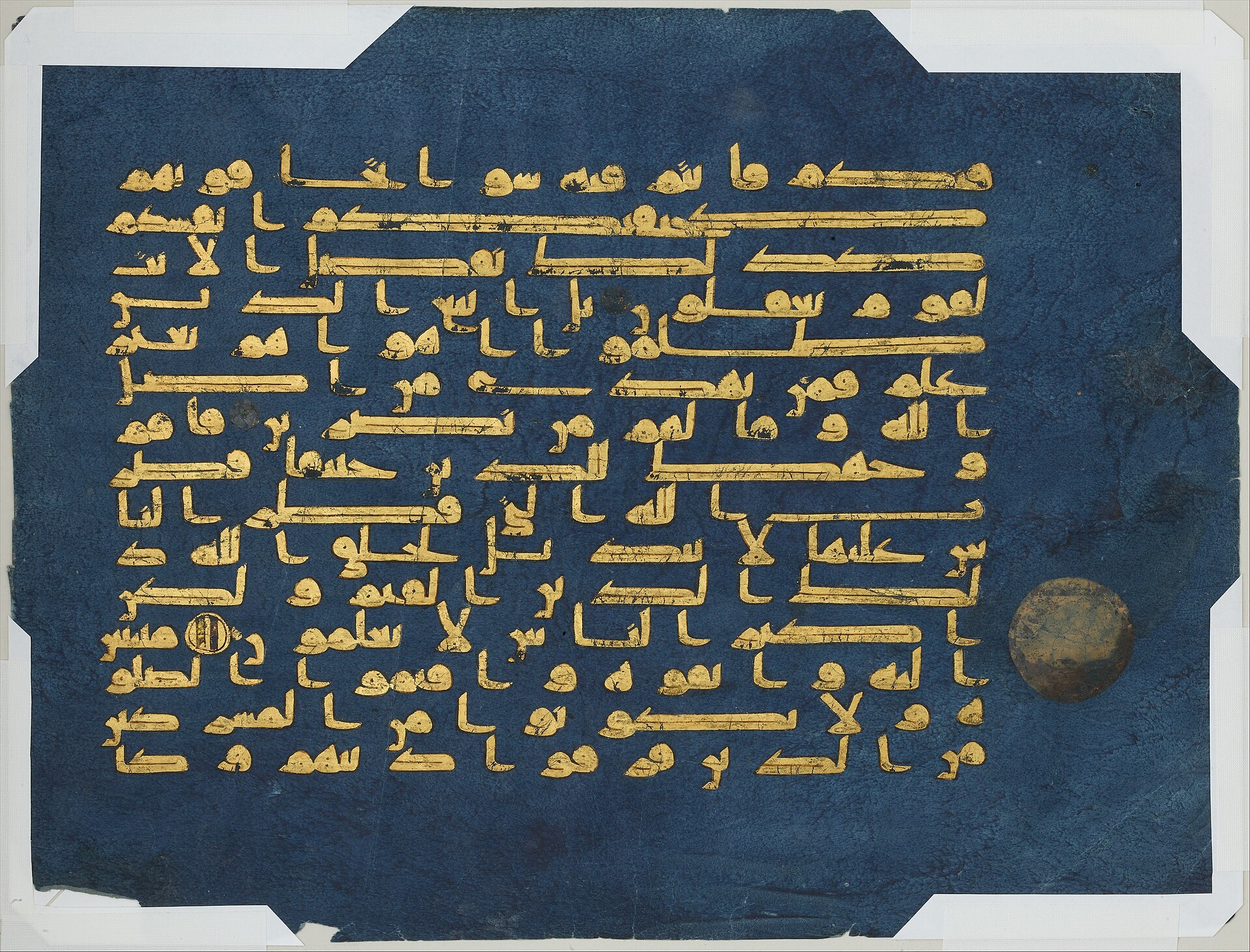
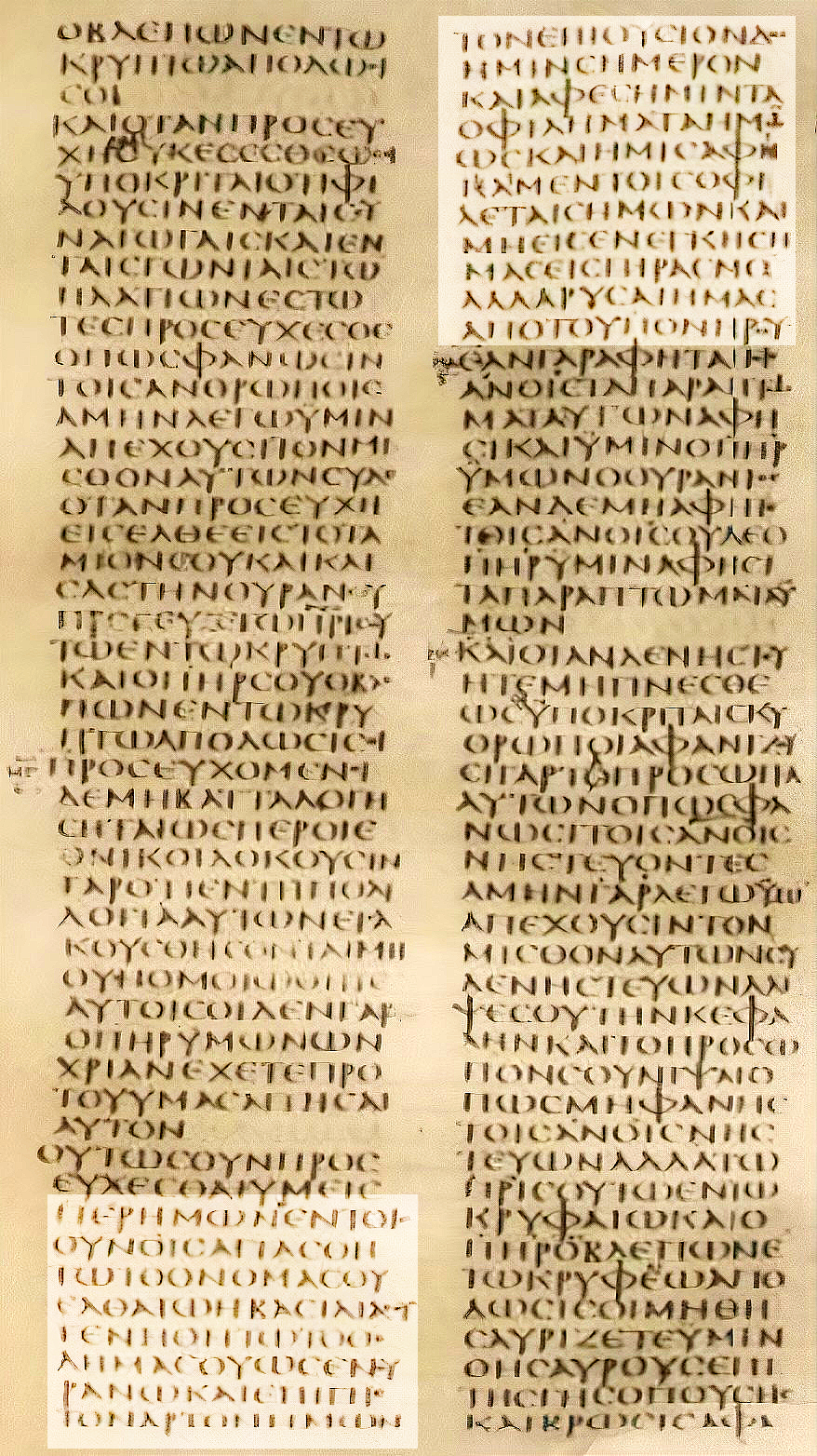
Records in this piece: The Pisa Griffin, Lion dit "de Monzon", Folio from the "Blue Qur'an", Codex Sinaiticus
On this page 8 sections
ContentsClose
In short
- Sixteen of the 223 records published here open with a provenance link graded disputed. In only six of them is a candidate maker named and argued over; in the other ten no maker is proposed at all and the dispute is about a place.
- A disputed hand and a disputed place are resolved by different evidence. A hand is argued from drawing, handling and the habits a painter cannot suppress. A place is argued from alloys and clays, from comparanda excavated somewhere datable, and from the palaeography of an inscription.
- The Louvre prints the doubt inside the field. Its record for the Monzon Lion gives the place of creation as Cordoue with a question mark, in the field itself, beside an unqualified inventory number and department.
- The Metropolitan's structured record for its Blue Qur'an folio reads Made in, Tunisia, with no qualifier, while at least five other scholarly positions place the manuscript anywhere from Abbasid Iraq to Umayyad Spain.
- The Metropolitan already owns the qualifier it did not use. Other records in the same database carry a geography type of Attributed to, so the vocabulary exists and this object did not get it.
- The Codex Sinaiticus Project's own page on how the manuscript was produced describes the scribes, the ruling and the four-column format, and never states where any of it happened.
Attribution is not only a question about a person
The popular picture of an attribution dispute is two experts arguing over a name, and that picture is drawn almost entirely from paintings. It is a good description of the Rembrandt argument, where the candidates are the master, a pupil and a follower, and of the Salvator Mundi, where the question is whether Leonardo's hand is in the panel at all. It is a poor description of most of the contested objects in this archive.
When a record here opens with a provenance link graded disputed, the dispute is more often about geography than about a person. Nobody proposes a name because no name is available to propose: the object is unsigned, undocumented and unexcavated, and the maker is not a contested figure but an absent one. What is contested is the workshop tradition, and a workshop tradition sits in a place.
This matters beyond bookkeeping, because the two kinds of dispute have almost nothing in common. They use different evidence, they are settled by different specialists, they fail in different directions, and they carry different consequences outside scholarship.
Ten of sixteen contested origins name no maker at all
Sixteen of the 223 records published here carry a first provenance link graded disputed, and they divide cleanly in two. The table below sorts them by what is actually being argued about.
| What is in dispute | Records | Examples |
|---|---|---|
| A named maker, proposed and contested | 6 | Rembrandt, Salvator Mundi, Honjo Masamune, the Negroli helmet, the Bust of Flora, the Cleveland Apollo |
| A place of manufacture, no maker proposed | 10 | Pisa Griffin, Monzon Lion, Blue Qur'an folio, Codex Sinaiticus, Selden Map, Tabula Peutingeriana, Portland Vase, Aldobrandini Tazze, Bayeux Tapestry, Coronation Stone of Moctezuma |
The six in the first row are the famous shape of the problem and the ten in the second are the common one. Note what the second row is made of: bronzes, manuscripts, maps, glass, silver and a monumental stone, spread across the Islamic Mediterranean, late Roman Italy, fourth-century Egypt or Palestine, Ming China and Mexica Tenochtitlan. The name-dispute is largely a European painting phenomenon, and generalising from it has quietly shaped how everyone else's objects get catalogued.
Two museums write the same doubt two different ways
The Louvre and the Metropolitan hold closely comparable problems and record them in opposite ways. The Louvre's catalogue entry for the Monzon Lion, the cast bronze aquamanile it holds as OA 7883, gives the place of creation as Cordoue followed by a question mark. The doubt is inside the field, in the same line as the answer, where a reader cannot miss it and a database cannot silently harden it.
The Metropolitan's structured record for its folio from the Blue Qur'an, accession 2004.88, gives a geography type of Made in and a country of Tunisia, flat, with no qualifier. That is a defensible curatorial position and it is very far from the only one in print: the manuscript has been placed in Abbasid Iraq, in Fatimid or Aghlabid North Africa and in Umayyad Spain by different scholars, and the dating spans roughly a century. A reader who takes the structured field at face value learns none of that.
Both museums are staffed by people who know the argument. The difference is not knowledge, it is whether the field was built to hold a doubt, and whether anyone used it.
The Metropolitan already owns the qualifier it did not use
The Metropolitan's public collection data has a field for exactly this problem and applies it elsewhere. Its record for a folio from a Mantiq al-Tayr manuscript, object 451725, carries a geography type of Attributed to against a country of Iran. The vocabulary distinguishes an asserted origin from an attributed one, the database can express it, and the Blue Qur'an folio was given the asserted form.
That is a more useful finding than a complaint about one label, because it shows the failure is not conceptual. Nobody had to invent a way of recording doubt about a place; it already existed in the same system. What happened is the ordinary thing that happens to structured data, which is that a field with a definite value and a field with a hedged value look identical in an interface, and the definite one is easier to type.
The consequence runs downstream and does not announce itself. Aggregators, search engines and answer engines read the structured field, not the curatorial essay two clicks away, and a question mark that never entered the field cannot be recovered by anyone reading the record later.
The evidence for a place is not the evidence for a hand
A disputed hand is argued from things a maker does without deciding to, and a disputed place is argued from materials and neighbours. That is why the two disputes rarely move at the same speed and almost never respond to the same new evidence.
For the Pisa Griffin the working evidence has been the metal and the surface: the alloy, the casting method, the engraved decoration and the punches used to make it, including a five-dot punch identified during a joint scanning project run by Oxford, the University of Pisa and CNR-ISTI, which compared the griffin against the Mari-Cha Lion. None of that can tell anyone who cast the bronze. All of it bears on where the workshop stood, because punches, alloys and casting habits travel in traditions with geography attached.
For the Blue Qur'an the equivalent evidence is the parchment, the indigo, the gold and the script, and for the Monzon Lion it is the comparison with excavated Cordoban bronzes from Madinat al-Zahra, which is a comparison to objects whose findspot is known. A place is established by tying an object to other objects that are already tied to the ground.
The Codex Sinaiticus project describes the production and never names the place
The clearest illustration of an absent origin is a page that was written to explain one. The Codex Sinaiticus Project publishes a page headed Production, and it is careful and specific: it records that more than one scribe copied the manuscript, that Tischendorf identified four in the nineteenth century, that later research settled on three with a possible fourth, that each undisputed scribe has a distinctive hand and distinctive phonetic spellings, and it lists the tasks the scribes performed, from determining a four-column format to ruling the parchment and checking the text.
It never says where. The page dedicated to how the manuscript was made contains no place of production at all, and that is not an oversight; it is the honest result of the fact that the codex records none and the candidates argued in the literature include Rome, Caesarea, Alexandria and Egypt more broadly. The scribes can be counted more confidently than the city can be named.
The four institutions that hold the manuscript today have gone further in the same direction, publishing an agreed text that concedes the events of its history from 1844 onwards are not fully known and are open to widely divergent interpretations. That is what a well-run open question looks like in print.
How to read an origin line
Read an origin line by asking first whether a maker is proposed at all, because that single question tells you which dispute you are in. If a name is on the page, the argument is about a hand and the relevant literature is connoisseurship and technical examination of that hand. If no name is on the page, the argument is about a place, and a confident place with no maker beside it deserves more scepticism than a confident attribution, not less.
Then ask what ties the object to the ground. A findspot is evidence, an inscription naming a city is evidence, and a comparison to excavated material is evidence. A resemblance to other unprovenanced objects in the same tradition is a hypothesis wearing the clothes of evidence, and it is how circular groupings form: three objects of unknown origin get assigned to a region on the strength of each other.
Last, check whether the doubt survived the journey into the database. Curatorial prose is usually more honest than the structured field beside it, and where the two disagree the prose is almost always the one carrying the argument.
Why this archive is free to read
We do this for everyone who loves art. The people who have studied it for years, and the people who just stopped to look. Iconotheca exists so that what we learn belongs to all of them.
Nobody pays us for this. No ads, no sponsors, no commercial interest. These works belong to all of us, and we would rather share them with as many people as we can than keep them to ourselves.
If it gave you something today, tell us to keep going. Follow us, leave a like, or write a positive comment. We read every one, and they are what keeps us going.
Questions
No. Of the sixteen records in this archive whose first provenance link is graded disputed, ten name no candidate maker at all and the argument is about where the object was made. The name dispute is largely a European painting pattern that has been generalised too widely.
By tying the object to material whose location is known: alloys and clays, casting and punching habits, script and palaeography, and comparison with excavated objects from datable sites. The Monzon Lion's Cordoban attribution rests on comparison with bronzes excavated at Madinat al-Zahra.
Some do and some do not, sometimes within the same class of object. The Louvre's record for the Monzon Lion prints the place of creation as Cordoue with a question mark, while the Metropolitan's structured record for its Blue Qur'an folio reads Made in Tunisia with no qualifier.
Because aggregators, search tools and answer engines read the structured field and not the curatorial text, so a hedge that never enters the field is invisible downstream. The Metropolitan's own data has an Attributed to geography type used on other objects, so the means to record it exists.
Yes. The Codex Sinaiticus Project's page on the production of the manuscript describes the scribes, their spellings and the four-column ruling, and names no place of production, because the codex records none and the scholarly candidates differ.
Sources
- 1Musee du Louvre, online collections catalogue, entry for Lion dit 'de Monzon', OA 7883, Departement des Arts de l'Islam. Read 2 September 2026. The entry gives the dating as 975 / 1100, the place of creation as Cordoue with a question mark, and the place of discovery as Monzon de Campos. collections.louvre.fr/en/...
- 2Metropolitan Museum of Art, public collection API, object 454662, 'Folio from the Blue Qur'an', accession 2004.88. Queried 2 September 2026. The structured record returns a geographyType of 'Made in' and a country of 'Tunisia', an objectDate of second half 9th to mid 10th century, and a medium of gold and silver on indigo-dyed parchment. collectionapi.metmuseum.org/public/...
- 3Metropolitan Museum of Art, public collection API, object 451725, 'The Concourse of the Birds', folio 11r from a Mantiq al-Tayr, accession 63.210.11. Queried 2 September 2026. Cited for the geographyType value 'Attributed to' against a country of Iran, which establishes that the qualifier exists in the same vocabulary. collectionapi.metmuseum.org/public/...
- 4Codex Sinaiticus Project, 'Production'. Read 2 September 2026 for the account of the scribes (Tischendorf's four, later research settling on three with a possible fourth), their distinctive hands and phonetic spellings, and the list of tasks including the four-column format and the ruling of the parchment. The page states no place of production. codexsinaiticus.org/en/...
- 5Codex Sinaiticus Project, 'History of Codex Sinaiticus'. Read 2 September 2026 for the text agreed jointly by the British Library, Leipzig University Library, the National Library of Russia and Saint Catherine's Monastery, recording that events from 1844 onwards are not fully known and are susceptible to widely divergent interpretations. codexsinaiticus.org/en/...
More in Attribution and Authenticity
The partA Hallmark Can Be Genuine, Legal and About a Different Object
The V and A catalogues a Paul de Lamerie ewer of 1736 as a duty dodger, hallmarked 1944.
Composite Names Three Different Objects, and Only One of Them Is a Fake
Fifty-seven records here use composite, pastiche or assembled, and the words are doing three incompatible jobs.
The Frame Has Its Own Provenance
Ten records carry evidence on a frame. Van Eyck's integral frames date the panels to 1410-1440; a 1970 loan label on a frame in Maine proves nothing...