Every Record Here Ends in Questions It Could Not Answer
The 257 published records in this archive carry 1,795 open questions between them, a median of seven each, and not one record carries none. Sorted by shape, they name the places where somebody with the means to write a fact down did not.
Records in this piece: Kouros, Portrait of a Girl, Codex Sassoon, Emperor Xiaowen and his entourage worshipping the Buddha, The Crosby Garrett Helmet
On this page 9 sections
ContentsClose
In short
- Measured on 9 September 2026, the 257 published records in this archive carry 1,795 open questions between them. The median record carries seven, the smallest number on any record is five, and the largest is thirteen. Not one record carries none.
- 494 of the 1,795 open with Is, Was, Does, Did, Do, Are or Were. Those are yes or no questions, which means each has a determinate answer that somebody with the object, the archive or the file could settle.
- 227 of the questions record in their own text that no source was found. That is the archive saying where it stopped, which is a different statement from saying nothing.
- The three commonest subjects are money, the commercial handler and the route. 149 questions turn on a price or a sum, 137 on which dealer, agent or buyer was involved, and 118 on a findspot or how an object travelled.
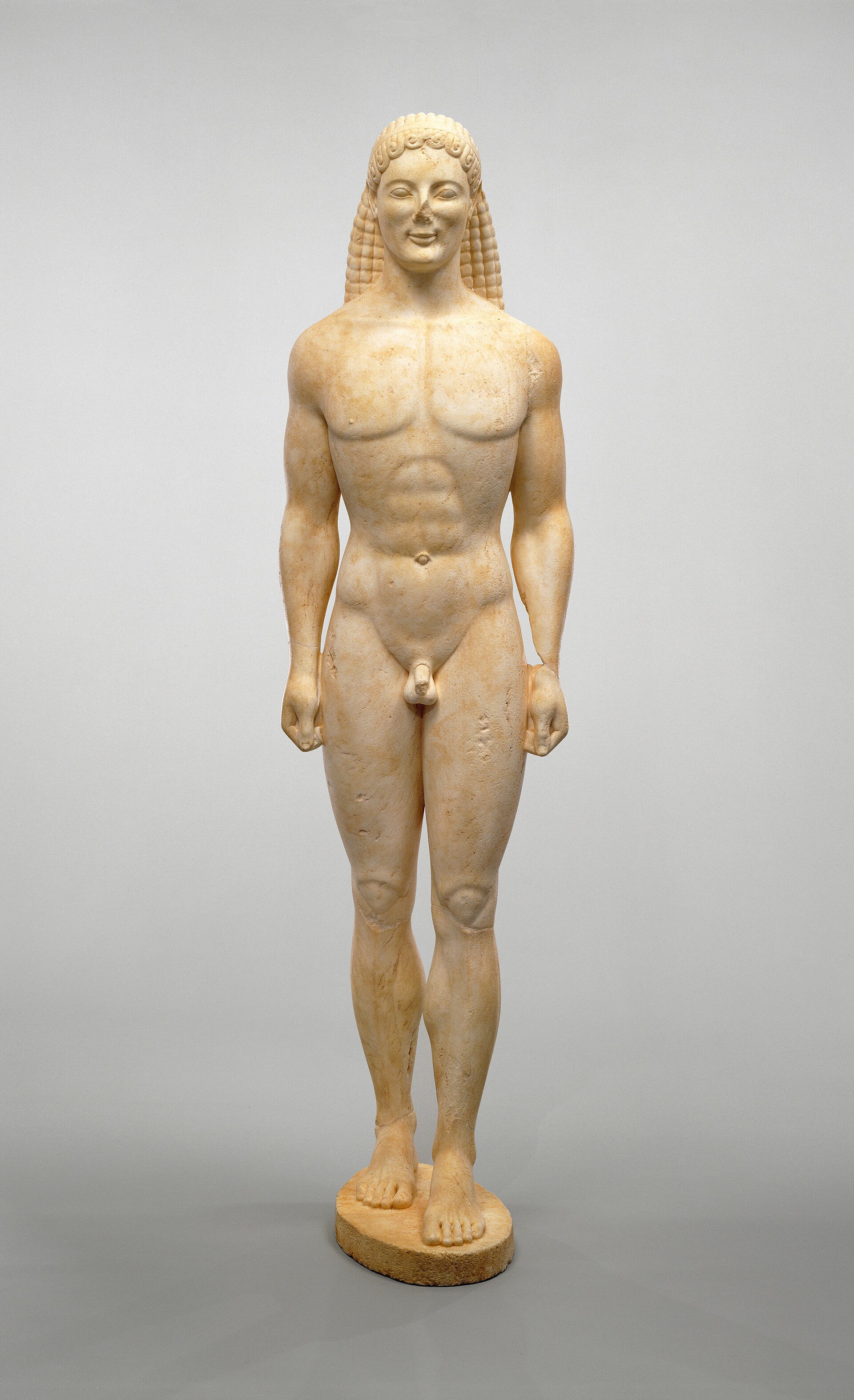
- The Getty kouros carries its unresolved question in the museum's own label rather than in a footnote. Nineteen specialists convened in Athens in 1992 and could not agree whether the statue is ancient or modern.
A record that ends in a summary tells you less than one that ends in questions
Every published record in this archive ends with a block called open questions, and the block is never empty. That is a house rule rather than an accident: a record is finished when the desk has said what it knows and what it could not settle, and a record with nothing unresolved would mean the researcher stopped looking rather than that the object has no unanswered questions left.
The block exists because of a habit this publication distrusts. A well-written catalogue entry reads as complete. It runs from making to present ownership without visible seams, and the seams are exactly what a reader doing diligence needs to see. A summary hides them. A list of questions puts them on the page, dated and attributable, so that the next person can pick up where we stopped instead of rediscovering the same hole.
We can now say what the block contains across the whole corpus, because there is enough of it to measure.
The 257 records carry 1,795 questions, and the smallest number on any record is five
Counted on 9 September 2026, the 257 published records hold 1,795 open questions between them, a median of seven per record and a mean of 7.0. No record carries fewer than five. The record carrying the most is the Riace bronzes, with thirteen.
The shape of the questions is easier to see through the word each one opens with, because that word says what kind of answer would close it. Sorted that way, the largest single group is the yes or no question.
| Opens with | Questions | Share |
|---|---|---|
| Is, Was, Does, Did, Do, Are, Were | 494 | 27.5 per cent |
| What | 394 | 21.9 per cent |
| Who | 178 | 9.9 per cent |
| Where | 145 | 8.1 per cent |
| How | 131 | 7.3 per cent |
| Other openings | 453 | 25.2 per cent |
The first row is the interesting one. A yes or no question has a determinate answer, and 494 of the things this archive cannot settle are of that kind. They are not mysteries. They are facts that exist and that we could not reach.
227 of the 1,795 go further and say so inside the question itself, in phrases like no source consulted states, no evidence found, or has not been published. We would rather write that than leave a reader guessing whether the desk looked.
The commonest thing an open question asks about is money
149 of the 1,795 questions turn on a price, a sum, a hammer figure or a premium, which is the largest subject family in the block. 137 turn on the commercial handler: which dealer, which agent, who bought it, who consigned it, from whom. Those two families overlap and between them they describe one condition, which is that the trade knew and did not record.
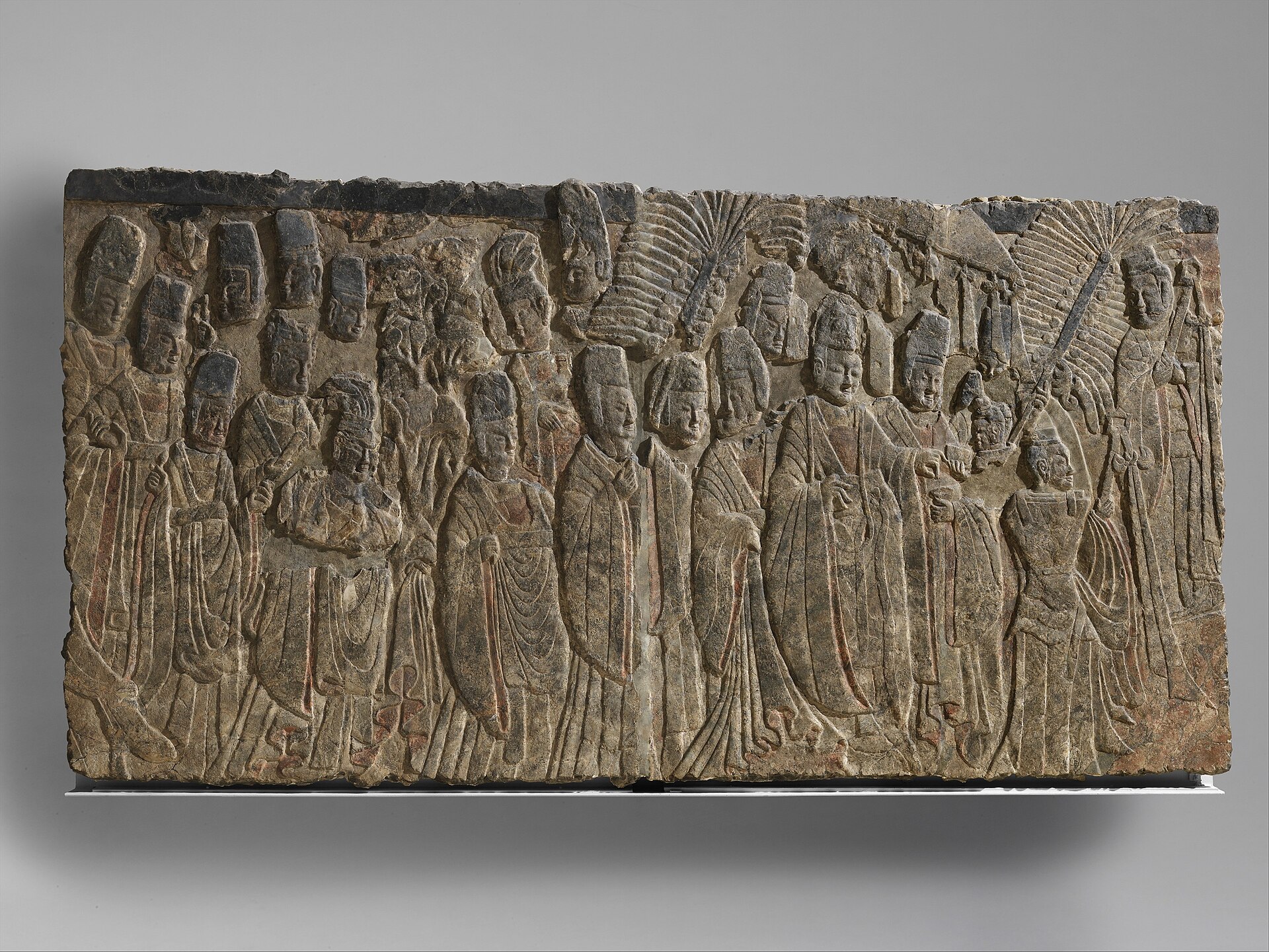
The Longmen relief in the Metropolitan Museum is the plainest case in the archive, and it is plainer than we had put it. The panel was chiselled off the wall of the Central Binyang cave at Longmen and it is now in Gallery 206 in New York, accessioned in 1935 through the Fletcher Fund. The museum's entire published provenance, read on 9 September 2026, is a single line giving a place: Binyang Cave, Longmen, Luoyang, Henan Province. That is a findspot. There is no owner in it, no dealer, no agent, no consignor and no date.
Somebody organised the removal, somebody was paid, somebody shipped it and somebody sold it. Our record asks who, and we could not answer. This is not a complaint about the museum, which can only publish what its own file holds, and dealers' files are private property that is dispersed or destroyed on a death. The point is narrower and it matters for diligence: the gap in the commercial record is systematic, it sits in the same place on object after object, and a chain that runs smoothly through the twentieth century is more often a chain that was never tested than one that was.
Some of these could be settled by somebody standing in front of the object
A smaller group of questions, 18 by a strict count of the phrasing, asks whether a physical feature is still on the object or whether an examination has ever been published. These are the ones that ought to be embarrassing, because the equipment exists, the object exists, and nobody has put the two together in print.
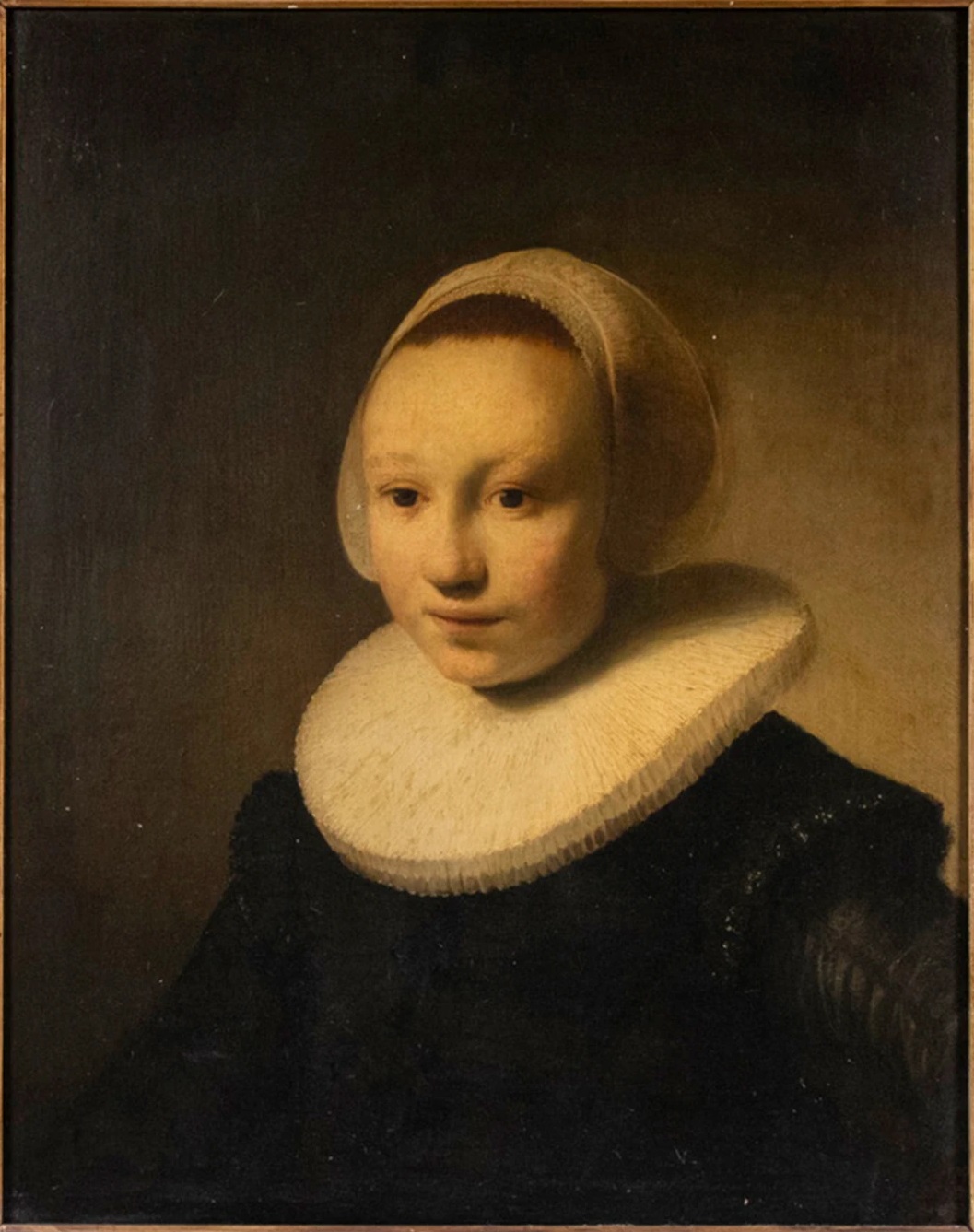
The portrait of a girl found in a Camden attic is our example. The Mauritshuis recorded an RHL monogram on the panel in 1910, and Cornelis Hofstede de Groot described a partly erased monogram at the upper right in 1914. The 2024 lot record says unsigned. Somebody with the panel, a lamp and an hour could say which of those is true of the object today, and as far as we could establish nobody has published the answer. The attribution of a picture that sold for well over a million dollars rests in part on a corner of canvas that has not been described in print for over a century.
We would rather write that sentence than write a smooth one. If a reader with access to the panel reads this and looks, the record improves and we will say so in the changelog.
A number can be an open question, and often is
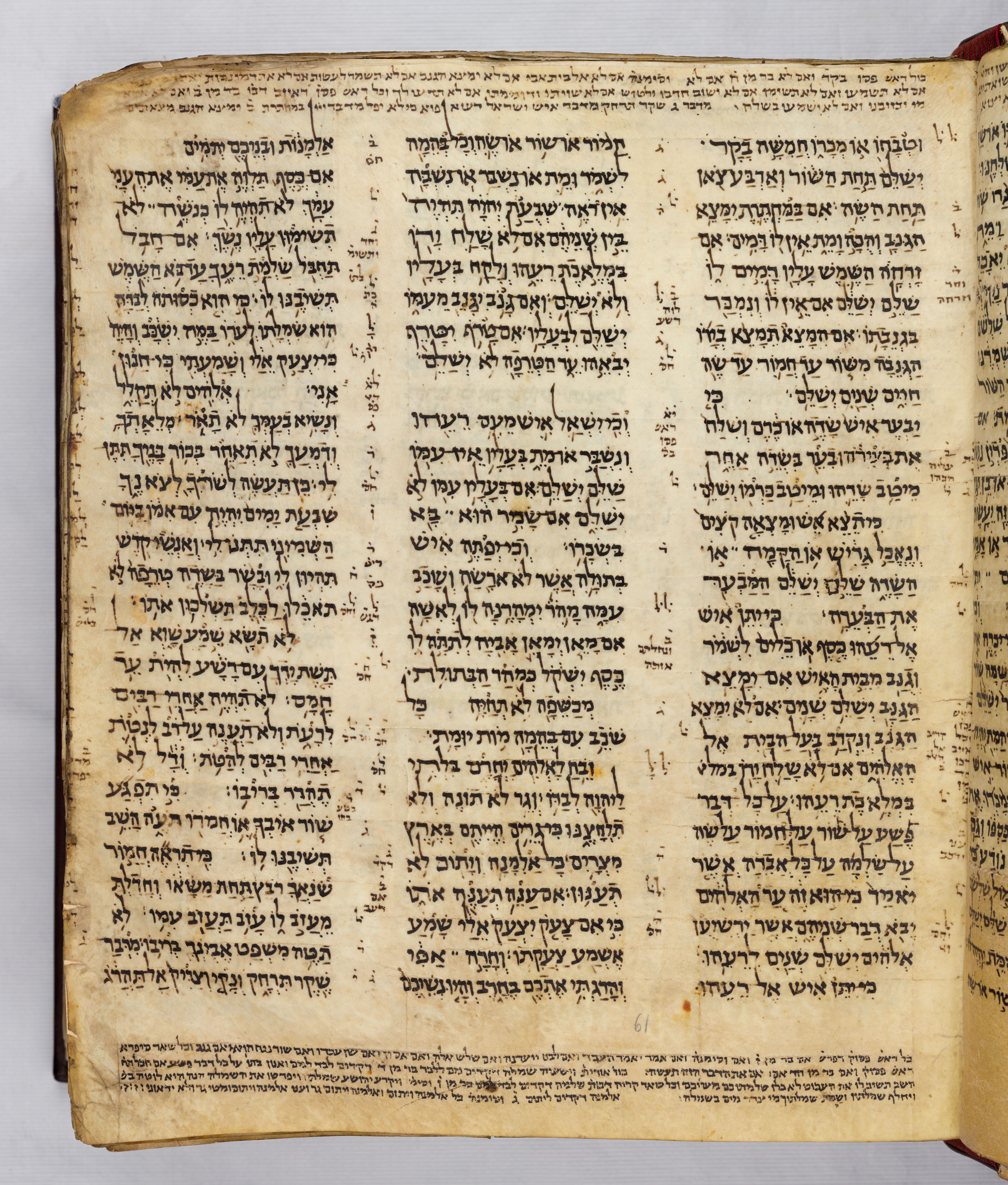
A price that everybody quotes is not the same thing as a price that anybody has verified. Codex Sassoon, the oldest near-complete Hebrew Bible, is recorded as having sold in 1989 for GBP 2,035,000, and our record asks a question that sounds pedantic and is not: is that figure a hammer price or a total including the buyer's premium?
No source we consulted states which. The widely circulated USD 3.19 million is a conversion of a figure whose nature is unstated, so it inherits the same problem and hides it behind a second currency. Separating hammer from premium is a habit this house keeps on every auction result, and the reason is visible here: without it, a number that has been reprinted for thirty-six years cannot be compared with any other number.
The 2023 sale is better documented and still not simple. The codex was bought by Alfred H. Moses for the ANU Museum of the Jewish People in Tel Aviv, and the figure reported almost everywhere is USD 38.1 million. At least one outlet reported USD 33.5 million. We give the figure the weight of the consensus and record that the consensus is not unanimous.
Sometimes the evidence contradicts itself and the record has to say so
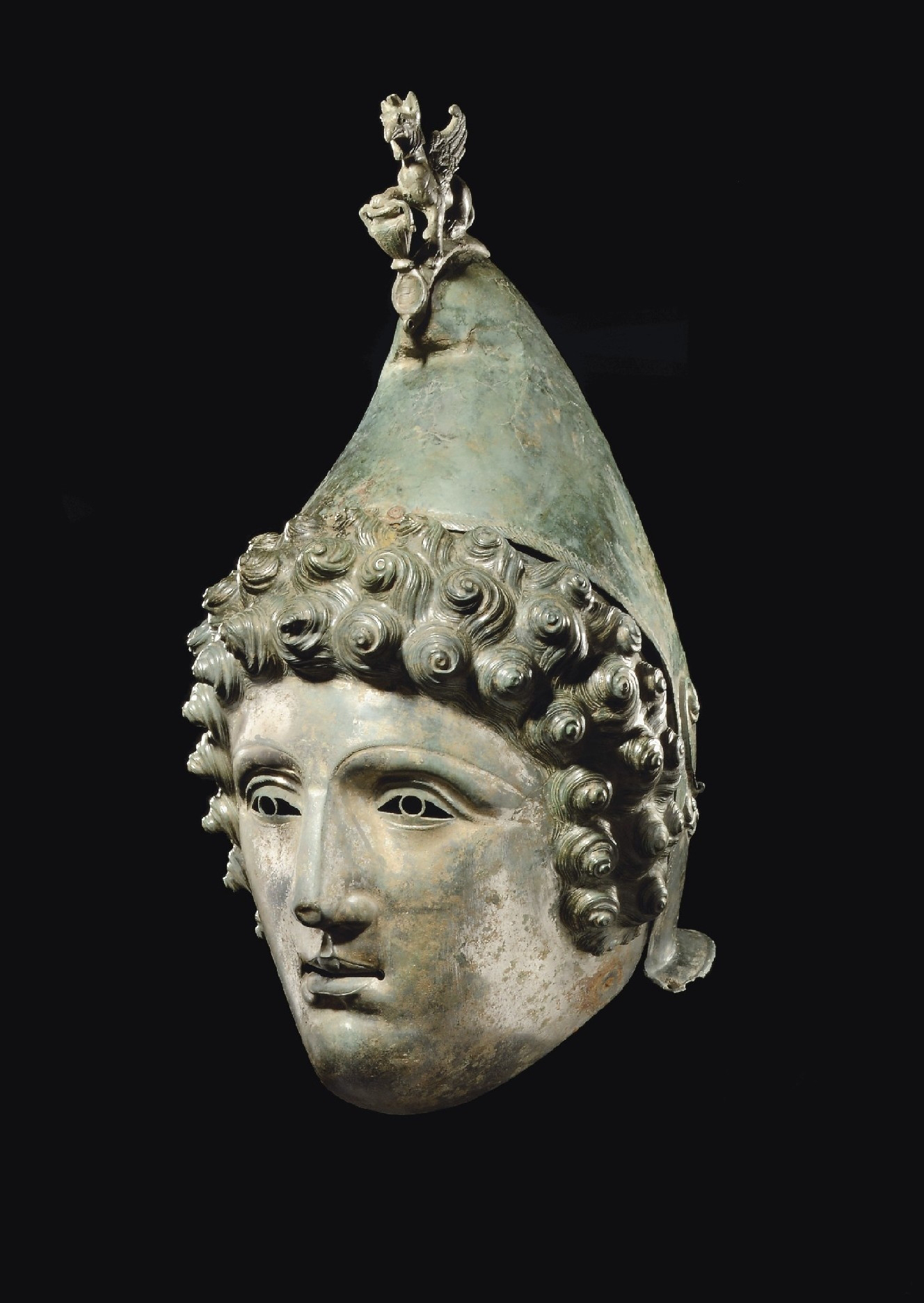
The Crosby Garrett helmet was found in Cumbria in 2010 and sold at Christie's on 7 October that year at a hammer of GBP 2 million against an estimate of GBP 200,000 to 300,000. The archaeological question our record carries has nothing to do with the price. Later excavation at the findspot recovered Roman coins dating from 330 to 337 AD from the same feature, and the helmet is typologically dated a century or more earlier.
That is a real contradiction and it is not resolved. It may mean the helmet was old when it was buried, which happens; it may mean the feature was disturbed; it may mean the typological date is wrong. Our record does not choose, because choosing would be a guess with a citation stapled to it.
A recorded contradiction is worth more than a smooth date, and it is worth more precisely to the reader who has the most at stake. A curator or a specialist wants to know which parts of an entry are load-bearing. A page that resolves everything tells them nothing about where to push.
The question on the wall label
The Getty kouros is the case where an institution did what this archive tries to do, in public, on the object. Jiri Frel took the statue on loan from the dealer Gianfranco Becchina in September 1983, the Getty approved the purchase for USD 9.5 million in January 1985, and the documents supporting a Swiss ownership going back to 1930 were later shown to be forgeries.
The scientific case moved the same way. Magnesium had leached from the dolomitic marble, which was read as evidence of age, until researchers established that magnesium can be removed from dolomitic marble artificially. In 1992 the Getty took the statue to Athens and put it in front of nineteen invited experts, scientists and connoisseurs together, and they could not agree. The label settled on Greek, about 530 B.C., or modern forgery. The statue went into storage in 2018.
I find that label admirable, and I think it is rarer than it should be. It is an institution declining to convert a live disagreement into a confident sentence, on the wall, where visitors read it. The cost of the alternative is on the same page of this archive's history: the Getty had already paid nine and a half million dollars on the strength of paperwork that turned out to be invented.
What to do with a record that ends in questions
Read the open questions before the narrative, not after it. They tell you in a few lines which parts of the entry are settled and which are being carried, and that is the fastest way to judge whether a page is fit for whatever you need it for.
Then check what kind of question you are looking at. A yes or no question means somebody could close it, and 494 of ours are that kind. A question that names the missing document tells you what to ask for and who is likely to hold it. A question that records that no source states something is telling you the search was run and came back empty, which is worth knowing before you run it again.
And if you can answer one of ours, we would like to hear it. Several of these need nothing more than access to an object and somebody willing to publish what they see.
Why this archive is free to read
We do this for everyone who loves art. The people who have studied it for years, and the people who just stopped to look. Iconotheca exists so that what we learn belongs to all of them.
Nobody pays us for this. No ads, no sponsors, no commercial interest. These works belong to all of us, and we would rather share them with as many people as we can than keep them to ourselves.
If it gave you something today, tell us to keep going. Follow us, leave a like, or write a positive comment. We read every one, and they are what keeps us going.
Questions
1,795 open questions across 257 published records, counted on 9 September 2026. The median record carries seven, the minimum on any record is five and the maximum is thirteen.
Because a record is published when the desk has said what it knows and what it could not settle. A record with no open questions would indicate that the researcher stopped looking, not that the object has nothing left to resolve.
Money and the commercial chain. 149 of the questions turn on a price, a sum, a hammer figure or a premium, and 137 on which dealer, agent, buyer or consignor was involved. A further 118 concern a findspot or how an object travelled.
Many can. 494 of the 1,795 are yes or no questions with determinate answers, and a smaller group asks whether a physical feature is still on an object, which somebody with access to it could settle directly.
The J. Paul Getty Museum labelled the statue Greek, about 530 B.C., or modern forgery because its authenticity has never been resolved. Nineteen specialists convened in Athens in 1992 and reached no consensus, and the statue was removed from display in 2018.
Sources
- 1Iconotheca, records.json, the archive's own published corpus. All corpus figures in this article were measured directly on the 257 records carrying status published on 9 September 2026: 1,795 open questions, median 7, minimum 5, maximum 13, opening-word distribution and subject-keyword counts as tabulated. iconotheca.com/artworks
- 2Trafficking Culture, University of Glasgow, encyclopedia case study, 'Getty Kouros'. Source for the September 1983 loan from Gianfranco Becchina, the USD 9.5 million purchase approved January 1985, the forged Lauffenberger provenance letters, the dolomitic marble magnesium finding and its refutation, the 1992 Athens colloquium of nineteen invited experts reaching no consensus, and the museum label wording. traffickingculture.org/encyclopedia/...
- 3J. Paul Getty Museum, collection record for the Kouros, permalink for object 103VNP, accession 85.AA.40. Read for the object's identity and the museum's own content disclaimer; the page delivers its catalogue fields through a script and the label wording quoted here is taken from source 2 rather than from this page. getty.edu/art/...
- 4The Metropolitan Museum of Art, collection record for Emperor Xiaowen and his entourage worshipping the Buddha, object 42707, accession 35.146. Read on 9 September 2026 for the date of about 522 to 523, the limestone medium, the dimensions of 208.3 by 393.7 cm, the credit line Fletcher Fund 1935, and the Provenance tab, whose entire content is the single line 'Binyang Cave, Longmen, Luoyang, Henan Province'. metmuseum.org/art/...
- 5ANU Museum of the Jewish People, Tel Aviv, institutional page for Codex Sassoon, for the 2023 acquisition by Alfred H. Moses and the manuscript's current home. anumuseum.org.il/codex-sassoon
- 6Jewish Telegraphic Agency, 'Codex Sassoon acquired for ANU Museum of the Jewish People for $38.1 million', 17 May 2023. Used for the 2023 figure and the buyer, and read alongside reports giving USD 33.5 million, which is the divergence noted in the text. jta.org/2023/...
- 7Wikipedia, 'Crosby Garrett Helmet'. en.wikipedia.org/wiki/...
More in Research and Method
The partThe Object on Display Is the Last Restorer's Reading of It
The British Museum gives the Sutton Hoo helmet two production dates: late 6th to early 7th century for the components, and 1971 for the...
The Fields This Archive Cannot Count, and What That Costs
2,592 technical facts wear 1,598 different labels and 1,754 ticket prices wear 1,355.
The First Number in a Hoard Is a Counting Rule
The Staffordshire Hoard is 4,600 pieces, or just under 4,000, or around 700, or more than 600, depending on which official page you read.