Cann
Paul de Lamerie · 1727
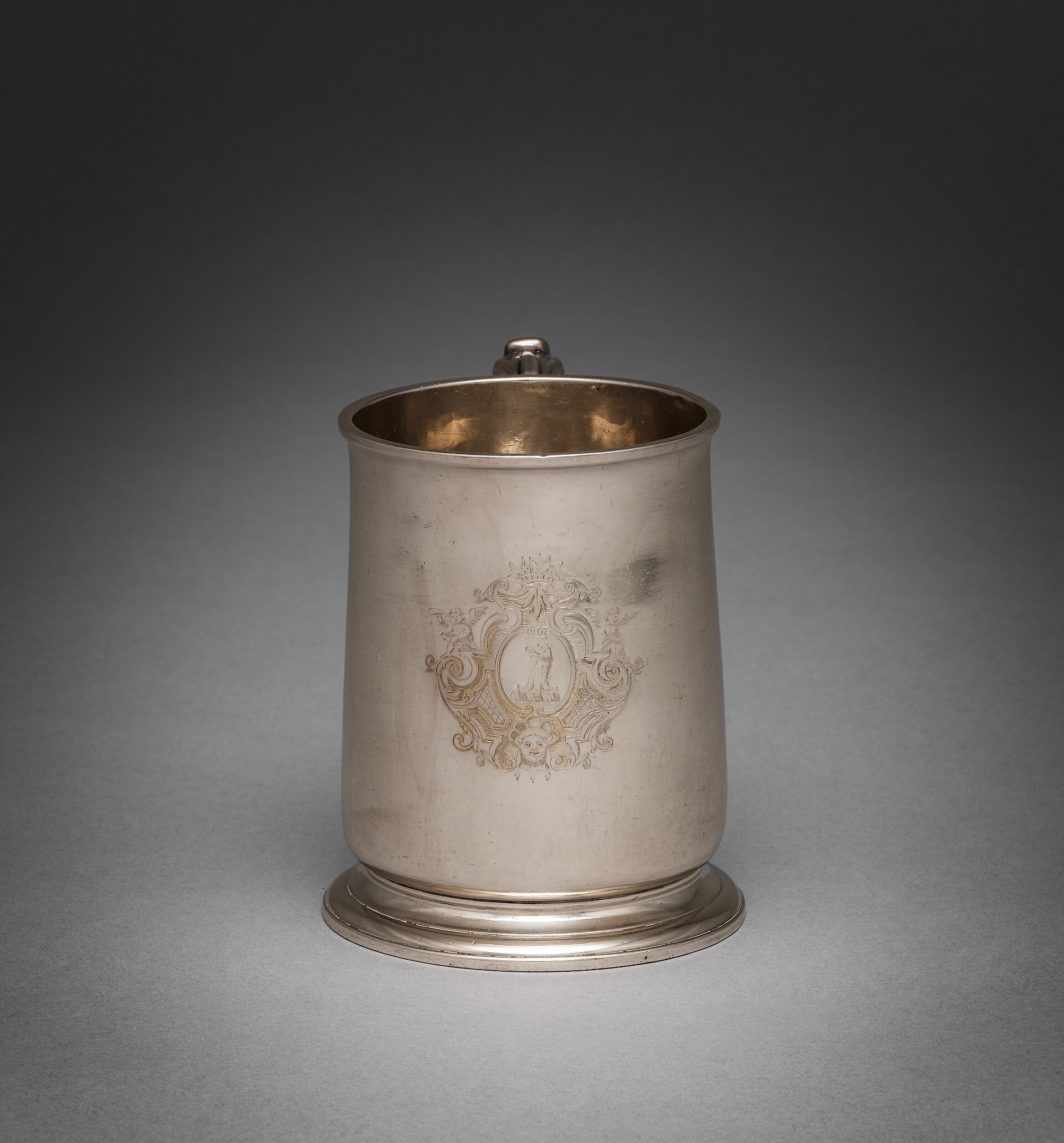
The record subject. Silver, parcel-gilt, 1727, bearing the sponsor's mark of Paul de Lamerie under his first registration. Cleveland Museum of Art, accession 1986.206.
| Artist | Paul de Lamerie |
|---|---|
| Date | 1727 |
| Medium | Silver, parcel-gilt (gilded interior) |
| Dimensions | Overall 32.3 x 14.6 cm (12 11/16 x 5 3/4 in.), as given by the Cleveland Museum of Art; the museum's public data does not label which figure is height and which is width |
| Where it is now | Cleveland Museum of Art, Cleveland, Ohiolast confirmed |
| Inventory number | 1986.206 |
| Attribution | AcceptedAccepted as bearing the sponsor's mark of Paul de Lamerie, entered under his first registration at Goldsmiths' Hall and used on Britannia standard silver into the early 1730s. Full note |
| Object type | Silver |
| Period | England, first quarter of the eighteenth century (reign of George I) |
| Cases | Has a provenance gap |
| Inscriptions | Engraved on the front with a crest of a griffin's head erased, with mantling in the contemporary style |
| Owners on record | 4 links3 documented, 1 unknown |
| Sources | 10 cited |
About this record Last verified · 10 sources cited · Change log
On this page 9 sections
ContentsClose
A silver drinking cann made in London in 1727, bearing the sponsor's mark of Paul de Lamerie from his first registration at Goldsmiths' Hall and dating, on the strength of that mark chronology, to the Britannia-standard period of his shop before his 1732 move to sterling silver and the rococo work that later made his name. Cleveland's own catalogue records only a donor, George H. Bowman Jr. of Salem, Ohio, who gave the cann to the museum in 1986, and a single in-house exhibition the following year.
The front is engraved with a crest, a griffin's head erased under mantling, that the museum itself says was too widely used to identify a first owner. This is the earliest of four Lamerie pieces now recorded in this archive and the only one from his plainer, pre-rococo first-mark period; the other three, a soup tureen, a tea caddy, and a tray, were all made a decade or more later under his second and third marks. Its own documented history beyond that single gift and exhibition is thin, and this record states that plainly rather than filling the gap.
Provenance
Each link is graded. Documented: a cited source supports it. Disputed: the identification is argued but not established. Unknown: no owner for that span, and the gap is not smoothed into a narrative. The grades in the glossary.
- 1727 -Workshop of Paul de Lamerie, London (sponsor's mark)documented
Bears the sponsor's mark of Paul de Lamerie, entered under his first registration at Goldsmiths' Hall and used on Britannia standard silver. The mark records responsibility for submitting the piece for assay, not necessarily the hand that made it.2678
- 1727 - unknownUnidentified first owner, bearing a griffin's-head-erased crestunknown
Engraved on the front with a crest of a griffin's head erased and mantling in the contemporary style. The Cleveland Museum of Art states this crest was widely used by more than one family and that the first owner cannot be identified from it. No armorial match has been published in the sources consulted for this record.2
- unknown - 1986George H. Bowman, Jr., Salem, Ohiodocumented
The museum's own catalogue names George H. Bowman, Jr. of Salem, Ohio as the immediate prior owner and donor. No record of an intervening owner between 1727 and his ownership, nor of when or how he acquired the cann, has been found. The fact of his ownership is documented by the museum; the date and manner of his own acquisition are not.12
- 1986 - presentCleveland Museum of Artdocumented
Given to the museum by George H. Bowman, Jr. in 1986 and accessioned as 1986.206. Shown in the museum's in-house 'Year in Review for 1986' exhibition, 4 February to 15 March 1987. No other exhibition or publication history is recorded in the museum's public data.12
Technical evidence
| Attribution note | Accepted as bearing the sponsor's mark of Paul de Lamerie, entered under his first registration at Goldsmiths' Hall and used on Britannia standard silver into the early 1730s. As with every large goldsmith's shop of the period, the mark records who submitted the piece for assay and took responsibility for its standard, not necessarily whose hands raised it. No signature, contract, or workshop record naming an individual maker within Lamerie's shop survives for this object. |
|---|---|
| Medium | Silver, with the interior gilded (parcel-gilt).12 |
| Dimensions | Overall 32.3 x 14.6 cm (12 11/16 x 5 3/4 in.), as published by the Cleveland Museum of Art. The museum's public data does not specify which figure is height and which is width.12 |
| Form | Cylindrical body narrowing slightly toward the top, on a wide, tiered spreading foot, with a single scroll handle at the back. This is the classic form of a drinking cann, distinct from a lidded tankard or a plain mug.1 |
| Inscriptions | Engraved on the front: a crest of a griffin's head erased, with mantling worked in the style current in the 1720s. The museum states this crest was widely used across different families and that the first owner cannot be identified from it.2 |
| Maker's mark and assay period | Sponsor's mark of Paul de Lamerie, entered under his first registration at Goldsmiths' Hall (c. 1712-13, the letters LA under a crown) and used on Britannia standard silver into the early 1730s, before his move to a second mark and sterling standard in 1732. The specific hallmarks stamped on this cann have not been transcribed in the sources consulted; the Britannia-standard dating follows from Lamerie's documented mark chronology for 1727 rather than from a direct reading of this piece's own marks.267 |
| Credit line and accession | The Cleveland Museum of Art, Gift of Geo. H. Bowman Jr., Salem, Ohio, 1986.206.12 |
| Exhibition record | Shown in the museum's in-house survey 'Year in Review for 1986,' Cleveland Museum of Art, February 4 to March 15, 1987. No other exhibition history is recorded in the museum's public data.2 |
| Rights and digitization | Photographed by the Cleveland Museum of Art on 26 July 2019 and released under CC0 as part of the museum's Open Access program; the file on Wikimedia Commons is dedicated to the public domain.3 |
Images
The record in full
Chapter 1What it is
A silver drinking vessel of the type the trade calls a cann: a cylindrical body that narrows slightly toward the top, standing on a wide, tiered spreading foot, with a single scroll handle attached...
A silver drinking vessel of the type the trade calls a cann: a cylindrical body that narrows slightly toward the top, standing on a wide, tiered spreading foot, with a single scroll handle attached at the back. The interior is gilded, a routine measure on eighteenth-century silver drinking vessels that protected the metal from the acids in wine, ale, or punch and kept the taste of bare silver off the drinker's lips. The Cleveland Museum of Art gives its overall dimensions as 32.3 by 14.6 centimetres (12 11/16 by 5 3/4 inches) but does not specify in its public catalogue data which figure is the height and which the width, a gap this record flags rather than guesses at.
The front carries an engraved crest: a griffin's head erased (torn off at the neck rather than cut cleanly, in the language of heraldry) surrounded by mantling worked in the scrollwork style current in the 1720s. The museum's own record states plainly that this crest was widely used by more than one family and that the cann's first owner cannot be identified from it.
Chapter 2A cann, not a mug or a tankard
The three terms are often used loosely by dealers today, but they describe distinct forms.
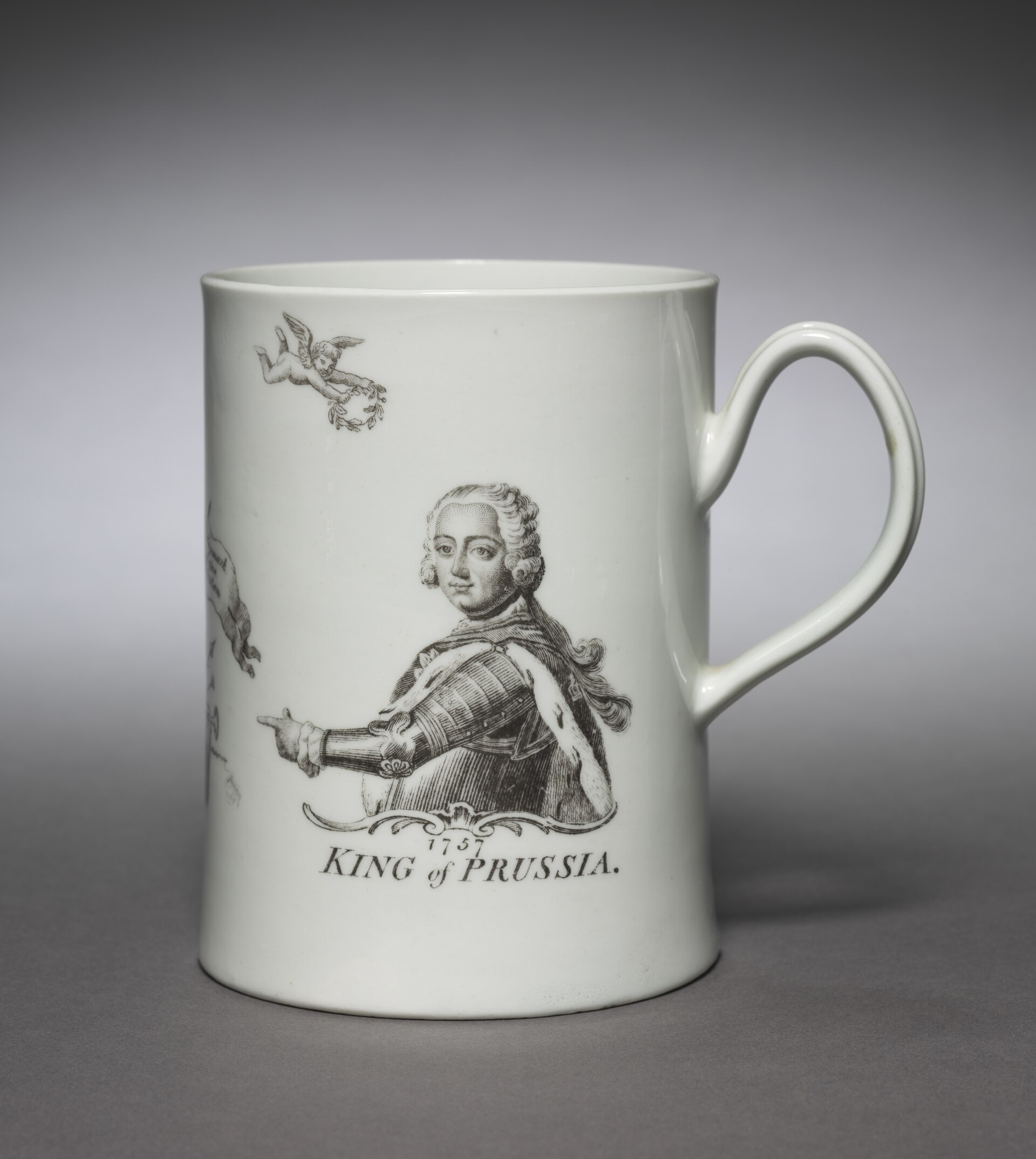
The three terms are often used loosely by dealers today, but they describe distinct forms. A tankard is typically a larger, straight or barrel-sided vessel with a hinged lid, a thumbpiece to open it, and a scroll handle, made for ale or beer and common in northern Europe and colonial America from the later sixteenth century onward. A cann is smaller and lidless, generally tulip- or baluster-shaped on a spreading foot, and was used for beer, ale, or punch by a single drinker. Cleveland's own catalogue applies the word consistently: a search of the museum's own collection for the term turns up not only this silver piece but an unrelated English creamware vessel of about 1775 also catalogued as a Cann (accession 2012.132), confirming that the museum treats the word as a form name rather than a material or a maker's term.
Chapter 3Dating it: the mark and the standard
Lamerie registered his first mark at Goldsmiths' Hall around 1712-13 (some sources give the precise date of 5 February in the old-style calendar then in use, which fell in early 1713 by the modern...
Lamerie registered his first mark at Goldsmiths' Hall around 1712-13 (some sources give the precise date of 5 February in the old-style calendar then in use, which fell in early 1713 by the modern reckoning), the letters LA under a crown, in the manner then current among Parisian silversmiths, a nod to his family's own Huguenot, French-trained circle. That mark stayed in use through the 1720s, a period in which he worked in the higher-purity Britannia standard of silver, at 958.4 parts per thousand against sterling's 925. Britannia standard had been compulsory in England from 1697 to 1720, introduced to stop the wholesale clipping and melting of sterling coin; after 1720 goldsmiths were free to return to sterling, but Lamerie is recorded as continuing to work largely in Britannia standard until 1732, when he entered his second official mark and moved over to sterling, a change later writers on his work connect to the fact that the softer sterling alloy took the crisp rococo ornament of his mature style better than the still purer Britannia metal.
A cann made in 1727 therefore falls inside that first-mark, Britannia-standard period of Lamerie's career, a decade or more before the ornamented rococo silver for which he later became best known. This record has not been able to confirm the specific assay marks stamped on this particular cann (the Britannia figure and the lion's-head-erased town mark that identify Britannia standard silver, as opposed to a later sterling lion passant) because the museum's published data records the sponsor's mark and the date but not a transcription of the individual hallmarks themselves. The 1727 dating and its placement in the Britannia-standard period rest on Lamerie's documented mark chronology rather than on a direct reading of this cann's own hallmarks, and that distinction is worth keeping in mind.
Chapter 4The sponsor's mark, and what it does not prove
Lamerie ran one of the largest goldsmith's workshops in London, and the volume of silver stamped with his mark across a forty-year career makes it effectively certain that he did not personally raise...
Lamerie ran one of the largest goldsmith's workshops in London, and the volume of silver stamped with his mark across a forty-year career makes it effectively certain that he did not personally raise every piece bearing it. English silver marking of the period functioned as a sponsor's mark: it recorded which goldsmith submitted an item to the assay office and took legal responsibility for its standard of fineness, not which pair of hands actually worked the metal. A large shop like Lamerie's would have employed journeymen, specialist chasers and engravers, and at times subcontracted whole pieces to independent workshops, all sold and marked under the name of the shop's principal. That convention is standard across the London goldsmiths' trade in this period and is not particular to Lamerie, though the fame and market value that now attach to his name make the distinction matter more for his output than for most.
Chapter 5The crest and an unidentifiable first owner
The engraved decoration is the one part of the object that speaks to who it was originally made for, and it speaks only partially.
The engraved decoration is the one part of the object that speaks to who it was originally made for, and it speaks only partially. A griffin's head erased is a common heraldic charge, carried as a crest by numerous unrelated English families in the eighteenth century; a griffin conventionally signified vigilance and courage in the generic vocabulary of heraldry, a meaning attached to the charge as a device rather than to any specific family or commission. The Cleveland Museum of Art states outright, in its own catalogue entry for this object, that the crest's wide use across families means the first owner cannot be identified from it. No armorial matching this crest to a named patron has turned up in the sources consulted for this record.
A separate description that appears to be the museum's own auto-generated image caption, rather than curatorial prose, characterizes the front engraving as showing 'a central oval containing a standing figure, framed by swirling scrolls and winged children' with 'a small face' anchoring the bottom of the frame. That reads as a fuller achievement of arms, of the kind that combines a shield or cartouche, supporting figures, putti, and a mask within elaborate mantling, than the single unaccompanied crest described in the museum's structured inscriptions field. This record cannot resolve whether the two descriptions refer to the same engraving seen differently or to two distinct elements of it, and flags the question rather than picking one account over the other.
Chapter 6How it reached Cleveland
The museum's catalogue names George H. Bowman, Jr.
The museum's catalogue names George H. Bowman, Jr. of Salem, Ohio as the donor and immediate prior owner, and the credit line reads 'Gift of Geo. H. Bowman Jr., Salem, Ohio.' The gift was accessioned in 1986 as 1986.206. The only exhibition history the museum's own record carries for this object is an in-house showing, 'Year in Review for 1986,' at the Cleveland Museum of Art from February 4 to March 15, 1987, the kind of annual survey a museum mounts to show recent acquisitions to its own members rather than a scholarly loan exhibition.
Salem, Ohio was home to a retail firm trading as Geo. H. Bowman and Son Co., a seller of fine housewares and china in the early-to-mid twentieth century; whether the donor of this cann was connected to that firm, and if so how, is not established by any source consulted for this record and should not be assumed.
Chapter 7Where this cann sits among Cleveland's Lamerie silver
This is the fourth piece bearing Lamerie's mark recorded in this archive and the third held by the Cleveland Museum of Art specifically, alongside the museum's Lamerie tea caddy (accession 1943.179...
This is the fourth piece bearing Lamerie's mark recorded in this archive and the third held by the Cleveland Museum of Art specifically, alongside the museum's Lamerie tea caddy (accession 1943.179, hallmarked for the London assay year 1741-42) and the museum's Lamerie tray (accession 1941.601, dated 1745-46). A fourth piece, the Newdigate Centrepiece, is recorded in this archive without a photograph. All three of the other Cleveland-area and archive-catalogued pieces come from later in Lamerie's career, after his move to the sterling standard and into the ornamented style associated with his mature rococo work; the tureen at the Portland Art Museum (accession 69.45a-c) dates to 1737-38, the tea caddy to 1741-42, and the tray to 1745-46, all bearing his second or third registered marks.
This cann, dated 1727, predates every one of them by ten to nineteen years and is the only piece in this archive's Lamerie group made under his first mark, in the Britannia-standard period of his shop's output, before the change of standard in 1732 and well before the fully developed rococo ornament of his later commissions. It belongs to an earlier, plainer phase of his career than any other Lamerie object this archive currently records.
Chapter 8Comparanda: how rare Lamerie's mugs and canns actually are
Drinking mugs and canns are an unusual form within Lamerie's surviving output.
Drinking mugs and canns are an unusual form within Lamerie's surviving output. Museum cataloguing of a related example, a plain silver mug hallmarked 1720-21 now in the Victoria and Albert Museum on loan from the Rosalinde and Arthur Gilbert Collection, states that mugs and tankards are curiously uncommon among his known work, with fewer than half a dozen recorded, all plain, spanning the years 1713 to 1746. That V&A mug is one of a pair; its match, hallmarked a year earlier in 1719, is in the collection of Colonial Williamsburg. Both fall, like this cann, inside Lamerie's earlier, plainer output before his shop turned to the elaborate rococo commissions of the 1730s and 1740s.
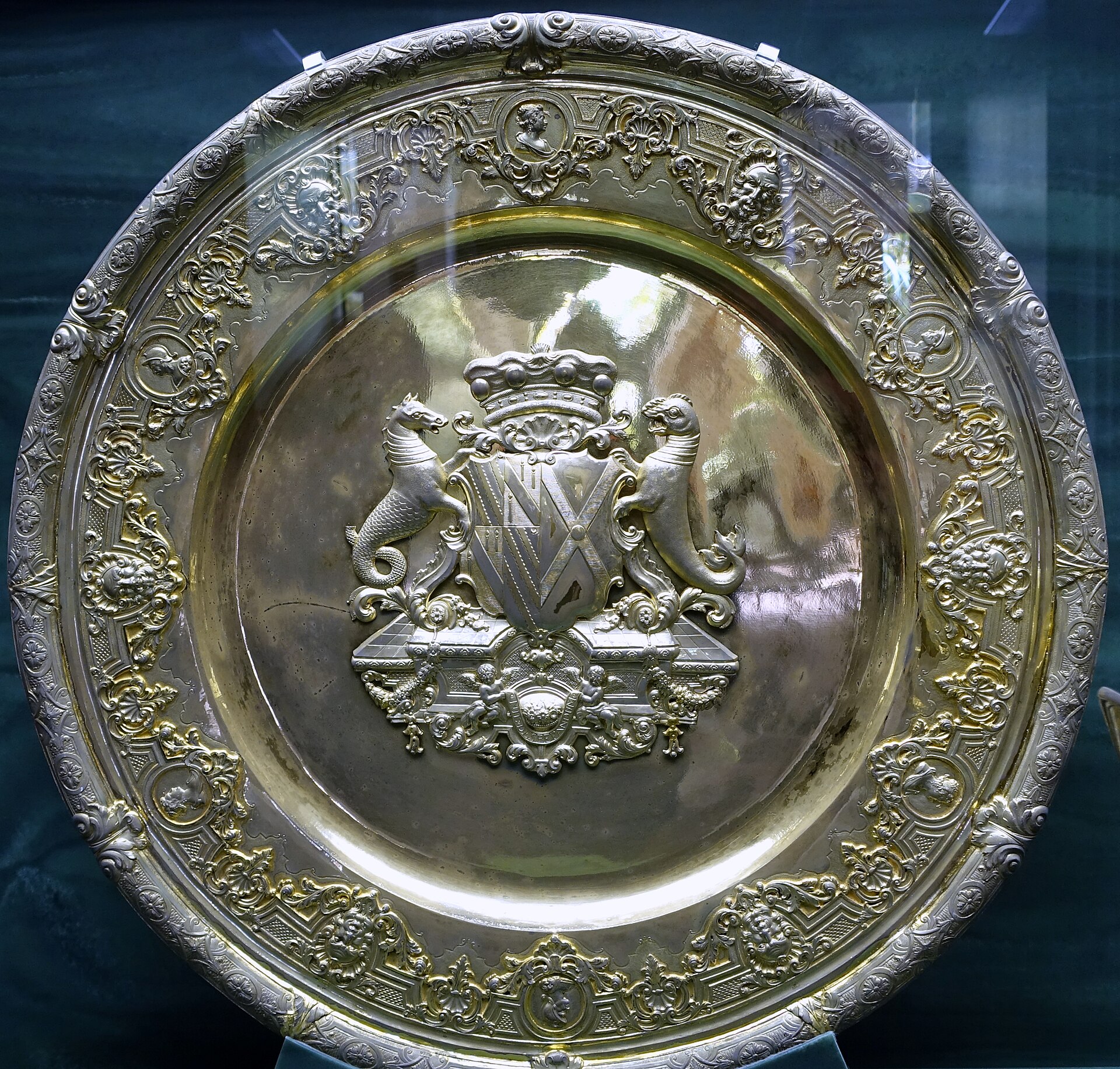
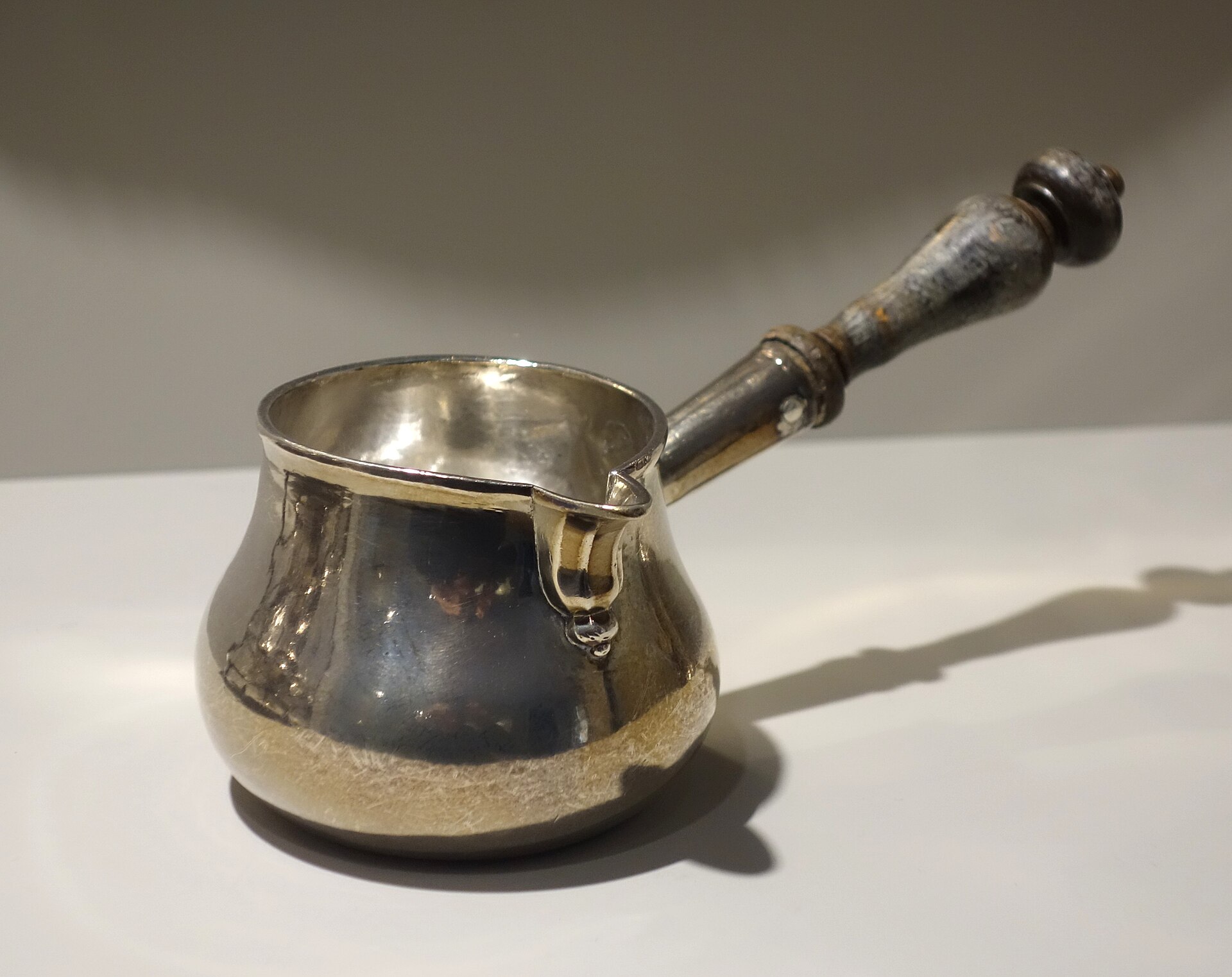
Other silver from the same narrow window survives to show what Lamerie's shop was producing around 1727: a dish and an ewer made for Baron George Anson of Soberton in the same assay year, 1726-27, now in the Fowler Museum at the University of California, Los Angeles, and a plain sauce pan of 1723 in the Huntington Art Museum, both unornamented Britannia-standard pieces consistent with the restrained 'Queen Anne style' that characterized much of his output before the 1730s. A Britannia-gauge waiter of 1732, marked with crests for Charles, 1st Viscount Fane and his wife Mary Stanhope, records the moment Lamerie's shop still worked to the higher standard on the very cusp of the change to sterling.
Chapter 9What the record does not know
No provenance links this cann to a named owner between its making in 1727 and its documented ownership by George H.
No provenance links this cann to a named owner between its making in 1727 and its documented ownership by George H. Bowman, Jr. of Salem, Ohio in the twentieth century. No dealer, auction record, family history, or publication has been found connecting the object to a specific commission, patron, or intervening collection. No scholarly literature on Lamerie consulted for this record, including general surveys of his career and catalogues of comparable pieces in other public collections, cites this cann specifically. Where the Hardwicke Tureen, the Cleveland tea caddy, and the Cleveland tray each carry some documented thread of ownership, exhibition, or published discussion beyond the bare museum accession, this cann's own history, on the evidence available, does not extend past a single donor's name and a single in-house exhibition the year after it entered the collection. That thinness is itself the finding, and this record states it rather than filling the gap with inference.
The artist
Paul Jacques de Lamerie (born Paul Souchay de la Merie)
Lamerie's own family history explains a great deal about the workshop that produced this cann. Born to Huguenot refugees who fled France for the Netherlands and then England, trained by another Huguenot goldsmith, and working in a London trade shaped by an influx of French Protestant craftsmen after 1685, he built a shop whose early output, this cann among it, sits at the plainer, more restrained end of a career that later became famous for the opposite: dense, sculptural rococo ornament. The facts below focus on the part of his career this specific object falls into, rather than repeating the forgery and connoisseurship material already covered elsewhere in this archive's other Lamerie records.
Related works
| Work | Relation | Where it is |
|---|---|---|
| Mug Paul de Lamerie | The closest published comparandum for this cann's rarity: one of fewer than half a dozen recorded mugs or canns by Lamerie, all plain, made between 1713 and 1746. Hallmarked 1720-21, seven years before this cann. Bears engraved arms for the Montgomery, Eglinton, and Percy families. | Victoria and Albert Museum, London (Rosalinde and Arthur Gilbert Collection, museum no. LOAN:GILBERT.985-2008) |
| Mug (pair to the V&A example) Paul de Lamerie | The matching mug to the V&A piece above, hallmarked a year earlier, from the same small group of surviving Lamerie drinking vessels. Hallmarked 1719. | Colonial Williamsburg |
| Dish for Baron George Anson of Soberton Paul de Lamerie | Made in the same London assay year as this cann, 1726-27, from the same first-mark, Britannia-standard phase of Lamerie's shop. Ornament was added to the piece at a later date, per the museum's own cataloguing. | Fowler Museum, University of California, Los Angeles |
| Sauce pan Paul de Lamerie | A plain Britannia-standard piece from four years earlier in Lamerie's first-mark period, illustrating the restrained, unornamented style of his shop's everyday output before the rococo work of the 1730s and 1740s. Dated 1723. | Huntington Art Museum, San Marino, California |
| Cann Unidentified English maker | An unrelated ceramic vessel that the Cleveland Museum of Art catalogues under the same object name, 'Cann,' confirming that the term denotes a vessel form rather than a material or a specific maker. English creamware, c. 1775. This is NOT the object described in this record and shares nothing with it beyond the catalogue name. | Cleveland Museum of Art, accession 2012.132 |
| The Hardwicke Soup Tureen and Cover / Tea Caddy / Tray Paul de Lamerie | Three other Lamerie pieces already catalogued elsewhere in this archive, all made later in his career under his second or third registered marks and the sterling standard. This cann, dated 1727 and made under his first mark on Britannia standard silver, predates all three by ten to nineteen years. Cross-referenced within this archive; their own detailed histories are not repeated here. | Portland Art Museum (Hardwicke Tureen, 69.45a-c); Cleveland Museum of Art (Tea Caddy, 1943.179; Tray, 1941.601) |
Open questions
- Who was the cann's first owner? The engraved griffin's-head-erased crest was carried by more than one family, and the Cleveland Museum of Art's own catalogue states the first owner cannot be identified from it.
- Where was the cann, and in whose hands, between its making in 1727 and its documented ownership by George H. Bowman, Jr. of Salem, Ohio in the twentieth century? No intervening owner is published in any source consulted.
- When and how did George H. Bowman, Jr. acquire the cann? No dealer, auction, or family-history record has been found.
- Which specific assay marks does the piece carry: the Britannia figure and lion's-head-erased town mark of Britannia standard, or a later sterling lion passant? The museum's public data records the sponsor's mark and date but not a transcription of the standard marks themselves, so the Britannia-standard dating in this record follows Lamerie's general mark chronology rather than a direct reading of this object's own hallmarks.
- Has this cann been published in any Lamerie catalogue raisonne or exhibition catalogue, such as Phillips's 1935 monograph, the Goldsmiths' Company's 1990 'At the Sign of the Golden Ball' exhibition catalogue, or Alcorn and Murdoch's catalogue of the Cahn Collection? None of the sources consulted for this record cite it.
- What does the engraved decoration on the front actually show? The museum's structured catalogue field describes only a single crest and mantling; a separate description, which reads as an automatically generated image caption rather than curatorial prose, describes a fuller scene with an oval, a standing figure, winged children, and a mask. Whether these describe the same engraving or two different elements of it is unresolved without direct examination of the object.
Questions about this object
What is Cann?
Cann is a silver, dated 1727. Medium: Silver, parcel-gilt (gilded interior).
Who made Cann, and is the attribution settled?
The attribution to Paul de Lamerie is recorded here as accepted. Accepted as bearing the sponsor's mark of Paul de Lamerie, entered under his first registration at Goldsmiths' Hall and used on Britannia standard silver into the early 1730s. As with every large goldsmith's shop of the period, the mark records who submitted the piece for assay and took responsibility for its standard, not necessarily whose hands raised it. No signature, contract, or workshop record naming an individual maker within Lamerie's shop survives for this object.
Where is Cann now?
Cleveland Museum of Art, Cleveland, Ohio. Inventory number 1986.206. Last confirmed 21 August 2026. Gift of Geo. H. Bowman Jr., Salem, Ohio, 1986, per the museum's own accession record and credit line.
What is still unknown about Cann?
Who was the cann's first owner? The engraved griffin's-head-erased crest was carried by more than one family, and the Cleveland Museum of Art's own catalogue states the first owner cannot be identified from it.
Sources
- 1Cleveland Museum of Art, 'Cann,' collection catalogue entry, accession 1986.206. clevelandart.org/art/...
- 2Cleveland Museum of Art Open Access API, structured artwork record for accession 1986.206 (artwork id 153239): tombstone, provenance, inscriptions, exhibition and credit-line fields. openaccess-api.clevelandart.org/api/...
- 3Wikimedia Commons, 'File:Paul Jacques de Lamerie (British, 1688-1751) - Cann - 1986.206 - Cleveland Museum of Art.jpg,' file description page and (license, credit, digitization date). commons.wikimedia.org/wiki/...
- 4Victoria and Albert Museum Collections, 'Mug,' Paul de Lamerie, London, hallmarked 1720-21, museum no. LOAN:GILBERT.985-2008 (Rosalinde and Arthur Gilbert Collection). collections.vam.ac.uk/item/...
- 5Cleveland Museum of Art, 'Cann,' collection catalogue entry, accession 2012.132 (English creamware, c. 1775, Bequest of Dr. Paul J. Vignos Jr.). clevelandart.org/art/...
- 6M.S. Rau, 'Paul de Lamerie: Setting the Standard,' Canvases, Carats and Curiosities blog. rauantiques.com/blogs/...
- 7Wikipedia, 'Paul de Lamerie.' source, with Grimwade's register-based catalogue and Phillips's 1935 'Paul de Lamerie: Citizen and Goldsmith of London.' en.wikipedia.org/wiki/...
- 8vintagewatchstraps.com, 'Blog: The Fallacy of the "Maker's Mark,"' on the sponsor's-mark convention in eighteenth-century English gold and silver marking. vintagewatchstraps.com/blogmakersmarkfallacy.php
- 9Wikimedia Commons, 'File:Dish for Baron George Anson of Soberton, by Paul de Lamerie, London, 1726-1727, ornament added later, silver - Fowler Museum - University of California, Los Angeles - DSC02498.jpg,' file description page. commons.wikimedia.org/wiki/...
- 10Wikimedia Commons, 'File:Waiter 1732 LA.jpg,' file description page (a Britannia-gauge waiter of 1732 marking Lamerie's transition to his second mark and the sterling standard). Image not used in this record: licensed CC BY-SA 3.0, not public domain or CC0. commons.wikimedia.org/wiki/...
_-_Cann_-_1986.206_-_Cleveland_Museum_of_Art.jpg)


Last verified · Published
Change log
21 August 2026 - Record created at the house standard: researched narrative, technical evidence, maker dossier, graded provenance chain, prices with hammer and premium separated, related works, open questions and sources.