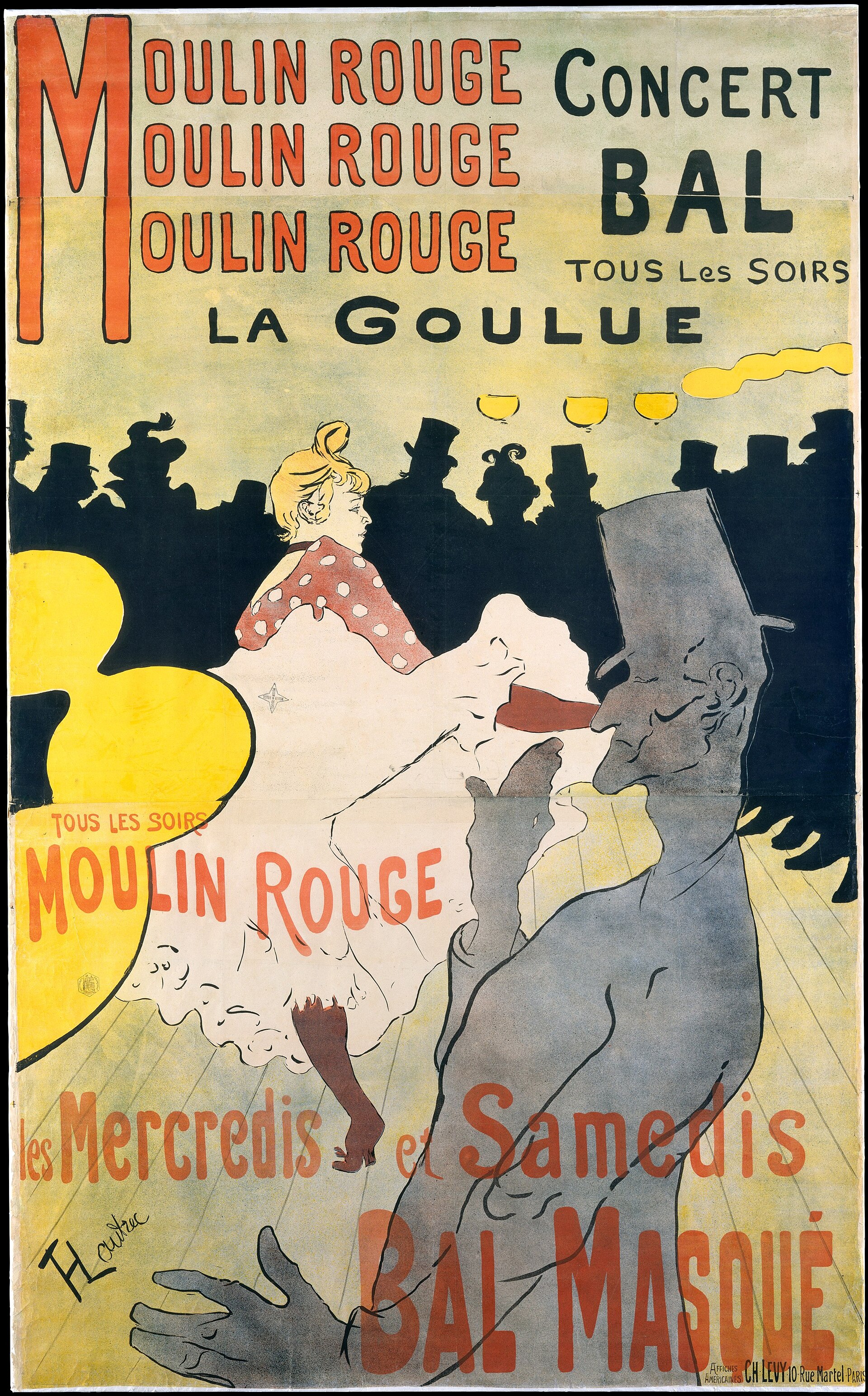
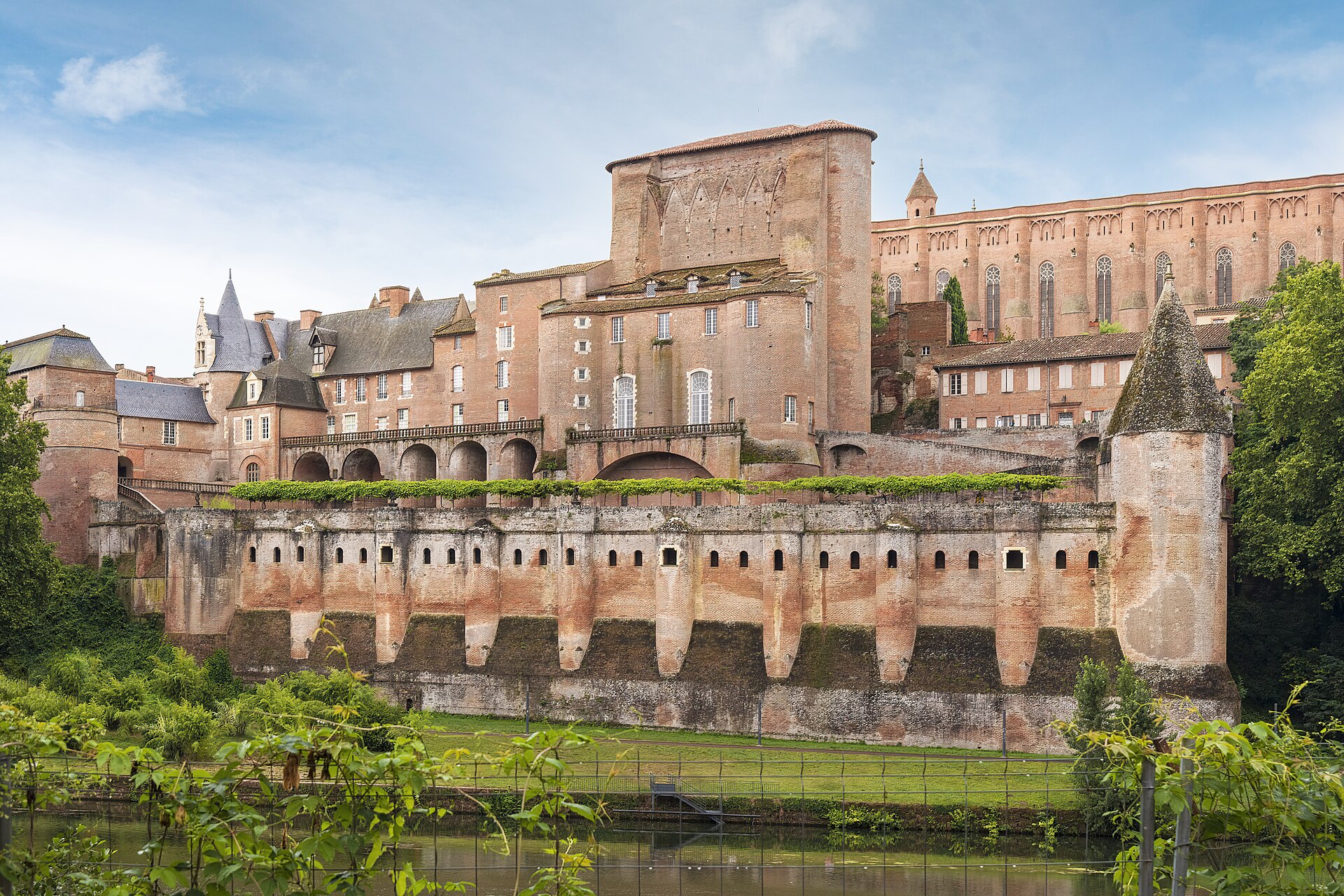
Moulin Rouge: La Goulue
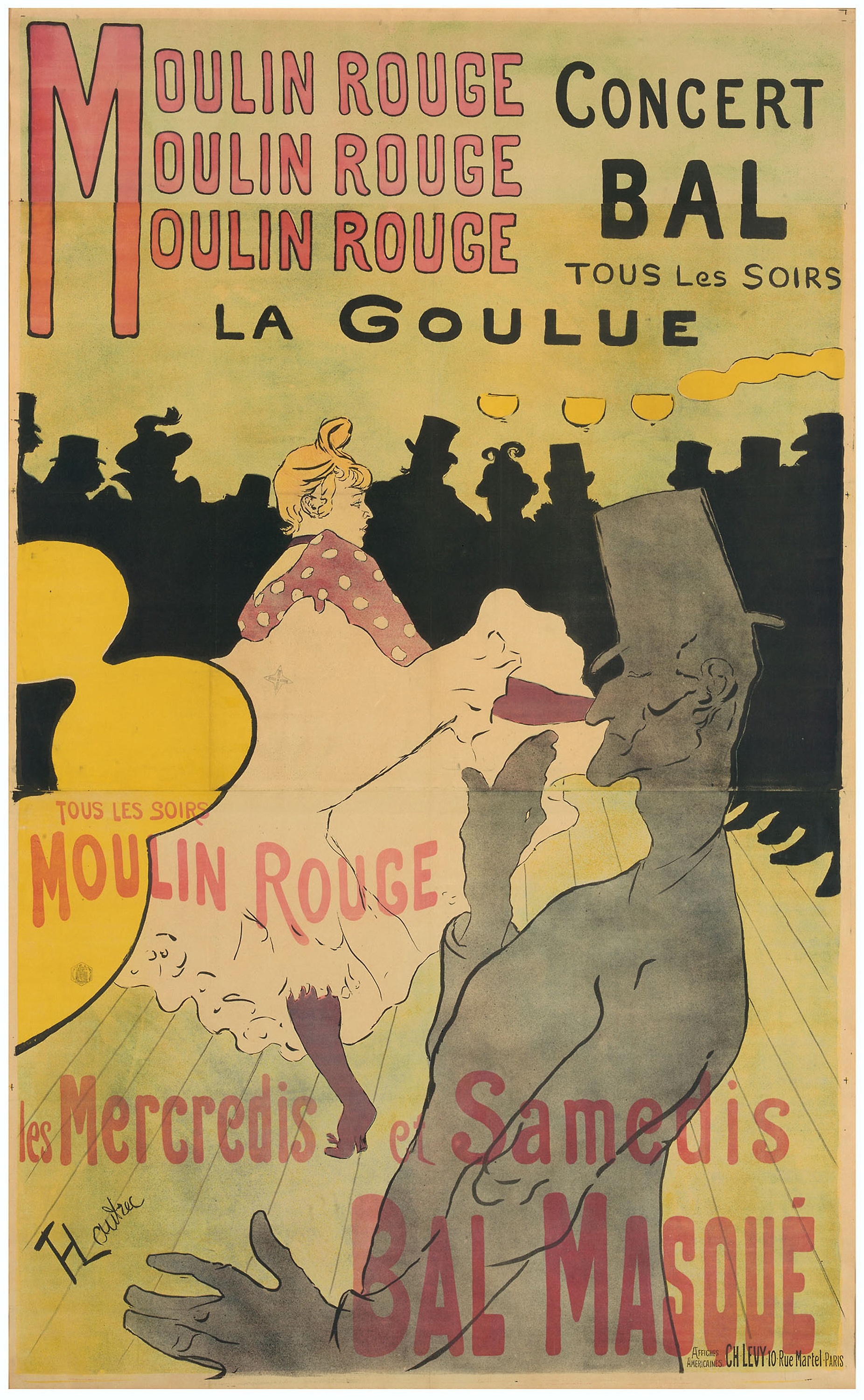
1891 · Color lithograph printed in four colors...
The Metropolitan Museum of Art, New York
 French · 1864-1901
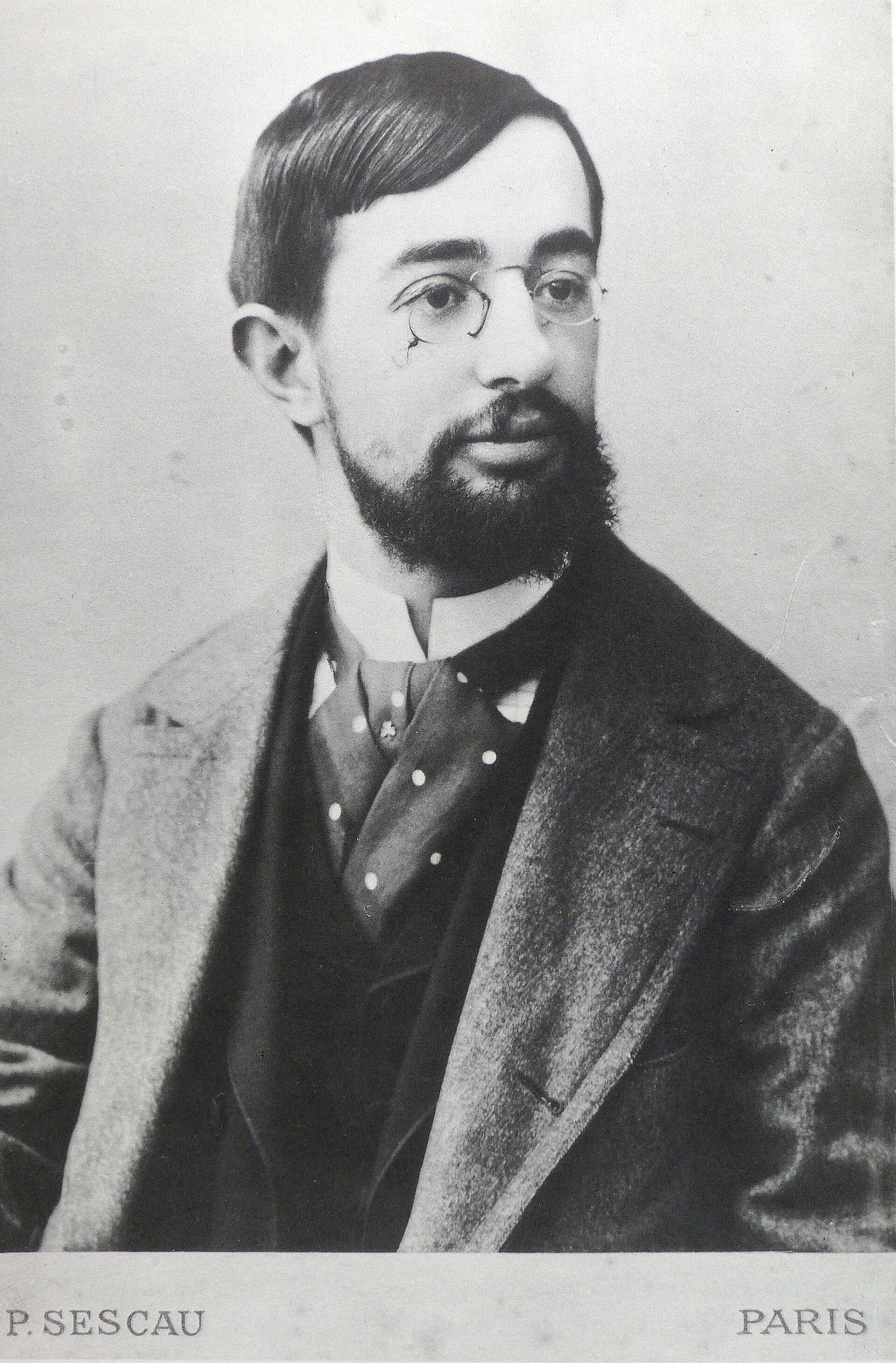
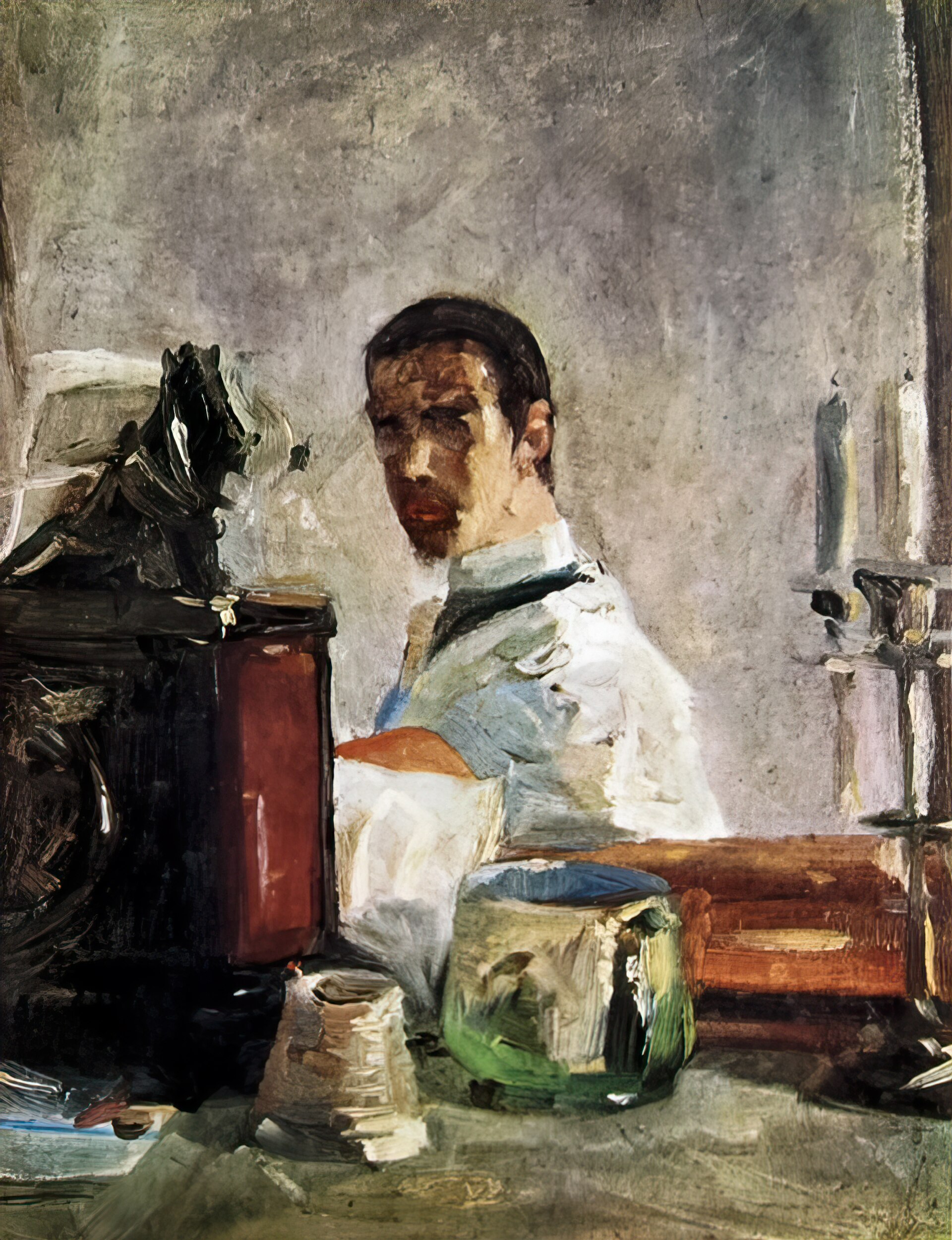
Henri de Toulouse-Lautrec, photographed by his friend Paul Sescau, a Montmartre photographer who was himself among the later subjects of Lautrec's print work. The identification of the sitter as Lautrec is not contested in the sources consulted for this record.
Photograph by Paul Sescau| Full name | Henri Marie Raymond de Toulouse-Lautrec-Monfa |
|---|---|
| Worked as | Painter, Printmaker, Lithographer, Poster designer |
| Born | 24 November 1864 · Albi, southern France |
| Died | 9 September 1901 · Chateau Malrome, near Saint-Andre-du-Bois, his mother's... |
| Nationality | French |
| Movement | Post-Impressionism |
| In this archive | 1 artwork |
| Sources | 26 cited |
| Last verified |
About this page 1 artwork in the archive · Last verified · 26 sources cited
Toulouse-Lautrec earns a page here on a genuine corpus problem, not on the fame of the Moulin Rouge posters alone. His paintings, pastels and drawings are catalogued by a single 1971 reference, Madeleine Grillaert Dortu's six-volume Toulouse-Lautrec et son oeuvre, which has never been fully superseded and whose own custodians are still working, decades later, on the supplement it needs. His prints and posters are a separate, more heavily collected body governed by an entirely different reference, Wolfgang Wittrock's 1985 catalogue of the graphic work, in which state, paper and impression can move the value of the same printed image by a wide margin. Both corpora sit behind a market that has produced at least one documented painting withdrawn from sale after an expert certificate failed to settle the question, and one BBC-televised case in which the artist's own authentication committee looked at two sketchbooks and, after fifty years in a family's possession, judged them the work of his teacher instead.
He was also, and this record treats it as a documented fact rather than an aside, a man whose adult body stopped growing after two broken legs in adolescence, born to first-cousin parents from one of the oldest noble houses in southern France, who spent his working life inside the brothels, cabarets and circus rings of Montmartre rather than the salons his birth would ordinarily have opened to him. The standard account compresses this into a single sentimental arc: disabled aristocrat finds his true home among outcasts. What the sources actually support is narrower and more interesting: a documented, still-argued medical diagnosis; a documented printing trade he worked inside as a collaborator rather than a customer; and a documented refusal, from at least one of his own sitters, to accept his image of her without a fight.
Born 24 November in Albi to first-cousin parents, Count Alphonse and Countess Adele de Toulouse-Lautrec.6
Breaks his left femur in a second fall; neither leg heals to full length.67
Leaves Leon Bonnat's studio for Fernand Cormon's, a looser academic environment; meets Emile Bernard and, briefly, Vincent van Gogh.6
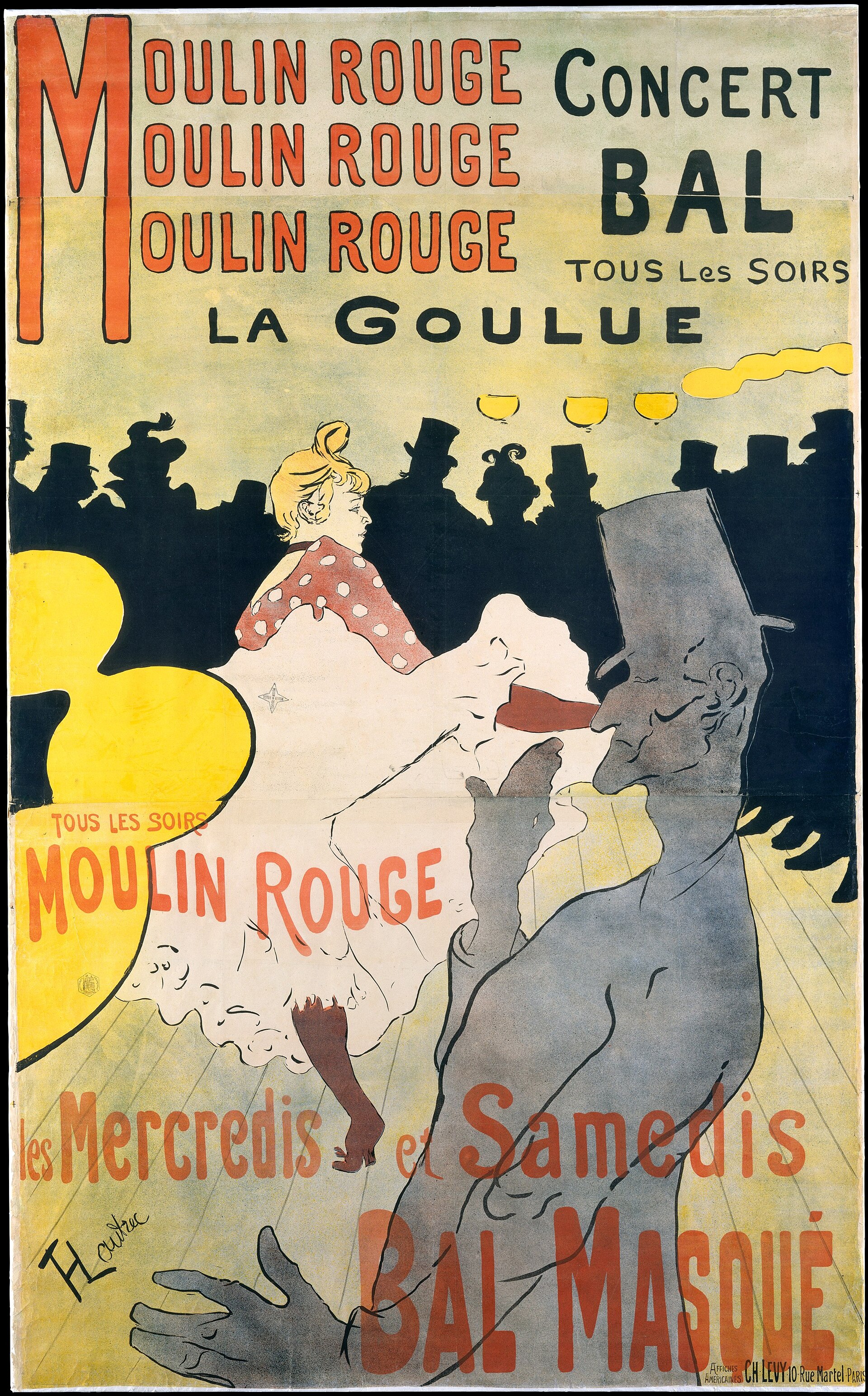
Commissioned by Charles Zidler to design the Moulin Rouge's advertising poster; printed by Charles Levy's Affiches Americaines, it makes his name overnight.1314
Begins working regularly with Edouard Ancourt's print workshop and master printer Pere Cotelle for most of his subsequent posters and prints.12
Commissioned, late in the year, to paint sixteen oval panels of individual portraits for a brothel salon on the rue d'Ambroise.18
Makes fourteen lithographic stones for the publisher Editions Joubert, illustrating songs; the stones are later rediscovered, reprinted in 1978, and formally cancelled.11
The ten-print series Elles, commissioned by the dealer Gustave Pellet, is shown at the Salon des Cent on 22 April; it sells poorly.18
Committed to the Folie Saint-James sanatorium in Neuilly-sur-Seine, 27 February to 17 May, after a collapse attributed to delirium tremens; draws a circus series from memory to demonstrate recovery.626
Dies 9 September at Chateau Malrome, his mother's estate, aged 36, from complications of alcoholism and syphilis.67
His mother, Countess Adele, signs the deed of gift on 31 July placing more than 320 works, including some 150 paintings, with the city of Albi; the Musee Toulouse-Lautrec opens in the Palais de la Berbie.2
M. G. Dortu's six-volume catalogue raisonne of the paintings, pastels, watercolours and drawings is published in New York, still the standard reference.34
Wolfgang Wittrock's two-volume catalogue of the complete prints is published, cataloguing 368 works from 1891 to 1900.5
The Comite Toulouse-Lautrec is formed by the Musee Toulouse-Lautrec's board following the deaths of the market's two previous authenticating authorities, Jean-Alain Meric and Philippe Brame.1
La Blanchisseuse sells at Christie's New York for USD 22.4 million on 1 November, the standing auction record for a Lautrec painting.15
The painting market and the print market for this artist behave differently and should not be read against each other. A unique painting sets a single high-water mark; a print's price depends on which surviving impression, in which state and condition, is on offer, since the same design left the press in runs and survives today in an unknown and unevenly documented number of copies.
| Date | Sale | Work | Result | Note |
|---|---|---|---|---|
| 1 November 2005 | Christie's, New York | La Blanchisseuse (The Laundress, 1886-87) | Hammer Not published in the sources consulted With premium USD 22.4 million (total; hammer and premium not separately published) USD | Standing auction record for a Lautrec painting. Sold to an anonymous telephone bidder. |
| 21 May 2014 | Christie's, London | Moulin Rouge: La Goulue (poster, two-sheet impression) | Hammer Not separately published With premium Reported variously as GBP 260,000 and as EUR 388,000 / GBP 314,500 GBP / EUR (conflicting reports) | Secondary sources on the same sale disagree by a wide margin; this record has not been able to reconcile the figures and states the conflict rather than choosing one, consistent with the same unresolved discrepancy on this poster's own object record elsewhere in this archive. |
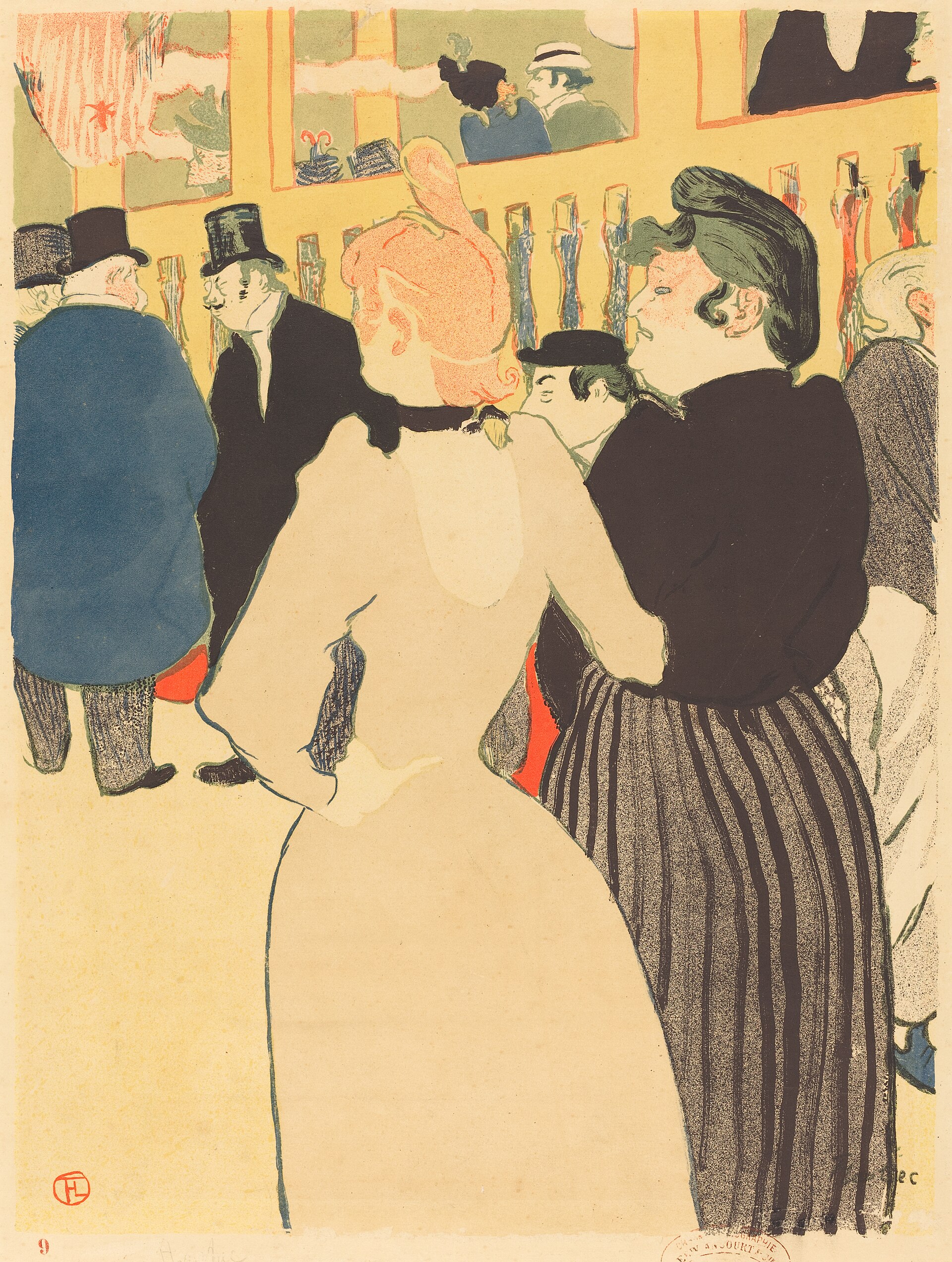
| 2002 | Not identified in the sources consulted | La Grande Loge (1897, print) | Hammer Not published With premium GBP 385,320 (reported) GBP | Cited by one tertiary dealer source as the record price for a single Lautrec print; not independently verified against an auction house's own catalogue. |
Hammer is the price at which the bidding stopped; with premium adds the fee the house charges the buyer on top. Hammer price and buyer's premium in the glossary.
| Institution | City | Holdings | Note |
|---|---|---|---|
| Musee Toulouse-Lautrec | Albi, France | More than 320 works including around 150 paintings, the largest single collection of his work anywhere, given by his mother in 1922. | Housed in the Palais de la Berbie, the former bishops' palace beside the cathedral of Sainte-Cecile. |
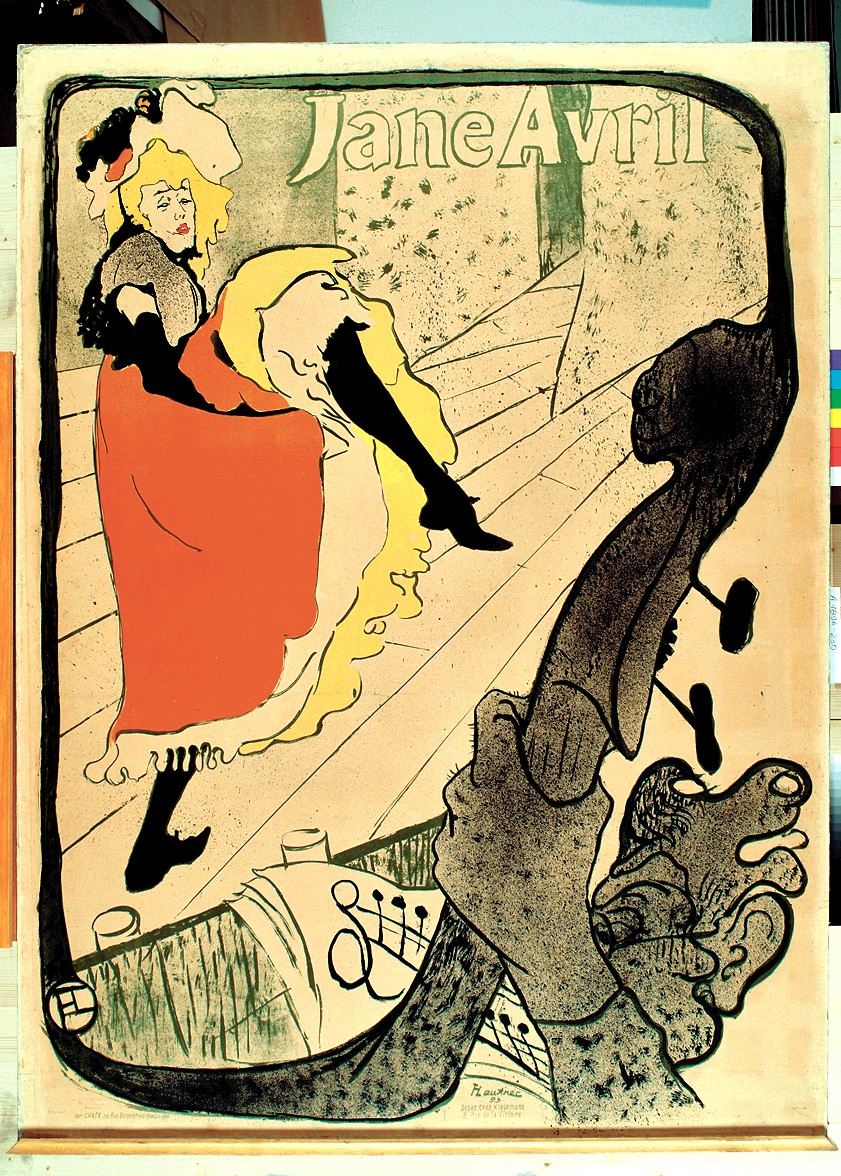
| The Metropolitan Museum of Art | New York | Multiple posters and prints, including an impression of Moulin Rouge: La Goulue (32.88.12) and Jane Avril (1893). | Held in the Department of Drawings and Prints, largely in print-room storage rather than on permanent display. |
| Art Institute of Chicago | Chicago | A separate impression of Moulin Rouge, La Goulue (1954.1193), from the Carter H. Harrison collection. | A distinct physical object from the Met's impression, with its own provenance. |
| Musee d'Orsay | Paris | Paintings and works on paper from the Montmartre years. | |
| Victoria and Albert Museum | London | An impression of Moulin Rouge, La Goulue identified as Wittrock's rarer two-sheet Version C. | One of only four known public-collection impressions of this state. |
He was born Henri Marie Raymond de Toulouse-Lautrec-Monfa in Albi on 24 November 1864, the first son of Count Alphonse de Toulouse-Lautrec-Monfa and Countess Adele Tapie de Celeyran, who were first...
He was born Henri Marie Raymond de Toulouse-Lautrec-Monfa in Albi on 24 November 1864, the first son of Count Alphonse de Toulouse-Lautrec-Monfa and Countess Adele Tapie de Celeyran, who were first cousins. The family traced its nobility to the medieval counts of Toulouse. Count Alphonse was an eccentric sporting aristocrat, given to horses, hawking and hunting, largely absent from his son's upbringing and reported to have shown little interest in a boy who, after an accident in adolescence, could never ride. He arrived at Henri's deathbed only shortly before the end.
The consanguinity of his parents is directly implicated, in the medical literature consulted for this record, in the bone fragility that shaped the rest of his life. This record treats that as a documented family fact, not as a moral point: cousin marriage to consolidate land and title was ordinary practice in the milieu his parents came from, and the genetic cost fell on their son.
His first teacher was informal: Rene Princeteau, a deaf-mute painter of military and equestrian subjects working in an academic nineteenth-century style, who gave the young Lautrec early instruction...
His first teacher was informal: Rene Princeteau, a deaf-mute painter of military and equestrian subjects working in an academic nineteenth-century style, who gave the young Lautrec early instruction and, impressed by his progress, persuaded his parents to let him study formally in Paris. That early connection to Princeteau later became evidence in its own right, discussed below under the sketchbooks his family's authentication committee eventually disputed.
He then entered the studio of the portrait painter Leon Bonnat, whose training was built on copying old masters and drawing from posed models, and who fought against any deviation from academic rule. Bonnat is reported to have judged Lautrec's drawing outright atrocious. When Bonnat closed his studio to new pupils, Lautrec transferred in 1882 to the studio of Fernand Cormon, where the instruction was markedly looser and pupils were allowed to range across Paris for their own subjects. It was at Cormon's studio that he met Emile Bernard and, for a period, Vincent van Gogh, and where the circle of friends who shaped his Montmartre years first came together.
Lautrec broke his right femur in a fall in May 1878, aged thirteen, and his left femur in a second fall roughly a year later.
Lautrec broke his right femur in a fall in May 1878, aged thirteen, and his left femur in a second fall roughly a year later. Neither leg healed to full strength or length. His torso continued to develop into an ordinary adult frame while his legs stayed childlike, leaving him an adult of about 1.52 to 1.54 metres.
The retrospective diagnosis has moved through several candidates over the twentieth century: osteogenesis imperfecta, osteopetrosis, achondroplasia and other forms of dwarfism were all proposed at different points. In 1962 the French physicians Pierre Maroteaux and Maurice Lamy identified pycnodysostosis, a rare inherited bone disorder sometimes called Toulouse-Lautrec syndrome because of this case, and their diagnosis became the standard account repeated across most popular biography since. That should be graded argued, not documented: no autopsy was performed at his death, no x-rays were taken of his skeleton during his life, and his remains have never been exhumed for post-mortem study. The gene responsible for pycnodysostosis was identified in 1996, which allows a definitive genetic diagnosis in living patients but cannot be applied retroactively to Lautrec himself without tissue to test. The medical literature consulted for this record states plainly that the pycnodysostosis diagnosis is highly probable on the clinical description but cannot be made definitive on the evidence that survives, and notes it has been questioned again by more recent researchers without a rival diagnosis displacing it.
The standard reference for his paintings, pastels, watercolours, monotypes and drawings is Madeleine Grillaert Dortu's Toulouse-Lautrec et son oeuvre, compiled with Paul Brame and C.
The standard reference for his paintings, pastels, watercolours, monotypes and drawings is Madeleine Grillaert Dortu's Toulouse-Lautrec et son oeuvre, compiled with Paul Brame and C. M. de Hauke and published in six volumes by Collectors Editions, New York, in 1971. Dortu was president of the Society of Friends of the Albi Museum, which places the catalogue's authorship inside the same institutional circle that holds the artist's largest collection and his moral rights. Figures repeated across secondary sources, traced ultimately to Dortu's own count, give 737 paintings on canvas, 275 watercolours and 5,084 drawings across a working life of well under twenty years; this record has not independently verified that count against the catalogue itself and flags it as tertiary, widely repeated but not confirmed against a primary count.
No revised or superseding catalogue of the paintings has been published since. What exists instead is the Comite Toulouse-Lautrec, formed in 2005 by the board of the Musee Toulouse-Lautrec, which holds the artist's moral rights, shortly after the deaths of Jean-Alain Meric and Philippe Brame, the two authorities the market had previously relied on to expertise works attributed to the painter. Its five members meet behind closed doors every six to eight months, examine paintings and drawings submitted from France and abroad by visual inspection and archival research, and are consulted roughly forty times a year. Part of its stated mission, alongside authentication, is the preparation of a supplement to Dortu's catalogue. This record has not located a published date for that supplement, nor a published aggregate figure for how many attributions the committee has confirmed, revised or rejected since 2005; both are recorded as open questions rather than filled with an estimate.
The prints and posters are catalogued separately, in Wolfgang Wittrock's two-volume Toulouse-Lautrec: The Complete Prints, published by Sotheby's Publications and Philip Wilson in 1985 after six...
The prints and posters are catalogued separately, in Wolfgang Wittrock's two-volume Toulouse-Lautrec: The Complete Prints, published by Sotheby's Publications and Philip Wilson in 1985 after six years of research. Wittrock describes, image by image, the trial proofs, proofs, states, editions and re-editions of 368 prints made between 1891 and 1900, a figure that differs slightly from the 363 given in some tertiary summaries; this record follows Wittrock's own stated total and flags the discrepancy rather than silently picking one. Every institution and auction house that has since catalogued an impression of a major Lautrec print does so against a Wittrock number, exactly as they do against Delteil or Adriani for individual titles.
The numbering is not academic housekeeping. Because these were commercial editions printed in runs and pasted up as advertising or sold as portfolios, the same printed image can survive today in wildly different states and conditions, and the value follows the specific impression rather than the design. The Victoria and Albert Museum's own catalogue entry for its impression of the 1891 Moulin Rouge poster identifies it as Wittrock's rarer two-sheet Version C, of which only four impressions are known in public collections worldwide, a real sourced census of one state within one design, not of the design as a whole. No comprehensive survival count across all recorded states of that poster has been located in the sources consulted for this record.
Lautrec's first poster, Moulin Rouge: La Goulue (1891), was printed not by the workshop most associated with his name but by the commercial poster house Affiches Americaines, run by Charles Levy.
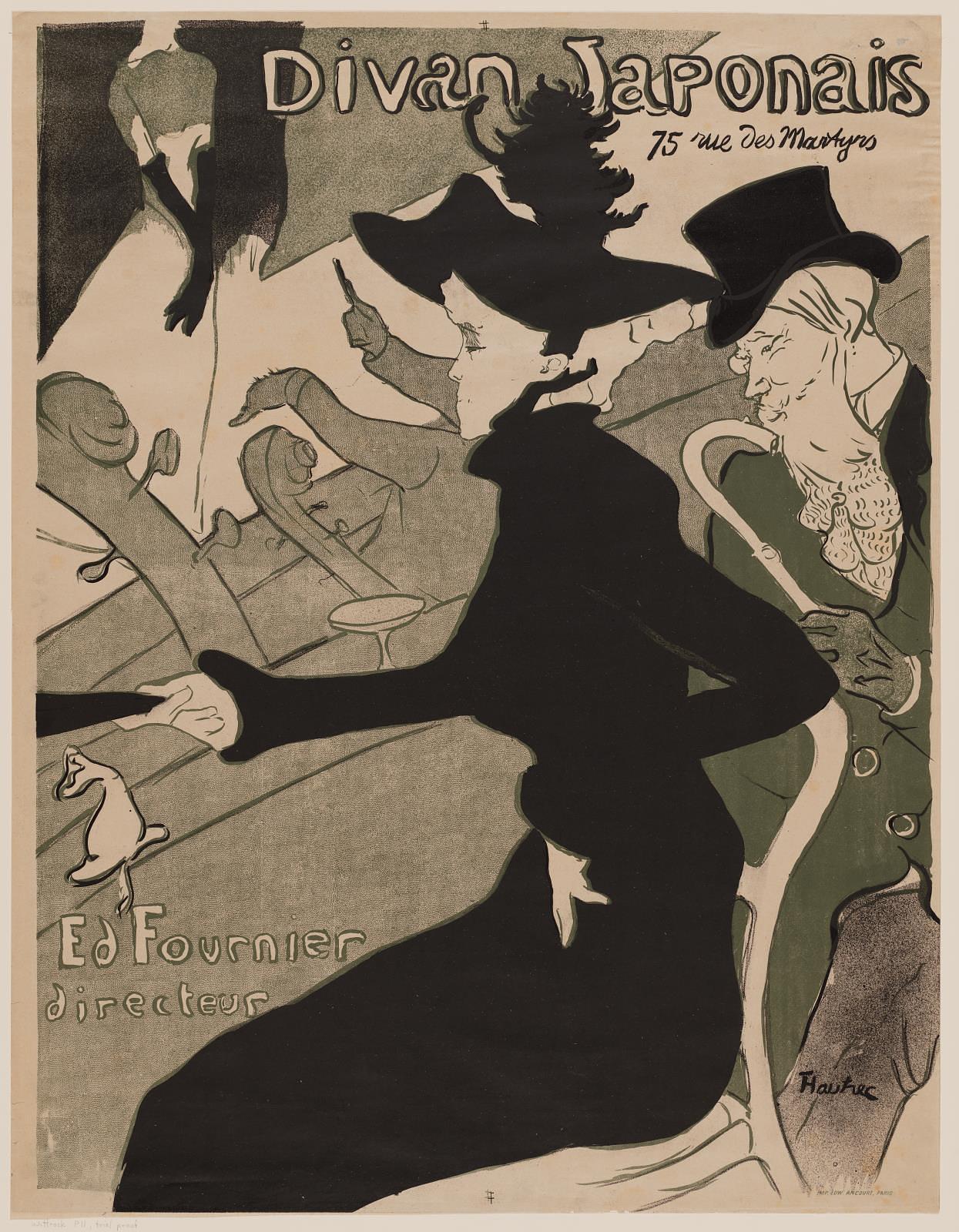
Lautrec's first poster, Moulin Rouge: La Goulue (1891), was printed not by the workshop most associated with his name but by the commercial poster house Affiches Americaines, run by Charles Levy. Starting the following year his regular printer became the workshop of Edouard Ancourt, on the rue du Faubourg-Saint-Denis, where the master printer known as Pere Cotelle operated the press for most of Lautrec's subsequent posters and prints, including Divan Japonais (1892-93) and the majority of his later graphic work. Lautrec depicted Cotelle at the press himself, on the cover of the first album of L'Estampe originale in 1893, showing the performer Jane Avril watching a proof come off the stone. The printer's craft labour behind Lautrec's colour effects, the spatter or crachis technique among them, is technical and attribution-adjacent work that period print culture routinely left uncredited on the finished sheet; where it is documented at all, as with Cotelle, it survives mainly because Lautrec chose to draw the man doing it.
In December 2003 a painting depicting a French cancan scene featuring La Goulue, estimated at three million euros and carrying an expert certificate, was withdrawn at the last moment from sale at an...
In December 2003 a painting depicting a French cancan scene featuring La Goulue, estimated at three million euros and carrying an expert certificate, was withdrawn at the last moment from sale at an auction house in Montauban, in a case that drew comment from both the Institut Toulouse-Lautrec and the auctioneer conducting the sale. This record has not located a published resolution of that case beyond the withdrawal itself, and states the gap rather than guessing at an outcome.
In 2018 the BBC programme Fake or Fortune? investigated sketchbooks that had surfaced by a more ordinary route: a French psychoanalyst, given them by his grandmother in the 1960s after they were found in a garden shed near Saint-Emilion, submitted them to the Comite Toulouse-Lautrec roughly fifty years later. The committee's judgment was that the sketchbooks were the work of Rene Princeteau, Lautrec's own early teacher, rather than Lautrec himself, a verdict some specialists in Princeteau's own work reportedly disputed as implausibly accomplished for their attributed hand. A published account of the programme's outcome, from a critic who had reviewed the evidence, describes the committee as unable to reach a fresh opinion within the time the television investigation allowed, which is recorded here as an unresolved case rather than either a confirmed fake or a vindicated attribution.
A third, better-documented case is not a fraud but shows exactly why the print corpus is vulnerable to conflating early and late pulls: fourteen lithographic stones Lautrec made in 1895 for a set of song-sheet illustrations commissioned by the publisher Editions Joubert were rediscovered decades later in the publisher's basement, reprinted at the Atelier Mourlot in Paris and published in 1978, then formally cancelled and deposited at the Bibliotheque Nationale's Cabinet des Estampes. No case of a forged or unauthorized restrike specifically affecting one of his best-known posters has been located in the sources consulted for this record; that absence is reported as a finding, not as proof the wider market is free of the risk the Wittrock catalogue and the Comite Toulouse-Lautrec both exist to manage.
The auction record for a Lautrec painting is held by La Blanchisseuse (The Laundress, 1886-87), a portrait of the laundress Carmen Gaudin, sold at Christie's New York on 1 November 2005 for a...
The auction record for a Lautrec painting is held by La Blanchisseuse (The Laundress, 1886-87), a portrait of the laundress Carmen Gaudin, sold at Christie's New York on 1 November 2005 for a reported total of USD 22.4 million to an anonymous telephone bidder. The sources consulted for this record give the total price but not a separate hammer figure, and this record states that gap rather than presenting the total as a hammer price.
The market for his prints operates on an entirely different scale and logic, because it prices a specific surviving impression rather than a unique object. A two-sheet impression of Moulin Rouge: La Goulue sold at Christie's London on 21 May 2014; secondary reporting on the same sale gives figures as far apart as GBP 260,000 and roughly GBP 314,500 (reported also as EUR 388,000), and this record has not been able to reconcile the two into a single confident number, consistent with the same unresolved discrepancy already recorded on this poster's own object record elsewhere in this archive. One tertiary dealer source separately identifies La Grande Loge (1897) as the highest price paid for a single Lautrec print, at GBP 385,320 in a 2002 sale; this record has not independently verified that figure against an auction house's own catalogue and flags it as tertiary accordingly.
A period data point on what his work fetched soon after his death: at a Plaza Hotel sale in New York on 30-31 January 1922, a portrait study sold for USD 1,900 to the collector Eugene Liston, at a time when USD 1,500 a year was, by one contemporary account, a solid salary for a white-collar worker. That figure is drawn from a secondary source citing an unnamed 1922 periodical and is flagged here as tertiary, useful chiefly for the order of magnitude it establishes rather than as a precise index.
Louise Weber, known as La Goulue, is the best documented of his recurring models; her later life, including her decades-long independent career as a belly dancer, animal tamer and sideshow performer...
Louise Weber, known as La Goulue, is the best documented of his recurring models; her later life, including her decades-long independent career as a belly dancer, animal tamer and sideshow performer after leaving the Moulin Rouge, and her death in poverty in 1929, is covered in depth in this archive's own record of the poster that made her famous, and is not repeated at length here.
Yvette Guilbert, the diseuse whose gloved arms and grimacing stage face became one of Lautrec's most repeated subjects, rejected a 1894 poster study of herself outright as unflattering, and the Cleveland Museum of Art's own object record states plainly that the poster was never produced after she turned the design down. Guilbert is reported, across sources of varying reliability, to have voiced similar objections to his caricatures of her on more than one occasion and to have preferred a more conventionally flattering treatment of herself by a different artist, Theophile-Alexandre Steinlen. Jane Avril, by contrast, sat for him repeatedly and remained his friend until his death; she published her own memoirs, Mes Memoires, serialized in the Paris newspaper Paris-Midi in August 1933 and later collected in book form. This record has not been able to independently verify, within the sources consulted, a specific passage in which she describes the experience of sitting for him, and states that gap rather than paraphrasing a text this research did not read directly.
In February 1899, after a collapse attributed to delirium tremens, his mother had him committed to a sanatorium, the Folie Saint-James in Neuilly-sur-Seine, where he was treated from 27 February to...
In February 1899, after a collapse attributed to delirium tremens, his mother had him committed to a sanatorium, the Folie Saint-James in Neuilly-sur-Seine, where he was treated from 27 February to 17 May 1899. Told that his physicians doubted his memory was intact, he produced, on a friend's advice, a series of circus scenes drawn entirely from recollection rather than from life, a deliberate demonstration of recovery rather than a spontaneous return to an old subject. He was released, resumed drinking within a short period, and his output fell sharply in the two years that remained to him.
He died on 9 September 1901 at Chateau Malrome, his mother's estate near Saint-Andre-du-Bois, aged 36, from complications of chronic alcoholism and syphilis; a stroke weeks earlier had left him partially paralysed. He is reported, in sources of tertiary reliability, to have directed a final, characteristically blunt remark at his largely absent father at his deathbed; this record notes the anecdote's currency without treating it as verified beyond the level of its own sourcing.
After his death, his parents entrusted the disposition of his studio contents to Maurice Joyant, his childhood friend and the dealer who had already been placing his work, working alongside his...
After his death, his parents entrusted the disposition of his studio contents to Maurice Joyant, his childhood friend and the dealer who had already been placing his work, working alongside his cousin Gabriel Tapie de Celeyran. Several institutions approached with the collection declined it, on the documented grounds of the artist's daring subject matter and what contemporary accounts of the period call his sulphurous reputation. Countess Adele de Toulouse-Lautrec, his mother, ultimately funded and signed the gift to her son's own birthplace: the deed was executed on 31 July 1922, comprising more than 320 works including around 150 paintings, and the city of Albi housed them in the Palais de la Berbie, the former bishops' palace beside the cathedral of Sainte-Cecile. The Musee Toulouse-Lautrec remains the largest single collection of his work anywhere, built directly on a mother's decision to place her dead son's most explicit paintings on public view in the town where he was born rather than let them scatter through the trade.
Painter; Printmaker; Lithographer; Poster designer; Illustrator. 1864-1901.
Born 24 November 1864, Albi, southern France; died 9 September 1901, Chateau Malrome, near Saint-Andre-du-Bois, his mother's estate.
The Montauban 'La Goulue' painting, withdrawn December 2003. A painting depicting a cancan scene with La Goulue, estimated at three million euros and carrying an expert certificate, was withdrawn at the last moment from sale at an auction house in Montauban.
Musee Toulouse-Lautrec (Albi, France); The Metropolitan Museum of Art (New York); Art Institute of Chicago (Chicago); Musee d'Orsay (Paris); Victoria and Albert Museum (London).
The painting market and the print market for this artist behave differently and should not be read against each other. A unique painting sets a single high-water mark; a print's price depends on which surviving impression, in which state and condition, is on offer, since the same design left the press in runs and survives today in an unknown and unevenly documented number of copies.
How many of Dortu's 1971 attributions have since been revised or rejected, and by whom? No published aggregate figure for the Comite Toulouse-Lautrec's decisions since 2005 has been located.
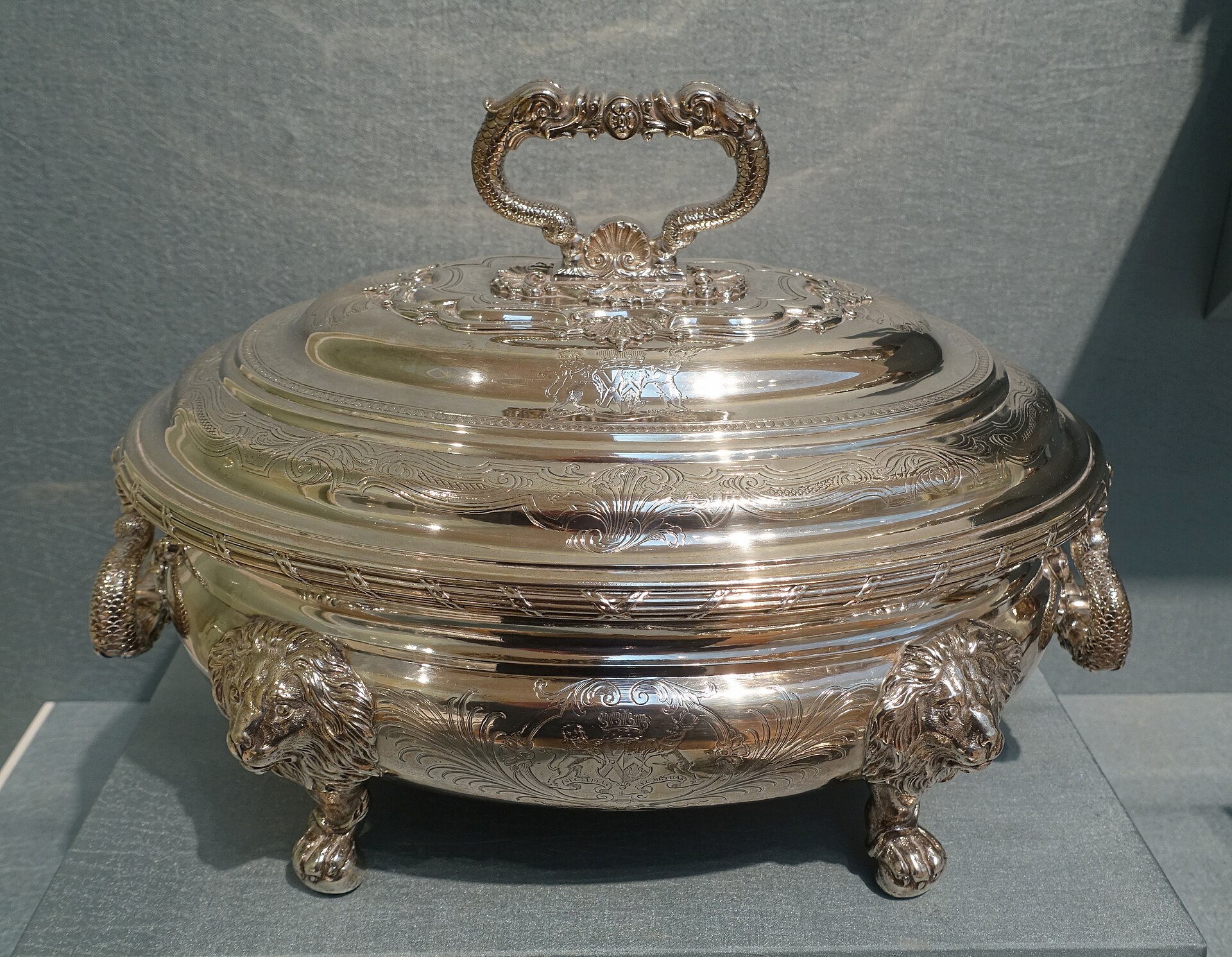
A British hallmark fixes a year exactly, because the punch is destroyed at the end of it, and the mark people call a maker's mark...
10 min read
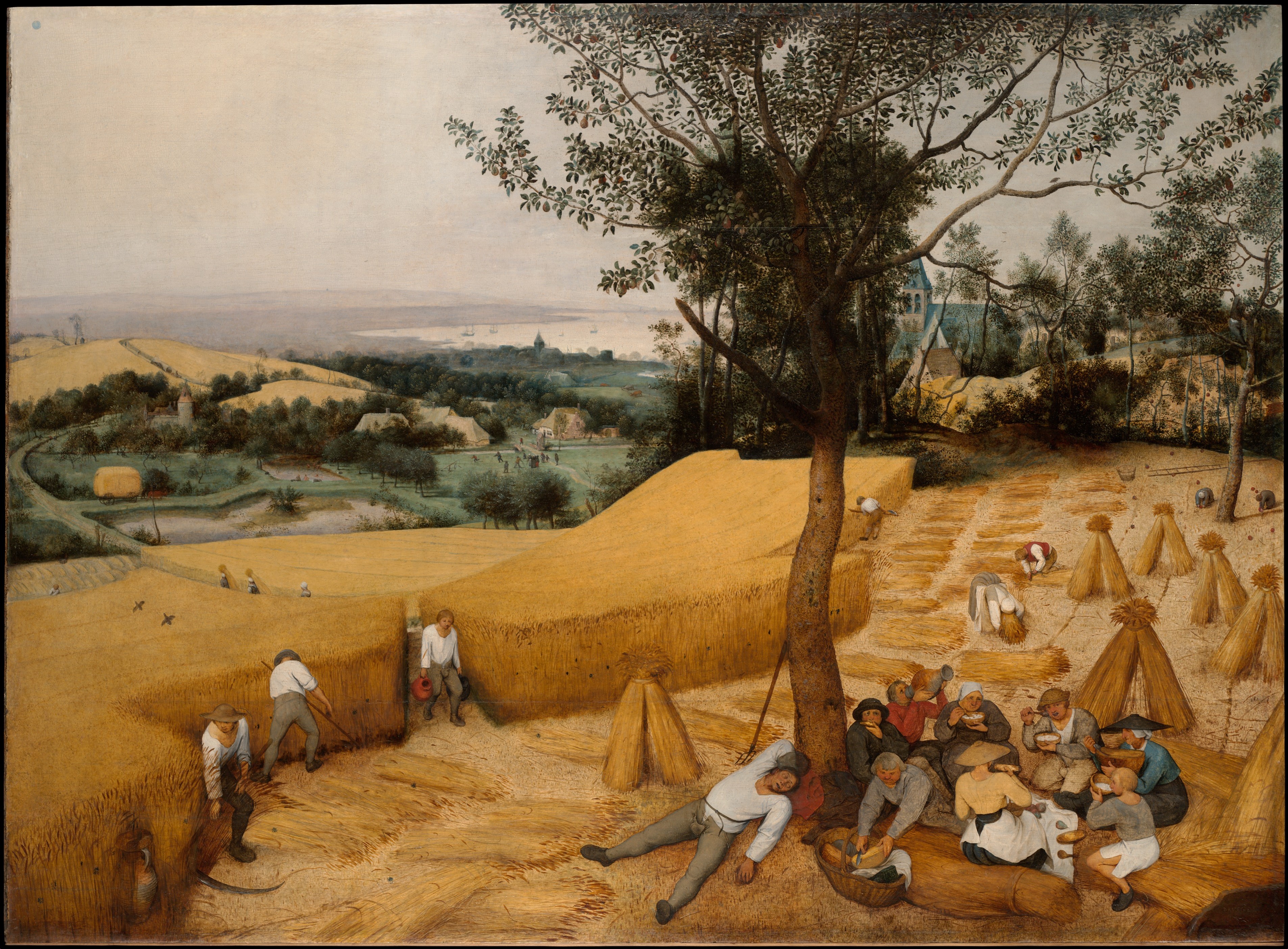
Thirty-two objects in this archive were bought on the income of six named endowment funds, and in every case the person named had...
10 min read
Last verified
One artwork and its story every Tuesday, with the picture: who owned it, what it made, and what closes soon in the exhibition calendar. No promotion, and nothing we cannot cite.
We send one email to confirm the address and keep nothing else. Every letter carries a one-click unsubscribe. How we handle your data.