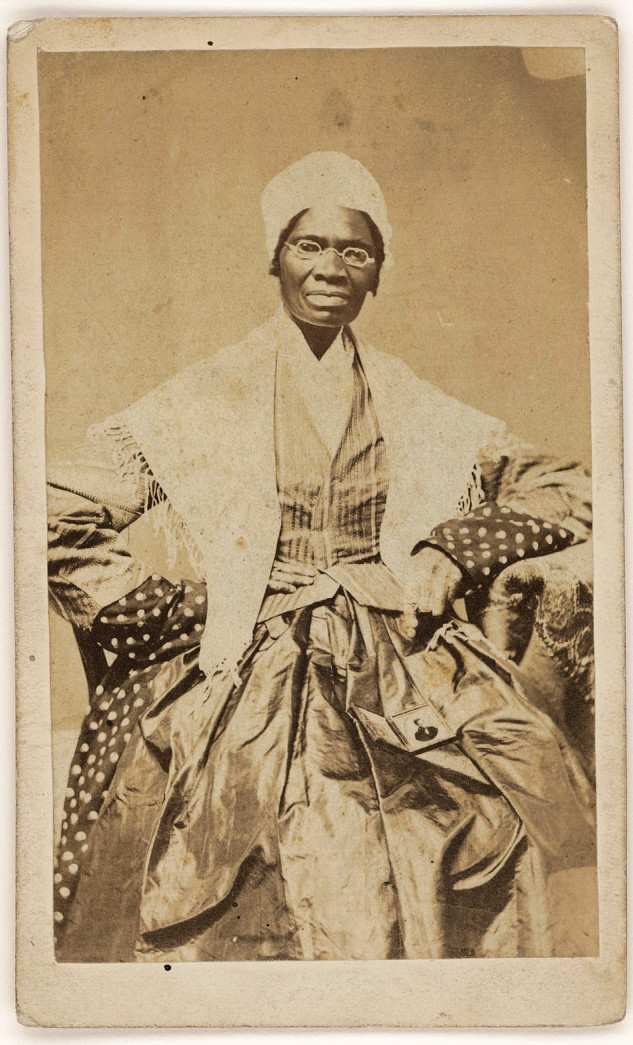
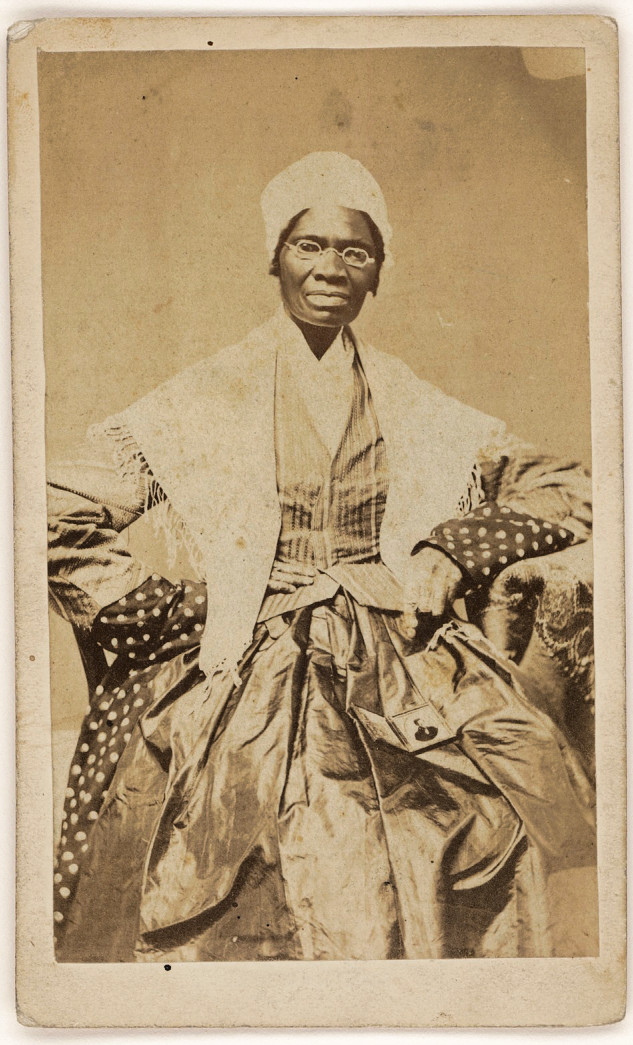
Carte-de-visite of Sojourner Truth
1863 · Albumen print
National Museum of African American History...
 American · 1797-1883
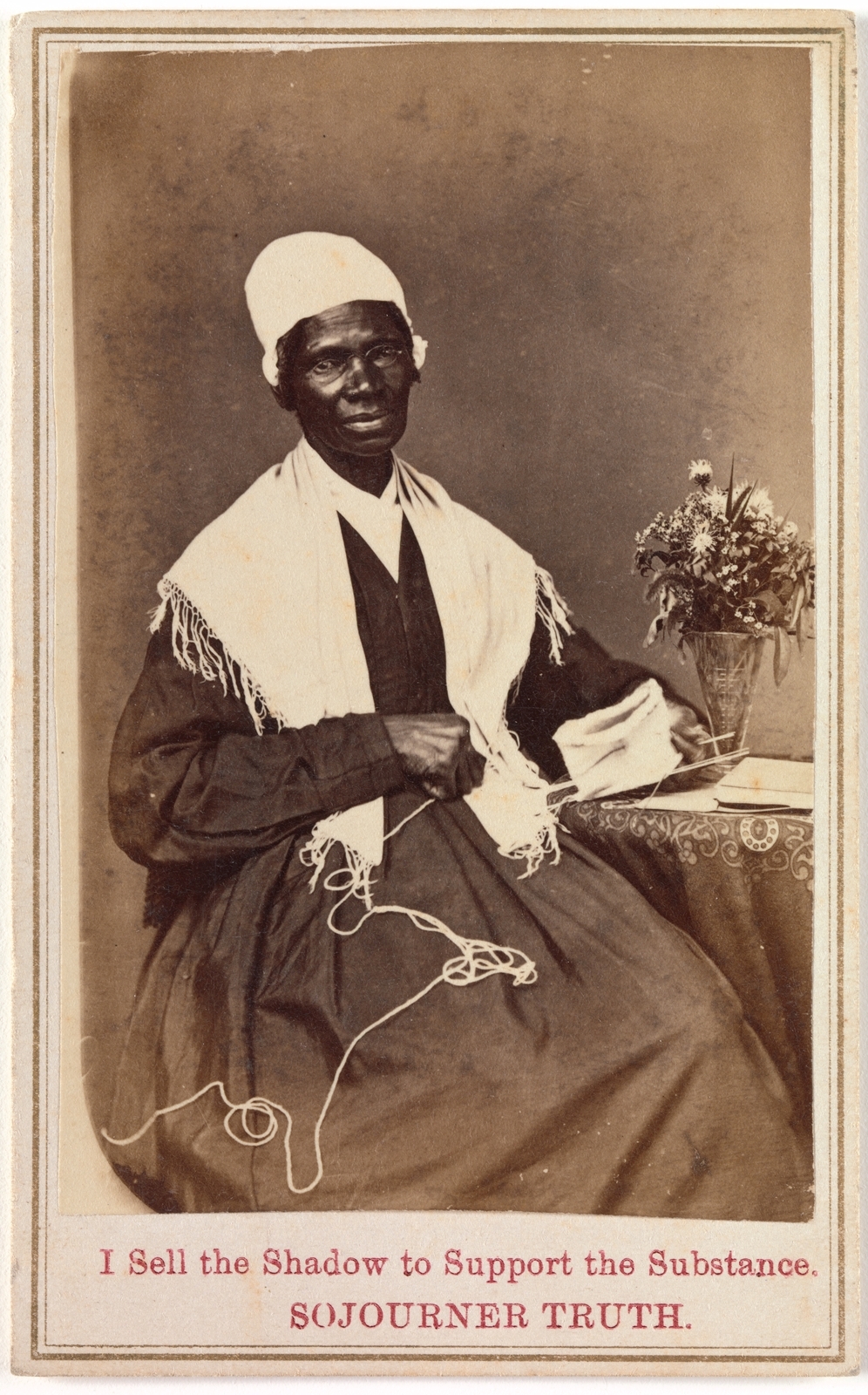
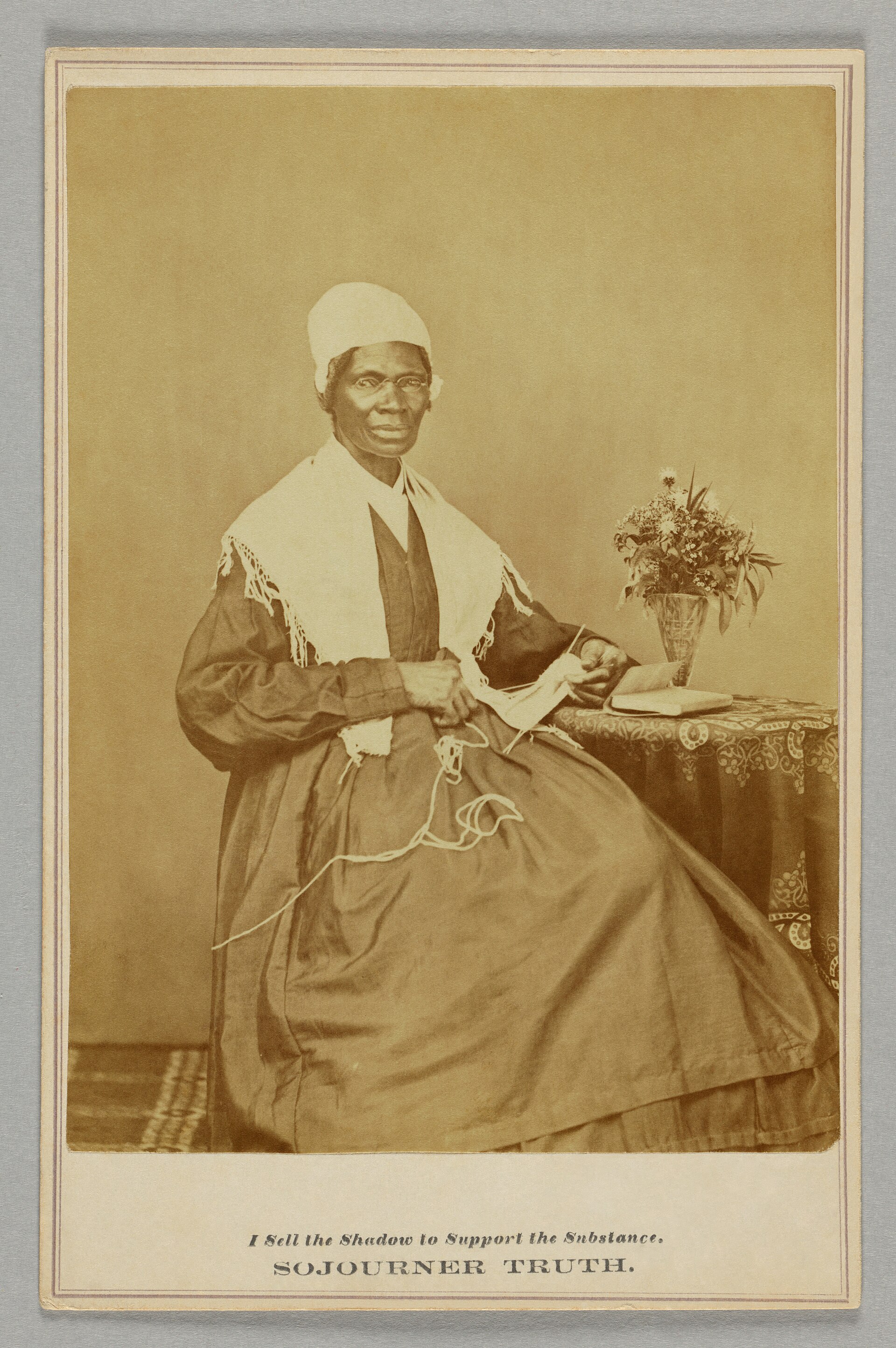
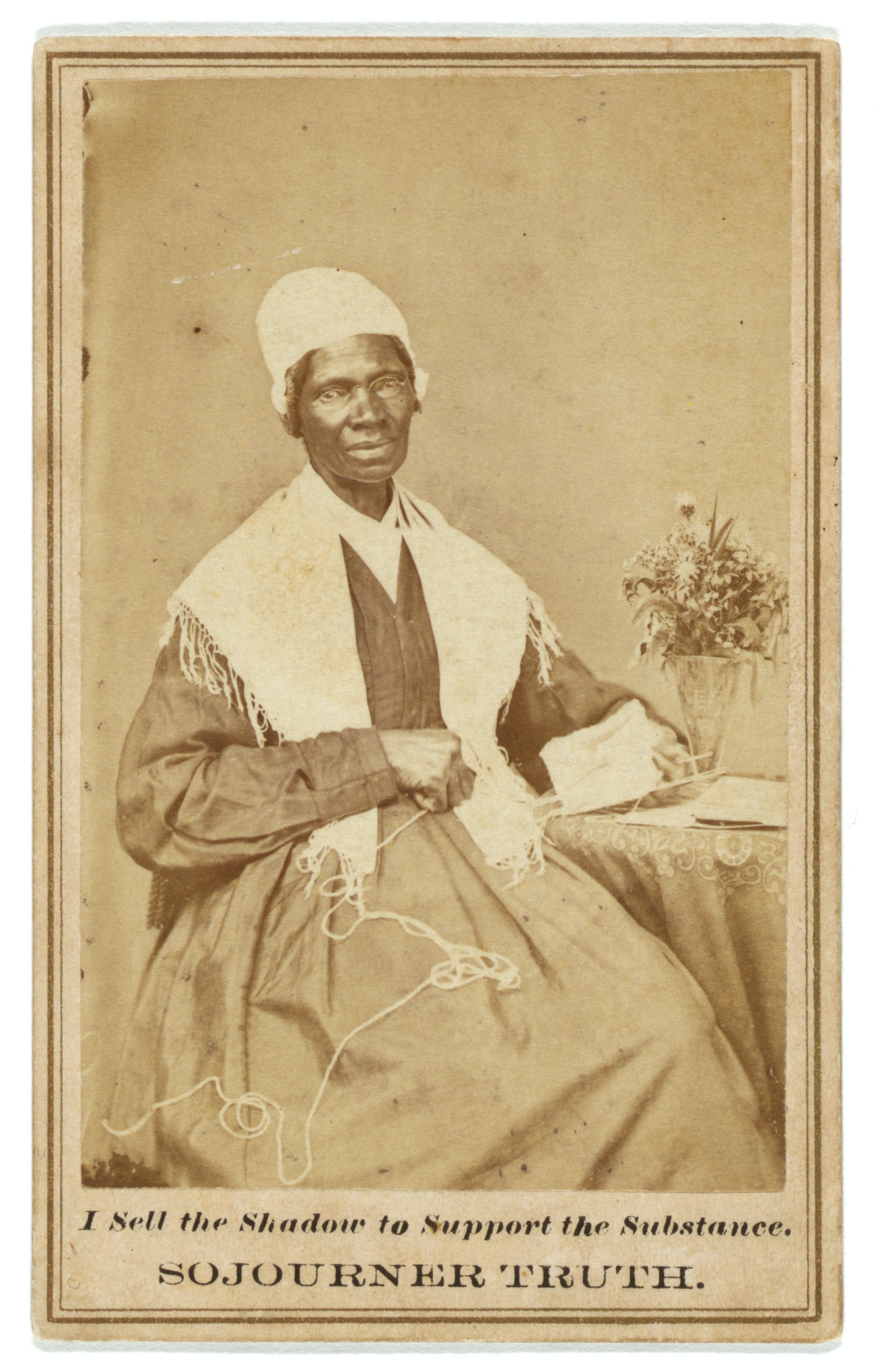
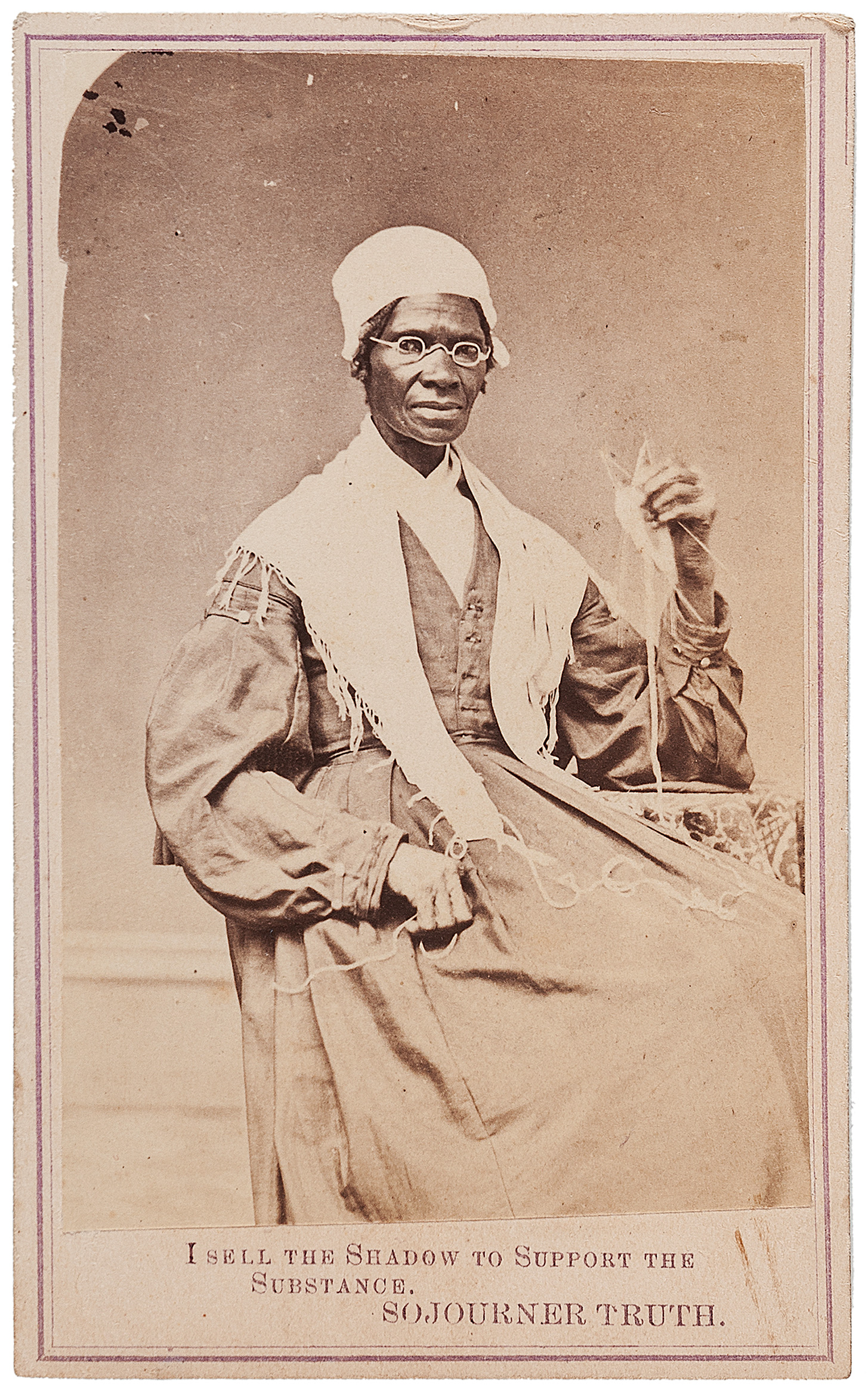
The front of one of the captioned, copyrighted cartes de visite Truth began selling in 1864: seated at a small table with a potted plant, knitting in hand, the printed line "I Sell the Shadow to Support the Substance" and her name beneath the portrait. Grigsby's research, cited by Swann Galleries' own cataloguers against sold examples of this exact mount, identifies this as apparently Truth's favorite of her sittings: it survives on more mounts than any other pose and was used as the basis for the engraved frontispiece of the expanded 1875 edition of her Narrative. The photographer is not named on the mount and has not been identified in the sources consulted for this page.
Metropolitan Museum of Art, released to Wikimedia Commons under the museum's Open Access policy| Full name | Sojourner Truth (born Isabella Baumfree, also recorded as Isabella Van Wagenen) |
|---|---|
| Worked as | Publisher and copyright holder of her own photographic portraits, Abolitionist orator, Women's rights activist |
| Born | c. 1797 · Ulster County, New York |
| Died | November 26, 1883 · Battle Creek, Michigan |
| Nationality | American |
| Movement | American abolitionist and women's rights movements |
| In this archive | 1 artwork |
| Sources | 32 cited |
| Last verified |
About this page 1 artwork in the archive · Last verified · 32 sources cited
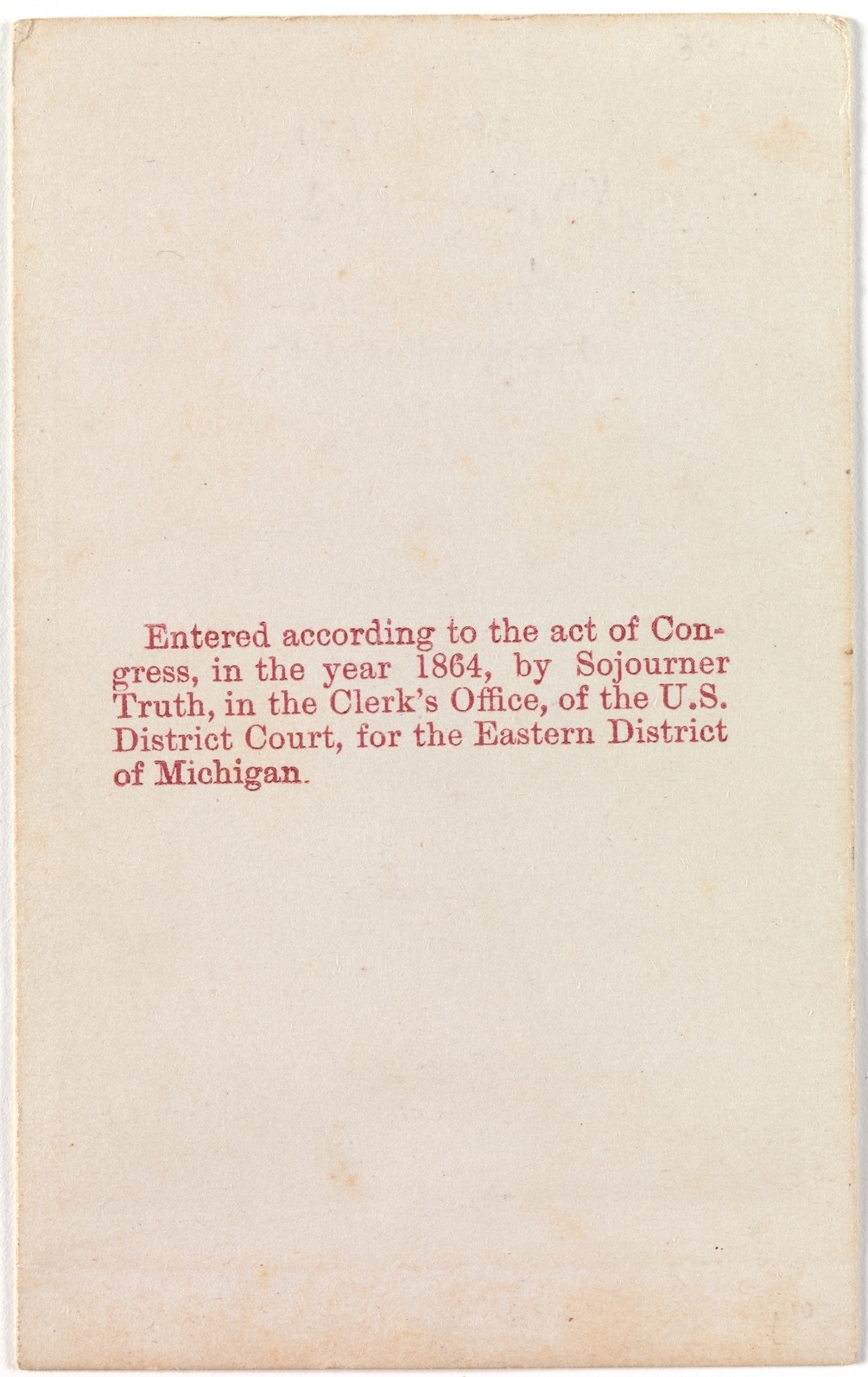
Sojourner Truth is recorded on this site as the controlling author of a body of photographs, not merely as their subject. Born enslaved as Isabella Baumfree around 1797 in Ulster County, New York, she could not read or write for her entire life, yet on February 16, 1864 she filed a copyright claim, in her own name, over a photographic portrait of herself at the Clerk's Office of the U.S. District Court for the Eastern District of Michigan. Photography would not receive its own explicit federal copyright category until the Act of March 3, 1865; Truth reached the courthouse more than a year earlier by using the existing statute for prints and engravings. She then had the claim printed on the back of the card itself, captioned the front "I Sell the Shadow to Support the Substance," and sold the cards herself, at her lectures and by mail, for twenty-five to fifty cents apiece, to fund her abolitionist and suffrage work.
No other American sitter of the period is known to have registered a photographic copyright in her own name rather than a studio's. Frederick Douglass, the most photographed American of the nineteenth century and a man fully literate in the commercial conventions of the medium, appears on cards that credit the photographer at the bottom of the mount, in the ordinary way. Truth's cards name only Truth. The scholarship built around this fact, chiefly Darcy Grimaldo Grigsby's 2015 study Enduring Truths, reads her choice of props across roughly two decades of sittings, initially a small photograph of a grandson serving in the Union Army, later a book, a vase of flowers and knitting held mid-stitch, as a deliberate visual argument: literate, domestic, industrious and respectable, aimed against the caricature conventions used elsewhere to depict Black women in her lifetime. This page treats that argument, and the legal claim that backed it, as the subject.
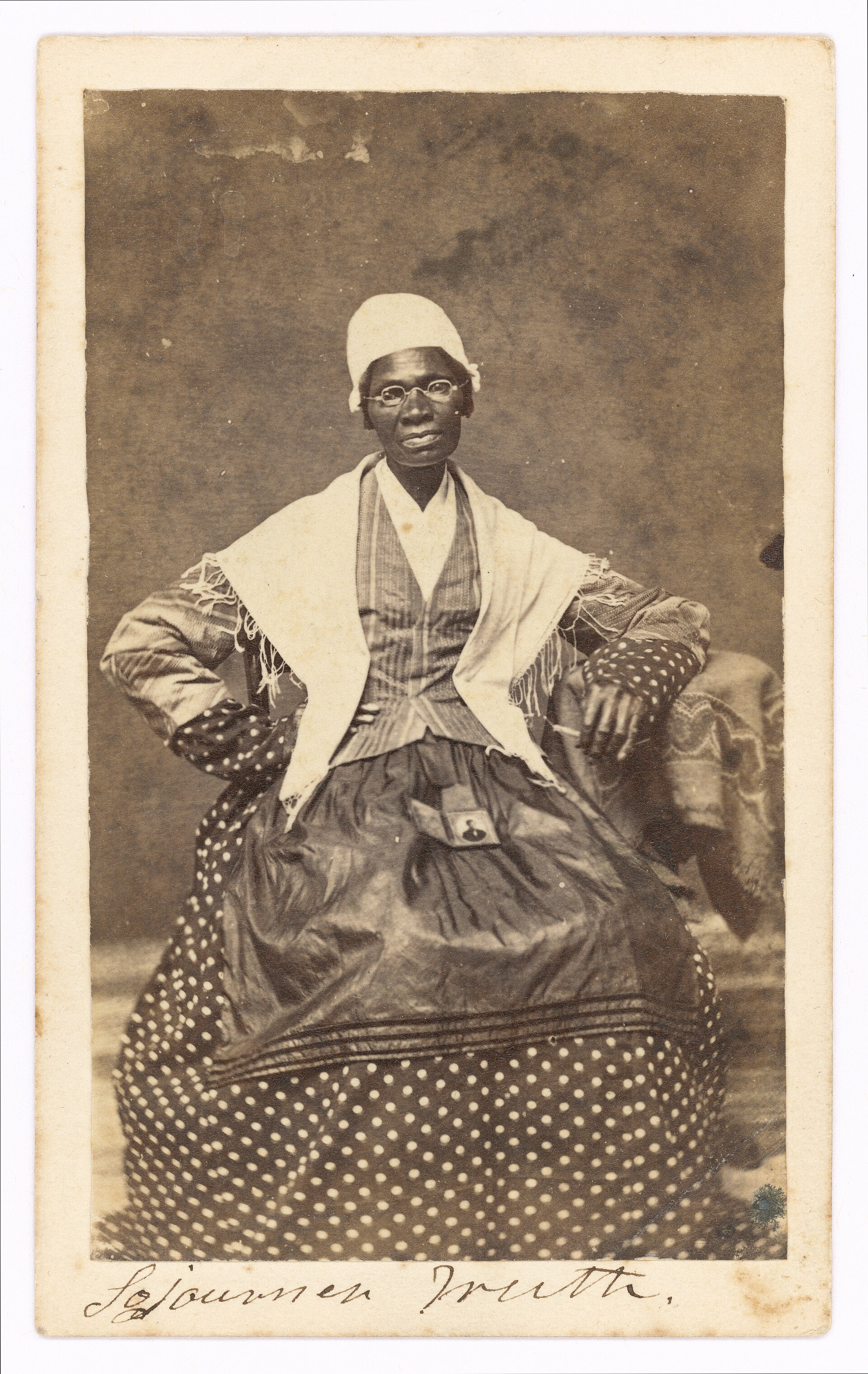
One object built from this material is already recorded on this site in detail, under the object record for a specific, uncaptioned 1863 print now at the Smithsonian's National Museum of African American History and Culture (NMAAHC 2012.46.11), showing Truth with a photograph of her grandson James Caldwell on her lap. This page follows that record's dating and provenance findings for that specific print without repeating them in full, and turns instead to what spans her whole photographic career: the copyright mechanism, the studios and sittings that can and cannot be told apart, the prices she charged against what her cards now bring at auction, and what remains undocumented despite how well the central claim is known.
Born enslaved as Isabella Baumfree in Ulster County, New York, in a Dutch-speaking household.89
Walks away from the farm of John Dumont carrying her infant daughter Sophia, ahead of New York's gradual emancipation law.89
Sues in Ulster County and recovers her son Peter, sold illegally into slavery in Alabama.910
Wins a slander suit against the Folger household, reportedly with 125 dollars in damages.14
Renames herself Sojourner Truth.8
The Narrative of Sojourner Truth, dictated to Olive Gilbert, is published in Boston.11
Addresses the Woman's Rights Convention in Akron, Ohio; the reliable contemporary transcript is by Marius Robinson, not the later Gage rewrite.1213
Moves to Harmonia, a biracial Spiritualist community near Battle Creek, Michigan.8
Sits, uncaptioned, in Battle Creek with a daguerreotype of her grandson James Caldwell, then serving in the 54th Massachusetts Infantry, on her lap.116
Registers copyright in her photographic portrait at the U.S. District Court for the Eastern District of Michigan, using the federal print and engraving statute.2
Begins selling captioned, copyrighted cartes de visite reading "I Sell the Shadow to Support the Substance"; sittings survive from Wright's New York Gallery of Battle Creek and from the Mathew Brady Studio of New York.2172125
Received at the White House by Abraham Lincoln, who shows her a Bible presented to him by Black residents of Baltimore.32
Sues after a Washington, D.C. streetcar conductor forces her off his car and dislocates her shoulder.15
The federal Copyright Act gives photographs their own explicit statutory category, more than a year after Truth's own registration.23
Moves into Battle Creek, Michigan itself.8
Sits for the Detroit photographer Corydon C. Randall.26
Personally sells a cabinet-card print of her 1864 seated-with-knitting sitting to a buyer identified only as "J.P.R." in Washington, D.C.24
An expanded edition of her Narrative, with a "Book of Life" appendix compiled by Frances Titus, is published with an engraved frontispiece based on the 1864 seated-with-knitting sitting.2829
Purchases 100 copies of a new Randall Studio cabinet-card sitting for five dollars, recorded by Grigsby as "session K."27
Dies in Battle Creek, Michigan.8
The only sitting of Truth's that recurs at public auction with any regularity is the 1864 seated-with-knitting portrait, the one sitting she is documented having registered under her own copyright and sold herself in volume. Three realized prices are documented here, all in US dollars and all, per each seller's own published terms, inclusive of buyer's premium with no separate hammer figure stated, so this page reports the totals as given rather than asserting a split the sources do not provide. Set against the twenty-five to fifty cents Truth herself charged in the 1860s, or the five cents a copy she paid Randall wholesale in 1881, realized prices in the thousands of dollars measure a market for scarcity and documented history, not a market continuous with her own pricing.
| Date | Sale | Work | Result | Note |
|---|---|---|---|---|
| 29 March 2018 | Swann Galleries | Carte-de-visite portrait, "I Sell the Shadow to Support the Substance," Michigan, circa 1864-65 (the seated-with-knitting sitting; identified by the cataloguer against Grigsby's plate 55a) | With premium USD 5,500 (sold price, stated by the auction house as inclusive of buyer's premium; no separate hammer figure published) USD | Estimate USD 1,500-2,500. |
| 24 March 2022 | Swann Galleries | Carte-de-visite portrait, "I Sell the Shadow to Support the Substance," Michigan, copyright 1864 (the seated-with-knitting sitting) | With premium USD 5,250 (sold price, stated by the auction house as inclusive of buyer's premium; no separate hammer figure published) USD | Estimate USD 2,000-3,000. |
| 23 February 2022 | Hindman (Cincinnati; the successor firm to Cowan's Auctions) | Uncredited carte-de-visite, Michigan, 1864 (the seated-with-knitting sitting), from an album of roughly forty Civil War-era cartes and tintypes | With premium USD 13,750 (total realized as reported by the trade press; whether this figure excludes buyer's premium is not stated with the same explicitness as the Swann listings) USD | Estimate USD 2,000-4,000. Reported by the trade press as an auction record for a Sojourner Truth carte de visite. |
Hammer is the price at which the bidding stopped; with premium adds the fee the house charges the buyer on top. Hammer price and buyer's premium in the glossary.
| Institution | City | Holdings | Note |
|---|---|---|---|
| National Museum of African American History and Culture, Smithsonian Institution | Washington, D.C. | The uncaptioned 1863 Battle Creek sitting with Truth's grandson's photograph (2012.46.11) and a cabinet-card reprint of the 1864 seated-with-knitting sitting carrying a handwritten 1870 sale annotation (2013.207.1). | At least one further Truth carte-de-visite accession (2018.17.12) was located in Smithsonian search results but not examined in depth for this page. |
| Metropolitan Museum of Art | New York | Recto and verso of a captioned, copyrighted 1864 carte de visite (the seated-with-knitting sitting). | Released CC0; the verso is among the clearest surviving photographs of the printed 1864 copyright notice itself. |
| Library of Congress | Washington, D.C. | A second surviving print of the 1863 grandson sitting (Liljenquist Family Collection, purchased at Swann Auction Galleries in 2017); at least two prints of the 1864 seated-with-knitting sitting and a captioned standing sitting with a cane (Gladstone Collection of African American Photographs); and a further copy of the captioned card catalogued within the Alfred Whital Stern Collection of Lincolniana. | |
| National Portrait Gallery, Smithsonian Institution | Washington, D.C. | An uncaptioned seated sitting credited to the Mathew Brady Studio, New York (NPG.2002.90), and a seated sitting by the Detroit photographer Corydon C. Randall, circa 1870 (NPG.79.220). | |
| Art Institute of Chicago | Chicago | A captioned carte de visite, 1864-65, credited to Truth in collaboration with the photographer S. C. Wright (object 238249). | Gift of W. Bruce and Delaney H. Lundberg. |
She was born enslaved under New York State's own slave law, in a Dutch-speaking household in the Hudson Valley, so that Dutch, not English, was her first language.
She was born enslaved under New York State's own slave law, in a Dutch-speaking household in the Hudson Valley, so that Dutch, not English, was her first language. Sold away from her parents at around age nine, she passed through several owners before roughly seventeen years in the household of John Dumont of West Park, New York. In late 1826, ahead of New York's gradual emancipation law taking full effect on July 4, 1827, she walked off Dumont's farm carrying her infant daughter Sophia. Isaac and Maria Van Wagenen took her in; she used their name for a period, Isabella Van Wagenen, and in 1828 sued in Ulster County to recover her five-year-old son Peter, sold illegally into slavery in Alabama. The court ordered him returned to her, among the first recorded instances of a Black woman successfully suing a white man in a United States court. A second suit followed in 1835, a slander action against members of the Folger household who had accused her of poisoning a fellow member of the religious commune known as the Kingdom; she won, reportedly with 125 dollars in damages.
In 1843 she renamed herself Sojourner Truth, telling those who asked that she had been called to travel and speak the truth. Unable to read or write, she dictated her life story to the abolitionist Olive Gilbert, published in 1850 as the Narrative of Sojourner Truth. On May 29, 1851 she addressed the Woman's Rights Convention in Akron, Ohio; the version of that speech most widely known today, built around the repeated line "Ain't I a Woman?", is a heavily rewritten text published twelve years later by the convention organizer Frances Gage, and imposes a Southern dialect on a woman who had never lived in the South and spoke English as a second language. A contemporary transcript by the abolitionist editor Marius Robinson survives from June 1851 and reads very differently; the historian Nell Irvin Painter's 1996 biography judged Robinson's version the more reliable record of what Truth actually said. The pattern is worth holding onto: the words most associated with Truth today were substantially authored by a white editor working from memory, years later, in a dialect Truth did not speak. Her photographic self-representation from 1864 sits in direct, and probably deliberate, tension with that pattern.
From 1857 she lived in and around Battle Creek, Michigan, first in Harmonia, a small biracial Spiritualist community, and from around 1867 in Battle Creek itself, where she remained until her death on November 26, 1883. A third lawsuit, in 1865, followed a Washington, D.C. streetcar conductor's forcing her off his car and dislocating her shoulder; her suit cost the conductor his job and pushed the streetcar company to enforce the district's desegregation law.
No single itemized inventory of Truth's photographic output has been located in the sources consulted for this page, and two different published counts describe two different things.
No single itemized inventory of Truth's photographic output has been located in the sources consulted for this page, and two different published counts describe two different things. The Library of Congress's own account, published on the Copyright Office's blog in December 2020, states that Truth "sat for portraits at least eleven times" over the 1860s and, from 1864, "registered her copyright claims in" her cartes de visite; the blog does not say the eleven sittings are limited to the copyrighted series, and this page does not read it that way. Separately, Grigsby's Enduring Truths, reviewed in the journal Panorama in 2017 as examining "twenty-eight different photographs of Truth" made chiefly during the Civil War and again at the end of her life in the early 1880s, counts every documented sitting or print, captioned and uncaptioned alike. The two figures, eleven sittings against twenty-eight photographs, are not reconciled anywhere in the literature located here and may not even be counting the same unit (sittings versus surviving prints); this page treats them as two separate, sourced tallies rather than smoothing them into one number or assuming the eleven figure describes only the copyrighted cards.
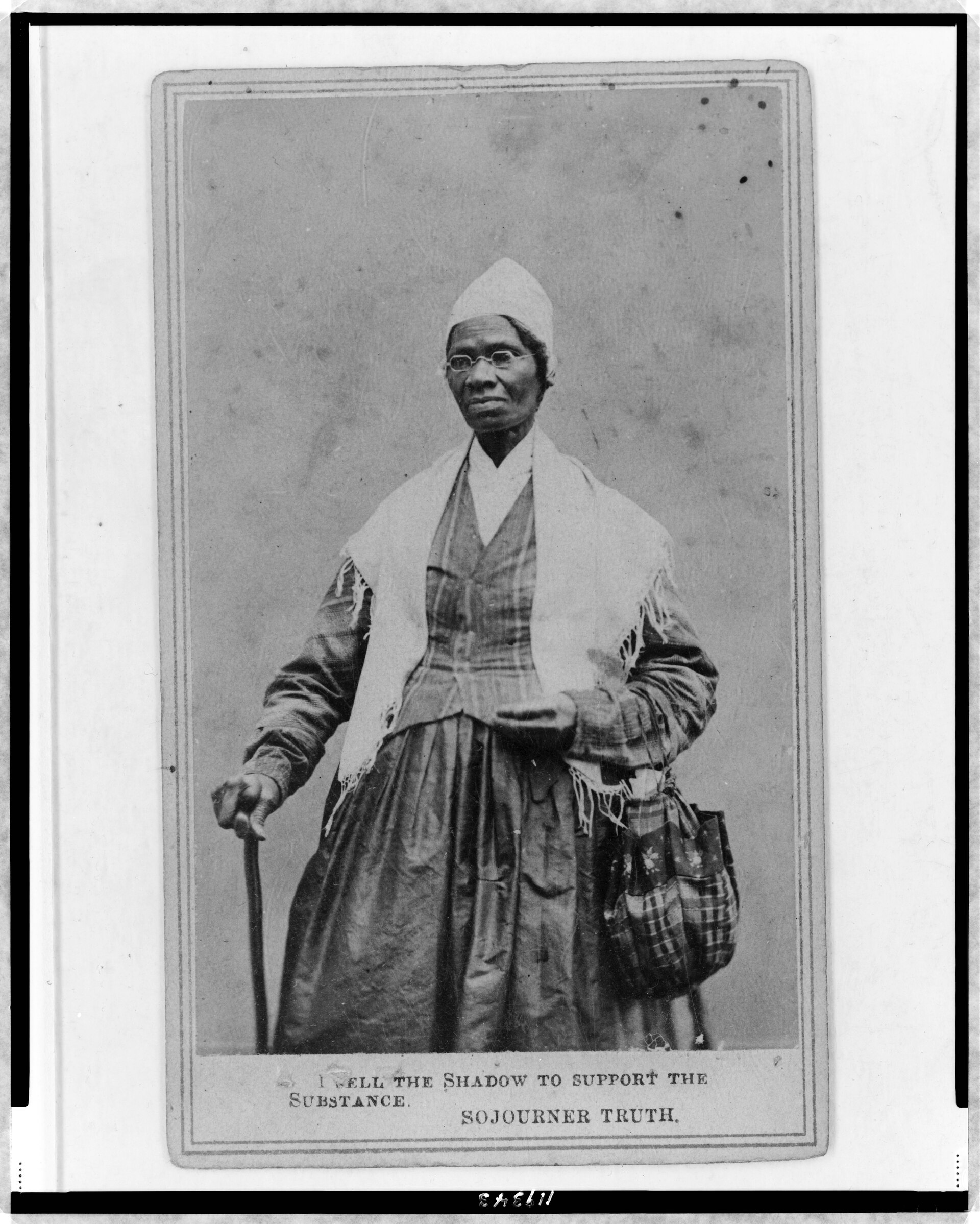
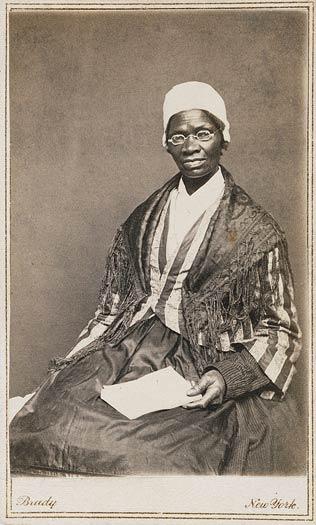
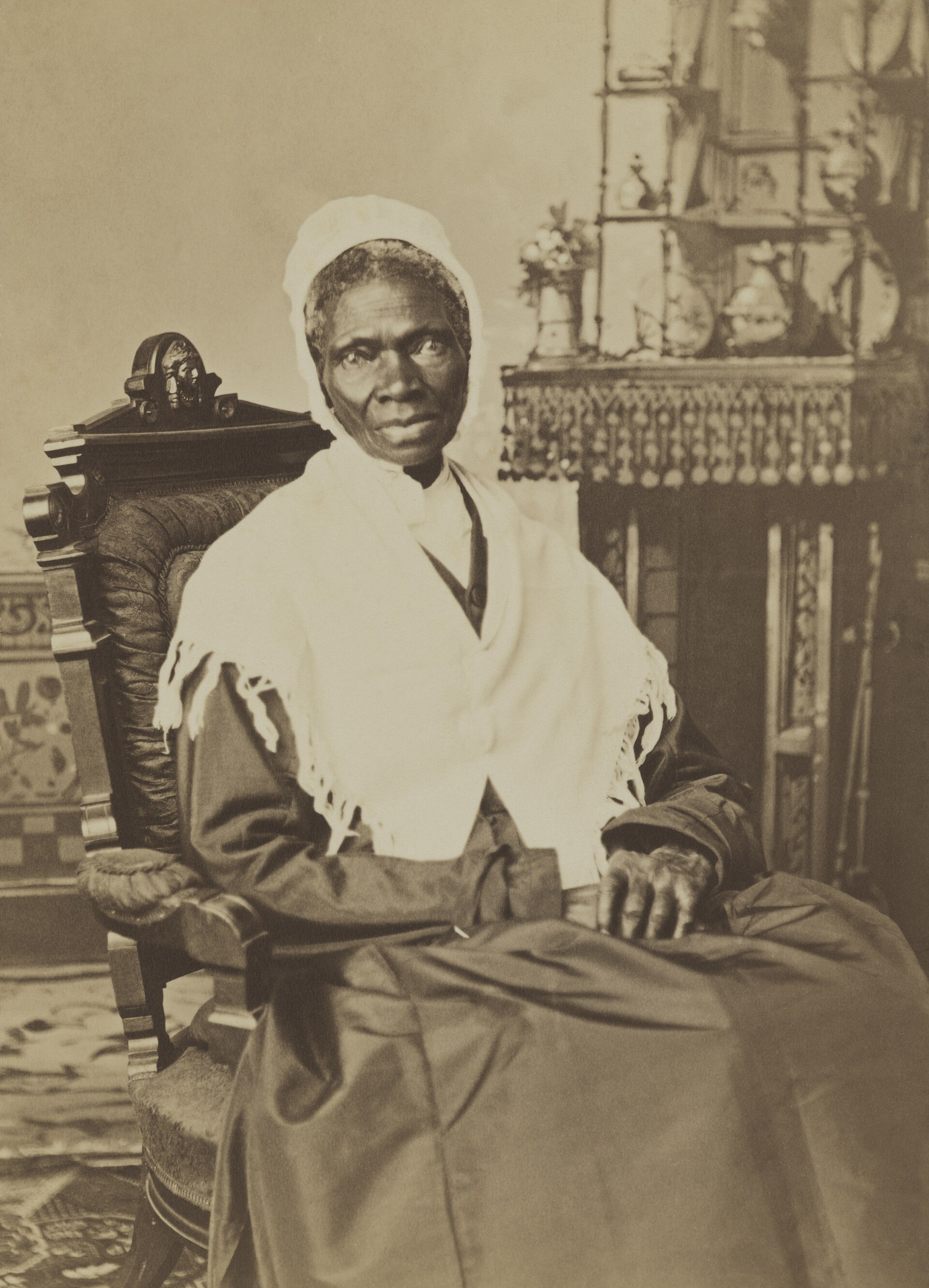
What this page's own image research can add is a lower bound on how many distinct sittings and studios are represented among the prints that actually survive in public collections today: at least six can be told apart with reasonable confidence, an uncaptioned Battle Creek sitting from 1863 showing Truth with her grandson's photograph (known in two separate surviving prints, one at NMAAHC and one at the Library of Congress); the captioned, copyrighted seated-with-knitting sitting of 1864 that Grigsby's research and Swann Galleries' own cataloguers identify as Truth's most reproduced pose, surviving in at least four located prints across three institutions and one later cabinet-card reprint; a standing, captioned sitting credited on its own mount to Wright's New York Gallery of Battle Creek; a second standing, captioned sitting, with a cane and a hand-carried bag, held by the Library of Congress and independently cited to Painter's 1996 biography; an uncaptioned seated sitting credited to the Mathew Brady Studio of New York, showing Truth holding a paper or document rather than knitting; and at least two further sittings, circa 1870 and, per Grigsby's own archival lettering, a specific session on June 13, 1881, by the Detroit photographer Corydon C. Randall.
Beginning in February 1864, Truth had a new series of cartes de visite printed carrying, beneath her portrait, her name in capitals and the line "I Sell the Shadow to Support the Substance," and on...
Beginning in February 1864, Truth had a new series of cartes de visite printed carrying, beneath her portrait, her name in capitals and the line "I Sell the Shadow to Support the Substance," and on the back a printed notice: "Entered according to the act of Congress, in the year 1864, by Sojourner Truth, in the Clerk's Office, of the U.S. District Court, for the Eastern District of Michigan." The Library of Congress's account of the registration states that Truth deposited "the title of an Engraving, the title whereof is in the words, towit: [Picture of Sojourner Truth] 'I Sell the Shadow to Support the Substance, Sojourner Truth,'" and that the claim entered the record on February 16, 1864, filed in Detroit.
The mechanism is the point. Photographs did not become their own explicitly protected category under federal copyright law until the Act of March 3, 1865. Truth registered her image more than a year earlier by using the existing statutory category for prints and engravings, available since 1802, to claim a photograph before photographs themselves had a dedicated legal home. The 2024 University of Pittsburgh Law Review article "Abolitionist Creativity, Care, and the Shadow of Intellectual Property," by Julia Choucair Vizoso and Chris R. Byrnes, draws on Grigsby's research for a sharper comparative point still: of the surviving cartes de visite of the period that carry any copyright notice at all, and few do, every other one names the photographer. Truth's cards are the only ones from the period known to register the copyright in the sitter's own name rather than the studio's. Frederick Douglass, an avid and photography-literate sitter in these same years, appears on cards that credit the photographer at the bottom of the mount, in the ordinary commercial convention. Truth, illiterate, formerly enslaved and past sixty, is the outlier on record.
"Shadow" was ordinary nineteenth-century usage for a photograph, playing on the older studio warning to "secure the shadow ere the substance fade." Grigsby's research establishes that Truth used the...
"Shadow" was ordinary nineteenth-century usage for a photograph, playing on the older studio warning to "secure the shadow ere the substance fade." Grigsby's research establishes that Truth used the word this way in her own recorded speech, not only on the printed cards. Read as a simple pun the caption says: I sell my image in order to support my body and my life's work. Grigsby's closer reading goes further, arguing that the line does something more deliberate for a woman whose own body had once been legally another person's property: Truth "sells not her substance, not herself, not her 'I' but her shadow, a substitute so elusive as to thwart bodily violation," so that "the commodified self is redefined as part of the image world, of representation, not embodiment." The communications scholar Celnisha L. Dangerfield reads the same caption, from a Black feminist framework, as "an act of indignant agency," a legal and commercial instrument built by and for white male authorship, turned to a formerly enslaved Black woman's own account.
Truth put a version of the point in her own recorded words late in life. Truth is reported to have said, on an occasion the sources consulted do not securely date or attribute to a named publication, that she "used to be sold for other people's benefit, but now she sold herself for her own," a line that should be read, like the 1851 Akron speech, as someone else's rendering of an illiterate speaker's words rather than a verbatim transcript she reviewed and approved. Grigsby traces a further layer specific to the Civil War years: shadow and substance were also the terms of a live monetary argument over whether the federal government's new paper currency, backed by public confidence rather than gold, could count as real value. Truth's cartes de visite, cheap paper notes bearing her image, printed, multiplied and exchanged for coin at her lectures, worked the same trick the government's own currency worked, turning a representation into value by shared confidence, in order, as Grigsby puts it, "to produce wealth dependent on a consensus that representation produces material results, to make money where there was none, and to do so partly in order to abolish slavery."
Truth is documented deliberately choosing what she held across her sitting career.
Truth is documented deliberately choosing what she held across her sitting career. Grigsby's research, reflected in the wall text for the University of California, Berkeley Art Museum and Pacific Film Archive's 2016 exhibition built from it, describes the shift as "initially, the photograph of her heroic missing grandson and thereafter, her knitting." The 1863 sitting places a daguerreotype of her grandson James Caldwell, a private in the 54th Massachusetts Infantry then held prisoner on James Island, South Carolina, in her lap: a formerly enslaved grandmother displaying a photographic keepsake of family bonds slavery worked to sever, and of the war she spent her later life supporting. From 1864 the props change to a small table bearing a book and a vase of flowers, and knitting held mid-stitch in her hands, the yarn trailing visibly down her skirt in several surviving prints. A bonnet, spectacles, a fringed shawl and plain, respectable Victorian dress recur across nearly every sitting located for this page, whichever studio made it.
None of this reads as incidental studio furniture. Literacy signaled by the book, domestic industry signaled by the knitting, and a controlled, seated or upright posture with direct eye contact into the camera together constitute a visual register aimed squarely against the caricature conventions used elsewhere in nineteenth-century print culture to depict Black women, conventions Truth would have known from wide circulation in the abolitionist and general press of her own lifetime. That this second, later prop set, table, flowers, knitting, was also the sitting Truth's own copyright notice protects and the sitting she sold in the greatest volume is not a coincidence this page treats as settled by the available scholarship: it argues that Truth chose, registered and marketed the specific image of herself she wanted circulated, and that the choice was itself the argument.
Unlike a painter's oeuvre, nothing here is disputed as forged or misattributed in the connoisseurial sense; the difficulty is instead that most of Truth's surviving cartes carry no studio imprint at...
Unlike a painter's oeuvre, nothing here is disputed as forged or misattributed in the connoisseurial sense; the difficulty is instead that most of Truth's surviving cartes carry no studio imprint at all. NMAAHC's own catalog record for the 1863 grandson sitting leaves its photographer unidentified, and no backmark or studio imprint is published for it; the same is true of the 1864 seated-with-knitting sitting that became Truth's most reproduced image, whose photographer is not named on any of the located surviving mounts (Metropolitan Museum, Library of Congress Gladstone Collection, NMAAHC cabinet-card reprint) despite that sitting being the one Truth herself registered and sold in volume.
Three studios are documented by name. A carte de visite credited on its own printed mount to "Wright's New York Gallery, Battle Creek, Mich." shows Truth standing, and the Art Institute of Chicago separately credits a photographer named S. C. Wright as collaborator on a differently posed, differently dated 1864-65 captioned carte in its own collection; whether the Wright named at the Art Institute and the Battle Creek gallery imprint refer to the same person or business has not been established in the sources consulted here. A wholly different, uncaptioned seated portrait, showing Truth holding a paper or document rather than knitting, is credited on its own mount, and by the National Portrait Gallery's catalog record, to the Mathew Brady Studio of New York, placing one of the era's most famous commercial photographic operations among Truth's documented sitters' galleries, circa 1864. And the Detroit photographer Corydon C. Randall, active 1865 to 1875 by trade record, is credited with at least two further sittings: a seated portrait circa 1870, now at the National Portrait Gallery, and a specific, later session a dealer's catalog description dates to June 13, 1881 and identifies, via Grigsby's own archival lettering, as "session K," made when Truth was in her eighties and among her final documented sittings.
The Library of Congress's account of the registration states that Truth charged twenty-five to fifty cents per card at her lectures.
The Library of Congress's account of the registration states that Truth charged twenty-five to fifty cents per card at her lectures. Grigsby's research, reflected in the BAMPFA exhibition materials built from it, gives fifty cents plus postage for cards ordered by mail, a distribution method that depended on the same expanding federal postal system that was, in these same years, carrying soldiers' letters and photographs across the country. A dealer's catalog description of the 1881 Randall cabinet card records a specific commercial transaction on the other side of the counter: Truth purchased 100 copies of that sitting from Randall for five dollars, a wholesale unit cost of five cents a print against a retail price several times higher, consistent with a working system of margin between what a sitting cost her and what she then sold the cards for herself.
A second, independently surviving transaction record sits on the back of the NMAAHC cabinet-card reprint of the 1864 seated-with-knitting sitting, beneath the printed 1864 copyright notice itself: a handwritten annotation reading "Purchased of Sojourner Truth / Apr 24th 1870 / Washington, D.C. / by J.P.R." This is, so far as the sources consulted for this page establish, a literal point-of-sale record in Truth's own commercial practice, dated and located six years into the captioned series and naming the city rather than Battle Creek, evidence that she was still personally selling this sitting's cards, in person, in the nation's capital, six years after registering it. The identity behind the initials "J.P.R." has not been established here.
On October 29, 1864, the same year she registered her copyright and began selling the captioned cards, Truth was received at the White House by Abraham Lincoln, an appointment arranged after some...
On October 29, 1864, the same year she registered her copyright and began selling the captioned cards, Truth was received at the White House by Abraham Lincoln, an appointment arranged after some weeks by the abolitionist lecturer Lucy Colman working through Mary Lincoln's Black dressmaker as an intermediary. During the visit Lincoln showed Truth a Bible that had been presented to him by Black residents of Baltimore; Truth's own recorded response noted the irony of a government that had once forbidden its enslaved people to learn to read now receiving that gift. A surviving copy of Truth's captioned, copyrighted carte de visite is held by the Library of Congress within its Alfred Whital Stern Collection of Lincolniana, catalogued alongside Lincoln-related material rather than in the library's general photographic holdings; nothing in the sources consulted for this page states that this specific copy has any documented connection to the October 1864 meeting beyond sharing its year and the collection's Lincoln subject heading, and this page does not assert one.
Prints of the 1864 seated-with-knitting sitting, Truth's most reproduced and only securely captioned-and-copyrighted pose to appear regularly at auction, have sold twice at Swann Galleries' New York...
Prints of the 1864 seated-with-knitting sitting, Truth's most reproduced and only securely captioned-and-copyrighted pose to appear regularly at auction, have sold twice at Swann Galleries' New York sales of printed and manuscript Africana. On March 29, 2018, a carte de visite of this sitting sold for 5,500 US dollars against an estimate of 1,500 to 2,500 dollars; on March 24, 2022, a second example sold for 5,250 dollars against an estimate of 2,000 to 3,000 dollars. Swann's own catalog notes for both lots state that "this seems to have been her favorite portrait, as it appears on a variety of different mounts and was used as the basis for the engraved frontispiece of her" expanded 1875 autobiography, citing specific page and plate numbers in Grigsby's book against the exact mount sold. Swann publishes both results as a single "sold" figure inclusive of buyer's premium, with no separate hammer price stated, so this page reports the totals as given rather than guessing a split the auction house itself does not publish.
A further example of the same sitting, pulled from a larger album of roughly forty Civil War-era cartes and tintypes, sold at Hindman's African Americana auction in Cincinnati on February 23, 2022 for 13,750 dollars against an estimate of 2,000 to 4,000 dollars, reported by the trade press as an auction record for a Truth carte de visite; as with the Swann results, the trade report's figure is not stated with certainty as excluding premium, and this page follows the reported total rather than asserting a hammer price the source does not give. Separately, and not a completed sale, an antiquarian bookseller has listed the documented 1881 Randall cabinet-card sitting, the one for which Truth's own purchase of 100 copies for five dollars is recorded, at an asking price of 8,800 dollars; this page cites that listing only for the purchase-quantity fact it documents, not as a market result.
Set against how well the central claim, the 1864 registration, is documented, several ordinary questions about it remain open.
Set against how well the central claim, the 1864 registration, is documented, several ordinary questions about it remain open. No source consulted for this page records Truth, or anyone acting on her behalf, ever bringing a case over unauthorized copying of her registered image, despite the claim's evident legal novelty and despite cartes de visite being, by design, an easily copied medium. The photographer behind her two most historically significant sittings, the 1863 grandson portrait and the 1864 seated-with-knitting portrait she herself registered and sold, is named on no surviving mount located here. And the two published counts of her total photographic output, at least eleven sittings per the Library of Congress against at least twenty-eight portraits overall per Grigsby, have not been reconciled against a single itemized list in any source consulted, and it is not established that the two counts even measure the same thing.
Truth's photographic practice has moved from a footnote to a subject of sustained scholarly attention over the past decade.
Truth's photographic practice has moved from a footnote to a subject of sustained scholarly attention over the past decade. Grigsby's 2015 book remains the fullest study and supplied the research behind BAMPFA's 2016 exhibition Sojourner Truth, Photography, and the Fight Against Slavery, which placed a large selection of her cartes de visite alongside Civil War-era federal currency to make explicit the shadow-and-substance argument about paper, value and representation. The Library of Congress's own Copyright Office marked the registration with a dedicated blog post in December 2020, framing Truth as an early "copyright innovator." Most recently, the 2024 University of Pittsburgh Law Review article by Vizoso and Byrnes uses Truth's 1864 registration as a founding example in critical race intellectual property scholarship, reading her assertion of copyright in her own name as a documented instance of a formerly enslaved person occupying, rather than being excluded by, a legal structure built without her in mind.
Publisher and copyright holder of her own photographic portraits; Abolitionist orator; Women's rights activist. c. 1797-1883.
Born c. 1797, Ulster County, New York; died November 26, 1883, Battle Creek, Michigan.
National Museum of African American History and Culture, Smithsonian Institution (Washington, D.C.); Metropolitan Museum of Art (New York); Library of Congress (Washington, D.C.); National Portrait Gallery, Smithsonian Institution (Washington, D.C.); Art Institute of Chicago (Chicago).
The only sitting of Truth's that recurs at public auction with any regularity is the 1864 seated-with-knitting portrait, the one sitting she is documented having registered under her own copyright and sold herself in volume. Three realized prices are documented here, all in US dollars and all, per each seller's own published terms, inclusive of buyer's premium with no separate hammer figure stated, so this page reports the totals as given rather than asserting a split the sources do not provide.
Did Truth, or anyone acting on her behalf, ever bring a case over unauthorized copying of her copyrighted photographic image? No enforcement case has been located in the sources consulted for this page, despite the claim's legal novelty.
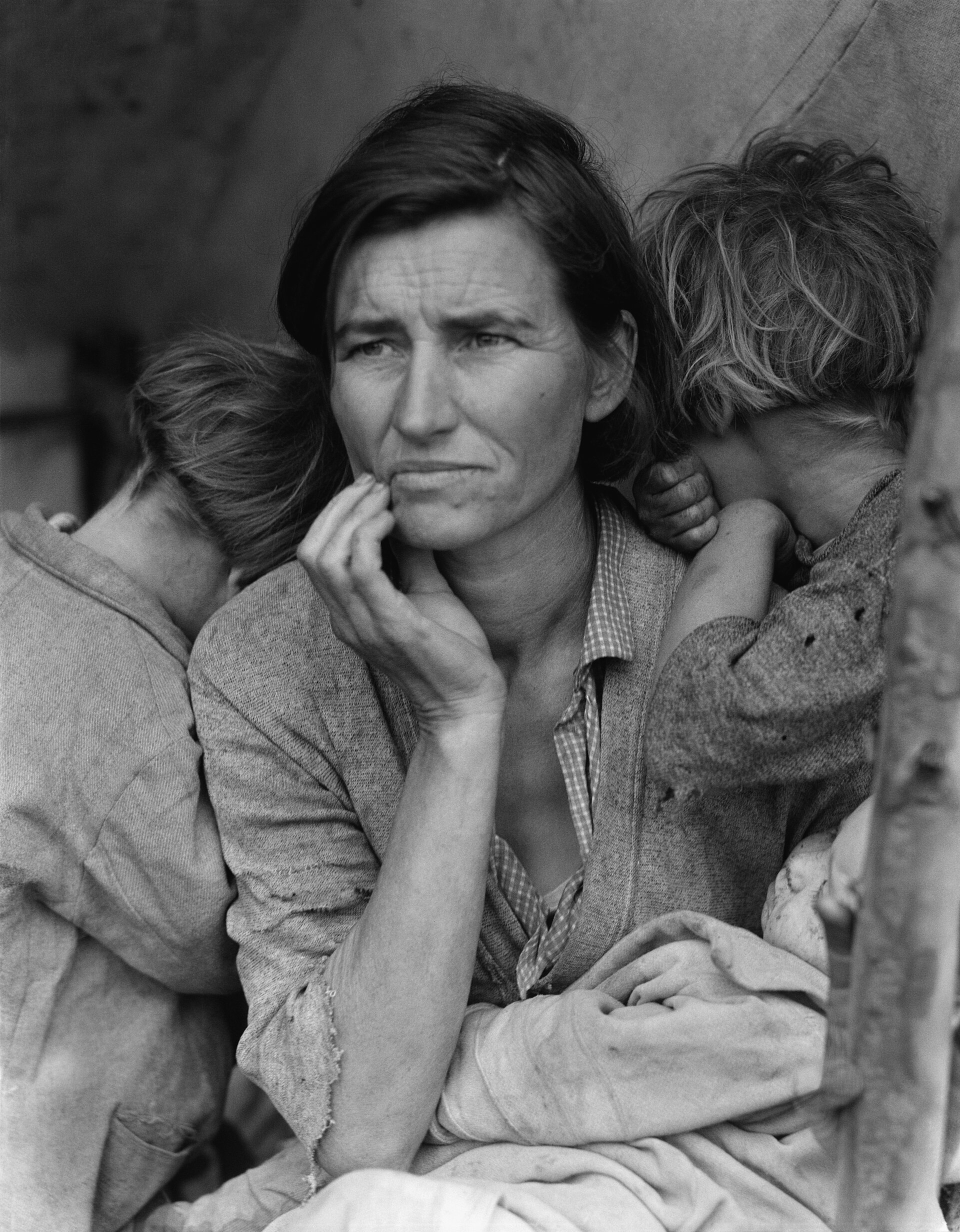
Four famous photographs of women in this archive. Only one of the four is named on the picture, by herself, and she is the only...
10 min read
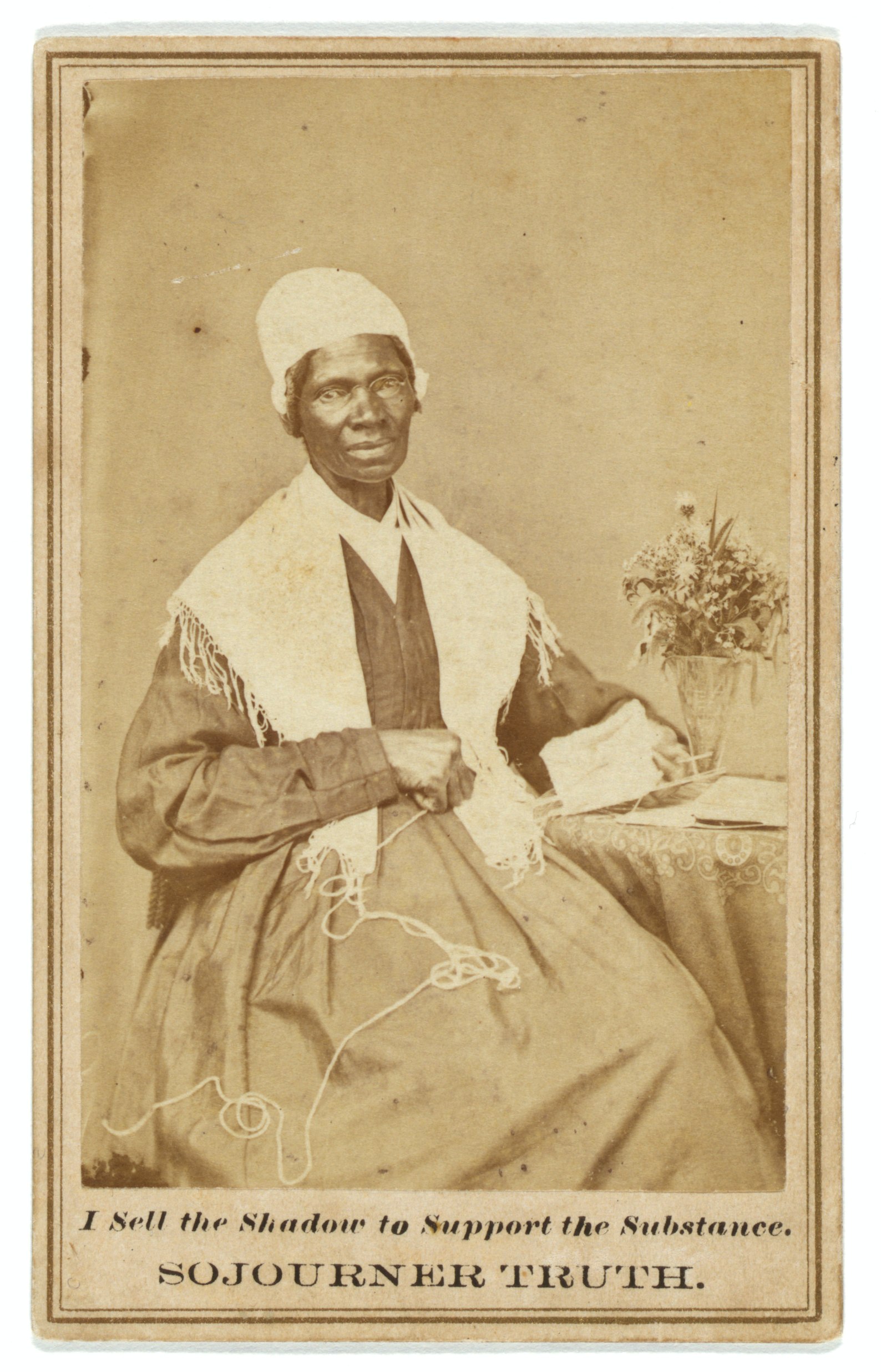
Truth sold her own cartes de visite, registered the copyright in her own name and left the photographer unnamed.
10 min read
Last verified
One artwork and its story every Tuesday, with the picture: who owned it, what it made, and what closes soon in the exhibition calendar. No promotion, and nothing we cannot cite.
We send one email to confirm the address and keep nothing else. Every letter carries a one-click unsubscribe. How we handle your data.


