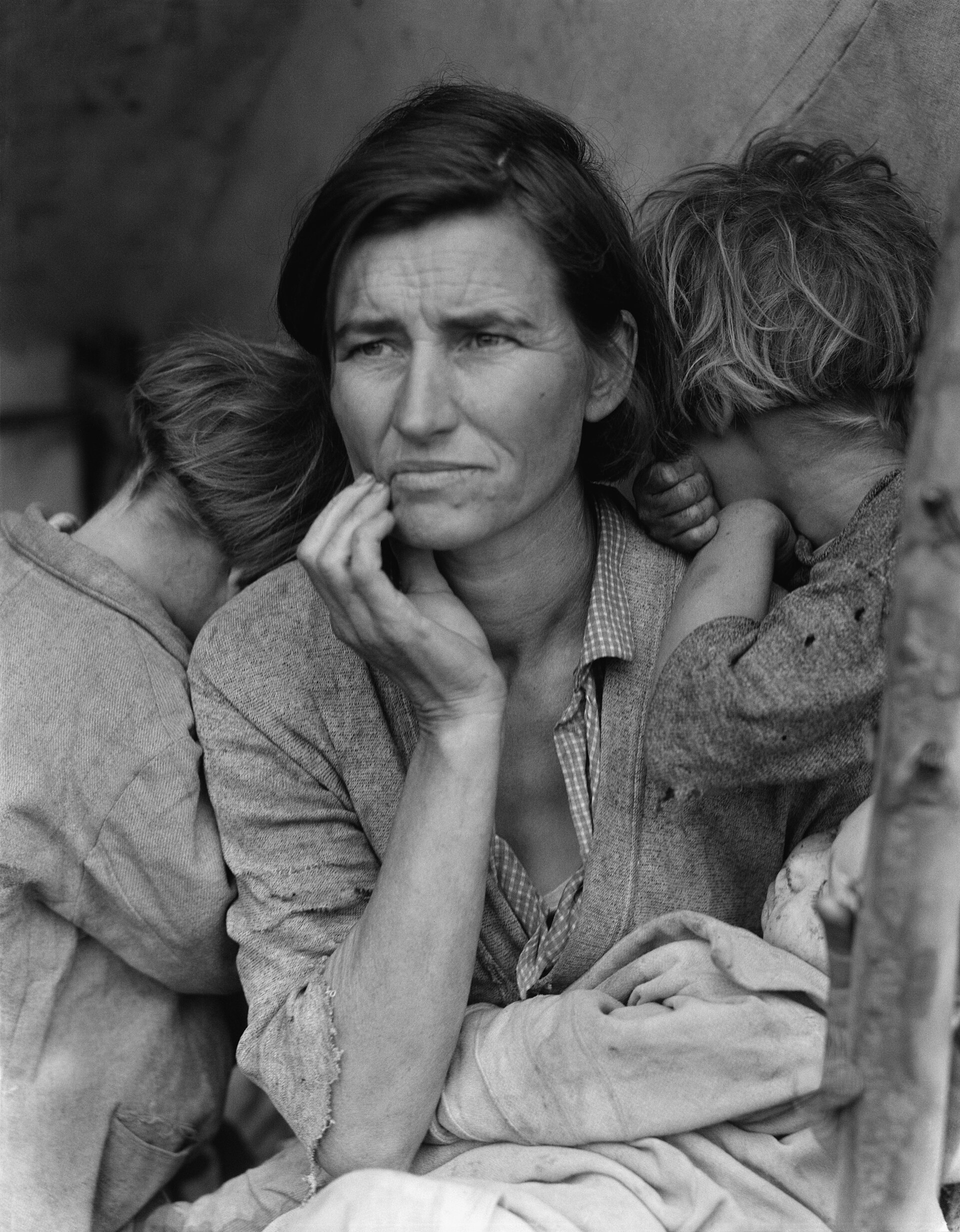
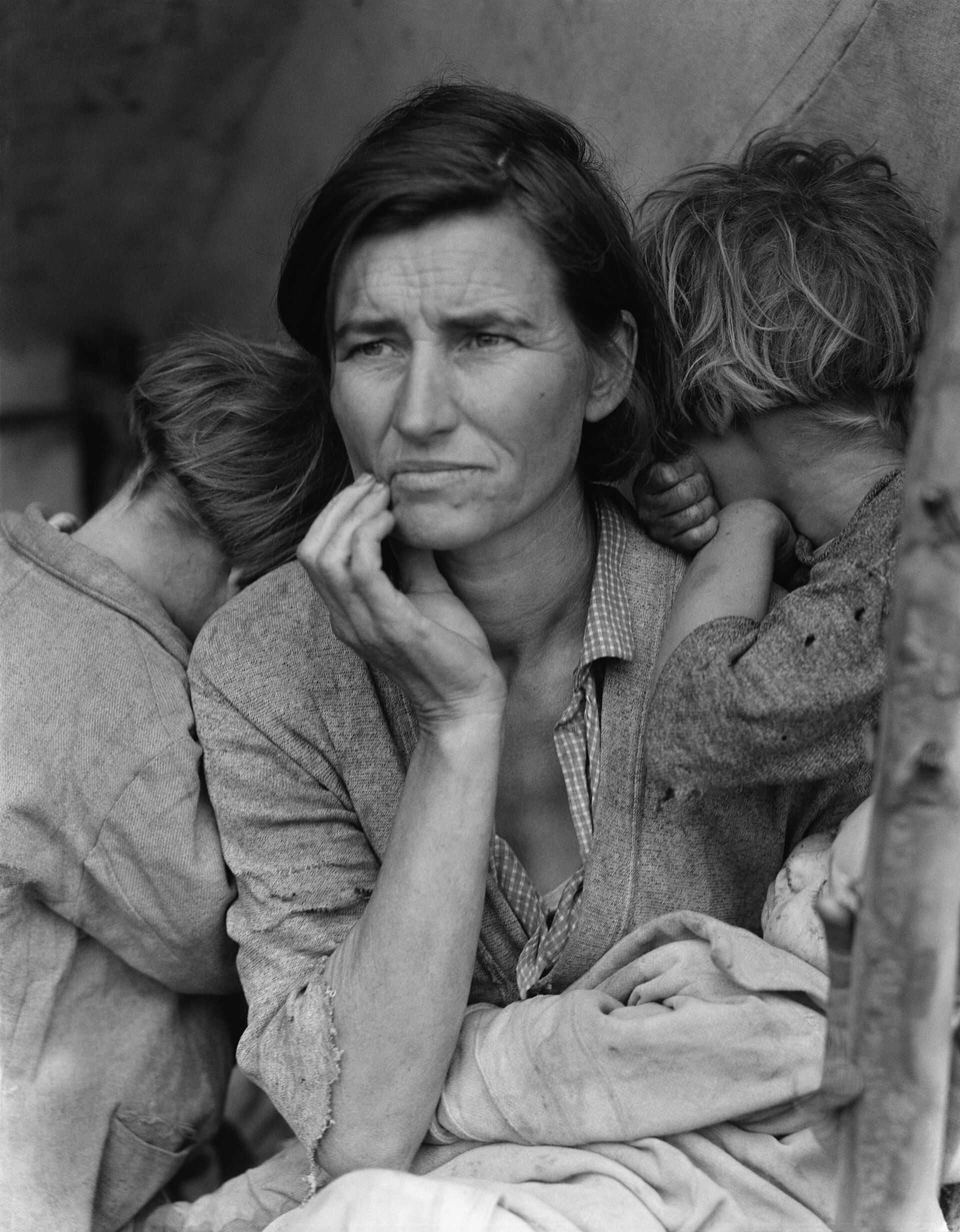
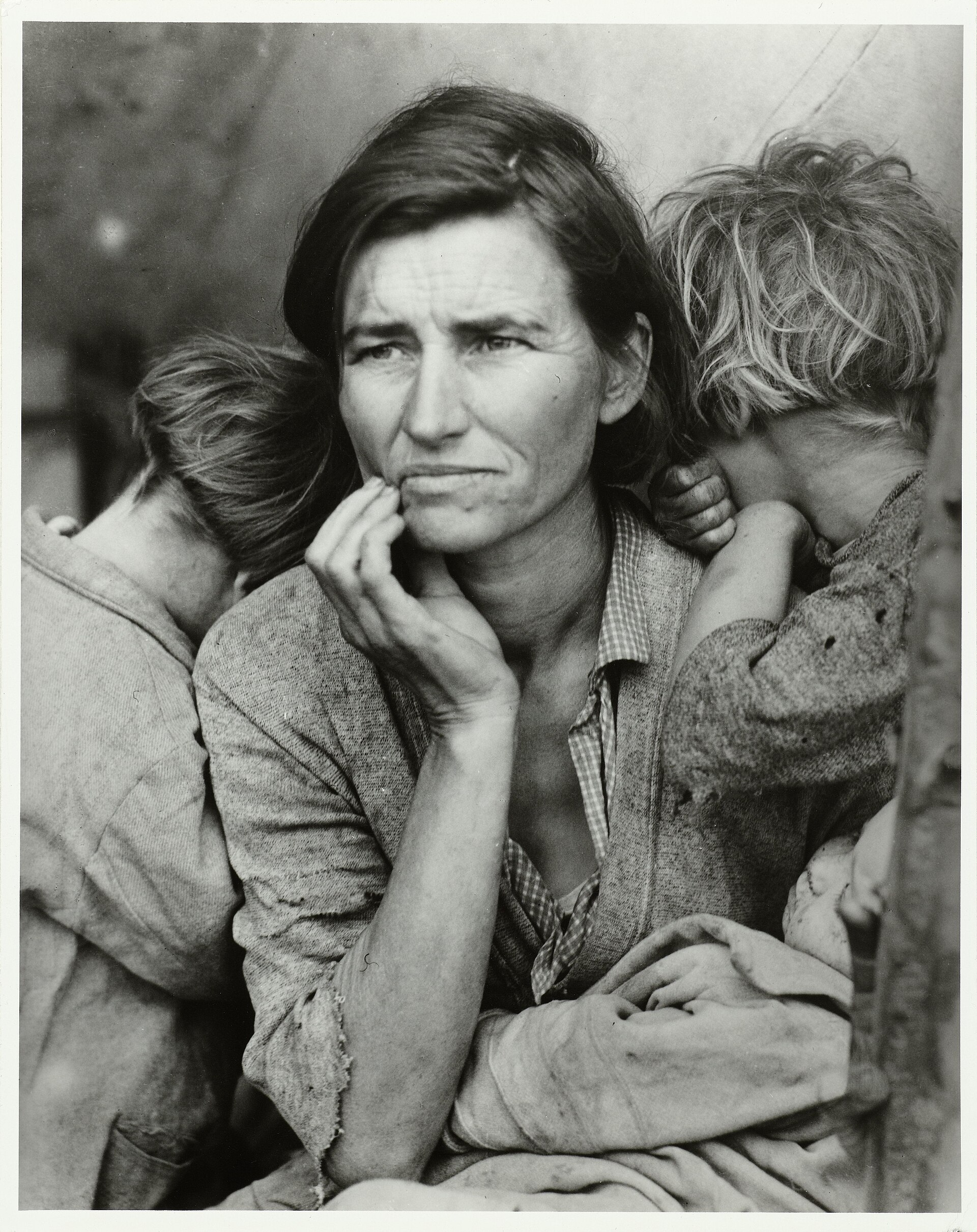
Destitute pea pickers in California. Mother of seven children. Age thirty-two. Nipomo, California
1936-03-06 · Photographic negative
Library of Congress, Prints and Photographs Division...
 American · 1895-1965
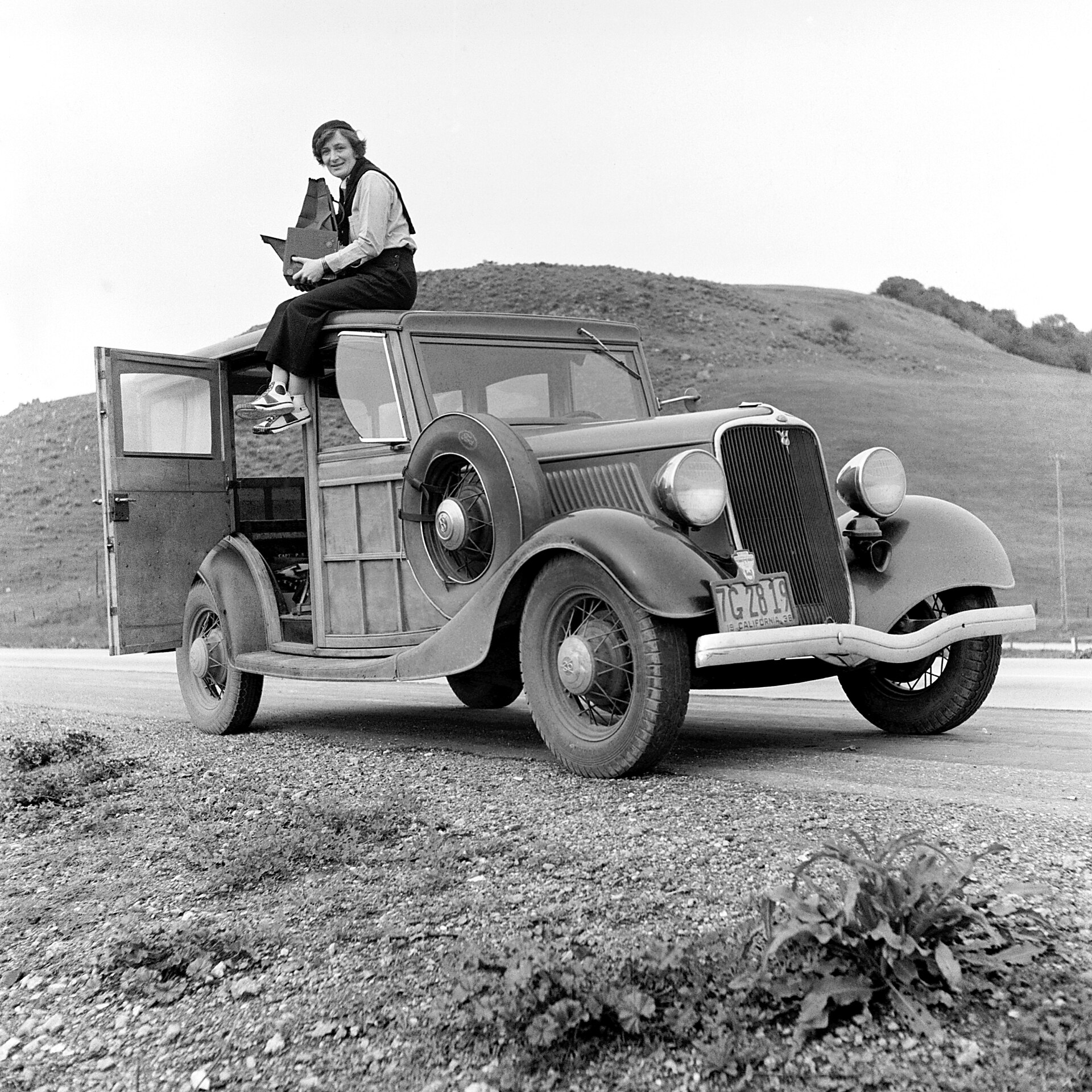
Dorothea Lange, Resettlement Administration photographer, atop a Ford Model 40 automobile with her Graflex 4x5 camera, California, February 1936 - one month before the Nipomo camp visit. Photographed by Rondal Partridge, a young FSA staff photographer who worked as Lange's assistant during this period. Identification is secure: the file is catalogued by the Library of Congress as a portrait of Lange and carried in Wikimedia Commons's own Portraits of Dorothea Lange category.
Library of Congress, Prints and Photographs Division (photograph by Rondal Partridge)| Full name | Dorothea Margaretta Lange (born Nutzhorn) |
|---|---|
| Worked as | Photographer |
| Born | 26 May 1895 · Hoboken, New Jersey |
| Died | 11 October 1965 · San Francisco, California |
| Nationality | American |
| Movement | Documentary photography. Associated with the Farm Security Administration Historical... |
| In this archive | 1 artwork |
| Sources | 20 cited |
| Last verified | 17 September 2026 |
About this page 1 artwork in the archive · Last verified 17 September 2026 · 20 sources cited
Dorothea Lange is known for one photograph made in about ten minutes at a pea pickers' camp near Nipomo, California, on 6 March 1936. That photograph, Migrant Mother, is public domain the moment it was exposed, for a reason most people who have seen it do not know: Lange made it as a salaried employee of a federal agency, and under United States law a work made by the federal government carries no copyright at all, regardless of when the photographer died. That single fact explains why her most famous negative could be reproduced by any newspaper, textbook or postage-stamp designer from the day it existed, and it explains nothing about the rest of her career, which was longer, stranger and considerably more contested than the one image suggests.
She was a working portrait photographer who walked away from a profitable San Francisco studio into the Depression's breadlines, joined a federal photography unit whose director fought her over control of her own negatives, was rehired after being let go, made the corpus of photographs the Historical Section is remembered for and then, in 1942, photographed the removal and incarceration of Japanese Americans for a different federal agency under conditions she herself later described as being kept under bond. She said the resulting pictures were impounded and that Army permission was required for their release. The National Archives says, with equal documentation, that this is substantially a myth: the photographs were transferred to public custody in 1946 with no restriction and were, in its own words, some of the most frequently requested images in its still-picture holdings for decades before anyone called them suppressed.
Both of those claims are real, sourced, and in tension with each other, and this record states them as exactly that rather than choosing a side. The harder thing to find is not the myth or the correction; it is what sits underneath both of them, which is that Lange spent her federal career being told, by more than one supervisor, what she was and was not permitted to photograph, and that the fight over who controlled the meaning of her pictures did not end with Roy Stryker cropping her migrant photographs against her wishes. It ran through her whole employment record, on paper, in a government file, at a rate of $2,300 a year.
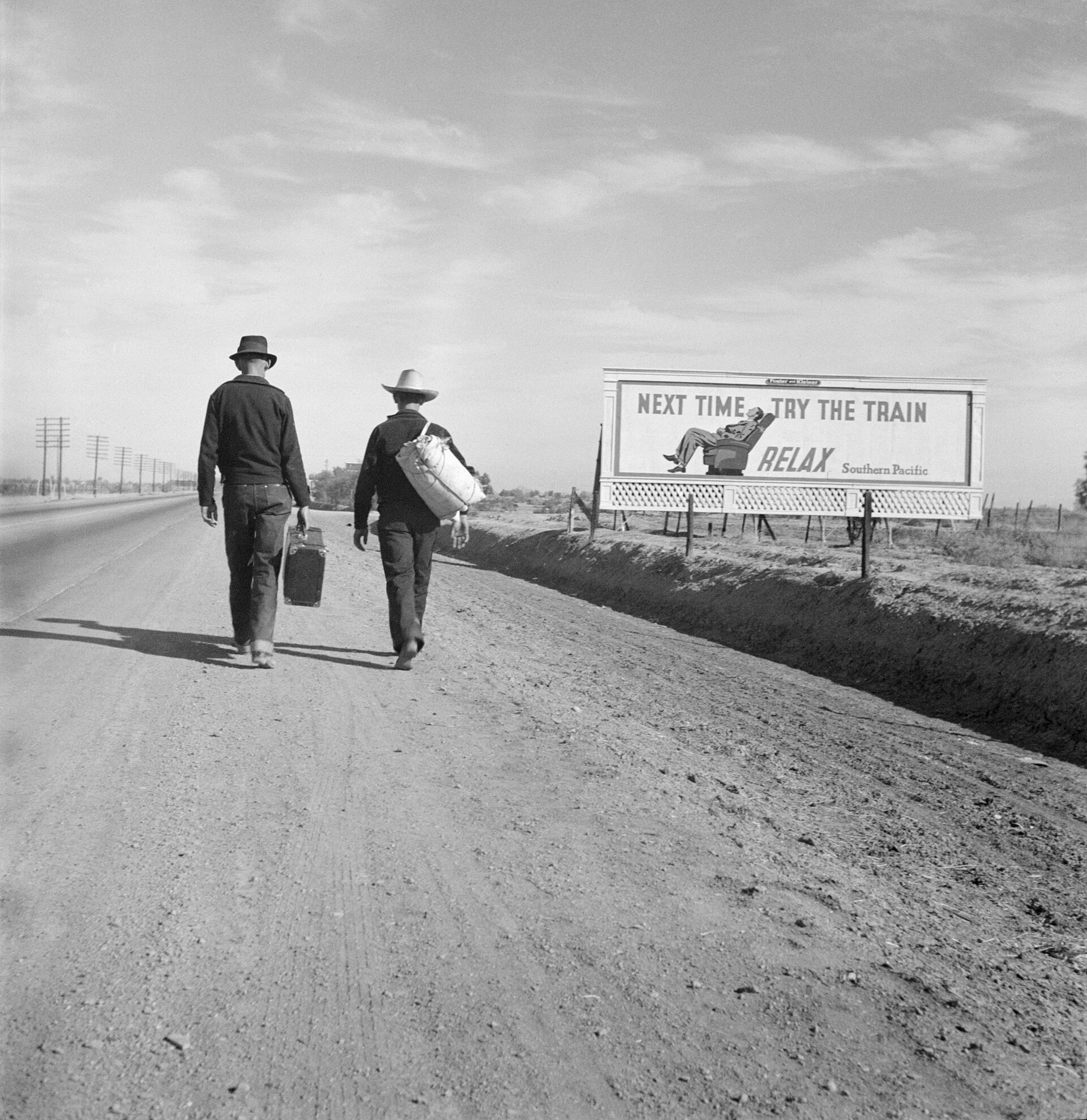
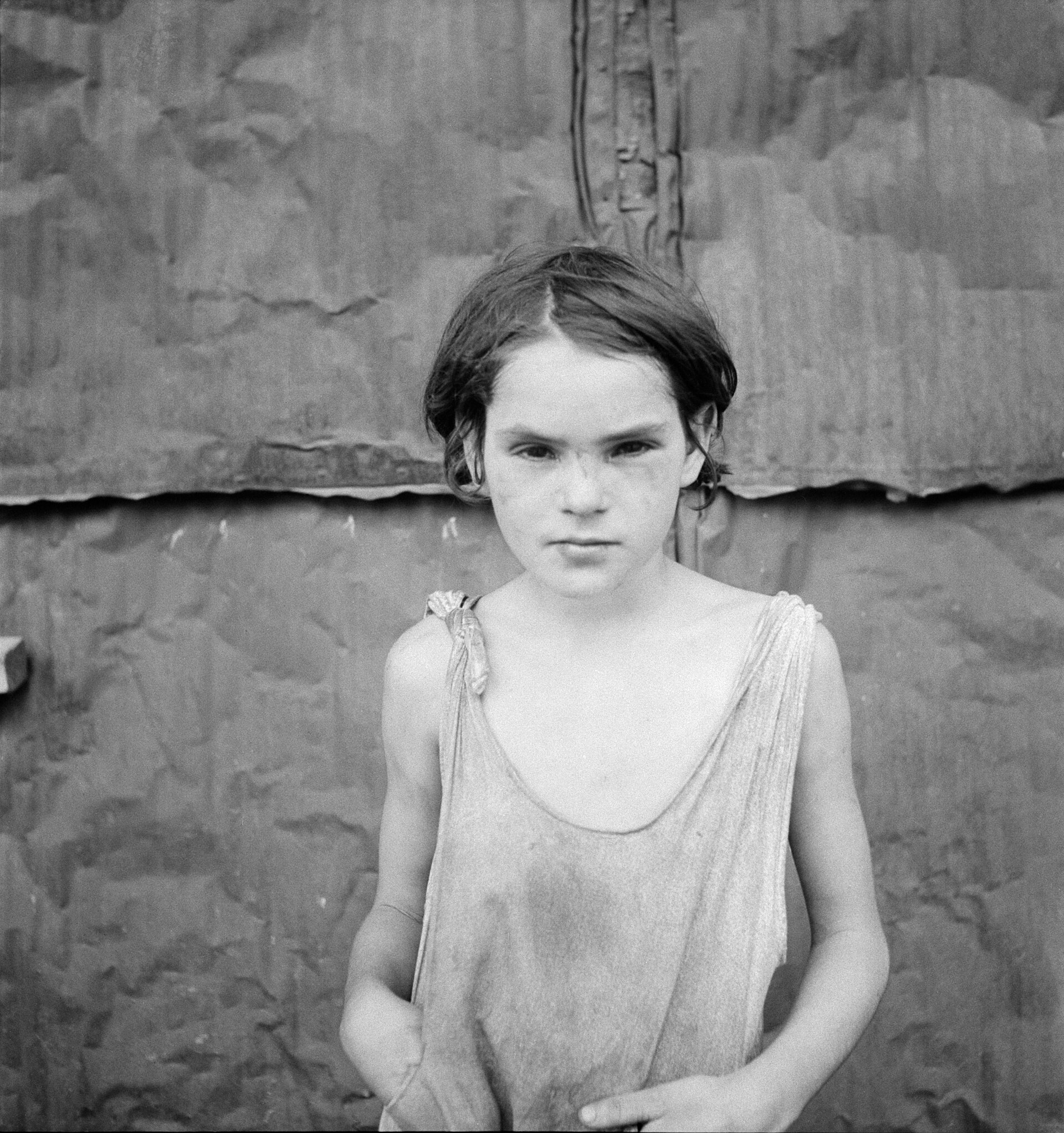
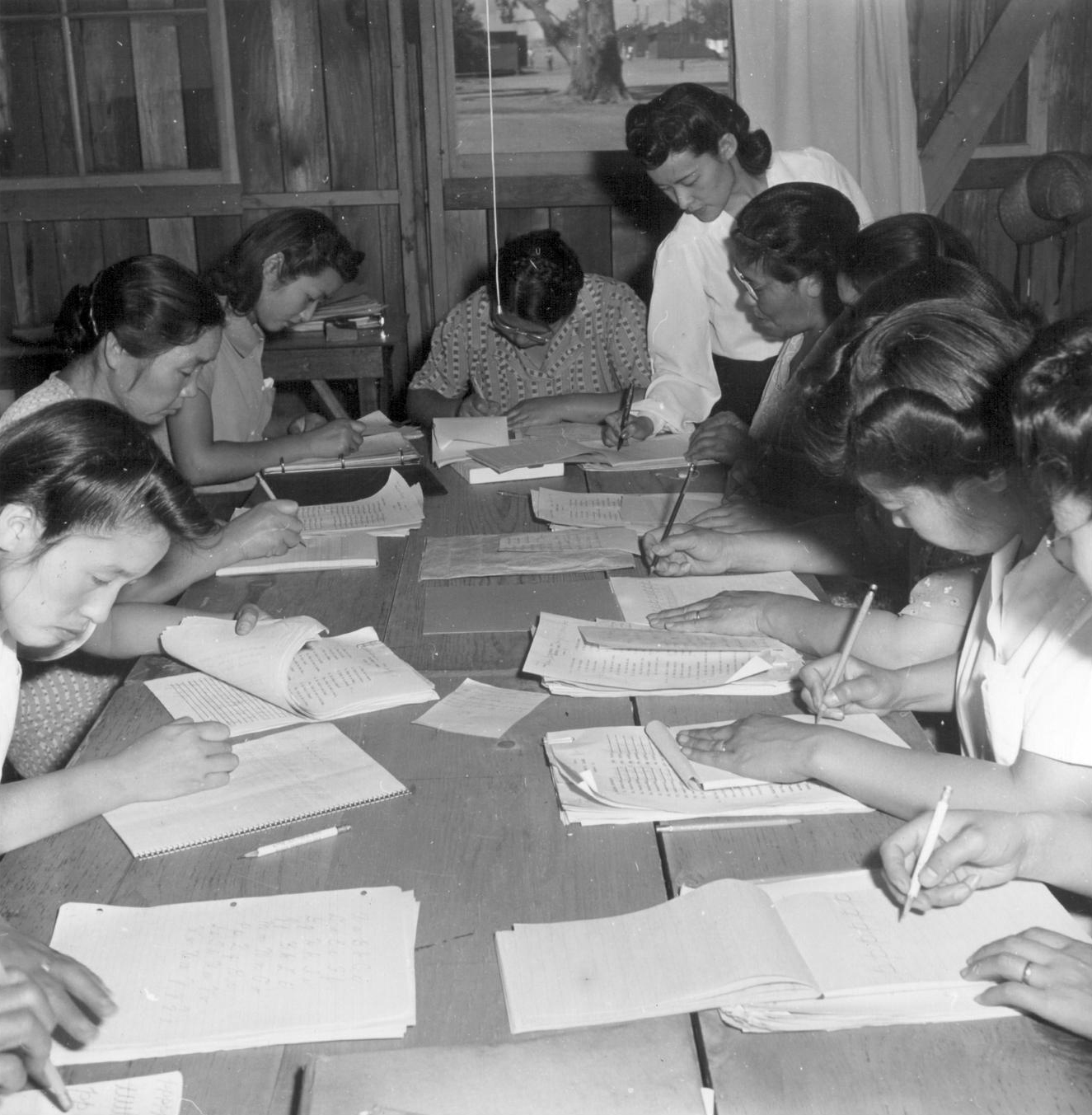
Born Dorothea Margaretta Nutzhorn on 26 May in Hoboken, New Jersey.16
Studies photography under Clarence H. White at Columbia University in New York; sets out to travel the world funded by selling photographs, but her money runs out in San Francisco, where she settles and takes a job in a photography studio.16
Marries the painter Maynard Dixon.15
Photographs White Angel Breadline in San Francisco, dated 1932 by Encyclopaedia Britannica and 1933 by the Museum of Modern Art's own catalog materials and the Princeton University Art Museum; made before any federal employment.161311
Her photographs of the Oakland general strike come to the attention of the economist Paul Taylor, who hires her to document California's migrant farmworkers; her work is first publicly exhibited.1416
Divorces Maynard Dixon; marries Paul Taylor in December, after what the Oakland Museum's own archive describes as a double divorce on both sides. Hired 1 September by the Resettlement Administration as a Photographer-Investigator at $2,300 a year.159
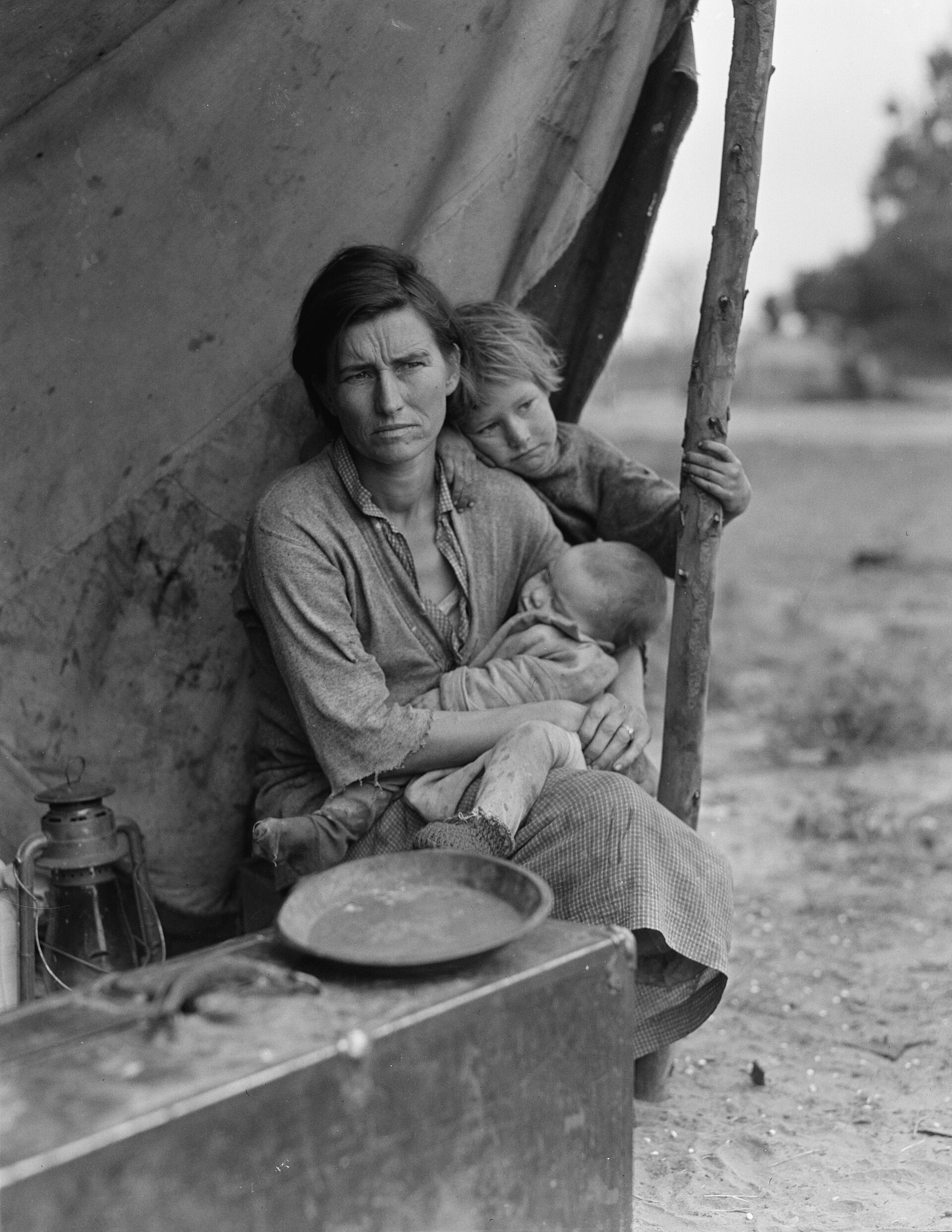
Photographs Florence Owens Thompson and her children at a pea pickers' camp near Nipomo on 6 March, the sequence that produces the negative known as Migrant Mother.1
Her employment with the Resettlement Administration, by then reorganized as the Farm Security Administration, ends 9 December; she is not rehired until October 1938, a gap of roughly ten months the sources consulted do not explain.9
The Migrant Mother negative is retouched, reportedly at Lange's instruction, to remove a thumb visible gripping a tent pole; Roy Stryker is reported to have objected on documentary grounds. Lange and Paul Taylor publish An American Exodus: A Record of Human Erosion, pairing her photographs with his text and workers' own words as captions.3416
Receives a Guggenheim Fellowship, later described as the first awarded to a woman photographer, according to Encyclopaedia Britannica.16
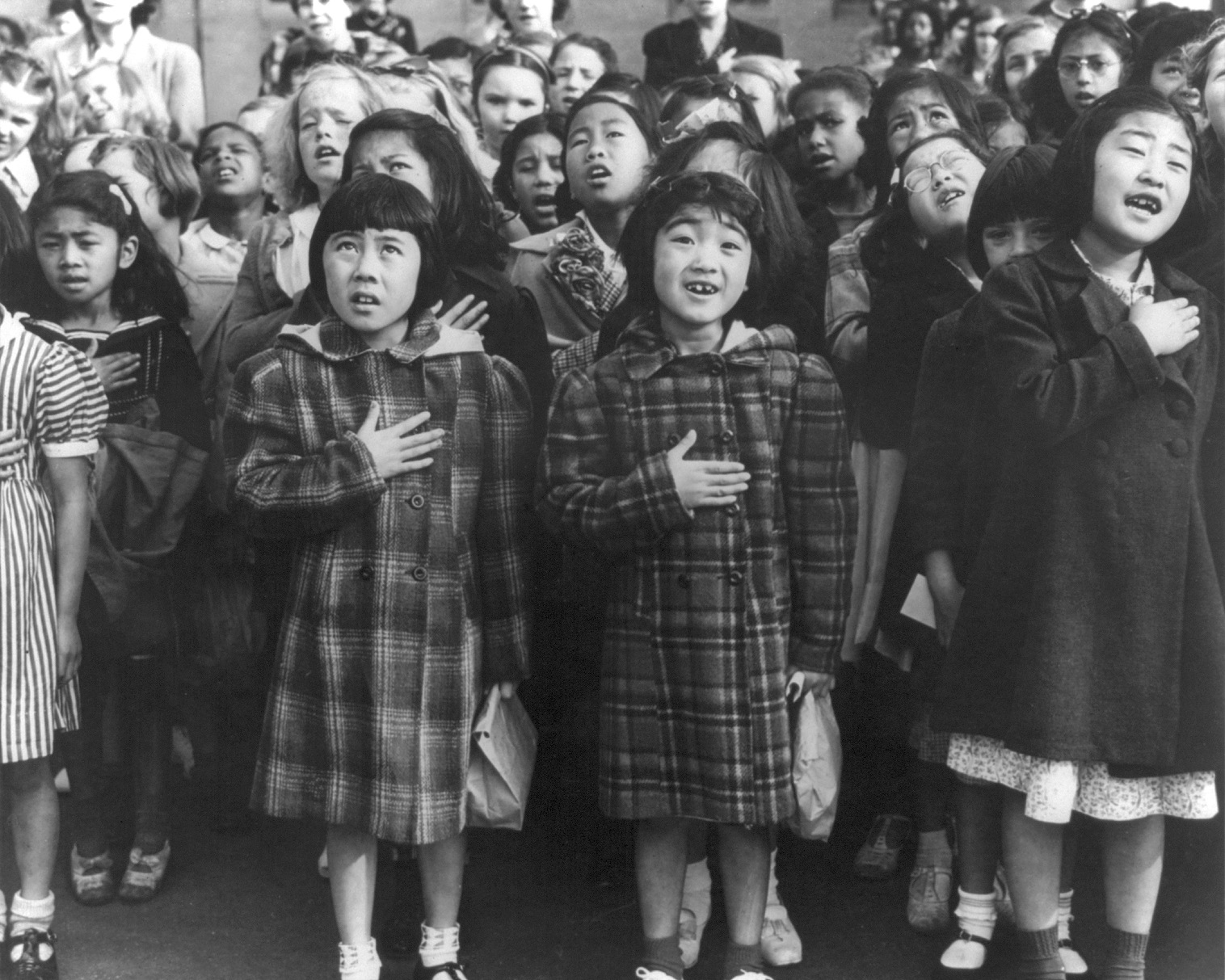
Photographs the forced removal and incarceration of Japanese Americans for the newly created War Relocation Authority, working in the San Francisco Bay Area and visiting the Manzanar relocation center in the Owens Valley three times; signs a bond and an oath on completing the assignment. The US Army restricts and stamps a number of her prints "Impounded."7
The WRA's central photographic file, including Lange's images, is transferred to the National Archives from the Department of the Interior in June, with, according to the National Archives' own 2017 account, no restrictions placed on public use.5
Several of her photographs are included in Edward Steichen's The Family of Man exhibition at the Museum of Modern Art, following her collaboration with Steichen the previous year.1613
Dies of cancer in San Francisco on 11 October, five weeks before the opening of her retrospective at the Museum of Modern Art, which she had worked on with curator John Szarkowski in the last two years of her life.13
The Museum of Modern Art opens The first major retrospective it had given to a woman photographer, running 25 January through 27 March, more than 200 photographs spanning 1920 to 1965.13
Linda Gordon and Gary Y. Okihiro publish Impounded: Dorothea Lange and the Censored Images of Japanese American Internment, bringing many of her more critical WRA photographs to wide public attention for the first time.7
The National Archives publishes an article by Kerri Lawrence, quoting archivist Nicholas Natanson, disputing the claim that Lange's WRA photographs were withheld from public access for nearly sixty years.5
Because Lange's most famous negatives are federal government property, they have never been and cannot be sold privately; the market trades in prints, and the print's generation, not the fame of the image, sets the price. A vintage 1930s print can bring hundreds of thousands of dollars; a later print of the identical negative, made by someone other than Lange decades afterward, can be estimated at a small fraction of that figure at the very same auction house.
| Date | Sale | Work | Result | Note |
|---|---|---|---|---|
| 2005-10 | Sotheby's | White Angel Breadline, vintage print, 1933 | Hammer not separately reported in sources consulted With premium USD 822,400 (reported as a single total) USD | Reported at the time to tie the auction record for any twentieth-century photograph, matching a 1923 platinum print of Edward Weston's The Breast sold one day earlier at the same house. This figure was consulted via search-engine synthesis of trade-press coverage; the primary report was behind a paywall this session could not pass, and it is flagged here for direct re-verification rather than treated as independently confirmed. |
| 2022-04 | Sotheby's | White Angel Breadline, gelatin silver print, printed posthumously ca. 1950s | Hammer not applicable, no reserve sale With premium Estimate USD 5,000-7,000 USD | A later print of the same negative as the 2005 vintage-print record above, offered with a completely different, much lower estimate; provenance given as the Oakland Museum (1984), the Ginny Williams Collection, and a prior Sotheby's New York sale of 4 December 2020. Illustrates the price gap between a vintage print and a later print of an identical image. |
| 20 October 2022 | Swann Auction Galleries | Migrant Mother, vintage silver print, 1936 | Hammer not separately reported in sources consulted With premium USD 305,000 (reported as a single total) USD | Top lot of a $1.2 million Fine Photographs sale; formerly in the collection of Romana Javitz, longtime head of the New York Public Library's Picture Collection. Swann's own reporting does not separate hammer price from any buyer's premium. |
Hammer is the price at which the bidding stopped; with premium adds the fee the house charges the buyer on top. Hammer price and buyer's premium in the glossary.
| Institution | City | Holdings | Note |
|---|---|---|---|
| Library of Congress, Prints and Photographs Division | Washington, D.C. | Lange's Resettlement Administration and Farm Security Administration negatives, 1935-1939, within the roughly 175,000-negative Farm Security Administration/Office of War Information Collection. | Includes the Migrant Mother negative, the subject of this site's own companion object record. |
| National Archives and Records Administration, Still Picture Branch | College Park, Maryland | Lange's 1942 War Relocation Authority photographs, within Record Group 210, Series G, a central file of 7,870 prints and negatives of which her images are a fraction. | Transferred from the Department of the Interior in June 1946; the National Archives states these images have been among its most frequently requested holdings for decades. |
| Oakland Museum of California, Dorothea Lange Digital Archive | Oakland, California | More than 40,000 original negatives and 6,000 vintage prints, plus field notes, correspondence, proof sheets and audio tape, covering her personal and non-government work. | Donated by her husband Paul Taylor after her death in 1965; described by the museum as the most complete collection of her work anywhere. |
| Museum of Modern Art | New York | A significant collection of Lange prints and the archival record of her 1966 retrospective, the first the museum gave to a woman photographer. | Curator John Szarkowski worked with Lange directly on the exhibition's content and organization before her death in 1965. |
Lange's own account, published in Popular Photography in February 1960 and reproduced by the Library of Congress in its own research guide to the photograph, states plainly: "I made five exposures...
Lange's own account, published in Popular Photography in February 1960 and reproduced by the Library of Congress in its own research guide to the photograph, states plainly: "I made five exposures, working closer and closer from the same direction." She was concluding a month's trip photographing migratory farm labor around California for what was then the Resettlement Administration when she turned back toward a roadside camp of stranded pea pickers near Nipomo. The woman she photographed was thirty-two, had just sold the tires from her car to buy food, and, in Lange's words, "seemed to know that my pictures might help her, and so she helped me."
The Library of Congress's own guide adds a detail that most retellings drop: "It is not possible to determine on the basis of the negative numbers, which were assigned later at the Resettlement Administration, the order in which the photographs were taken." Lange's own count of five exposures cannot be checked against the archive's own numbering system, because that system was never designed to preserve shooting order in the first place. This record's companion object record, for the single negative the world knows as Migrant Mother, sets out the surviving frames from that visit in more detail; here the relevant point is narrower. The most reproduced photograph of the twentieth century was not a single click. It was the last frame of a short, worked sequence, and the archive that holds it cannot tell you, from the file alone, exactly how many frames came before it.
The negative itself carries a second, separate layer of alteration on top of the multi-exposure sequence.
The negative itself carries a second, separate layer of alteration on top of the multi-exposure sequence. The Library of Congress's own catalog note, transcribed onto the Wikimedia Commons file page for the negative, states: "The negative was retouched in the 1930s to erase the thumb holding a tent pole in lower right hand corner." Reporting on the retouching dates it specifically to 1939, tied to Lange's preparation of prints for a 1941 exhibition: she considered the visible thumb, belonging to the seated woman's hand gripping a tent pole, "such a glaring defect that she apparently didn't have a second thought about removing it," and had an assistant do the work.
Roy Stryker, who ran the Farm Security Administration's Historical Section and was Lange's supervisor, is reported to have been unhappy with the decision, on the grounds that it compromised the documentary integrity of the negative and of the unit's whole project, even though retouching prints for publication was common practice at the time and other outlets, including the New York Times, are separately reported to have altered the same image independently. The finished, retouched state is the one reproduced in essentially every printing of the photograph made since. This is the same Roy Stryker who, elsewhere in his working relationship with Lange, defended the Historical Section's files as though they were a legal deposit and locked them up at night; he did not extend the same principle of untouched evidence to the negative that became his unit's single most famous product.
Before there was a federal salary there was White Angel Breadline, Lange's photograph of a hunched, unshaven man at a San Francisco soup kitchen called the White Angel Jungle, his back turned to the...
Before there was a federal salary there was White Angel Breadline, Lange's photograph of a hunched, unshaven man at a San Francisco soup kitchen called the White Angel Jungle, his back turned to the other men waiting behind him. The Museum of Modern Art's own 1966 retrospective catalog material, and the Princeton University Art Museum's catalog record for its own print, date the photograph to 1933; Encyclopaedia Britannica's biographical entry gives 1932. This record states both dates rather than picking one, because the two institutions that hold and catalog actual prints of the image disagree with a general reference source, and neither position is sourced here to a primary negative record. What is not in dispute is that the photograph predates Lange's federal employment, which the Oakland Museum of California's own archival record places from 1 September 1935. She made this picture as an independent street photographer working the crisis in her own city, roughly two years before the government ever paid her.
That distinction matters because Wikimedia Commons tags the most widely used file of this image {{PD-USGov-FSA}}, the template this site otherwise relies on to establish that a Farm Security Administration negative carries no copyright as a federal work. Applied to a photograph made before Lange ever worked for the federal government, that tag is very likely wrong, and this record does not use the image for that reason. The Princeton University Art Museum, which purchased a 1950s print of the same photograph in 2019, credits it on its own object page: "(c) The Dorothea Lange Collection, Oakland Museum of California" - an explicit, institutional copyright claim over a photograph Commons treats as free government property. This is exactly the trap this site's own house rules warn against: a licence field that reports "Public domain" is not the same thing as a work actually being in the public domain, and the two sources disagree here in a checkable, citable way. The market treats the two categories of print very differently regardless of the copyright question: a vintage 1930s print of this image set an auction record; a later, posthumous print of the identical image was offered at Sotheby's in 2022 with a pre-sale estimate of only $5,000 to $7,000. Both facts are covered in the market section below.
Lange's own federal employment record, an internal FSA summary dated 11 December 1941 and preserved in the Oakland Museum of California's Dorothea Lange Digital Archive, states her title as...
Lange's own federal employment record, an internal FSA summary dated 11 December 1941 and preserved in the Oakland Museum of California's Dorothea Lange Digital Archive, states her title as Photographer-Investigator, her salary at $2,300 annually, and her first period of employment as 1 September 1935 to 9 December 1937, based out of the Information Division in Berkeley and Washington, D.C., with travel expenses paid separately as per diem and mileage. For comparison, and using the same tertiary encyclopedia source flagged for replacement with a primary Bureau of Labor Statistics table: median American family income across 1935 and 1936 stood at $1,160 a year, meaning Lange's federal salary sat at roughly double the income of the families she was sent to photograph - itself worth stating plainly, since Florence Owens Thompson's family that same season had nothing at all.
The same employment document records something the popular account of Lange's career skips over entirely: a genuine gap. Her Resettlement Administration employment ended 9 December 1937; she was not rehired by the successor Farm Security Administration until October 1938, with her salary later raised to $2,600. Nothing in the sources consulted for this record explains the ten-month interruption, and this record does not guess at one. What is documented, in Lange's own words from a 1960-61 oral history interview conducted by Suzanne Riess for the University of California's Regional Oral History Office, is a portrait of Roy Stryker as an obsessive gatekeeper of the file rather than a neutral administrator: "He was guardian at the gate. He was the defender of the files, inviolable; and they were locked up at night. It was a holy crusade." Lange also recounts a genuine congressional flap when a photographer on Stryker's staff was found to have moved a cow skull for a picture, which she says opened the whole unit to scrutiny over "contriving situations . . . to suit propaganda purposes" - a controversy that predates any question about her own Migrant Mother negative by roughly two years.
Lange's first marriage, to the painter Maynard Dixon in 1920, ended in divorce in 1935, following a period in which, by her own later account preserved in the Oakland Museum's archive, she...
Lange's first marriage, to the painter Maynard Dixon in 1920, ended in divorce in 1935, following a period in which, by her own later account preserved in the Oakland Museum's archive, she "sublimated her own artistic pursuits to support Dixon's work" while reserving what she called "a small portion of my life" for her own photography. The economist Paul Schuster Taylor, who taught at the University of California, Berkeley, encountered Lange's photographs of the 1934 Oakland general strike and hired her to help document the conditions of California's migrant farmworkers for his own social research. Both were married to other people at the time; the Oakland Museum's own archive describes what followed as "a double divorce" before Lange and Taylor married in December 1935. They remained married for the rest of Lange's life. This record corrects, on the basis of the sources actually consulted, a common misconception worth naming precisely because it is a misconception: there was no later divorce between Lange and Taylor. Whatever tension existed in her working life, her second marriage was not it.
What Taylor changed was not Lange's marital status so much as how her pictures were read. In 1939 the couple published An American Exodus: A Record of Human Erosion, pairing Lange's photographs with Taylor's text and, distinctively, with the migrant workers' own recorded words as captions. Encyclopaedia Britannica's account of her career states that her FSA photographs generally were "often presented with captions featuring the words of the workers themselves" - a captioning practice that is Taylor's professional signature as a social scientist as much as it is Lange's as a photographer. This is the same authorship-adjacent question the workshop system raises for a painting: the image on the page is Lange's, but the frame of social evidence around it, the words that tell a viewer how to read a hungry face, came substantially from her collaborator and husband. Neither fact diminishes the other; they simply belong to different people, and a record that credits only the photograph, not the caption, has quietly erased half of how the picture was designed to work.
As soon as the War Relocation Authority was established in March 1942, Lange began photographing the forced removal of Japanese Americans from the West Coast, working, by her own account in the same...
As soon as the War Relocation Authority was established in March 1942, Lange began photographing the forced removal of Japanese Americans from the West Coast, working, by her own account in the same 1960-61 oral history, under the WRA's first director, Milton Eisenhower, for the portion of his brief tenure that overlapped her start. She photographed in three parts of California - the San Francisco neighborhoods and businesses being emptied, the assembly centers where families were processed, and, of the interior relocation centers, only Manzanar in the Owens Valley, which she says she visited three times. Southern California was covered by a different WRA photographer, Clem Albers; Lange did not photograph there.
The restrictions on what she could photograph were real and, by her own account, exhausting. In a separate portion of the same oral history discussing her later Office of War Information assignment photographing Italian-American neighborhoods under wartime censorship, Lange describes needing a soldier escort, having negatives checked at the Presidio before release, and being forbidden to shoot from rooftops or windows because of wartime restrictions - conditions she contrasts directly with working for a private magazine, where, in her words, "you jump hurdles and take chances. Working for the government you couldn't." She signed a formal bond and an oath before a notary on completing her WRA work, a detail with no equivalent in her FSA employment record. Ansel Adams, invited by the WRA to photograph at Manzanar the following year, worked under a comparatively loose arrangement and produced images of contented industry and uplifting portraiture; Lange's own pictures, by her own account, tried to hold onto what she called Some of them were incriminating - a plain answer, without qualification, to whether her camera had caught something the government did not want the public to see.
Here the sources genuinely conflict, and this record states both positions rather than arbitrating between them.
Here the sources genuinely conflict, and this record states both positions rather than arbitrating between them. Lange's own account, given in the same 1960-61 oral history, is unambiguous: "They were impounded during the war. Army permission was necessary for their release. They had wanted a record, but not a public record, and they were not mine." Her husband Paul Taylor, annotating the transcript before its 1968 publication, adds that the WRA negatives are held at the National Archives and that "the 'impounded' negatives also are there and are so classified." The historian Linda Gordon, whose 2006 book Impounded: Dorothea Lange and the Censored Images of Japanese American Internment (co-edited with Gary Y. Okihiro) brought many of the more critical images to wide public attention, documents that a US Army officer, Major Beasley, physically wrote "Impounded" across a number of Lange's prints, though not, by Gordon's account, across the negatives themselves.
The National Archives disputes the scale and duration of any restriction, in a 2017 article explicitly titled "Correcting the Record on Dorothea Lange's Japanese Internment Photos." Nicholas Natanson, an archivist in its Still Picture Branch, is quoted directly: "Far from being neglected or disappearing, the images - especially Lange's - have been some of the best-known, most frequently requested and researched, and most frequently reproduced in National Archives Still Picture Branch holdings for many decades. What's more, with the advent of the digital age, all of Lange's WRA photos have been available in scanned form on the National Archives website since 1998." Natanson traces the stronger claim - that the government withheld public access for nearly sixty years - to a November 2006 newspaper article covering Gordon and Okihiro's book, and states that the WRA's central photographic file, Record Group 210, Series G, comprising 7,870 prints and negatives of which Lange's images are a fraction, was transferred to the National Archives from the Department of the Interior in June 1946 with, in his words, "no restrictions on public use." A separate 2013 account for the educational nonprofit Densho adds a third data point consistent with Natanson's correction: quoting the historian Roger Daniels, it notes the National Archives allowed access to Lange's photographs, including the ones stamped impounded, "shortly after" it received them - not decades later. What can be said without contradiction is this: the Army did restrict and stamp some of Lange's WRA prints during the war itself, and Lange herself believed, at the time she gave her oral history, that Army permission remained necessary for release; and separately, the National Archives holds documentary evidence that whatever restriction existed lapsed at the point of transfer in 1946, long before Gordon and Okihiro's book made the pictures famous to a wider public in 2006.
This site's companion object record for Migrant Mother sets out in detail the 1978 identification of the woman in the photograph as Florence Owens Thompson, a widowed Cherokee mother of seven then...
This site's companion object record for Migrant Mother sets out in detail the 1978 identification of the woman in the photograph as Florence Owens Thompson, a widowed Cherokee mother of seven then living in Modesto, and her pointed public grievance once she was found: no payment, no name asked, a promised print that never arrived. The fact belongs on this page too, because it reshaped how Lange herself is read. For forty-two years the photograph functioned as an anonymous national symbol, and Lange's own authorial relationship to a documented, named, aggrieved individual was invisible by design; her own 1936 field notes, by her later account, did not even record Thompson's name. Once Thompson spoke in 1978, the picture stopped being simply Lange's masterwork and became, in addition, a case study in what a federal photographer could take from a subject without any obligation to compensate or even identify her - because the negative belonged to the government the instant it was exposed, neither woman ever held a copyright interest in it to license, sell, or object to.
No source consulted for this record documents any lawsuit, settlement or formal legal claim brought by Thompson or her family against Lange or the federal government over use of the image; the record is one of grievance stated, not grievance pursued through any legal channel. That asymmetry - a photographer's fame built for four decades on an anonymous face, and a subject who received nothing until public sympathy intervened during her final illness in 1983 - is now inseparable from any serious account of Lange's most famous picture, and from what her career asked of the people she photographed more generally.
Lange's working life left no single archive, because she worked for three different federal bodies whose records were dispersed by law and by circumstance rather than reunited by any later...
Lange's working life left no single archive, because she worked for three different federal bodies whose records were dispersed by law and by circumstance rather than reunited by any later cataloguing project. Her Resettlement Administration and Farm Security Administration negatives, made between 1935 and 1939, sit inside the Library of Congress's Farm Security Administration/Office of War Information Collection, which its own Prints and Photographs Division describes as comprising roughly 175,000 black-and-white negatives, 107,000 prints and 1,610 color transparencies across all of the unit's photographers combined; the sources consulted for this record do not give a precise figure for Lange's own individual share of that total, and this record does not invent one. Her War Relocation Authority photographs from 1942 sit at the National Archives, inside Record Group 210, Series G, a central file of 7,870 prints and negatives of which her own contribution is, in the National Archives' own description, only a fraction of the whole. Her personal archive - the negatives and prints she made outside government assignment, plus field notes, correspondence, proof sheets and audio tape - passed on her death in 1965 to her husband Paul Taylor, who donated it to the Oakland Museum of California; the museum's own digital archive describes the gift as more than 40,000 original negatives and 6,000 vintage prints, and calls its holding "the most complete collection of Lange's work anywhere."
No single catalogue raisonne of Lange's photographs exists in the sense a painter's corpus has one, and none is needed in quite the same way: authorship of the great majority of her surviving negatives is not seriously disputed, because these are identified negatives in institutional custody rather than a connoisseurship problem built on style and provenance. The nearest things to an authenticating authority are custodial rather than adjudicative - the Library of Congress for the FSA years, the National Archives for the WRA year, and the Oakland Museum for everything personal and everything after - and a reader trying to find the complete surviving Lange corpus in one place will not succeed, because it was never assembled in one place to begin with.
Because most of Lange's most famous negatives are federal government property, the negatives themselves have never been and cannot be sold privately; what the market actually trades in is prints, and...
Because most of Lange's most famous negatives are federal government property, the negatives themselves have never been and cannot be sold privately; what the market actually trades in is prints, and the generation of the print determines the price far more than the fame of the image does. A vintage 1930s print of White Angel Breadline sold at Sotheby's in October 2005 for $822,400, reported at the time to tie the auction record for any twentieth-century photograph, set one day earlier by a 1923 platinum print of Edward Weston's The Breast at the same price; this specific figure was consulted via search-engine synthesis of trade-press coverage that this record could not independently open behind a paywall, and is flagged here for direct re-verification rather than treated as fully primary. A print of the same photograph, printed posthumously in the 1950s and offered by Sotheby's again in 2022 with an unrelated later provenance, carried a pre-sale estimate of only $5,000 to $7,000 - roughly a hundred-and-fifty-fold difference in expected value between a vintage print and a later print of the identical negative, which is the single clearest illustration available in this record of why the house rule separating print generations matters in practice, not only in principle.
Migrant Mother itself trades on a similar logic. At Swann Auction Galleries in New York on 20 October 2022, a vintage silver print of the image, formerly in the collection of Romana Javitz, the longtime head of the New York Public Library's Picture Collection, sold as the top lot of a $1.2 million sale for $305,000; Swann's own director of photographs, Deborah Rogal, called the result proof of "the continued power of this iconic image and of photography in general." Swann's own reporting does not separately state a hammer price against a total including buyer's premium, and this record does not assert a split that its source does not provide. Vintage prints of Migrant Mother made directly by or under Lange's supervision in the 1930s and 1940s are the category commanding these prices; later reproductions made by other printers from the same government-owned negative, decades after the fact, are a structurally different and far less expensive object, however visually identical the image appears.
The Museum of Modern Art's own press release for its 1966 Lange retrospective, the first the museum had given any woman photographer, states that the exhibition's director, John Szarkowski...
The Museum of Modern Art's own press release for its 1966 Lange retrospective, the first the museum had given any woman photographer, states that the exhibition's director, John Szarkowski, "collaborated to an unusual degree with the photographer on the basic decisions of content and organization" before Lange died on 11 October 1965, five weeks before the show opened on 25 January 1966. Szarkowski's own words for the exhibition materials draw a line this record treats as close to Lange's stated intention as any secondary reading gets: "Lange's work was directed not toward esthetic delight, but toward social relevance. Beauty for her was not a goal, but a proof of success - a demonstration that something of importance had been clearly seen and graphically fixed." The same press release records that in the last two years of her life Lange had been trying to define the conditions under which a new documentary photography unit might serve the 1960s the way the FSA's Historical Section had served the 1930s - an ambition she did not live to pursue, and one that is barely mentioned in accounts of her career built entirely around Migrant Mother.
That documentary intention has not stopped later critics and curators from reading her most famous image in frankly aesthetic and art-historical terms she is not recorded as having invoked herself. The final frame's stable triangular composition, Thompson's face at the apex and the children's turned-away heads forming the base, has been compared by museum curators to Christian Madonna and Child imagery; this record's companion object record sets out that comparison, and the scholarly pushback against it, in full, and treats it there, correctly, as an argued critical reading rather than a documented statement of Lange's own purpose. What this record adds is the earlier half of that same pattern: George P. Elliott, the novelist who wrote the critical essay for the museum's own 1966 retrospective catalogue, made the identical move about White Angel Breadline three decades before anyone was reading Madonna imagery into Migrant Mother, writing that the earlier image's power came not from "formal elegance" but from being "inextricably entangled with the comment it is making. It is art for life's sake." The fine-art reception of Lange's photographs began, in other words, inside her own museum's promotional material, in her own lifetime's immediate aftermath, not as a later imposition by curators with no connection to her.
Lange was direct, on the one occasion the sources consulted for this record catch her being asked outright, about the propaganda function of the work the federal government paid her to do.
Lange was direct, on the one occasion the sources consulted for this record catch her being asked outright, about the propaganda function of the work the federal government paid her to do. Discussing her Office of War Information assignment photographing Italian-American communities under wartime censorship - a different, later government job than either the FSA or WRA work, but one she described in the same interview and the same terms - she told her interviewer: "It was propaganda, but the line, in the hands of conscientious people, is a fine line. Everything is propaganda for what you believe in, actually, isn't it? Yes, it is. I don't see that it could be otherwise. The harder and the more deeply you believe in anything, the more in a sense you're a propagandist." She went on to reject the idea that propagandist was a word to be ashamed of, comparing it to politician: a word she thought had been wrongly turned into an insult for something the society actually needed done.
That is as close as the documented record comes to a stated creed, and it is worth taking at face value rather than either softening it into pure objectivity or sharpening it into cynicism. Lange did not claim her camera was neutral. She claimed conviction was not a defect in documentary work but its whole engine, and that a photograph made to move a government toward relief, or a public toward sympathy, was doing exactly what a photograph made for those purposes should do. Read against that stated belief, the retouched thumb, the captions written jointly with Paul Taylor, and the restrictions the Army placed on what she could point a camera at all become instances of the same underlying fact: Lange never pretended the camera stood outside the argument it was making. The tension in her career was never between propaganda and pure documentation. It was between her own conviction about what the pictures should show and the convictions, sometimes different from hers, of the men who employed her.
Photographer. 1895-1965.
Born 26 May 1895, Hoboken, New Jersey; died 11 October 1965, San Francisco, California.
Library of Congress, Prints and Photographs Division (Washington, D.C.); National Archives and Records Administration, Still Picture Branch (College Park, Maryland); Oakland Museum of California, Dorothea Lange Digital Archive (Oakland, California); Museum of Modern Art (New York).
Because Lange's most famous negatives are federal government property, they have never been and cannot be sold privately; the market trades in prints, and the print's generation, not the fame of the image, sets the price. A vintage 1930s print can bring hundreds of thousands of dollars; a later print of the identical negative, made by someone other than Lange decades afterward, can be estimated at a small fraction of that figure at the very same auction house.
How many exposures did Lange actually make at the Nipomo camp on 6 March 1936? Her own 1960 account says five; the Library of Congress's own guide states that the negative numbering system cannot establish shooting order, so her count cannot be independently checked against the archive.
Fifty-six of the 220 published records in this archive carry an exhibition history.
9 min read
Six canonical documentary photographs in this archive were arranged, retouched or captioned to say more than they showed.
9 min read
Last verified 17 September 2026
One artwork and its story every Tuesday, with the picture: who owned it, what it made, and what closes soon in the exhibition calendar. No promotion, and nothing we cannot cite.
We send one email to confirm the address and keep nothing else. Every letter carries a one-click unsubscribe. How we handle your data.
.jpg)
