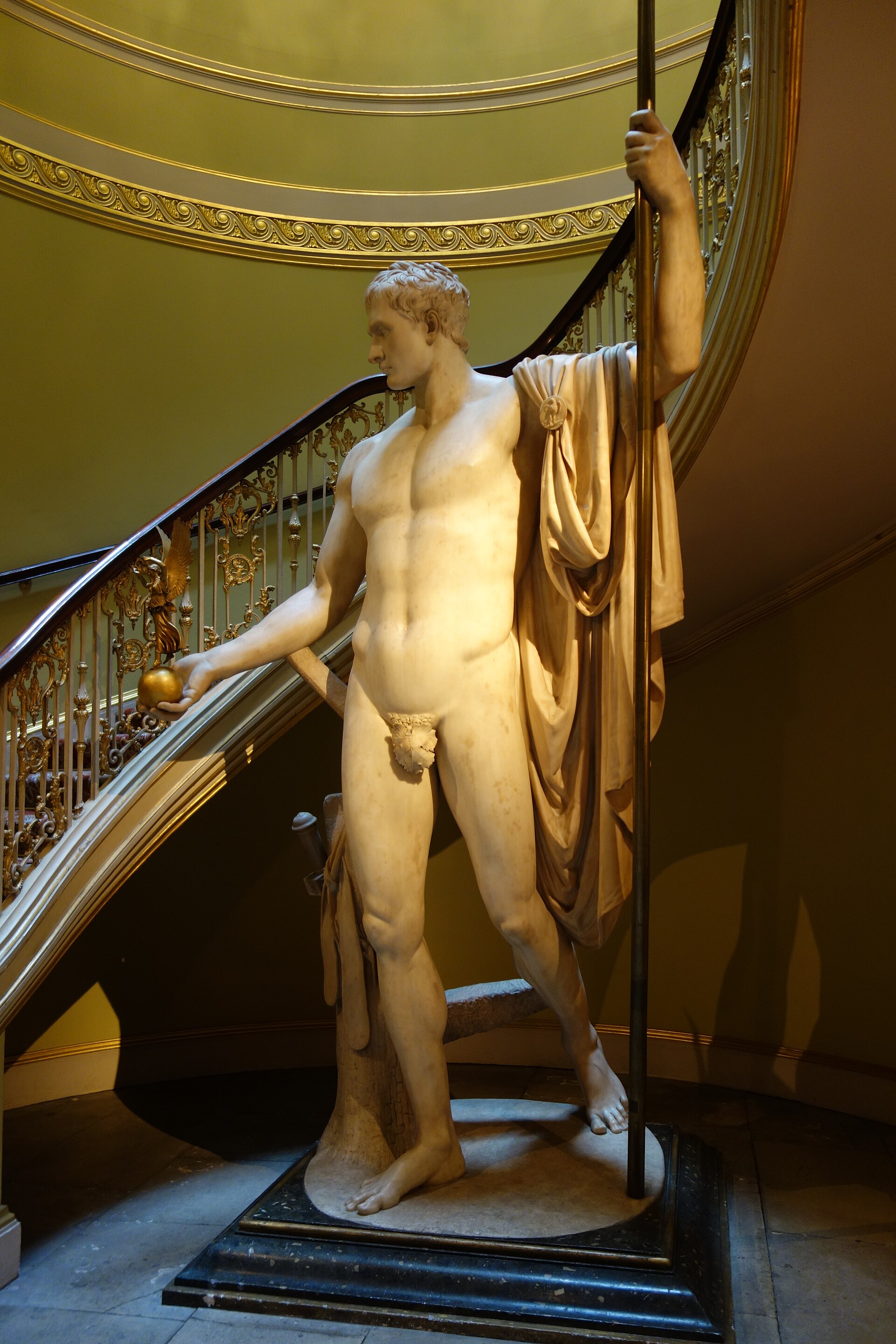
Napoleon as Mars the Peacemaker
Commissioned 1802 · Marble
Apsley House, Hyde Park Corner, London, at the foot of the...
 Italian (born Republic of Venice) · 1757-1822
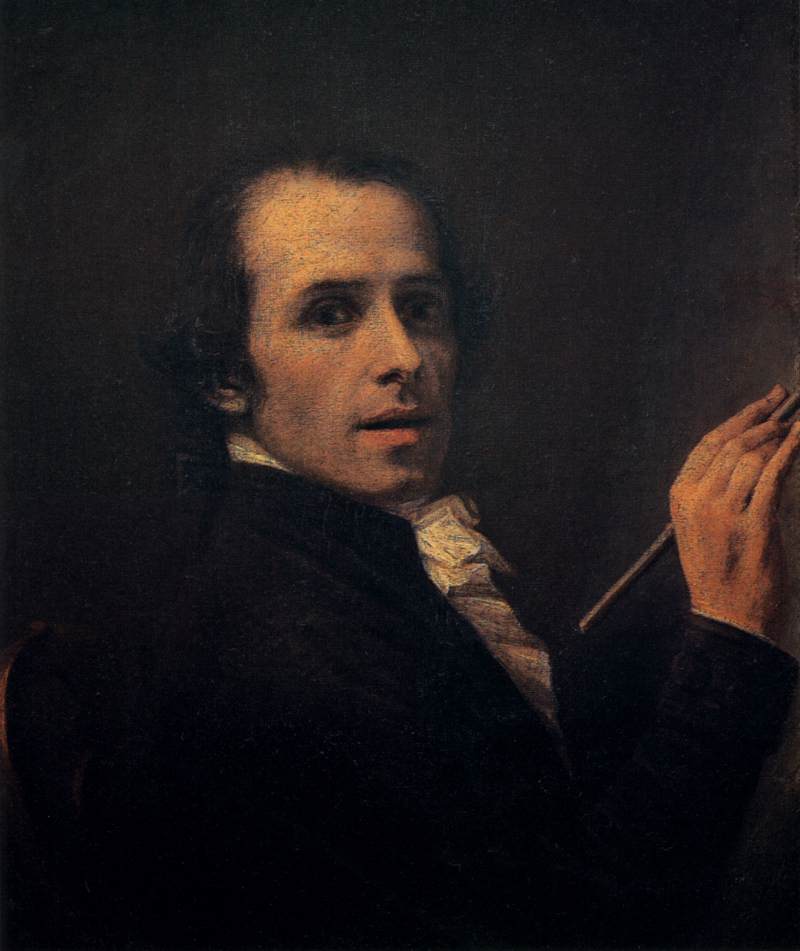
Self-portrait, oil on canvas, dated 1790 by the Web Gallery of Art and 1792 by other cataloguers, in the Uffizi's self-portrait collection, Florence. Canova trained and briefly worked as a painter before devoting himself to sculpture; the identification of the sitter as Canova himself is secure and not disputed in the sources consulted.
Gallerie degli Uffizi, Florence| Worked as | Sculptor |
|---|---|
| Born | 1 November 1757 · Possagno, Republic of Venice |
| Died | 13 October 1822 · Venice, Kingdom of Lombardy-Venetia (Austrian Empire) |
| Nationality | Italian (born Republic of Venice) |
| Movement | Neoclassicism |
| In this archive | 1 artwork |
| Sources | 20 cited |
| Last verified | 17 September 2026 |
About this page 1 artwork in the archive · Last verified 17 September 2026 · 20 sources cited
Antonio Canova was the most famous living artist in Europe for roughly the last quarter-century of his life, the sculptor every crowned head from Naples to St Petersburg wanted a marble from, and the man the Pope sent to Paris in 1815 to get Napoleon's plunder back. He was also a stonecutter's grandson from a village in the Veneto who never accepted a formal pupil, ran a large paid workshop of carvers he did not call students, and reserved the last pass over every marble for his own hand.
The thing most readers do not know is how unsettled the basic count of his work still is. Canova modelled in clay, cast the model in plaster, and had assistants rough out the marble from the plaster using a pointing machine before he finished the surface himself; his Rome workshop kept producing marbles from his plaster models for at least a year after he died in 1822, under the pupil who inherited the studio. A plaster in the museum built around his own models at Possagno, a marble carved from that plaster in his lifetime, and a marble carved from the same plaster after his death by his successor's hand can all carry his name today, and museums do not always agree on which of the three they are looking at. No complete catalogue of his work exists to settle it.
He is also the reason the modern language of art restitution has an origin point: in 1815-16 he went to Paris as the Pope's plenipotentiary and negotiated the return of works Napoleon's armies had taken from Italy under the Treaty of Tolentino, an episode historians of restitution treat as the first major precedent for what is now routine diplomatic and legal practice.
Born 1 November in Possagno, Republic of Venice; father dies when he is about four and his grandfather Pasino, a stonemason, raises him.12
Apprenticed by his grandfather to the sculptor Giuseppe Bernardi (Torretti), first at Pagnano d'Asolo, then in his Venice workshop.12
Opens his own studio in Venice; carves Daedalus and Icarus for the procurator Pietro Vettor Pisani, reportedly for 100 gold zecchini.12
Settles in Rome on a three-year Venetian Senate pension of 300 ducats; encounters Winckelmann's writings and the Roman antiquarian circle.12
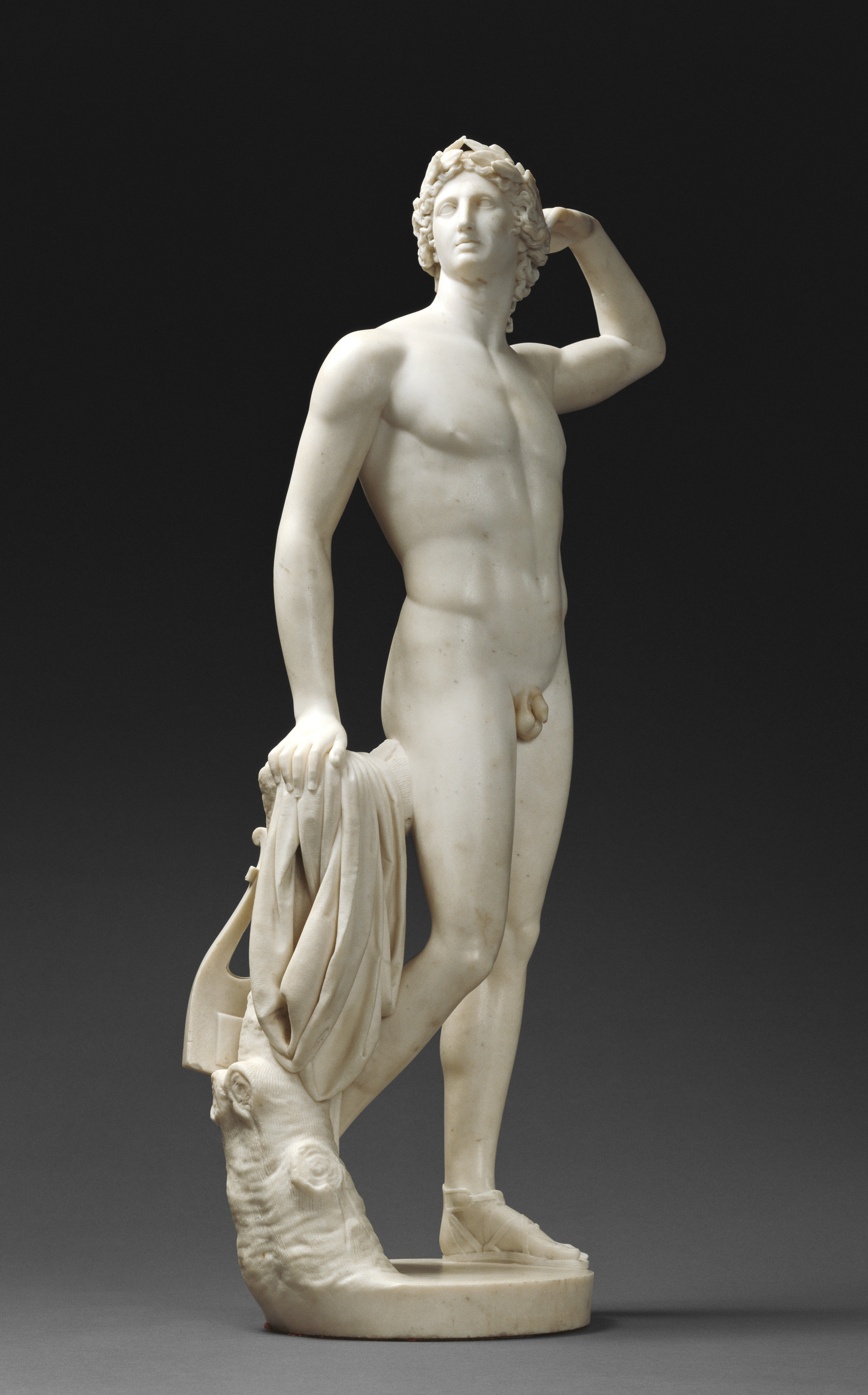
Carves Apollo Crowning Himself for a competition organised by Don Abbondio Rezzonico, generally treated as his first fully Neoclassical work.4
Completes the cenotaph of Pope Clement XIII at St Peter's, following the earlier tomb of Clement XIV (1783-87) at Santi Apostoli.2
Appointed Inspector-General of Antiquities and Fine Art of the Papal States, a post previously held by Raphael; models Napoleon from life in Paris.12
Carves the colossal nude Napoleon as Mars the Peacemaker; Napoleon, on seeing it installed in the Louvre in 1811, has it kept from public view.5
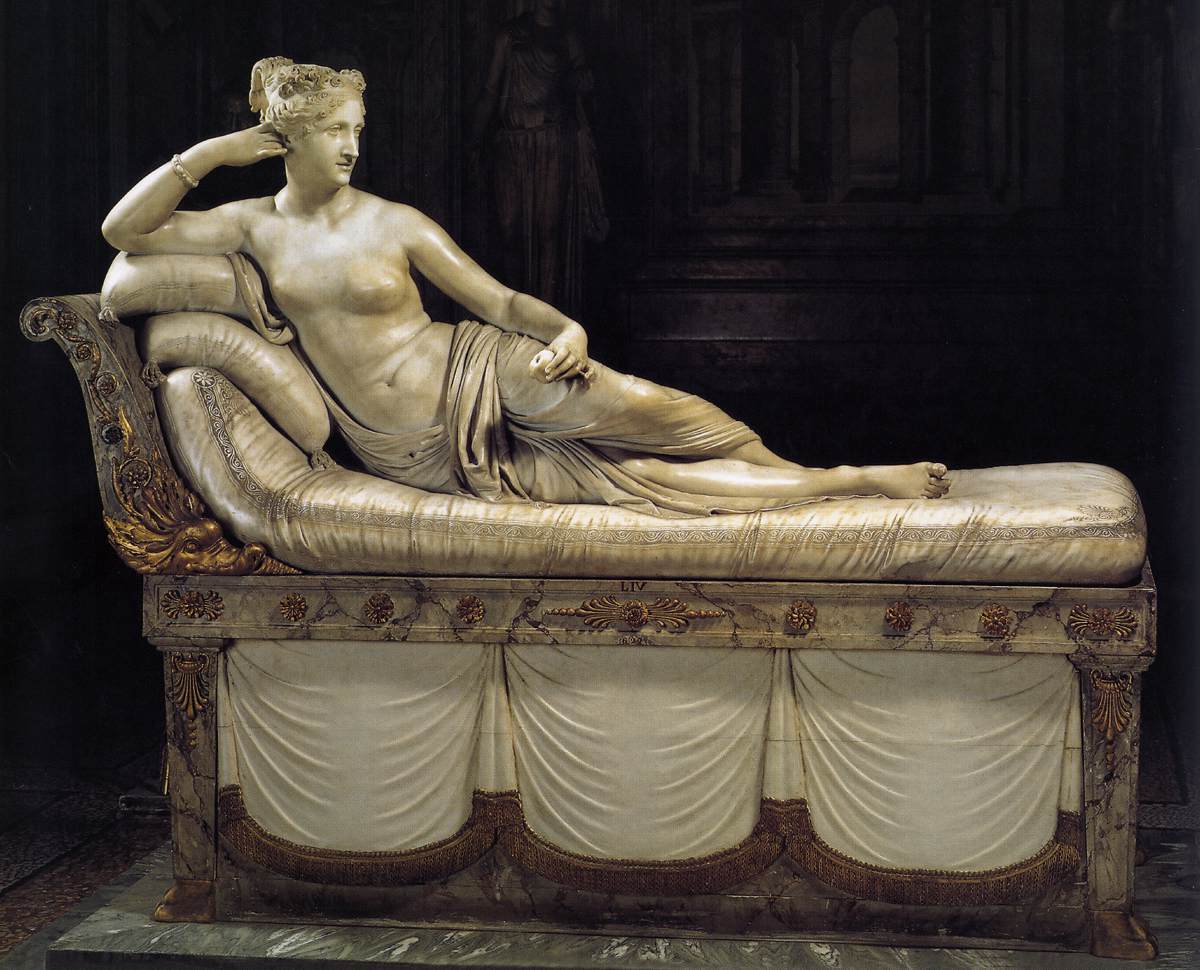
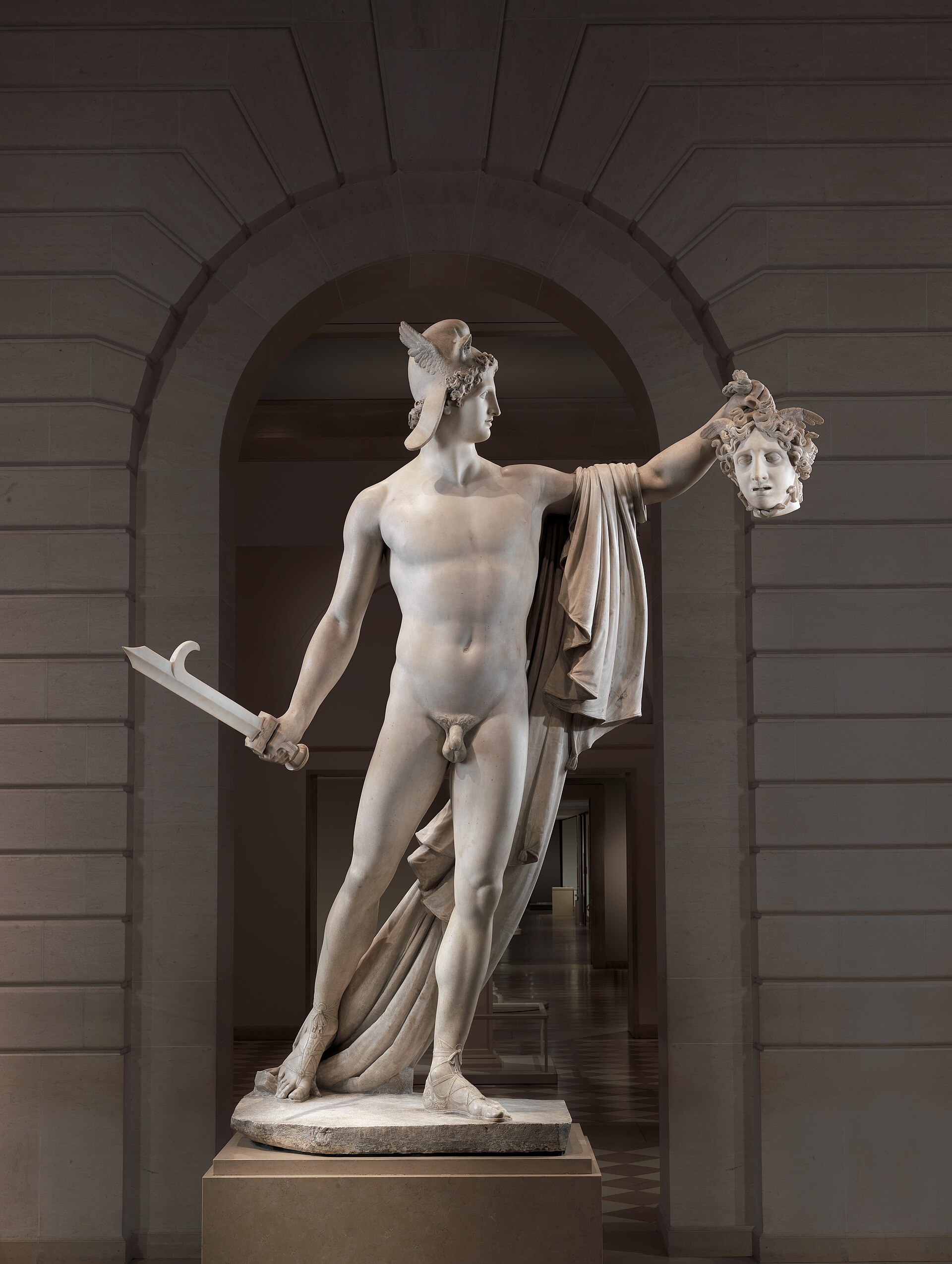
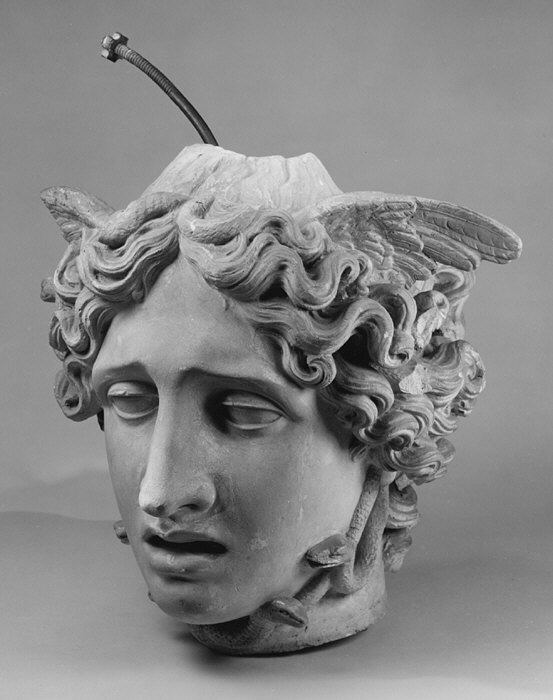
Carves Paolina Bonaparte Borghese as Venus Victrix, and separately the marble Perseus with the Head of Medusa (1804-6) for Count Jan and Countess Valeria Tarnowski, later bought by the Metropolitan Museum.67
Sent by Pope Pius VII as plenipotentiary to Paris to recover art taken under the Treaty of Tolentino; returns to Rome 3 January 1816 and is created Marquis of Ischia.89
Lays the foundation stone of the Tempio Canoviano at Possagno, the parish church he personally financed, on 11 July.10
Completes his only American commission, a marble George Washington for the North Carolina State House, installed 24 December 1821.11
Dies in Venice on 13 October; his body, heart and right hand are separated and sent to Possagno, the Basilica dei Frari and the Accademia di Belle Arti in Venice respectively.122
Canova's Rome studio, run in the meantime by the carver Adamo Tadolini, the ablest of his assistants, is wound up; the remaining plaster models are transferred to Possagno, forming the Museo Gypsotheca Antonio Canova.2
The Tempio Canoviano is completed and Canova's body is transferred there, eight years after his death.10
The North Carolina State House burns on 21 June; Canova's George Washington is destroyed with it, leaving only fragments.11
The two clearest recent data points cut against each other on purpose. Canova's marble Bust of Peace (1814-15), rediscovered after two centuries in a Welsh family collection and correctly identified only shortly before sale, made a hammer price of 4.5 million pounds (5.3 million pounds with premium) at Sotheby's London on 4 July 2018, then a record for the artist, and was significant enough as a national object that the UK government blocked its export under the Waverley criteria that November. Four years later, the marble Maddalena Giacente, one of Canova's last works, rediscovered as unrecognised garden statuary bought for 5,200 pounds in 2002 and estimated at 5 to 8 million pounds, failed to sell at all at Christie's London on 7 July 2022. A good rediscovery story and a genuine autograph attribution are necessary for a strong Canova result but are not, on this evidence, sufficient.
| Date | Sale | Work | Result | Note |
|---|---|---|---|---|
| 4 July 2018 | Sotheby's | Bust of Peace | Hammer GBP 4,500,000 With premium GBP 5,300,000 total with buyer's premium GBP | Treasures sale, London, lot 25. A rediscovered marble given in part to John Campbell, Lord Cawdor, Canova's first British patron; catalogued in 1962 as an unattributed 'white marble bust of a lady wearing a diadem' before re-identification. Then a record price for the artist. Export blocked by the RCEWA in November 2018 under the Waverley criteria; whether a UK institution matched the price before any deferral expired is not established in the sources consulted. |
Hammer is the price at which the bidding stopped; with premium adds the fee the house charges the buyer on top. Hammer price and buyer's premium in the glossary.
| Institution | City | Holdings | Note |
|---|---|---|---|
| Museo Gypsotheca Antonio Canova | Possagno, Italy | Over 700 plaster models, sketches and studio contents, plus the Tempio Canoviano where Canova is buried | The single largest and most systematic collection, built from his own working materials rather than from finished sales. |
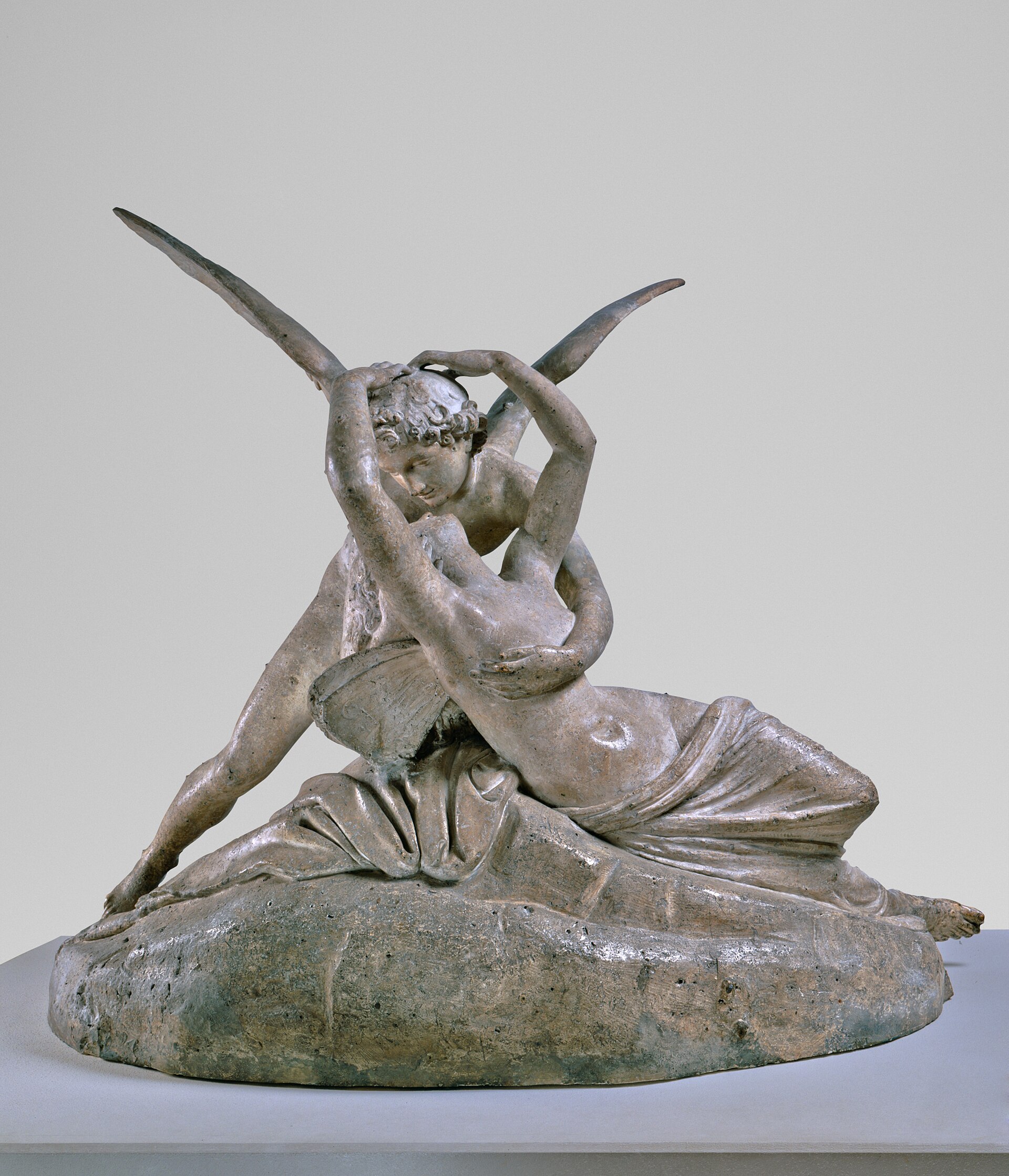
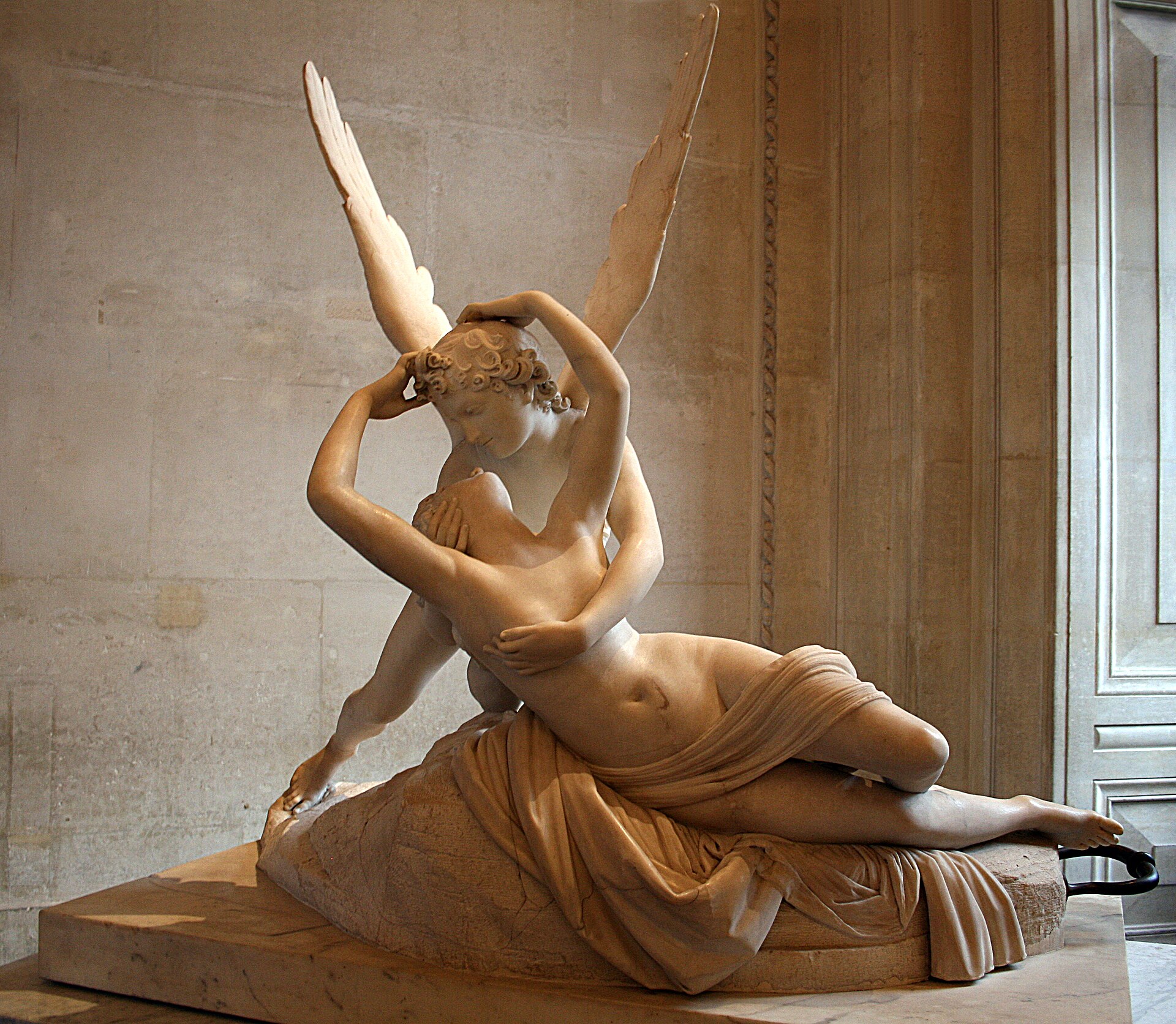
| Metropolitan Museum of Art | New York | Perseus with the Head of Medusa (autograph marble, 1804-6), the plaster model for Cupid and Psyche (1794), and several later marbles now catalogued to his workshop | Holds both securely autograph and workshop-attributed pieces side by side, useful for seeing the attribution problem directly. |
| Apsley House (English Heritage / Wellington Collection) | London | Napoleon as Mars the Peacemaker (1802-06) | Displayed in Robert Adam's stairwell, where it has stood since 1817. |
| Getty Center | Los Angeles | Apollo Crowning Himself (1781-82) | Generally treated as Canova's first fully Neoclassical marble. |
| Musee du Louvre | Paris | Psyche Revived by Cupid's Kiss (marble) | The finished marble corresponding to the Met's earlier plaster model of the same subject. |
| Galleria Borghese | Rome | Paolina Bonaparte Borghese as Venus Victrix (1804-08) | Companion piece, in subject and politics, to the Apsley House Napoleon. |
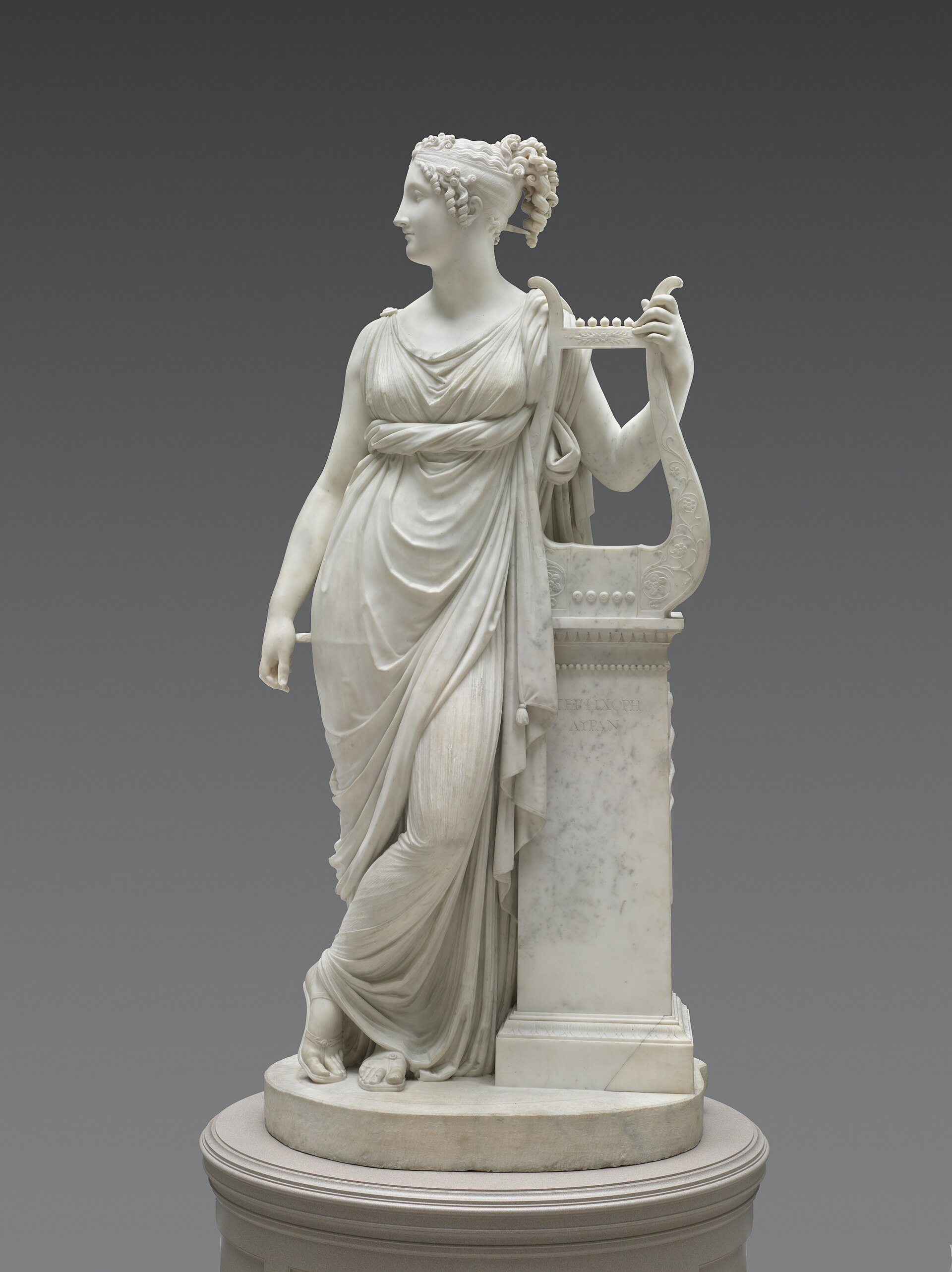
| Cleveland Museum of Art | Cleveland | Terpsichore (1816) | Carved for a British patron and shown to acclaim at the Royal Academy in 1817. |
Canova was born on 1 November 1757 in Possagno, a village in the hills of the Veneto, the son and grandson of provincial stonemasons.
Canova was born on 1 November 1757 in Possagno, a village in the hills of the Veneto, the son and grandson of provincial stonemasons. His father Pietro died when Antonio was about four; his grandfather Pasino Canova, who specialised in Baroque altars, raised him and taught him the trade from early childhood. At eleven, Pasino arranged an apprenticeship with Giuseppe Bernardi, called Torretti, first at Pagnano d'Asolo and then in Venice, where Canova also attended the Accademia del Nudo. Early patrons in Venice, principally the senator Giovanni Falier, funded commissions including Orpheus and Eurydice (1775-77) and Daedalus and Icarus (1779), both now in the Museo Correr; the Daedalus commission from the procurator Pietro Vettor Pisani reportedly paid 100 gold zecchini. He opened his own studio in Venice in 1779, before he had turned twenty-two.
The popular version of his life skips straight from the butter-lion legend, a story that he first showed his talent by carving a lion out of butter for a noble household, to European fame. What the legend leaves out is fifteen years of paid apprenticeship and journeyman work inside an ordinary Venetian stonemasonry trade, which is also why he could run a large commercial workshop without apparent contradiction: he had been trained inside one.
Canova made his first trip to Rome in 1779 and settled there in 1780-81 on a three-year pension of 300 ducats from the Venetian Senate, taking a workshop near the Tiber so marble blocks could be...
Canova made his first trip to Rome in 1779 and settled there in 1780-81 on a three-year pension of 300 ducats from the Venetian Senate, taking a workshop near the Tiber so marble blocks could be floated in from Carrara. In Rome he met the circle shaped by Johann Joachim Winckelmann's writings on the imitation of Greek art and by the painter and theorist Anton Raphael Mengs, and he studied Michelangelo directly. The Venetian ambassador in Rome, Girolamo Zulian, became his first major Roman patron, commissioning Theseus and the Minotaur in 1781.
Apollo Crowning Himself (1781-82, now in the Getty Center), carved for a competition organised by Don Abbondio Rezzonico, nephew of the Venetian Pope Clement XIII, is generally treated as Canova's first fully classicising work: a nude youth in contrapposto, laurel in hand, that broke decisively with the softer late-Baroque manner of his Venetian training. Within a decade he was recognised as the leading sculptor of the Neoclassical revival that Winckelmann's theory had supplied the vocabulary for but that Canova, more than any single marble-carver, made into a European style collected from London to St Petersburg.
Canova's process ran in fixed stages. A composition began as small studies in terracotta or wax, some of which still carry his fingerprints; roughly forty such clay bozzetti were catalogued together...
Canova's process ran in fixed stages. A composition began as small studies in terracotta or wax, some of which still carry his fingerprints; roughly forty such clay bozzetti were catalogued together for the first time in the 2023 exhibition catalogue Canova: Sketching in Clay, published jointly by the National Gallery of Art in Washington, the Art Institute of Chicago and Yale University Press. From an approved sketch he built a full-size clay model, since destroyed in the process, from which a plaster cast, the forma, was pulled and finished with internal metal supports.
The plaster, not the marble, was the working master. Bronze pins called repere were set into it at measured points, and assistants used compasses and pantographs on a 1:1 pointing machine, a device Canova is credited with perfecting, to transfer those points onto the marble block and rough it out, leaving a thin uncarved veil of stone over the whole figure. The final pass, what Italian usage calls the ultima mano, was Canova's alone: he cut the last layer, polished for weeks with pumice, tripoli and sometimes lead, and applied a wax-based patina, the exact recipe for which is not published in the sources consulted, to soften the marble's glare into something closer to skin. Contemporary accounts describe him having literature read aloud to him while he worked and, in later years, finishing surfaces by candlelight with tools adapted for night work.
He never took a formal pupil in the guild sense, but he ran a paid workshop of carvers, and the ablest of them, Adamo Tadolini, worked at his side from before 1818 until Canova's death in 1822, when Canova set him up in his own studio on Via del Babuino, which four generations of the Tadolini family then occupied as working sculptors until 1967 and which survives today as the Museo Atelier Canova Tadolini. That succession matters for attribution: the Rome workshop is documented as having continued producing marbles from Canova's plaster models after his death, before it was formally wound up and its remaining plasters sent to Possagno in 1826, so a 'Canova' bought from the studio in, say, 1823 was never touched by Canova's own chisel.
Two things complicate any simple count of 'how many Canovas exist.' First, the model/marble relationship: for a popular composition Canova sometimes carved several marble versions himself, from the...
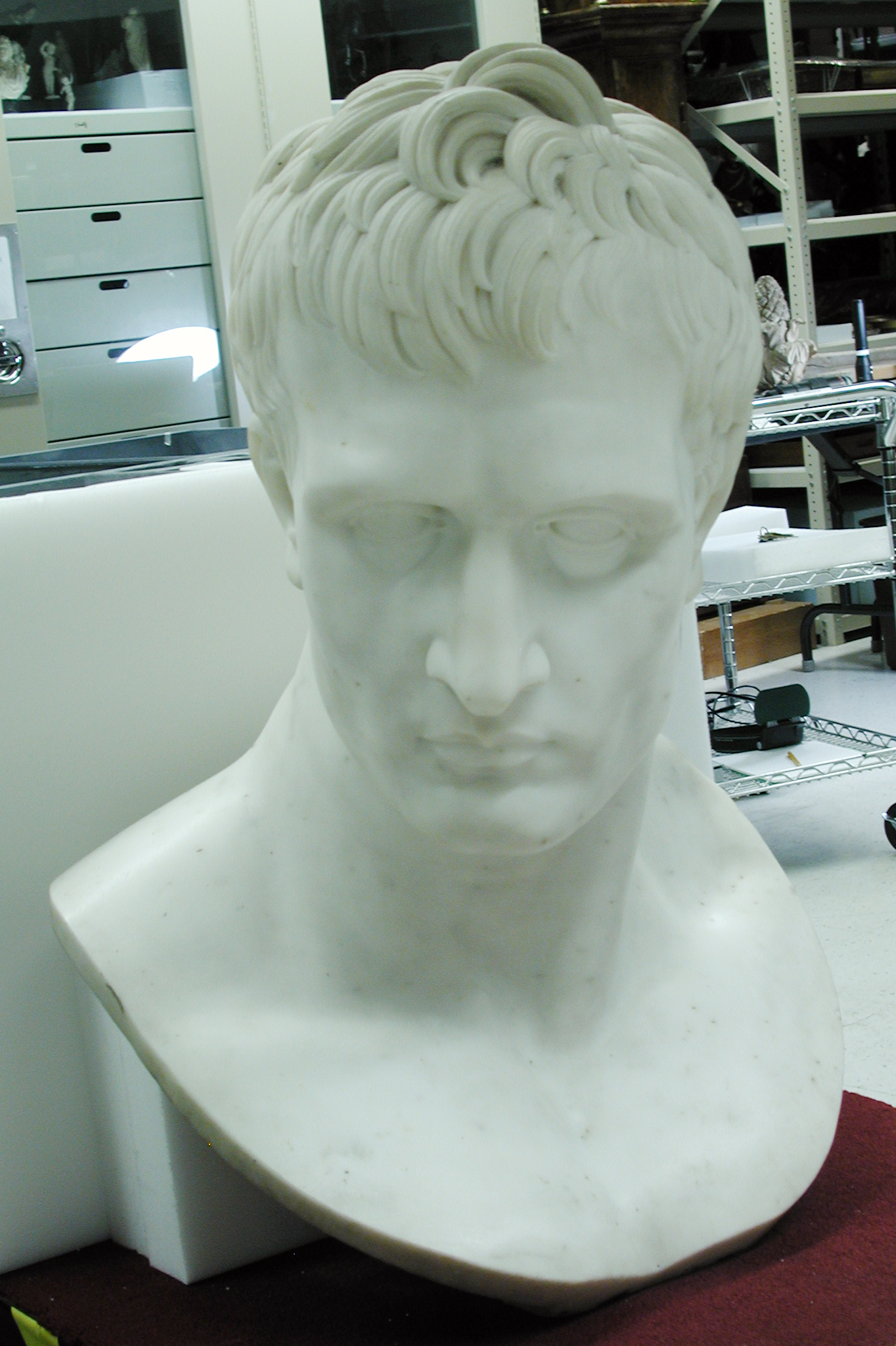
Two things complicate any simple count of 'how many Canovas exist.' First, the model/marble relationship: for a popular composition Canova sometimes carved several marble versions himself, from the same plaster, for different patrons, and the workshop carried on doing the same after his death. The Metropolitan Museum's own online catalogue records thirteen known plaster and marble versions of a single bust subject, The Vestal, executed by Canova and his workshop between 1819 and 1823 alone, and separately attributes its own marble Venus Italica (probably carved around 1822-23, a variant of the marble Canova first executed in 1810) not to Canova but to the 'Workshop of Antonio Canova,' noting it was purchased from Canova's studio by the third Marquess of Londonderry in late 1826 or early 1827, after the sculptor's death. The Met's own Bust of Napoleon, dated about 1808-14, is catalogued 'after a model by' Canova rather than as an autograph work, and its Paris is likewise catalogued 'Workshop of Antonio Canova.' None of this is disputed or hidden; it is simply how the Met's curators currently read the documentary and stylistic evidence, and it means that owning a marble carved to Canova's design is a different claim from owning a marble Canova himself finished.
Second, no complete catalogue raisonne of Canova's work as a whole yet exists to settle disputed cases systematically. The scholar most associated with modern Canova studies, Hugh Honour, edited Canova's collected writings and, with others, his five-volume correspondence (the Epistolario, published 2002-2020 as part of the state-sponsored Edizione nazionale delle opere di Antonio Canova), but a reviewer of the 2023 clay-sketch catalogue in The Art Newspaper noted as 'a missed opportunity' that even that focused study did not supply a full technical listing of the surviving terracottas, and said scholars are still awaiting a complete catalogue raisonne of Canova's entire output. The Museo Gypsotheca Antonio Canova at Possagno, built from the plaster models and studio contents his half-brother and heir Giovanni Battista Sartori transferred there, holds more than 700 plasters, sketches and models, but that figure mixes working models, finished plaster versions, and later casts, and is not itself a count of finished, autograph marbles.
Canova was reluctant to work for Napoleon; Museo Canova's own account of his career quotes him framing the commission, as 'a proud Venetian,' as working for 'the one who made his native town a...
Canova was reluctant to work for Napoleon; Museo Canova's own account of his career quotes him framing the commission, as 'a proud Venetian,' as working for 'the one who made his native town a commodity' - the Republic of Venice had been ceded away in 1797 under terms Bonaparte himself set. He accepted anyway, first modelling Napoleon from life in Paris in 1802, and the resulting colossal marble, Napoleon as Mars the Peacemaker, was carved 1803-06 in the fully nude, idealised manner Canova took to be dignified. Napoleon disagreed: when he finally saw it installed at the Louvre in April 1811, at 42 and no longer the youthful figure the marble showed, he reportedly called it 'too athletic' and had it kept from public view behind a canvas screen in the Salle des Hommes Illustres. After Waterloo the British government bought the statue from the restored Louis XVIII in 1816 for 66,000 francs, about 3,000 pounds, and the Prince Regent gave it to the Duke of Wellington, in whose London house, Apsley House, it still stands in the stairwell, the floor reinforced to take its weight.
Canova also carved Napoleon's sister Paolina Bonaparte Borghese, wife of Prince Camillo Borghese, as a reclining Venus Victrix (1804-08, Galleria Borghese, Rome), a companion argument in marble to the Mars: the brother as the god of war who has laid down his weapons, the sister as the goddess who has already won. Family legend has Paolina asked whether she was troubled at posing nude and answering that the studio was heated, a story recorded widely but not traced in these sources to a contemporary document, so it is repeated here only as attributed anecdote, not fact.
After Napoleon's defeat, Pope Pius VII named Canova his plenipotentiary and sent him to Paris to recover works taken from the Papal States and the rest of Italy under the 1797 Treaty of Tolentino and...
After Napoleon's defeat, Pope Pius VII named Canova his plenipotentiary and sent him to Paris to recover works taken from the Papal States and the rest of Italy under the 1797 Treaty of Tolentino and subsequent requisitions, an effort that ran through the Congress of Vienna in 1815. Canova met sustained resistance from the Louvre's director, Dominique Vivant Denon, who did not want to see the museum's collection broken up, and the outcome depended heavily on the support of the Austrian chancellor Klemens von Metternich against French and, reportedly, Russian reluctance to see the precedent set. Roughly half of the Italian paintings Napoleon had taken were eventually returned; the other half stayed in France, a split that is itself a documented finding rather than a full-restitution story.
Canova returned to Rome on 3 January 1816 with the recovered works and was received by the Pope, who made him Marquis of Ischia (de facto Marquis of Ischia di Castro) with an annual pension, and enrolled him in the Golden Book of Roman Nobility, in recognition of the mission. While in London on the same trip he was asked to give an expert opinion on the Parthenon sculptures Lord Elgin had brought to England, and he is recorded as endorsing their authenticity and quality in terms that helped the British Museum's case for acquiring them, a judgment that sits uneasily beside his own year spent trying to get looted marbles sent home, and that this record does not attempt to resolve for him.
The episode is treated in restitution scholarship as one of the earliest examples of a state-level, negotiated recovery of art displaced by war, well before the vocabulary of the Hague Conventions or UNESCO existed to describe it, which is the reason Canova's name recurs in modern writing about cultural property law rather than only in art history.
The Venus Italica makes the same politics visible in a single commission.
The Venus Italica makes the same politics visible in a single commission. When French forces took the ancient Venus de' Medici from the Uffizi to the Musee Napoleon in Paris, Ludovico I, King of Etruria, commissioned Canova in 1804 to carve a modern replacement for the empty pedestal in Florence; the resulting marble, finished around 1810 and now in the Palazzo Pitti, was explicitly conceived as a stand-in for a looted antiquity rather than an independent subject. Canova went on to supply further marble versions of the design, including the one now catalogued at the Metropolitan Museum as a posthumous workshop variant of the early 1820s, described above.
Canova built his reputation partly on Vatican tomb commissions - the funerary monument to Pope Clement XIV (1783-87, Santi Apostoli, Rome) and the cenotaph of Pope Clement XIII (completed 1792, St...
Canova built his reputation partly on Vatican tomb commissions - the funerary monument to Pope Clement XIV (1783-87, Santi Apostoli, Rome) and the cenotaph of Pope Clement XIII (completed 1792, St Peter's) - both securely Christian in setting and patronage. His most studied funerary work, though, is explicitly not: the pyramid tomb of Archduchess Maria Christina of Austria, commissioned by her widower Duke Albert of Saxe-Teschen and completed in 1805 in the Augustinerkirche in Vienna, a cenotaph rather than her actual grave (she is buried in the Imperial Crypt).
The design, based on the form of the Pyramid of Cestius in Rome, shows a procession of mourning figures of different ages and both sexes climbing steps toward an open doorway in the pyramid's face, carrying an urn: Virtue leading, two girls with torches, Charity supporting a blind old man, a winged genius grieving beside a lion on the steps, and a personification of Beatitude hovering above the door with the Archduchess's portrait medallion, the only likeness of her in the whole monument. There is no cross, no Christian narrative scene, and no depiction of the deceased herself beyond that medallion: death is staged as a doorway every kind of person eventually enters, a deliberately universalising, classicising iconography rather than a specifically Catholic one, in a church, for a Catholic archduchess, by a sculptor who would go on to build and personally fund a parish church of his own.
That church is the Tempio Canoviano at Possagno, begun 11 July 1819 when Canova laid the foundation stone in the papal red robes his honorary rank entitled him to wear, and completed in 1830 under the supervision of his half-brother Giovanni Battista Sartori and the architect Giuseppe Segusini, after Canova had proposed and then had rejected a personified statue of Religion for St Peter's. He wanted to be buried in the Pantheon in Rome and was refused, so he built an equivalent at home: the temple combines a colonnaded portico modelled on the Parthenon, a domed rotunda modelled on the Pantheon, and a raised Christian apse behind, a sequence read by guides and local sources as staging Greek civilisation, Roman civilisation and Christian revelation as three steps to one meaning, inscribed over the door to God 'one and three.' Whether Canova himself intended that exact three-stage reading, as opposed to his architects and later interpreters, is not established in the sources consulted and is recorded here as their claim, not his stated one.
Canova's marble Bust of Peace (1814-15), given in part to thank his first British patron John Campbell, Lord Cawdor, for helping recover Napoleonic loot from Italy, disappeared from scholarship for...
Canova's marble Bust of Peace (1814-15), given in part to thank his first British patron John Campbell, Lord Cawdor, for helping recover Napoleonic loot from Italy, disappeared from scholarship for two centuries; by the time the contents of the Cawdor family seat, Stackpole Court in Pembrokeshire, were auctioned in 1962, it was catalogued only as 'a white marble bust of a lady wearing a diadem.' Re-identified by a later owner, it sold at Sotheby's London on 4 July 2018 for a hammer price of 4.5 million pounds, 5.3 million pounds with premium, then a record for the artist. The UK government's Reviewing Committee on the Export of Works of Art (RCEWA) blocked its export in November 2018 under the Waverley criteria, finding it closely connected to British national life as a symbol of the peace after Waterloo; the sources consulted for this record do not establish whether a UK institution matched the price before the deferral expired or where the bust is now, which is recorded as an open question below rather than assumed either way.
A larger sale did not happen at all. The Maddalena Giacente (Recumbent Magdalene, 1819-22), one of the last things Canova worked on, had been sitting as unrecognised garden statuary in an English private collection and was bought at a 2002 sale for 5,200 pounds; once identified, it was consigned to Christie's Classic Week in London with an estimate of 5 to 8 million pounds. On 7 July 2022 it received no bid at the reserve and was bought in, unsold, despite the scale of the estimate. The two results together, a record sale on a rediscovered bust and a no-sale on a rediscovered full figure carrying twice the estimate, are the honest picture of the Canova market: strong for a securely provenanced, well-published rediscovery, but not automatically strong simply because the name is Canova and the story is good.
Canova's only American commission, a seated marble George Washington for the North Carolina State House, was commissioned in December 1815, completed in 1820 and installed in the rotunda on 24...
Canova's only American commission, a seated marble George Washington for the North Carolina State House, was commissioned in December 1815, completed in 1820 and installed in the rotunda on 24 December 1821. Canova, working from a Giuseppe Ceracchi bust for the head, showed Washington seated in Roman military dress holding a tablet and stylus, an allegorical costuming that was already debated in its own time. On 21 June 1831 workmen fireproofing the State House roof with soldered zinc sheet accidentally set it alight; the building and the statue burned together, reducing the marble to fragments that were kept on public view for years afterward. Because Canova's plaster model survived in Italy, North Carolina was able to commission a marble copy from the sculptor Romano Vio in 1970, installed in the rebuilt Capitol, which is what visitors to Raleigh see today; nothing of Canova's own hand survives on the site.
Canova died in Venice on 13 October 1822, aged 64, worn down, by his own and contemporaries' account, by a journey to Naples that year to supervise wax models for an equestrian statue of Ferdinand...
Canova died in Venice on 13 October 1822, aged 64, worn down, by his own and contemporaries' account, by a journey to Naples that year to supervise wax models for an equestrian statue of Ferdinand VII. He never married, and instructed his half-brother Giovanni Battista Sartori, his heir, on 12 October to put the whole estate toward finishing the temple at Possagno. Following a Venetian tradition for honouring the eminent dead, his body was divided: the body itself was placed in the Tempio Canoviano at Possagno once it was completed in 1830; his heart was sealed into an urn and interred in a pyramid-form monument in the Basilica dei Frari in Venice, built after his death by subscription organised by the Accademia di Belle Arti under Leopoldo Cicognara and carried out by sculptors including Rinaldo Rinaldi, Bartolomeo Ferrari, Luigi Zandomeneghi and Antonio Bosa, to a design Canova himself had drawn decades earlier for an unrealised tomb of Titian in the same church; and his right hand was preserved separately and is kept at the Accademia di Belle Arti in Venice. The Roman studio and its remaining plasters passed to Adamo Tadolini and, by 1826, to Possagno, where they became the Museo Gypsotheca Antonio Canova.
Sculptor. 1757-1822.
Born 1 November 1757, Possagno, Republic of Venice; died 13 October 1822, Venice, Kingdom of Lombardy-Venetia (Austrian Empire).
Not forgery in the fraud sense, but a documented downgrade in attribution on posthumous studio production. Several marbles now in major public collections, bought in good faith from Canova's own Rome studio in the years immediately after his 1822 death, are today catalogued by their holding institutions as 'Workshop of Antonio Canova' or 'after a model by' Canova rather than as autograph. The Metropolitan Museum's Venus Italica, probably carved around 1822-23 and bought from the studio by the third Marquess of Londonderry in late 1826 or early 1827, is the clearest documented example.
Museo Gypsotheca Antonio Canova (Possagno, Italy); Metropolitan Museum of Art (New York); Apsley House (English Heritage / Wellington Collection) (London); Getty Center (Los Angeles); Musee du Louvre (Paris); Galleria Borghese (Rome).
The two clearest recent data points cut against each other on purpose. Canova's marble Bust of Peace (1814-15), rediscovered after two centuries in a Welsh family collection and correctly identified only shortly before sale, made a hammer price of 4.5 million pounds (5.3 million pounds with premium) at Sotheby's London on 4 July 2018, then a record for the artist, and was significant enough as a national object that the UK government blocked its export under the Waverley criteria that November.
Where the Bust of Peace is now, and whether a UK institution matched the price to keep it in the country after the November 2018 export deferral: not established in the sources consulted for this page.
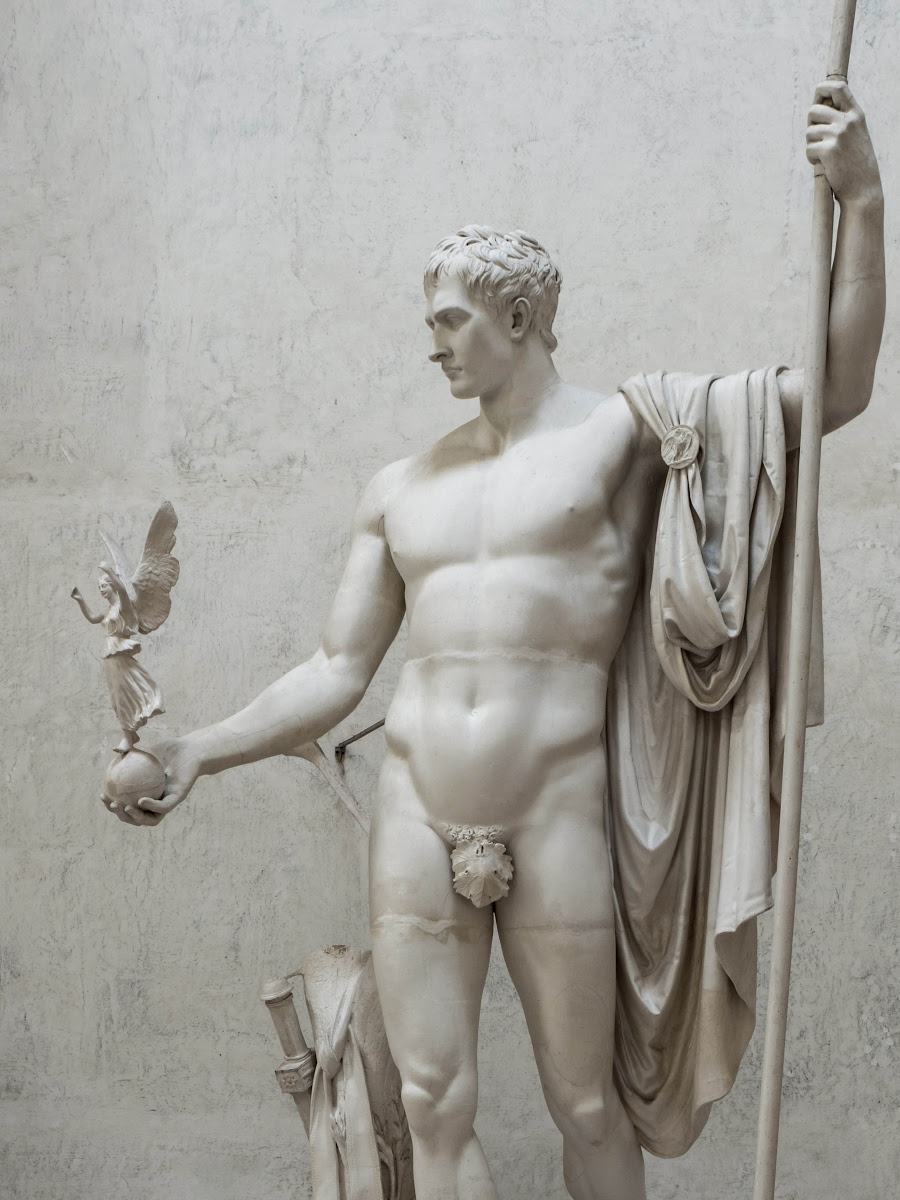 Shown: Napoleon as Mars the Peacemaker, Antonio Canova
Highland Council bought a Bouchardon for GBP 5 and is selling it privately.
8 min read
Objects here that sit in museums carry a last recorded sale a median 26 years old and a mean of 57.
12 min read
Last verified 17 September 2026
One artwork and its story every Tuesday, with the picture: who owned it, what it made, and what closes soon in the exhibition calendar. No promotion, and nothing we cannot cite.
We send one email to confirm the address and keep nothing else. Every letter carries a one-click unsubscribe. How we handle your data.