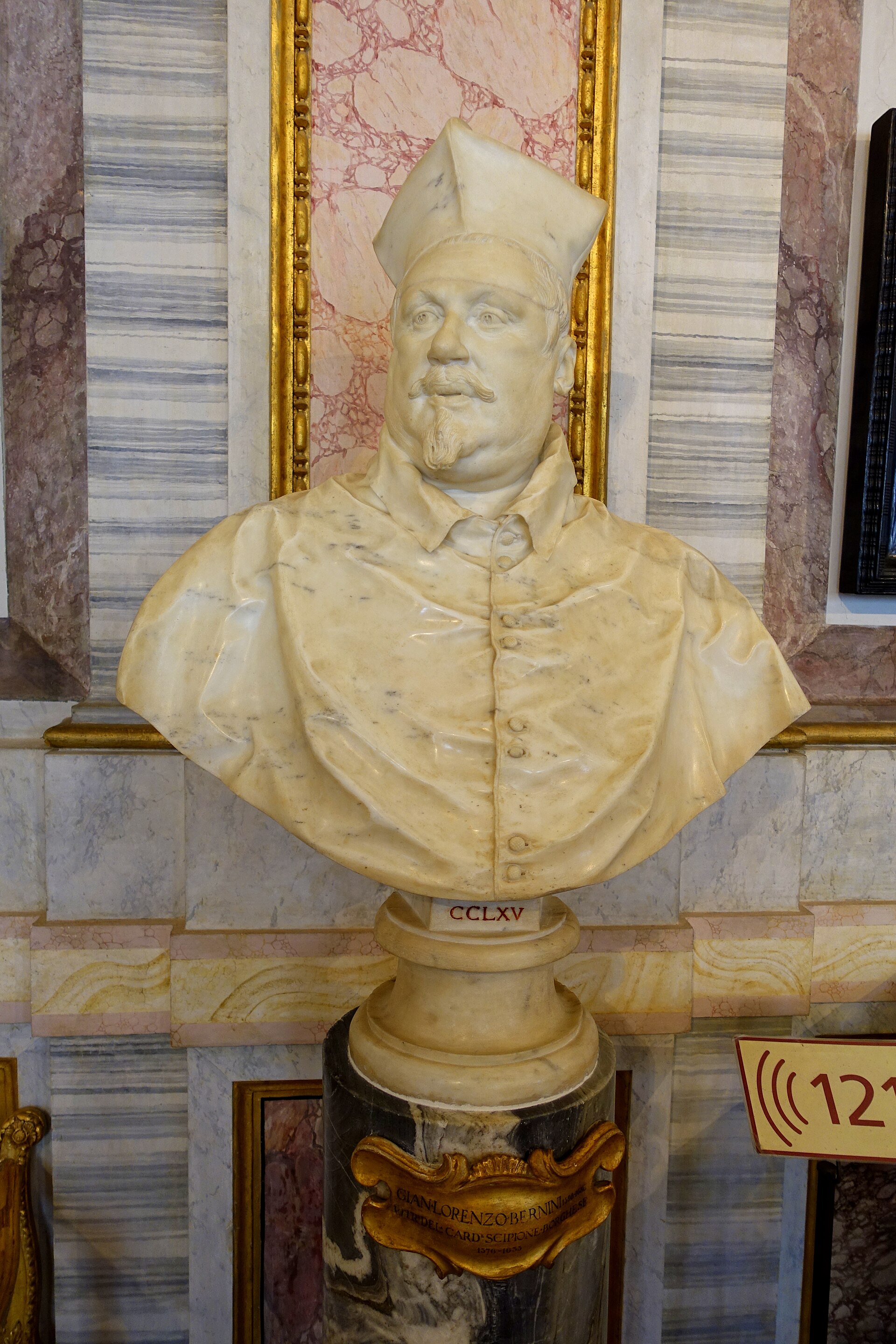
Bust of Cardinal Scipione Borghese, first version
1632 · Carrara marble
Galleria Borghese, Rome
Museum · Founded 1613
Open, admission and hours confirmed 24 August 2026 · 25 sources
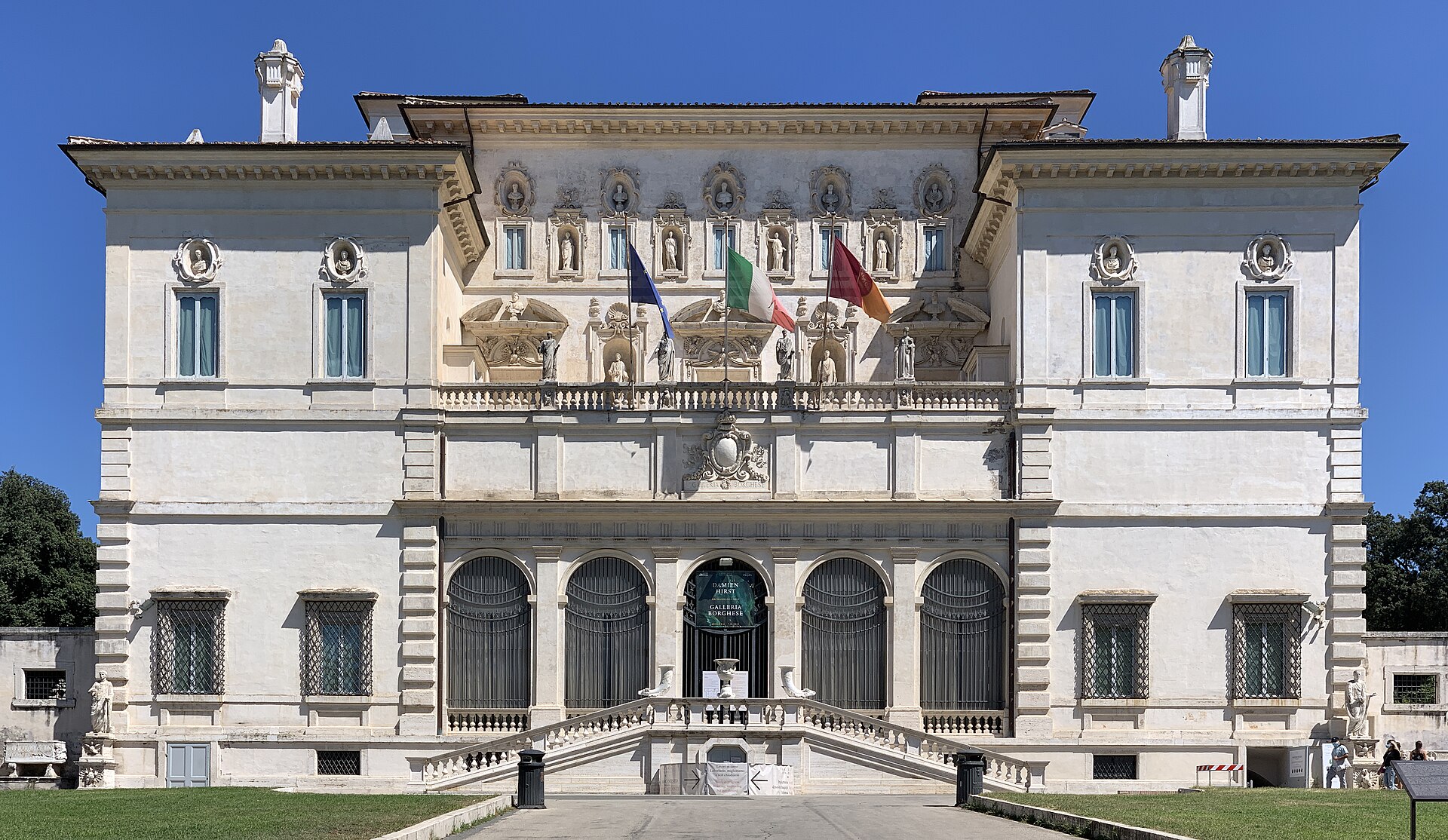
Not encyclopaedic, and not trying to be: this is one cardinal's cabinet, assembled in a single generation partly by purchase and commission and partly, on the record, by confiscation, then stripped of 344 ancient sculptures in 1807 and quietly refilled within a generation. What it holds now is small enough to walk in an afternoon and dense enough that the walk does not feel small: both of Bernini's busts of the man who built the house, his Apollo and Daphne and his Rape of Proserpina, six Caravaggios from the collector's own lifetime, three early Raphaels including one taken from a church by night, and four Titians including Sacred and Profane Love. Twenty rooms hold all of it, with more than 260 further paintings held above the picture gallery and shown only by separate arrangement.
| Kind | Museum |
|---|---|
| Founded | 1613 (villa completed for Cardinal Scipione Borghese, construction begun 1607); sold to the Italian state in 1902 and opened as a public museum in 1903 |
| City and country |  Rome, Italy Rome, Italy |
| Address | Piazzale Scipione Borghese 5, 00197 Rome, Italy |
| Website | galleriaborghese.cultura.gov.it |
| Status | Open, confirmed 24 August 2026 |
| Record last verified | 7 August 2026 |
Prices and hours change. We take them from the institution's own pages and print the day we read them, and you can check the current position at the source we used. Confirm before you travel.
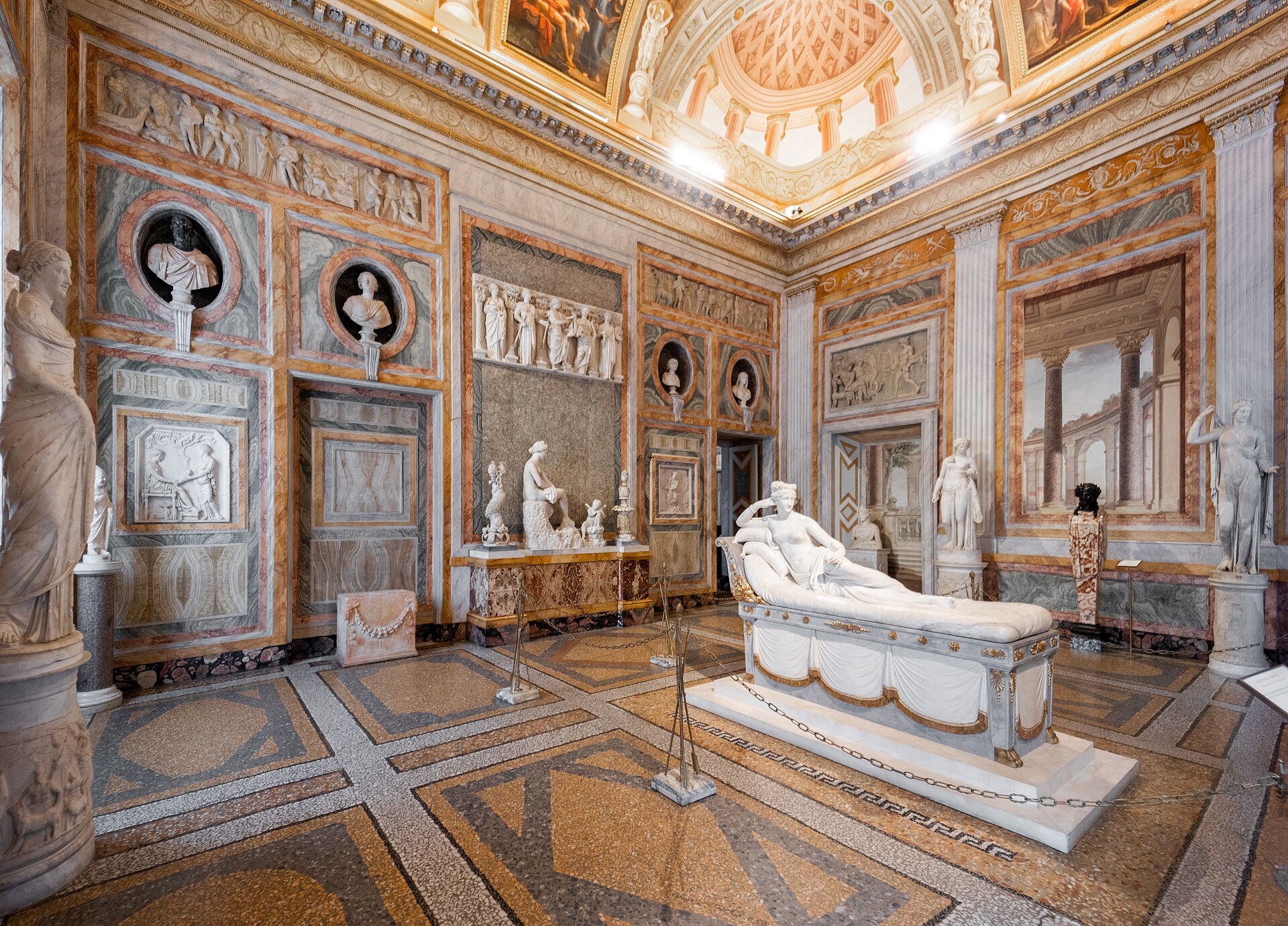
Canova's marble of Paolina Borghese Bonaparte as Venus Victrix, shown here since 1889, is the room's centre. The ceiling carries five paintings by Domenico de Angelis of 1779 on the story of Venus and Aeneas, with the Judgement of Paris at the middle, inside Giovanni Battista Marchetti's trompe l'oeil framing. Originally the Vase Room in Antonio Asprucci's eighteenth-century scheme, it lost its ancient sculpture in the Napoleonic sale of 1807 and was redesigned by the architect Luigi Canina in the 1820s to make room for the Canova
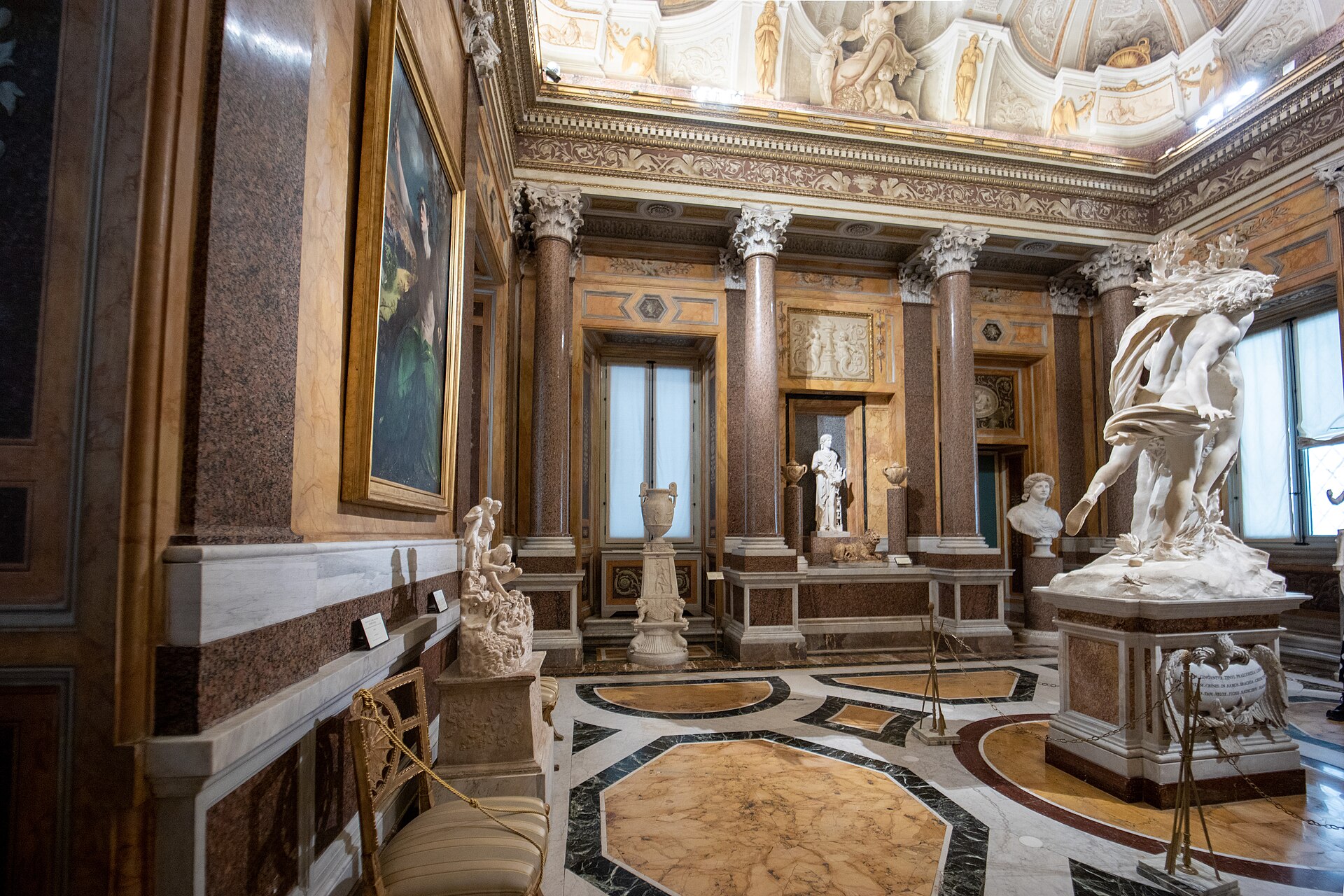
Bernini's Apollo and Daphne, 1622-1625, stands at the centre of a room decorated for it between 1780 and 1785 under Asprucci: Pietro Angeletti's central ceiling painting shows Cupid's arrow striking Apollo with desire and Daphne with its opposite, the exact instant the sculpture below freezes into marble. Angeletti also painted the Four Seasons in monochrome within trompe l'oeil niches, and Dosso Dossi's own paintings of the same Ovid myth hang on the walls
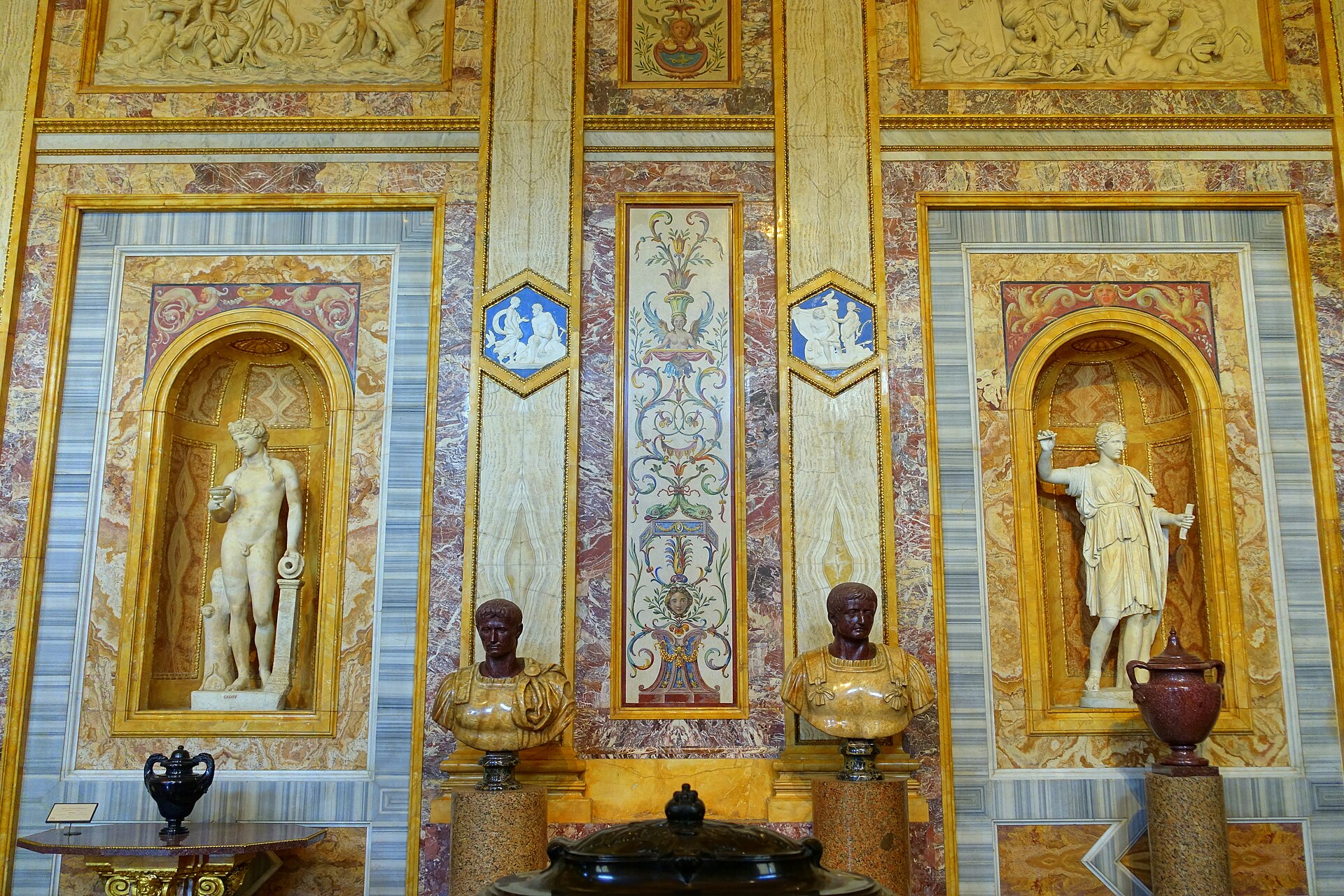
Named for the 18 porphyry and alabaster busts of the Twelve Caesars set into the walls in the early 1800s. Bernini's Rape of Proserpina, 1621-1622, his first fully autograph work, completed inside a year, stands at the centre. Until an inventory of 1762 moved it elsewhere, this room also held the cracked first bust of Cardinal Scipione Borghese, which the cardinal displayed here among the busts of the Caesars rather than upstairs with its unflawed replacement
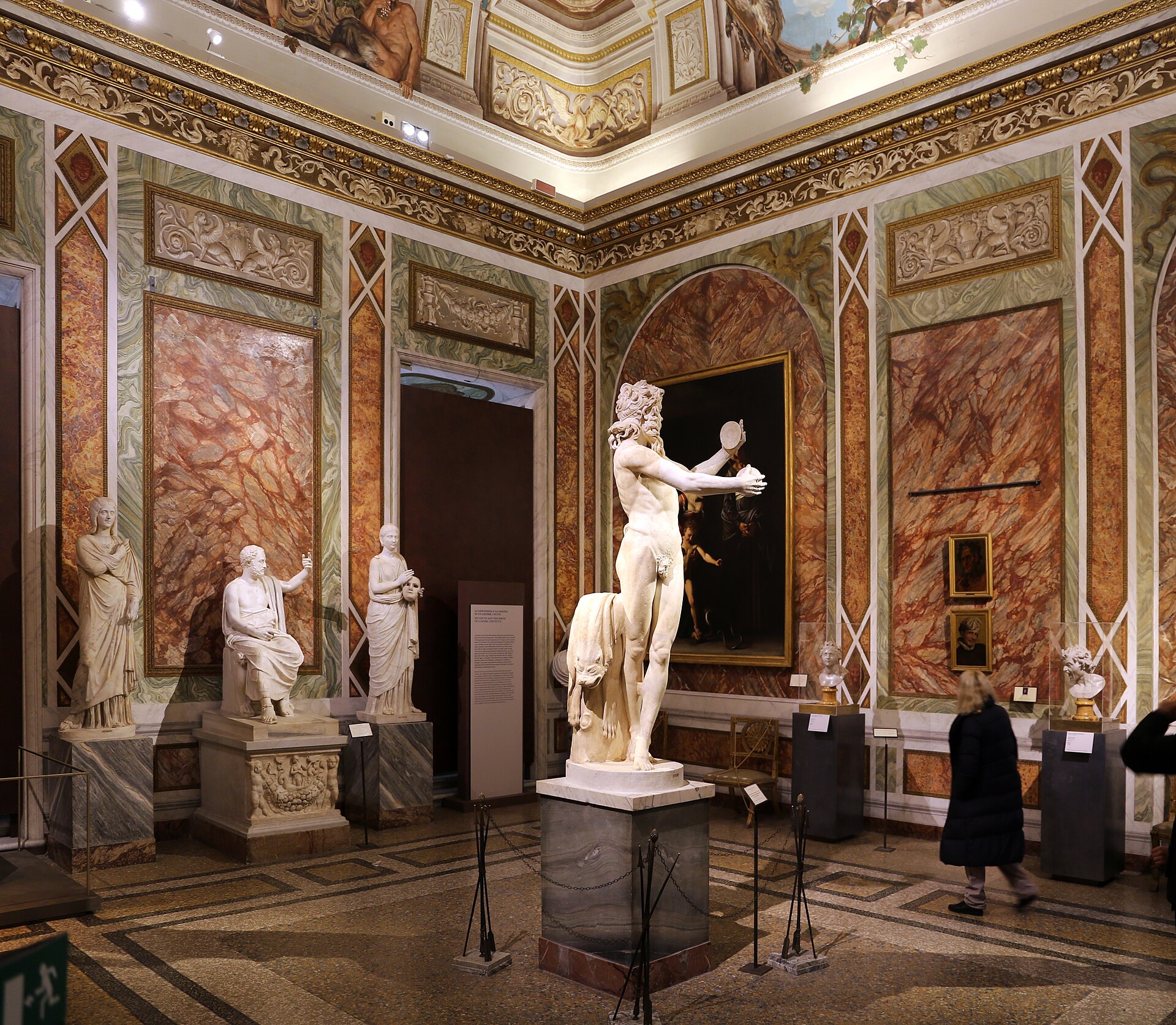
The last room on the ground floor, named for a Silenus sculpture group sold to Napoleon in 1807 and now in the Louvre; its centre today is a Dancing Satyr restored by Bertel Thorvaldsen. The walls hold six Caravaggio paintings from the cardinal's own seventeenth-century holdings. The two earliest, the Sick Bacchus self-portrait and Boy with a Basket of Fruit, came directly from the 1607 confiscation of Cavalier d'Arpino's studio; the other four, St Jerome, Madonna and Child with St Anne, St John the Baptist and David with the Head of Goliath, are from Caravaggio's mature period
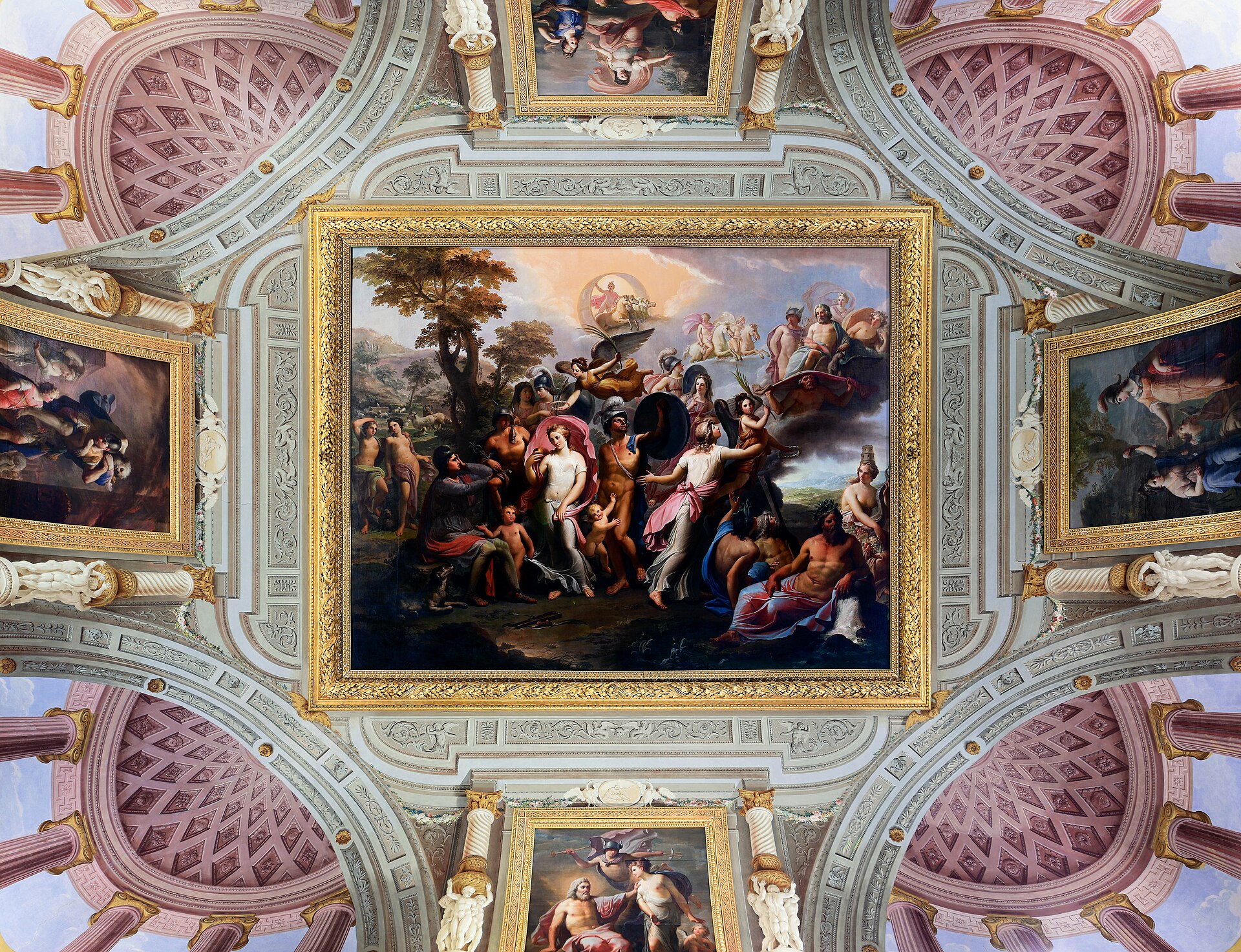
Formerly called the Room of the Three Graces, its ceiling by the Austrian painter Anton von Maron tells the story of Aeneas and Dido. The walls hold Umbrian and Tuscan Renaissance painting, Perugino, Botticelli and Andrea del Sarto among them, and three early works by Raphael: the Lady with a Unicorn, a Portrait of a Man, and the Deposition, taken by night from a chapel in Perugia on Scipione's order in 1608. We could not verify a free-licence photograph of the room itself, only of its ceiling; the walls and the Raphaels render as text
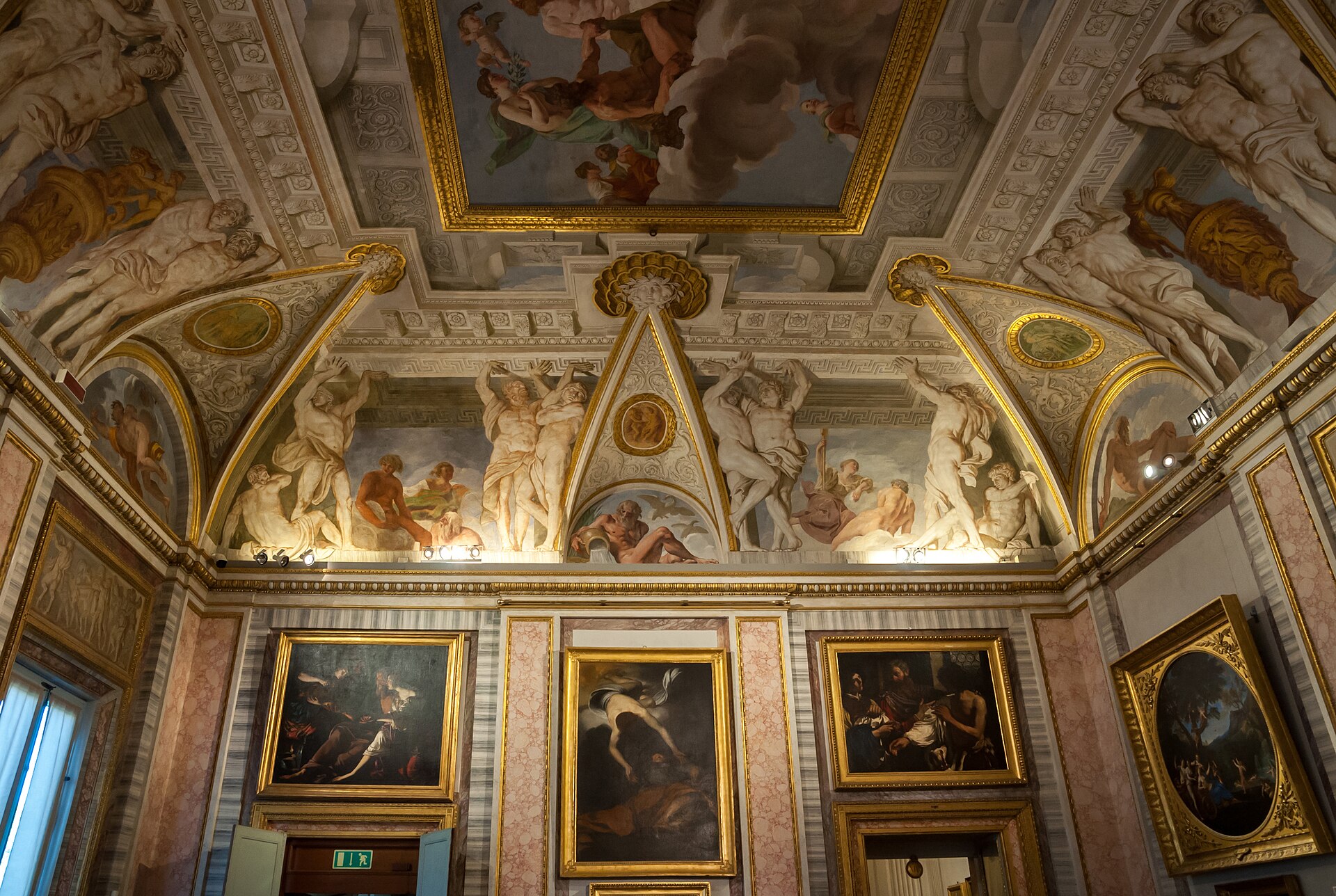
An open loggia over the villa's secret gardens until it was enclosed in the late eighteenth century to protect its ceiling, Giovanni Lanfranco's Council of the Gods of 1624-1625, one of only two surviving pieces of seventeenth-century decoration in the whole building. It now holds both of Bernini's busts of Cardinal Scipione Borghese side by side, along with his bust of Pope Paul V, his youthful Capra Amaltea, a late terracotta model for an equestrian statue of Louis XIV, and three Bernini self-portraits, hung against paintings in both the Carracci classicist and the Caravaggesque naturalist strains, including Albani, Guercino and van Honthorst
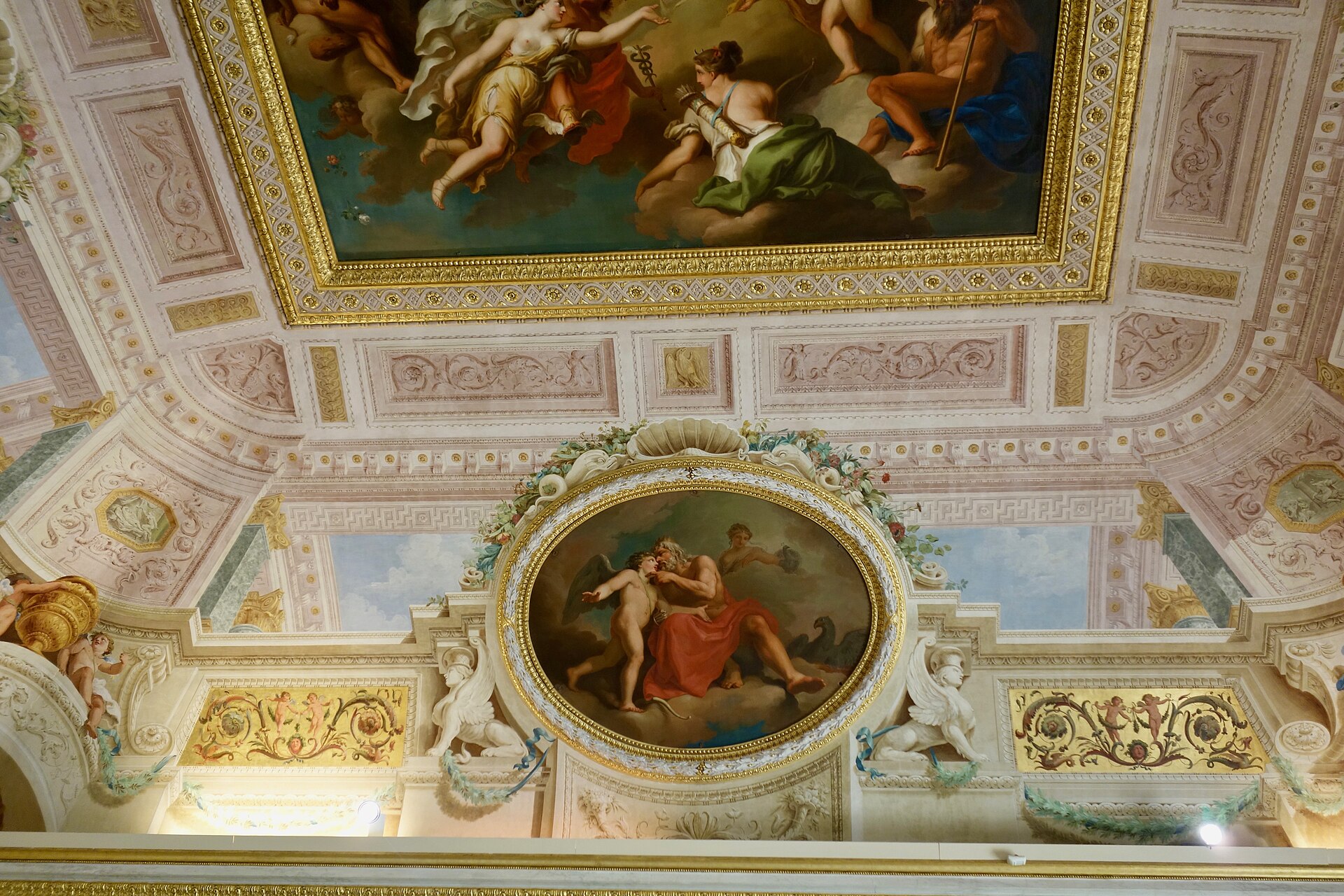
Also called the Orizzonte Room, it closes the picture gallery with Venetian Renaissance painting, including Antonello da Messina and Giovanni Bellini. Pietro Antonio Novelli's ceiling tells the story of Cupid and Psyche from Apuleius. Four Titians hang here, among them Sacred and Profane Love, which the museum's own catalogue says was apparently sold to Scipione Borghese by Cardinal Paolo Emilio Sfondrati on 20 July 1608, though the picture is not actually documented in the collection until 1648
The version with the flaw. Late in finishing it Bernini found a hairline crack, called a hair, running across the cardinal's forehead, and carved a whole second bust from fresh marble in as little as three days by his son Domenico's account, or fifteen nights by Filippo Baldinucci's. Scipione kept both. He hung this cracked one in the Room of the Emperors among his busts of the Caesars and put the flawless replacement upstairs in the gallery, a placement the museum's own catalogue reads as his real judgement of the two. Both are shown together today in Room 14, the Lanfranco Loggia. This archive holds the record for this specific bust, inventory CCLXV.16
Full record in this archiveThe replacement, carved at speed once the first bust's flaw was found, and itself not entirely without incident: the museum's catalogue notes a slight crack of its own, running from the lower right of the mozzetta to the upper left, that Bernini judged acceptable enough to present to the cardinal. Scipione placed this one in the villa's gallery rather than downstairs with the Caesars, the higher honour of the two.17
Carved in Bernini's early twenties, the moment Daphne's fingers become laurel leaves as Apollo's hand closes on her waist. The room around it was rebuilt in the 1780s specifically to stage it, with a ceiling painting of the same instant directly overhead.9
His first fully autograph work, finished within a year, and the piece the Room of the Emperors is built around: Pluto's fingers visibly indenting Proserpina's marble thigh.10
The two earliest Caravaggios in the room did not come to Scipione by purchase. In 1607 the painter Cavalier d'Arpino, accused by Pope Paul V's tax authorities of illegally possessing firearms, was forced to surrender his studio's paintings, about a hundred pictures, to the Apostolic Chamber, which the pope then gave to his nephew. These two pictures, made when the young Caravaggio was working in d'Arpino's workshop, were inside that seizure.22
From Caravaggio's last years, the head Goliath holds up is read as a self-portrait; it hangs in the same room as the two early works the artist never chose to sell to the man who ended up owning them.11
Commissioned by Atalanta Baglioni for her family chapel in San Francesco al Prato, Perugia, and taken from it on the night of 18-19 March 1608, with the help of local friars, on Scipione's order; it reached Rome about two days later. In part-compensation the cardinal sent the Perugia church a copy of the picture and five silver lamps. The panel is signed and dated in the bottom left corner.18
Painted for Cardinal Pietro Aldobrandini's villa at Frascati. When Scipione asked to buy it and Domenichino told him it was already spoken for, Scipione had the painter arrested and held for several days until he agreed to give it up. The sum he was paid is disputed even in the museum's own account: 150 scudi for two pictures together by one record, 40 scudi for this one alone according to the early biographer Passeri.19
Commissioned around 1515 by the Venetian official Niccolo Aurelio for his marriage to Laura Bagarotto, whose coats of arms appear on the fountain in the picture. Its route into the Borghese collection is less certain than its fame suggests: the museum's own catalogue calls the 1608 sale from Cardinal Paolo Emilio Sfondrati to Scipione only an apparent one, since the picture is not actually recorded in the collection until 1648.20
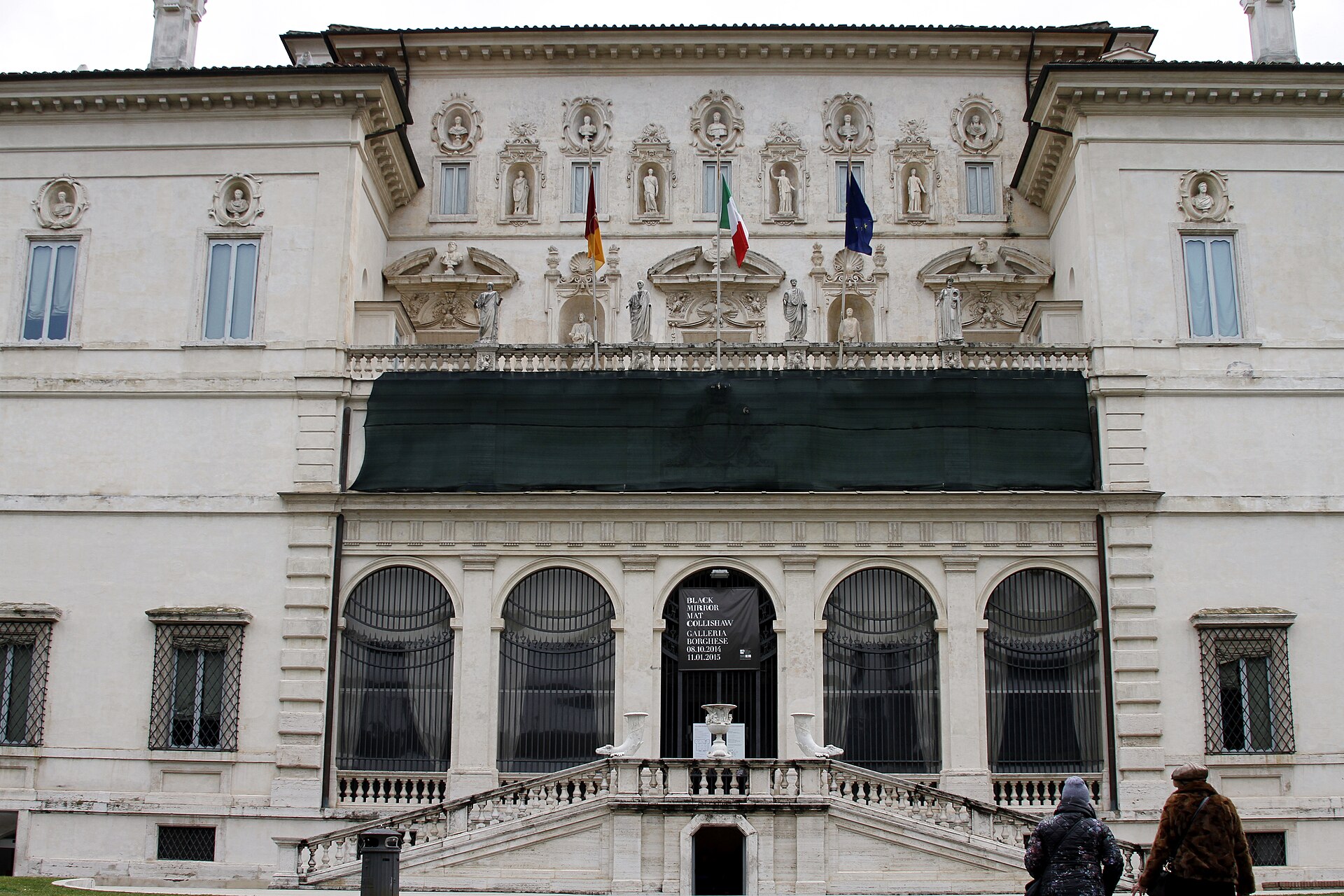
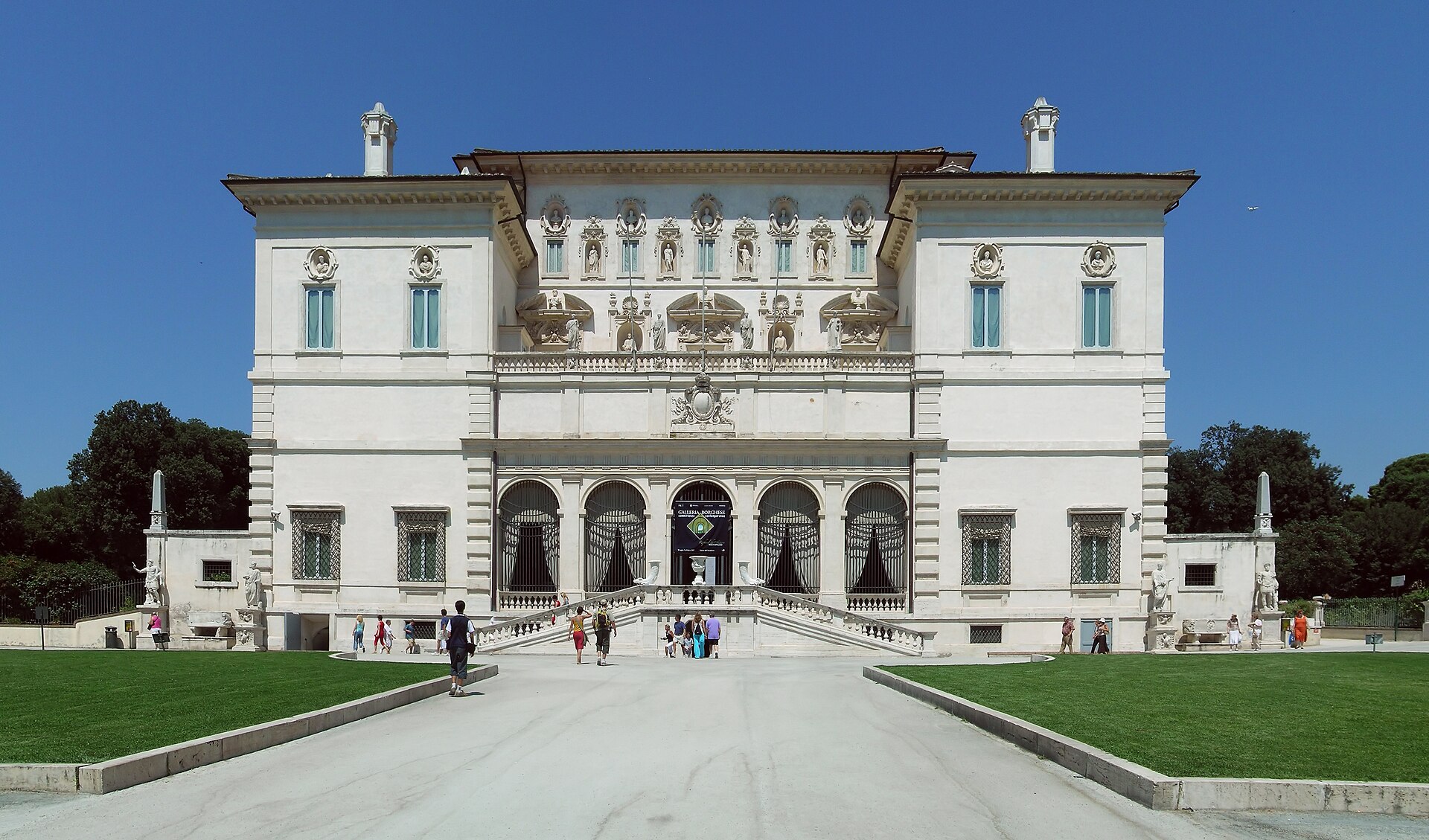
Scipione Caffarelli Borghese was the son of Pope Paul V's sister and was adopted by his uncle within two months of the papal election, which is the whole explanation for how a private secretary rose to head the Consulta, the Secretariat of Briefs and the office of Grand Penitentiary in the same decade. He used the income and the immunity that came with those offices to build, on a site outside the Porta Pinciana, a suburban villa meant from the start to hold a collection rather than merely display his rank. Construction ran from 1607, substantially complete by 1613, under the architect Flaminio Ponzio, and was finished after Ponzio's death by Giovanni Vasanzio, the Flemish-born Jan van Santen, following the layout of the traditional suburban villa. What survives of the seventeenth-century fabric is mostly the shell: the villa's decorative programme visible today is largely an eighteenth-century remaking, described below, and later additions were made at the end of that century by Carlo Rainaldi.
Scipione did buy and commission in the ordinary way, but three of the objects a visitor comes to see arrived by force, and the museum's own scholarly catalogue does not soften this. In 1607 the painter Giuseppe Cesari, called Cavalier d'Arpino, was accused by Pope Paul V's tax authorities of illegally possessing firearms. To free himself he was made to surrender his studio's paintings, about a hundred pictures, to the Apostolic Chamber, which the pope then handed to his nephew. Among them were two pictures the young Caravaggio had painted while working in d'Arpino's workshop, the Sick Bacchus self-portrait and Boy with a Basket of Fruit, both still in the Silenus Room today.
The following year the cardinal wanted Raphael's Deposition, painted a century earlier for Atalanta Baglioni's chapel in the church of San Francesco al Prato in Perugia. On the night of 18-19 March 1608 the panel was removed with the help of friars at the church and taken to Rome, arriving within a couple of days, under cover of a papal motu proprio. Scipione's own conscience, or his sense of how the removal would read, shows in what he sent back: a copy of the picture and five silver lamps, as partial compensation to the church he had emptied.
The clearest case is Domenichino's Archery Contest of Diana and Her Nymphs, painted for Cardinal Pietro Aldobrandini's villa at Frascati. When Scipione asked to buy it, Domenichino answered honestly that it was already committed to Aldobrandini. Scipione had him arrested and held for several days until he agreed to hand it over at a price the cardinal set. Even the amount he received is disputed in the sources: one account gives 150 scudi for two paintings together, the early biographer Passeri gives 40 scudi for this one alone. Both figures are far under what an autograph Domenichino was worth, which was rather the point.
In 1632, a decade after his uncle's death, Scipione finally added his own portrait to the collection, commissioned from Bernini through Pope Urban VIII, for whom Bernini was then working full time at Saint Peter's. Contemporary accounts of the payment do not fully agree, one puts it at 500 zecchini and a diamond worth 150 scudi, a Vatican archive register puts a payment of 500 scudi to Bernini in December 1632, but they agree the sculptor delivered something new: a portrait that catches the sitter mid-conversation, mouth slightly open, which historians of the period call Bernini's first talking portrait.
As the bust was being finished, a hairline crack, called a hair in the period sources, opened across the cardinal's forehead. Bernini did not attempt a repair. He is recorded as carving an entire second bust from a fresh block in an extraordinary span of time, fifteen nights according to the biographer Filippo Baldinucci, three days according to Bernini's own son Domenico. Even the replacement carries a small flaw of its own, a fine crack from the lower right of the mozzetta to the upper left, which Bernini judged acceptable to present.
Scipione kept both, and where he hung each one says what he thought of them. The seventeenth-century guidebook writer Manilli records the cracked original displayed in the Room of the Emperors, among the busts of the Twelve Caesars on the ground floor; the flawless replacement went upstairs into the gallery. The museum's own catalogue calls this a conspicuous discrepancy that reveals Scipione's real estimate of the two works: the visible flaw in the first bust did not, in his eyes, compromise it. An inventory of 1762 records the cracked bust moved to the Room of the Moor, today's Room 7; at some point in the nineteenth century it moved again, to Room 9. Both busts were sold to the Italian state together in 1892, in the first sale of Borghese works outside the family trust, then spent years at the Accademia in Venice before returning to the villa in 1908. Today they are shown side by side in Room 14, the Lanfranco Loggia. This archive's record is for the first, cracked bust, inventory CCLXV.
Camillo Borghese married Napoleon's sister Pauline in 1803, and it was that connection his brother-in-law used four years later. In 1807, under financial pressure and with Napoleon pressing him directly, Camillo sold 344 ancient sculptures from the family collection to the French state, 154 statues, 160 busts, 170 bas-reliefs, 30 columns and assorted vases, at well under market value. The decree completing the sale was signed at Fontainebleau on 27 September 1807, and the objects, including the Borghese Gladiator, the Borghese Hermaphroditus, the Borghese Vase, the Antinous Mondragone and finds from the family's own excavations at Gabii, left for the Louvre over the following year. They form the core of the Louvre's Roman antiquities collection today, and the museum's own history page names the sale plainly as one imposed by Napoleon on Camillo Borghese. The Silenus Room on the ground floor is named for a sculpture group this sale took away, and still holds nothing of the kind it is named for.
Camillo did not leave the gaps empty. He refilled the rooms with pieces excavated on Borghese property and paintings pulled from storage in his own residences, so that by the 1830s the losses were largely disguised, and in 1827 he bought Correggio's Danae in Paris, of all places, to add to what remained.
What a visitor sees today owes more to Camillo's father than to Scipione. From 1770 Marcantonio IV Borghese put the villa's interior through a radical redecoration under the architect Antonio Asprucci, with a roster of painters, Mariano Rossi, Domenico Corvi, Christoph Unterberger, Anton von Maron, Giuseppe Cades and Tommaso Maria Conca among them, working room by room. Asprucci reorganised the display of the ancient sculpture around the era's rising Neoclassical taste, setting Bernini's Apollo and Daphne at the centre of a room built specifically to stage it. The decorative scheme this produced, ceilings, marble revetment, purpose-built niches for specific statues, is what still governs the room-by-room presentation today, decades after the 1807 sale it partly had to absorb.
The villa stayed a Borghese family property until 1902, when the Italian state bought it along with the entire estate, gardens and parkland included, in a purchase later called the deal of the century for the price at which Italy secured the collection intact. It opened to the public as a state museum the following year, 1903.
The museum's own description of itself is 20 frescoed rooms plus the entrance hall and the portico, open to the public; more than 260 further paintings are kept in the Depositi above the picture-gallery floor and shown only by separate reservation. Every visit runs on the same structure: entry every hour, a two-hour slot except for the last one of the day, with a mandatory exit when the slot ends. What the museum's own pages do not agree on is how many people that slot holds. Its general Il Museo page states a maximum of 360 people per two-hour turn, a figure The Art Newspaper repeated in 2026 citing the museum directly; its own ticketing page, Info Biglietti, separately states that 180 people can enter per turn. We fetched both pages directly and could not reconcile the two; both remain live on the museum's own site as of the date checked.
The building recorded 630,759 visitors in 2025, its highest figure ever, against roughly 506,000 a decade before, and the museum cites that growth as the reason it is now examining an expansion. In May 2026 The Art Newspaper reported a EUR 900,000 feasibility study, funded by the engineering firm Proger, for an international architecture competition on whether to add exhibition and visitor space within the surrounding Villa Borghese Pinciana grounds, addressing what the museum calls longstanding constraints: the historic capacity limit, weeks-long booking waits in season, most of the collection sitting unshown in storage, and difficult step-free access in a seventeenth-century building. The heritage organisations Italia Nostra Roma and Amici di Villa Borghese have objected to any new construction in what they describe as one of Rome's most historically sensitive landscapes. The museum's director, Francesca Cappelletti, has called that opposition premature, saying no actual project or competition brief exists yet. A competition winner could be chosen by the end of 2026.
This museum runs on a fixed quota, and that shapes what a visitor experiences before anything about the art does: every visit is a booked two-hour slot inside a building the museum's own 2026 expansion proposal says was never designed for the 630,759 people who came through it in 2025. Visitors who love it tend to love it for the reason Scipione built it this way: a dense, domestic-scaled collection where Bernini's two most famous sculptures, both busts of the man who commissioned the building, and six Caravaggios sit a few rooms apart rather than spread across galleries. Visitors who are frustrated by it are frustrated by the clock, which the museum enforces with a mandatory exit at the end of the two-hour slot.
Piazzale Scipione Borghese 5, 00197 Rome, Italy.
Adult (Intero): EUR 16; Reduced, EU citizens 18-25: EUR 2; Free, under 18: free. As confirmed 24 August 2026.
Tuesday to Sunday 09:00-19:00. Closed: Monday. 25 December. As confirmed 24 August 2026.
Bus: 910 or 92 from Termini station to the Pinciana/Museo Borghese stop; 89, 490 or 495 from the Flaminio Metro stop (Line A) to San Paolo del Brasile; 63, 83, 61, 160, 52 or 53 from the Barberini Metro stop (Line A); 490 or 495 from Tiburtina station (Line B) to San Paolo del Brasile; Metro: No station at the villa itself. The nearest are Flaminio and Barberini, both on Line A, each requiring a bus onward; Taxi: Ranks on Via Pinciana and on Via Vittorio Veneto, at the height of Villa Borghese.
Bust of Cardinal Scipione Borghese, first version (Gian Lorenzo Bernini, 1632); Bust of Cardinal Scipione Borghese, second version (Gian Lorenzo Bernini, 1632); Apollo and Daphne (Gian Lorenzo Bernini, 1622-1625); Rape of Proserpina (Gian Lorenzo Bernini, 1621-1622); Boy with a Basket of Fruit and Self-Portrait as Sick Bacchus (Caravaggio, circa 1593-1594); David with the Head of Goliath (Caravaggio, 1609-1610).
One artwork and its story every Tuesday, with the picture: who owned it, what it made, and what closes soon in the exhibition calendar. No promotion, and nothing we cannot cite.
We send one email to confirm the address and keep nothing else. Every letter carries a one-click unsubscribe. How we handle your data.