Where It Is Now Is a Dated Observation
Location is the fastest-decaying line on any object record. Of 223 records published here, 84 know where the object is only because someone bought it. What a location line has to carry to be worth reading.
Records in this piece: Bild mit Haeusern (Painting with Houses), Salvator Mundi, Girl with a Pearl Earring, Portrait of a Young Man Holding a Roundel
On this page 8 sections
ContentsClose
In short
- Of 223 records published here, 216 stamp the date on which the object's location was last confirmed. The median stamp is 20 days old and the oldest is 31 days, because the field decays and a record that does not say when it was checked cannot be trusted on it.
- For 84 of those 223 records the evidence of location is a transaction rather than a sighting. The last thing anyone published is who bought the object, not where it went, and those two are not the same fact.
- Seventeen records place an object where no outside party can check it: a private collection, or nowhere at all. Four of those objects cannot be produced by anyone.
- The Louvre publishes a standing notice on its own collection pages warning that the room an object is in may not be up to date. Of every field it prints, that is the one it disclaims.
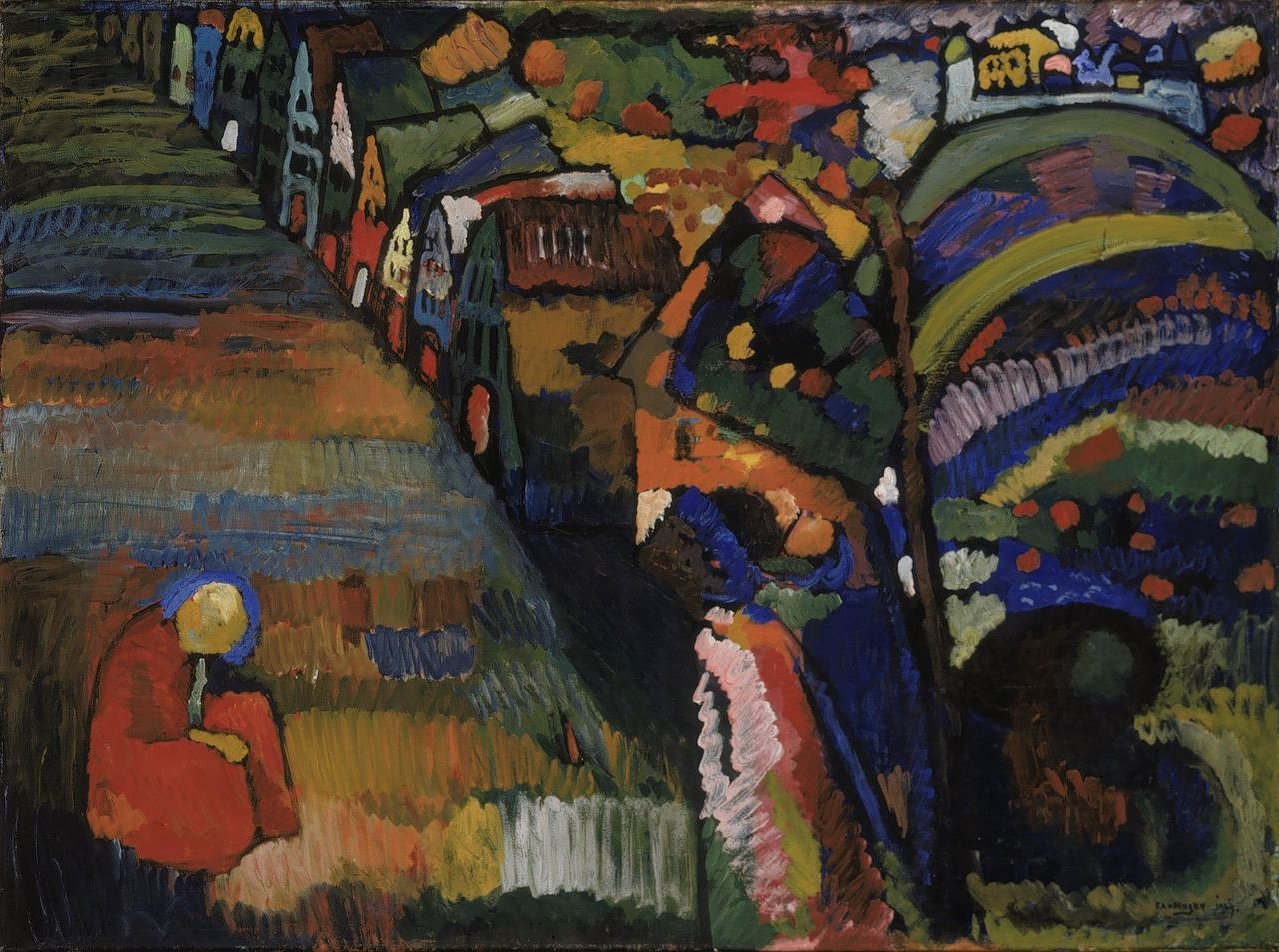
- The Dutch Restitutions Committee ruled on 22 October 2018 that Amsterdam was not obliged to return Kandinsky's Bild mit Hausern. The painting left the Stedelijk in February 2022 regardless and sold in 2023 for more than 60 million euros. A legally settled location is still a dated one.
A location line is a claim about the present tense
Every other line in an object record is a claim about the past, and a location line is a claim about right now. A date of manufacture, a medium, a dimension, a sale price and an owner in 1893 are all fixed: new evidence can correct them, but the thing they describe has stopped happening. Where an object is has not stopped happening. It is the only field on the page that can be falsified by a van.
That difference should change how the field is written, and almost nowhere does it. Museum collection pages, auction catalogues, reference works and databases all print a location in the same flat present tense they use for the medium, with no indication of when anybody last looked. The reader is given a fact and denied the one thing needed to weigh it, which is its age.
This archive stamps a date on the location of every record it publishes and prints it beside the line. That is not a courtesy. It is the minimum a location claim has to carry to be checkable, and the rest of this piece is about what the stamped dates reveal once you have them.
The Louvre warns you about exactly one field
The Louvre's online collection catalogue carries a standing notice telling readers that some of its information, and rooms in particular, may not be up to date. It appears above the object itself, on every entry, and it names the location as the field affected while the museum rebuilds its collections management tools. On the entry for the Monzon Lion, the bronze aquamanile the museum holds as OA 7883 in the Department of Islamic Art, that notice sits above a record whose other fields, the inventory number, the department, the dating of 975 to 1100, are presented without qualification.
It is worth being fair to the Louvre here, because the notice is the honest act, not the failure. A museum that tells you which of its fields is unreliable has given you more than one that prints all of them in the same confident type. The point is what the disclaimer concedes: that the location of an object inside the institution that owns it, the easiest location claim in the world to verify, is the one the institution will not stand behind between system migrations.
If that is true of a room in a building the museum controls, it is far more true of every location line written by someone who does not own the object.

What 223 researched records actually record
Every published record in this archive carries a location, and the interesting number is how thin the evidence behind it usually is. The table below counts the 223 records published here on the day this piece was written, by what stands behind the location line rather than by what it says.
| What the record carries | Records | Share |
|---|---|---|
| A location of any kind | 223 | 100 per cent |
| A date on which that location was confirmed | 216 | 97 per cent |
| An inventory or accession number | 202 | 91 per cent |
| Location evidenced by a transaction, not a sighting | 84 | 38 per cent |
| In a private collection, or unlocated | 17 | 8 per cent |
Ninety-one per cent carrying an inventory number is the healthy figure, because an accession number is a location claim somebody else has to honour. Thirty-eight per cent resting on a transaction is the figure that should give a researcher pause, and it is the subject of the next section.
For 84 objects, the location is inferred from a sale
Eighty-four of the 223 records here locate the object by naming the last transaction rather than the current holder. The chain of reasoning is that somebody bought it, buyers keep what they buy, and so it is presumably where the buyer is. Every step of that is ordinary and reasonable, and none of it is a sighting.
Botticelli's Portrait of a Young Man Holding a Roundel is the clean example. It sold at Sotheby's in New York on 28 January 2021 to an anonymous buyer, and everything published about where the panel is since then descends from that one event. The record says private collection because the sale said private buyer. Nobody has reported seeing it, no institution has accessioned it, and the honest form of the location line is a statement about a sale with a date on it, not a statement about a place.
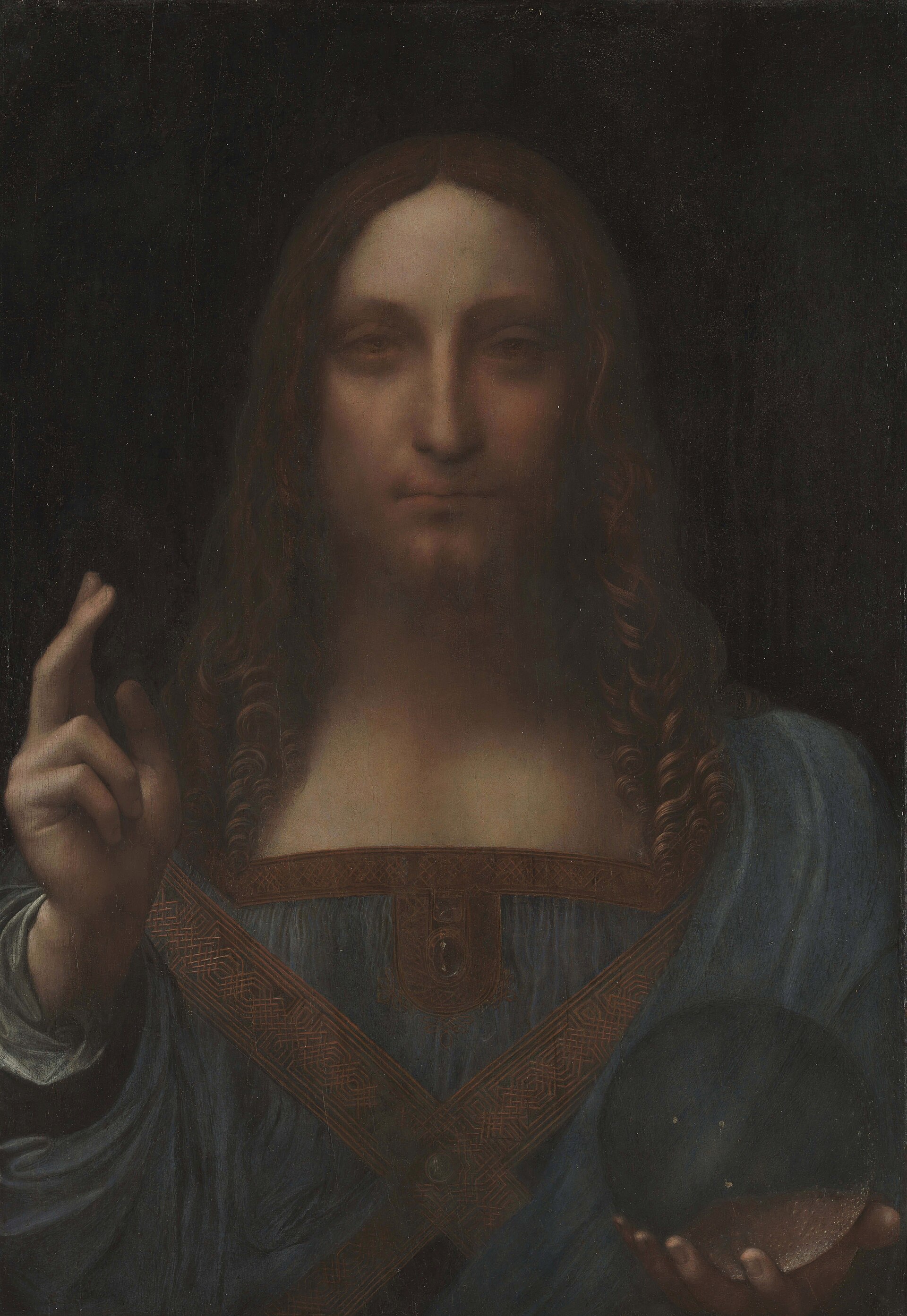
The Salvator Mundi is the same inference stretched to breaking. It sold on 15 November 2017, and no public record has placed the panel anywhere since. It has been reported aboard a yacht, promised to a museum in Abu Dhabi and withdrawn from a Louvre exhibition, and the archive's own line for it reads unlocated because that is what the evidence supports. An object with the most famous price in the history of the market has no verifiable address.
A tribunal placed the Kandinsky and the museum moved it anyway
On 22 October 2018 the Dutch Restitutions Committee issued binding opinion RC 3.141 and concluded that Amsterdam City Council was not obliged to return Kandinsky's Bild mit Hausern to the applicants. The painting had been bought by the city in 1940 and held by the Stedelijk Museum ever since. The Committee weighed the applicants' interest against the city's, recorded that the work was an essential link in the museum's Kandinsky holdings and was on permanent display, and rejected the application in terms that were about as final as a location claim can get.
The painting left the Stedelijk in February 2022. It was returned to the heirs of its last Jewish owner and sold to a private collector, and in February 2023 it was reported at more than 60 million euros, the most valuable painting the Netherlands has restituted. A second Kandinsky, returned by the Van Abbemuseum in Eindhoven, went to Sotheby's the following month.
The lesson is not that the Committee was wrong. It is that a location which had been litigated, reasoned over by seven named people and published as binding was out of date inside four years. If that line can go stale, an ordinary one written by a cataloguer in passing certainly can, and the only defence a reader ever has is the date beside it.
Three ways a location line can fail, and they fail differently
A location line goes wrong in one of three ways, and telling them apart is most of the skill. The first is decay: the line was right and the object moved, which is the Kandinsky. The second is inference: the line was never a sighting, only a deduction from a sale, which is the Botticelli. The third is dispersal, where the question is malformed because the object is not in one place at all.
The Codex Sinaiticus is the case that breaks the field. Parts of the manuscript are held by the British Library, the University Library in Leipzig, the National Library of Russia and Saint Catherine's Monastery on Sinai, and the four institutions have published a joint statement acknowledging that the events of its history since 1844 are not fully known and are open to widely divergent interpretations. Four holders, one object, and a shared text conceding that the account of how it was divided is contested.
No single location line can carry that. What a record can do is say which institution holds which part, and on what date somebody confirmed it, which is the same discipline applied to a harder case rather than a different one.

How to read a location line
Ask first when the line was last checked, and treat an undated location as an assertion rather than a fact. Most published location lines carry no date at all, which does not make them wrong; it makes them unweighable, and the correct response is to find out when the source was written and treat that as the ceiling.
Ask next what kind of evidence sits behind it. An inventory or accession number is the strong form, because it commits an institution that can be asked. A named institution without a number is weaker. A private collection following a sale is an inference from a transaction, and should be read as a statement about the sale. Unlocated, written plainly, is stronger than any of them, because it is the only one that cannot mislead.
Then ask who would know if it changed. For an accessioned object the answer is a registrar with a legal duty. For an object bought anonymously at auction the answer is nobody with any reason to tell you, and a location line under those conditions has a half-life measured in the years between sales.
Why this archive is free to read
We do this for everyone who loves art. The people who have studied it for years, and the people who just stopped to look. Iconotheca exists so that what we learn belongs to all of them.
Nobody pays us for this. No ads, no sponsors, no commercial interest. These works belong to all of us, and we would rather share them with as many people as we can than keep them to ourselves.
If it gave you something today, tell us to keep going. Follow us, leave a like, or write a positive comment. We read every one, and they are what keeps us going.
Questions
Because location is the only field that describes the present rather than the past, and it can be falsified by a move nobody publishes. A date lets a reader weigh the claim; without one, a location line cannot be told apart from a guess made ten years ago.
It usually means the object was sold to a buyer who was not named, and that the location has been deduced from the sale rather than observed. In this archive 84 of 223 published records rest on a transaction in that way, which is why the sale date matters more than the phrase.
Yes, and some say so. The Louvre publishes a standing notice on its collection pages warning that the rooms in which artworks can be found may not be up to date while it rebuilds its collections management tools.
Anonymity at auction plus no accession anywhere leaves nothing to check. The Salvator Mundi sold on 15 November 2017 and no public record has placed it since, so this archive records it as unlocated rather than guessing at a country.
A named institution with an inventory or accession number, because that commits a body that can be asked and that has a duty to know. In this archive 202 of 223 published records carry such a number.
Sources
- 1Restitutions Committee (Restitutiecommissie), The Hague, binding opinion RC 3.141, 'Painting with Houses by Wassily Kandinsky', advice date 22 October 2018. Read in full 2 September 2026 for the operative conclusion: 'Amsterdam City Council is not obliged to return the painting Painting with Houses to the Applicants', and for the Committee's reasoning on the work's place in the permanent display. restitutiecommissie.nl/en/...
- 2NL Times, 'Kandinsky painting Amsterdam museum returned to Jewish family sold for EUR 60 mil.', 23 February 2023. Read 2 September 2026 for the return by the Stedelijk, the reported sale price of more than 60 million euros, the division of proceeds, and the Van Abbemuseum's Blick auf Murnau mit Kirche going to Sotheby's the following month. nltimes.nl/2023/...
- 3Musee du Louvre, online collections catalogue, entry for Lion dit 'de Monzon', OA 7883, Departement des Arts de l'Islam. Read 2 September 2026. The page carries the museum's standing notice that following the redesign of its collections management tools some catalogue information, and rooms in which artworks can be found in particular, may not be up to date. collections.louvre.fr/en/...
- 4Codex Sinaiticus Project, 'History of Codex Sinaiticus'. Read 2 September 2026 for the joint text agreed by the four holding institutions, which records that events concerning the history of the codex from 1844 onwards are not fully known and are susceptible to widely divergent interpretations, and for the division of the manuscript between the British Library, Leipzig University Library, the National Library of Russia and Saint Catherine's Monastery. codexsinaiticus.org/en/...
- 5Metropolitan Museum of Art, public collection API, object 454662, folio from the Blue Qur'an, accession 2004.88. Queried 2 September 2026. Cited here as an example of a structured collection record that publishes a repository and an accession number without any field stating when the object's location was last confirmed. collectionapi.metmuseum.org/public/...
More in Research and Method
The partThe Object on Display Is the Last Restorer's Reading of It
The British Museum gives the Sutton Hoo helmet two production dates: late 6th to early 7th century for the components, and 1971 for the...
The Fields This Archive Cannot Count, and What That Costs
2,592 technical facts wear 1,598 different labels and 1,754 ticket prices wear 1,355.
The First Number in a Hoard Is a Counting Rule
The Staffordshire Hoard is 4,600 pieces, or just under 4,000, or around 700, or more than 600, depending on which official page you read.