The Violin Nobody Played
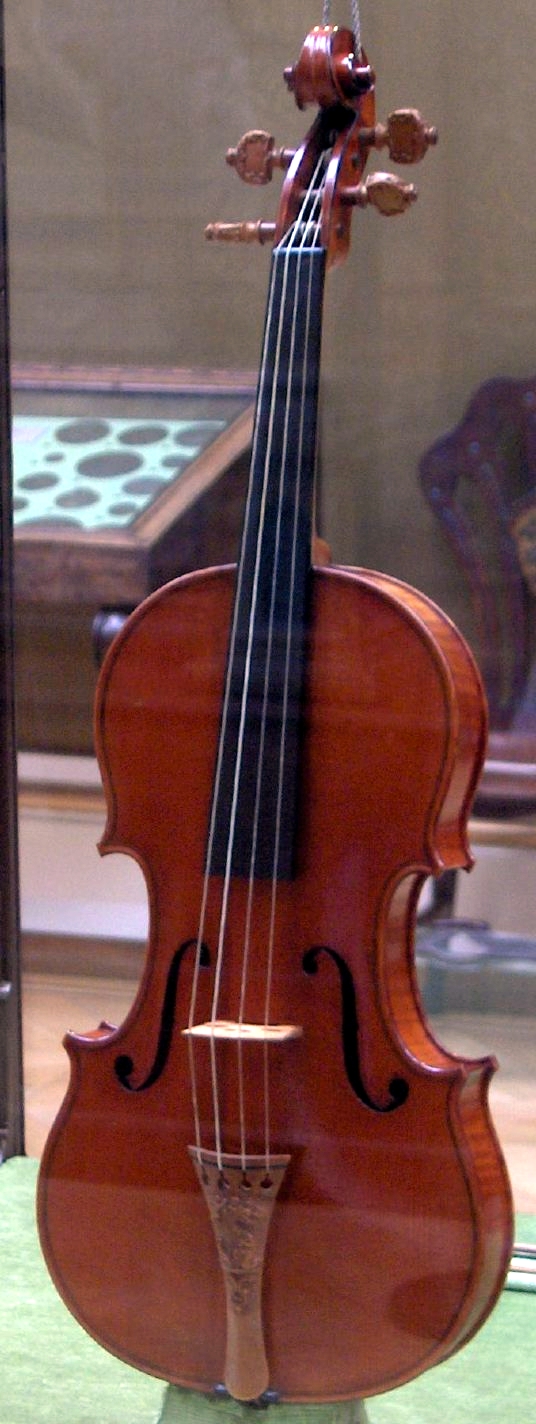
The Ashmolean says the Messiah Stradivari owes its fame not to the sounds it makes but to its condition. Three centuries of owners chose not to use it, and that choice is why its authenticity could be doubted for a hundred years.
Records in this piece: The Messiah, Violin, the 'Lady Blunt', ex "Kurtz" Violin
On this page 8 sections
ContentsClose
In short
- The Ashmolean's own label for the Messiah states that the violin owes its fame not to the sounds that it makes but to the condition in which it survives, and attributes that condition to the fact that it has always been a collector's piece.
- In the Lady Blunt's documented chain of owners across two centuries, exactly one was primarily a performer: the Australian-born violinist Johann Kruse, who held it from 1901 to 1913. Every other owner was a collector, a dealer or a foundation.
- The two best-preserved Stradivari violins are the two that were least used, and the market pays for that. The Lady Blunt sold through Tarisio on 20 June 2011 for GBP 9,808,000 including premium, which the house reported as over four times the previous auction record for a Stradivari.
- Preservation created the doubt. Because the Messiah was almost never seen or played, and because Jean-Baptiste Vuillaume both restored Stradivari violins and made exact copies of them, a suspicion that he had substituted or heavily altered it remained credible for about a century.
- The sources disagree on the detail even here. Tarisio's own 2011 press release gives the 1971 Sotheby's price for the Lady Blunt as GBP 84,000; the Cozio Archive chain used in this archive's record gives GBP 84,500. Neither figure has been reconciled to a saleroom document in this piece.
An instrument's condition is a record of who owned it
A violin in near-original condition after three hundred years is not evidence of good luck or good conservation, it is evidence of disuse. Playing an instrument wears its varnish, compresses its edges, rounds its carving and eventually requires the neck, bridge, pegs and tailpiece to be replaced. An instrument that shows none of that has been in cases and glass cabinets rather than in hands, and the ownership chain is where you can watch it happen.
This archive holds three instruments that make the point from different directions, and the pattern in the chains is stark. The objects the market now treats as the most perfect surviving examples of their makers are the objects that were least used for their purpose, and in each case the chain is dominated by collectors and dealers rather than players.
It is worth saying plainly that this is not a criticism of collectors. Without them these particular instruments would look like every other heavily played Stradivari, and a great deal of what we know about the maker's original workmanship would be gone. The point is narrower and it cuts both ways: collecting preserved the body of the object and removed the evidence of what the object was for.
The Ashmolean says the fame is the condition, not the sound
The museum that holds the Messiah is explicit about why the violin is famous, and it is not the tone. Its own page for the instrument says that it owes its great fame "not to the sounds that it makes" but to the astonishing condition in which it survives, and then gives the reason in one sentence: the violin owes its condition to the fact that it has always been a collector's piece.
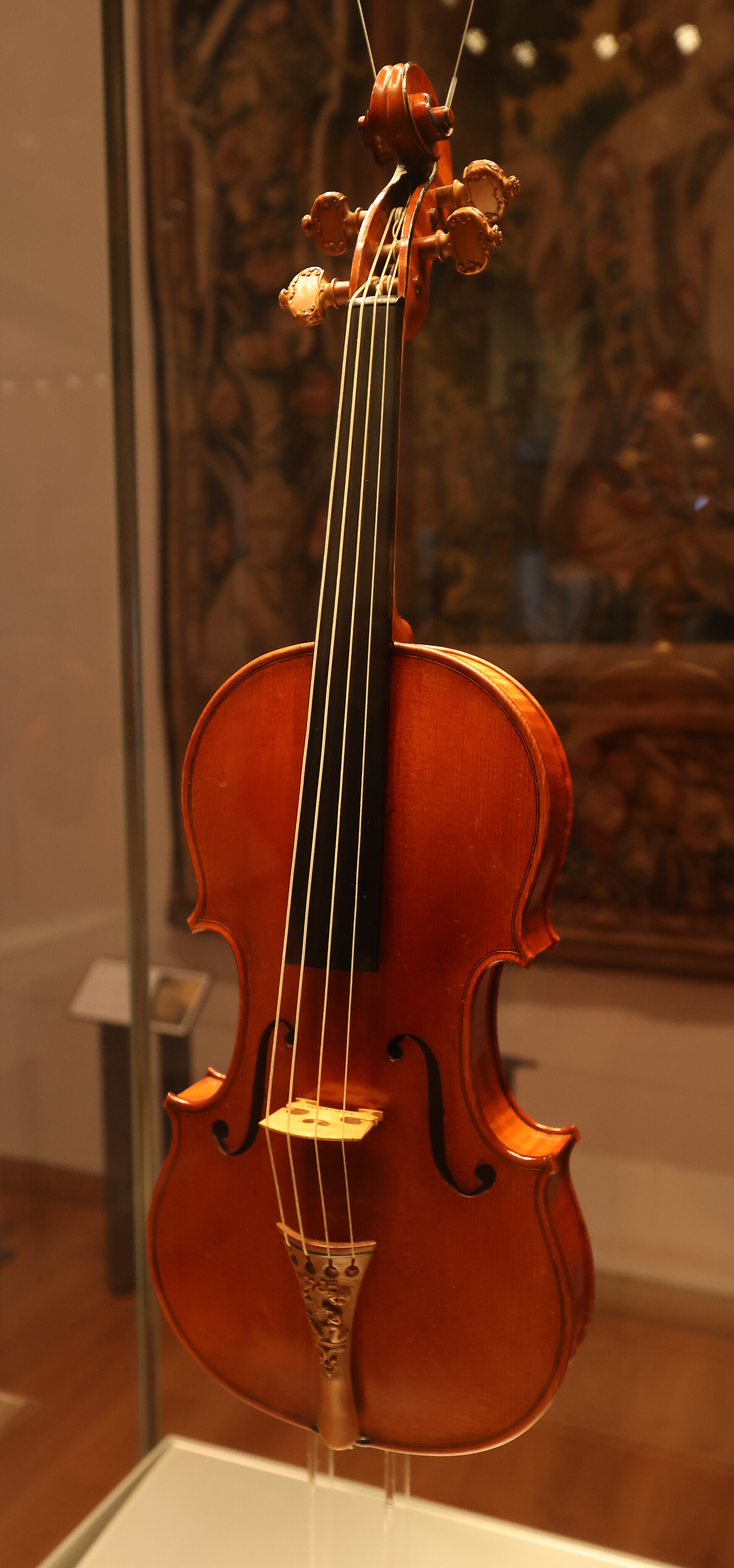
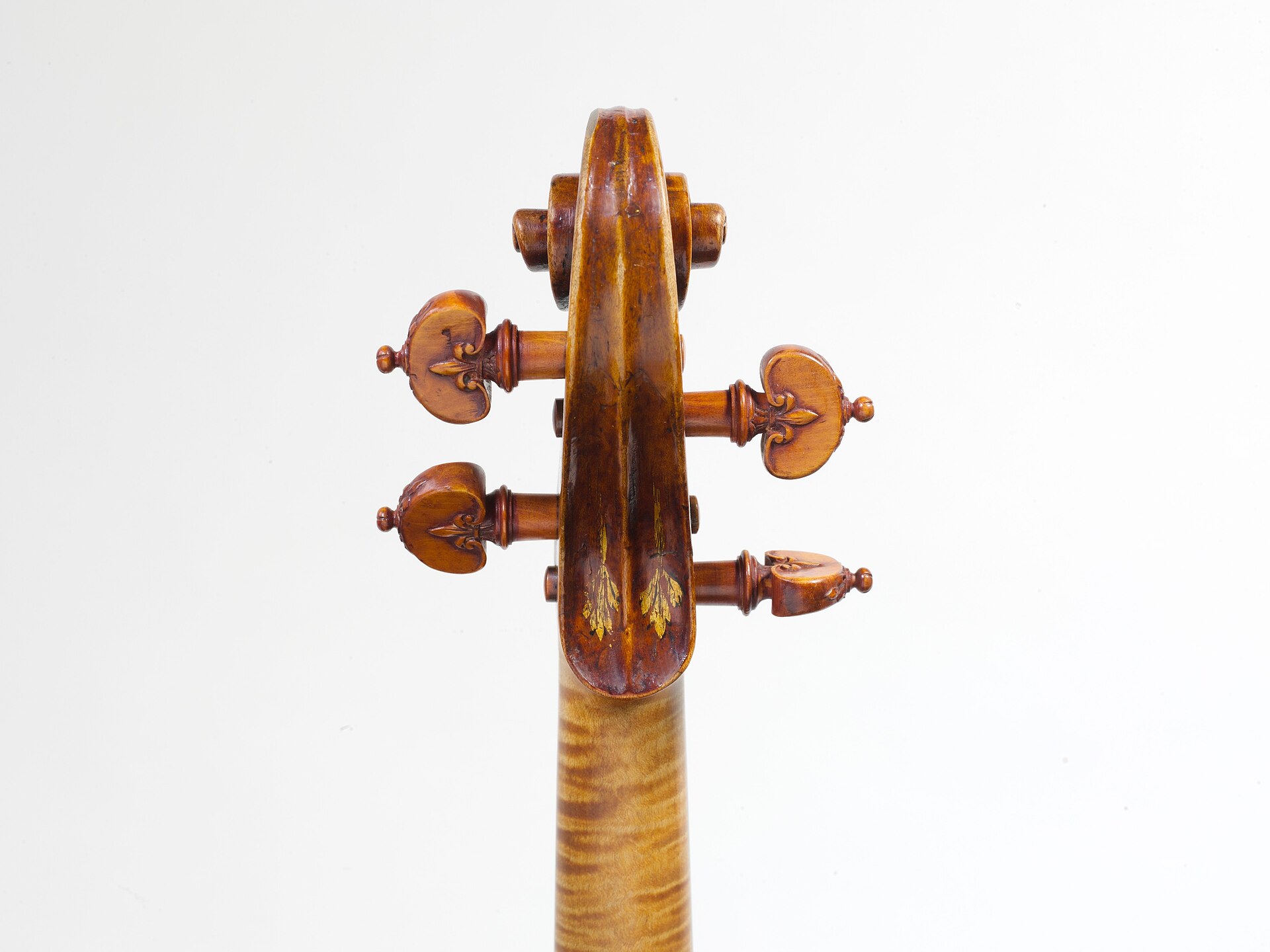
The museum is also careful not to overclaim. It records that the instrument is not entirely untouched, that the neck was lengthened and the pegs, bridge and tailpiece added in the nineteenth century, and that what survives intact is the varnish, the crispness of the carving and the painted edge-work on the scroll. The object entered the collection as a gift from Alfred and Arthur Hill in 1939 and carries the accession number WA1940.112.
The condition that the gift preserved was built by the owners before it. The Ashmolean's account has the violin bought by the collector Cozio di Salabue from one of Stradivari's sons, sold in the 1820s to the dealer Luigi Tarisio, who kept it in a case in Italy while boasting of it in Paris, and bought in 1855 by Jean-Baptiste Vuillaume, who kept it in a glass case. The instrument's nickname comes from that pattern of being talked about and not produced.
The dates in the two accounts do not line up, and that is worth recording
The Ashmolean's chronology and the dealer-archive chronology used in this archive's record disagree by a few years at two points, and neither is obviously wrong. The museum has Cozio buying from one of Stradivari's sons, selling to Tarisio in the 1820s, and Vuillaume acquiring in 1855. The reconstructed chain in this archive's record has Cozio buying the residue of the workshop from Paolo Stradivari in 1775, Tarisio purchasing from the Cozio estate in 1827, and Vuillaume acquiring the Tarisio hoard in 1854, shortly after Tarisio's death.
These are small differences and it would be easy to average them into a single tidy line. That would be a mistake, because the two accounts are doing different things. A museum label compresses; a dealer archive reconstructs from correspondence and inscriptions, including Vuillaume's own later inscription inside the violin. Where they differ, the honest record carries both and says which source gives which year.
One point in the chain is flagged in this archive's record as doubtful on its own terms. An owner given as Ernesto Nicolini for the window 1897 to 1904 sits awkwardly against the fact that the well-known tenor of that name died in 1898. The record flags the identification rather than adopting it, and this piece does the same.
One performer appears in the Lady Blunt's chain in two hundred years
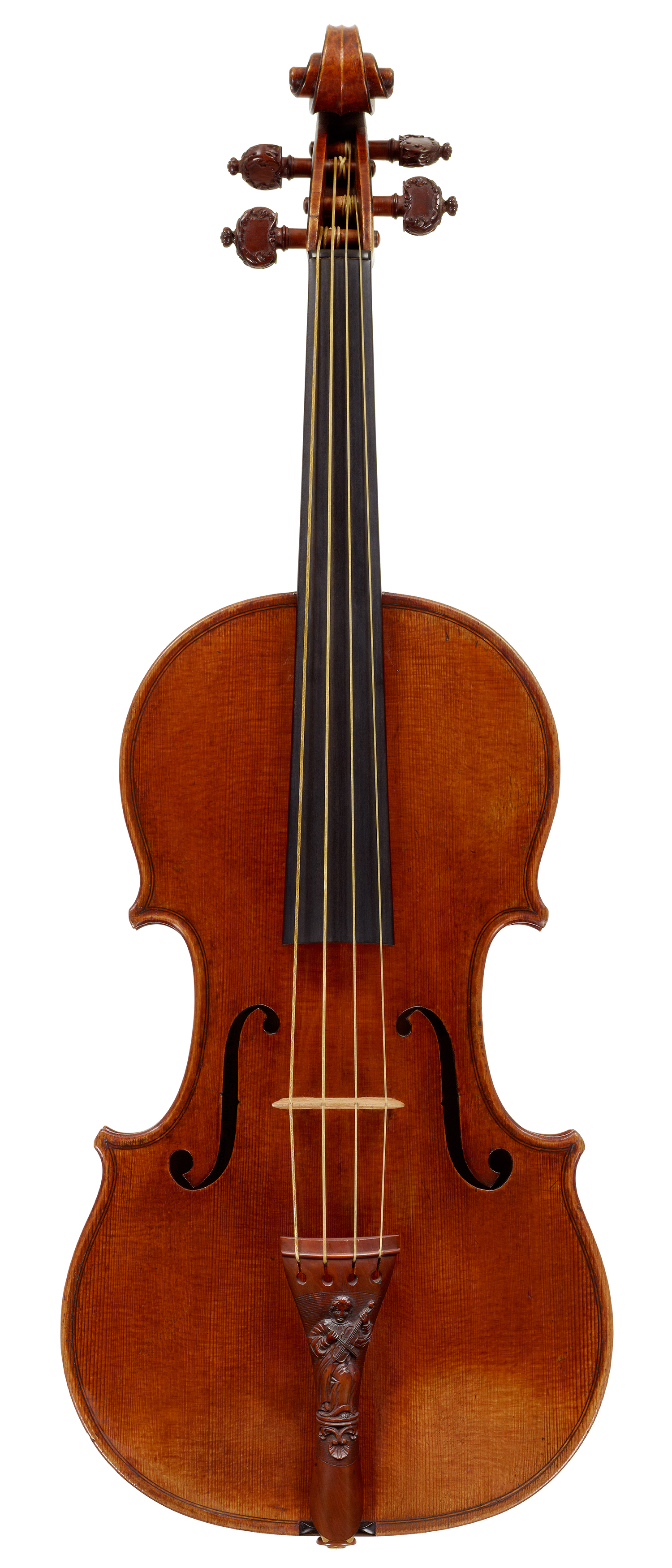
The Lady Blunt Stradivari of 1721 passed through roughly fifteen documented owners between about 1860 and 2011, and only one of them was primarily a player. That was Johann Kruse, the Australian-born violinist and former member of the Joachim Quartet, who owned the instrument from 1901 to 1913. The rest of the chain is Vuillaume, Lady Anne Blunt, a succession of dealers including W. E. Hill and Sons on four separate occasions, the collectors Baron Johann Knoop and Richard Bennett, the Swiss dealer Henry Werro, the American collector Sam Bloomfield, Robin Loh in Singapore, an unidentified private collector, and finally the Nippon Music Foundation.
Lady Anne Blunt herself, the daughter of Ada Lovelace and granddaughter of Lord Byron, bought the violin from Vuillaume in 1864 for 260 pounds on the recommendation of her teacher, and is reported to have played it across the thirty years she owned it. She is the closest thing to a sustained playing owner in the chain, and the instrument still carries her name.
Tarisio's press release for the 2011 sale quotes Andrew Hill of the W. E. Hill firm saying the violin "is in much the same condition as when it left its maker's hands". That sentence and the ownership list are the same fact stated two ways.
The market pays for the disuse, and the prices show it
The Lady Blunt sold through Tarisio on 20 June 2011 for GBP 9,808,000, which the auction house reported as USD 15,894,000 and as over four times the previous auction record for a Stradivari violin. The instrument was consigned by the Nippon Music Foundation after the earthquake and tsunami of 11 March 2011, and the house stated that 100 per cent of the proceeds would go to the Nippon Foundation's Northeastern Japan Earthquake and Tsunami Relief Fund. The buyer was anonymous.
Set against the earlier figures, the arc is steep and the reason given for it by every party is condition. The comparison also exposes a discrepancy this piece cannot resolve.
| Instrument | Date | Transaction | Price as reported |
|---|---|---|---|
| Lady Blunt | 1864 | Purchase from Jean-Baptiste Vuillaume | GBP 260 |
| Messiah | 1890 | Private sale via W. E. Hill and Sons to Robert Crawford | GBP 2,600, reported at the time as the largest sum ever paid for a violin |
| Lady Blunt | 1971 | Sotheby's, London | GBP 84,000 per Tarisio's 2011 release; GBP 84,500 per the Cozio Archive chain |
| Lady Blunt | 20 June 2011 | Tarisio, online sale | GBP 8,750,000 hammer; GBP 9,808,000 with premium |
The 1971 row is the honest problem. Tarisio's own press release and the dealer archive that Tarisio also publishes give different figures for the same sale, five hundred pounds apart. This piece has not seen the Sotheby's document that would settle it, and so reports both.
Keeping it unplayed is what made the doubt possible
The Messiah's authenticity was seriously questioned for about a century, and the reason is the same reason it is in such good condition. Vuillaume, who owned it from the mid-1850s, was both the leading restorer of old Italian instruments in Paris and a maker of exact copies of them. An object that passes through hands like that, is almost never shown, is played by nobody and is described far more often than it is produced, offers very little for a sceptic to test.
Documented public sightings before the museum gift are correspondingly thin. Tarisio kept it in Italy and talked about it. Vuillaume kept it in a glass case; the one exhibition recorded in this archive's chain is the 1872 Special Exhibition of Ancient Musical Instruments at the South Kensington Museum, where it appears as catalogue item 91. A violin with an ordinary playing life would have generated players' testimony, wear consistent with use, repairs by known hands and a paper trail of insurance and travel. This one generated a reputation.
The dispute has since been addressed with dendrochronology and other technical work, and this piece does not reopen it. The point is about the shape of the evidence rather than the verdict: the collectors who protected the object also removed almost everything an authenticator would ordinarily work from.
What a collector's instrument is evidence of
An instrument that has been collected rather than played is a strong witness to one thing and a weak witness to another. It is close to the best available evidence for what left the maker's workshop, which is why the Hills gave the Messiah to a university museum and why makers still study it. It is close to useless as evidence of how the maker's instruments sounded, how they were set up for playing, or how they were repaired in ordinary use.
For anyone reading a chain of ownership on an instrument, three things follow. Count the players: a chain with no performers in it explains the condition and should temper any claim about tone. Watch for the dealer who appears repeatedly, because a firm such as W. E. Hill and Sons acting four times in one chain is shaping the object's market identity as well as passing it along. And treat a long unexhibited stretch as a gap in the evidence, not as proof of careful keeping.
The two instruments here ended up in the same place by opposite routes. The Messiah was given to a museum on terms that fixed it permanently as an object to be looked at. The Lady Blunt stayed in private hands and reached its price precisely because it had been treated the same way. Neither is played now, and the market has priced that as the highest possible condition.
Why this archive is free to read
We do this for everyone who loves art. The people who have studied it for years, and the people who just stopped to look. Iconotheca exists so that what we learn belongs to all of them.
Nobody pays us for this. No ads, no sponsors, no commercial interest. These works belong to all of us, and we would rather share them with as many people as we can than keep them to ourselves.
If it gave you something today, tell us to keep going. Follow us, leave a like, or write a positive comment. We read every one, and they are what keeps us going.
Questions
For its condition rather than its sound. The Ashmolean Museum's own account says the violin owes its fame not to the sounds that it makes but to the astonishing condition in which it survives, and attributes that condition to its always having been a collector's piece.
No. It is held by the Ashmolean Museum in Oxford as accession number WA1940.112, presented by Alfred and Arthur Hill in 1939, and is displayed rather than used. Its previous owners had also kept it largely unplayed, in cases and cabinets.
GBP 9,808,000 including buyer's premium, on a hammer price of GBP 8,750,000, at a Tarisio online auction on 20 June 2011. Tarisio reported the total as USD 15,894,000 and as over four times the previous auction record for a Stradivari violin.
To raise money after the earthquake and tsunami of 11 March 2011. Tarisio's press release states that 100 per cent of the proceeds would go to the Nippon Foundation's Northeastern Japan Earthquake and Tsunami Relief Fund.
No, and in the Messiah's case exceptional condition is part of what kept the question open. Because the violin was almost never seen or played and had passed through Jean-Baptiste Vuillaume, who both restored and copied Stradivari violins, the ordinary evidence of use that an authenticator relies on was absent.
Sources
- 1Ashmolean Museum, University of Oxford, 'Messiah Violin, by Stradivari', object page for WA1940.112, giving the 1716 date, maple and spruce, length 59.3 cm, the 1939 gift by Alfred and Arthur Hill, the nineteenth-century neck lengthening and fittings, and the museum's statement that the violin owes its fame to its condition rather than its sound. ashmolean.org/messiah-violin-stradivari
- 2Tarisio, press release, 'The Lady Blunt Stradivarius Violin Sets World Record Price at Tarisio Auction', 21 June 2011, giving the 20 June 2011 sale at GBP 9,808,000 / USD 15,894,000, the pledge of 100 per cent of proceeds to the Nippon Foundation's Northeastern Japan Earthquake and Tsunami Relief Fund, the 1971 Sotheby's figure of GBP 84,000, and the quoted remark of Andrew Hill. tarisio.com/press/...
- 3Tarisio, 'Lady Blunt Stradivarius of 1721', notable sales record, for the auction result and the instrument's condition and ownership summary. tarisio.com/auctions/...
- 4Tarisio Cozio Archive, Carteggio entry, 'The 1721 Lady Blunt Stradivari violin, sold by Tarisio', the reconstructed ownership chain used for the sequence of collectors, dealers and the single performer owner. tarisio.com/cozio-archive/...
More in Collectors and Collections
The partThe credit line names the collector, and the accession number tells you what happened
Morgan died in March 1913, and the Metropolitan credits him with gifts made in 1917. The credit line names the collector.
The Longest Ownership Links Here Belong to Owners That Were Not People
The 28 longest institutional ownership links in this archive run 7,434 years between them. Three end in a completed sale.
The Name in the Buyer's Column Is Often an Employee
Across 126 years of sales in this archive the winning bidder is repeatedly not the owner.