Violin, the 'Lady Blunt'
Antonio Stradivari · 1721
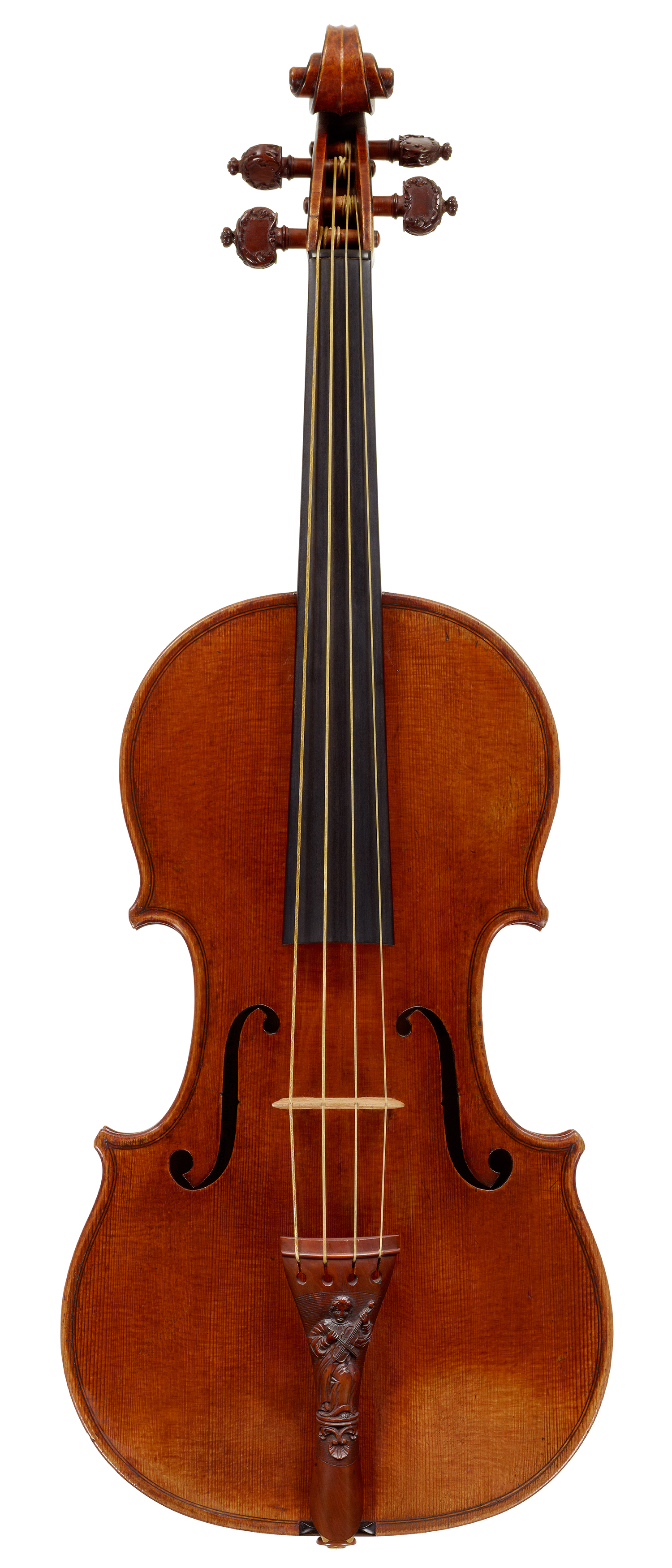
The instrument's table, photographed by Tarisio Auctions around the time of the 2011 sale. Photo: Tarisio Auctions, uploaded to Wikimedia Commons with the auction house's permission (Wikimedia VRT ticket 2012050810009614).
Tarisio Auctions · Photograph by Violachick68 · CC BY-SA 3.0| Artist | Antonio Stradivari |
|---|---|
| Date | 1721 |
| Medium | Spruce top, maple back, ribs and neck, on a wood body varnished in a rich red-brown oil varnish; gut and metal-wound strings (not original) |
| Dimensions | Back length 35.7 cm; upper bouts 16.8 cm; lower bouts 20.9 cm |
| Where it is now | Private collection, owner not publicly identifiedlast confirmed |
| Inventory number | Cozio Archive ID 24222 (Tarisio) |
| Attribution | AcceptedAttributed to Antonio Stradivari on the basis of the printed label inside the instrument, reading 'Antonius Stradivarius faciebat Cremonensis Anno 1721', and on construction consistent with instruments built on his 'P G' internal form. Full note |
| Object type | Musical instrument |
| Period | Italian, early eighteenth century, Stradivari's 'golden period' |
| Cases | Has a provenance gap |
| Inscriptions | Printed label inside the body: 'Antonius Stradivarius Cremonensis Faciebat Anno 1721'. The maker's construction mark 'P G' appears inside the pegbox at the base of the mortise, identifying the internal form on which the instrument was built. |
| Owners on record | 18 links16 documented, 1 disputed, 1 unknown |
| Sources | 12 cited |
About this record Last verified · 12 sources cited · Change log
On this page 10 sections
ContentsClose
A violin made by Antonio Stradivari in Cremona in 1721, during the decade of his career now called the golden period, and one of a small number of his instruments to survive in something close to the condition it left his workshop in. It takes its name from Lady Anne Blunt, the daughter of Ada Lovelace and granddaughter of Lord Byron, who bought it from the dealer Jean-Baptiste Vuillaume in 1864 and owned it for thirty years before selling it in 1895, more than two decades before her death in 1917.
After passing through a documented chain of dealers and collectors across the twentieth century, the violin was bought by the Nippon Music Foundation of Japan in 2008. In June 2011, nine days after the Tohoku earthquake and tsunami, the Foundation sold it through Tarisio for GBP 9,808,000 (USD 15,894,000) including buyer's premium, against a hammer price of GBP 8,750,000, with every proceed pledged to disaster relief in northeastern Japan. It was, at the time, the highest price ever paid for a violin at auction.
The buyer has never been publicly identified, and the instrument has not been seen or loaned in public since the sale. Its condition, judged among the best-preserved of Stradivari's output by dealers who have examined it, and its charitable sale in the week after a national catastrophe, are the two facts that distinguish this violin from the roughly six hundred other surviving instruments bearing his label.
Provenance
Each link is graded. Documented: a cited source supports it. Disputed: the identification is argued but not established. Unknown: no owner for that span, and the gap is not smoothed into a narrative. The grades in the glossary.
- 1721 - c. 1860Unrecordedunknown
No owner is documented between the violin's making in Cremona in 1721 and its emergence in Spain in the possession of Jean-Baptiste Vuillaume around 1860. Vuillaume reported it as having been forgotten for over a century before it reached him.13
- c. 1860 - 1864Jean-Baptiste Vuillaume, Parisdocumented
Vuillaume, the leading Parisian dealer of old Italian instruments, acquired the violin out of Spain and carried out limited conservation, including re-angling the neck at the heel to the modern standard. His own letter describes the instrument's exceptional, largely untouched condition on arrival.13
- 1864 - 1895Lady Anne Blunt (later 15th Baroness Wentworth)documented
Bought from Vuillaume in 1864 for 260 pounds sterling on the recommendation of her teacher Leopold Jansa. Owned and reportedly played the instrument for over thirty years before selling it in 1895 through the dealers Charles Withers and Emil Hamma to the Frankfurt dealer Charles F. Edler. This sale took place more than two decades before her death in 1917; no source connects it to any documented family financial difficulty.12346
- 1895 - 1896Charles F. Edler, Frankfurtdocumented
Acquired via Withers and Hamma in 1895; sold to W.E. Hill and Sons the following year.3
- 1896 - 1896W.E. Hill and Sons, Londondocumented
Bought from Edler and sold on immediately to Baron Johann Knoop. Arthur Hill's contemporary note that the firm had 'for years... cast longing eyes upon it' is recorded in the Hill archive.13
- 1896 - 1900Baron Johann Knoopdocumented
Major collector who at his peak owned around forty old instruments, including some nineteen Stradivaris.3
- 1900 - 1901W.E. Hill and Sons, Londondocumented
Reacquired from the Knoop estate and sold to Johann Kruse.3
- 1901 - 1913Johann Krusedocumented
Australian-born violinist, a former member of the Joachim Quartet (1892-1897); the only owner in this chain who was primarily a performer.3
- 1913 - 1915Joseph Edward Streetdocumented
Amateur violinist based in Caterham, England.3
- 1915 - 1915W.E. Hill and Sons, Londondocumented
Intermediate dealer transaction between Street and Bennett.3
- 1915 - 1926Richard Bennettdocumented
Major collector who at various points owned more than twenty Stradivaris.3
- 1926 - 1941Robert Augustus Bowerdisputed
Collector and recognised violin expert of the period. Sources disagree on Bower's role here: the Cozio Archive's own Carteggio narrative describes him only as the dealer who arranged Hill and Sons' 1941 sale to Henry Werro, not as an intermediate owner, while other summaries of the Cozio Archive property record place him as owner between Bennett and Werro. This record could not resolve the discrepancy or confirm the 1926 and 1941 endpoint dates against the archive's raw record; treat this entry as provisional.3
- 1941 - 1959Henry Werrodocumented
Swiss dealer and maker, eldest son of the maker Jean Werro. Published a monograph on the violin in 1943 in an edition of two hundred copies.35
- 1959 - 1971Sam Bloomfield, Californiadocumented
American collector; consigned the violin to Sotheby's in 1971.35
- 1971 - 2000Robin Loh, Singaporedocumented
Bought at Sotheby's, 1971, for GBP 84,500 (then a world record for a violin at auction), through W.E. Hill and Sons. Lent the violin to the 1987 Cremona exhibition marking the Stradivari tercentenary.357
- 2000 - 2008Private collector, not publicly identifieddocumented
Identity not disclosed in sources consulted for this record.3
- 2008 - 2011Nippon Music Foundation, Japandocumented
Reported at the time as worth 'over ten million US dollars'; precise figure not published.36
- 2011 - presentPrivate collector, anonymousdocumented
Sold 20 June 2011 for a hammer price of GBP 8,750,000 (GBP 9,808,000 / USD 15,894,000 including buyer's premium), all proceeds pledged to Nippon Music Foundation's Northeastern Japan Earthquake and Tsunami Relief Fund. Buyer's identity has never been made public; no ownership, loan or exhibition activity has been traced since.1267
Prices realised
| Date | Sale | Estimate | Result | Note |
|---|---|---|---|---|
| 1971 | Sotheby's | not stated in sources consulted | Hammer GBP 84,500 With premium not specified in sources consulted GBP | Sold to Robin Loh via W.E. Hill and Sons; a world record price for a violin at auction at the time, roughly USD 200,000 at contemporaneous exchange rates. |
| 20 June 2011 | Tarisio | Low estimate of USD 10,000,000 | Hammer GBP 8,750,000 With premium GBP 1,058,000 (total with premium GBP 9,808,000, reported as USD 15,894,000) GBP | Online sale conducted by Tarisio; sources consistently and explicitly separate the GBP 8,750,000 hammer price from the GBP 9,808,000 total including buyer's premium, and this record follows that separation. Tarisio's online format runs on the same hammer-plus-premium structure as a conventional saleroom rather than a single all-in private-treaty figure. Sold by the Nippon Music Foundation, all proceeds pledged to Tohoku earthquake and tsunami relief. Reported at the time as more than four times the previous Stradivari auction record and as the highest price ever paid for any violin at auction. |
Hammer is the price at which the bidding stopped; with premium adds the fee the house charges the buyer on top. Hammer price and buyer's premium in the glossary.
Technical evidence
| Attribution note | Attributed to Antonio Stradivari on the basis of the printed label inside the instrument, reading 'Antonius Stradivarius faciebat Cremonensis Anno 1721', and on construction consistent with instruments built on his 'P G' internal form. No independent scientific test can prove a label; the attribution rests on continuous expert examination since at least 1864, when Jean-Baptiste Vuillaume, the leading Parisian dealer and maker of his generation, certified it. It has not been seriously disputed since. |
|---|---|
| Maker's label | Antonius Stradivarius Cremonensis Faciebat Anno 1721 (printed paper label inside the body).3 |
| Construction form | Built on Stradivari's 'P G' internal form, one of the larger patterns used in his mature years; the letters 'P G' are stamped inside the pegbox at the base of the mortise.38 |
| Back length | 35.7 cm.3 |
| Upper and lower bouts | Upper bouts 16.8 cm; lower bouts 20.9 cm.3 |
| Materials | Two-piece maple back with medium-width ascending flame; two-piece spruce top with medium grain widening toward the edges; broader-curl maple ribs and scroll, the scroll retaining its original chamfer blacking.3 |
| Varnish | Rich red-brown oil varnish, described by examining dealers as almost unworn and close to full strength across most of the surface.13 |
| Originality of parts | Neck (re-angled at the heel by Vuillaume in the 1860s, the standard nineteenth-century modification) and fingerboard are substantially the maker's own. The bass bar currently fitted is a modern replacement made by Vuillaume in the 1860s; Stradivari's original bass bar survives separately, retained with the instrument rather than installed. A replacement bridge and fittings by W.E. Hill and Sons date from around 1896.13 |
| Dendrochronology | Youngest growth ring on the spruce top dated to 1704 by dendrochronologist John C. Topham, consistent with the 1721 label date allowing for normal seasoning time.3 |
Images
The record in full
Chapter 1What it is
The 'Lady Blunt' is a violin made in Cremona in 1721 by Antonio Stradivari, then in his late seventies and at the height of what dealers and scholars call his golden period, the two decades either...
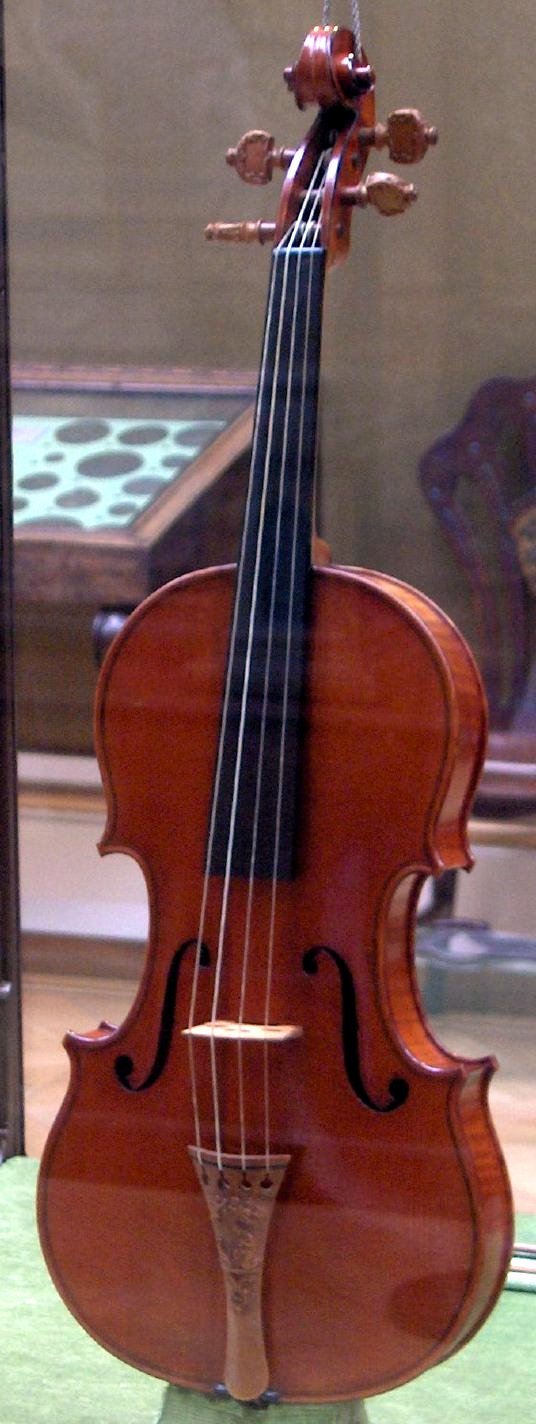
The 'Lady Blunt' is a violin made in Cremona in 1721 by Antonio Stradivari, then in his late seventies and at the height of what dealers and scholars call his golden period, the two decades either side of 1700 in which his instruments reached their fullest and most consistent form. It has a two-piece spruce top and a body of maple, finished in a rich red-brown varnish, and was constructed on Stradivari's 'P G' internal form, one of the larger patterns he used in his mature years. The maker's construction mark, the letters 'P G', is stamped inside the pegbox at the base of the mortise, and the printed paper label inside the body reads 'Antonius Stradivarius Cremonensis Faciebat Anno 1721'.
What sets this violin apart from the great majority of the roughly six hundred surviving instruments attributed to Stradivari is not its maker or its date but its condition. Dealers who have examined it describe the neck and fingerboard as substantially original, the edges and corners as unworn enough to show Stradivari's own tool marks, and the varnish as close to full strength across most of the surface. The instrument's original bass bar survives too, but not in use: Vuillaume fitted a modern replacement bass bar in the 1860s, the standard adaptation for modern string tension, and the original is retained separately with the violin rather than installed in it. An instrument played daily for three centuries does not look like this; one kept mostly by collectors, examined rather than performed on, does.
Chapter 2The condition, and who has said so
The claim that this is one of the best-preserved violins Stradivari ever made is not folklore repeated by later writers without checking; it has been made, on the record, by people whose business is...
The claim that this is one of the best-preserved violins Stradivari ever made is not folklore repeated by later writers without checking; it has been made, on the record, by people whose business is examining these instruments for a living. When Tarisio announced the 2011 sale, its director Jason Price called the 'Lady Blunt' 'without doubt the best-preserved Stradivarius to come on the market in 40 years'. The same sale materials, drawing on the Hill firm's own condition notes going back to 1896, describe the edges, corners and channelling as showing the maker's tool marks unaltered by wear and the varnish as almost unworn, a description the Cozio Archive extends to the original neck and original fingerboard; the Cozio Archive also notes the original bass bar survives, accompanying the instrument, though the bass bar actually fitted since the 1860s is Vuillaume's modern replacement. None of this is typical after three hundred years of ownership.
The comparison consistently drawn is with the 1716 'Messiah', the Stradivari violin held by the Ashmolean Museum in Oxford and widely regarded as the single best-preserved instrument he made, in part because it was barely played and never sold commercially until it entered a museum collection. On 10 June 2011, ten days before the Tarisio sale, the 'Lady Blunt' and the 'Messiah' were displayed side by side at the Ashmolean, a rare direct comparison of the two instruments most often named together in this context. Coverage of the pairing at the time treated the 'Lady Blunt' as the closest surviving instrument to the 'Messiah's' condition, without claiming the two are identical or that either claim has been settled by an independent scientific ranking of preservation across the whole surviving corpus.
Chapter 3Vuillaume, and the violin's whereabouts before Lady Blunt
The documented history of this instrument begins with Jean-Baptiste Vuillaume, the Paris-based dealer and maker who was the leading authority on old Italian instruments in mid-nineteenth-century...
The documented history of this instrument begins with Jean-Baptiste Vuillaume, the Paris-based dealer and maker who was the leading authority on old Italian instruments in mid-nineteenth-century Europe. Vuillaume's own account, given in a letter at the time, is that the violin came to him out of Spain in the early 1860s in what he called an unheard-of condition, having apparently sat forgotten for over a century, its original Stradivari neck, fingerboard and bass bar still intact and the instrument unopened. Vuillaume compared its state to that of the 'Messiah', then already in his own possession. He carried out limited conservation work: he re-angled the neck at the heel to the longer, steeper standard that had become universal by the nineteenth century, a near-universal modification across surviving Stradivari violins and not evidence against originality elsewhere, and he fitted a new bass bar suited to modern string tension, keeping Stradivari's own bass bar separately with the instrument rather than restoring it to use. Vuillaume's own 1864 certificate records both changes in his own words: 'I have had to change the bar and lengthen the neck to modern dimensions, but I have preserved the original neck.'
Where in Spain the violin had been, and for how long, is not established in the sources reviewed for this record. The gap between its making in 1721 and its emergence in Vuillaume's hands around 1860 is close to a century and a half and is not documented.
Chapter 4Lady Anne Blunt
Anne Isabella Noel Blunt, later 15th Baroness Wentworth, was born in 1837, the only child of William King-Noel, 1st Earl of Lovelace, and Ada Lovelace, the mathematician remembered for her work with...
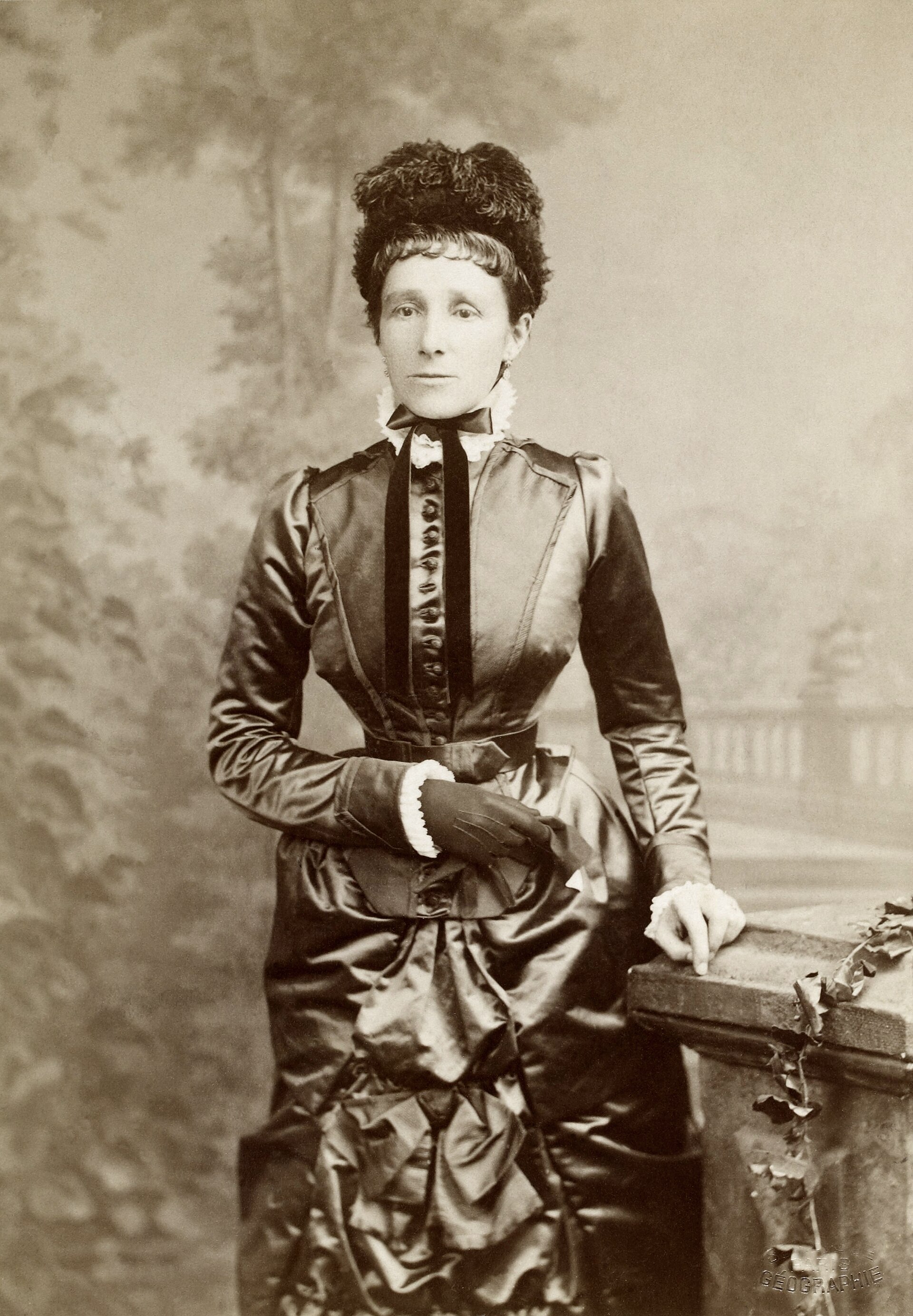
Anne Isabella Noel Blunt, later 15th Baroness Wentworth, was born in 1837, the only child of William King-Noel, 1st Earl of Lovelace, and Ada Lovelace, the mathematician remembered for her work with Charles Babbage. Her maternal grandparents were the poet Lord Byron and Anne Isabella Milbanke, 11th Baroness Wentworth, after whom she was named. She was a trained violinist, having studied with, among others, Leopold Jansa, and it was on Jansa's recommendation that his pupil bought the violin now named for her from Vuillaume in 1864, when she was twenty-seven, for a price recorded in Vuillaume's own certificate as 260 pounds sterling.
She kept the instrument for over thirty years, into the 1890s, playing it by her own and others' later accounts, including at her Egyptian estate at Sheykh Obeyd near Cairo. In 1869 she married the poet and anti-imperialist campaigner Wilfrid Scawen Blunt, and together the couple founded the Crabbet Arabian Stud, importing bloodstock from the Arabian peninsula on journeys Anne herself undertook and later published accounts of; the great majority of Arabian horses registered in the United States today trace their pedigree to Crabbet stock. The marriage deteriorated over Wilfrid's repeated infidelities, and Anne formally separated from him in 1906, dividing the stud between them, a division her daughter's children spent years afterward in court over.
Lady Anne sold the violin in 1895, through the dealers Charles Withers and Emil Hamma to the Frankfurt dealer Charles F. Edler, more than two decades before her death in Cairo on 15 December 1917. No source consulted for this record connects the 1895 sale to any financial difficulty in the Blunt or Wentworth households; by the time real financial strain and the eventual break-up of the Crabbet stud arrived, in the years either side of 1913 to 1917, the instrument had already changed hands three times and belonged to collectors with no connection to the Blunts. Any account that places the sale of this violin at or after her 1917 death describes a different event, or is simply wrong; this record follows the documented 1895 sale date.
Chapter 5Hill and Sons, and the twentieth-century collectors
W.E. Hill and Sons, the London dealing firm that dominated the English trade in old Italian instruments for a century, bought the violin in 1896 and sold it immediately to Baron Johann Knoop, a...
W.E. Hill and Sons, the London dealing firm that dominated the English trade in old Italian instruments for a century, bought the violin in 1896 and sold it immediately to Baron Johann Knoop, a Russian-German industrialist and one of the era's most acquisitive collectors, who at his peak owned around forty old instruments including some nineteen Stradivaris. Hill and Sons reacquired it around 1900 to 1901 and sold it to Johann Kruse, an Australian-born violinist who had trained under Joseph Joachim and played in the Joachim Quartet in the 1890s, making him, so far as the sources reviewed show, the only owner in this violin's history who was primarily a professional performer rather than a dealer or collector.
From Kruse the violin passed to Joseph Edward Street, an amateur player, by 1913, and then, again through Hill and Sons, to the collector Richard Bennett around 1915, who at various points owned more than twenty Stradivaris. Sources disagree on what happened next: the Cozio Archive's own Carteggio history describes Robert Augustus Bower only as the dealer who arranged Hill and Sons' 1941 sale to the Swiss dealer and maker Henry Werro, while other summaries of the Cozio Archive's property record place Bower as an intermediate owner for a period between Bennett and Werro. This record cannot resolve which is correct from the sources consulted, and gives Bower his own provisional entry in the provenance table below rather than asserting either version as settled. Henry Werro, eldest son of the maker Jean Werro, is documented as owning the violin by 1941; he kept it for nearly two decades and in 1943 published a short monograph on the instrument in an edition of only two hundred copies. Werro sold it in 1959 to the American collector Sam Bloomfield of California, who consigned it to Sotheby's in 1971, where it sold for the then world-record violin price of 84,500 pounds sterling, roughly 200,000 US dollars, to the Singapore-based collector Robin Loh, again through Hill and Sons. Loh lent the violin to the major 1987 Cremona exhibition marking the Stradivari tercentenary and kept it until 2000, when Hill and Sons brokered its sale to an undisclosed private collector.
Chapter 6The Nippon Music Foundation and the sale for Japan
The Nippon Music Foundation, a Japanese non-profit that acquires rare stringed instruments and lends them to leading performers rather than keeping them in vitrines, bought the violin in 2008 in a...
The Nippon Music Foundation, a Japanese non-profit that acquires rare stringed instruments and lends them to leading performers rather than keeping them in vitrines, bought the violin in 2008 in a private transaction reported at the time as being worth more than ten million US dollars. On 11 March 2011 an earthquake and tsunami struck northeastern Japan, killing close to twenty thousand people and triggering the Fukushima nuclear accident. Nine days later, on 20 March 2011, the Foundation announced it would sell the 'Lady Blunt' and give every proceed to its Northeastern Japan Earthquake and Tsunami Relief Fund; its president, Kazuko Shiomi, said at the time that the tragedy had shown that everyone needed to help in whatever way they could.
Tarisio, the New York and London auction house that specialises in stringed instruments and conducts its sales primarily online, handled the sale, which closed on 20 June 2011 after what contemporary reporting described as a ninety-minute contest between two bidders. The hammer price was 8,750,000 pounds sterling; with Tarisio's buyer's premium added, the total paid by the buyer was 9,808,000 pounds sterling, reported at the time as 15,894,000 US dollars. Sources consulted for this record are consistent in separating the two figures, and this record follows the same practice: the widely quoted 15.9 million dollar figure is the premium-inclusive total, not the hammer price. Tarisio's online sale format does not run through a traditional saleroom with a physical gavel, but it operates on the same hammer-plus-premium structure as a conventional auction house, and the distinction between the two figures is preserved in the contemporary trade reporting.
At over four times the previous auction record for a Stradivari violin, and reported at the time as the highest price ever paid for any violin sold at auction, the sale drew coverage well beyond the specialist violin trade, almost all of it built around the charitable purpose rather than the instrument's own history.
Chapter 7The buyer, and what is not known
The identity of the 2011 buyer has never been made public in any source consulted for this record.
The identity of the 2011 buyer has never been made public in any source consulted for this record. No subsequent sale, loan, public exhibition, insurance dispute, or recorded performance on the instrument has been traced since June 2011. This record states that plainly rather than guessing: the violin's whereabouts and use over the past decade and a half are undocumented in the public record, and any claim to the contrary should be checked against a source this record has not found.
Chapter 8Dendrochronology and technical examination
The dendrochronologist John C. Topham examined the spruce top and dated its youngest surviving growth ring to 1704, a result consistent with the 1721 date on the label and with normal practice of...
The dendrochronologist John C. Topham examined the spruce top and dated its youngest surviving growth ring to 1704, a result consistent with the 1721 date on the label and with normal practice of seasoning wood for some years before use; it does not itself prove the instrument's construction date, only that the wood could not have been felled before 1704. No published technical imaging, CT scan, or open dendrochronological dataset for this specific violin was located in the sources consulted, in contrast to some other named Stradivaris that have been the subject of dedicated scientific studies; a student or researcher wanting the underlying tree-ring data or high-resolution surface imaging would need to approach Tarisio's Cozio Archive or the instrument's current owner directly, and there is no indication either is publicly available.
Chapter 9What the money has meant, across three centuries of sales
The prices recorded for this single violin trace the growth of the market for old Italian instruments about as clearly as any object could.
The prices recorded for this single violin trace the growth of the market for old Italian instruments about as clearly as any object could. Vuillaume sold it to Lady Anne Blunt in 1864 for 260 pounds sterling. It sold at Sotheby's in 1971 for 84,500 pounds, already a world record for a violin at auction and roughly three hundred times the 1864 price without adjusting for inflation. The Nippon Music Foundation paid over ten million dollars privately in 2008. In 2011 it sold for close to sixteen million dollars including premium, itself more than four times the previous Stradivari auction record and, at the time, the highest price paid for any violin sold at auction. No single one of these figures converts cleanly to a present-day equivalent without specifying a method and a date, and this record does not attempt one; what is clear without any conversion is that each sale reset what the trade considered the ceiling for an old Italian violin, and that the ceiling has moved a very long way in a century and a half.
The artist
Antonio Stradivari
Antonio Stradivari is the most famous instrument maker in Western history, and one of the least documented as a person. No authenticated contemporary portrait of him survives; the image most often reproduced under his name in older reference books has itself been shown to depict someone else, a caution worth carrying into any claim made about his life. What is solid is the workshop record: several hundred surviving instruments, a small number of family and civic documents, and, since a testament was located in 1995, a fuller picture of a family workshop that outlived him by only a few years.
Related works
| Work | Relation | Where it is |
|---|---|---|
| Messiah Stradivarius, 1716 Antonio Stradivari | The instrument most consistently named alongside this one for exceptional, near-unplayed condition; displayed beside the 'Lady Blunt' at the Ashmolean Museum on 10 June 2011, ten days before this violin was sold Never sold commercially after entering the Hill collection and passing to the Ashmolean; its condition is generally ranked above every other surviving Stradivari, this one included. | Ashmolean Museum, Oxford (already a published Iconotheca record: messiah-stradivarius-ashmolean) |
| Molitor Stradivarius, 1697 Antonio Stradivari | Held the modern-era benchmark price for a Stradivari violin sold privately (reported at 3.6 million US dollars in 2010) immediately before the 'Lady Blunt' reset the auction record the following year A private-treaty sale rather than a public auction result, and therefore not directly comparable to the Tarisio hammer-and-premium figures for the 'Lady Blunt'. | Private ownership (Anne Akiko Meyers) |
| Viola, 'Tuscan-Medici', 1690 Antonio Stradivari | Another Stradivari instrument already held in the Iconotheca corpus, illustrating the range of surviving forms beyond the violin Held in Iconotheca as stradivari-tuscan-medici-viola-loc, status held_no_photograph; unrelated in provenance to the 'Lady Blunt'. | Library of Congress, Washington DC |
Open questions
- Where was the violin between its completion in 1721 and its emergence in Vuillaume's hands in Spain around 1860? A gap of well over a century is undocumented in the sources consulted.
- What was the exact purchase price the Nippon Music Foundation paid in 2008? Reported only as 'over ten million US dollars' in contemporary coverage, with no more precise figure located.
- Who is the current owner, and has the instrument been played, exhibited, or loaned since June 2011? No public record of any kind has been traced since the sale.
- Has any dendrochronological or scientific study beyond John Topham's tree-ring dating been published on this specific instrument, and is any high-resolution imaging or CT data publicly available for research use?
- What became of Henry Werro's 1943 monograph on the violin, printed in only two hundred copies, and does a copy exist in a library accessible to researchers?
- Was Robert Augustus Bower an owner of the violin between Richard Bennett and Henry Werro (as one summary of the Cozio Archive property record suggests, and as this record's provenance table provisionally reflects), or only the dealer who arranged Hill and Sons' 1941 sale to Werro (as the Cozio Archive's own Carteggio narrative states)? This record could not resolve the discrepancy, or confirm the 1926 and 1941 endpoint dates, against the archive's primary record.
Questions about this object
What is Violin, the 'Lady Blunt'?
Violin, the 'Lady Blunt' is a musical instrument, dated 1721. Medium: Spruce top, maple back, ribs and neck, on a wood body varnished in a rich red-brown oil varnish; gut and metal-wound strings (not original).
Who made Violin, the 'Lady Blunt', and is the attribution settled?
The attribution to Antonio Stradivari is recorded here as accepted. Attributed to Antonio Stradivari on the basis of the printed label inside the instrument, reading 'Antonius Stradivarius faciebat Cremonensis Anno 1721', and on construction consistent with instruments built on his 'P G' internal form. No independent scientific test can prove a label; the attribution rests on continuous expert examination since at least 1864, when Jean-Baptiste Vuillaume, the leading Parisian dealer and maker of his generation, certified it. It has not been seriously disputed since.
Where is Violin, the 'Lady Blunt' now?
Private collection, owner not publicly identified. Inventory number Cozio Archive ID 24222 (Tarisio). Last confirmed 28 August 2026. Purchased at Tarisio's online sale of 20 June 2011 by an anonymous bidder; no subsequent public sighting, loan, or ownership disclosure has been traced in the sources consulted for this record.
What has Violin, the 'Lady Blunt' sold for?
Hammer GBP 84,500; with premium, not specified in sources consulted. Sotheby's, 1971.
What is still unknown about Violin, the 'Lady Blunt'?
Where was the violin between its completion in 1721 and its emergence in Vuillaume's hands in Spain around 1860? A gap of well over a century is undocumented in the sources consulted.
Sources
- 1Tarisio, 'The 1721 Lady Blunt Stradivari violin, sold by Tarisio', Cozio Archive Carteggio. tarisio.com/cozio-archive/...
- 2Tarisio, ''Lady Blunt' Stradivarius of 1721', Notable Sales. tarisio.com/auctions/...
- 3Tarisio Cozio Archive, property record for Antonio Stradivari, violin, Cremona, 1721, 'the Lady Blunt', ID 24222 - the primary provenance, condition and dendrochronology record for this instrument. tarisio.com/cozio-archive/...
- 4The Strad, '1721 'Lady Blunt' Stradivari violin sells for GBP 9.8m', reporting the hammer price of GBP 8,750,000 separately from the GBP 9,808,000 total with buyer's premium. thestrad.com/1721-lady-blunt-stradivari-violin-sells-for-...
- 5Benning Violins, 'Carl Becker and the Lady Blunt Stradivarius Violin', on the 1970-71 repair before the Sotheby's sale. benningviolins.com/reference/...
- 6CBS News, 'Stradivarius sold for nearly $16M to aid Japan', including the quotes from Tarisio director Jason Price and Nippon Music Foundation president Kazuko Shiomi. cbsnews.com/news/...
- 7Bloomberg, 'Stradivarius Sells for $15.9 Million to Help Japan Quake Relief'. bloomberg.com/news/...
- 8Tarisio, 'Antonio Stradivari' maker biography, Cozio Archive. tarisio.com/cozio-archive/...
- 9Tarisio, 'Stradivari and his sons, part 1', Cozio Archive Carteggio, on Francesco, Omobono and the workshop's internal forms, and on Giovanni Battista Martino following the 1995 discovery of Stradivari's testament. tarisio.com/cozio-archive/...
- 10Wikimedia Commons, file description noting that a long-circulated portrait captioned as Antonio Stradivari has been identified as a portrait of Claudio Monteverdi. Flagged as a Commons file description rather than a scholarly publication; suitable for replacement with a published art-historical source on the Stradivari portrait question. commons.wikimedia.org/wiki/...
- 11Wikipedia, 'Lady Blunt Stradivarius'. en.wikipedia.org/wiki/...
- 12Wikipedia, 'Anne Blunt, 15th Baroness Wentworth'. en.wikipedia.org/wiki/...
Last verified · Published
Change log
28 August 2026 - Record created at the house standard: researched narrative, technical evidence, maker dossier, graded provenance chain, prices with hammer and premium separated, related works, open questions and sources.