The Queen Who Never Saw the Watch That Carries Her Name
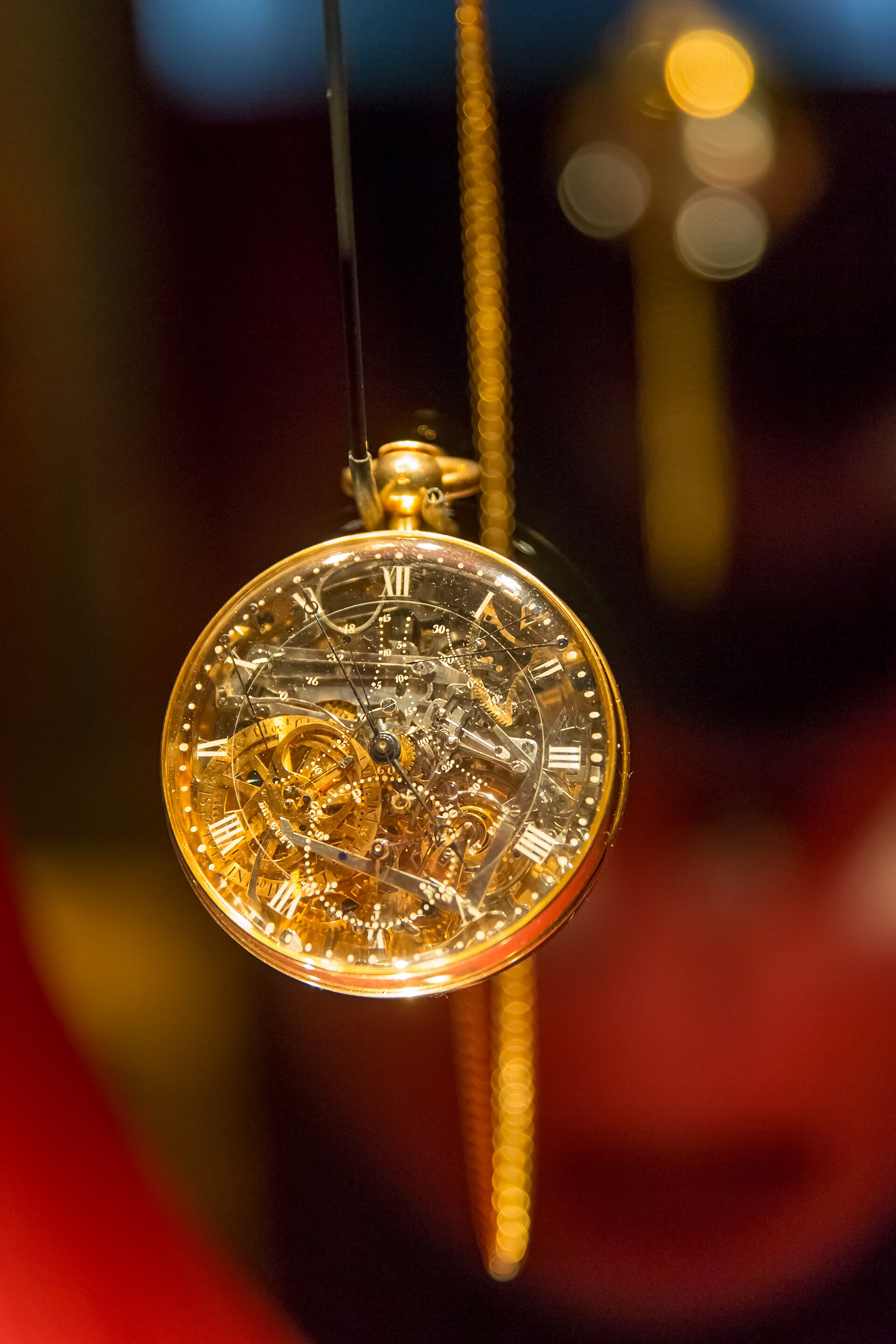
Breguet No. 160 is called the Marie-Antoinette. Nothing from the queen's lifetime connects her to it: the firm's records call it a gold watch, and the name is datable to a London shop window in 1917.
Records in this piece: Breguet No. 160, the Marie-Antoinette, Violin, the 'Lady Blunt', The Hours of Jeanne d'Evreux, Queen of France
On this page 10 sections
ContentsClose
In short
- The most famous watch in the world is named for a woman whom no document from her own lifetime connects to it. Breguet's company records call the object a gold watch, or a perpetuelle minute repeater. They do not call it the Marie-Antoinette.
- The celebrated instructions attached to the order - every complication then known, gold instead of brass, no limit of time or price - first appear in a notice dated 24 October 1887, written by Edward Brown, the firm's later proprietor, a hundred and four years after the order is supposed to have been placed.
- The name itself is datable to a shop window. Sir David Lionel Salomons wrote that on 3 May 1917, near Regent Street, he saw an unusual watch in a window with a notice beside it bearing the name Marie Antoinette. He printed the name in 1921 and every later writer descends from that book.
- Axel von Fersen is not a disputed attribution but an unattributed one. The word Fersen does not occur once in Salomons's 1921 catalogue, Breguet's own house does not make the claim, and no source we found names who first did or when.
- The Breguet the queen demonstrably owned is a different watch: No. 179, a plain gold quarter repeater sold to her on 4 September 1792 for 960 francs, while she was a prisoner. It cost about one eighteenth of the recorded labour cost of No. 160.
An object can be named for a woman who never touched it
Three objects in this archive carry a woman's name, and the evidence behind the three names is not of the same kind at all. The violin called the Lady Blunt is named for Lady Anne Blunt, who bought it from the dealer Jean-Baptiste Vuillaume in 1864 and owned it for thirty years. The Hours of Jeanne d'Evreux is named for a queen who names a book of her own in her will of 1371, although whether the surviving manuscript is that book is disputed. Breguet No. 160 is called the Marie-Antoinette, and nothing made while Marie-Antoinette was alive connects her to it.
That is not a small distinction, because the name is most of what the third object is worth. A grande complication by Abraham-Louis Breguet would be a landmark of horology under any label. Under this label it is the most famous watch in the world, it has been the subject of a museum theft, a twenty-three year disappearance and a negotiated return, and the firm built a full re-edition of it, No. 1160, commissioned in 2004 by Nicolas Hayek of the Swatch Group, which owns Breguet, and shown at Baselworld in 2008. The queen is the asset.
So this name deserves what this archive does to a provenance link: a grade. What follows is the paper trail of a name, which turns out to be a century younger than the object and to begin in a London shop window.
The 1783 order is three words in a ledger
The order that is supposed to lie behind No. 160 survives, if it survives at all, as a line recording a gold watch and no customer.
Our record for the watch already notes why: the workshop's records for 1775 to 1787 were destroyed in 1794, and the client's name was never entered in the register. What scholarship has recovered from the order books is a terse notation, No. 160, Montre d'Or, sitting between commissions associated with the Comte de Lort and the Duc de Praslin. Breguet's own family historian and keeper of the house archive, Emmanuel Breguet, opens his account of the watch by saying that according to an oral tradition first written down in the late nineteenth century, around 1783 Breguet received a remarkable order from an officer of the queen's guard.
He is candid about the rest of it too. The identity of this man remains a mystery, he writes, and he canvasses the alternatives without settling them: whether the client was really an officer at all, whether it was the king or whether it was someone hoping to set a trap for the queen by advertising her extravagance. Breguet's own records, he notes, refer to the object as a gold watch or as a perpetuelle minute repeater with perpetual equation of time and jumping seconds. The firm's archive does not call it the Marie-Antoinette.
The famous instructions were written down in 1887
Every retelling of this watch quotes the same three conditions, and all three first appear in a document of 24 October 1887.
That document is a notice that travelled with the watch, and Salomons, who owned both, printed its contents in his 1921 catalogue as item 56: that the watch was ordered in 1783 by an officer in the Marie-Antoinette Guards, with the condition that every complication then known or possible should be put in it, no brass used but gold instead, no limit of time to complete and no limit as to price. It adds that work began in 1783 and finished in 1802, that it stopped between 1789 and 1795 and that the factory costs were 30,000 francs. The notice is in the hand of Edward Brown, the Englishman who had bought the Breguet company in 1870 and ran it long after Abraham-Louis Breguet's death, not in the hand of any Breguet.
Compare the modern versions. Breguet's own house page says the watch was to incorporate every known refinement, complication and function known at the time and that no time or monetary limit had been placed on the order. Emmanuel Breguet gives the same three clauses and labels them oral tradition. The Science Museum in London went further in 2024 and presented the wording as speech, writing that thanks to the preservation of the Breguet archives we can almost hear the mystery client making the request, and quoting the client directly on gold replacing brass and on the absence of any limit. The page cites the Breguet archives but names no document, and it hedges elsewhere in ways the article should record: it says the identity of the client remains mysterious and that some think it was Fersen. Still, the only text anyone can point to for those conditions is a notice written in 1887 by the man who then owned the firm, and putting it in quotation marks turns a summary into speech.
Fersen is not a disputed attribution, he is an unattributed one
The Swedish nobleman Axel von Fersen appears in almost every popular account of this watch and in none of its documents.
The test that settles it is simple. Salomons's book of 1921 is the text that put the queen's name into the horological literature, and the word Fersen does not occur in it once. Salomons's entry adds only that some say that the watch was intended as a present to one of the Queen's favourites, but nothing is definitely known on this matter: an unnamed favourite, and an explicit refusal to go further. Breguet's own house page mentions Fersen once, as one of the diplomatic envoys who acquired a taste for the firm's work, and not as the man who ordered No. 160. Emmanuel Breguet's essay does not raise him at all.
Everyone who does assert it hedges, and nobody sources it. The holding museum writes that others say it was Fersen, who it was rumoured was the queen's lover. The Science Museum writes that some think it was Fersen. The trade press writes that the officer is believed to have been Fersen. We could not find any source, popular or scholarly, that says who first attached his name to this order, or when. That is a weaker position than a disputed attribution: a dispute has at least two parties who can be named.
There is one thin thread from the object to a client, and the firm's own historian treats it as a puzzle rather than a solution. On 11 March 1838 the repair books record that a Monsieur le marquis de La Groye, of Provins, brought in his perpetuelle repeating watch No. 160 for repair. The Marquis de La Groye had died without issue on 4 October 1837, and he had lived at Essonnes rather than Provins. Emmanuel Breguet asks the obvious question in print, which is why the firm apparently attributed the purchase to a buyer who could not have walked in, and answers that the mystery has remained unresolved. Roobaert reads the same register line differently and argues for the de la Croix de Castries family, whose son commanded the garrison at Provins in the 1820s. Either way, the earliest name the firm's own books attach to this watch appears fifty-five years after the order and belongs to a dead man.
The name begins in a shop window on 3 May 1917
The earliest datable use of Marie-Antoinette as the name of this watch is a label in a London window, and the man who read it wrote down the date.
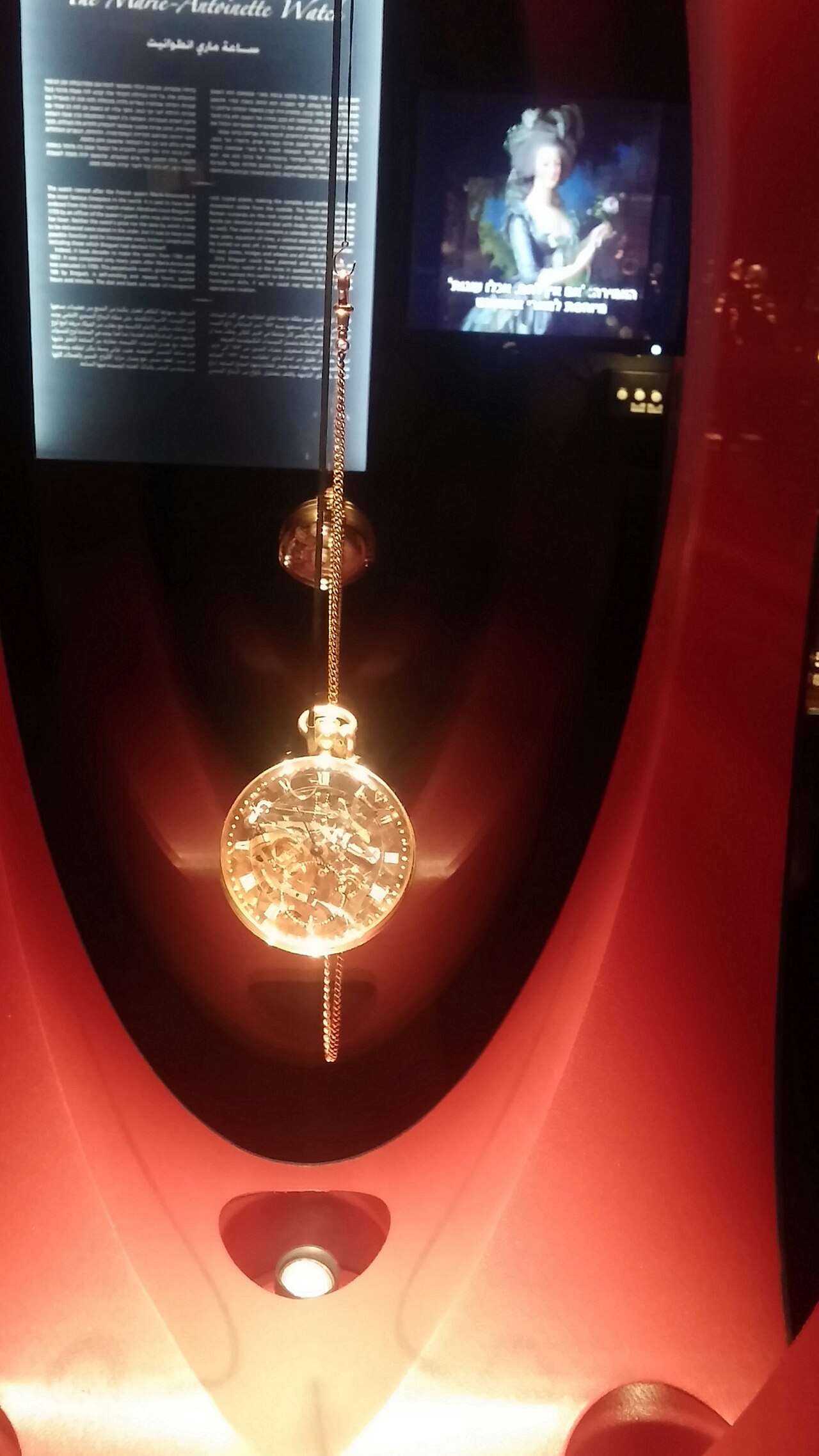
Salomons describes it himself. On 3 May 1917, a pouring wet day, he passed a shop set back from the pavement near Regent Street which he had never looked into because it showed only modern jewellery. His attention was caught by a curious-looking watch, and, in his words, I saw a notice by its side, bearing the name 'Marie Antoinette.' He then looked closer, understood what he was seeing, made an offer and paid a cheque for a sum he never states anywhere in the book. The date is his own and we follow it, while noting that the trade scholarship which reconstructed this chain puts the shop-window sighting at about 1920 or 1921. Salomons describes the shop's owner as a man who had made a lifelong study of Breguet's work, and thanks a Mr L. Desoutter of London in the same book; later scholarship names the dealer as Louis Albert Desoutter of Hanover Street. Who actually owned the watch that day is not settled. Salomons says it was being sold on commission, which would mean the label was not the owner's, while the Science Museum's chain of ownership has Desoutter buying it in 1904 and therefore owning it outright.
There is one earlier step. The queen enters the object's description in 1873, when Edward Brown showed the watch at the Vienna Exposition and described it as having been made for a marquis of Marie-Antoinette's guard. The same compilation of Bernard Roobaert's work records the watch exhibited with no Marie-Antoinette connection at all at Paris in 1827, Paris in 1855 and London in 1862. Brown described it in 1873, Brown wrote the notice in 1887, a window label carried the name in 1917, and Salomons printed it in 1921 as Watch known as the 'Marie-Antoinette,' the chef-d'oeuvre of Breguet, hyphenating in his catalogue heading the name the window label had left open. Every later writer, this archive included, inherits the phrase from that book.
Four completion dates, four costs, and who says which
The watch has no agreed finishing date, and the disagreement runs along the same line as the name: assertion on one side, workshop records on the other.
| Date given | Who gives it | What it rests on | Cost stated |
|---|---|---|---|
| 1798 | Edward Brown, certificate of 1893 | Assertion in a later proprietor's certificate | Not stated |
| 1802 | Notice of 24 October 1887; repeated by Salomons in 1921 | Assertion in the same proprietor's notice | 30,000 francs, factory costs |
| 1820 | George Daniels, followed by the holding museum's catalogue | Reading of the firm's workbook | 16,864 francs |
| 1827 | Emmanuel Breguet and the Breguet archive, followed by the trade press | The firm's own archive | 17,000 gold francs, labour alone |
The two dates that rest on workshop records are the two later ones, and they are seven years apart. The two that rest on assertion are the two earlier ones, and both come from Edward Brown, the same man who first put the queen into the description. A figure of seventeen thousand hours circulates for the work on the watch. No source we could reach documents it, and our own reading is that it is the seventeen thousand gold francs Emmanuel Breguet gives for labour alone, wearing the wrong unit. The costs do not reconcile either: 16,864 francs on Daniels's reading of the workbook, 17,000 for labour alone, a total factory cost given elsewhere as 17,070, and 30,000 in the 1887 notice.
The most quoted labour figure needs the same treatment. George Daniels, reading the firm's workbook, wrote that the adjuster Michel Weber was paid 7,250 francs for 725 hours of work between 1812 and 1815, and every later account repeats the hours. Breguet's own historian, reading the production registers, gives the work in days instead: 284 and a half days in 1812, 228 and a half in 1813 and 212 in 1814. Those sum to exactly 725. Two arithmetic tests favour days. At 725 units for 7,250 francs the rate is ten francs a unit, which is a credible day rate for a senior Paris regulator in 1812 and an impossible hourly one. And 725 hours across three years is about five working weeks a year, which cannot be squared with Daniels's own statement that Weber made most of the mechanism. We report the unit as unresolved and lean to days, because the register that counts in days is the firm's own.
The watch she did own cost 960 francs
There is a Breguet the record does attach to Marie-Antoinette, and it is not this one.
It is No. 179, and Salomons catalogued it in the same collection as No. 160, with its certificate: a plain gold savonette case, no glass over the dial, a quarter repeater, uncompensated, verge escapement, enamelled dial, steel hands, sold to the queen on 4 September 1792 for 960 francs. Breguet's own account agrees in substance, saying she requested and in September 1792 received a simple Breguet watch in her cell at the Temple prison. She was a prisoner when she bought it. She had thirteen months to live.
Set the two side by side and the legend inverts. The watch she owned is plain, cheap by the standards of the firm, bought under guard and documented to the day. The watch that carries her name cost roughly eighteen times as much in labour alone, which is a production cost set against a retail price, it was finished a generation after her death and it is tied to her by a label in a window. Salomons adds a tradition that she gave No. 179 to her brother-in-law the Comte d'Artois, who wore it until his death, which is hard to reconcile with his having emigrated in 1789 and her being imprisoned from August 1792. We cannot resolve that and do not try to.
Her real horological record is French, institutional and almost never quoted. Robert Robin was her clockmaker, described in the Versailles collection records as horloger ordinaire to the Queen. The pendule aux aiglons, Versailles inventory T 540 C, was delivered in 1788 for her bedroom at the Petit Trianon, with the movement by Robin, the bronzes by Pierre-Philippe Thomire and the design by Jean-Demosthene Dugourc. A second clock by the same team, delivered in 1788 for her bathroom at the Tuileries, is in the Musee des Arts Decoratifs. And because the inventory registers of her own furniture and collections were seized and lost in the Revolution, the nearest thing to a list of her clocks is a revolutionary document at the Archives nationales, the Etat de l'Horlogerie de la ci-devant Reine entretenue par Robin, drawn up in 1793. Two Versailles records cite that list when they grade their own objects. No. 160 is not in any of it.
Her documented horology gets better the closer it comes to the end, and none of it is in the legend. When she was searched on 2 August 1793 the sealed packet of things found in her pocket was opened and recorded by the Revolutionary Tribunal, and the first item listed is a small notebook covered in green moire whose first leaf carries five addresses written in pencil. The first of the five is Breguet, quai de l'Horloge du Palais, no. 65. She was carrying her watchmaker's address when she was searched. The gold watch she had brought from Austria in 1770, when she came to be Dauphine, she hung on a nail in the wall of her cell at the Conciergerie; the administrators took it from her four or five days after she arrived, and the woman who served her said she had wept a great deal handing over that gold watch. That last detail is a witness recollection recorded well after the events, and we grade it as testimony rather than as an act. The inventory taken in her cell after her death, on 26 Vendemiaire in the year II, lists linen, stockings, handkerchiefs, a sponge, a small wicker basket and shoes. It lists no watch and no clock.
Three objects named for women, and the evidence behind each name
Grade the three names in this archive against each other and the Marie-Antoinette is the outlier, not the model.
| Object | The woman named | What documents the link | Grade |
|---|---|---|---|
| Violin, the Lady Blunt, 1721 | Lady Anne Blunt | Bought from Jean-Baptiste Vuillaume in 1864 and owned for thirty years | Documented owner |
| The Hours of Jeanne d'Evreux | Jeanne d'Evreux, Queen of France | Her own will, dictated shortly before her death on 4 March 1371, which calls it a very small prayer book and bequeaths it to Charles V | Documented owner, identification disputed |
| Breguet No. 160 | Marie-Antoinette | Nothing from her lifetime. A description at Vienna in 1873, a notice of 1887, a shop label read on 3 May 1917 | Undocumented |
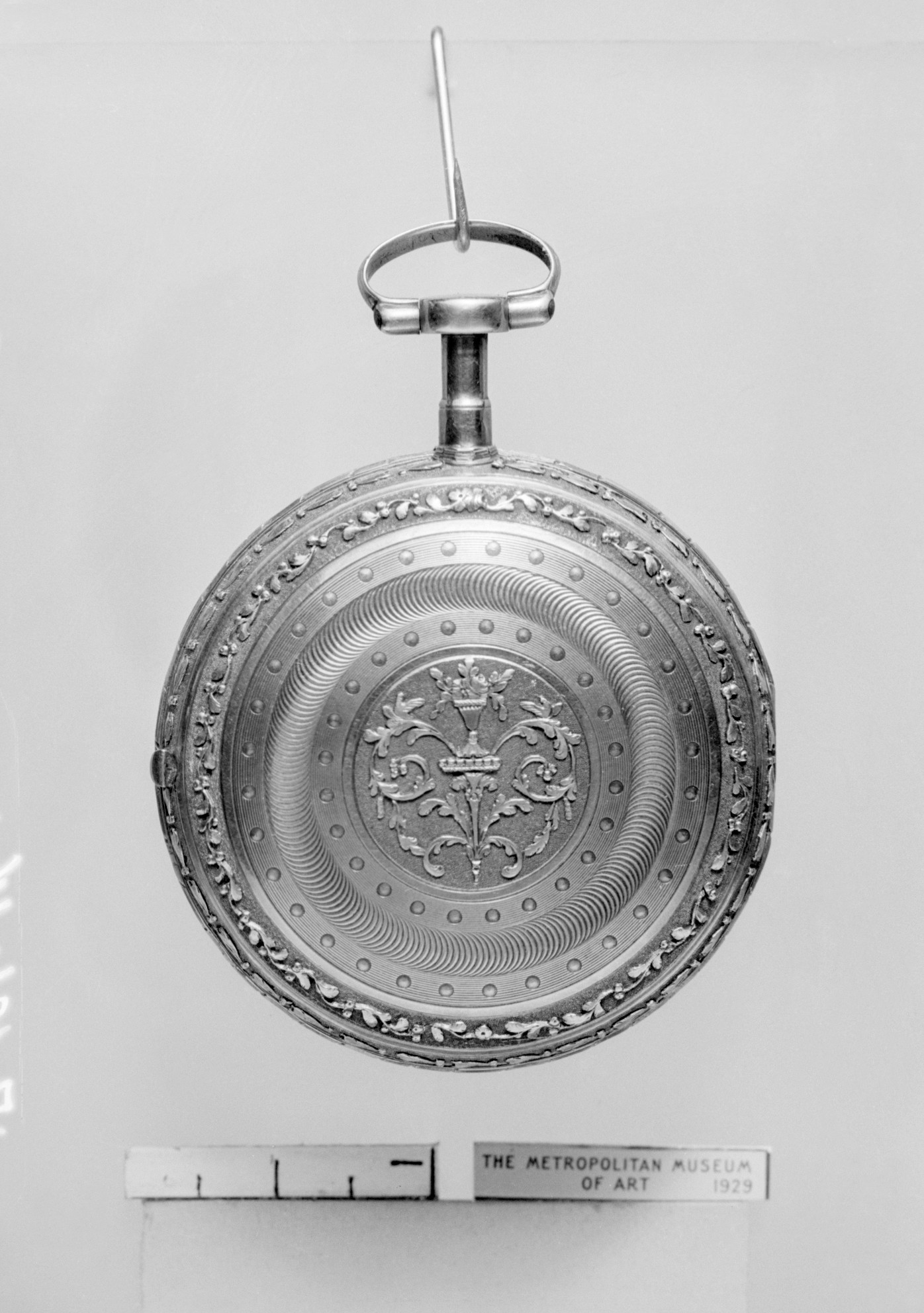
The Jeanne d'Evreux case repays a second look, because it is the one where a queen names her own book and it still does not make her the commissioner. Her will describes it as a small prayer book that King Charles had had made for Madame, and by 1401 the Duke of Berry's inventory was calling it the Hours of Pucelle, after the illuminator rather than the owner. Even that name is not secure: Elizabeth Flinn, writing in the Metropolitan Museum's own Bulletin of 1971, dissented from the identification, and our record for the manuscript keeps the doubt on the page because the will names a little book of prayers rather than a book of hours, the manuscript carries none of her heraldry and the calendar misspells more than thirty saints. So the best-documented of the three names records a woman who received rather than ordered, may not name this object at all, and moved to the man who painted it as soon as the owner was dead.
What the queen is actually doing in this record
Marie-Antoinette's function in the history of Breguet No. 160 is to make it valuable, and that function began seventy-nine years after her execution.
None of this makes the object less interesting, and none of it is a charge against the museum that holds it. The watch is what the documents say it is: an extraordinary machine, begun on an order nobody can name, worked on by named hands across four decades, finished long after both the man who took the order and the woman whose name it wears were dead. The story is better without the romance, because the real one is stranger. A dealer described it as royal in 1873, a proprietor wrote the instructions down in 1887, a window label named it in 1917, a collector printed the name in 1921, and a hundred years of writers have been quoting that book back to each other since.
For a reader doing diligence, the practical lesson is that an object's name is a claim like any other and should be graded like any other. Ask when the name first appears, in whose hand, and whether anything from the named person's own lifetime supports it. On this watch the answer to the last question is nothing at all, and the object is still one of the great things made by human hands.
Why this archive is free to read
We do this for everyone who loves art. The people who have studied it for years, and the people who just stopped to look. Iconotheca exists so that what we learn belongs to all of them.
Nobody pays us for this. No ads, no sponsors, no commercial interest. These works belong to all of us, and we would rather share them with as many people as we can than keep them to ourselves.
If it gave you something today, tell us to keep going. Follow us, leave a like, or write a positive comment. We read every one, and they are what keeps us going.
Questions
No. No document from her lifetime connects her to Breguet No. 160. Breguet's own company records describe the object as a gold watch, and the firm's family historian calls the order story an oral tradition first written down in the late nineteenth century. The watch was finished in 1820 or 1827, decades after her execution in 1793.
Nobody knows. Breguet's workshop records for 1775 to 1787 were destroyed in 1794 and no client name was entered in the register. Emmanuel Breguet, the keeper of the house archive, writes that the identity of the man remains a mystery and raises the king and a hostile faction as live alternatives to an officer of the guard.
There is no evidence for it. The name Fersen does not appear once in Salomons's 1921 catalogue, which is the book that made the watch famous, and Breguet's own house does not make the claim. Every source that repeats it hedges, and no source names who first made the identification or when.
The earliest datable use of the name is a label in a London shop window that Sir David Lionel Salomons read on 3 May 1917 and described in print in 1921. Before that, Edward Brown had described the watch at the Vienna Exposition of 1873 as made for a marquis of the queen's guard, and used the phrase Marie-Antoinette Guards in a notice of 24 October 1887.
Watch No. 179, a plain gold quarter repeater in a savonette case, sold to her on 4 September 1792 for 960 francs while she was held at the Temple prison. It ended up in the same Salomons collection as No. 160.
Sources
- 1Emmanuel Breguet, keeper of the Breguet archive, "The 'Marie-Antoinette' watch No. 160", Quai de l'Horloge, edition no. 10, for the oral tradition first written down in the late nineteenth century, the unknown identity of the client, the firm's own description of the object, the 1827 completion and the figure of 17,000 gold francs for labour alone. breguet.com/en/...
- 2Breguet, house history, "Order of watch no. 160, known as the Marie-Antoinette watch", for the firm's public account of the 1783 order by an officer of the Queen's Guards whose name has remained unknown, and for the single mention of Axel de Fersen as a customer rather than as the client. breguet.com/en/...
- 3Sir David Lionel Salomons, Breguet, 1747-1823 (London: printed for the author, 1921), for the contents of the notice dated 24 October 1887, catalogue entry 56; the account of the shop window near Regent Street on 3 May 1917; the absence of the name Fersen anywhere in the text; and catalogue entry 65, watch No. 179 sold to the queen on 4 September 1792 for 960 francs. Full scan read as plain text. archive.org/details/...
- 4L. A. Mayer Museum for Islamic Art, Jerusalem, catalogue entry for Breguet No. 160, Paris, 1783-1820, giving a diameter of 60 mm, the signature Breguet et Fils, and the statement that the watch is said to have been ordered by an officer of the guard of Queen Marie Antoinette. islamicart.co.il/english/...
- 5L. A. Mayer Museum for Islamic Art, Jerusalem, museum page for the watch, for the hedged tradition that others say the client was Fersen, who it was rumoured was the queen's lover. islamicart.co.il/english/...
- 6Science Museum, London, blog by Jane Desborough, Keeper of Science, presenting the order wording as recorded speech of the client, without a source for the quotations, and giving 1827 as the completion date. blog.sciencemuseum.org.uk/fit-for-a-queen-famous-marie-an...
- 7Carlos Torres, "Breguet No. 160", Watches by SJX, March 2026, written with the cooperation of the L. A. Mayer Museum, for the terse order-book notation No. 160, Montre d'Or between the Comte de Lort and the Duc de Praslin, the absence of any primary source from 1783 connecting the watch to the queen, Bernard Roobaert's tracking of the attribution to Salomons in 1921, and Michel Weber's 725 hours for 7,250 francs. watchesbysjx.com/2026/...
- 8Rodama, "The Marie-Antoinette watch", October 2016, reporting Bernard Roobaert's study, the 1887 notice in the hand of Edward Brown, and Brown's certificate of 1893 naming Monsieur de la Groie and giving 1798 as the completion. rodama1789.blogspot.com/2016/...
- 9National Association of Watch and Clock Collectors message board, collector compilation of Bernard Roobaert's study and Emmanuel Breguet, for the 1873 Vienna Exposition description, the absence of any Marie-Antoinette connection at Paris 1827, Paris 1855 and London 1862, and the size objection. Secondary compilation; the exposition catalogues were not located. mb.nawcc.org/threads/...
- 10Quill and Pad, "The intriguing story of Marie Antoinette and her legendary Breguet pocket watch no. 160", quoting George Daniels, The Art of Breguet, on the workbook showing completion in 1820 at a cost of 16,864 francs and on Michel Weber's 725 hours. quillandpad.com/2019/...
- 11Emile Campardon, Marie-Antoinette a la Conciergerie (du 1er aout au 16 octobre 1793): pieces originales conservees aux Archives de l'Empire (1864), for the record of the objects found in her pocket on 2 August 1793, the first item being a notebook whose first leaf carries Breguet's address on the quai de l'Horloge; for Rosalie Lamorliere's account of the gold watch brought from Austria in 1770, hung on a nail in the cell and taken from her four or five days after she arrived; and for the inventory taken after her death on 26 Vendemiaire an II, which lists no timepiece. Full scan read as plain text. archive.org/details/...
- 12Chateau de Versailles, collection record for the pendule dite aux aiglons, inventory T 540 C, Petit Trianon, movement by Robert Robin, bronzes by Pierre-Philippe Thomire and design by Jean-Demosthene Dugourc, delivered in 1788 for Marie-Antoinette's bedroom; and the same collection's records citing the etat des pendules de la reine Marie-Antoinette drawn up in 1793 when grading other objects. collections.chateauversailles.fr
- 13Marguerite Jallut, "Les collections de Marie-Antoinette", Arts asiatiques 20 (1969), 209-220, for the disappearance at the Revolution of the inventory registers of the Queen's furniture and collections, seized from Bonnefoy du Plan who had charge of them, and for the revolutionary documents that stand in their place. persee.fr/doc/...
More in The Women Behind the Art
The partWhat Counts as a Photograph She Made
Julia Margaret Cameron registered 508 photographs and never attached a specimen to any of them.
The Woman Whose Money the Vermeers Lived On
Three Vermeers in this archive were painted in the years Vermeer worked in Maria Thins's household.
Who She Was, and Who Owned the Picture of Her
Four famous photographs of women in this archive. Only one of the four is named on the picture, by herself, and she is the only one who owned the...