What Serena Lederer Actually Bought, Commissioned and Hosted for Klimt
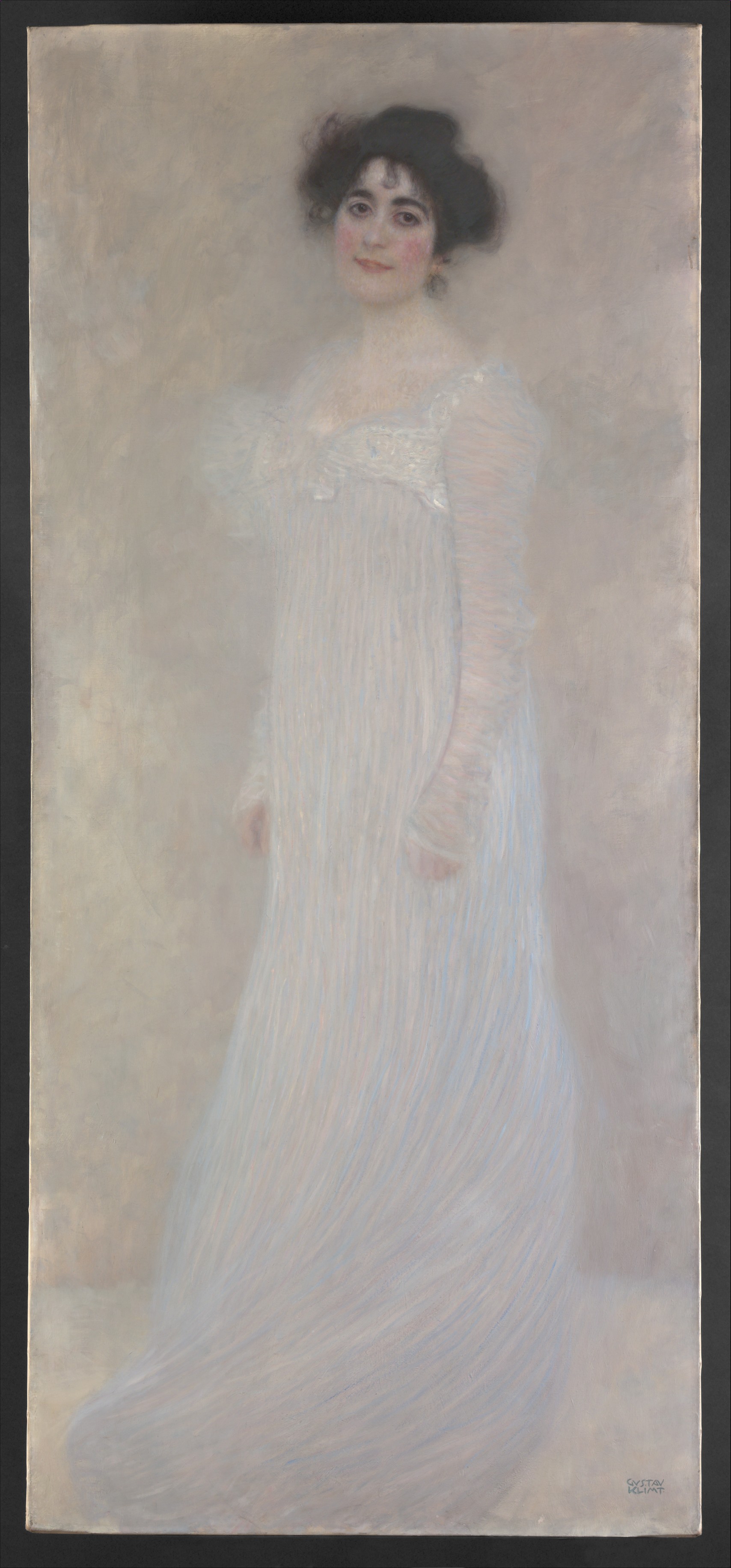
Serena Lederer did not buy Klimt's estate. The Klimt Foundation, Sotheby's and a provenance report show what she commissioned, bought and hosted.
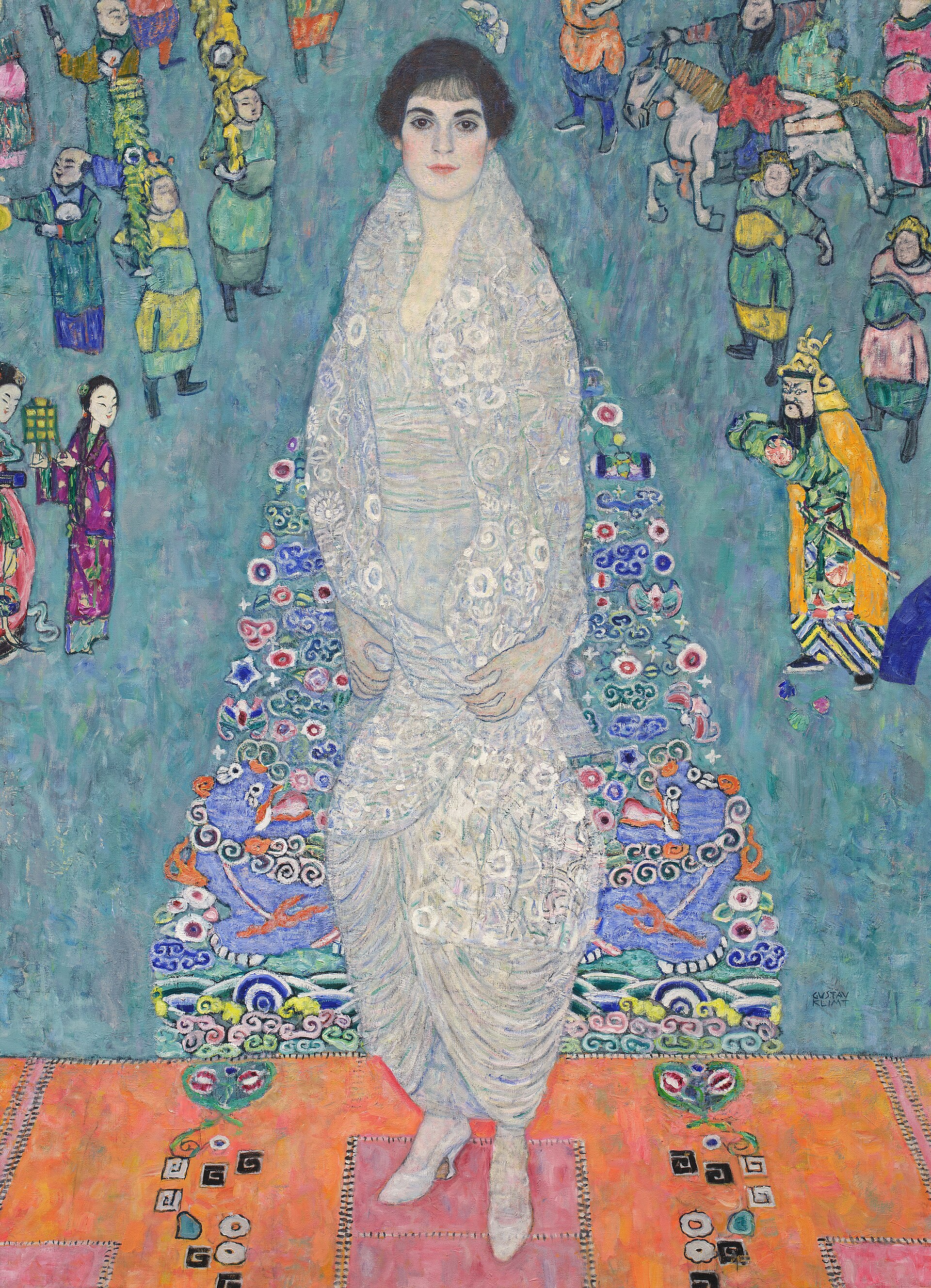
Records in this piece: Portrait of Elisabeth Lederer, Portrait of Wally Neuzil
On this page 6 sections
ContentsClose
In short
- The Klimt Foundation's database records that Klimt's heirs sold his remaining paintings at a memorial exhibition opening on 6 February 1919, with the Lederers among the buyers; the claim in print that Serena Lederer bought the whole estate is not supported by it.
- Three acts are Serena's on the evidence read: the 1917 commission of her mother's portrait, the 1919 drawings bought from Nebehay and printed as a 25-sheet portfolio and her help in 1919 to the Belvedere's purchase of the Faculty Painting Medicine. The 1905 rescue of the Faculty Paintings is recorded under August or under both.
- No complete inventory of the collection exists, and three sources count it three ways: over eleven paintings, eighteen named titles or 15 identified and 30 unidentified works from 1939.
- The Lederers also collected Renaissance and medieval works at auctions, so Klimt is only the part of the collection the fire made famous.
The estate was sold at a memorial exhibition, and she was one buyer in it
Serena Lederer did not buy Gustav Klimt's estate: the Klimt Foundation's database records that his heirs sold the remaining paintings at a memorial exhibition in 1919, and that the Lederer family were among the buyers. The claim that she bought it entire is in print, in Artnet News on 19 September 2025 (Sarah Cascone), which says that at Klimt's death Serena "sagely purchased the entirety of his estate". The Foundation's account does not support it.
The database lists the estate as modest savings, many unfinished and unsold paintings and countless drawings, and it says the whole was divided amongst four siblings, his niece Helene Donner, her aunt Emilie Floege (who by law had no claim) and his illegitimate children. The children received money only; the database says none of them got any drawings or paintings. The death notice put his property at 60,000 crowns, drawings and several paintings, clothes and linen, and the savings account held about 33,330 euros in today's money. The real assets were the unsold works.
The heirs asked the dealer Gustav Nebehay, a friend of Klimt and a collector of him, to hold a sales exhibition. It opened on 6 February 1919 with some twenty paintings, many drawings, Klimt's collection of Asian art and his library, all stamped as estate property. The late works sold for enormous sums: the database quotes a newspaper report that these fragments fetched five to six times what finished works had cost in the studio a year before. It says the buyers were mostly established Klimt collectors, among them the Lederer and Primavesi families and Sonja Knips.
Nebehay did not stop when the show closed. On 10 March 1919 Emilie Floege wrote to Georg Klimt that Nebehay wanted to keep some 300 drawings back and go on selling them for the heirs. The estate reached the market in at least two stages and through at least one dealer, and the Lederers were customers of the trade. That is a smaller claim than the one in print, and it is the one the documents carry.
Six things the documents put in her name or her family's
The sources read attribute six acts to Serena Lederer or to the Lederers as a couple, and they are not all the same kind of act.
| Year | What happened | Whose act the source names |
|---|---|---|
| 1899 | Klimt paints Serena Lederer; the Foundation calls it the start of an alliance of almost twenty years | Commission, sitter Serena |
| 1905 | Klimt repays the state his 30,000 crowns and keeps the Faculty Paintings | Foundation: with the help of August and Serena. Sotheby's, quoting Sophie Lillie: with August Lederer's help, and Lederer acquired Philosophy |
| 1914 to 1916 | Portrait of Elisabeth Lederer commissioned and acquired | August and Serena, per Sotheby's provenance |
| 1917 | Portrait of Charlotte Pulitzer, Serena's mother | Serena commissioned it, per Sotheby's |
| 1919 | A further mixed lot of drawings bought from Nebehay; a facsimile portfolio of the 25 most beautiful sheets printed by Gilhofer and Ranschburg | Serena, per the Klimt Foundation |
| 1919 | The Belvedere acquires the Faculty Painting Medicine via Ditha Moser | With the aid of Serena, per the Foundation; for the museum, not for the Lederer collection |
Three rows are Serena's on the evidence read: the 1917 commission, the 1919 drawings with the portfolio and her help to the Belvedere. The Foundation says she bought "another comprehensive mixed lot" of drawings from Nebehay in 1919. It does not identify the earlier lot the word "another" implies, and it does not say whether this one came out of the 300 drawings Nebehay was holding for the heirs. Ketterer, an auction house that has sold a copy of the portfolio, independently describes drawings from the Lederer collection printed in collotype a year after Klimt's death, though it does not say who ordered it.
The 1917 row comes with a letter. The Foundation quotes Klimt writing to Serena while he worked on her mother's portrait, asking whether 2000 to 3000 crowns could come earlier than the rest of the fee, and saying he was waiting for it like the devil for a poor soul. The Foundation says he likely found himself in difficult financial circumstances. The quotation is given without a date. The portrait of Charlotte Pulitzer has been lost since 1945, so the letter is now the better witness to it.
In 1905 the Lederers helped Klimt out of a state commission
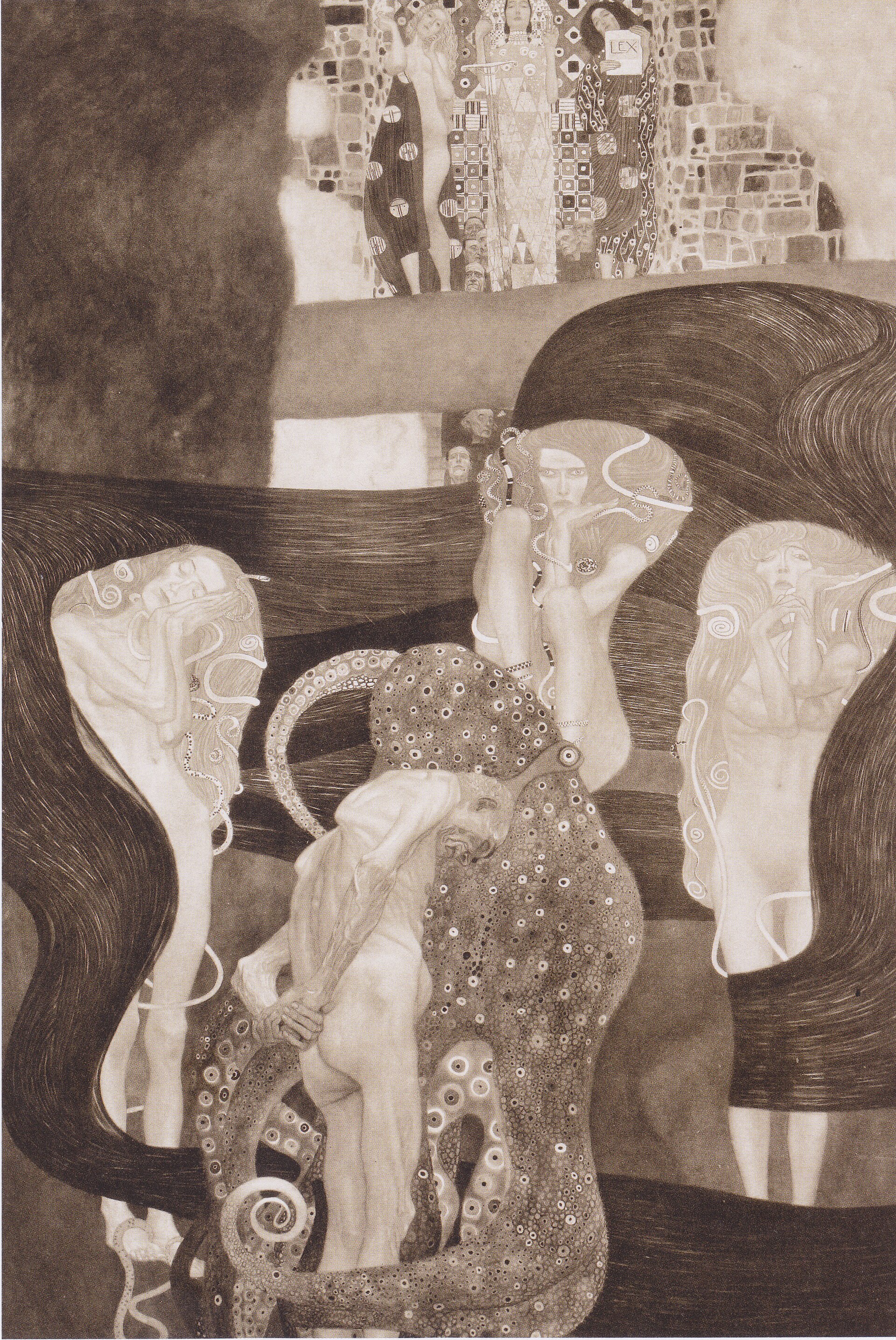
In May 1905 Klimt bought back the three Faculty Paintings and returned the 30,000 crowns he had been paid for the University of Vienna commission, and the Klimt Foundation says he did it with the help of August and Serena Lederer. Sotheby's gives the same figure, quoting Sophie Lillie's catalogue essay for the Neue Galerie, but names only August: with August Lederer's help Klimt returned the money, and in return Lederer acquired Philosophy. The Lederers then knocked two rooms into one to hang it, with Josef Hoffmann redesigning the space.
The sources speak of the couple here, and the Foundation's paragraph on the episode is written about August. How much each contributed to the repayment is not stated in anything read. A second Faculty Painting followed: the Foundation says that in 1919, after the deaths of Klimt and Koloman Moser, August Lederer was able to acquire Jurisprudence with the help of Egon Schiele.
What became of them is told two ways. The Foundation says all three Faculty Paintings burned at Schloss Immendorf in May 1945, and that Medicine, which had gone to the Belvedere in 1919, burned there with them. Facts and Files says that after Serena's death in 1943 her daughter Elisabeth was forced to sell paintings to dealers, among them Philosophy and Jurisprudence to the Austrian Gallery. The two accounts have not been reconciled here, and the reproduction below is of a destroyed work on the Foundation's account.
This is the best-described act of patronage in the file, and it rescued a commission rather than creating one. It is also the part of the story that belongs to the household and to August rather than to Serena by name, which is why it is kept apart from the acts above.
The salon, the drawing lessons and the introduction to Schiele
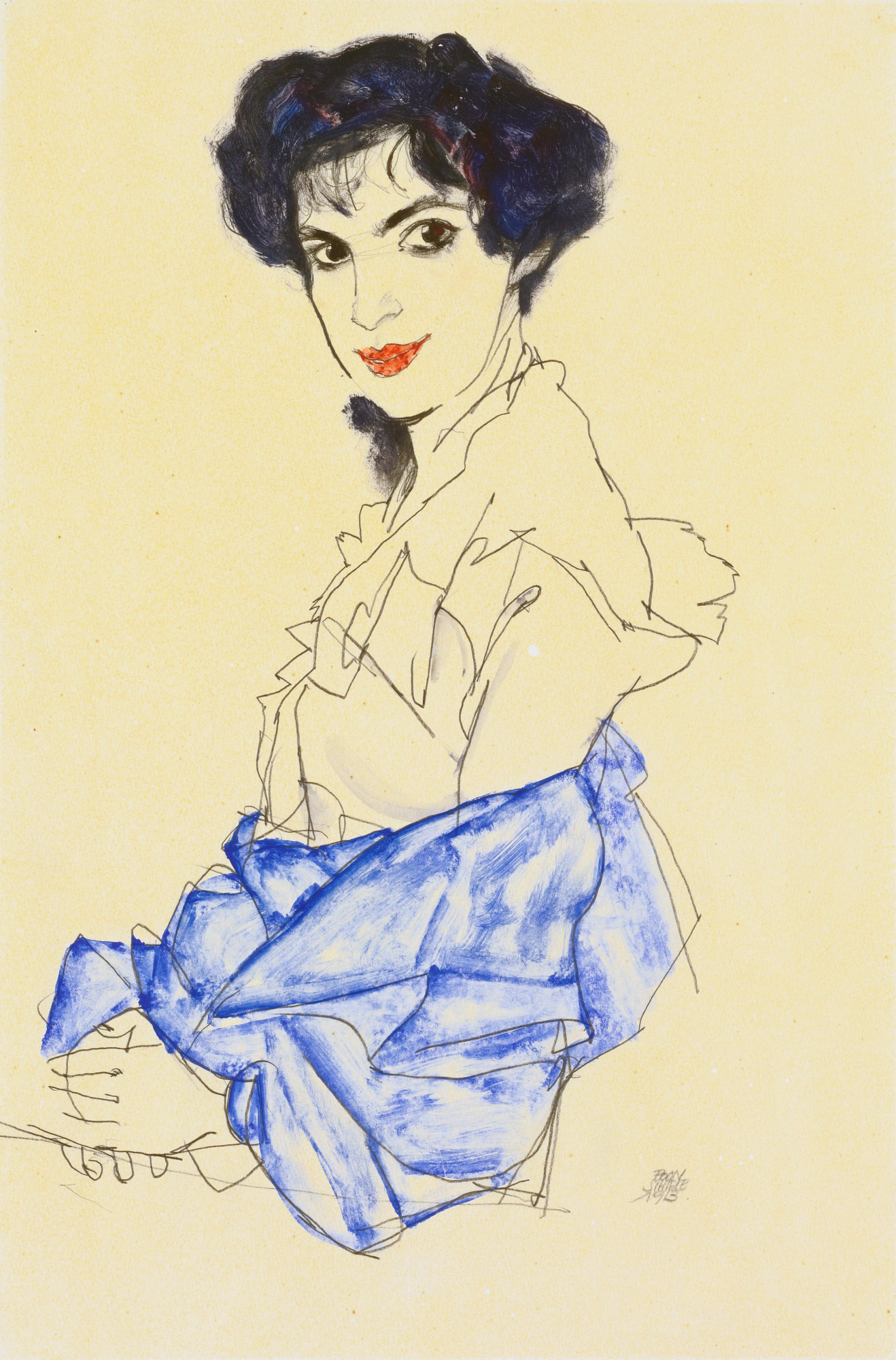
Klimt was a regular guest in the Lederer household, which the sources describe as weekly lunches, salons held by Serena and drawing lessons for her and for her daughter. The Foundation says Klimt gave Serena drawing lessons for years and cites Egon Schiele telling Arthur Roessler in 1912 that she had been Klimt's pupil for fourteen years. Sotheby's, quoting Lillie, says Klimt was hired as drawing teacher to Serena and to the young Elisabeth, and the Foundation adds that he fostered Elisabeth's talent before she entered the Imperial-Royal School of Arts and Crafts.
The salon was also how Klimt passed on a younger painter. Both sources say Klimt introduced Schiele to the family. Sotheby's puts Schiele at the Lederer estate in Gyor in 1912 to paint the eldest son, Erich, then fifteen, and Facts and Files, the Berlin provenance researchers, adds that Schiele gave Erich drawing lessons. The portrait of Elisabeth by Schiele that the archive holds is dated 1913, the year before Klimt's large canvas was commissioned.
One photograph fixes the room. Martin Gerlach photographed Serena Lederer's apartment at Bartensteingasse 8 in the 1920s or 1930s, and the caption in the Facts and Files report says three Klimts hang in the frame: Wally, The Golden Apple Tree and her own portrait. The Foundation's list of Lederer Klimts includes a Portrait of Wally of 1916 that burned at Immendorf; whether that picture shows Wally Neuzil is a separate argument and not one this piece makes.
Nobody can give the size of the collection and the sources count differently
No complete inventory of the Lederer collection exists, so every figure for its size is a reconstruction from lists made for different purposes, as the Facts and Files report puts it. The three accounts read count three different things.
| Source | What it counts | Figure given |
|---|---|---|
| Sotheby's lot note, 2025 | Klimt paintings and drawings | Over eleven paintings and hundreds of drawings |
| Klimt Foundation database, Lederer entry | Titles it names, by the desk's count: 3 family portraits, 2 Faculty Paintings and 13 other works including the Beethoven Frieze, which is a mural | Eighteen titles, plus numerous drawings |
| Facts and Files, 2020 to 2022 | Works of any kind still present in 1939 | 15 identified and not returned to Erich Lederer; 30 that could not be identified |
These do not contradict one another so much as measure different things, and the gap between eleven and eighteen is a reason to distrust any single number. The Foundation calls the collection the most comprehensive in private ownership of Klimt's work, and Sotheby's calls it the largest ever assembled; Sotheby's was also selling a Lederer portrait when it wrote that.
The collection was not only Klimt. Facts and Files says the couple bought Renaissance and medieval works at the sales of earlier collectors, among them Lanna, Beckerath and Kaufmann, and that the collecting of Schiele, Klimt and others began on Serena Lederer's initiative. Sotheby's names a Simone Martini, a Cranach and a Cellini. The Getty says a Martini panel of St Luke, an Italian jar and a sixteenth-century elephant it now holds came from the family, with a group of bronzes. A reader who knows the Lederers only as the Klimt people is seeing only the part that was photographed and then burned.
What the papers say about her as a patron, and what they leave out
On the documents read, Serena Lederer is established as a sitter, a commissioner of at least one portrait, a buyer and publisher of Klimt drawings in 1919, a helper in a museum purchase, a salon host and a student of Klimt, and she is called the driving force behind the collection by the Foundation, with Facts and Files crediting the collecting to her initiative.
The papers leave out the money. None of the sources read gives a price for the 1899 portrait, the 1917 portrait or the 1919 drawings. A figure of 35,000 crowns for the 1914 commission circulates in secondary accounts, and no source read supports it, so it is not used here. The only sum in the file, 30,000 crowns, is what Klimt repaid the state. The papers also leave out who decided: the big paintings are recorded under August or under both names. This piece reports what the record shows and not what she must have done.
A fair summary is narrower than the claim in print and more interesting. She was a collector who was also a friend, a sitter, a pupil and a client, who bought from the trade after the estate sale, and whose name is on the most personal acts in the file: her mother's portrait, the drawings, the lessons.
Questions
Artnet News says so in 2025, but the Klimt Foundation does not support it. The Foundation says the heirs sold the paintings through a memorial exhibition run by Gustav Nebehay from 6 February 1919, and that the buyers, mostly established collectors, included the Lederer and Primavesi families and Sonja Knips.
Sotheby's provenance says August and Serena Lederer commissioned it in 1914 and acquired it in 1916. Sotheby's adds that Serena allegedly took it from Klimt's studio, a story it says may or may not be accurate. No source read gives a price.
Facts and Files says the couple bought Renaissance and medieval works at auctions, and Sotheby's names a Simone Martini, a Cranach and a Cellini. They also collected Schiele, whom Klimt introduced to them.
The answer depends on the source. No complete inventory exists; Sotheby's gives over eleven paintings and hundreds of drawings, and the Klimt Foundation's entry names eighteen titles.
Sources
- 1Gustav Klimt-Datenbank (Klimt Foundation, Vienna), Benefactors: The Lederer Family. klimt-database.com/en/...
- 2Gustav Klimt-Datenbank (Klimt Foundation, Vienna), Posthumous Fame and Legend: Estate; Estate Exhibition Organized by Gustav Nebehay; Immendorf Castle. klimt-database.com/en/...
- 3Gustav Klimt-Datenbank (Klimt Foundation, Vienna), The Klimt Affair Surrounding the Faculty Paintings. klimt-database.com/en/...
- 4Sotheby's, Leonard A. Lauder, Collector, New York, 18 November 2025, lot 8, Gustav Klimt, Bildnis Elisabeth Lederer: provenance and catalogue note. sothebys.com/en/...
- 5Facts and Files Historians, Art Collection of August, Serena and Erich Lederer (provenance research project, 2020 to 2022). factsandfiles.com/en/...
- 6J. Paul Getty Trust, The Lederer Collection, Lost and Found, 31 May 2016. blogs.getty.edu/iris/...
- 7The Metropolitan Museum of Art, Gustav Klimt, Serena Pulitzer Lederer (1867-1943), accession 1980.412. metmuseum.org/art/...
- 8Sarah Cascone, Artnet News, 'This Fabulous Gustav Klimt Portrait Is Set to Smash Auction Records', 19 September 2025: the passage on Serena Lederer and Klimt's estate. news.artnet.com/art-world/...
- 9Ketterer Kunst, lot entry for Gustav Klimt, Fuenfundzwanzig Handzeichnungen (Gilhofer and Ranschburg, 1919). kettererkunst.com/details-e.php
More in The Women Behind the Art
The partThe sitter who wrote that her portrait no longer looked like her: Cecilia Gallerani and the Lady with an Ermine
Cecilia Gallerani's own letter of 1498 says her Leonardo portrait no longer looked like her.
The Woman in the Rokeby Venus Is Nameless and Her Attacker Explained Herself Repeatedly
No document names a woman in Velazquez's Rokeby Venus. Mary Richardson, who slashed it in 1914, explained her choice in a statement, a memoir and...
What the Opera Paid Marie van Goethem
The model for Degas's Little Dancer is documented in a payroll and two lines of his handwriting.