Partage: The Division That Was Legal
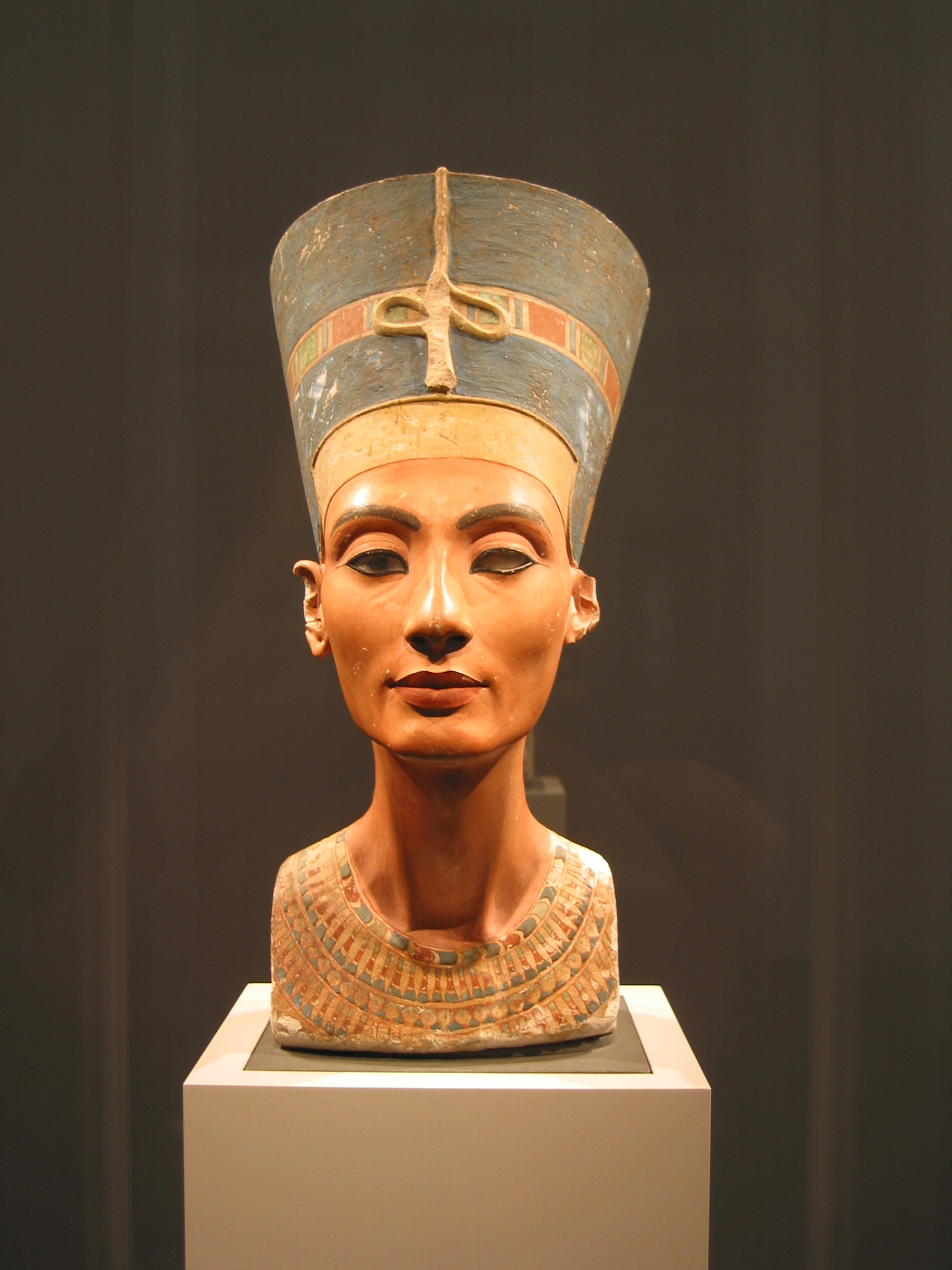
Berlin's title to the Nefertiti bust rests on a document written by Egypt's own inspector on 20 January 1913. That single fact reshapes the whole restitution argument around it.
Records in this piece: Bust of Nefertiti, Painted Glass Goblet from the Begram Hoard, The Benin Bronzes
On this page 7 sections
ContentsClose
In short
- Partage was not a loophole. It was the consideration in an excavation contract: the source state issued the licence, a private sponsor paid for the dig, and the finds were split between them at the end of the season.
- Berlin's title to the Nefertiti bust rests on a document rather than on possession. The Proces-Verbal du partage was written out by hand on 20 January 1913 by the Egyptian antiquities inspector Gustave Lefebvre and countersigned by Ludwig Borchardt.
- The division did not put the bust into a museum. It vested the German share in James Simon, the private sponsor, and the Berlin museums own the bust today because Simon gave it to them in 1920.
- The 2024 petition led by Zahi Hawass asks for the bust on the ground that it left Egypt illegally, and Hawass has said he is not seeking objects that left legally. That framing concedes the mechanism and attacks the particular division.
- At Begram the identical mechanism produced two halves that are both on public display, one in Kabul and one in Paris, and the Paris half is not commonly described as loot.
- Where no agreement existed, as at Benin in 1897, the legal argument is a different argument entirely. Conflating the two costs the claimant the stronger case and the holder the honest one.
Partage was a payment, not a theft
Partage is the division of excavated finds between the state that licensed the dig and the party that paid for it. The word is French because the system was largely codified in French-administered antiquities services, and it governed most foreign excavation in Egypt, Iraq, Iran, Afghanistan and the eastern Mediterranean from the late nineteenth century until the middle of the twentieth.
The economics are simple and they are the reason the system existed. Excavation is expensive, source states in this period rarely funded it, and foreign institutions and private patrons would not fund it for nothing. A share of the finds was what the sponsor received in exchange for the money. The Staatliche Museen zu Berlin describes the Amarna arrangement in exactly those terms, and the Prussian Cultural Heritage Foundation is blunter still: the agreement provided for the equal division of all finds in exchange for the excavation's funding.
The licence system was also, in its own period, a control measure. Berlin's account of the Amarna concession records that the Egyptian authorities were granting licences to experienced archaeologists in order to counteract the growing threat of looting and illegal export. Partage was the price of bringing digging inside a regulated system, and the objects that left under it are the objects that were dug under supervision, catalogued, and photographed.
This is why partage sits so awkwardly in the restitution debate. Every instrument that works against looted material works because something was wrong at the moment of transfer: no title passed, or title passed under duress, or the buyer knew. Under a partage, the transfer was the point of the contract, and the source state signed it.
The Nefertiti bust was allotted on a signed document, and the document survives
The bust of Nefertiti was allotted to the German share at a formal division held on 20 January 1913, and the paperwork for that division still exists. The Staatliche Museen zu Berlin publishes its own account of the day: the Egyptologist and excavation inspector Gustave Lefebvre oversaw the partage, the finds were divided into equal parts, described in the museum's account as a moitie exacte, and each party received seven groups of finds of comparable significance.
The instrument was called the Proces-Verbal du partage. It was written out by hand on 20 January 1913 by Lefebvre and countersigned by Ludwig Borchardt, who had led the excavation. Borchardt's own diary records the morning: Lefebvre arrived at ten, was shown photographs of all the finds, examined the objects in the registrar's office with the find journals made available to him, and looked particularly closely at the hard-stone pieces.
On the Egyptian side of the list, at the top, was the altarpiece now known as the Stele of Akhenaten and his family. On the German side, in the same position, was the bust of Nefertiti, entered as an object of equal value. Whatever else is arguable about that morning, the two states were trading named things against each other on a written schedule, and both sides had seen photographs.
The Prussian Cultural Heritage Foundation stated its position publicly on 13 January 2023. Its words are that the documents clearly prove Nefertiti was legitimately awarded to the Berlin party in the course of the division, and that there can therefore be no question of deception during the partage. That is an assertion by the holding foundation, and it is the assertion any claim has to meet.
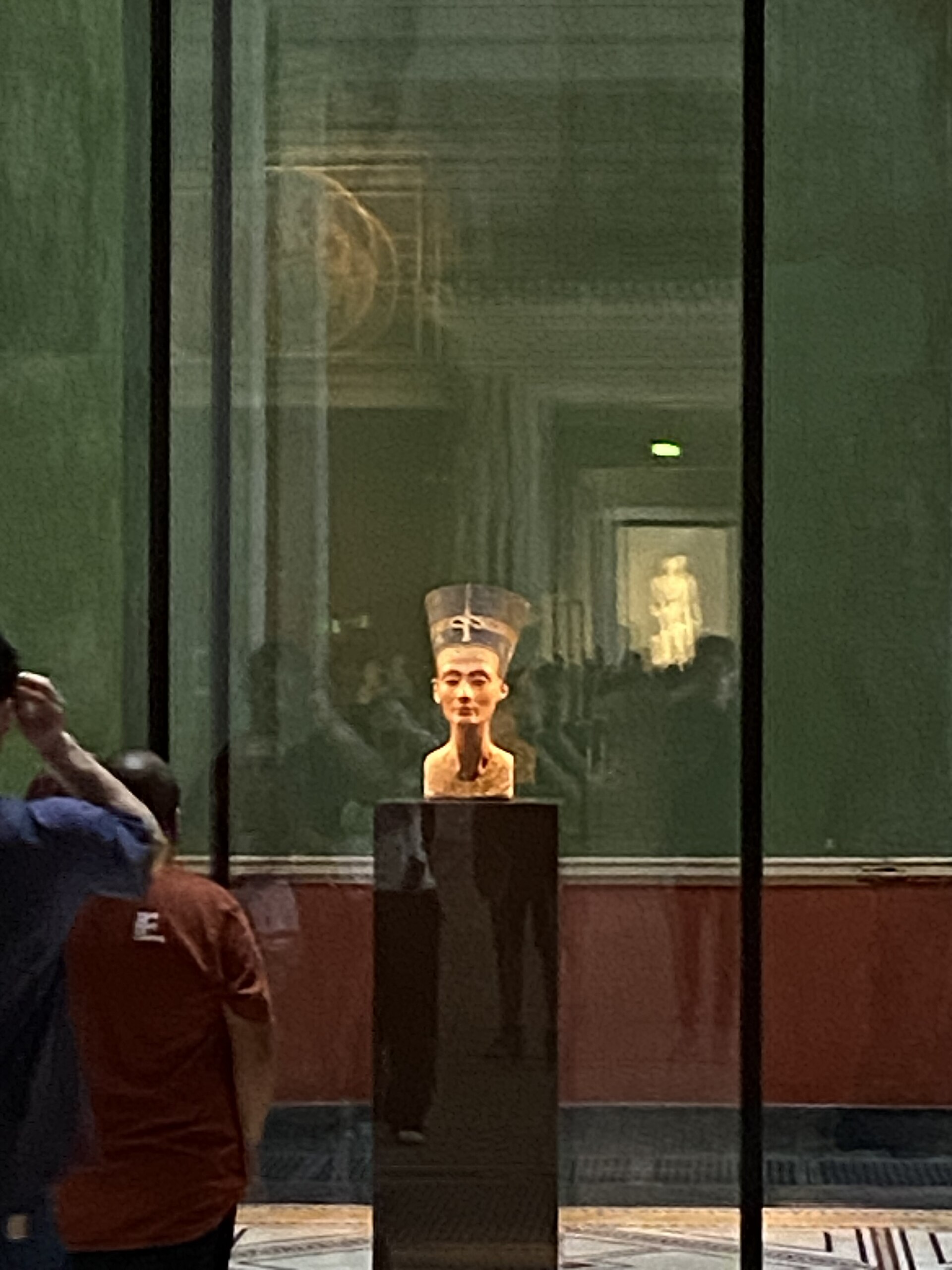
The division put the bust into private hands before any museum touched it
The finds allotted to the Berlin party in 1913 became the property of James Simon, not of the Berlin museums. Simon was the Berlin entrepreneur who had funded the Amarna excavation as its sole sponsor, and by the terms of the contract the German half of each division belonged to him.
He kept the bust at his villa in Tiergartenstrasse. In 1920 he gave it, with the rest of the Amarna material, to the museums of Berlin. The Staatliche Museen zu Berlin calls this an extraordinarily generous gesture, and on any reading it was one: Simon handed over the most valuable single object to come out of the dig he had paid for.
For a provenance line this matters more than the sentiment does. The chain is not excavation to museum. It is excavation, then partage, then private ownership by the sponsor for seven years, then gift. A claim against the museum has to run through a private gift made by a man who had lawful title under the division, and any argument that the division was defective has to explain what that does to a gift accepted in good faith thirteen years earlier by a third party.
It is also a reminder of who paid. The public institution that displays the object today did not fund the work that produced it. A private patron did, and the partage was the mechanism that repaid him.
Begram shows the same mechanism running to a calmer result
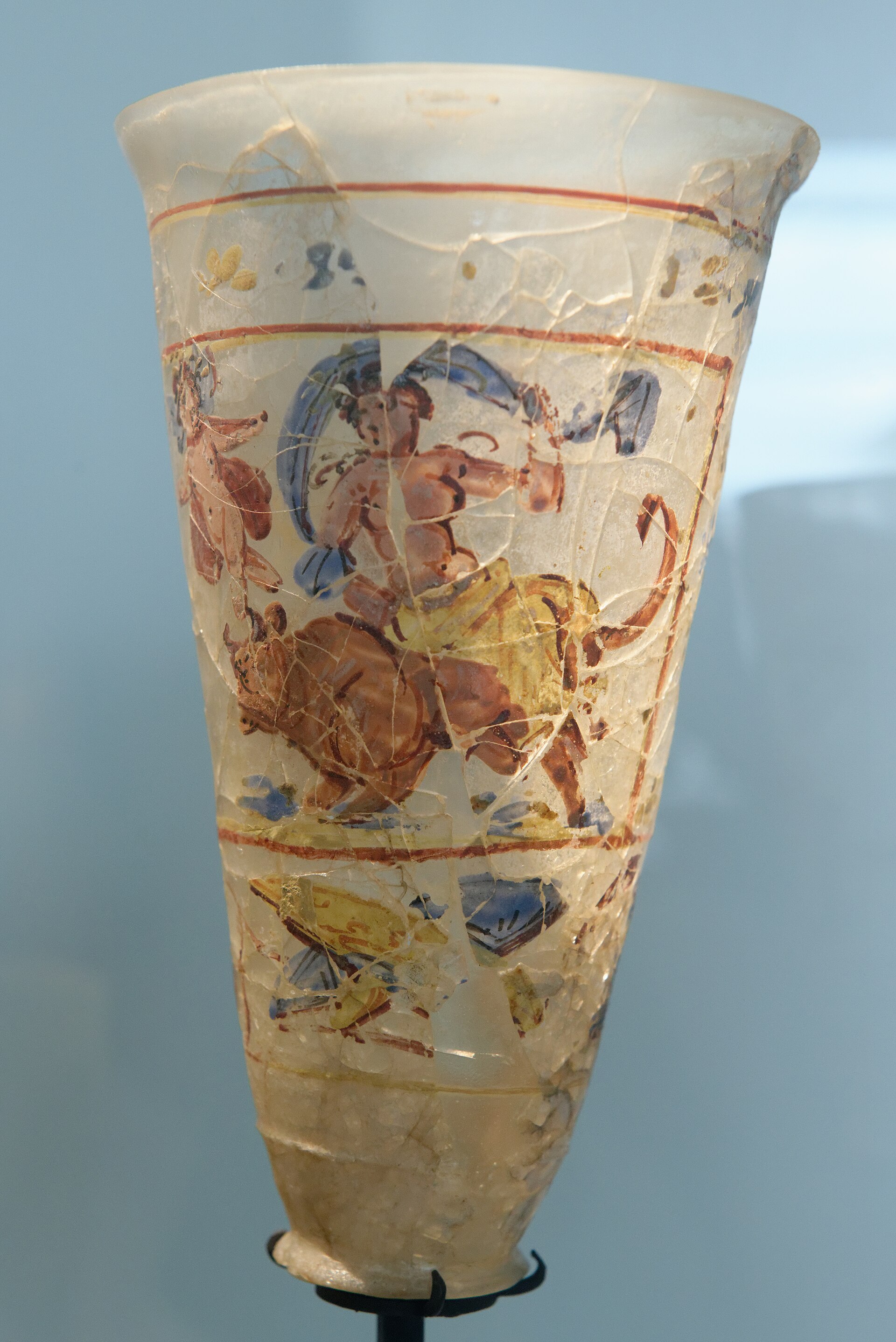
The Begram hoard was divided under an agreement signed in 1922 between France and Afghanistan, and both halves are still in public collections. The French Archaeological Delegation in Afghanistan excavated the site from 1936, and in 1937 and again in 1939 Ria Hackin found two sealed rooms holding Roman bronzes, Alexandrian and Levantine glass, Chinese lacquer and Indian ivories together in one deposit.
The Musee Guimet, which holds the French share, states the terms on its own collection pages: in conformity with the 1922 agreement, the treasure was equally divided between the Guimet and the National Museum of Afghanistan in Kabul, with Kabul retaining the unique and exceptional works. That last clause is the interesting one. The division was not a blind halving; the source state took first claim on the pieces that could not be duplicated.
The painted glass goblet in this archive stayed in Kabul under that clause. Comparable painted goblets from the same excavation went to Paris. Two objects of the same class, from the same rooms, in the same year, are in two countries because of one signature in 1922, and the Paris ones are not the subject of a repatriation campaign.
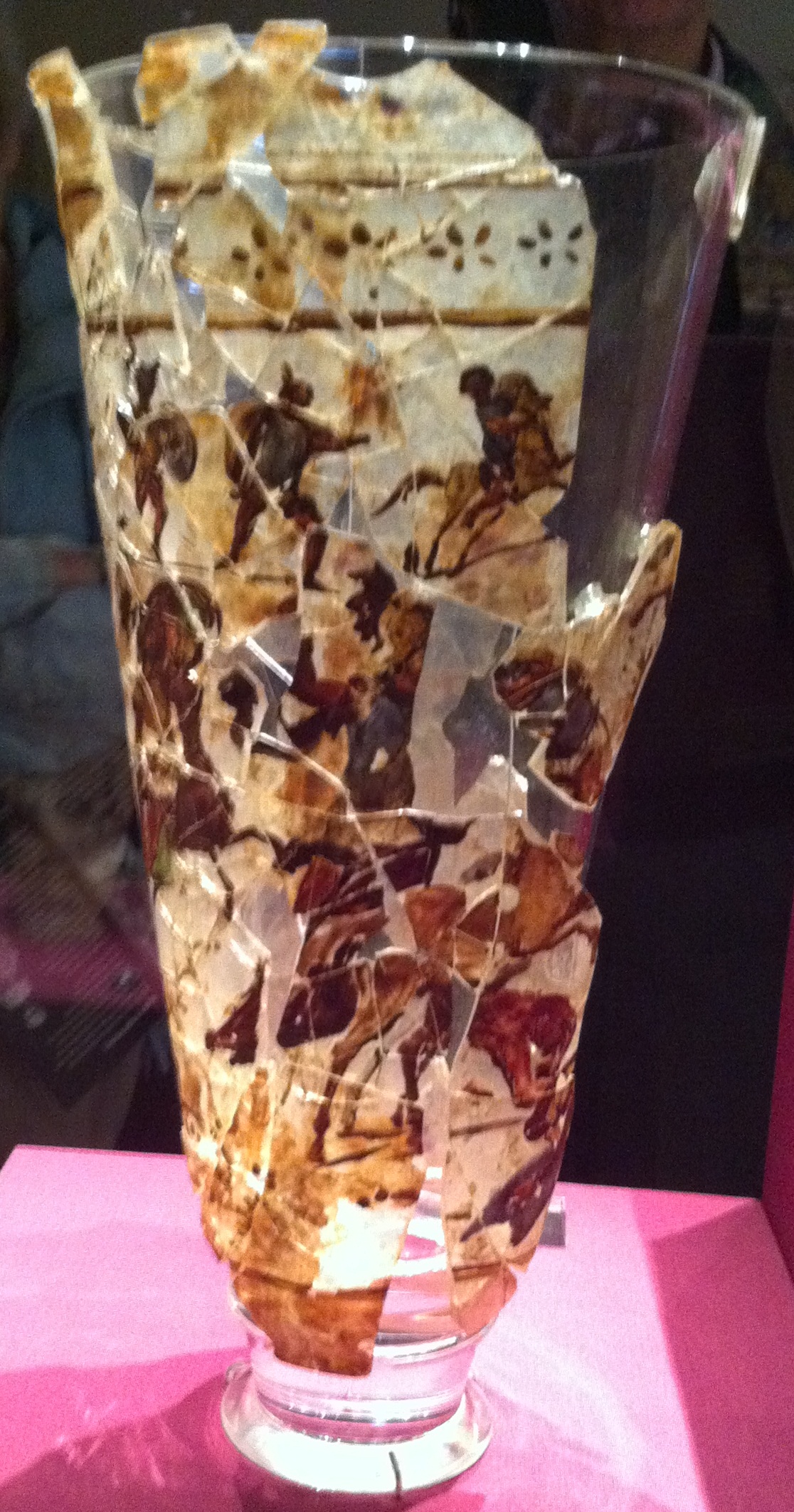
The French half of Begram is in Paris and nobody calls it loot
The Guimet's Begram glass came to Paris by the same instrument that kept the Kabul glass in Kabul. It is displayed under the museum's own statement of how it was acquired, which names the 1922 agreement in the object record rather than burying it.
Set the three cases side by side and the variable that decides the temperature of the argument is not the age of the objects, the distance they travelled, or the colonial context. It is whether a document exists and who signed it.
| Object group | Year of transfer | Instrument | Source-state signature | Where the material is now |
|---|---|---|---|---|
| Amarna finds, including the Nefertiti bust | 1913 | Proces-Verbal du partage, 20 January 1913 | Gustave Lefebvre, excavation inspector | Split; German share to James Simon, given to Berlin in 1920 |
| Begram hoard | 1922 agreement, finds of 1937 and 1939 | France-Afghanistan agreement of 1922 | Signed by Afghanistan as a state party | Split between Kabul and the Musee Guimet, Paris |
| Benin court objects | 1897 | None. Military expedition and distribution of spoils | None | Dispersed across several hundred institutions worldwide |
The pattern holds across the three rows. Where a source-state official signed a schedule, the holder can point at the schedule, and the dispute becomes an argument about the terms. Where nobody signed anything, there is no schedule to argue about, and the dispute is about the act itself.
Where there was no agreement, the argument is a different argument
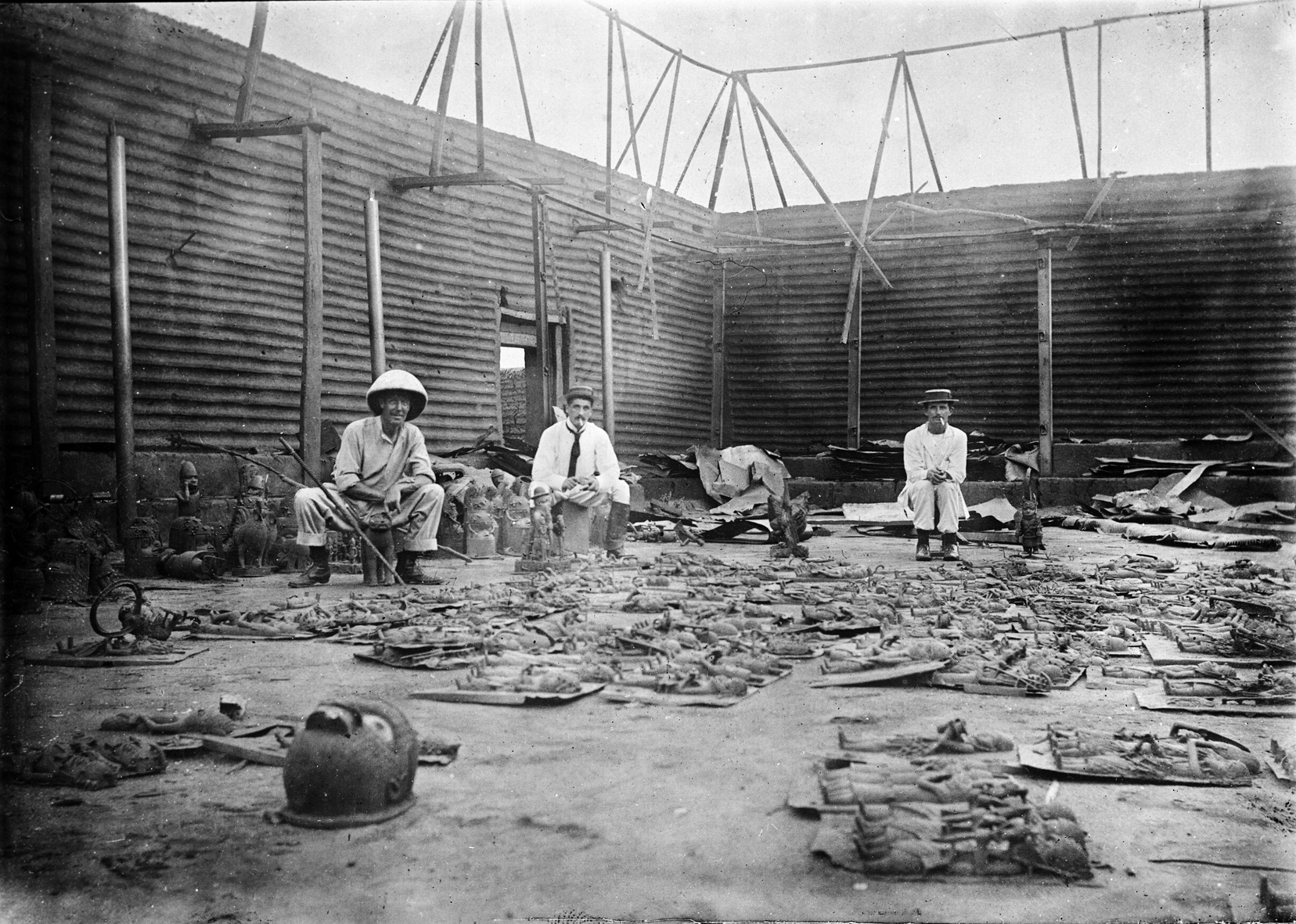
The Benin material left Benin City in February 1897 during a British military expedition, and no division agreement of any kind stands behind it. The objects were taken from the Oba's compound, laid out, photographed, and distributed as spoils, and the photograph made at the time is one of the plainest documents of seizure in existence.
Claims over that material do not have to attack a document, because there is none to attack. What they run into instead is museum-constitution law, which is a separate obstacle and the subject of its own study in this archive. The point here is narrower: a Benin claim and a Nefertiti claim fail or succeed for opposite reasons, and an advocate who runs them together weakens both.
Zahi Hawass, launching his petition in September 2024, drew the line himself. He asked for the return of the bust on the ground that it was removed from Egypt illegally after its discovery, and he said in the same appearance that he is not calling for the repatriation of artefacts taken out of Egypt legally. That is a considered position, and it puts the whole weight of the Nefertiti claim on one proposition: that the 1913 division was not what its paperwork says it was.
How to read a partage line without flattering either side
A provenance link that reads partage is a link with a document behind it, and the first question is whether anyone has read the document. In the Amarna case the Proces-Verbal is known, described by the holding institution, and published on; in many other cases the division is asserted in a museum record and no schedule has ever been produced. Those two situations look identical in a one-line provenance and they are not the same.
The second question is what the schedule actually says. A division recorded as equal can still be argued over on how a particular object was described, valued or grouped, and that argument is legitimate and specific. It is a different exercise from asserting that the whole system was void, which no court has held and which would unsettle a very large number of holdings in the source states themselves.
The third question is who took title. Where the sponsor was private, as at Amarna, the museum's ownership rests on a later gift or purchase, and that step deserves its own line in the provenance rather than being folded into the excavation.
We grade these links documented where the instrument is identified and disputed where a division is asserted without one. It is a distinction that reads as pedantic until a claim is filed, at which point it is the only thing on the page that matters.
Questions
Partage is the division of excavated finds between the state that licensed an excavation and the party that funded it. It was standard practice for foreign digs in Egypt, Afghanistan and much of the Near East from the late nineteenth century, and the sponsor's share was the consideration for paying for the work.
The Prussian Cultural Heritage Foundation stated on 13 January 2023 that the documents prove the bust was legitimately awarded to the Berlin party in the 1913 division. Egypt's national committee, led by Zahi Hawass, asserts in its 2024 petition that the bust was removed illegally. The dispute turns on the conduct and terms of that one division rather than on whether partage in general transferred title.
James Simon, the Berlin entrepreneur who was the sole sponsor of the Amarna excavation. By contract the German share of the 1913 division became his property, he kept the bust at his villa in Tiergartenstrasse, and he gave it with the rest of the Amarna finds to the Berlin museums in 1920.
Because the instruments that reverse looting all depend on something having gone wrong when the object changed hands. Under a partage the transfer was the agreed purpose of the contract and the source state signed it, so a claimant has to attack the terms or conduct of that specific division rather than the fact of the transfer.
Yes. The Musee Guimet records that under an agreement signed in 1922 between France and Afghanistan the Begram treasure was equally divided between the Guimet and the National Museum of Afghanistan, with Kabul retaining the unique and exceptional pieces. Both halves remain in public collections.
Sources
- 1Staatliche Museen zu Berlin, Aegyptisches Museum und Papyrussammlung, 'The Find: Where was the bust of Nefertiti found?', section 'The Partage'. The holding museum's own account of the division of 20 January 1913, Gustave Lefebvre's Proces-Verbal du partage, the seven groups on each side, and James Simon's title and 1920 gift. smb.museum/en/...
- 2Stiftung Preussischer Kulturbesitz, 'The History of the Finds: Nefertiti and the Pergamon Altar', official statement, 13 January 2023. The foundation's position that the division was documented and lawful and that title passed to James Simon. preussischer-kulturbesitz.de/en/...
- 3Musee Guimet, collections page, 'Two female figures under a portico (Begram treasure)'. The museum's statement of the 1922 France-Afghanistan agreement, the equal division of the Begram treasure, and Kabul's retention of the unique and exceptional works. guimet.fr/en/...
- 4Al Jazeera, 'Egyptian archaeologist urges German museum to return Nefertiti's bust', 8 September 2024. Zahi Hawass's petition, his statement that the bust was removed illegally, and his statement that he is not calling for the repatriation of artefacts taken out of Egypt legally. aljazeera.com/news/...
More in Provenance and Restitution
The partA return is a new arrangement, not a conclusion
Four contested antiquities, four different things a return turned out to be: a renaming, a rotating loan, a forfeiture nobody enforced and a broken...
When the Only Proof of Where an Object Was Is a Photograph
The Third Imperial Easter Egg was photographed once, in March 1902, and that single plate is what identified it in 2014.
Moved for Safekeeping Is a Link in the Chain
Nine evacuations in this archive: three objects never returned to the building they left, one came back unrecognised and title changed once, by a...