Estimate upon request
When a catalogue prints no estimate, a number still reaches the press before the sale. In the six cases in this archive the withheld figure was not absent, it was relocated.
Records in this piece: Portrait of Elisabeth Lederer, Salvator Mundi, Portrait of a Young Man Holding a Roundel
On this page 7 sections
ContentsClose
In short
- In all six lots in this archive that carried a withheld or open-ended estimate, a figure still reached the press before the sale. The number was not absent from the market, it was moved out of the document that binds and into one that does not.
- The briefed figure is not a better estimate. Against the hammer it missed by a factor of four on the Salvator Mundi and it missed low on the Chenghua chicken cup, which sold under the top figure the press had been given.
- In excess of is a floor, not a forecast. Botticelli's Portrait of a Young Man Holding a Roundel was catalogued at an estimate in excess of 80 million dollars and the hammer fell at exactly 80,000,000.
- The same picture can be catalogued both ways. The Salvator Mundi carried a printed estimate of 1,200 to 1,800 dollars in New Orleans in 2005 and no printed estimate at all at Christie's in 2017.
Six lots in this archive were offered without a printed estimate
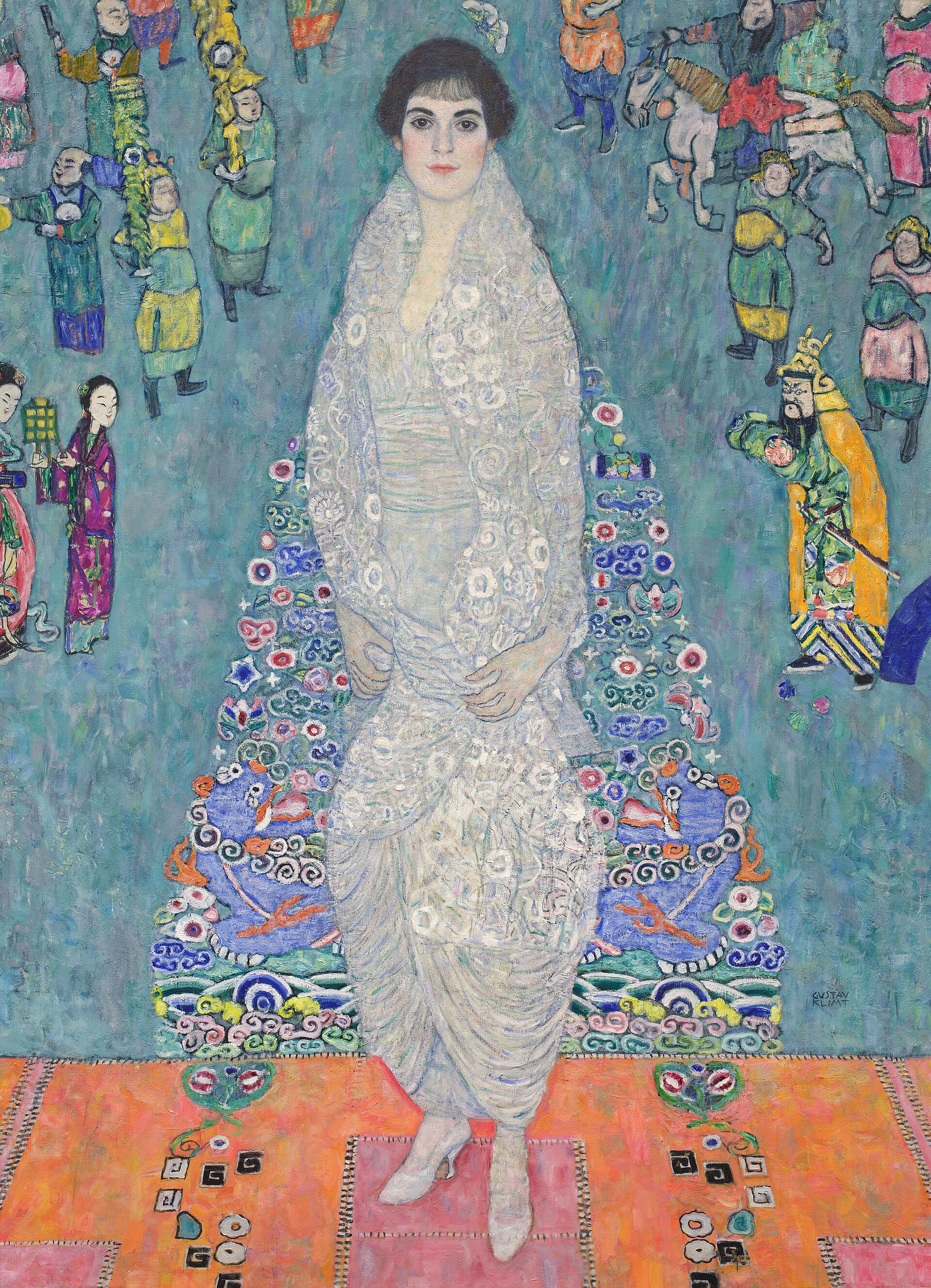
Six of the 265 auction results recorded in this archive carry an estimate that is not a range of numbers. Instead the catalogue prints a sentence: Estimate Upon Request, or in the region of a figure, or in excess of a figure. They are the six most expensive lots we hold, which is the first thing to say about the practice, and they run from the Chenghua chicken cup at Sotheby's Hong Kong in 2014 to the Klimt portrait of Elisabeth Lederer at Sotheby's New York in November 2025.
The usual reading of a withheld estimate is that the house does not want to anchor the bidding, or that the consignor does not want a public number attached to the property if it fails. Both are probably true and neither is checkable from outside. What is checkable, and what this archive can show because it records the pre-sale reporting alongside the result, is something narrower and more useful: in every one of the six, a number reached the public before the sale anyway.
That is the finding. The withheld estimate is not a missing number. It is a number that has been moved out of the catalogue, which is a document with contractual weight, and into the press, which is a document with none.
The number leaves the catalogue and arrives in the newspaper
In each of the six sales the figure that the catalogue declined to print was briefed to reporters, and in each case it was published days or weeks before the lot came up. Sotheby's printed Estimate Upon Request against the Klimt and the press carried a figure in the region of 150 million dollars; the auctioneer then opened the bidding at 130 million, which is itself a disclosure of where the house believed the floor was. Christie's catalogued the Salvator Mundi at an estimate in the region of 100 million dollars, a form of words that is a number in a sentence rather than a range. Sotheby's Hong Kong offered the Ru guanyao brush washer with the estimate on request and the pre-sale reporting put the expectation in the region of 100 million Hong Kong dollars, quoted at about 13 million US.
The practical effect for a bidder is not that information is withheld. It is that the information arrives through a channel that carries no obligation. A printed estimate sits inside a catalogue whose conditions of sale the buyer contracts on, and houses are careful about what they print there. A figure given to a journalist is subject to no such care, is frequently rounded, is sometimes a range collapsed to its midpoint by the reporter, and can be corrected without anyone being told. When you read the briefed figure you are reading marketing, and it should be weighted accordingly.
The briefed figure is not a better estimate
If withholding the estimate produced a more accurate private number, you would expect the briefed figure to sit closer to the hammer than an ordinary printed estimate does. It does not. Across the six it misses badly, and it misses in both directions, which is the detail that undercuts the idea that these figures are quietly conservative.
| Lot and sale | Estimate as published | Figure reaching the press | Hammer | Amount payable |
|---|---|---|---|---|
| Klimt, Portrait of Elisabeth Lederer. Sotheby's New York, 18 November 2025 | Estimate Upon Request | In the region of USD 150 m | USD 205,000,000 | USD 236,360,000 |
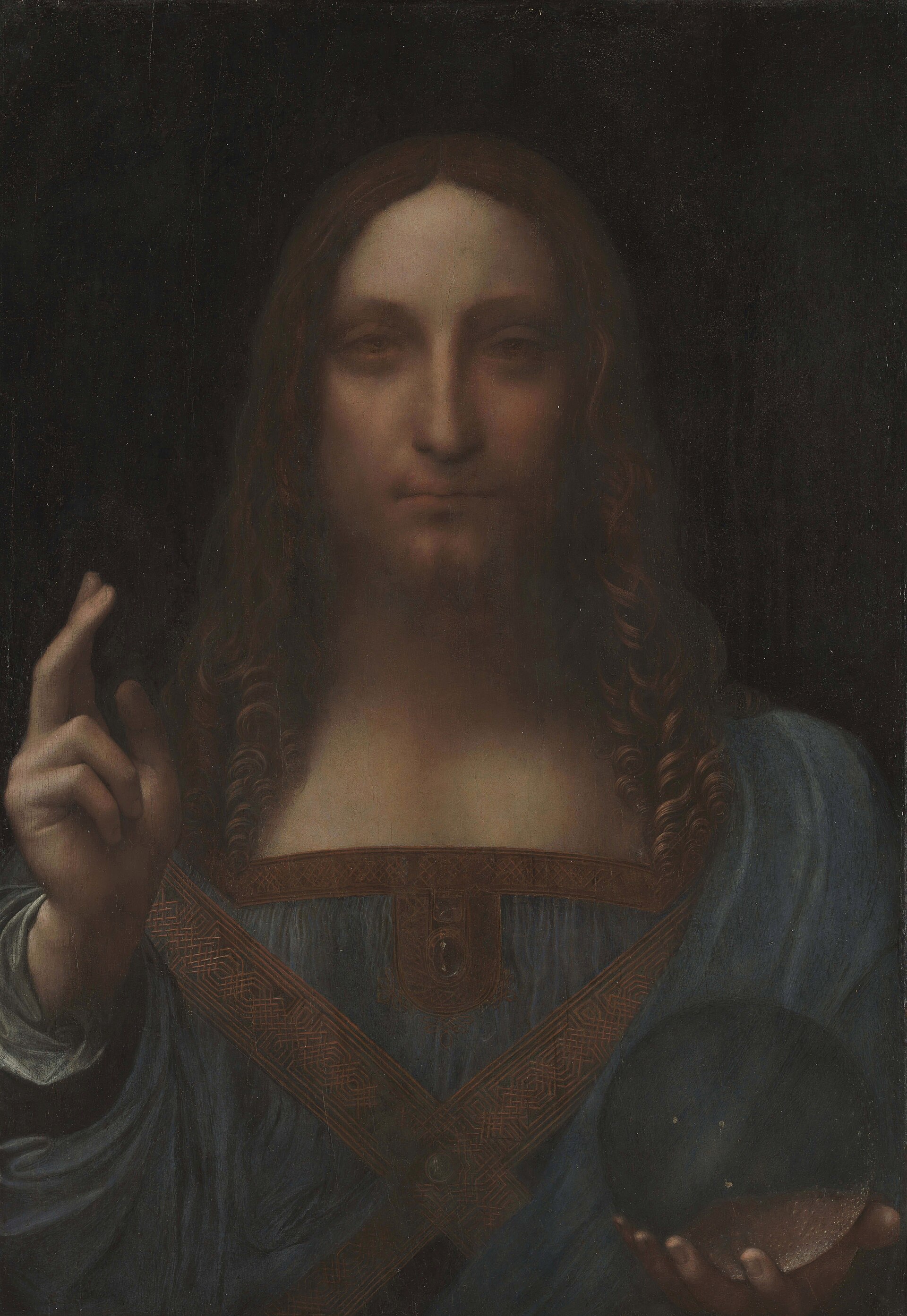
| Salvator Mundi, attributed to Leonardo. Christie's New York, 15 November 2017 | In the region of USD 100,000,000 | USD 100 m | USD 400,000,000 | USD 450,312,500 |
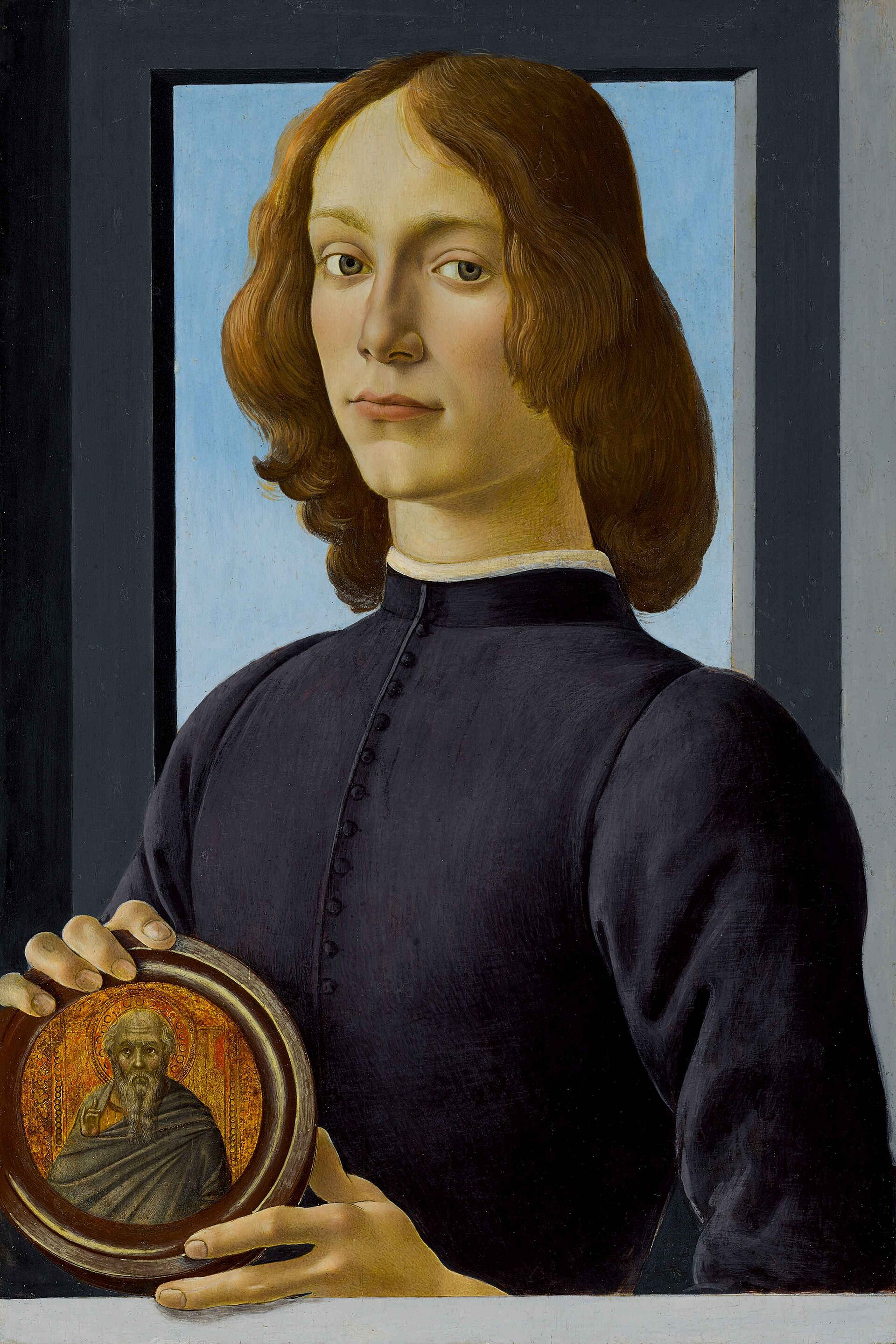
| Botticelli, Portrait of a Young Man Holding a Roundel. Sotheby's New York, 28 January 2021 | In excess of USD 80,000,000 | USD 80 m | USD 80,000,000 | About USD 92.2 m |
| Ru guanyao brush washer. Sotheby's Hong Kong, 3 October 2017 | Estimate upon request | About HKD 100 m, quoted as about USD 13 m | HKD 260,000,000 | HKD 294,287,500 |
| Chenghua chicken cup, Meiyintang. Sotheby's Hong Kong, 8 April 2014 | Estimate upon request | Top expectation about HKD 300 m | HKD 250,000,000 | HKD 281,240,000 |
| Canaletto, Return of the Bucintoro. Christie's London, 1 July 2025 | In excess of GBP 20 m | GBP 20 m | GBP 27,500,000 | GBP 31,935,000 |
Read the last two columns together and the spread is enormous. The Salvator Mundi made four times the figure in its own catalogue. The chicken cup made less at the hammer than the top number the press had been given, and only cleared it once the premium was added, which is a different thing and is exactly the kind of conflation this publication separates by habit. A practice that produces a four-times miss in one direction and a shortfall in the other is not a forecasting method.
In excess of is a floor, and once it was met exactly
The phrase in excess of does something different from estimate upon request, and the difference matters. It publishes a number and declares it a minimum. In doing so it tells the room roughly where the reserve sits, since a house will not normally advertise a floor above the level at which the consignor has agreed to sell.
The Botticelli is the case that makes this visible. Sotheby's catalogued Portrait of a Young Man Holding a Roundel with an estimate in excess of 80 million dollars for the Master Paintings and Sculpture sale of 28 January 2021, and the hammer fell at exactly 80,000,000 dollars. Our record of the sale notes that bidding was thin and slow from 78 to 80 million and closed between two of the house's own specialists on the telephone. The published minimum was met and not exceeded by a single bid.
We would not build a theory on one lot, and one lot is what we have. But it is a clean illustration of a mechanism that is easy to state and hard to see: an advertised floor is a target as well as a threshold, and a bidder who reaches it has done everything the catalogue asked. The Canaletto, offered in excess of 20 million pounds and hammered at 27.5 million, shows the same form of words behaving quite differently in a contested room. The floor is not a prediction. It is a starting position that the room may or may not have a reason to leave.
The same object, catalogued both ways
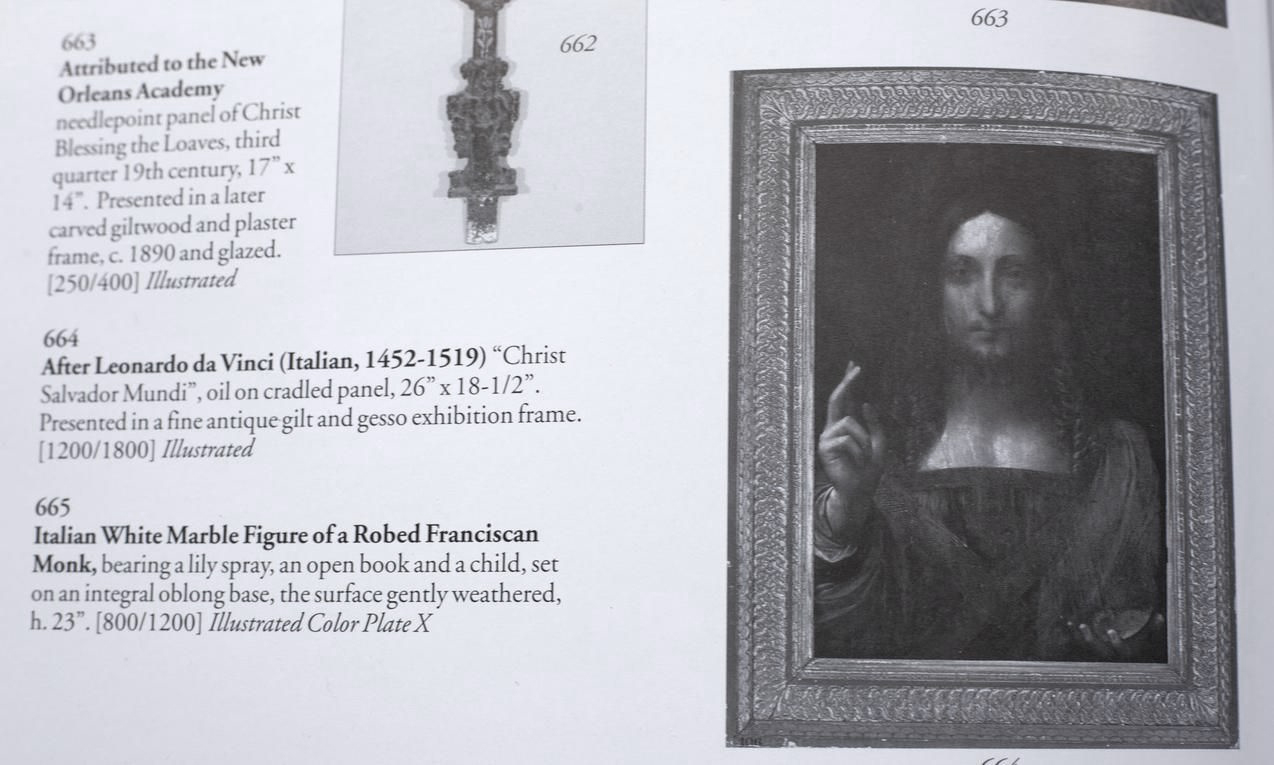
The Salvator Mundi has been offered twice within living memory, and the two catalogue entries are a controlled experiment that nobody designed. In 2005 the panel came up at the St Charles Gallery in New Orleans as lot 664, catalogued as after Leonardo da Vinci, four lines of description, one photograph of the unrestored surface, and an estimate printed in the trade's bracket form as 1200 to 1800 dollars. In November 2017 the same panel came up at Christie's in New York catalogued as Leonardo, in a contemporary art evening sale rather than an Old Master sale, with no printed range and the words in the region of 100 million dollars.
Everything about the object was the same physical thing. What changed was the attribution, the restoration, the sale category and, at the level this piece is about, the form of the estimate. The 2005 entry told a bidder precisely what the house thought, in a number, in the binding document, and that number turned out to be wrong by five orders of magnitude. The 2017 entry told a bidder a sentence, and that sentence turned out to be wrong by a factor of four.
So the honest conclusion is not that printed estimates are reliable and withheld ones are not. Both were badly wrong about the same panel. The difference is what a reader can do with them. A printed range is a commitment you can hold the house to and check afterwards. A sentence in a press briefing is not, and the archive of these six sales is a record of numbers nobody ever has to answer for.
How to read a lot with no estimate
Treat the briefed figure as the house's opening marketing position and not as its valuation. It is unbound, unattributable and revisable, and this archive holds one case where the eventual hammer was four times it and one where the hammer came in under it. If you are building a comparable set, record the briefed figure with its source and the date it appeared, and never let it into a price series alongside hammer prices, because it is not the same kind of number.
Then look for the disclosures the catalogue does still have to make. The Klimt carried both of Sotheby's symbols for guaranteed property and an irrevocable bid, and neither the guarantee level nor the identity of the irrevocable bidder is published. That combination tells you more about the floor under the lot than any briefed estimate does, because a third party has committed real money at an undisclosed number. The Botticelli, by contrast, carried no guarantee and no irrevocable bid, which is part of why its thin close at exactly the advertised minimum is legible at all.
And record the opening bid. The auctioneer's first number is chosen with knowledge of the reserve and of any guarantee, and it is stated aloud in front of the room. Sotheby's opened the Klimt at 130 million against a briefed 150. That is the house's own view, made in public, on the day, at no cost to anybody. Of the several numbers attached to a lot with no printed estimate, it may be the most honest one available.
Why this archive is free to read
We do this for everyone who loves art. The people who have studied it for years, and the people who just stopped to look. Iconotheca exists so that what we learn belongs to all of them.
Nobody pays us for this. No ads, no sponsors, no commercial interest. These works belong to all of us, and we would rather share them with as many people as we can than keep them to ourselves.
If it gave you something today, tell us to keep going. Follow us, leave a like, or write a positive comment. We read every one, and they are what keeps us going.
Questions
It means the catalogue prints no price range and a prospective bidder must ask the auction house for one privately. It is used almost exclusively at the top of the market: the six lots in this archive offered this way are the six most expensive results we record.
There is an estimate, and in all six cases in this archive a figure reached the press before the sale. The number is not withheld from the market so much as moved out of the catalogue, which carries contractual weight, and into press reporting, which carries none.
In excess of publishes a number and declares it a minimum, which indicates roughly where the reserve sits. Estimate upon request publishes no number at all. The Botticelli offered in excess of 80 million dollars hammered at exactly 80,000,000, which shows how closely an advertised floor can function as a target.
Not on this evidence. The Salvator Mundi made four times the figure in its catalogue, and the Chenghua chicken cup hammered below the top figure the press had been given. The briefed number misses in both directions.
The disclosures the house still has to make: whether the lot is guaranteed, whether there is an irrevocable bid, and the level at which the auctioneer opens. The opening bid in particular is chosen with knowledge of the reserve and is announced publicly on the day.
Sources
- 1Sotheby's, 'The New York Sales November 2025: results from the Breuer'. Source for the estimate published as Estimate Upon Request, the sale date of 18 November 2025, the Leonard A. Lauder collection provenance and the total of 236.4 million dollars. sothebys.com/en/...
- 2Sotheby's press release, 'Sandro Botticelli's Portrait of a Young Man Holding a Roundel sells for record 92.2 million dollars at Sotheby's New York'. Source for the estimate in excess of 80 million dollars, the total of 92.2 million and the sale of 28 January 2021. sothebys.com/en/...
- 3The Art Newspaper, 'Five years since the 450m dollar Salvator Mundi sale: a first-hand account of the nonsensical auction', 15 November 2022. Source for the catalogue estimate of 100 million dollars, the winning jump bid of 400 million and the total of 450.3 million with fees. theartnewspaper.com/2022/...
- 4Sotheby's, lot record for lot 5, a highly important and extremely rare Ru guanyao brush washer, Northern Song dynasty, 'Song: Important Chinese Ceramics from the Le Cong Tang Collection', Hong Kong, 3 October 2017, sale HK0747. sothebys.com/en/...
- 5The Value, 'Setting record for world's most expensive ceramic, Ru-ware brush washer fetches US 37.7m'. Source for the hammer of HKD 260 million, the premium-inclusive total of about HKD 294 million and the twenty-minute bidding contest. en.thevalue.com/articles/...
- 6The Value, 'Tiny brush washer from imperial China is expected to fetch US 13m and that's only a conservative estimate'. Source for the pre-sale figure briefed to the press ahead of the October 2017 sale. en.thevalue.com/articles/...
- 7ARTnews, 'Klimt's Elisabeth Lederer portrait sells for 236.4 m dollars at Sotheby's'. Source for the hammer of 205 million dollars, the opening bid of 130 million and the pre-sale expectation reported in the region of 150 million. artnews.com/art-news/...
- 8Wikimedia Commons file record for the 2005 St Charles Gallery auction catalogue page reproducing lot 664, Christ Salvador Mundi, with the printed estimate bracket 1200/1800. Photographed for the Wall Street Journal. commons.wikimedia.org/wiki/...

More in The Market
The partThe hammer is the one number most auction houses do not print
Of 232 auction results in this archive, 53 carry no hammer price published by the house that sold the object.
The Objects Whose Price Was Set by a Tax Bill and Not a Buyer
The Louvre did not buy the most famous Vermeer in France. It accepted it against a death duty, and the acquisition price is not withheld, it does not...
The House That Cannot Be Asked: Who Keeps the Price After the Sale
Half this archive's sale record sits with two firms you can still write to. The other half sits with houses that shut, and with bodies that were...